
Revel Recap: Oct 20-24
Important Upcoming Dates
Annual Halloween Red Carpet Parade - Friday, October 31st at 9am in the school parking lot (Spark/Discovery entrance)
Session 2 Exhibitions
Exploration Studio: Monday, November 24th at 4:15 pm
Discovery Studio: Tuesday, November 25th at 4:15 pm
Spark Studio: Wednesday, November 26th at 4:15 pm






Spark Studio
Mindfulness and Launch
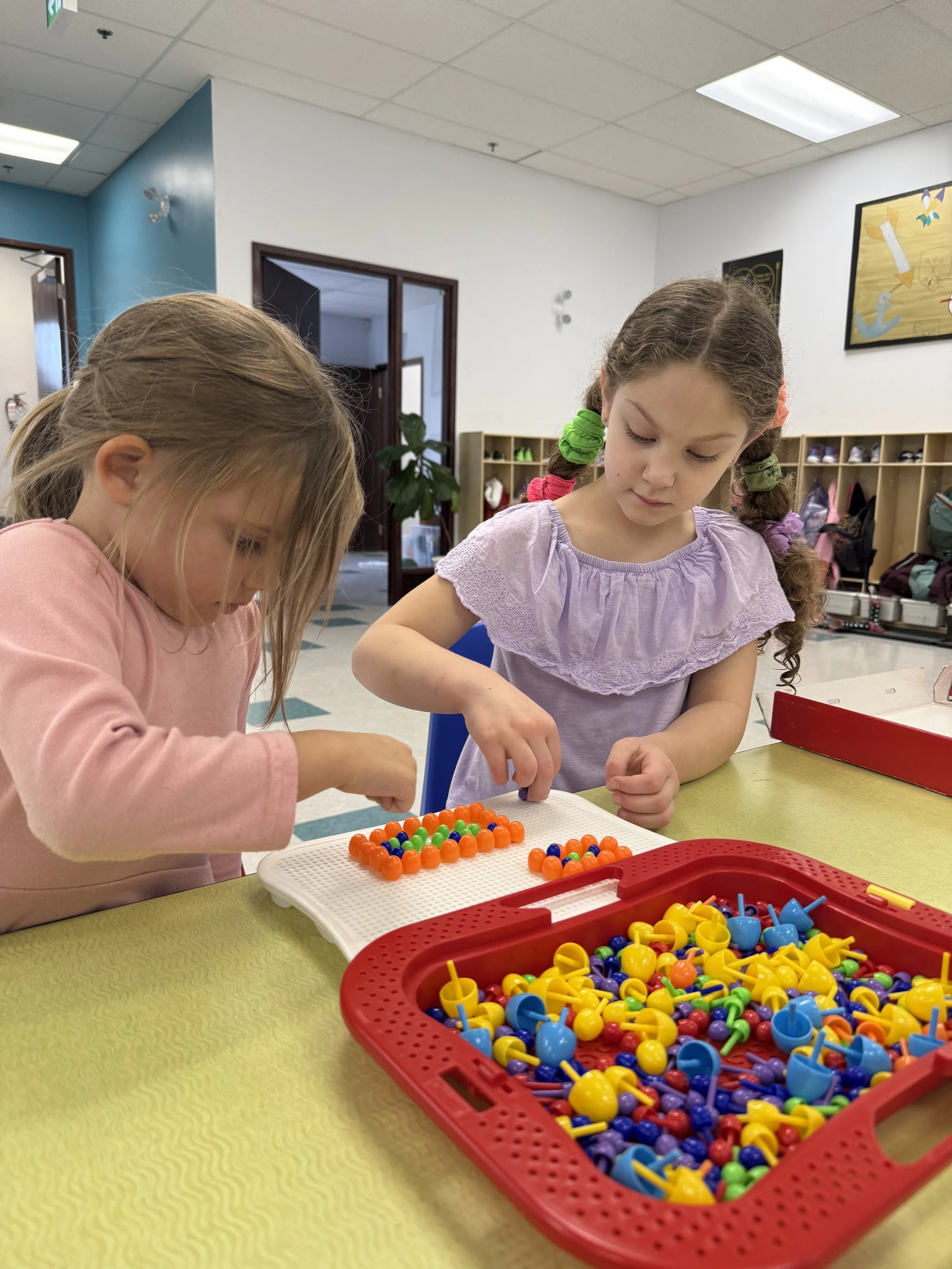
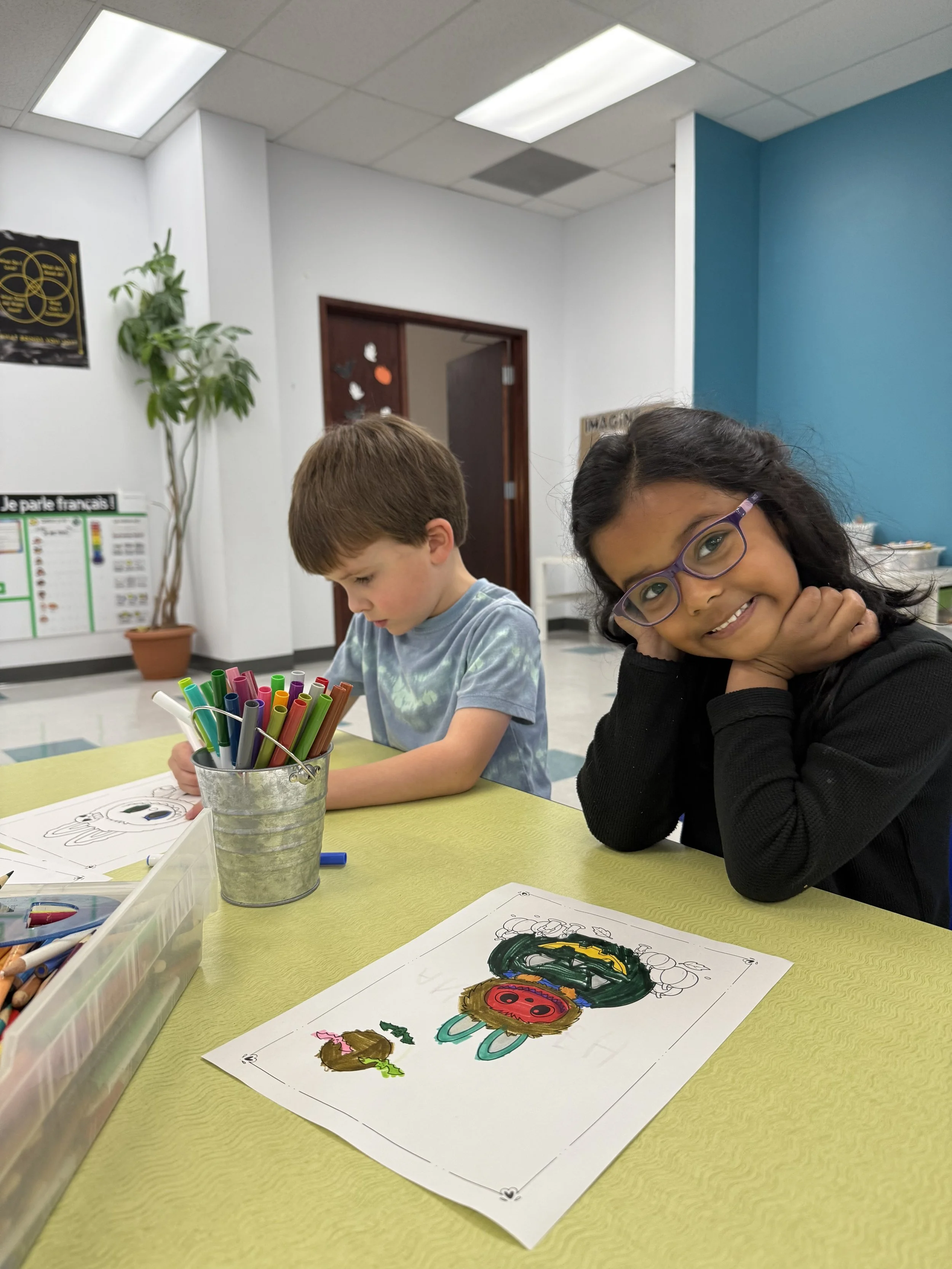
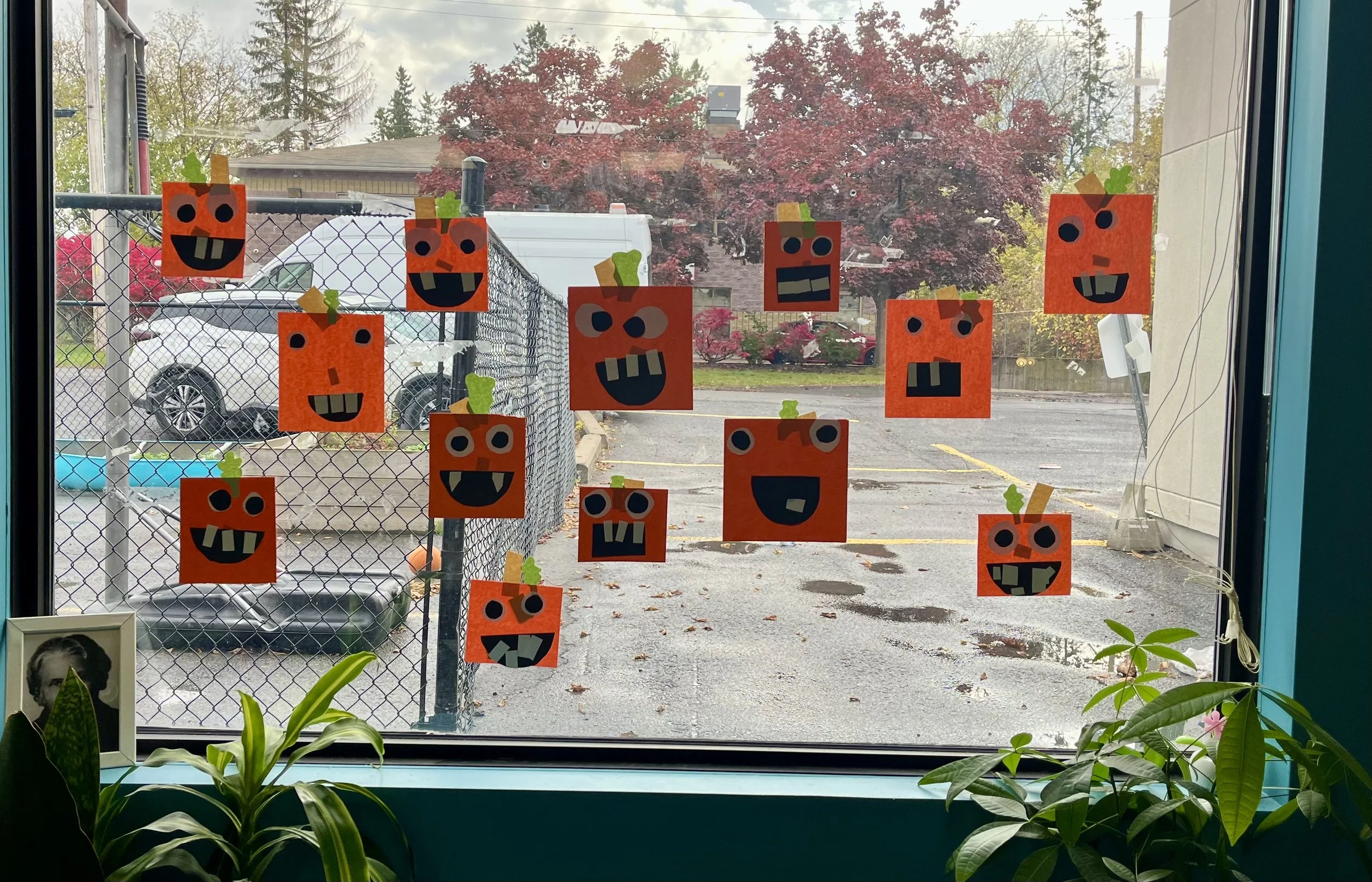
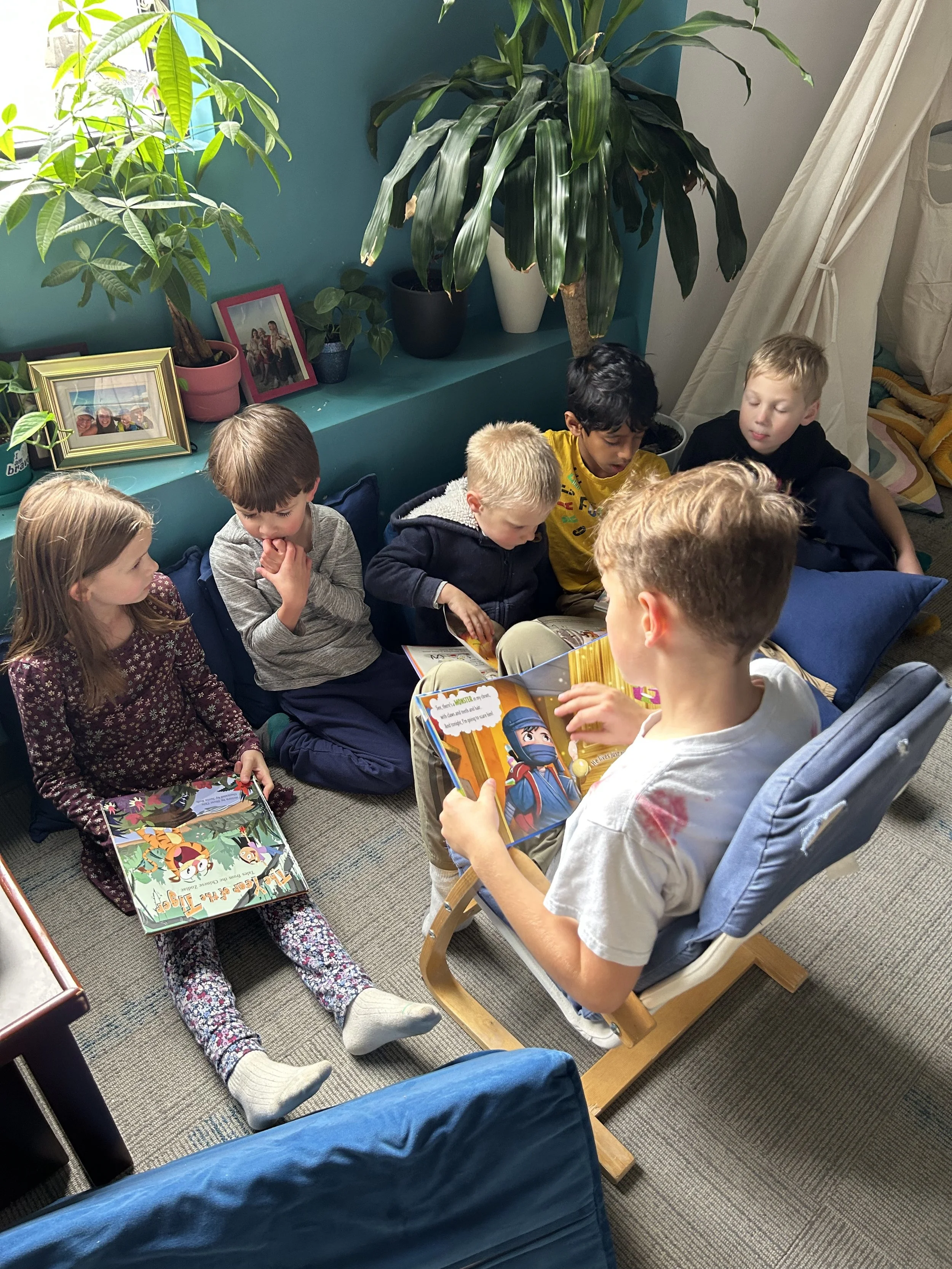
Each day this week the Sparks read a story connected to Halloween. We started the day with a silly book called, How to Catch a Monster. This story is about a brave young ninja who decides to catch a monster hiding in their closet. The ninja sets multiple traps, but when they finally confront the monster, they realize the monster was never scary - he was sad! The ninja apologizes, befriends the monster, and they play together before the child goes to bed feeling safe. The Sparks then created their own monsters using playdough, googly-eyes, feathers and pompoms. On Tuesday, we read Spookly the Square Pumpkin which inspires and celebrates individuality with a key message that we are all unique in our own way. Following the story, each learner created their own square pumpkin using construction paper. They are placed in the studio window, bringing more of the festive season to the room! The following day, The Good the Bad the Spooky was our story of Wednesday. The story explores how the Bad Seed has to do his best to make tonight the worst night of the year for trick-or-treaters; but without a costume, how will he pull it off? This story reminds us that Halloween isn’t about having the best costume, it's about being with the community and making memories together. Thursday we read Leonard Builds a Haunted House then used stacking cups to make a haunted house. Rebels shared what decorations they would use to jumpscare a trick or treater. To end the week we read the story, How to build a Haunted House by Frank Tupta. The learners then followed a directed drawing of a haunted house and added details such as ghosts and pumpkins - they looked “spook”tacular!
Quest
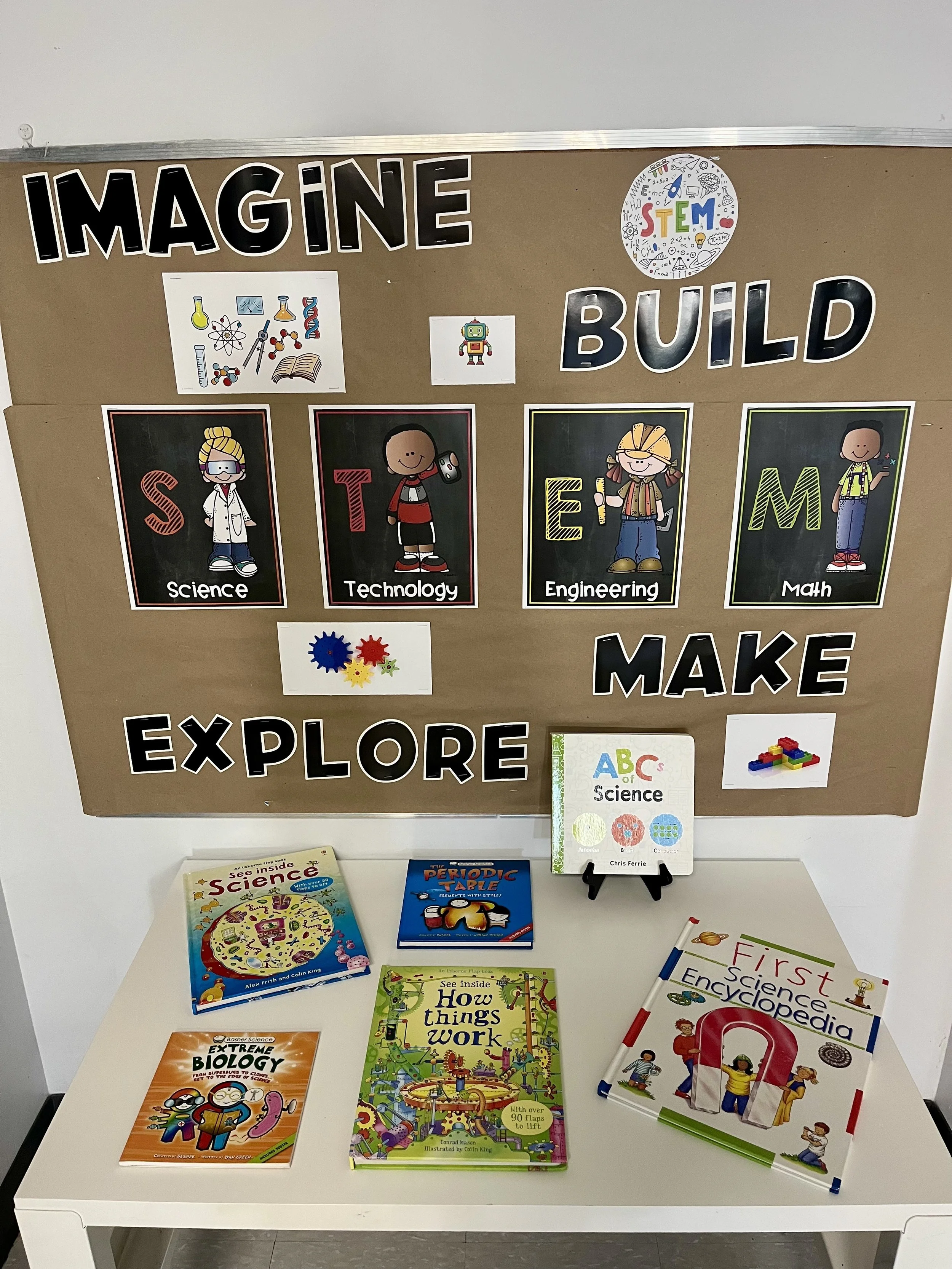
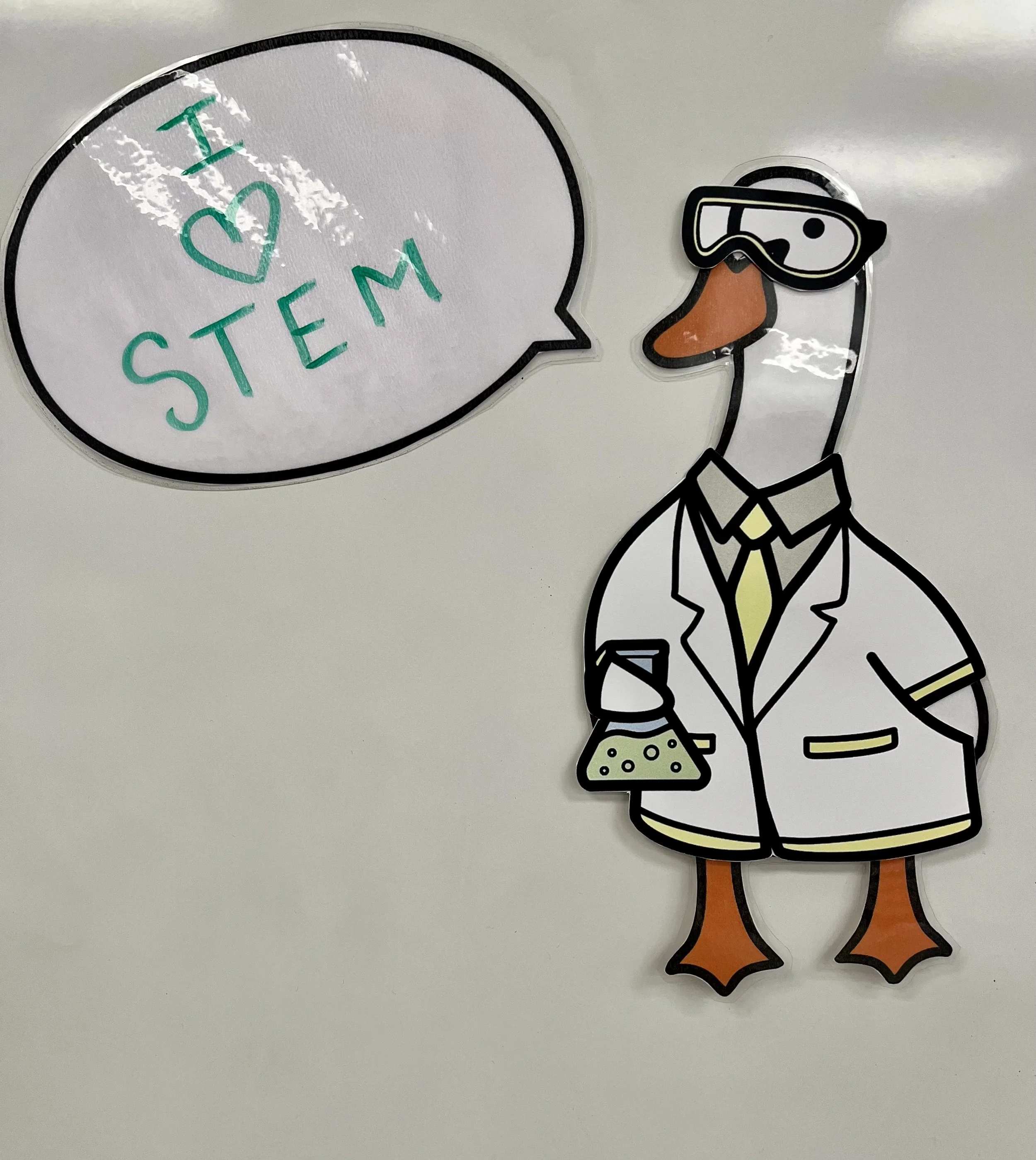
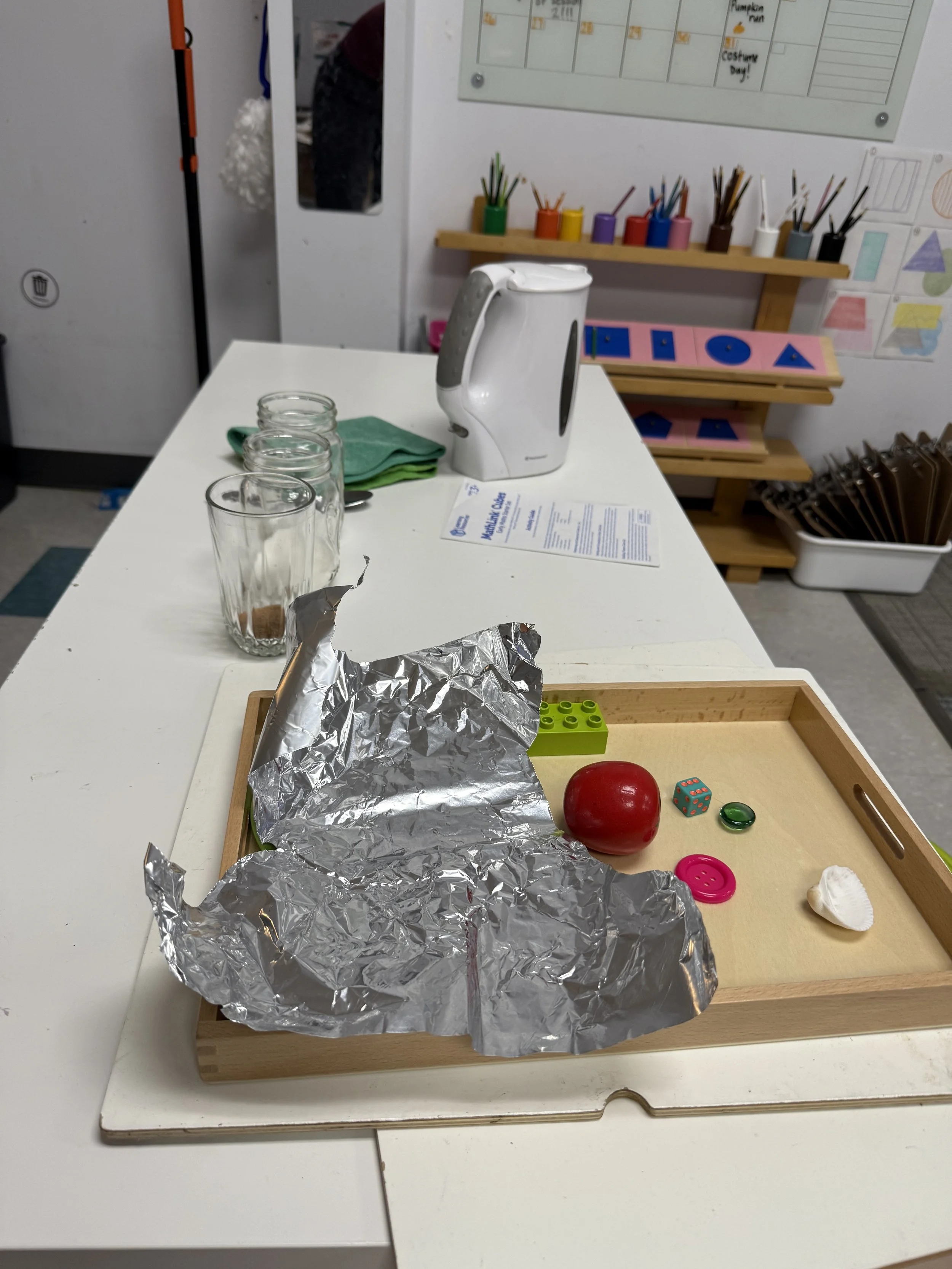
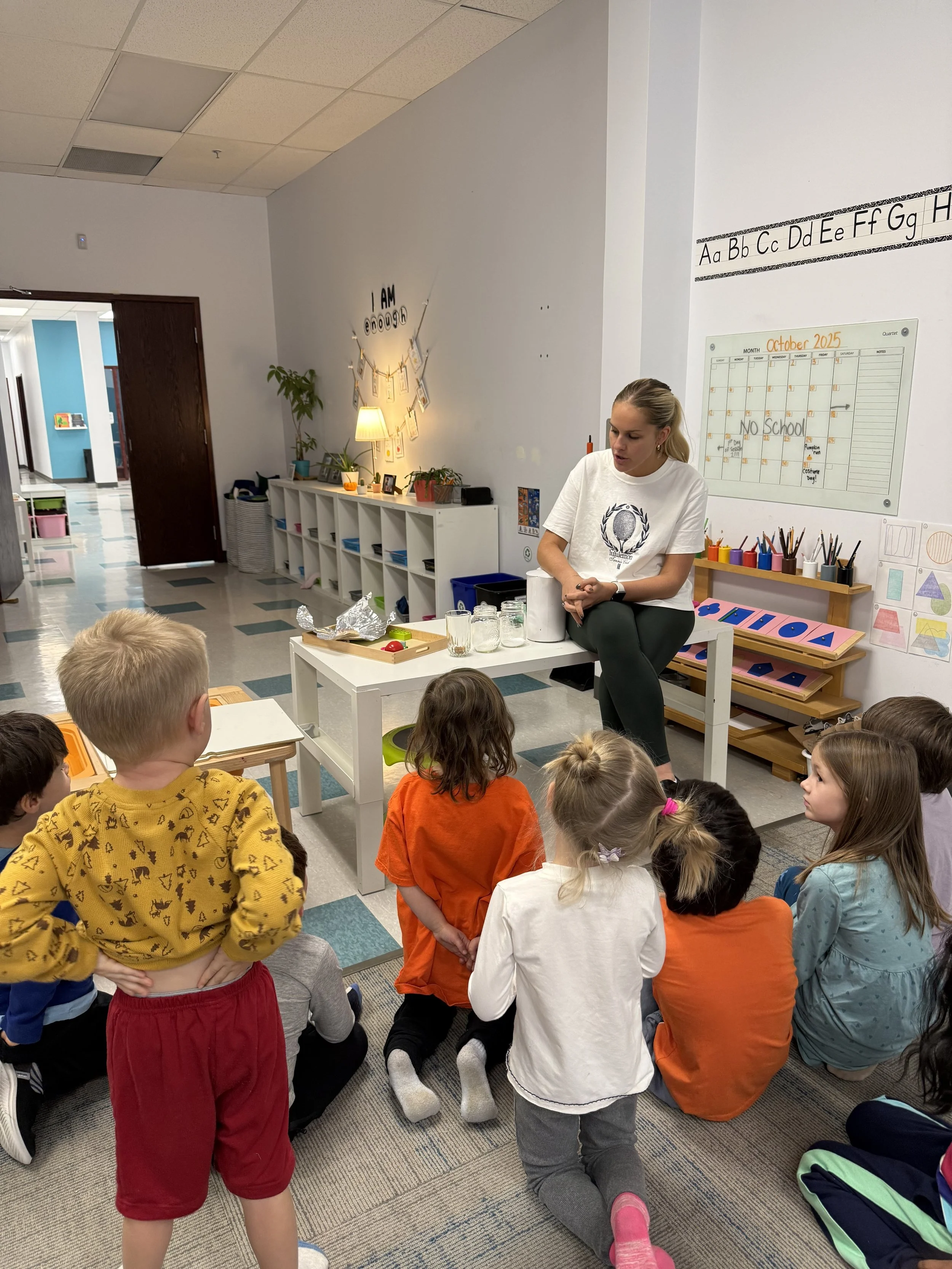
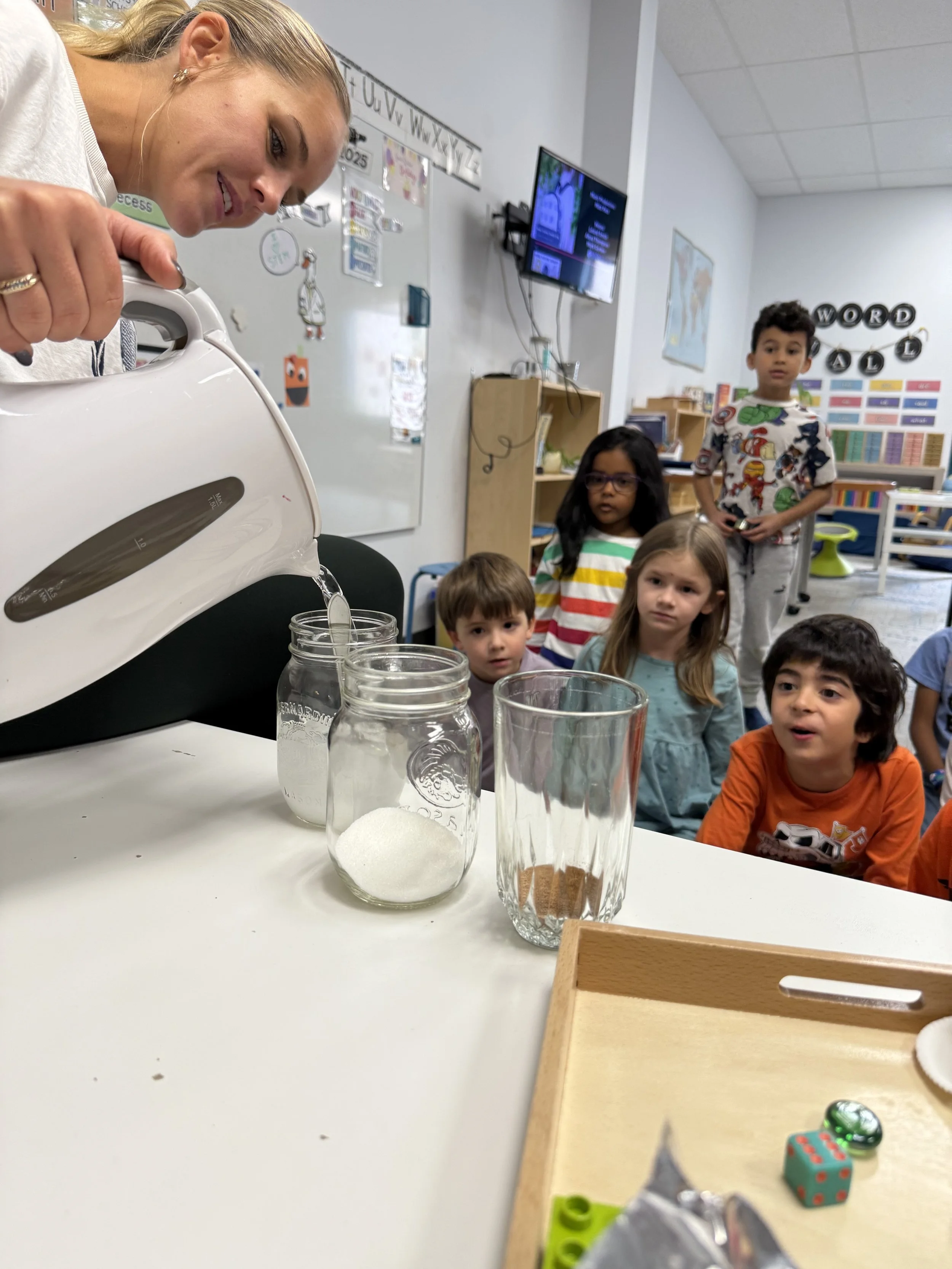
The Sparks are on a new journey together, STEM: Science, Technology, Engineering and Math. To build a stronger sense of what the Sparks already understand behind this topic they were asked, What is STEM and where do we see it in our daily lives? The group conversation uncovered that STEM shows up all around us from building bridges, to baking at home and getting to school. The Sparks are working on a mini clip to share at exhibition about what STEM means to them. The following day, we focused on the first letter of STEM - S for science. We read a few pages from the Science Encyclopedia for Kids. The Sparks were asked, what do scientists do and what questions do you have for a scientist? The Sparks came up with thoughtful answers such as, “Scientists invent things”, “They teach us how tigers hunt”, and that “Scientists make stuff like metal machines”. From there, we explored how scientists ask questions, do tests called experiments and work in laboratories using tools like microscopes to learn about the world around us. For a hands-on experiment we followed up with two activities called “Sink or Float?” and “Will it Dissolve?” For Sink and Float, we explored what the properties of matter are and made predictions before placing various objects in water. Afterwards, we reflected on the results. During “Will it Dissolve?”, we explored physical and chemical changes by testing different ingredients in water. Before pouring the water in, the Sparks made predictions about what might happen.
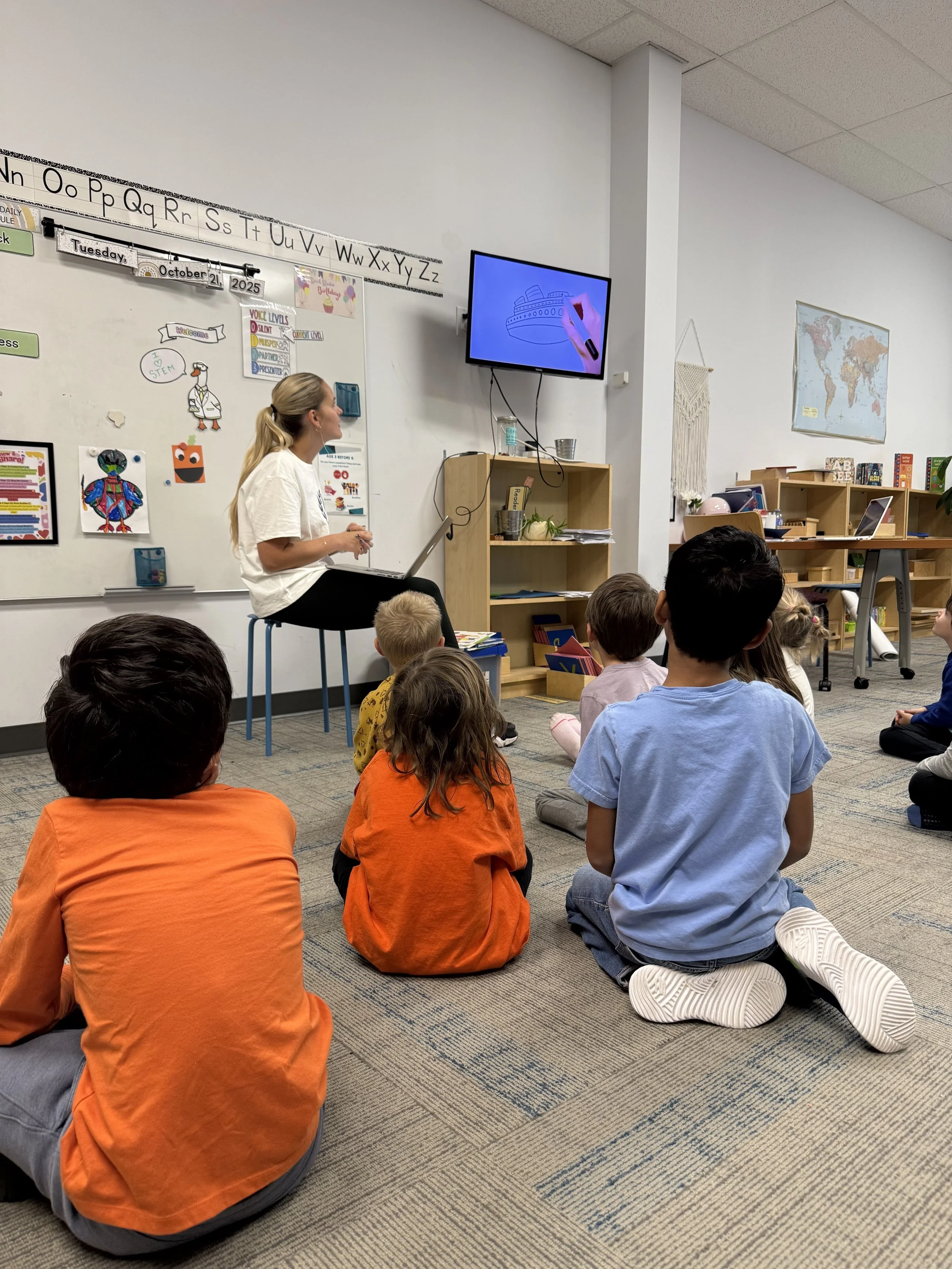



On Wednesday we focused on T - Technology. The Sparks began by sharing ideas about what technology is and how they use it in their everyday lives. Afterwards, they watched a short clip about some of the world’s top inventions, including the phone, microwave, and television. The Sparks shared that they use technology at home to watch TV, play video games and take pictures on a phone. To finish, they played a computer game and the guide explained that technology, through computers and coding, makes it possible for the game’s characters, sounds and actions to operate. As for E - Engineering, the Sparks started with listening to a story called Rosie Revere, Engineer. After the story we asked Rebels, “What does an engineer do?” Responses such as, “builds houses, cars, satellites and trucks using metal”. Some other learners shared that engineers make things from garbage and try new experiments! Guides focused on civil, mechanical, aerospace and computer engineering in four different teams. Each group worked together to learn about what their type of engineer does and brainstormed examples of what they design or build. The Sparks drew pictures showing structures, machines and tools that connect to their engineer type. To end the week, we focused on M - Math. The Sparks used the Unifix cubes and had a variety of objects they had to measure with the cubes. At the end they had to find something in the studio that measured the maximum amount of Unifix cubes their group had.
Reader/Writer Workshops
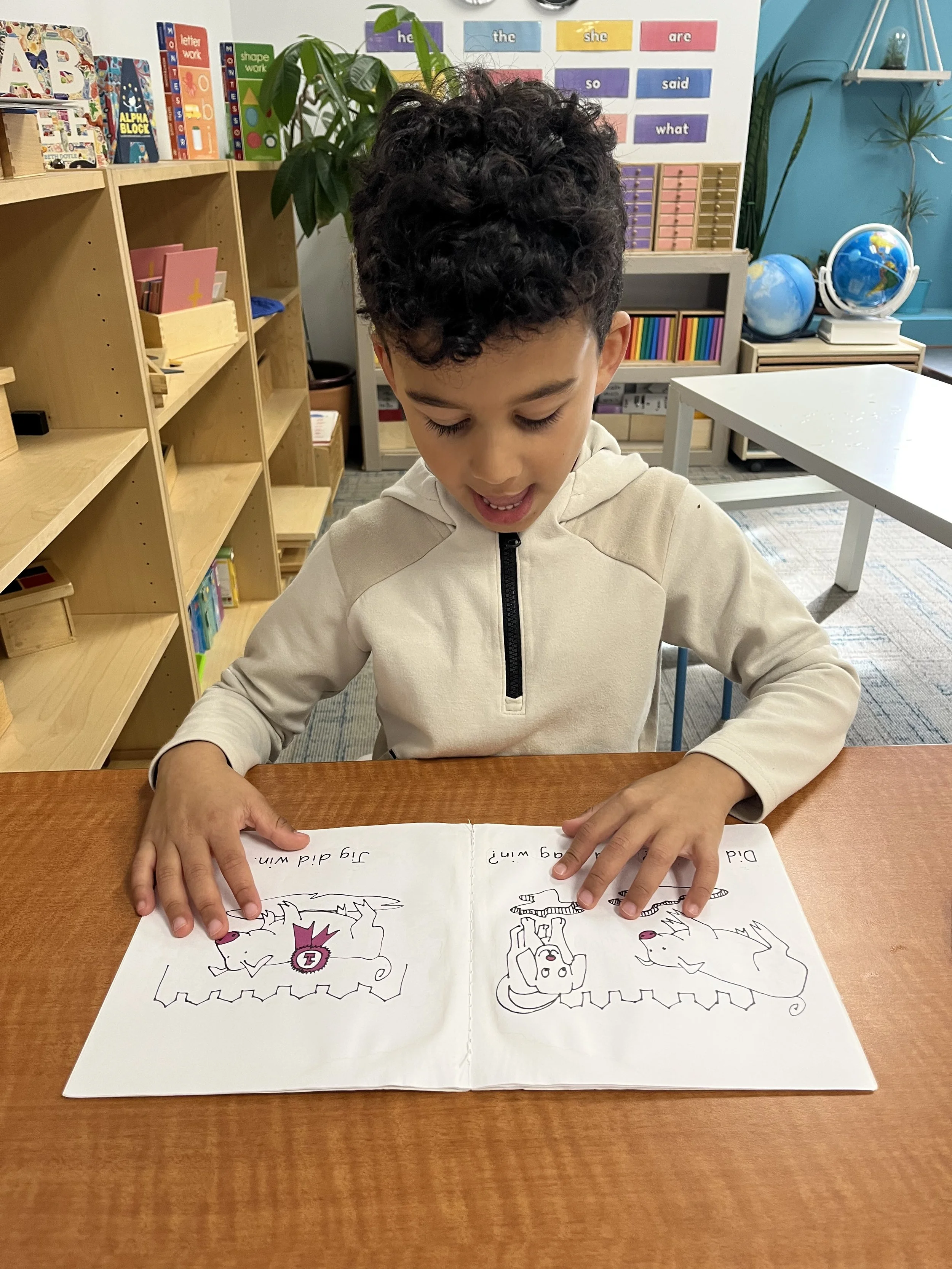
In the Sparks studio we often hear phrases such as, “I can’t read” or “I don’t know how to read.” How can Sparks build their confidence with reading? We believe that each Spark has the tools and literacy skills necessary to master reading. To begin the journey into storytelling, we will be implementing it through pictures, drawings and sounds. This week the Sparks began using Volcano Island; Tell me a Story - Creative Story Cards. These cards are illustrated for the learners to use their imagination and tell a story. Each Spark chose a card from the deck and created a sentence to match the image they received. A Guide started with the first card so the learners had a stronger understanding of how to match their words to an image. As a group, they came up with a title for their story and character names. Group one also worked one on one with a Guide to review letter sounds and the alphabet, worked on their printing books and used the sand paper letters. Group two was introduced to digraphs. These are pairs of letters that come together to make a single sound ("sh," "th," or "ch"). Our focus this week was on the “ch” sound. To explore this digraph, the learners worked through a booklet where they looked at pictures, identified the word containing the "ch" sound, and practiced spelling it. The Sparks spelled words that have ch at both the beginning and end of a word, such as chin, chop, chimp, rich, lunch, bunch, and pinch. Next, we tied our workshop into some festive fun by creating Halloween illustrations! Each learner wrote down and drew what they are planning to be for Halloween. As a studio we have also started a book study! This book study is focused on the story, “How to Catch a Witch”. This week, we reviewed the cover page, talked about author and illustrator roles and made a prediction about the story’s plot. Over the next few weeks they will continue to answer their booklet questions as our story unfolds!
Math Workshops

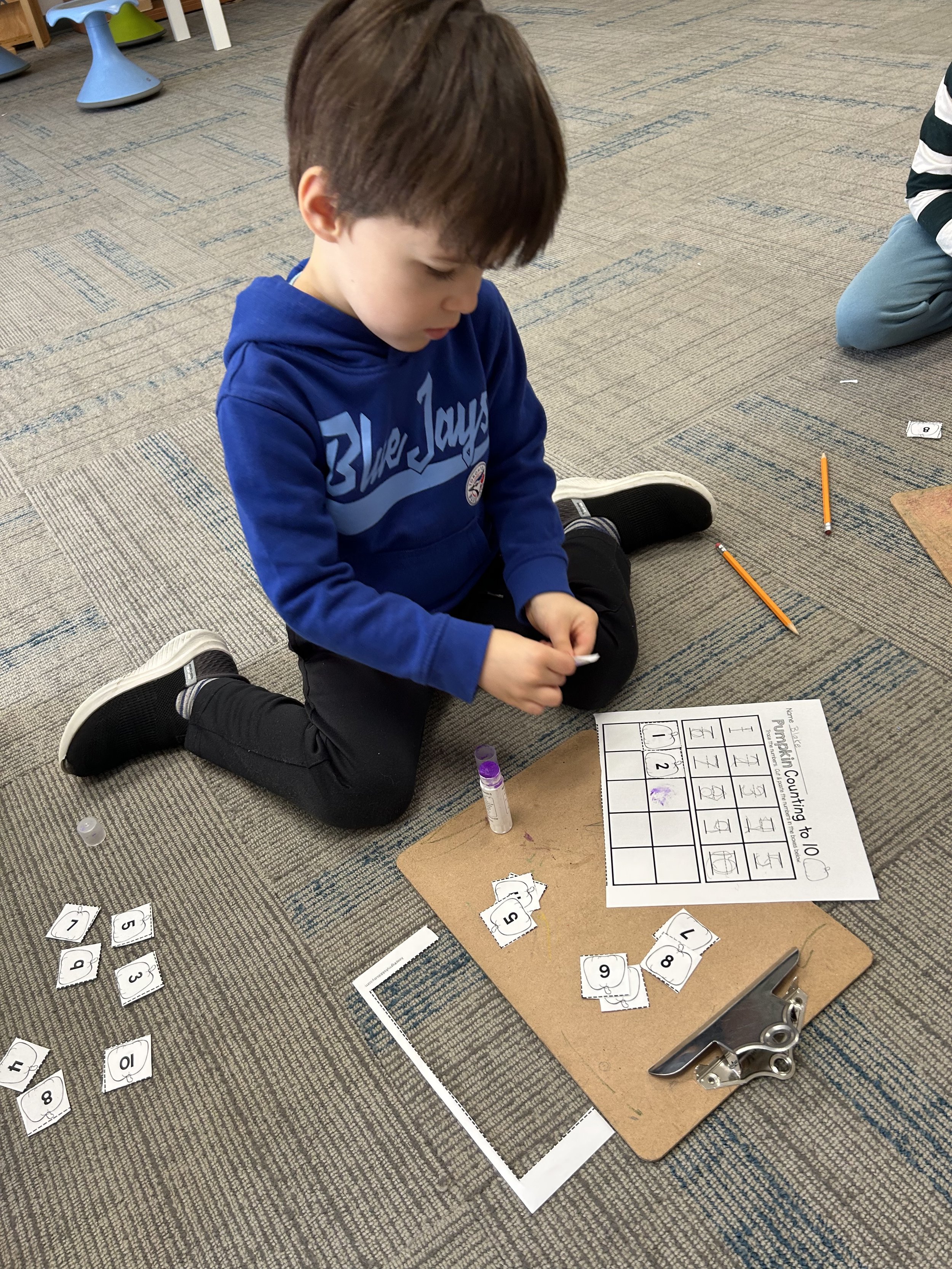



Group one will continue their studies on number recognition, addition up to ten and finding the missing number. This week, we counted to twenty and had a worksheet where they had to place the missing number. Additionally, others in group one were provided with a manipulative tool, Unifix cubes, to help them with their addition questions.
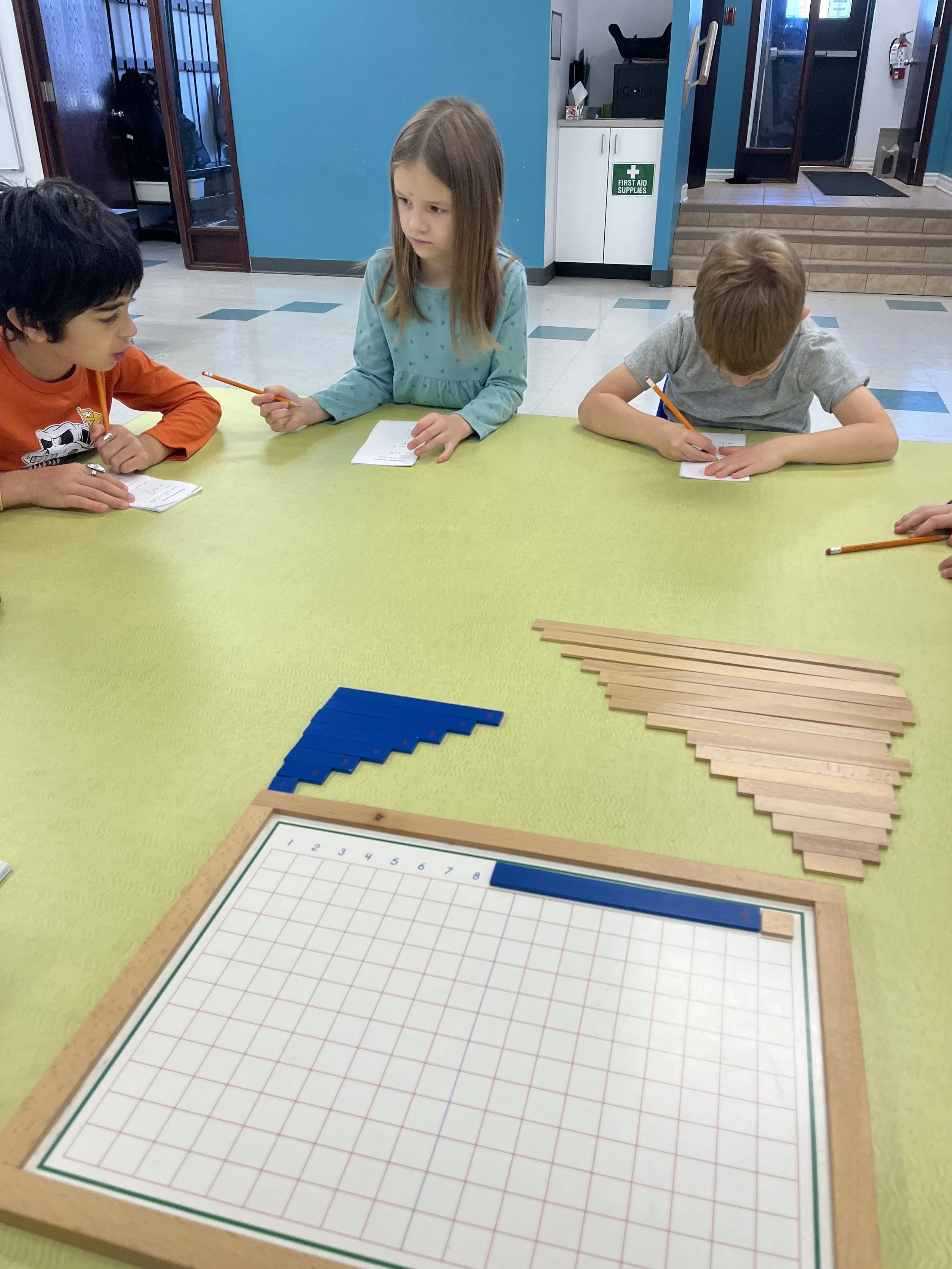
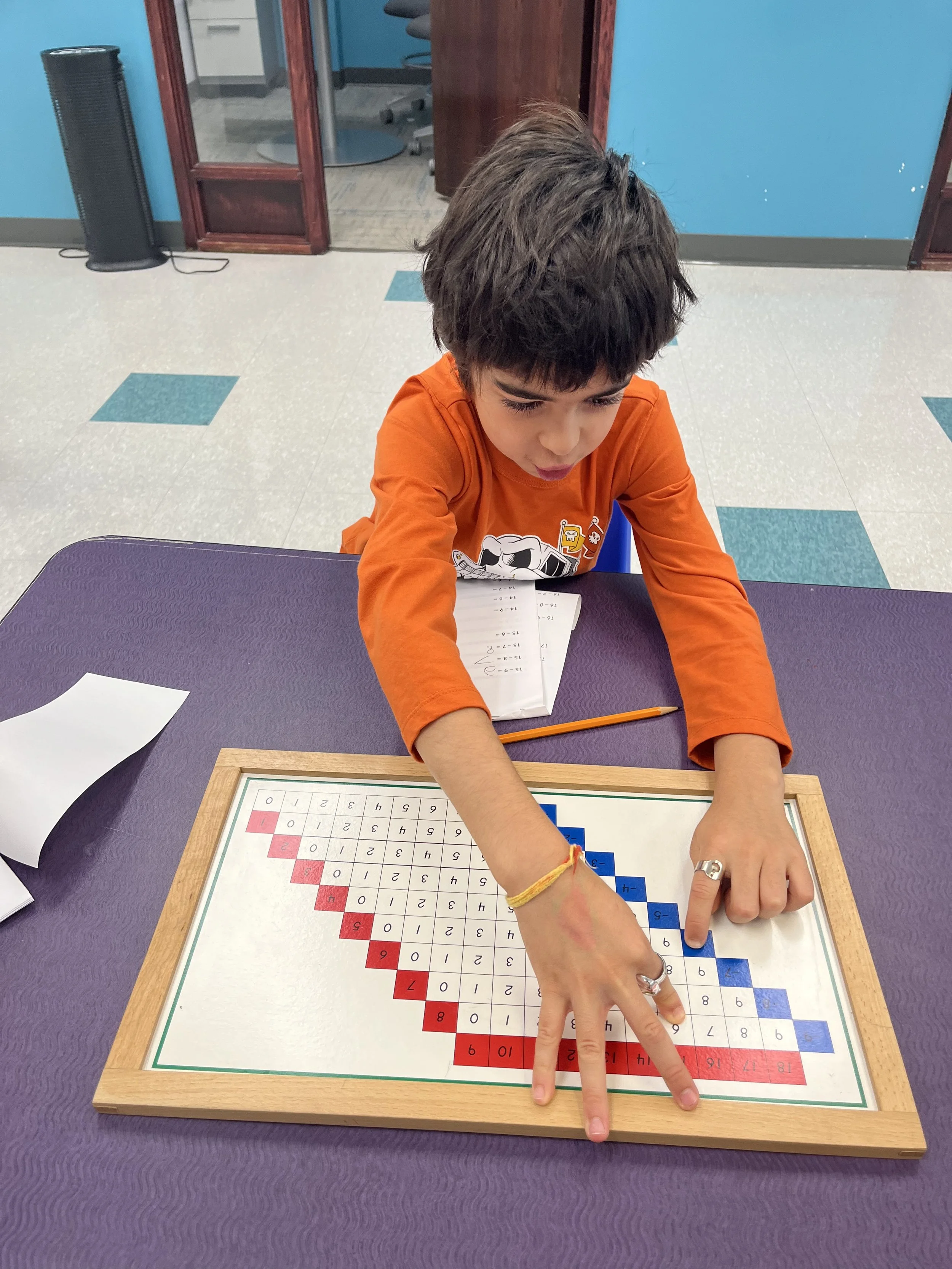
In Session one, group two focused on addition and demonstrated a solid understanding of this concept. They will continue to strengthen their addition skills during work periods. For this session, we will be exploring subtraction. We began our math workshop by defining subtraction as "taking a number away to see how much is left." Together, we discussed examples and explored the meaning of the subtraction symbol. We also read the story, Linus the Minus, which introduced subtraction math problems and vocabulary such as “fewer,” “take away,” “difference,” and “less.” To help make the concept more concrete, the learners worked in small groups using two Montessori subtraction materials. These hands-on tools allowed them to engage with subtraction tables in a tangible and visual way. Rebels began working in their math booklets, using the boards to help them find the answers.
Geography
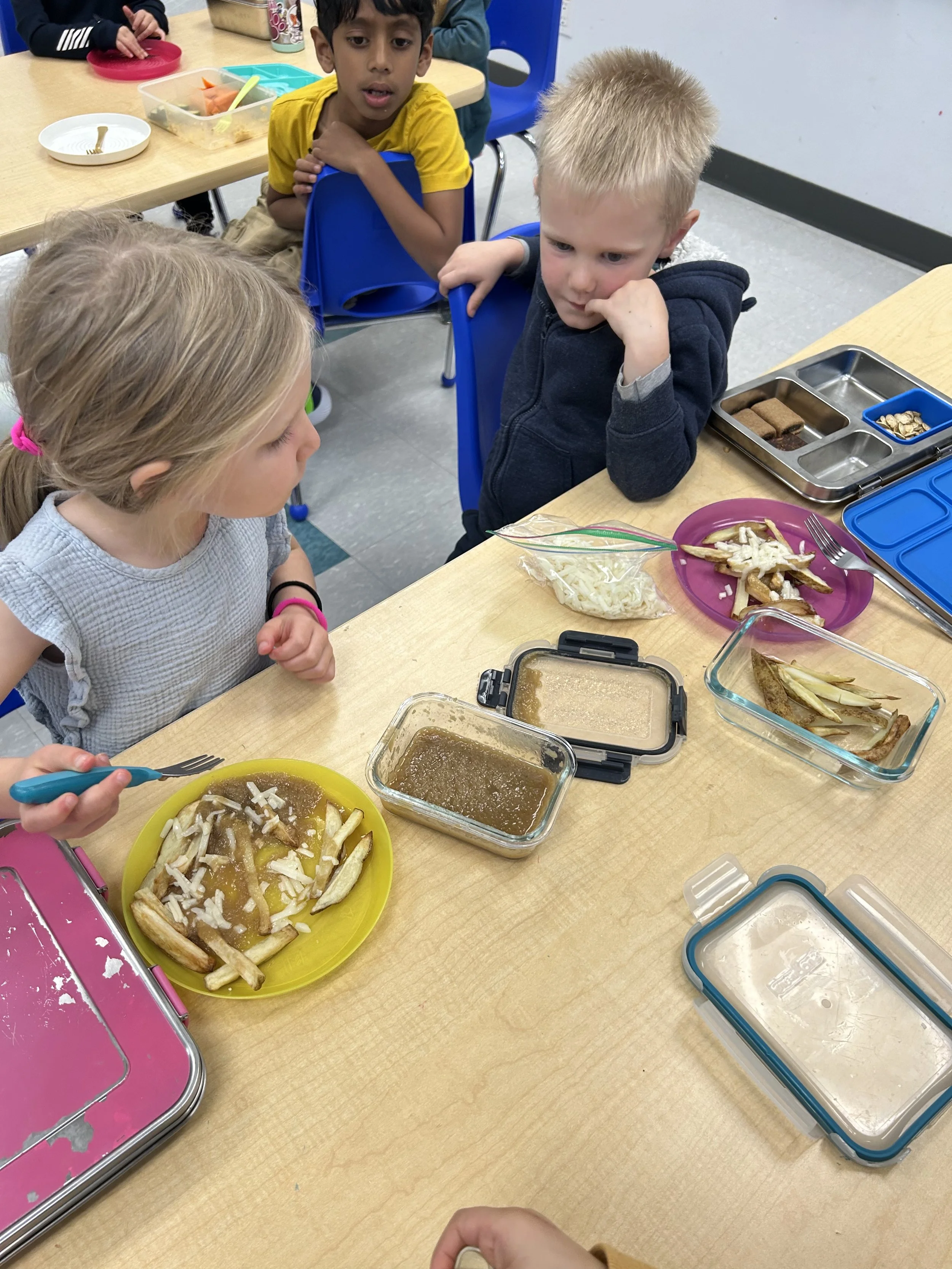
A new session means another lap around the globe for the Sparks! This session we have decided to stay close to home and study North America over the next 5 weeks. The Sparks boarded their plane from Ottawa, Ontario and landed in Quebec City. In Quebec City they had the opportunity to make and eat a classic Canadian cuisine: poutine! The Sparks explored three different countries inside North America. Using our Montessori map of the continents and North America itself we reviewed Canada, Mexico and USA. The Sparks made posters from each country and foods they are known for.
French
This session, we are learning vocabulary related to the body through fun, hands-on, and movement-based activities. On Monday, learners completed a coloring activity to learn and label different parts of the body in French. They practiced saying each word aloud as they colored, helping them connect the images and vocabulary. On Tuesday, we learned a catchy song that helps us remember the new vocabulary more easily and reinforce pronunciation! Wednesday, we played Monsieur Patate (Mr. Potato Head), where learners ask for different body parts in French. Thursday’s workshop was in the gym for a game of Seek-a-Boo and Jean Dit (Simon Says), two active games that let learners review the body vocabulary while moving and having fun.
Additional Highlights
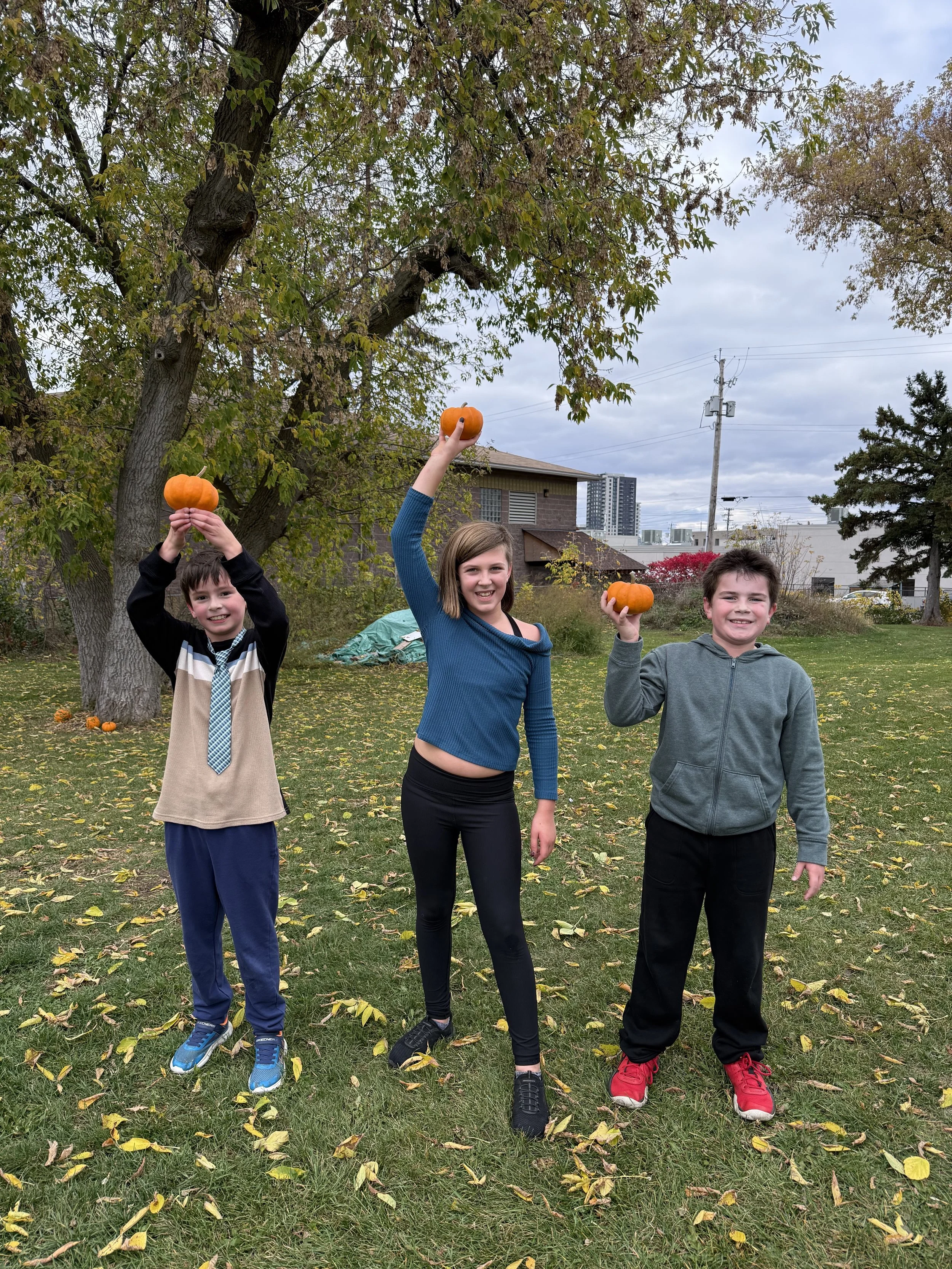
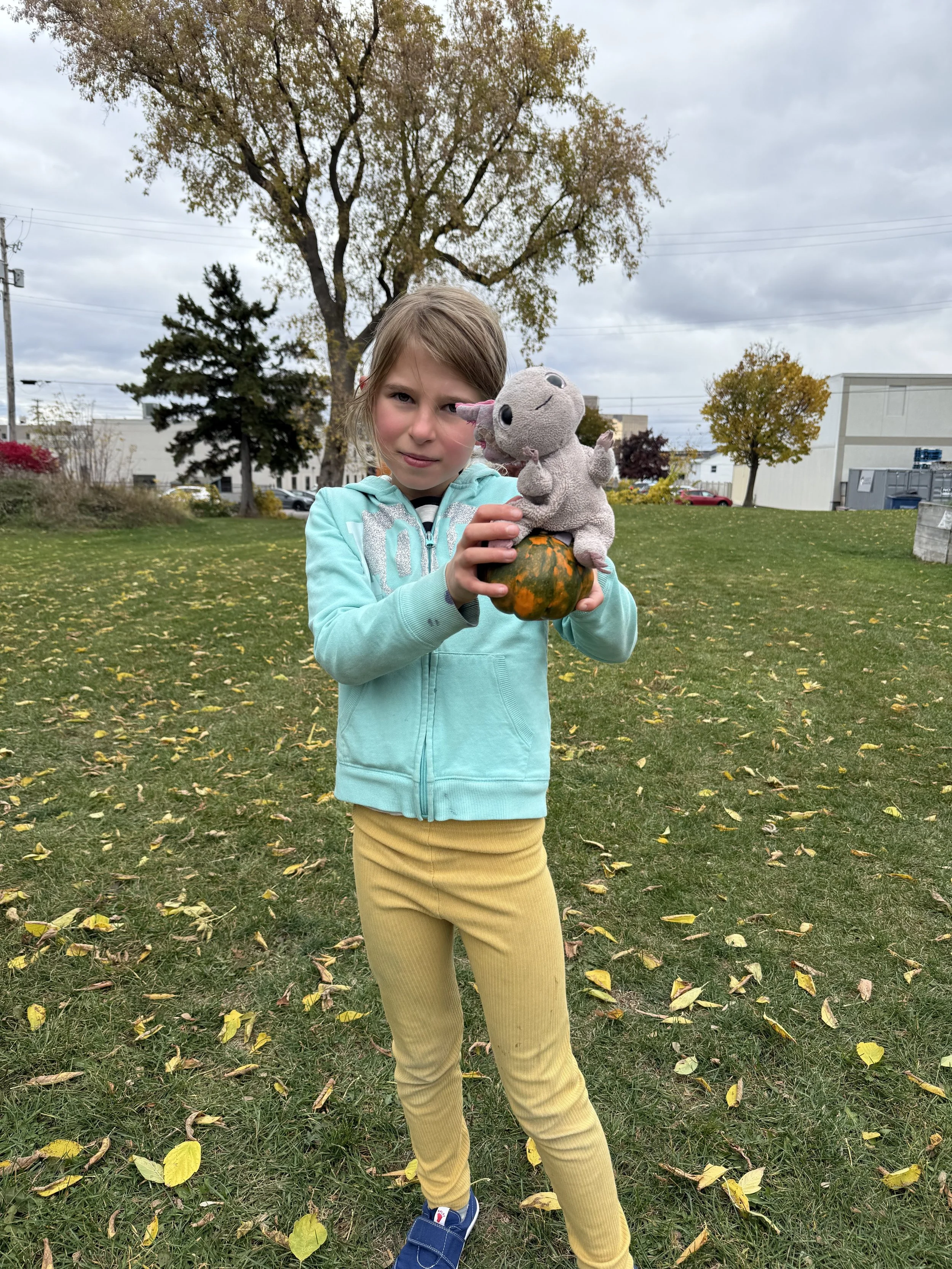
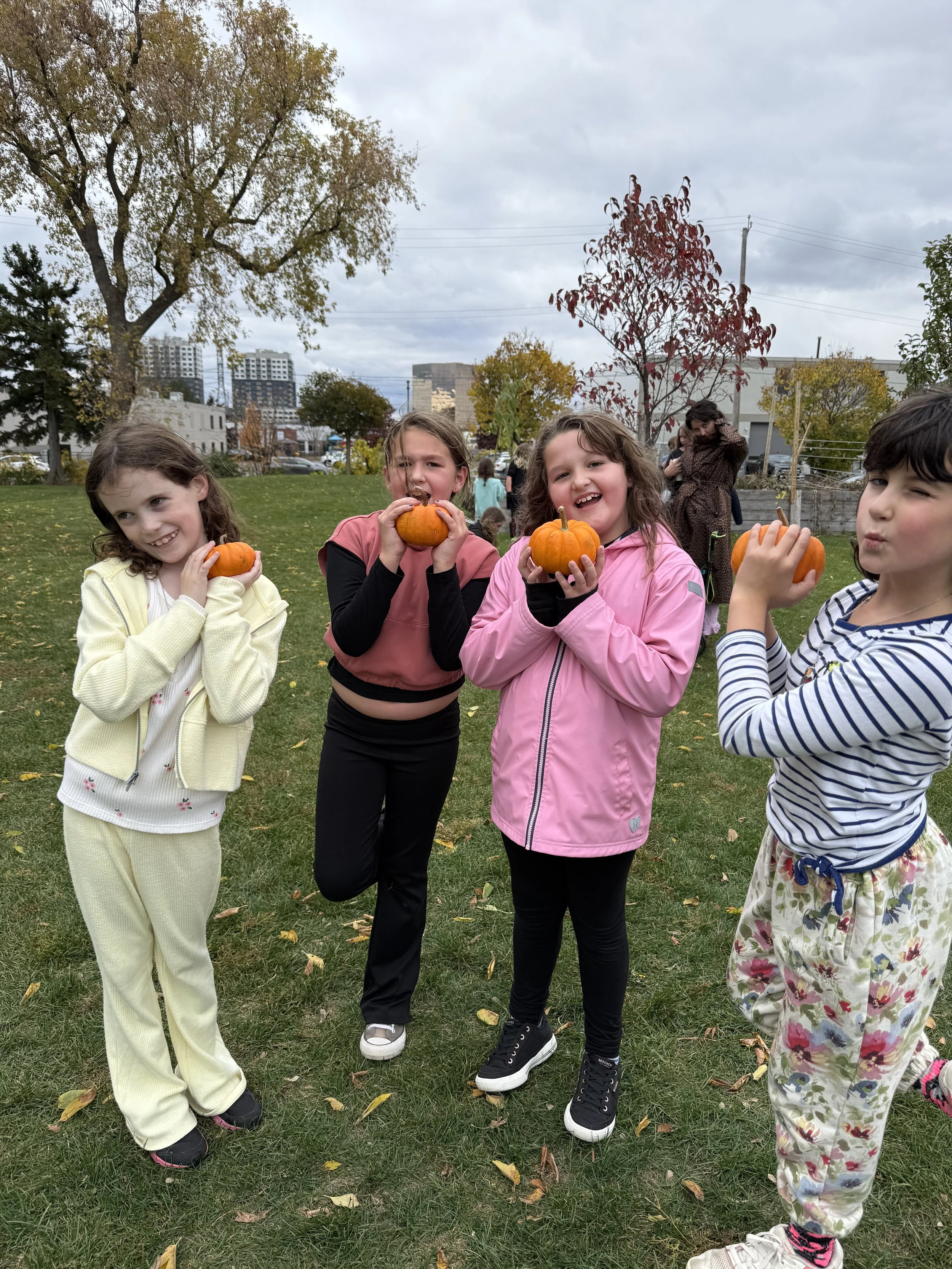
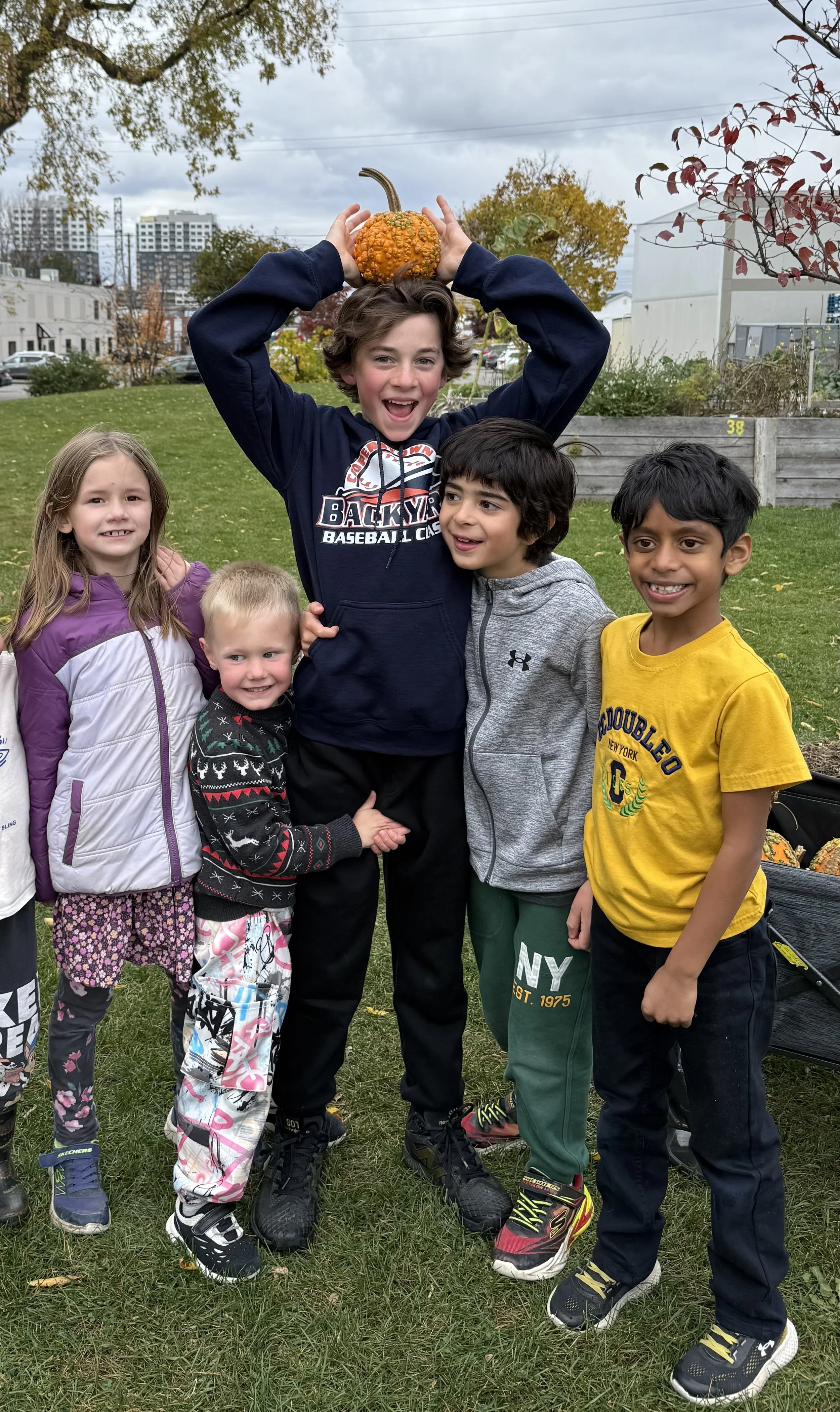
The annual Pumpkin Run was a big success. The Sparks joined the rest of the learners and their Guides for a fun run, and at the end everyone got to pick out their own pumpkin to take home. We had one of our very own Spark Rebels leading our Friday Show and Share this week. They made sure everyone had a turn to share, talked about their toy or item, and encouraged the learners to ask questions. Some of the items brought this week were monster trucks, garbage bins and books! The Sparks have been spending more time outdoors, which they have been enjoying. They’ve been playing games like Everyone’s It tag and using the dancing ribbons.
Discovery Studio
Mindfulness and Launch
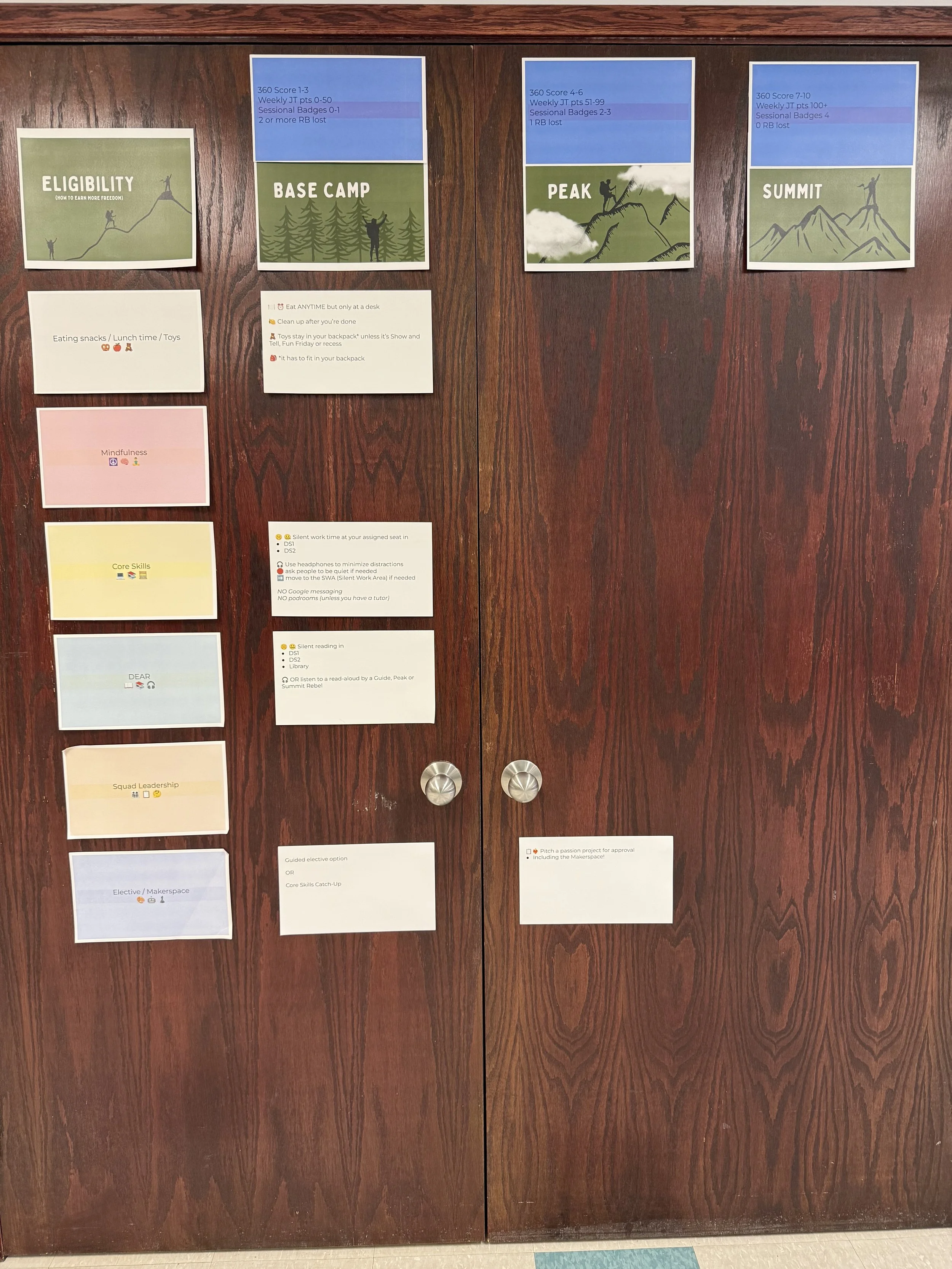

Welcome to Session 2! Rebels kicked off the first day of our second session with a spooky mindfulness colouring activity in anticipation of Halloween - making La”Boo-Boo’s”! For Launch, Rebels reflected on Session 1 and our current Freedom Levels, discussed our new seating plan in the studios and what it means to be in “basecamp”. How can you move into a differet freedom level? What habits do you want to change/undo this Session? What habits do you want to keep? Rebels discussed things like continuing the positive use of giving each other Rebel Bucks more than taking them from each other, using our Peace Table to talk through conflicts first before seeking further consequences, maintaining our Gym in a safe way that allows all to use it for activity breaks and utilizing our leadership team (as our Squad Leaders officially stepped into their new positions this week). Tuesday’s Launch was a calming autumn zen doodle activity followed by a launch that revisited our monsters. Rebels watched a clip from the original Space Jam movie, when the Tune Squad meets the “Monstars.” We tried to decide: would we rather be very strong and talented (but mean) or very kind and supportive (but lose competitions)? Then, we wrapped up a discussion about the three monsters that lurk in our studios, paying attention to the monster of resistance and what they look and sound like in the studio. Wednesday morning the Rebels chose to play Connections, Wordle and the Mini crossword: we lost Connections, guessed Wordle with one life to spare, and beat the mini in just over three minutes! Wednesday’s Launch was our first official Squad Chickens with our newly appointed leadership team. Squad Leaders met with their team and went over what goals each learner had completed so far this week, discussed what they had left and made a game plan for which goals they would tackle Wednesday morning. Each Squad Leader also took a “temperature check” of how the Rebels were feeling about how best to proceed when using the gym (equipment and space) safely this session. Thursday morning we gathered for our weekly, “Thank You for Sharing” circle and Rebels discussed things that make them feel better when they are sad or mad (like music, laying in bed, snuggling a pet) as well as what they would organize if they were allowed to create a new holiday (e.g. park day, pet day, present day, bed day). For Launch on Thursday, Rebels role played different scenarios that focused on the complexities that friendships sometimes endure. For example, what should you do when a friend is ignoring you? How could you confront a friend who has been saying mean things about you? How does being someone’s friend make having these conversations that much more difficult? On Friday, we warmed up the Boomwhackers before trying a new Taylor Swift tune “Opalite,” and then got the weekly Current Events rundown: the Toronto Blue Jays are going to the World Series, China opens the tallest bridge in the world, and discovered the Pudu - the smallest (and cutest) deer on earth!
Math Lab
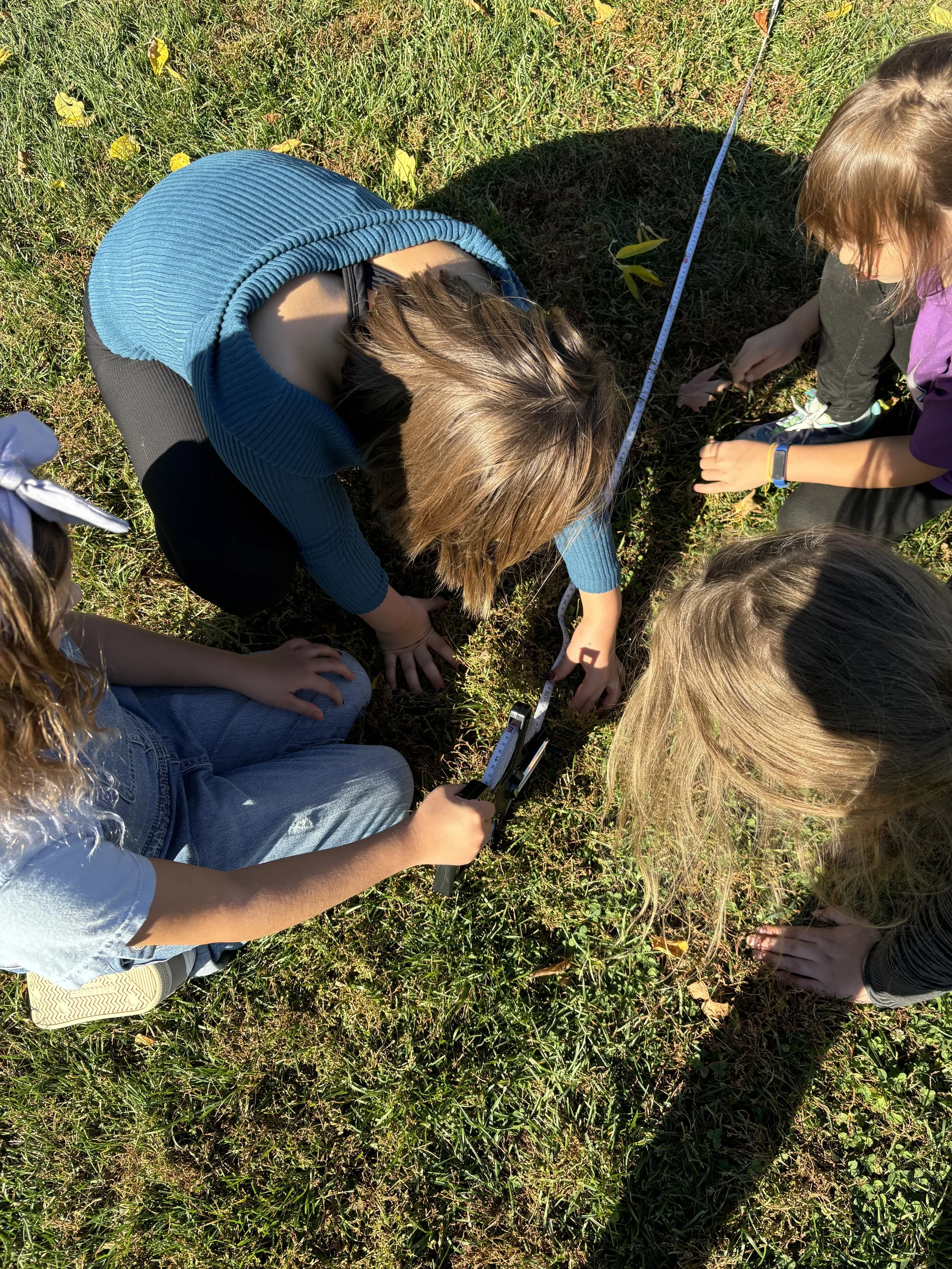
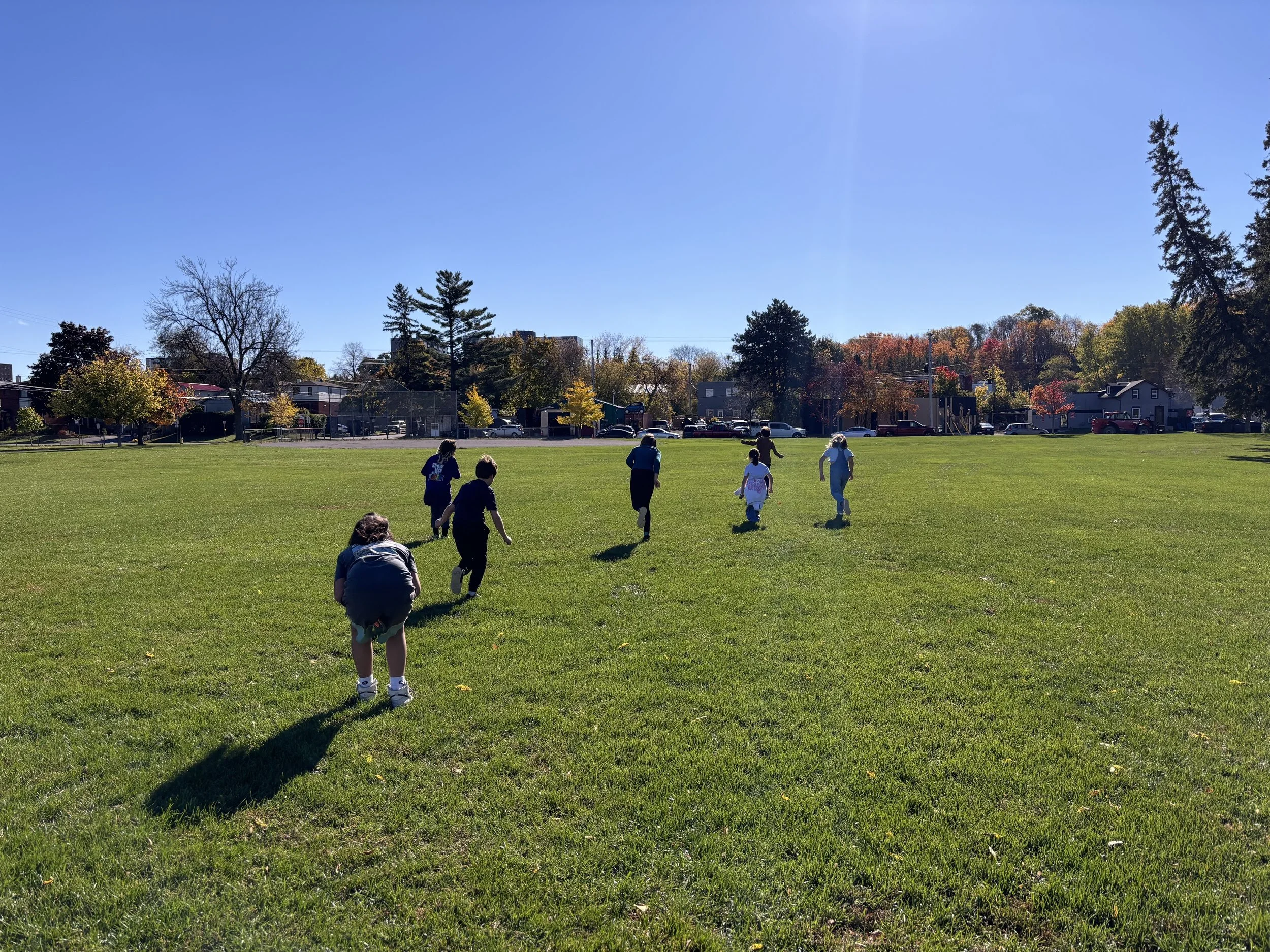
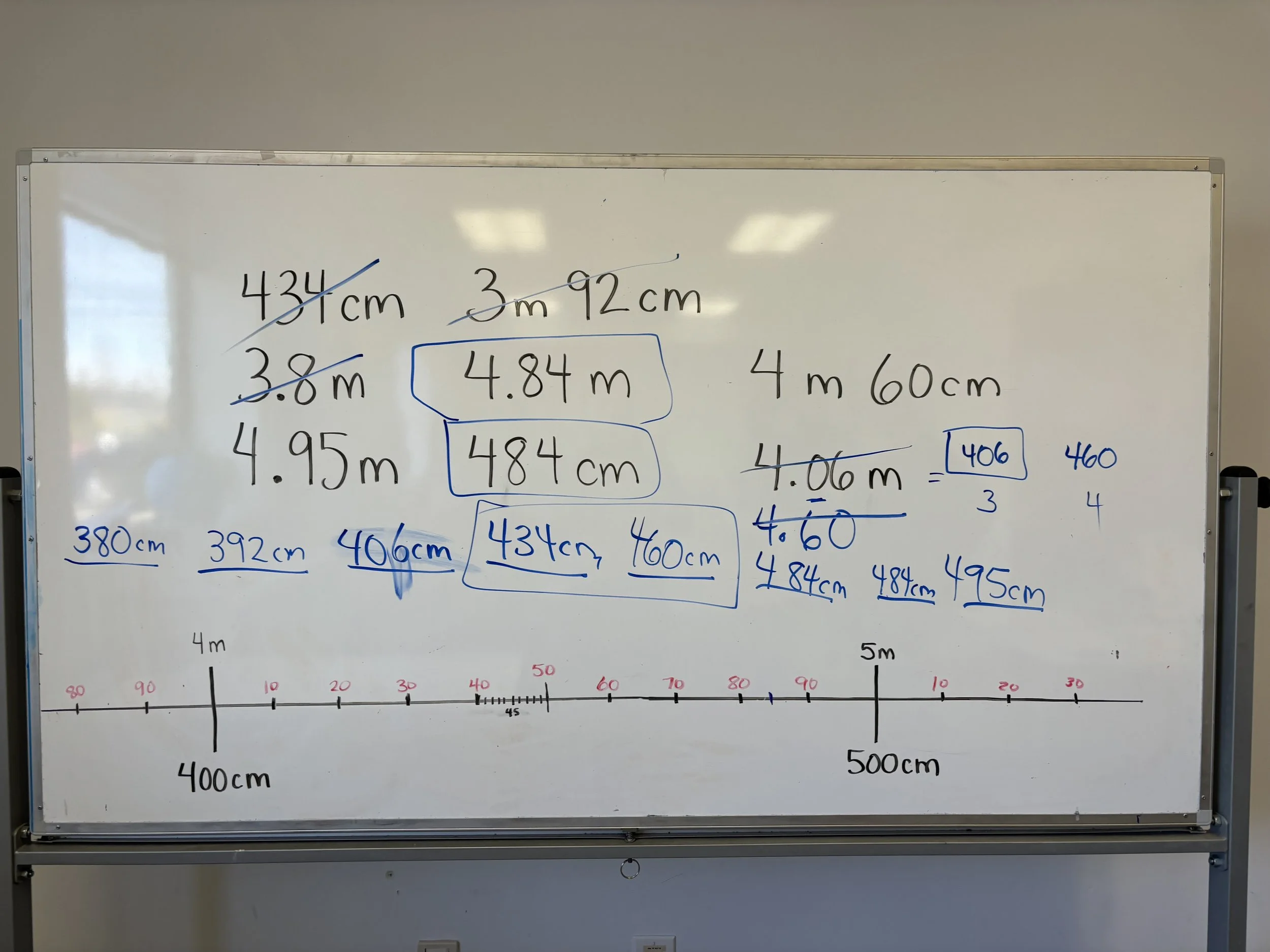
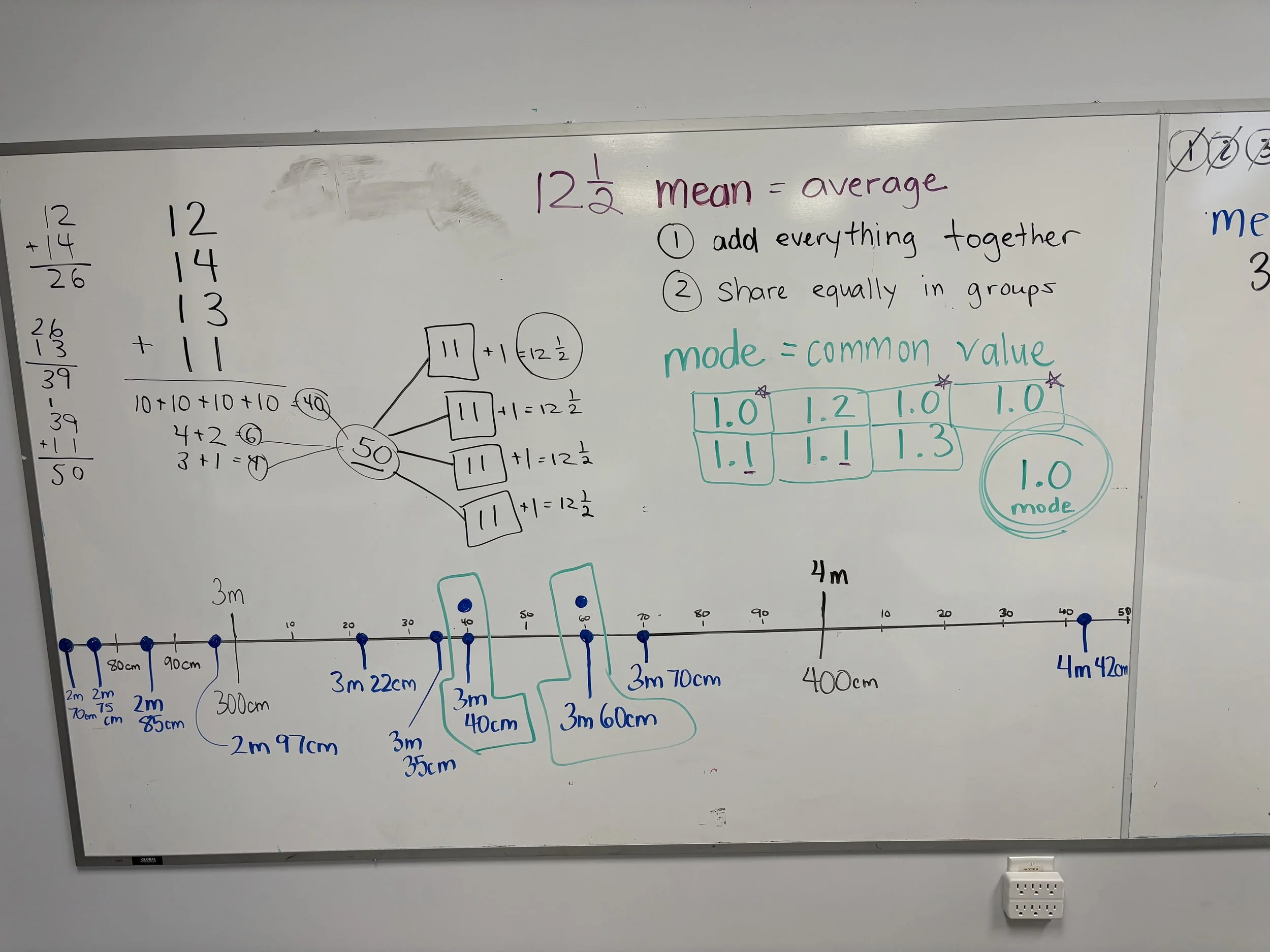


Ready, Rebels? Get set! Measure! This session’s theme is measurement and embodied cognition. Each week, Rebels will engage in track and field training and measure their efforts using the Metric system, building understanding of concepts like central tendency, perimeter, area and analog and elapsed time. On Tuesday with Group 2, we deconstructed a classic field event: the triple jump! Rebels warmed up in the field, practicing their hop, skip, jump, and landing with their feet together. Once the form was flowing, we starting seeing how far we could jump, with a running start, and practiced reading the distances in meters and centimeters using a measuring tape. Back inside, we worked on calculating the mean, median and mode of our results. On Thursday with Group 1, we worked around inclement weather by trying triple jump in the gym! To start out, we investigated metre sticks carefully and reviewed the relationship between metres, centimetres and millimetres. Rebels then recorded their jump length and then we met in the lab to tackle tasks involving mean and mode using whole number data from similar (but simpler) contexts. For example: if four Rebels ran the 50 metre dash with the times 11, 14, 13 and 12 seconds, what was their average time?
Reader/Writer
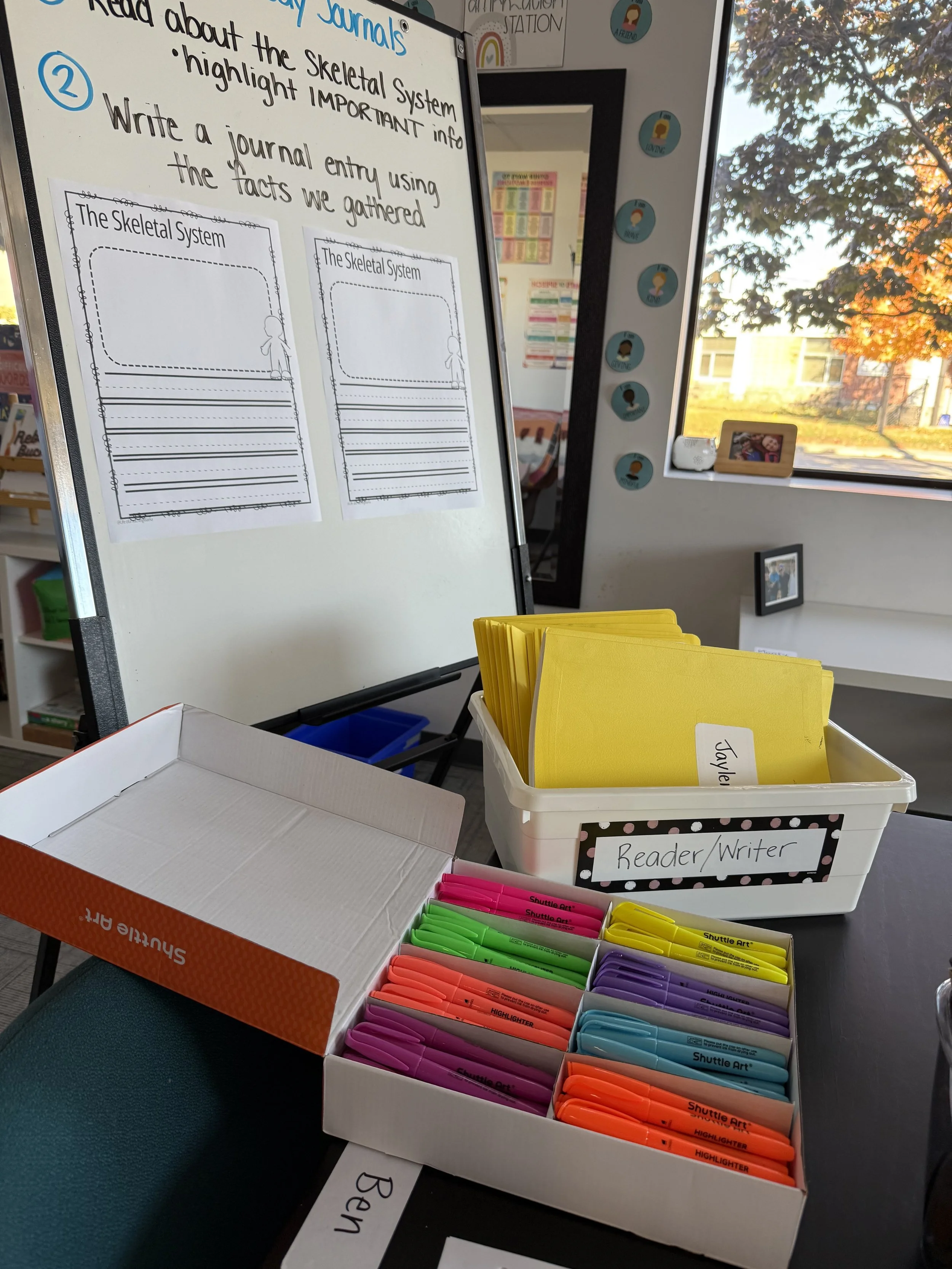
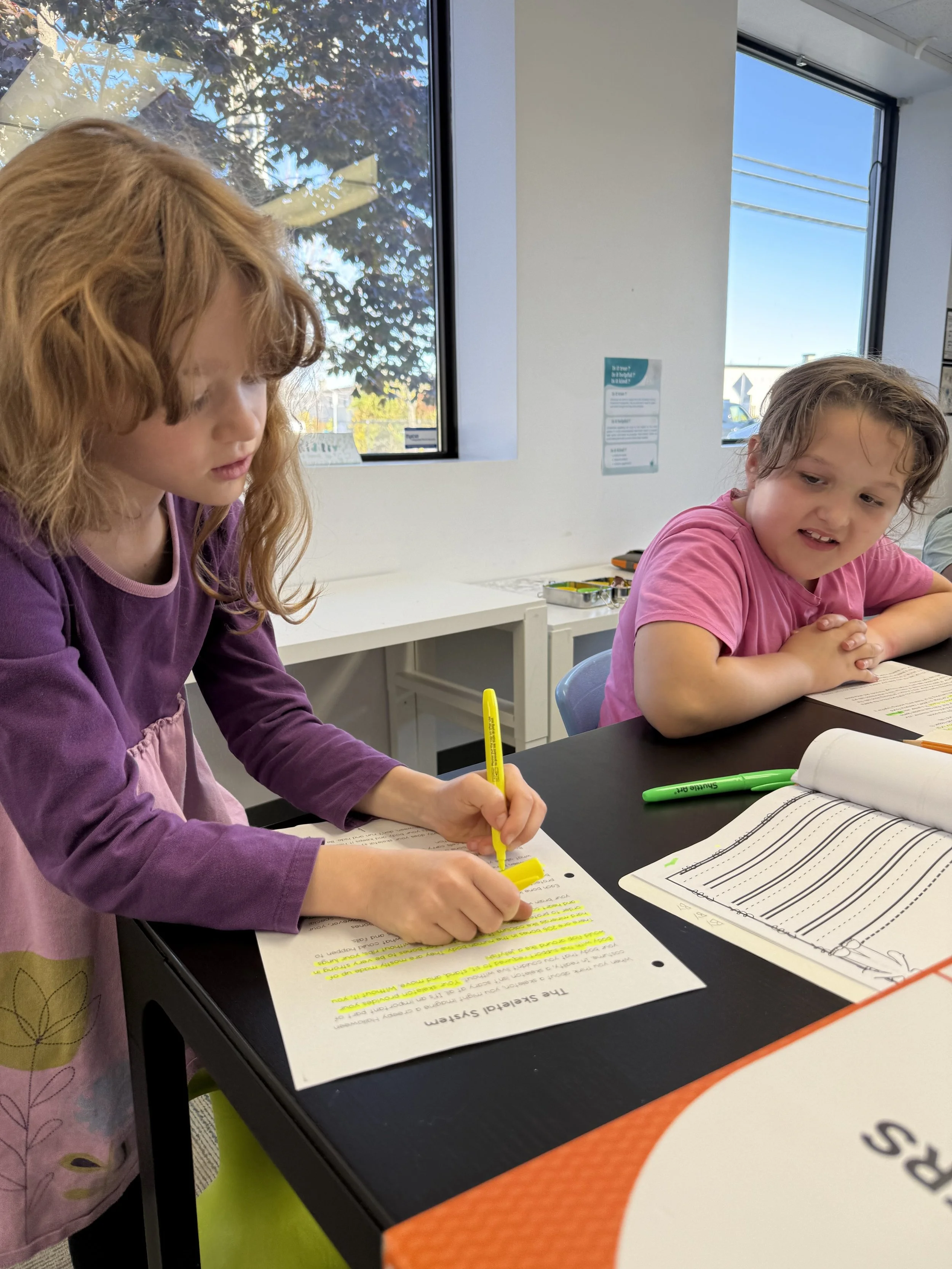
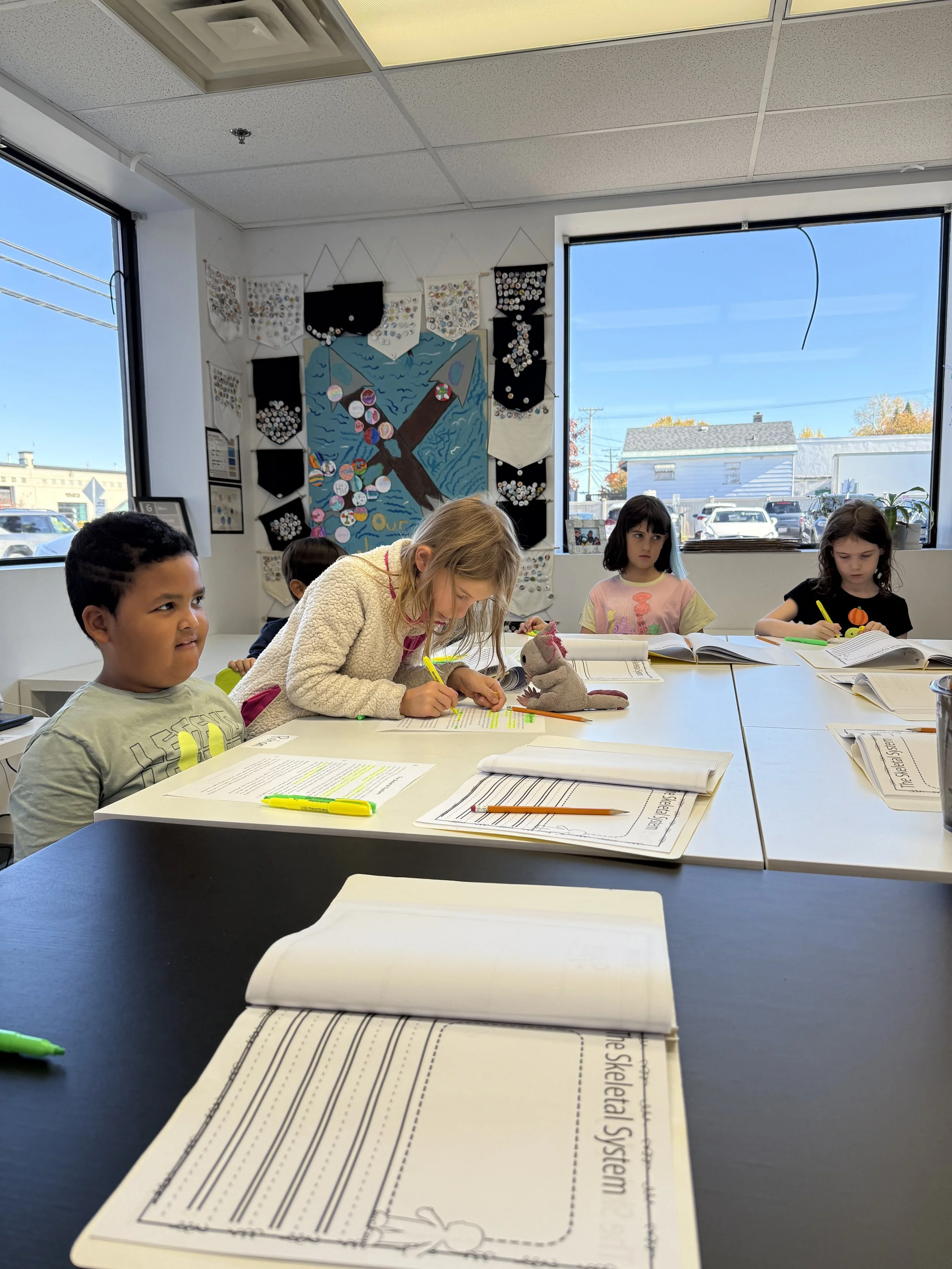
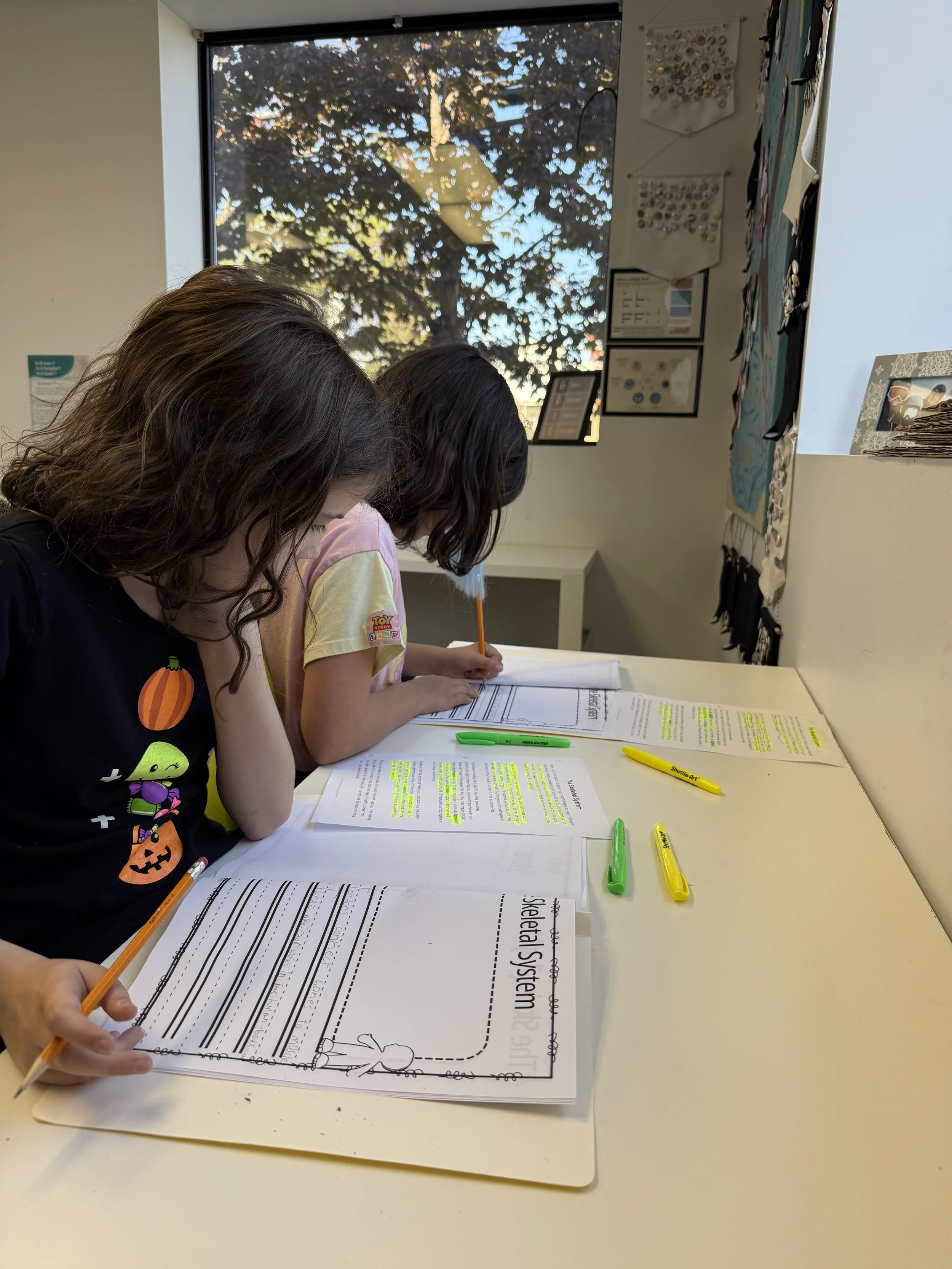


In Reader/Writer workshops, we introduced our latest writing project that coincides with our Human Body Quest, Human Body Journals and Human Body Systems Reports. Rebels went over the Badge on Journey Tracker, added it to their Badge Plans and got to work! Draw and Anchor Rebels kicked off our first workshop of the session reading and listening to a non-fiction text about the Skeletal System. We highlighted key vocabulary and 3 important facts about the Skeletal System, then wrote them down in our journal. What makes a fact “important”? How do we know which vocabulary words are worth defining and using, and how do we know what sentences or words aren’t? Rebels discussed this as a team, coming to the conclusion that important facts help us to understand more about the topic and teach us something about the main idea. In this case, Rebels agreed that sentences such as “our skeleton gives our body shape and support,” and “bones protect our organs” as well as scientific names of bones like tibia, femur and skull should go into their journal. Early finishers created a title page for their journal and added a few definitions we found in the Skeletal System article to our glossaries. On Thursday, Aim and Release Rebels looked over our Human Body Systems report outline. This Session, they will be writing a five paragraph report about a system of their choice. We reviewed the Badge expectations and looked at another Rebel’s animal report from a previous school year as a world class example. Rebels discussed elements that make a non-fiction report excellent, such as a title, clear paragraphs and the content being organized into five main sections. The first line of each paragraph is indented, punctuation is used properly throughout the entire report and there are no spelling mistakes. Following this discussion, Rebels selected which system they wanted to write about and began gathering information for their introductory paragraph.
Quest


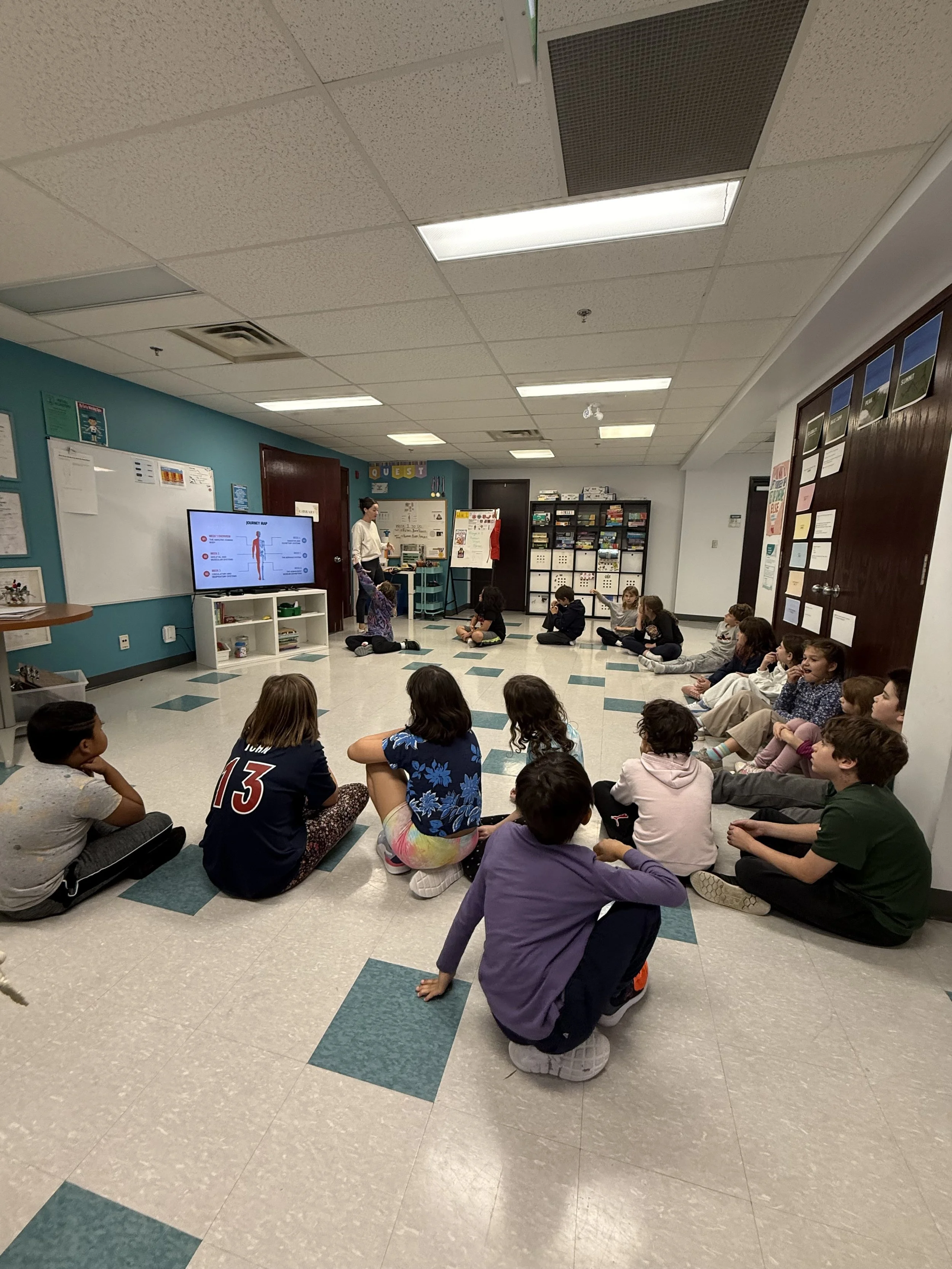
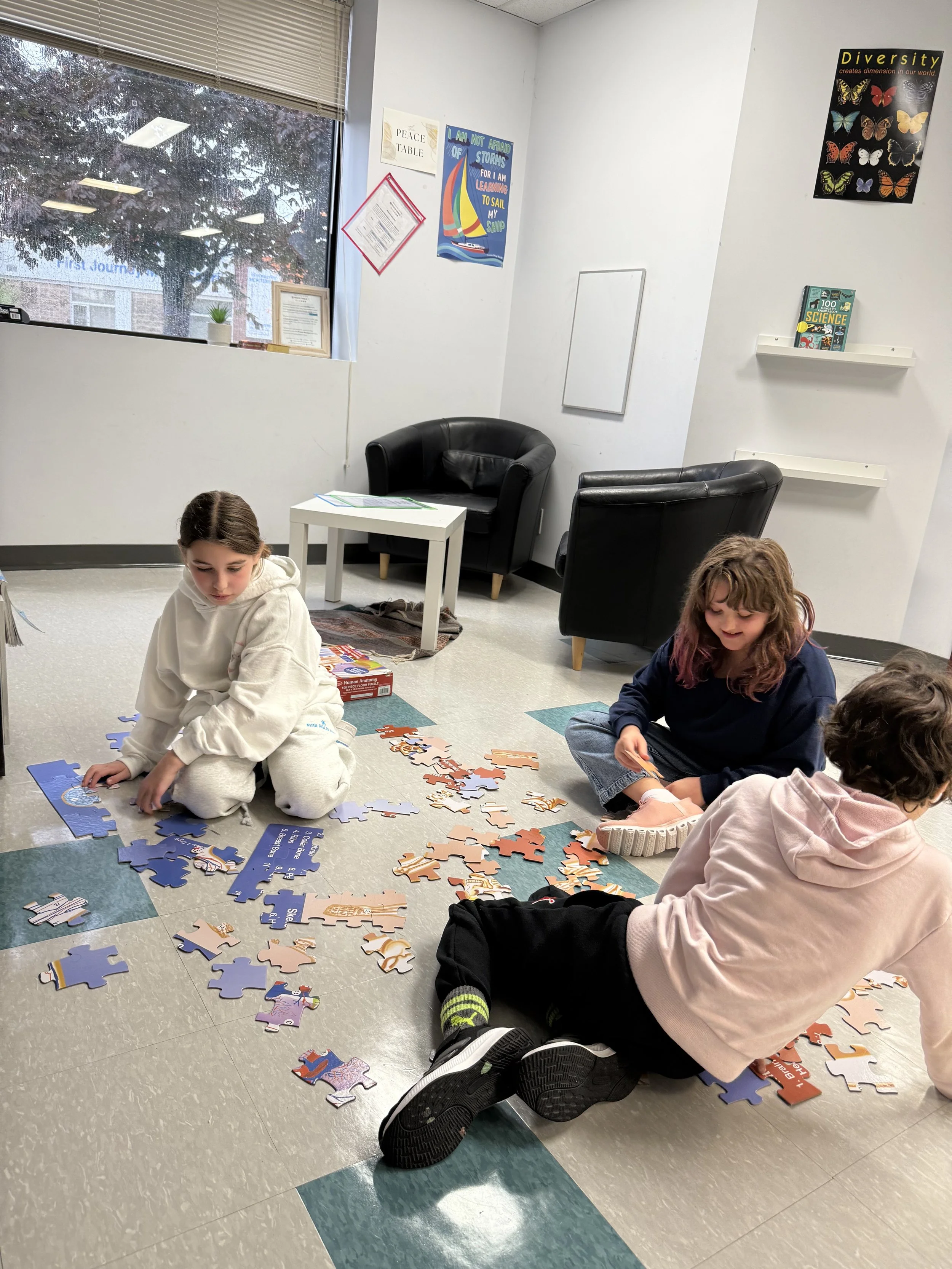
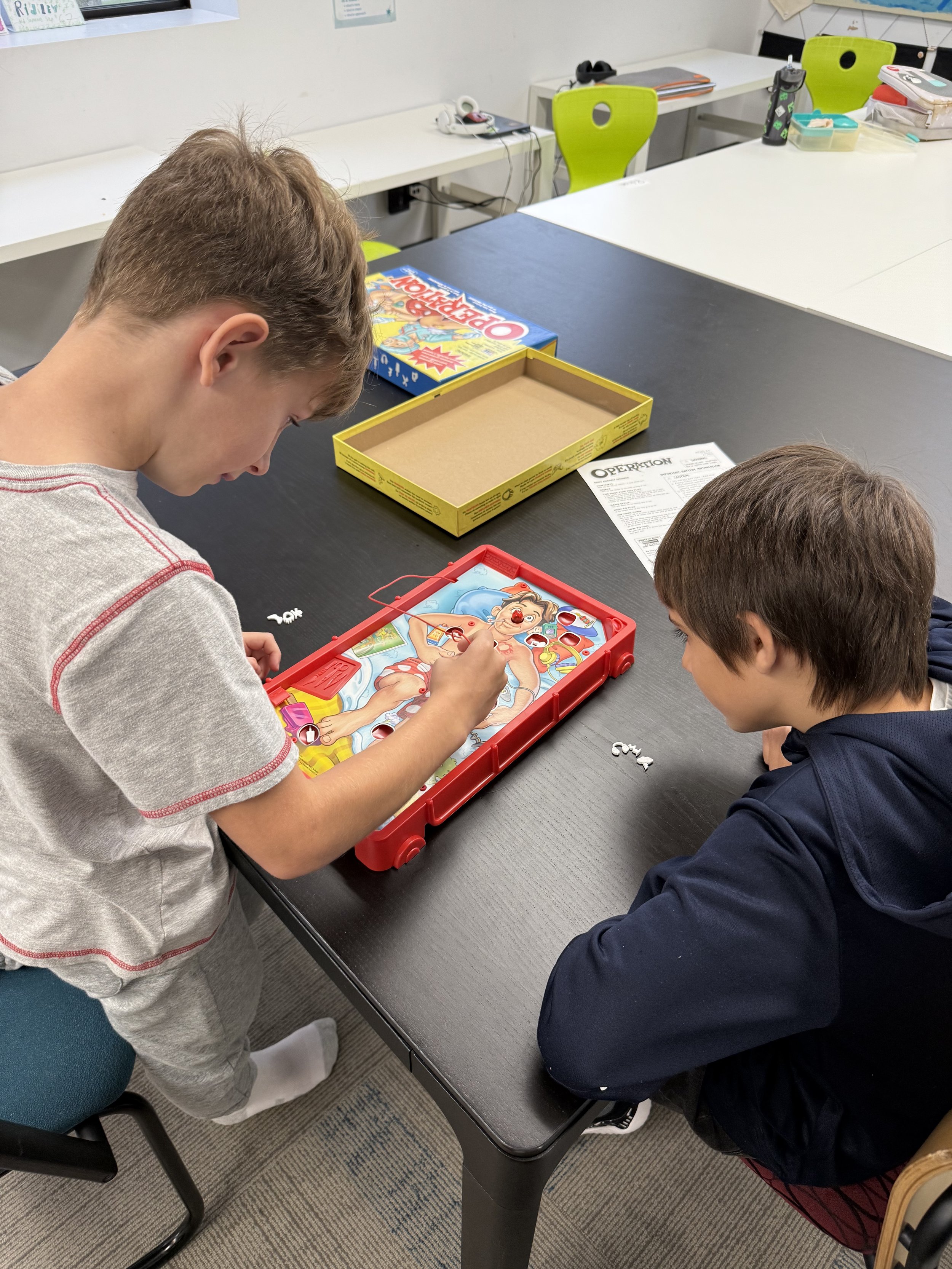
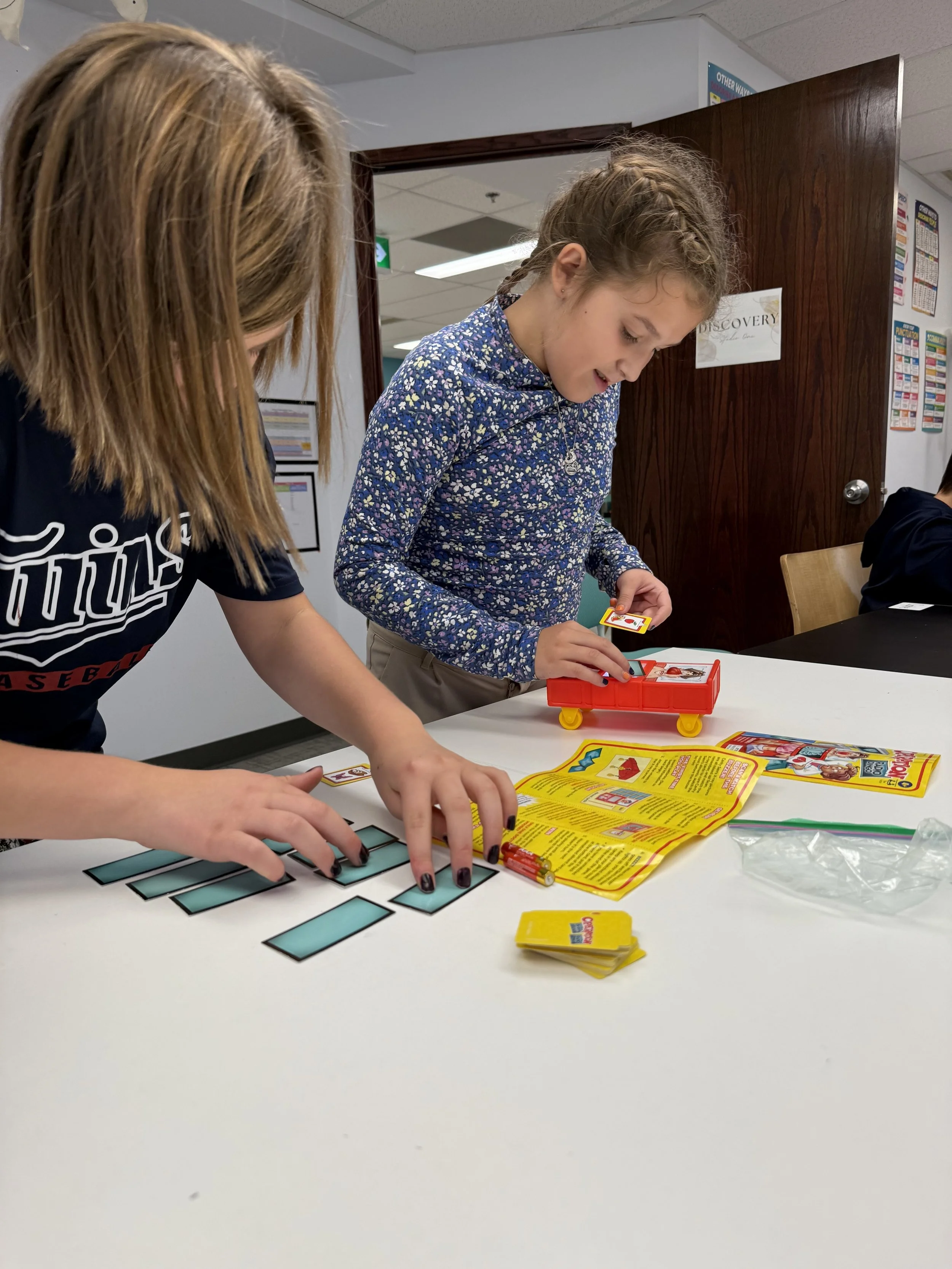


Welcome to The Human Body Quest! Rebels had an amazing first week exploring and learning all about our insides! On Monday, we launched our Quest Map and badge expectations, then jumped directly into some Human Body centers where Rebels could learn more about the systems and organs that make us human. Rebels participated in a variety of discovery centers, such as reading our non-fiction mentor texts of the week in the library, playing an organ matching game, performing pretend surgeries as they played the board game Operation, built a human body floor puzzle that highlighted key vocabulary and placement of organs, and a Magic School Bus station. Rebels began to develop a better understanding of what our systems are, which organs are a part of each system and began thinking more critically and intentionally about what exactly is going on underneath our skin.


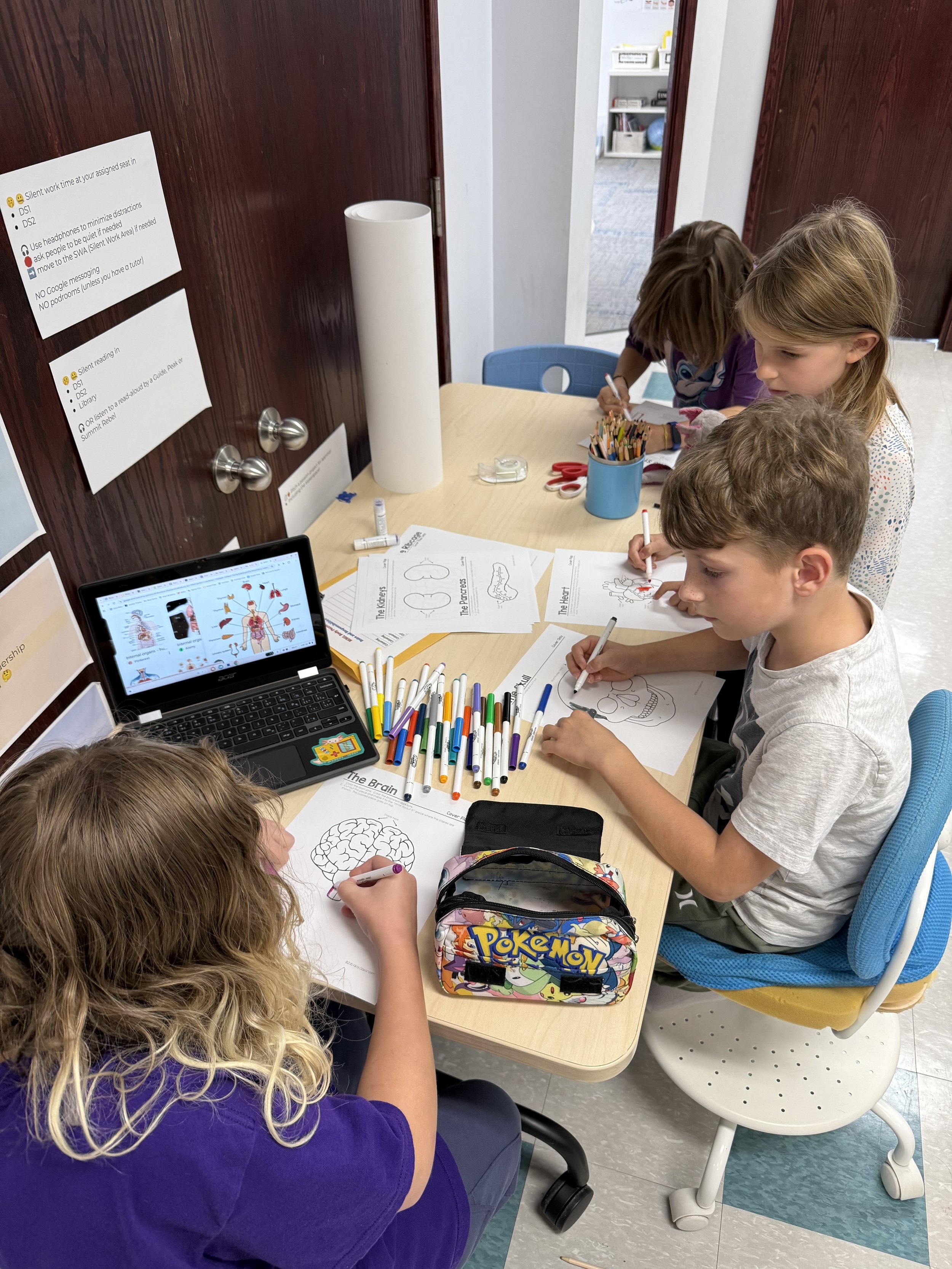
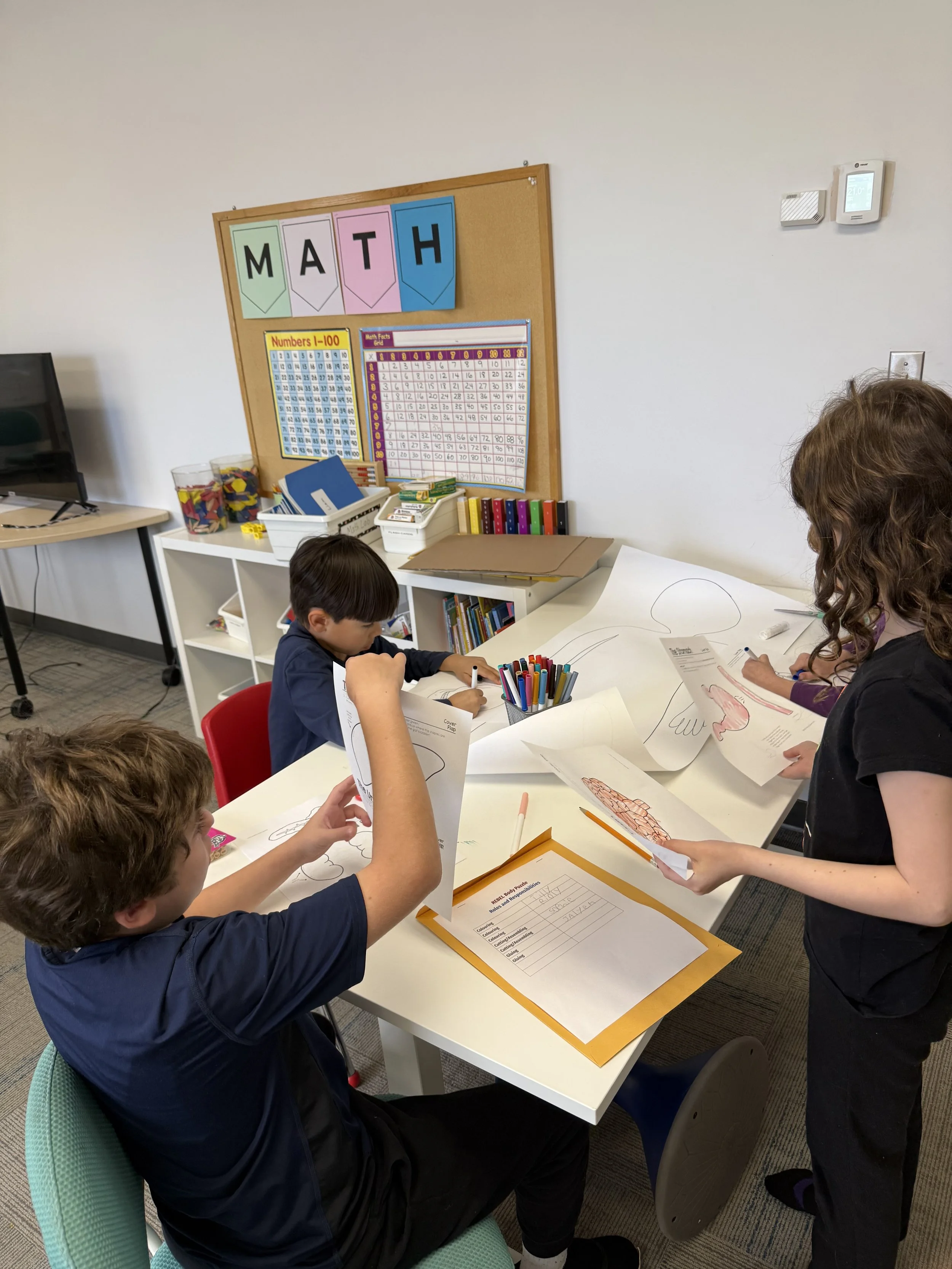
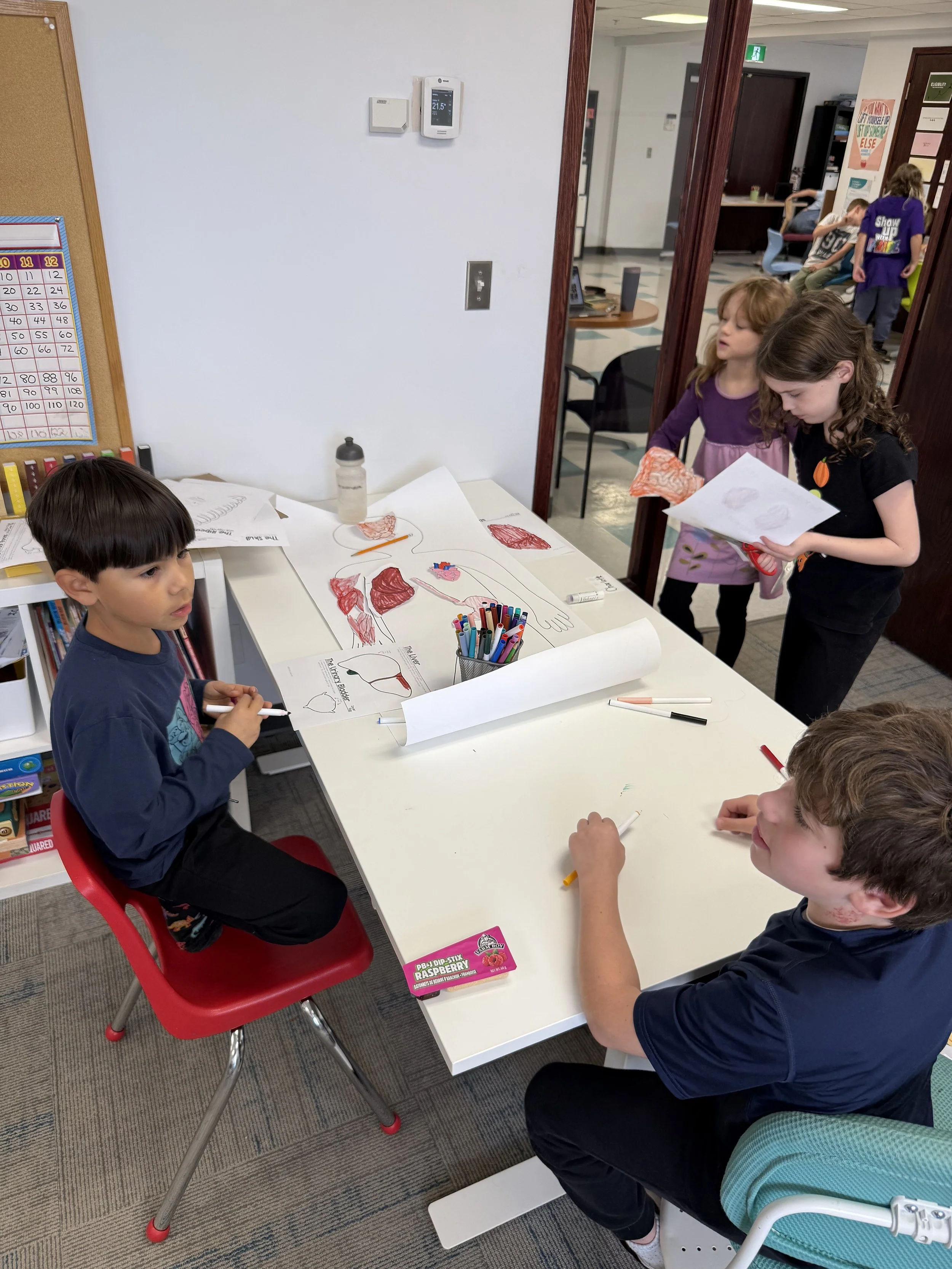
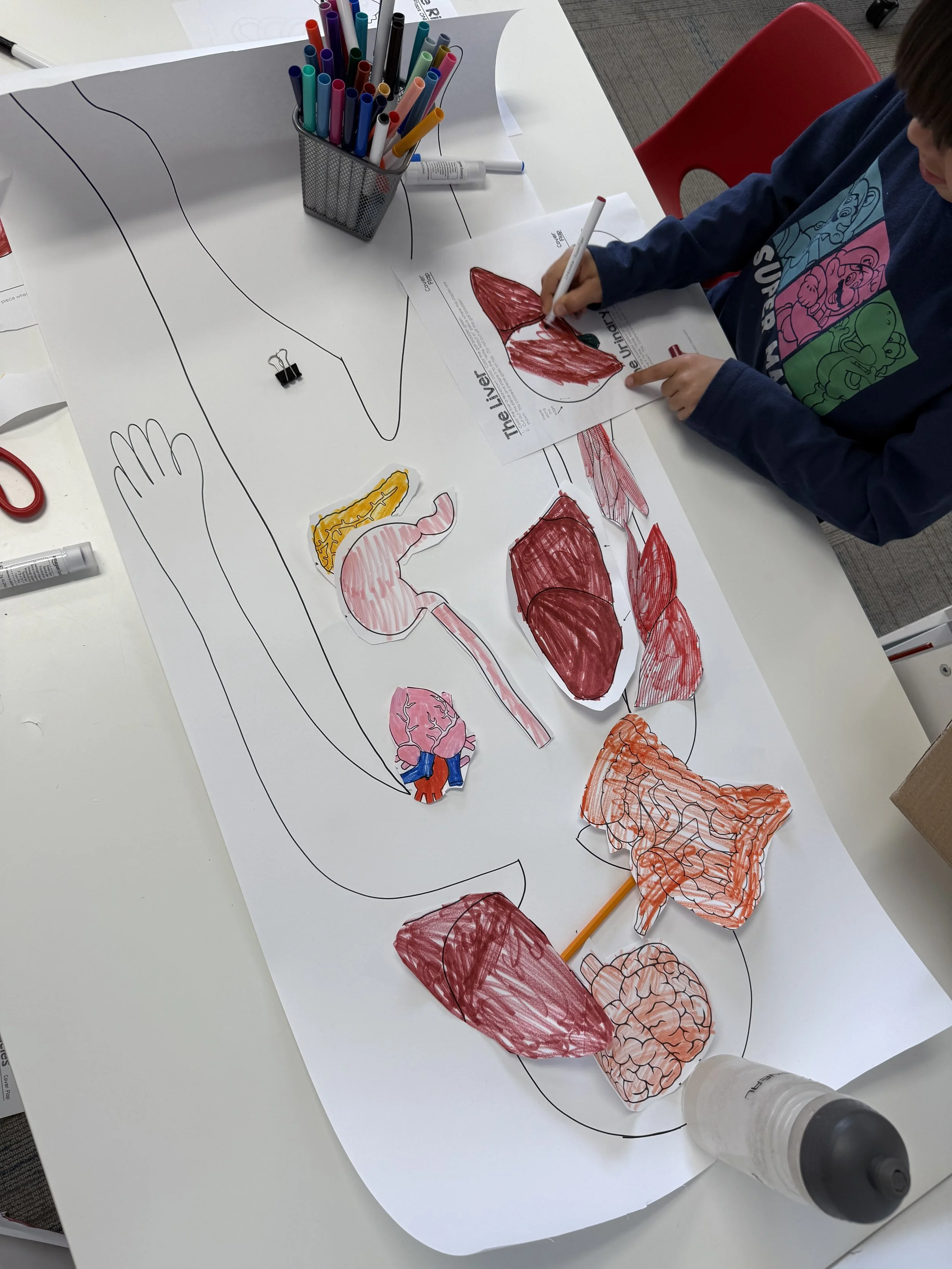
On Tuesday, the Rebels were challenged with a “Rebel Body Puzzle”, where they had to use the tools and resources around the Studio to help them put together the insides of a body. In their Squads, Rebels received a human silhouette and an envelope containing a variety of organs and body parts such as the lungs, heart, brain, skull, femur bones, intestines, pancreas, a bladder and more. They divided their team into specific roles and responsibilities (researchers, colourers, prep/cutting crew, and the glue crew) to assemble their organs in the right places on the poster. Groups came back to the launch space Tuesday afternoon to showcase what they got done, shared what went well and what things they would change if they had the chance to go back in time. Some Rebels said if they could go back in time, they would assign multiple roles to each team member so that they could maximize the amount of people working at once. Others thought their communication was really strong, but it still took longer than expected to assemble the body parts.
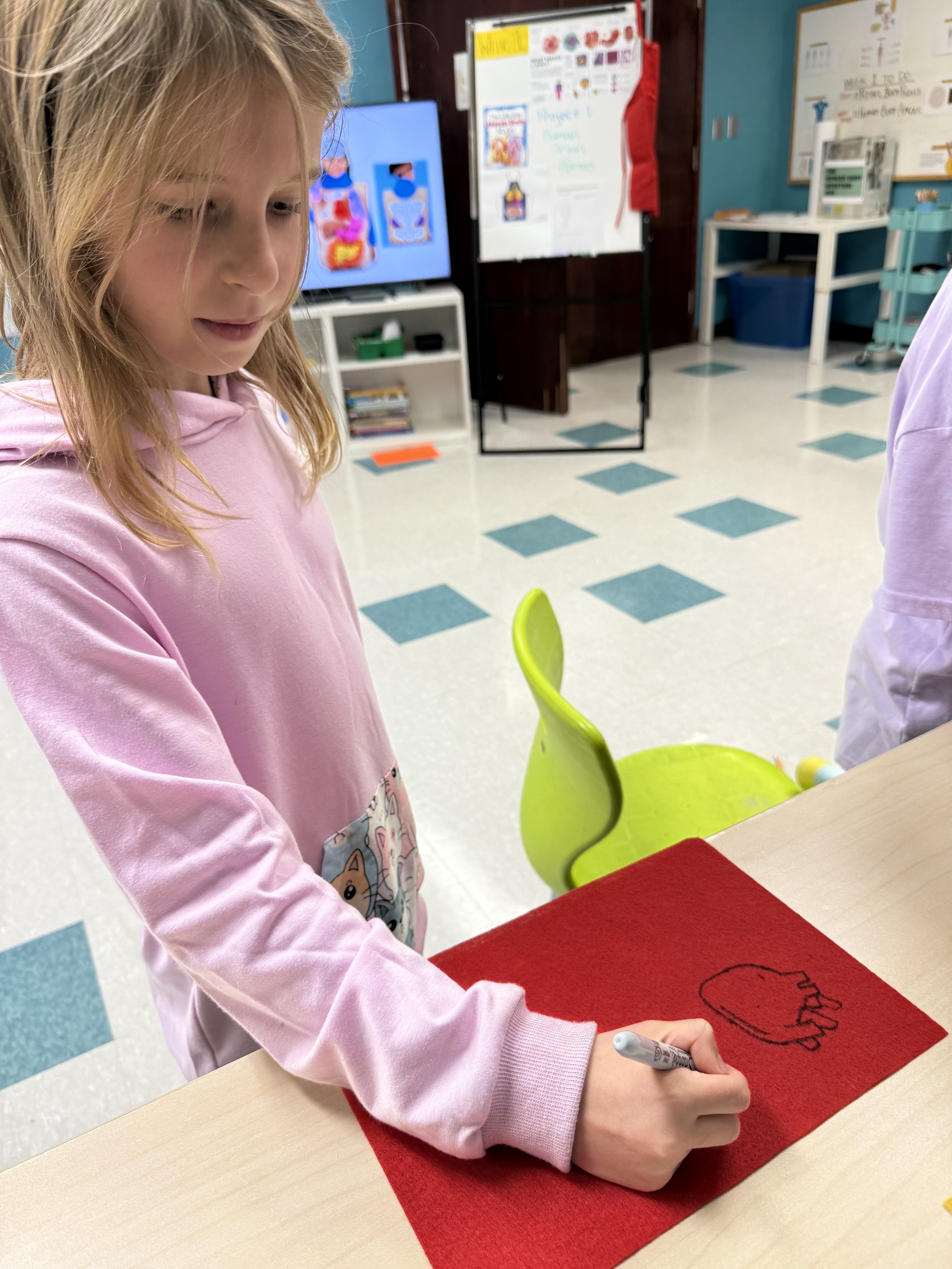
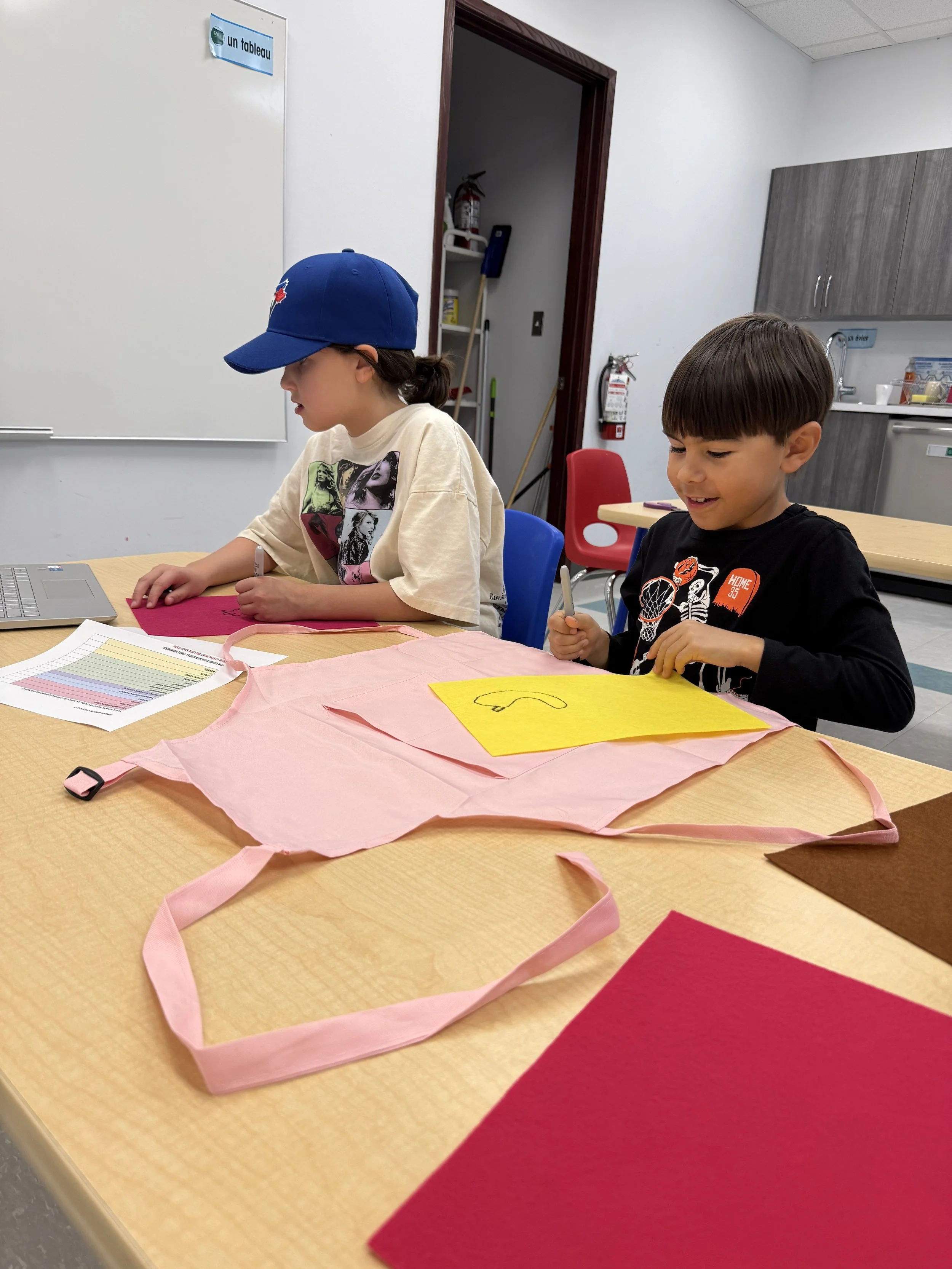
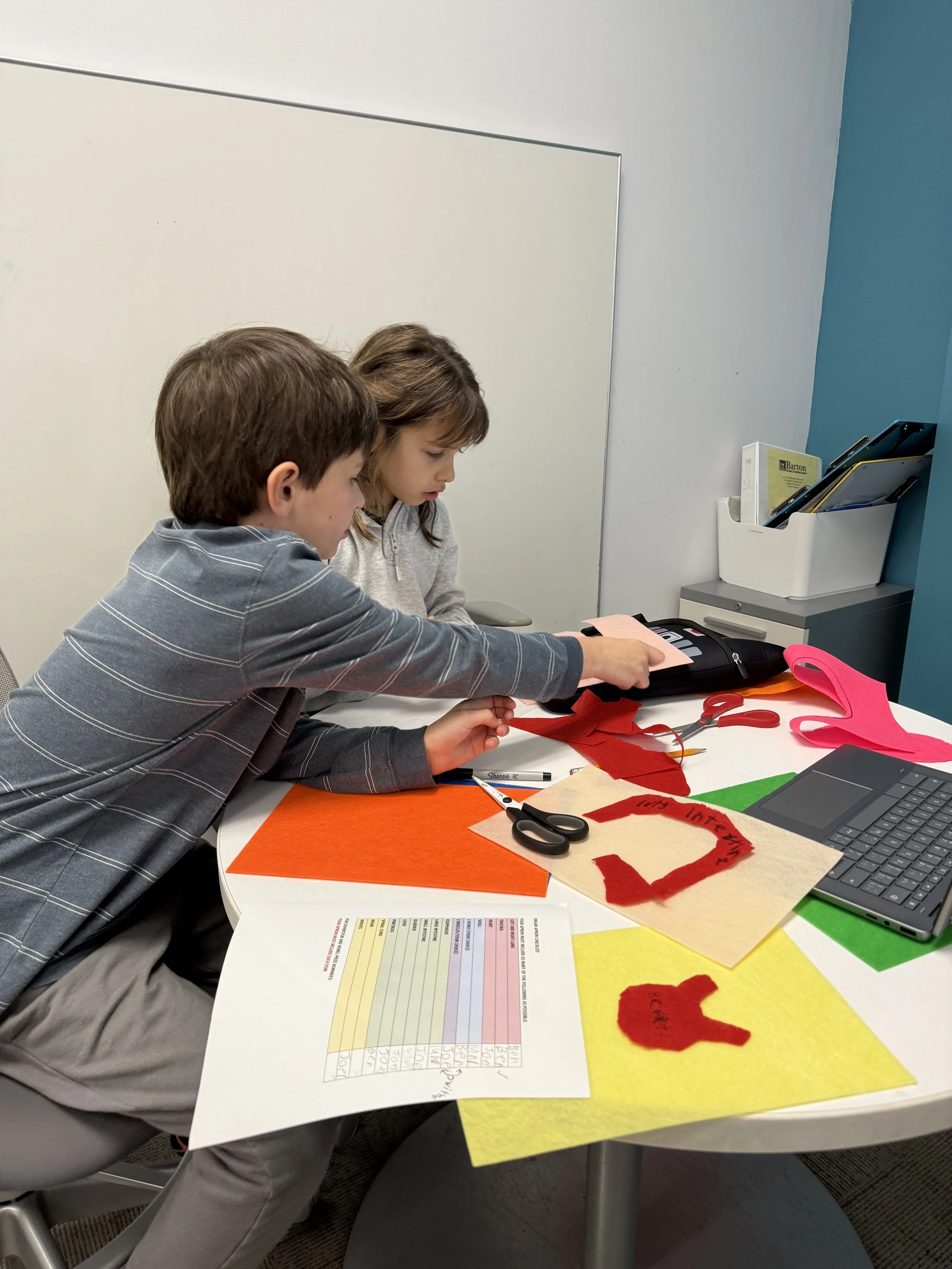
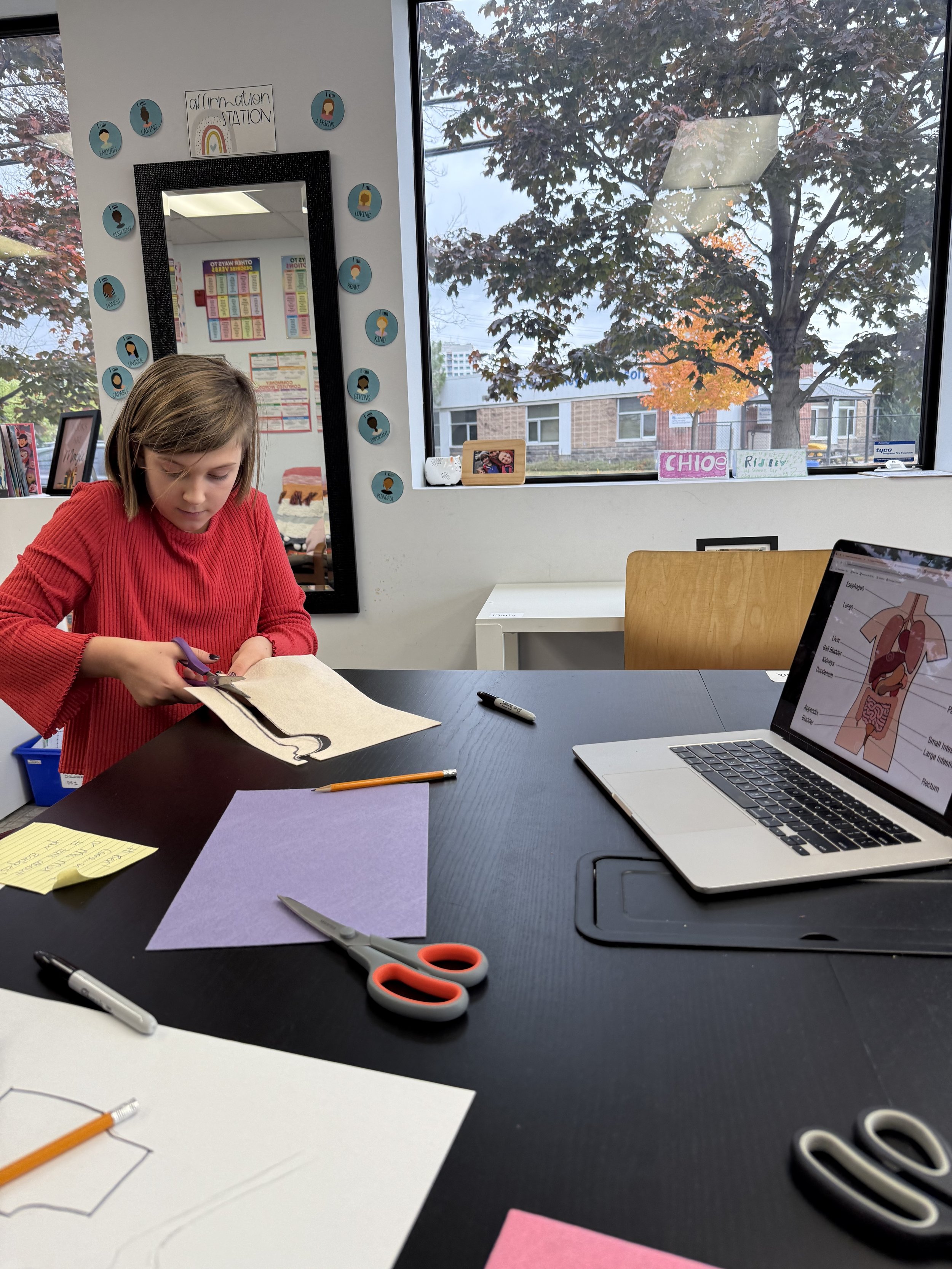


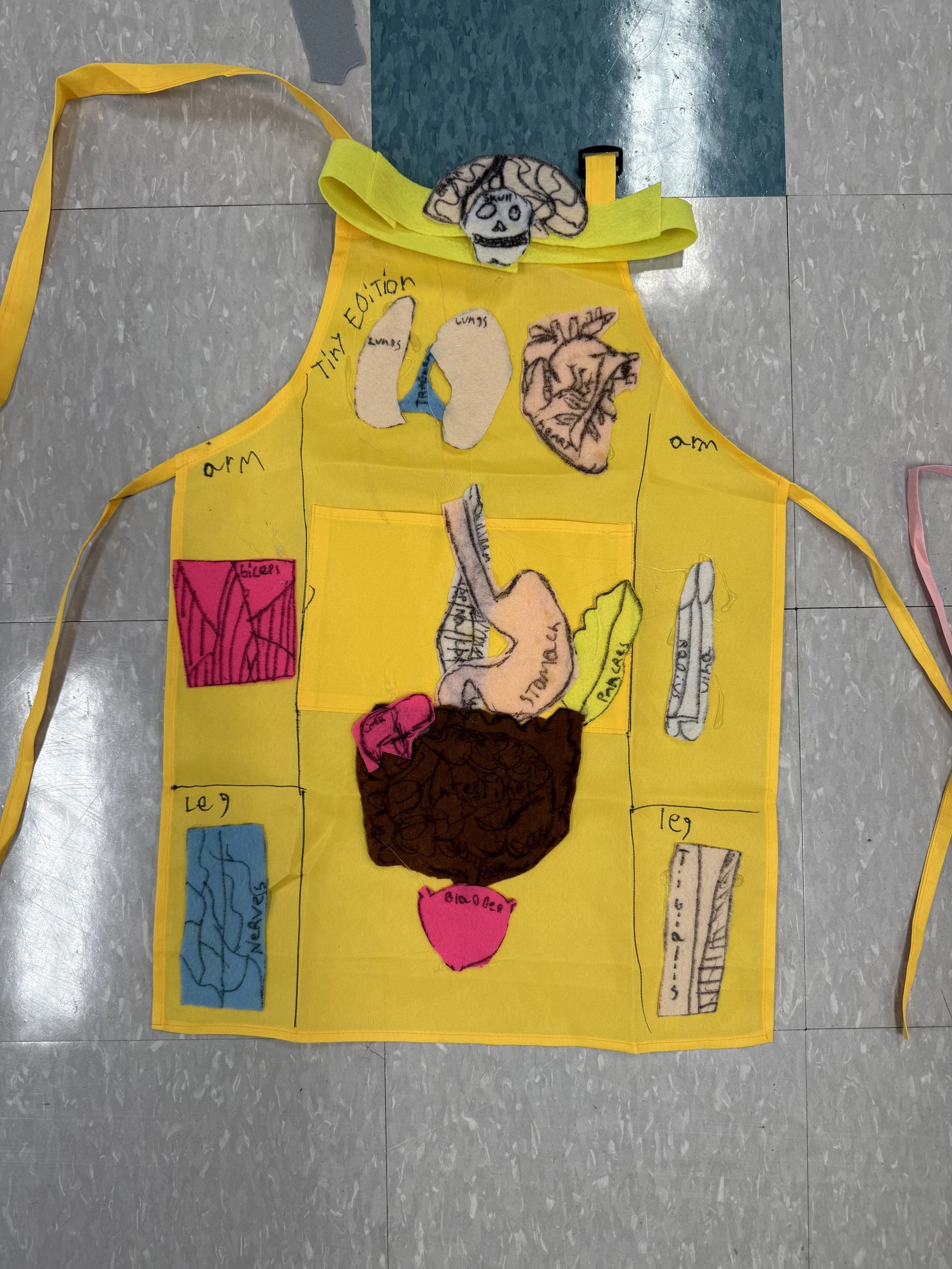


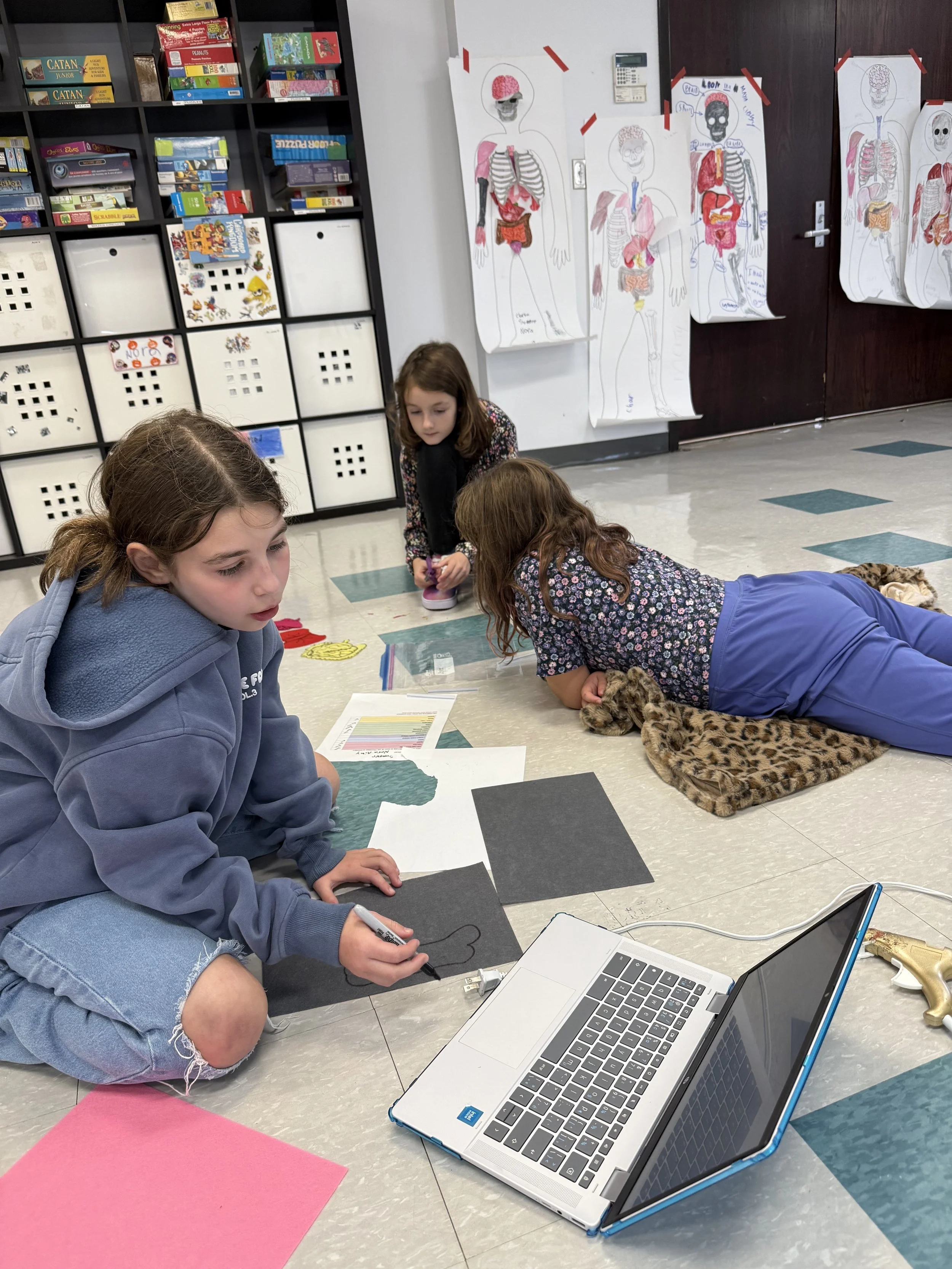

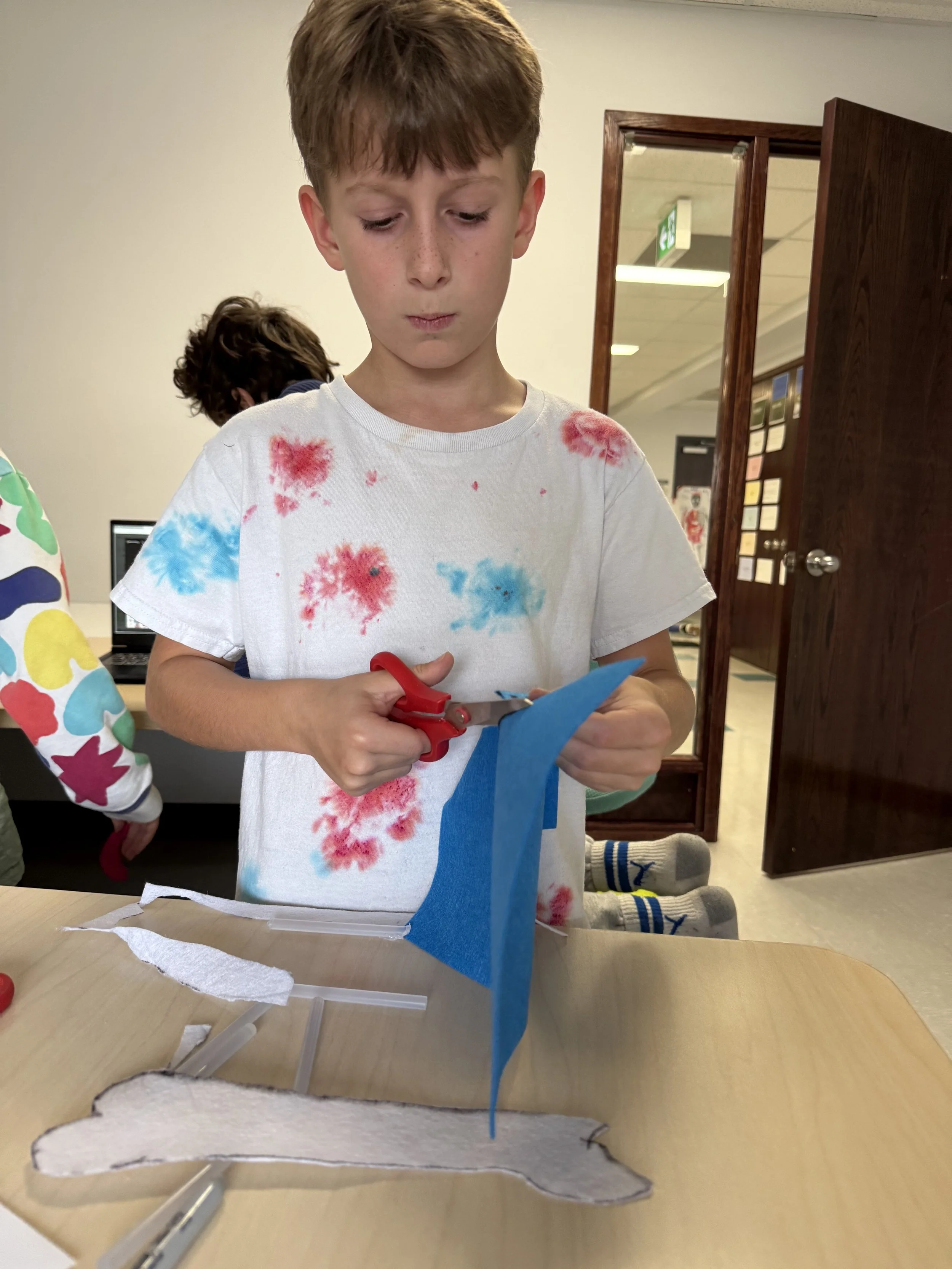
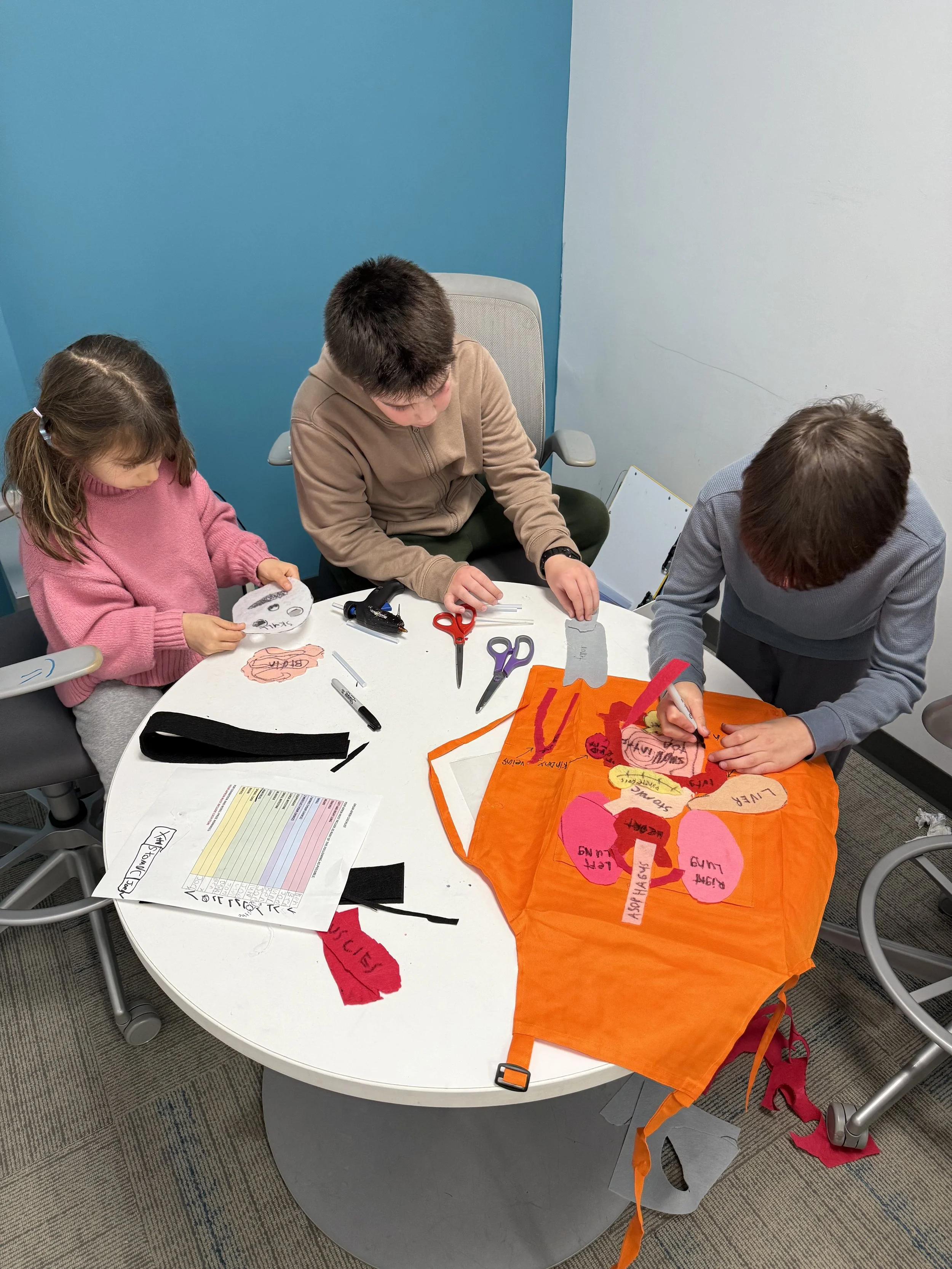
Wednesday and Thursday the Rebels created their first Exhibition piece, Organ Aprons. An extension of our Rebel Body Puzzles, Rebels split off into pairs to create an apron designed to showcase the location and names of organs inside our bodies. Each group was given a checklist and earned points for the number of organs they were able to add to the apron. Thursday afternoon, Rebels showcased their aprons to the entire team and we selected which aprons would be presented at our Human Body Museum - congratulations to the winning teams who were selected by our studio! This week, we also introduced our “Human Body Question Box”, a tool Rebels can refer to when they have questions about the human body, but would prefer to remain anonymous or not ask it in front of the group. We will have opportunities to read out the Human Body Question Box slips each week as we reflect on what we learned and discuss our key takeaways as we venture into each new week and explore new systems. Up next week, Rebels will explore and create a project focusing on the skeletal and muscular system.
Civilizations
This session began with a chapter from The Story of the World called “The Jewish People,” including stories about merchants trading in cities like Ur, Haran, Canaan and Egypt around 2300 BCE. Rebels used lines to connect these places on their map, in particular to show the route that the Israelites took from Canaan to Egypt. This was also a great opportunity to connect to our timeline, and we counted backwards on our poster to get a better sense of how long ago 2300 BCE was from today. Rebels also heard some biblical stories about Abraham, how he followed God to Canaan (where his descendants became the Jewish people), and how famine drove him and his family to Egypt where they would later become slaves. After reading, we discussed key issues from the stories, like whether or not the Rebels would forgive a sibling for blaming them for something that wasn’t their fault and what they would do in that situation. We also had a riveting discussion on whether or not you need to see something to believe it - Rebels often argued they would need more proof than hearing someone’s words and seeing is important. Others countered that with AI becoming more and more convincing, sometimes seeing it isn’t enough to mean it’s true!
French
In French workshop, Rebels are learning about different human anatomy vocabulary. Focusing on pronunciation, Rebels worked with flashcards, and different oral communication games to practice naming different parts of the body.
Additional Highlights
Our PE workshops this week focused on Track and Field training, some beautiful Fall hiking, scavenger hunts, and an intense game of Kick Baseball! Rebels from every studio had a blast at the Pumpkin Run on Friday afternoon.
Exploration Studio


Mindfulness & Launch
We began Session 2 with a candlelit reflection. Exploration Rebels all sat in a circle with a lit candle and thought about the goals we want to achieve and how we want to improve as a learning community. We also discussed Brené Brown's term "candle blower outers" and how we want to ensure everyone's light shines and no one blows out someone's bright spark. We ended our Launch by discussing motivation and ways that we will work to remain motivated when met with obstacles. Learners spoke about the importance of goal setting, persistence, self-discipline, maintaining a positive outlook, and celebrating success. Rebels then took time to journal about a goal they want to achieve in the next three months and how they will break it down into smaller steps. On Tuesday, Rebels completed Lesson 7 in their Becoming a Critical Thinker workbook (see below). Rebels learned about Fauvism, the colour wheel, analogous textures, and strategies to add texture before beginning their Fauvist-inspired animal portraits on Wednesday! After choosing an animal portrait, learners sketched the major outlines and will begin painting their background and animal next week! On Thursday, one of our Rebels led our walk, and while the weather was crisp, they enjoyed the morning jaunt. Upon their return, they completed their first technical drawing activity on isometric paper in order to become more comfortable sketching their innovation designs for their Biomimicry Quest! We began the last day of the week with a puzzle session before our Rebel-led Current Events presentation on the demolition of the east wing of the White House for a new ballroom, a game of chess between a 12-year-old girl and Hikaru Nakamura, a rare calico lobster found in Massachusetts, and the Blue Jays in the World Series vs. the Dodgers!!!


Reader/Writer Workshop & The Hobbit
To get us back into the swing of things after the break, learners paired up to complete a Zombie Escape Room in their Reader/Writer workshop. Spelling, homophones, riddles, mazes, ciphers, pictograms, and more challenged the Rebels to use their grammar skills and wits to solve the final puzzle and discover the antidote!
We also read Chapter 13 of The Hobbit on Monday and finished Chapter 14 on Tuesday. After each chapter, learners completed a free-write and worked on the analysis questions. Rebels used their time on Wednesday to complete the vocabulary sheet for chapters 12 - 14 and the analysis questions before our review and quiz on Thursday.
Reading Challenge, Paragraph of the Week and Grammar
This week's Reading Challenge focused on inferences; our Rebels were tasked with solving a crime and arresting the thief. After an introduction with examples of how we infer as we read using our background knowledge and reading between the lines, learners read the evidence, witness testimony, and a series of criminal profiles to determine the most likely culprit for the crime!
This week's Paragraph of the Week was a descriptive piece where learners needed to describe what they see and smell as they walk through a night market. After writing the piece on Monday, they had to find at least one sentence where they could use olfactory imagery to improve their paragraph. On Wednesday, they were asked to integrate at least one example of personification, and on Thursday, they improved their paragraph by adding more (basic, showing time, and showing location) transitions. Lastly, they wrote or typed up the good copy and submitted their final draft.
Meanwhile, Rebels also finished their homophone review by remembering the difference between to, too, and two. On Tuesday, they had to choose the correct homophone for each sentence before writing a paragraph using each form on Wednesday. Thursday, they teamed up to correct a paragraph before editing a paragraph on their own on Friday.


Quest - Biomimicry
This session, Rebels are taking on the Biomimicry Design Challenge! "Biomimicry comes from joining two Greek words, bios, which means 'life,' and mimesis, which means 'to imitate." Biomimicry is an approach to design and technology in which inventors look to nature and the living world around us to develop innovative ideas. What are some current problems we are facing? On Monday, we brainstormed issues we are seeing or hearing about in the news in our community and worldwide. After generating our list, we sorted it according to categories or themes we observed. Rebels then watched a call to action video and learned about the United Nations Sustainable Development Goals. Rebels used the last 15 minutes of the class to research a goal that speaks to them and that they are passionate about solving. Tuesday, we learned the definition and need for innovations utilizing biomimicry. After the Rebels received their biomimicry note and sketch book, we watched an excellent explanation of biomimicry with a video created by Janine Benyus, who popularized the term. Groups then had time to review several additional examples of biomimicry with a series of handouts and online resources. Who are nature's design champions right outside our door? On Wednesday, we headed outside to examine structures, behaviours, and processes of plants and animals through the lens of function. After returning to the studio and discussing our observations, we used the Two Viewpoints of a Tree poster to reiterate that knowing about something might require instant recall (like a tree has leaves), but learning from that is a more complicated task (like how those leaves generate energy for the tree to grow), requiring deeper learning. As part of this Quest, learners will look for patterns found across natural ecosystems: what does nature do well, and why do we want to mimic natural forms? We therefore considered how we are striving to emulate patterns across the natural world, such as how organisms and ecosystems: adapt locally attuned and responsive strategies, are resource efficient both in materials used and energy expended, breakdown products into safe nutrients, build from the bottom up, cultivate cooperative relationships, and more. We ended our third class viewing previous Biomimicry Youth Design Challenge projects to understand our end goal better and identify what we found inspiring about the solutions. On Thursday, we learned that biomimicry has three essential parts: Ethos, (Re)Connect, and Emulate, and we will need to strive for all three as we complete the design challenge and work toward our solution. The biomimicry design process requires designers to be comfortable using the language of both biology and design. Learners worked in groups to complete The Language of Biomimicry activity, where they used the AskNature Biological Strategy page "Baleen Plates Filter Food: Blue Whale" and read through the content. They then had to answer a series of questions and complete a chart regarding baleen, its function, and how engineers have used the whale's baleen as a model for innovations. Rebels then navigated the AskNature page about jackrabbits and completed a second chart with their research. Groups with time remaining were given an AskNature Scavenger Hunt to guide them through the various pages and resources they will utilize over the next five weeks.


Math Lab
In this session, we will use our Math Lab workshops to dive into the world of Data Science! We began our class this Wednesday with a Data Talk. In pairs, learners were given a data visual and asked, "What do you wonder?" and "What do you notice?" They then presented their interpretations to the group before learning a series of statistics about data. Rebels were then introduced to the Dear Data Project, a yearlong data drawing project by Giorgia Lupi and Stefanie Posavec. Every week, they decided to capture data about their lives and send it to each other on postcards. The different data visualizations are creative and helpful in expanding our view of what data can be and showing the learners how three variables can be captured in one data visualization! We then introduced the data cycle process before learners developed their own individual statistical investigative questions (SIQs), which they will collect and record the data for. In next week's Math Lab, Rebels will organize and analyze the data to recognize patterns and develop a visual to tell the story of the data collected. We ended our Math Lab by reviewing a few measures of center and spread (mean, median, mode, and range) before taking ten minutes to explore CODAP (Common Online Data Analysis Platform) and a data set for 24 different mammals!


Civilizations
How can thresholds of increasing complexity help us understand the formation of the Universe, our Solar System, and Earth? In Session 2, we will learn how a Universe composed mainly of hydrogen and helium became one filled with billions of stars and planets! This week, we put our previous knowledge to the test by completing our Unit 2 Notebook entry before getting an overview of how our Universe went from simple to complex. Learners read a comic and then answered questions on why the Big Bang is important, the forces that helped create stars, how new chemical elements formed and how humans are connected to the first four thresholds of increasing complexity. We ended class listening to a story that took us on a journey through time and space while using a graphic transcription handout to aid us in note-taking.
French
We are practicing discussion skills by playing the game Loups-garous (Werewolves) this session. The Rebels first played a French Kahoot to learn and recognize all the characters in the game and their special powers. Next, they had to invent and write descriptions of new characters, using the vocabulary and structures they had learned. To conclude, each learner presented their character to their peers, who then voted to decide which character would be added to the original game.

Personal Finance
Each week, we will spend Thursday afternoons learning real-world financial literacy skills. We will learn about budgeting, saving, investing, and the decision-making process behind difficult financial decisions. After asking the Rebels questions regarding their beliefs and emotions around money, we brainstormed what they would like to learn during our Personal Finance (Money Skills for the Real World) classes. Rebels then logged into their Personal Finance Lab accounts and took a pre-test. Once finished, they took the Money Type quiz to discover how their feelings about money may impact their investor success and satisfaction with their life. After posting a screenshot of their results, they read about their two most dominant types (Visionary, Nurturer, Independent, Connoisseur, or Producer) and wrote a reflection on how accurate they believe their results to be.
Becoming a Critical Thinker
This week's lesson was a continuation of our lesson on "Silent Films," those images that often unconsciously play in our minds when we hear about specific topics. On Tuesday, learners were asked to pick a hot-button issue and answer a series of questions, pausing and closing their eyes to see images more clearly. They reflected on what scene flashed before their mind, thinking about the topic, and described the people they saw when they closed their eyes, such as skin tone, gender, economic status, religion, and where they lived. Where is the activity conducted? What is the emotional state of the people? Rebels realized that the images they summoned influence how they read articles and books about that topic. They impact how they listen to news reports and what they feel when they meet people who make up those groups. These silent films shape the vocabulary we use when discussing the topic. They then took time to reflect on what they discovered that surprised them about the images they saw initially, and how their picture may have changed after answering the questions.
Additional Highlights
On Friday afternoon, Exploration Rebels joined the other studios for the annual Pumpkin Run! Witnessing the Rebels pushing themselves and cheering one another on was a fantastic way to end the week!

Launchpad Studio
Communication and Literature
After reading the Introduction in Keith Harrison's translation of Sir Gawain and the Green Knight, we met on Friday to discuss important background information about this Arthurian story from the Middle Ages. We read about the basic plot of the poem, reviewed what was known about the author, and the influences on the poem, such as chivalry and chivalric romances, and folklore. We also reviewed the five simple elements of a quest (a quester, a place to go, a stated reason to go there, challenges and trials en route, and the real reason to go there) and have been tasked with looking out for what seems to be Sir Gawain's real reasons to be on a quest. Lastly, Rebels reviewed poetic devices such as heavy alliteration and Bob and Wheel verse, present throughout Sir Gawain and the Green Knight. Next week, we will read and discuss the poem's first half!

AP Chemistry
This week in Chemistry, Rebels worked on Unit 2, with an overview textbook reading about the different types of chemical reactions (precipitation, acid-base, and oxidation-reduction) and contributors to electronegativity. This was followed by an overview quiz and two reading/quiz pairs that went more in depth on solution stoichiometry, and metals in aqueous solutions. This week's lab was focused on redox titration, calculating the transfer of electrons in a redox reaction with hydrogen peroxide and potassium permanganate.
Personal Finance
Over the next few sessions, Launchpad learners will also learn about budgeting, saving, investing, and the decision-making process behind difficult financial decisions. After asking the Rebels questions regarding their beliefs and emotions around money, we brainstormed what they would like to learn during our Personal Finance (Money Skills for the Real World) classes. Rebels then logged into their Personal Finance Lab accounts and took a pre-test. Once finished, they took the Money Type quiz to discover how their feelings about money may impact their investor success and satisfaction with their life. After posting a screenshot of their results, they read about their two most dominant types (Visionary, Nurturer, Independent, Connoisseur, or Producer) and wrote a reflection on how accurate they believe their results to be.
Additional Highlights
One of our Launchpad Rebels set up the Pumpkin Run route for the other studios and cheered them on at the top of the hill, the hardest part of the trail!
Potential Discussion Ideas or Questions to Ask Your Rebel:
Spark Studio
What does STEM stand for?
How do you use technology in your day to day life?
What prediction did you make for the story, How to Catch a Witch?
French: How do you say “ears” in French? (oreilles)
Discovery Studio
How do you calculate the average of something? What is the two-step recipe for this?
What is the difference between mean, median and mode? Can they be the same value? How do you know?
What are the names of some organs you learned about this week?
How was the Organ Apron activity? Did you complete the challenge by the end of this week?
Reader/Writer Draw & Anchor: How do you know what information should be highlighted or considered “important” in an article?
Reader/Writer Aim & Release: Which human body system did you choose to write your report on? Why?
French: Comment dit-on “lungs” en français ? / How do you say “lungs” in French? (poumons)
Exploration Studio
In Ch. 12, Bilbo's "good luck" is talked about by Thorin. The idea of "luck" comes up again in Ch. 13, when Bilbo tells the dwarves not to "tempt luck" too long admiring the gems in Smaug's lair.
Do you believe in luck? When have you ever felt lucky? Do you know others who have been lucky? If not, what are your reasons for not believing in luck
What is your statistical investigative question that you are collecting data for in Math Lab?
Is the secret to investing wisely: how much you make; how much you spend; choosing the right investments; choosing the right advisor or overcoming your own psychology?
French: Quel personnage as-tu créé en français? / Which character did you create in French?
Launchpad Studio
How do you choose your personal reading material? Is it primarily based on genre, challenge level, awards the book has earned, or something else?
Do you find the textbook or the online course material easier to understand in AP Chemistry? How many hours per week are you dedicating to the course?
What were your results after taking the Money Type quiz? How do you think that impacts your feelings about money and finances?