
Revel Recap: Jan 5-9
Important Upcoming Dates
Session 4 Exhibitions
Discovery Studio Exhibition - Tuesday, February 10th
Spark Studio Exhibition - Wednesday, February 11th
Exploration Studio Exhibition - Thursday, February 12th
Spark Studio
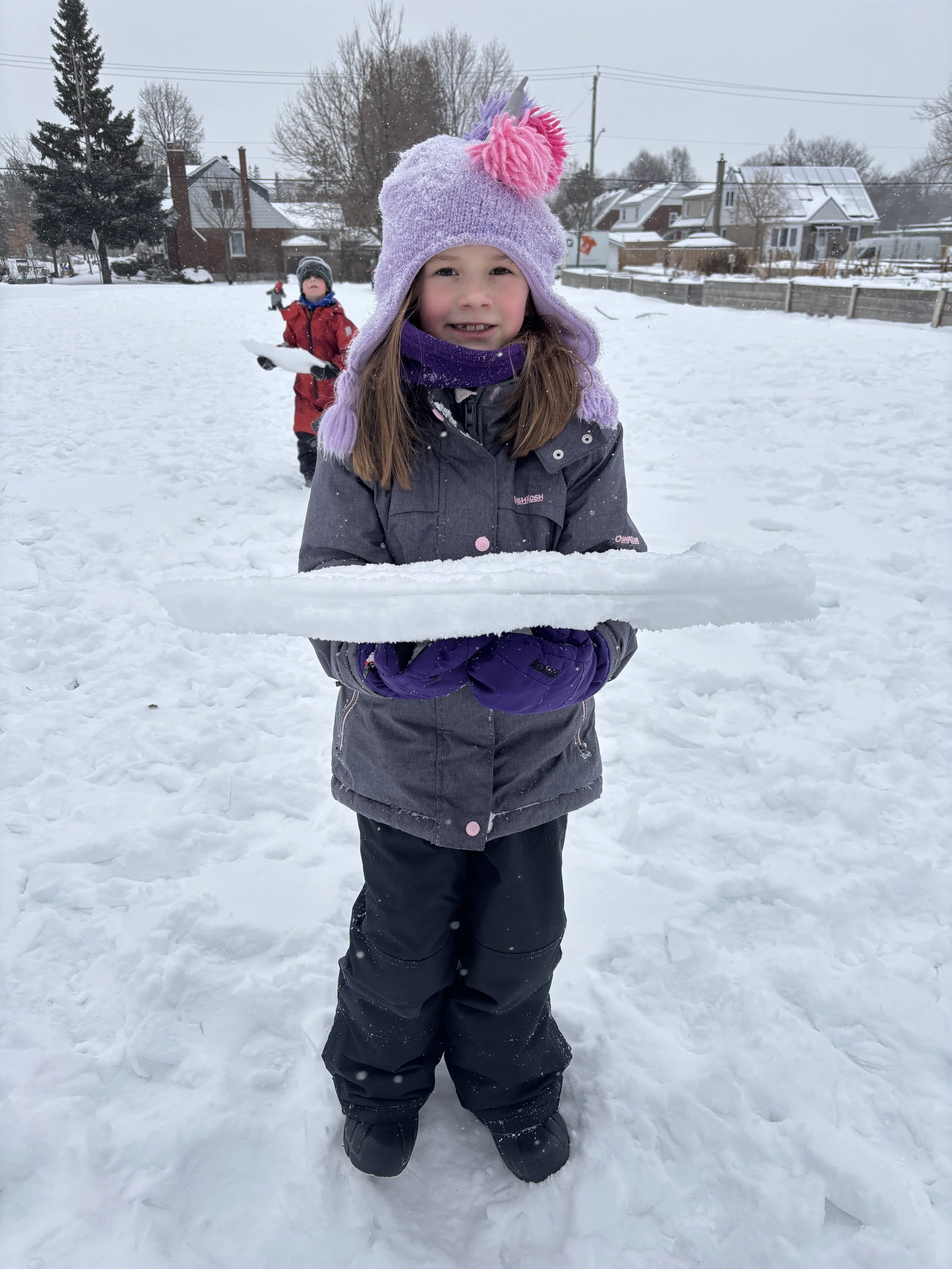
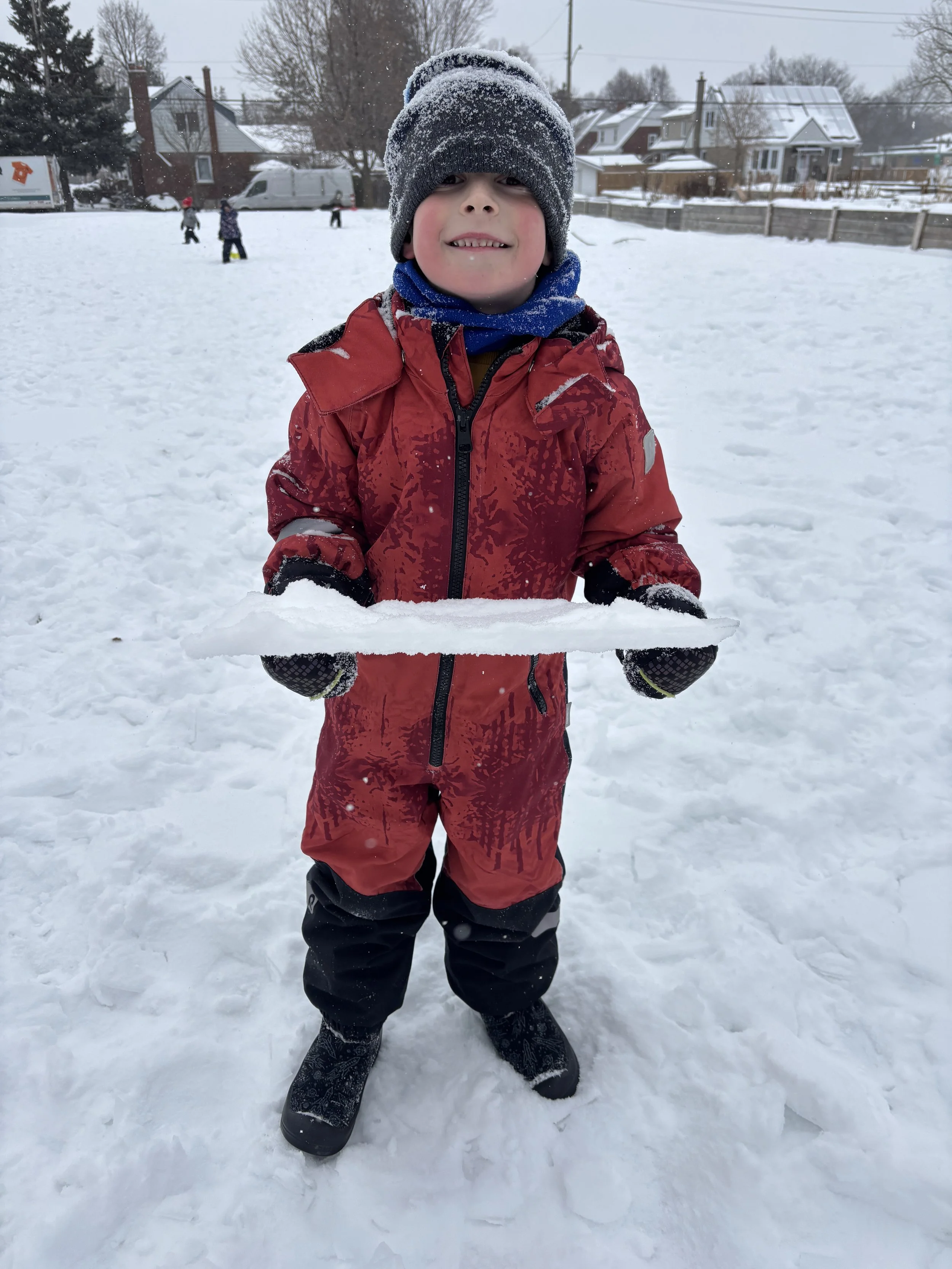
Mindfulness and launch
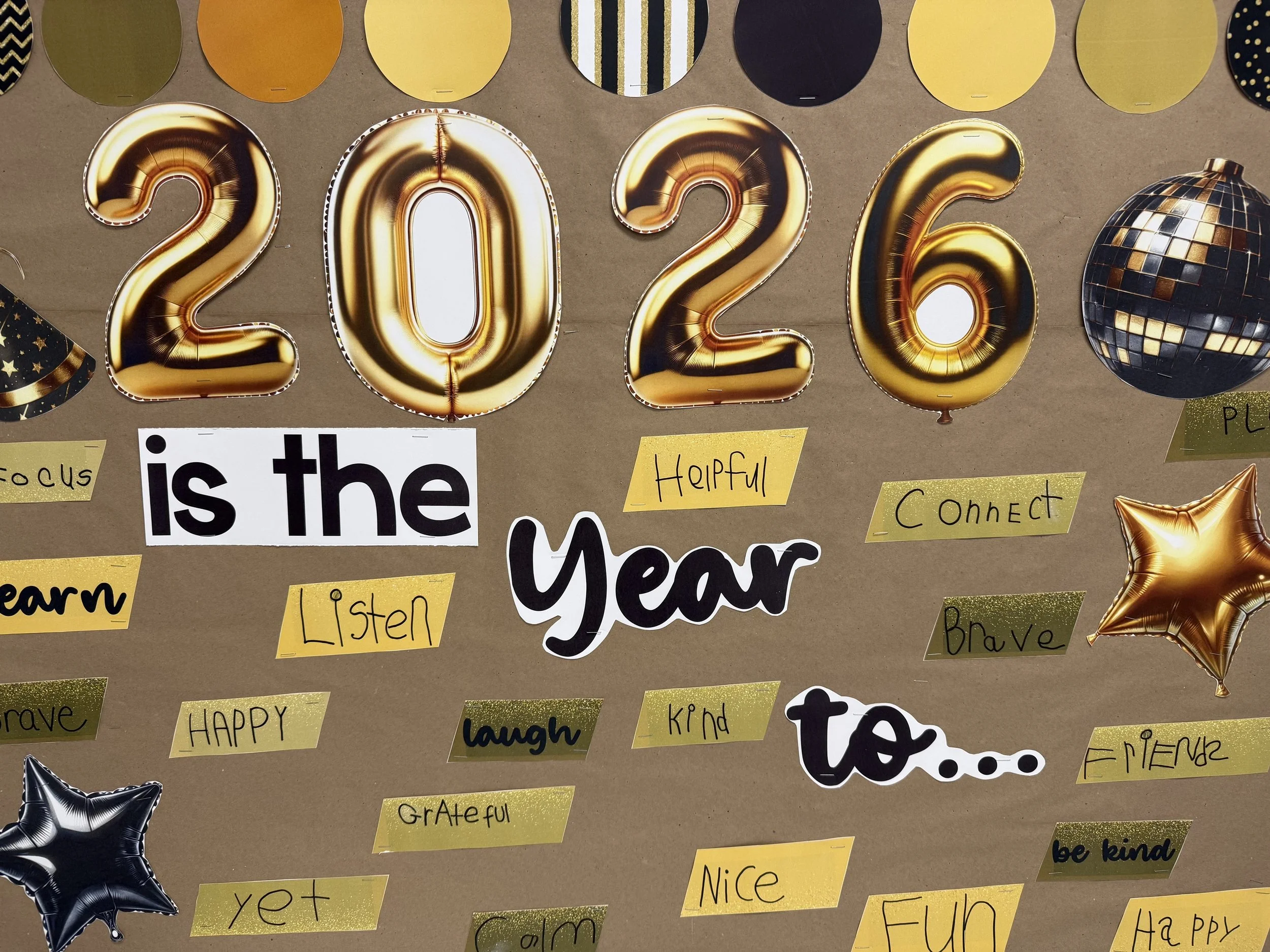
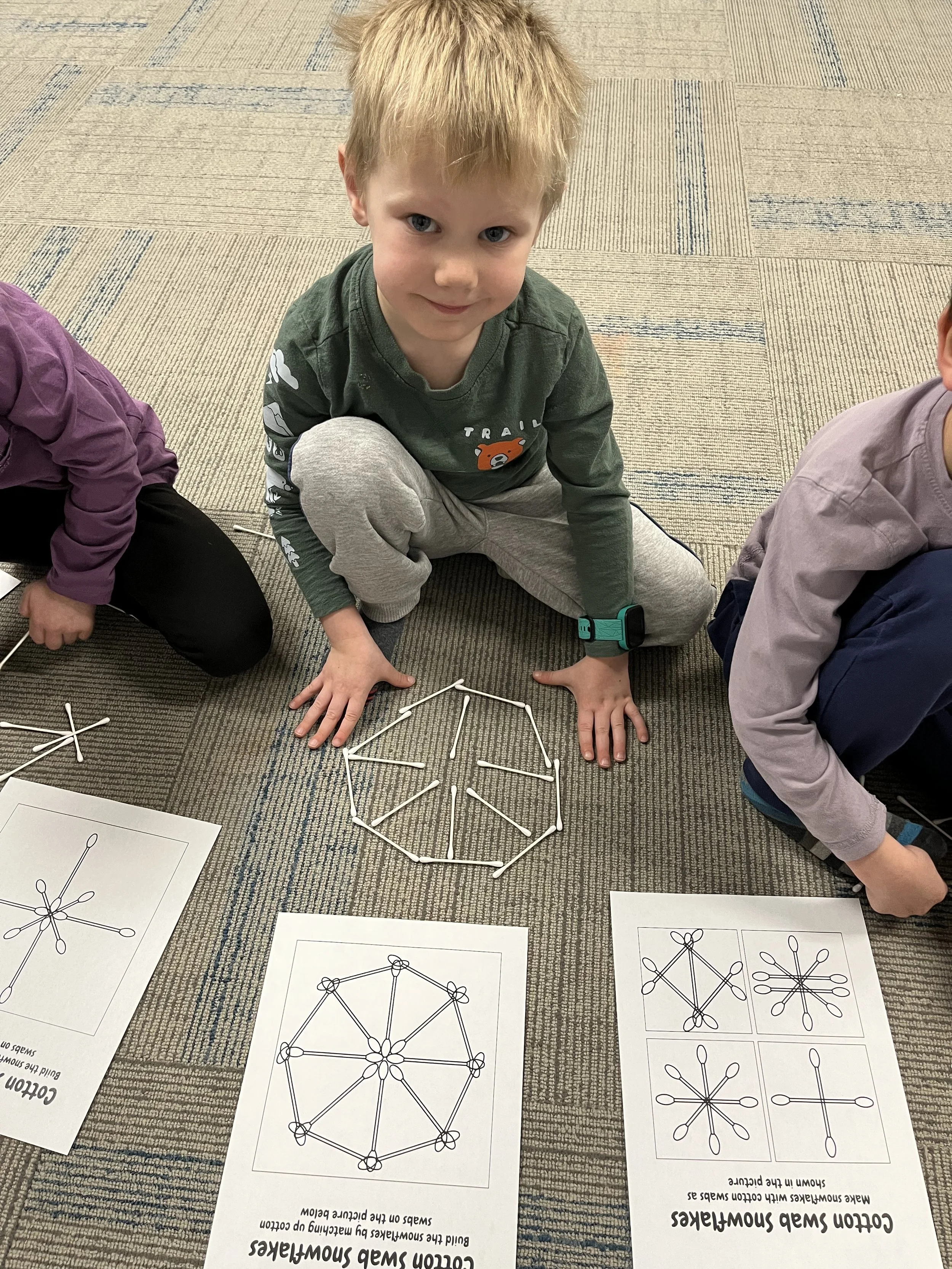
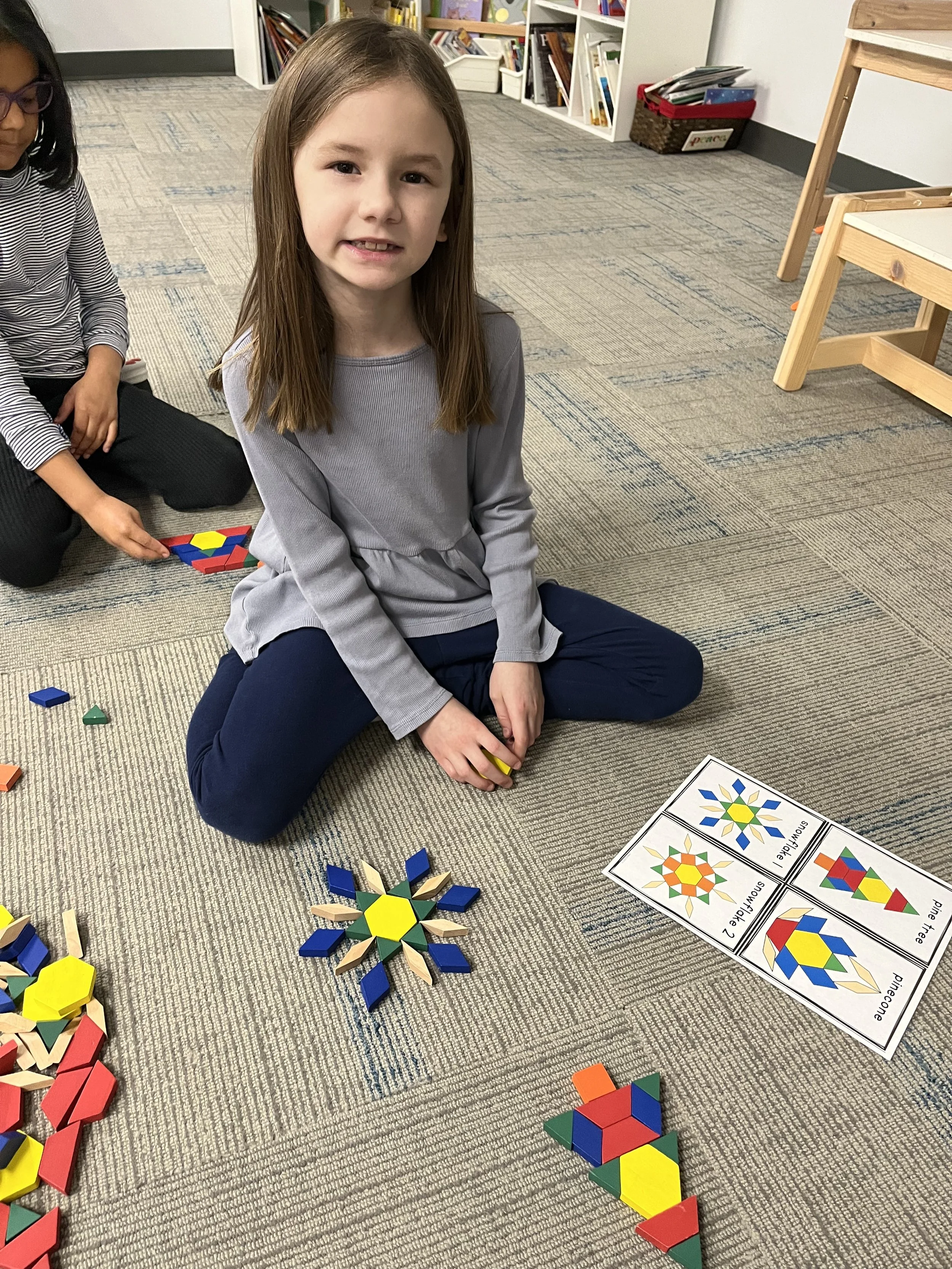
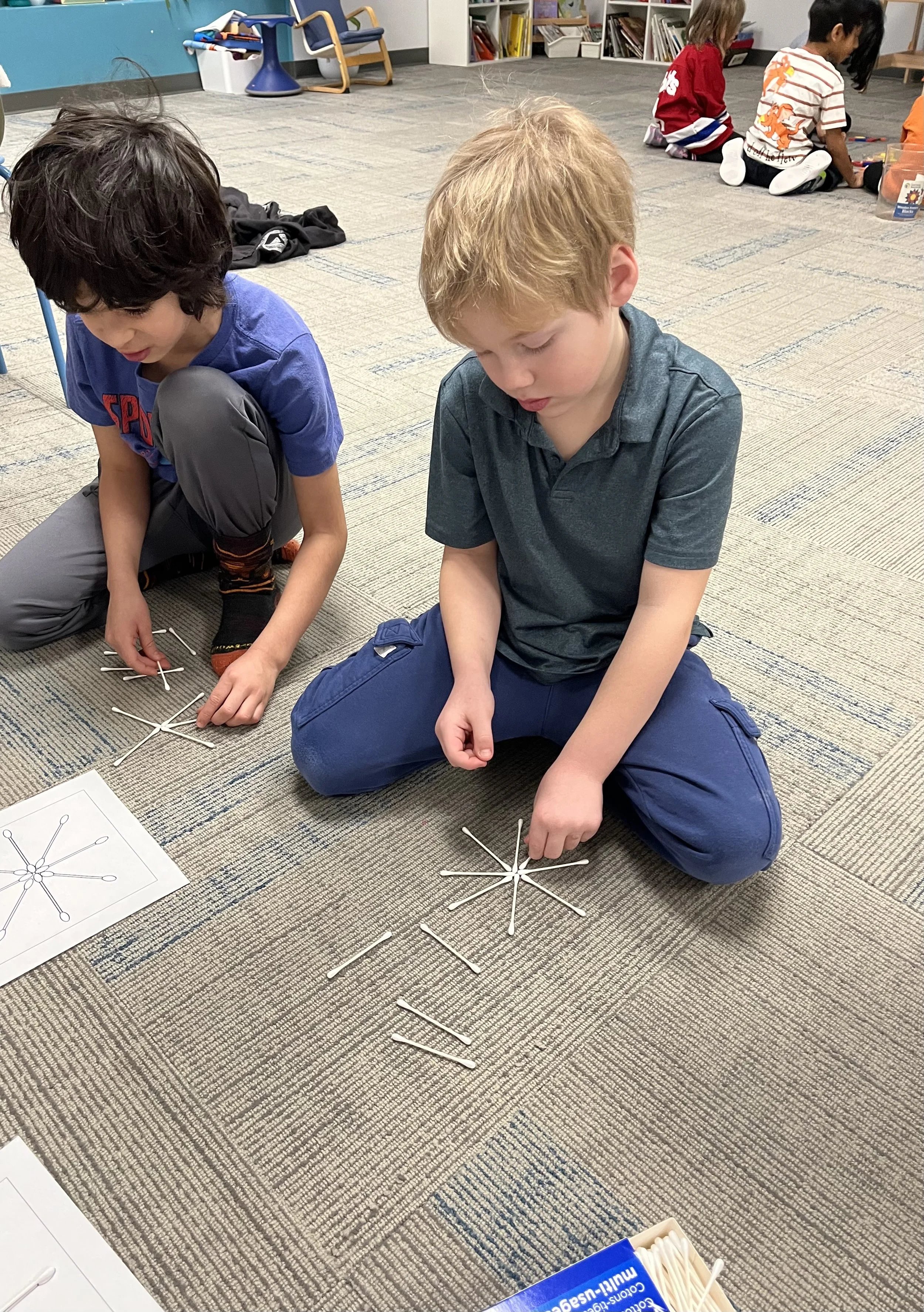
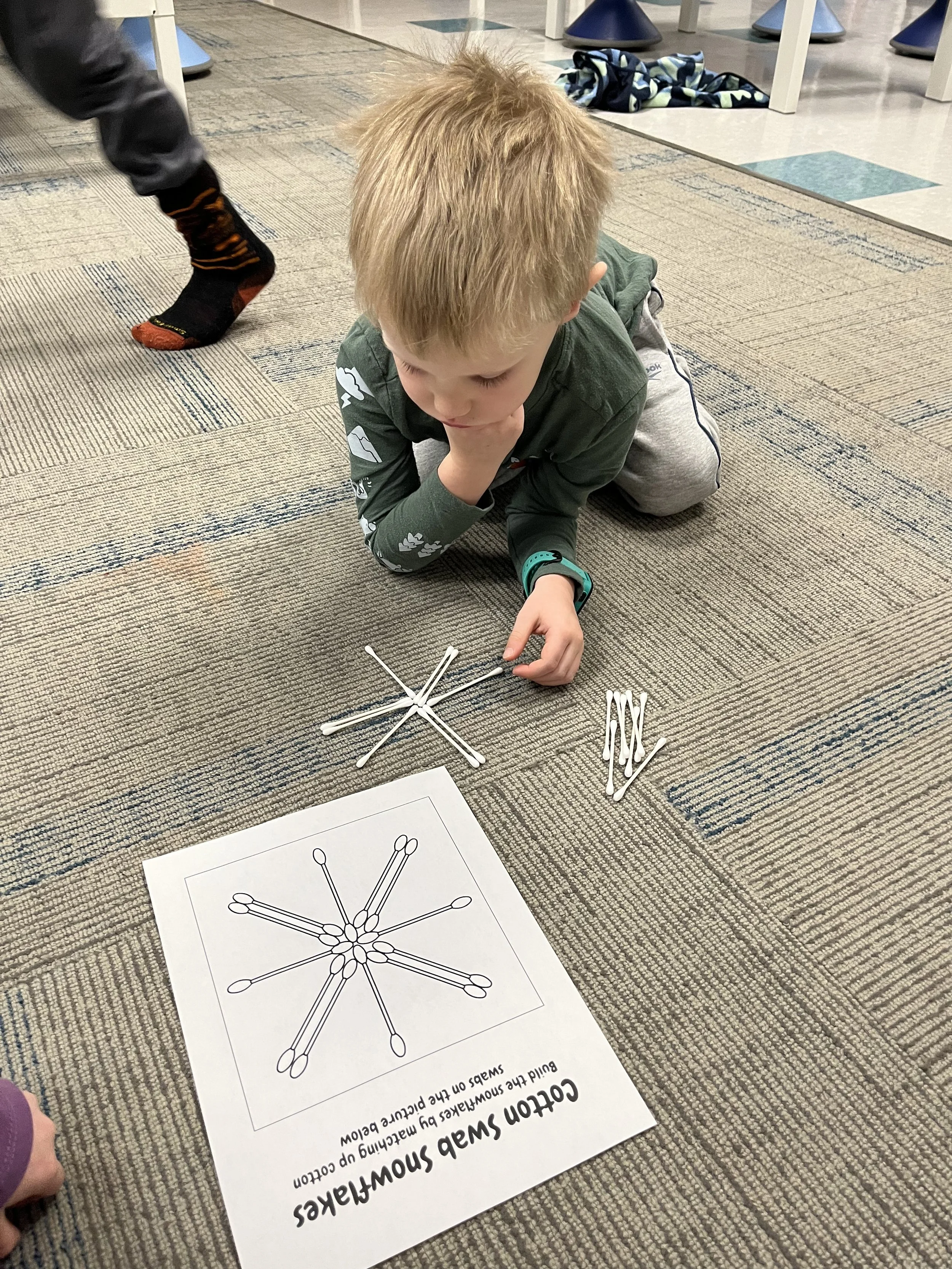
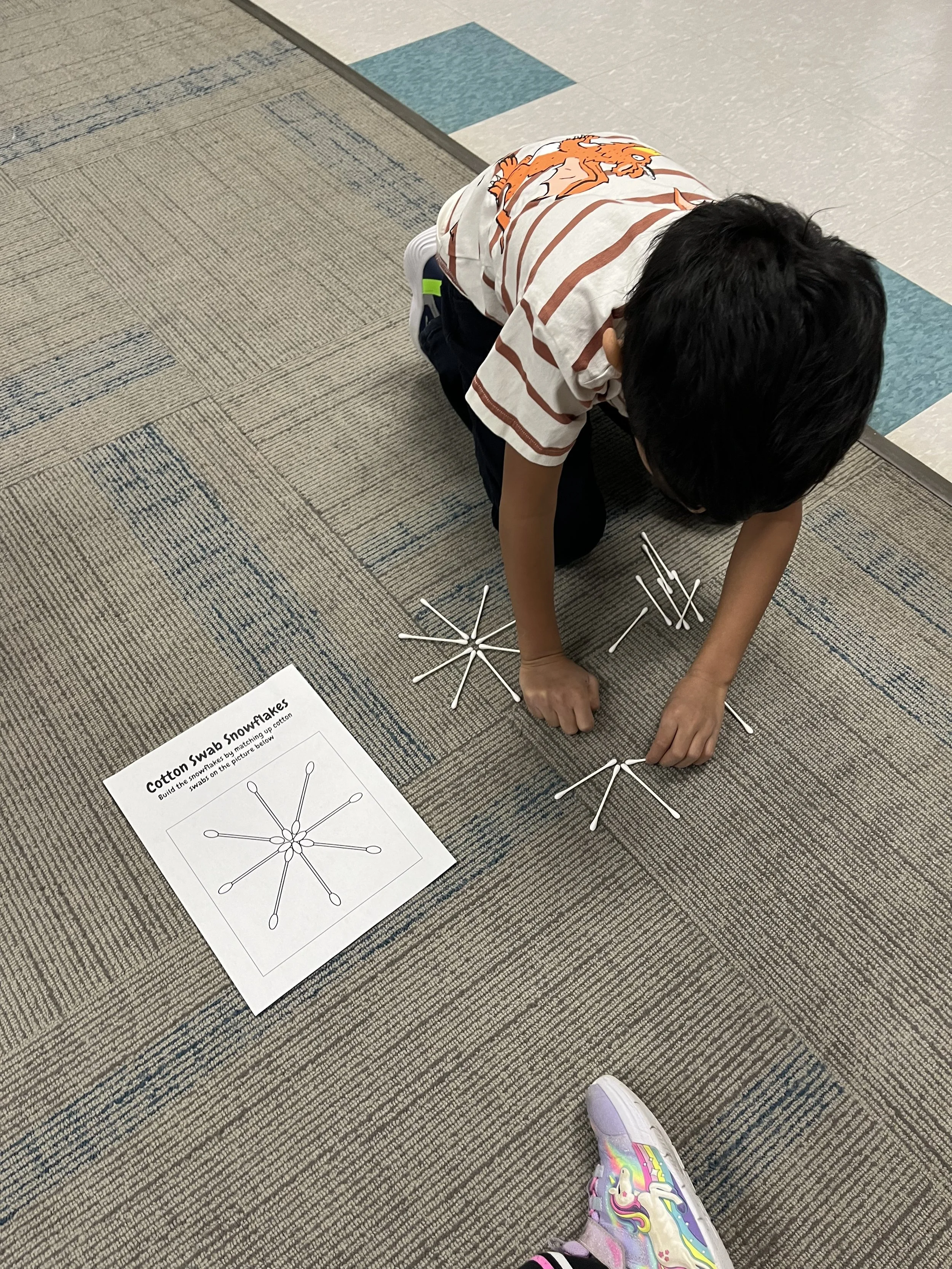
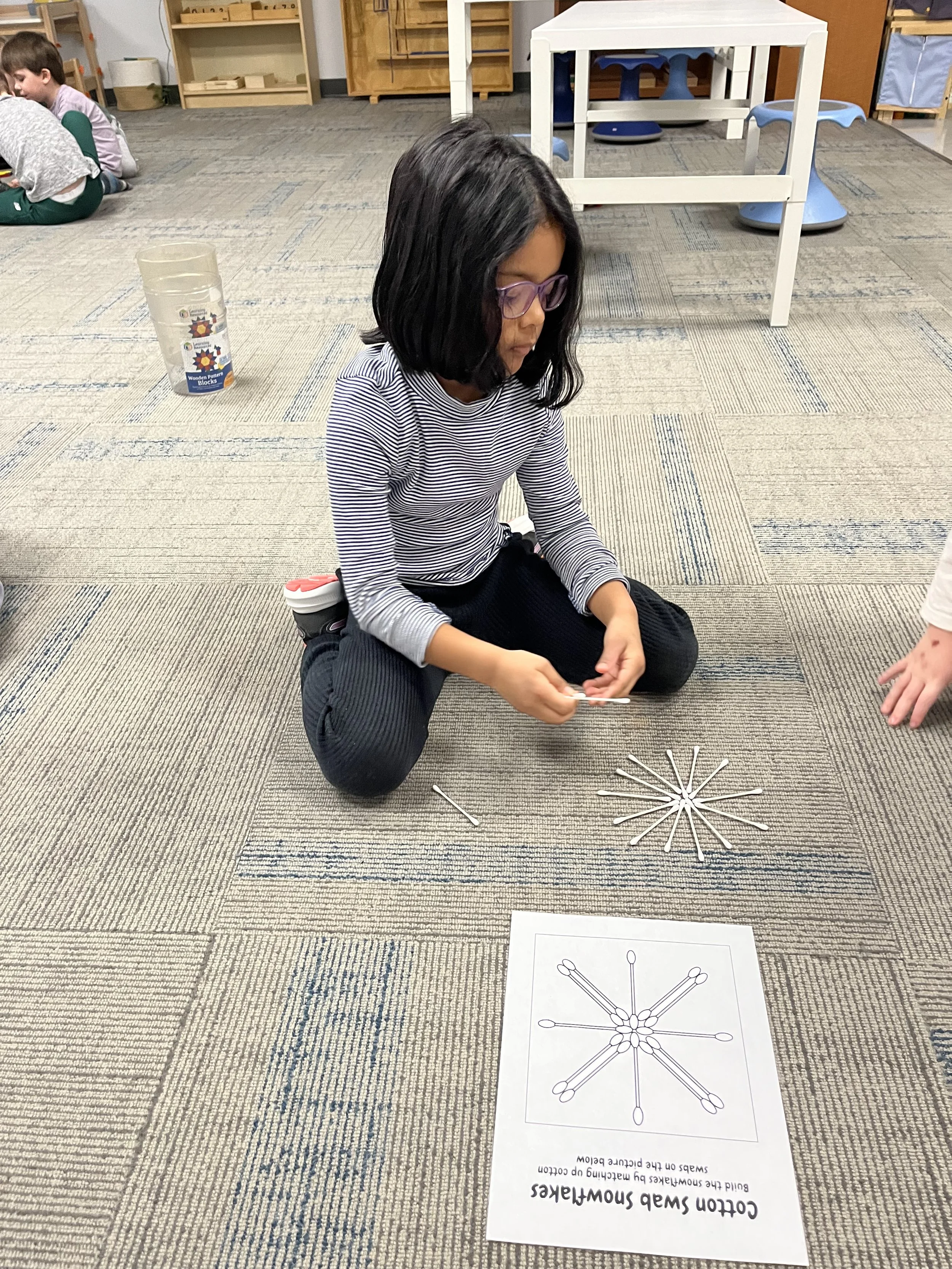
We had a wonderful start to the week as everyone returned refreshed and eager to share stories from their winter break. On Monday, we kicked things off with a fun community‑building game called “Stand Up If…”. Learners listened to different statements such as “Stand up if you went to the movies,” “Stand up if you read a good book,” “Stand up if you went ice skating,” or “Stand up if family came to visit.” Each time they stood, they had the chance to share a little bit about their experience. It was a great way to reconnect and hear about all of the exciting things they did over the break. After our game, learners worked on a “Winter Break in a Snap” colouring and reflection activity. They drew pictures showing where they went, who they spent time with, what they played, and their favourite part of the break. On Tuesday morning, we spent time learning about setting intentions for the new year. We read the book Squirrel’s New Year’s Resolution and talked about how a resolution or intention can help guide our choices and actions. After the story, Rebels reflected on what they would like their year to feel like and chose a “word of the year” to inspire them throughout 2026. Some of their thoughtful and meaningful word choices included kind, brave, fun, connect, focus, calm, grateful, friends, happy, helpful, listen, and play. We can’t wait to see all the growth ahead! This rest of the week the Sparks enjoyed a variety of calming, mindful, winter themed activities. On Wednesday, we participated in a polar bear–themed yoga story. Afterwards, the Sparks completed a winter colouring page featuring adorable penguins. On Thursday, we explored the concept of hibernation by reading the book Over and Under the Snow. Following the story, we tried a Winter Listen Up Challenge. The Sparks listened carefully to verbal two-step directions and followed them on their colouring sheets, helping to build focus, listening skills, and self-regulation. On Friday, we wrapped up the week with our learners making unique snowflakes using cotton swabs and created winter pictures using geometric shapes. These activities encouraged creativity, fine motor skills, and calm concentration.
Quest
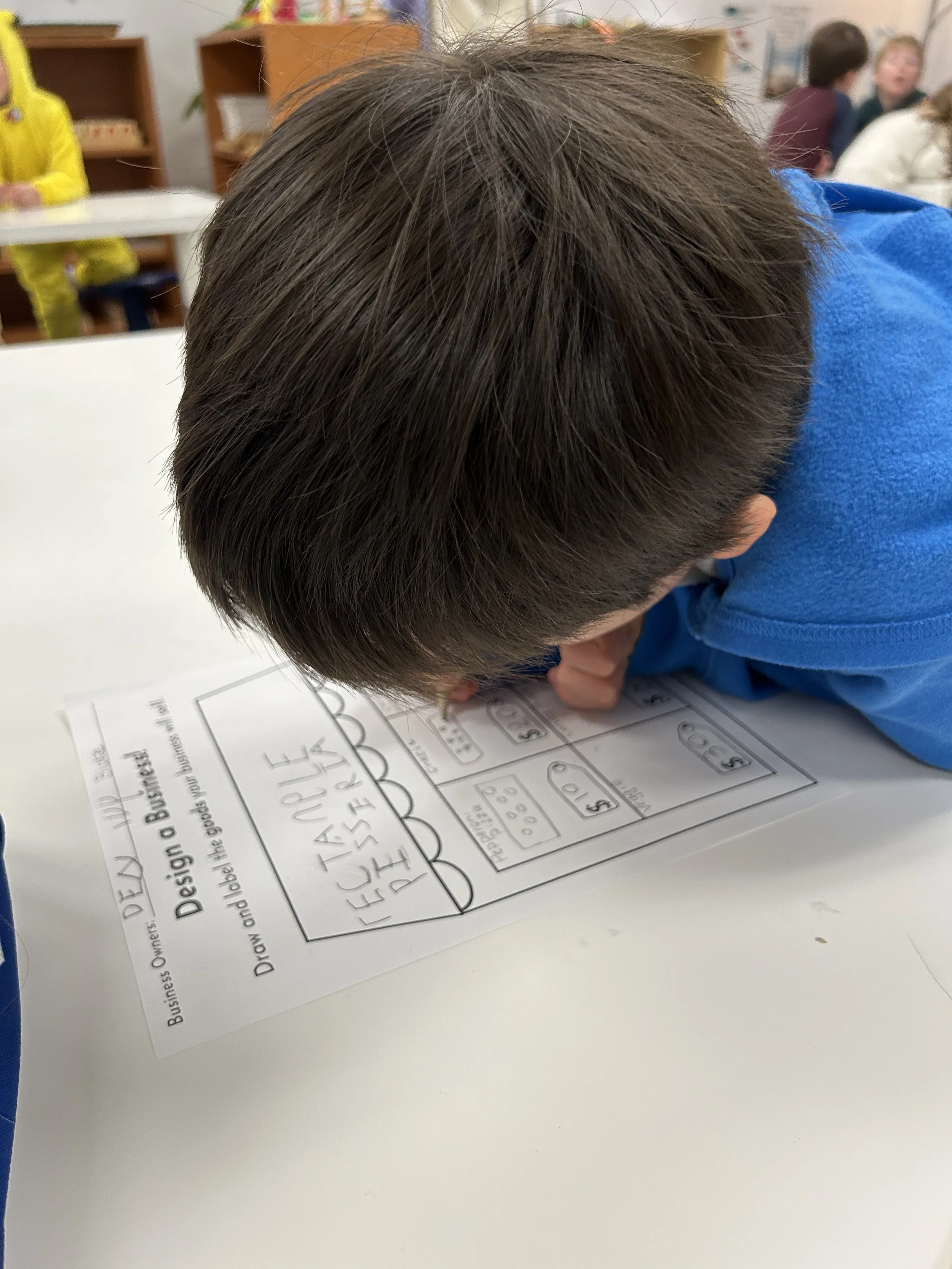
This week, our Sparks explored the exciting world of entrepreneurship! We kicked off the week by learning what the word entrepreneur means. We read the book What Does It Mean to Be an Entrepreneur? and had a great group discussion about the story. Together, we shared ideas and listed examples of different businesses we see in our everyday lives. On Tuesday, we focused on goods and services. We learned that goods are items you can buy or touch, while services are jobs or actions people do to help others. After defining each one, we talked through lots of examples and played a fun game where Sparks had to decide whether something was a good or a service. We then worked as a group to brainstorm five goods and five services that our families use and wrote them down together. By Wednesday, it was time to put all that knowledge into action! The Sparks became business owners! Working in small groups, they began creating their very own business plans. Each group came up with a business name, decided on six goods to sell (including their prices), and three services their business could provide. We ended up with some amazing and creative ideas: a pet shop, toy store, pizzeria, candy store, and a bakery. On Thursday, we did some market research and Rebels shared what business ideas their families had after speaking with them the night before, and we thought about the kinds of things our families would like to buy. The Sparks decided to have more than one shop at Exhibition, so we chose to run three and voted on which businesses we wanted. After finding out our groups for this session, learners brainstormed possible business names and made a list of supplies needed to get started. Some of the items available for purchase at Exhibition will include Perler bead keychains, bookmarks, bracelets, lemonade, cards, and pins!
Art
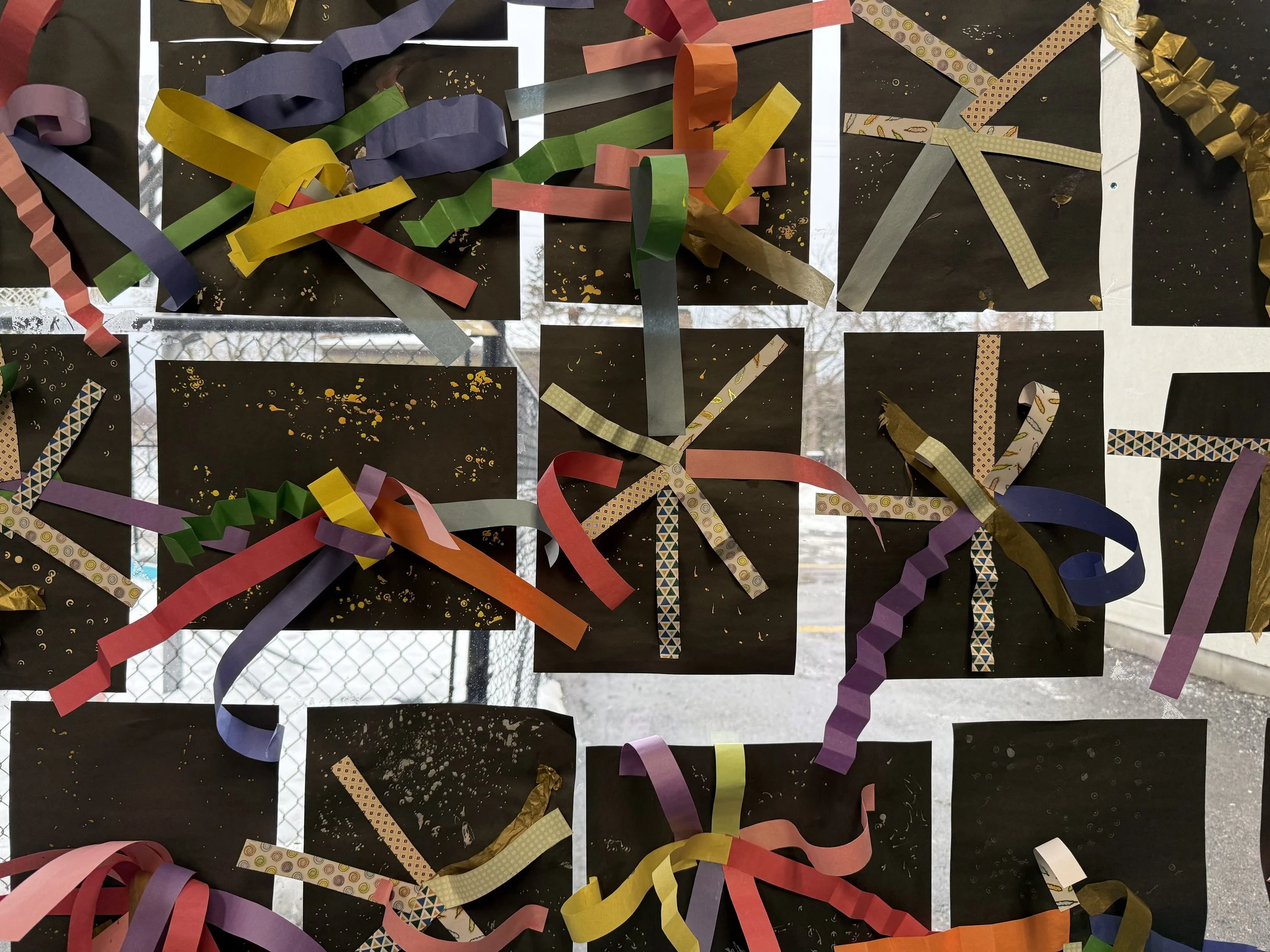
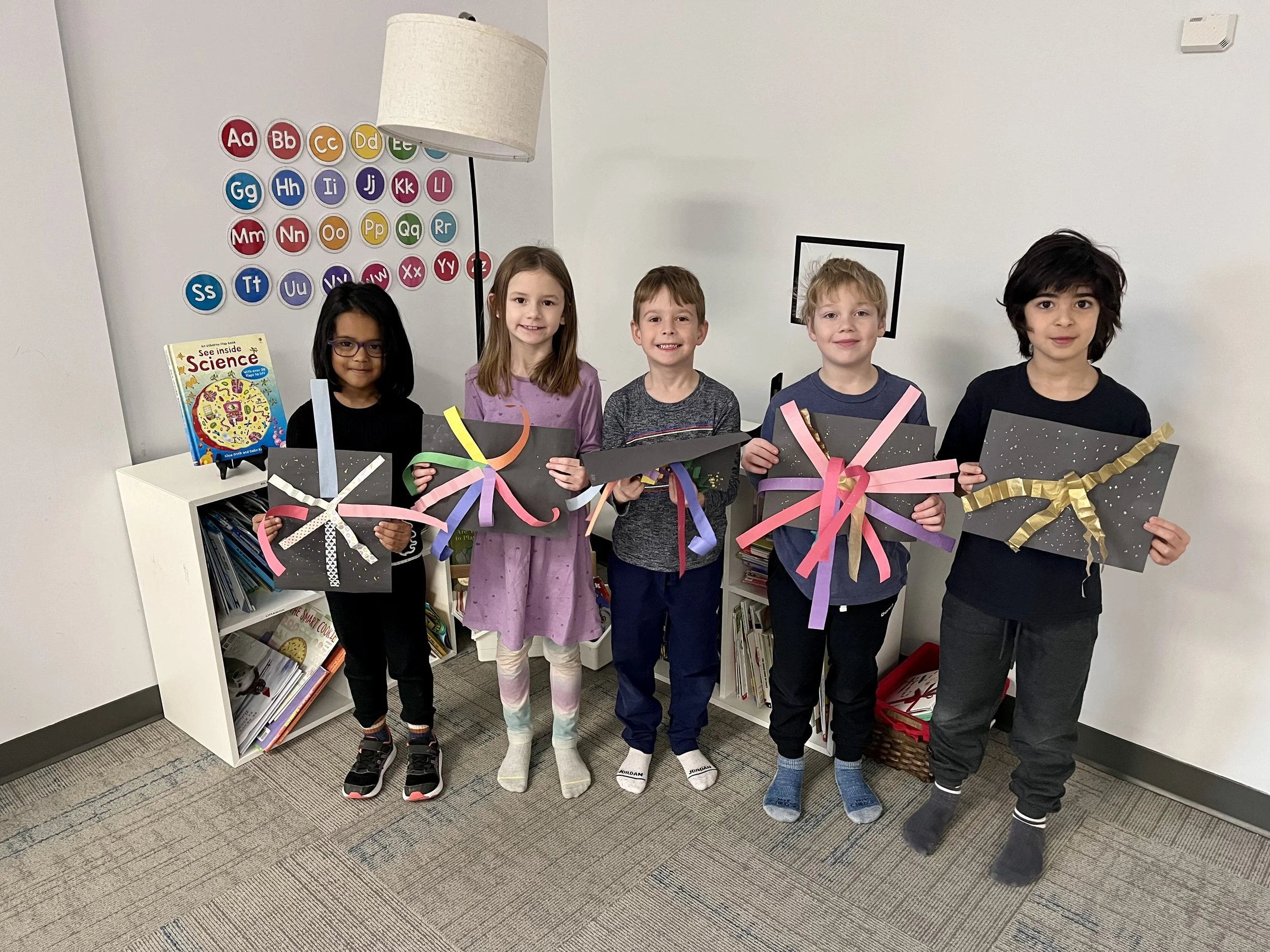
This week in our art workshop, we rang in the New Year with a burst of creativity! The Sparks created their own firework scenes by layering colourful paper strips and using acrylic paint pens to design a vibrant night sky. We hung up their creations in our studio window and it has lit up the room with colour and creativity!
Reader/Writer Workshops
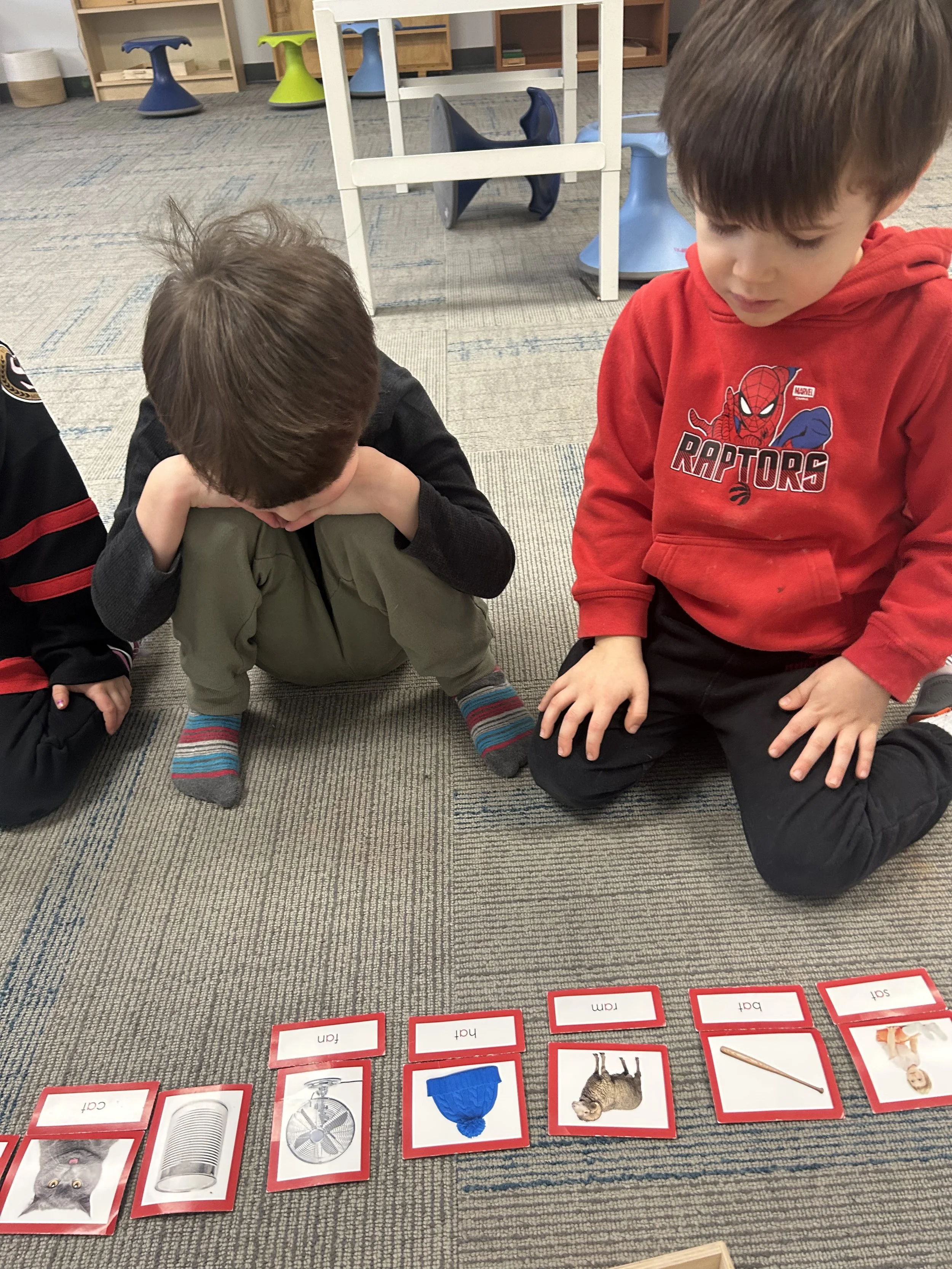
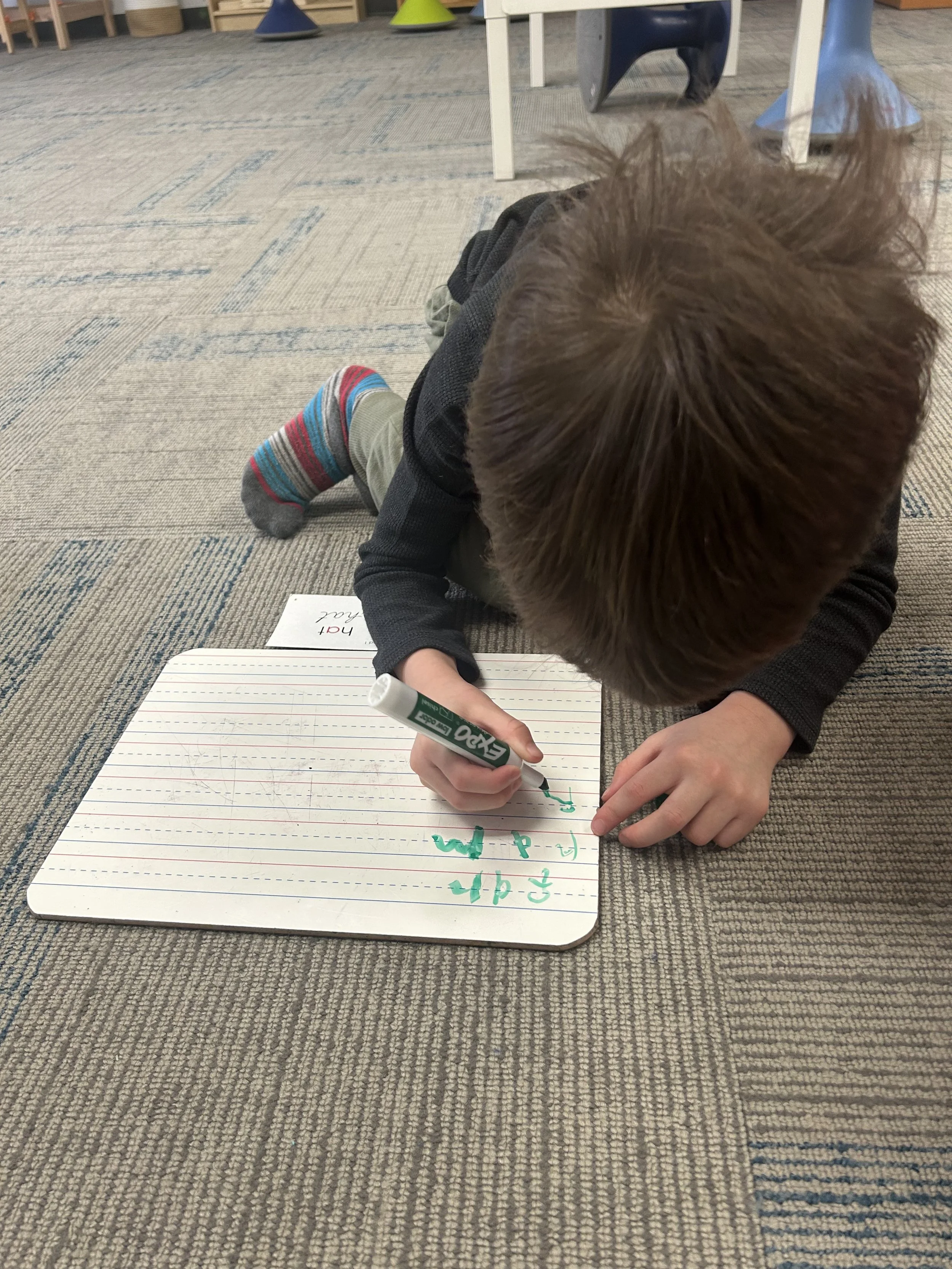
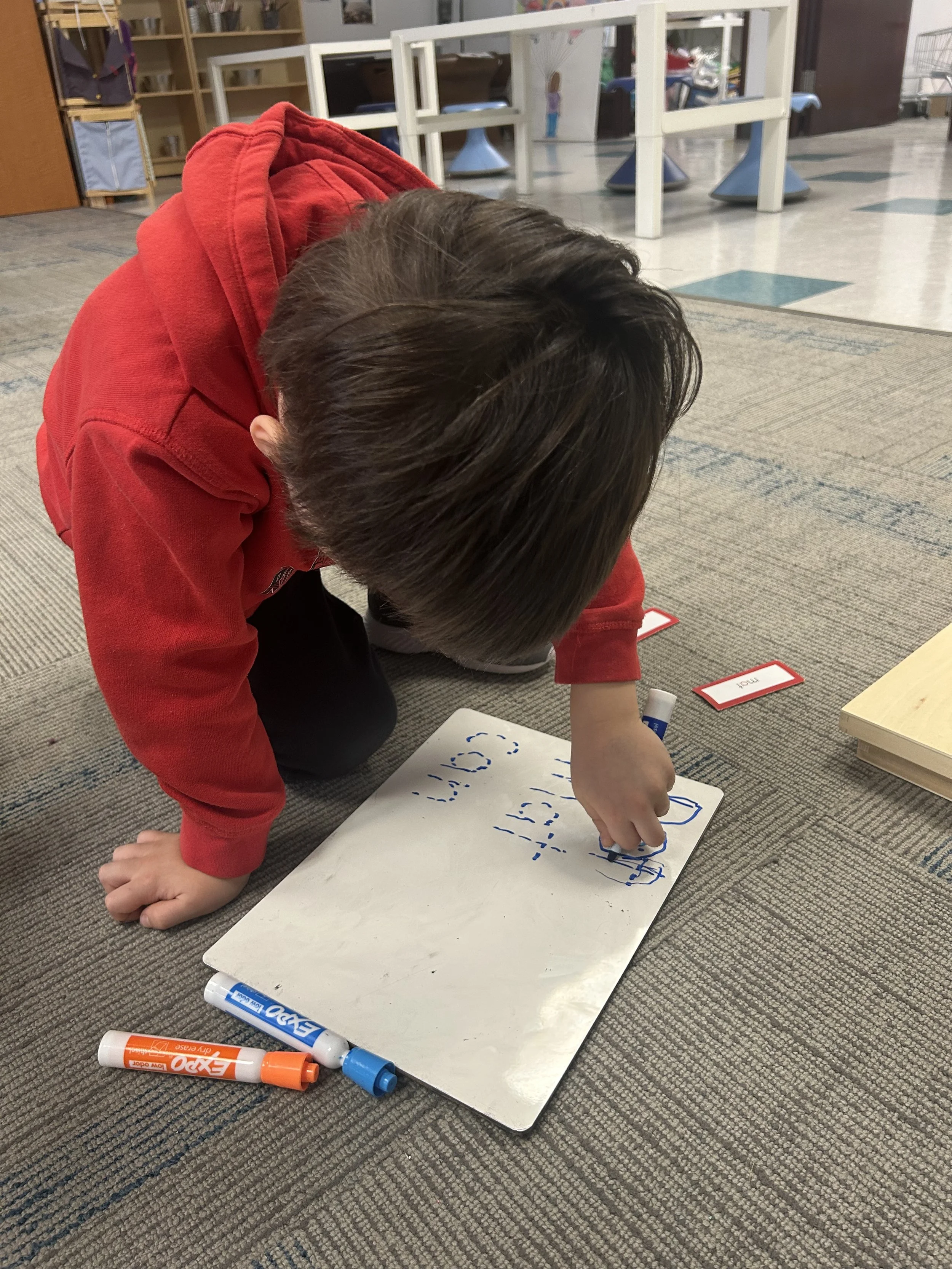
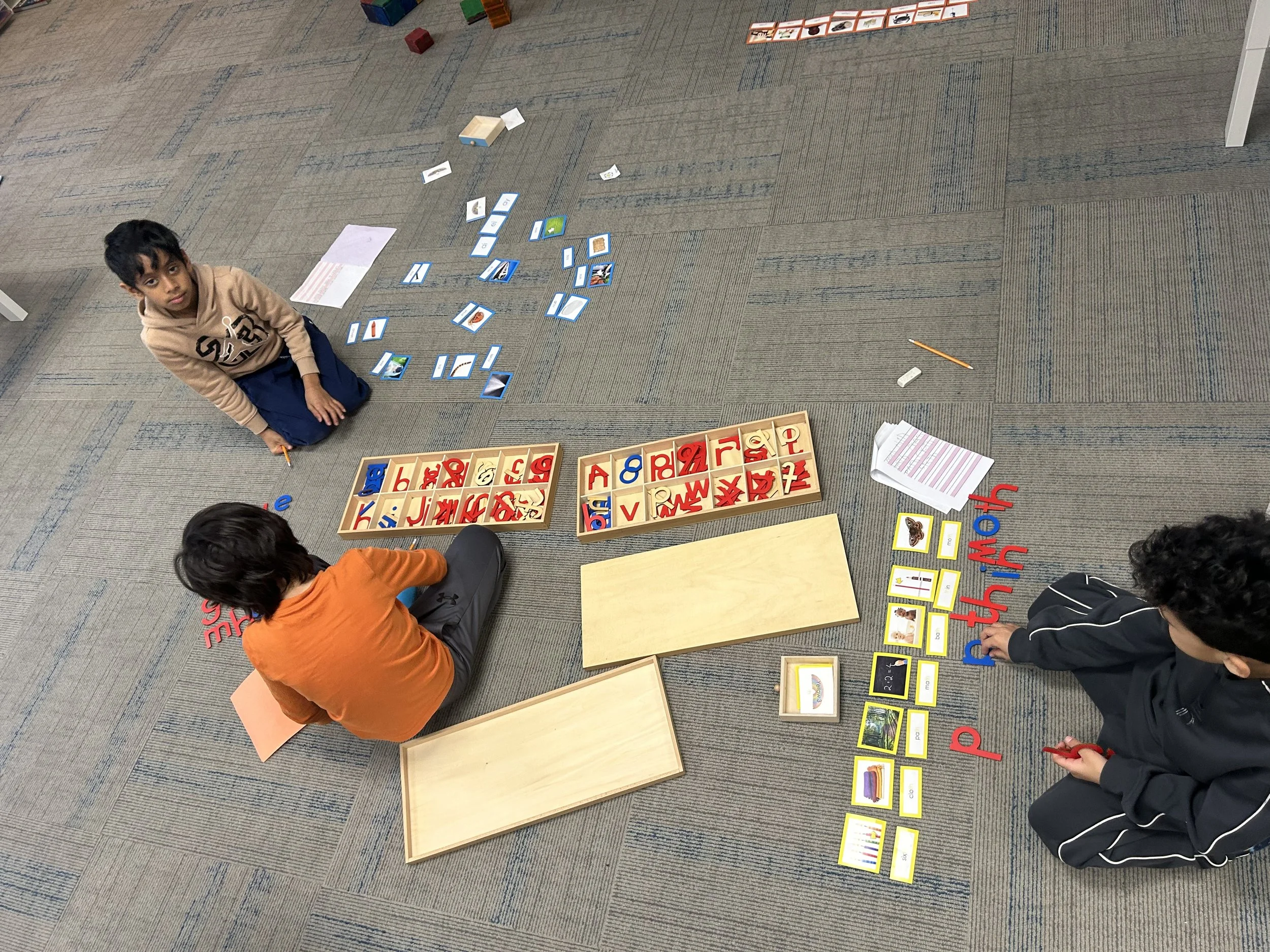
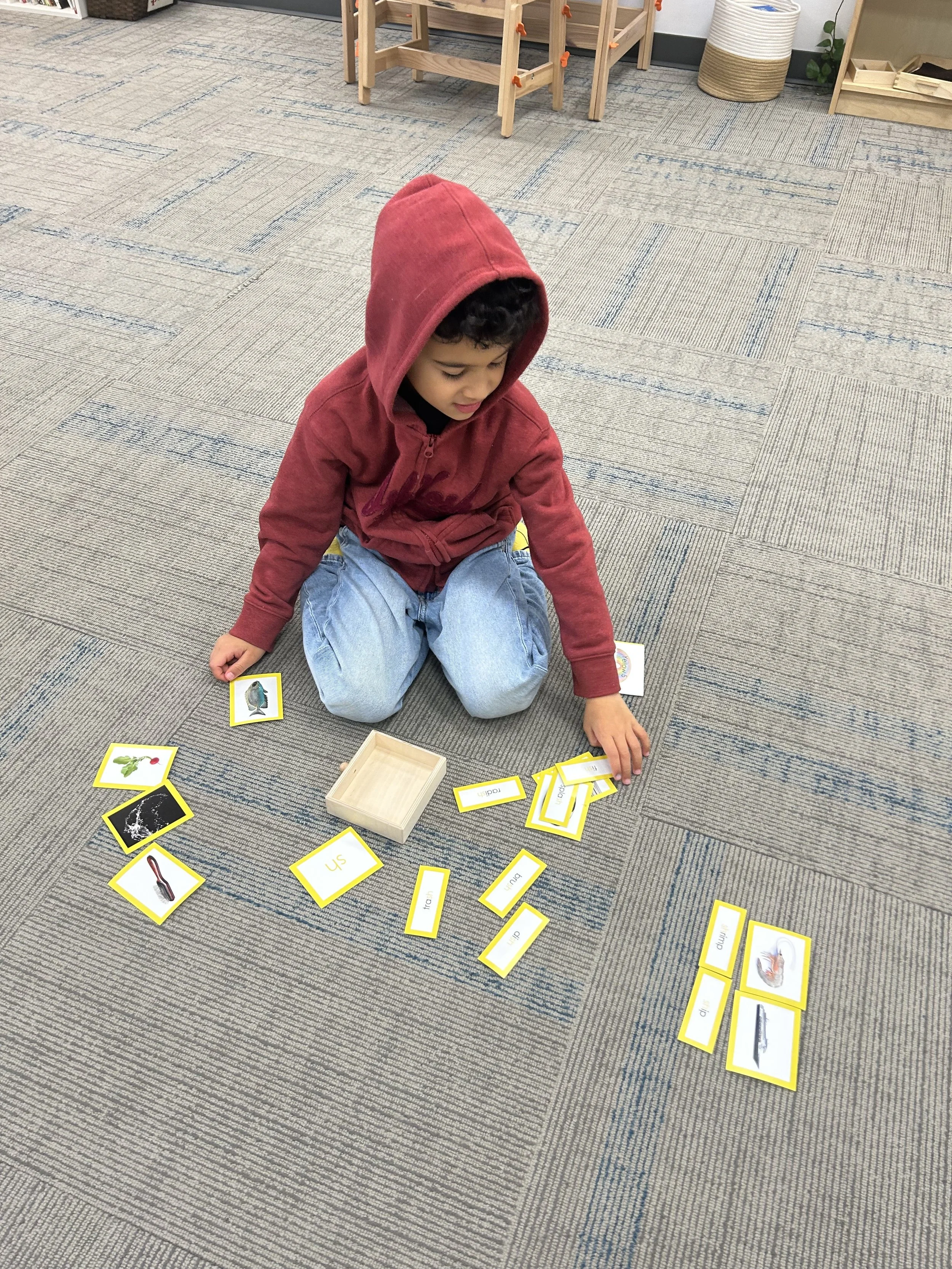
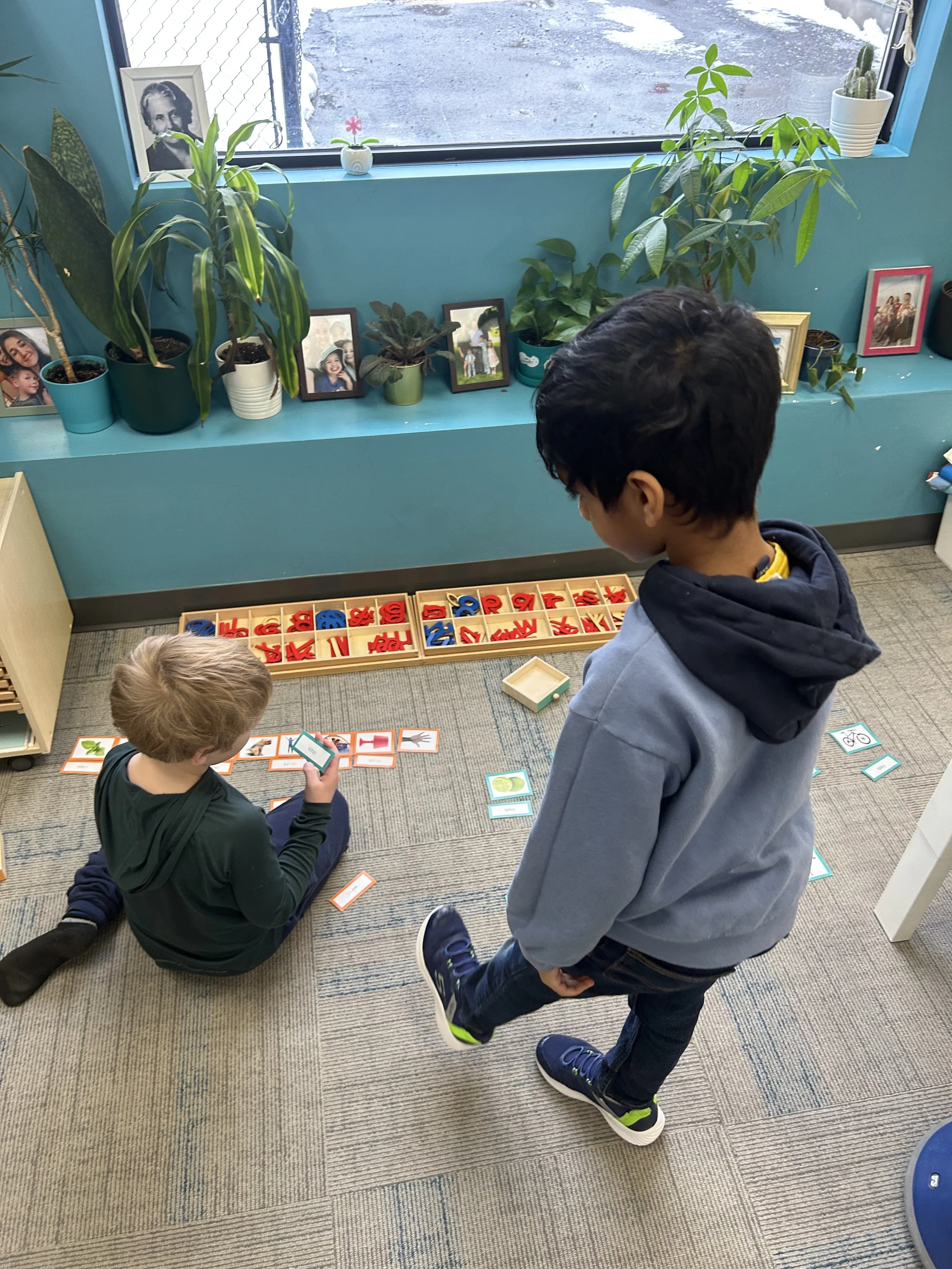
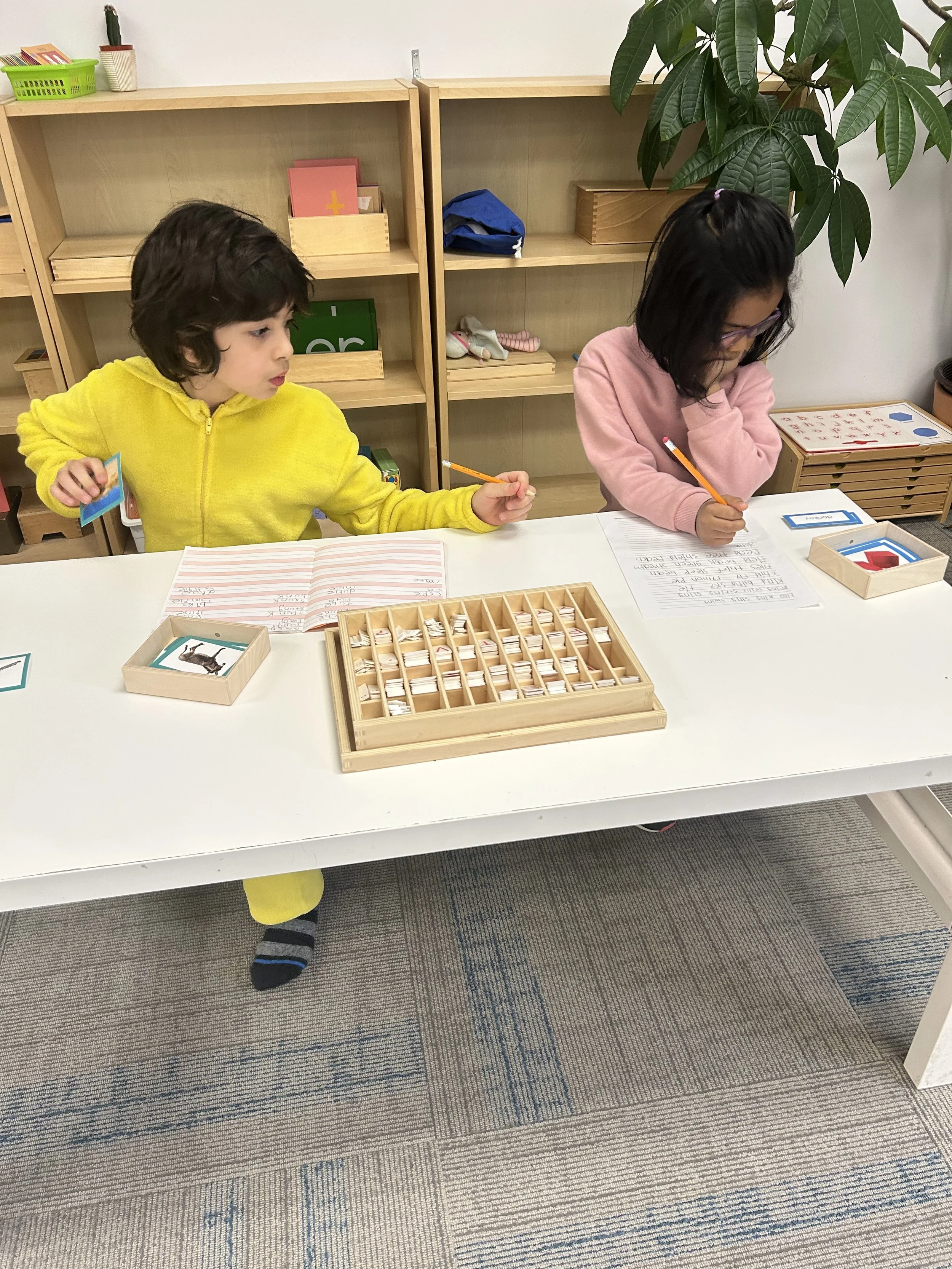
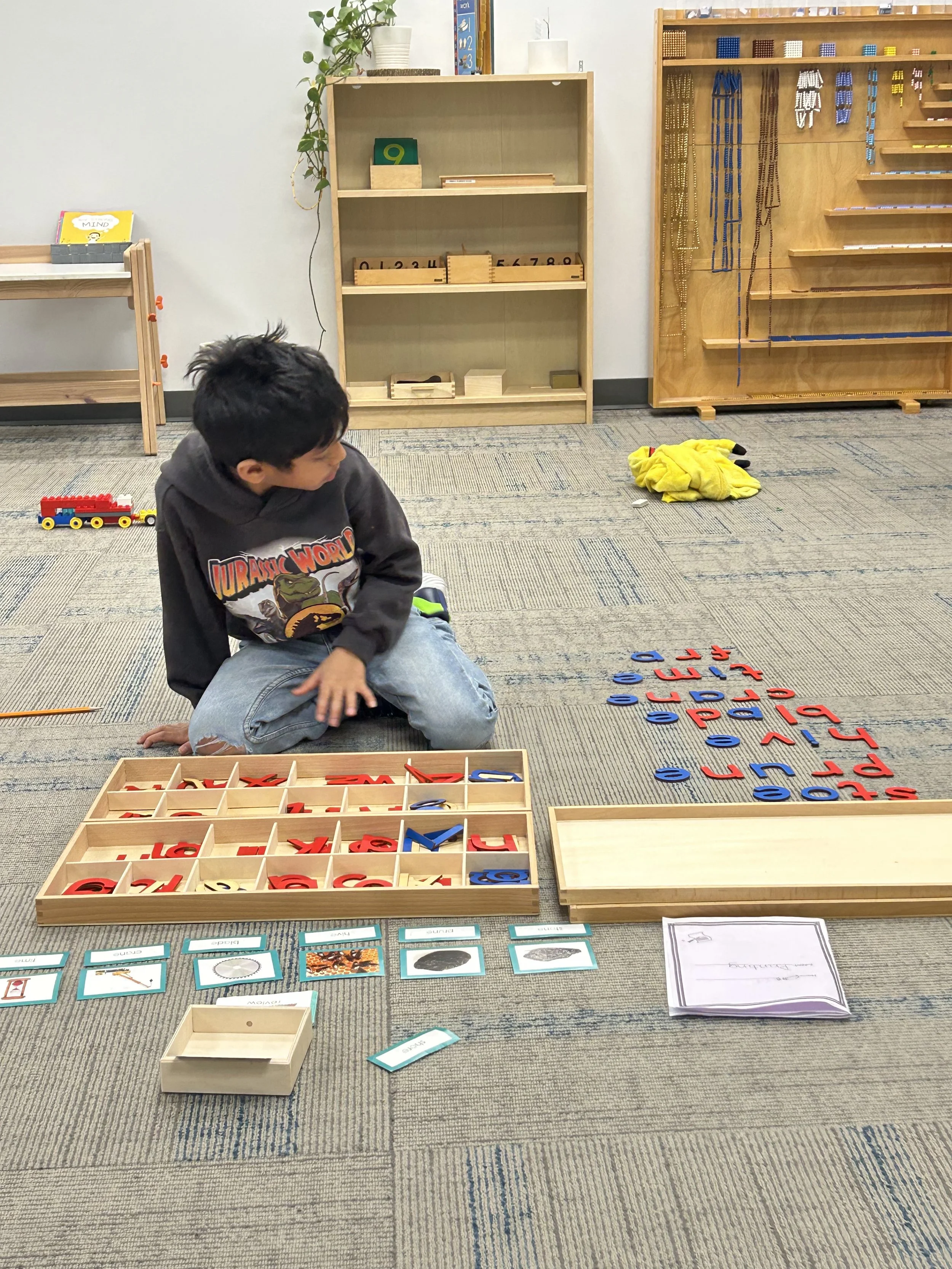
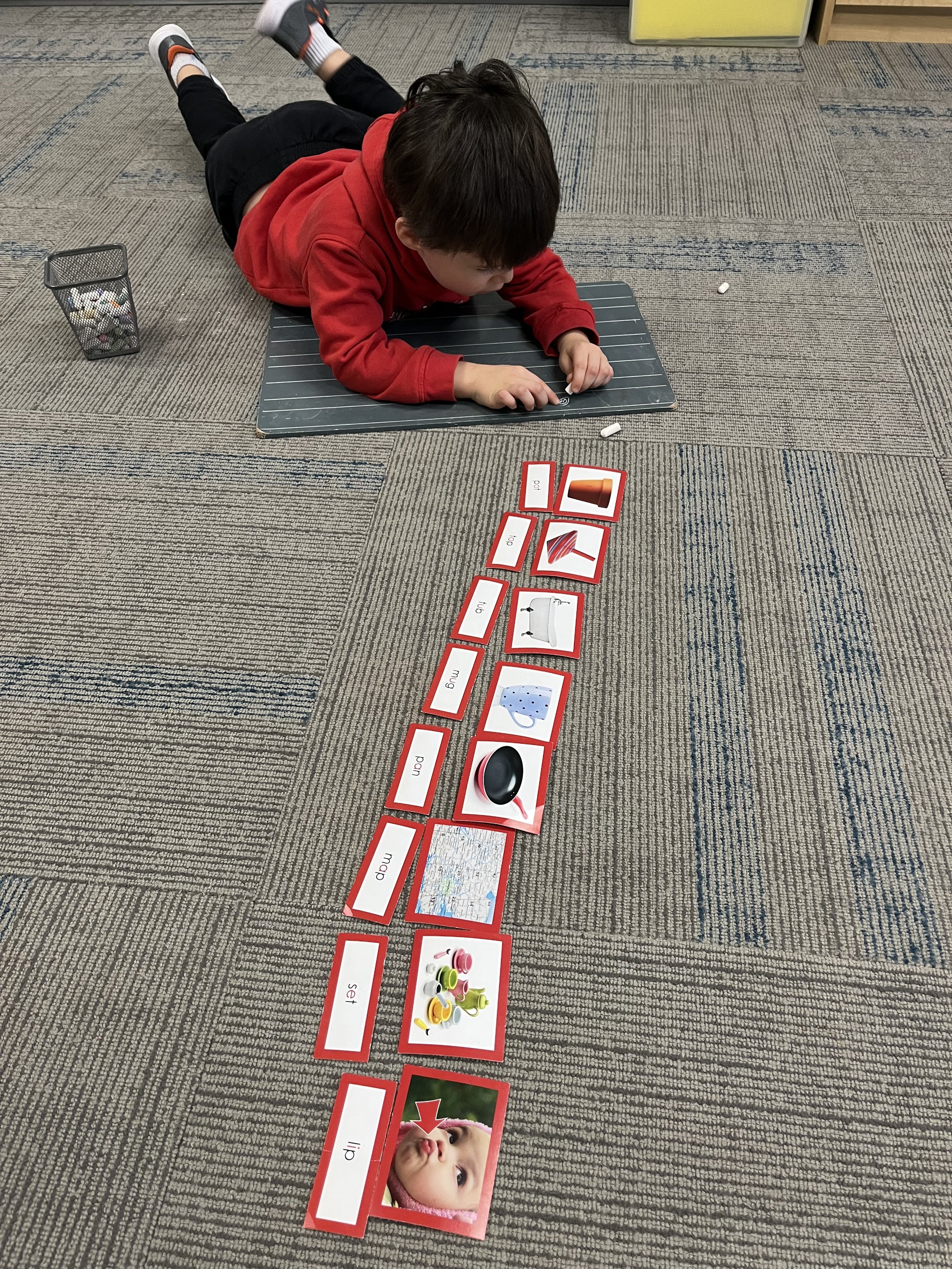
Group One will work with the Waseca Red Reading Drawer over the next six weeks. This drawer targets three-letter phonetic words and emphasizes short vowel sounds. Sparks were introduced to their reader-writer booklets, which align with the WASECA reading program. Each week, Sparks will complete activities from the reading drawer with guidance in a small-group setting. They will print the words and build them using the moveable alphabet. Later in the week, during their reader-writer lesson, students will use their WASECA booklets to answer comprehension questions. This week, Sparks worked with a word box containing words from different word families, including -at, -an, and -am.
Group Two moved on to the Green Waseca Reading Booklets. Our focus sound was “ing.” The learners explored the booklet together, searching for words that included the ing sound. Once we found them, we worked as a group to sound out and spell each word. It was a great lesson for building our reading confidence and strengthening phonics skills. Encourage your learner to identify the ing sound in words you are reading!
Math Workshops
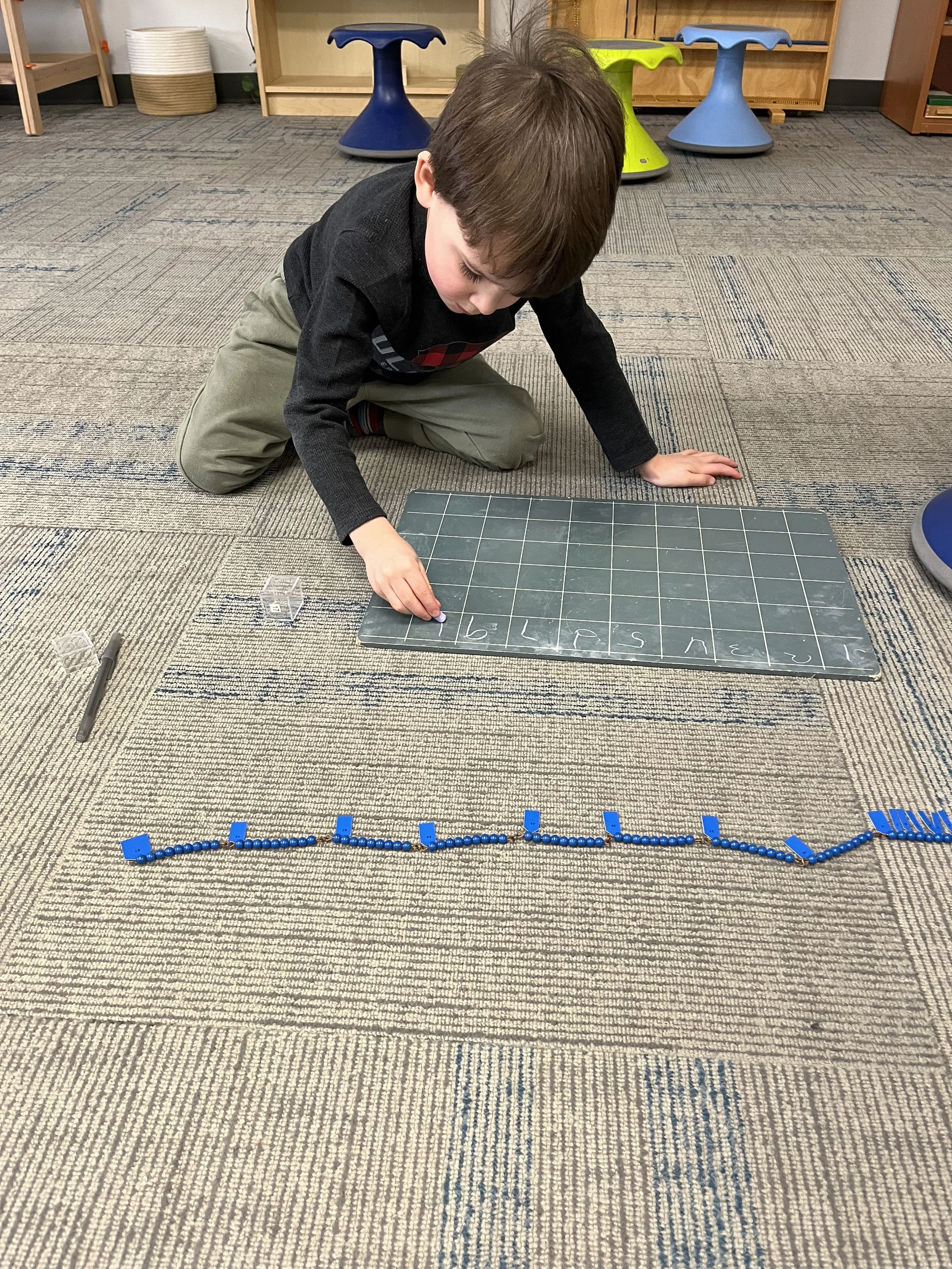
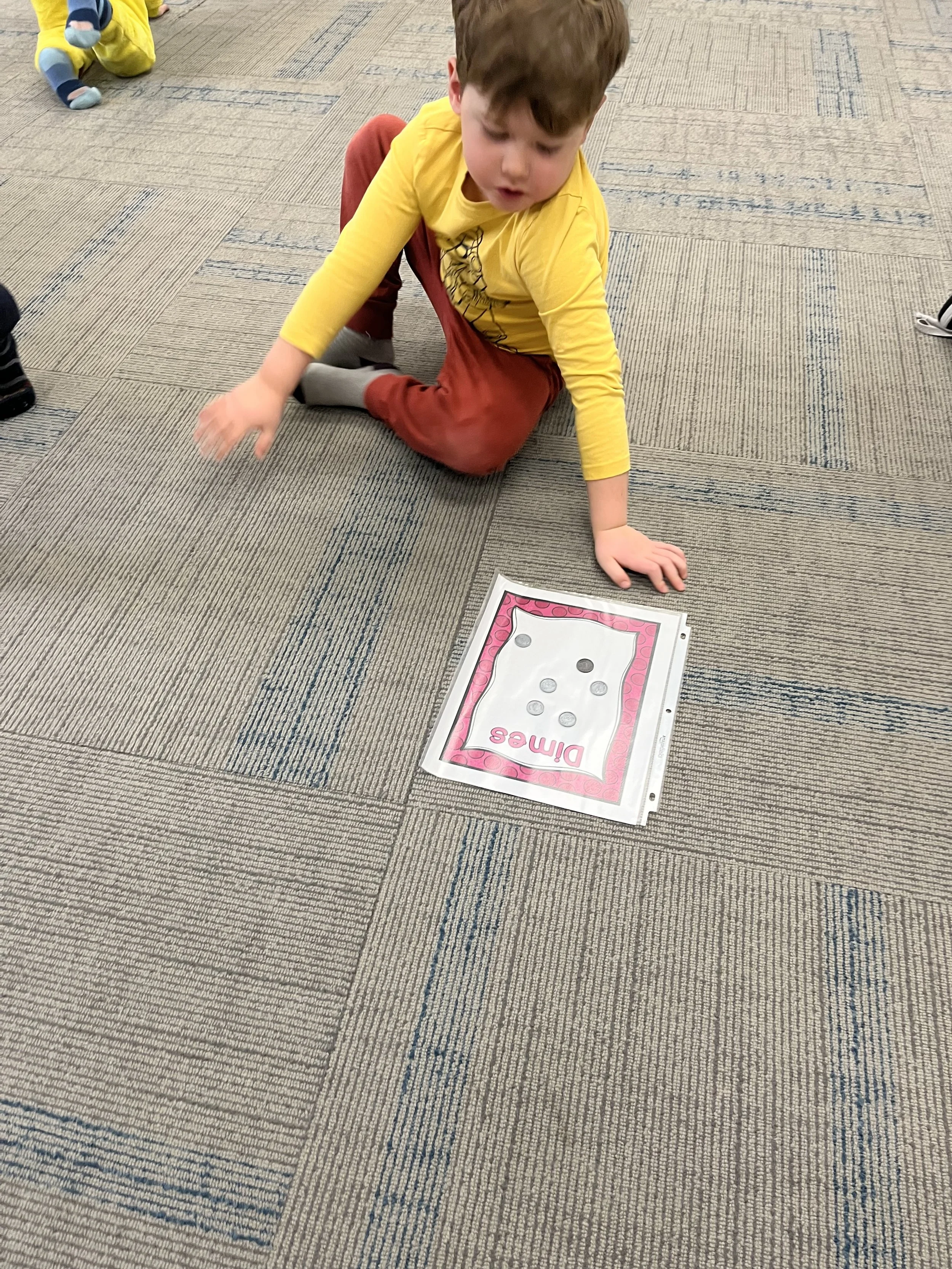
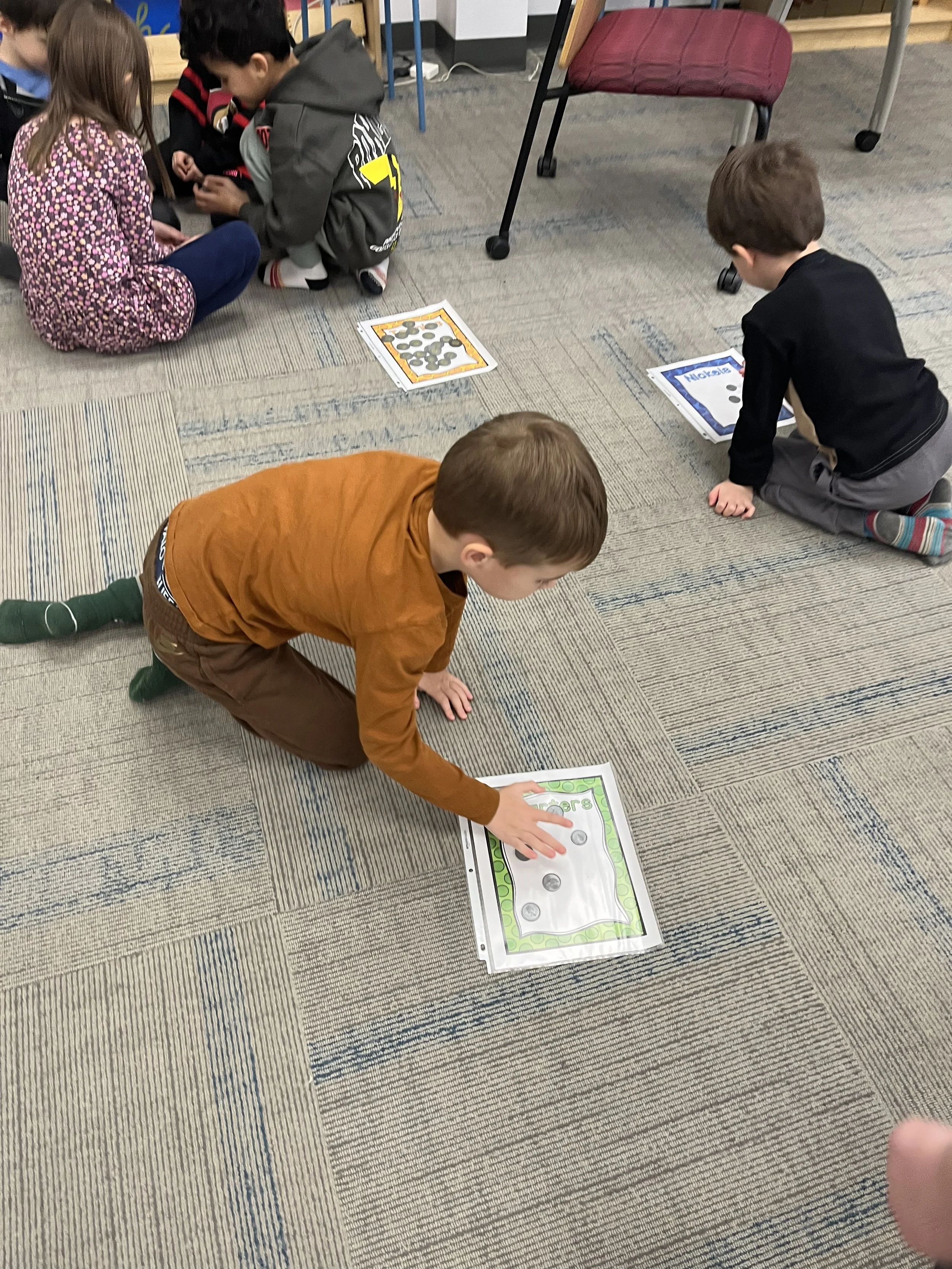
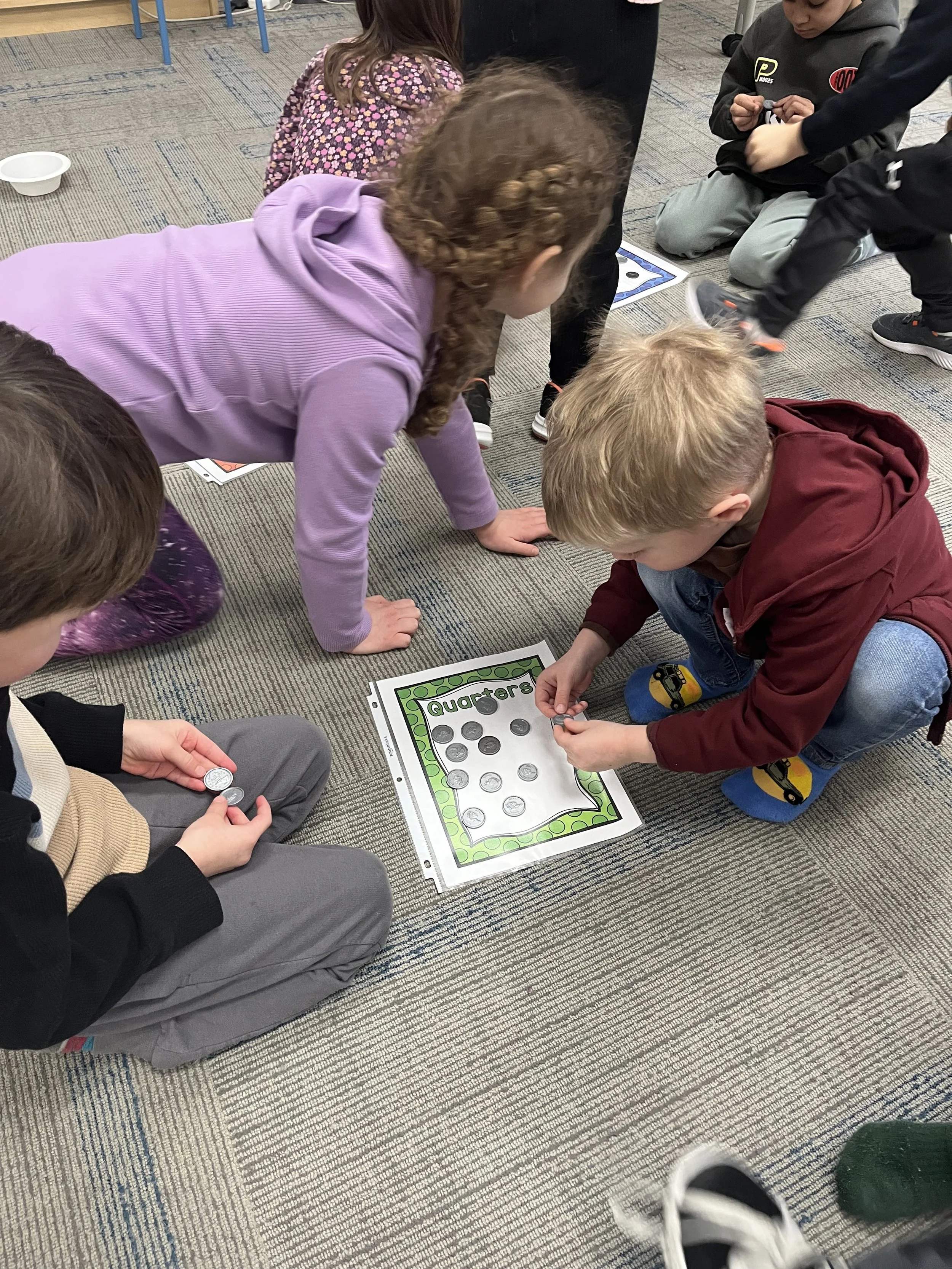
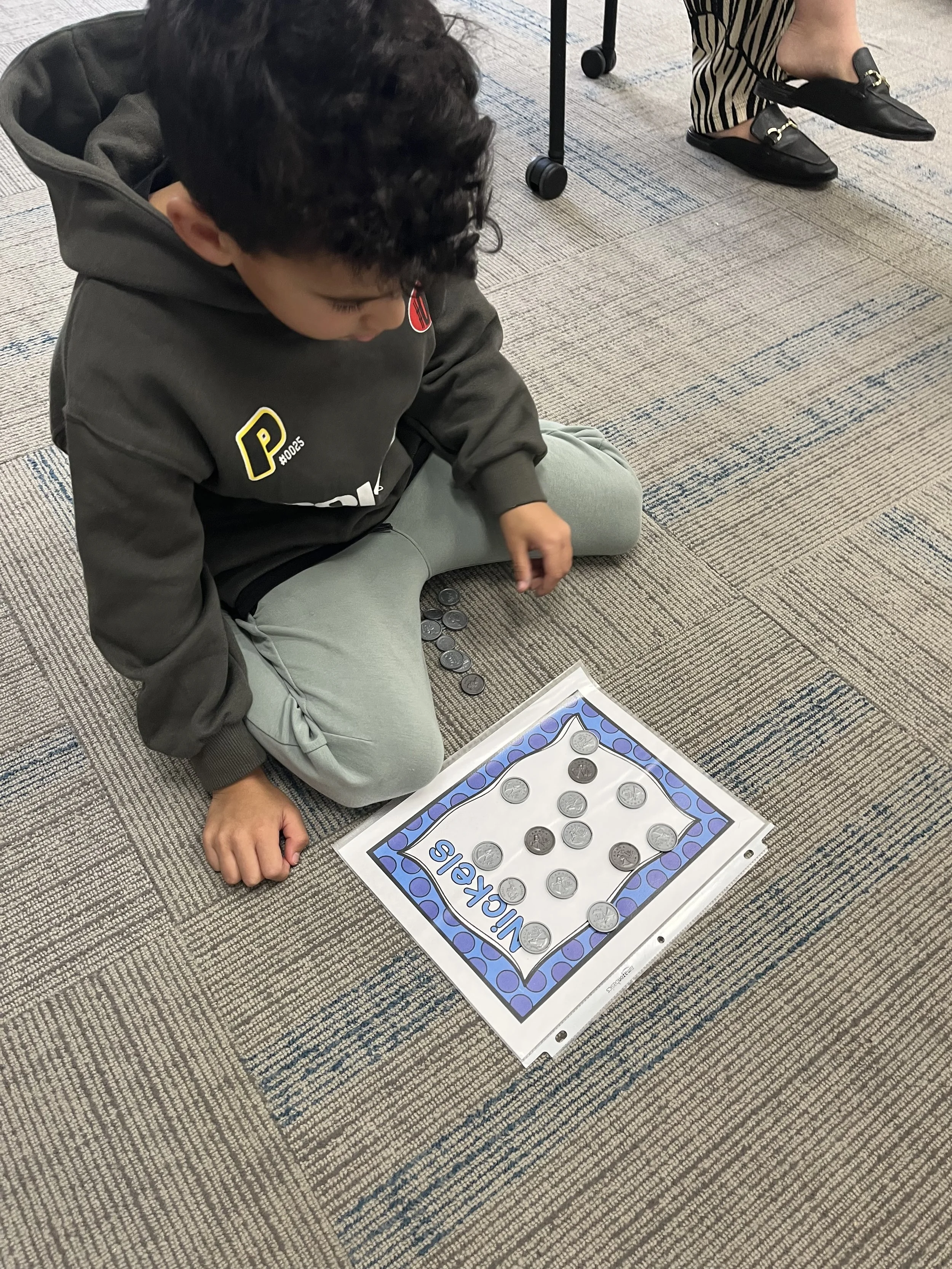
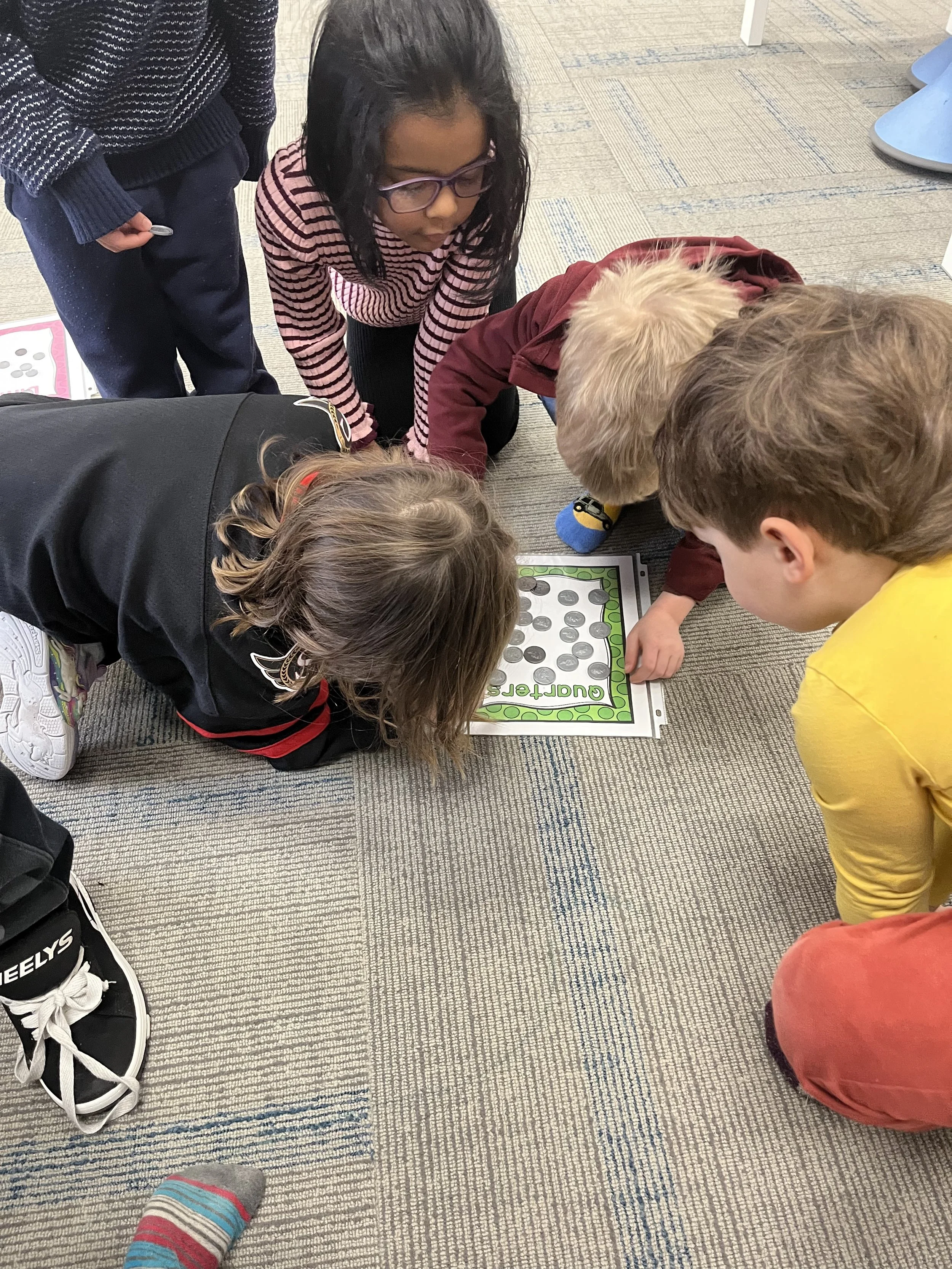
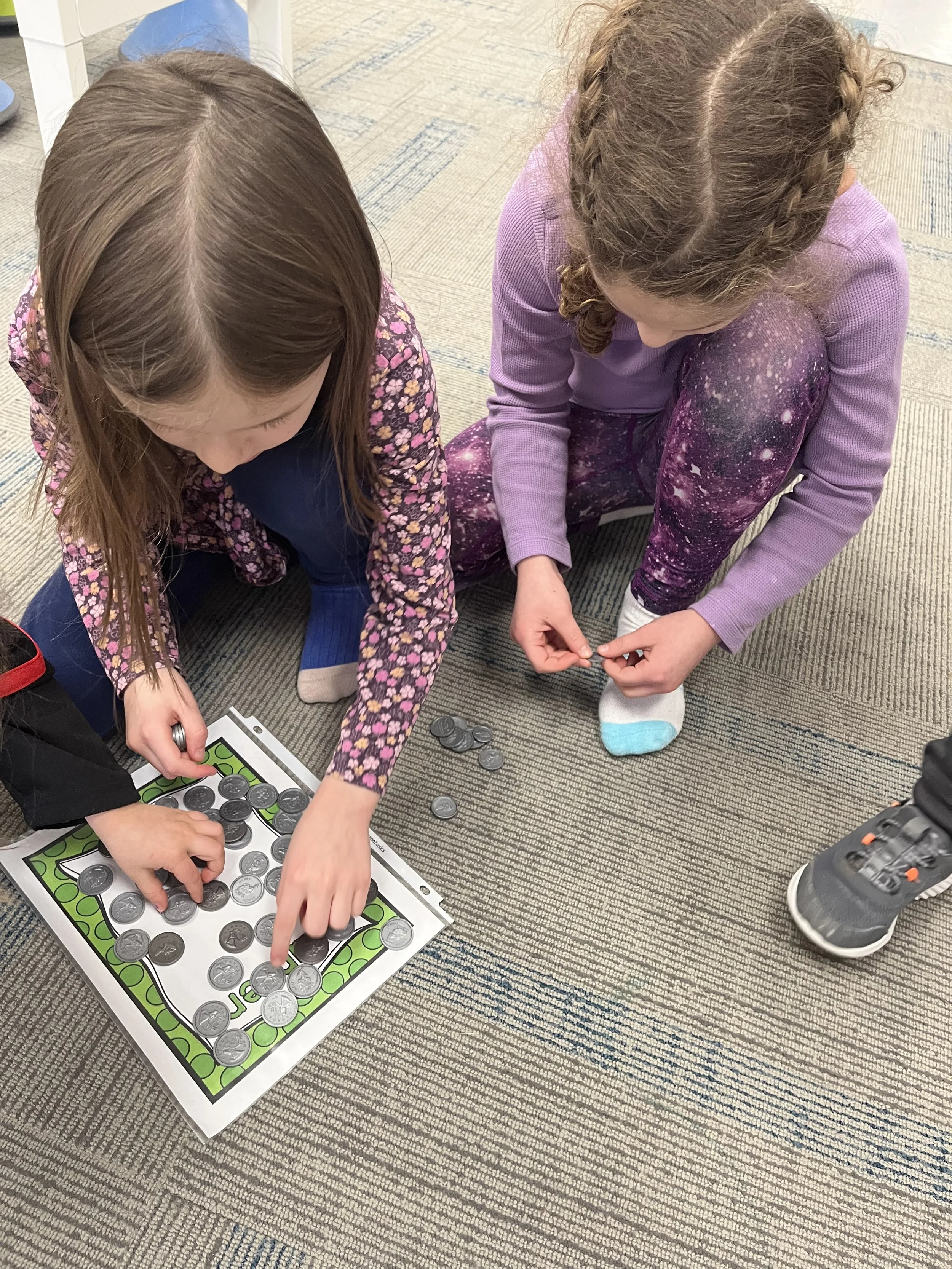
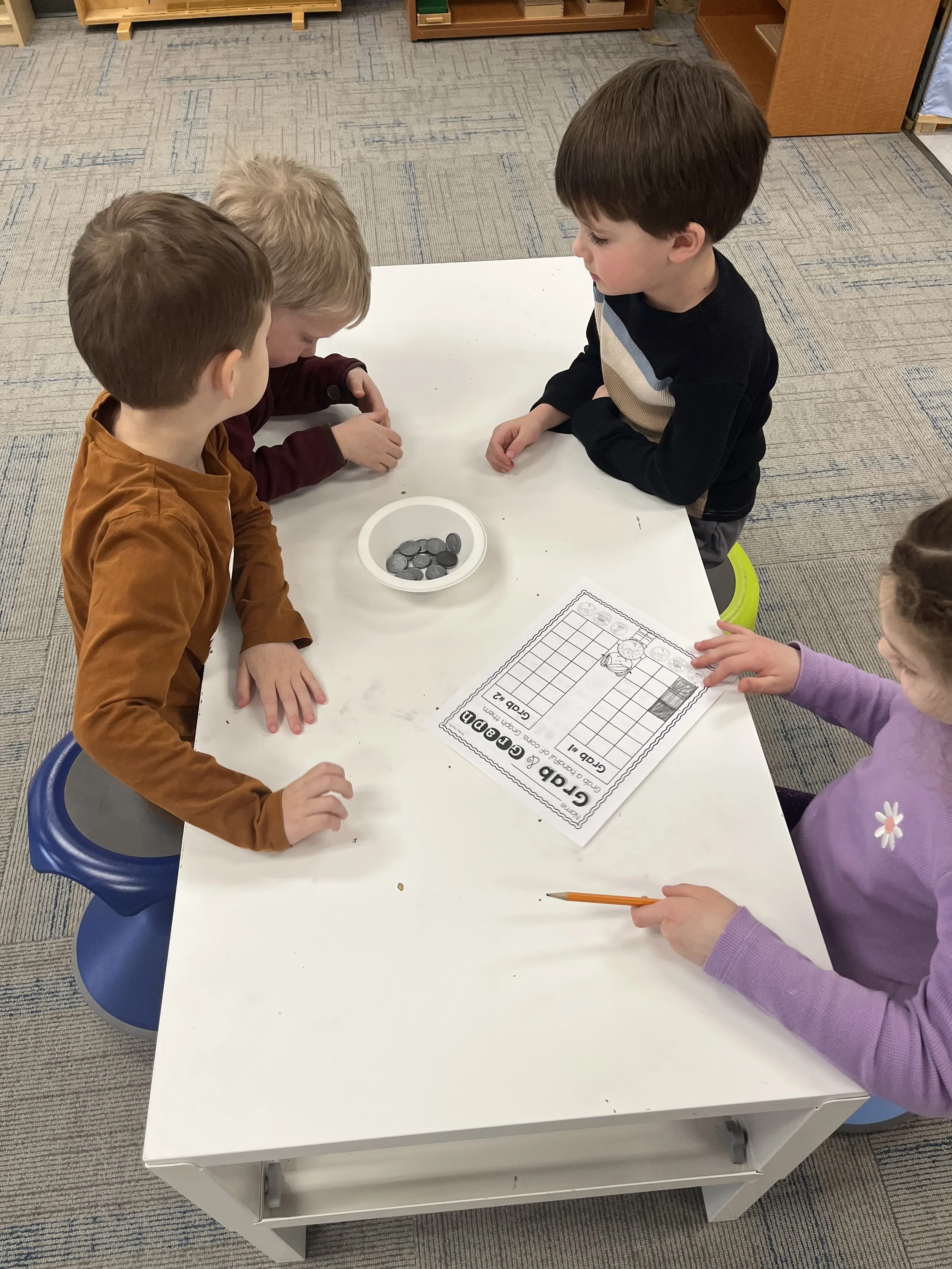
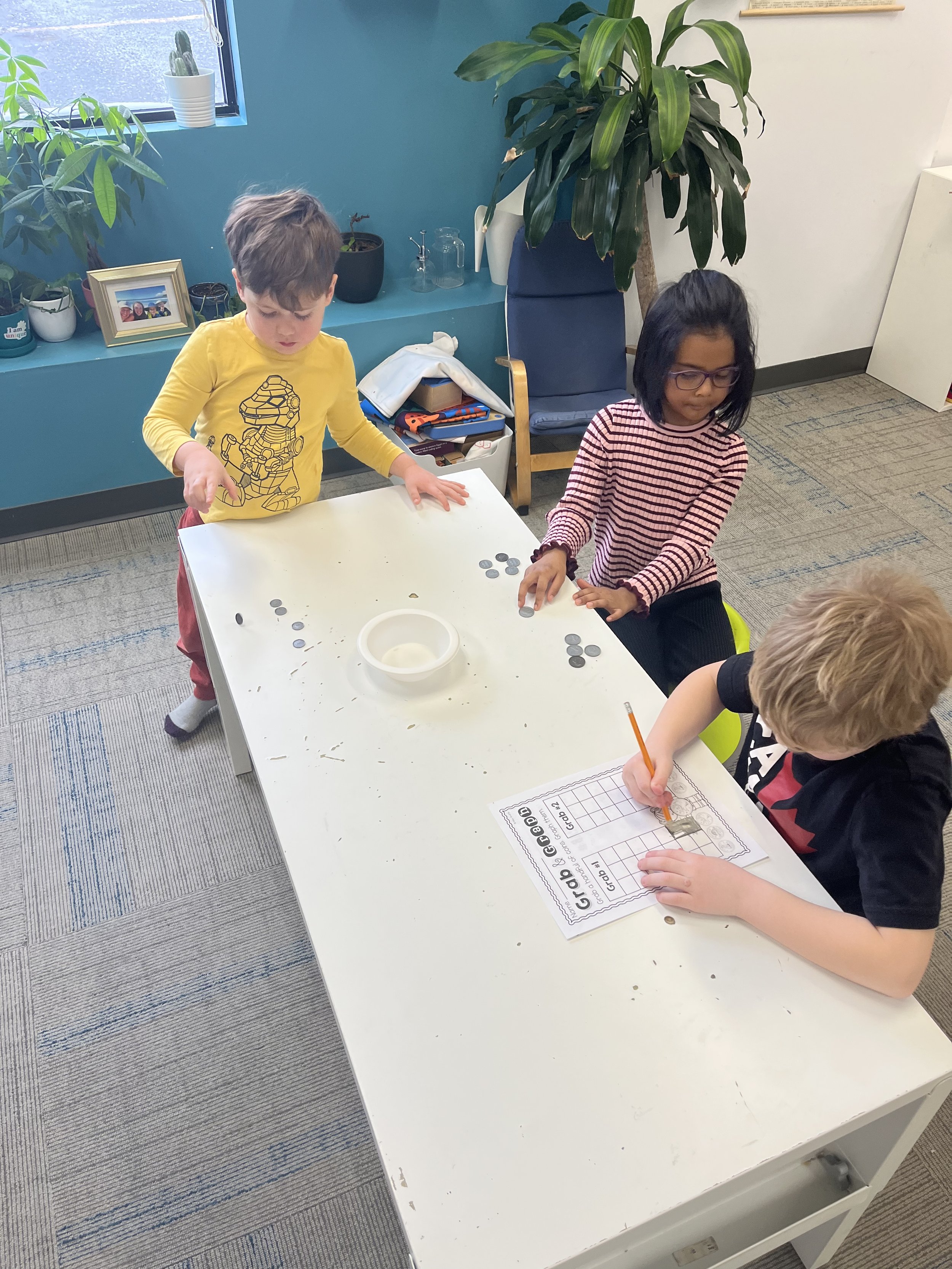
This week in Math Workshop, both groups came together to explore Canadian currency, tying in perfectly with our Quest theme of entrepreneurship. Understanding money helps us build real-world skills, especially as we learn how people earn, save, and spend. We started by chatting as a group about money at home. The Sparks shared whether they have piggy banks or bank accounts and talked about the different ways they’ve earned money: through chores, helping family members, or special jobs around their home or neighbourhood. This sparked some great conversations and connections to our entrepreneurship theme. Next, we explored our play money, identifying all Canadian coins and bills up to $100. We looked closely at each piece, noticing the images, symbols, and learning the value of each coin and bill. Our focus shifted to coins. In small groups, the Sparks were given a bowl full of mixed coins. They worked together to identify each coin and place it on the matching coin mat, practicing teamwork and careful observation. To wrap things up, each group received a new bowl of coins and worked together to graph how many of each coin they had. This activity combined money skills with early data management and helped reinforce currency recognition and counting. We’re excited to keep building these money skills as we continue our journey in the world of entrepreneurship!
French
This week, the learners explored food and vegetable vocabulary through a variety of engaging activities. This week, they played a board game (Petit Linkto) and used food toys to recognize and name different vegetables. Learners reviewed colors and new food vocabulary through a coloring activity, they watched a short video related to food to reinforce listening and comprehension skills : Les légumes, les fruits + chansons | Mimi Soleil, Marie et Lulu | Vidéos éducatives pour petits. To wrap up our workshops on Thursday, learners participated in active games in the gym where they had to run to the correct fruit or vegetable image.
Geography
This week, the Sparks packed up their imaginations and flew to the continent of South America! We explored the map together, learning where South America is in the world and discovering the names of some of its countries. To bring the learning to life, we played a fun and active game hiding pieces of a South America puzzle map around the studio. The learners worked hard to search for the pieces and then helped put the broken map back together, building both their geography knowledge and teamworking skills.
Additional Highlights
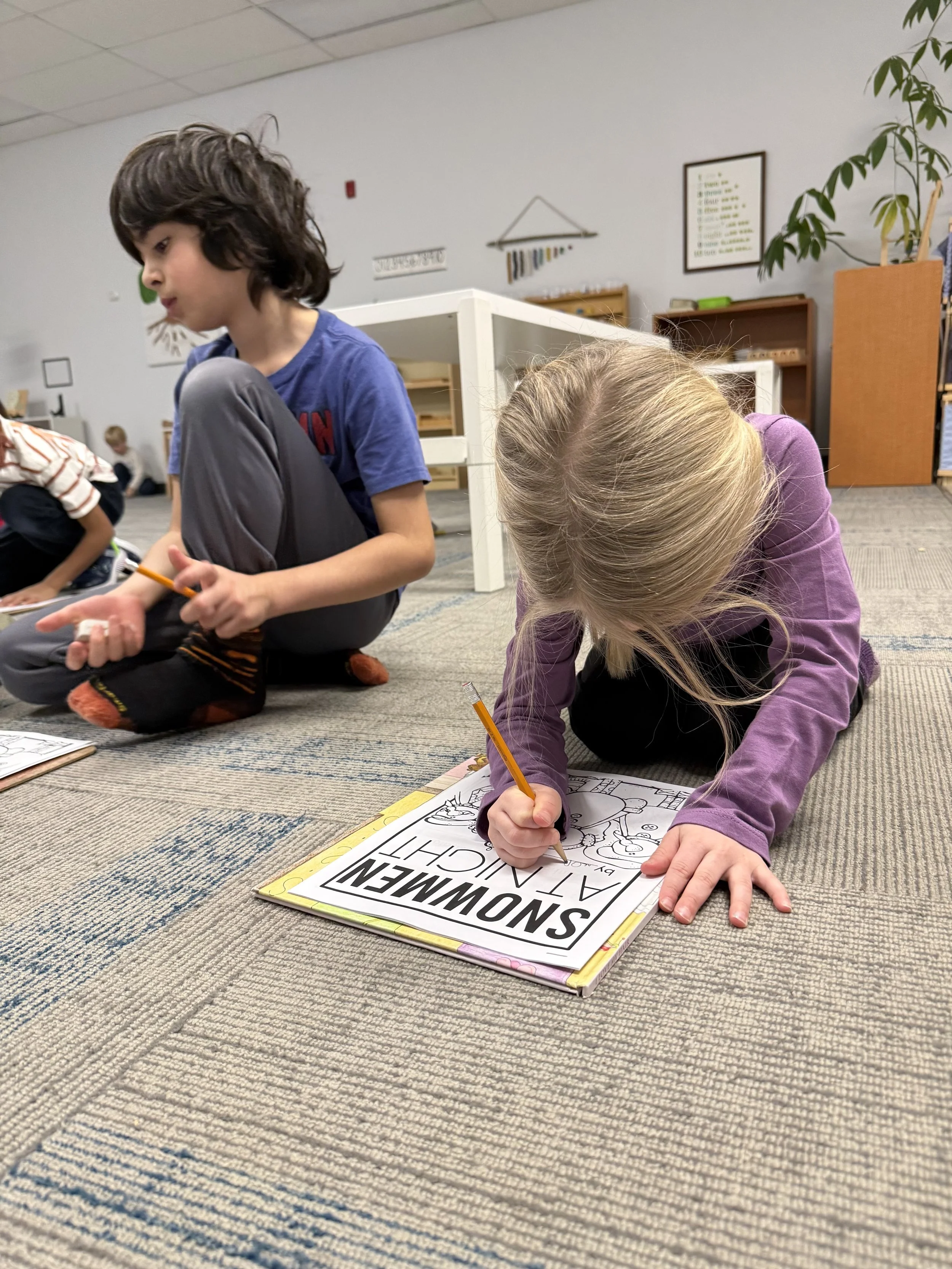
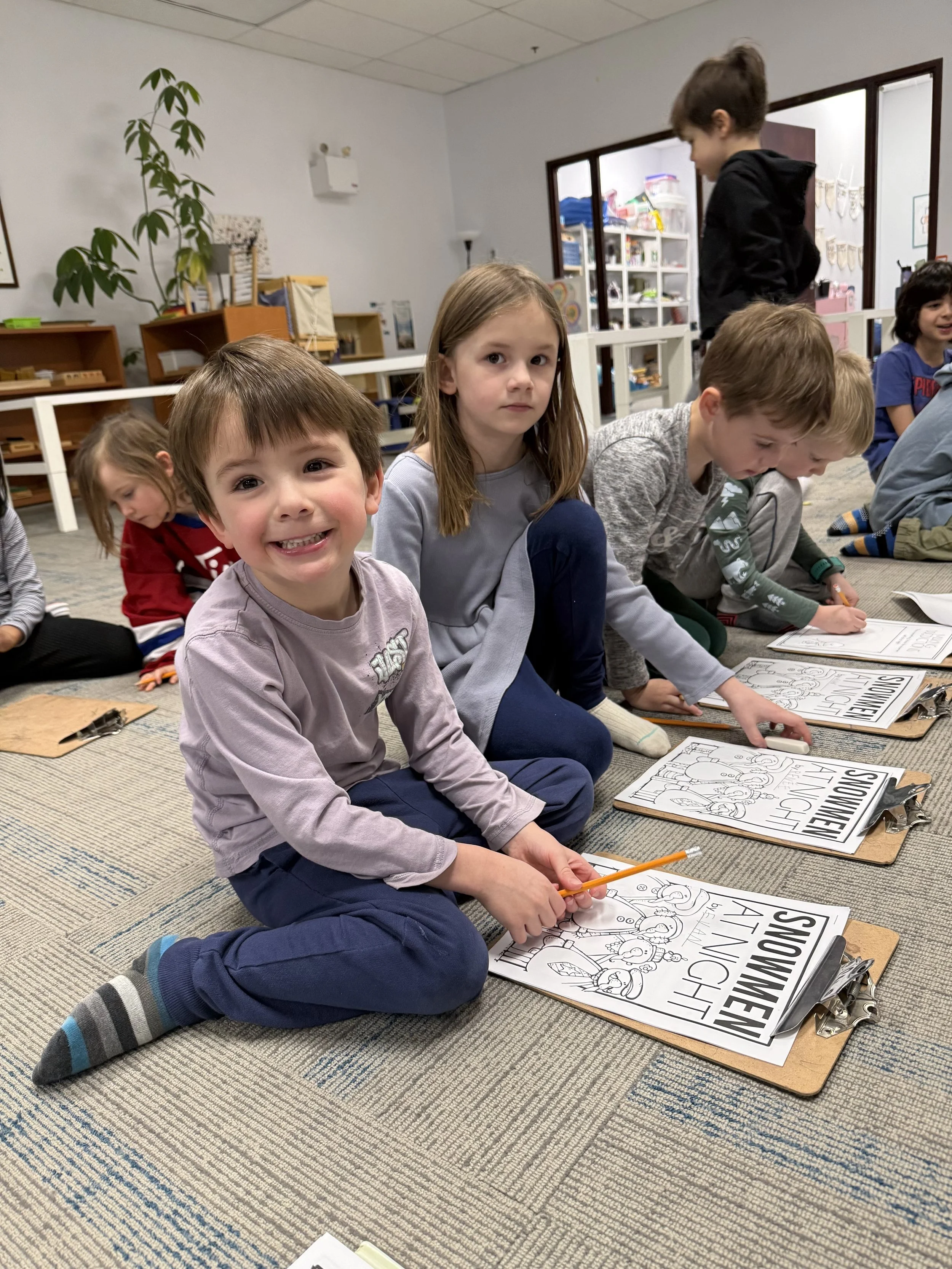
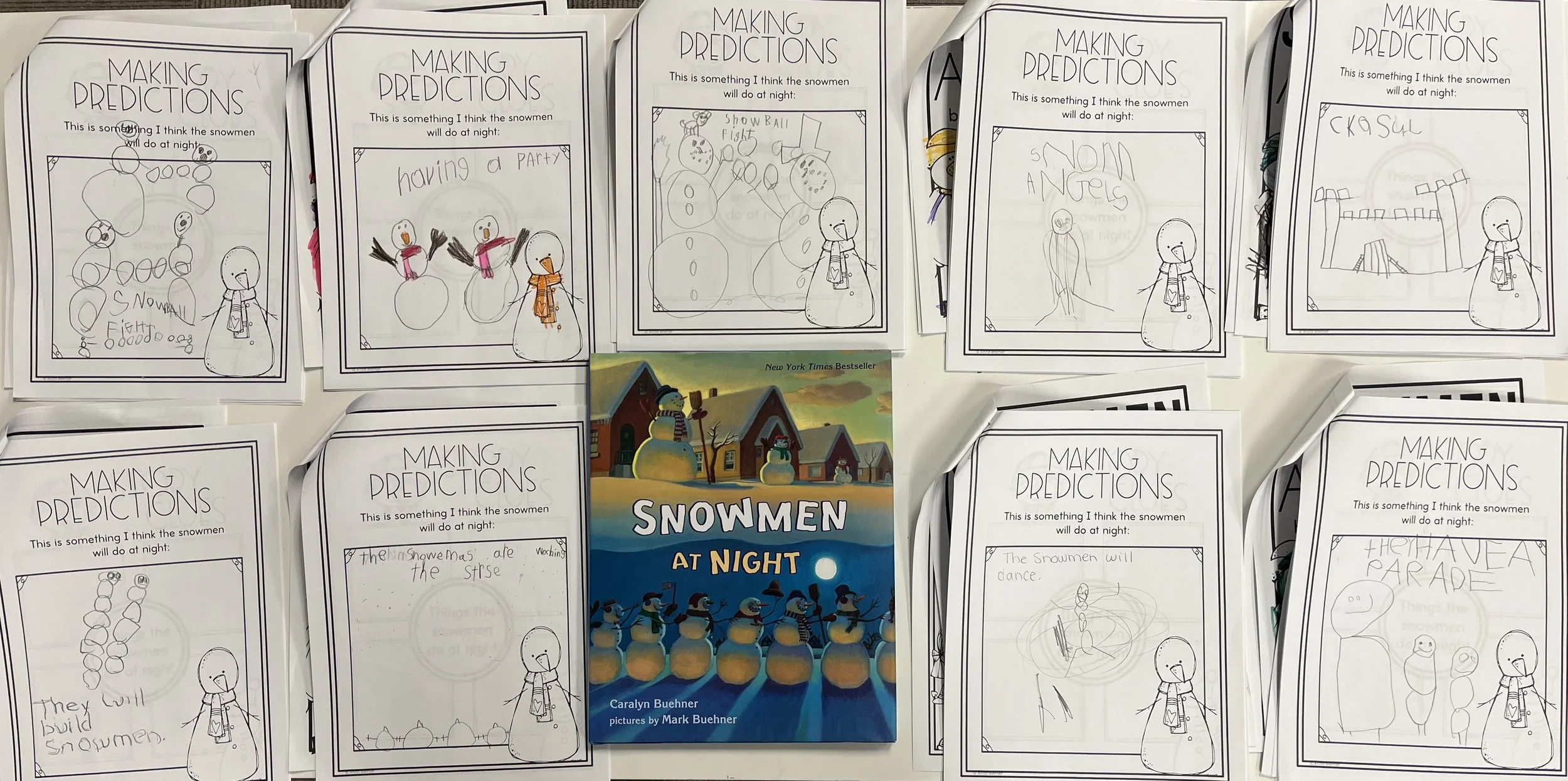
This week, we kicked off a new book study: Snowmen at Night by Caralyn Buehner. We explored the cover and talked about what we think snowmen might do once everyone is asleep. The learners coloured their own cover pages and shared creative predictions about the story. Next week, we’re excited to read the book together and see if our predictions come true. We can’t wait to discover what really happens when snowmen come to life at night!
Discovery Studio
mindfulness and launch
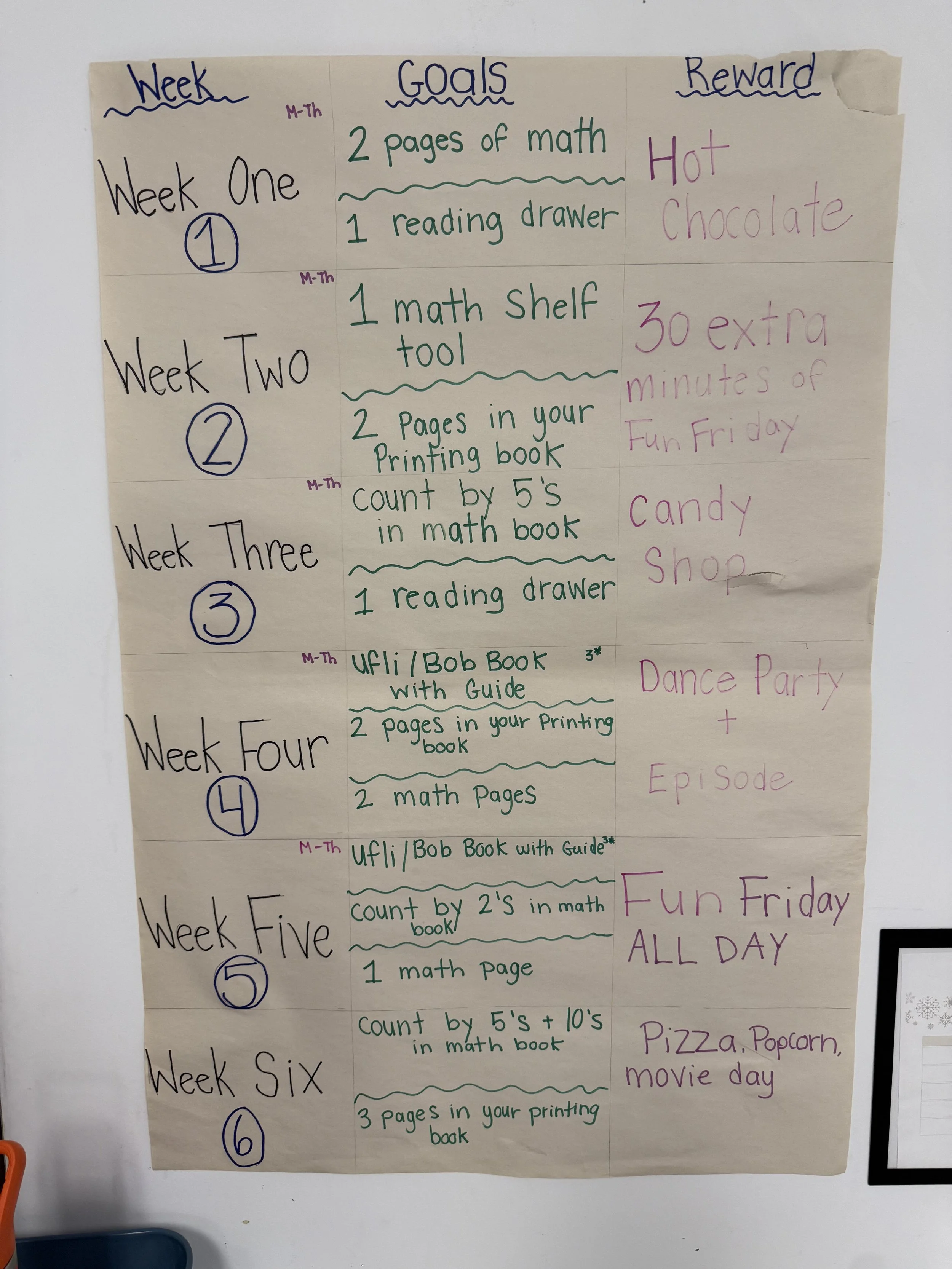
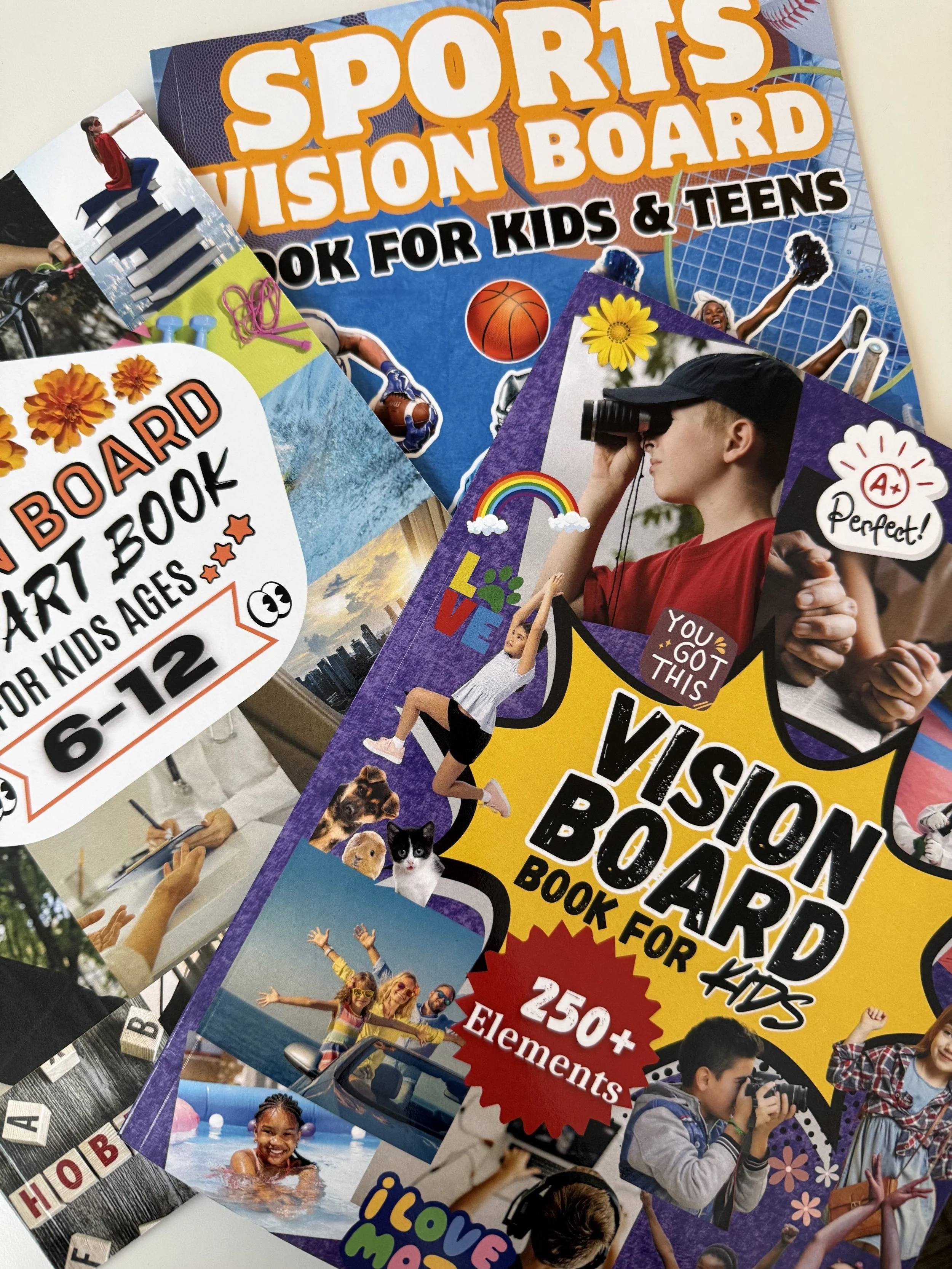
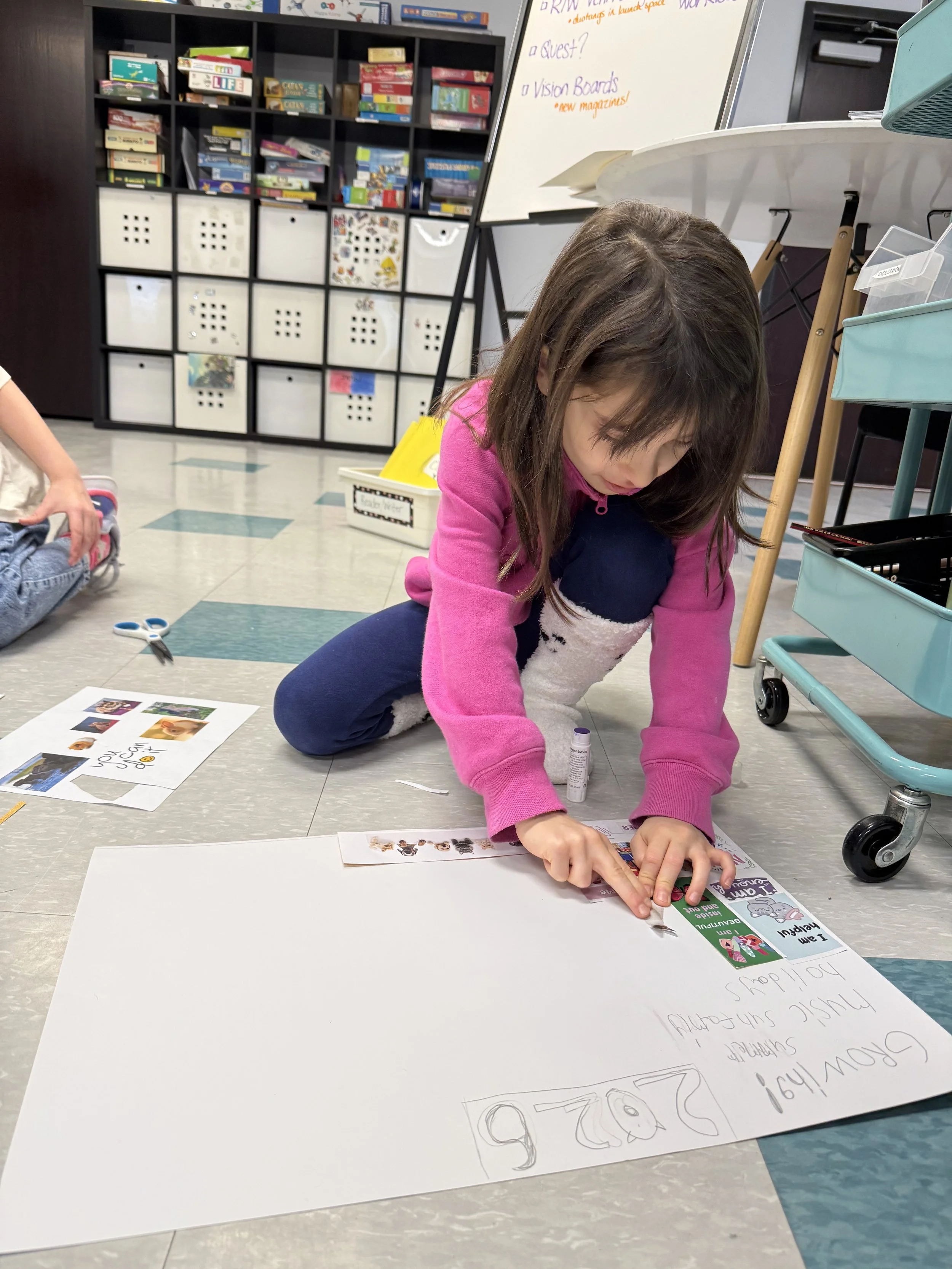
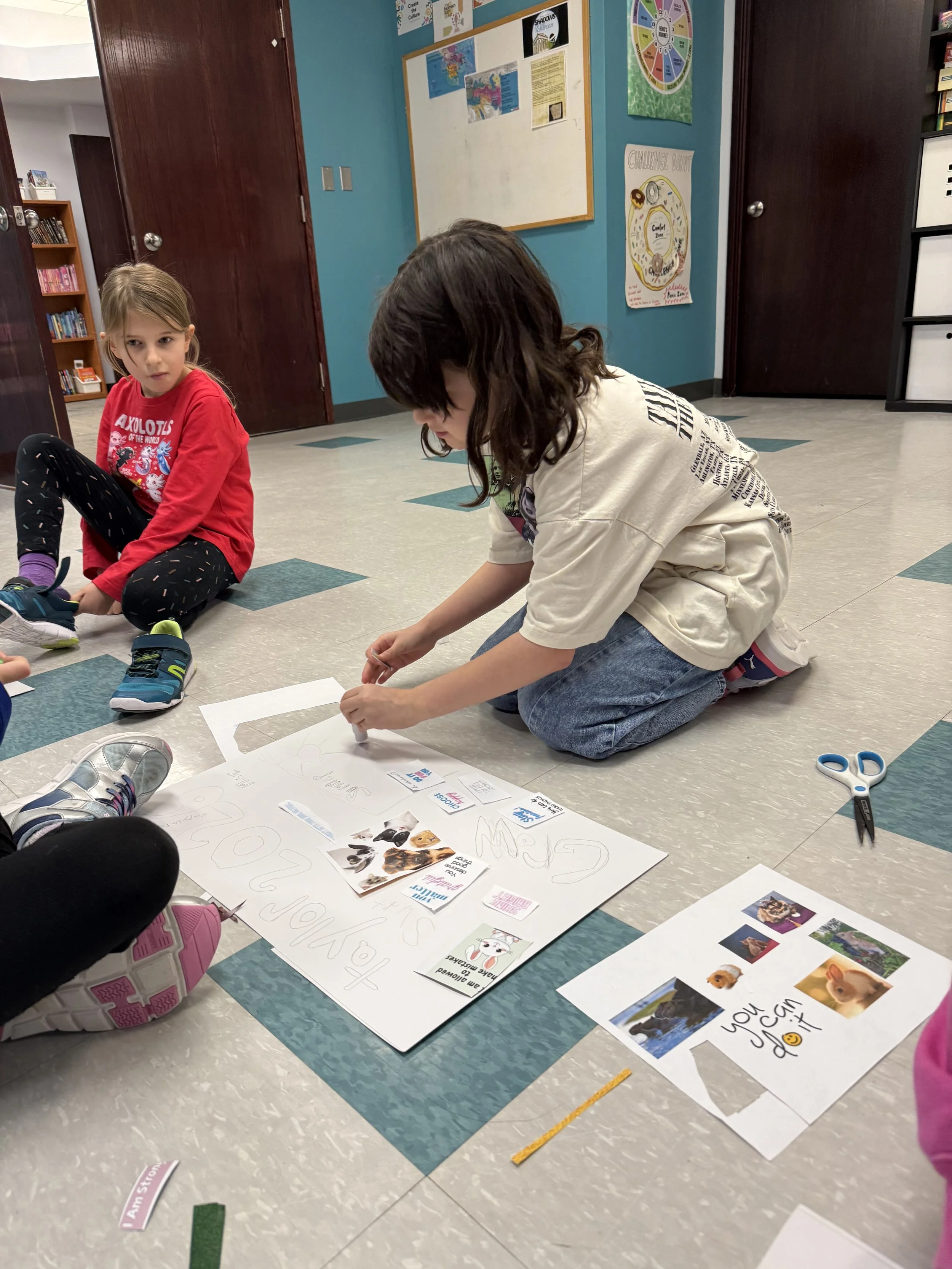
Happy New Year, Rebels! We welcomed back our Discovery Team by kicking off the new year creating vision boards. Rebels discussed the purpose of vision boards and connected them to “laws of attraction”. Rebels wondered if it’s just a coincidence or if there is any truth to the saying, “what we put out into the world is what we get back,”. Rebels learned that vision boards are used in a variety of ways, from manifesting goals and achievements, supporting creators through visualization and help us make goals more concrete. Rebels will be working on their vision boards over the next few weeks and will be displaying their hopes and dreams for 2026 at Exhibition. For launch, we announced the new Squad Leaders for this session and recalled an important conversation around leadership and expectations that we had before leaving for session break. Rebels discussed their hopes for this new leadership team, what we want to see more of when it comes to teamwork and collaboration, and ways that we can continue to strengthen our studio culture. One of the most consistent pieces of feedback from our leadership team from sessions 1-3 had been the request for smaller squads in hopes that would allow for more individualized support, so we head into the new year with seven squad leaders eager to lead and support our studio. On Tuesday morning Rebels did a New Year mindful zen doodle activity. At launch, we explored some top quotes gathered in 2025 in connection with the vision board project: which quotes speak to us most powerfully? How do they, if at all, help motivate us towards our goals? One quote was a special link to our studio leadership review: “When I talk to managers I get the feeling they’re important. When I talk to leaders I get the feeling I’m important.” During our first Wonder Wednesday mindful puzzles of 2026, Rebels started with Connections Squad Chickens gave our leadership team their first opportunity to check in with their teammates and discuss completed goals for the week as well as plans for the next three days to secure their spot for Fun Friday. Thursday’s Thank You For Sharing included some reflective discussions around setting academic and personal goals, going over strategies for anticipating and managing Rebels’ time during the school day and what Rebels want to make more time for this year that brings them joy. Thursday’s Launch invited Rebels to reflect on and share important qualities of friends. Rebels noted trust, loyalty, feeling safe and being able to be yourself when around this person as key characteristics of being a friend. For Feel-Good Friday we played Taylor Swift’s “Opalite” on the Boomwhackers! The Current Events report included surprising facts about axolotls, a 2025 recap of incredible accomplishments from youth all over the world and the top toys from this year’s holiday wishlists.
Reader/Writer
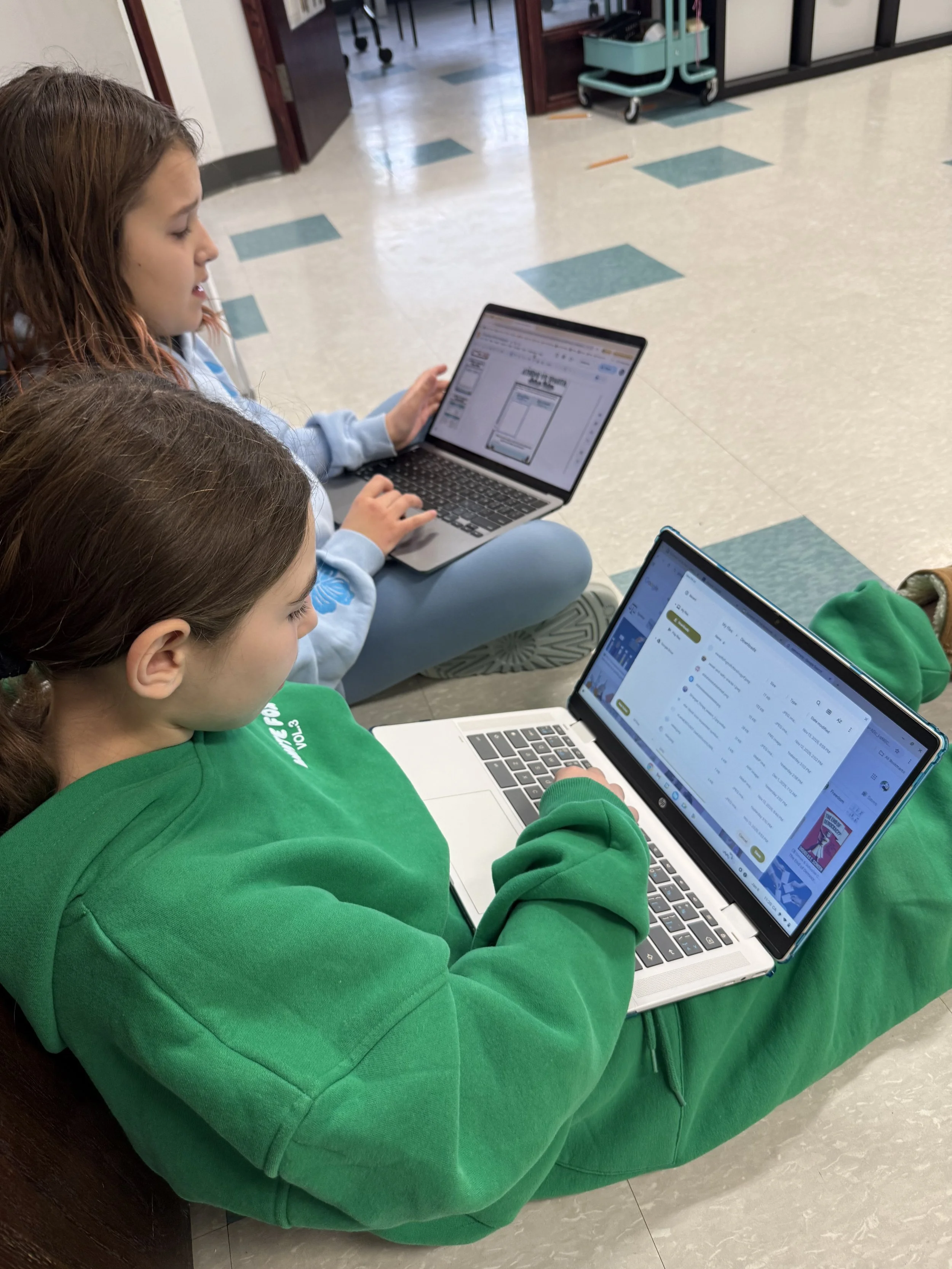
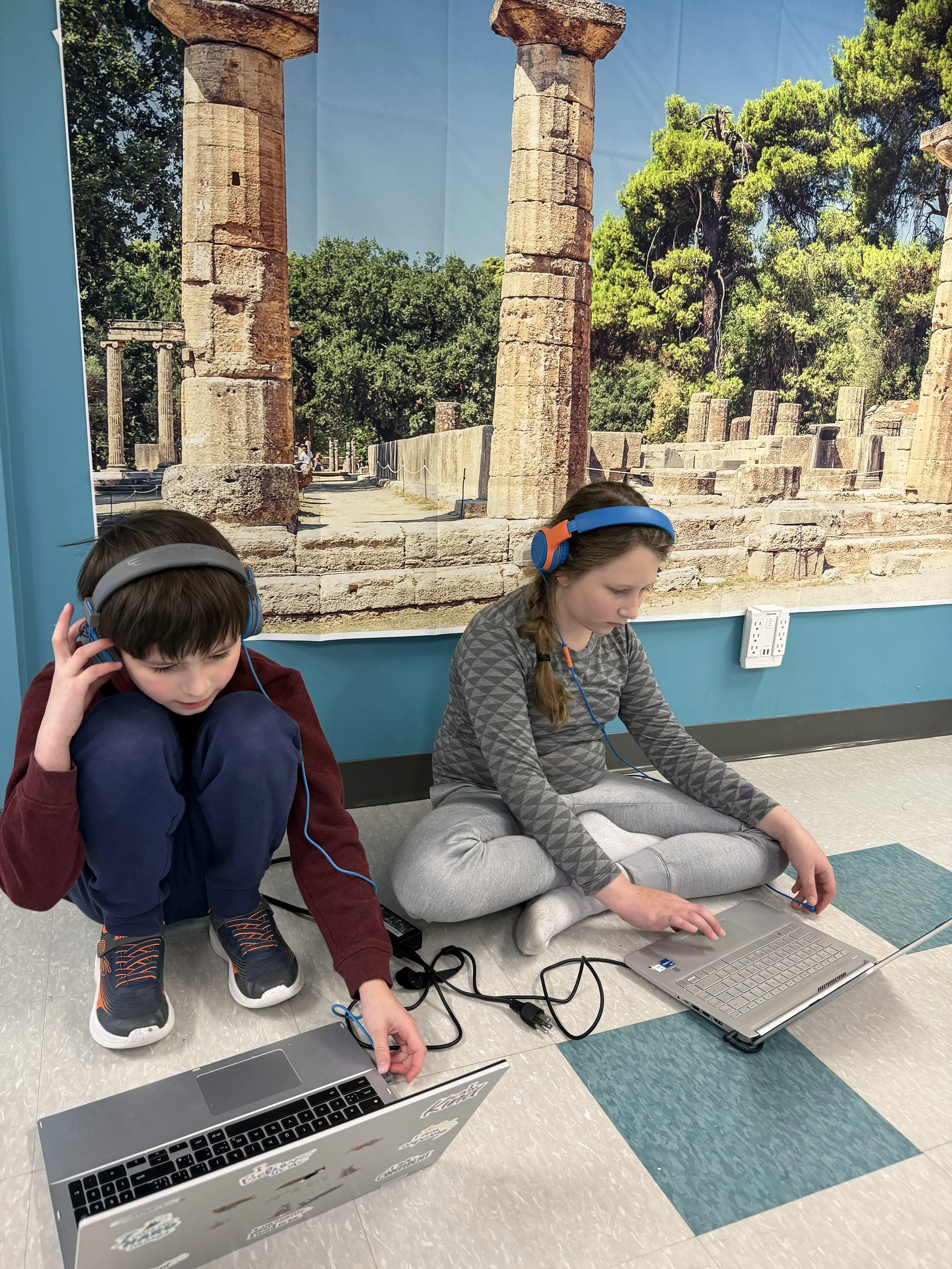
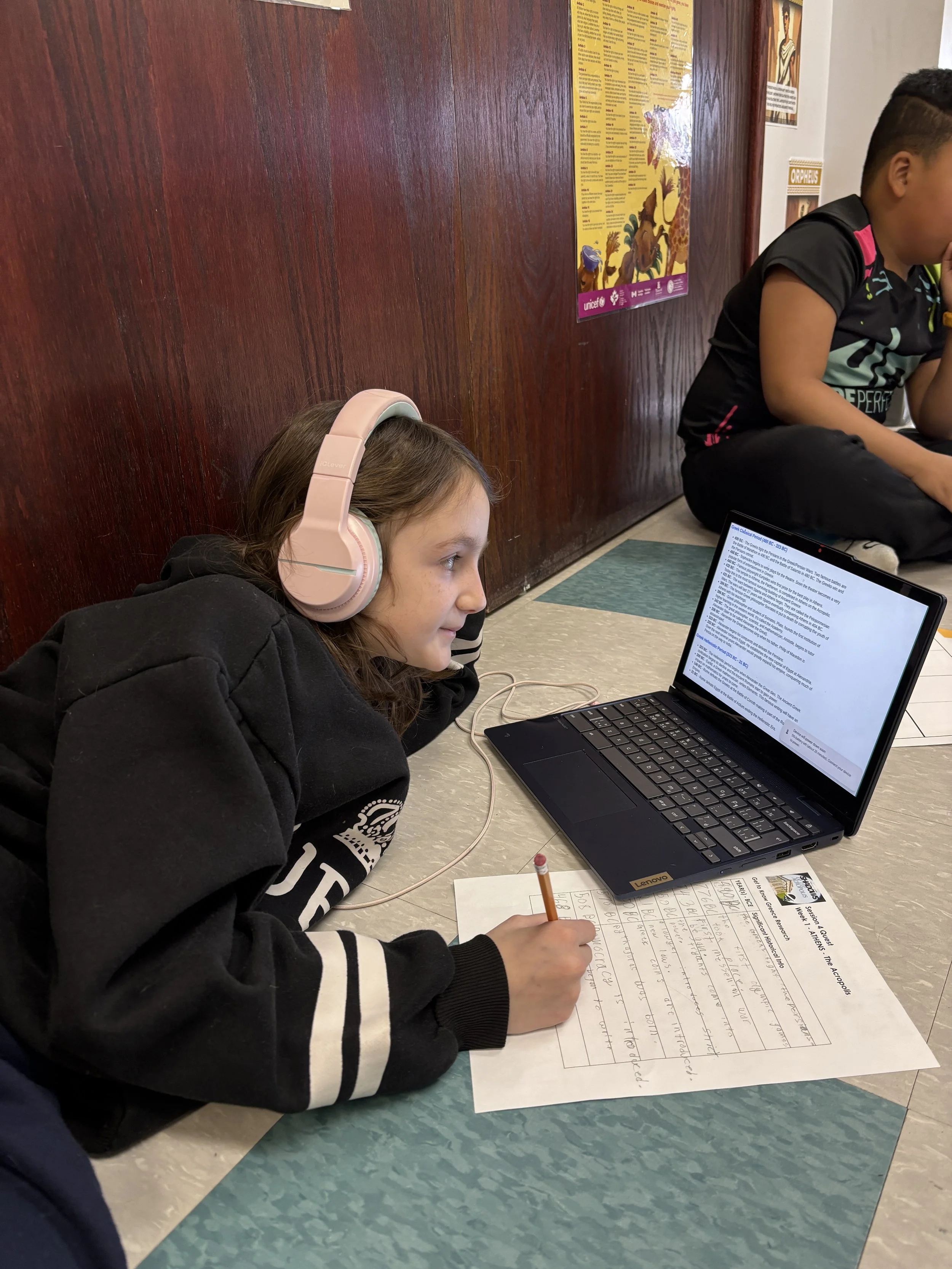
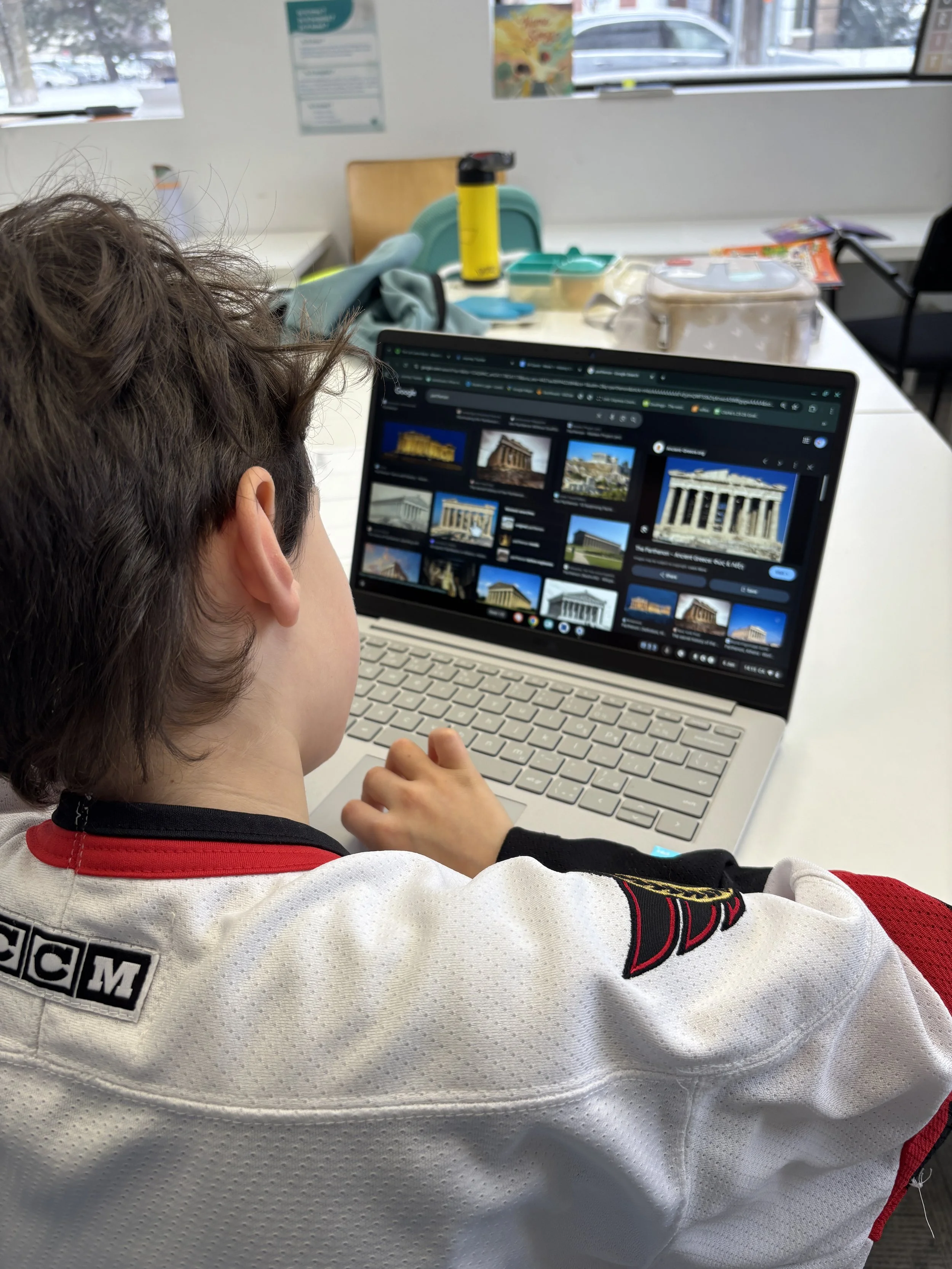
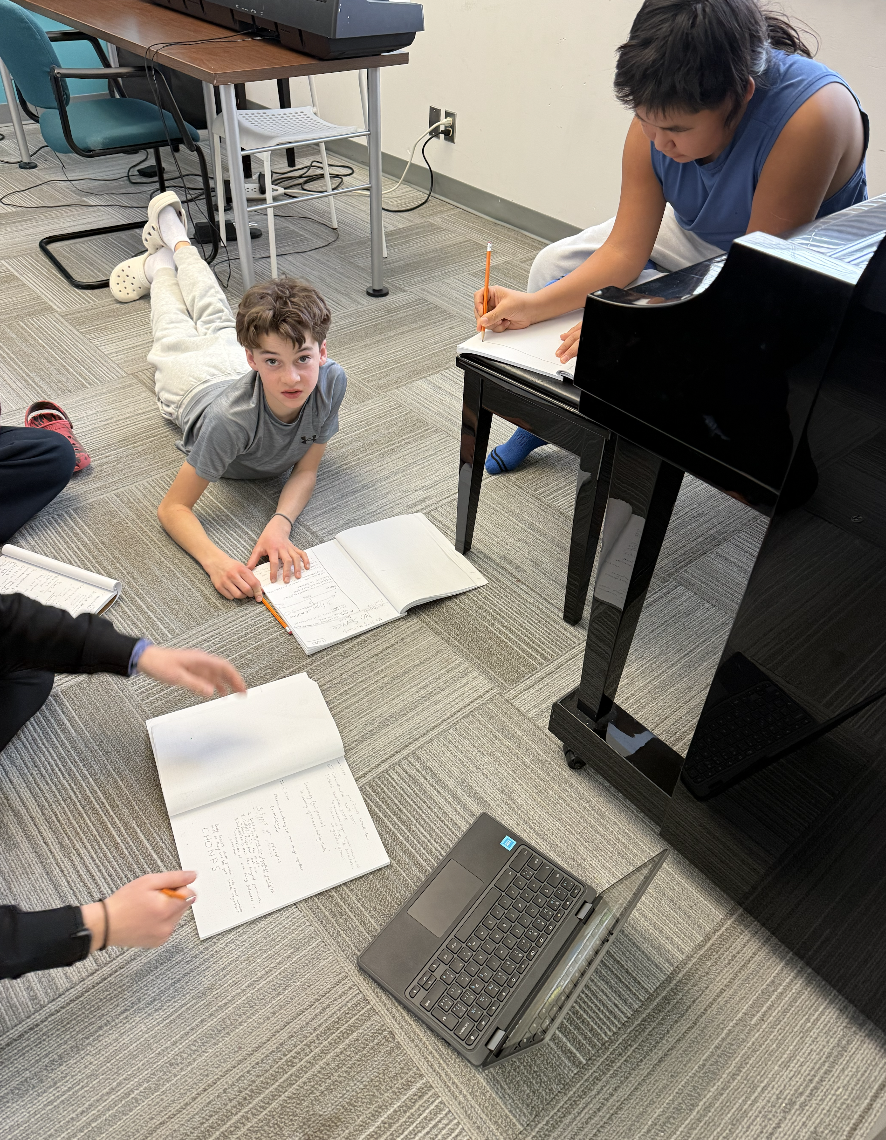
This week in Reader/Writer, both Draw/Anchor and Aim/Release groups focused on researching and completing a compare and contrast activity about Athens and the life of Athenians. For the first two weeks of this Session, Rebels will need to collect as much information as they can about Athens and Sparta in order to successfully complete a compare and contrast challenge - and build up their imaginations as they prepare to create their own Ancient Greek mythical creatures. Rebels uncovered that Athens seemed like a generally peaceful, socially more pleasant place to live as they uncovered the Athenians’ most important values (wisdom, learning, arts, culture). Draw and Anchor Rebels had a compelling conversation about the roles and responsibilities of young children in Athens, leaving many surprised (and upset!) by the laws and legislations that were in place to focus on the education and success of Athenian boys over girls. In Aim and Release, Rebels worked on digital notebooks comparing both city-states. Aim and Release Rebels focused on vocabulary, defining words and noting the difference between a monarchy, oligarchy and democracy. They spent the majority of their workshop working independently on their notebooks and comparing key aspects of daily life in both Athens and Sparta.
Math Lab
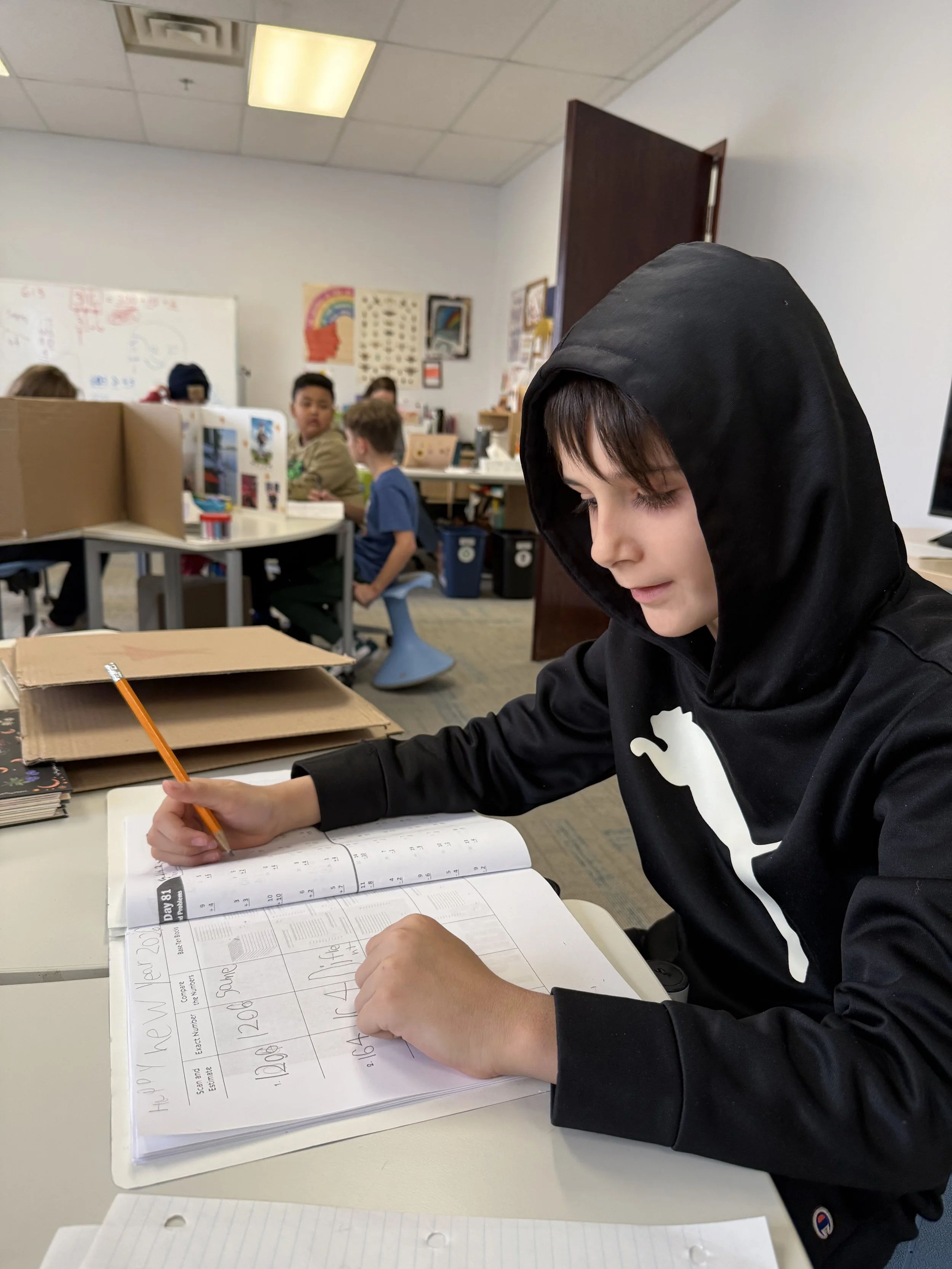
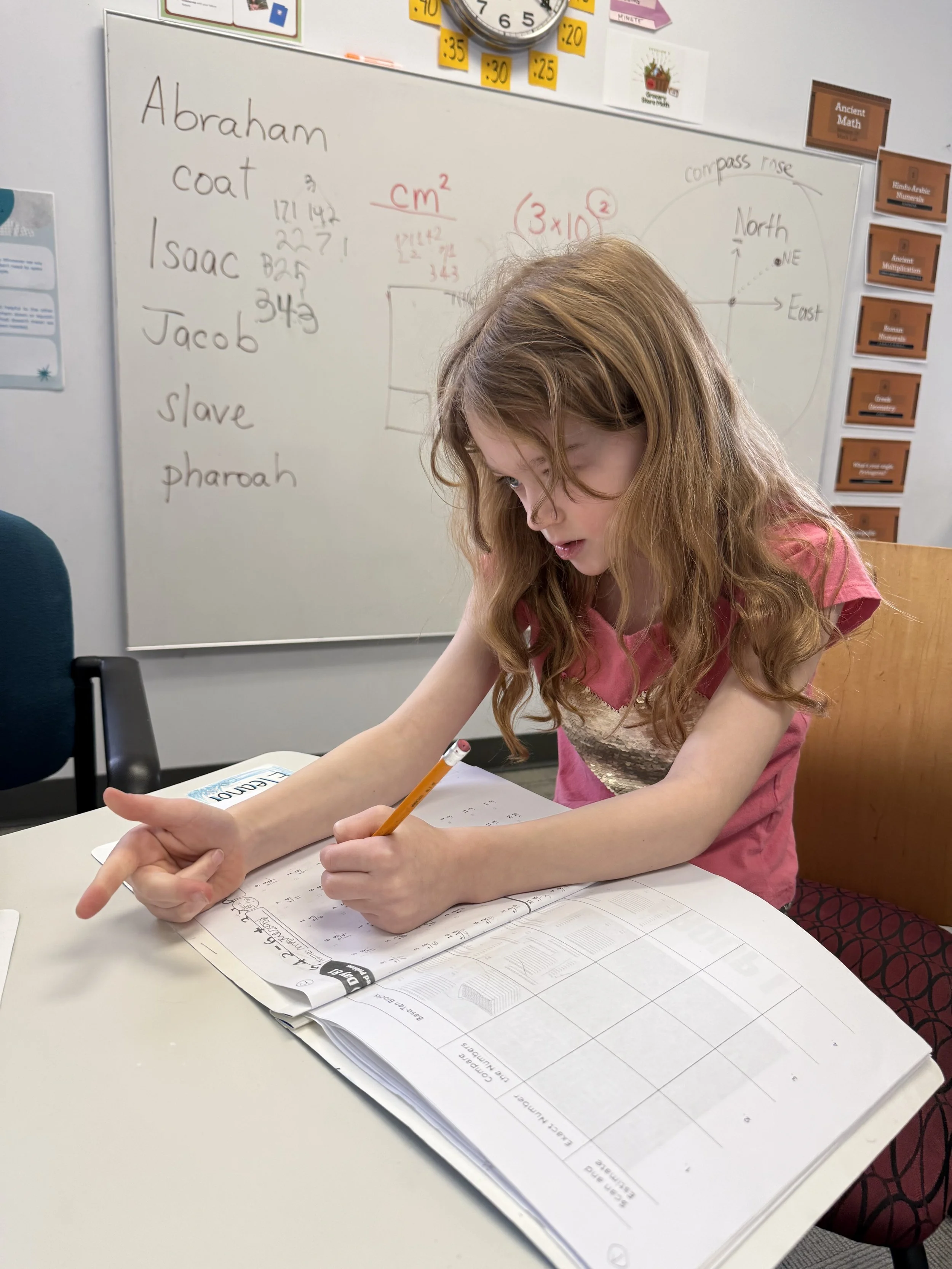
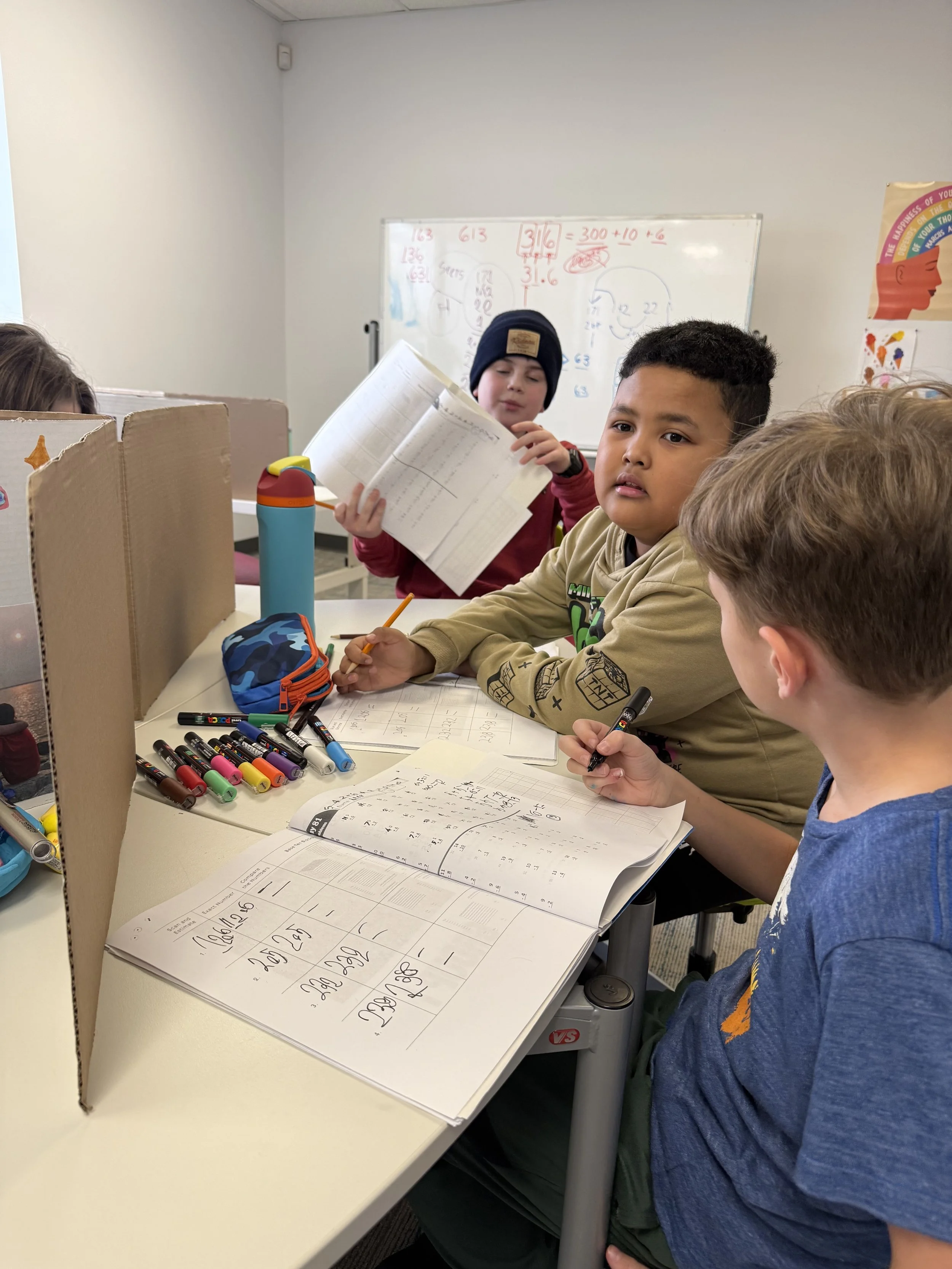
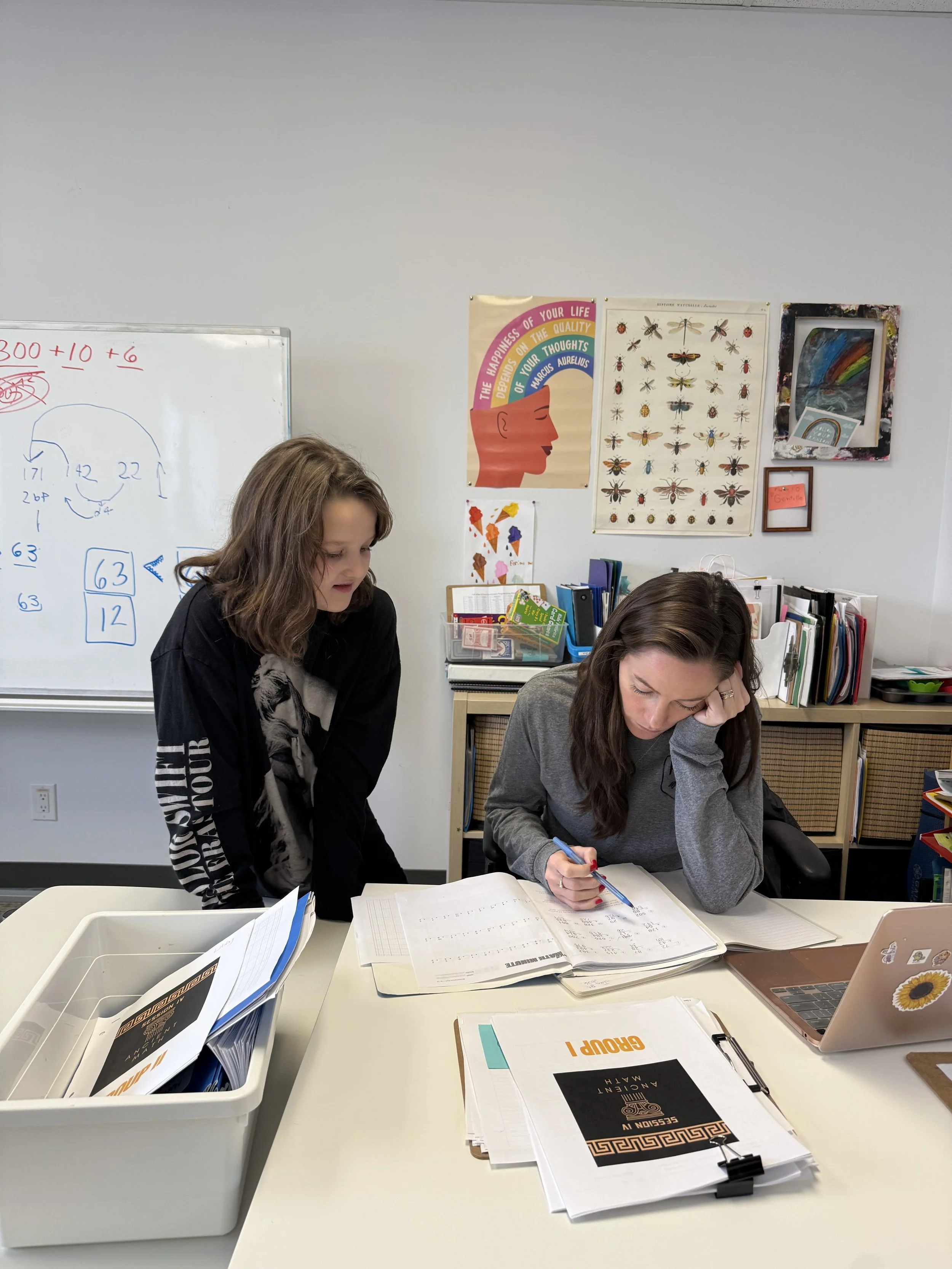
This session we’ll show appreciation for ancient mathematics! First up, Rebels watched a TEDEd video about the history of Hindu-Arabic numerals. This highlights key developments like positional notation (aka place value) and using 0 to more reliably report and calculate larger numbers. Rebels then rolled up their sleeves, sharpened their pencils and got to work! They practiced some crucial foundational skills: representing numbers and using the standard algorithms for addition and subtraction with accuracy. On Tuesday with Group 2, Rebels worked with place value up to 10 000 and calculated sums and differences involving decimal hundredths. On Thursday with Group 1, Rebels focused on place value up to 1000 and subtraction involving regrouping. Both teams also had to work together with a partner to review their answers and check discrepancies for any conceptual or computational errors.
Quest
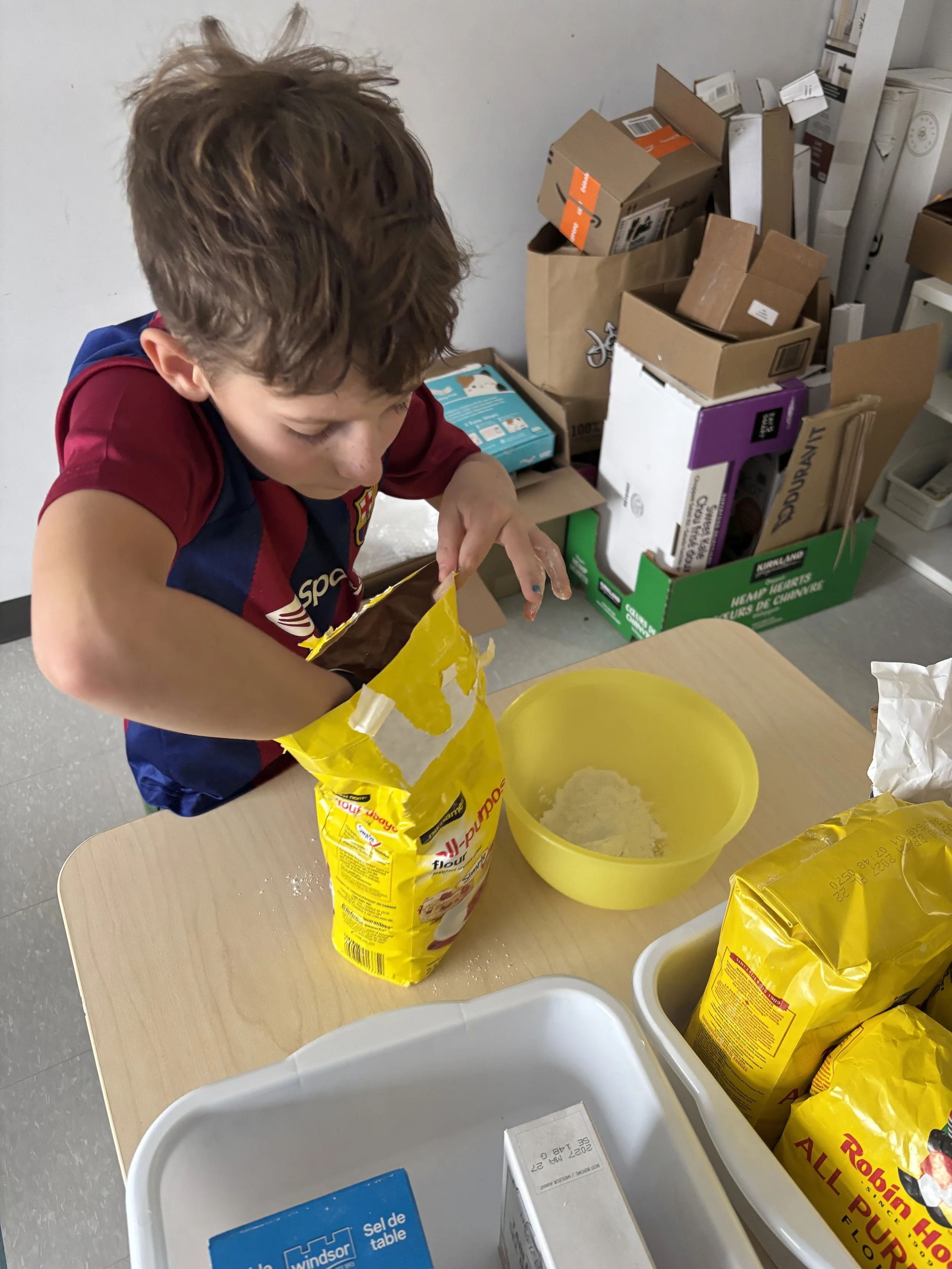
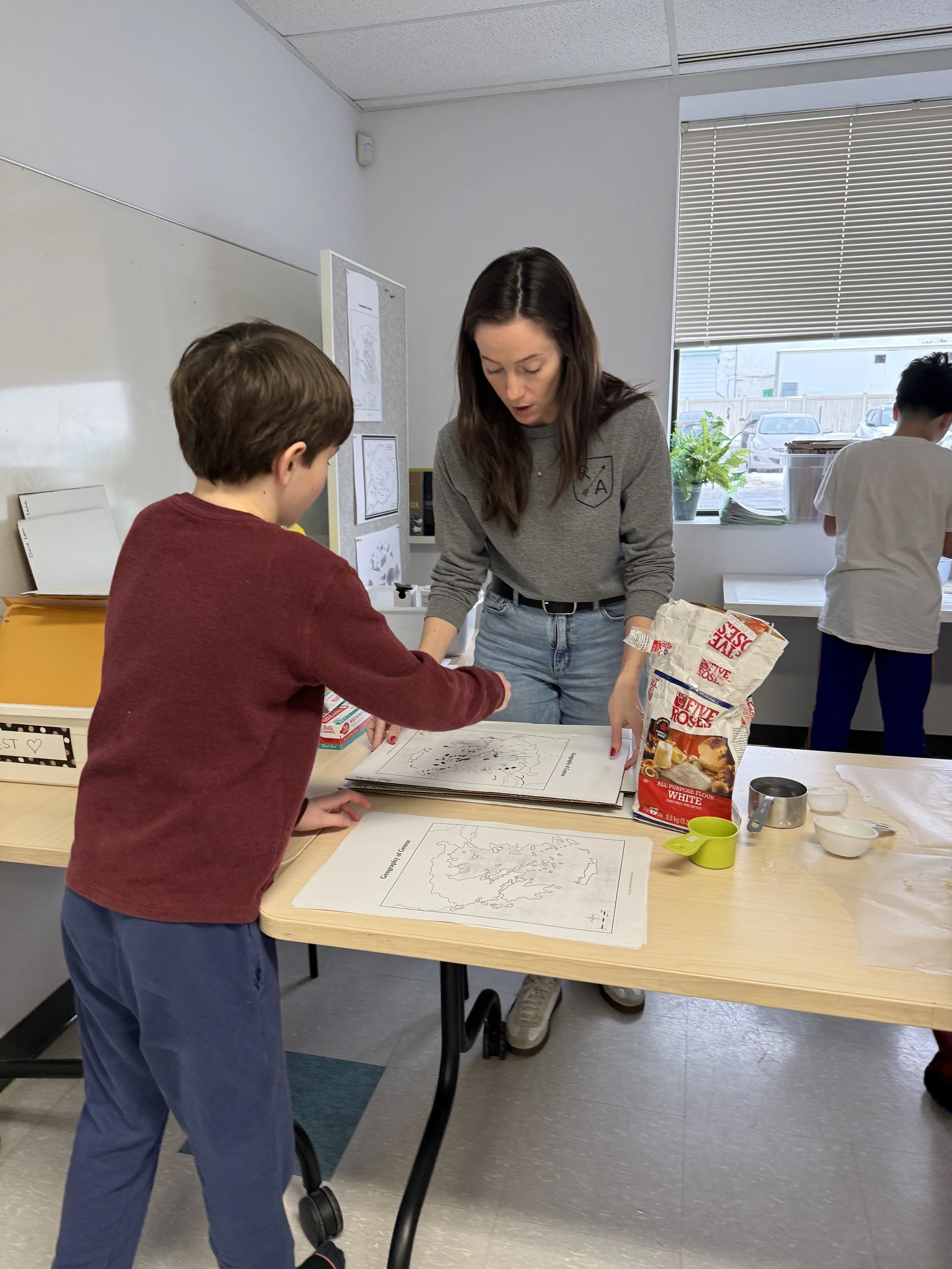
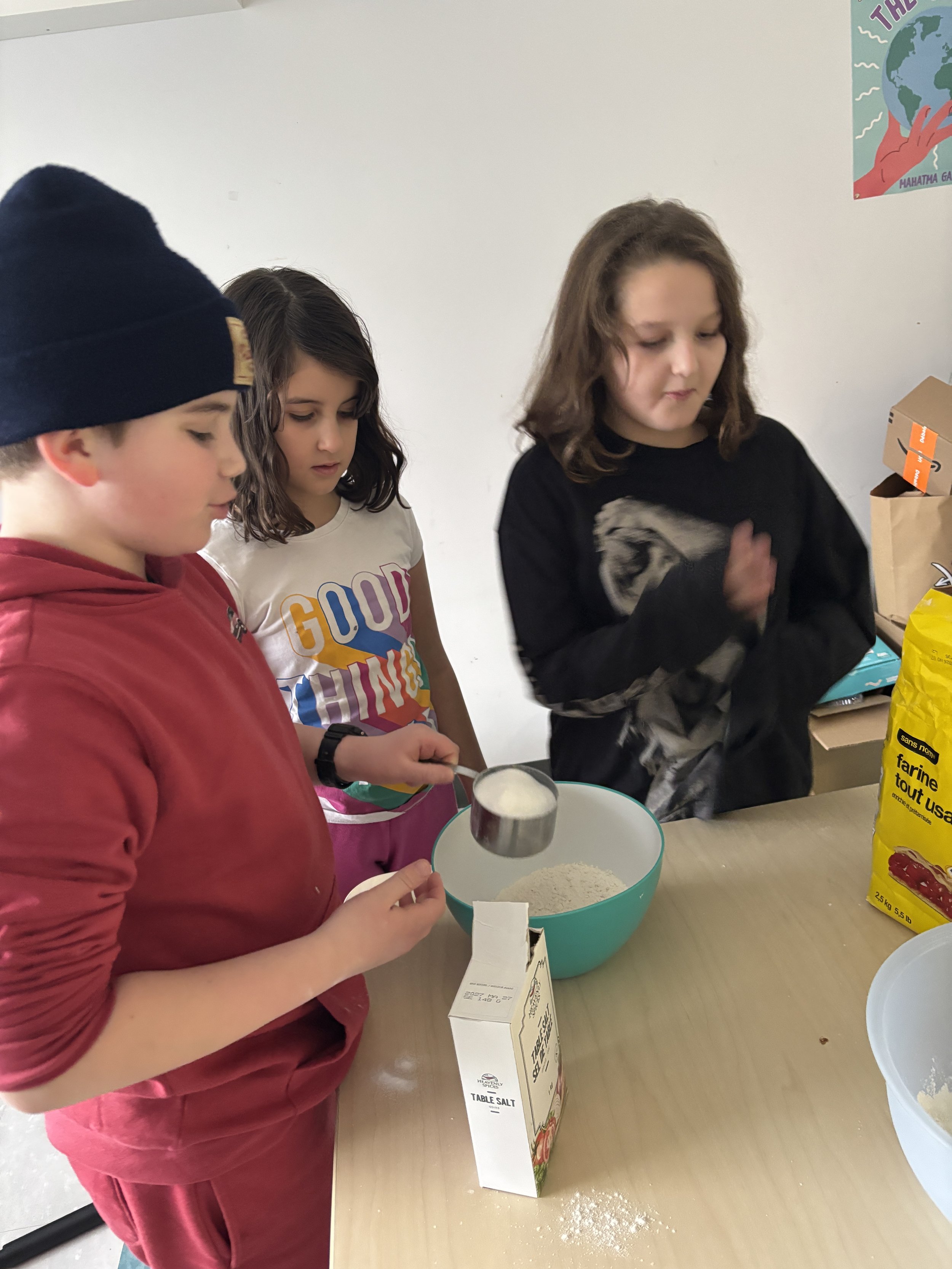
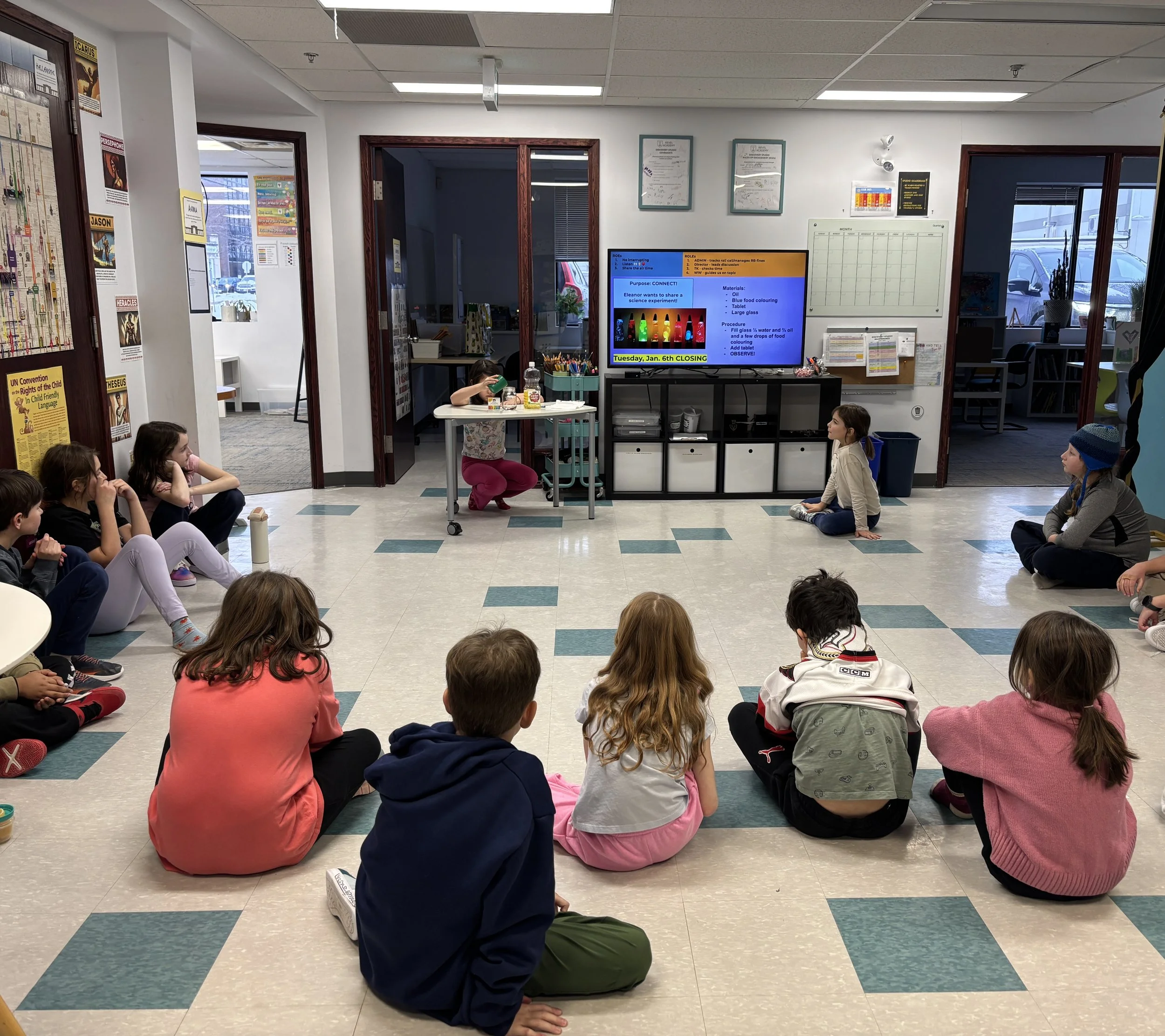
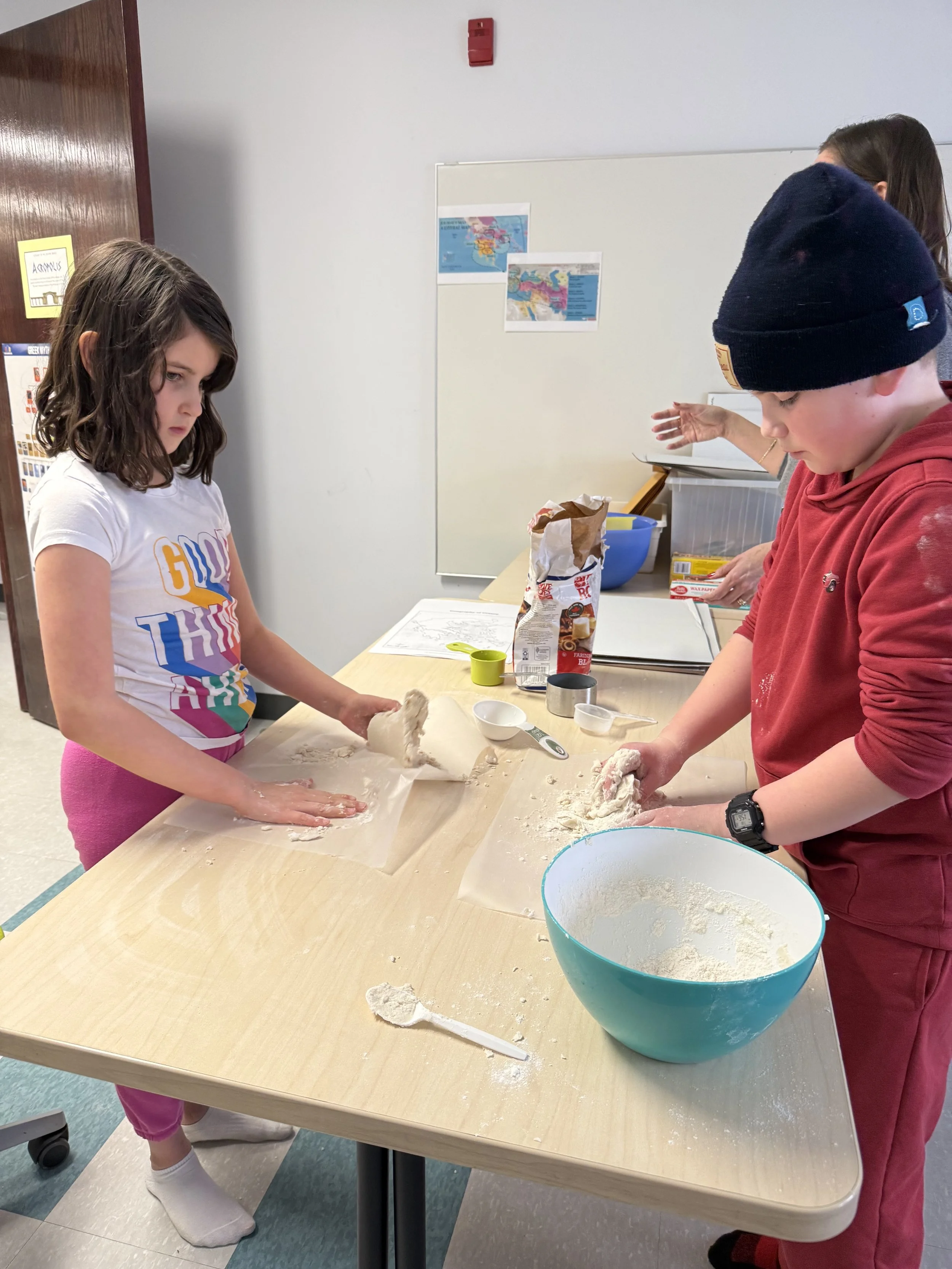
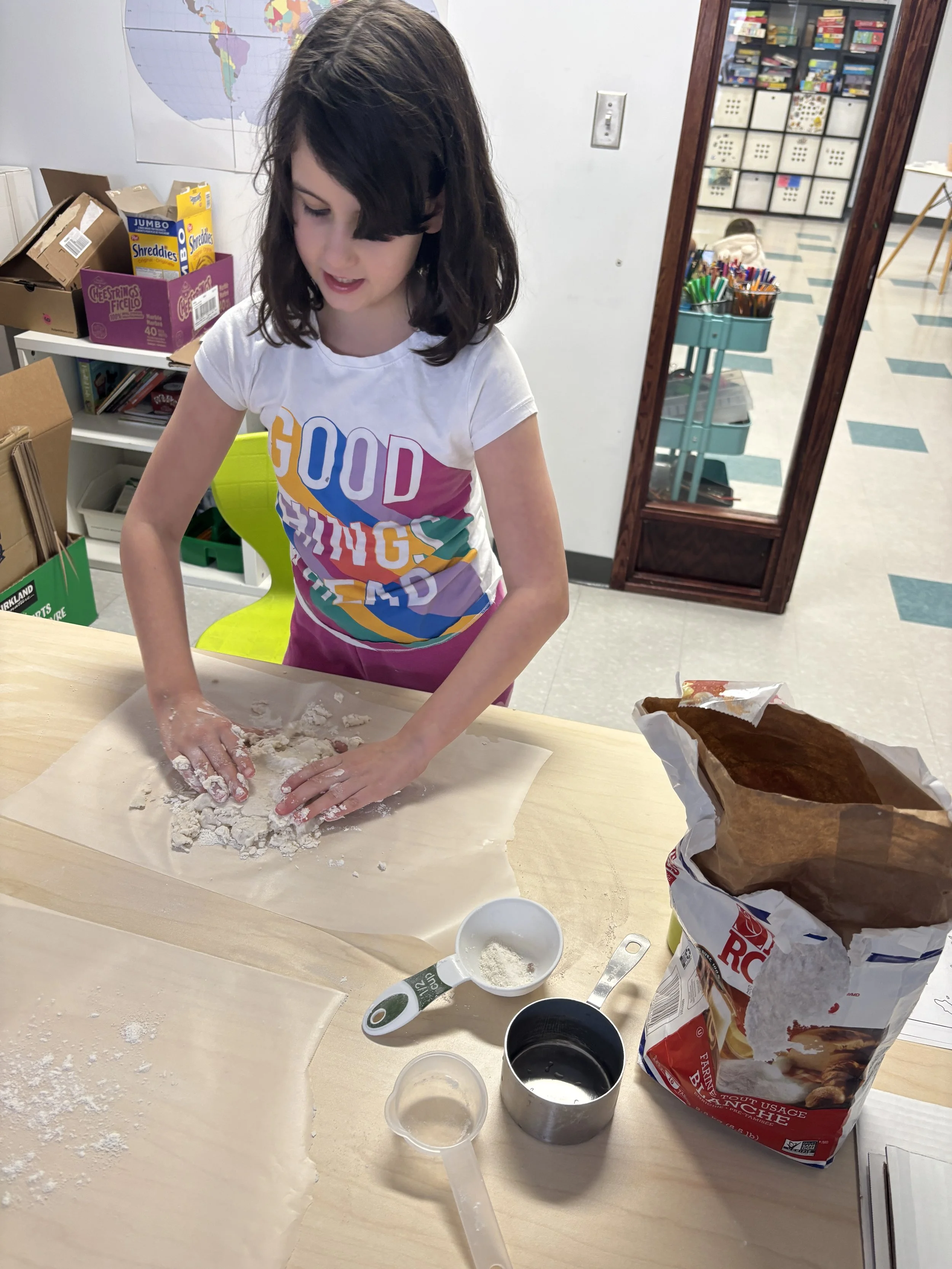
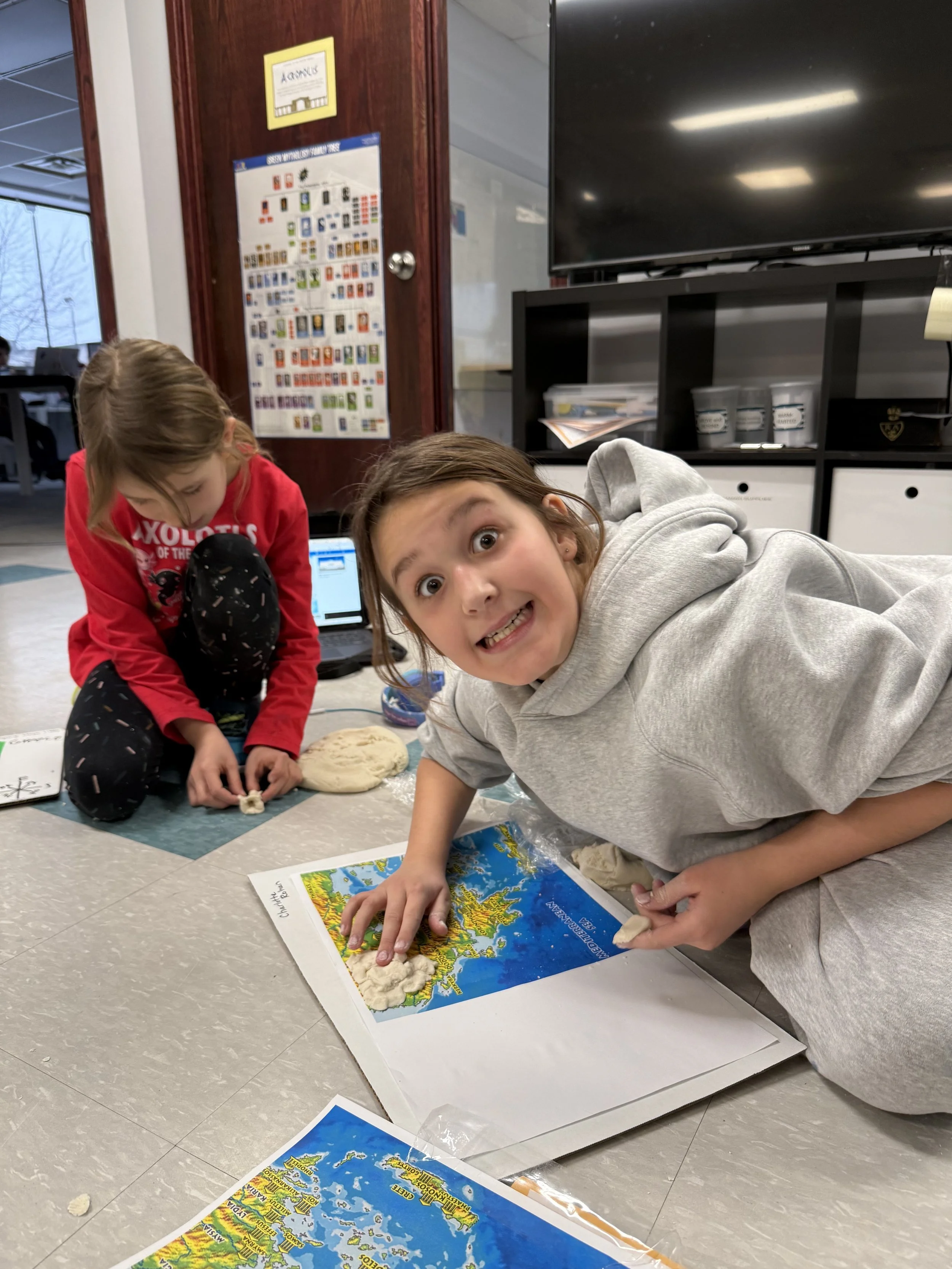
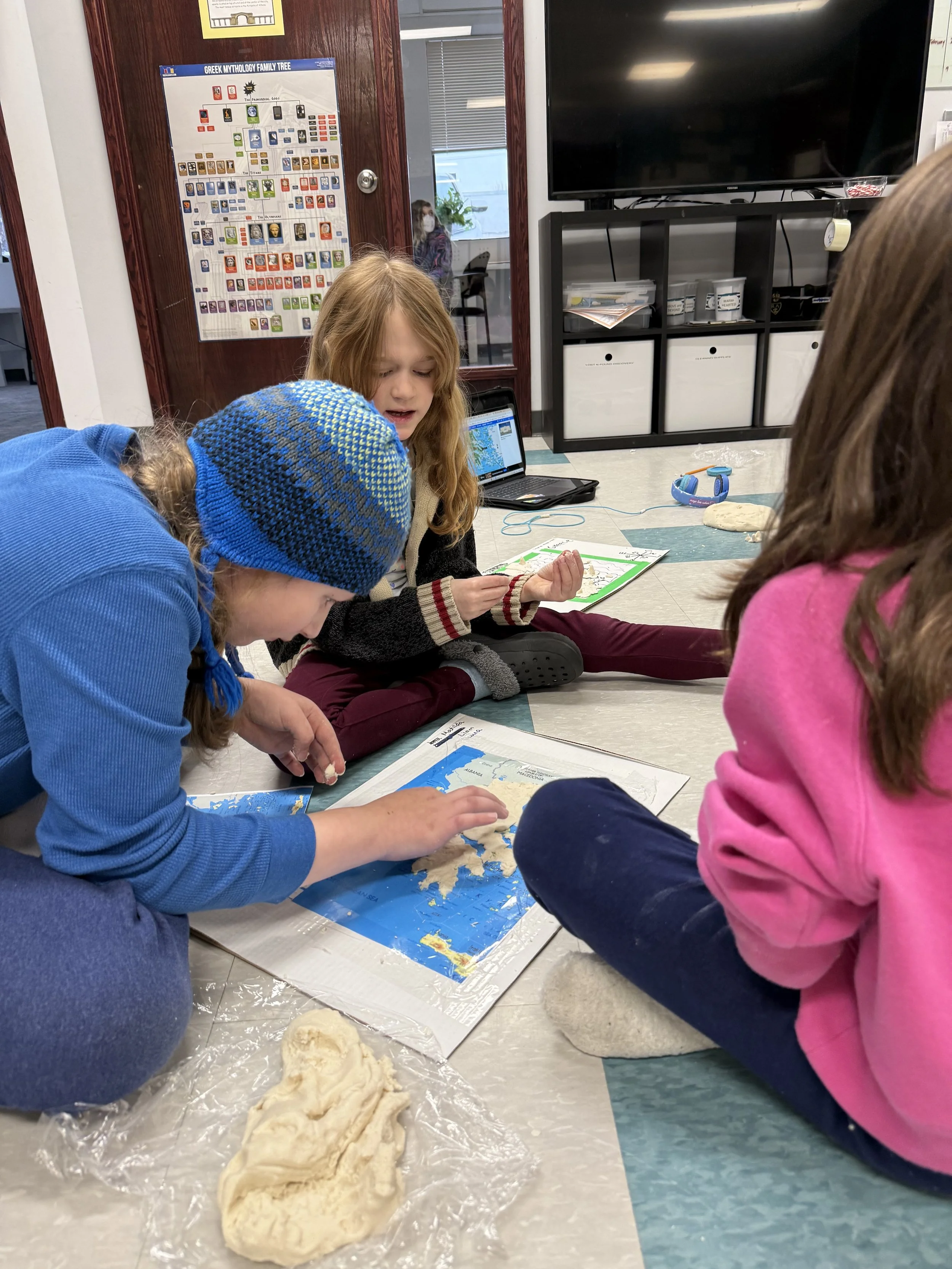
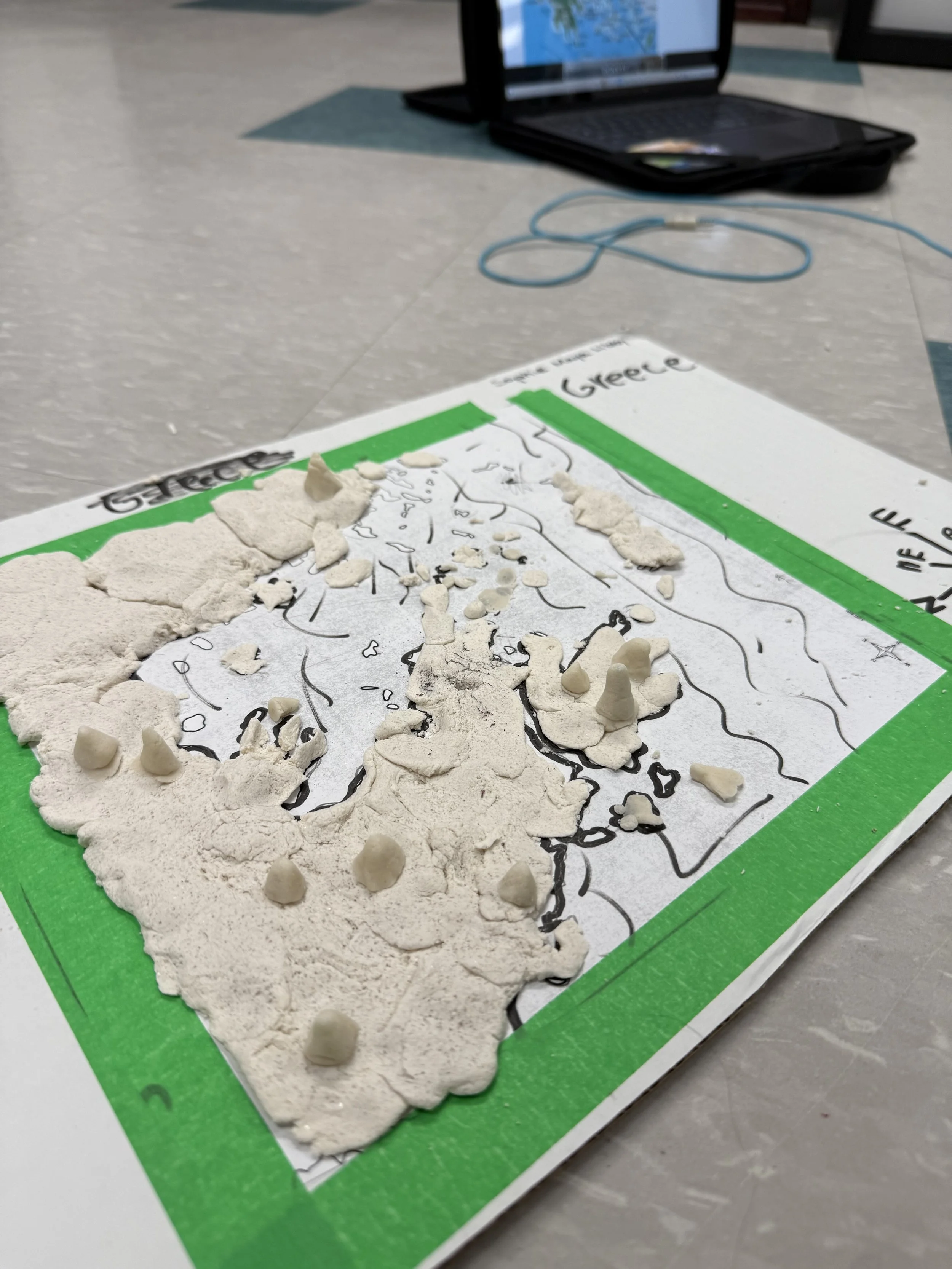
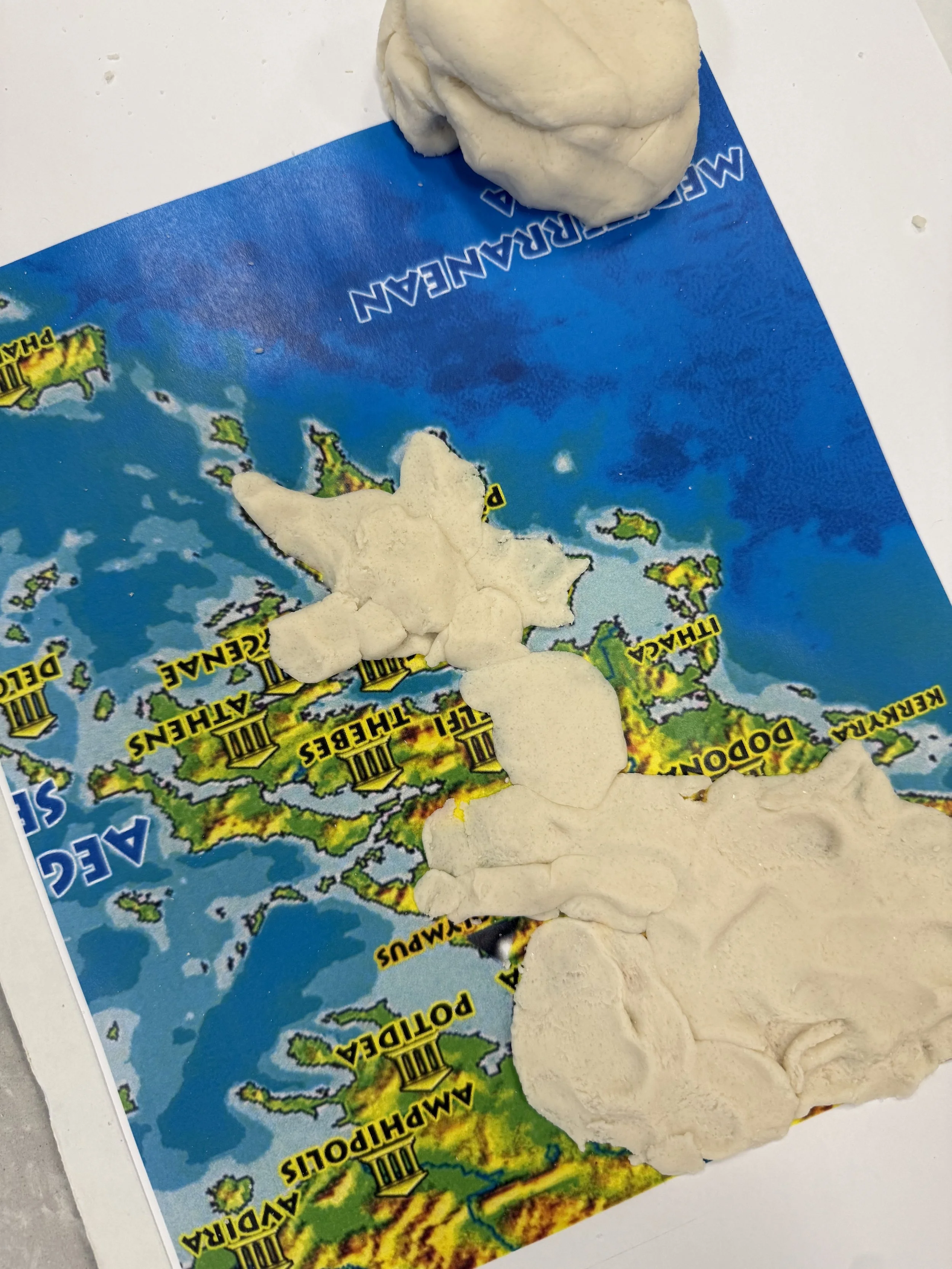
Rebel Spies, Darius the Great from ancient Persia requires your expert sleuthing: This is the Shadows of the Acropolis Quest! The Persian Empire is looking to expand. Will it be the ancient Greek city-state of Athens or Sparta? What are the pros and cons of attempting to conquer each? Rebel Spies got to work researching the general history and geography of ancient Greece this week, before they go deeper into individual city-states and the special cultural aspects in the weeks to come. For their geography challenge, Rebel Spies had to answer critical research questions in order to gain access to materials for salt dough. Then, they worked with their partner to follow the recipe and make their dough, and later use it to build up landforms (e.g. mountains) in a 3D, relief sculpture style map of Greece. For their history challenge, Rebels needed to gather dates of significant events and organize them chronologically into a timeline from roughly 800-300 BCE. On the last day, we had our first “shadows of the past” discussion, trying to make connections between ancient Athens and the daily life we live today. Rebels noted the concepts of democracy and education as two important things we gained from the ancient Athenians! Next week: Sparta!
French
This week, the Discovery groups explored French food vocabulary! In Group 1, learners enjoyed playing Linkto, a fast-paced game that challenges them to name foods quickly and accurately. They also rolled a die and had fun naming foods in French that matched the colour they rolled. Afterwards, they worked on activity sheets to practice food and utensil vocabulary, reinforcing what they learned through play. In Group 2, learners also played Linkto and completed a word search on food vocabulary. They also started a simple restaurant role-play, where they got to use new vocabulary and expressions in an interactive way to strengthen their reading and listening skills in French.
Civilizations
This week’s story was biblical, about the Israelites leaving Egypt with Moses (aka the Exodus). Rebels mapped a route between Egypt and Canaan taking special care to highlight the Red Sea. They spent a long time discussing whether or not the fear in Egypt of an Israelite attack was fair, as well as what they would have done in the role of the Egyptian pharaoh circa 15-13th century BCE. To close the chapter and connect to present day, we debated whether or not it would be considered ethical now for the Prime Minister of Canada to sign into force a law based on religious beliefs or words from a god. This led us to a great inquiry about the House of Commons; namely, how many seats there are/how many people represent Canadians, as well as how many layers of review a bill goes through before becoming a law.
Additional Highlights
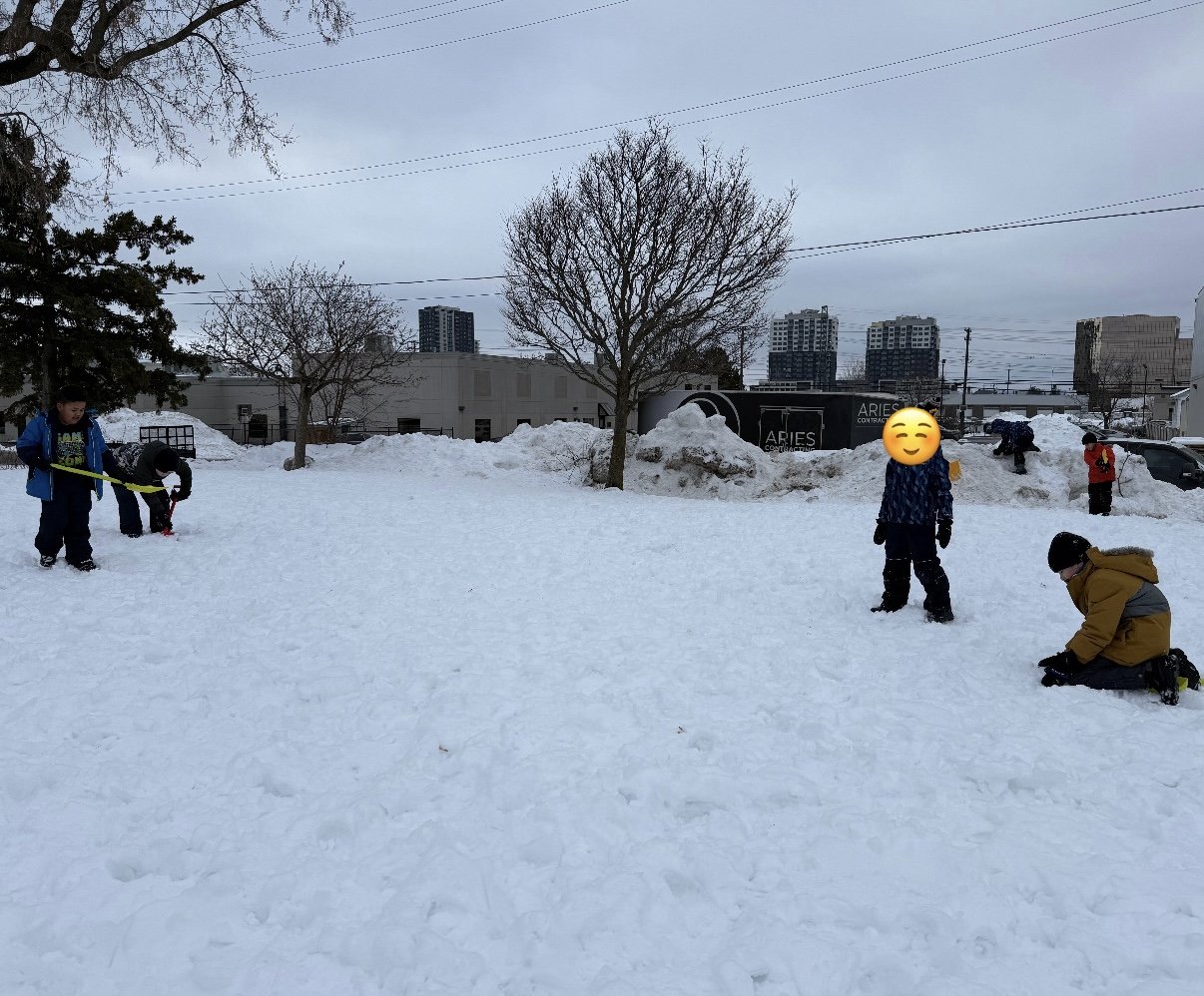
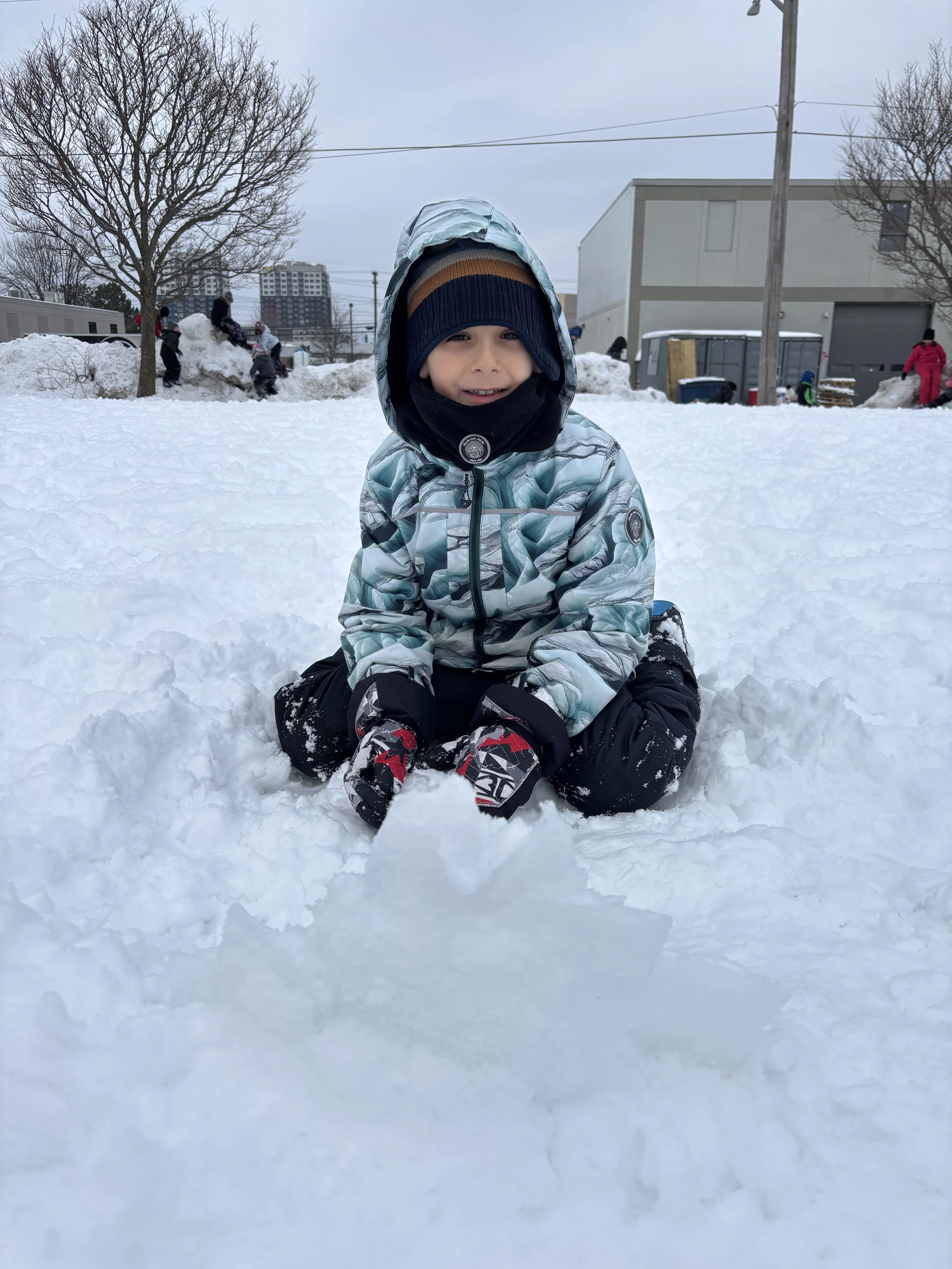
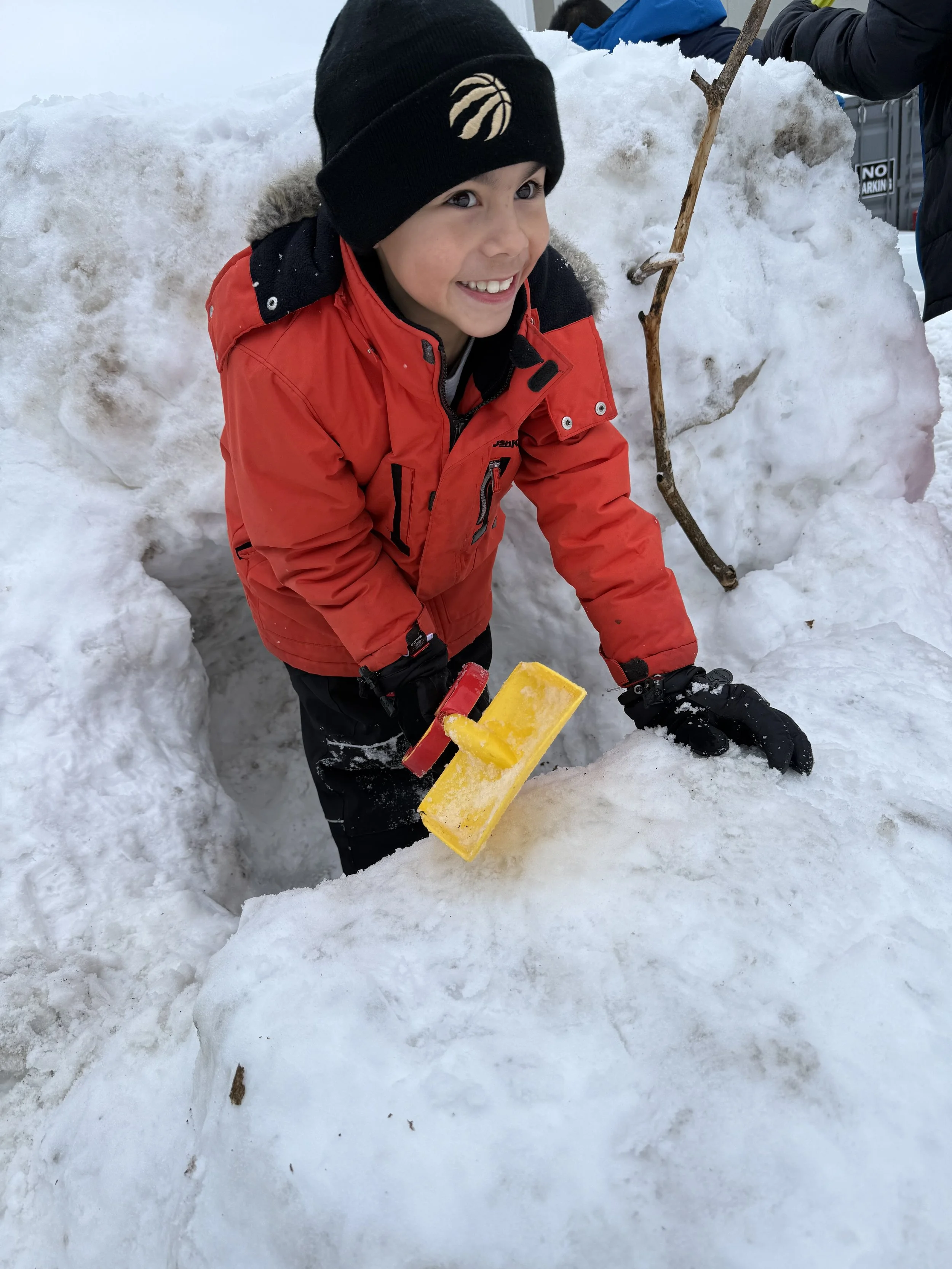
Book Club: Discovery Rebels started their fourth book club this week, “Greeking Out!: Epic Retellings of Classic Greek Myths”, based on the hit podcast from National Geographic - “Greeking Out!”. If your learners would like to listen along to learn more about Greek mythology, be sure to check it out! Rebels took advantage of the positive temperatures this week and enjoyed a ton of time outside for recess and PE building snow forts, having snowball fights and tobogganing.
Exploration Studio
Mindfulness & Launch
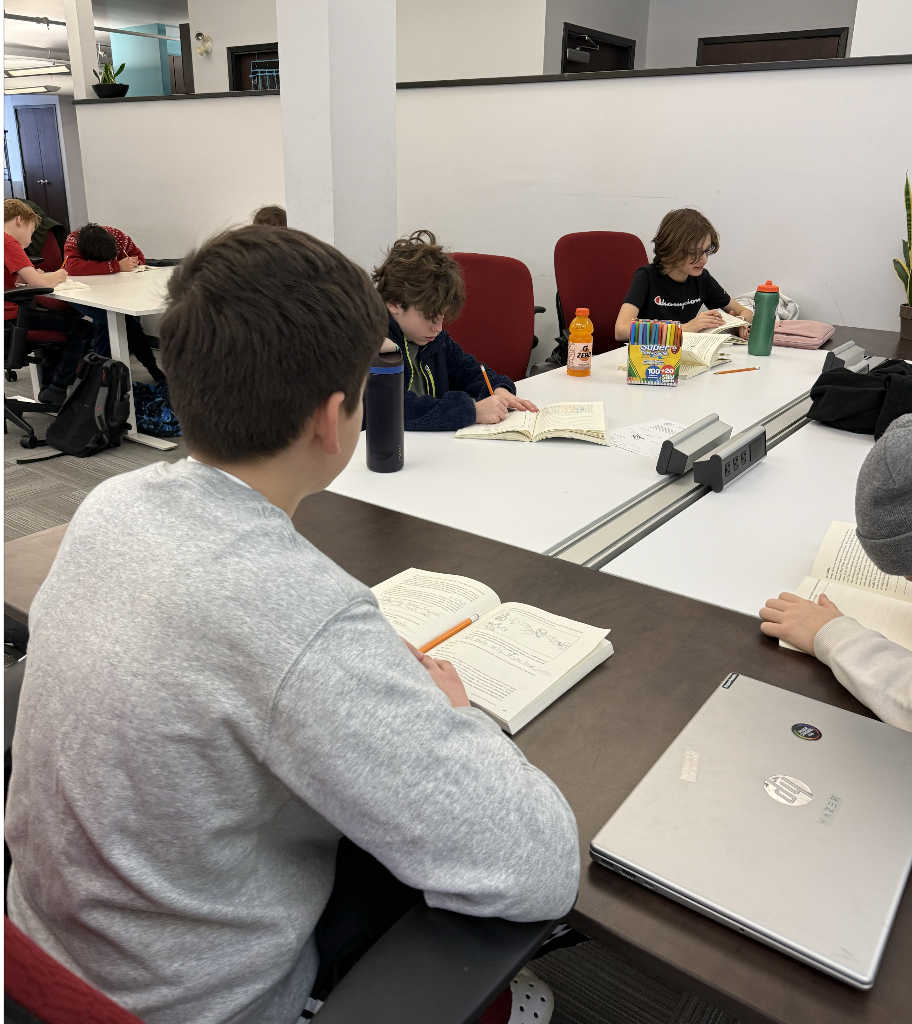
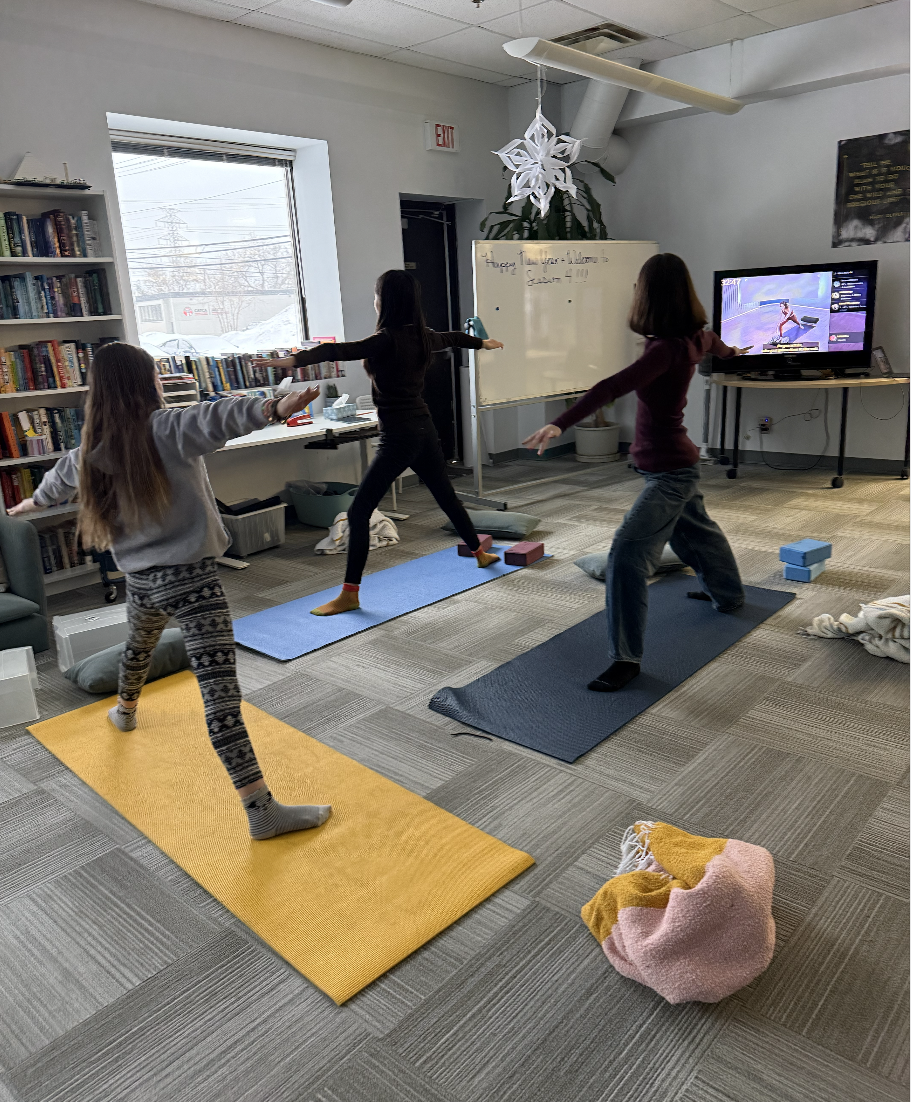
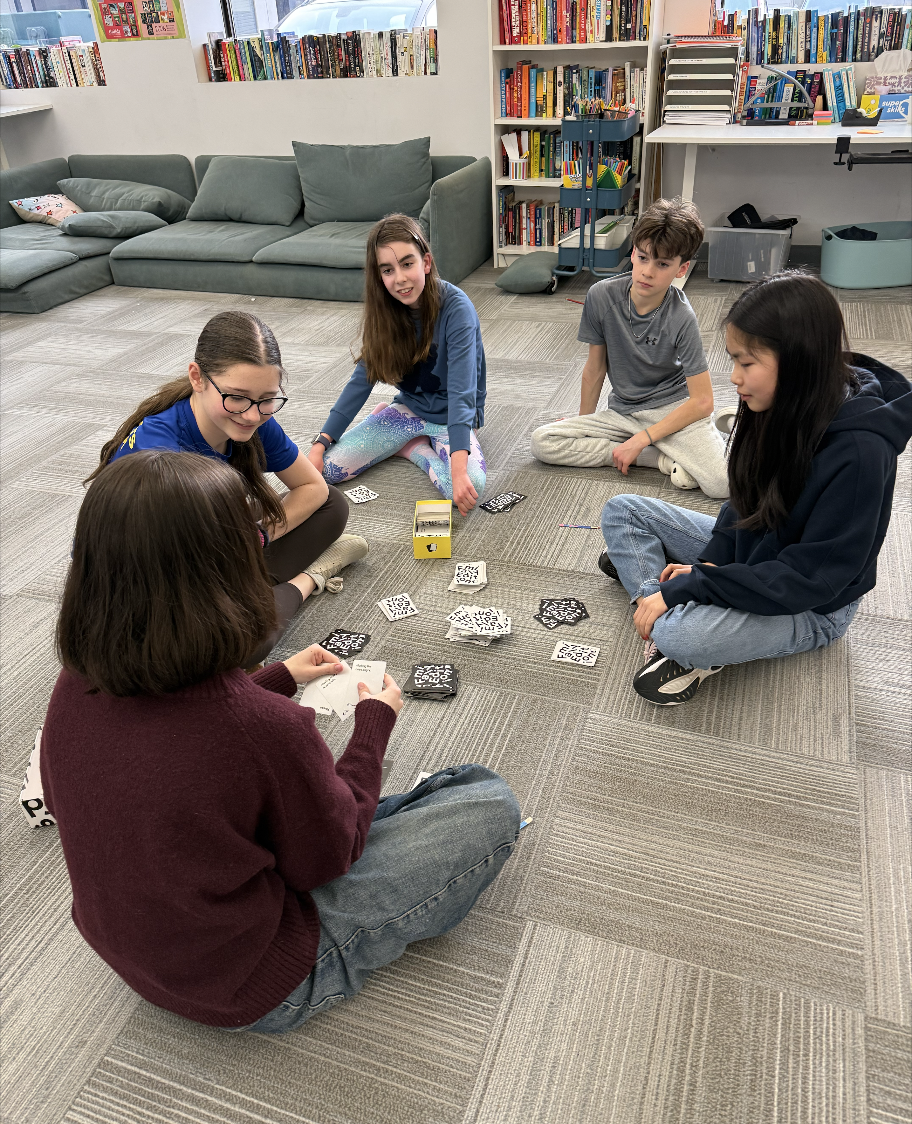
Happy New Year! We began Session 4 by reviewing our Overarching Question of the Year, focusing on whether we are living our "one wild and precious life" the way we want. After discussing what they hope to do more or less of, the Rebels were given a list of words and asked to pick one that could help them focus on the most important goal they have for the year. During our Launch, we pondered how it is we know what matter is made up of. We learned that the quest for the atom has been a long one, beginning 2,400 years ago with the work of a Greek philosopher and later continued by a Quaker and a few Nobel Prize-winning scientists. On Tuesday, we continued our Becoming a Critical Thinker lessons by beginning Part Two: The Practice - Growing Your Thinking Skills. Learners completed the chapter on reading and deciphering symbols by creating a Symbolic Dictionary. On Wednesday, the Rebels created an art piece to showcase their Word of the Year, goals, and plan. These visual reminders will be displayed over the next couple of sessions to help us keep our goals in sight. Rebels ventured out for a walk on Thursday morning. Some enjoyed the warmer weather, while others lamented the higher temperatures and the effect on the ODRs and sledding hill. After solving the Wordle and Connections on Friday morning, Rebels worked on a chess challenge. Our Current Events team then presented on volcanoes that are reawakening, Robert Musch's decision to release 50 books after his death, and the Venezuelan president's abduction.
Reader/Writer Workshop
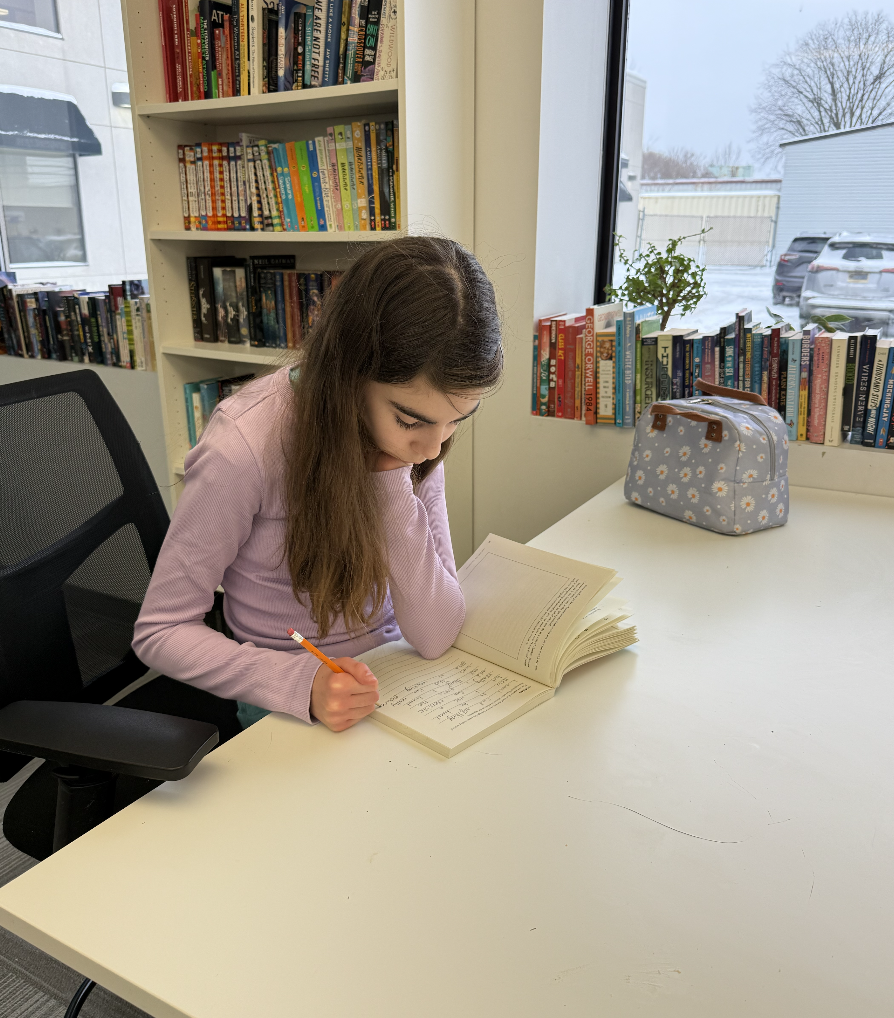
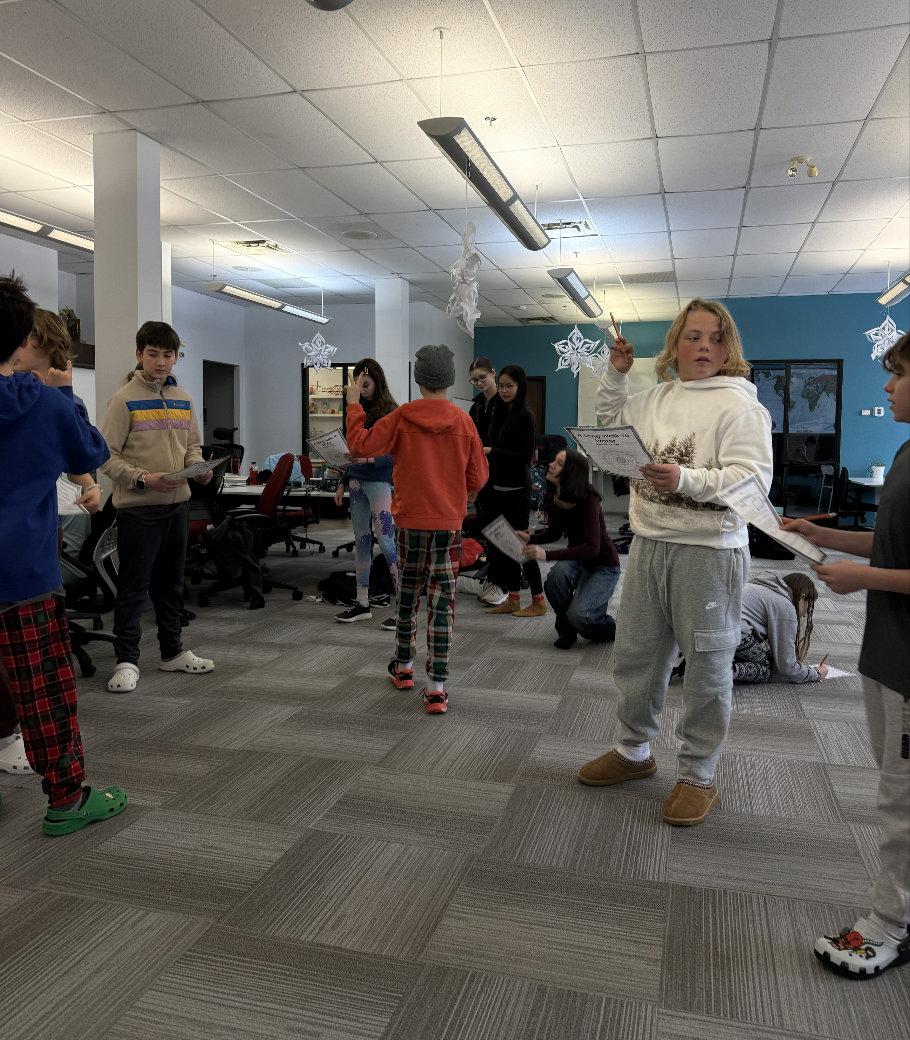
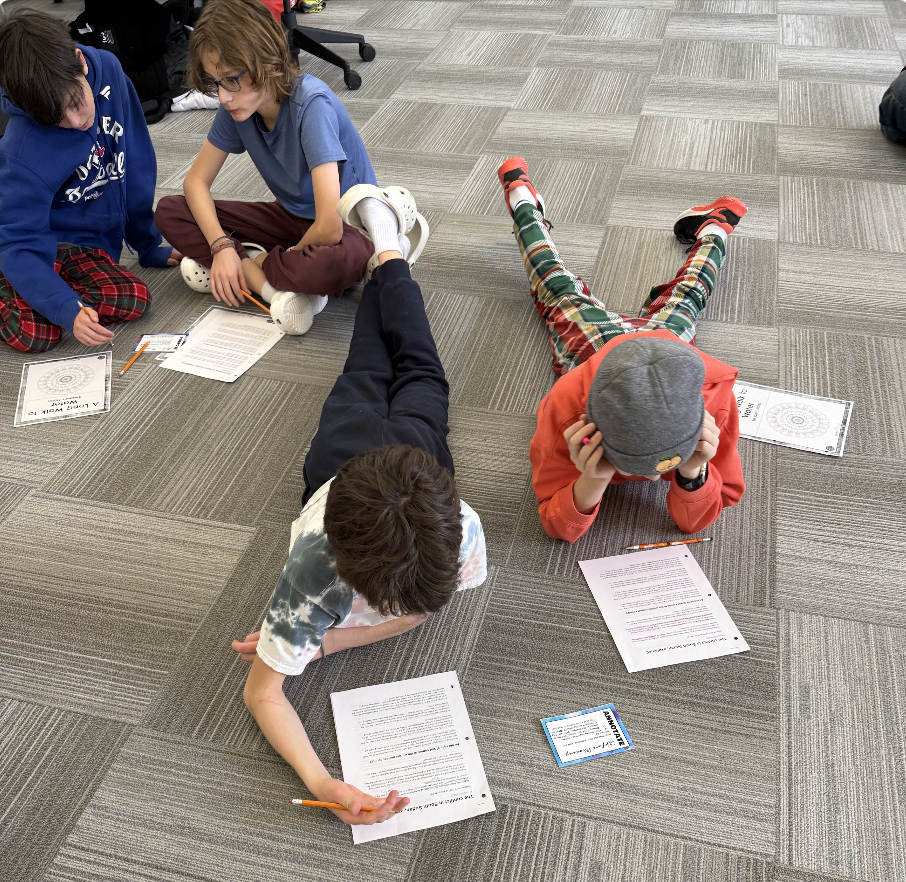
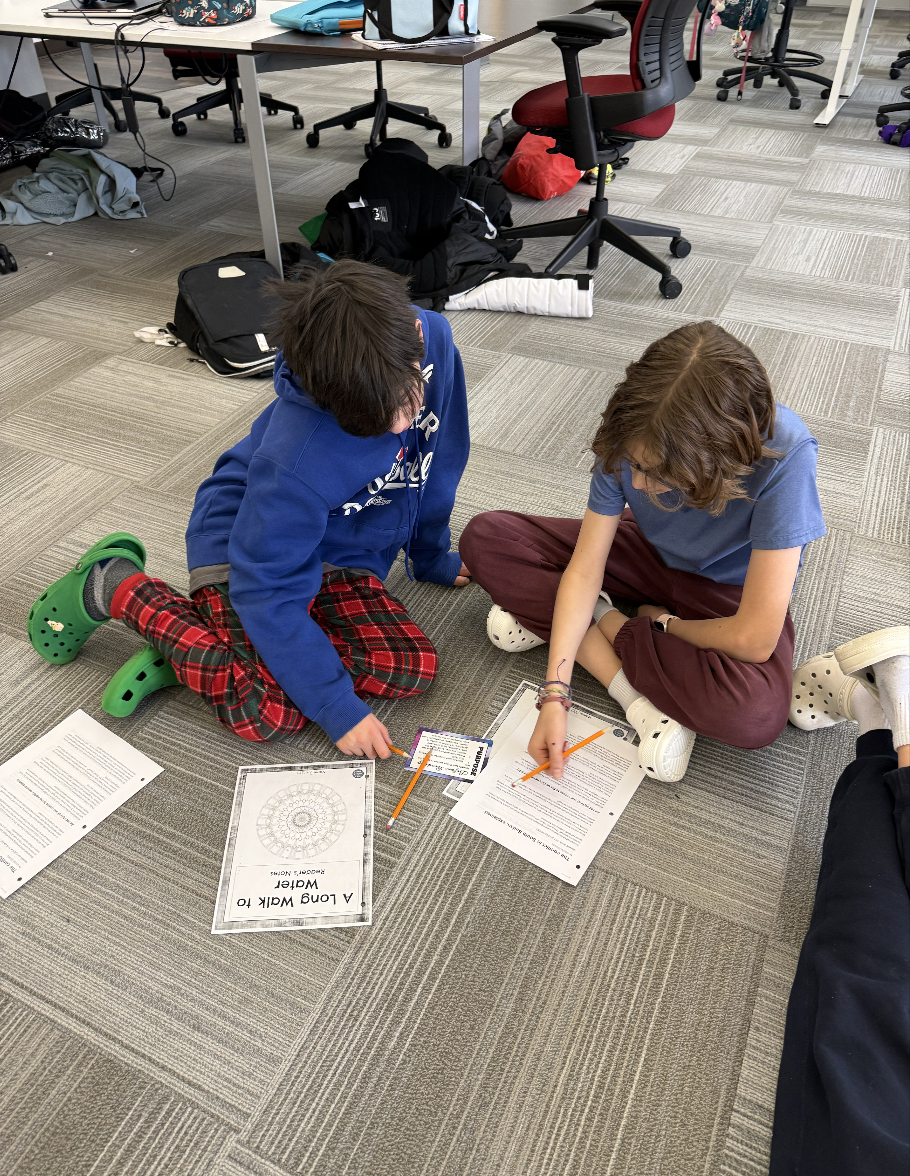
Before beginning this session's novel, A Long Walk to Water, the studio reviewed the badge expectations and then dove into the complex history of conflict in South Sudan. Using a sign-up, learners will partner with six different Rebels over the course of the session to ensure the sharing of various perspectives. Using a "Before Reading" task card prompt, pairs skimmed the title, headings, images, and bolded words of an article to practice close reading. Learners then annotated the article as we read the piece aloud, pausing to ask questions, provide clarification, define unknown words, and make predictions. Partners then split with one watching a video on Walking for Water, while the other viewed one on Walking from War. After writing their personal reflections, they reconvened to share a summary of their video and personalreflection and discuss the similarities and differences.
On Tuesday, each learner received a book, a bookmark, and a Reader's Notes packet before we made predictions about the novel. We then read Chapter 1 and took notes on both Nya's and Salva's stories before discussing them as a studio. Rebels will need to read chapters 2 and 3 independently and complete their handout before Monday's Reader/Writer workshop.
Reading Challenge, Paragraph of the Week and Grammar
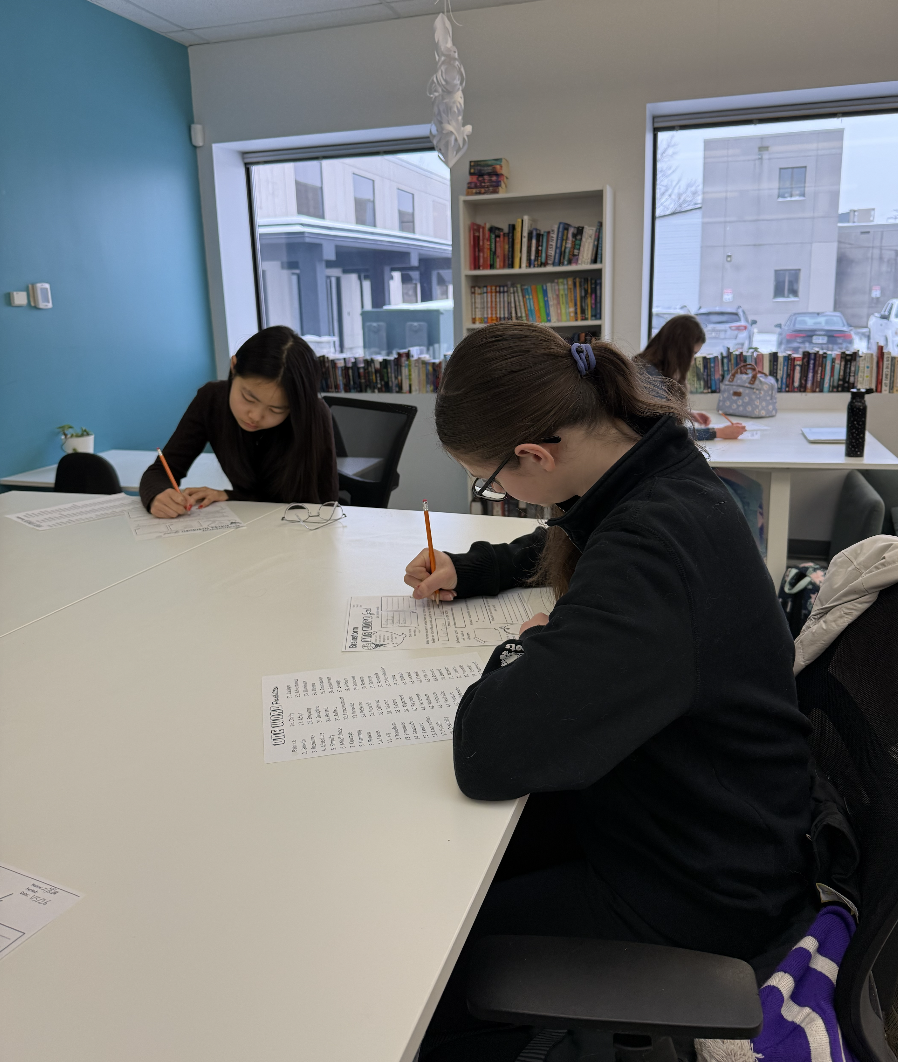
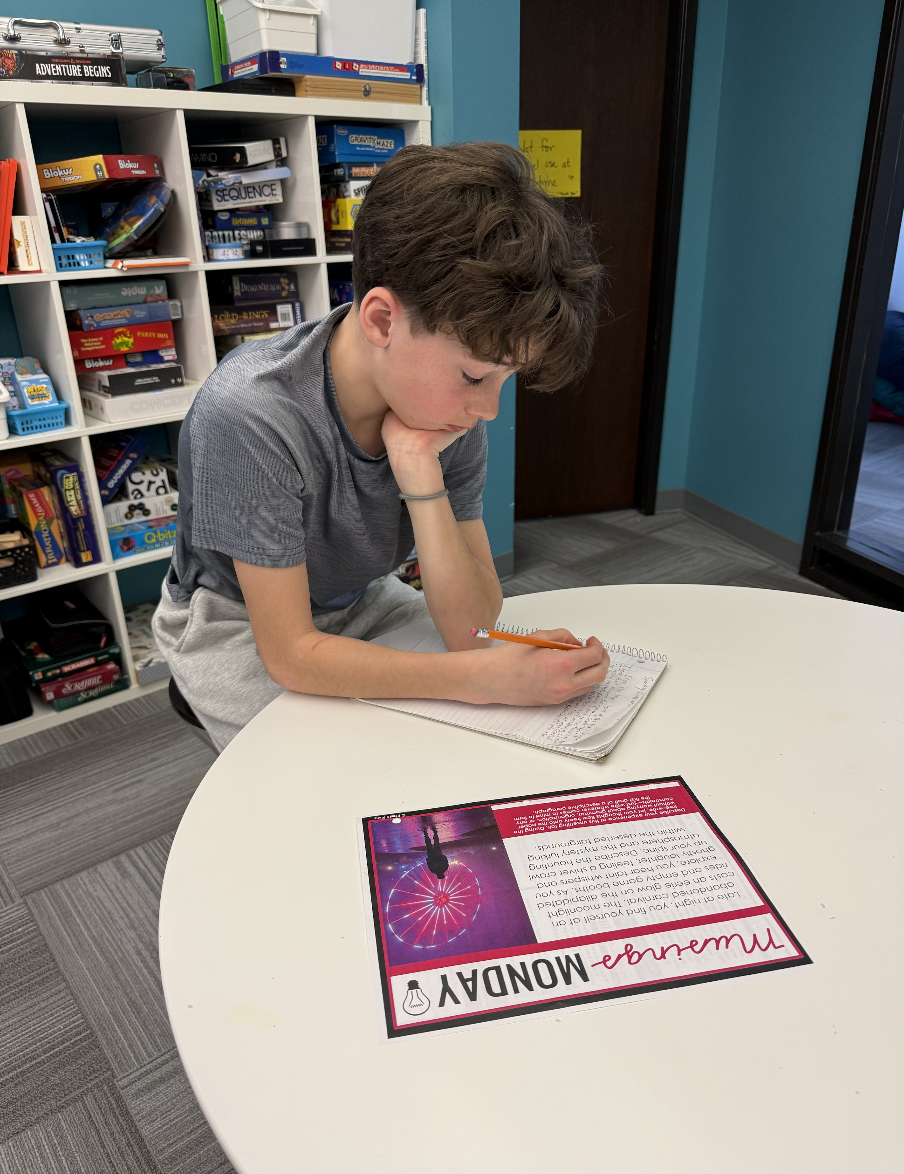
For this week's descriptive paragraph, Rebels had to describe their experience at an abandoned carnival. After writing about the haunting atmosphere and the mystery lurking within the deserted fairgrounds, Rebels looked for areas where they could add new words to create a stronger scene. They also improved their verb choice and revised any misplaced modifiers before writing their final copy for peer review. On Friday, Rebels were required to show their squad and the Audit Committee their rough draft, final draft, and completed peer rubric.
Our grammar topic of the week focused on run-on sentences. We learned three ways to fix them including adding a period to make two sentences, using a semicolon if a period feels too abrupt, or using a conjunction.
This week's Reading Challenge was all about mood. After reviewing how an author creates the mood in a piece, we read a series of short stories to identify the mood created by the setting, vocabulary, and characterization.
Math Lab
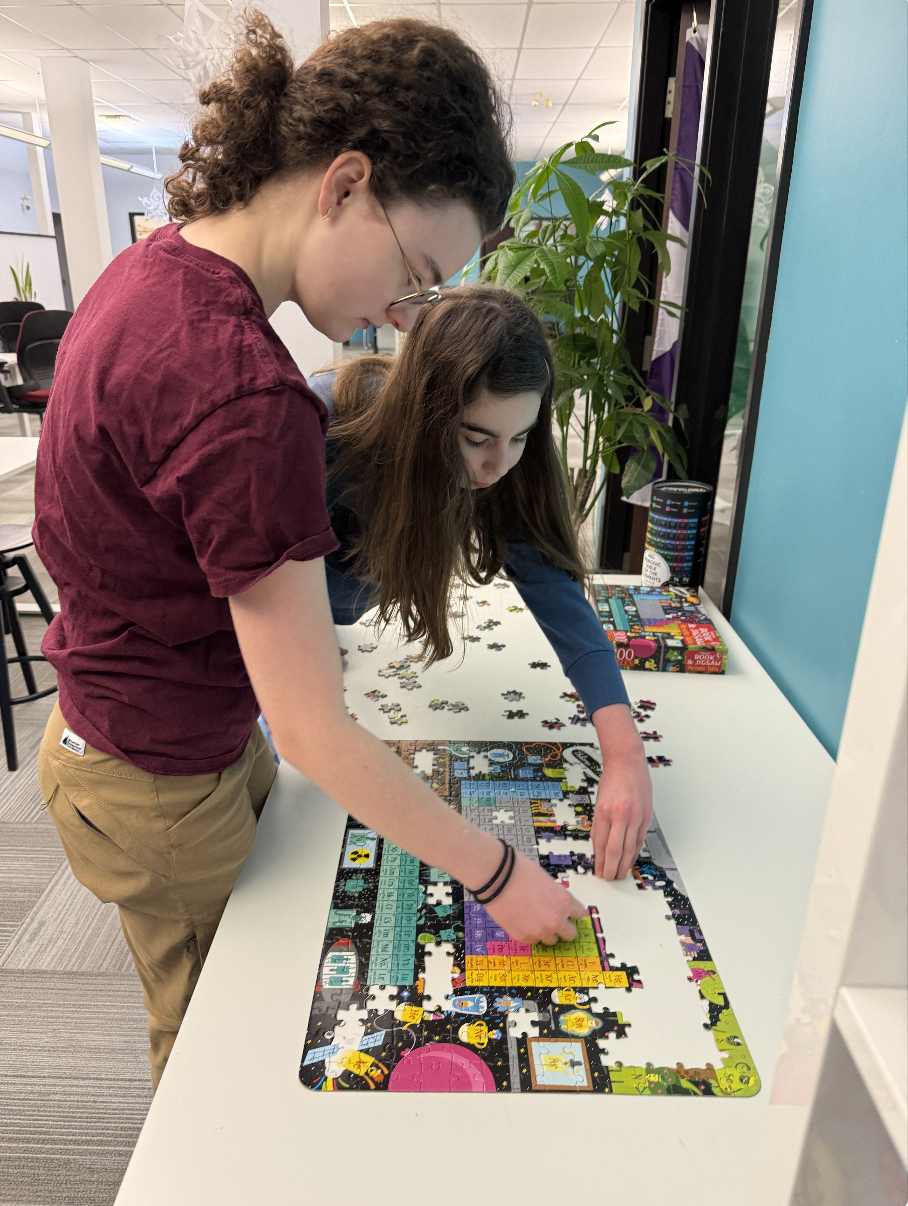
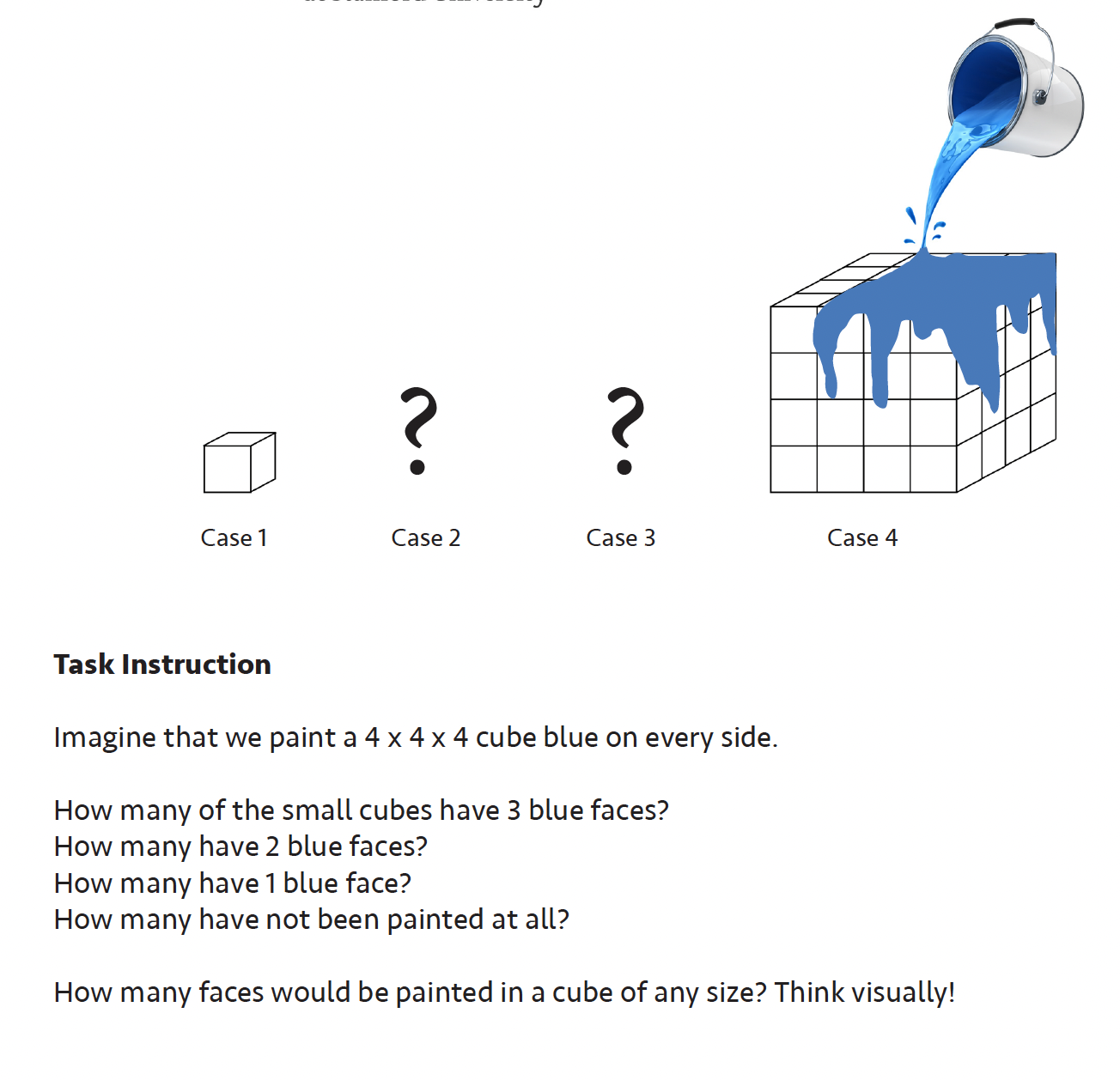
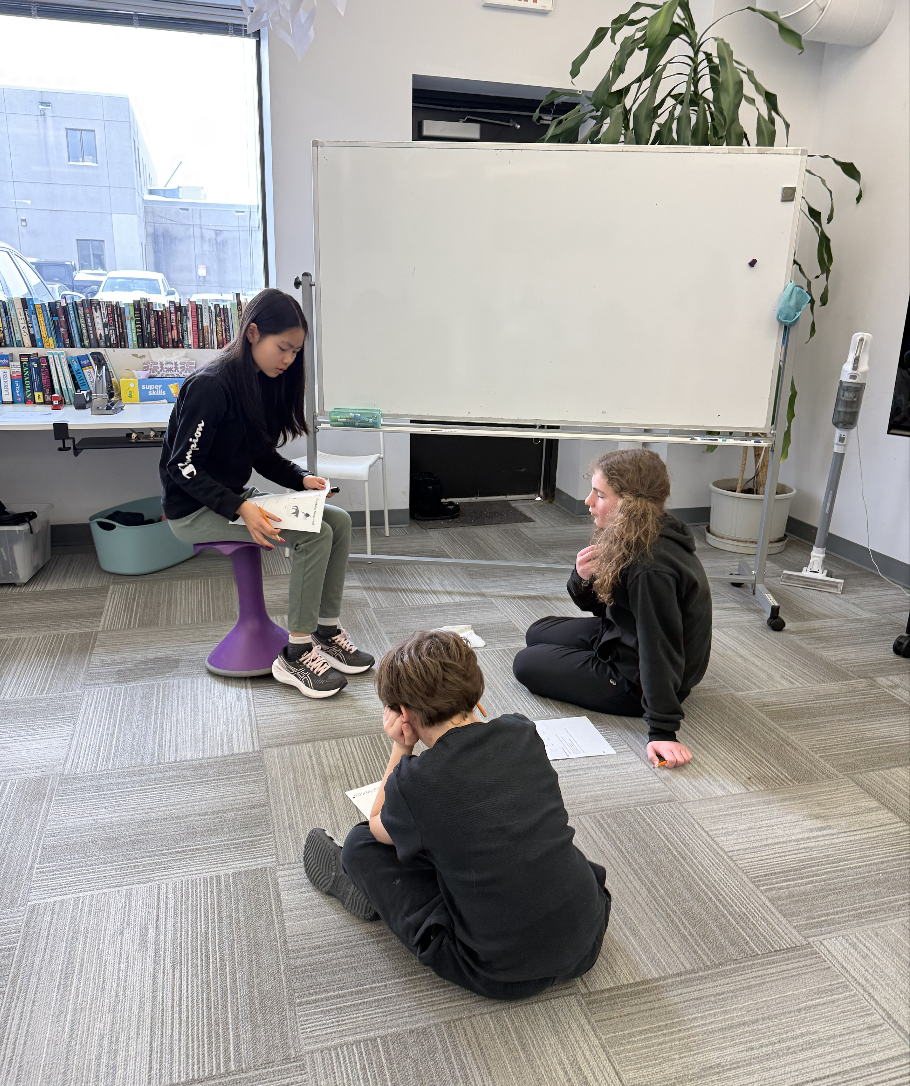
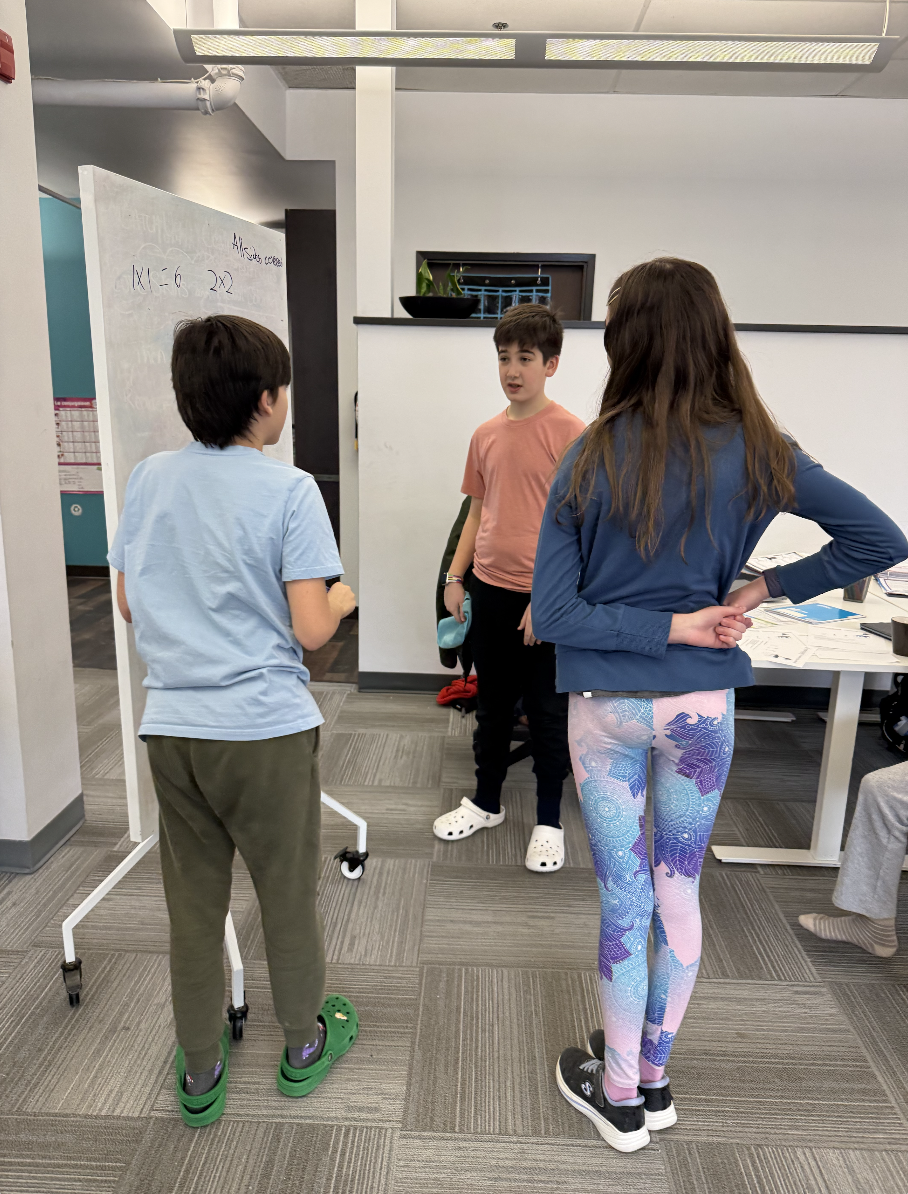
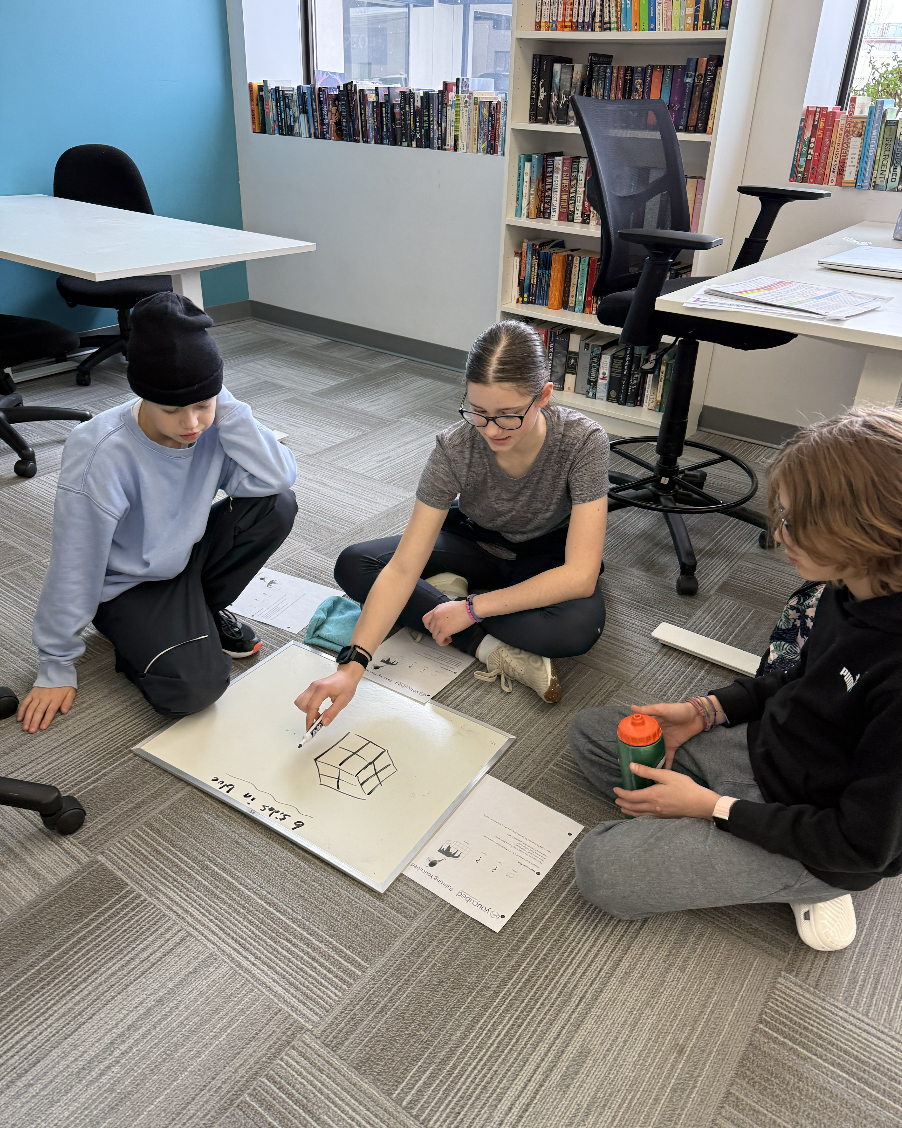
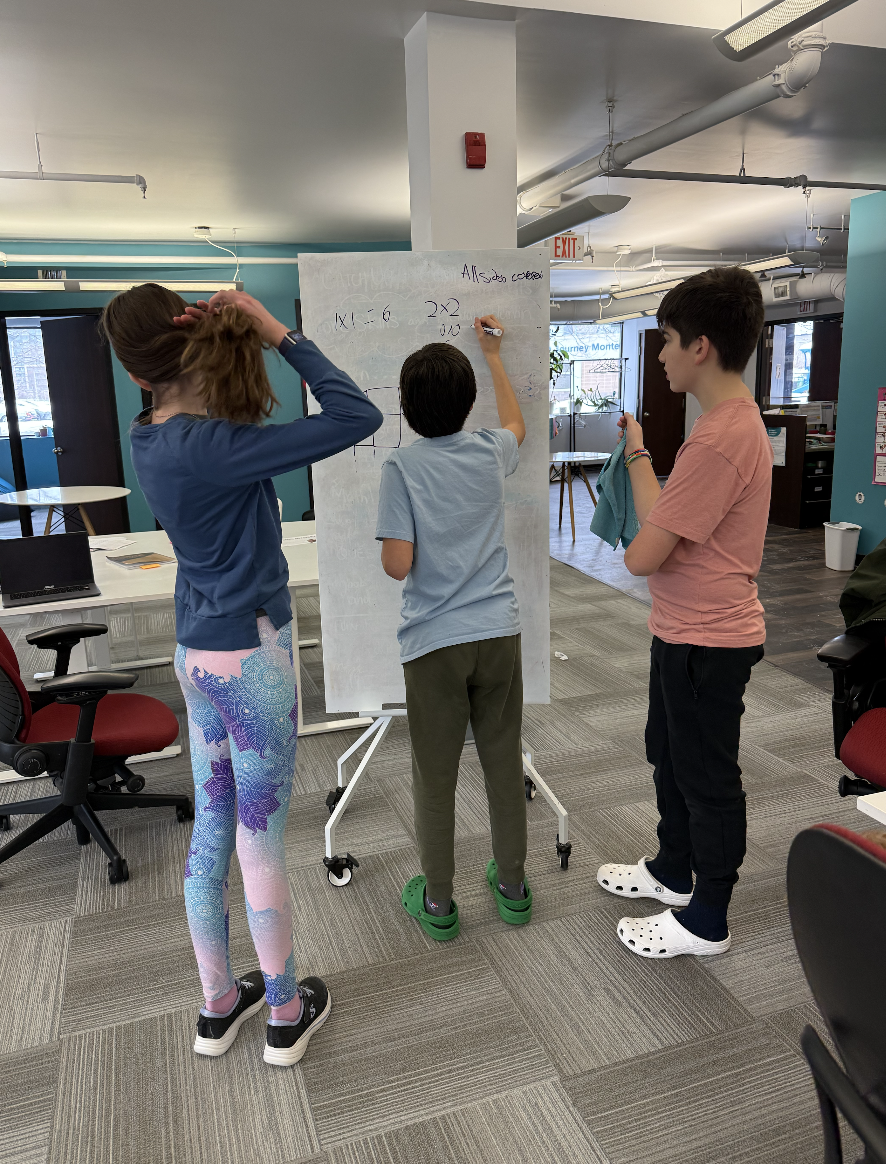
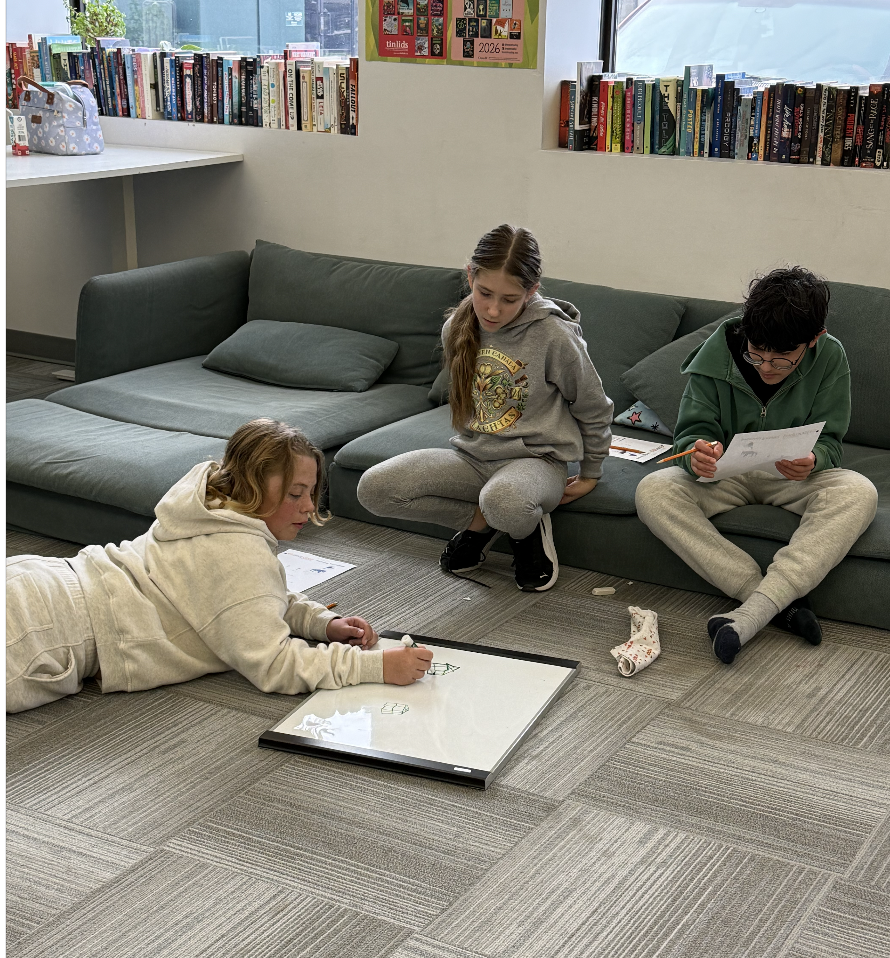
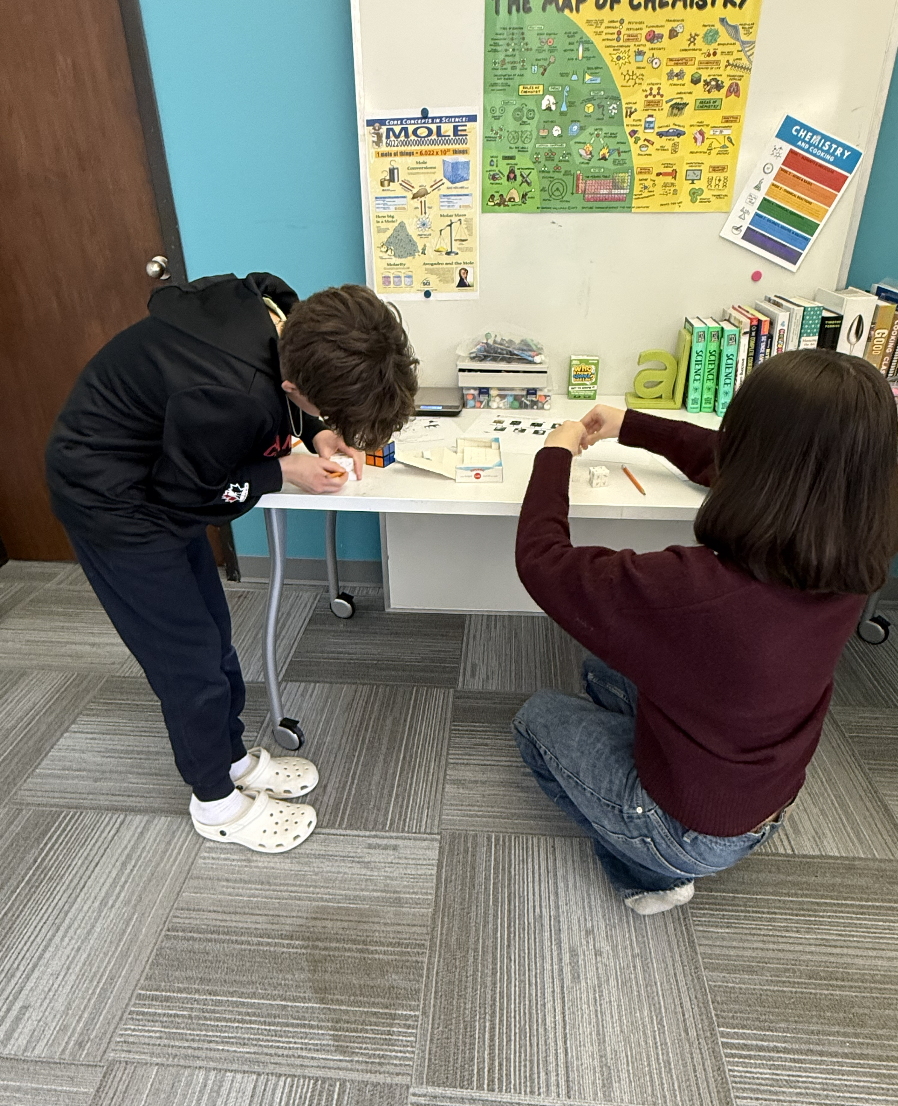
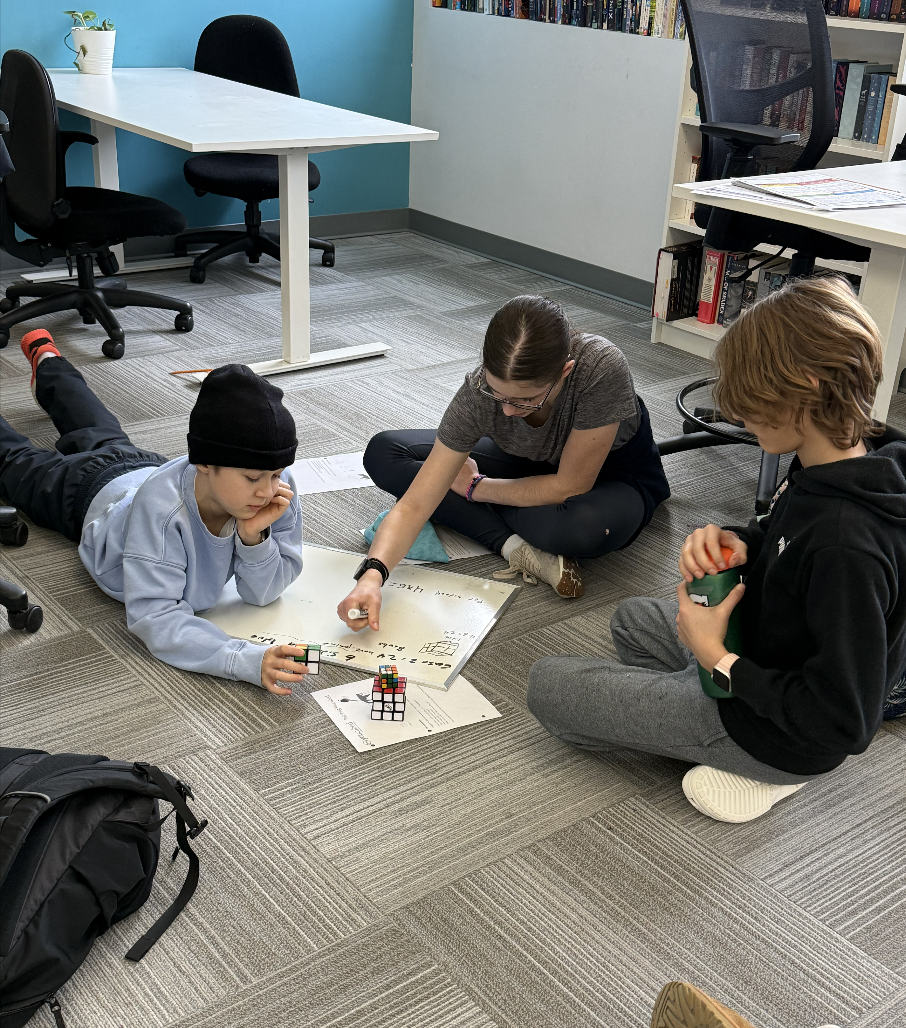
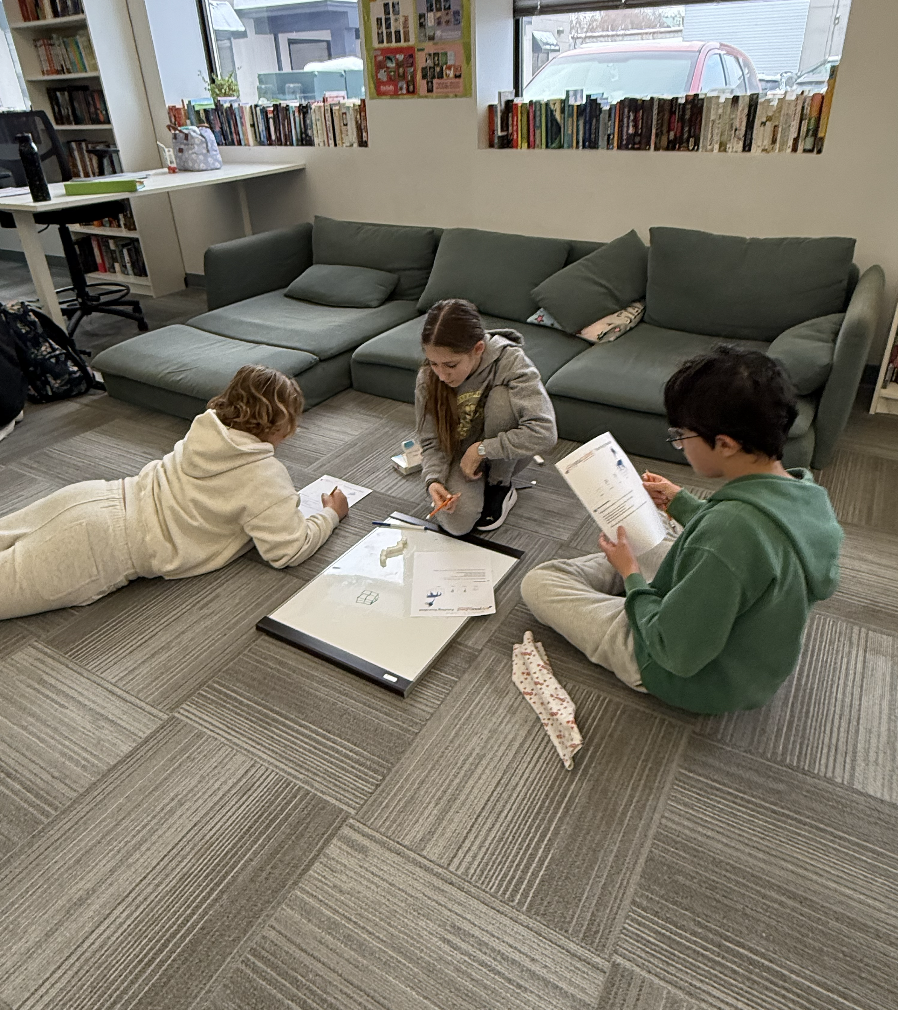
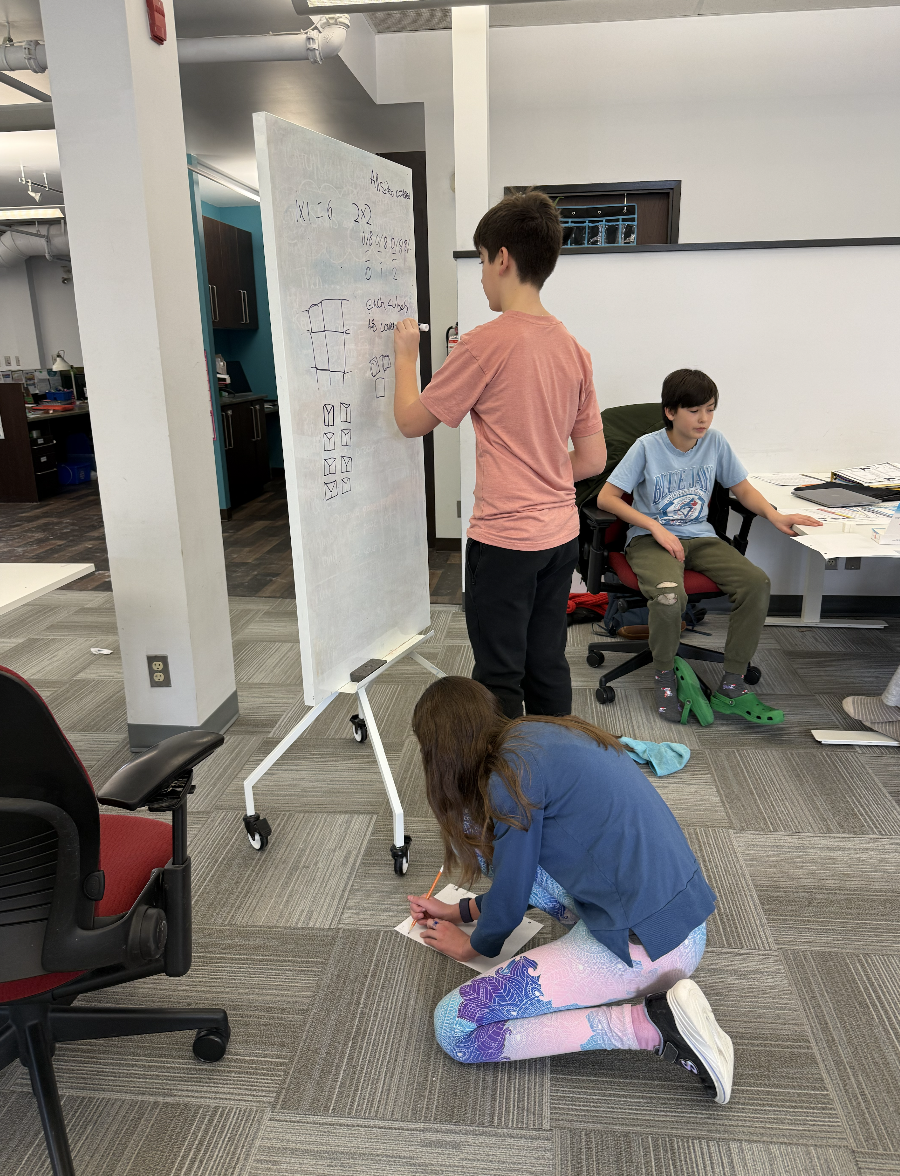
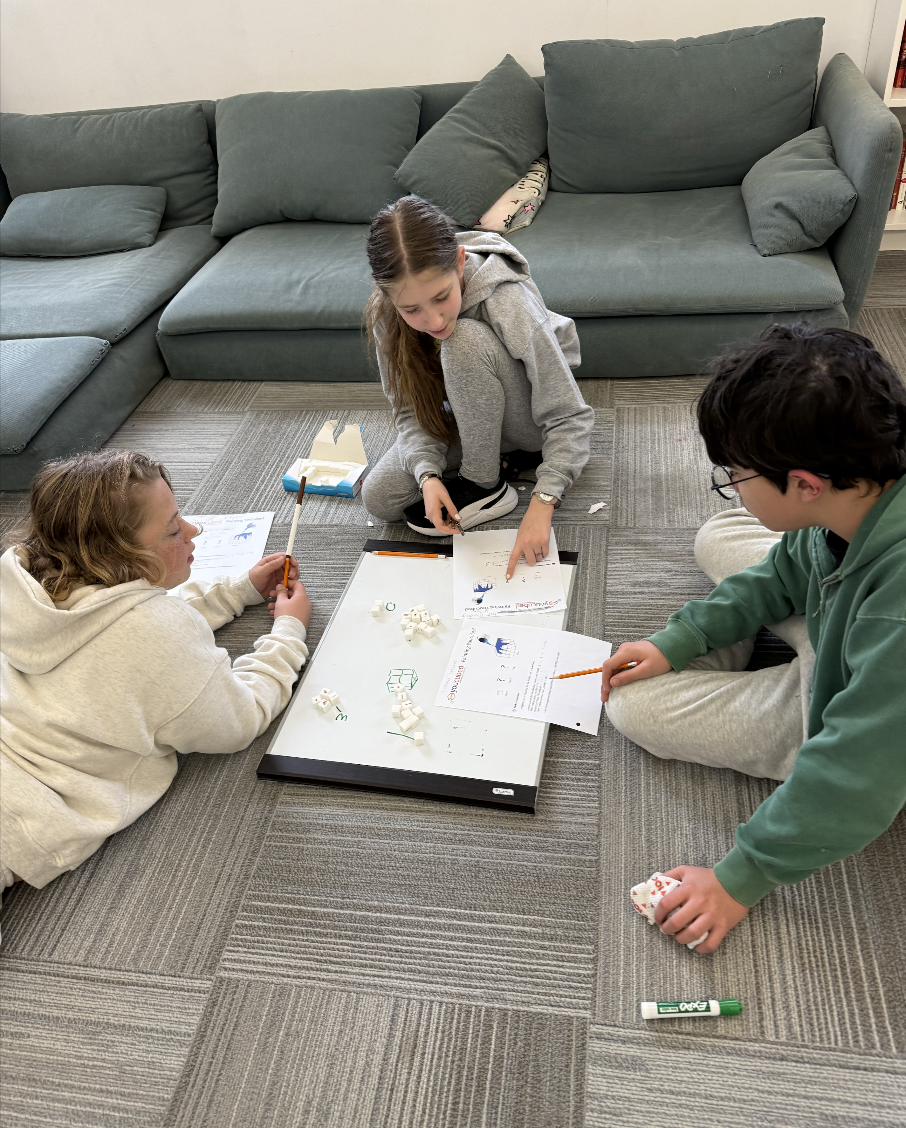
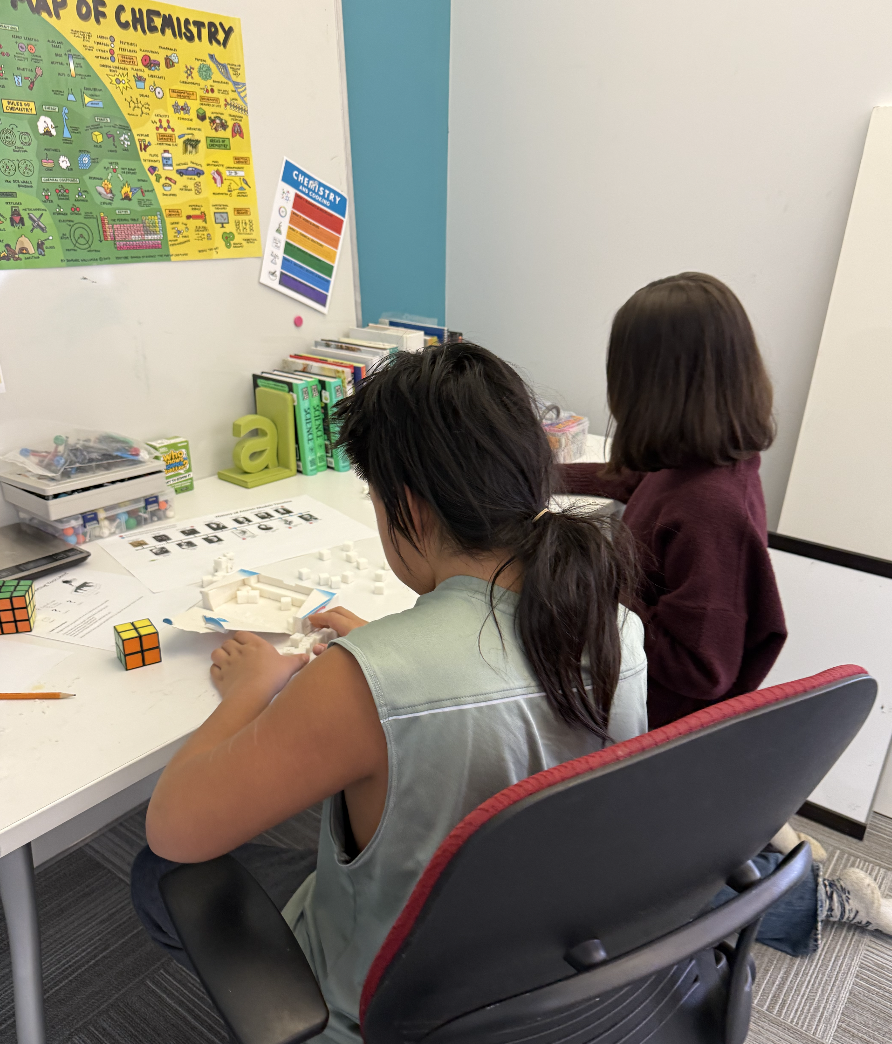
Welcome to Session 4! Over the next six weeks, we'll return our Math Lab to a "Thinking Classroom" format where randomly selected groups will use one marker between members to collaborate and solve challenging problems. After reviewing the expectations, Rebels took on the Painted Cube task! (picture) After working to solve the problem for 10 minutes, each group was given boxes of sugar cubes to create models for easier visualization. Once they determined how many sides would be covered with paint on each cube that comprised a 2x2, 3x3, and 4x4 cube, they worked to find the pattern and create an algebraic equation to solve for any size cube.
French
This week, Rebels participated in a restaurant role-play, practicing new vocabulary, expressions, and reading aloud in French. In the first workshop, Learners had to perform their lines in front of the group and then translate their lines. After the role-play, they answered comprehension questions to check their understanding and completed additional exercises focused on the menu. In the second Workshop, learners took part in further comprehension activities. In teams of four, they asked each other what they wanted to order, giving them an interactive opportunity to practice the vocabulary and life skills of ordering at a restaurnant they had learned in a collaborative setting.
Civilizations - Big History
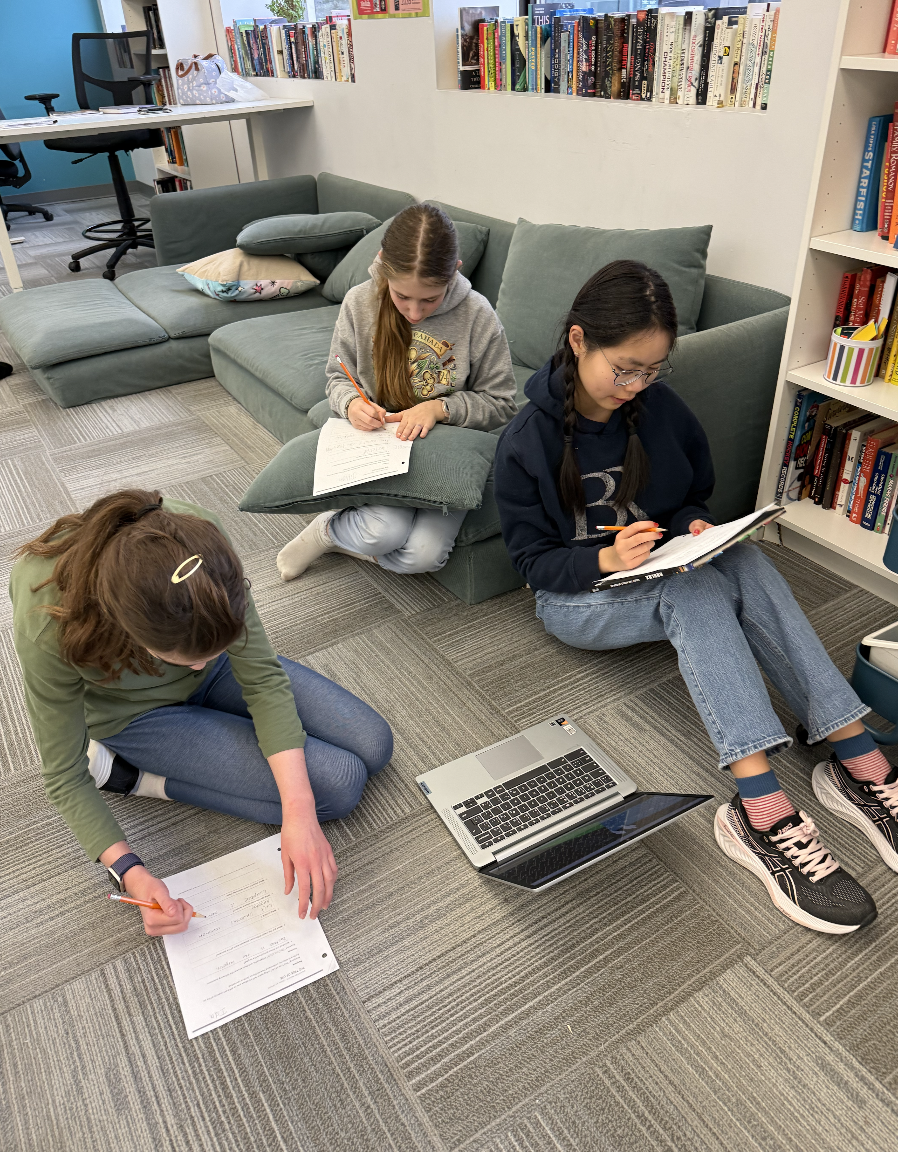
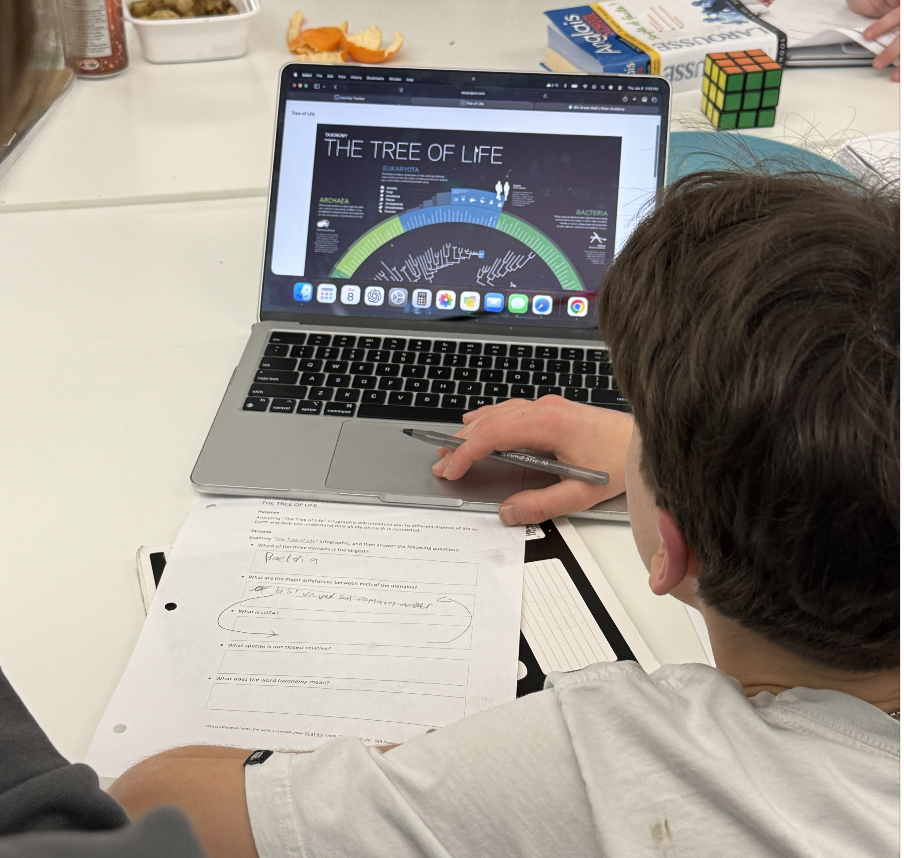
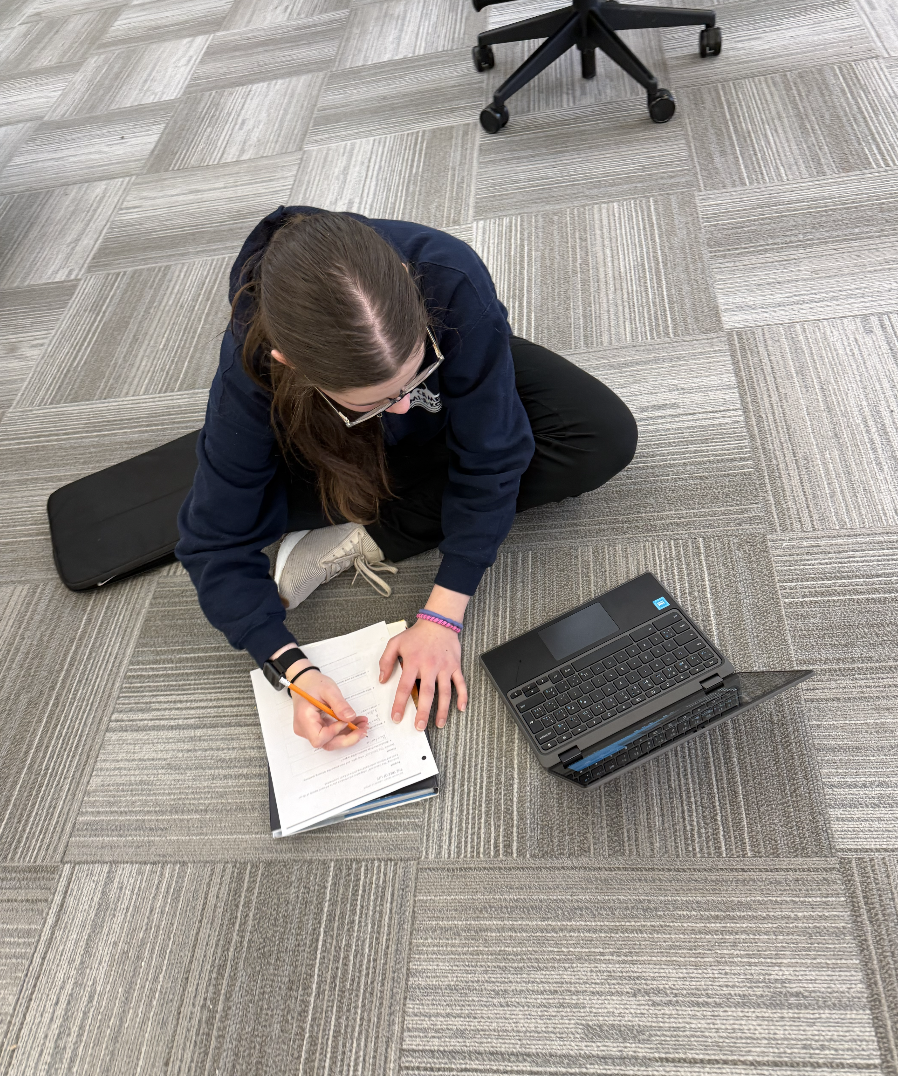
How did the evolution of life on Earth increase complexity? Life first appeared on Earth 3.8 billion years ago, and it'sbeen evolving ever since. But guess what? Our understanding of evolution has evolved, too! Using a Tree of Life infographic, Rebels answered a series of questions about taxonomy, the three domains, the major differences between each, and LUCA (the Last Universal Common Ancestor). We then reviewed the fundamentals of life. We watched a video entitled "What is DNA?" and then read an article on evolution and Charles Darwin. Before class ended, we also listened to a portion of the Unknowns podcast. We then examined maps of the world at various periods throughout history to gain a deeper understanding of how geography influences the distribution of life on Earth.
Quest - Cooking with Chemistry
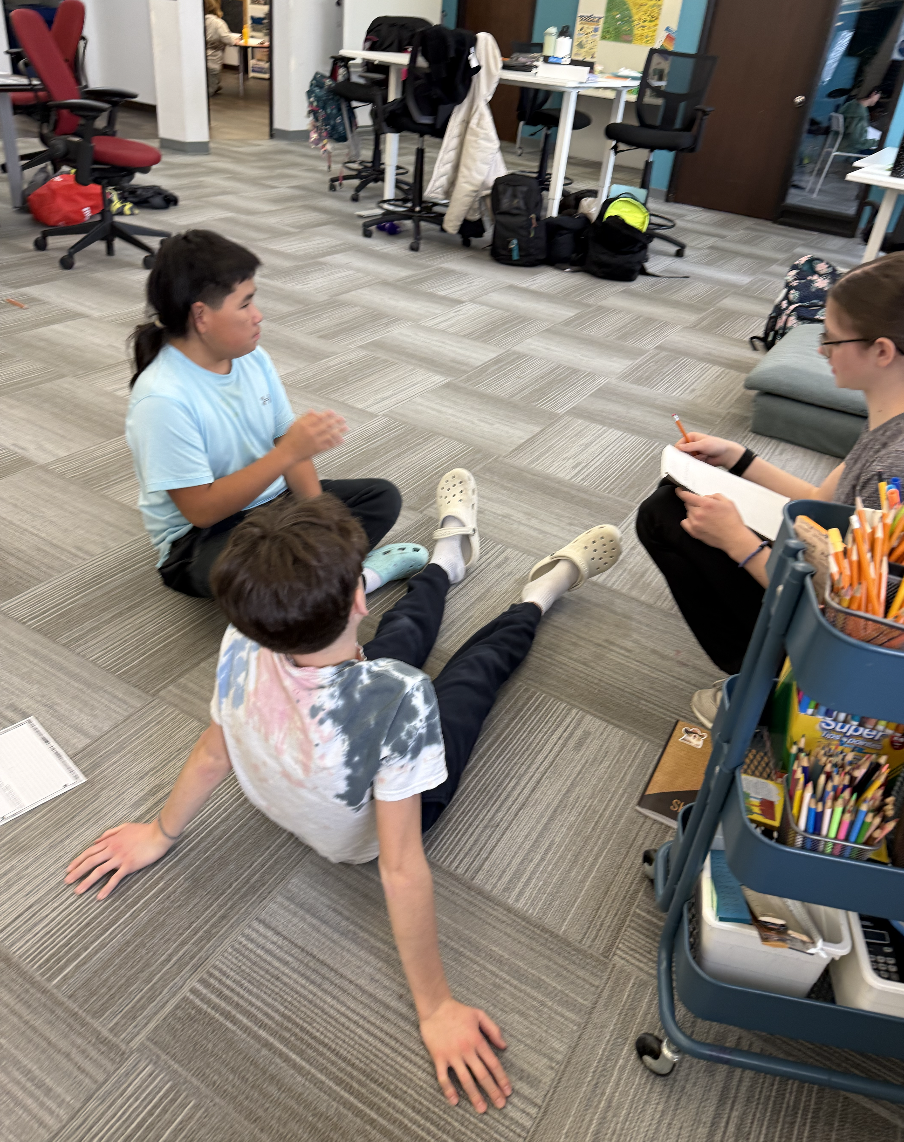
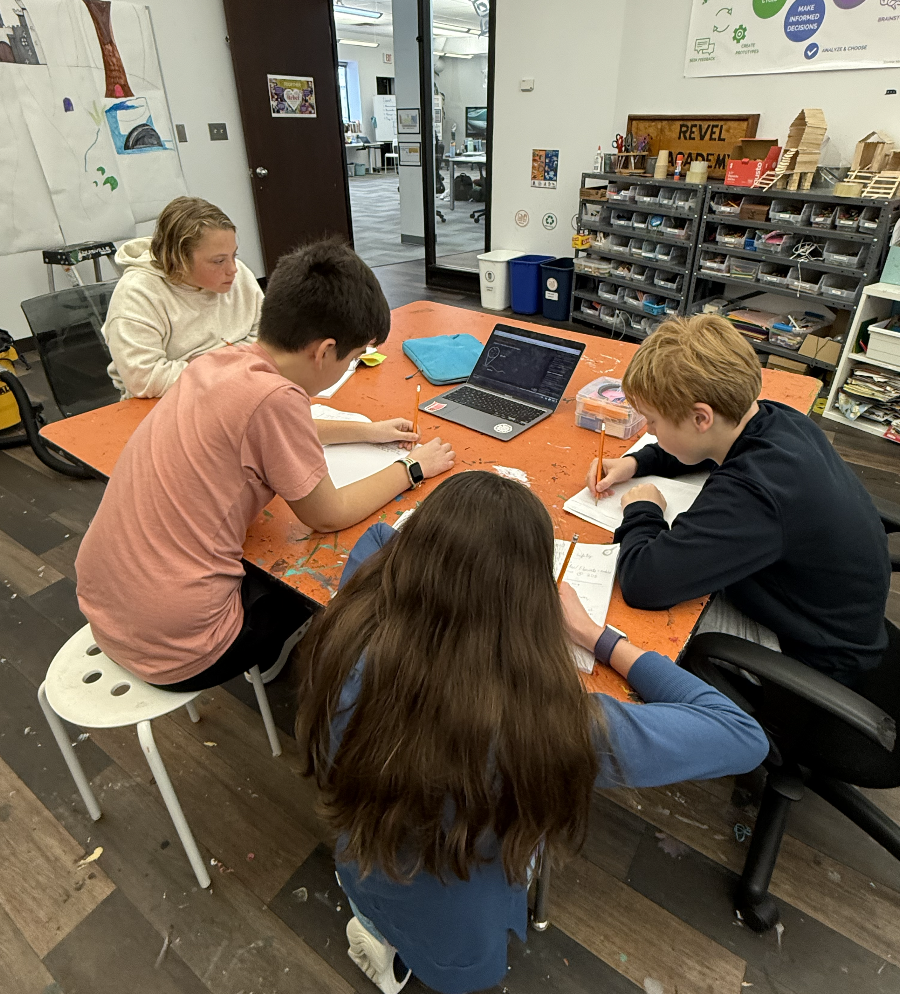
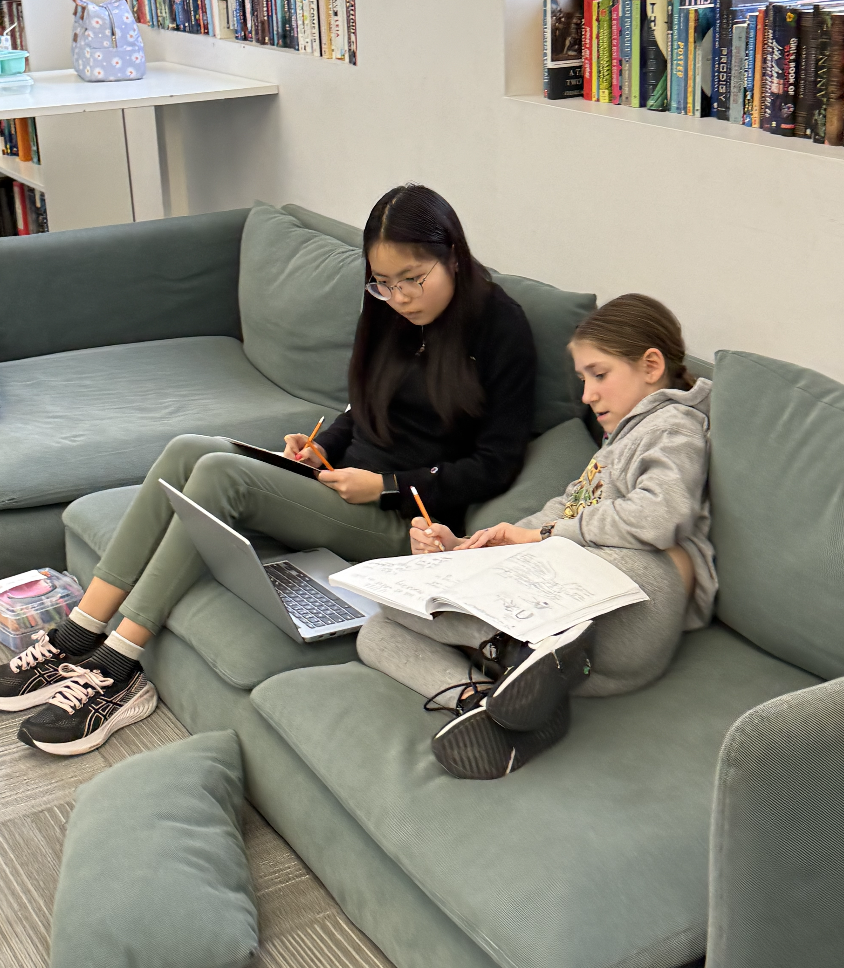
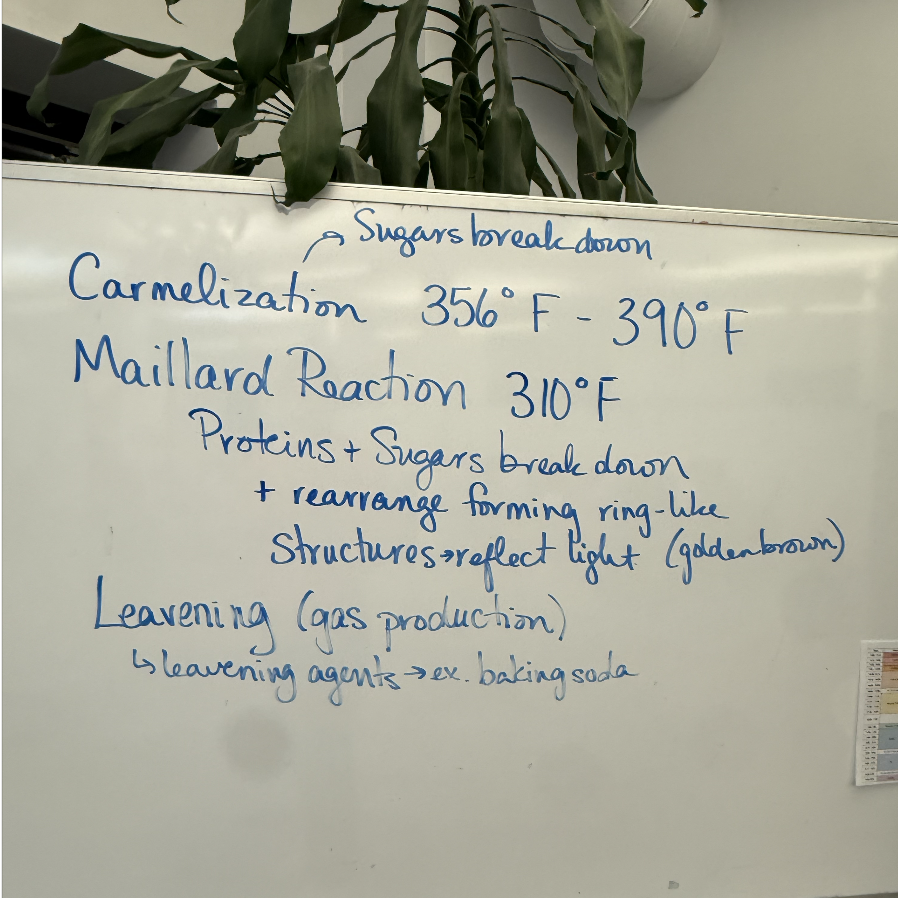
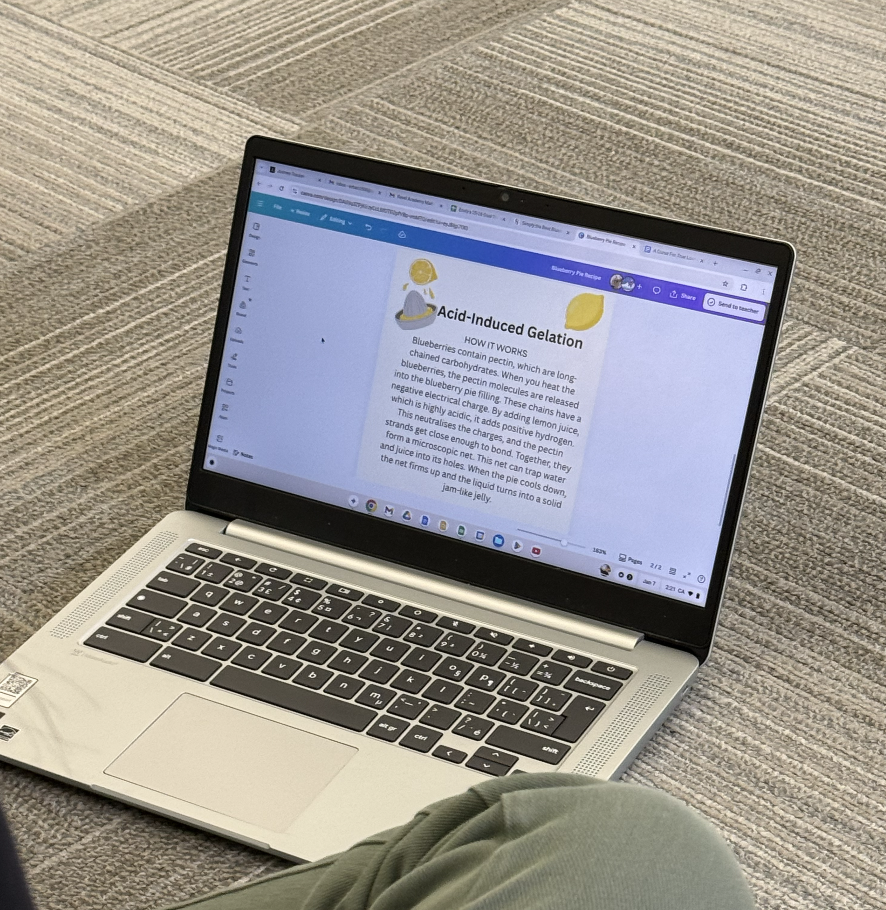
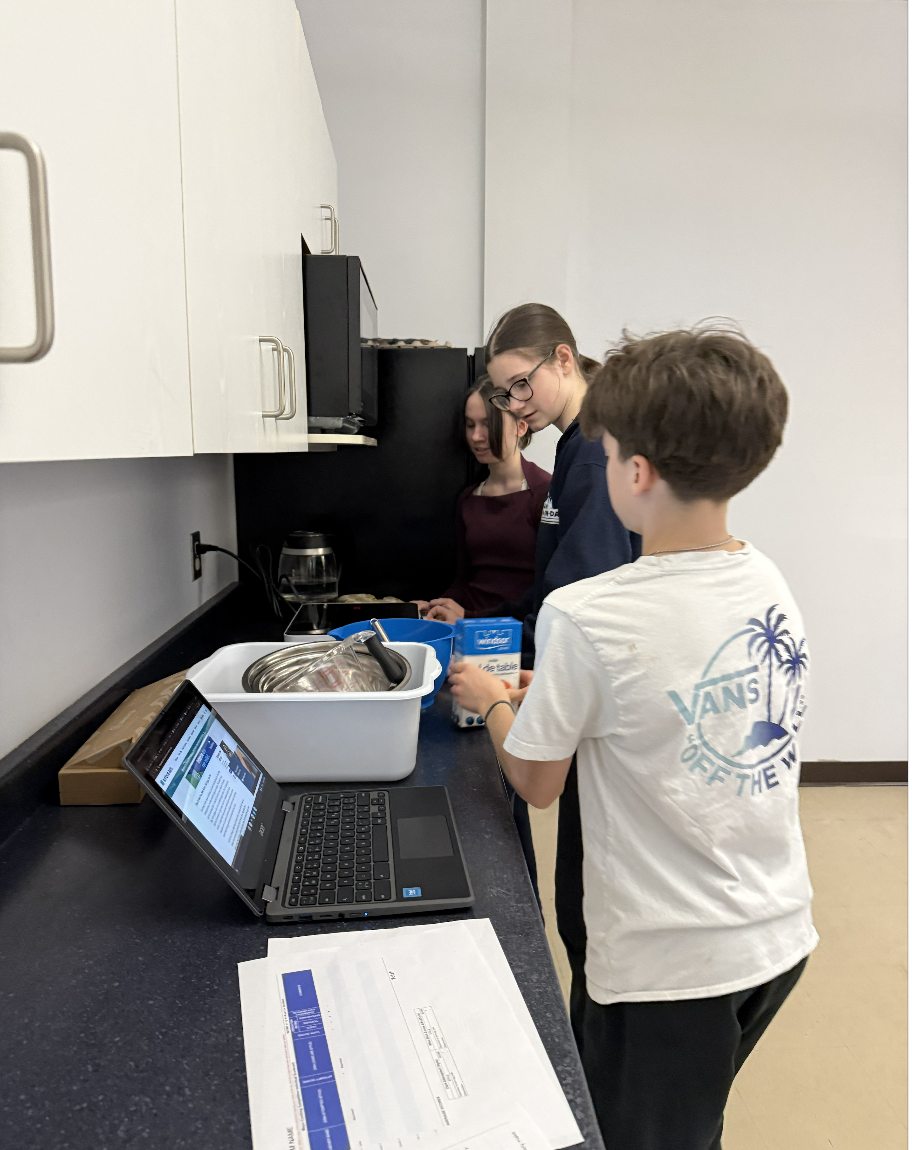
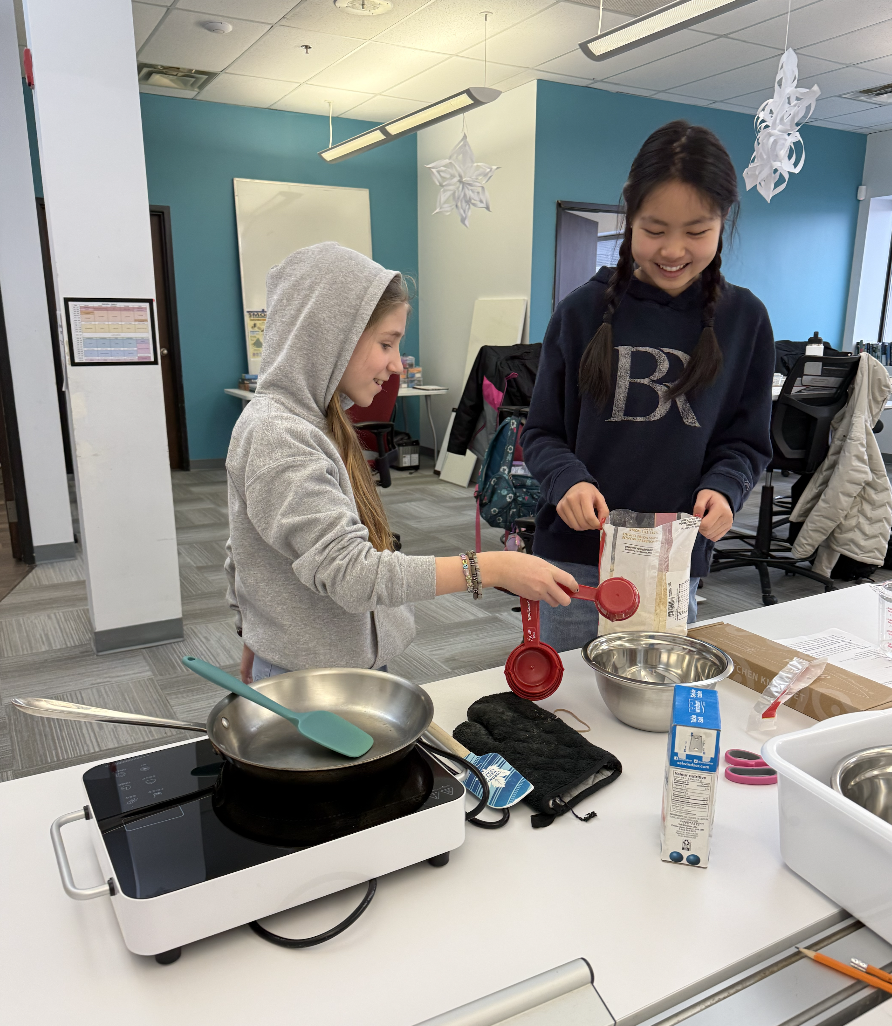
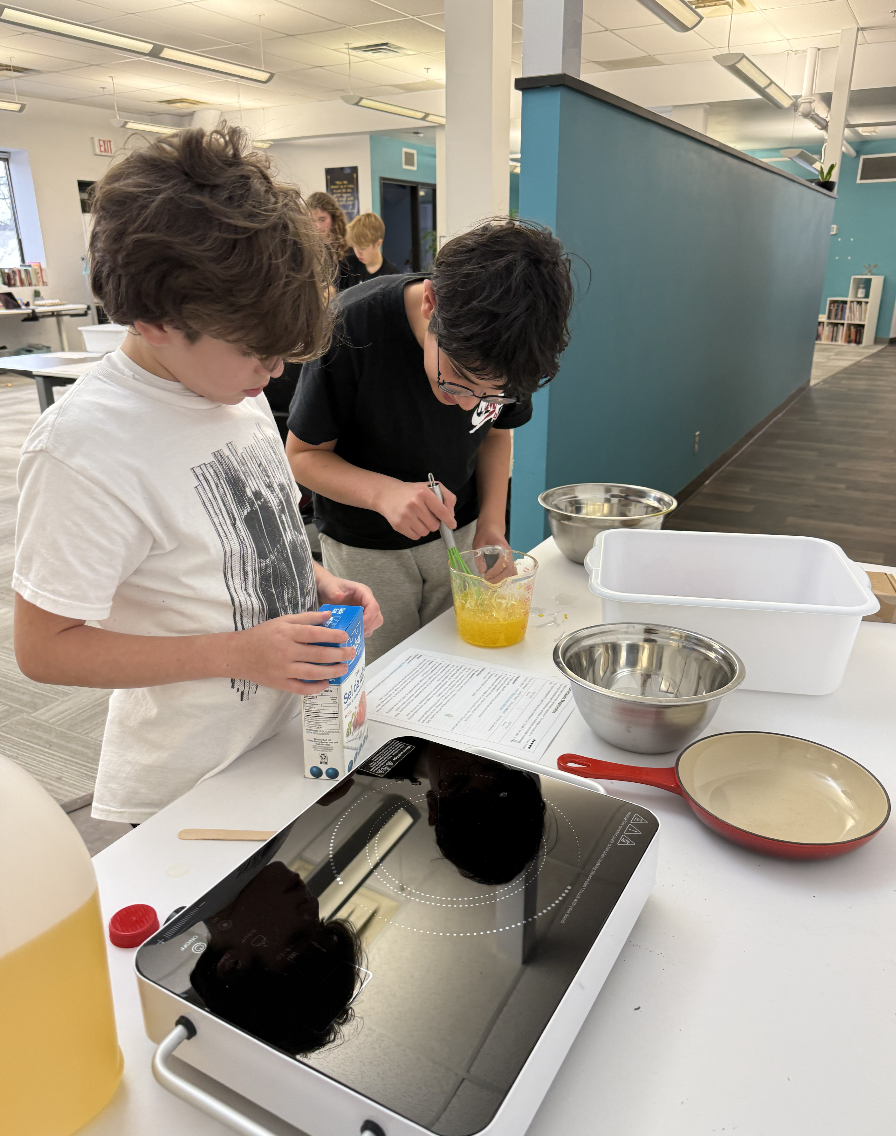
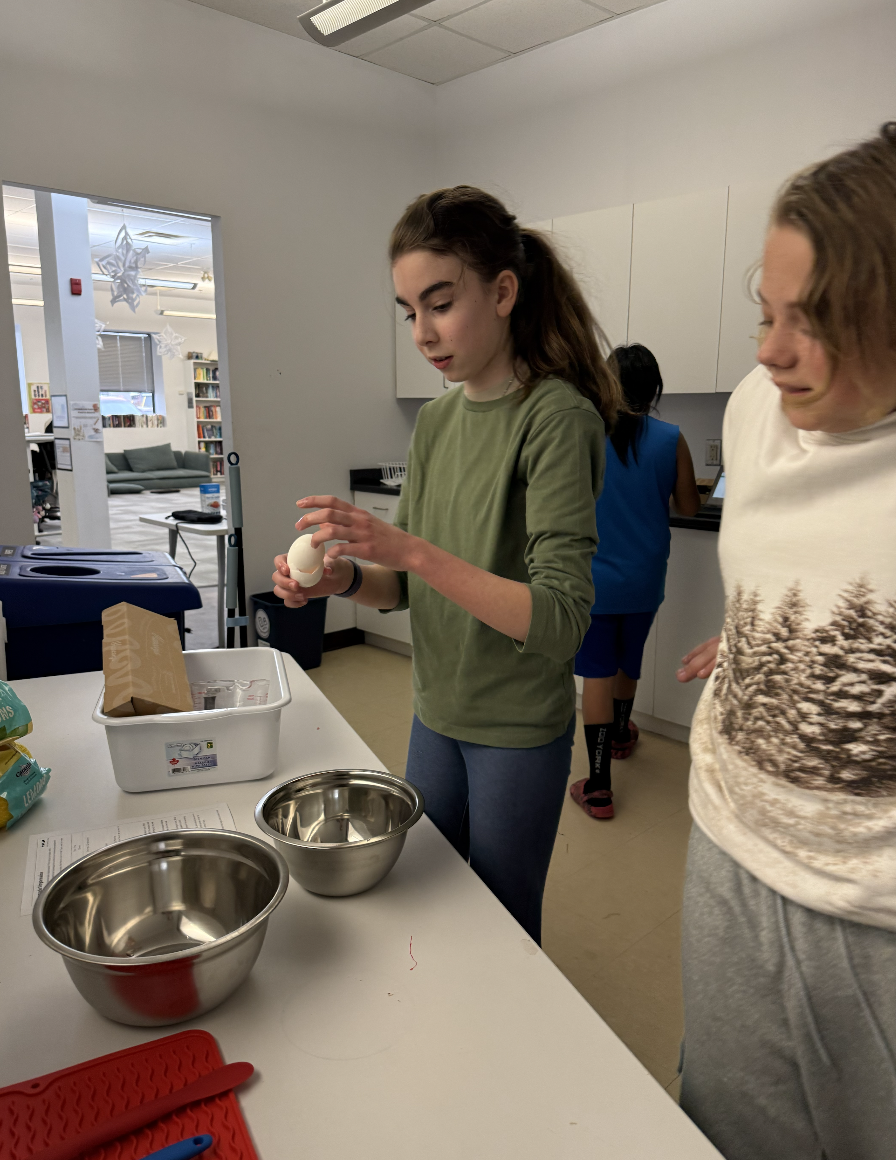
Why does hot sauce burn your tongue when its actual temperature is room temperature? Why does a baked cake rise? Why do some cookies end up being hard and crispy, and others soft and gooey? How do you cook that perfect steak or soufflé? Welcome to our Cooking with Chemistry Quest, where we will take on two worthy challenges: (1) Choosing a difficult dish to measure, combine, and cook to perfection, and (2) Using a recipe and the dish we create as a springboard to explain the specific and general workings of atoms, elements, molecules and chemical reactions! After reviewing the session's expectations and weekly themes, the Rebels broke off into their teams and came up with team names and a work contract. After they decided how they would solve disagreements, ensure everyone has a valued voice, and what they would do if someone were distracting or not helping the team, they signed their agreements and submitted them. Teams then chose at least three recipes for fairly complex dishes they would like to be able to make, such as a delightful sourdough bread made from scratch, perfectly cooked filet mignon with Béarnaise sauce, and a chocolate lava cake with a side of ice cream. As a group, we then watched a video on cooking and cookies, taking notes on references to chemistry and chemical reactions, such as leavening agents, Maillard reactions, and caramelization.
On Tuesday, we launched Quest with a discussion on how ethical decisions often come down to individual choice. Balancing what you have to do based on a business or legal decision may not be the same as what you are compelled to do or even what is considered ethical to do. We discussed individual rights vs. hygiene ("No shirt, no shoes, no service") as well as exclusion due to lack of services or support for those with disabilities. Teams then met to watch an informational video about ingredients (elements) and provide a food or drink example for a solution, suspension, or colloid that was not mentioned in the video. They then went even deeper to explore molecules before taking a "tour" to develop an appreciation of the smallest particles to the largest structures in the universe and how they're related. Why does this matter? Rebels will need to be able to explain their ingredients and the molecules and elements that are part of their recipes, as well as how applying heat and the way the ingredients affect our bodies during digestion, at the Exhibition.
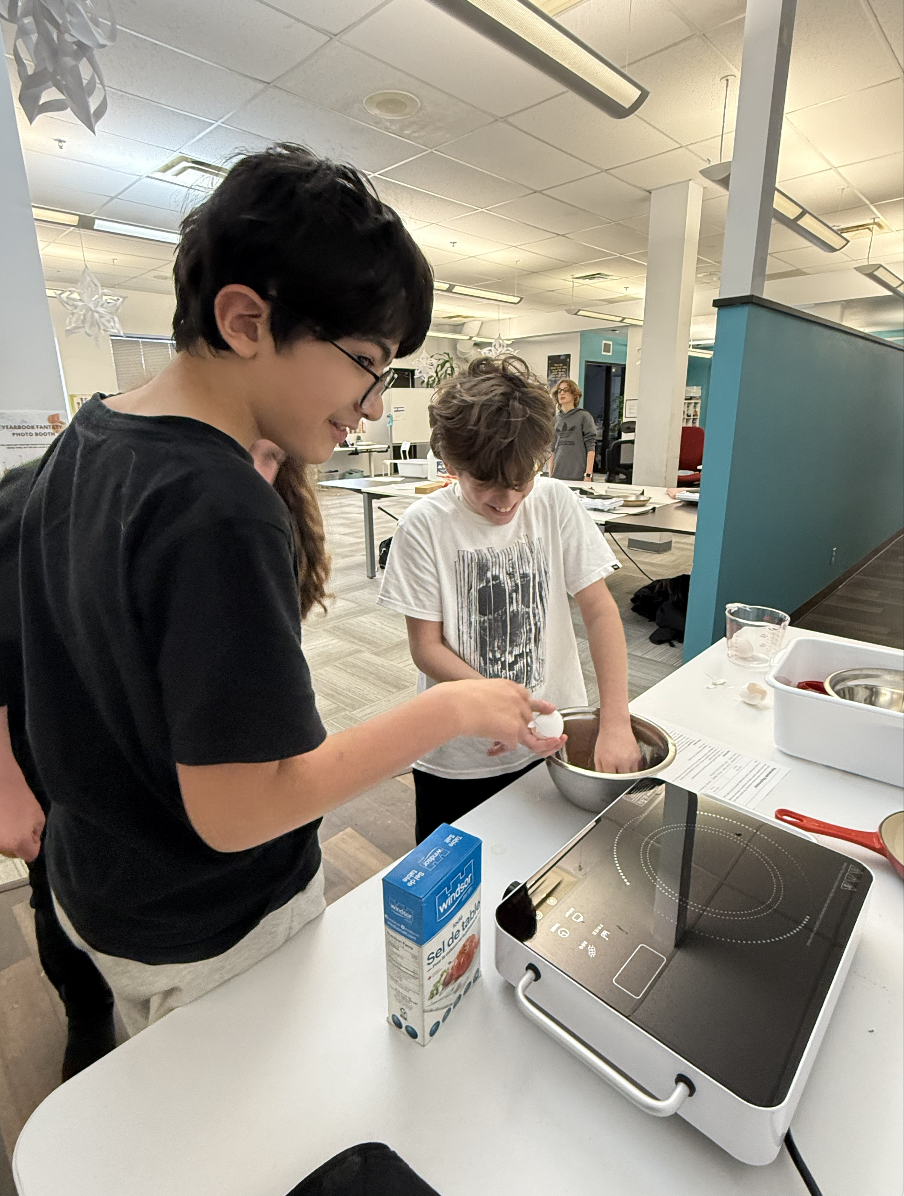
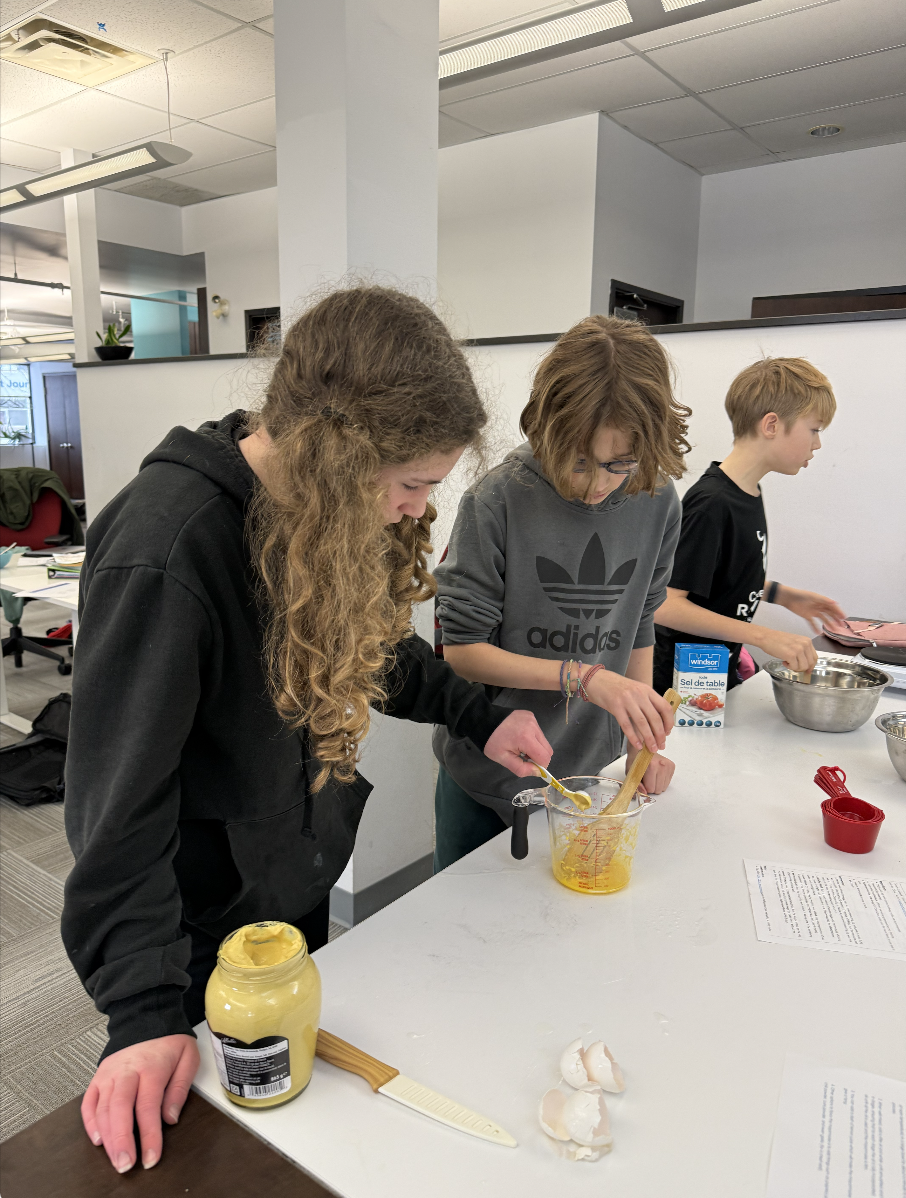
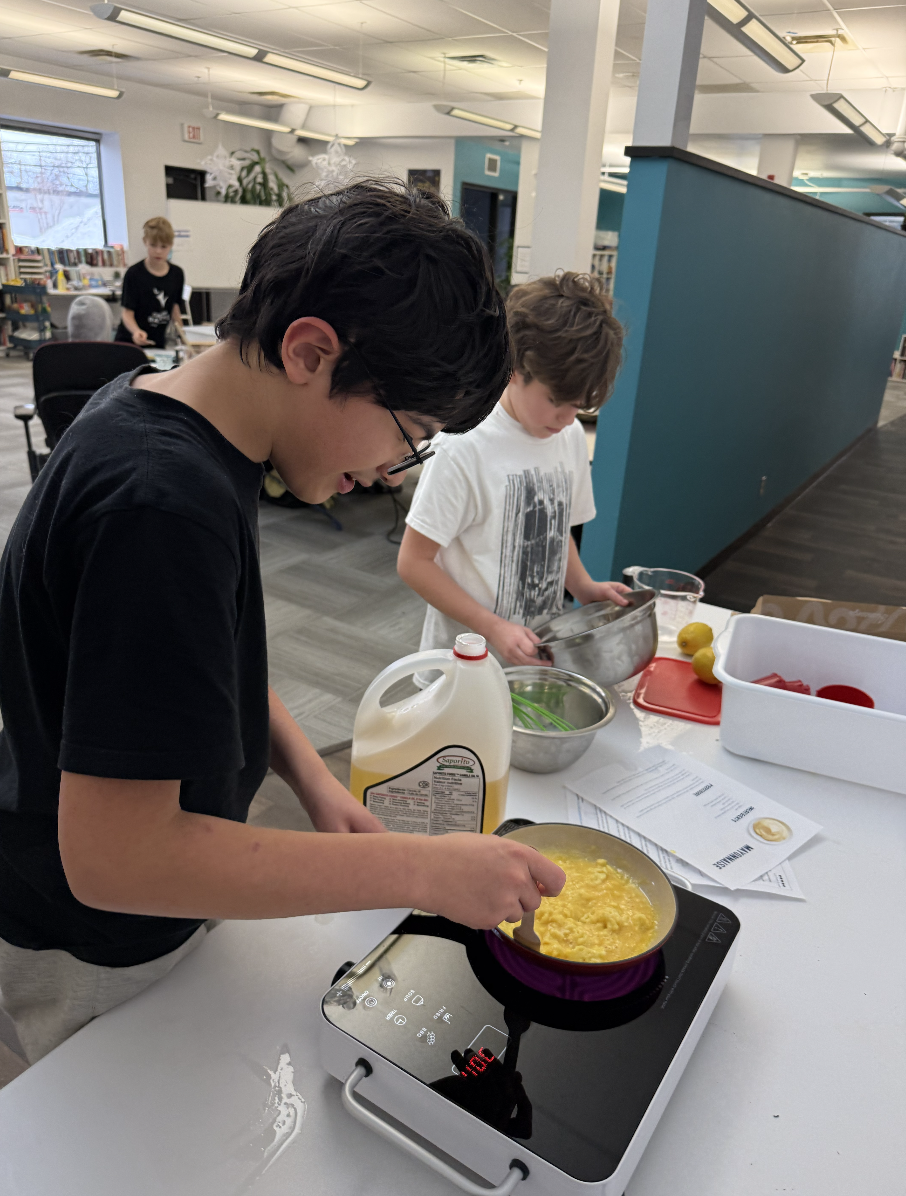
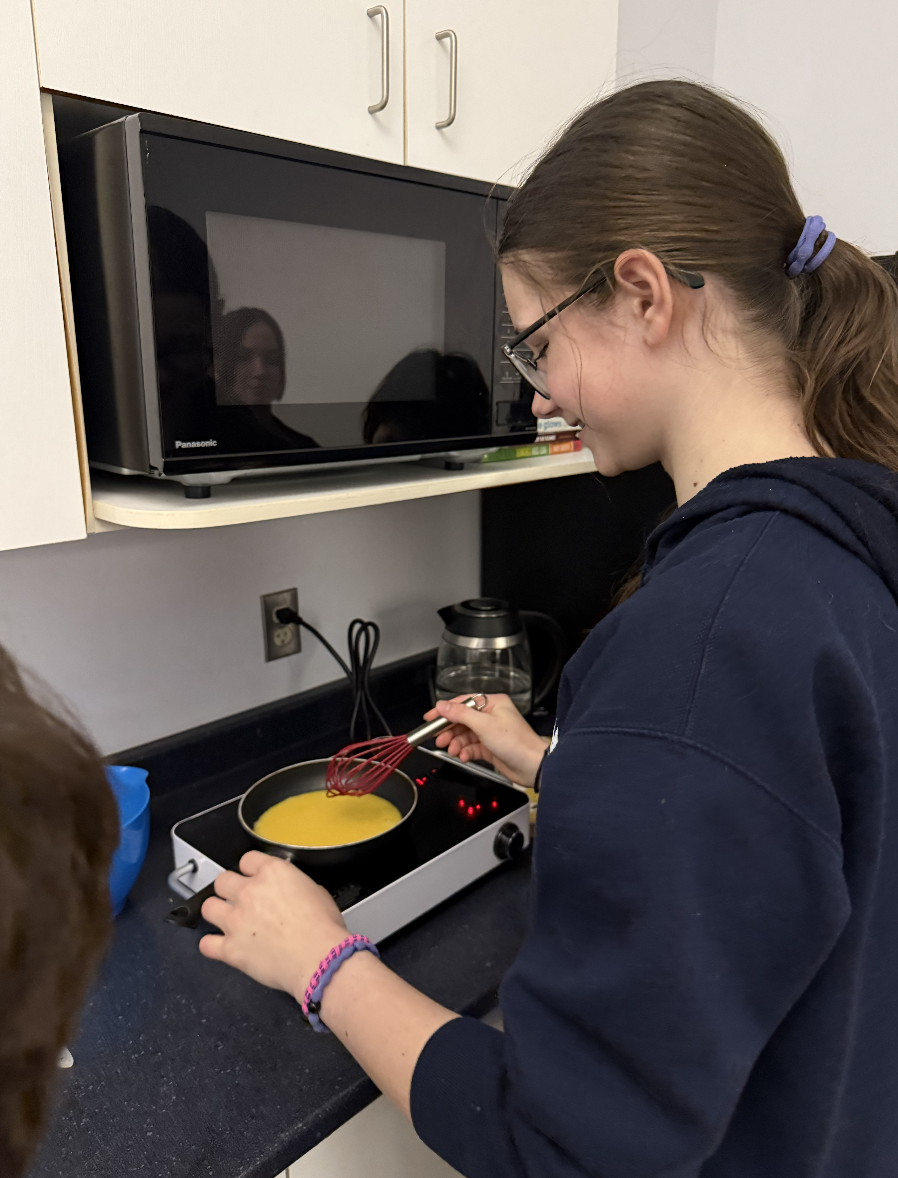
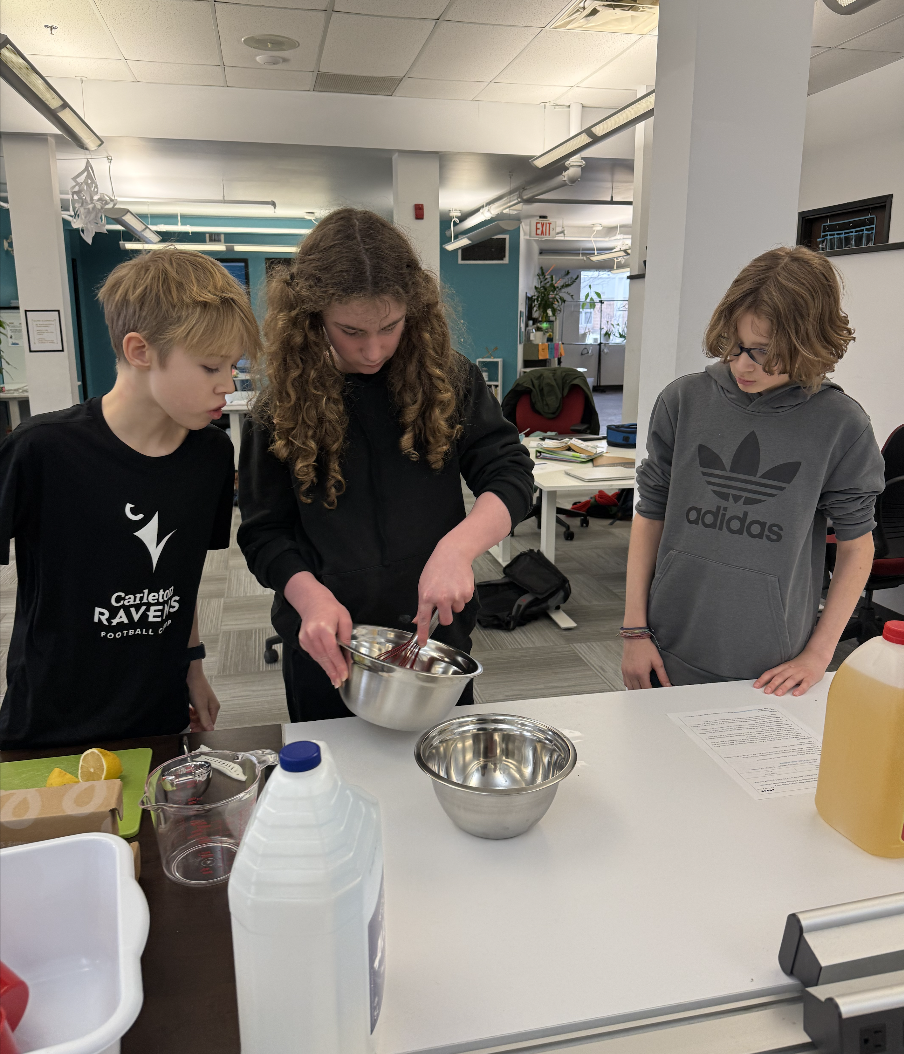
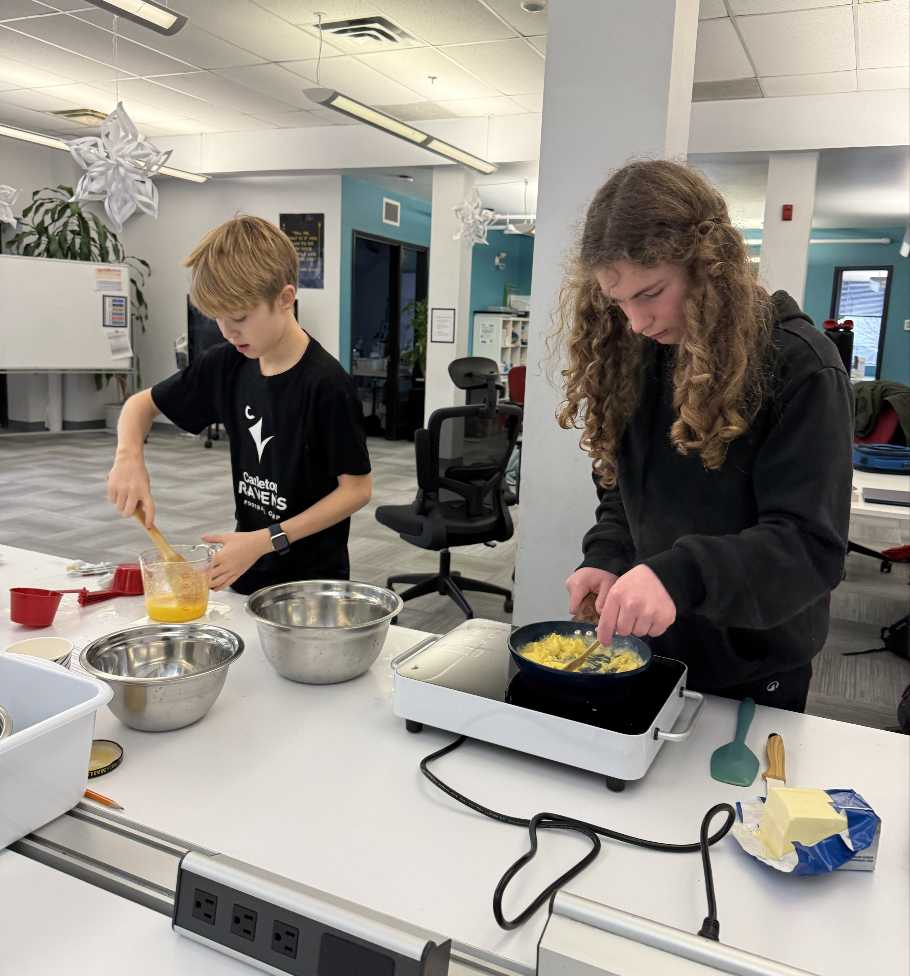
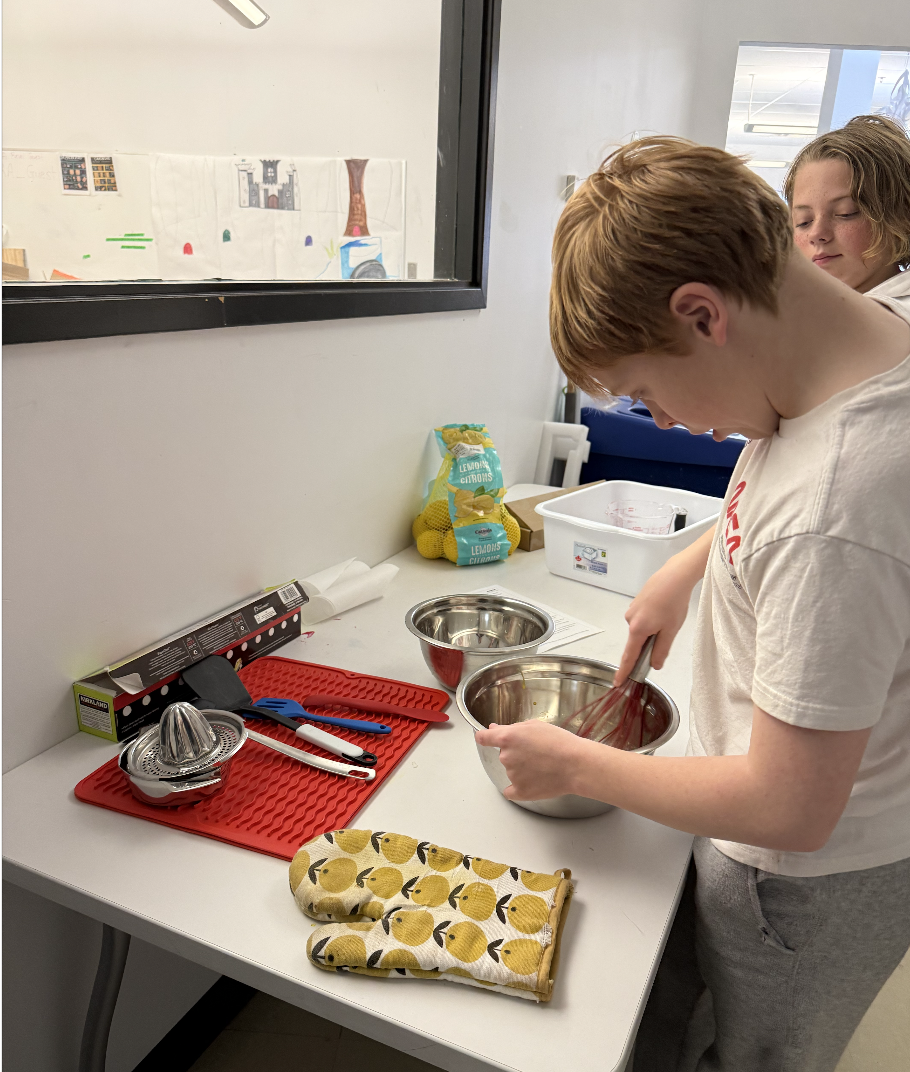
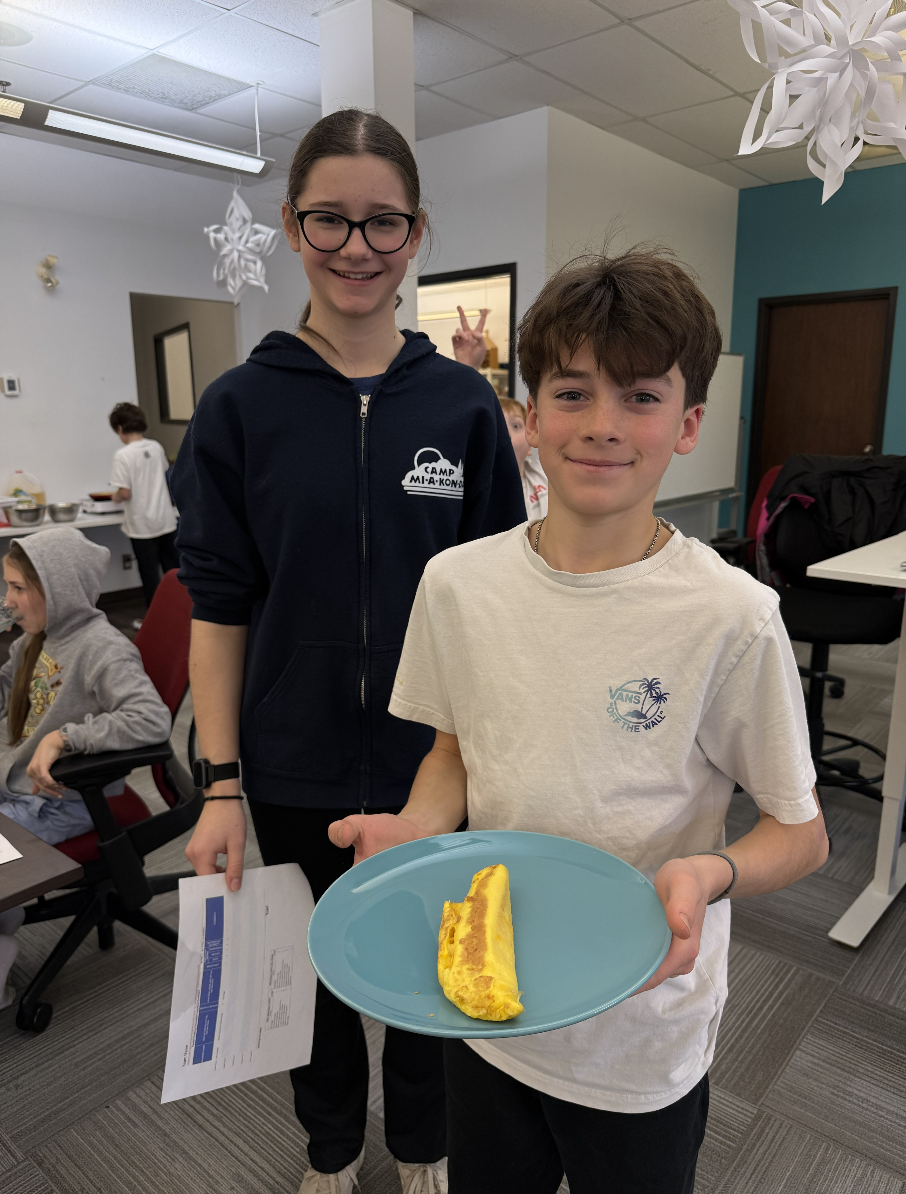
On Wednesday, learners took careful notes about molecules in food using the Outlining Method. After watching a video on Molecular Gastronomy, Rebels explored at least three more Molecular Gastronomy Recipes. They then chose one dish that they would rather make and substituted it for one of the three dishes they were planning to create. Taking one of their recipes, they examined the list of ingredients to identify at least two molecules and one or more elements in the food. If they had time, they used clay and or a chemistry model set to create a model of at least three elements or molecules and label them. We concluded the class with brief presentations about one of their recipes or an interesting fact they had learned that week. On Thursday, it was time for our first Cooking Competition! In the restaurant world, there are many skills to master, but often, seemingly simple tasks require the most practice to master. Rebels attempted to tackle the humble omelet as well as mayonnaise for their first challenge. Although mistakes were made, every team worked well together and strategized due to the time crunch. One team was able to complete both recipes, while others pivoted and made scrambled eggs when their omelet didn't work. Due to allergies, one group made a chickpea flour omelet and lemonade, both of which were enjoyed by the other learners. Great work, Rebel Chefs!
Personal Finance
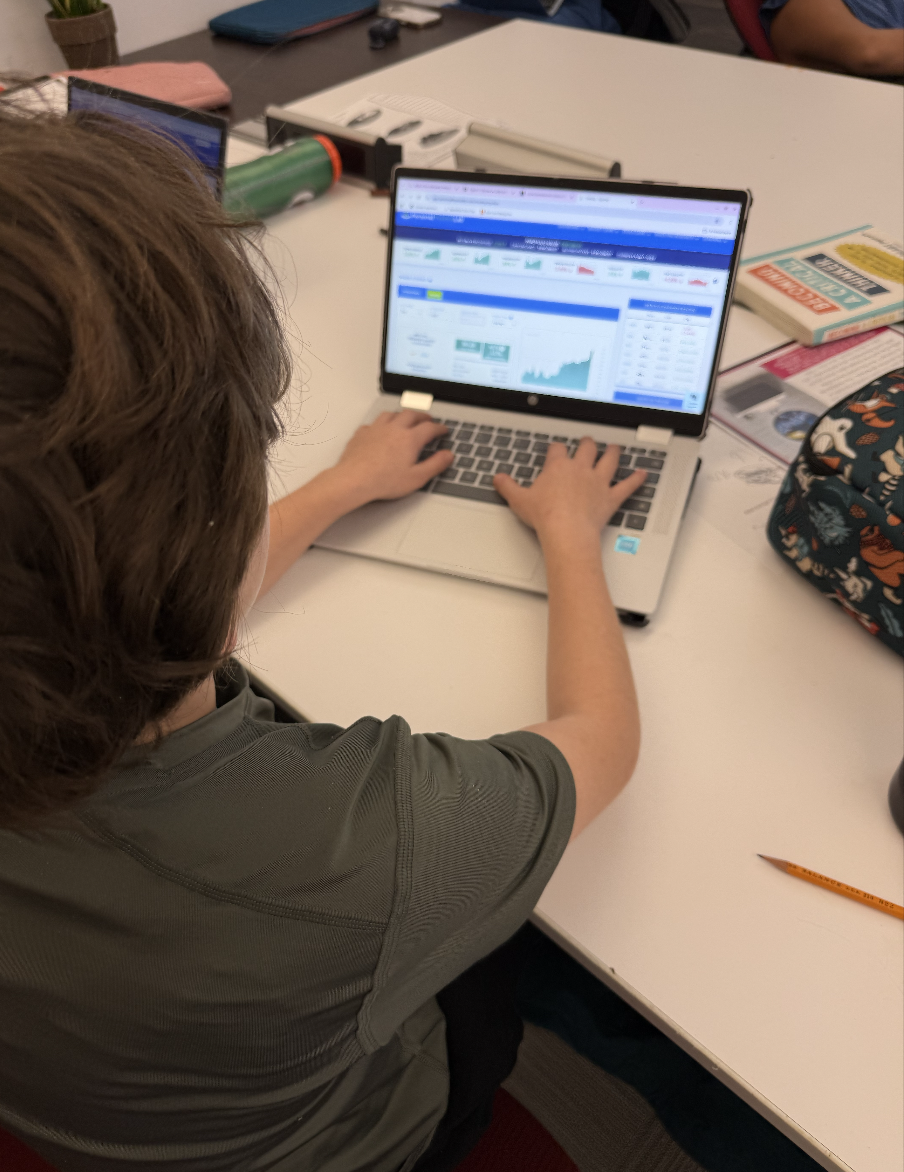
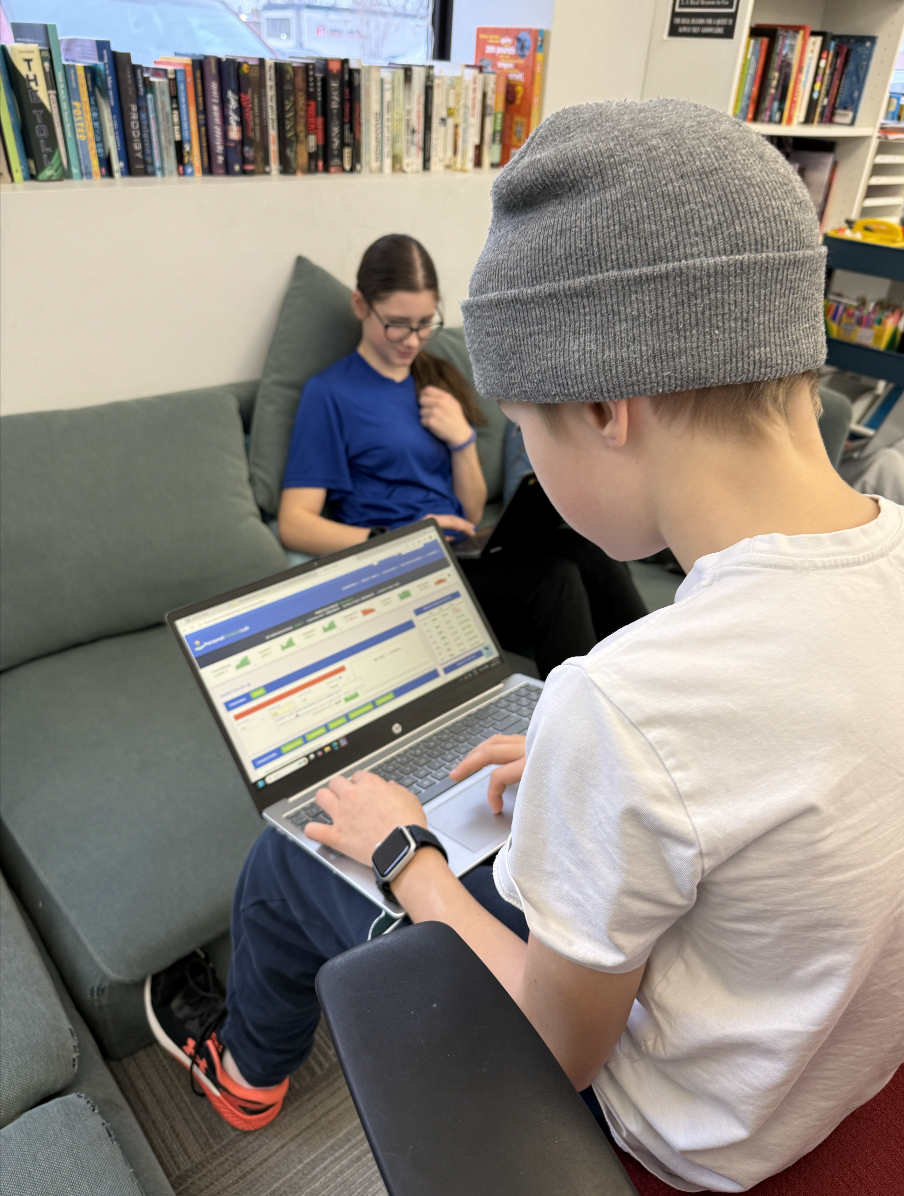
Welcome to investing! After asking the Rebels what they already know and what they would like to learn, we covered stocks, ticker symbols, stock exchanges, and the reasons for investing in stocks. We also examined a comparison between stocks, mutual funds, and savings accounts, evaluating the rates of return, risk levels, and potential pros and cons. The Rebels showed great engagement with the content and asked incredible questions throughout the lesson! With our remaining time, Rebels watched a quick tutorial before making their first trades in their Stock simulation game!
On Wednesday, we confirmed that learners understood Tuesday's lesson by reading an article and watching a quick explanatory video on stocks. We learned about the history of stocks, the difference between common and preferred stocks, new issues and initial public offerings (IPOs), stock dividends, and bonds. After the review, learners took a group pop quiz and scored 100%!
Potential Discussion Ideas or Questions to Ask Your Rebel:
Spark Studio
What is your Word of the Year? Why do you want to focus on that word for 2026?
What are goods and services? What are some examples of each?
What pretend business did you create this week? Who were the business owners in your group? What goods and services did you provide?
What products will your group be making for the shop at Exhibition?
What did you predict the snowmen will do at night?
Discovery Studio
Math Lab: what is positional notation and in which parts of the ancient world did this system develop?
Tell me about the geography of Greece: what types of landforms does it have? Which countries and bodies of water surround it?
Your Quest story is set around the time of Darius the Great in Persia. How long ago is that?
What is the most interesting event in ancient Greece that you added to your historical timeline?
In Reader Writer, you’re comparing life in Athens and Sparta. Which city-state sounds more preferable to live in as a citizen so far?
Exploration Studio
What is your Word of the Year? Why do you want to focus on that word for 2026?
What do you think will happen to Salva next? Will he head home? Will he find his family? What surprises you about Nyah’s story so far?
Explain the Painted Cube problem to me!
You are getting ready to open a new restaurant when you architect asks you what type of expense will you go to in order to support individuals with disabilities who may visit your restaurant?
Pay initial construction cost for ramps into the restaurant buying cheaper tables to pay for it,
Change floorplan and remove money making tables in order to ensure the restaurant is wheelchair friendly, or
Make no changes to the restaurant since you are just able to afford the current design and your current plan doesn’t break any laws.