
Revel Recap: Jan 12-16
Important Upcoming Dates
Session 4 Exhibitions
Discovery Studio Exhibition - Tuesday, February 10th
Spark Studio Exhibition - Wednesday, February 11th
Exploration Studio Exhibition - Thursday, February 12th
Spark Studio
Mindfulness and launch
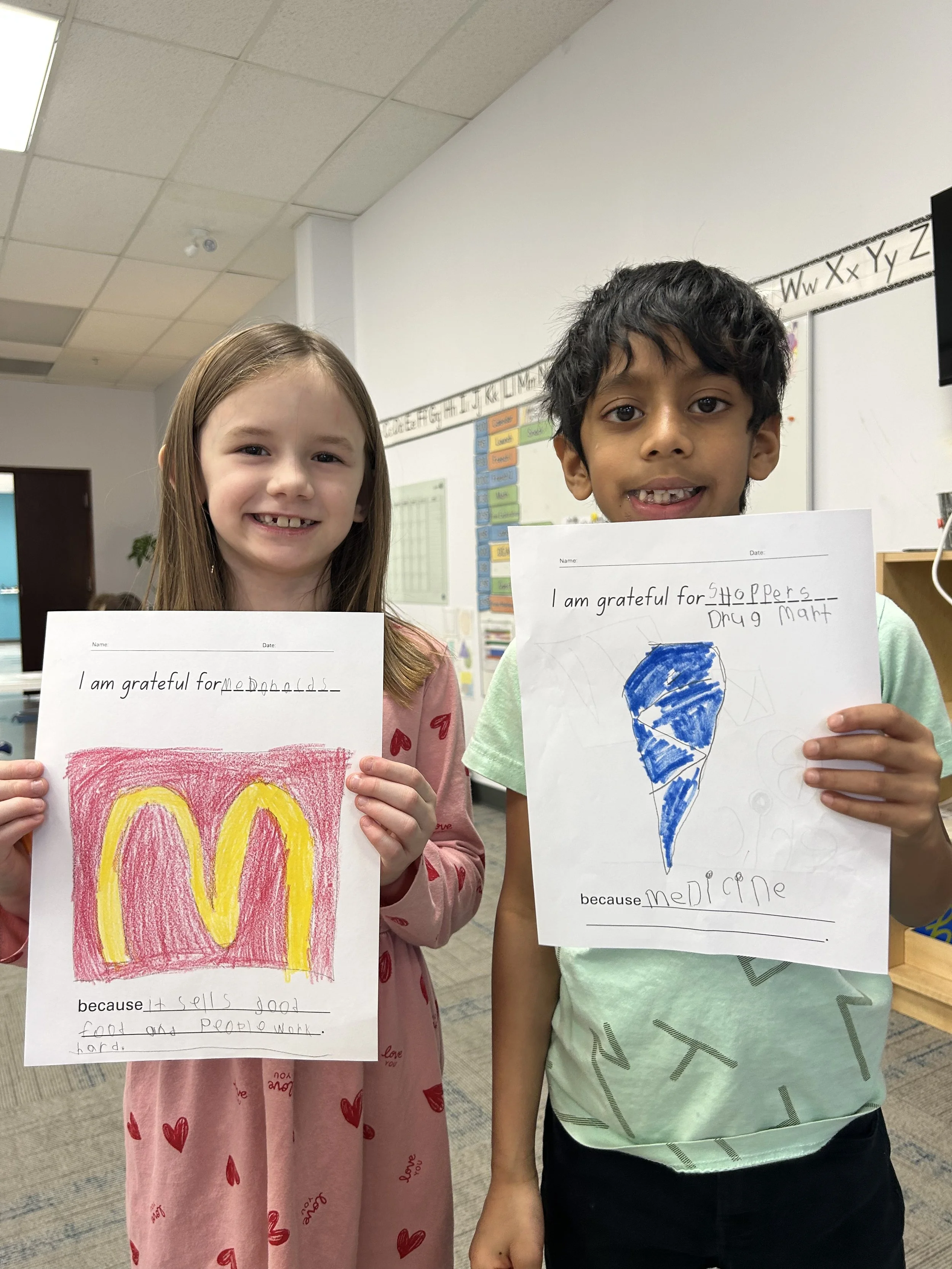
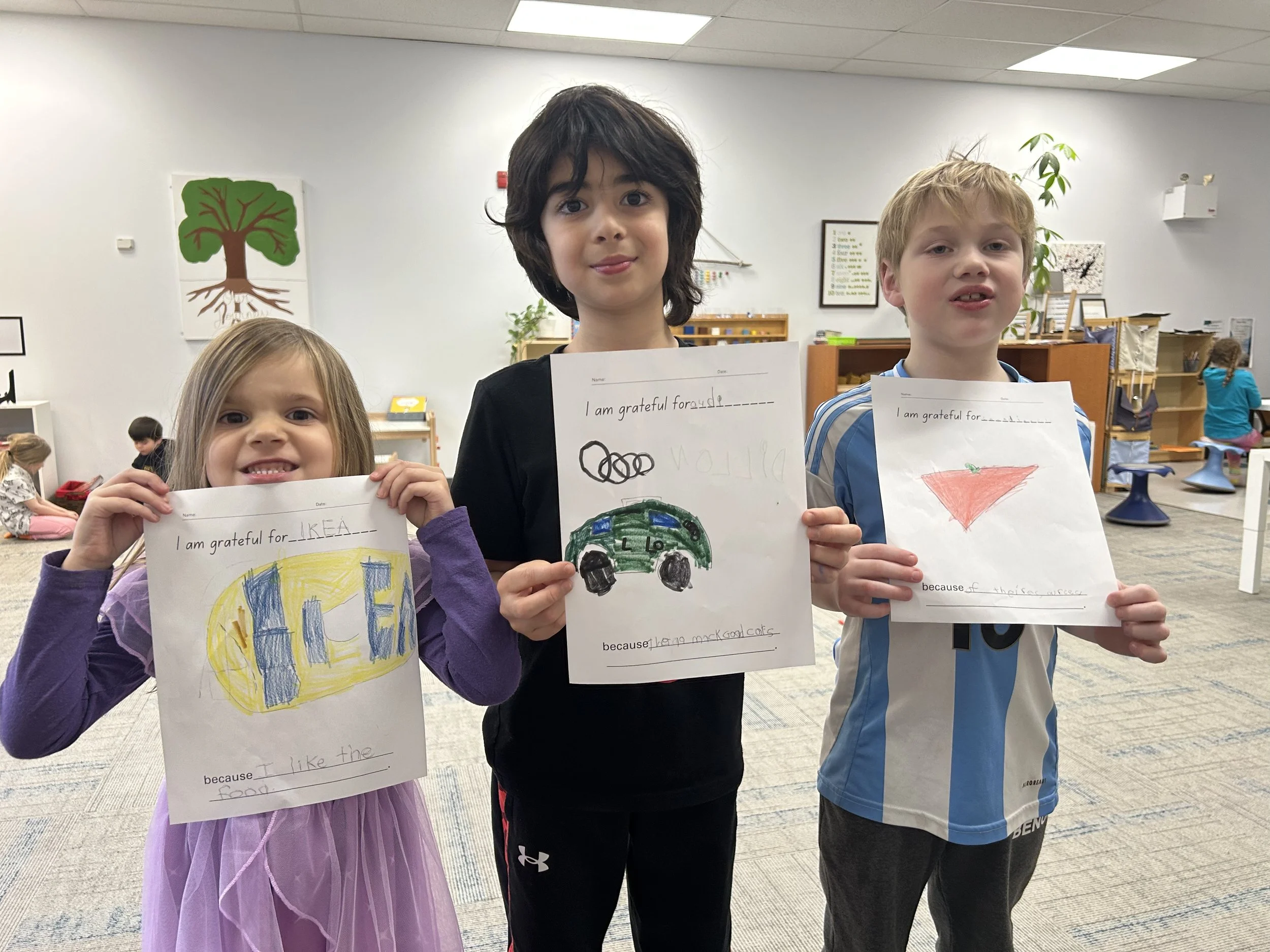
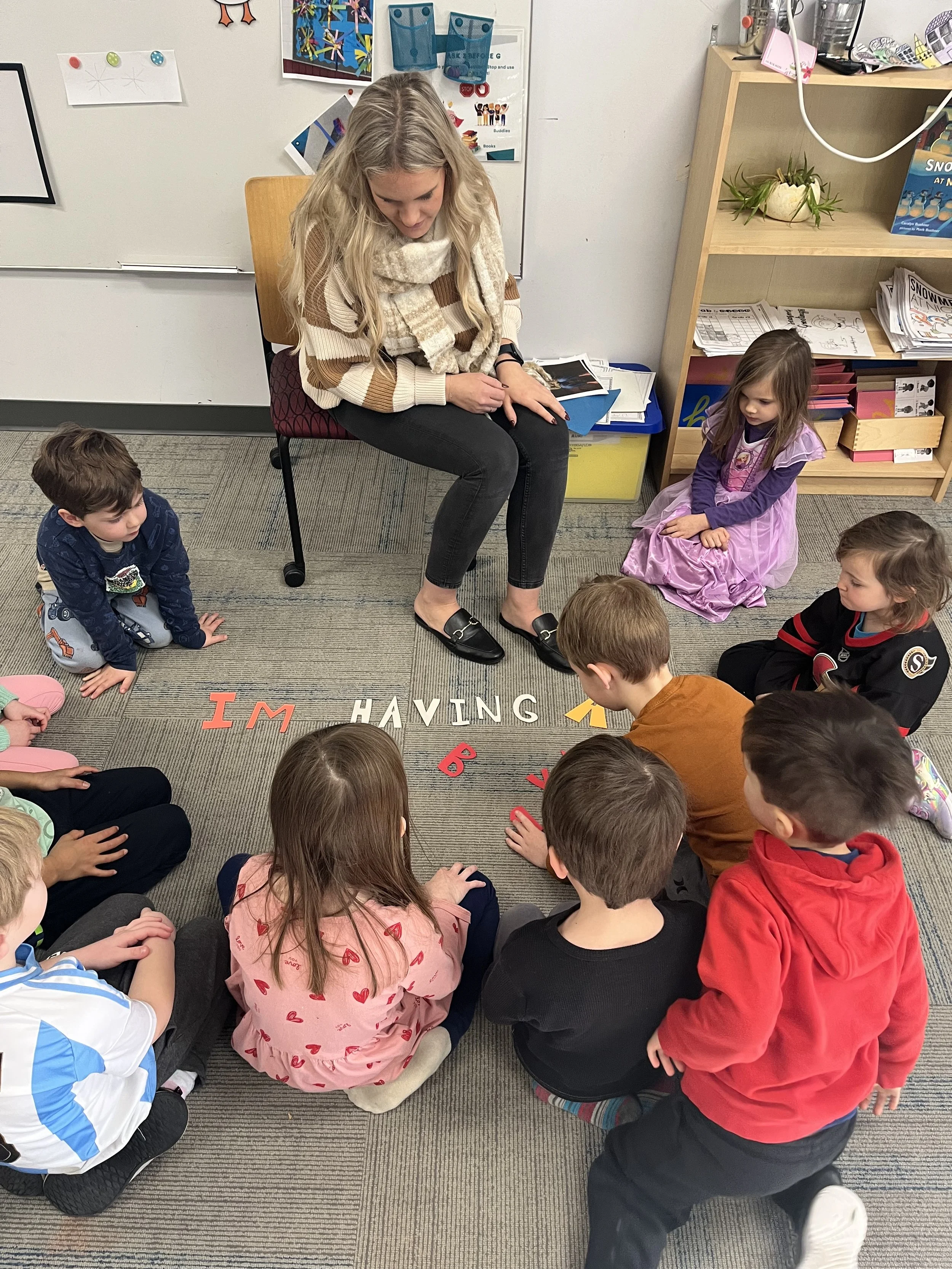
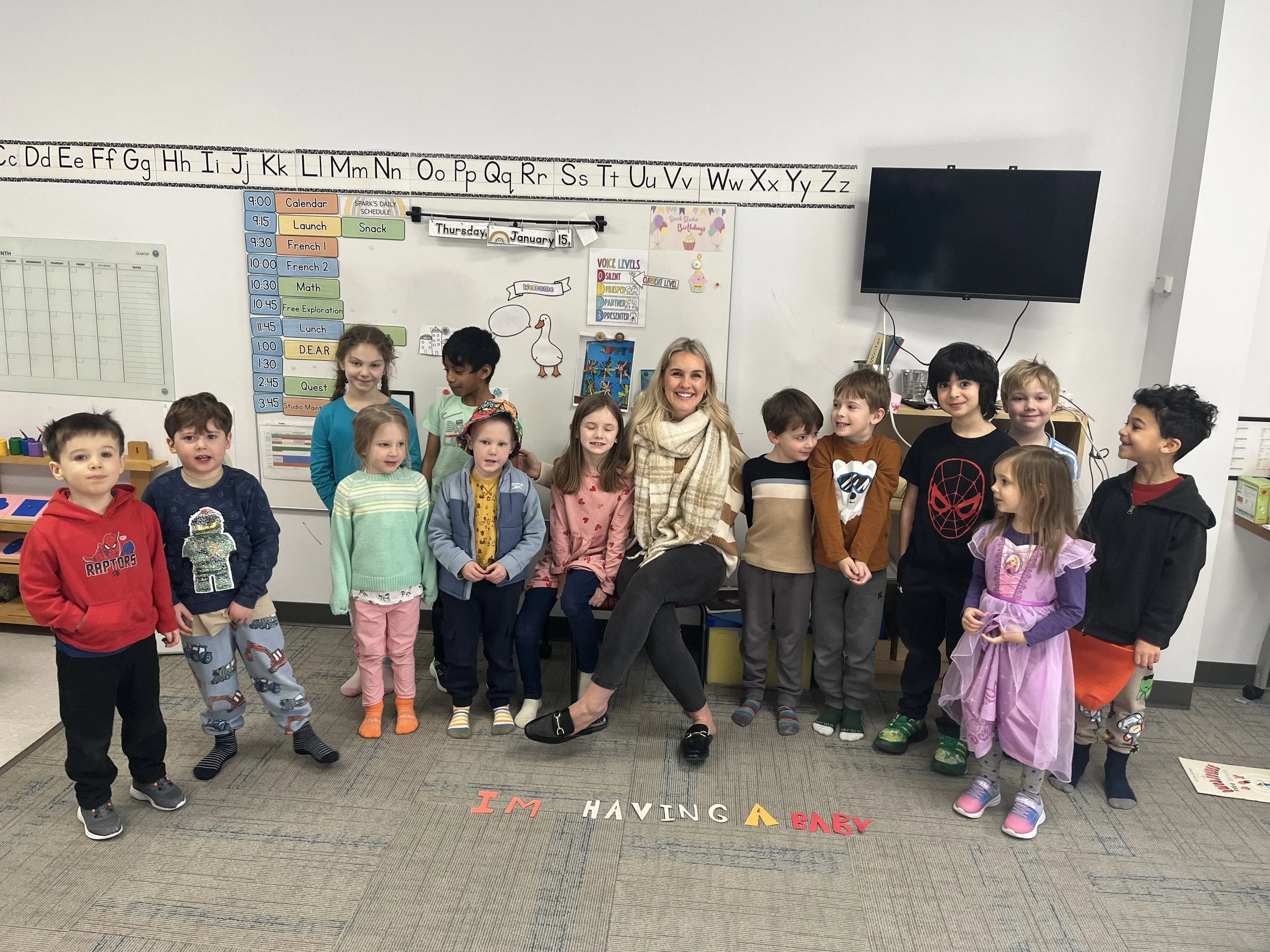
This week, the Sparks focused on meditation. They worked on moving bubbles with their breath, with the goal of helping to improve focus. They spent a lot of mindful time this week working on mindful zen doodling and colouring. On their snowy Thursday, they started the morning with a follow along yoga session. Then to end the week, they got to work on their gratitude journals. They were asked, what company are you most grateful for and drew the company’s logo and then shared one reason why they are grateful for it. Example such as, Disney, McDonald’s, Shoppers Drug Mart, Starbucks, Disney, Audi, Canadian Tire, IKEA, and Hummer. This week for launch, we watched a mini clip of Shark Tank; “10-Year-Old Entrepreneur Wows the Sharks With Her Baby Spoon Product”. This launch focused on inspiring the Sparks to see that young people can be incredible inventors and business owners, too! During the Shark Tank clip they talk a lot about investments, which had the learners ask many questions about what the Sharks were offering and what the 10 year old was asking from the Sharks. The Guides explained that businesses need to charge enough money to pay for the materials they use and attempt to still turn a profit. They ended up agreeing that the girl was asking a good amount for her product as she would make a profit. Some of the learners said they would invest in her and hope she continues to sell her baby spoon. Sparks took part in some other exciting launches called “Which Lemonade Would You Buy?” to help them begin thinking about business identity in a fun and meaningful way. We started by watching three different lemonade commercials: Simply Lemonade, Hubert’s Lemonade, and Lyrical Lemonade. Before watching, we talked about an important guiding question: “What is each company trying to tell me about their product?” As we watched the commercials, the Sparks put their media literacy skills to work as they carefully observed the colours, music, feelings, and messages each brand shared. Afterwards, we discussed what each brand wanted us to know about who they are. Together, we compared the different messages and noticed how each lemonade company tried to stand out, though they are all selling the same product. Next, the Sparks voted on which lemonade they would be most likely to buy and shared their reasons why. We wrapped up our week celebrating a very special pregnancy announcement from one of our Guides! Congratulations Ms. Kaitlin!
Art
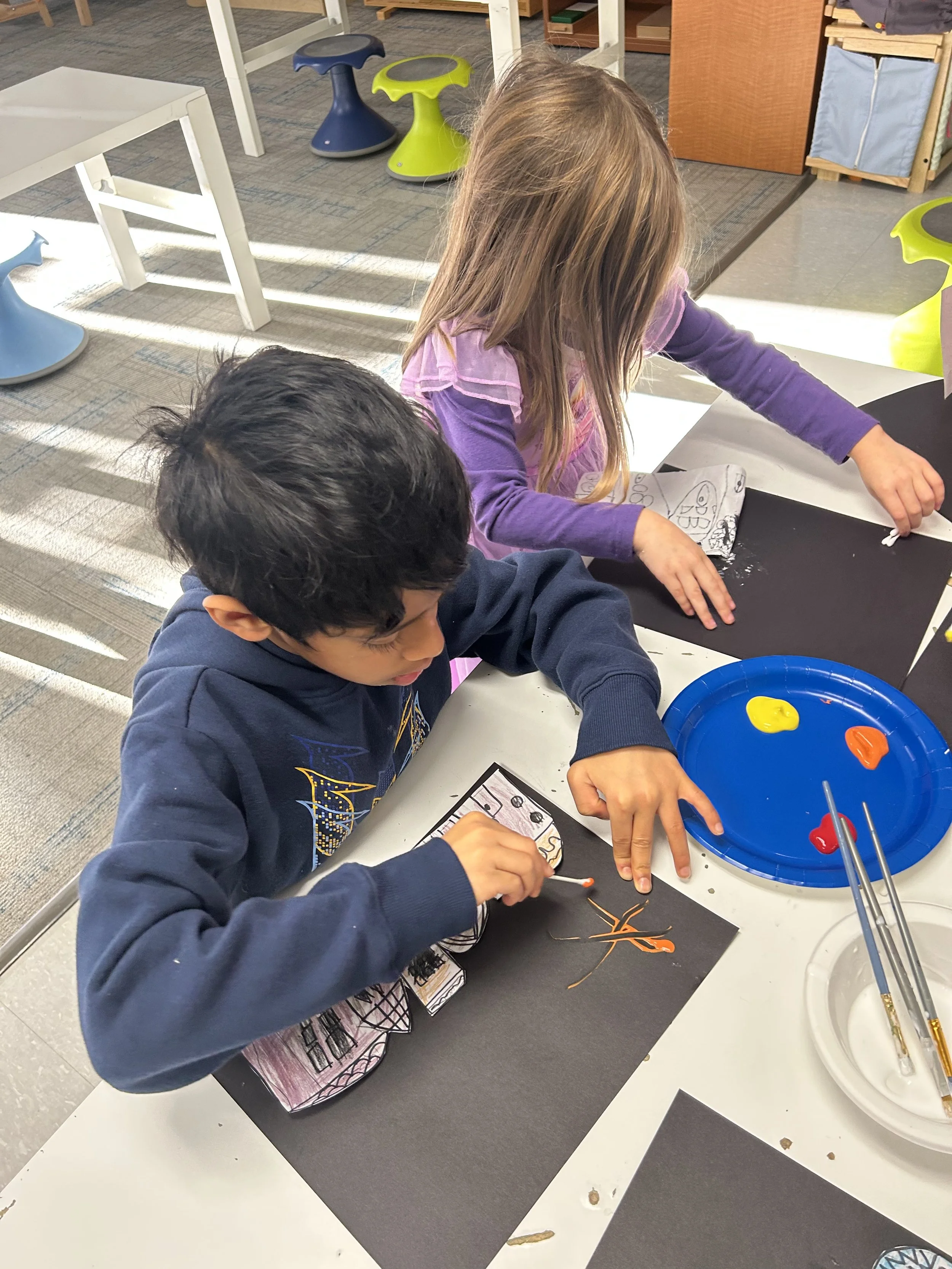
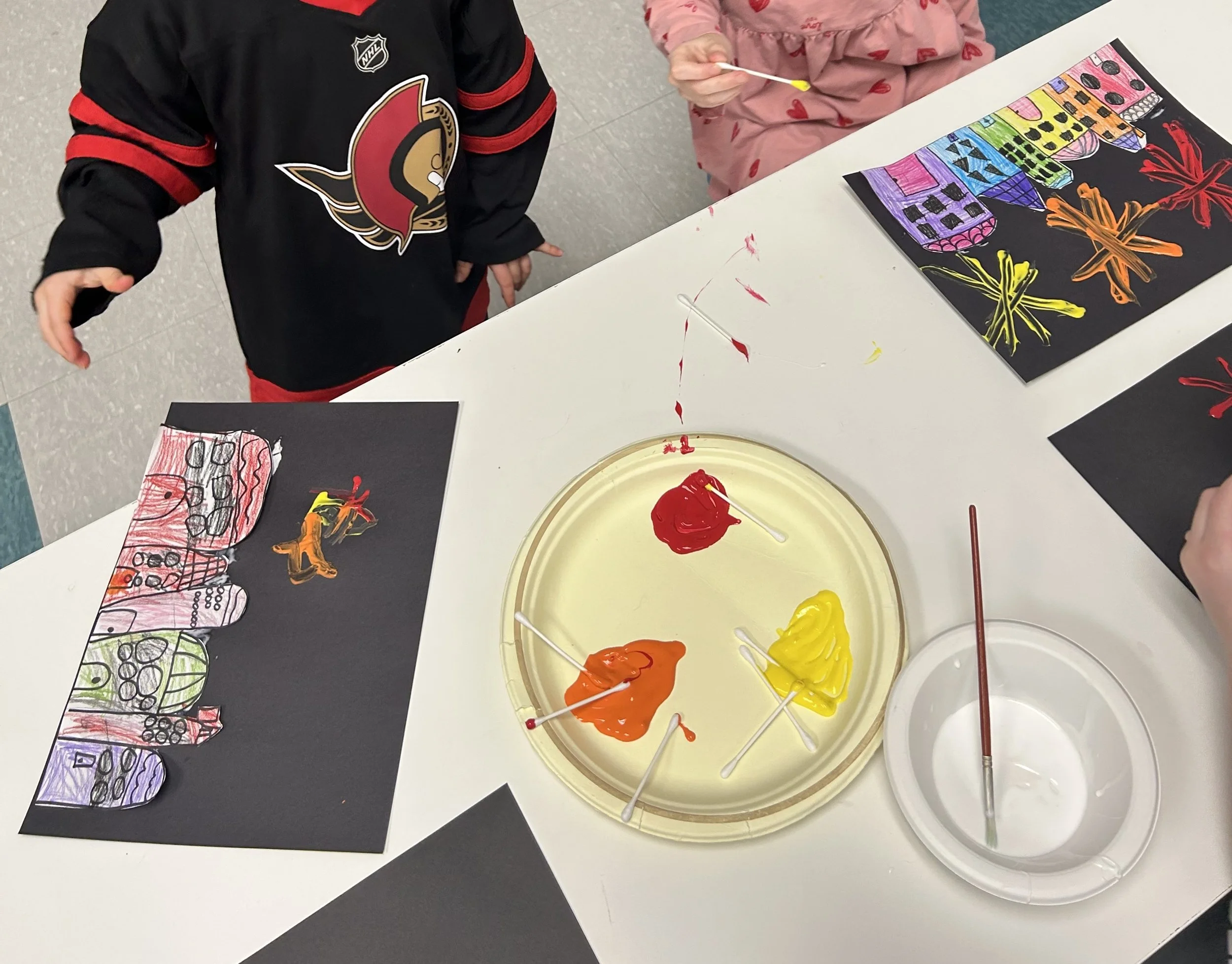
As we are still taking in the new year, we focused on another festive craft. The Sparks started with a white piece of paper where they did a directed drawing of different types of houses with their Guides. Afterwards, they coloured in their houses using 6 different shades and then cut the homes out. Their next step was to glue their homes on a piece of black paper, using paint and Q-tips to design fireworks in the background! We can’t wait to share them with you at Exhibition!
Math Workshops
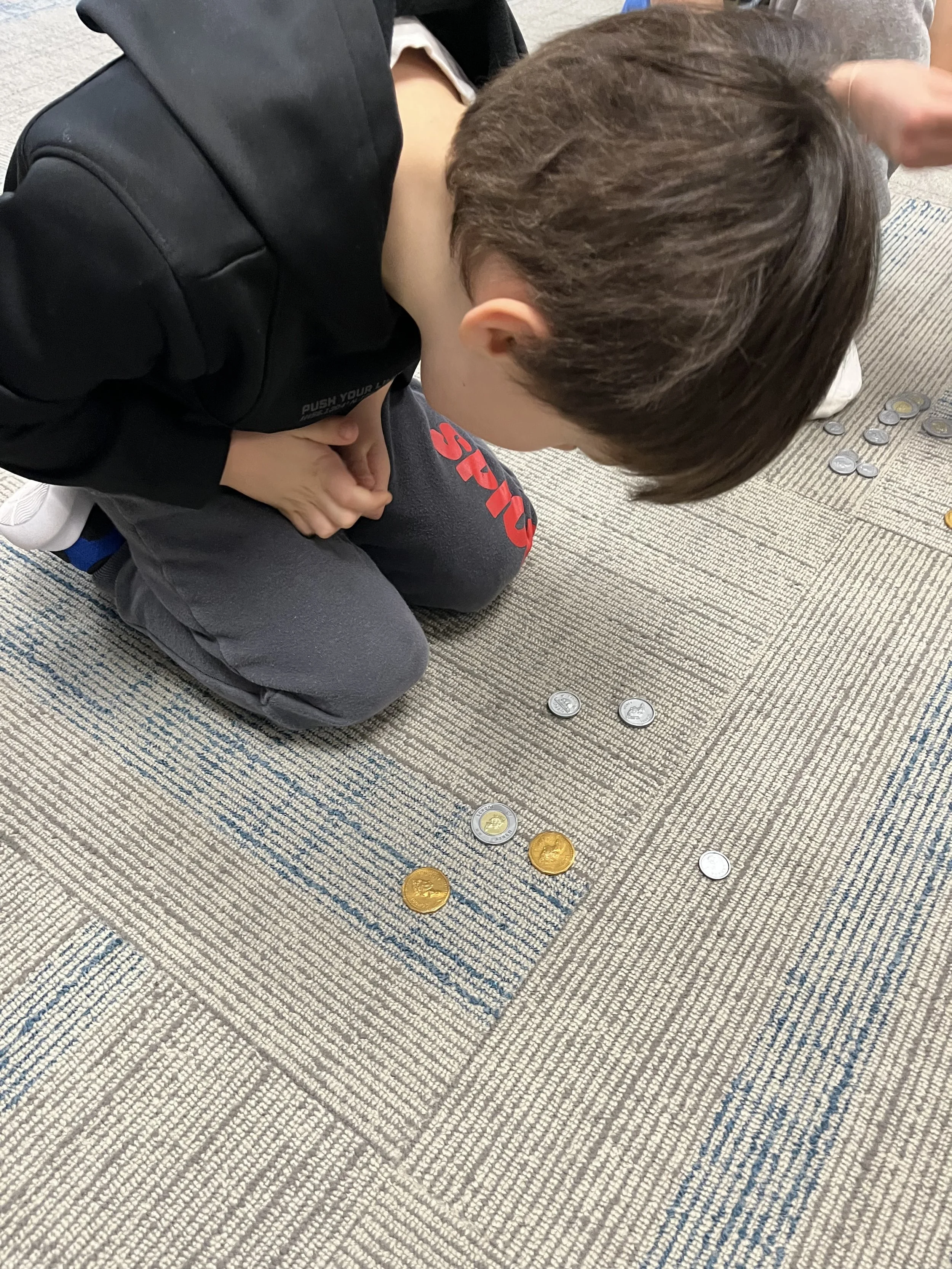
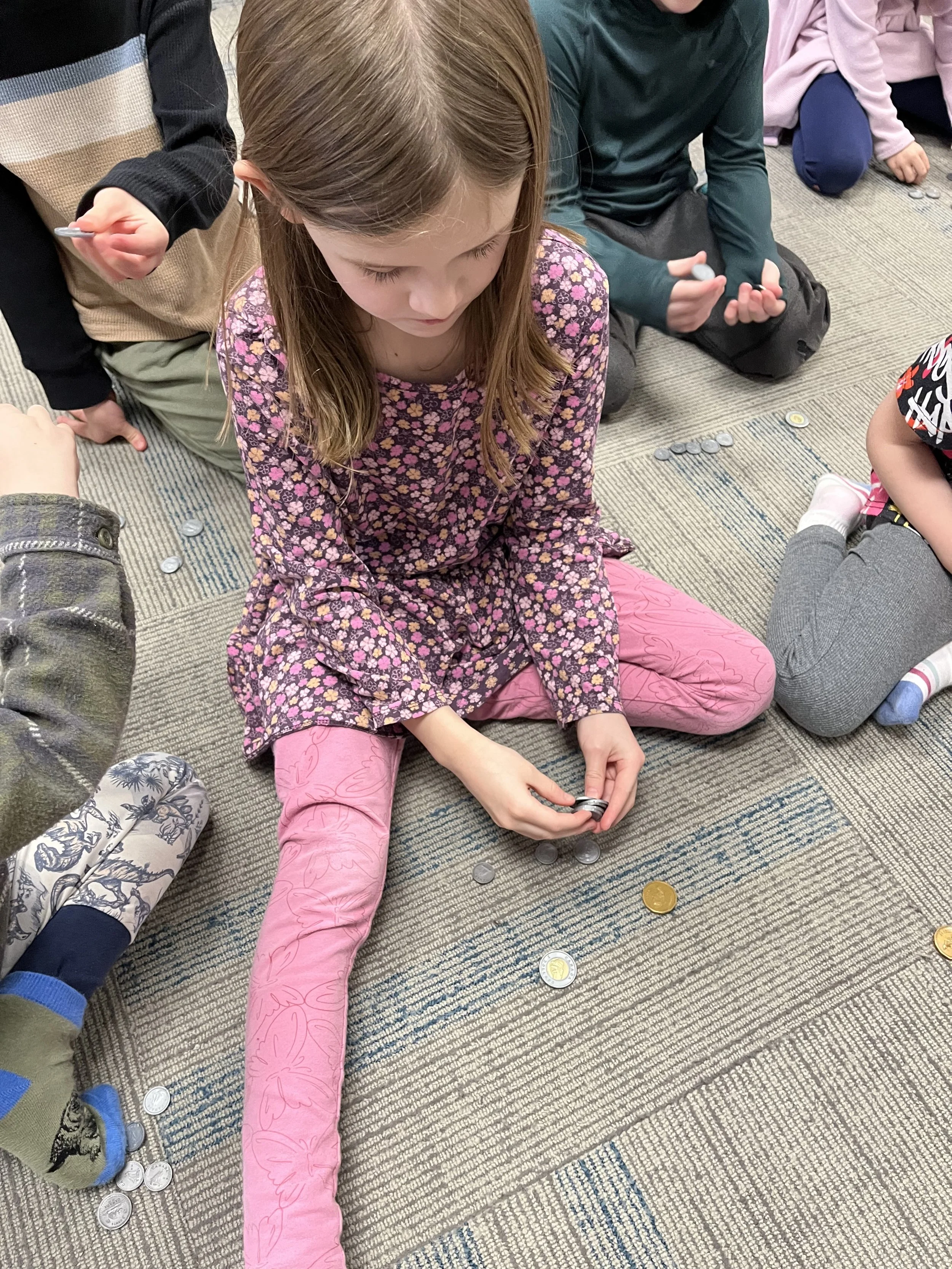
This week in Math Lab, the Sparks continued working together on their currency journey using Canadian coins. To begin, Guides introduced each coin and invited learners to share its name, the animal featured on it, and its value. This group discussion helped reinforce coin recognition, symbols and encouraged the Sparks to use math vocabulary with confidence! Each learner was given a small handful of coins. Guides asked them to sort their coins and share how many of each type they had. Some learners quickly noticed that they did not have every type of coin and this was intentional. By experiencing missing coins, learners developed a deeper understanding of coin identification and value, while also strengthening problem-solving skills. Afterwards, the group worked together to complete an exercise called Coin Hunt and Graphing. Using Canadian currency, learners counted how many of each coin they had and recorded their findings by creating a graph. Lastly, the learners developed their skip counting skills by counting by 5’s throughout the week from Monday to Thursday. They practiced by writing the numbers in their math books or on the chalkboard and then saying them aloud to a Guide.
Reader/Writer Workshops
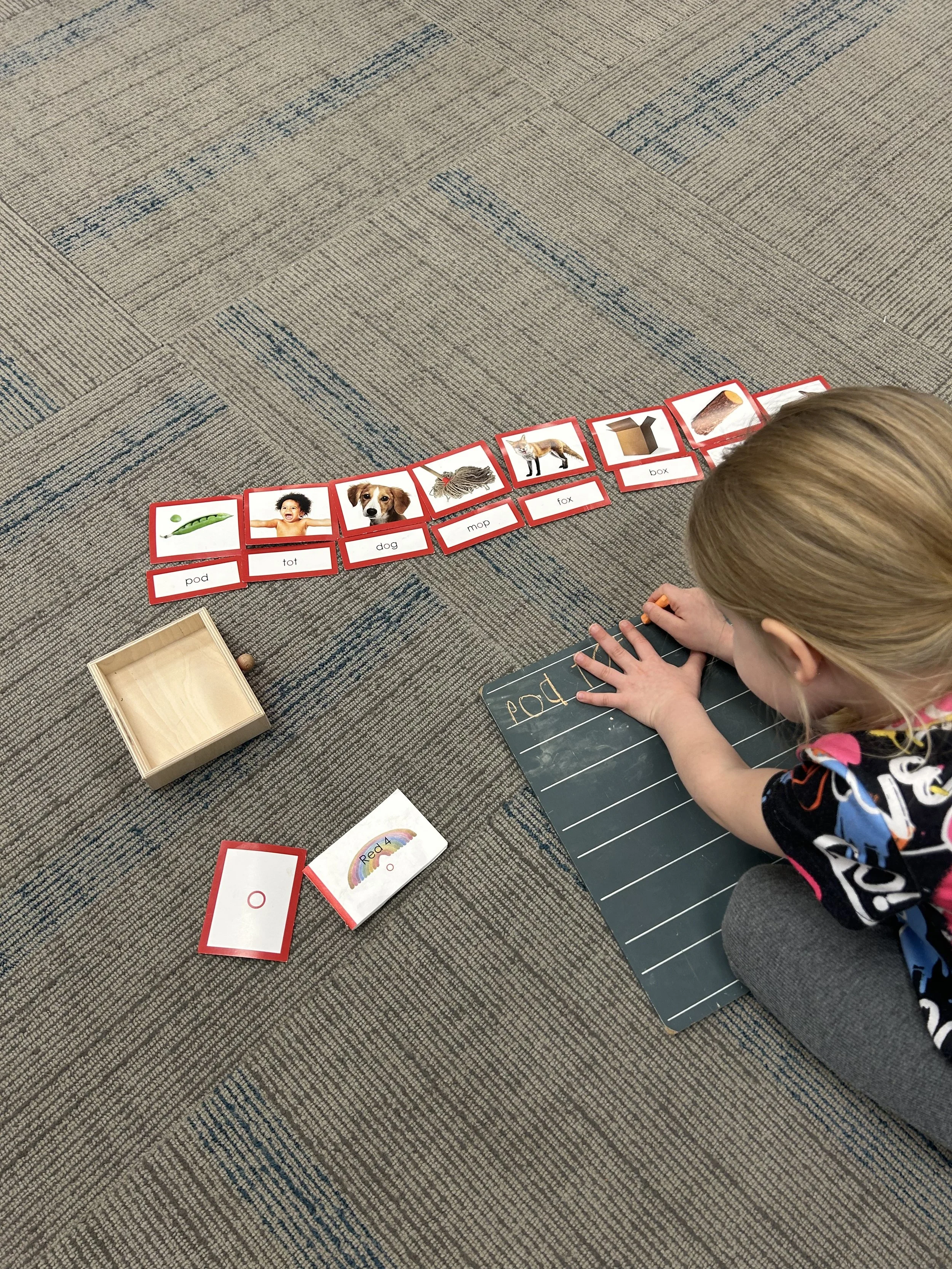
During our literacy workshop this week, the Sparks enjoyed reading the story Snowmen at Night together as a studio. Before beginning, we reflected on last week’s key takeaways, when the Sparks made predictions about the story based on the title and cover illustrations. This week, it was finally time to read the story and the Sparks were excited to discover that many of their predictions were correct, such as snowmen drinking hot chocolate and going sledding! After reading, the Sparks opened their Snowmen at Night booklets and worked on an inferencing actitvity called “4 clues that happened in the book.” They shared wonderful ideas, writing about events like going to the park, having cold cocoa, skating, and sledding. For this week’s literacy goal, the Sparks worked to complete two pages in their Writing Without Tears books. They practiced showing their work to a Guide and reading the words and questions aloud before completing each task. Once complete, they enjoyed choosing a Bob Book or working on the Waseca reading drawers. We will have lots of badges to hand out a the end of the session - the Sparks have been working incredibly hard and showing so much growth in their literacy skills this week!
Quest
This week, the learners engaged in a series of activities focused on developing their business ideas and design skills. On Monday, the learners dove into some data management work by creating a survey. They developed a list of items that their business could potentially sell and were introduced to the concept of behavioural economics, exploring why people make certain decisions when purchasing products. At the end of their data collection, they discovered the top two materials that would sell the most and these are the ideas they will design over the next three weeks. On Tuesday and Wednesday, the learners participated in a game called Guess the Logo, which led to a discussion about the meaning of colours and how colour choices can influence branding and design. For instance, they were introduced to the colour red and how it is used to grab attention, orange is energetic, yellow is attention grabbing, green indicates relaxing and environmentally friendly and blue is a favourite colour among adults, as well as the colour of royalty. Reflecting on what the colours represent, Rebels spent the rest of the workshops refining their logo ideas. The learners began designing their ideal business booths, considering elements such as the placement of signs, decorations, specific products, and labels for special work areas. Later in the week, the Rebels took part in a voting process. Each learner submitted their logo name and design ideas, and the studio voted on the company designs. The selected business names were The Key Day, The Making Shop, and Lemonade. To conclude the week, the learners began creating signs for their businesses. They used the two main colours voted on earlier in the week and incorporated their logo and business names as well.
French Workshops
This week, we kicked off our French workshops playing Linkto, a memory and vocabulary association game. Learners participated in a dice game where they rolled a die with food categories (bread, fruits, vegetables, etc.) and had to find a matching plastic food item from Mme. Marianne’s basket. Tuesday, we continued learning and practicing vocabulary through songs:
J’aime les fruits : https://www.youtube.com/watch?v=nJ03KjwiIV
La ronde des légumes : https://www.youtube.com/watch?v=NTPQJUugCJM
Dame Tartine : https://www.youtube.com/watch?v=lEEcEDoc59o
On Wednesday, Rebels translated and identified new images that Mme. Marianne added to the Seek-a-boo game. Thursday’s workshop saw Rebels in the gym to play Seek-a-boo. When the French Guide said a word in French, learners had to find the image that matched the spoken word. Great work, Rebels!
Geography
As part of our South America workshops, the Sparks have been exploring the amazing landmarks found across this beautiful continent. We looked at pictures of famous landmarks together and used a globe to discover where each one is located. The Sparks then took part in a creative activity where they drew a picture of themselves visiting one of the landmarks. They also shared their thoughts on why they would like to go there, which led to some wonderful conversations and imaginative ideas.
Additional Highlights
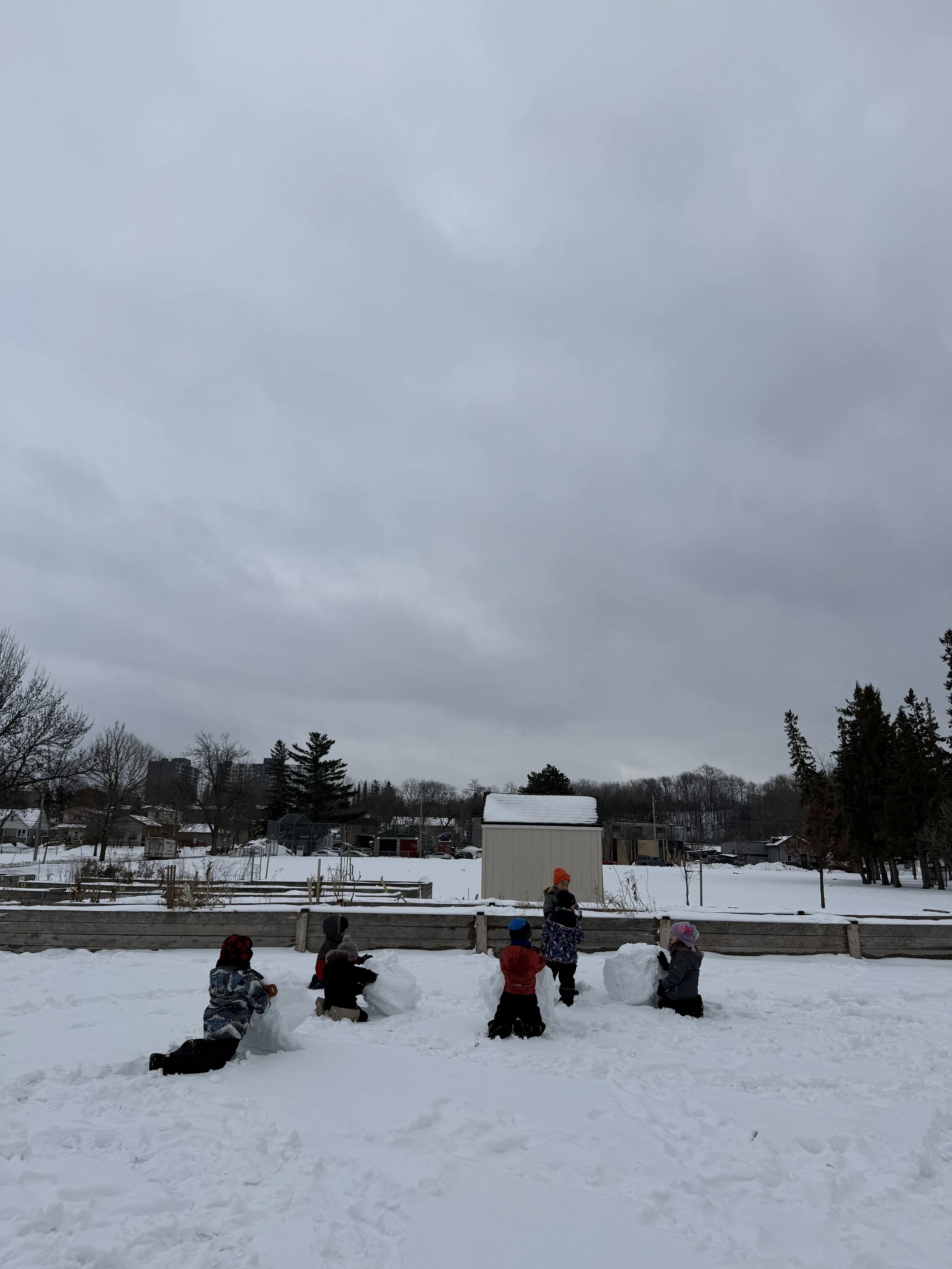
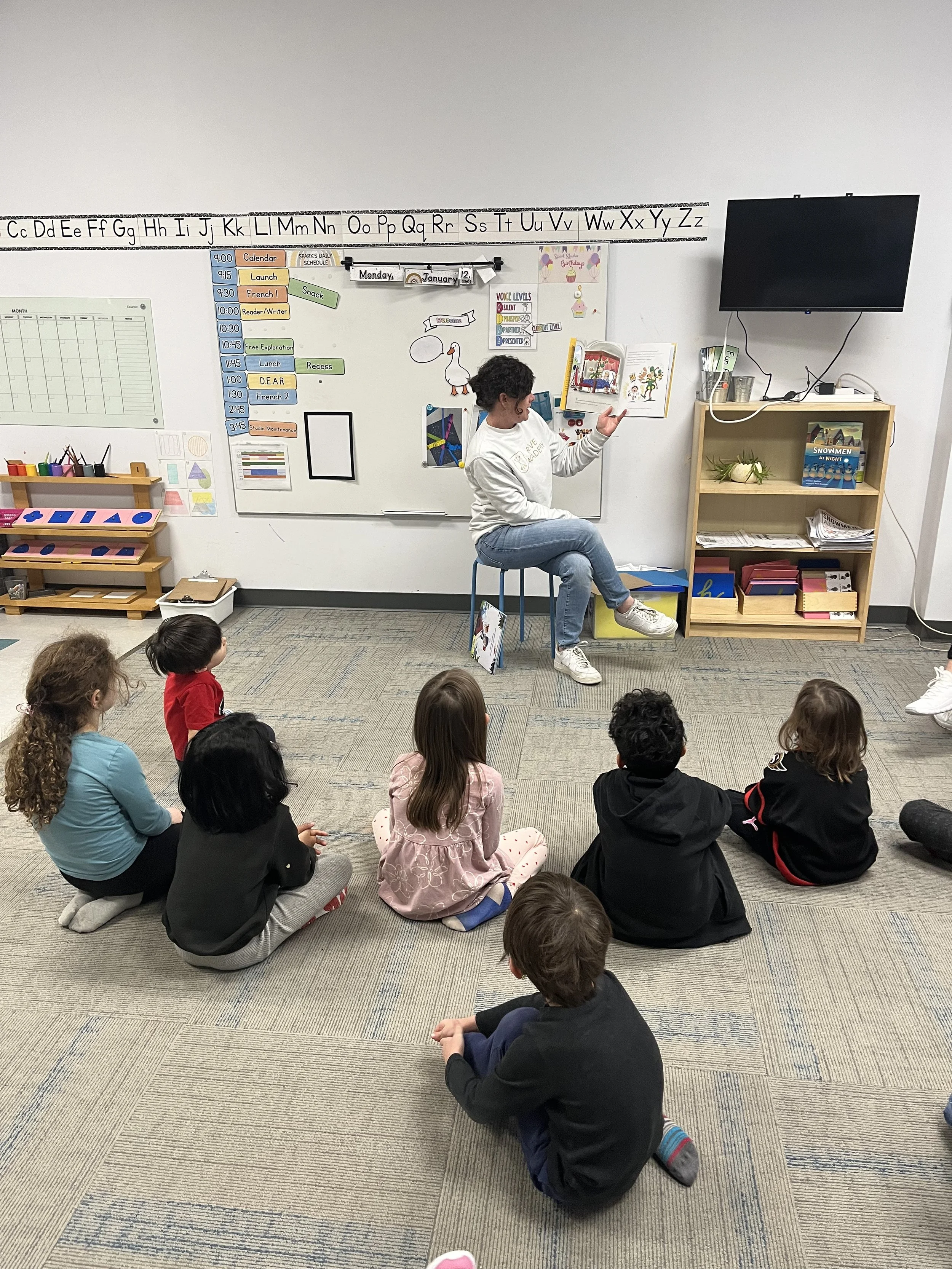
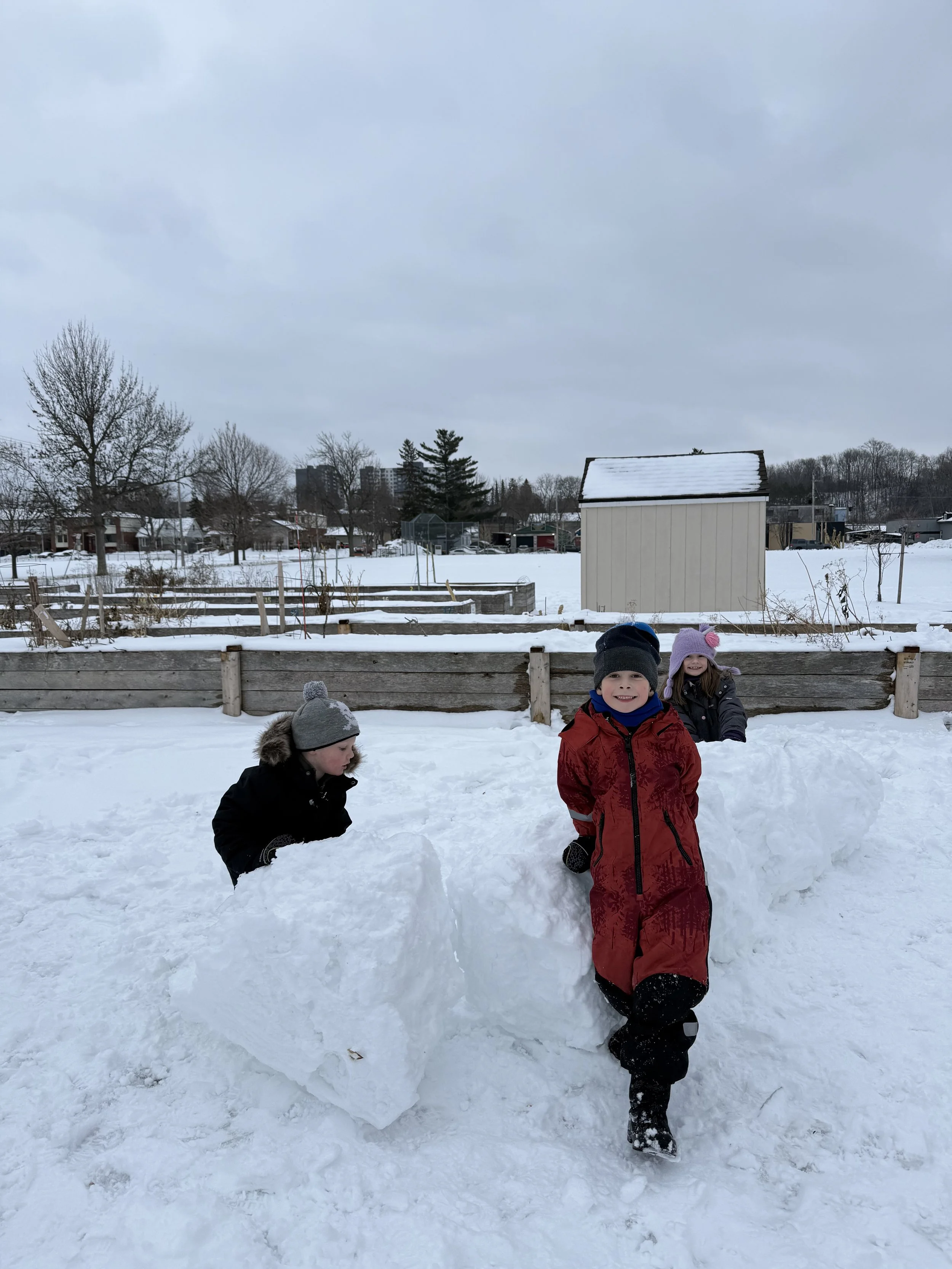
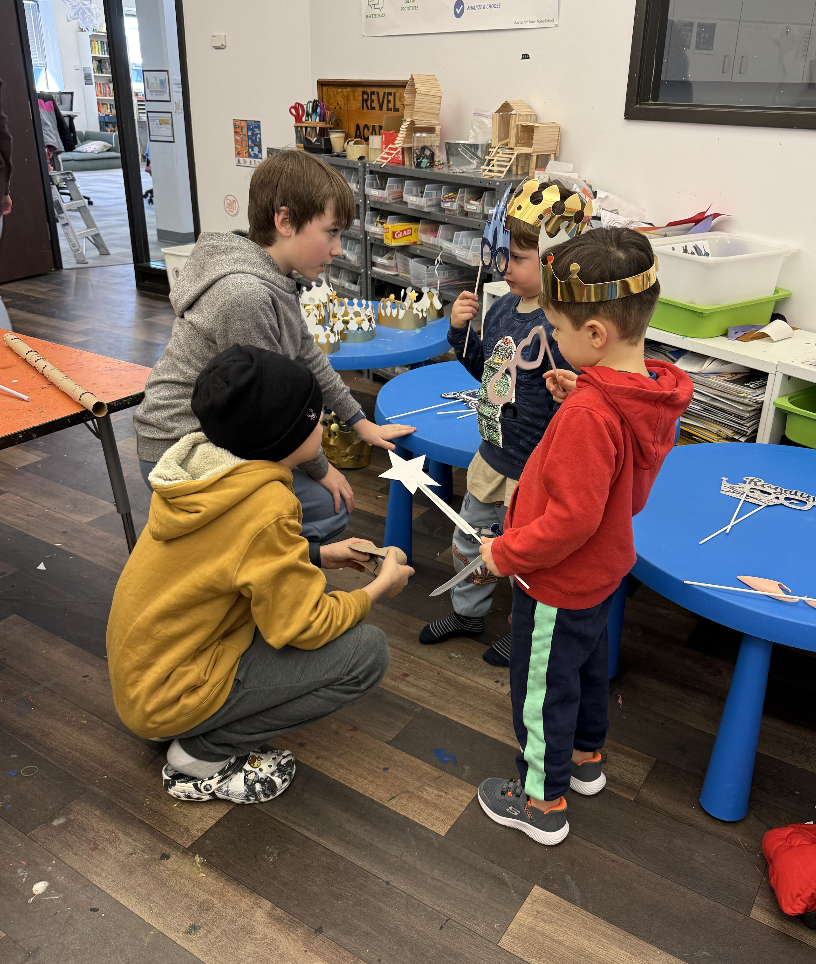
This week, our mystery readers joined us once again! To kick things off, we were excited to welcome the wonderful Ms. Erin. She read three engaging stories: It Started with a P, The Book That Almost Rhymed, and Hank Goes Honk. Later in the week, we were joined by three family members who also came in to read and share special stories with the Sparks. Some special facts about our mystery readers were: having a pet pig, travelling many countries in 2 years and their favourite colour is pink. Can you guess who we had in to read? The Sparks have been spending lots of time at the snow hill. Using shovels to build slides and create little “hibernation” spots, they’ve been eager to get outside after lunch and enjoy the winter fun. This week was also extra special as we celebrated a learner’s birthday! Cupcakes were enjoyed by all, and our birthday friend shared special moments from each year of their life through photos. It was a wonderful way to celebrate and learn more about the birthday Spark.
Discovery Studio
Mindfulness and Launch
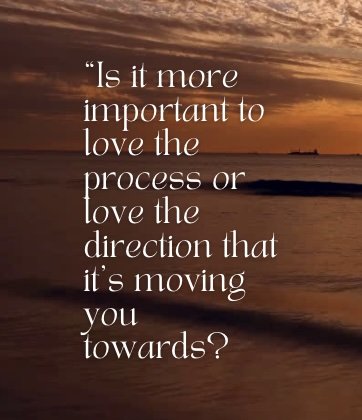
We kicked off Week 2 with a round of character call-outs, as we had run out of time to do them at the end of our Town Hall in Week 1. We agreed this would be a great place to start for Mindfulness on Monday morning and shared some special moments Rebels experienced in the Studio from the previous week. For Launch, we listened to a Kier Gaines episode on “using joy wisely”, reframing self-talk such as “I don’t want to do this because I don’t like it” and “I don’t want to do this because its hard,”. Kier says “I don’t have to find joy in every part of the process, if I waited to find joy in all the work that I do, then I’d never get anything done,”. Rebels reflected on examples of things they don’t like to do and things they find very difficult to do on their own that takes joy away from the learning process. Rebels then discussed the question, “Is it more important to love the process or love the direction that it’s moving you towards?” Rebels agreed that while the process of doing Khan, Lexia or other academic goals doesn’t necessarily bring them joy, they do love the outcome - the badge, the feeling of accomplishment when we learn a new skill or new concept on our own, the “Aha!” moment, or seeing a completed “actual column” on our Google Goal Sheets at the end of the week. Rebels agreed that while it is important to find joy in the things we do, it’s not realistic to love every single thing we do - and that’s okay! There is power in acknowledging that the process doesn’t always bring us joy, and owning that can help us build up the resilience and grit needed to experience healthy struggles along our learning journeys.
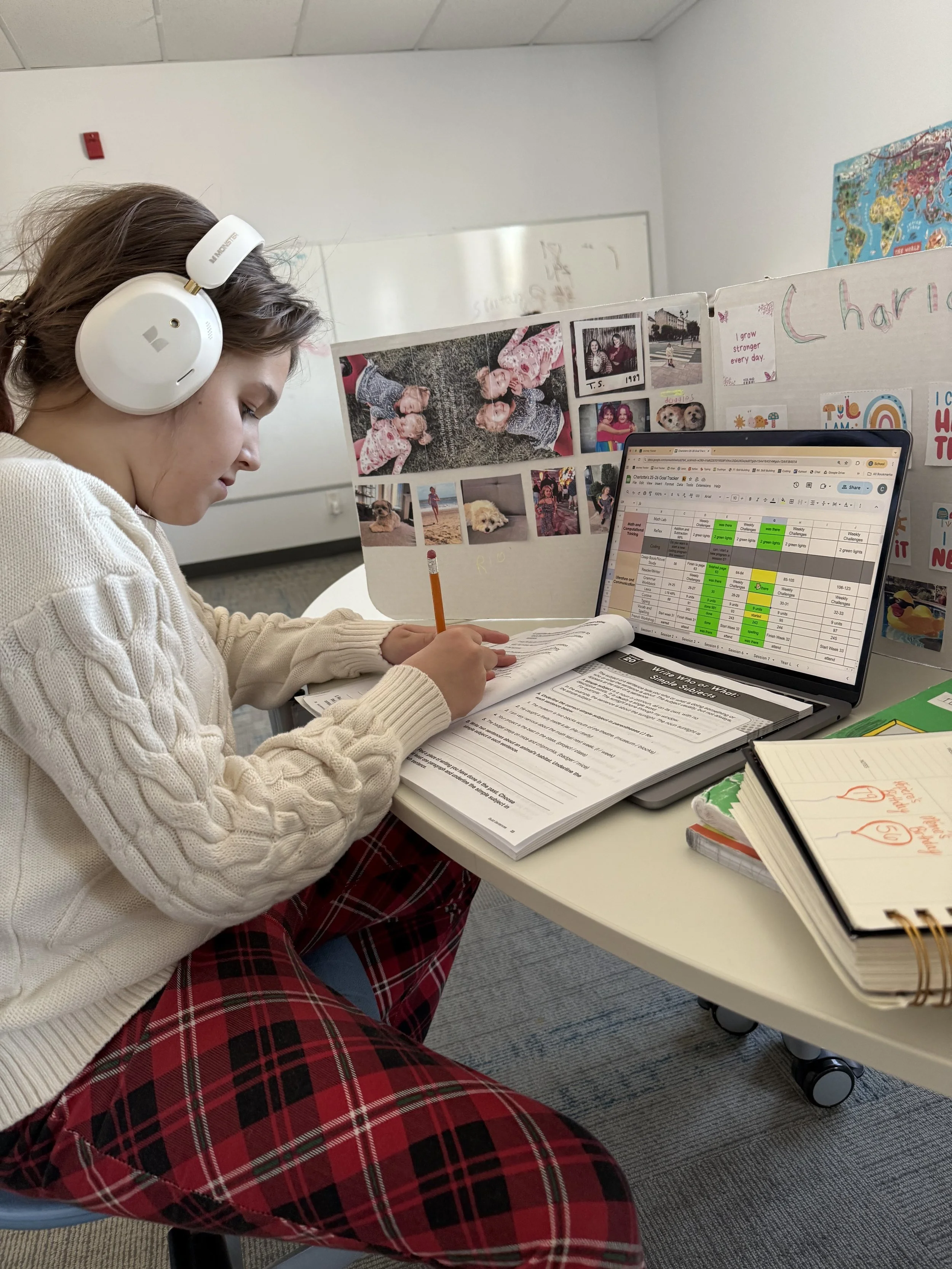
Tuesday’s mindful block gave learners the opportunity to do some zen doodling. At launch, Rebels watched this TEDEd video about democracy in Athens. Together we used a Venn diagram to compare and contrast the representative democracy we know today and the direct system that originated in Greece in 500 BCE. Rebels noted key differences in who was eligible back then to participate compared to now and also unpacked what a majority versus minority government looks like in the House of Commons. Wednesday morning we gathered to play the daily New York Time puzzles. Wednesday’s Squad Chickens offered Rebels the chance to equip and connect! Rebels checked in on each other’s goal sheets, but also asked each other what their favourite TV show or movie was and if they could order one dessert at a restaurant, what would it be? Squads were pleasantly surprised how many similarities they shared when it came to movies, tv shows and sweet treats! Thursday’s Thank You For Sharing included heated discussions about whether sushi or mac and cheese was the superior meal, what Rebels loved most about themselves, and how they would handle a situation where a friend did something they disagreed with. Feel Good Friday’s Boomwhackers led us to play a song from Disney’s Wish soundtrack! Our current events report included a special breed of octopus that mimics other animals in the ocean, looking at statistics from this year’s cold season and an article about our immune systems, and a special feature on a nine year old Ukrainian gymnast who received a bronze medal this week after losing part of her leg in the war two years ago.
Reader/Writer
This week in Reader/Writer workshops, Rebels in Draw and Anchor continued to work on their Venn Diagrams that compare and contrast life in Athens and Sparta. To compliment our Quest theme this week, Rebels took a deep dive into Spartan ways of life and their style of government. Learners in Aim and Release completed their digital workbooks, which compared and contrasted Athens and Sparta in a variety of ways (ways of life for boys and girls, education, government, geographical features, religion, Gods they worshipped, etc.) and came together to discuss whether or not they would rather live in Athens or Sparta at the age they are now and why? Next week, Rebels in both groups begin to create and design their mythical creatures and monsters! We’ll begin by exploring a variety of Greek mythical creatures, how they fit into Greek myths and analyze important features that make them authentic to this time period.
Math Lab
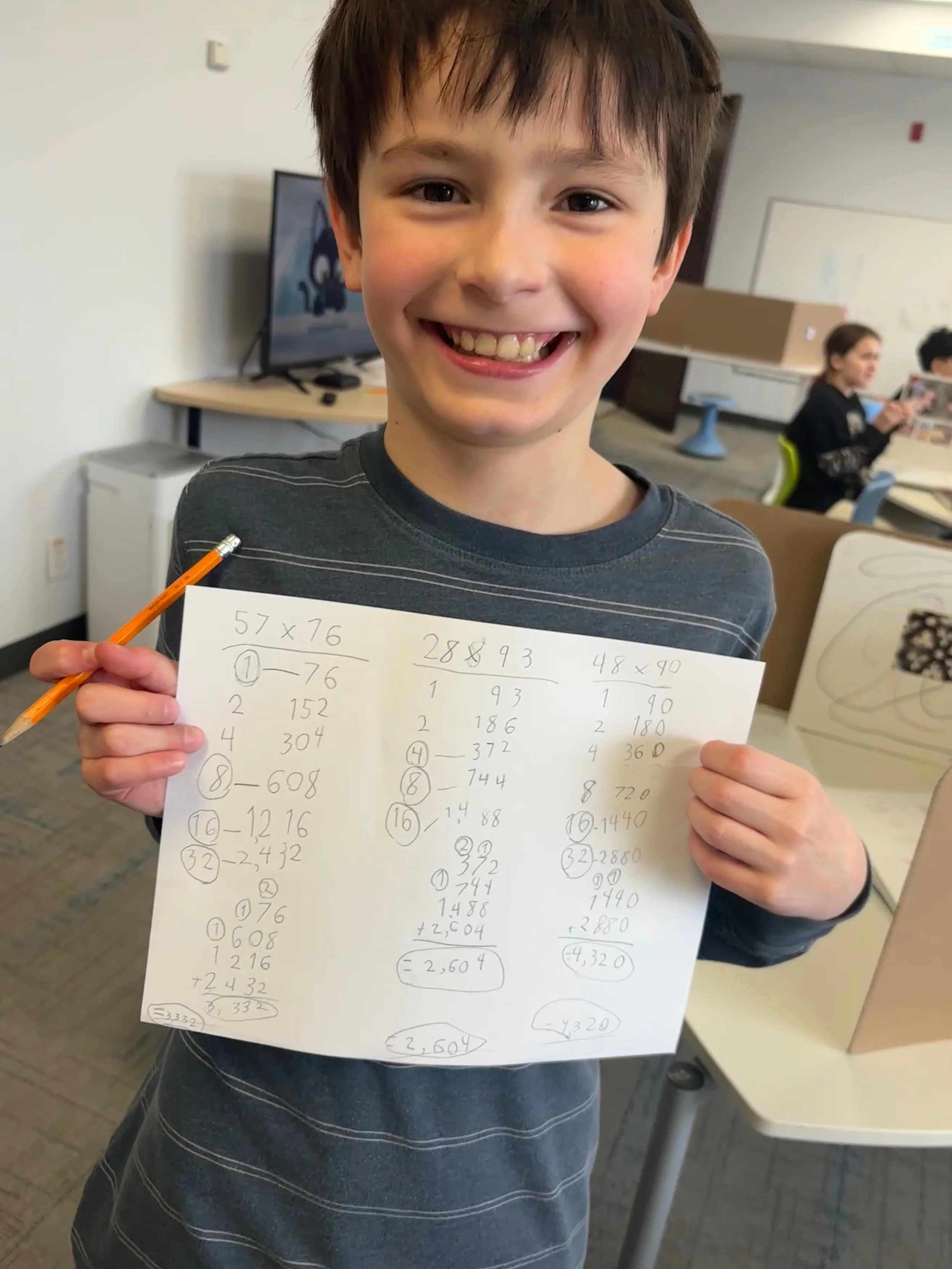
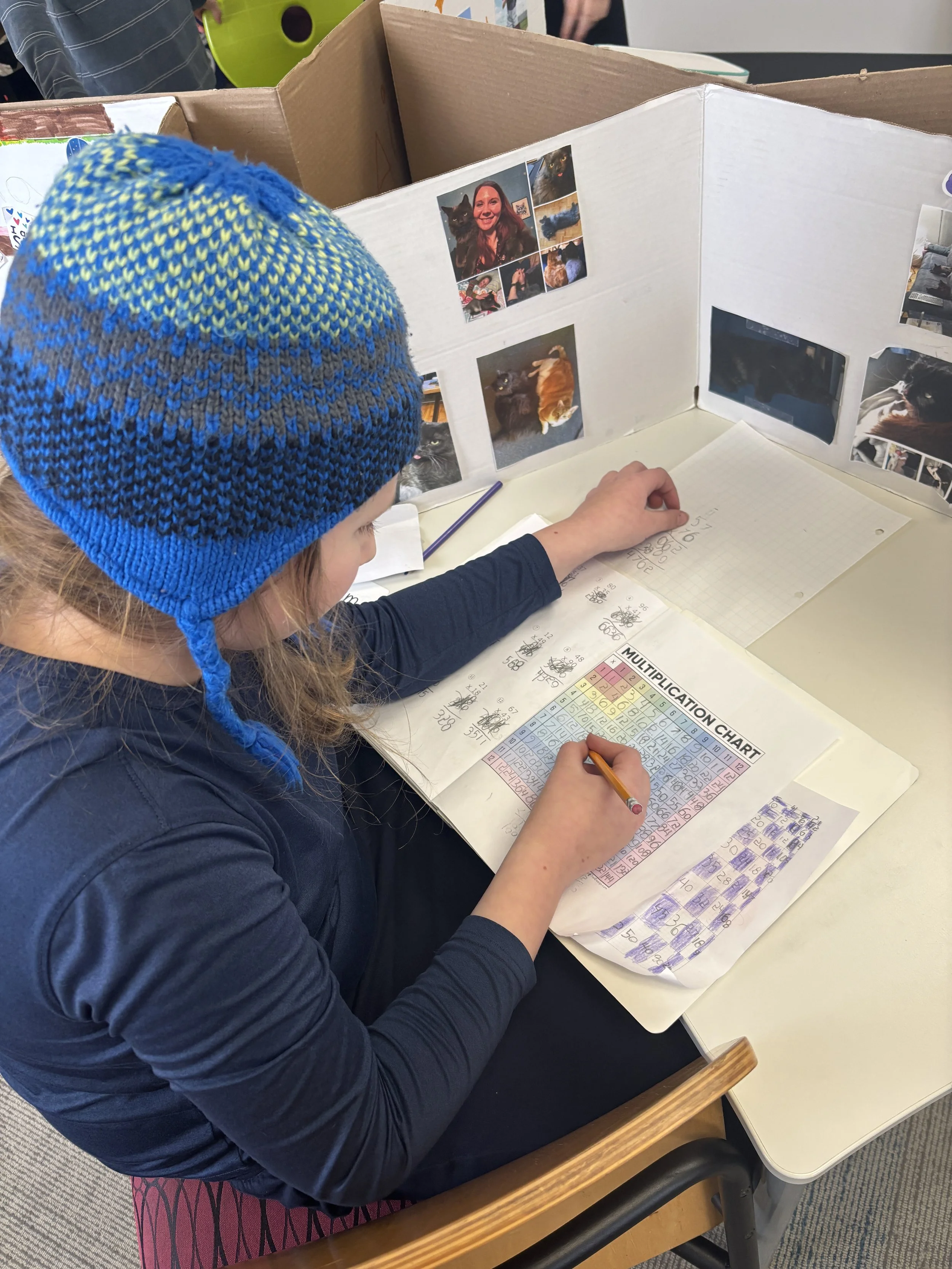
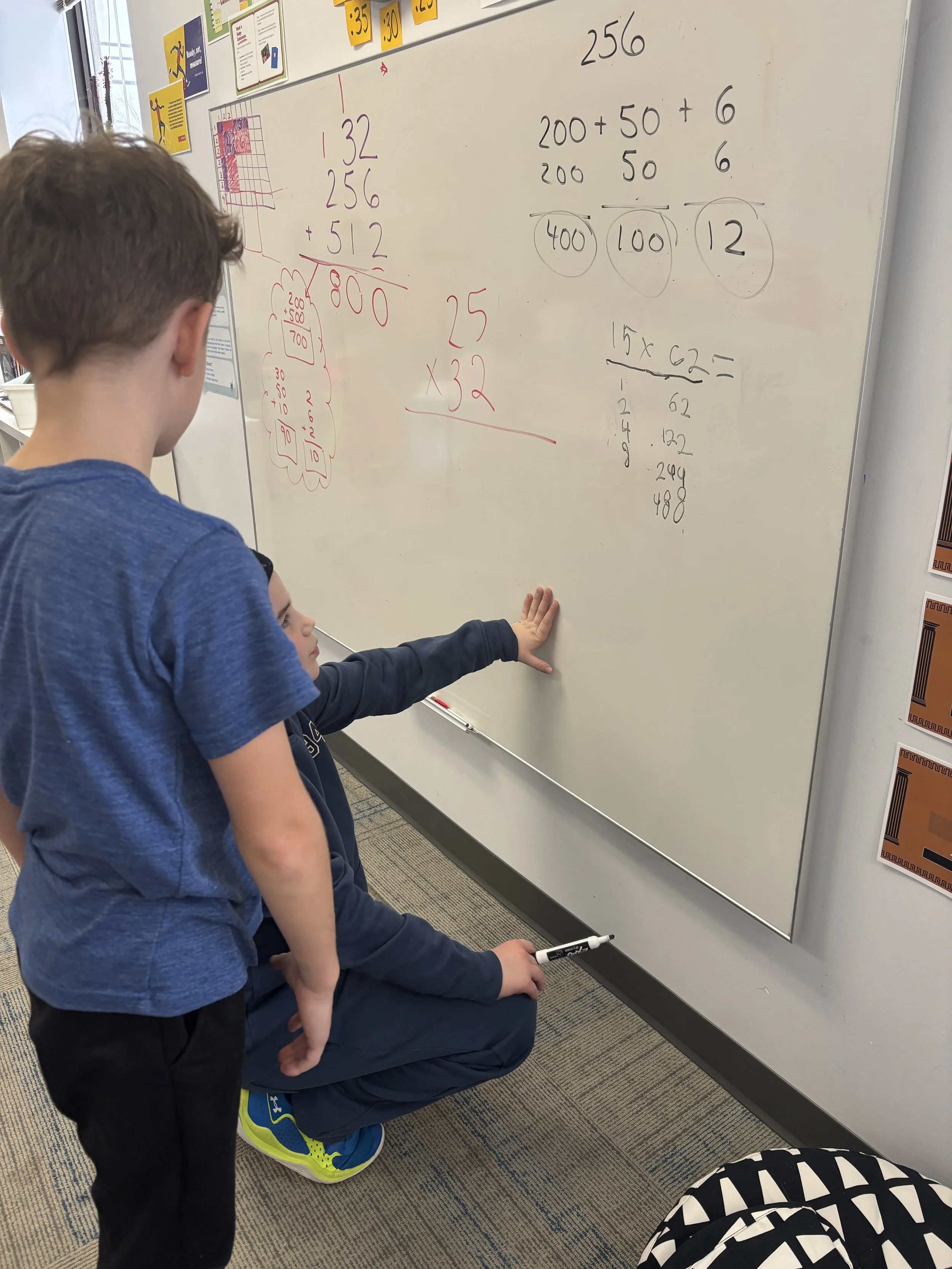
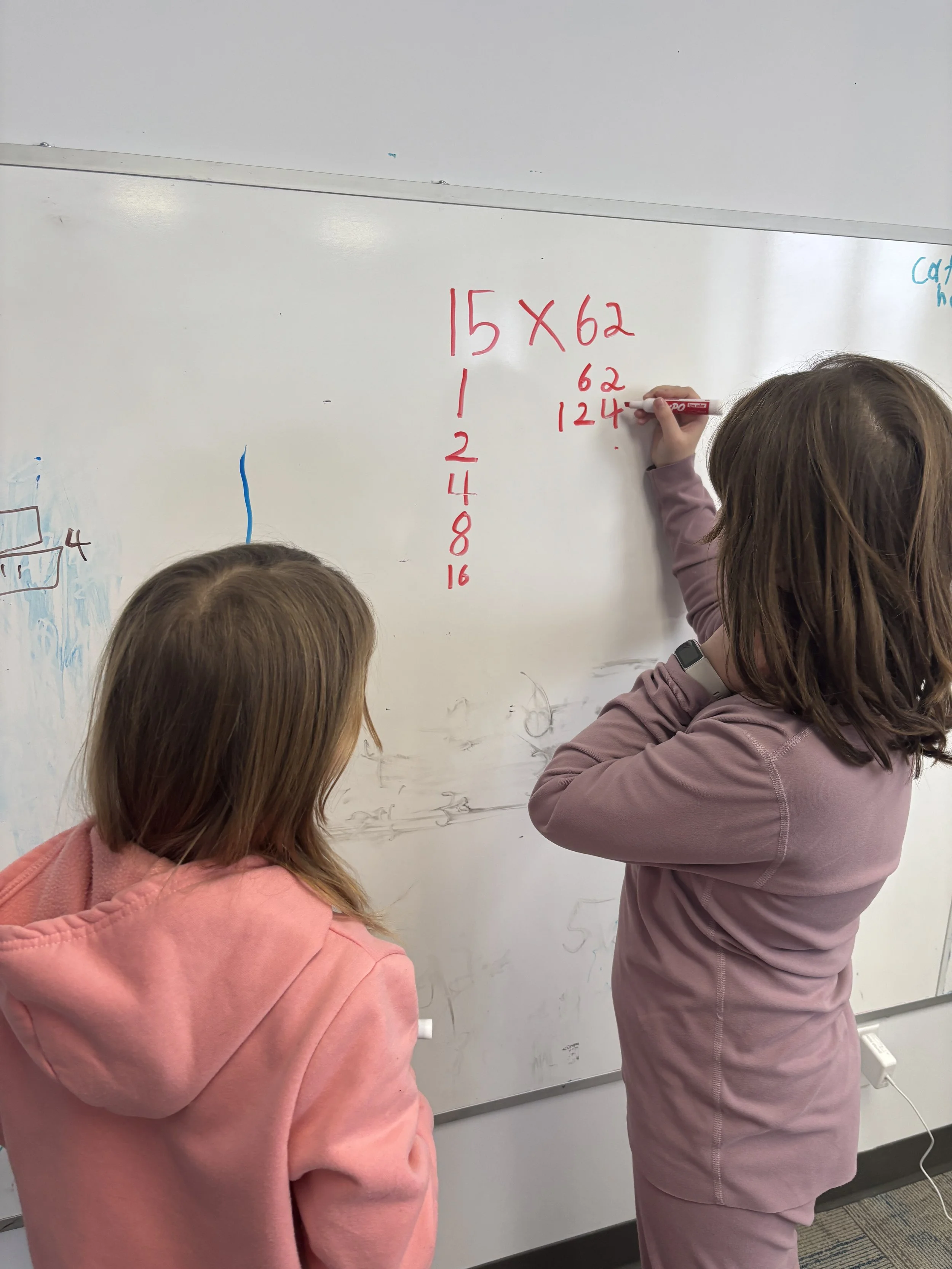
Rebels tried an ancient Egyptian multiplication procedure this week before diving into work with the multiplication chart. This involved taking one factor and breaking it into friendlier parts and then using a doubling system to be able to identify smaller partial products which they could then add back together. Additionally, both groups had tasks involving multiplication charts! On Tuesday with Group 2, Rebels worked to complete the standard multiplication chart showing all of the products for facts 0-12 in rows and columns and also tried completing a more visual chart showing the product sizes in proportion to one another. They also practiced using the standard algorithm for multiplying two digit by two digit numbers. On Thursday with Group 1, we focused on skip-counting and multiples, using patterns we already know (like 2s, 5s and 10s) to help us fill in the standard multiplication chart.
Civilizations
This week we learned about the Phoenicians - the greatest sailors of the ancient world! Rebels mapped the main region of Phoenicia near the cities of Tyre and Canaan, as well as other regions around the Mediterranean Sea to show Phonecian settlements. We heard about the development of ancient glass blowing and the importance of establishing trading of such goods, as well as special purple-dyed wool. Apparently, the city of Tyre had an infamous stench due to the smell created by boiling snails called murex to get the purple colour! We discussed which skill the Rebels would focus on if they were an ancient Phonecian: sailing, hunting or fighting? Additionally, they had a long conversation about which aspect of North American trade has had the biggest effect on the world: cars, technology, or culture? Lastly, we ended the workshop this week with a fun challenge: folding an origami boat!
French Workshops
This week in French, we focused on common kitchen and restaurant vocabulary. To reinforce our learning from this session so far, learners completed translation exercises, crossword puzzles, and played 2 Blooket, a game using phrases commonly used when ordering in a restaurant. We also went to the gym for a game of Seek-a-boo, where learners had to run to find images that matched the word spoken by Mme. Marianne.
Quest
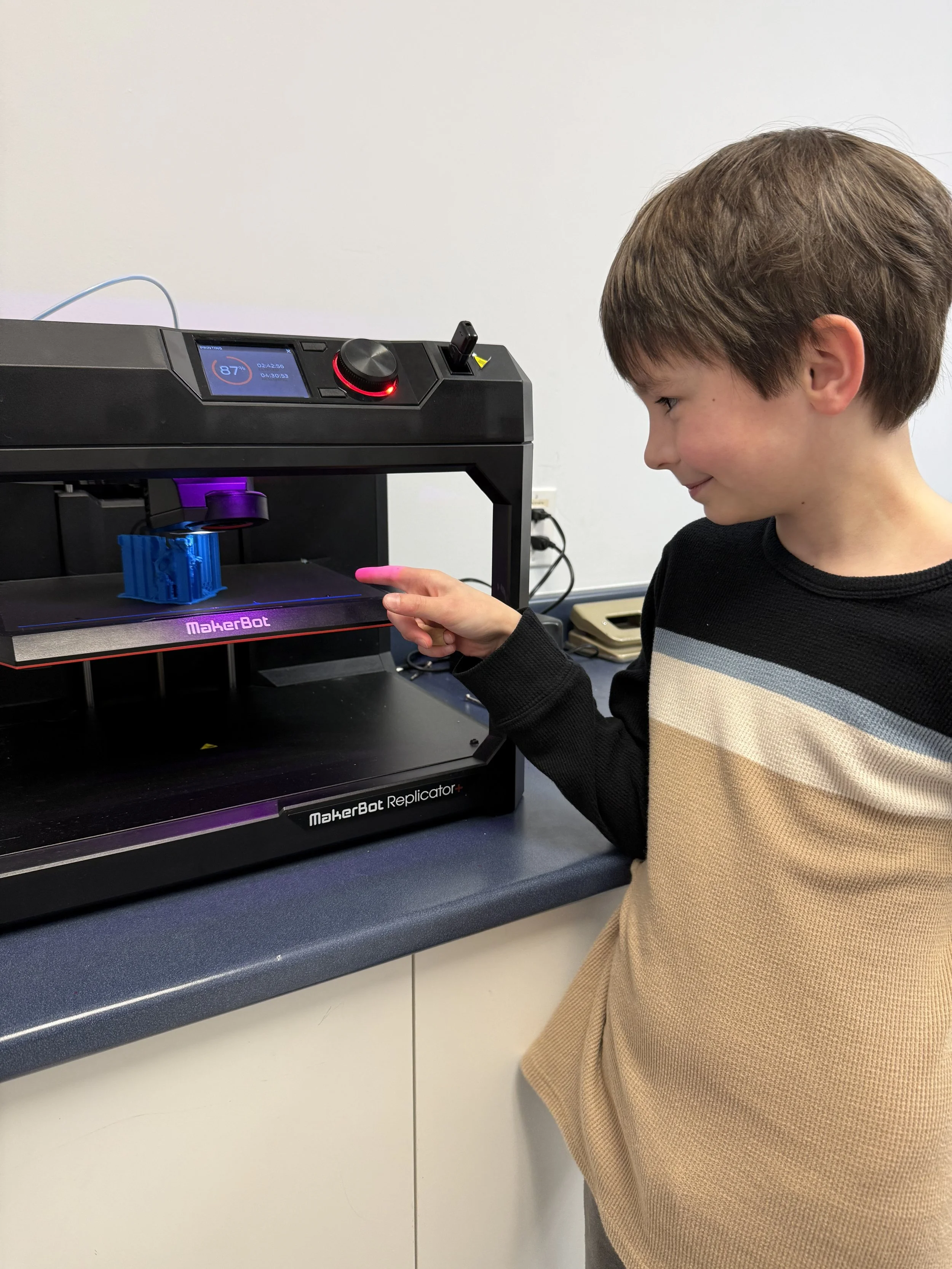
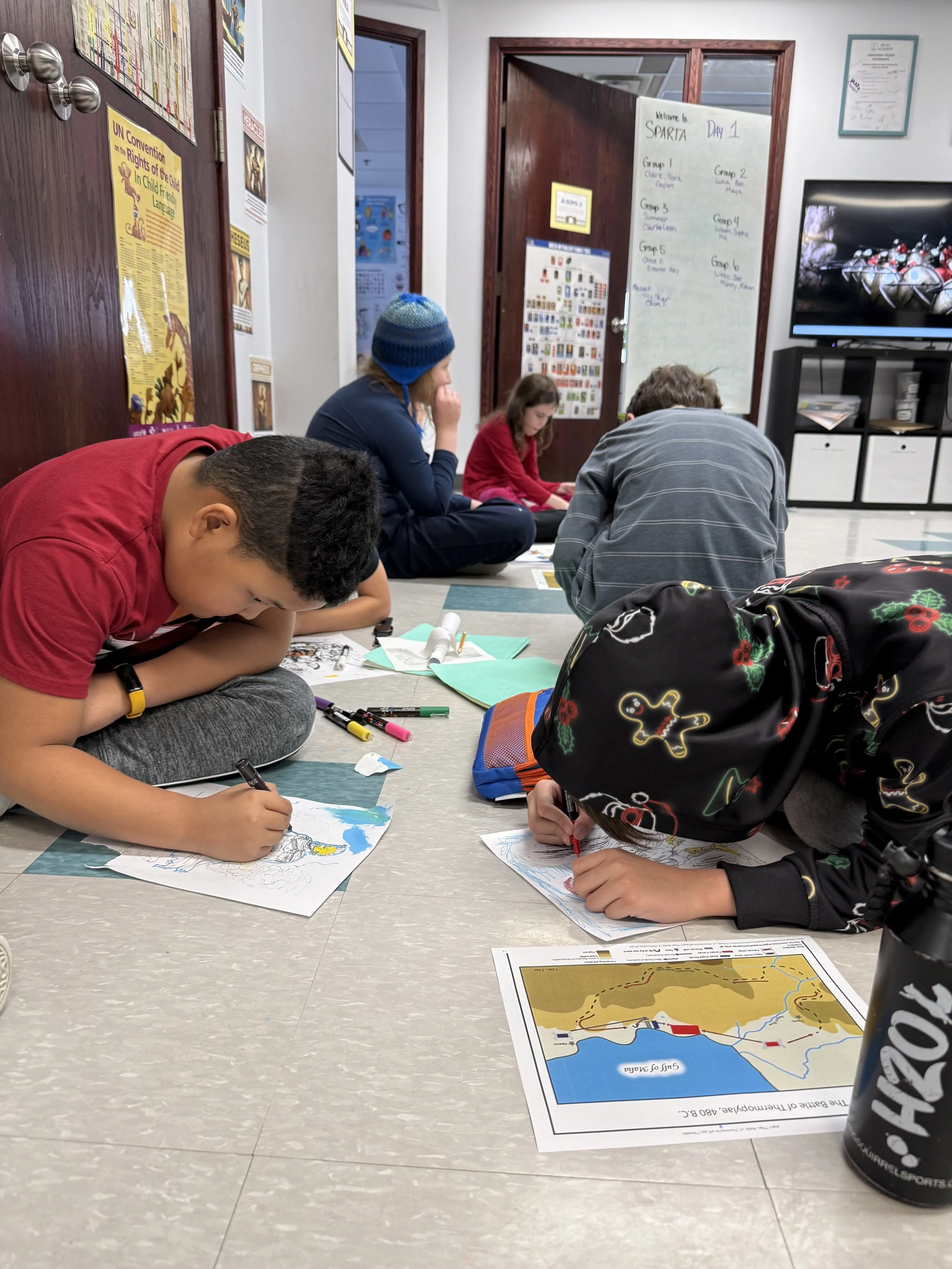
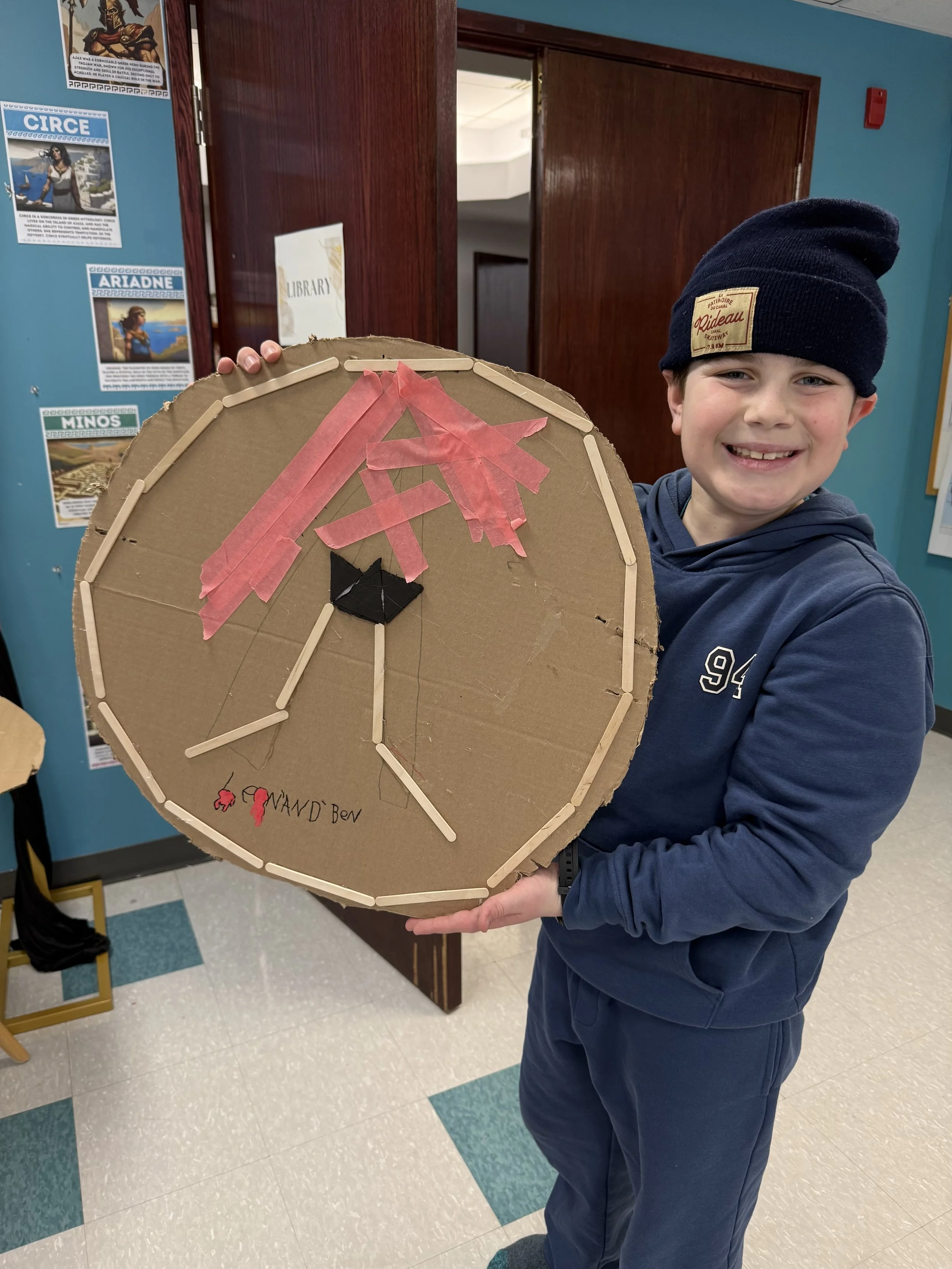
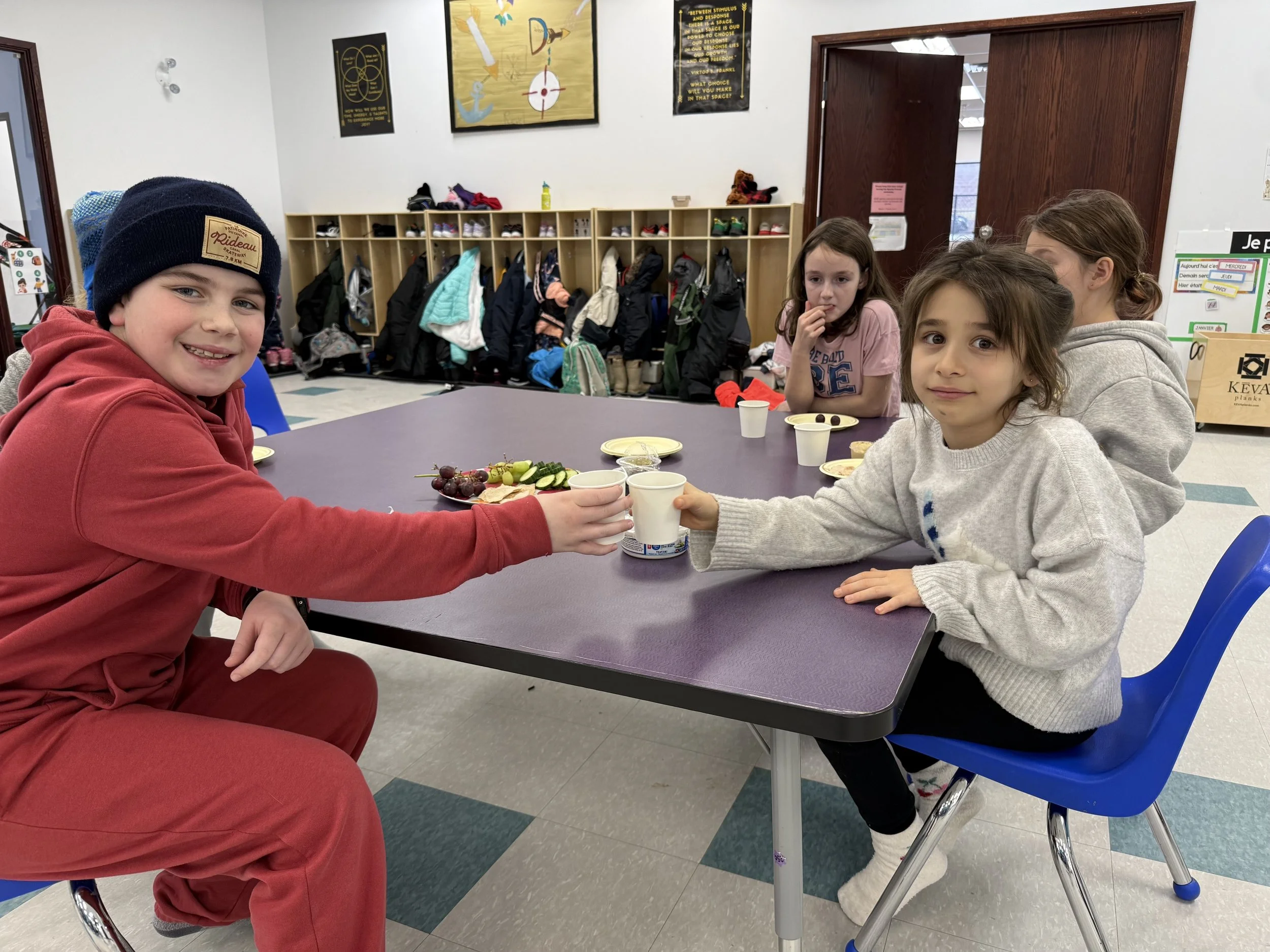
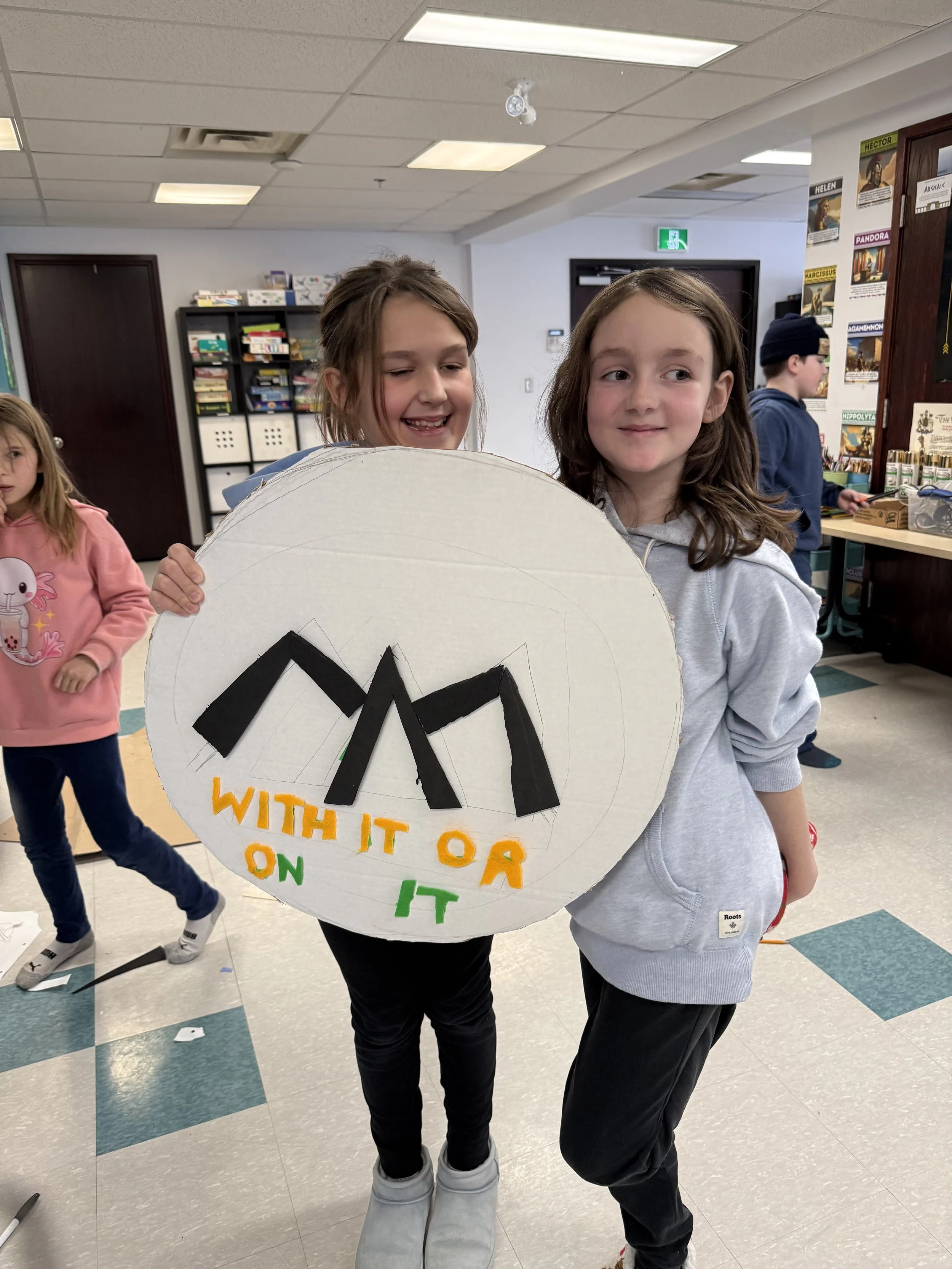
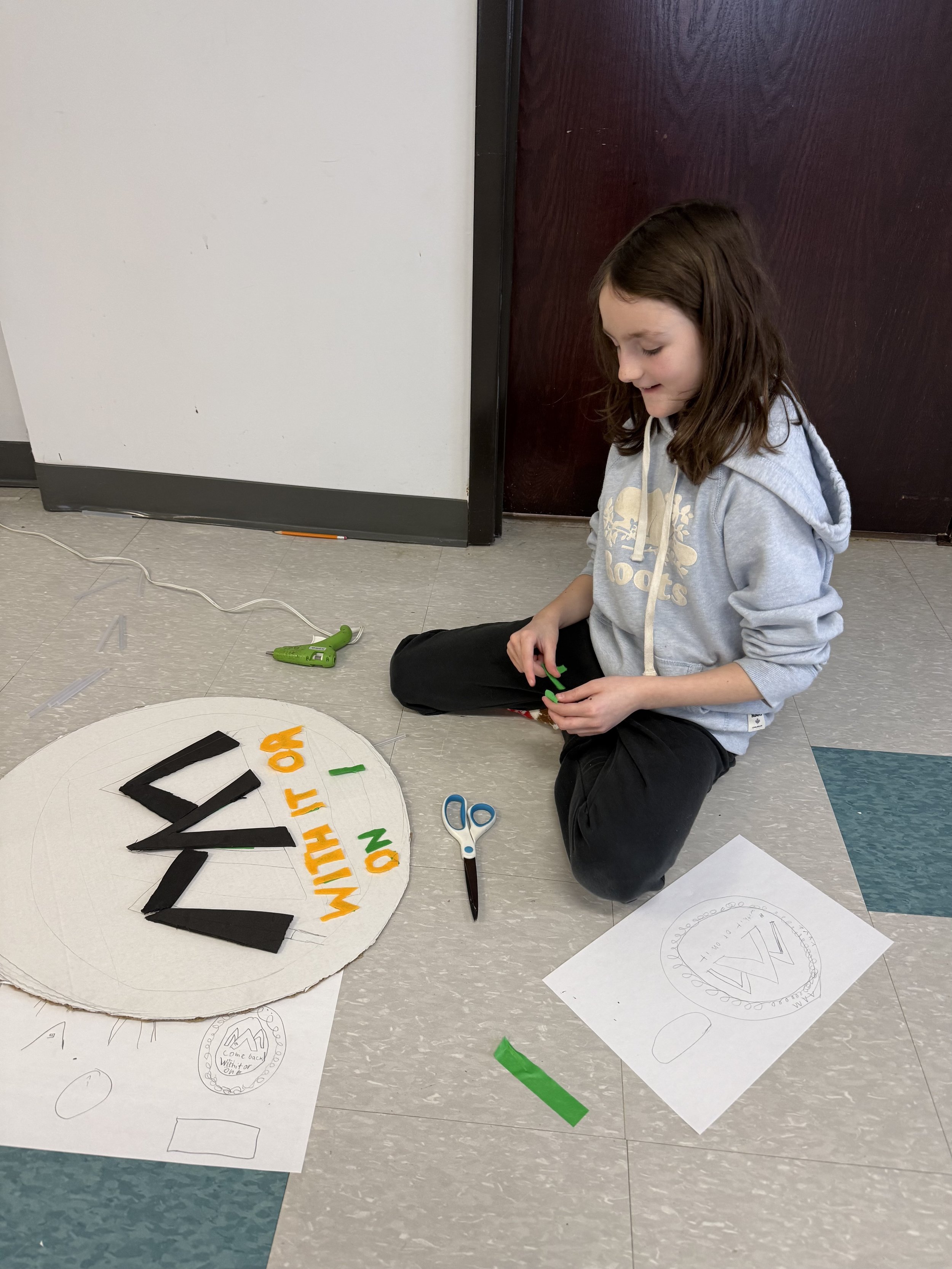
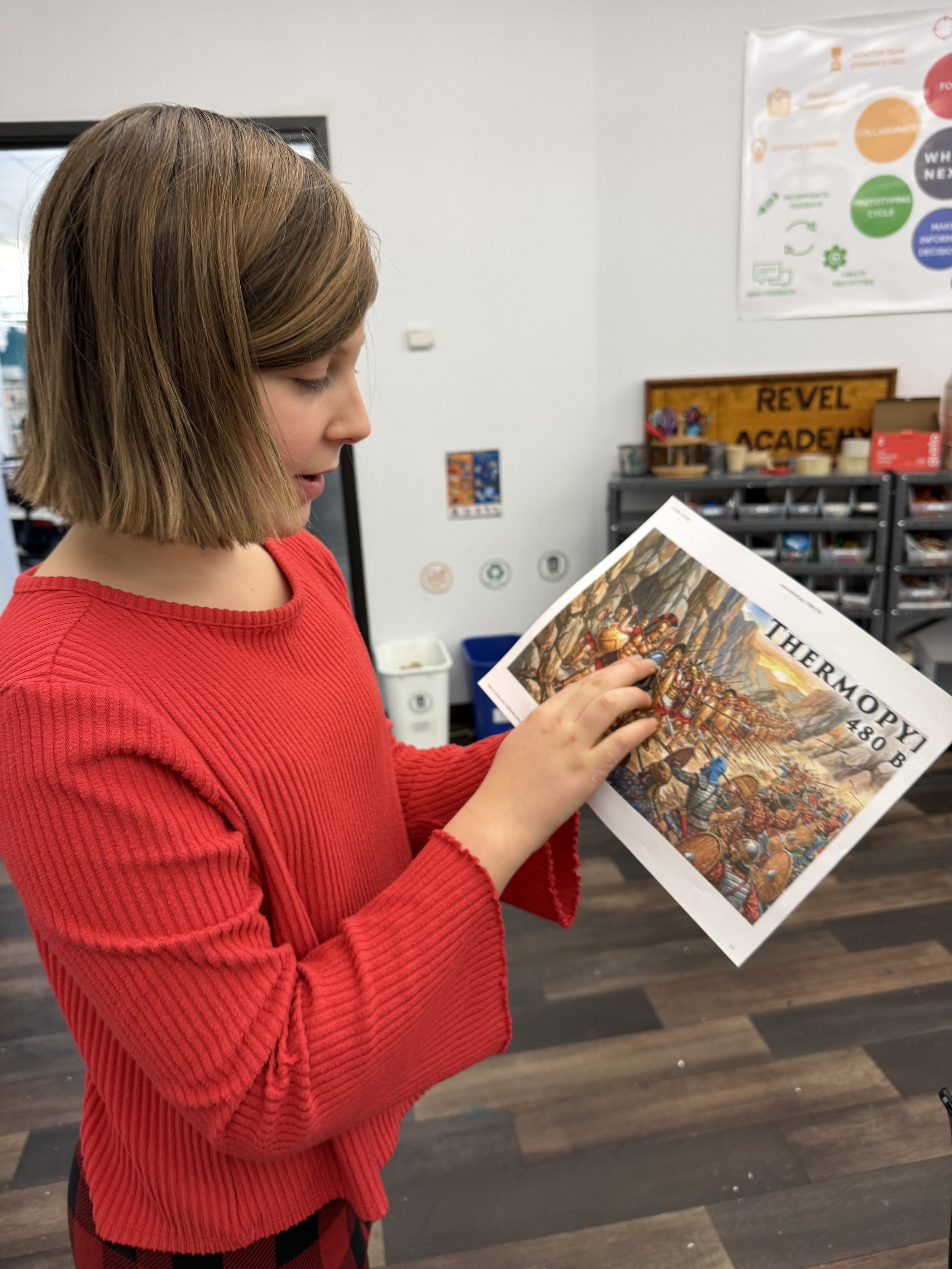
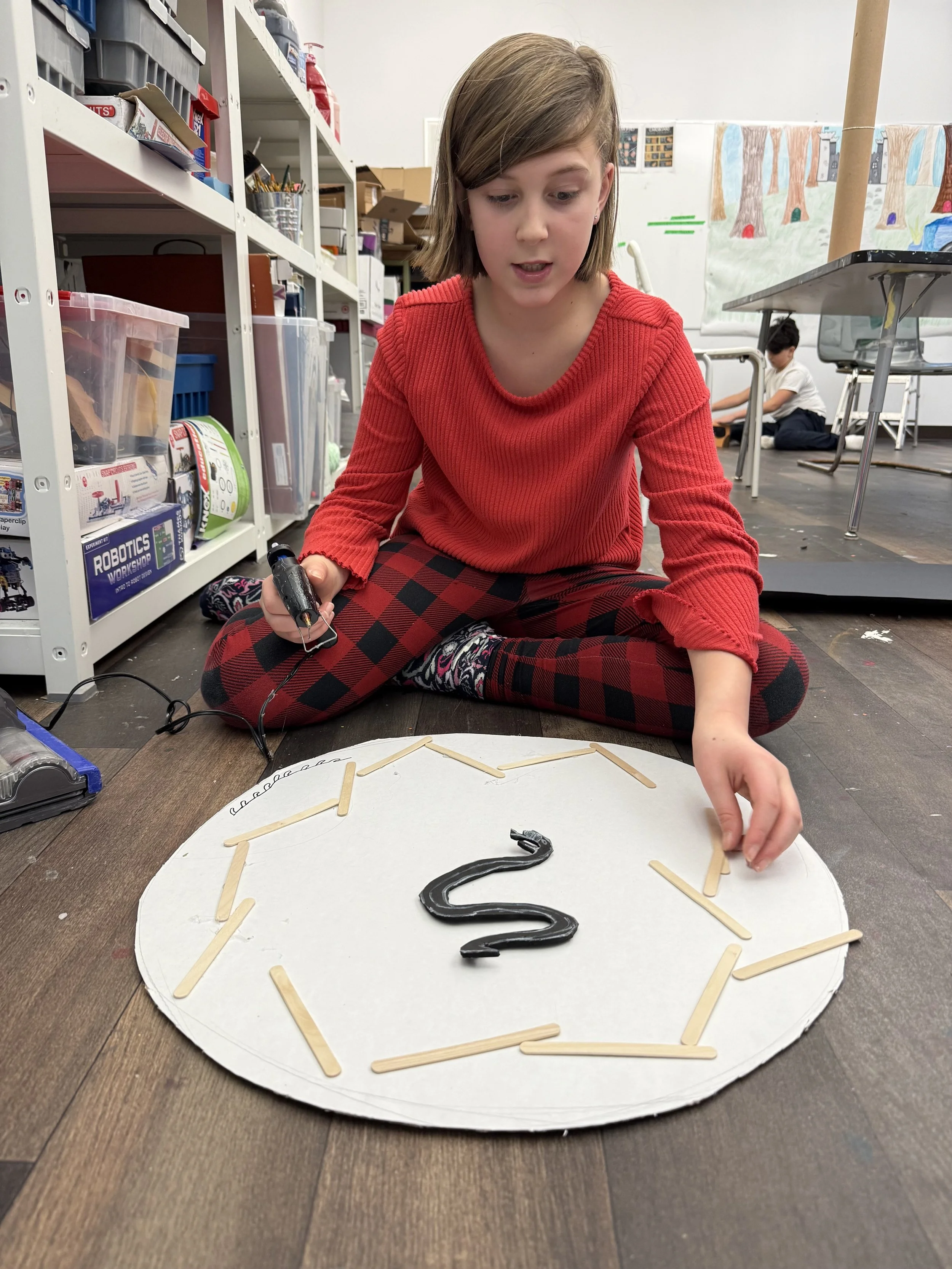
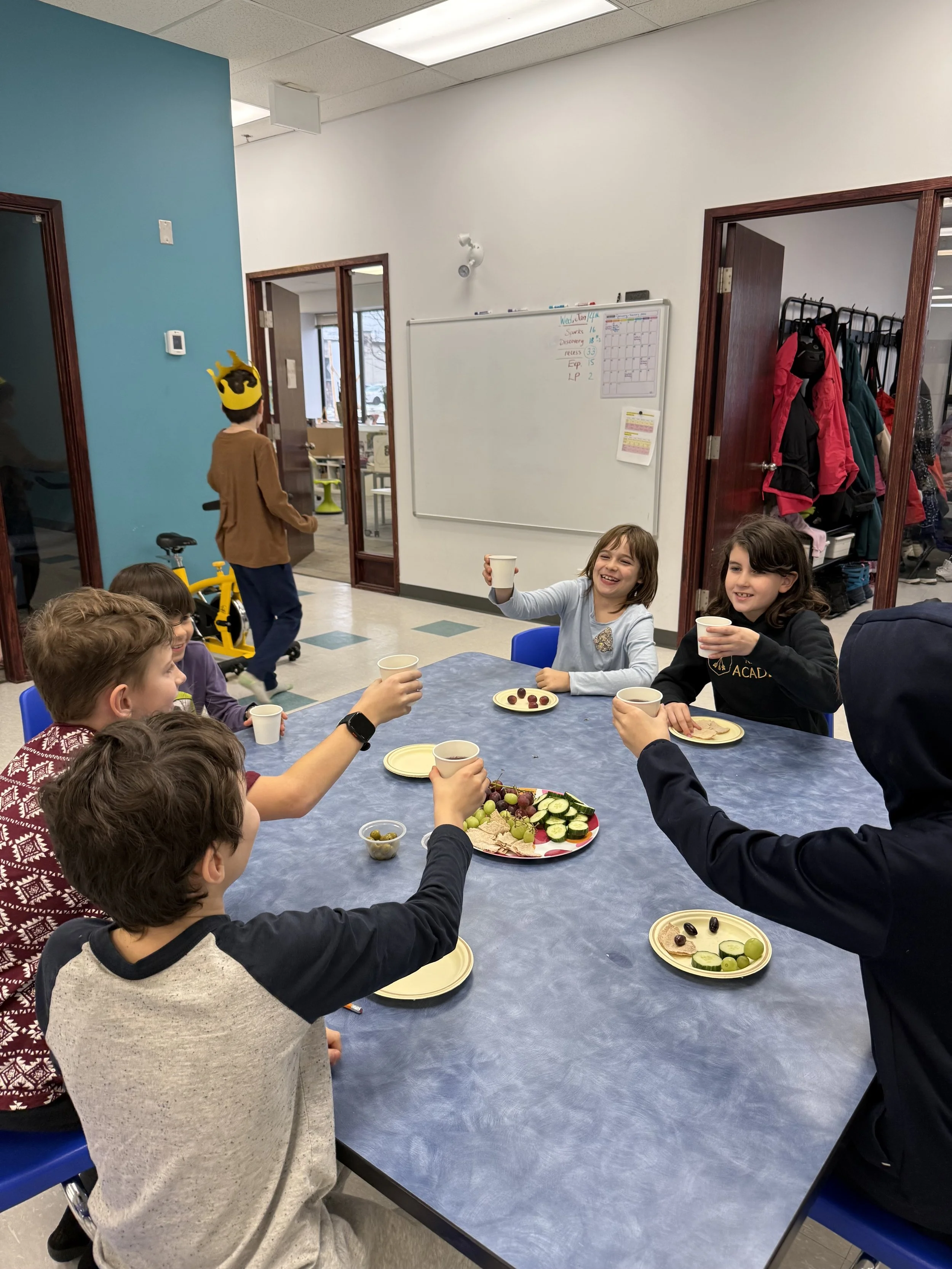
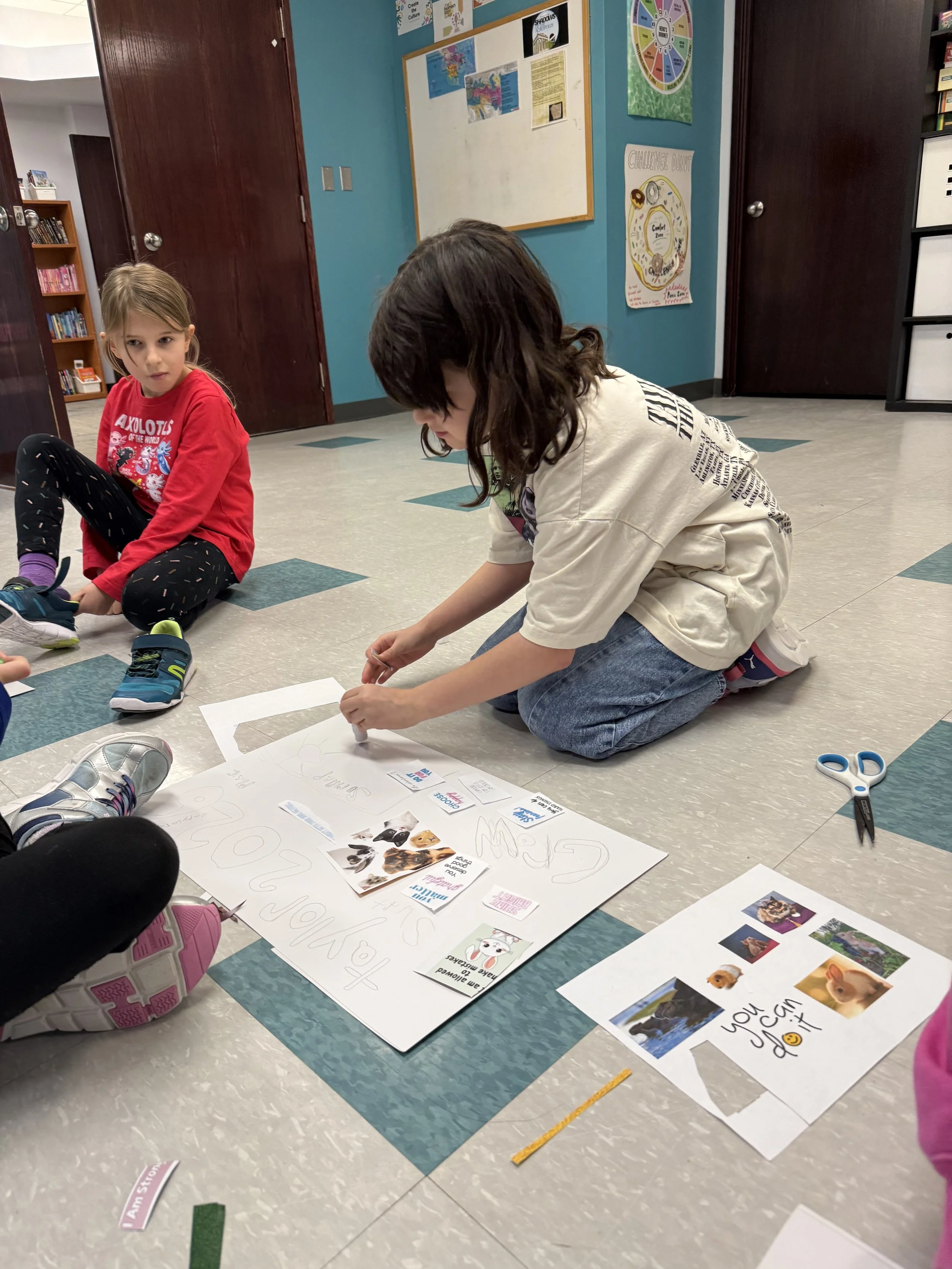
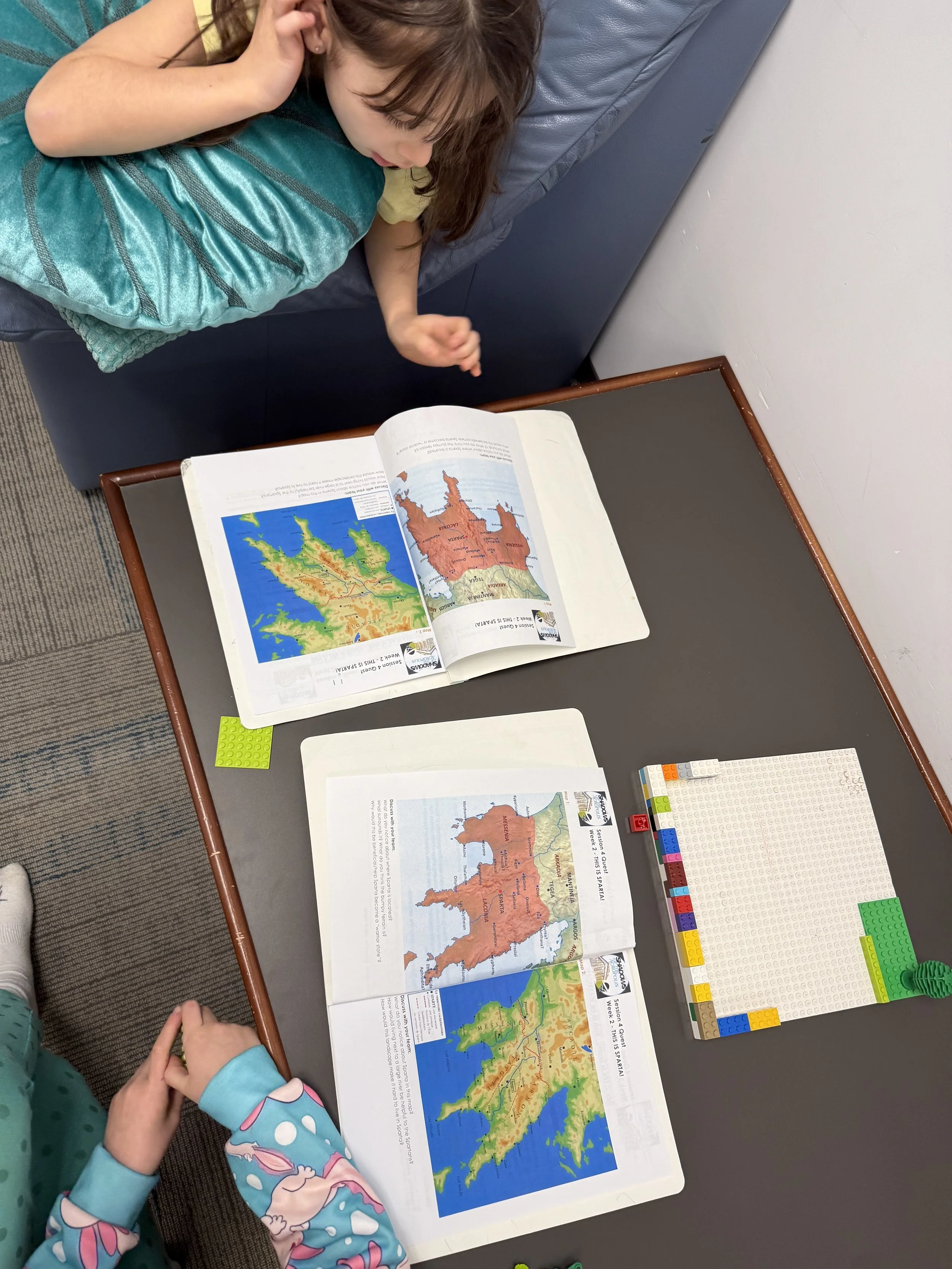
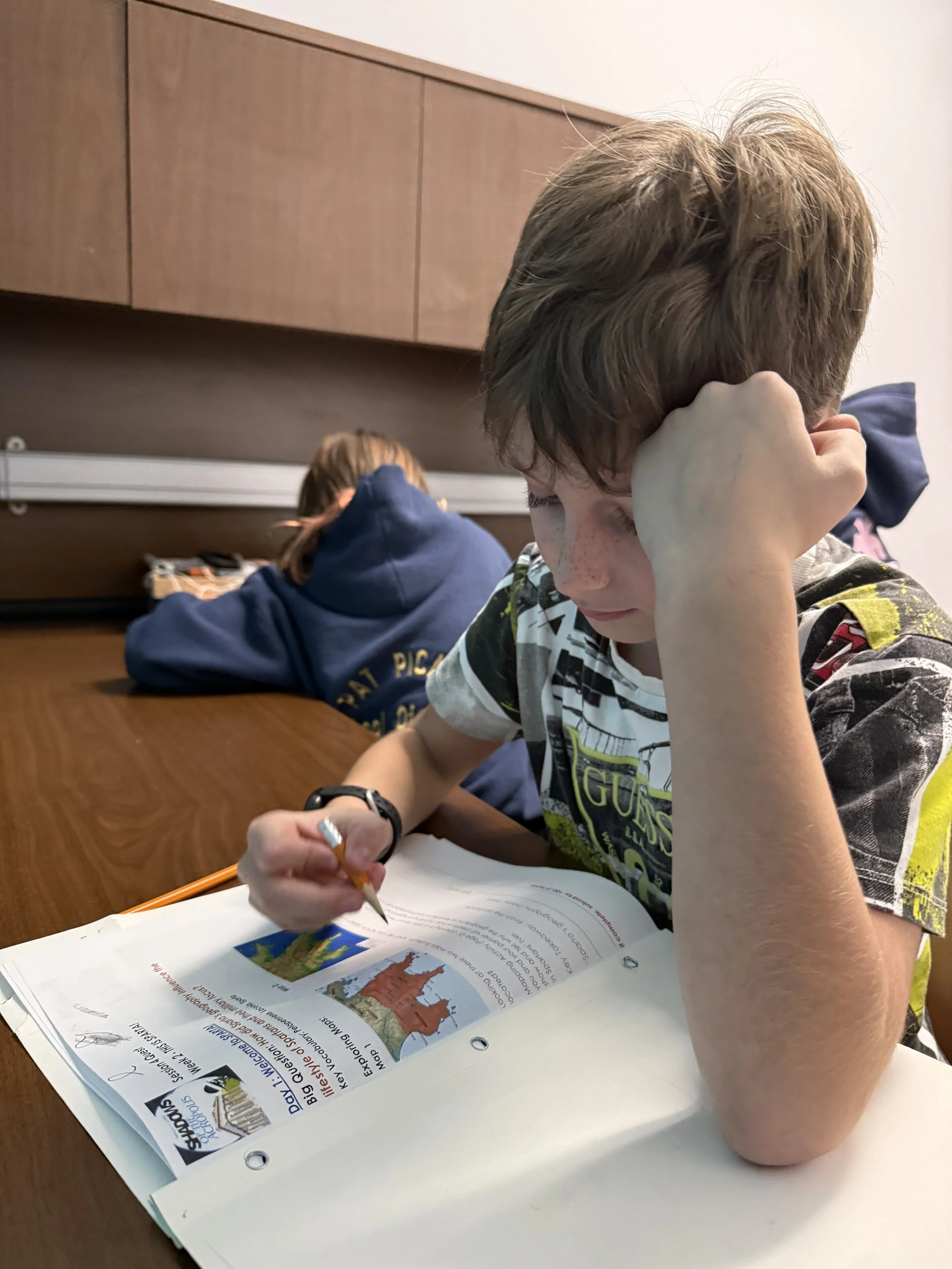
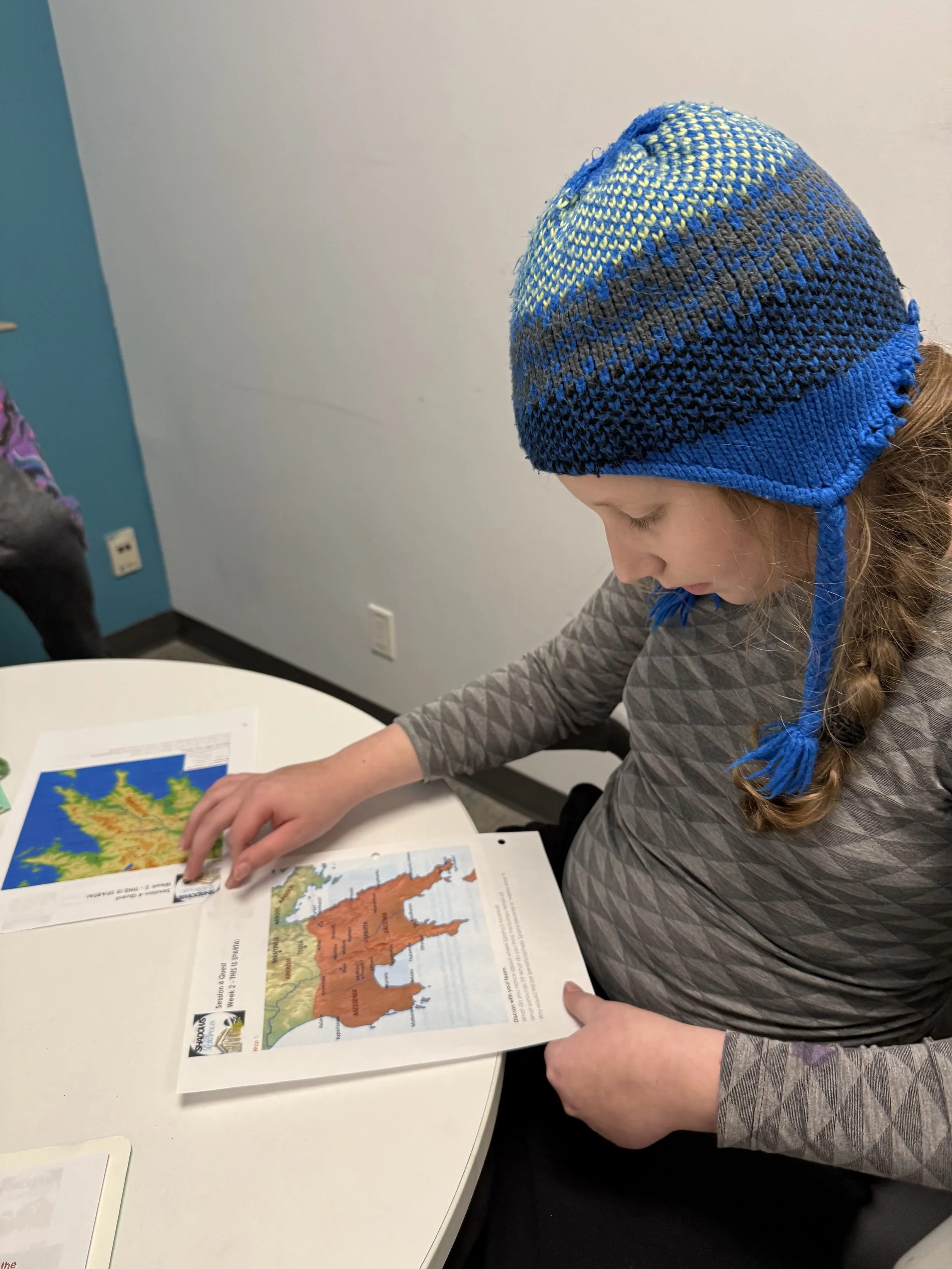
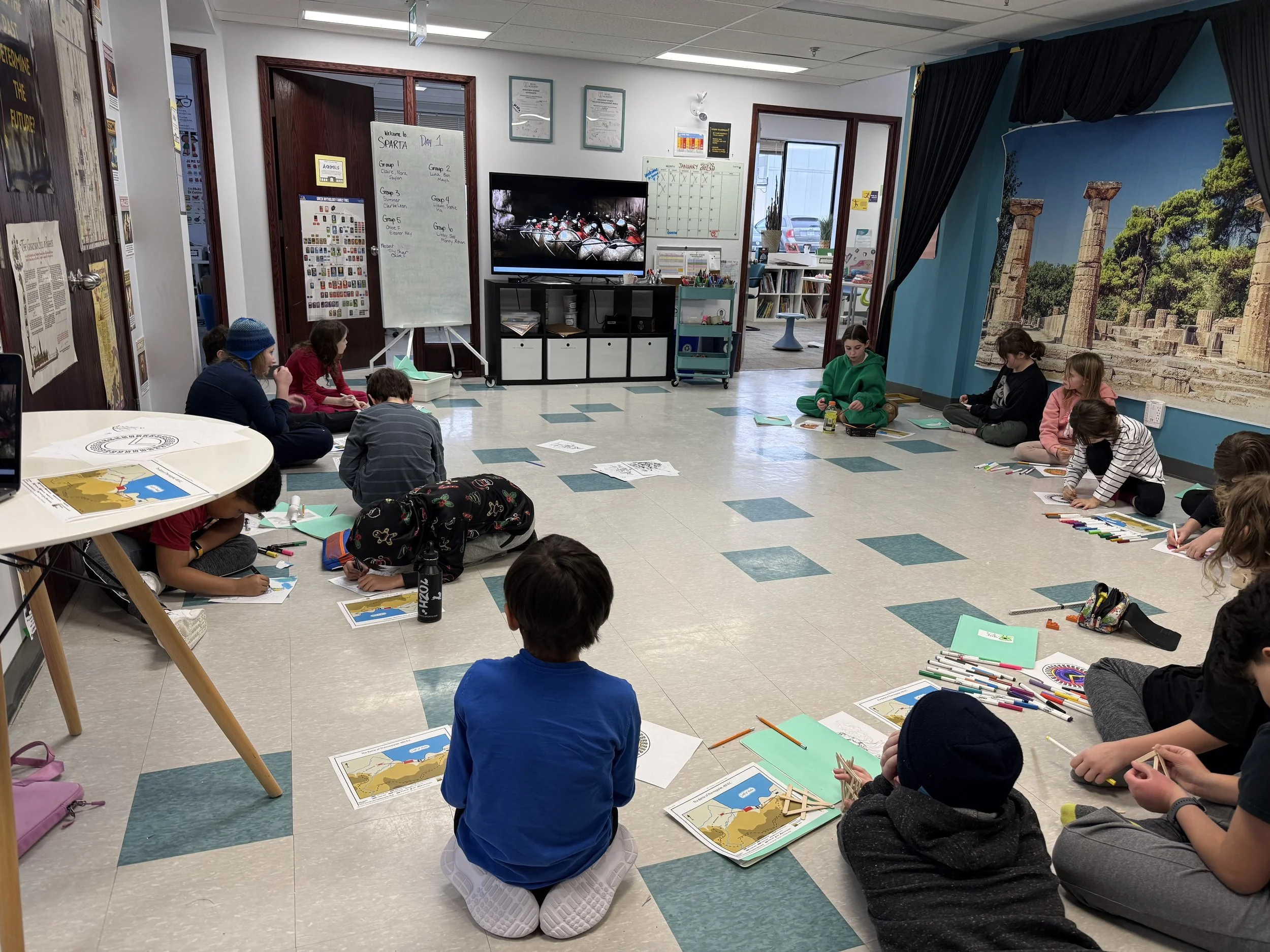
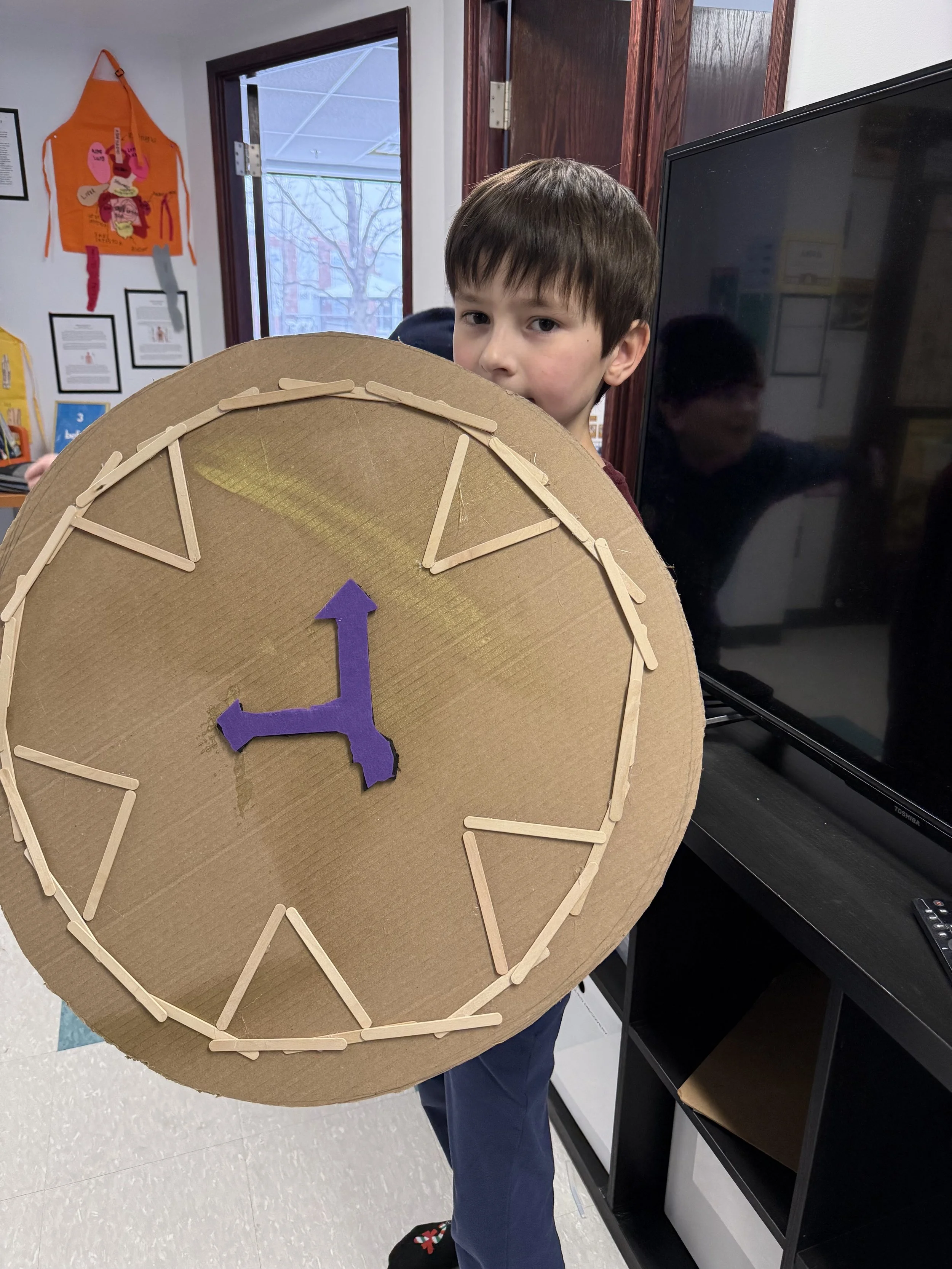
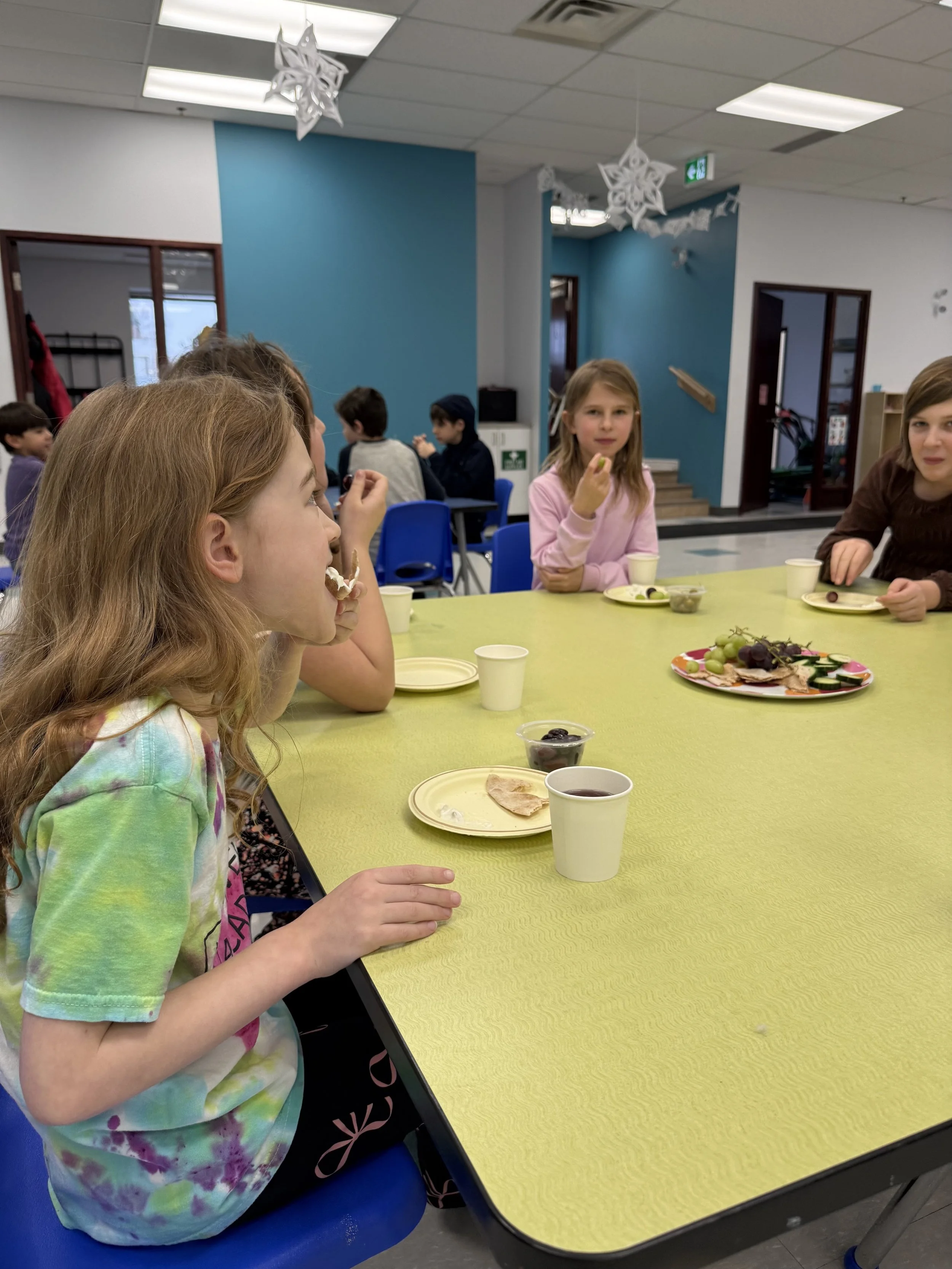
Welcome to Week 2: Shadows of the Acropolis! Our Rebel Spies set off to Sparta to learn all about Athens’ rival city-state. Monday focused on the geography of Sparta and continuing to develop our mapping skills. Rebels sought to answer the big question of the day: How did Sparta’s geography influence the lifestyle of Spartans and their military focus? Rebels studied two different maps, utilized legends and listened to a story that highlighted the adventures of two fictional characters: Lyra and Demos, siblings who grew up by the Eurotas River. The Rebels followed the pair around ancient Sparta, through the Laconian Plains, Taygetus Mountains and Parnon Mountains. Rebels reunited in the launch space at the end of the period to discuss our key takeaways. Learners attempted to finish the sentence: “Sparta’s geography made them ______________ because _________________,” based on what they had uncovered. Rebels had some awesome responses, such as: Sparta’s geography made them strong because they had to work hard to survive, self-sufficient because they couldn’t easily access trades, rely on each other because the mountains protected them from invasions, warriors because they wanted to protect the land the way the land protected them. Tuesday and Wednesday’s Quest workshops focused on learning more about the way of life in Sparta, the Battle of Thermopylae (the famous story of King Leonidas and his 300 Spartan warriors) and listening to podcasts about the Peloponnesian war. We wrapped up our Quest block on Wednesday while snacking on a Greek feast! Rebels tried foods such as olives, tzatziki dip and pita while they drank grape juice as they discussed their designs for their Spartan shields. Thursday, Rebels could be found in the Maker Space building their shields. Their shields had to incorporate symbols that reflected Spartan values, such as loyalty, strength, military and unity. Rebels will have their shields on display at our Exhibition at the end of the Session! Heading into next week, Rebels will explore Delphi and the Temple of Apollo as they learn about Greek plays and the performing arts!
Additional Highlights
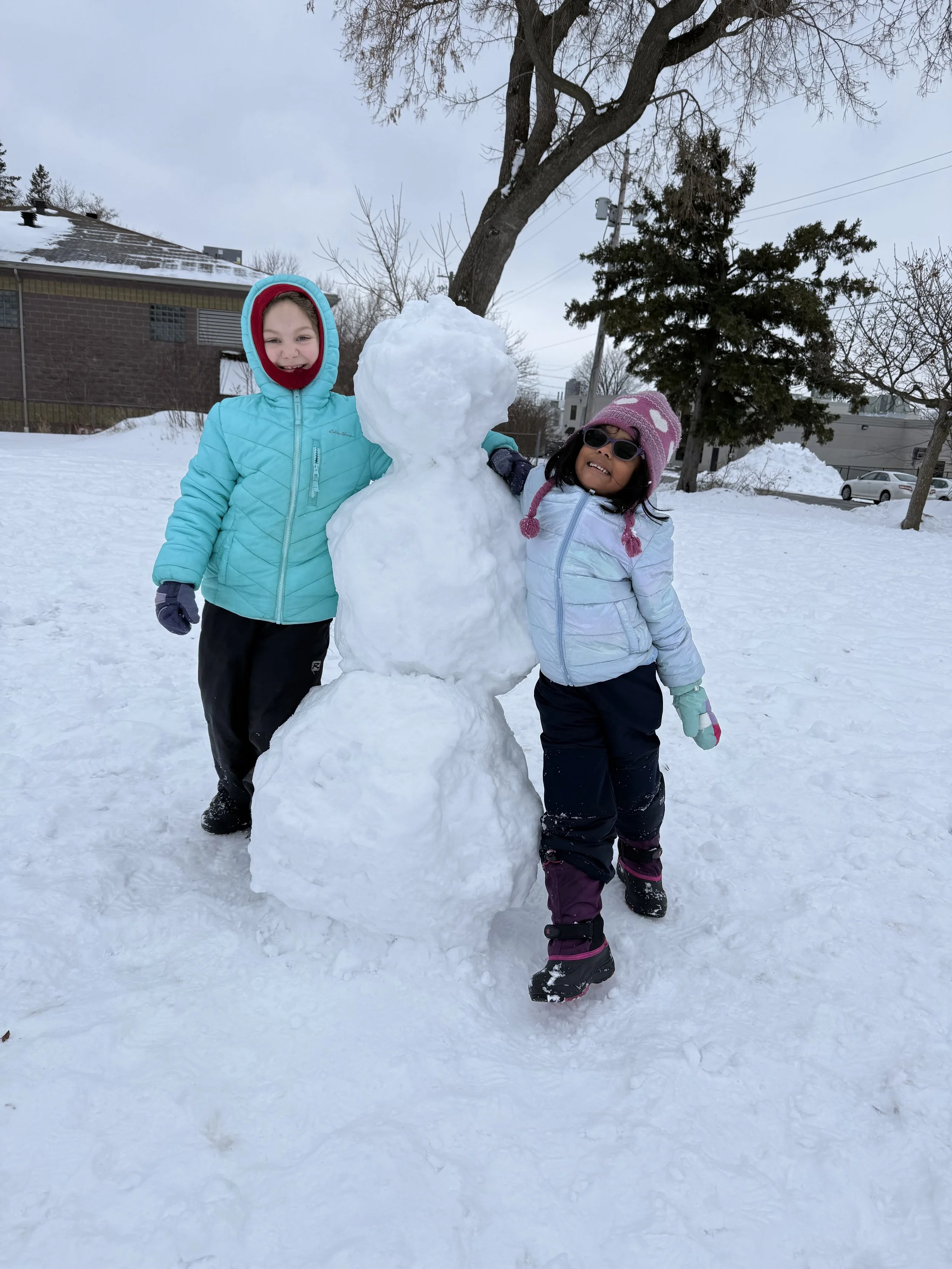
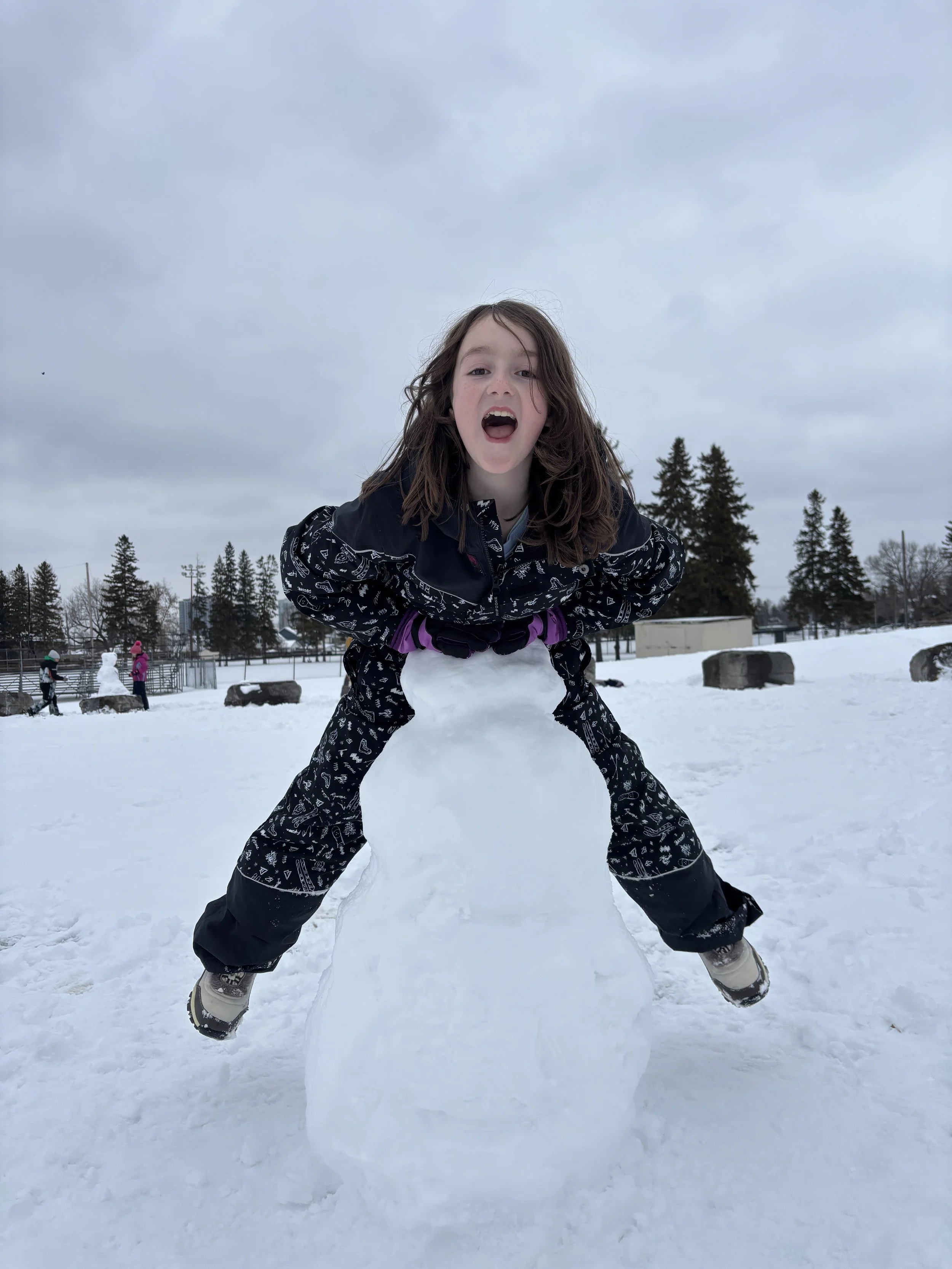
We’ve been taking advantage of our great outdoor spaces and feeling extra grateful for snowplows bringing us mountains of snow to play on! Rebels have been having a ton of fun outside in the snow, digging, building forts, creating snowmen, snowball fights, sledding and more! Please remember to send extra socks/clothes with your learners and double-check our Lost and Found for items and accessories to keep your learners warm! We tend to accumulate a lot of gloves, mitts, hats and neckwarmers this time of year with so many Rebels changing into dry clothes/using extra pairs of outdoor clothes brought from home.
Exploration Studio

Mindfulness & Launch
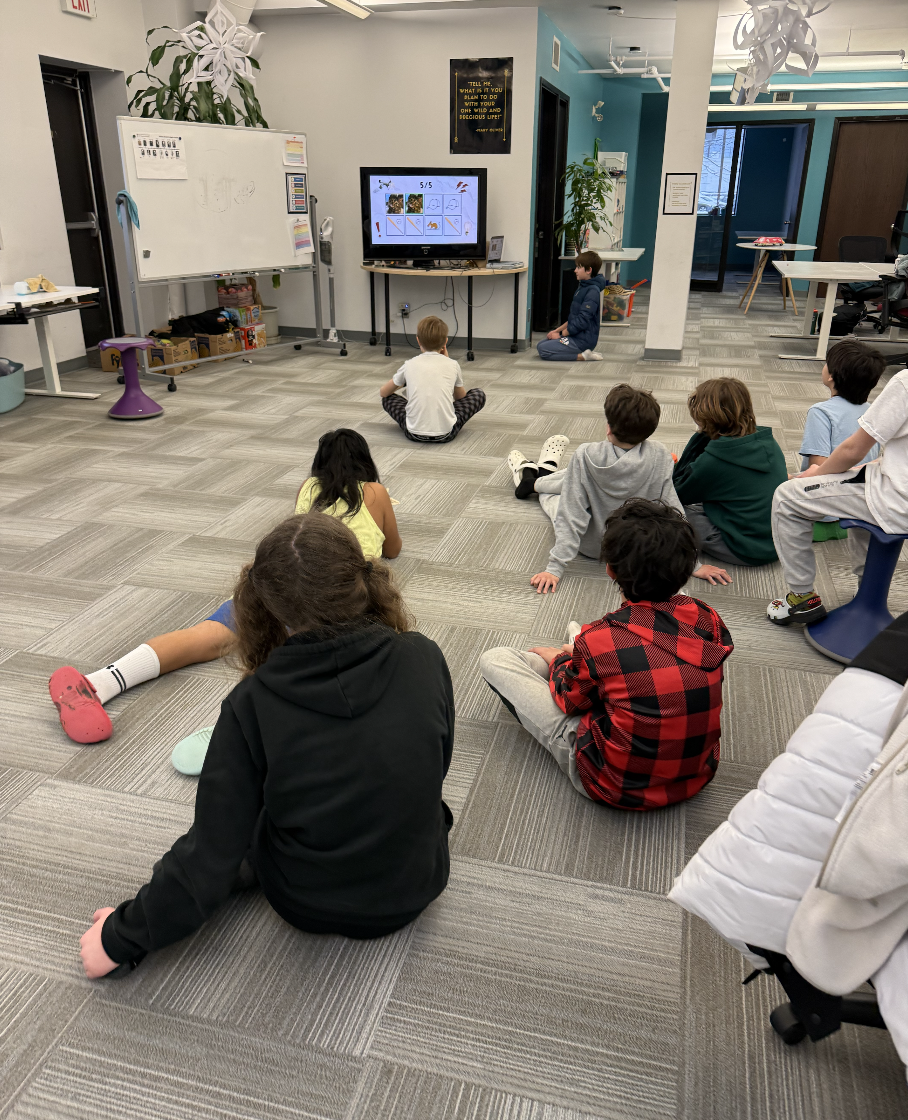
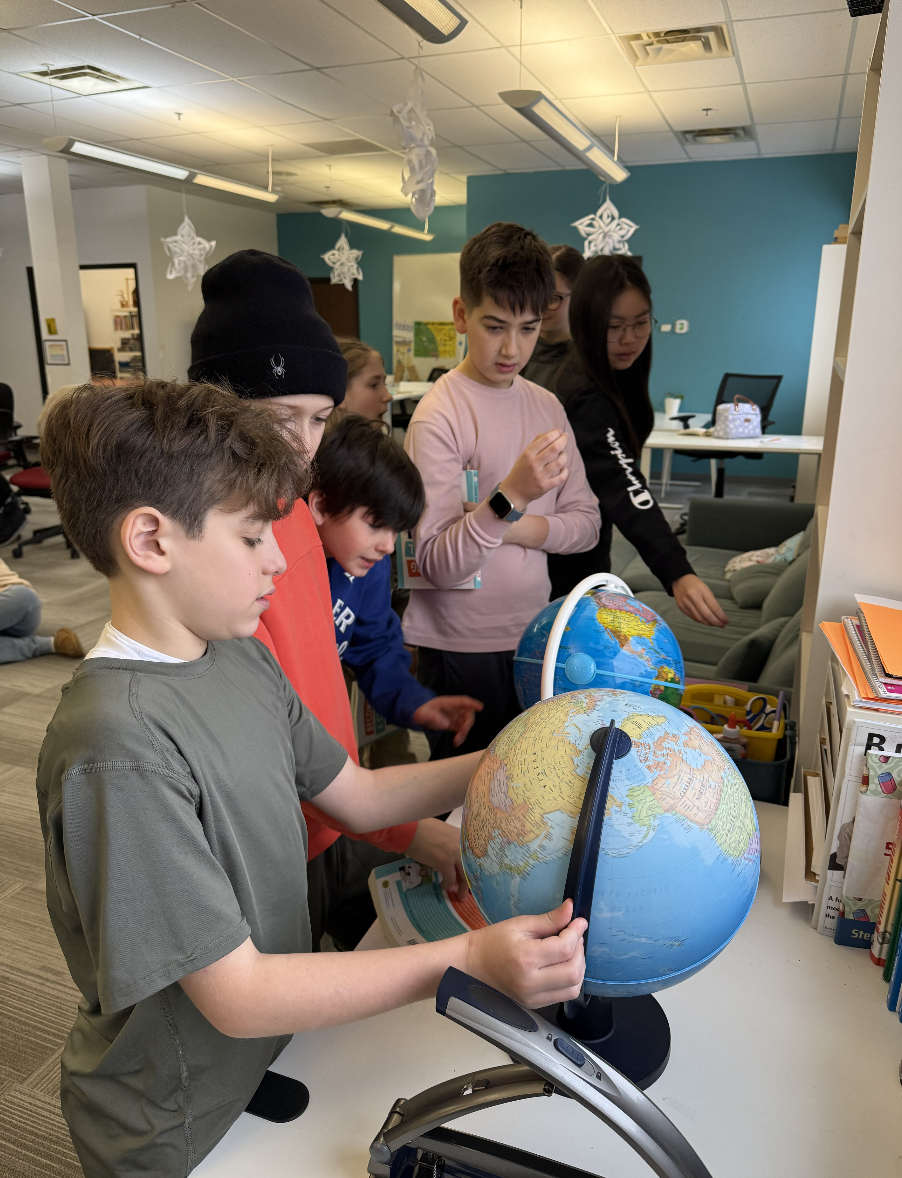
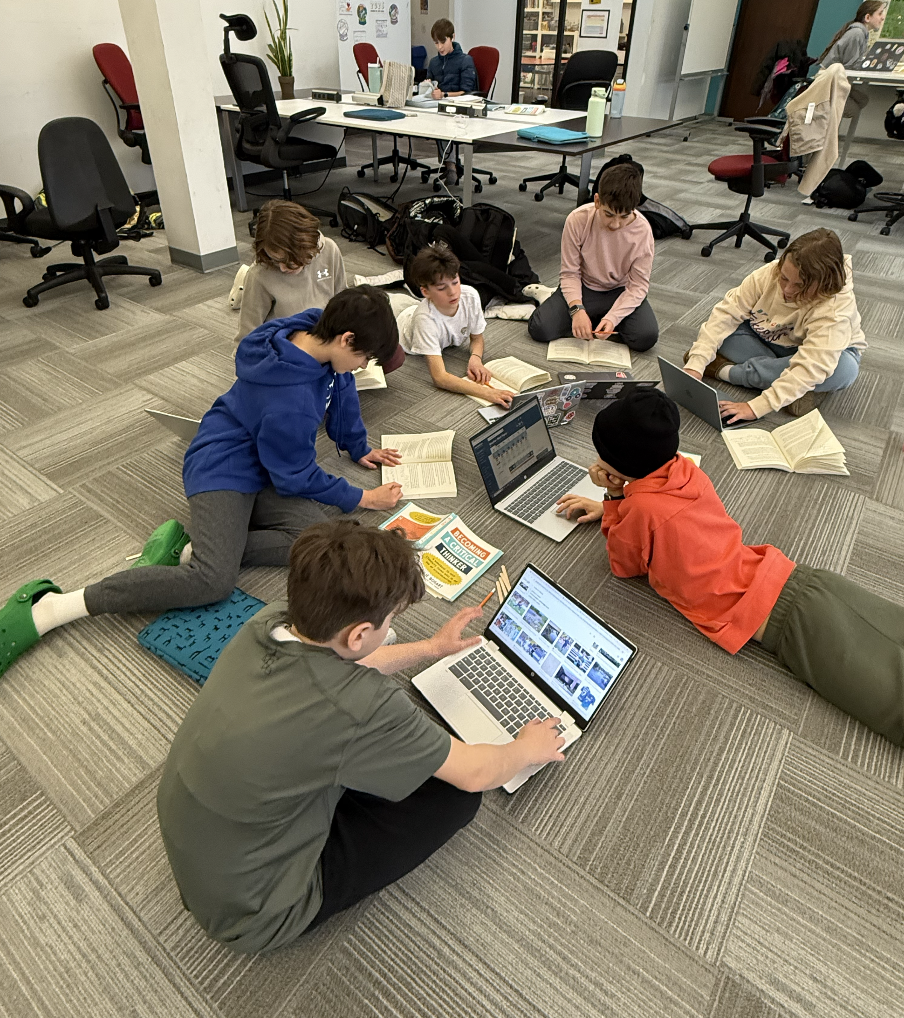
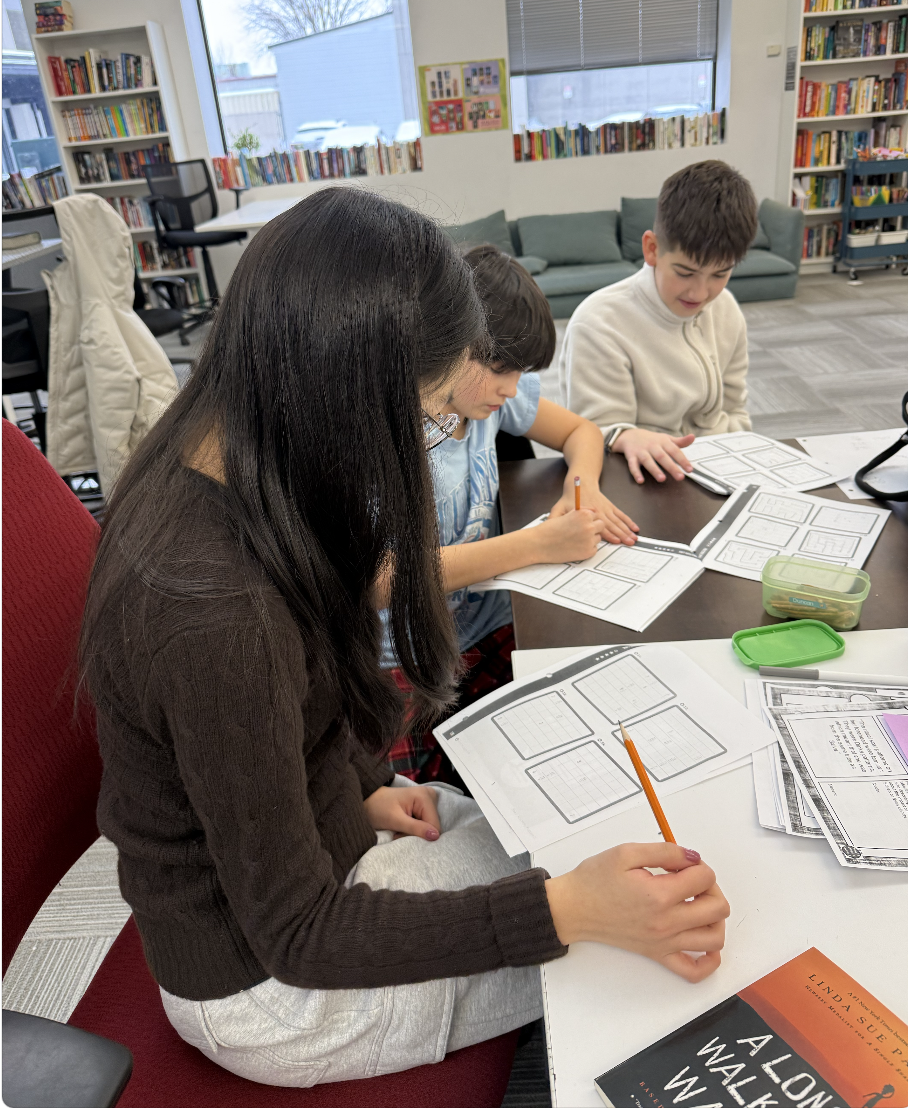
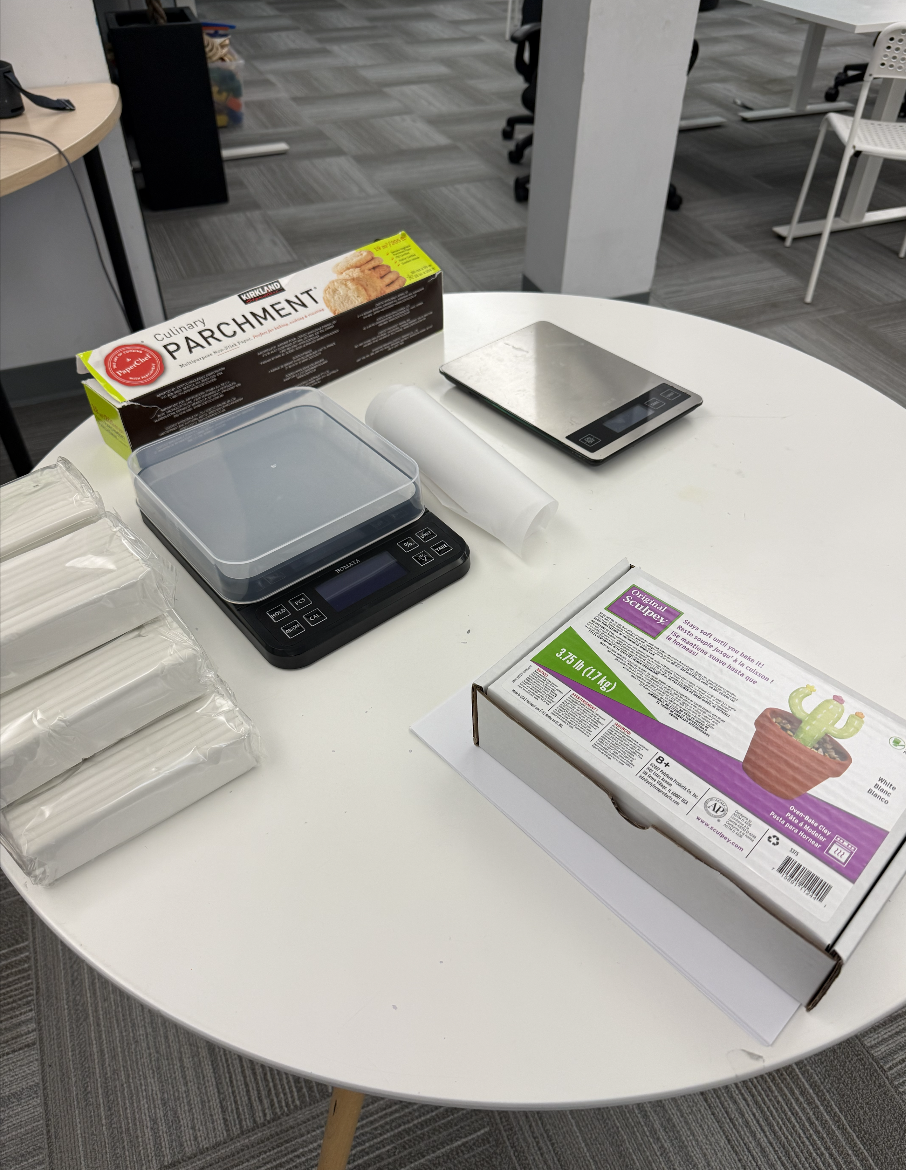
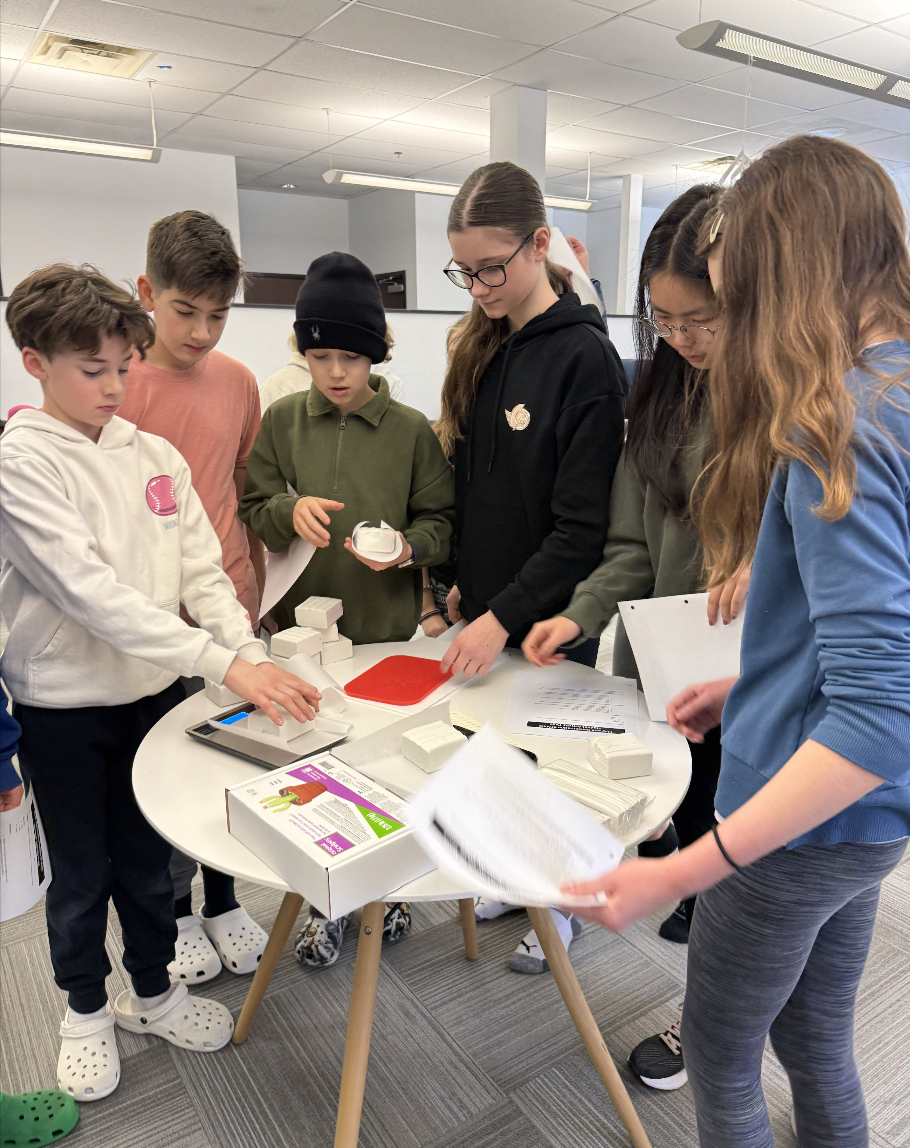
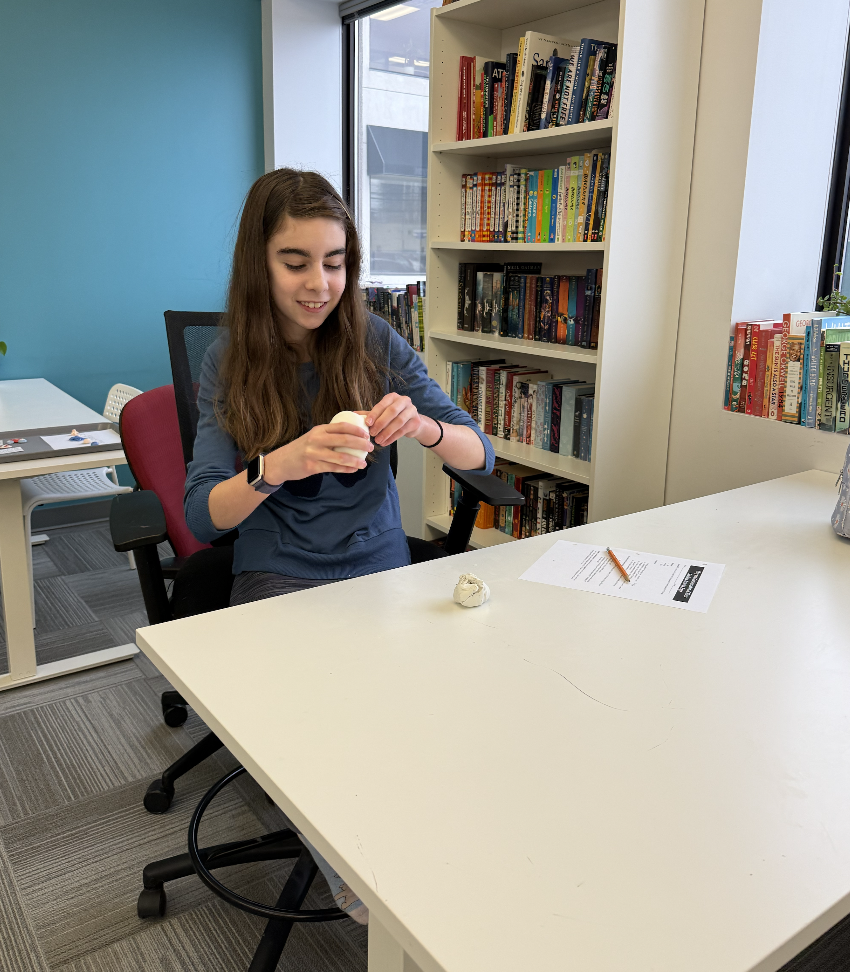
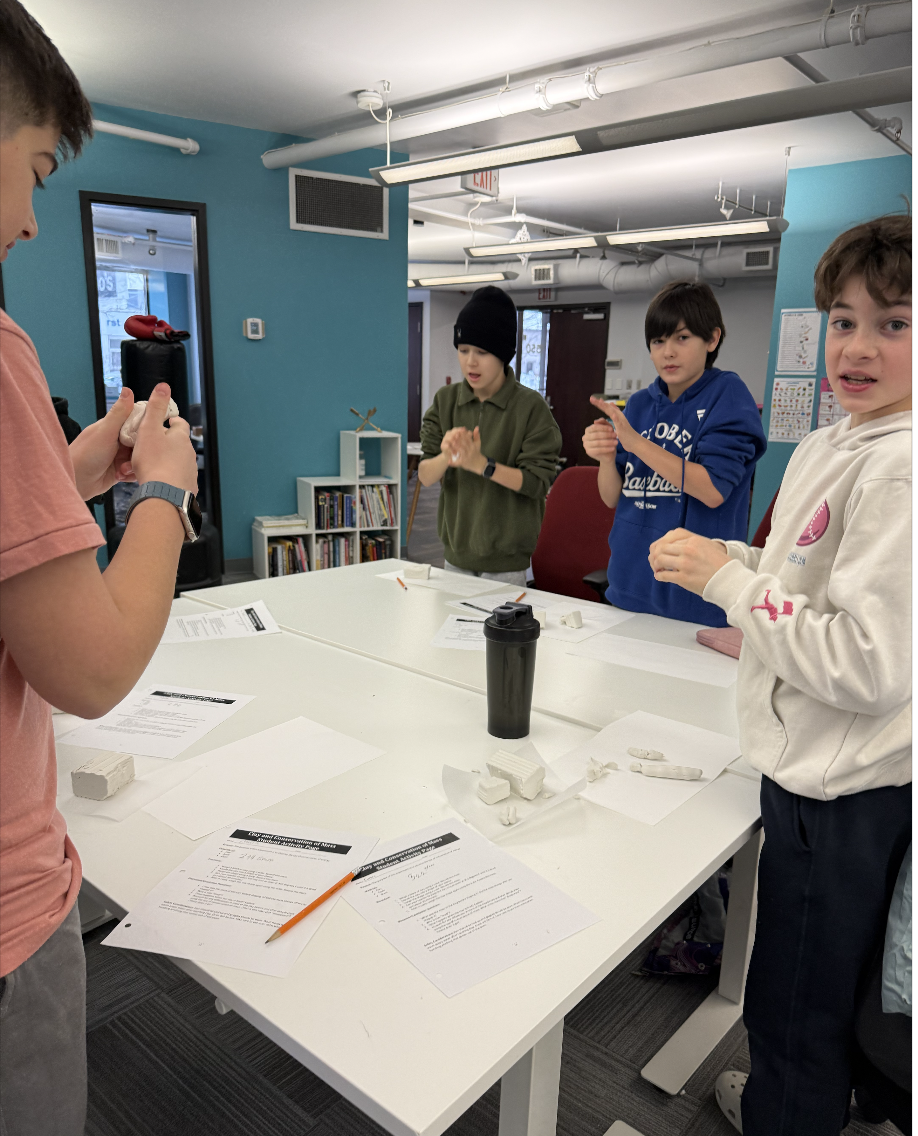
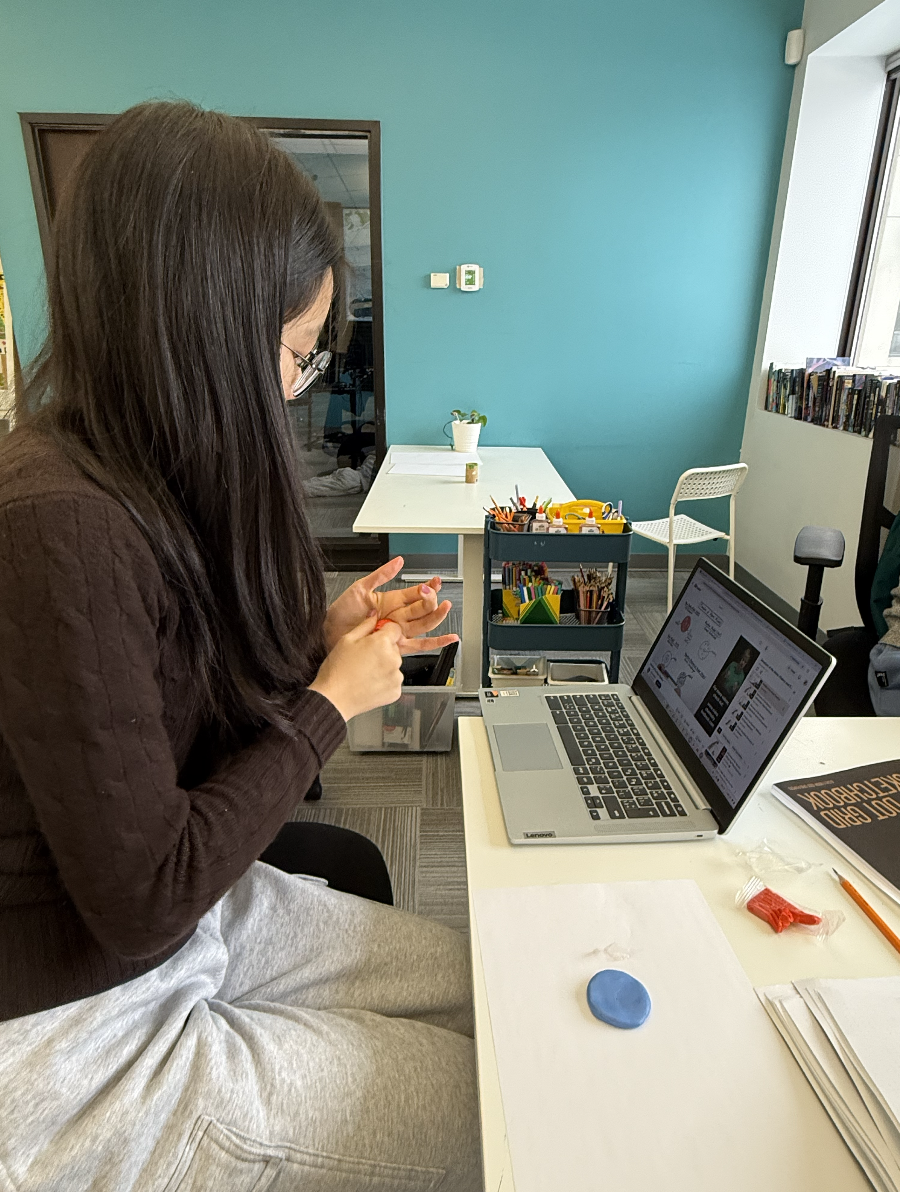
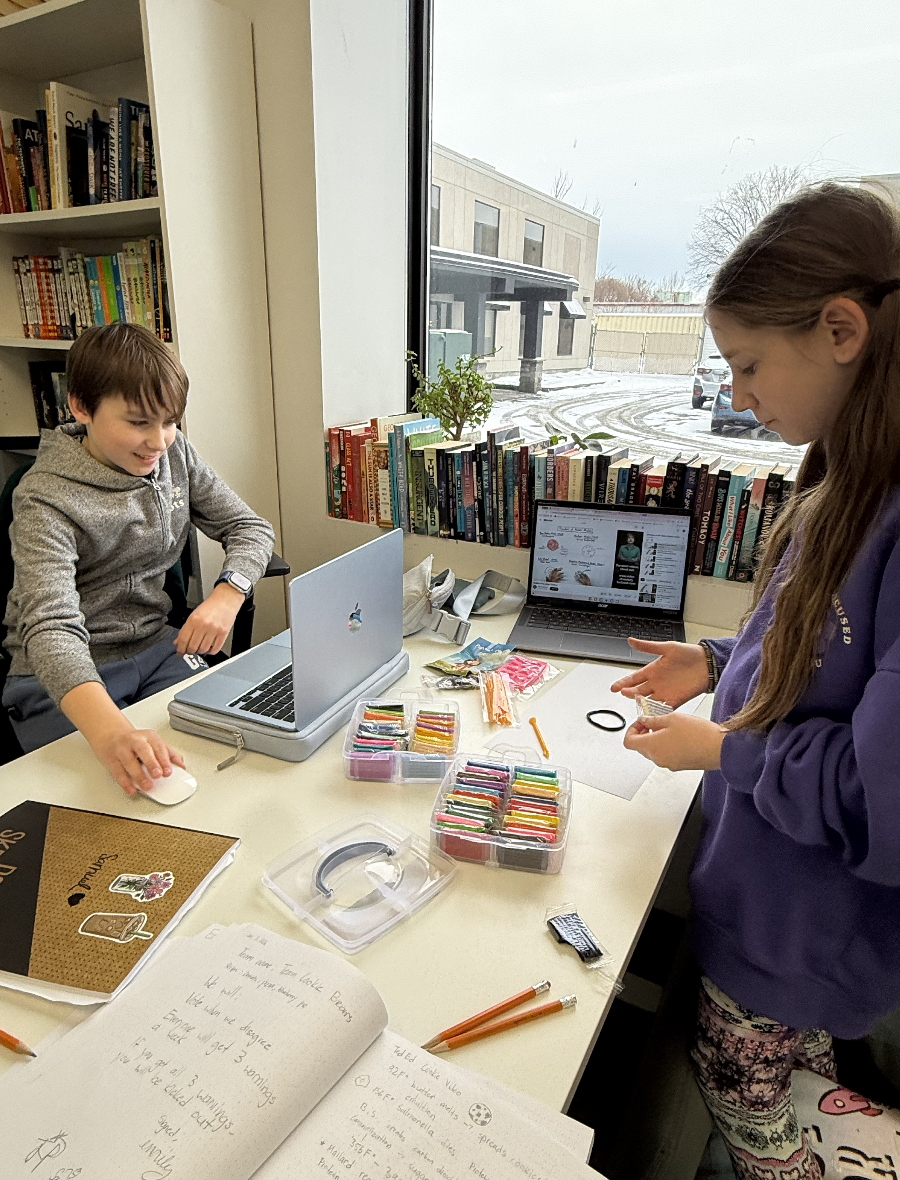
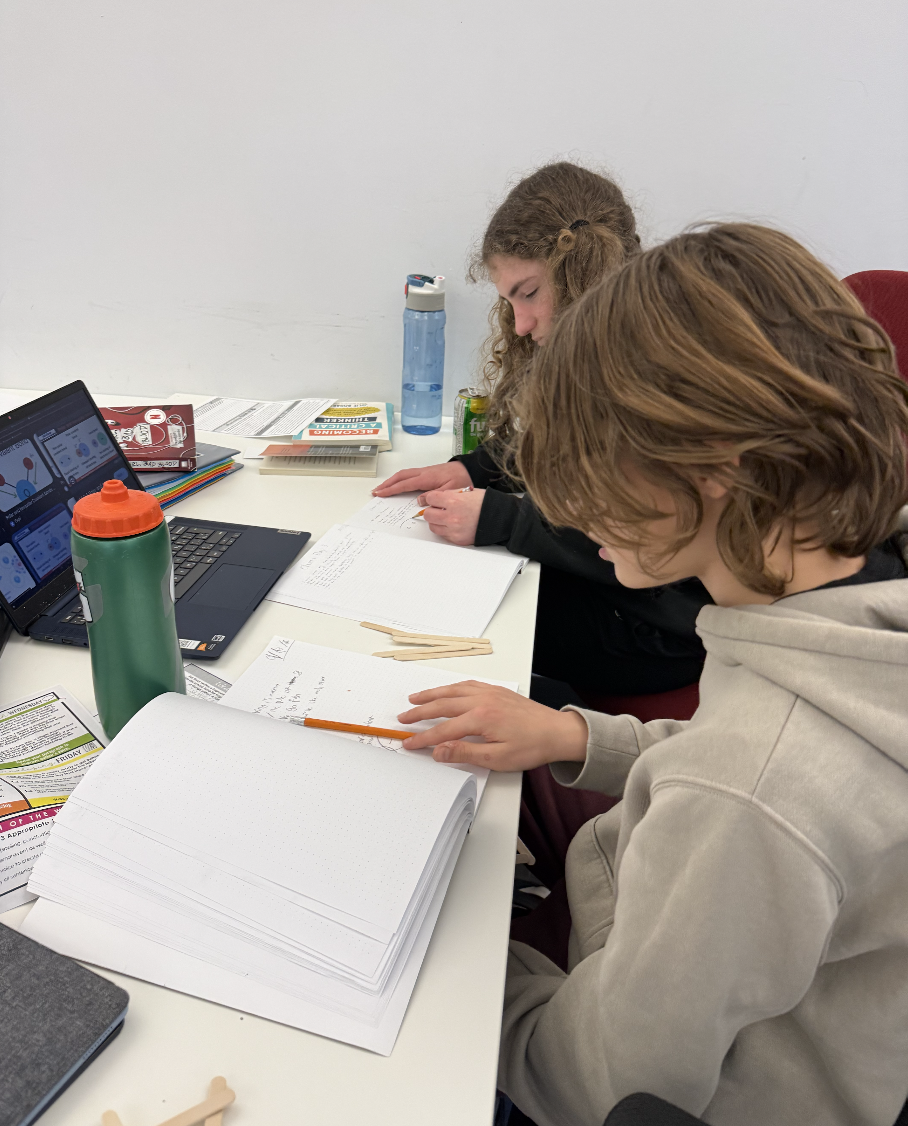
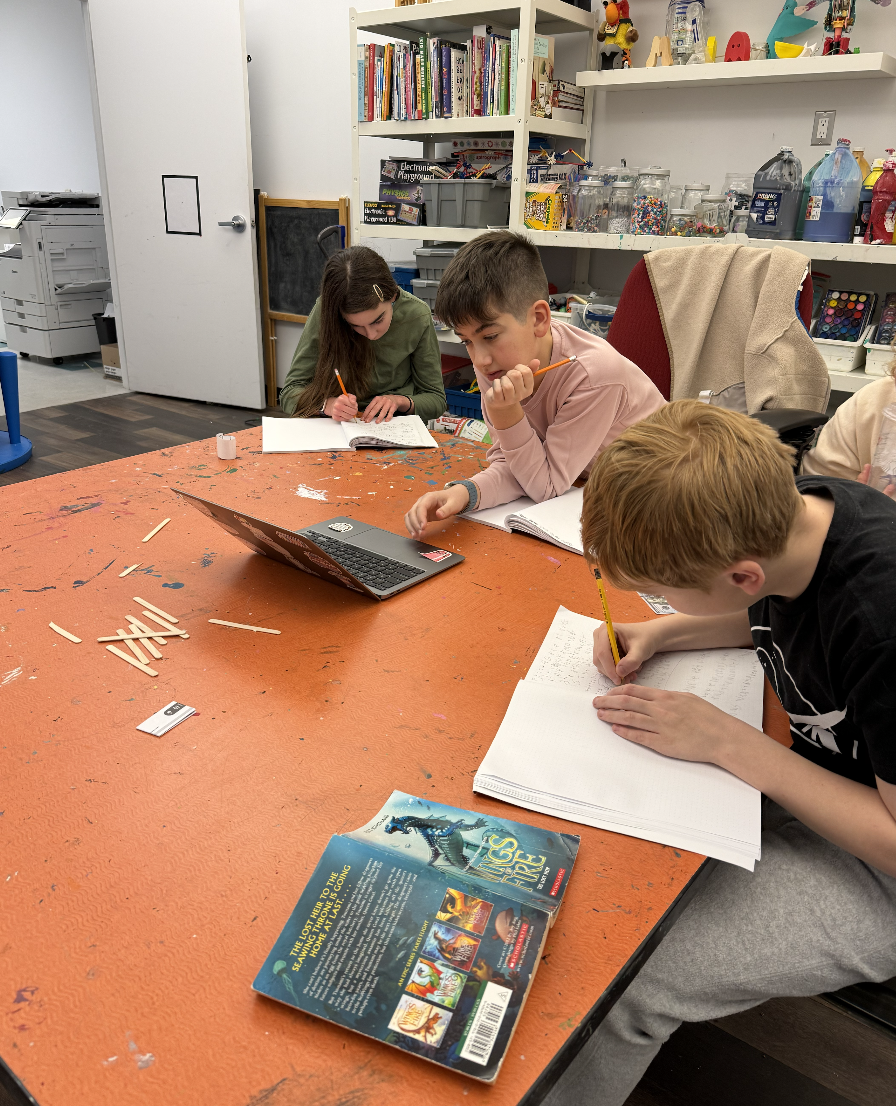
We began our week with Free-Choice Mindfulness, where learners could put the finishing touches on their One Word art piece, work on the Problem of the Week, colour, draw, or work on a Periodic Table puzzle. We then explored heat transfer, discussed how heat affects atoms, and demonstrated the difference between conduction and radiation using our hands and friction. We then watched a brief video on induction, reviewed convection, and reflected on which method we thought would be best for cooking an omelet. We completed the “Visual Journal: Adding Images to Research” lesson in our Becoming Critical Thinkers workbook on Tuesday morning. We discussed how we often gain clarity through pictures, but how they can also obscure, cover up, crop, or intensify what we feel. Rebels began by choosing a location they had never been to and then wrote down the immediate impressions it left in their minds. They then went online, searched for images, reflected, and wrote about the differences between what they initially thought and what they now know from the pictures. Lastly, they found an article or two to determine whether the articles supported the visuals or if there were key differences that they missed. On Wednesday, we combined our Chemistry lessons with Art! Using clay blocks, Rebels learned about Conservation of Mass. After finding the mass of their clay block, they created a sculpture and then measured it again. While there were minor differences, they found the mass was the same. Their sculptures will now be dried in the oven, then weighed a third time before painting. With a smaller studio on Thursday due to the snow, learners practiced mindfulness by going for a walk, solving puzzles, or working on the Problem of the Week. On Friday, our learners led their weekly brain puzzles and Current Events session.

Reader/Writer Workshop - A Long Walk to Water
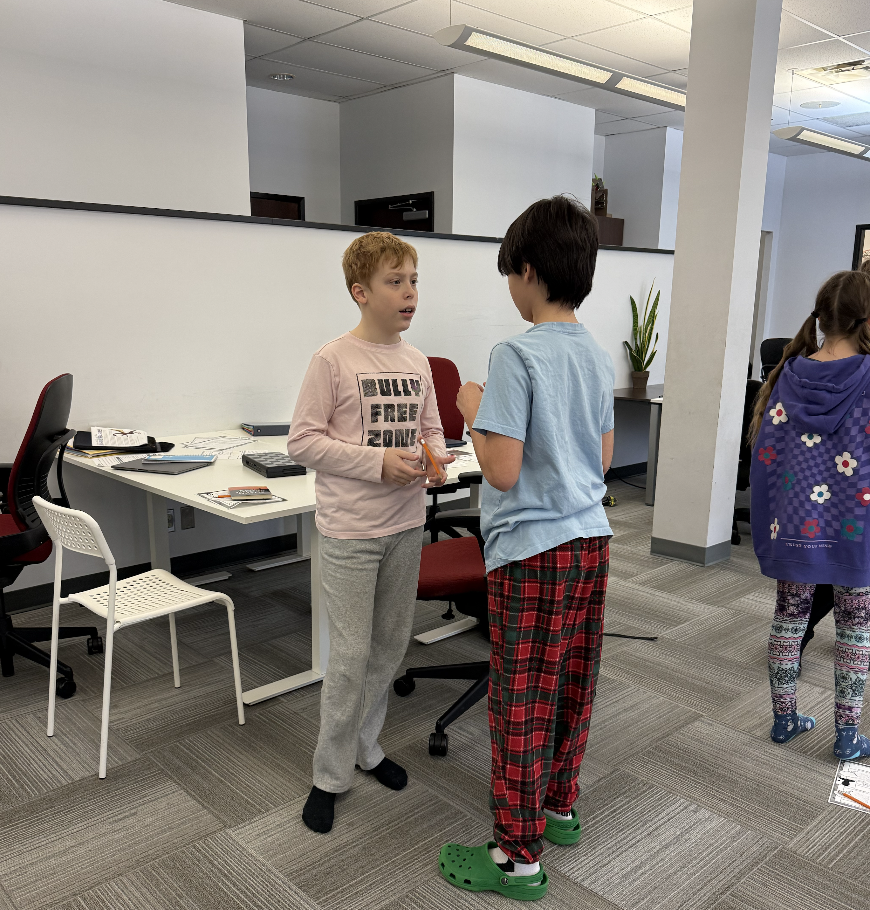
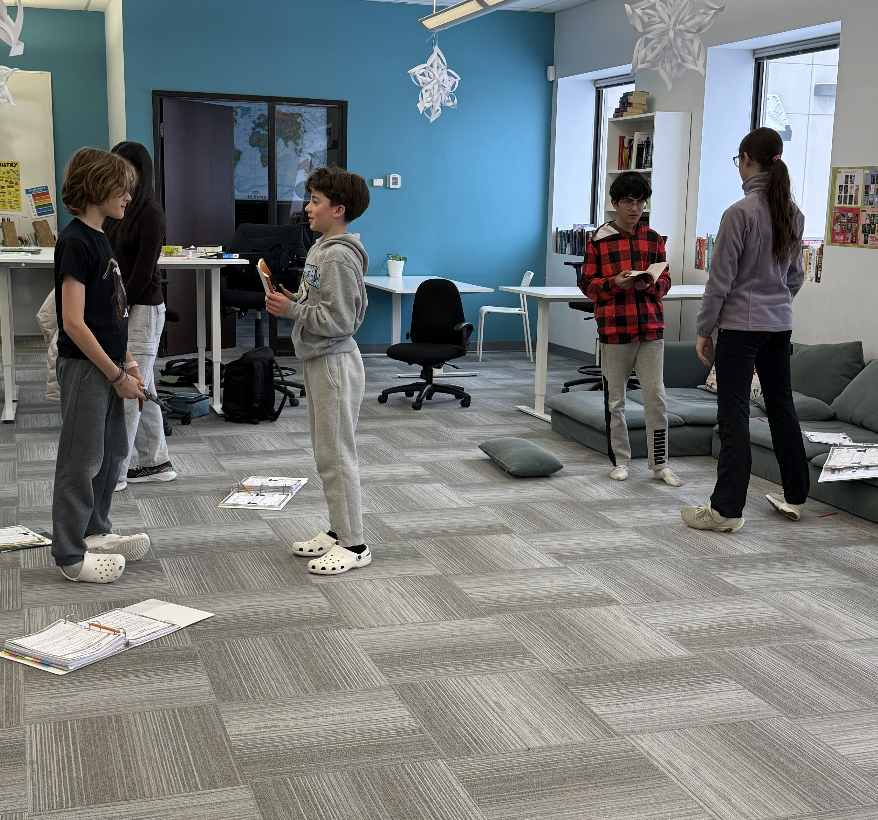
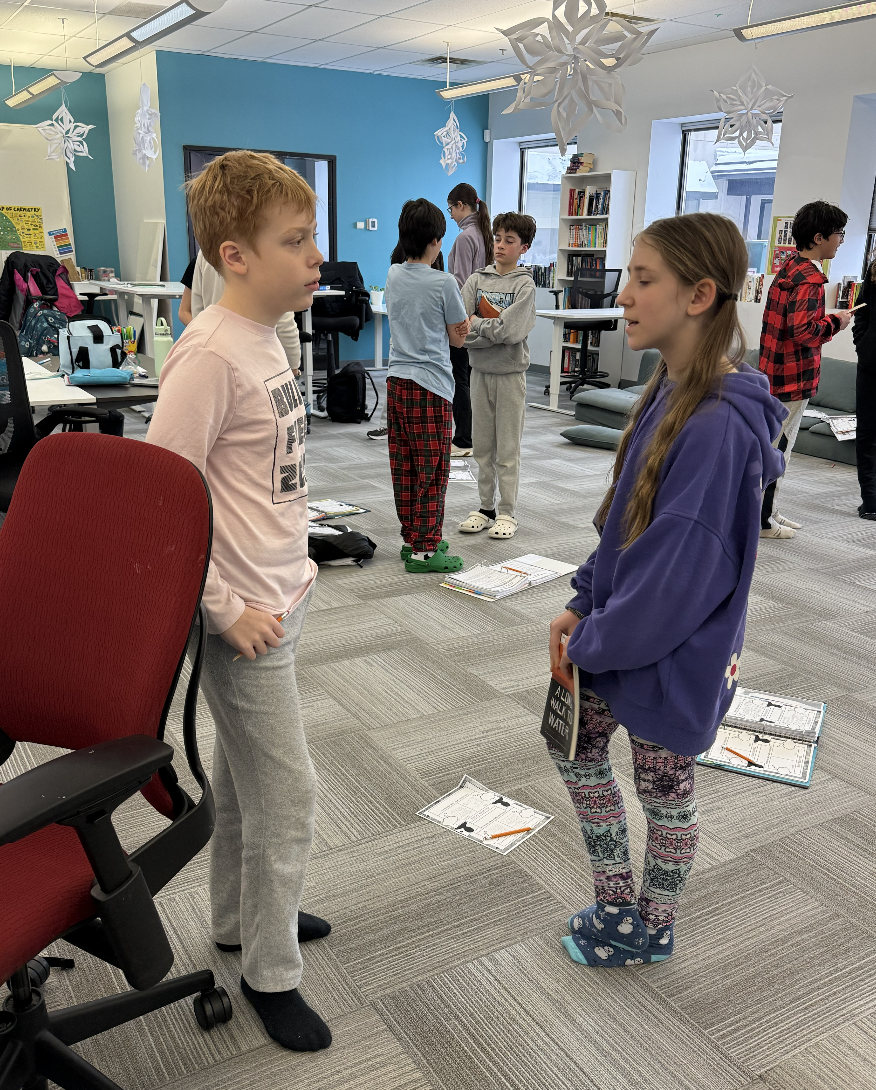
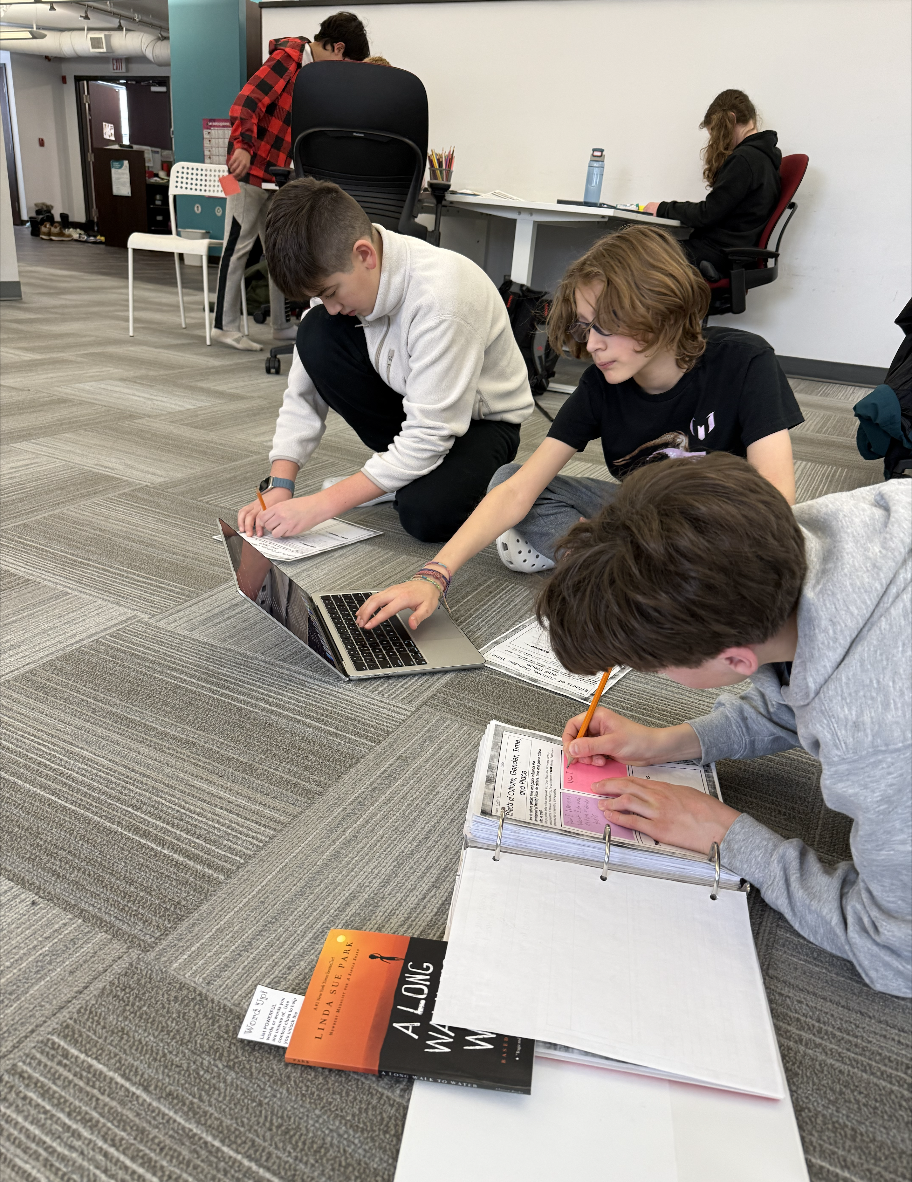
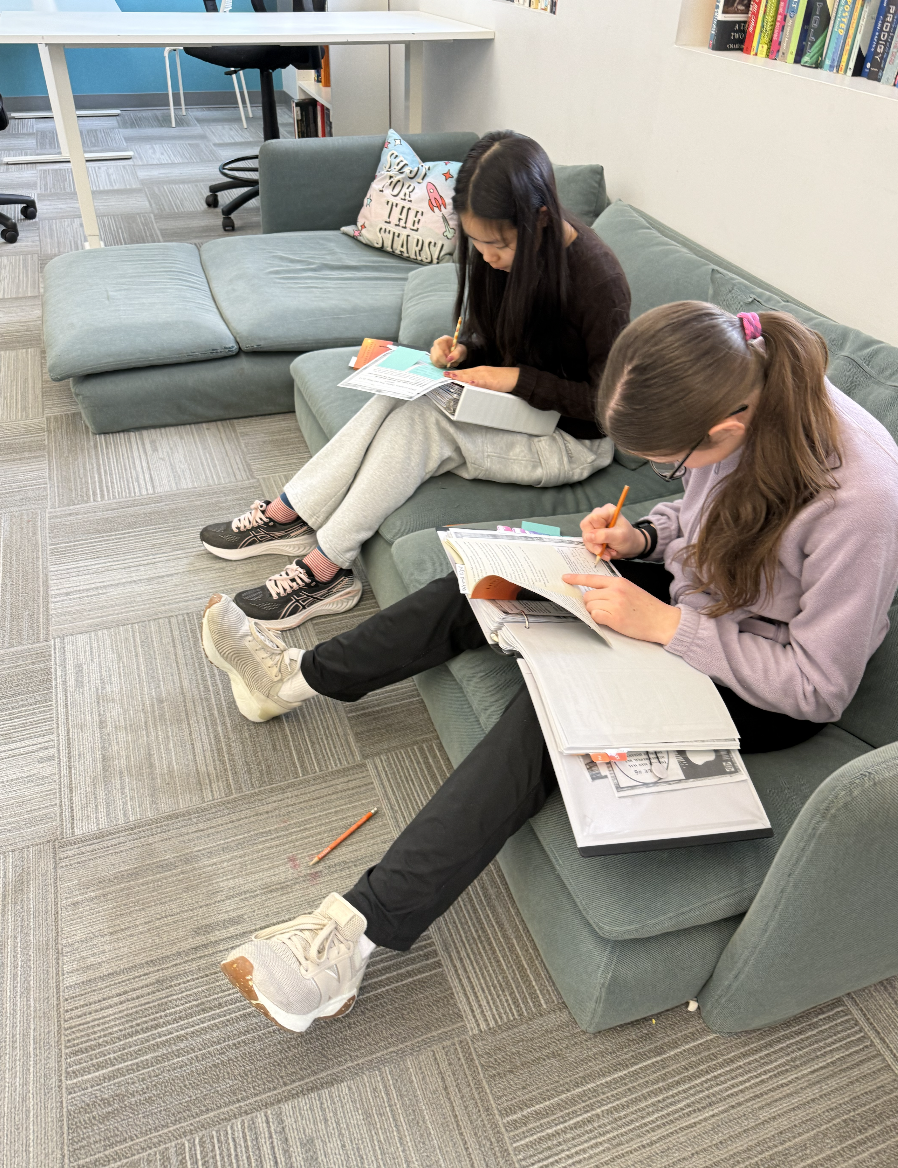
Before convening on Monday morning, learners had at least two other Rebels initial their Reader’s Notes for Chapters 1 through 3 to confirm that the chapters had been read and they were ready to discuss. (If a learner was not caught up, they were asked to go to a pod room to complete their assignments before returning to the discussion.) We then completed a Back-to-Back, Face-to-Face session in which learners paired up, stood back-to-back, listened to the question about the novel, thought about their answer or looked for text evidence, and then faced one another to share their answers. We then pondered how culture, gender, time period, and place influence the development of identity. After writing out the definitions, we identified the influence of each on our identity. Learners then considered how culture, gender, time period, and place influence the development of Nya and Salva’s identities. While reading Chapters 4 - 7 this week, Rebels completed their close reading notes and kept an eye out for quotes that mentioned or alluded to culture, gender, time, or place, which we’ll discuss next Monday.
Reading Challenge, Paragraph of the Week and Grammar
This week's Reading Challenge focused on tone. We learned that the tone of a literary work conveys the author's attitude toward the subject matter and shapes the story's mood. Rebels demonstrated by saying a phrase with different tones or attitudes, such as secretive, angry, loving, and bossy. We then learned that tone is not stated directly; readers must read between the lines to understand the author's feelings on the subject. Tone can be revealed through dialogue and monologue, diction and description, figurative language and the themes that emerge. After reviewing each, we practiced with a series of paragraphs before learners worked independently to complete the challenge.
In our grammar challenge, we reviewed that complete sentences require a subject and a verb and must communicate a complete thought. Rebels completed a series of sentence fragments by identifying which necessary component was missing on Monday and Tuesday. On Wednesday, learners used a series of sentence fragments to write a paragraph. On Thursday and Friday, Rebels worked together and independently corrected sentence fragments in a piece of writing.
This week, Rebels wrote an expository paragraph describing an experience that shaped who they are today. After their free-write, they revised their autobiographical paragraph to focus on one moment and to share both the event and their thoughts and feelings about how it impacted them. They then worked to improve their writing voice before balancing sentence length. Lastly, they received feedback and submitted their final copy.
Math Lab
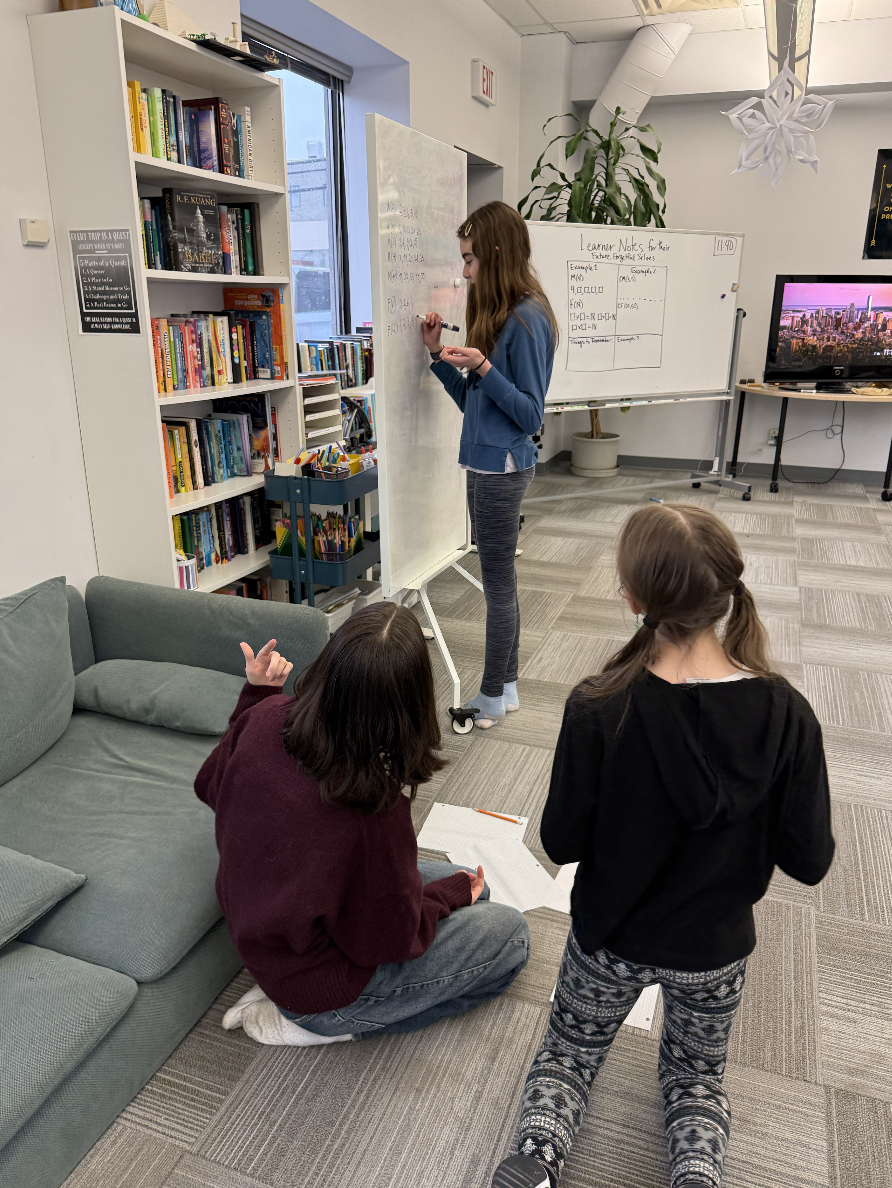
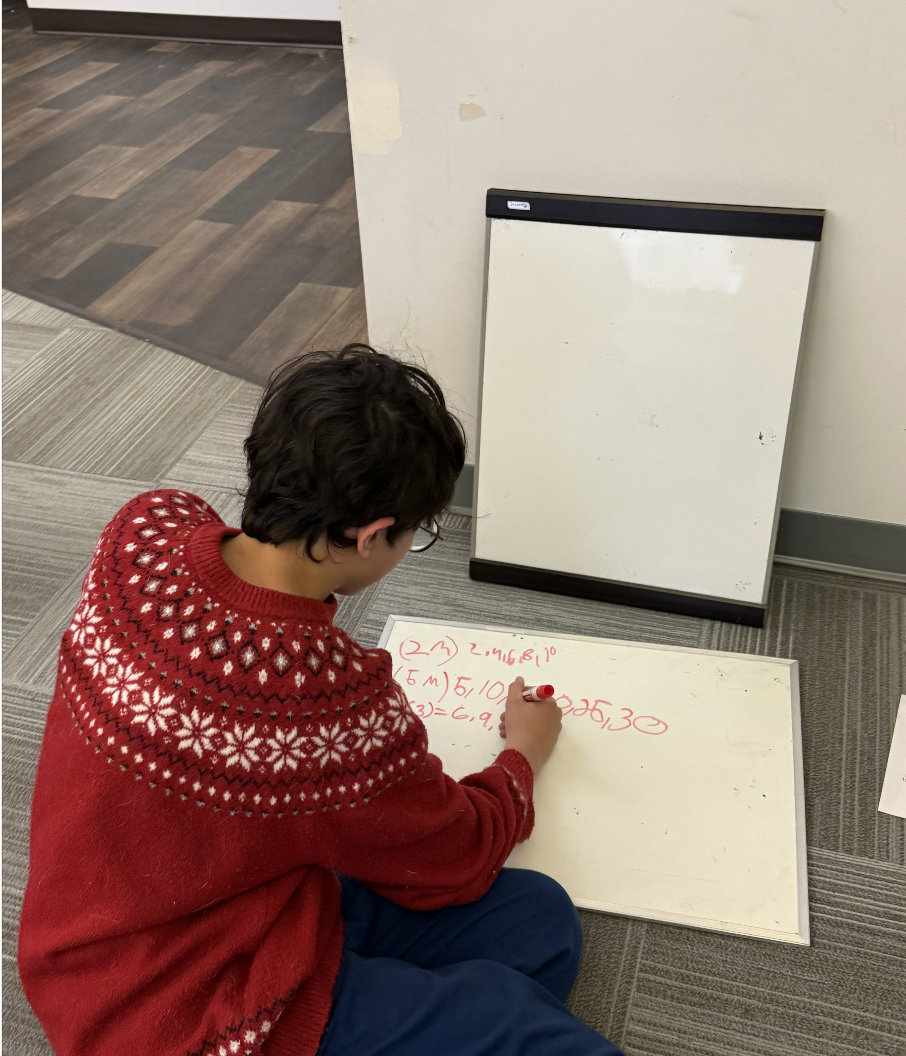
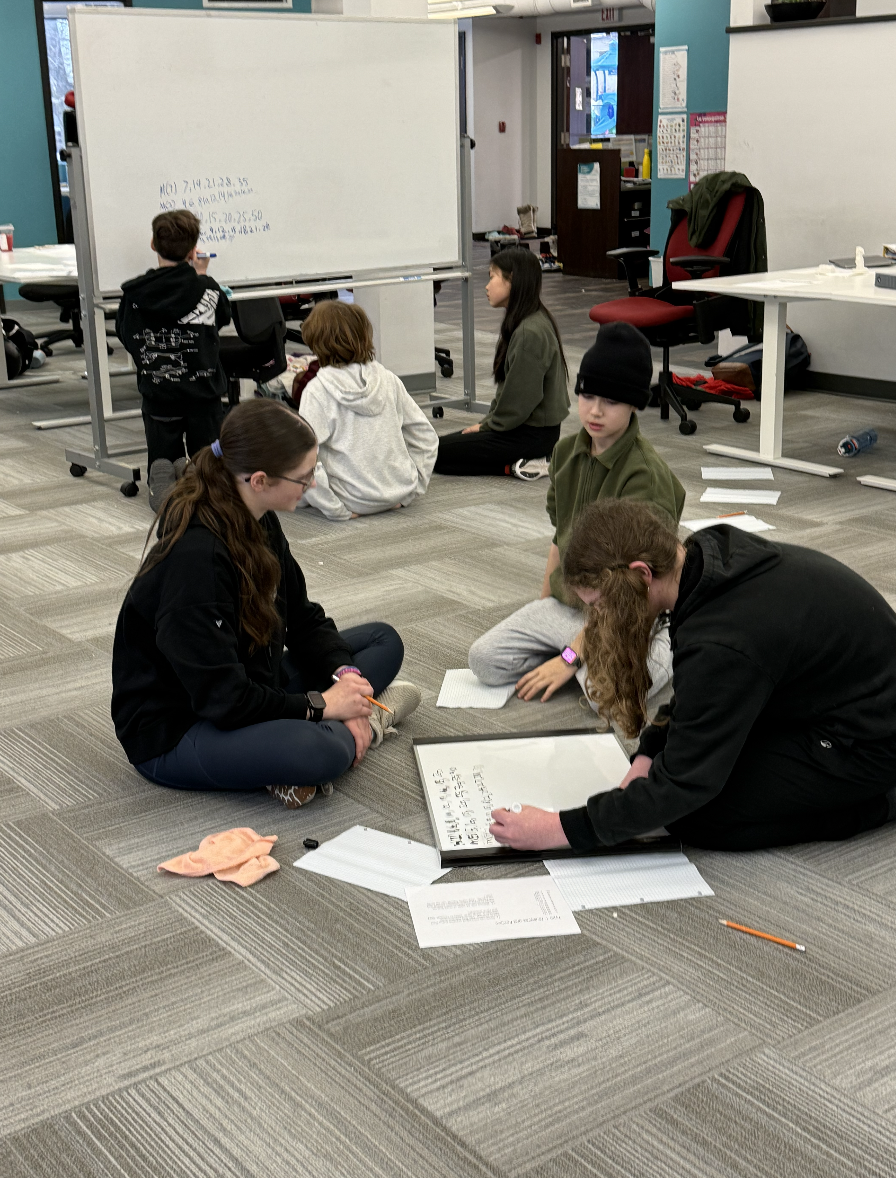
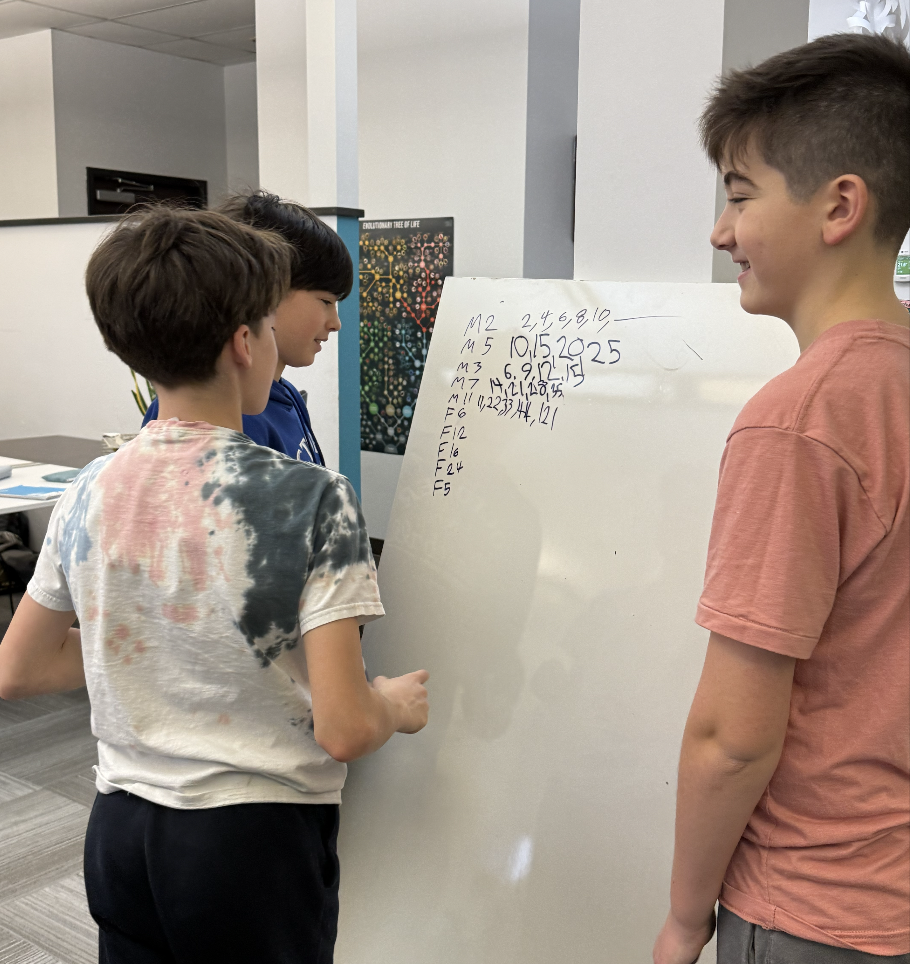
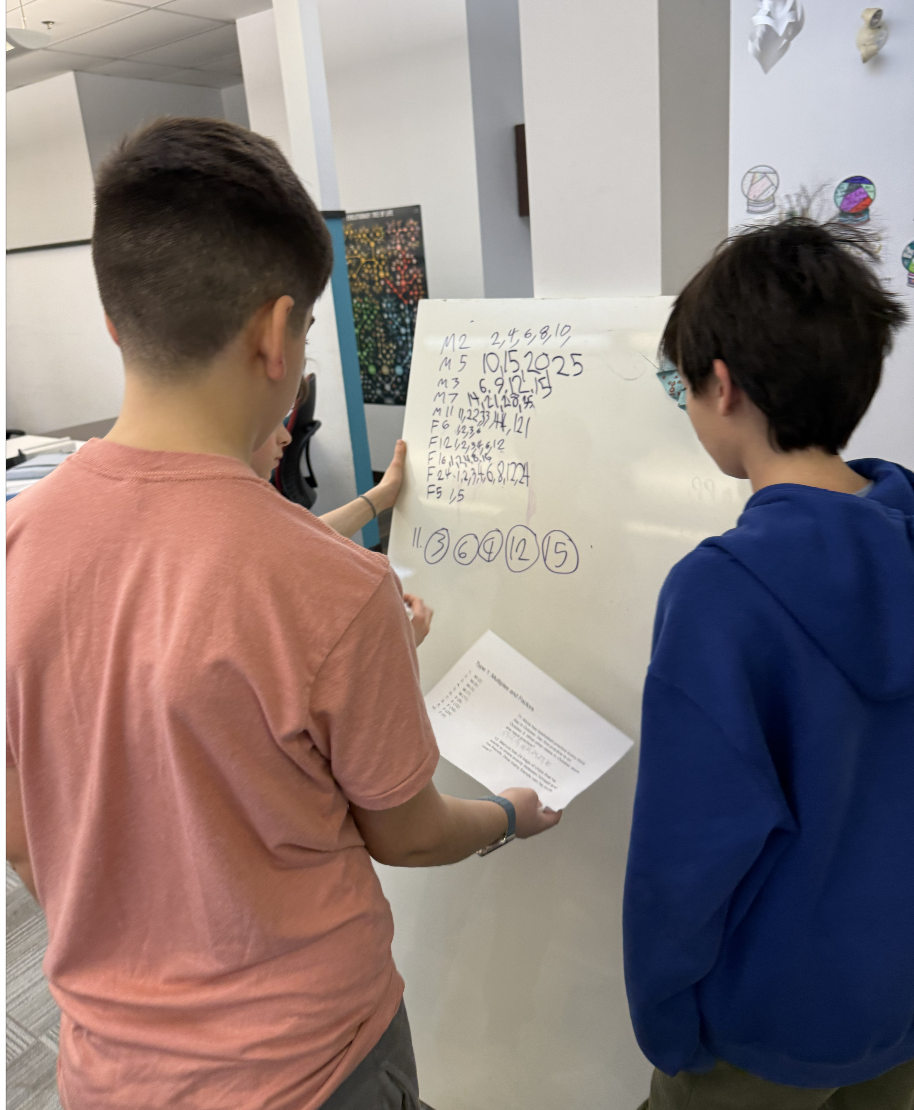
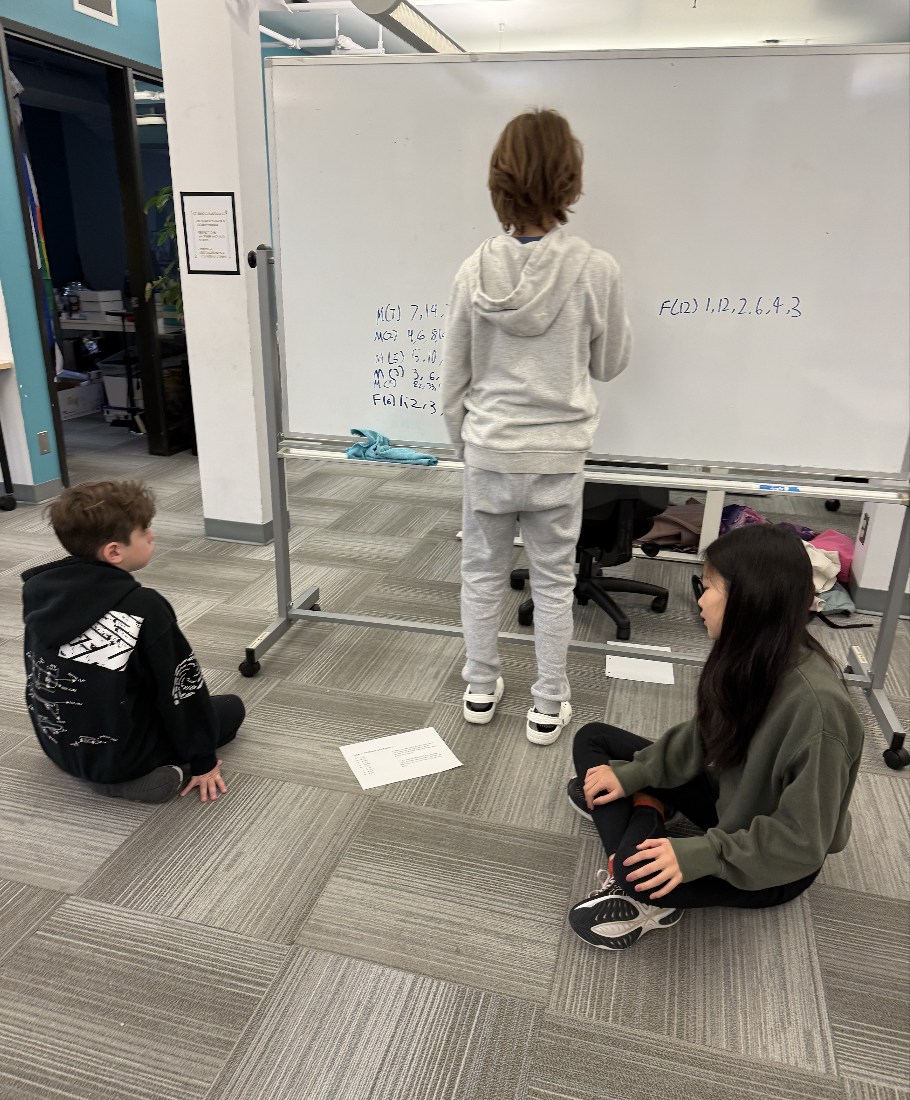
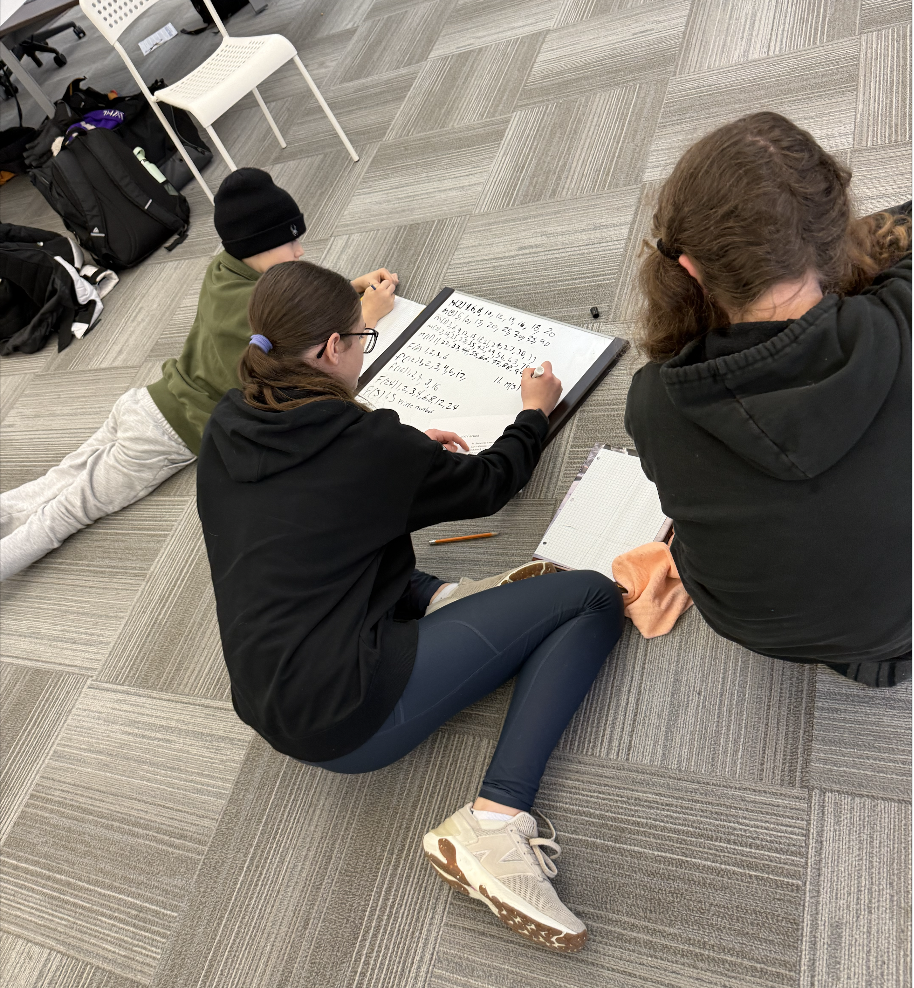
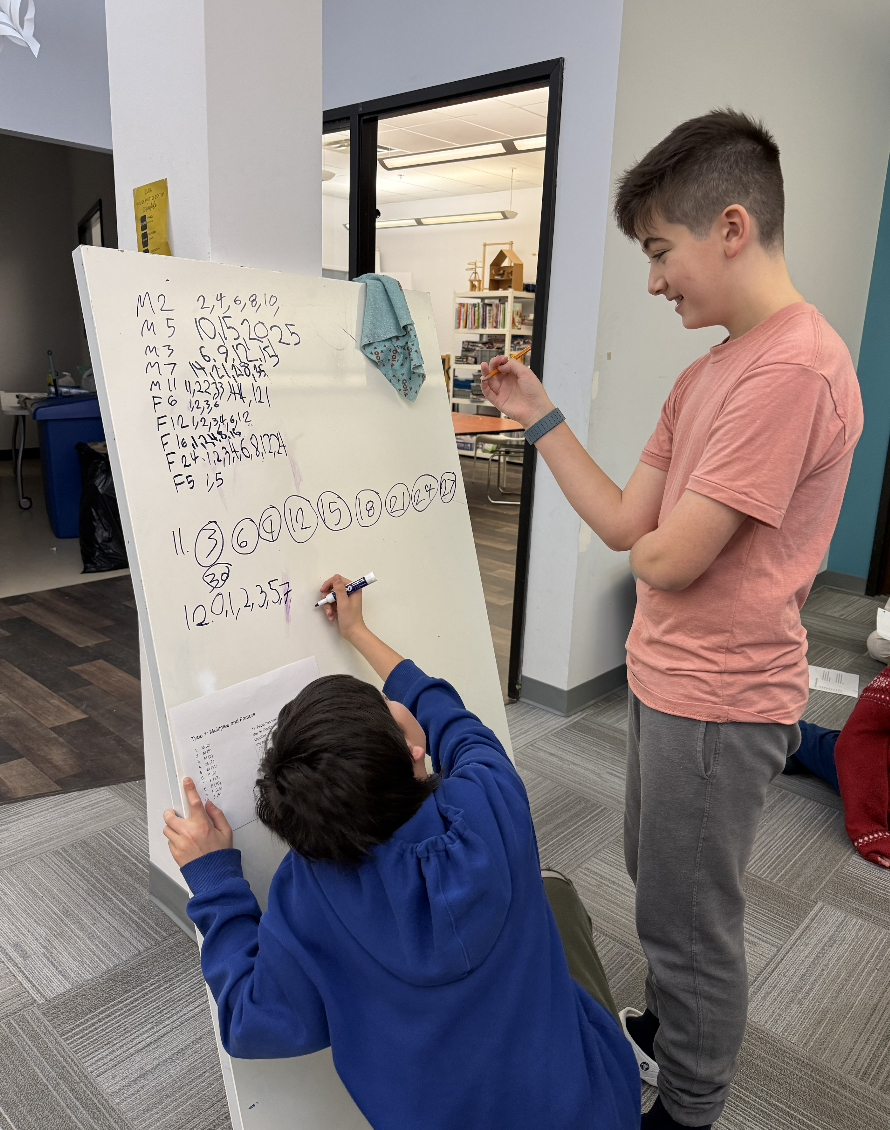
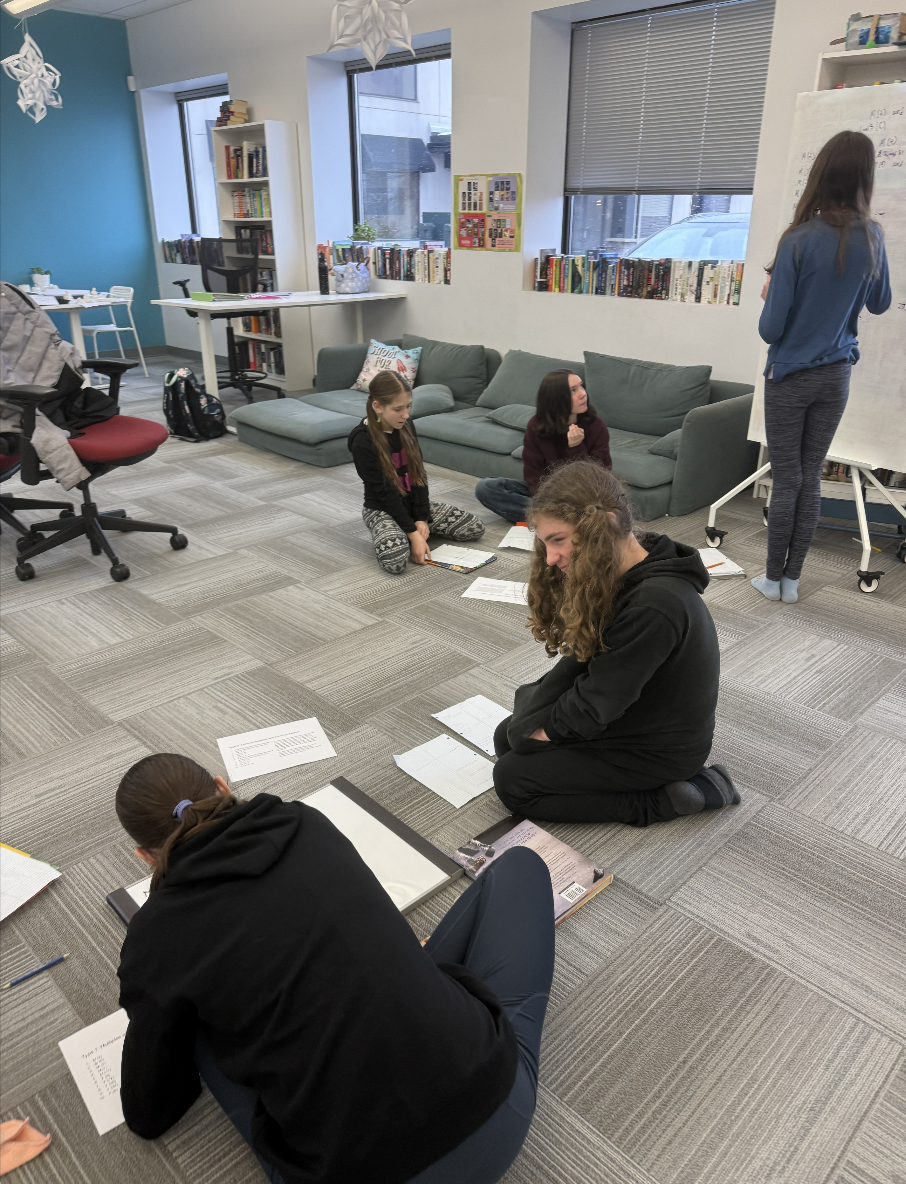
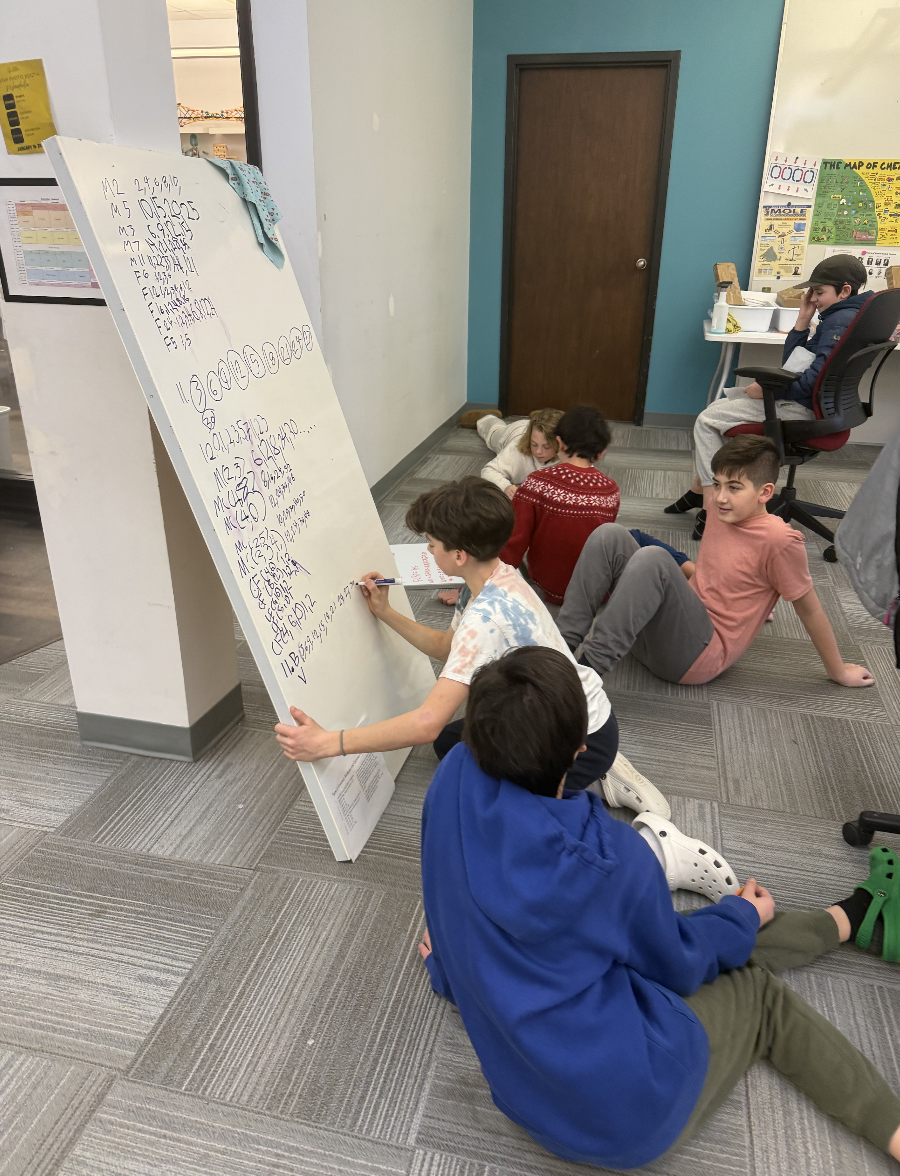
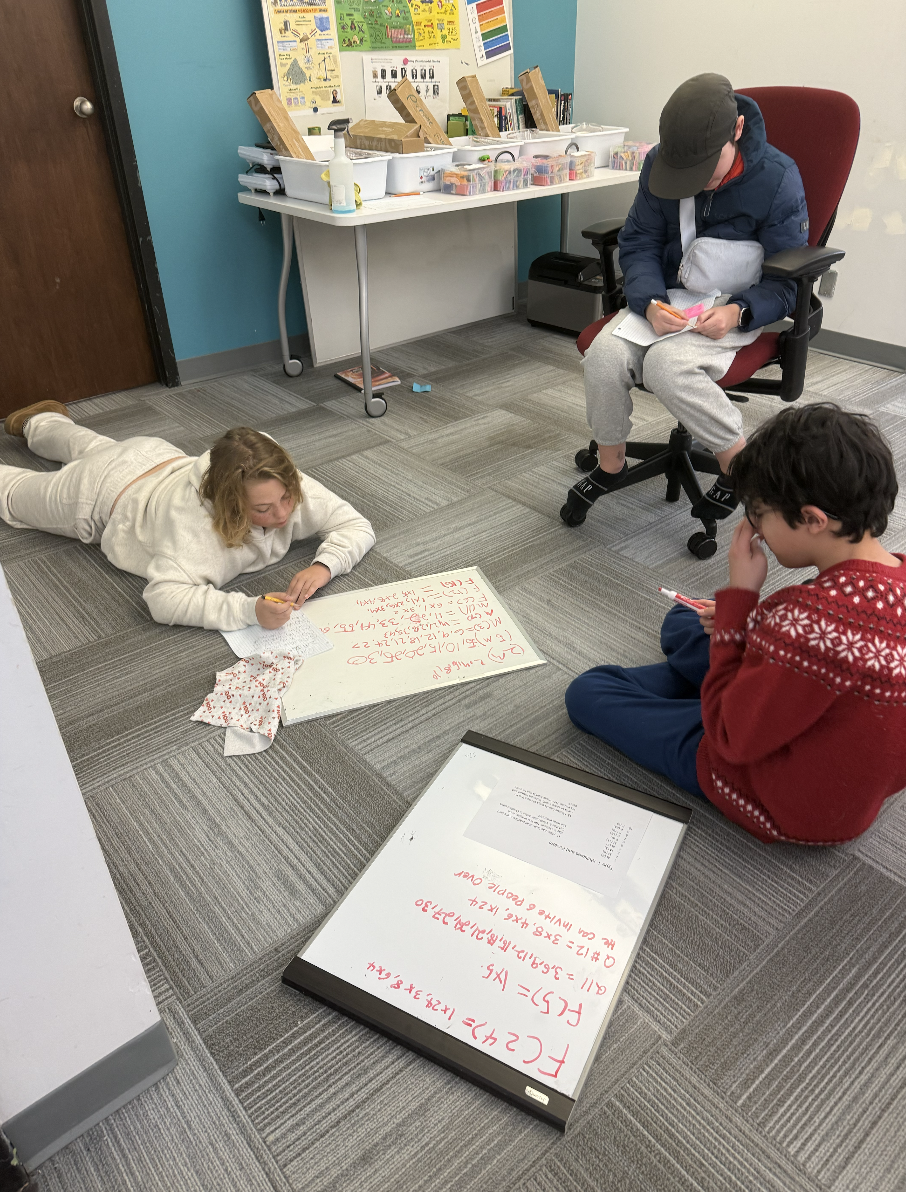
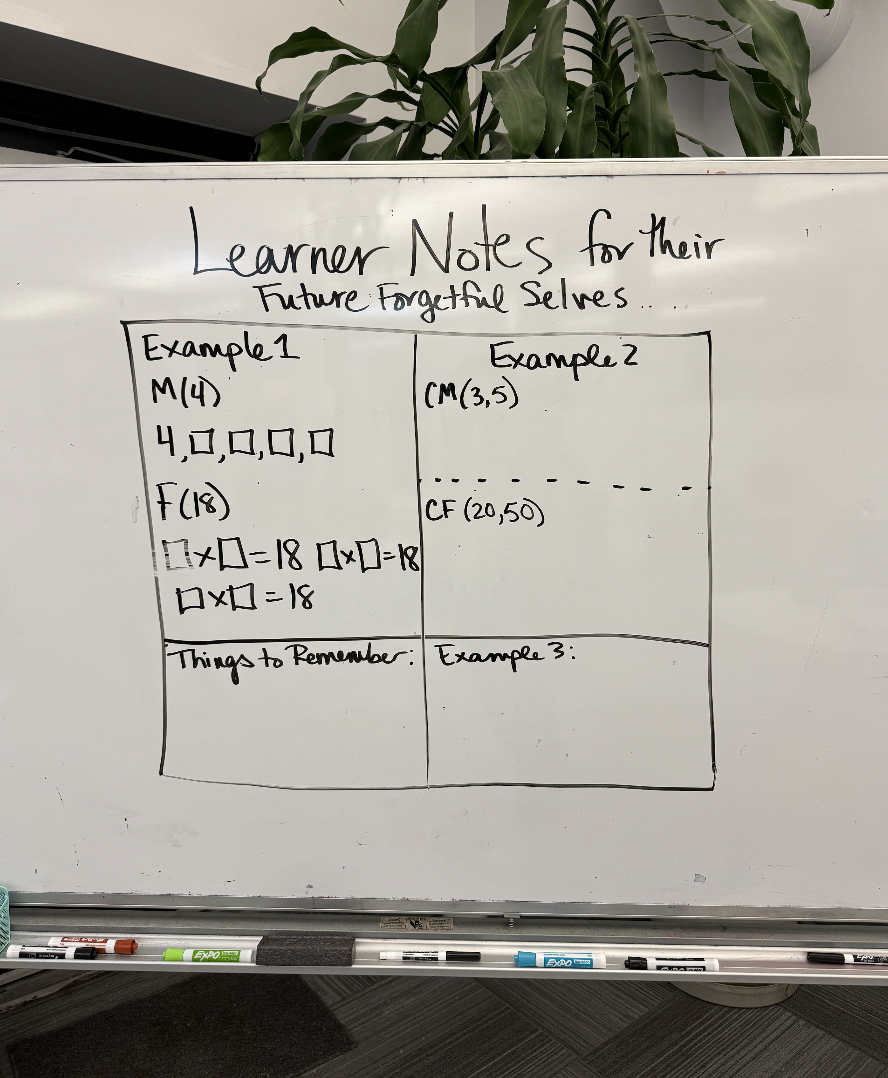
This week in our Building Thinking Classroom session, we reviewed multiples and factors! After reviewing the terms, randomly selected teams went to their whiteboards to solve a series of increasingly complex problems, starting with multiples and factors, then common multiples and factors, and finally least common multiples and greatest common factors. Teams worked well, sharing the marker and explaining their thinking! After meeting to discuss our findings and answer any questions, learners completed a consolidation task and their Student Notes, which are required to earn their badge. Rebels who wanted to earn the Honours Badge then completed an additional set of problems independently after the workshop.
French workshops
This week in French, learners used a Blooket to review common phrases used between servers and customers in a restaurant. We then practiced these phrases through a restaurant role-play, and learners answered comprehension questions based on what they had just read and heard. During the second workshop, learners had to write a paragraph in French about their favourite restaurant. They shared details about the restaurant's location, decor, menu, and service, and tried to persuade Mme. Marianne to visit their restaurant!
Quest - Cooking with Chemistry
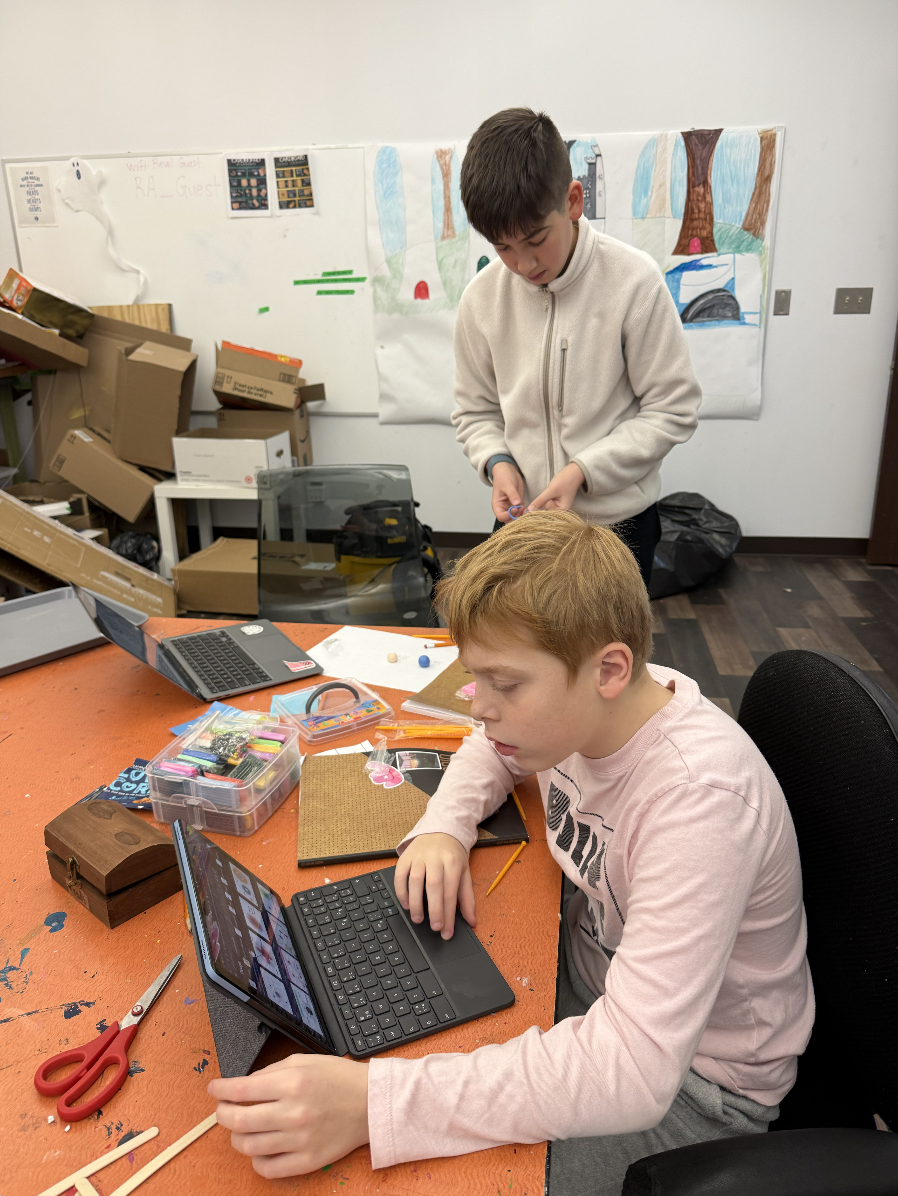
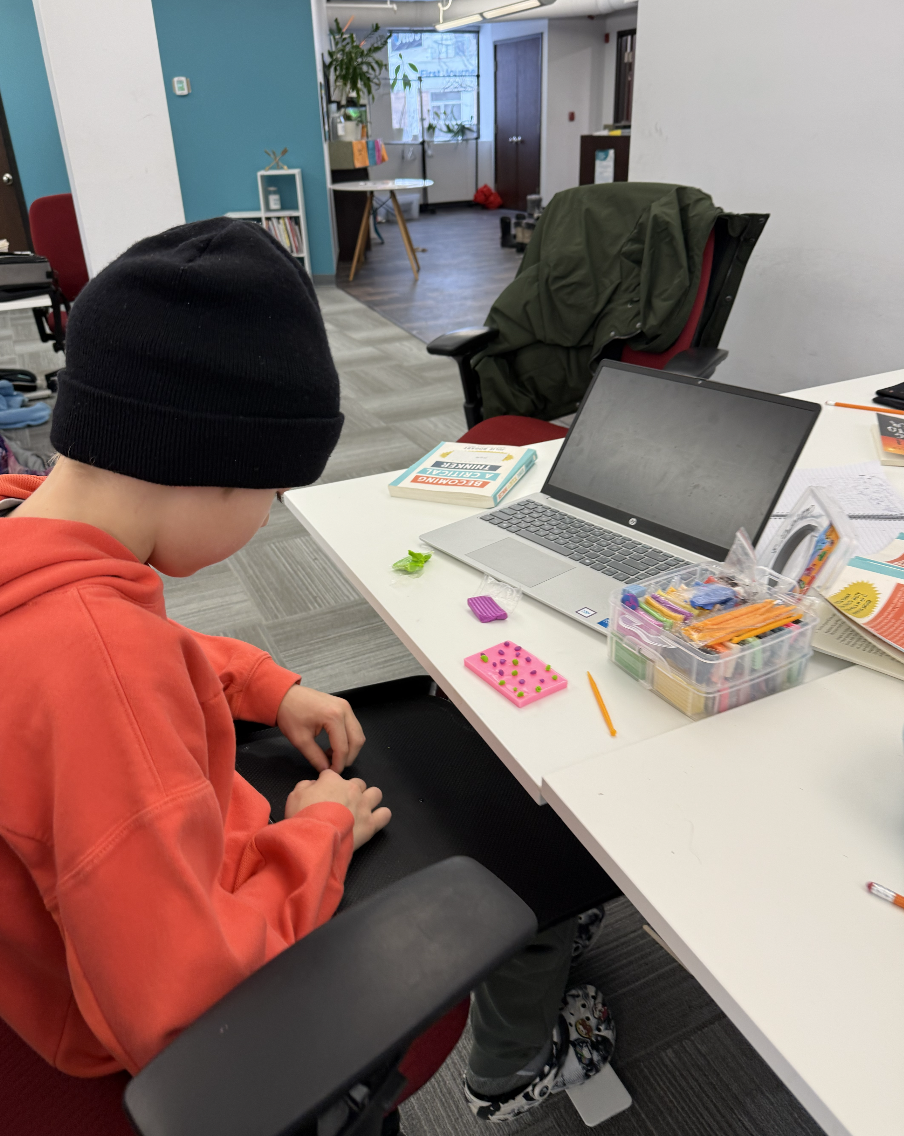
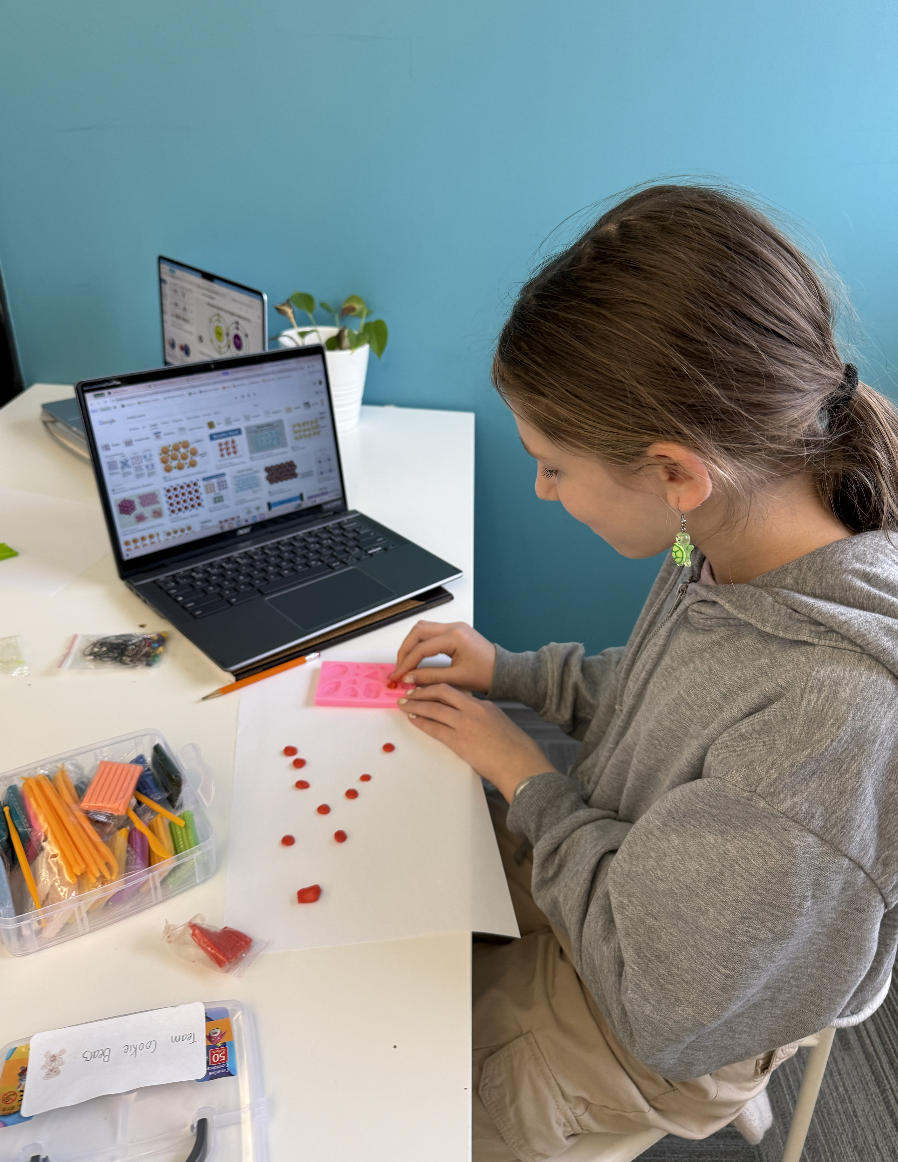
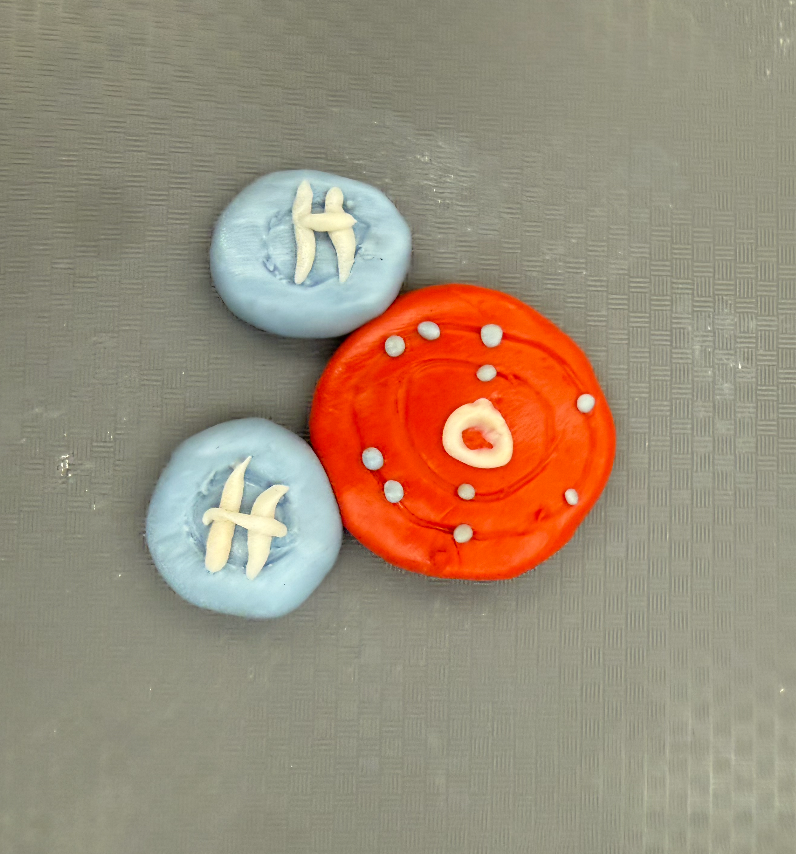
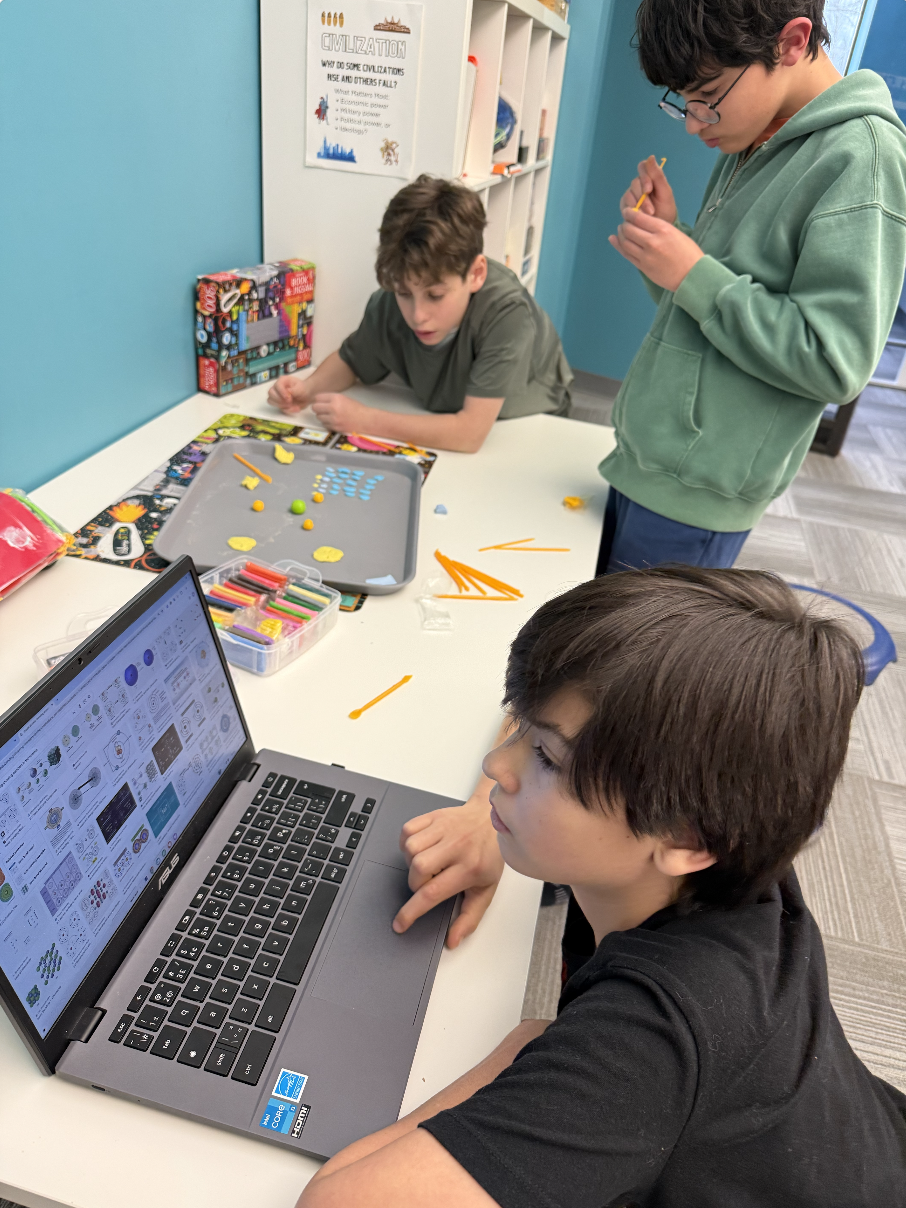
Every time we enter a new area of study, we have to dig into the basics. So on Monday, the learners took on a scavenger hunt of sorts on atomic models, protons, neutrons, and electrons. Using a series of articles and videos, by the end of the Quest period, each team created their own clay model or drawing of Democritus and/or Aristotle and/or Dalton, Thomson, Rutherford, Bohr, and Quantum Theory, along with an explanation of each and a timeline. As they learned about each theory, Rebels took notes about who developed the model and their experiments. They also labelled the different parts of the atom and paid attention to the weight, location, and charge of each particle. Once their models and notes were done, each Rebel took a series of quizzes to check their understanding. On Tuesday, we focused on bonds. Bonds are the forces that hold atoms and ions together to build larger building blocks. Bonds are also important because they are the key to chemical reactions and the absorption or release of energy. Since understanding how electrons are lost and gained (or shared) is key to understanding cooking processes, Rebels used various sources to learn about covalent vs. ionic bonds and the differences between polar and non-polar molecules. They then gathered with their team to see how many examples of the different types of bonds they could draw or model (and label) using atoms: Ionic Bonds, Metallic Bonds, Non-polar Covalent Bonds, and Polar Covalent Bonds. Teams displayed their completed drawings and models, and on Wednesday morning, each Rebel cast a vote for the team they felt produced the best displays. On Wednesday, we turned our attention to pH and the amazing water molecule. Acids and bases play a key role in cooking, so Rebels learned what they are and why knowledge of each is essential. Teams then examined the ingredient lists of their favourite dishes and identified as many acids and bases as possible. Water is one of the most unusual substances on Earth. Rebels learned more about the unusual characteristics of water and why it is considered the universal solvent. Throughout the week, learners also learned about Rosalind Franklin, the scientist who took the famous Photo 51 showing the DNA double helix, which was (without her knowledge or permission) shown to a group of other scientists who published their work, leading them to receive the Nobel Prize. Rebels contemplated who owns scientific discoveries and whether Rosalind Franklin should have been awarded the Nobel Prize posthumously. We also talked about how Franklin was sometimes criticized for moving too slowly on research findings because she wanted to ensure she had all the facts. Is it better to have correct information when presenting a new finding or to be the first to publish it? Learners also discussed how, in the world of chemistry, it is often impossible to be certain about how a chemical could be used or its long-term impact. Who should be responsible for the dispersion of newly developed chemicals or compounds: government agencies, business corporations and organizations, or individual researchers and chemists?
Civilizations - Big History
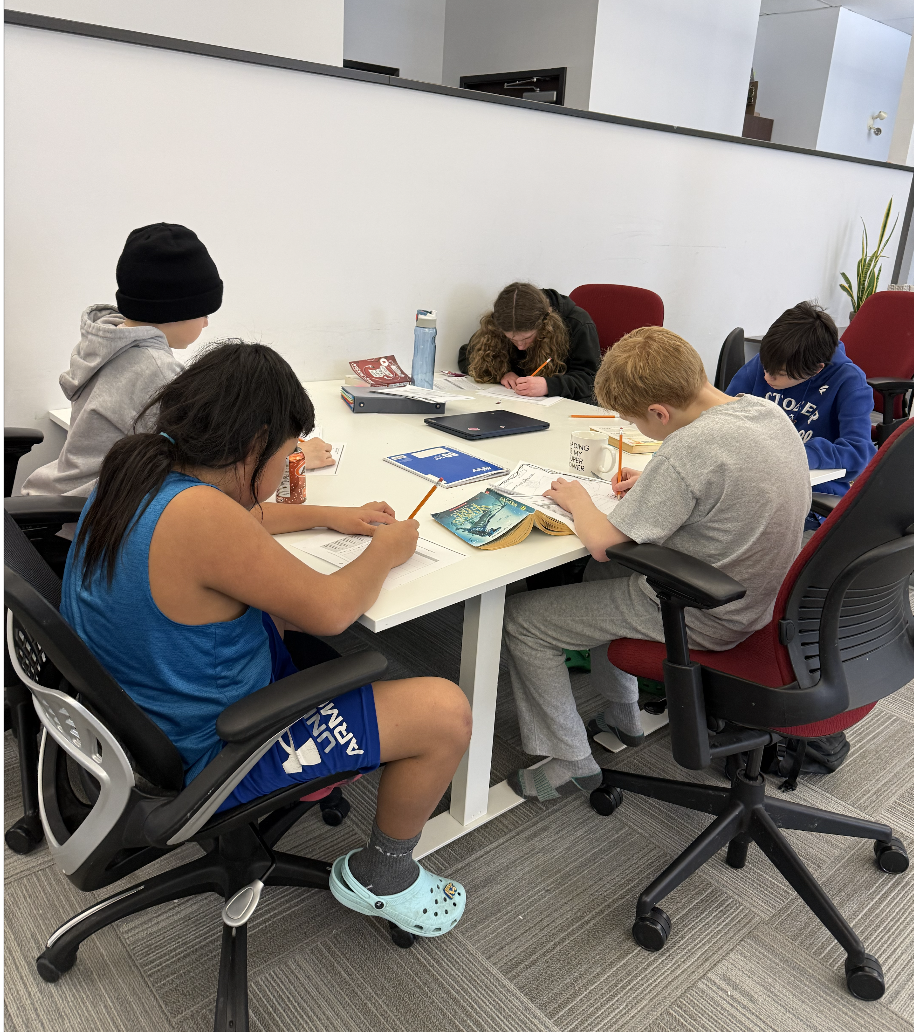
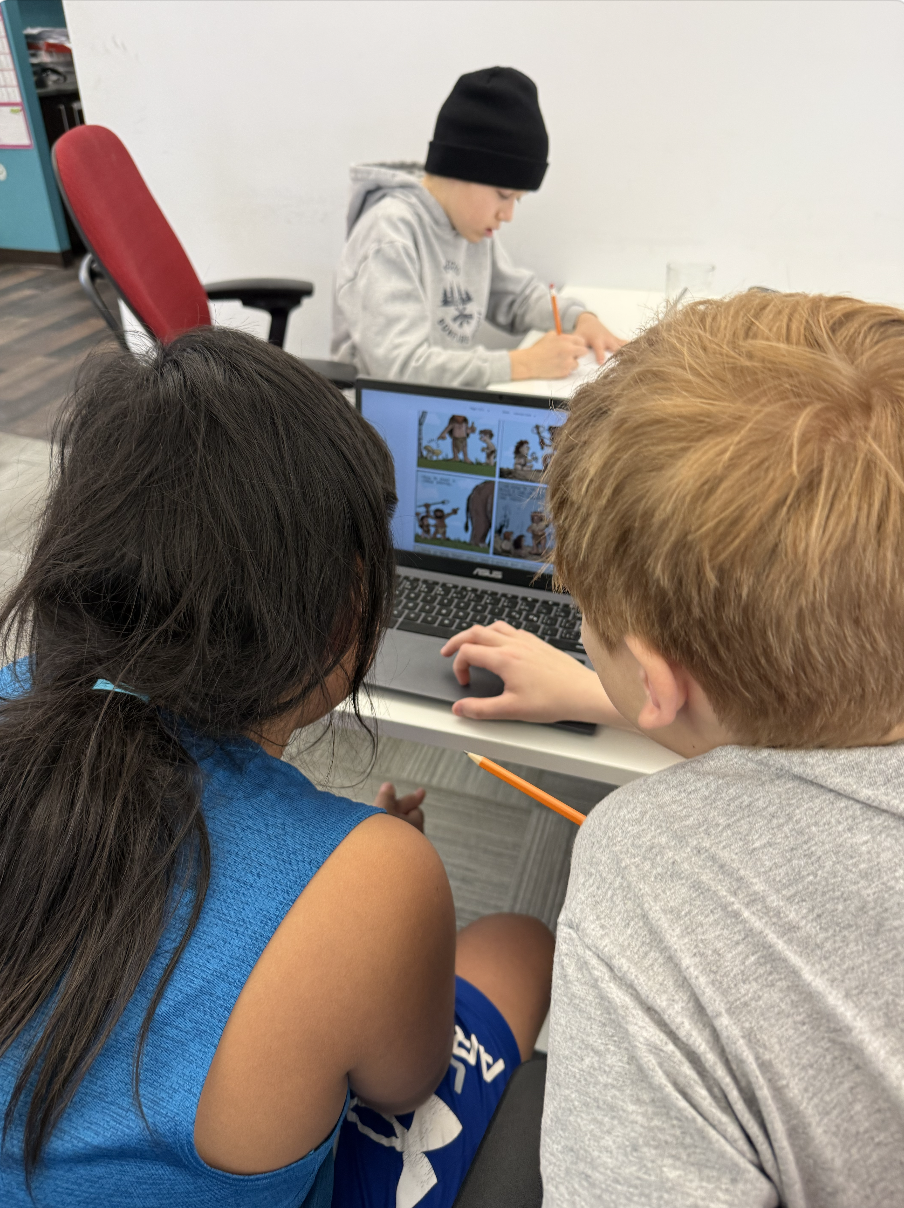
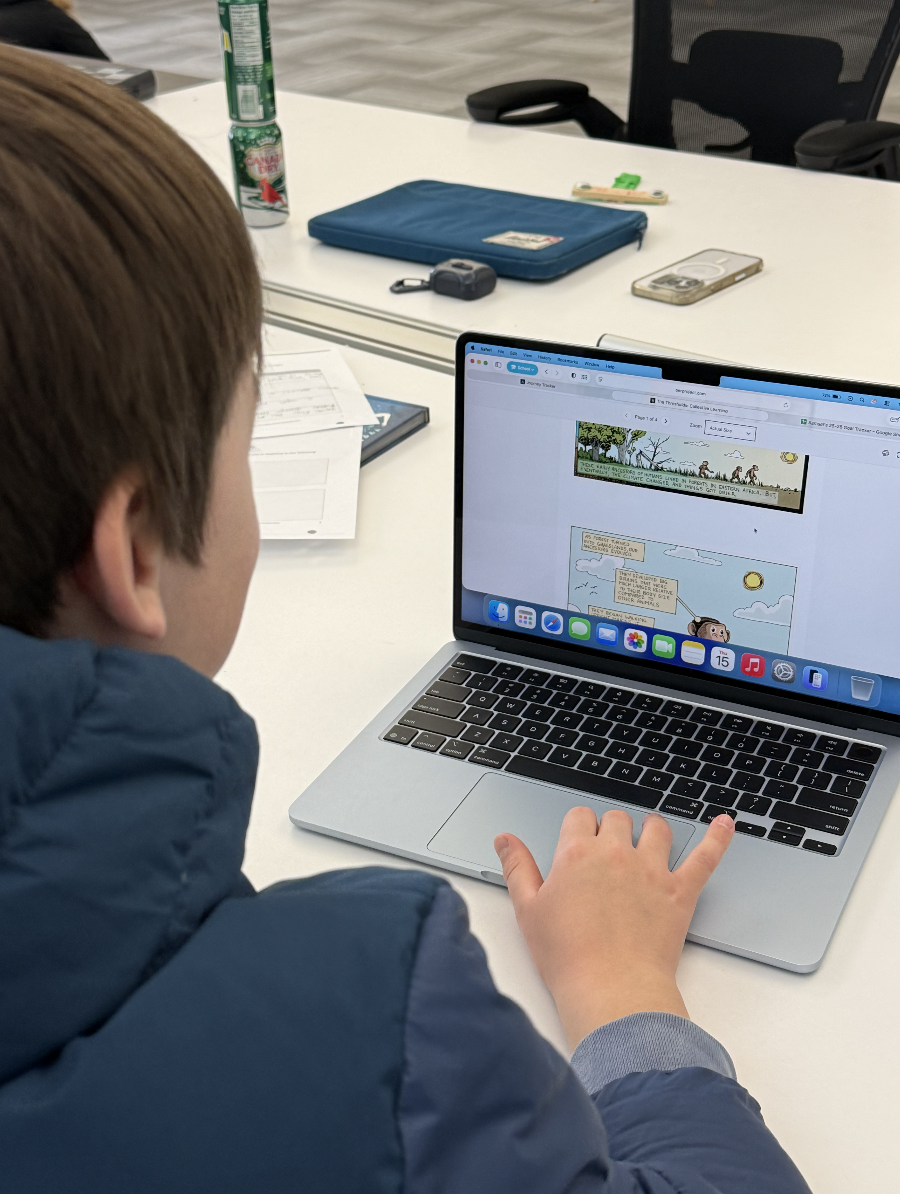
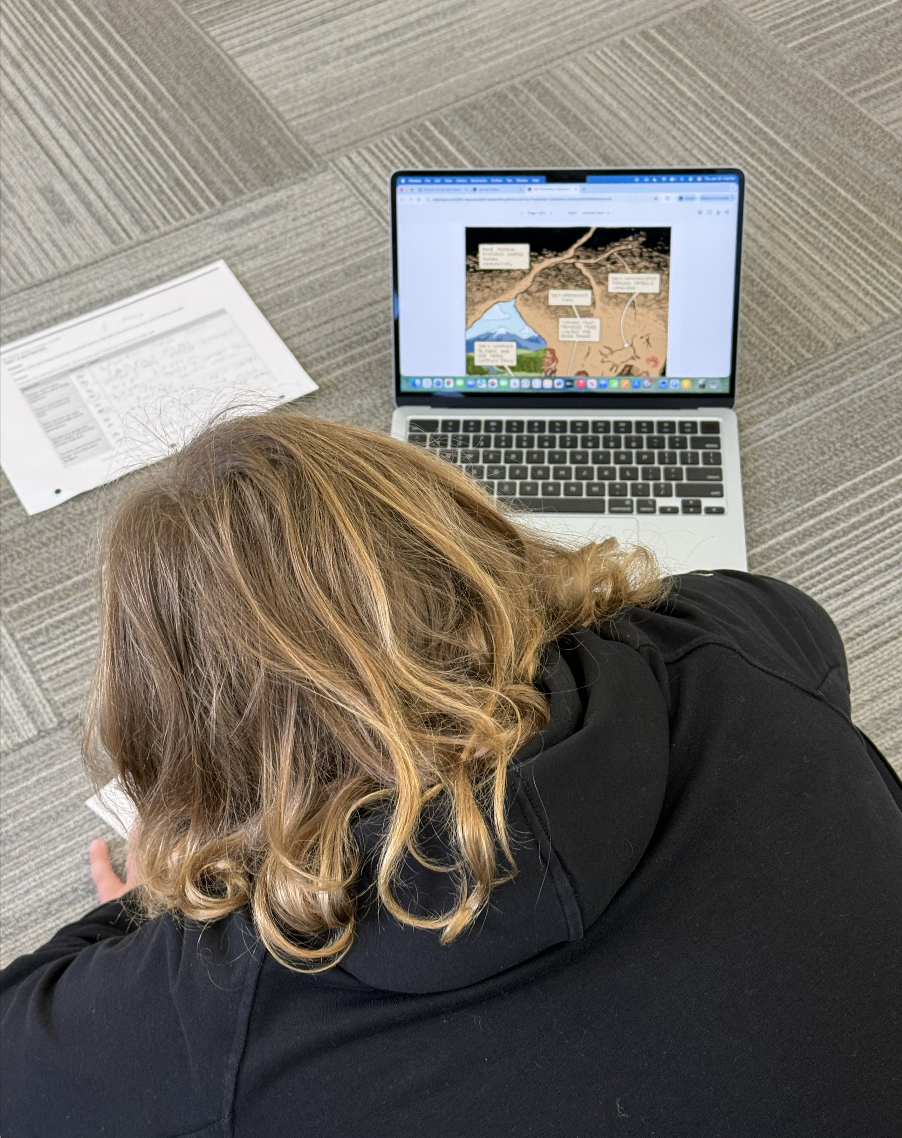
Humans are the result of billions of years of evolution. We share many traits with other living organisms on Earth, so what sets us apart? Humans communicate using complex language and pass information down across generations. But how did that happen? And why are we the only species that can do this? After starting with a unit opener on humanity's new complexity and assessing our prior knowledge, we read a comic to discover how early humans learned to use fire, communicate, and adapt to different climates. We then watched a video on Threshold 6 to learn about the Ingredients (powerful brains and symbolic language) and Goldilocks Conditions (interactions between individuals and communities) that created this new complexity (the ability to share, store, and pass down information across generations).
Personal Finance
We began our class with a review of stocks, mutual funds, bonds, and savings accounts, and we introduced GICs. We then discussed the history of stock exchanges, with a special focus on the NYSE. We learned that the New York Stock Exchange started as a group of merchants who met near a buttonwood tree in the late 1700s to trade bonds from cities and states, as well as Revolutionary War bonds, and a few stocks from the growing businesses in New York City. We also read about how it evolved during the 1800s, as the Industrial Revolution began sweeping across the country and the NYSE was at the center of financing its growth. Thousands of businesses were started, and they needed access to funds to finance their growth. Many of them sold stock on the NYSE to raise capital to build factories and expand their businesses. The first half of the 19th century also saw a massive boom in canal building. Canal construction was financed partly through government funding (through government bonds) and by selling shares in the canal companies to investors. These stocks would pay dividends to investors based on the canal tolls once the canal was completed. By the 1840s, canal companies were replaced by railroad construction companies, which were financed almost entirely through the sale of stock. It was during the railroad boom that the NYSE transitioned from being centred on bond trading to focusing mainly on the buying and selling of stocks. The invention of the telegraph allowed news on stock prices to reach investors immediately. Lastly, we learned that the NYSE was the center of some of the most important economic events in the United States, including Black Thursday in 1929, which marked the start of the Great Depression. After also talking about the TSX and the NASDAQ and their differences, we reviewed inflation, which means that the general prices of goods and services go up from one year to another. Inflation is a regular part of the economy, leading tens of thousands of companies to adjust their prices throughout the year. With our remaining time, Rebels checked on their online portfolios and made trades if they were inclined. Learners who finished early worked on their Budget Game or played Stock Shock.
Additional Highlights
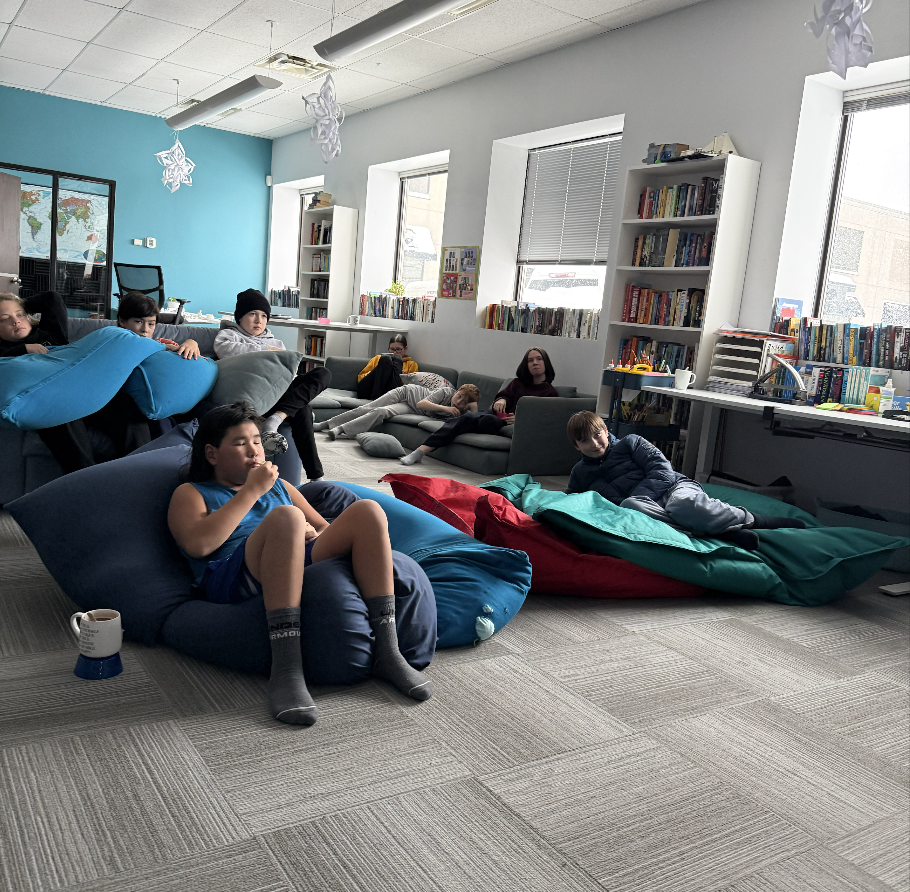
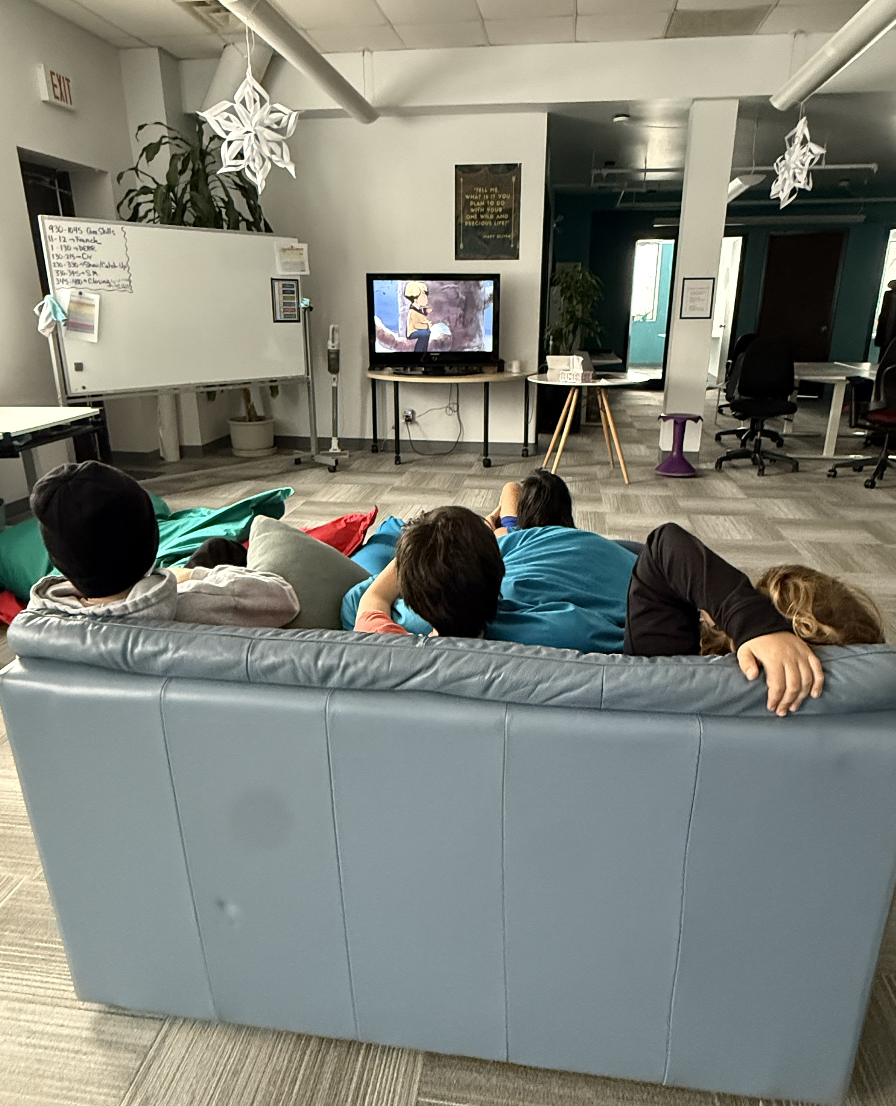
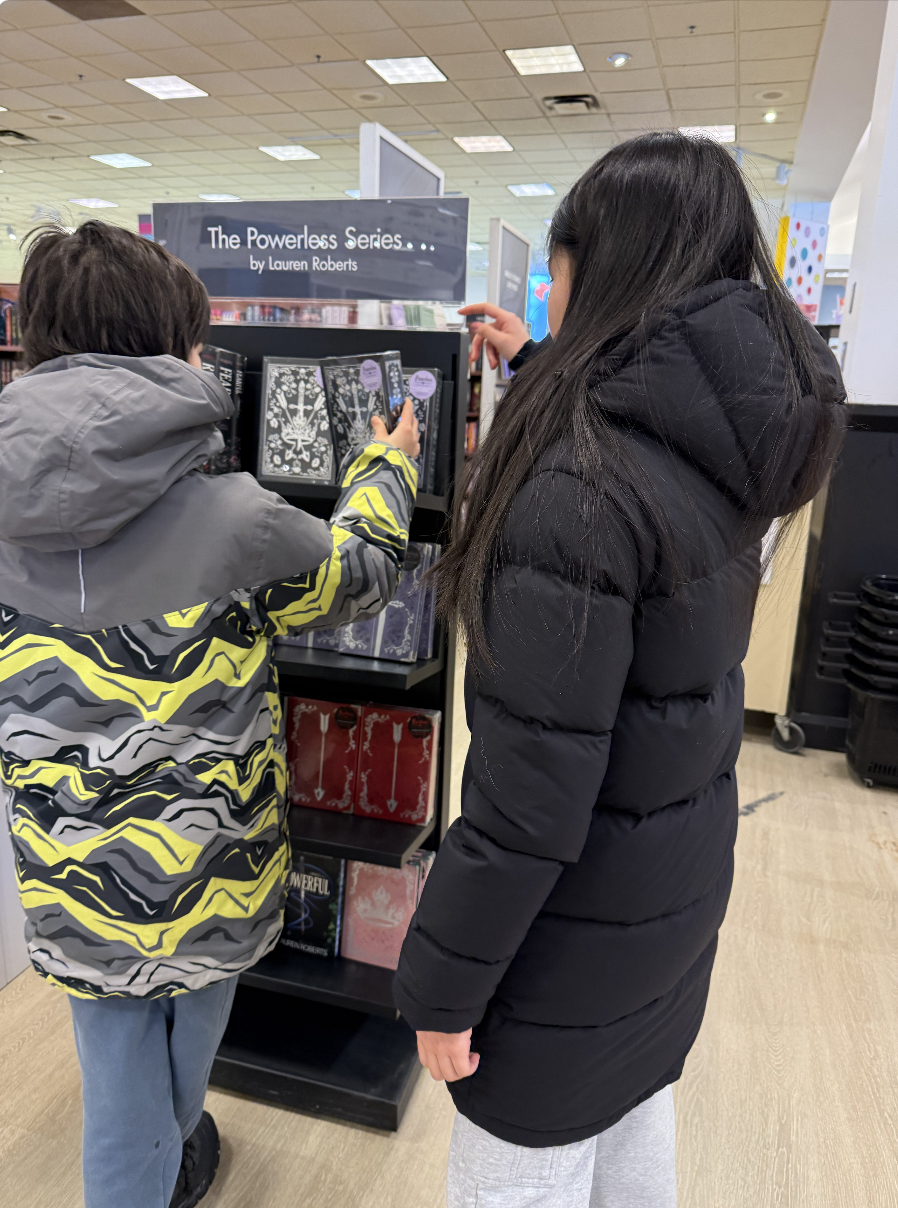
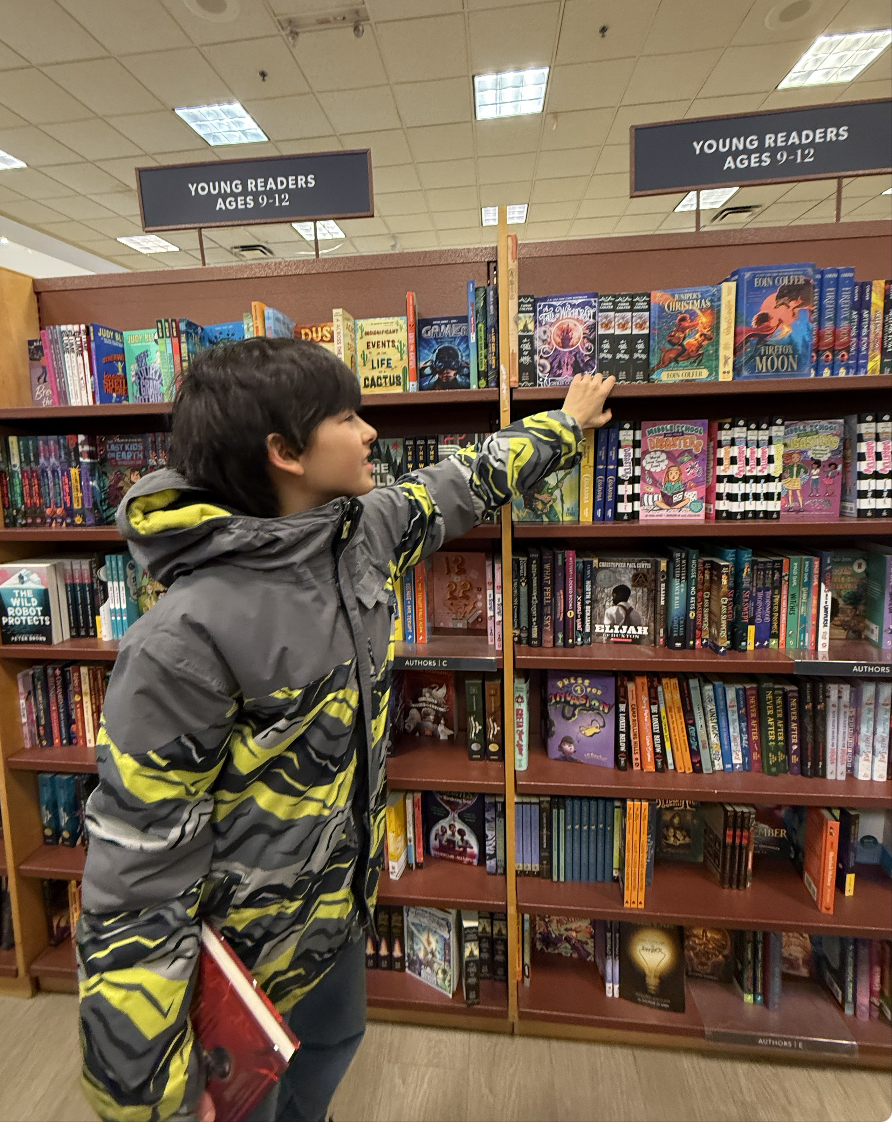
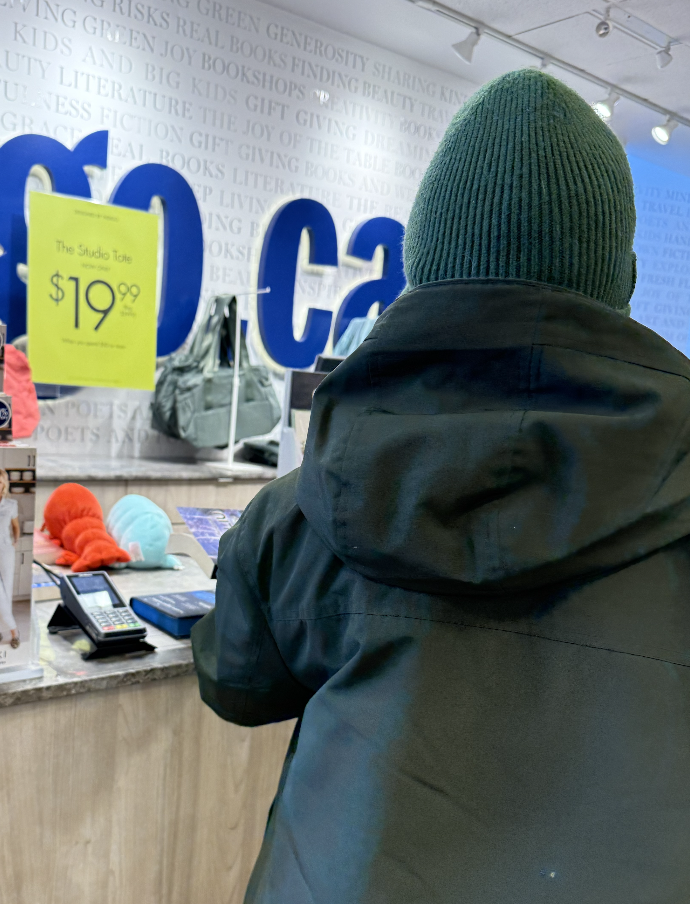
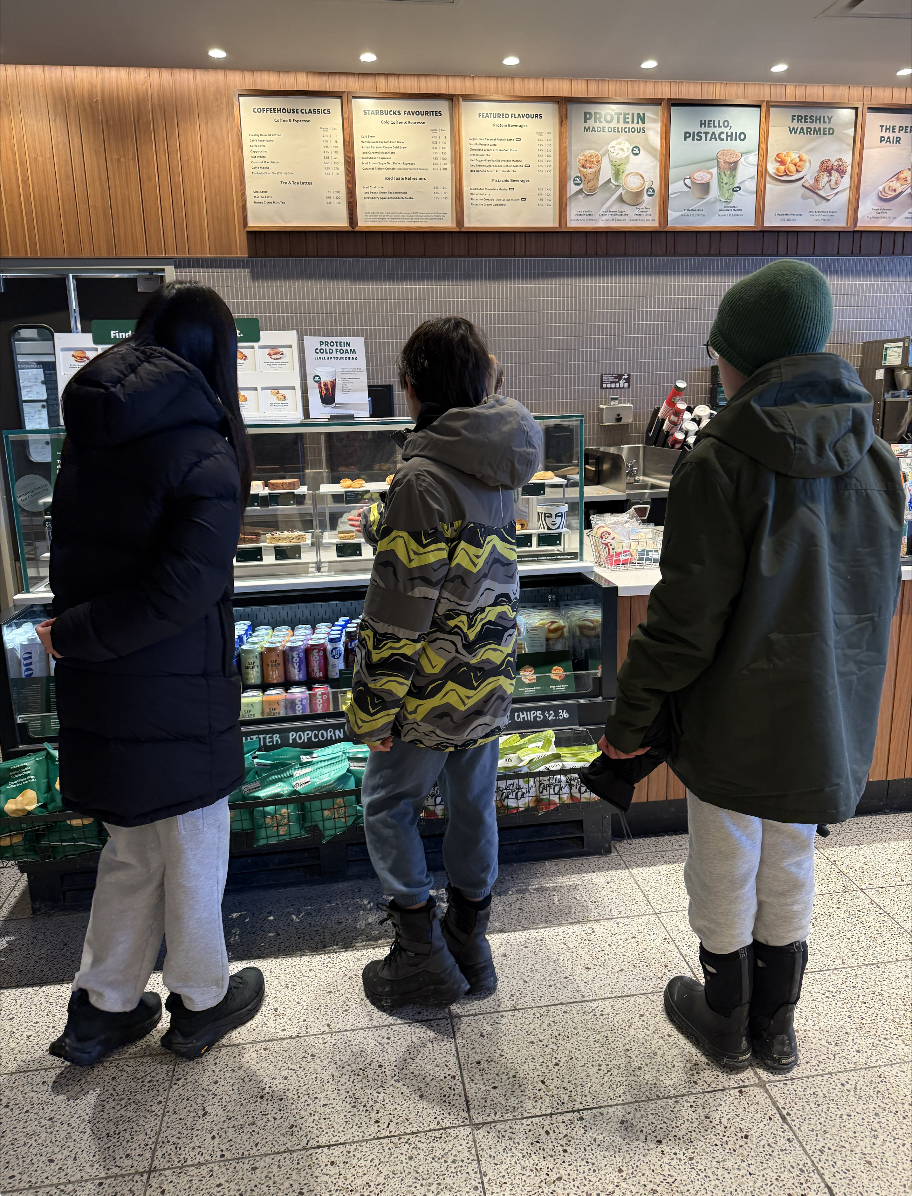
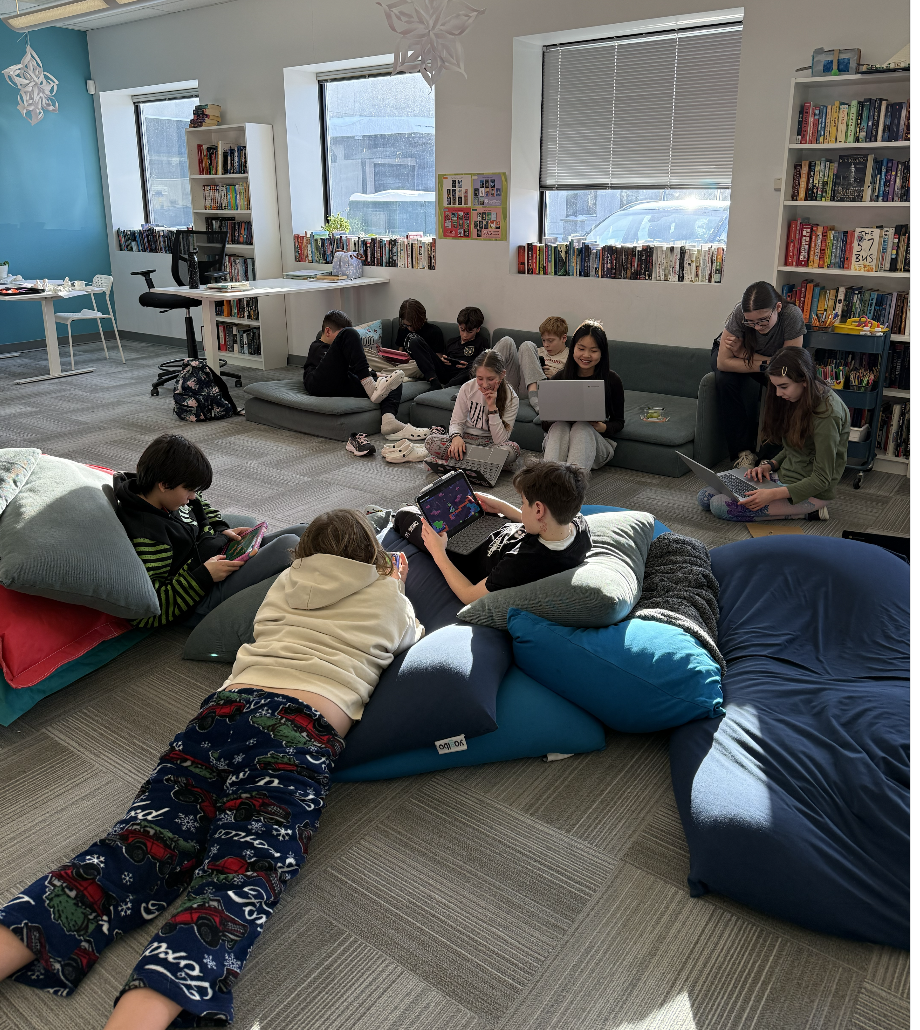
With several learners out on Thursday due to the snowstorm, we decided to postpone our weekly Cooking Competition. Instead of Quest, we altered our schedule and, after our work was complete, cozied up with popcorn and hot chocolate to watch The Boy, The Mole, The Fox, and the Horse. It is such a lovely movie full of life lessons and beautiful quotes. On Friday, three learners who won our Session 3 Above and Beyond Draw went to Indigo to pick out a book of their choice and to Starbucks for a treat and a drink. It was a fun outing with some excellent novels chosen!
Potential Discussion Questions/Ideas to ask your Rebel:
Spark Studio
Math Lab: What’s the value of each coin?
What colours did you pick for your business and why? What do colours represent?
Reader-writer: What 4 activities did the snowmen get up to at night?
Geography: What is a famous landmark in South America?
Discovery Studio
Math Lab: What is positional notation, and in which parts of the ancient world did this system develop?
Reader/Writer: After comparing and contrasting Athens and Sparta, which society do you feel had more power and potential to conquer Ancient Greece? Why?
How did the geography of Sparta influence their military culture and ways of life?
What symbols did you use/design on your Spartan shield this week?
Would you rather live in ancient Sparta or Athens at the age you are now? Why?
French: What is your favourite dish? Do you know how to say it in French?
Exploration Studio
In the world of chemistry, it is often impossible to be certain how a chemical can be used or what its long-term impact will be. Imagine you worked as a chemist for a large chemical manufacturing company in R&D. What factors would you consider and want to understand when deciding to release a chemical to the world today, or waiting 5 years for additional safety testing?
Would you work on developing a drug that could possibly cure a deadly disease if you knew it could also be easily weaponized and cause irreversible psychological damage?
Which of water's unusual characteristics do you believe are most important to understand for the dishes you want to cook? (Remember – every chemistry fact or example you can connect to cooking in the exhibition will gain you extra points, time and ingredients.)
Can you solve the following?
M (9)
F (21)
CM (5, 7)
CF (20, 30)
GCF + LCM (18, 24)
What was your favourite quote or lesson from The Boy, The Mole, The Fox, and The Horse?
Which restaurant did you choose for your French presentation?
What is Rosalind Franklin’s greatest contribution?
Her discovery of the double helix in DNA,
Her work on viruses, including polio,
Her work on coal led to more effective gas masks in WWII.