
Revel Recap: Jun 8-12
Important Upcoming Dates
Tuesday, June 16, 2026- Spark & Discovery Field Trip to the National Gallery of Canada
Thursday, June 18, 2026 - Exploration (Grade 8) and Launchpad (Grade 12) Studio Graduation Ceremony 3 pm
Thursday, June 25th - Full School Session 7 Exhibition at 4:15 pm
Monday, June 29th - Rebel Olympics
Wednesday, July 1, 20206 - Canada Day - NO School
Thursday, July 2, 2026 - Summer Birthday Party, Swimming, and Mr. Sundae Ice Cream Truck!
Spark Studio
Mindfulness and Launch
We started our mornings this week by tying into our Art Quest theme. We learned about several influential artists and recreated artwork inspired by their unique styles.
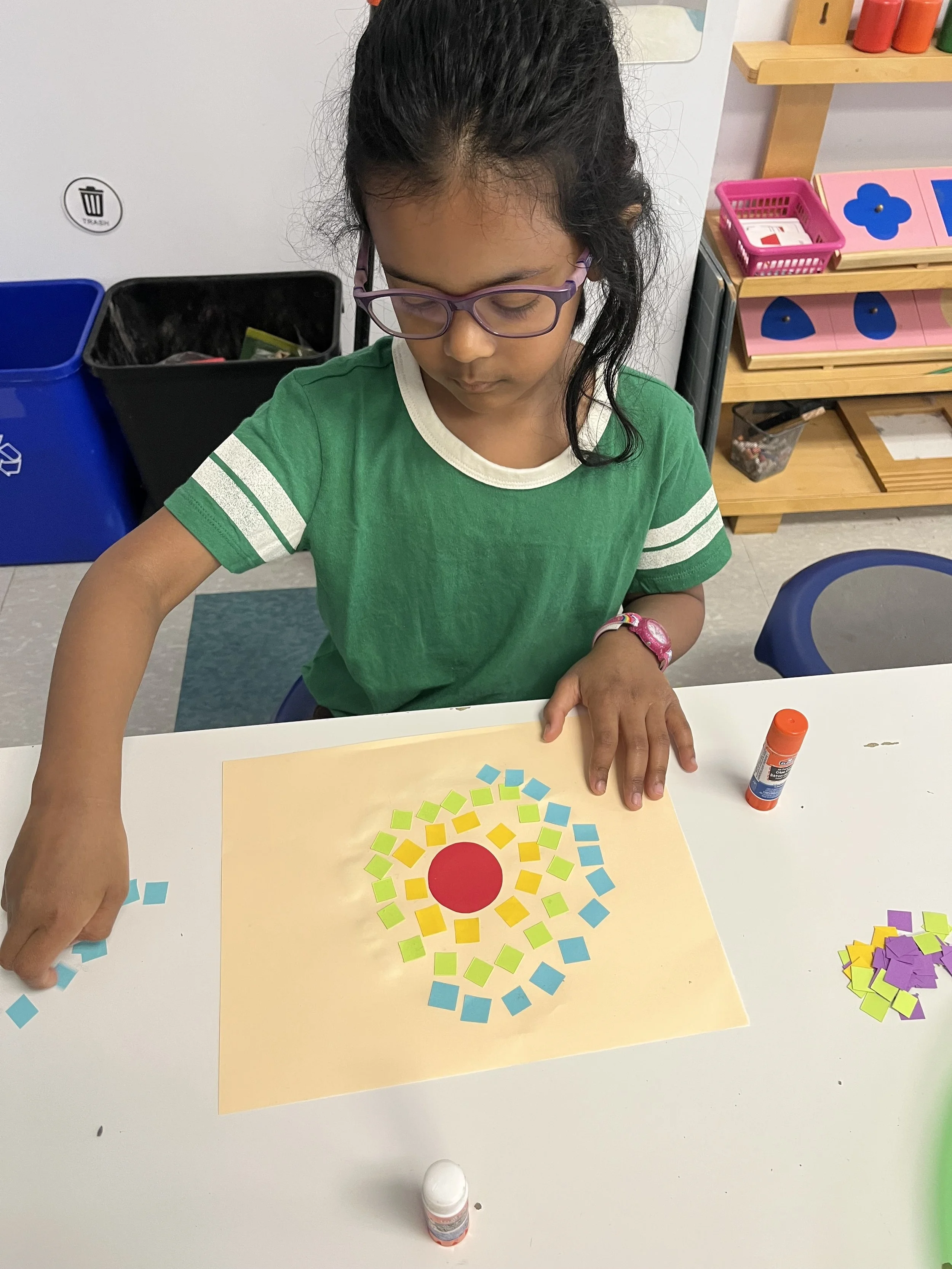
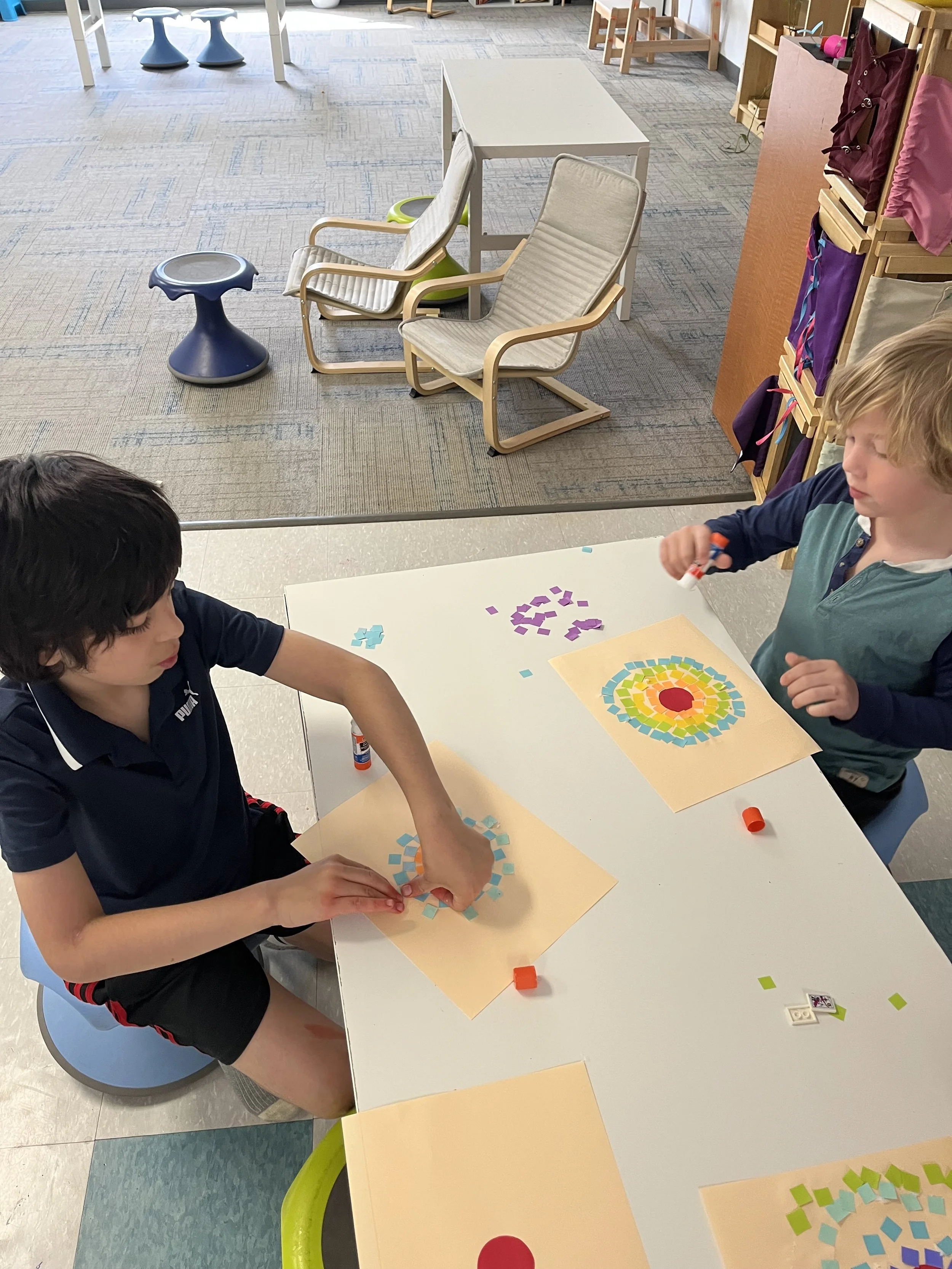
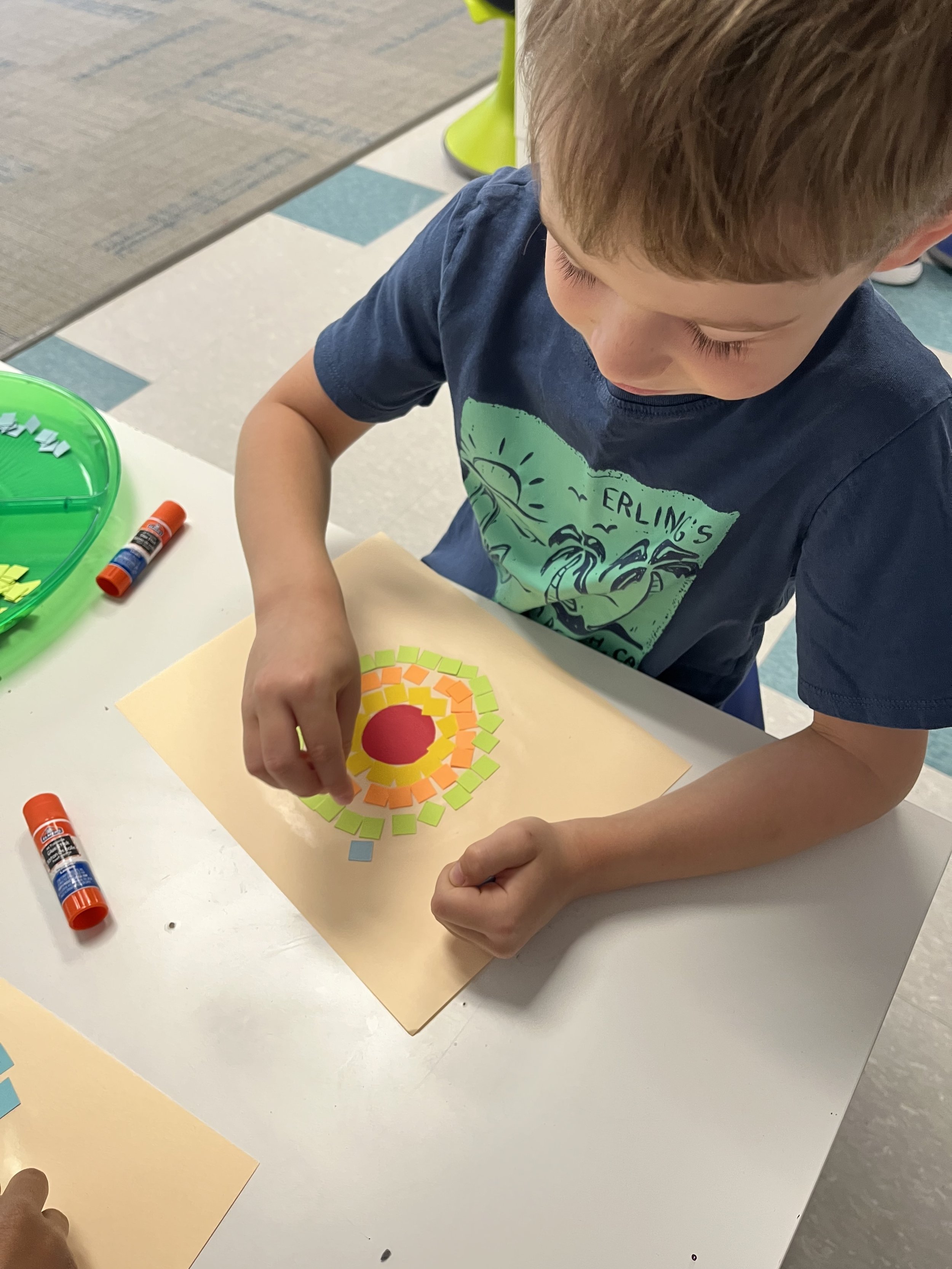
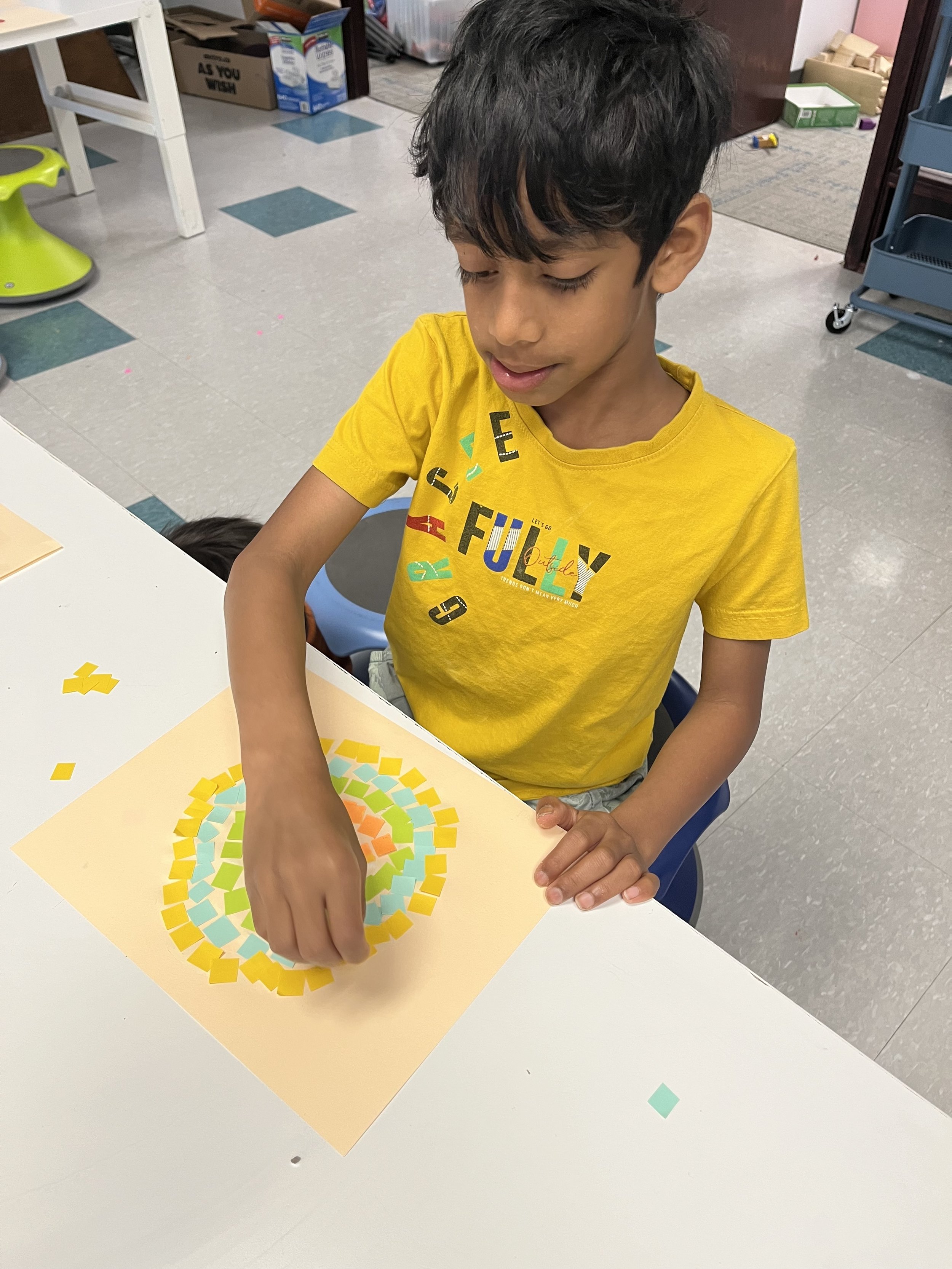
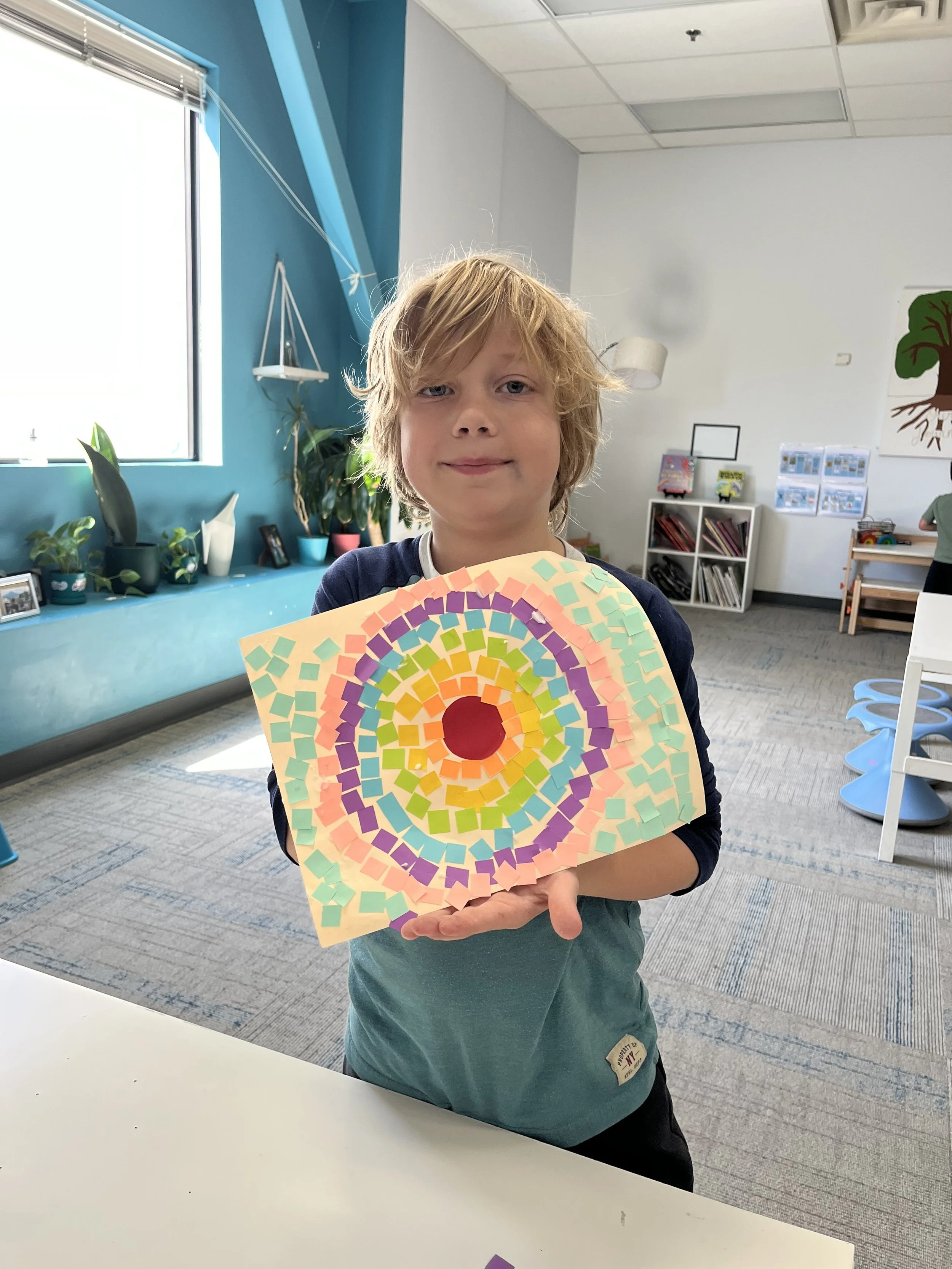
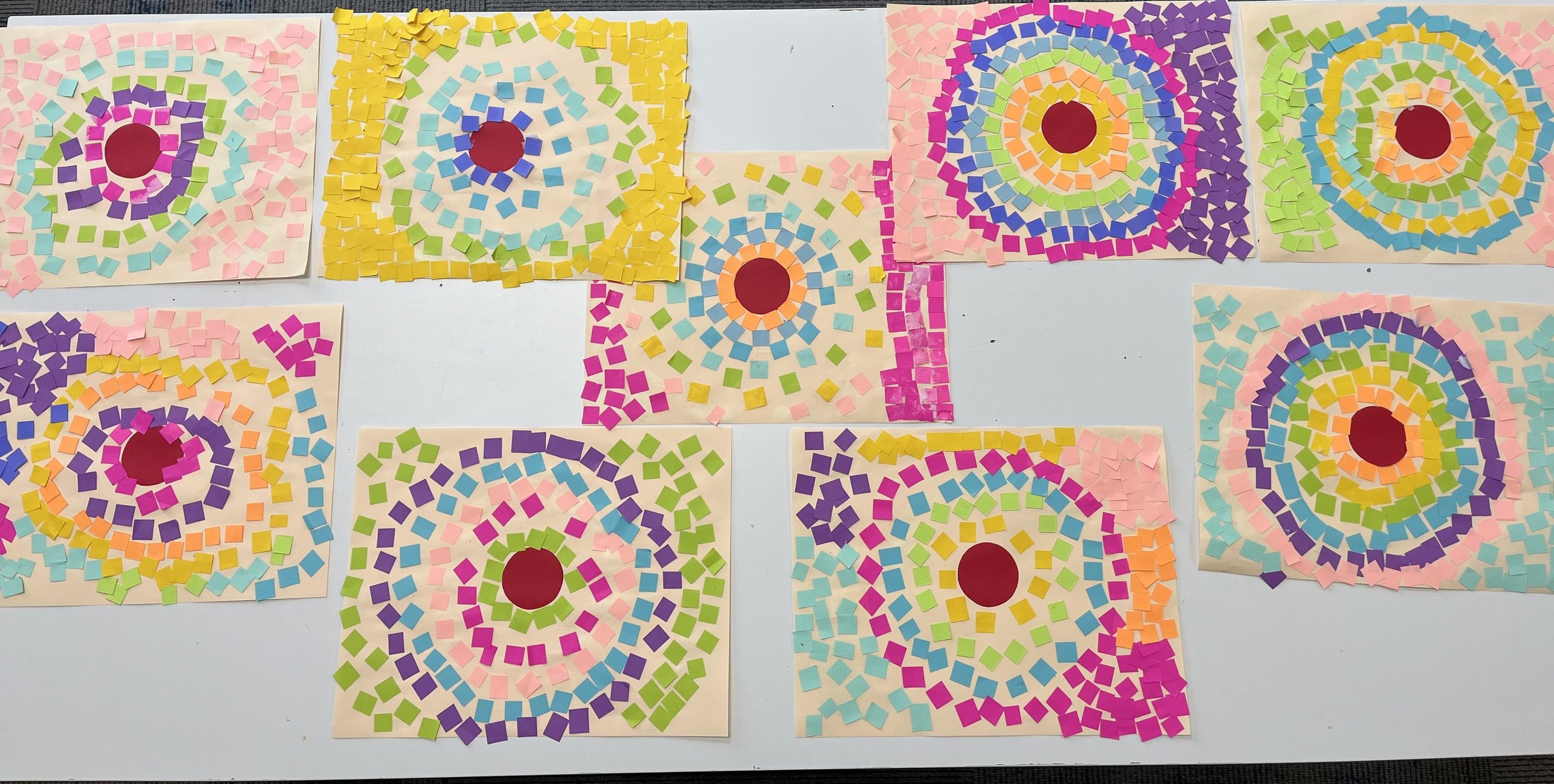
On Monday, we focused on Alma Thomas, a groundbreaking painter known for her vibrant colours and joyful, mosaic-like patterns. To begin, we read Ablaze with Color: A Story of Painter Alma Thomas. This beautifully written book shares how Alma grew up surrounded by creativity, curiosity, and a deep love of nature, and how she later became the first Black woman to have a solo exhibition at the Whitney Museum. It highlights her perseverance, her passion for colour, and her belief that art can bring happiness to the world. After our story, the Sparks created their own Alma-inspired circle art. Using bits of colourful paper, they arranged small pieces into radiating rings, just like Alma's iconic style. This activity encouraged them to explore pattern, colour choice, and patience as they built their artwork piece by piece.
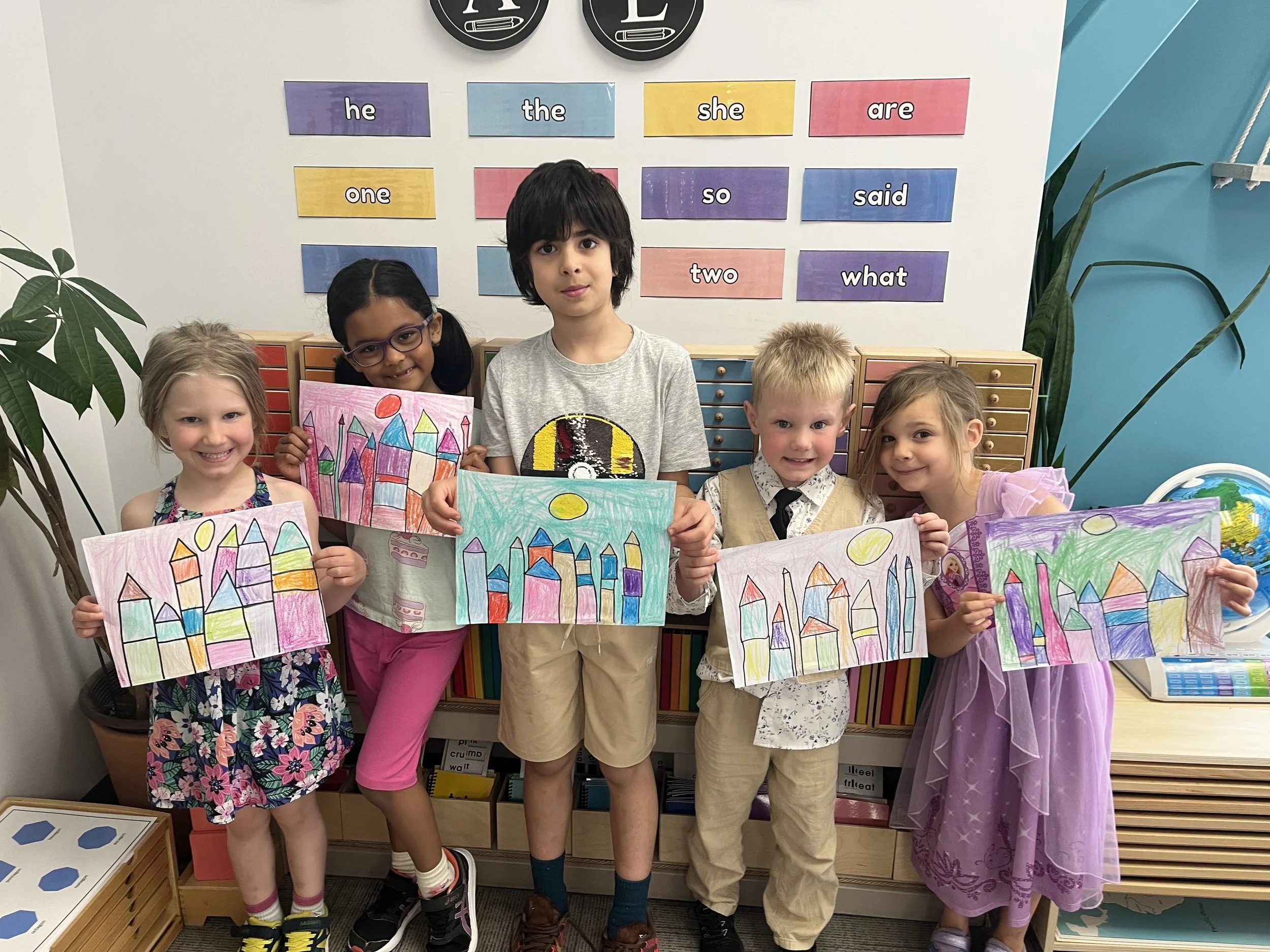
On Tuesday, we read Van Gogh and the Sunflowers, a story that introduced us to Vincent van Gogh's life and the friendship that inspired his famous sunflower paintings. We then coloured our own versions of his iconic vase of sunflowers. On Wednesday, we focused on self-portraits. After looking at several famous artists' self-portraits, the Sparks followed a directed drawing lesson that helped them add thoughtful details to their work, including hair texture, eye shape, accessories, and expressions. The result was a collection of wonderfully personal and expressive portraits. On Thursday, we learned about the contemporary artist Yayoi Kusama, known for her love of dots and bold patterns. Inspired by her playful style, learners created their own dot-based artworks. To finish the week, we created colourful cityscape drawings inspired by Paul Klee. We explored geometric shapes, lines, and vibrant colour combinations to build imaginative skylines full of character.
Quest
This week in Quest, the Sparks explored the world of famous artists and recreated some of their iconic styles through hands-on art experiences.
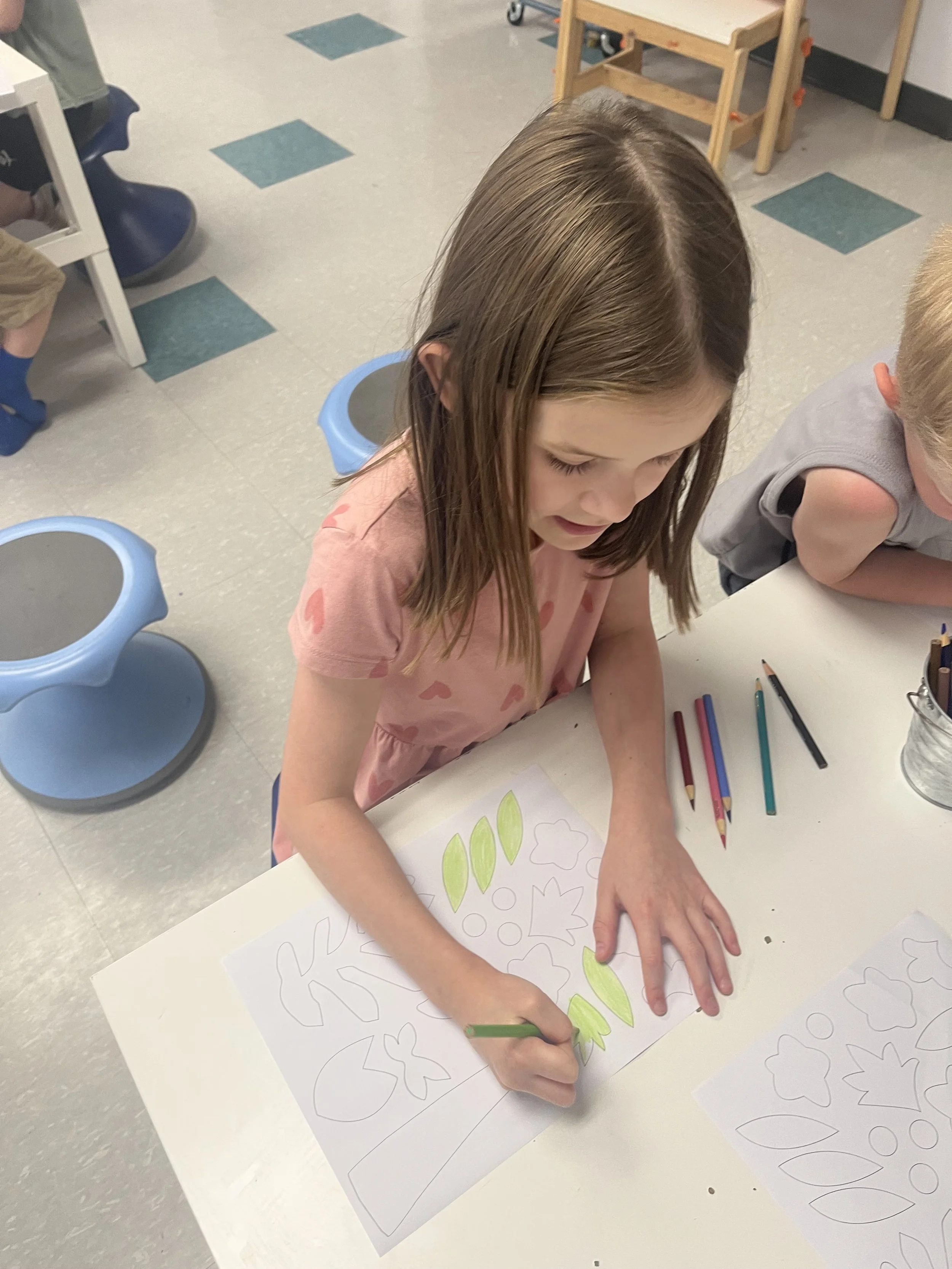
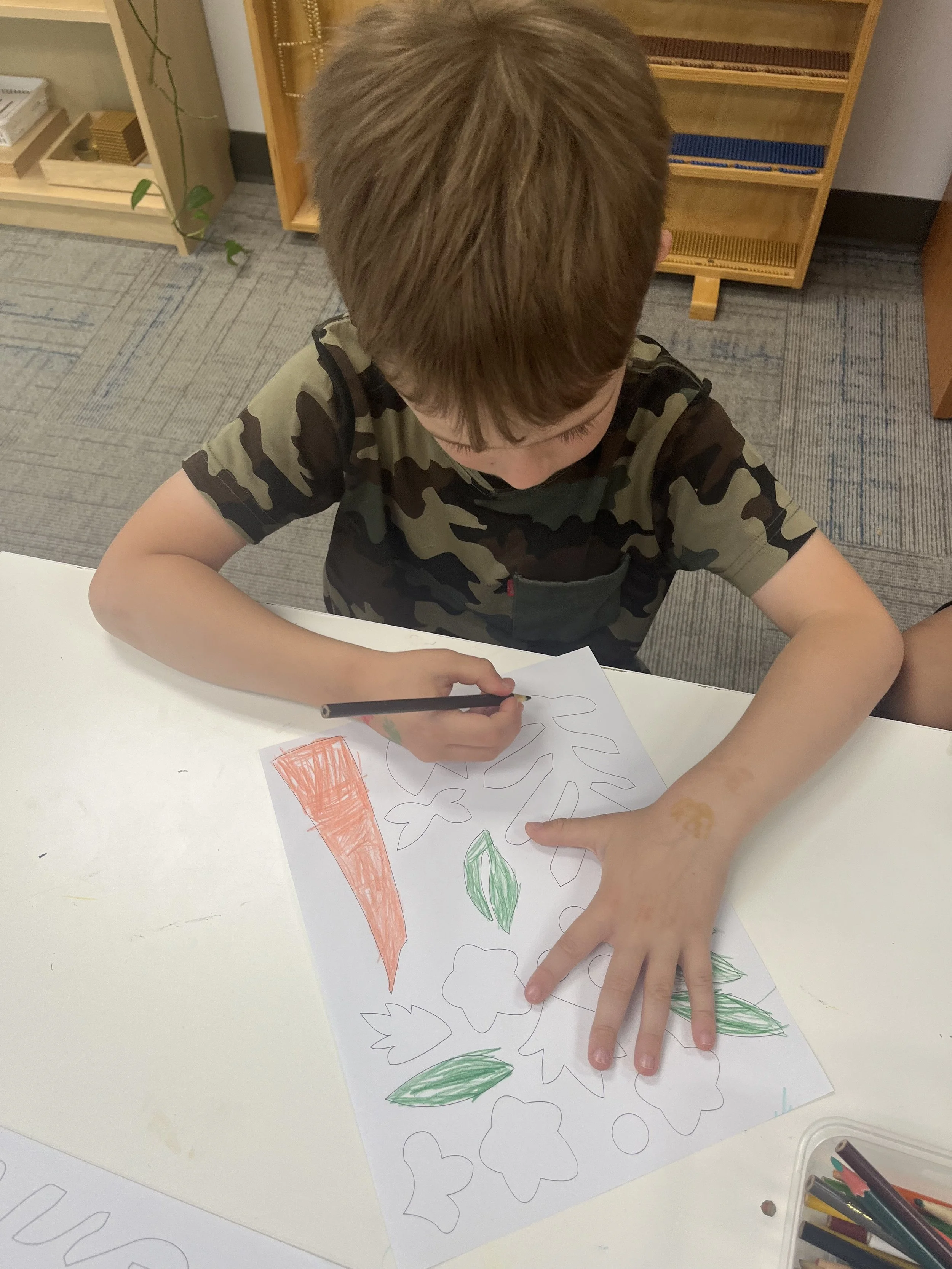
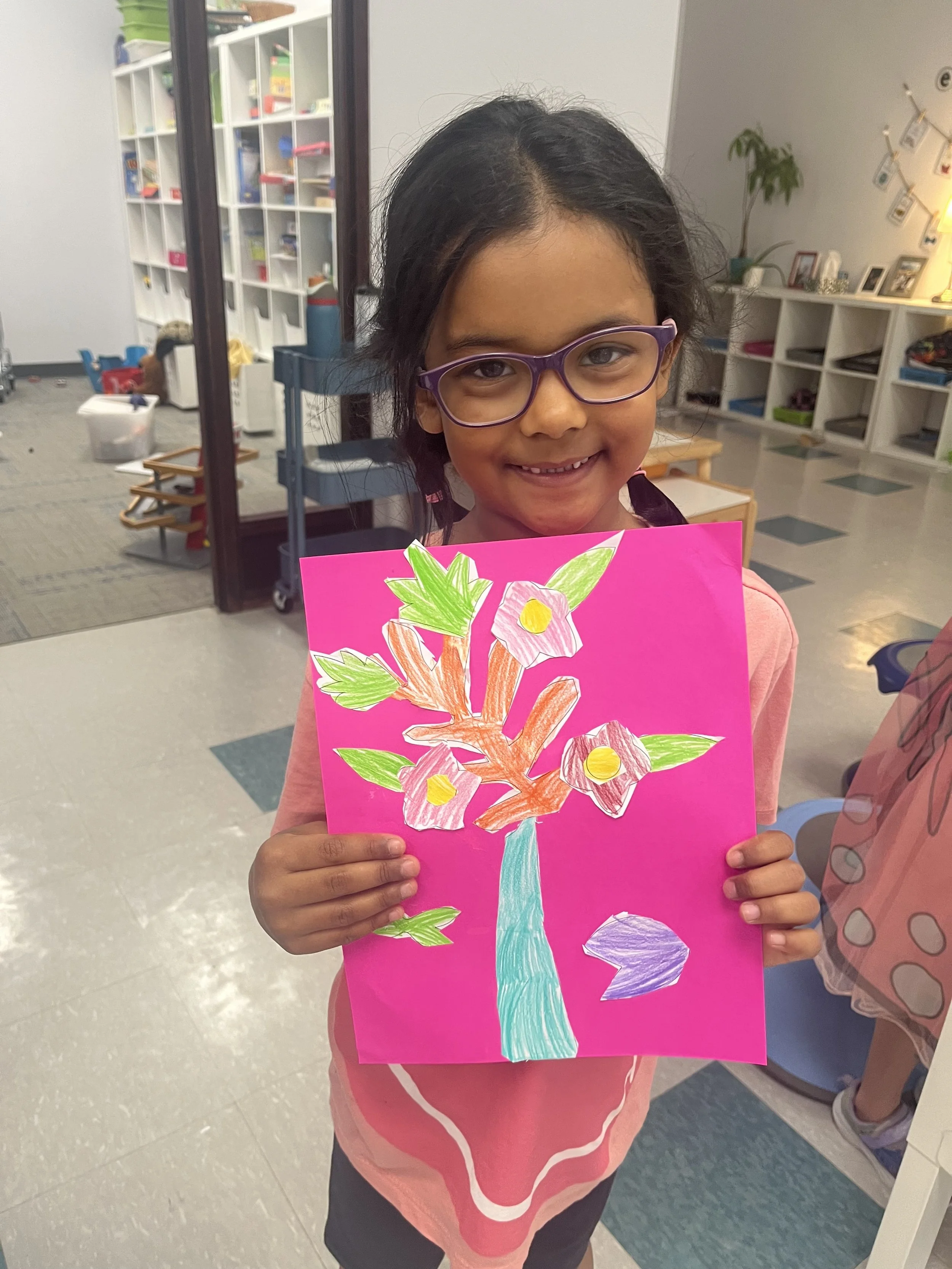
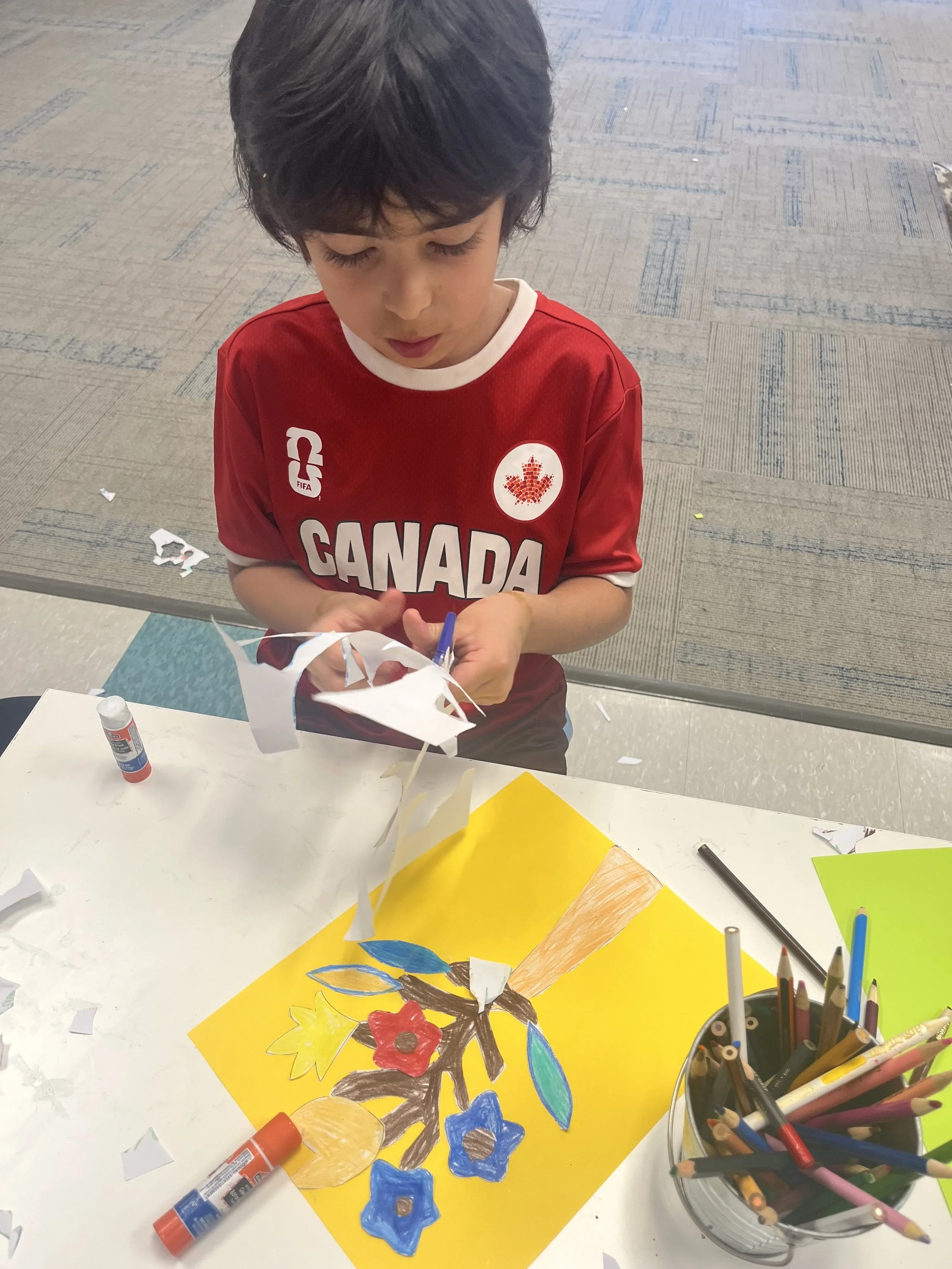
We began by learning about Henri Matisse. First, we read Henri's Scissors, a story that explains how Matisse, later in life, turned to creating bold, colourful cut-paper artwork when he could no longer paint comfortably. We then visited the Museum of Modern Art online to learn more about Matisse's life and view examples of his famous cut-outs. Inspired by his favourite tool, scissors, the Sparks created vibrant flower vase collages. They used some of Matisse's iconic organic shapes to echo his playful and expressive style.
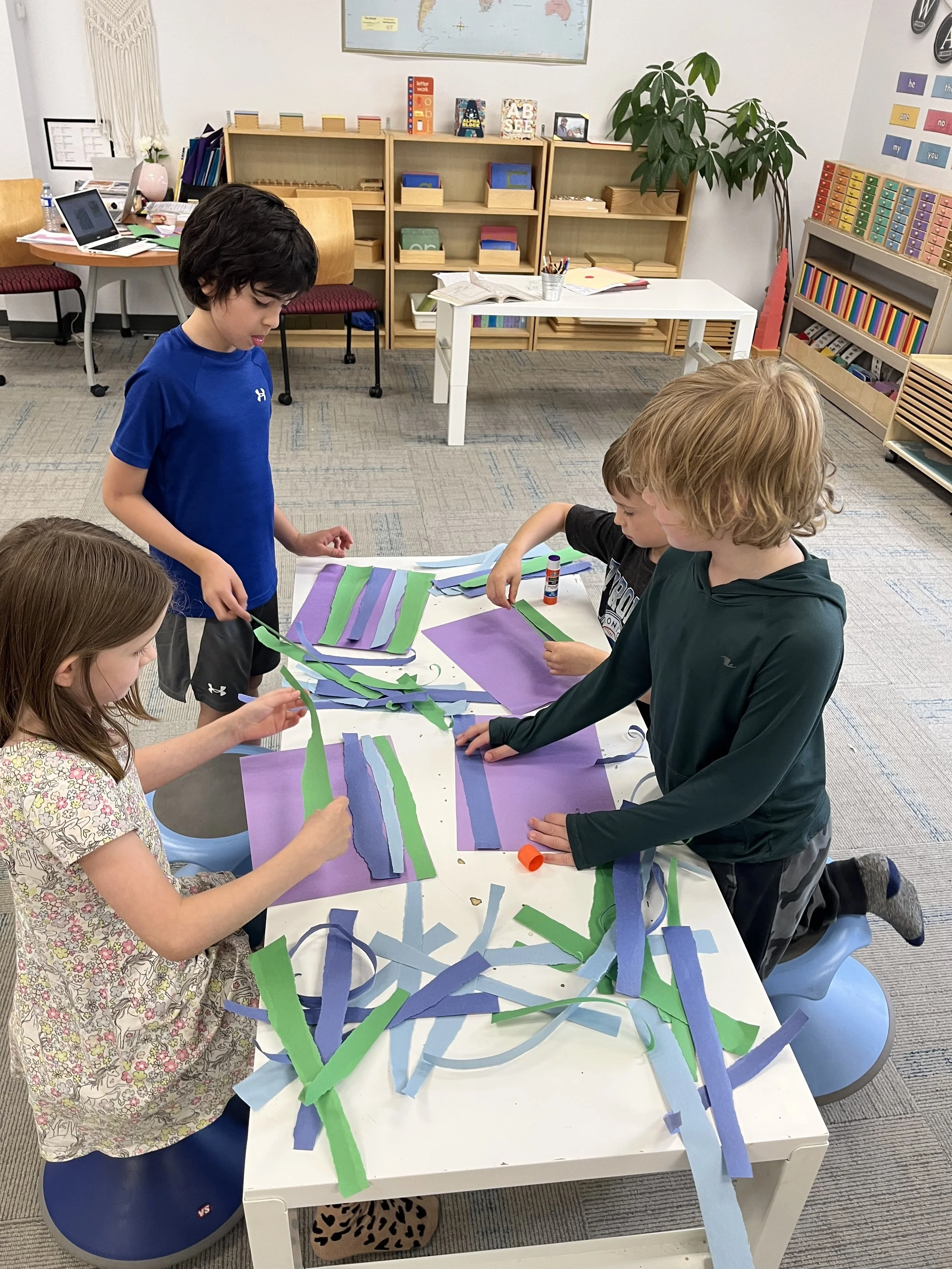
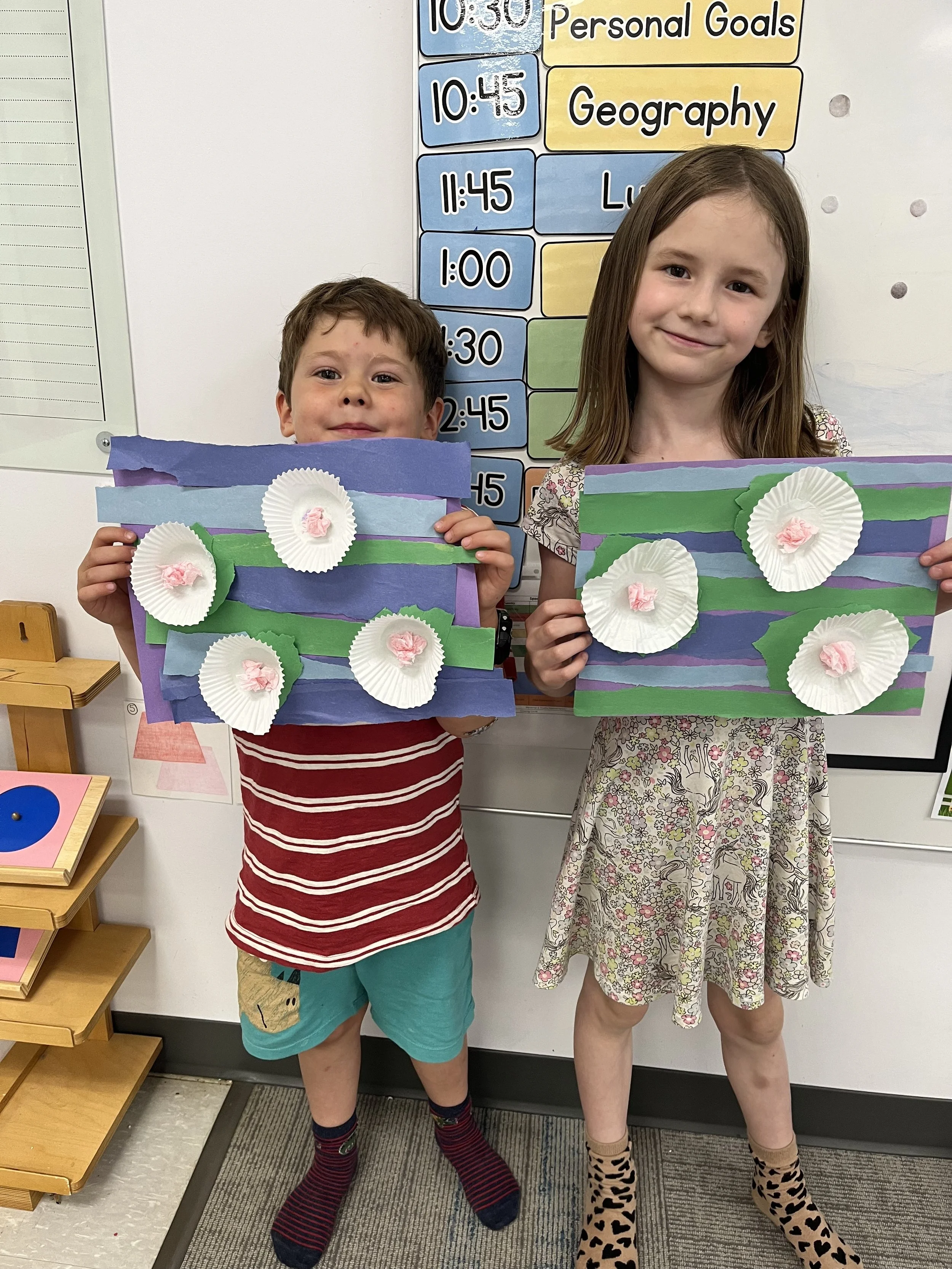
On Wednesday, we studied Claude Monet. We watched Claude Monet Water Lilies: Narrated Digital Storybook for Kids, which introduced us to Monet's garden, his love of nature, and how his famous water lily paintings came to be. We followed this with the book The Magical Garden of Claude Monet, which brought his world to life even further. The Sparks were amazed to learn that Monet painted nearly 300 water lily artworks inspired by his garden in Giverny! To create their own Monet-inspired pieces, the Sparks ripped coloured paper to form textured water backgrounds. Then, using cupcake liners and tissue paper, they crafted delicate water lilies. The results were truly beautiful and captured the peaceful feeling of Monet's artwork.
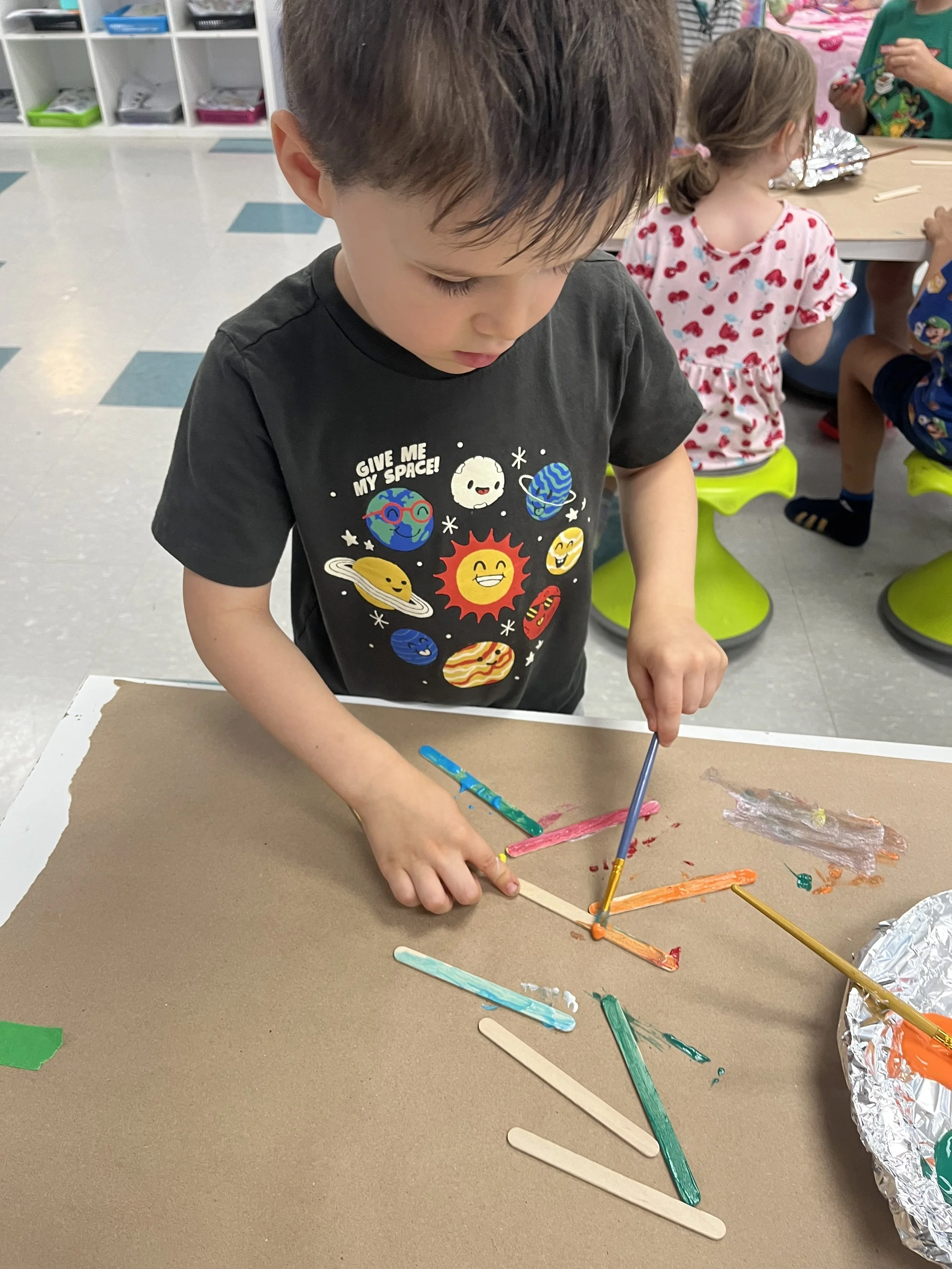
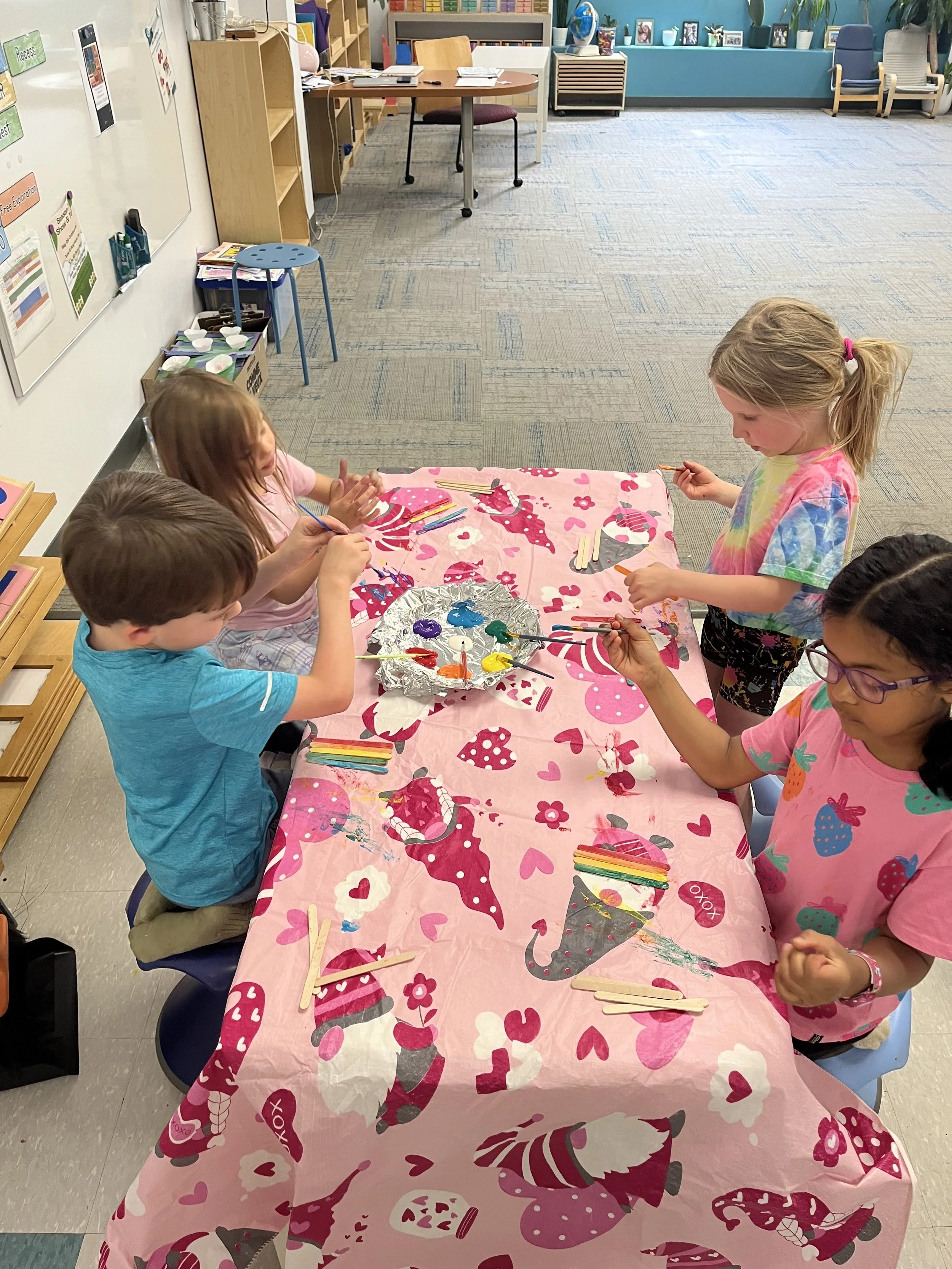
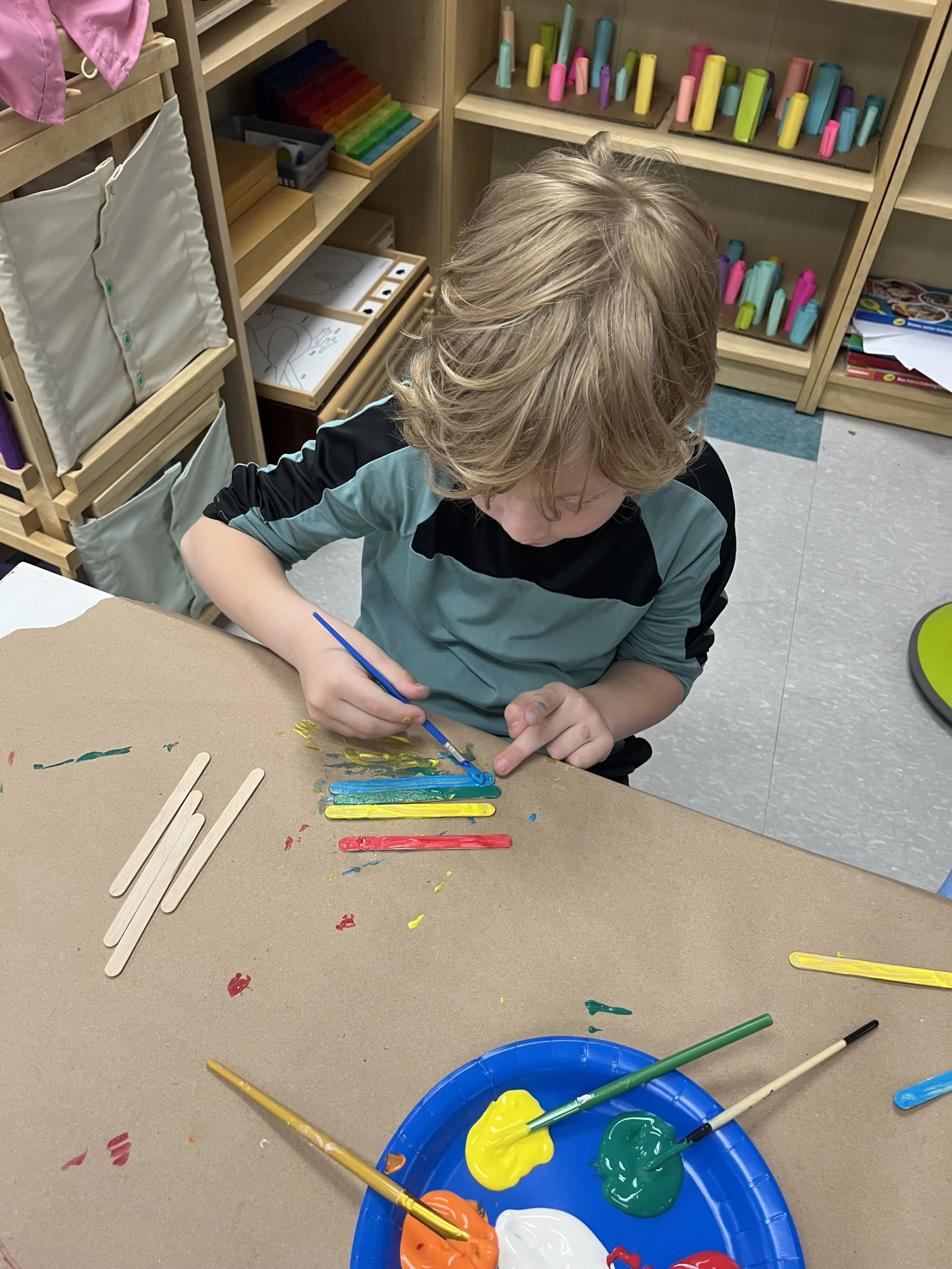
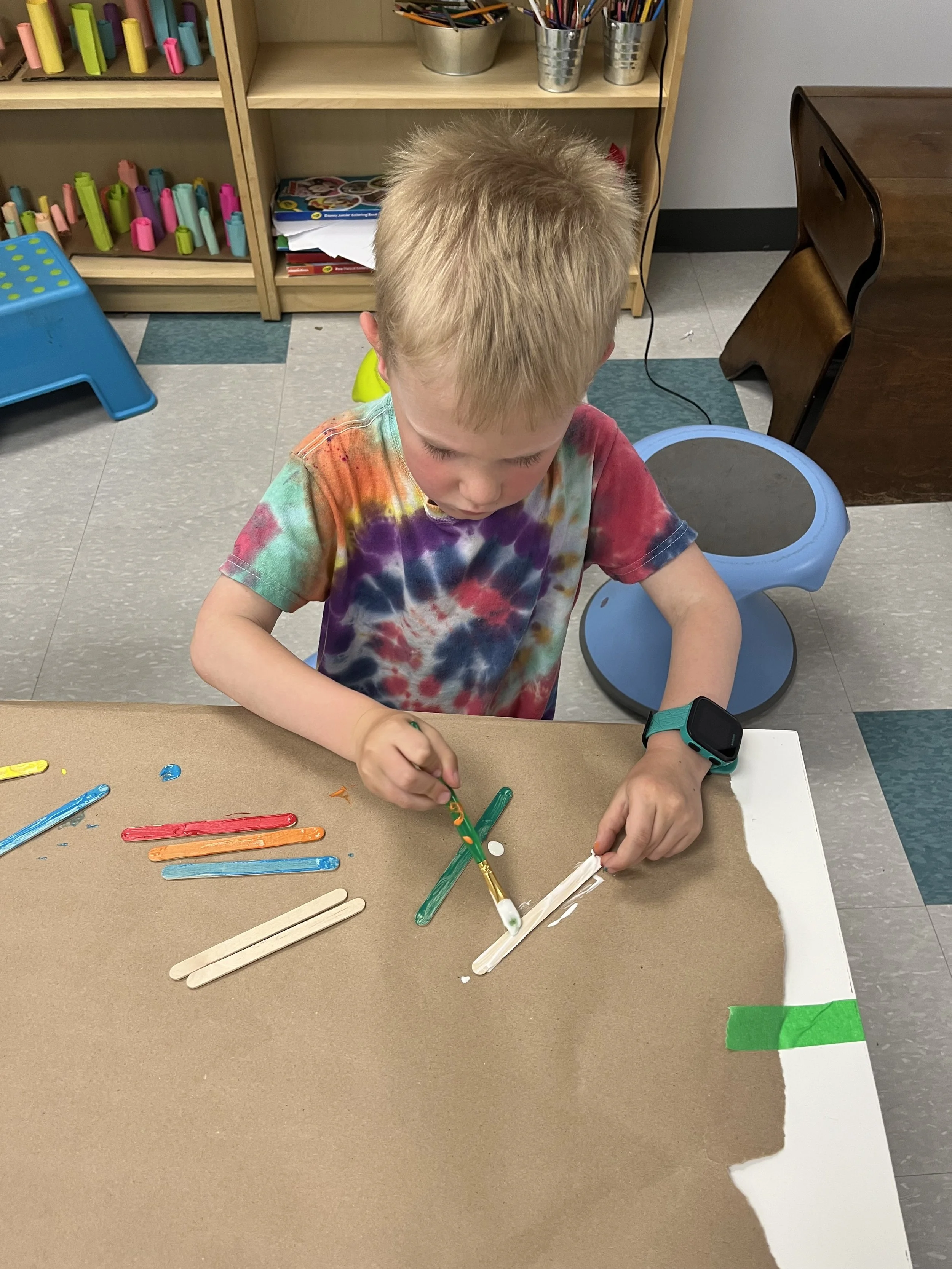
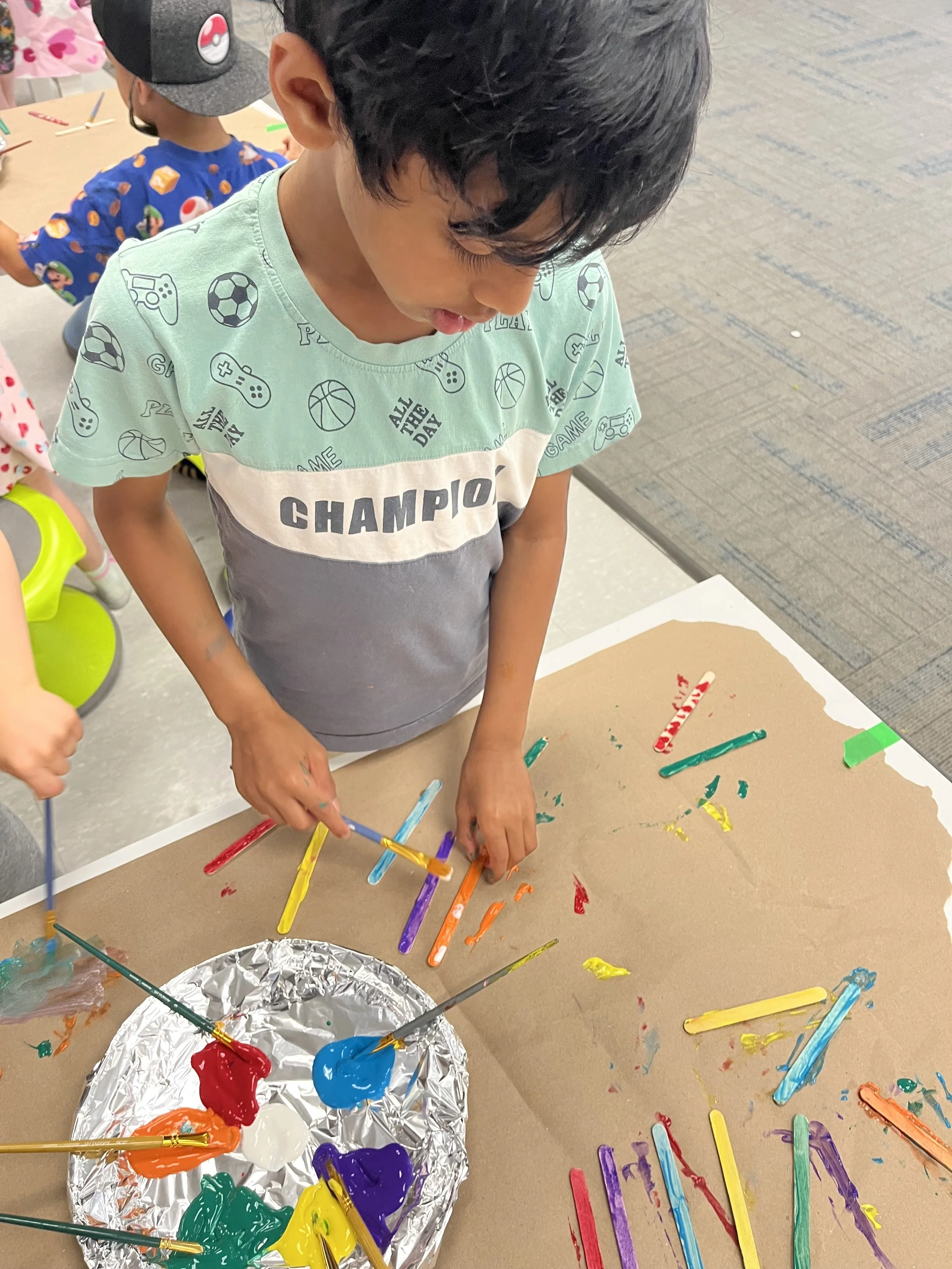
Our final artist of the week was Piet Mondrian. We learned that Mondrian was a pioneer of abstract art who used straight lines, geometric shapes, and primary colours to create bold, balanced compositions. The Sparks then worked together on a collaborative art piece. Each learner decorated popsicle sticks using Mondrian-inspired colours and patterns. We combined all of their pieces into one large class masterpiece—an artwork that celebrates both Mondrian's style and the Sparks' teamwork! It was a wonderful week of creativity, exploration, and artistic discovery as the Sparks learned how different artists used colour, shape, line, and form to express their ideas and inspire generations of artists to come.
Geography
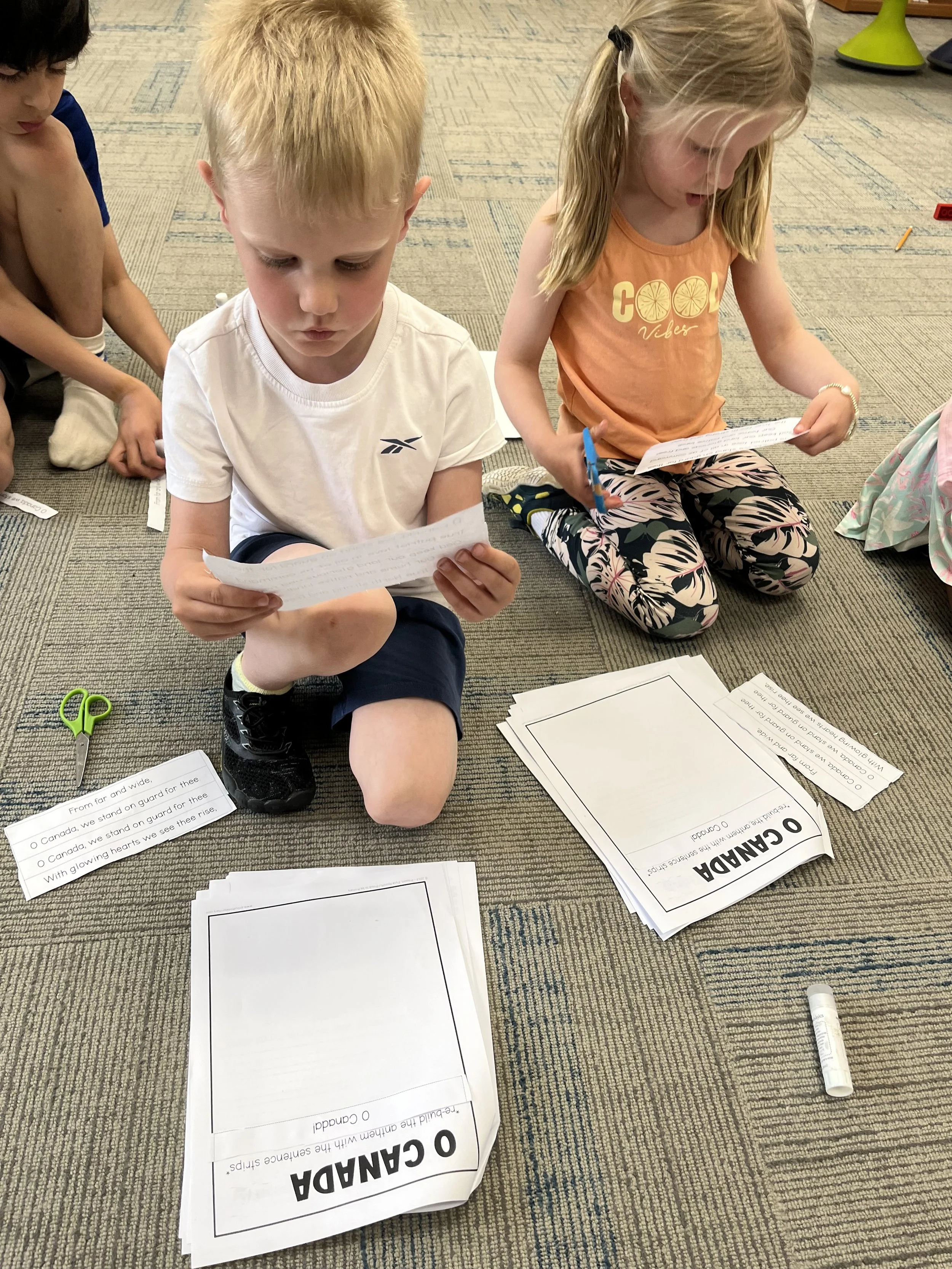
This week in our Canadian Geography studies, we shifted our focus to one of the most meaningful symbols of our country: the Canadian national anthem. With the help of a Canada Crew video, the Sparks were introduced to the history and meaning behind O Canada and explored the anthem line by line. We discussed the significance of the lyrics and what they tell us about Canada's identity, values, and history. After watching, we practiced standing respectfully, listening attentively, and singing along to the parts we recognized. To deepen their understanding, learners completed the next page in their Canadian Geography booklets. This activity challenged them to rebuild the anthem using mixed-up sentence strips, encouraging careful reading, sequencing, and memory recall. It was a hands-on and engaging way to reinforce both the lyrics and the rhythm of the song. The Sparks did a wonderful job demonstrating respect and curiosity as they learned more about this important Canadian symbol and what it represents for people across our country.
Reader/Writer
This week in Reader/Writer Workshop, we kicked things off with Summer Vacation, Here I Come! by D.J. Steinberg. This cheerful, poetry-style picture book celebrates all the excitement, adventures, and simple joys that come with summer break—from swimming and camping to slow days spent enjoying the sunshine. It was the perfect spark to get everyone thinking about the months ahead. After reading, we brainstormed all the things we would love to do this summer. Learners eagerly shared their ideas with the group before creating their own personal summer bucket lists. Each Spark wrote down five activities or experiences they hope to enjoy over the break, and the ideas were wonderfully creative. Some favourites included trips to the beach, visiting bouncy castles, jumping on trampolines, going on picnics, riding bikes, spending time at cottages, and, of course, eating lots of ice cream! The Sparks certainly sound like they have some exciting summer adventures ahead of them.
Throughout the week, both Reader and Writer groups continued working toward their individual goals. Learners practiced a variety of literacy skills, including reading fluency, comprehension strategies, sentence writing, and expanding their ideas through written expression. It has been wonderful to see the confidence, perseverance, and growth that learners continue to demonstrate as they work toward mastering their personal reading and writing goals.
Book Study
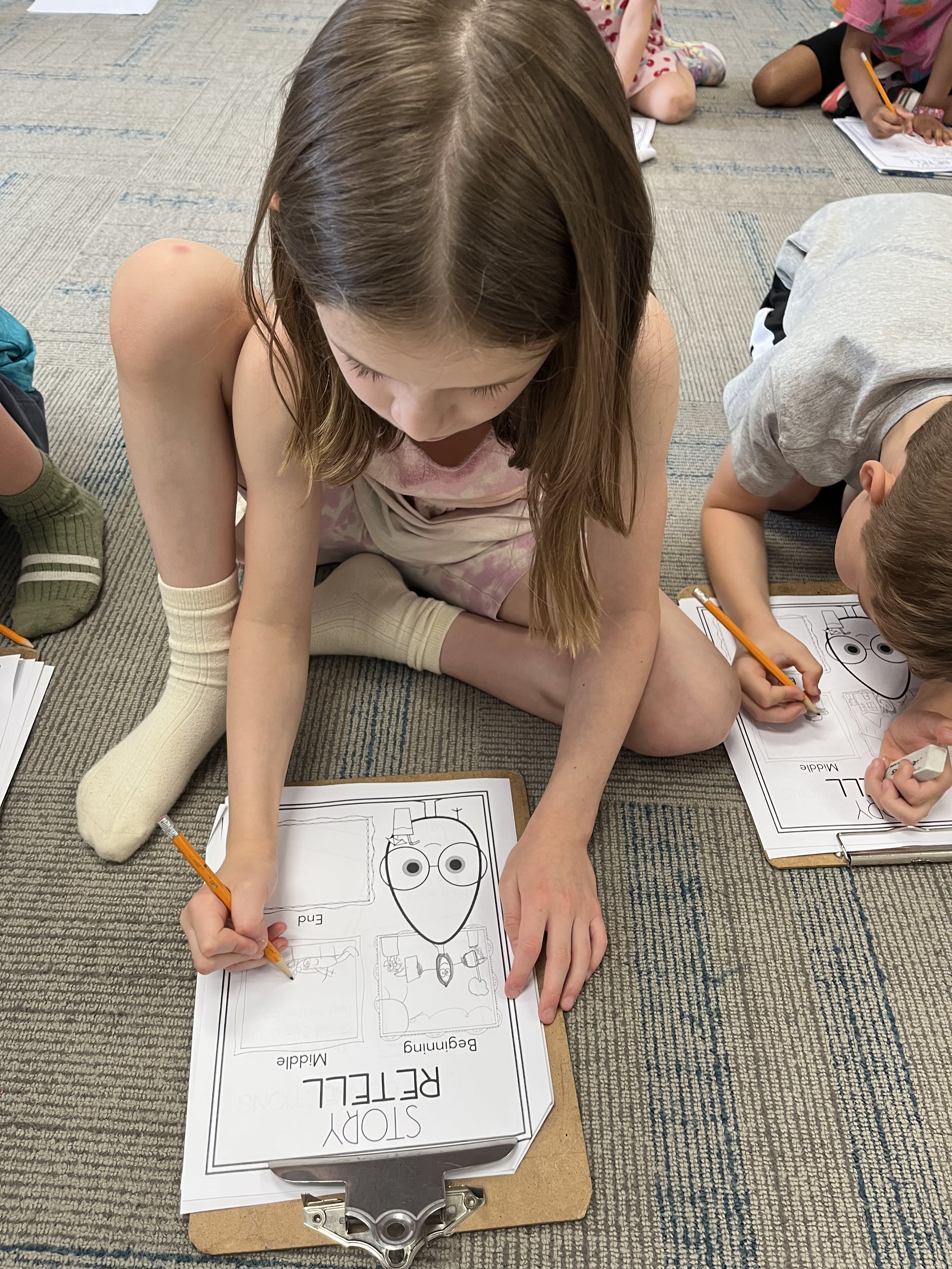
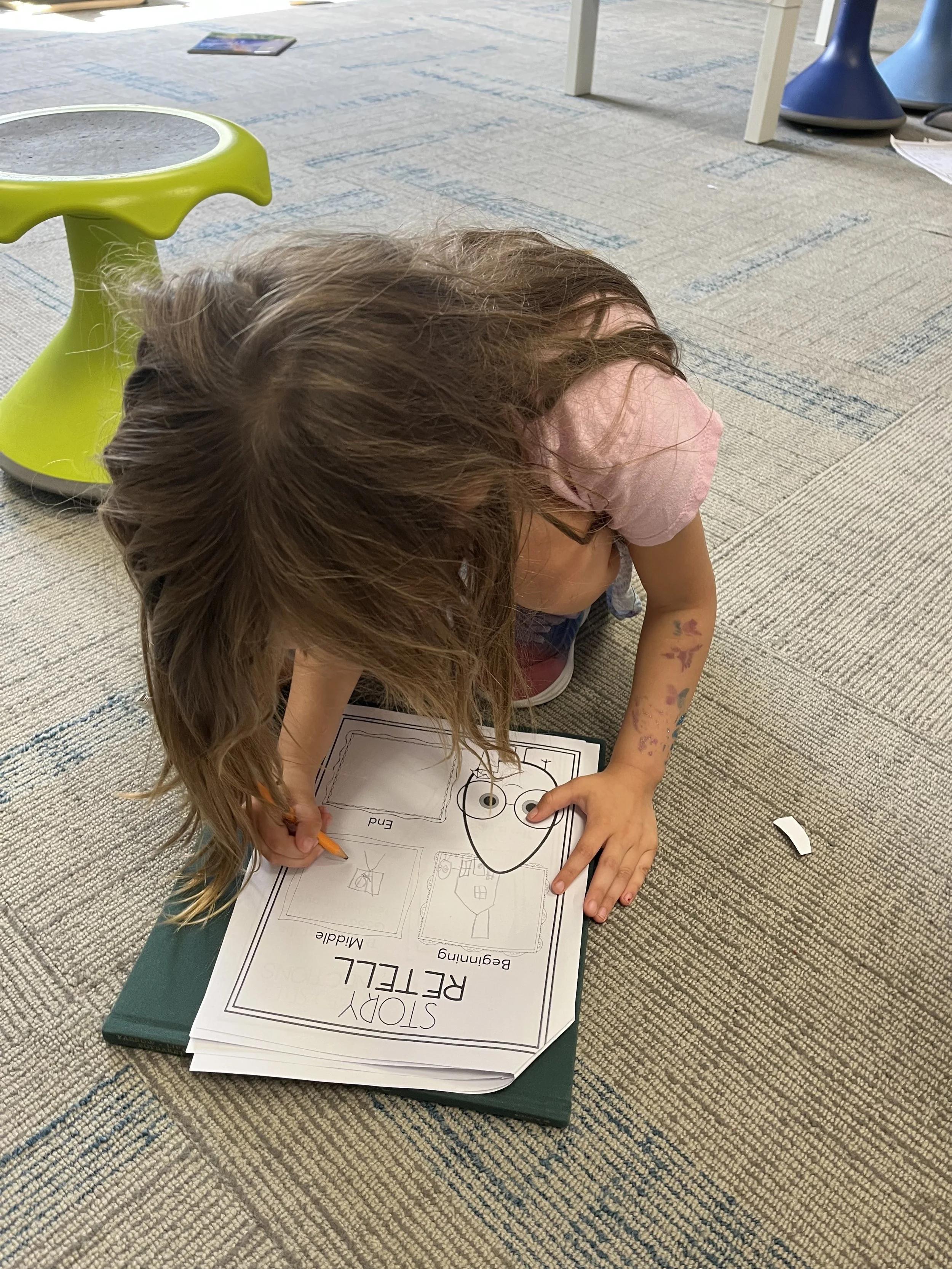
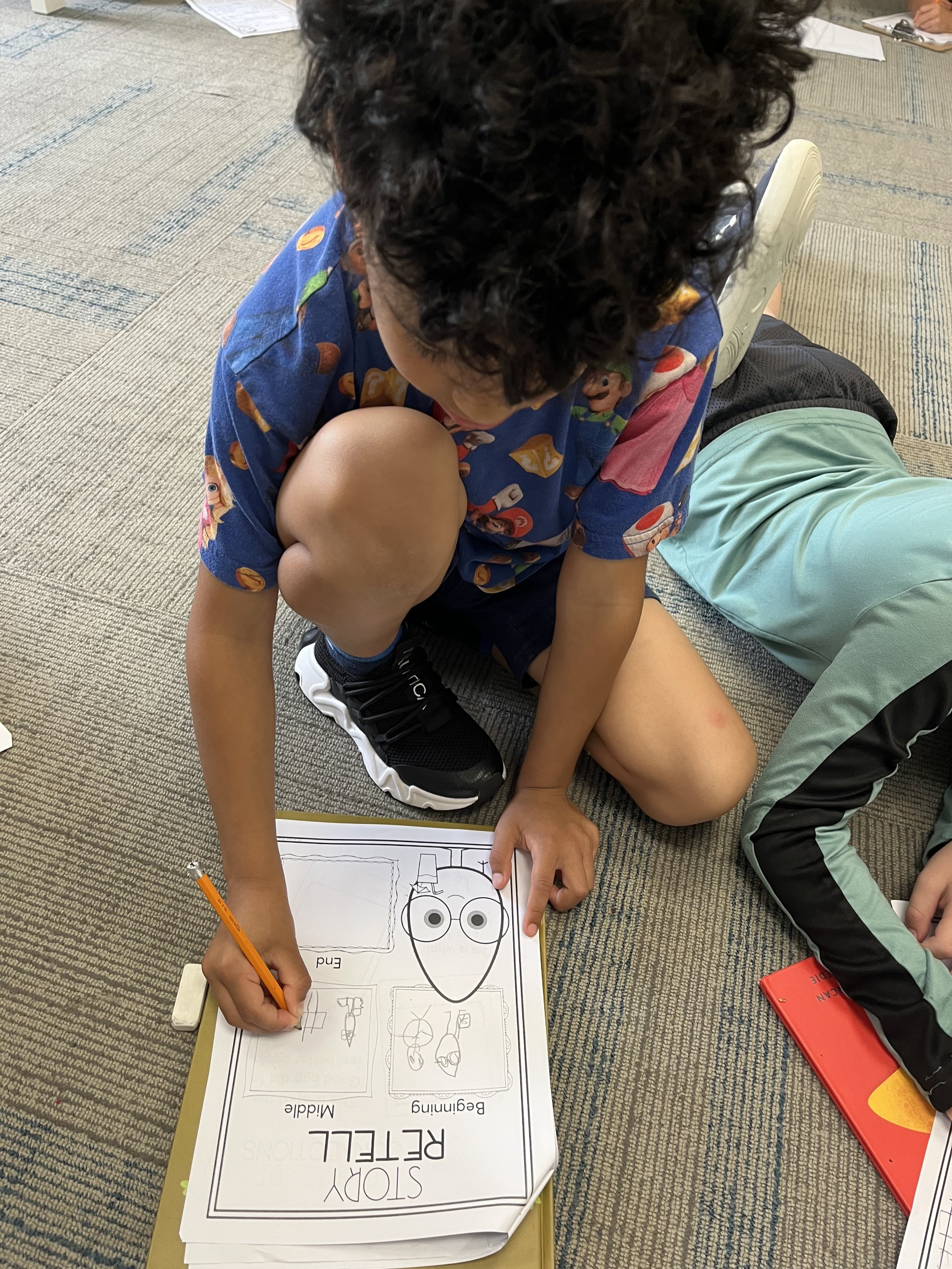
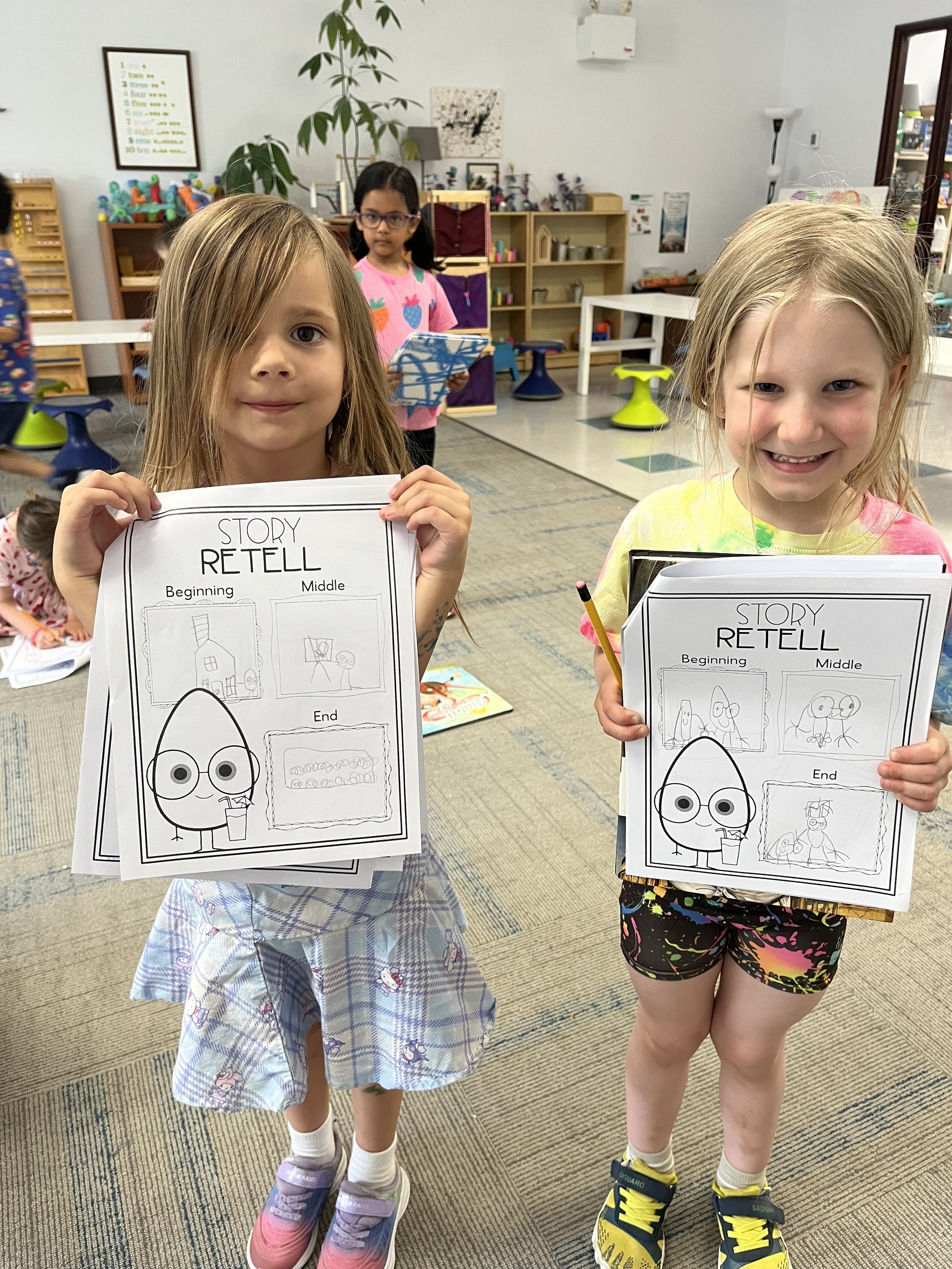
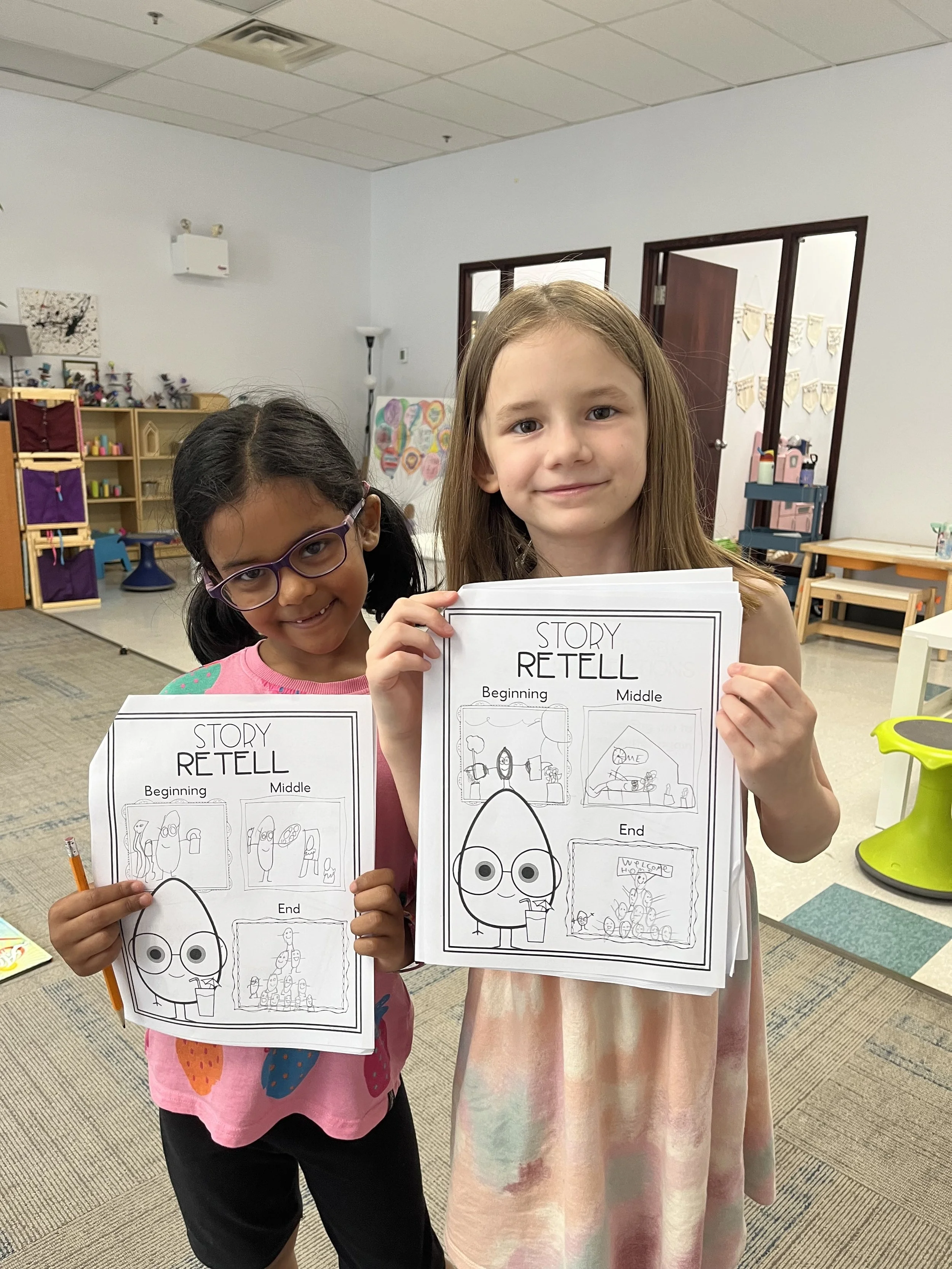
This week during Book Study, we revisited our story, The Good Egg, and enjoyed reading it together once again. After rereading the book, we practiced retelling the story in our own words, focusing on identifying the most important events and sequencing them in the correct order. To demonstrate their understanding, the Sparks created a three-part retell by drawing pictures to represent the beginning, middle, and end of the story. This activity encouraged learners to think carefully about the story's main events, characters, and overall message while strengthening their comprehension and recall skills. The Sparks did an excellent job remembering key details and using their illustrations to tell the story from start to finish. It was wonderful to see their growing confidence in discussing and retelling stories independently.
French
This week in French, the Sparks reviewed emotions in French and practiced building complete sentences such as Je me sens triste ("I feel sad"), Je suis fâché ("I am angry"), and Je suis contente ("I am happy"). On Monday, the Sparks identified and coloured different emotions while practicing the related vocabulary. On Tuesday, we listened to and sang songs about emotions to strengthen pronunciation and comprehension. On Wednesday, we played a game similar to Mr. Potato Head using Madame Ananas, where learners changed the character’s emotions instead of clothing. We also played Petit loup a des émotions, a memory game in which learners matched pairs of emotions. On Thursday, we went to the gym to play Cross Canada: Clothing and Emotions Edition, where learners practiced describing emotions and clothing in French through movement and role-play activities.
Throughout the week, the Sparks continued building their French vocabulary while developing confidence expressing their feelings in a fun and engaging way.
Math Workshop
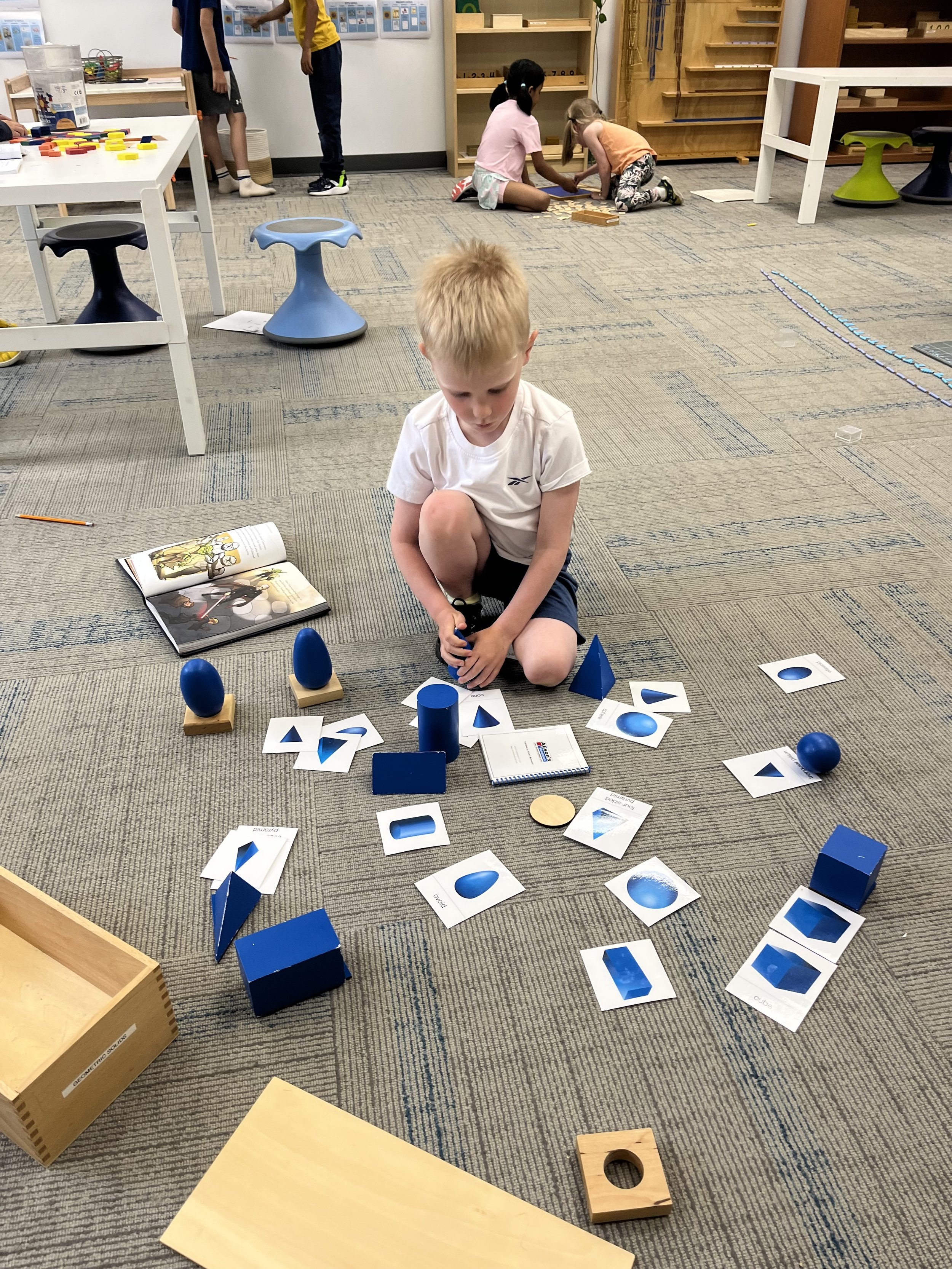
This week, we continued reviewing key math concepts from throughout the year, with a special focus on addition. As a group, we revisited the idea that addition means combining two or more numbers to find a total. Together, we practiced solving equations while paying close attention to the meaning and purpose of the plus and equals signs. Following our group lesson, learners paired up to explore addition using a variety of Montessori materials.
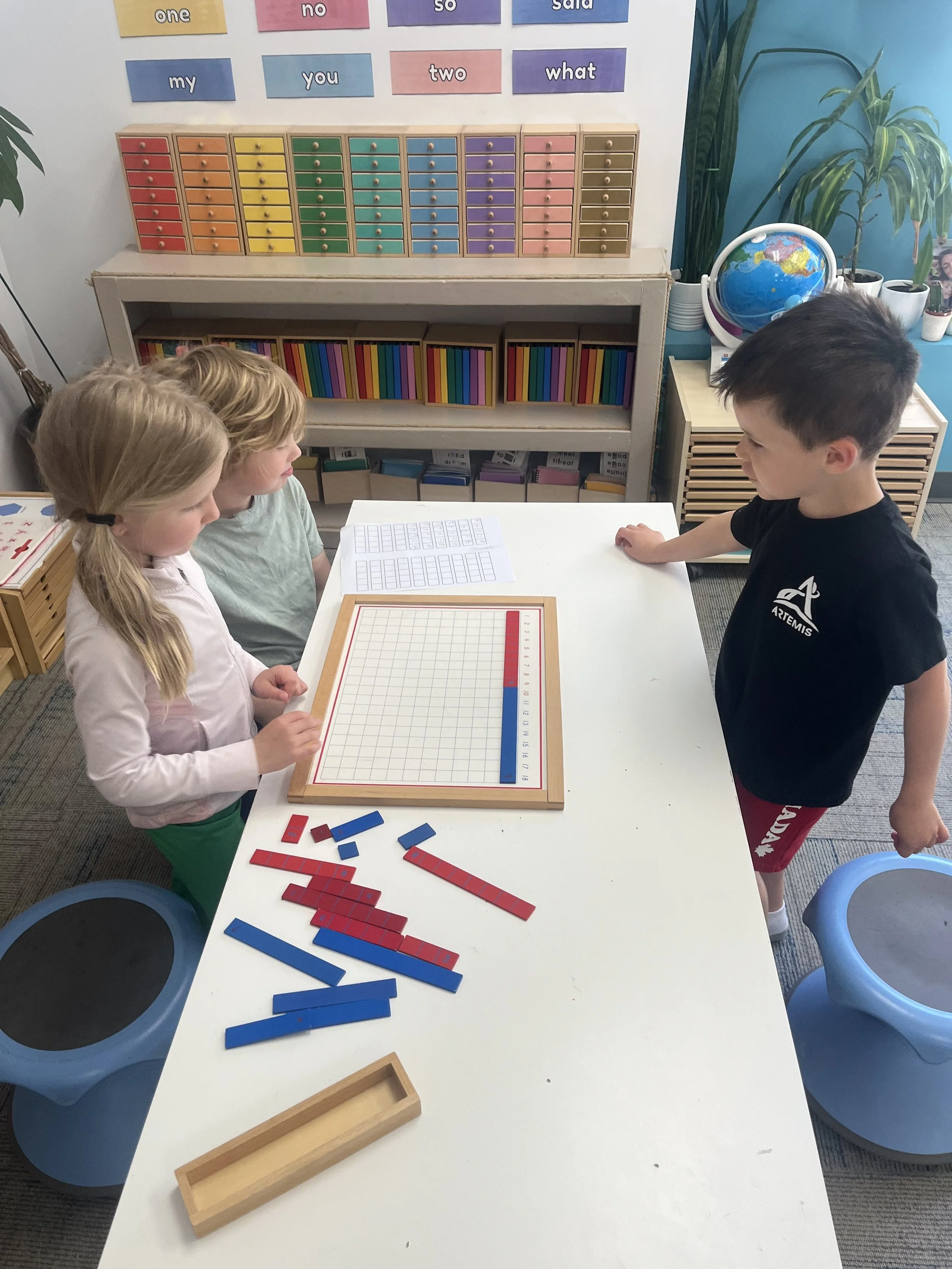
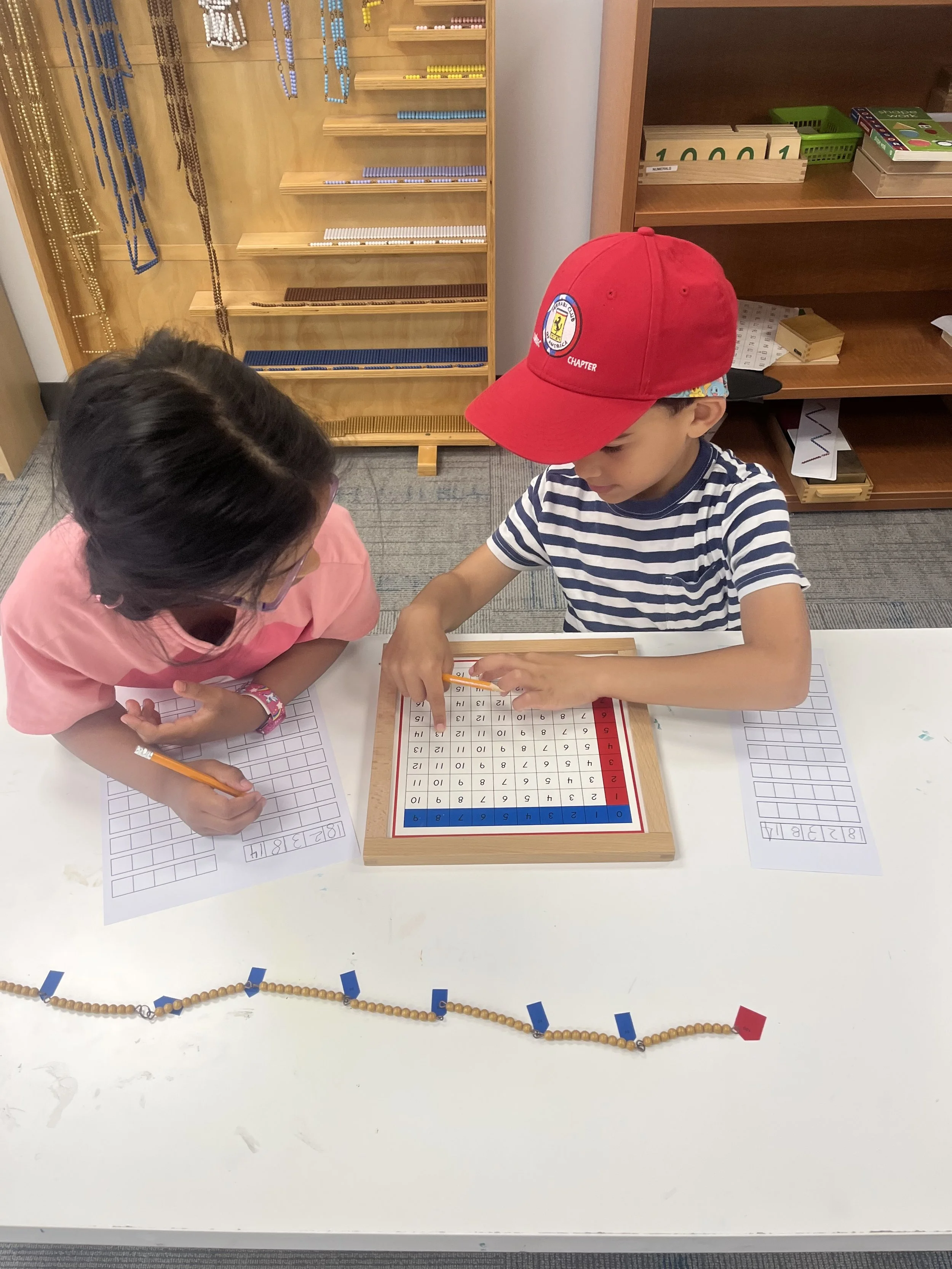
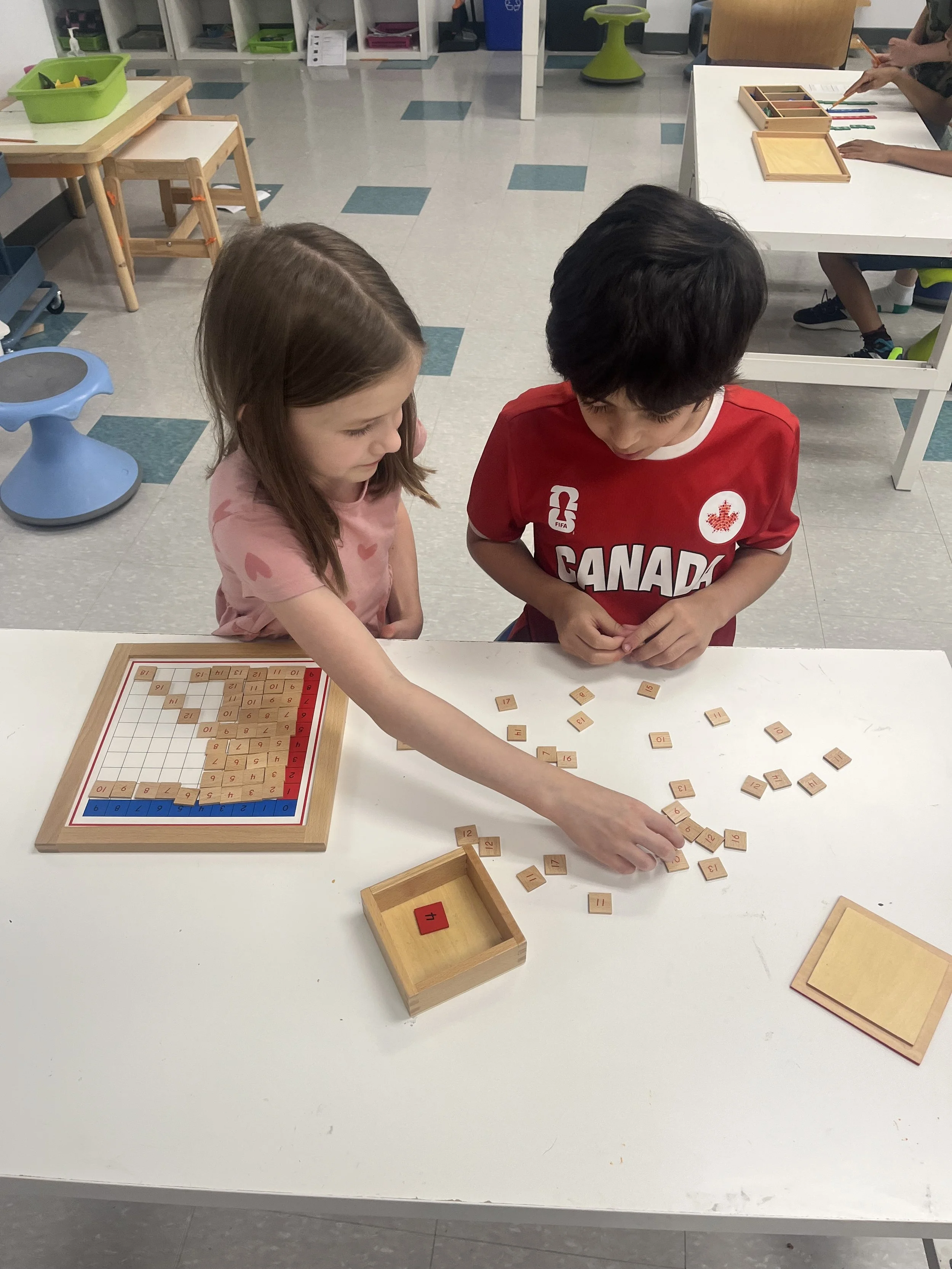
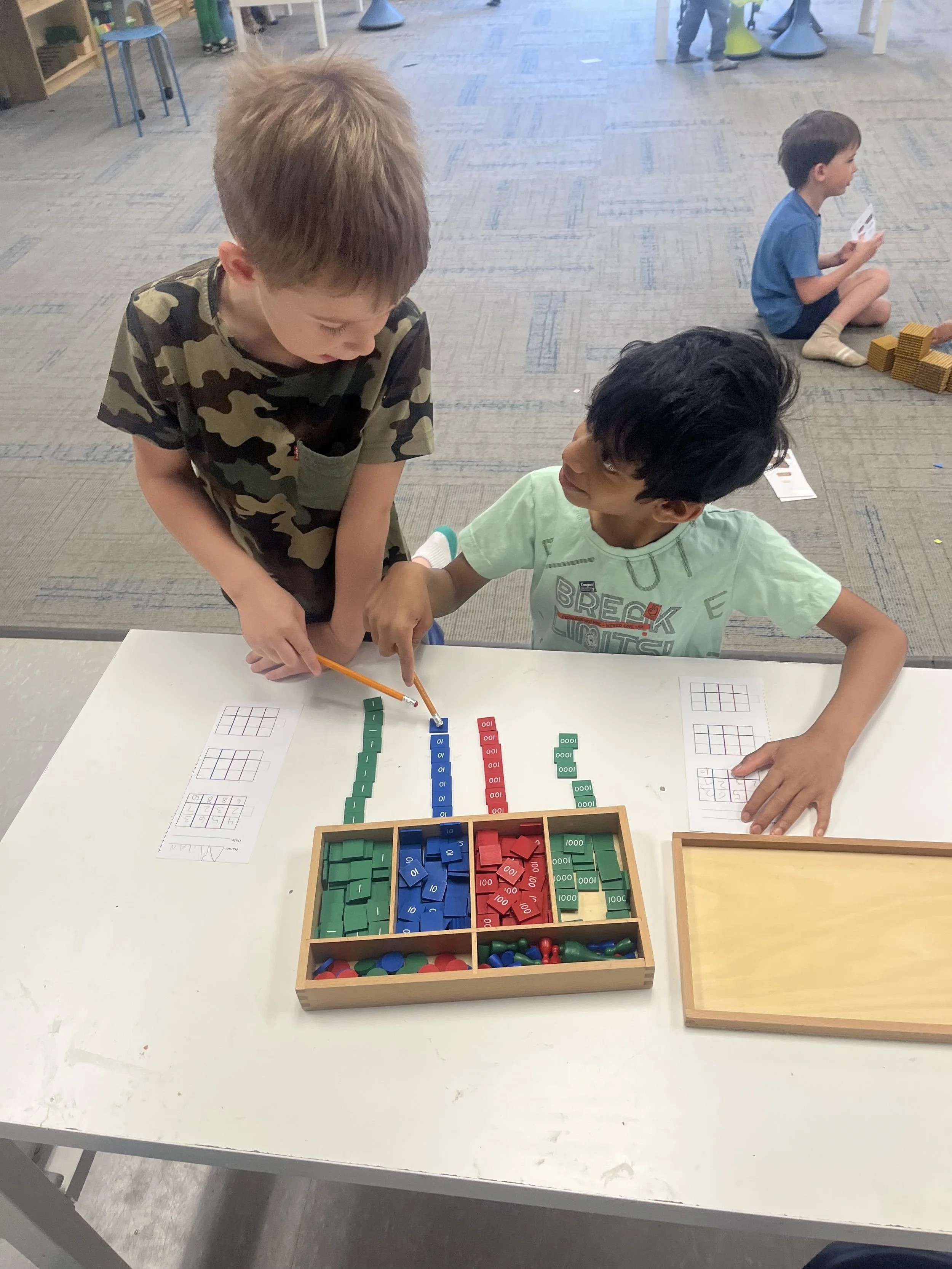
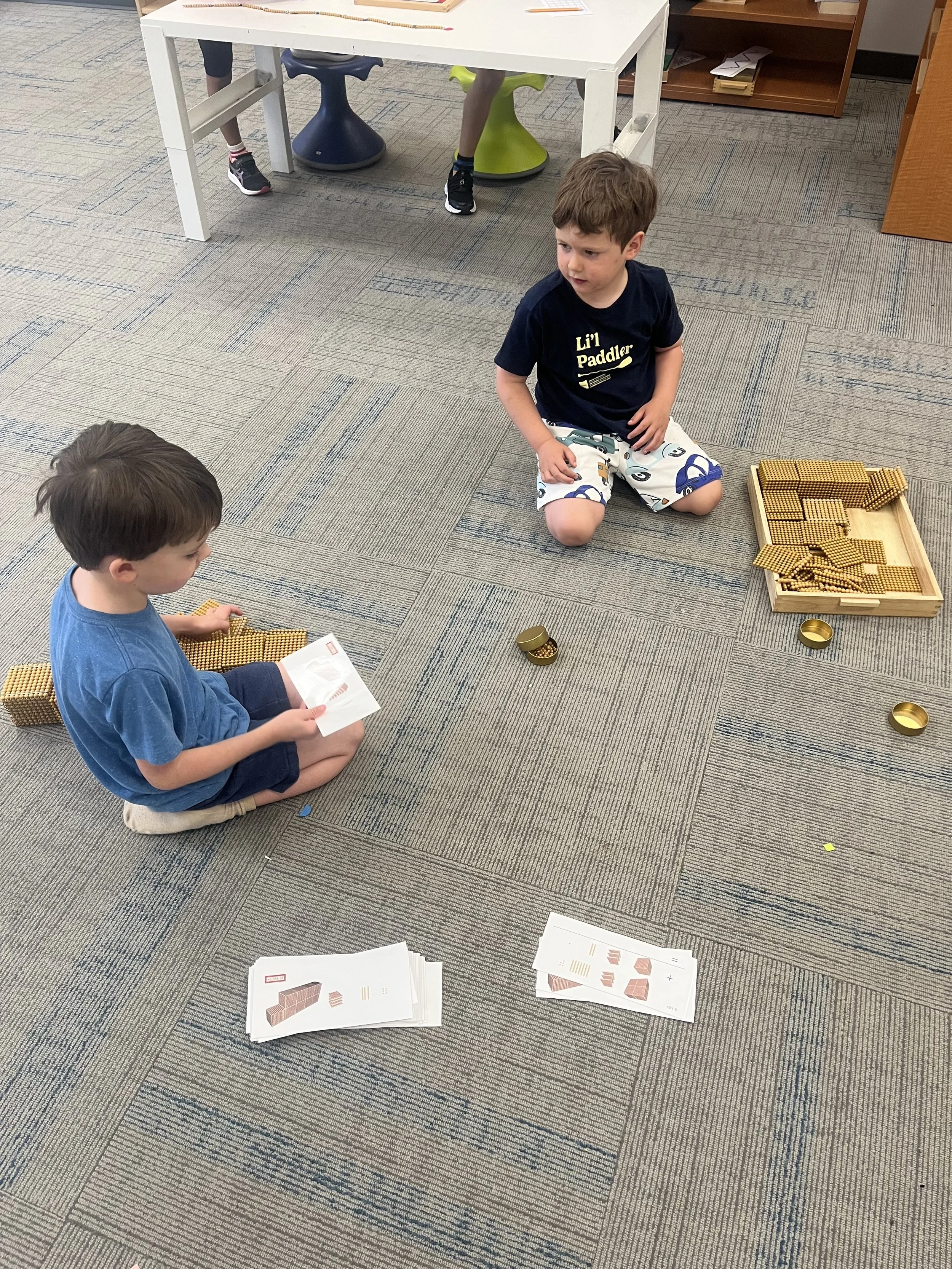
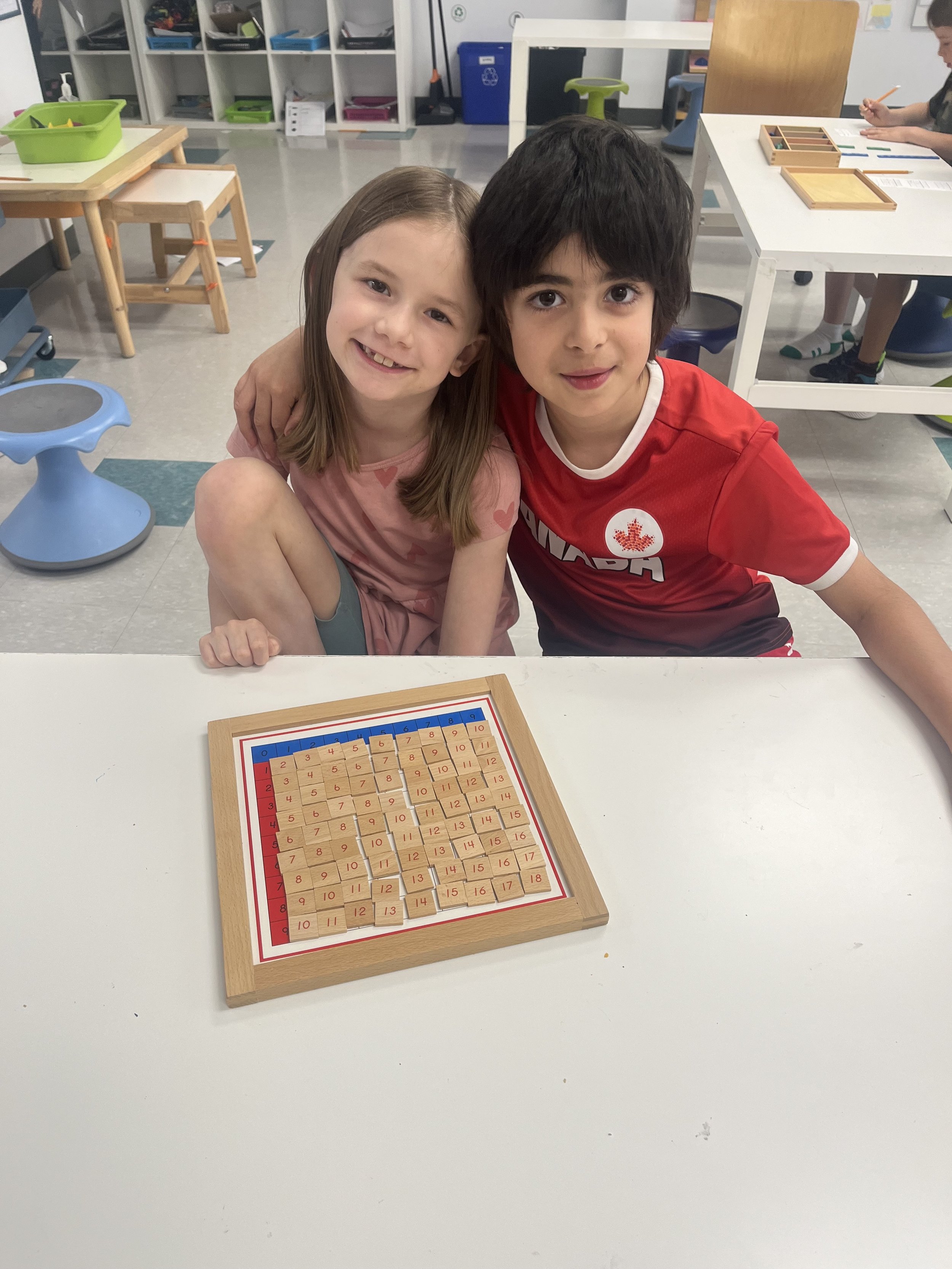
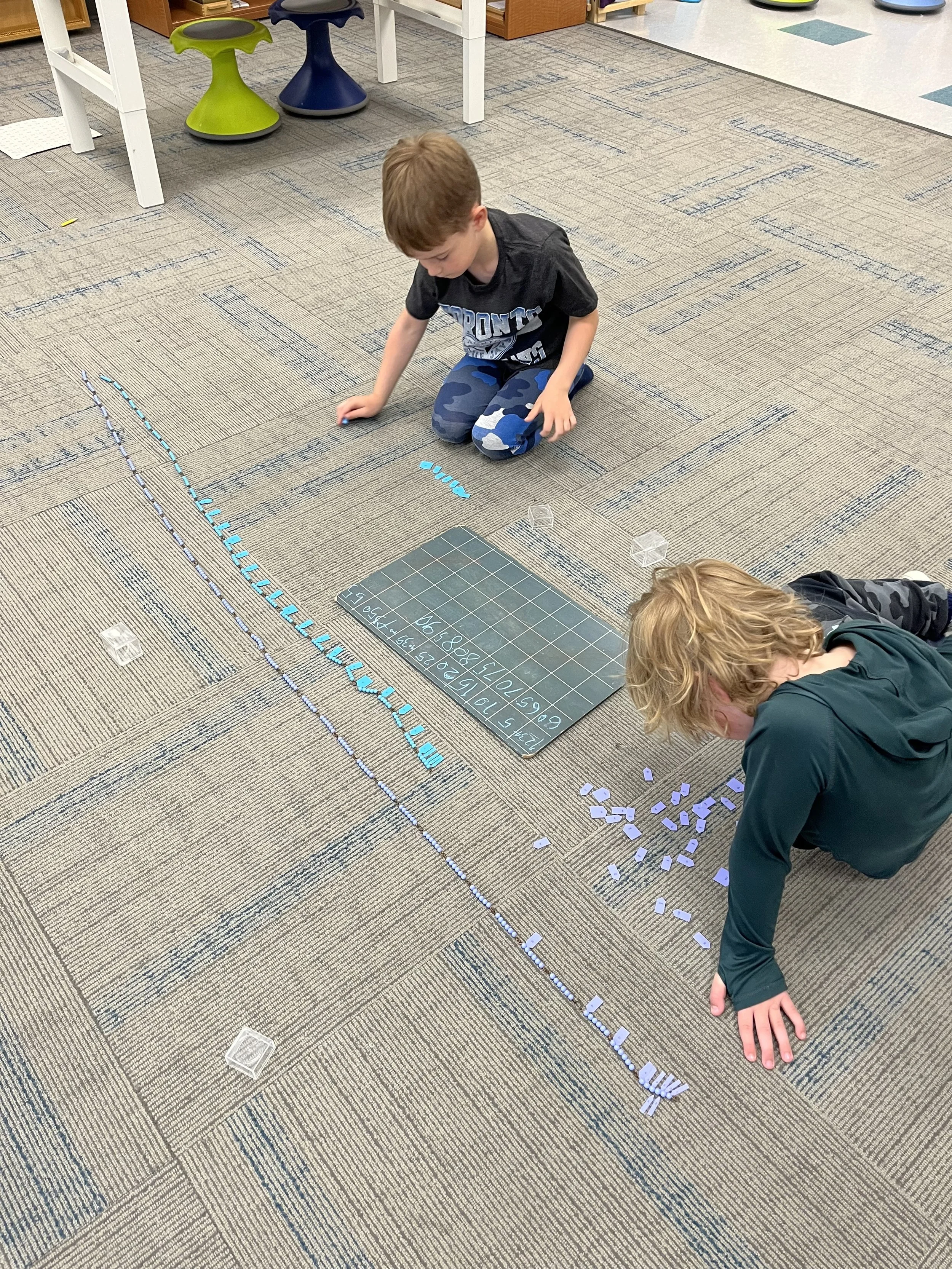
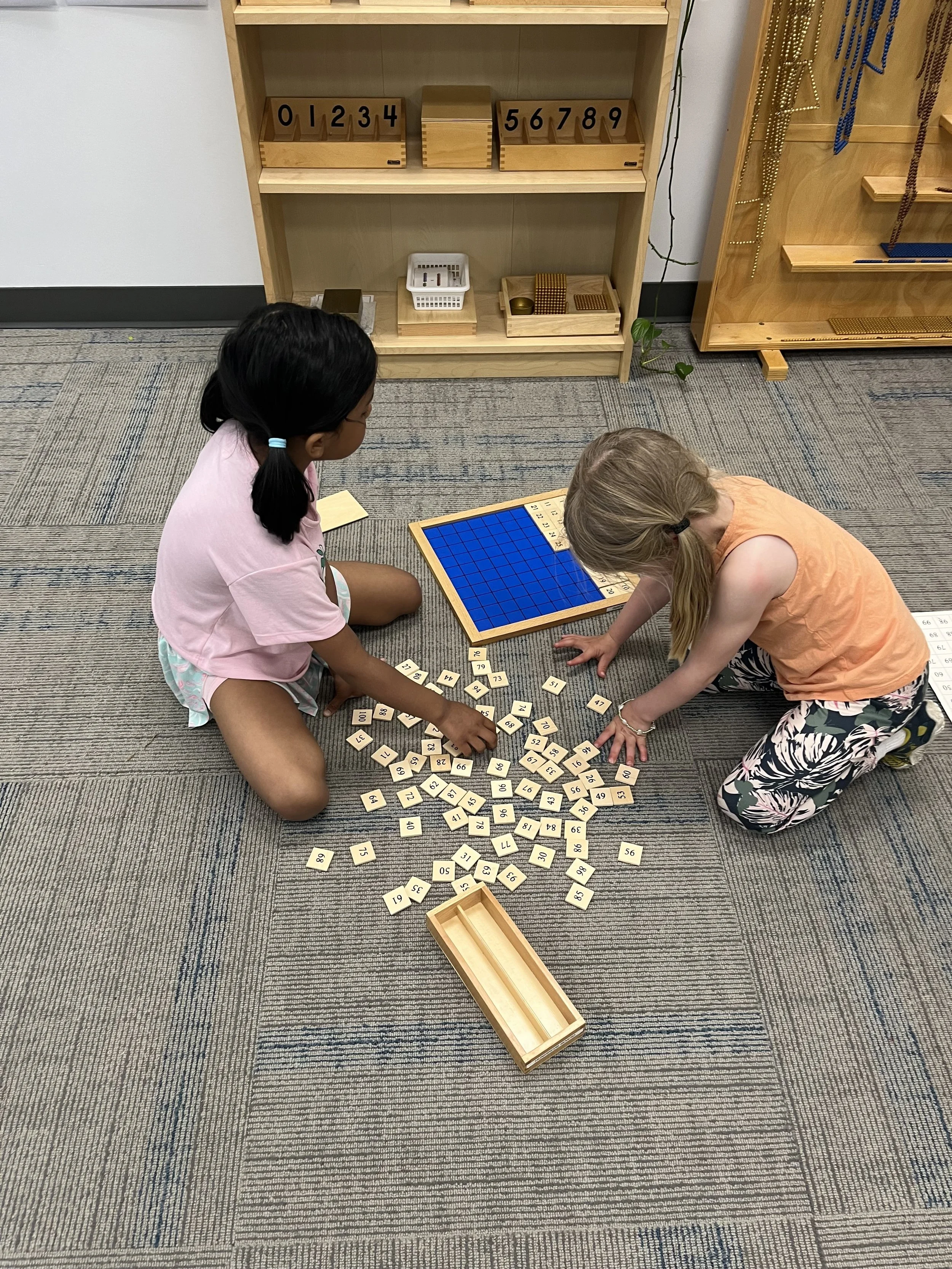
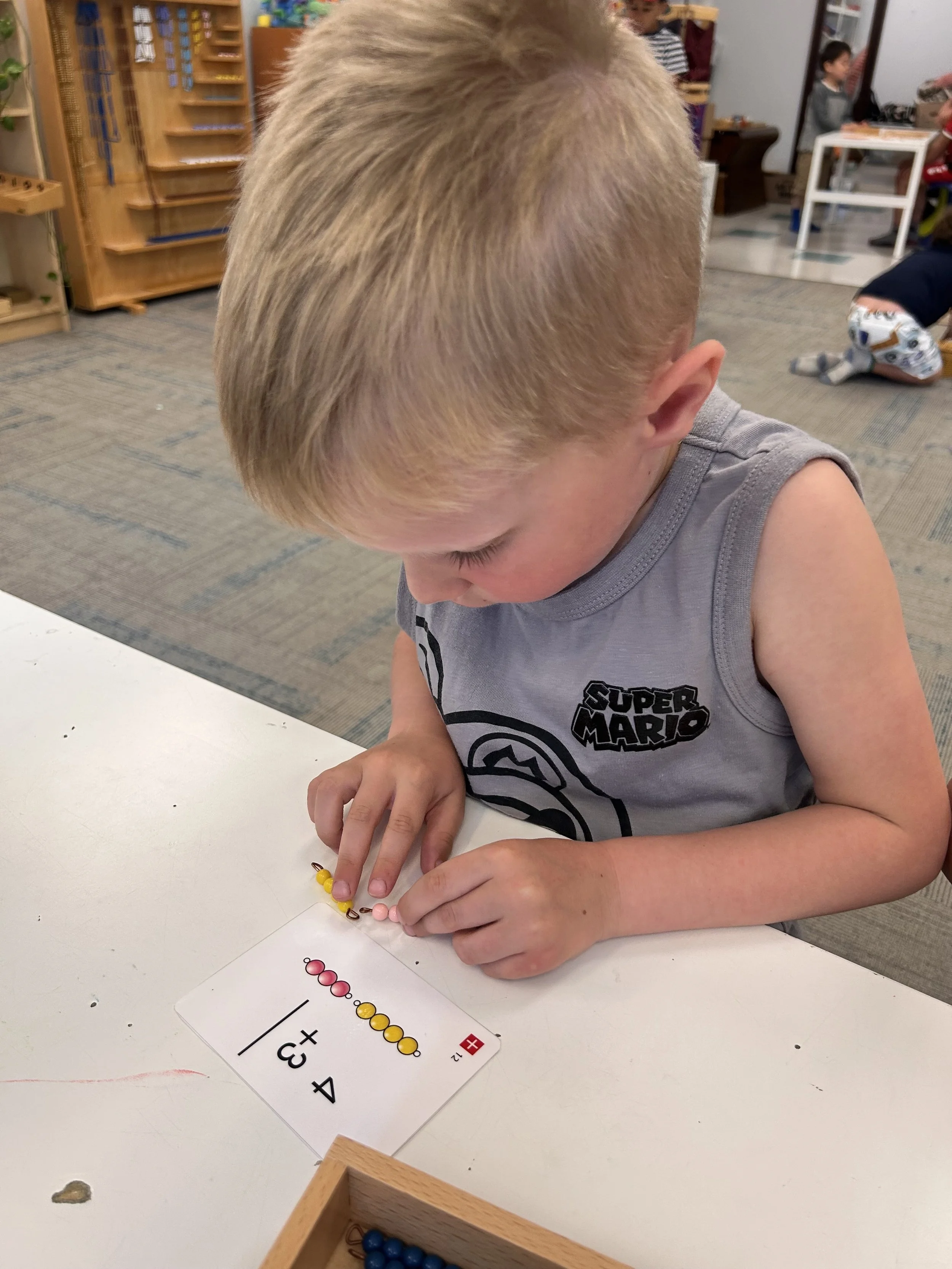
The Sparks worked with addition board charts, coloured beads and number cards, golden beads, and the stamp game to build, solve, and record addition equations. These hands-on materials allowed learners to visualize mathematical concepts and deepen their understanding of how numbers work together. Throughout the workshop, learners collaborated with their partners, checked each other's work, and practiced explaining their thinking. It was a productive and engaging Math Lab filled with meaningful review, problem-solving, and hands-on learning as the Sparks continued to strengthen their addition skills.
Discovery Studio
Mindfulness and Launch
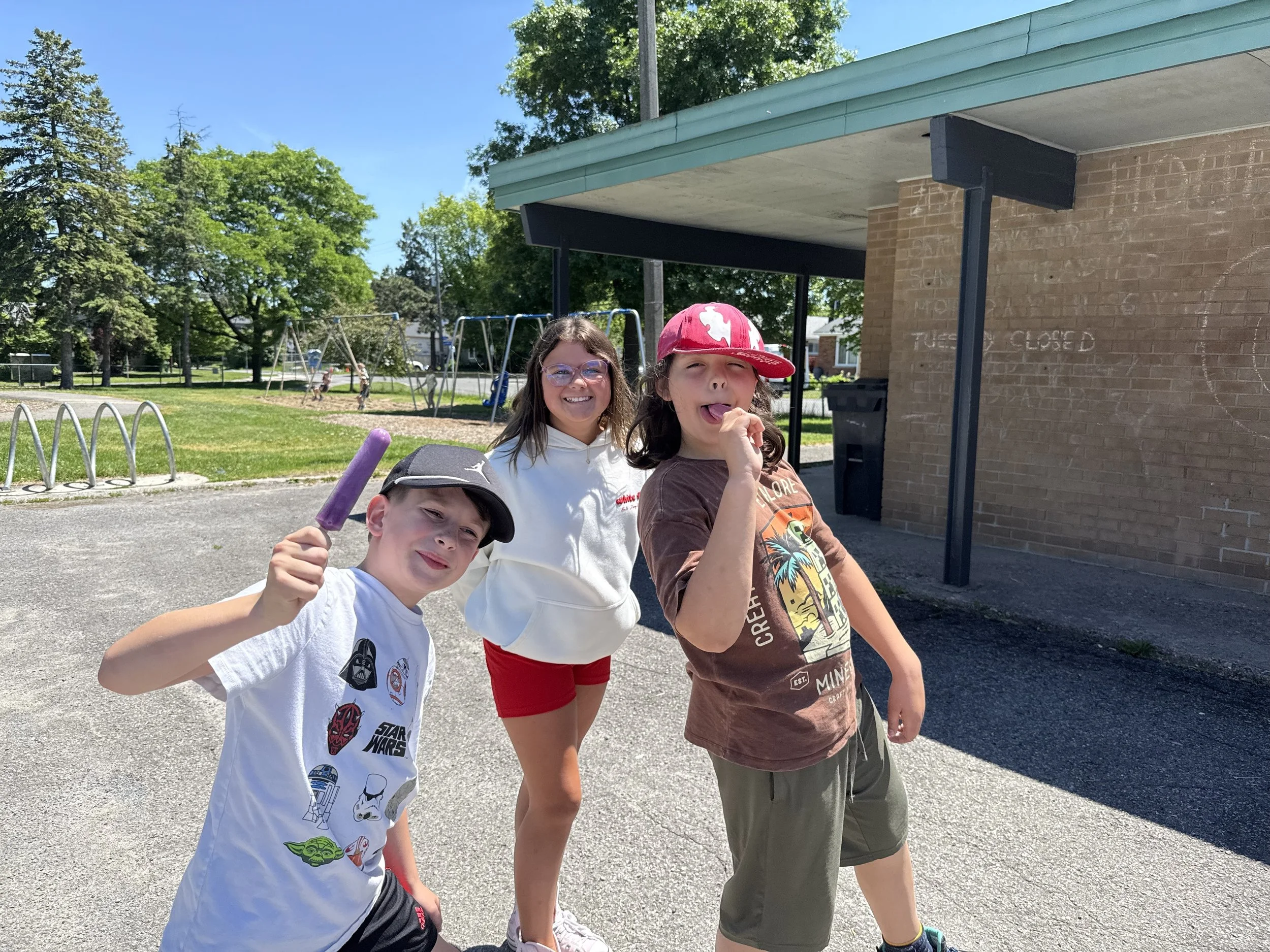
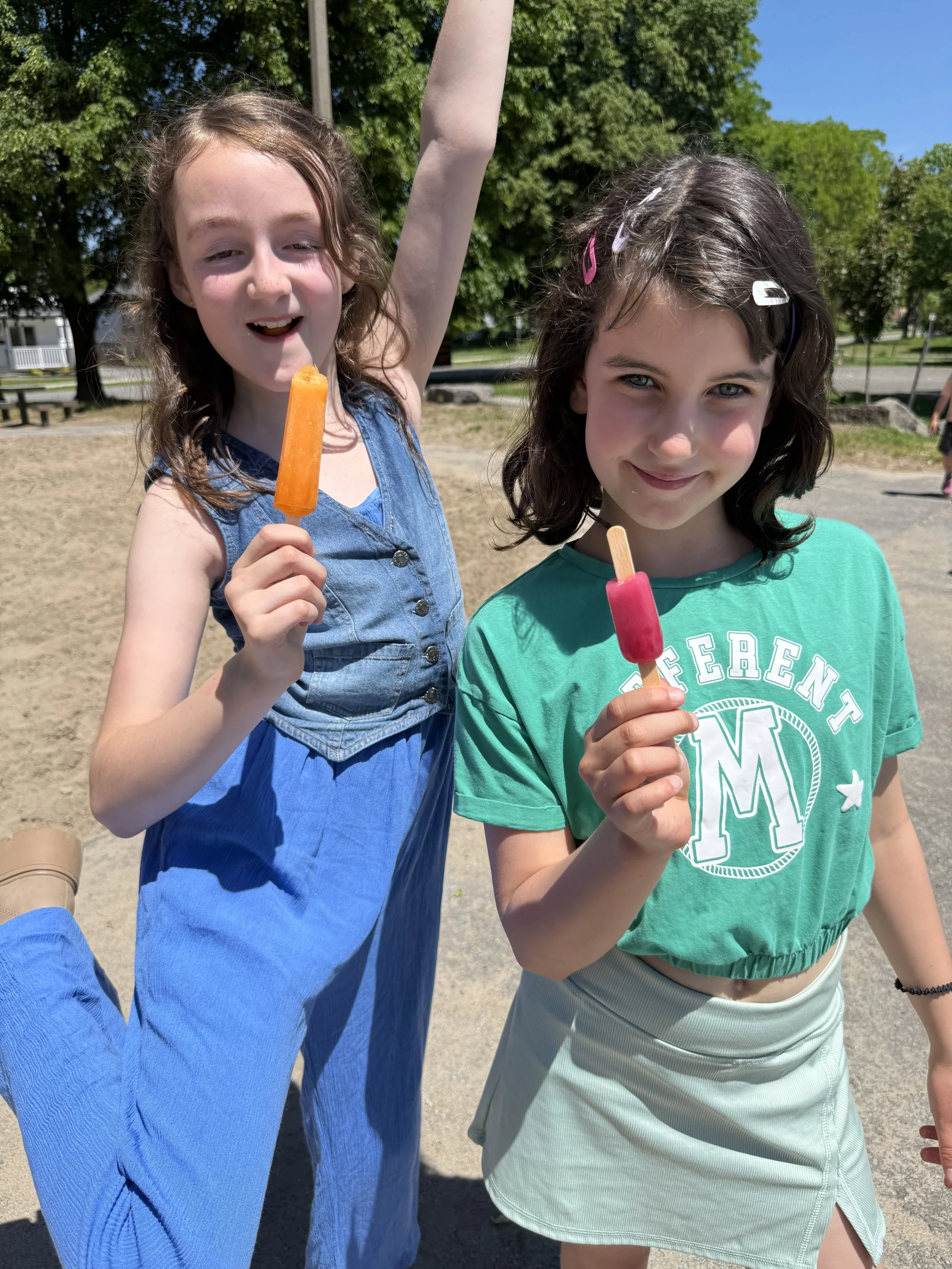
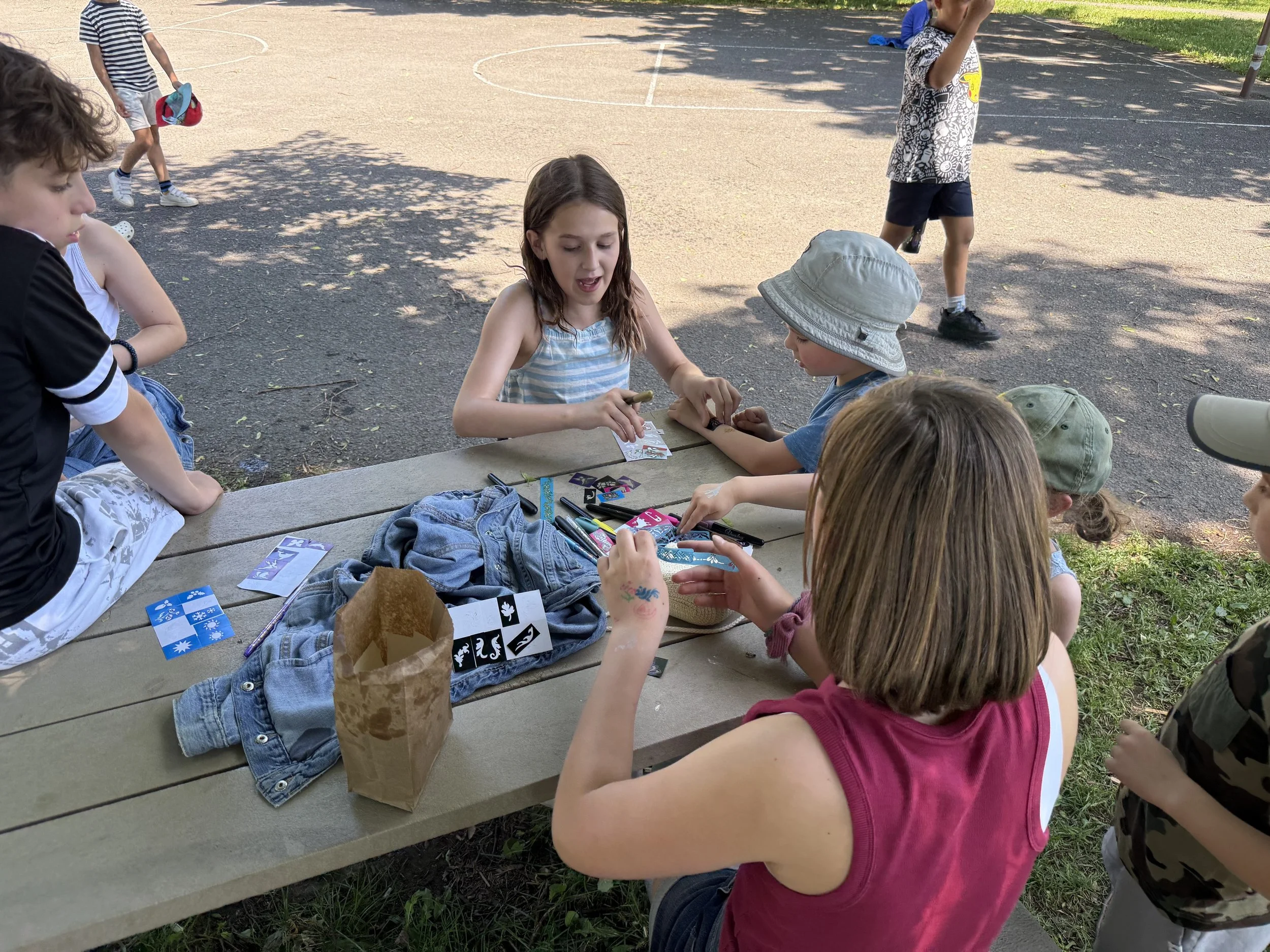
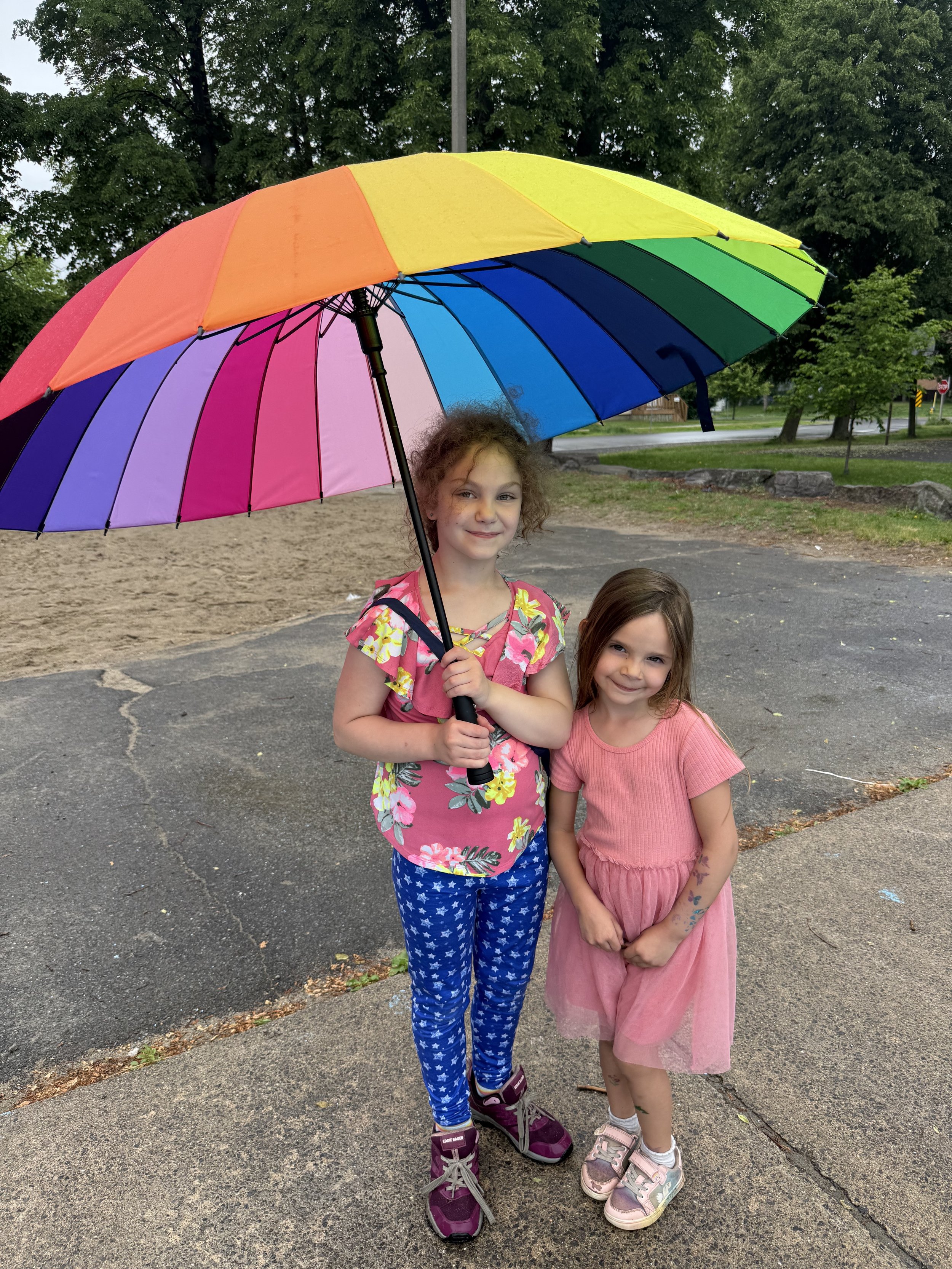
We started our week with a mindful stroll around the field as Rebels shared highlights from their weekends. Afterward, we played a few rounds of a team-building game before heading inside for Launch, where we continued a thoughtful discussion from Friday's Town Hall about rough and risky play. Discovery Rebels explored the important role that rough and risky play can have in helping us develop confidence, resilience, risk-assessment skills, self-regulation, and trust. Through discussion and reflection, learners considered the difference between rough play and fighting, how to recognize when everyone is having fun, and why consent and communication are essential parts of any game. We also connected these ideas to the games we create during recess and free play. As a group, we discussed how clear rules help everyone understand expectations, make games more enjoyable, and reduce the likelihood of conflict. Rebels reflected on questions such as: Are the rules fair? Does everyone understand them? What happens when there is a disagreement? How can we make sure everyone feels included? Tuesday's viewing of our documentary, On the Way to School, gave us further insight into the journeys of Jackson, Samuel, and Zahira. Rebels engaged in a lively discussion about which learner faced the most difficult journey and why. We identified environmental challenges, such as wild animals and mountainous terrain as significant obstacles, while also considering the additional barriers faced by Samuel, who travels to school in a wheelchair with the support of his younger brothers.
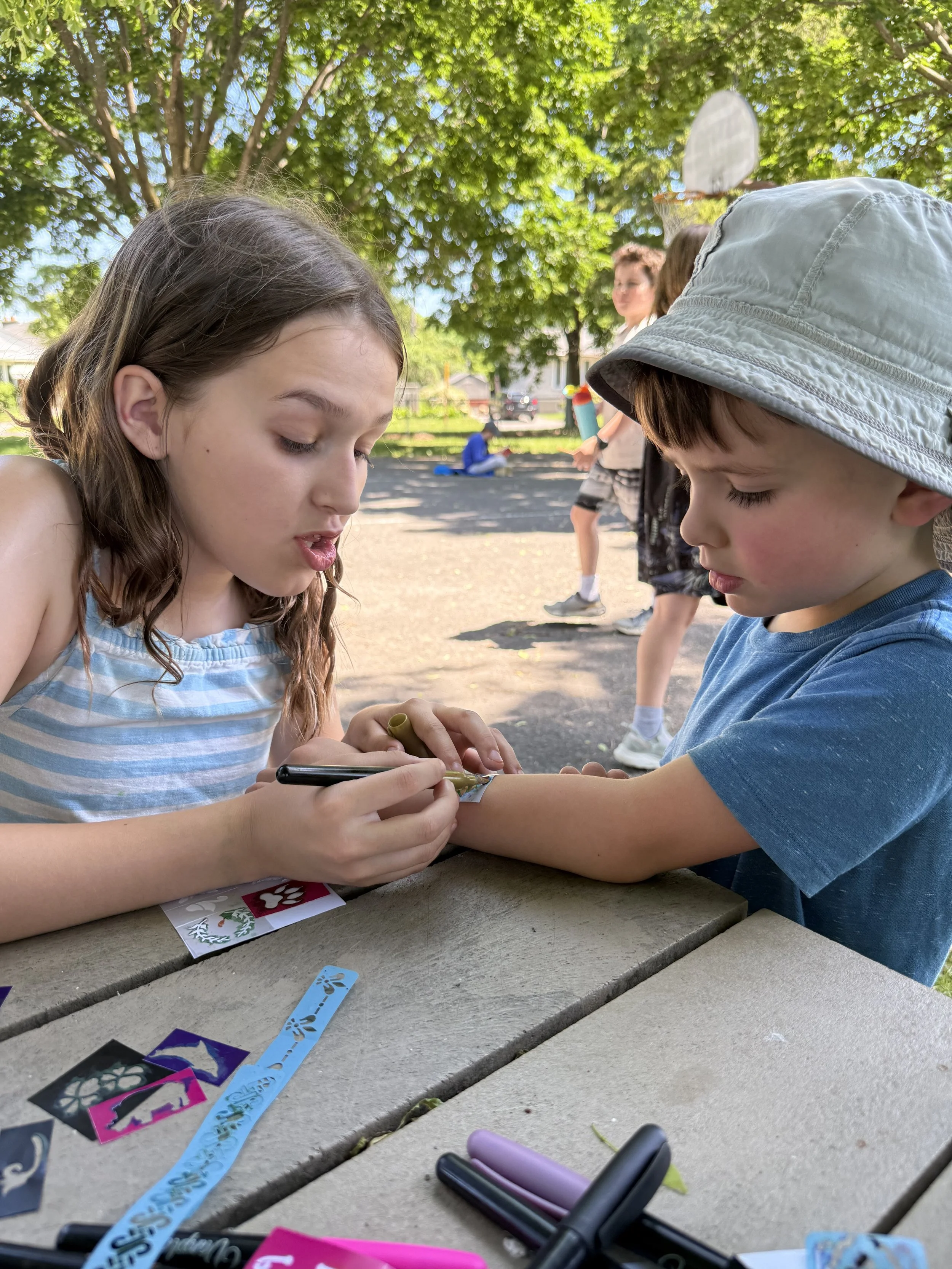
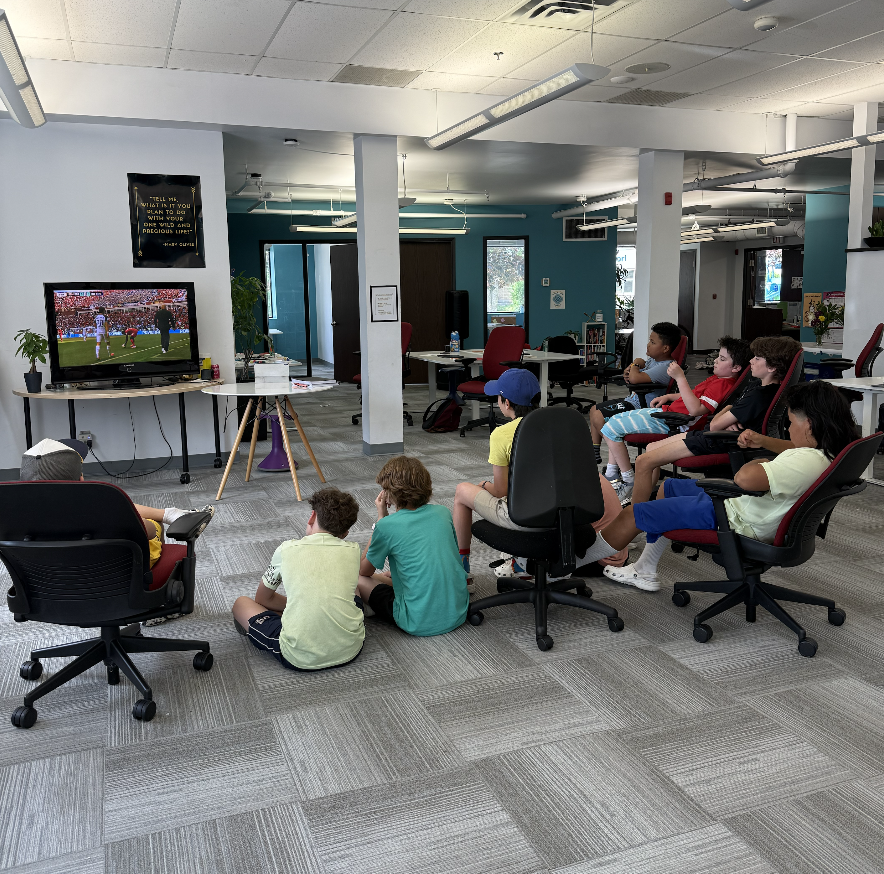
On Wednesday, we found ourselves seriously stumped by the New York Times Connections puzzle! Many of the vocabulary words seemed like they could fit into multiple categories, making it one of our most challenging puzzles yet. Rebels then moved into their weekly Squad Chickens activity with the goal of awarding a Rebel Buck to someone they had noticed helping others, demonstrating kindness, or going above and beyond to contribute positively to our Studio community. Thursday featured a very special Rebel-led Launch presented by learners working toward their Independent Learner Badge. These Rebels introduced the Studio to a secret coded language, teaching the alphabet symbols and challenging their peers to practice writing their names using the code. On Friday, our Boomwhackers performance of ZOO continued to improve as Rebels became increasingly confident with their instruments and the rhythm of the song. Current Events this week included the kickoff of the 2026 FIFA World Cup, a special feature recognizing World Oceans Day and the saddleback clownfish, and the latest updates from the Stanley Cup Finals.
Reader/Writer
This week in Reader/Writer Workshop, the Rebels were introduced to three new forms of poetry: Verb Poems, Holiday Poems, and Pensée Poems. Together, we explored the unique structure and purpose of each style, examining how poets use different formats to communicate ideas, emotions, and experiences. The Rebels particularly enjoyed writing Holiday Poems, which encouraged them to reflect on meaningful memories and describe them through their emotions and senses. Learners thought carefully about the sights, sounds, smells, tastes, and feelings associated with special holidays and celebrations, using vivid language to bring those experiences to life for their readers.
As they experimented with these different poetic forms, Rebels continued to develop their creativity, descriptive writing skills, and ability to express personal experiences through poetry.
Math Lab
Discovery Rebels worked incredibly hard on their anchor charts this week! Many learners completed at least one digital anchor chart and moved on to creating enlarged, hand-drawn poster versions to showcase their learning. Our focus this week was on clarity, precision, and mathematical vocabulary. Rebels carefully reviewed their work to ensure that definitions, explanations, and step-by-step processes accurately reflected the mathematical concepts they were teaching. We discussed the importance of using intentional vocabulary and clear language so that others could easily understand and learn from their charts.
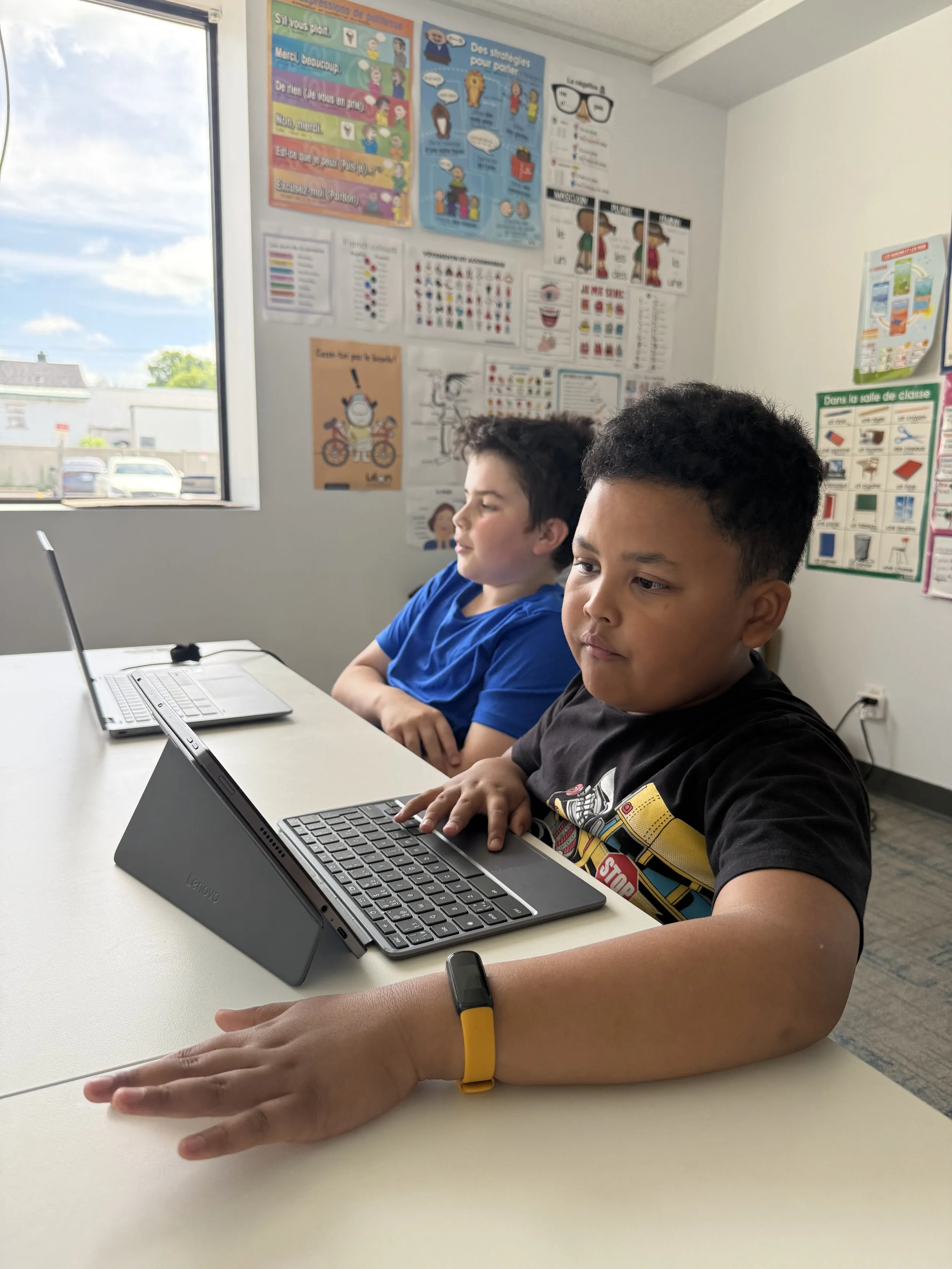
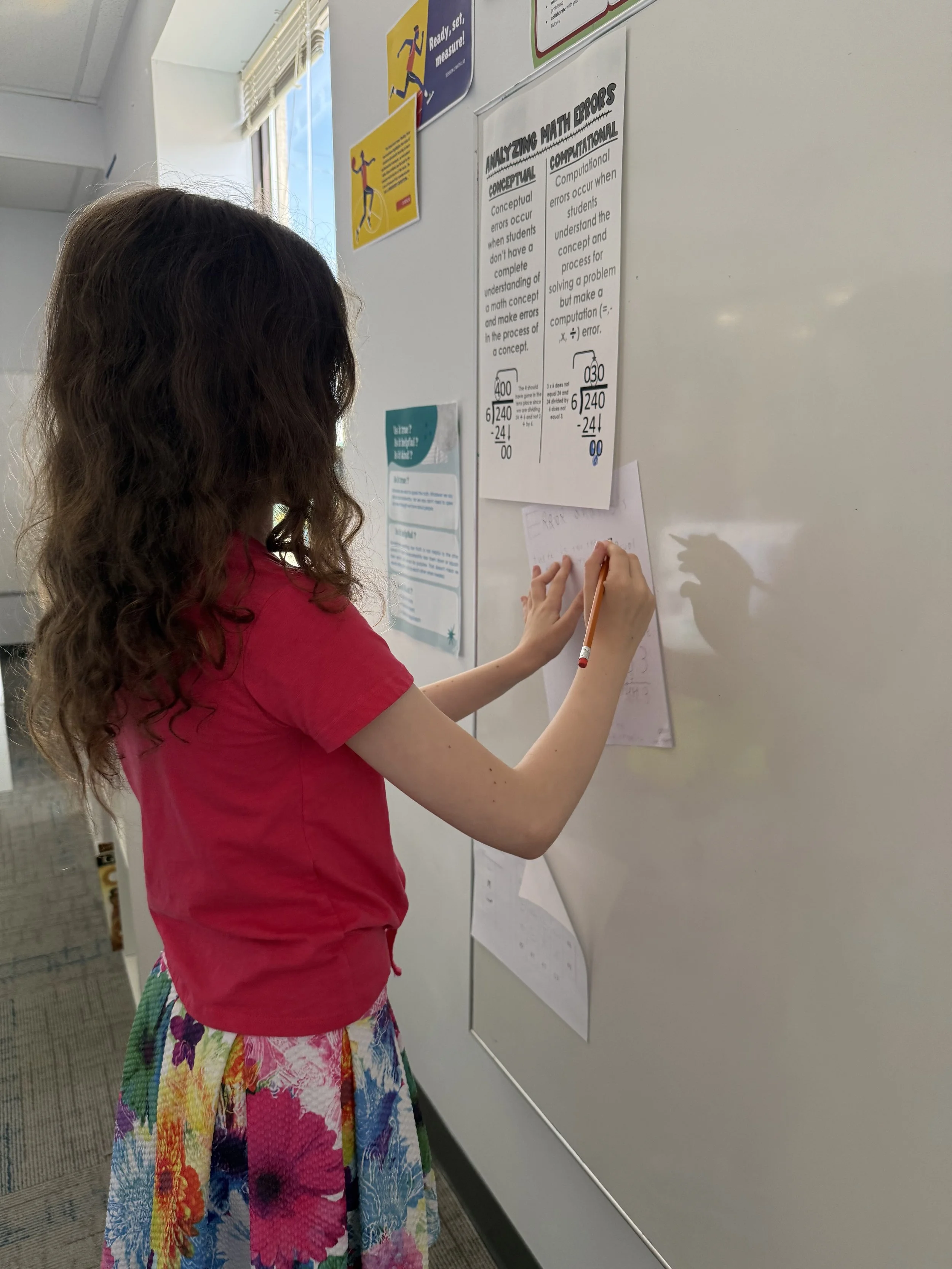
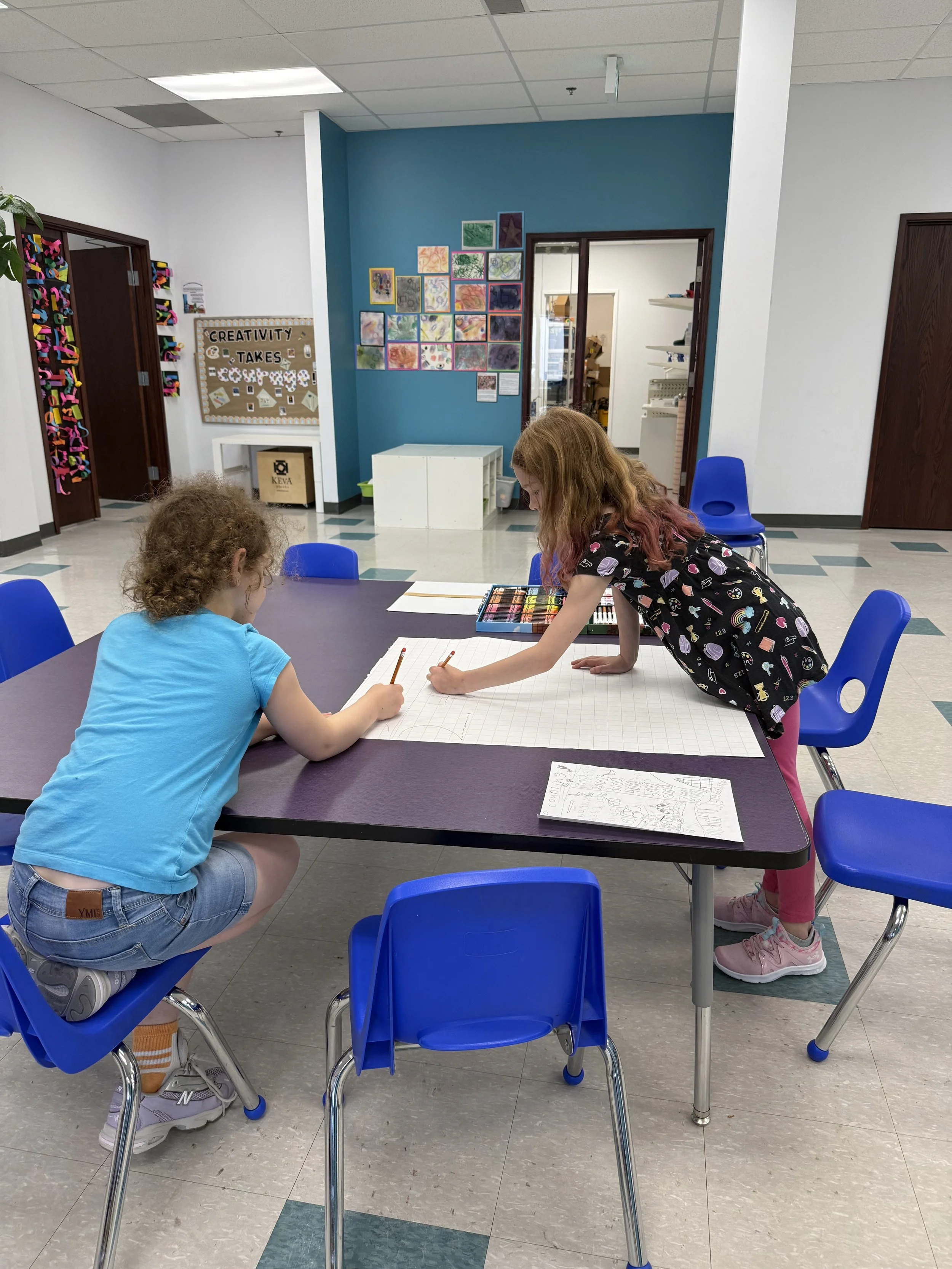
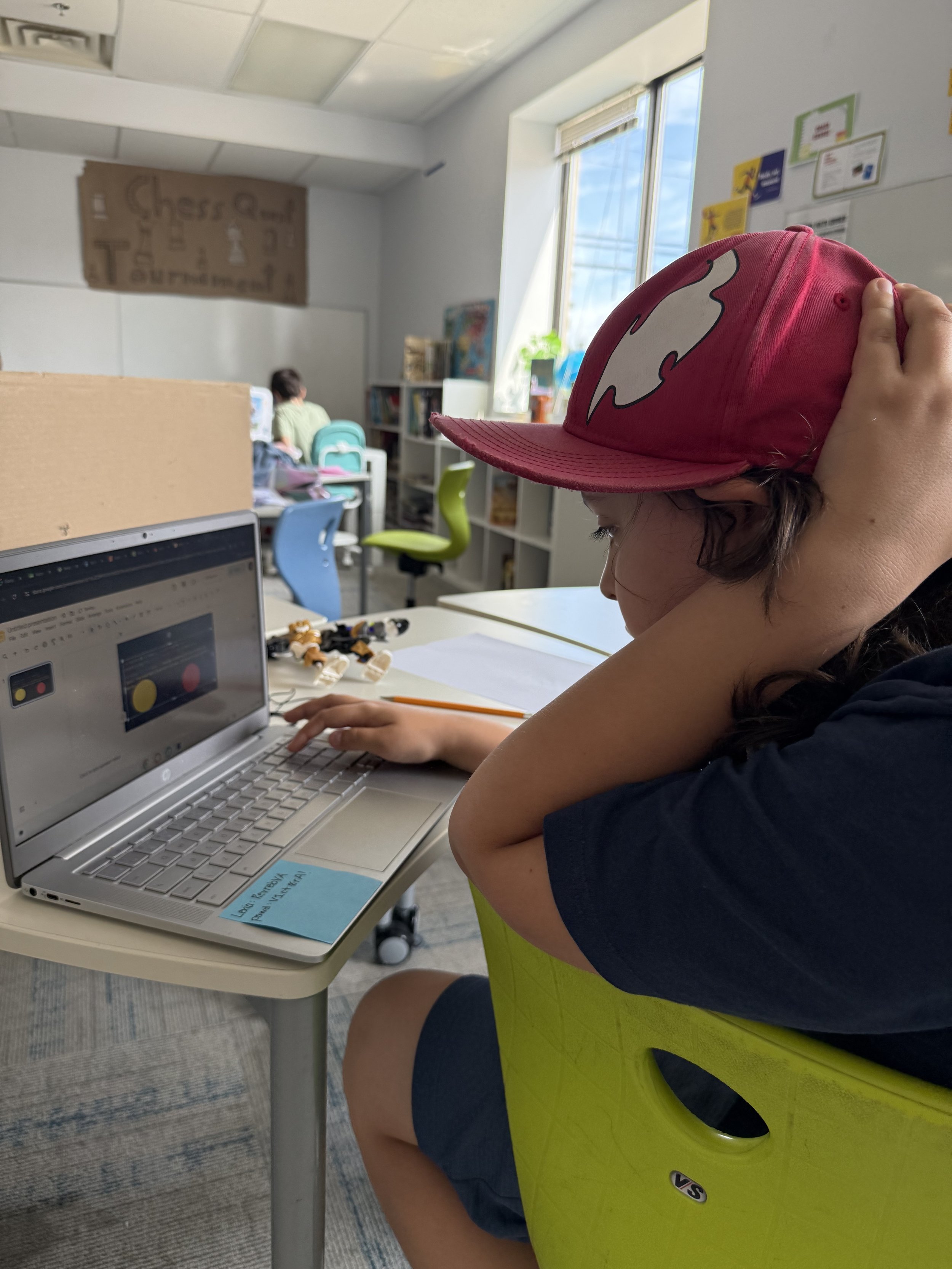
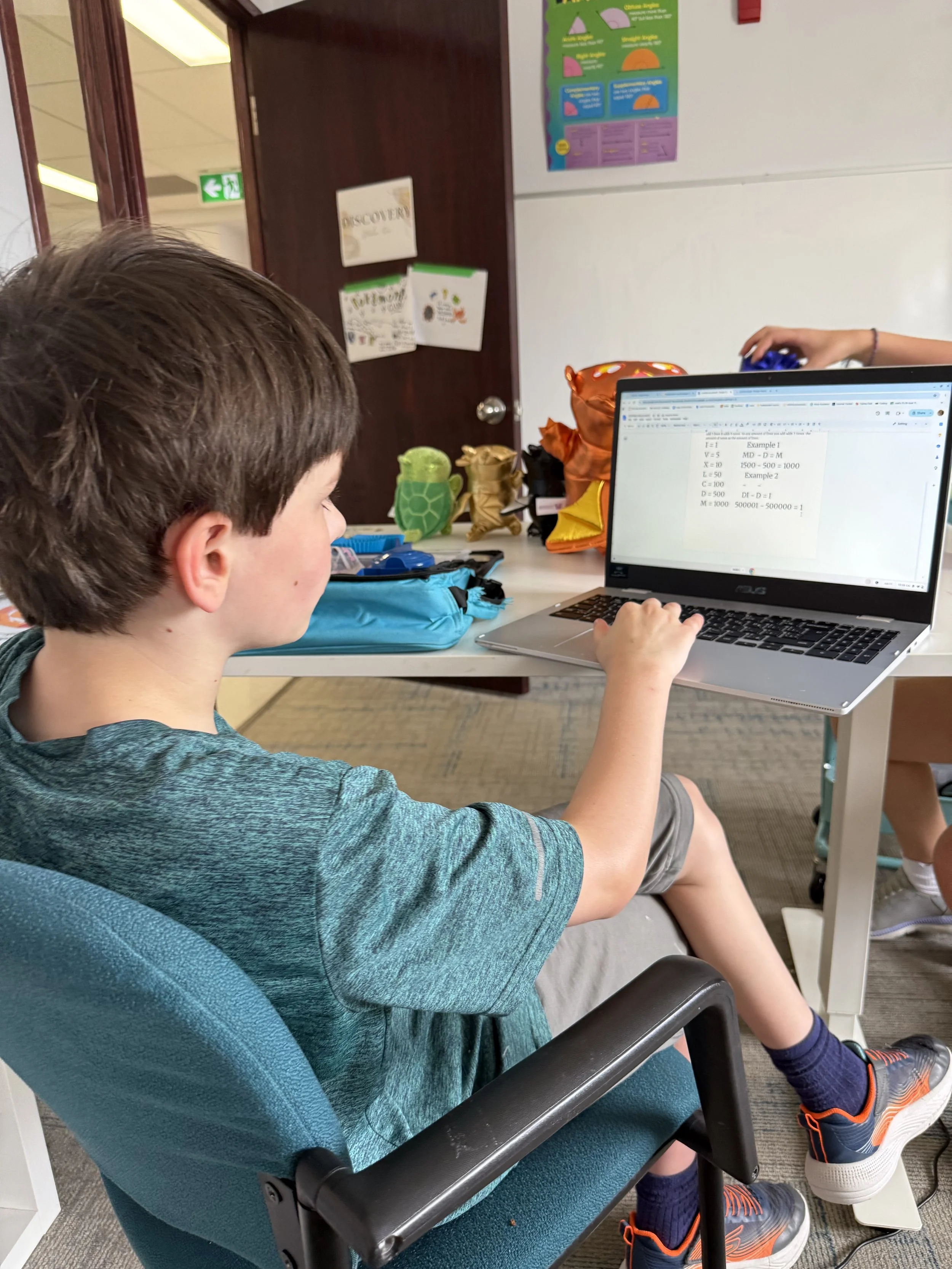
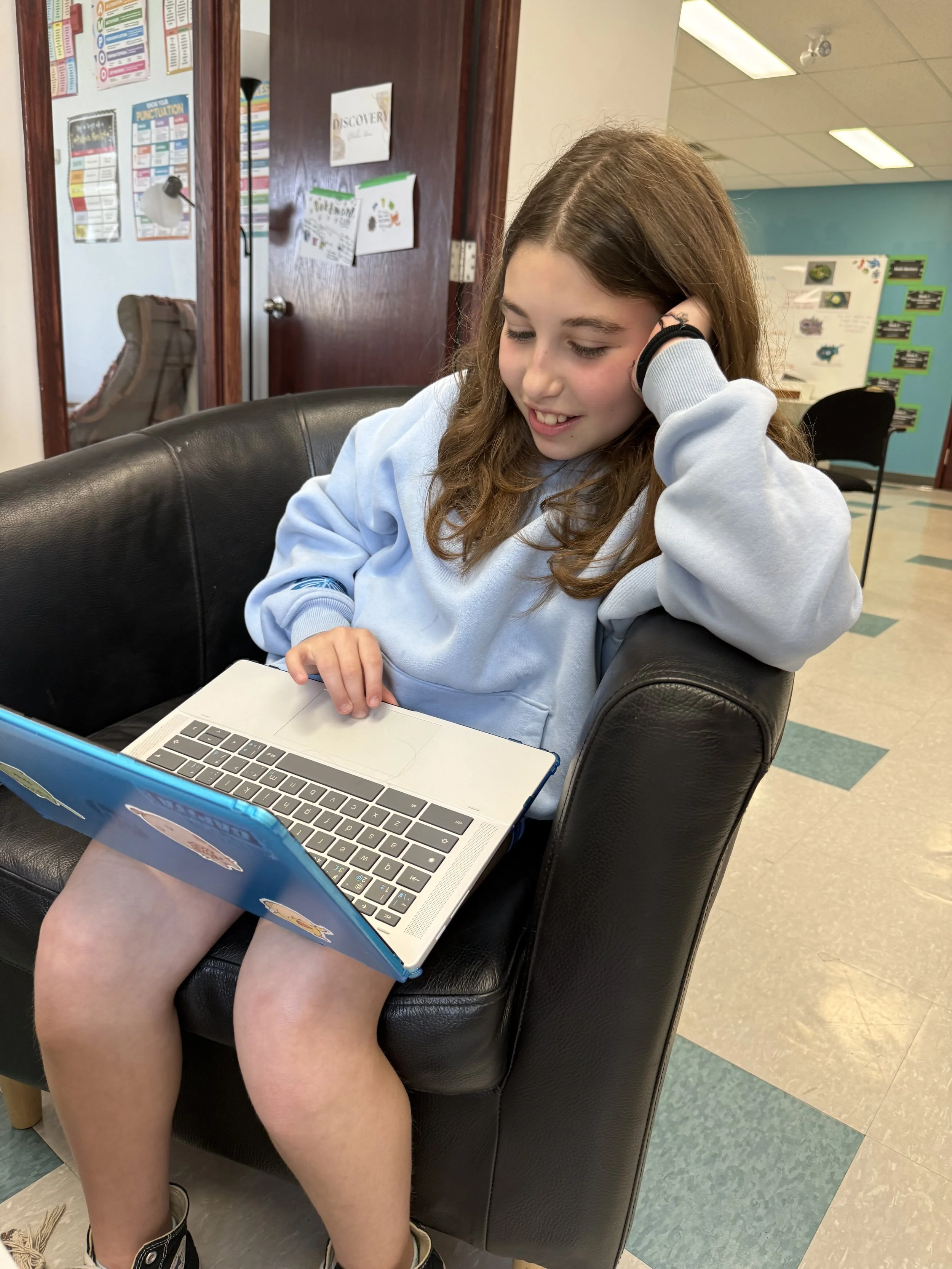
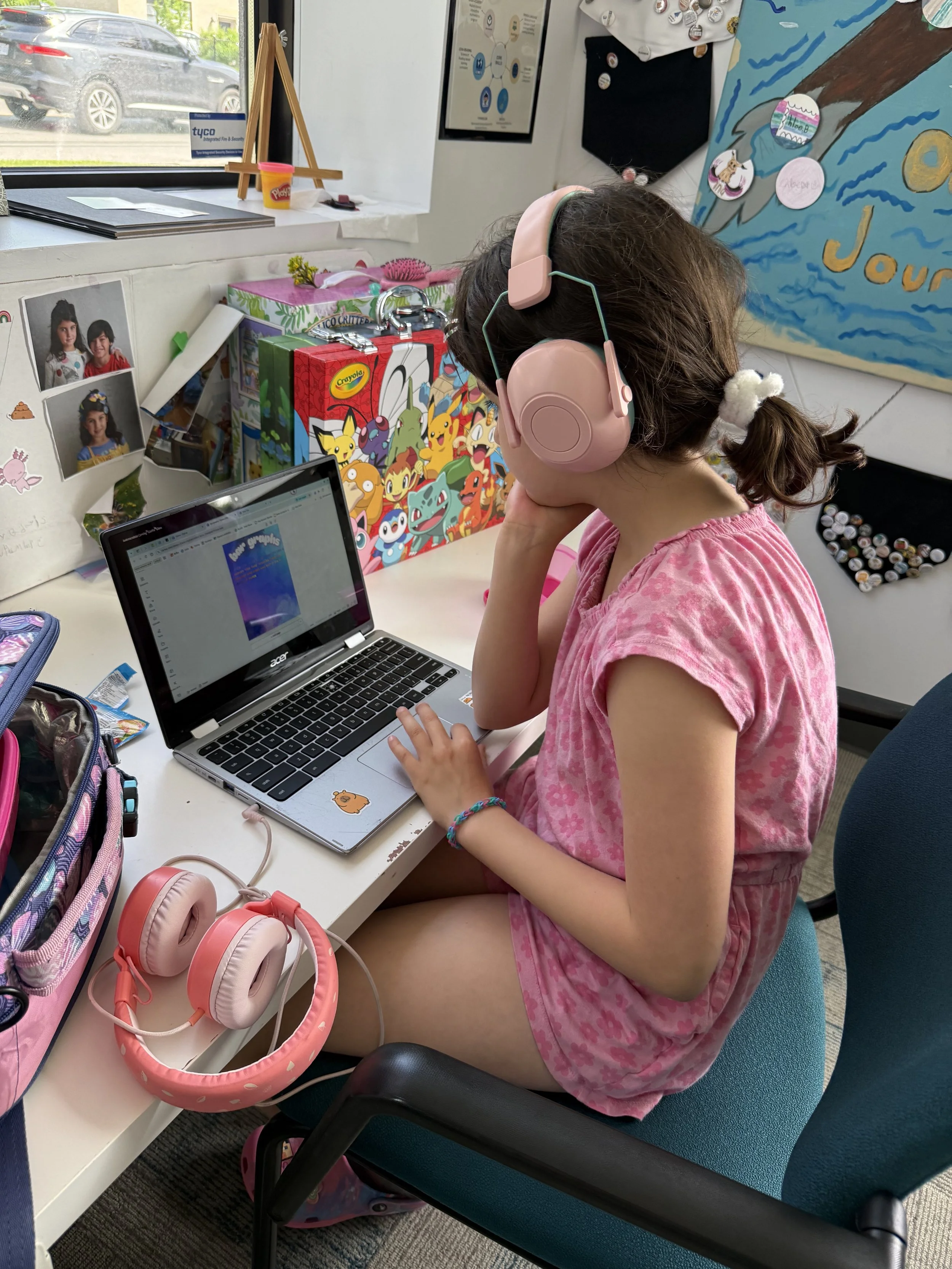
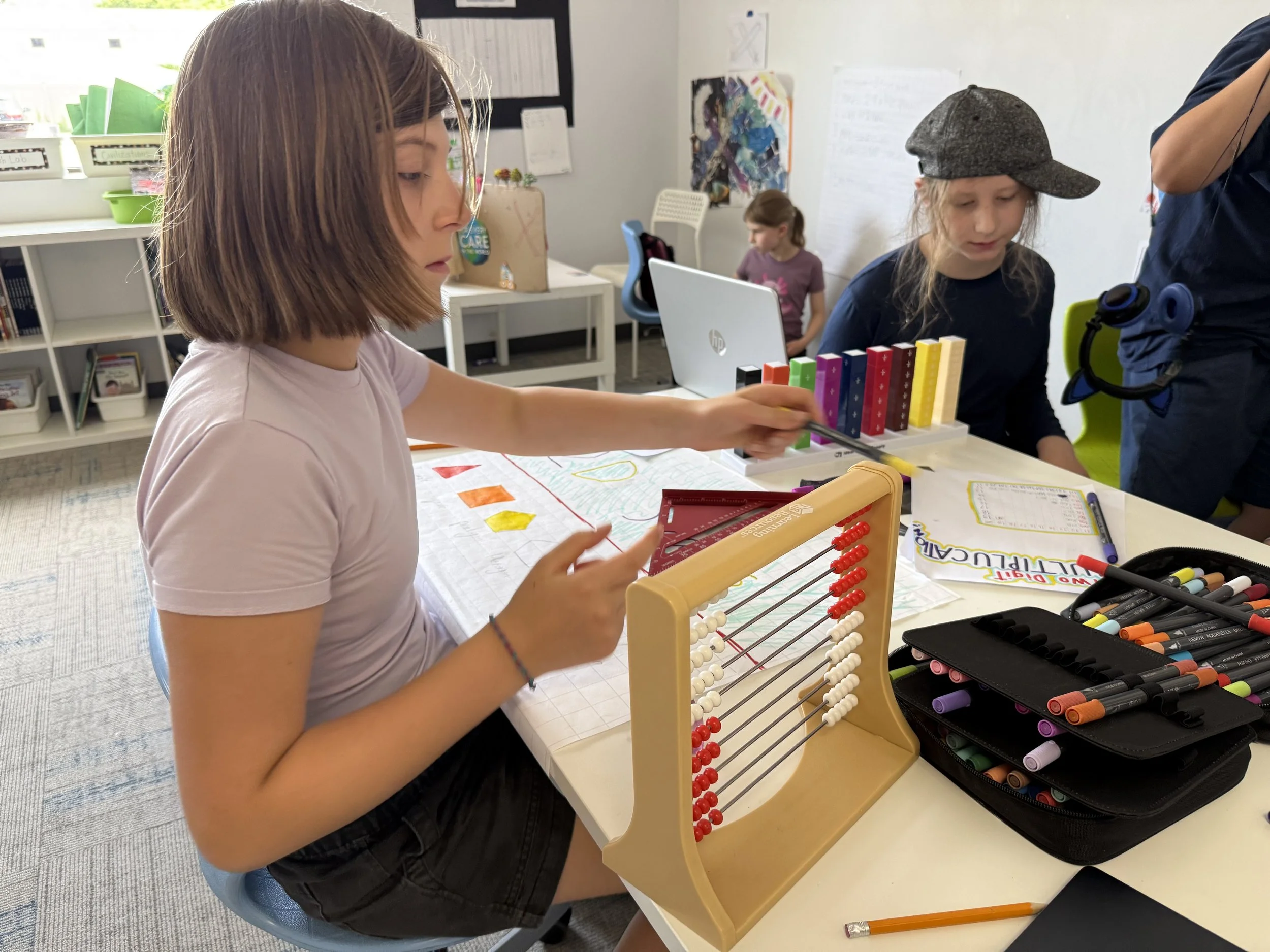
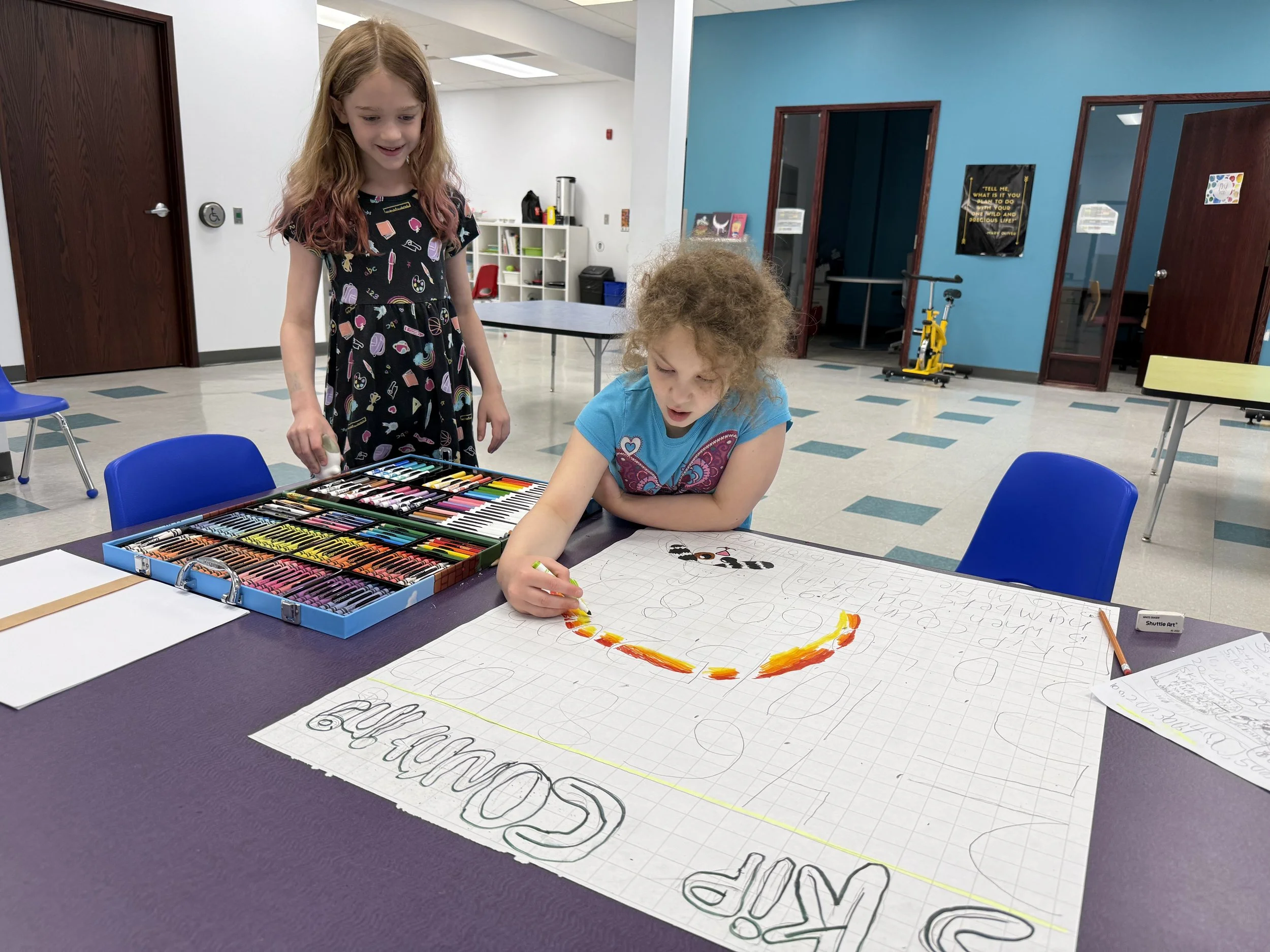
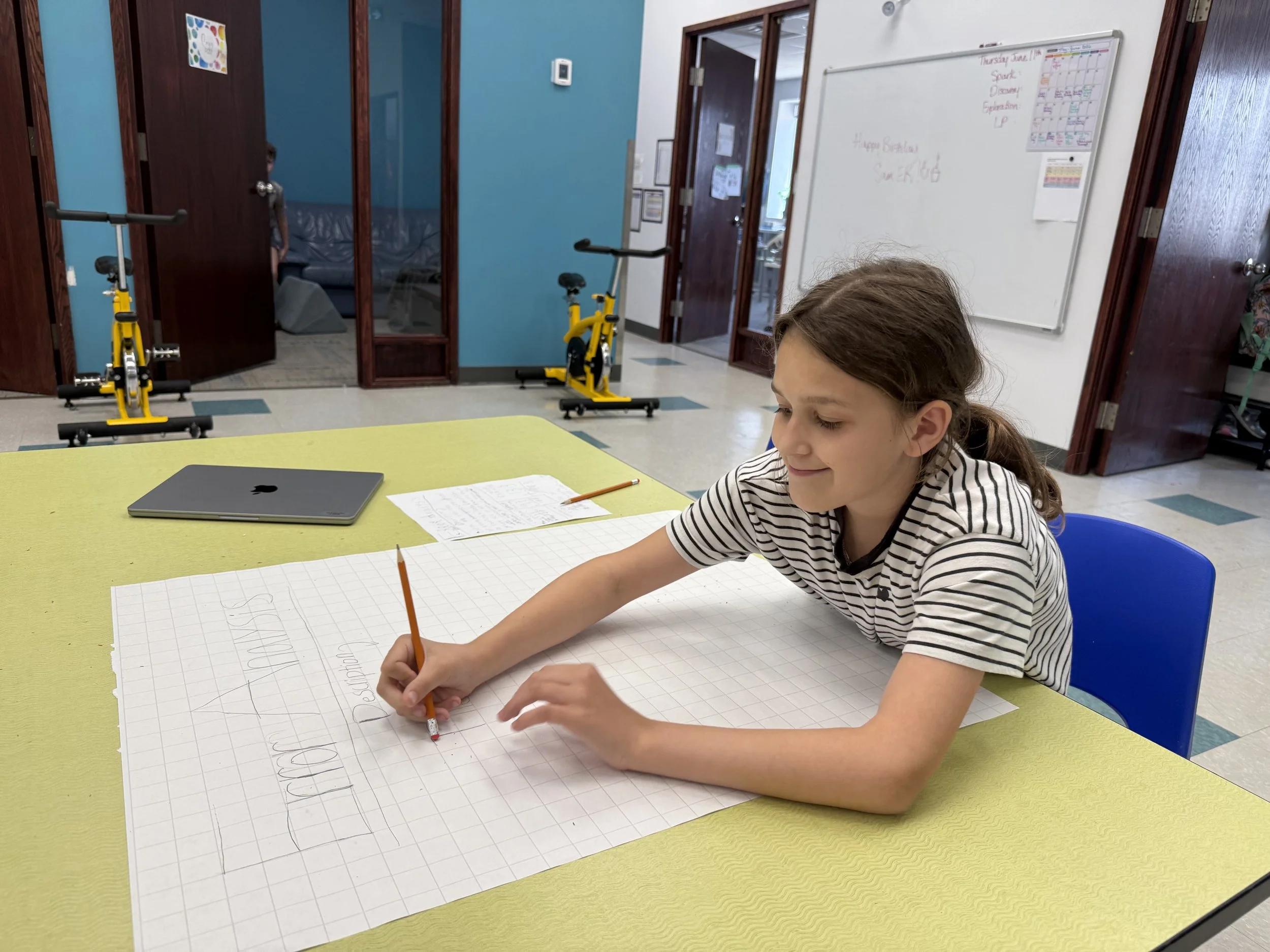
One of the most rewarding parts of this project has been seeing the unique ways Rebels represent and organize their mathematical thinking. Each poster reflects not only an understanding of the concept but also the learner's individual approach to explaining it. Even more exciting has been watching Rebels teach and learn from one another throughout the lab. Whether offering feedback, asking questions, or explaining a strategy, our learners have demonstrated that some of the most meaningful learning happens when we share our knowledge with others. We can't wait to see the finished anchor charts displayed and celebrated at Exhibition in a few weeks!
French
This week in French, the Discovery learners continued building and creating their original games in the Makerspace. Teams tested and played their games to evaluate the rules, instructions, and overall gameplay while making improvements and adjustments along the way. Throughout the process, learners practiced collaboration, creativity, and communication skills while using French in a meaningful and interactive context.
Quest
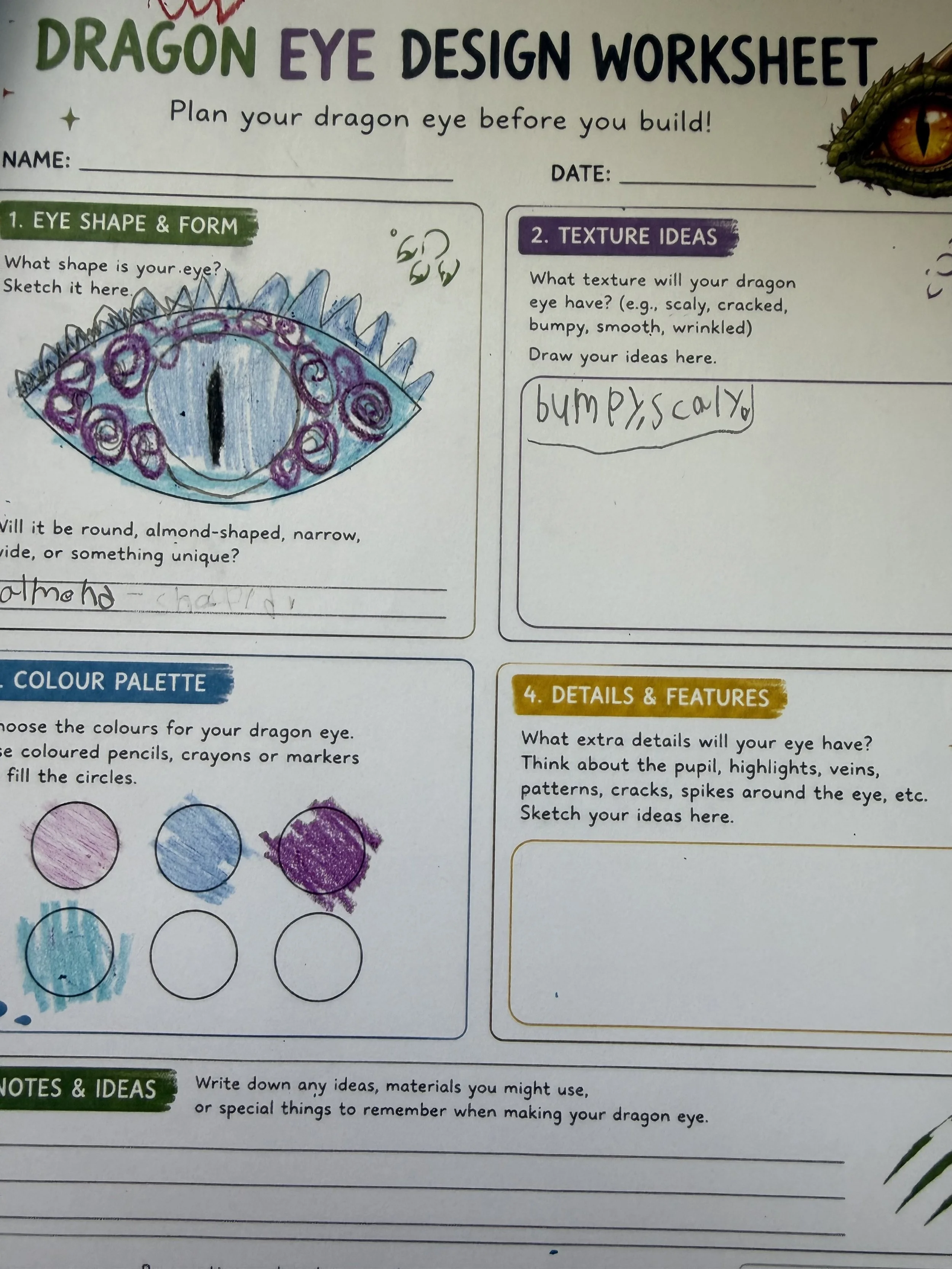
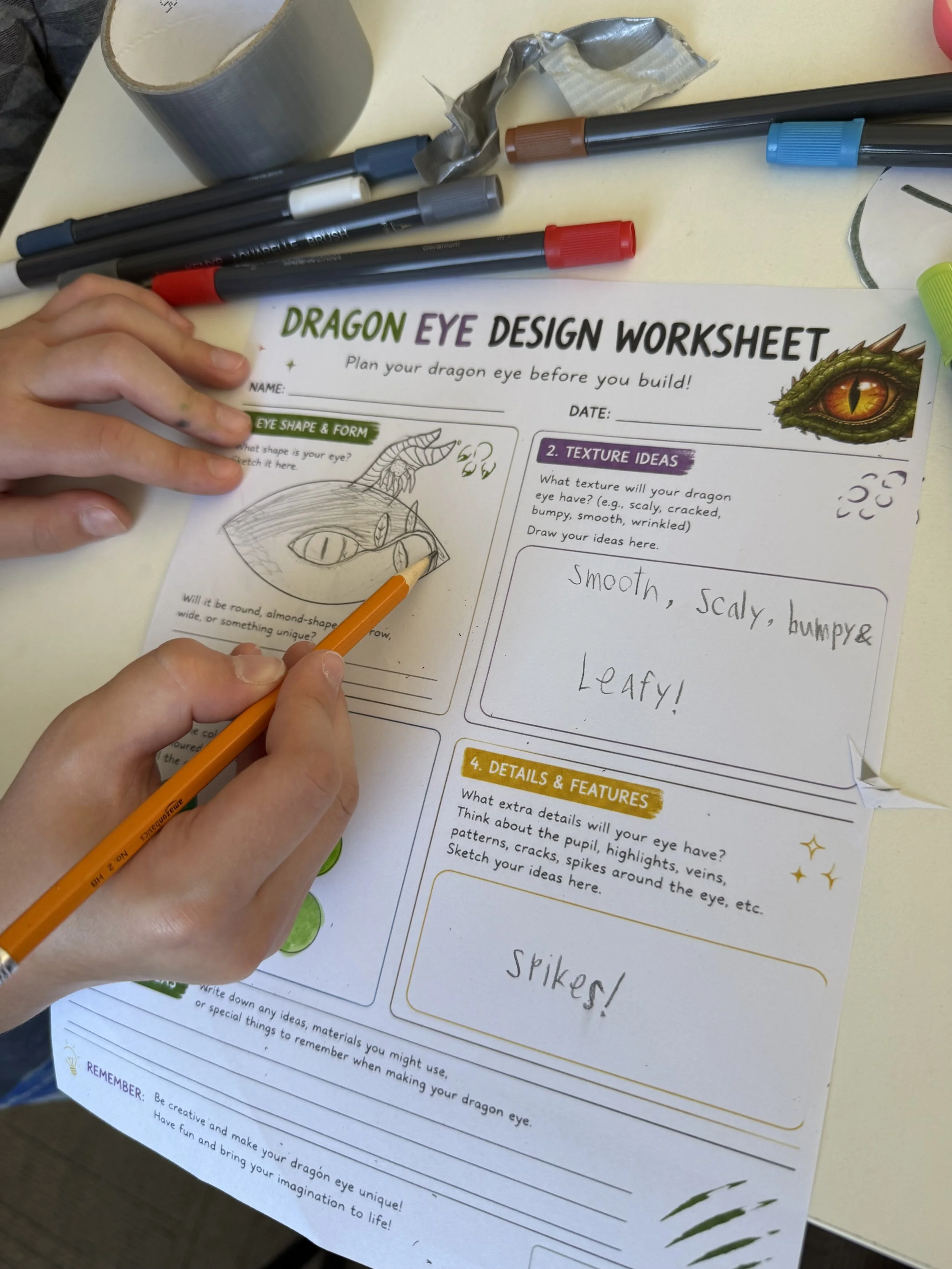
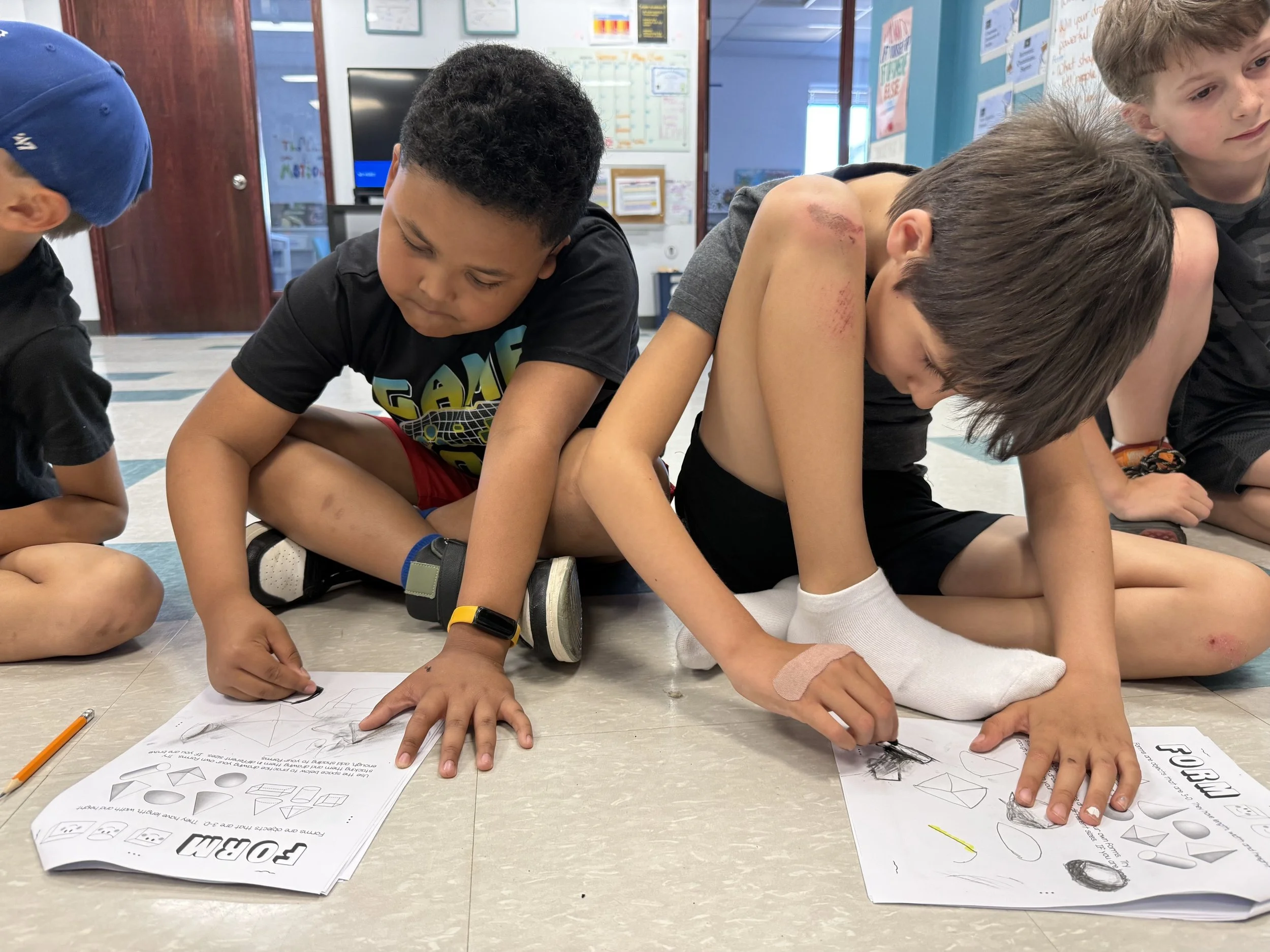
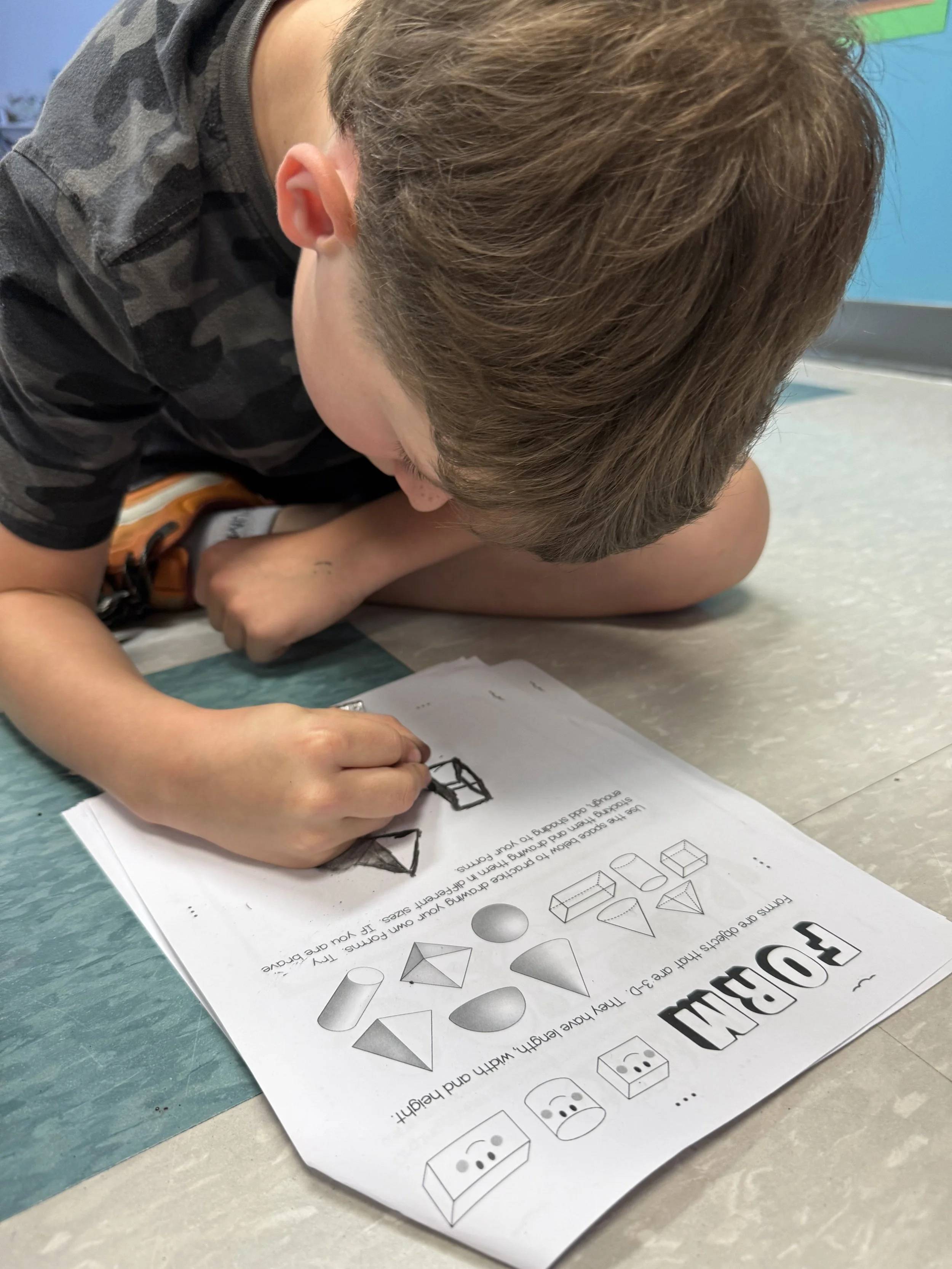
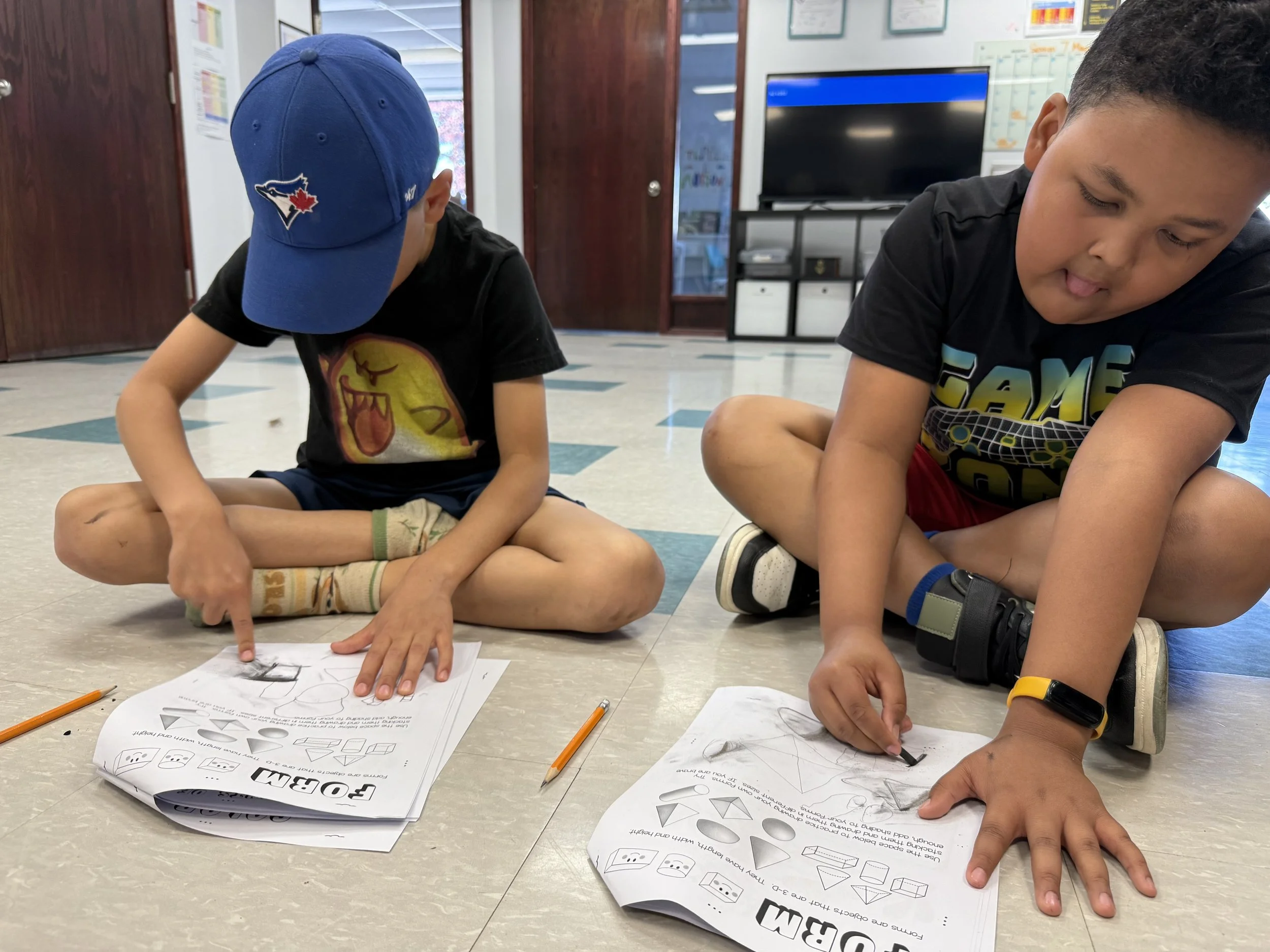
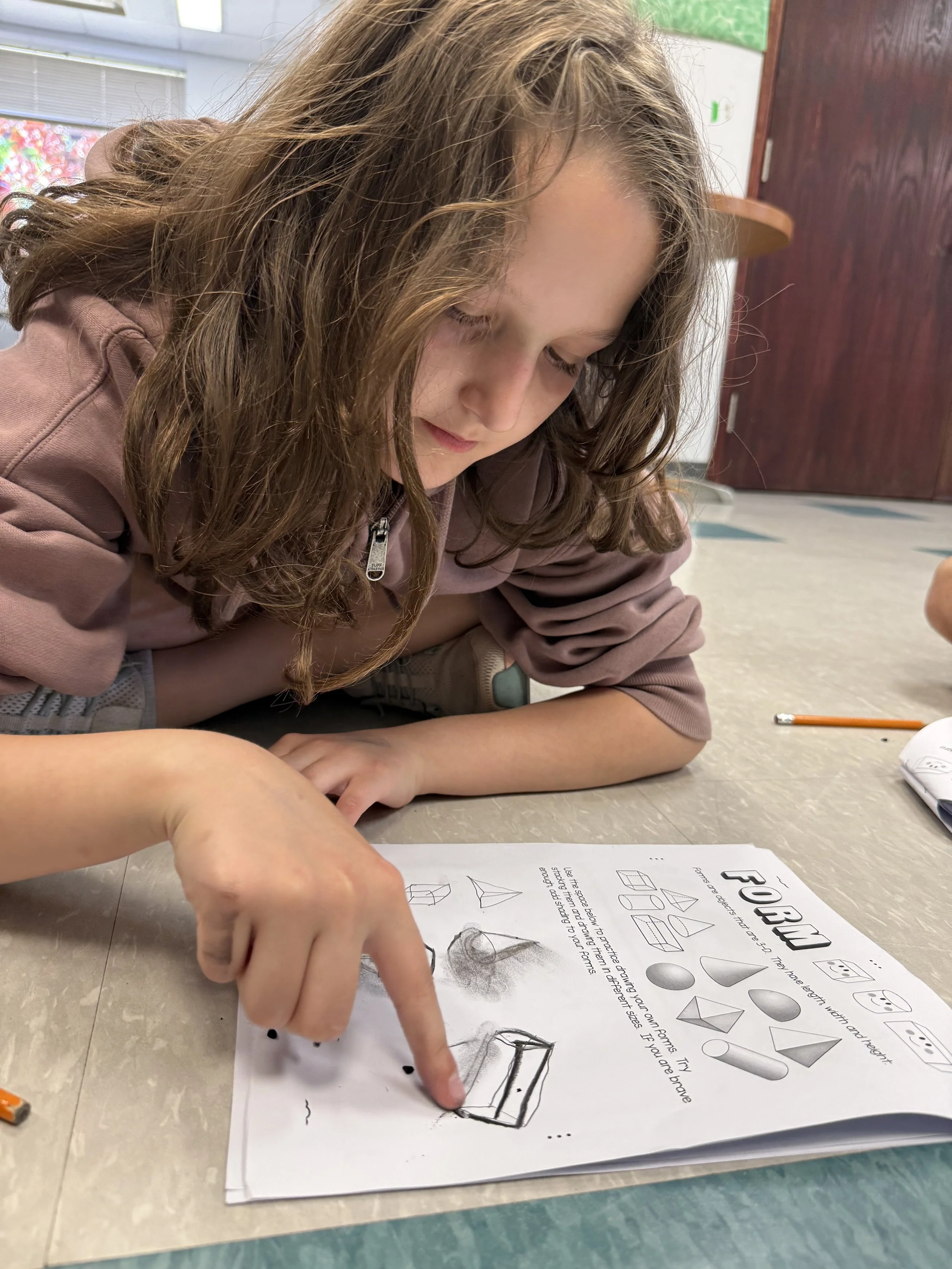
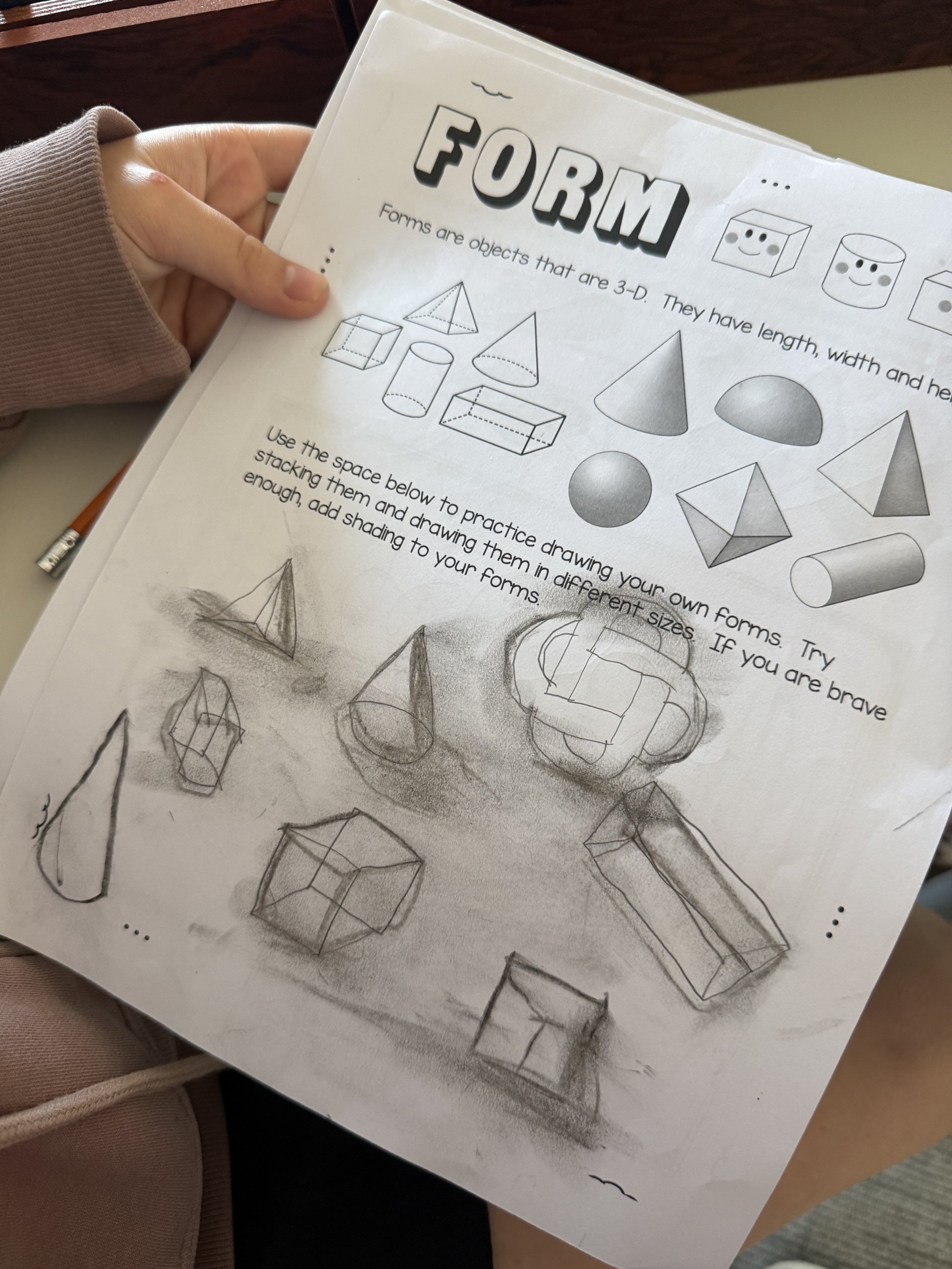
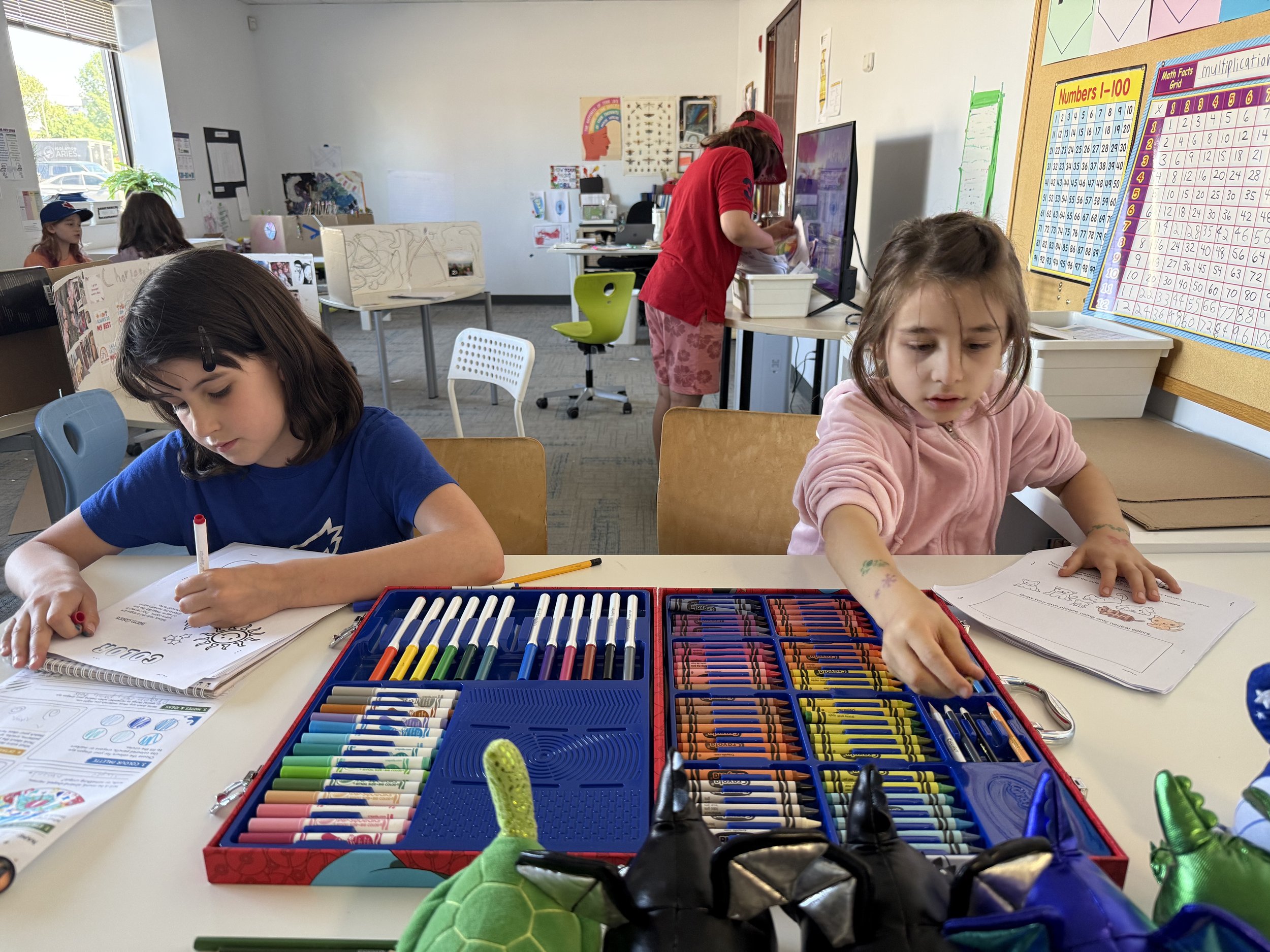
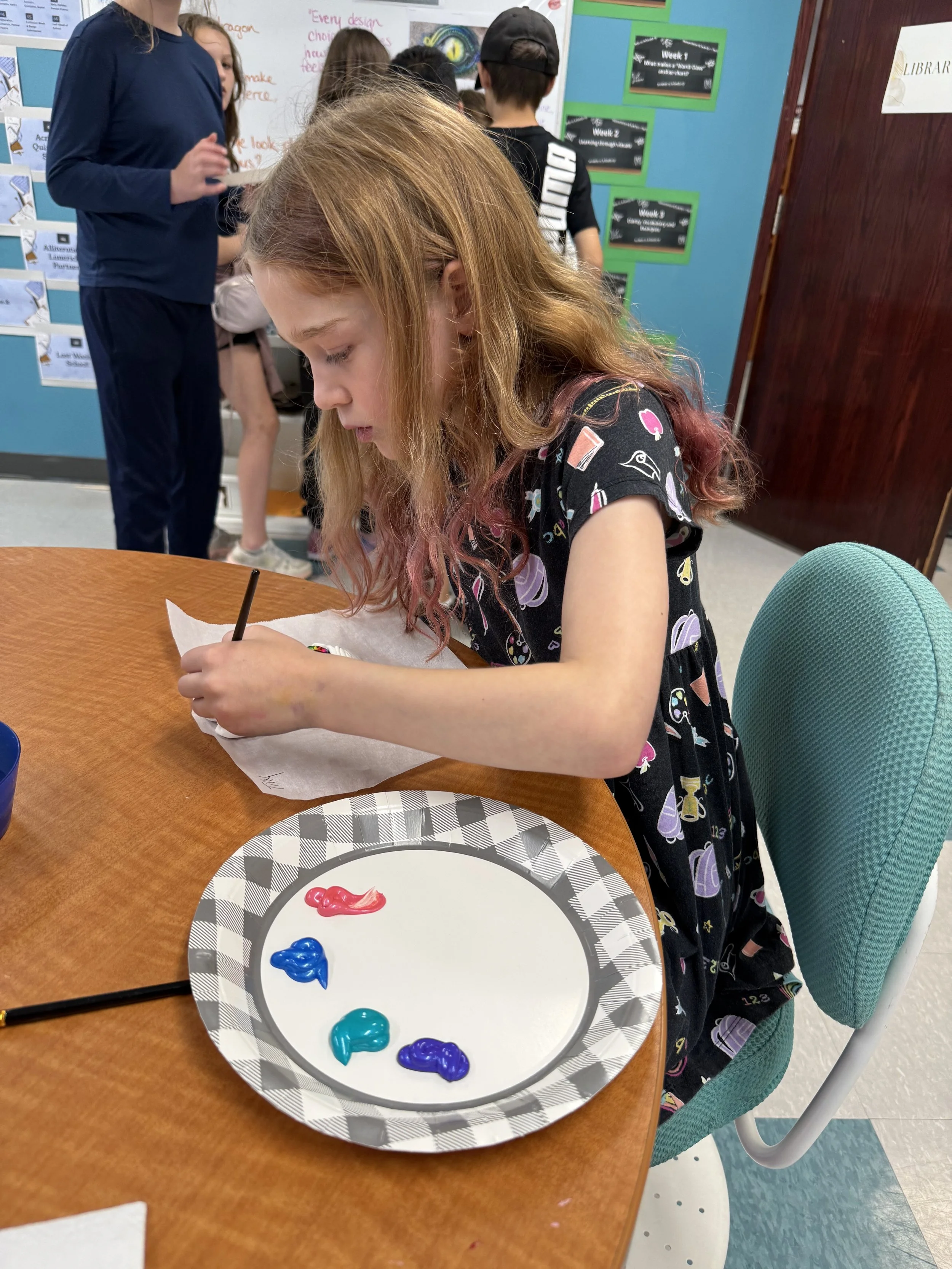
This week in Quest, Discovery Rebels continued their exploration of the Elements of Art by focusing on Texture and Form. We began by asking an important question: How does an artist make something look like it feels a certain way?
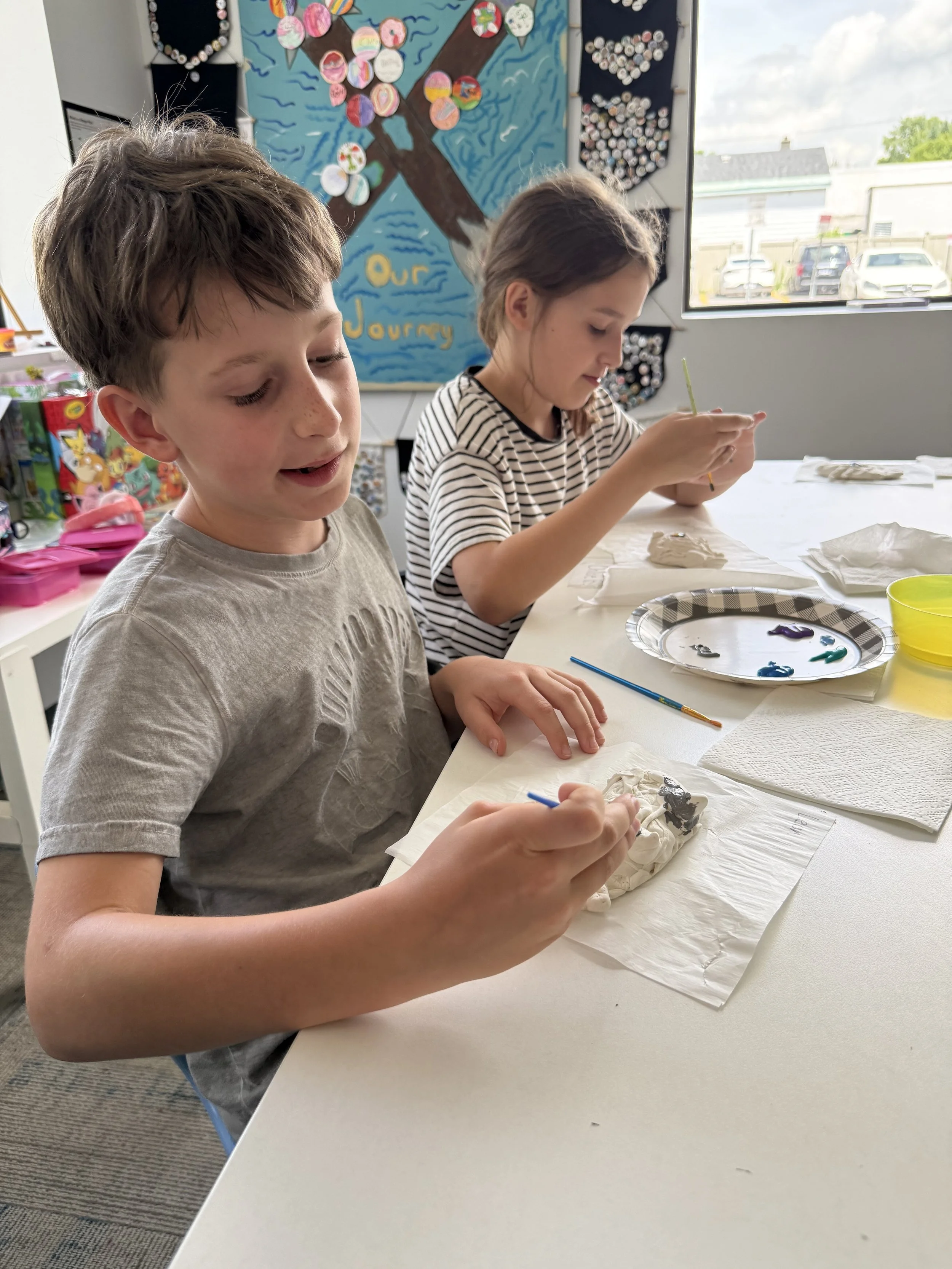
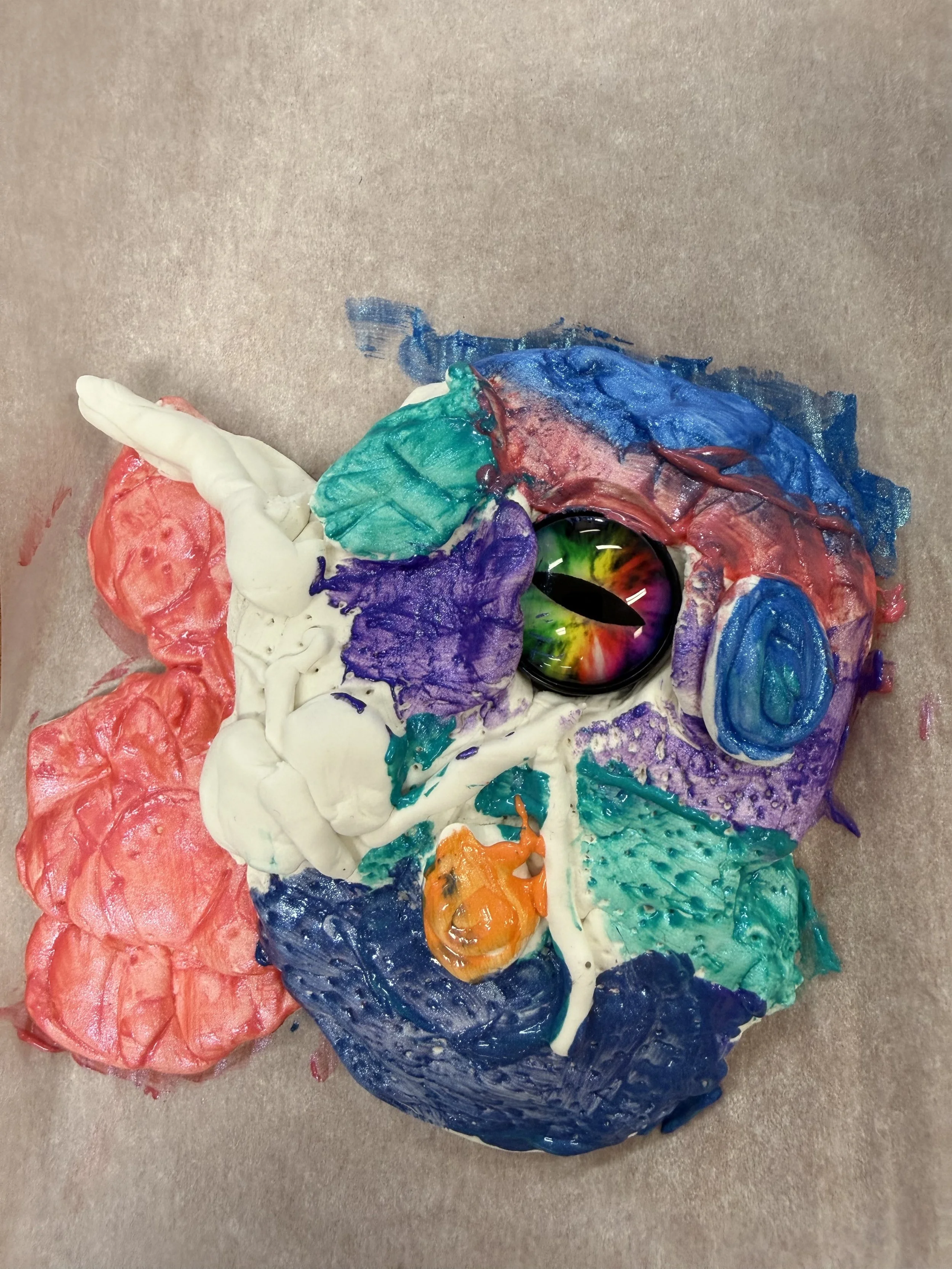
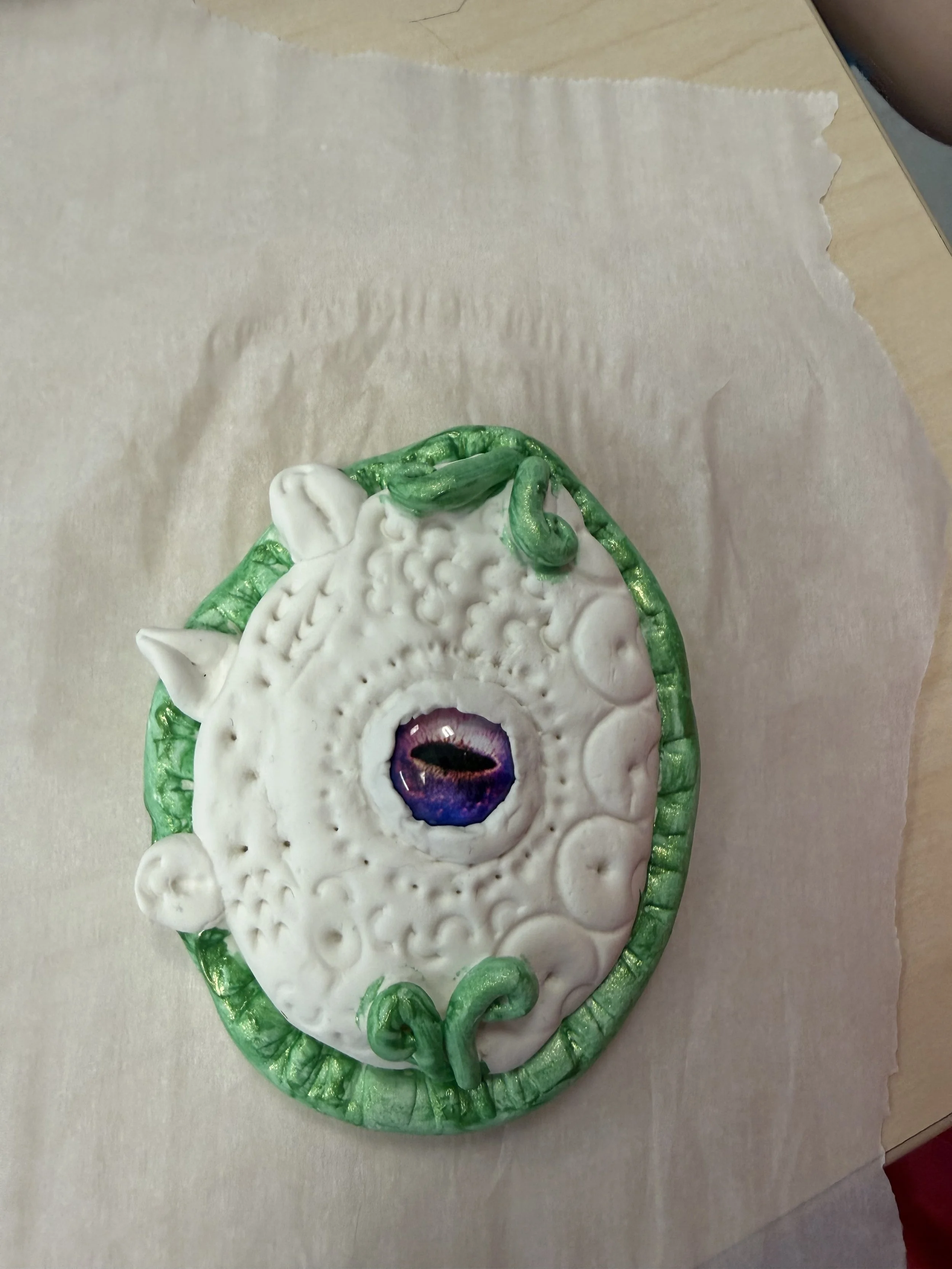
On Monday, Rebels participated in an introductory lesson on texture and form. Together, we examined several examples of artwork, including pieces by Chuck Close, and discussed the difference between implied texture (texture that looks real but can only be seen) and actual texture (texture that can be physically felt). Through discussion, Rebels considered how artists use texture and form to create realistic and expressive works of art. They explored questions about how texture influences the way we experience an object, how forms can communicate personality and emotion, and how small details can transform a piece from simple to extraordinary. Following our discussion, Rebels were introduced to this week's art project: Model Magic Dragon Eye Sculptures. Learners began the design process by sketching their dragon eyes, planning their overall forms, and creating colour palettes to guide their work. Each design reflected thoughtful decisions about texture, shape, environment, and character.
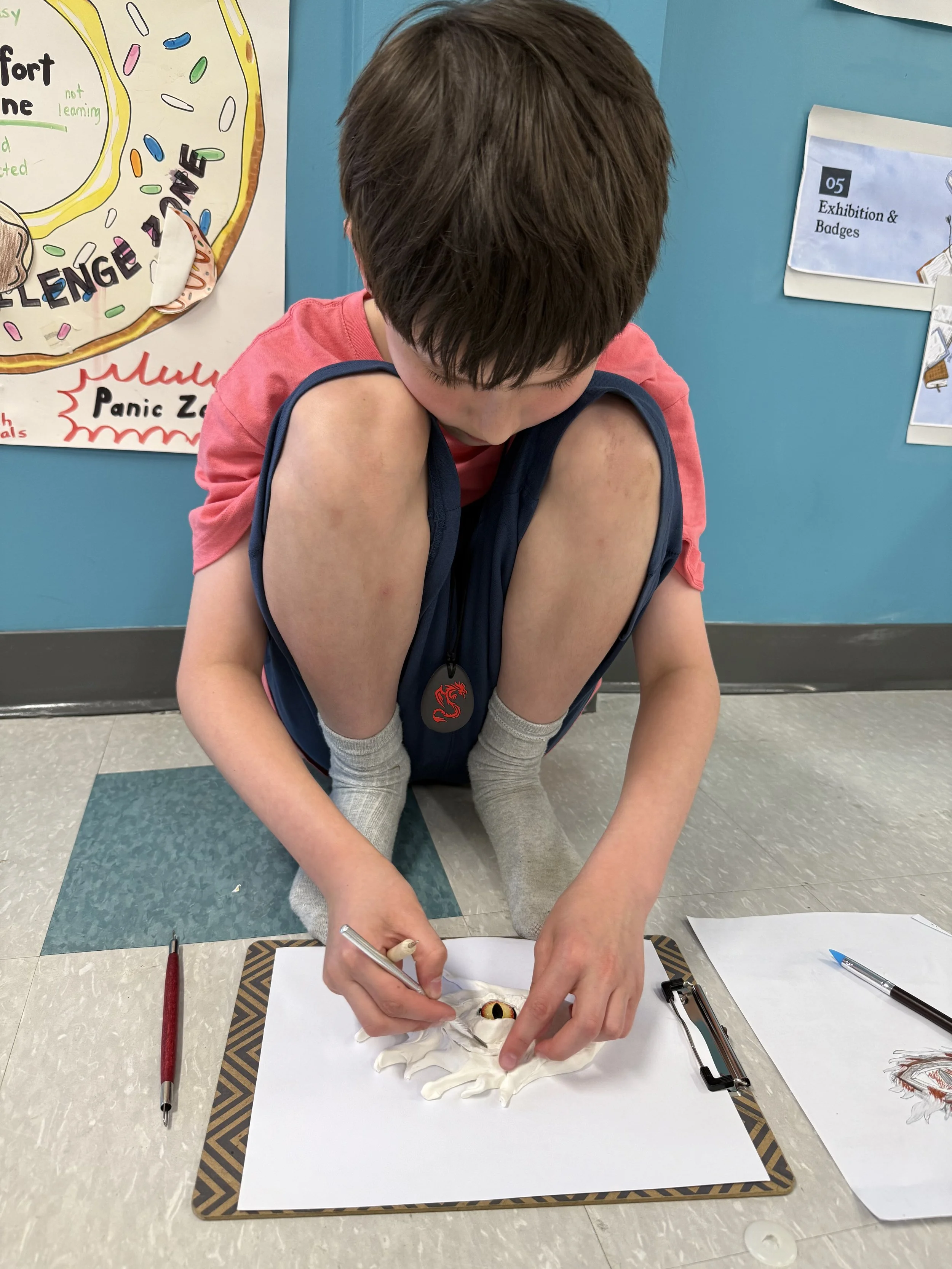
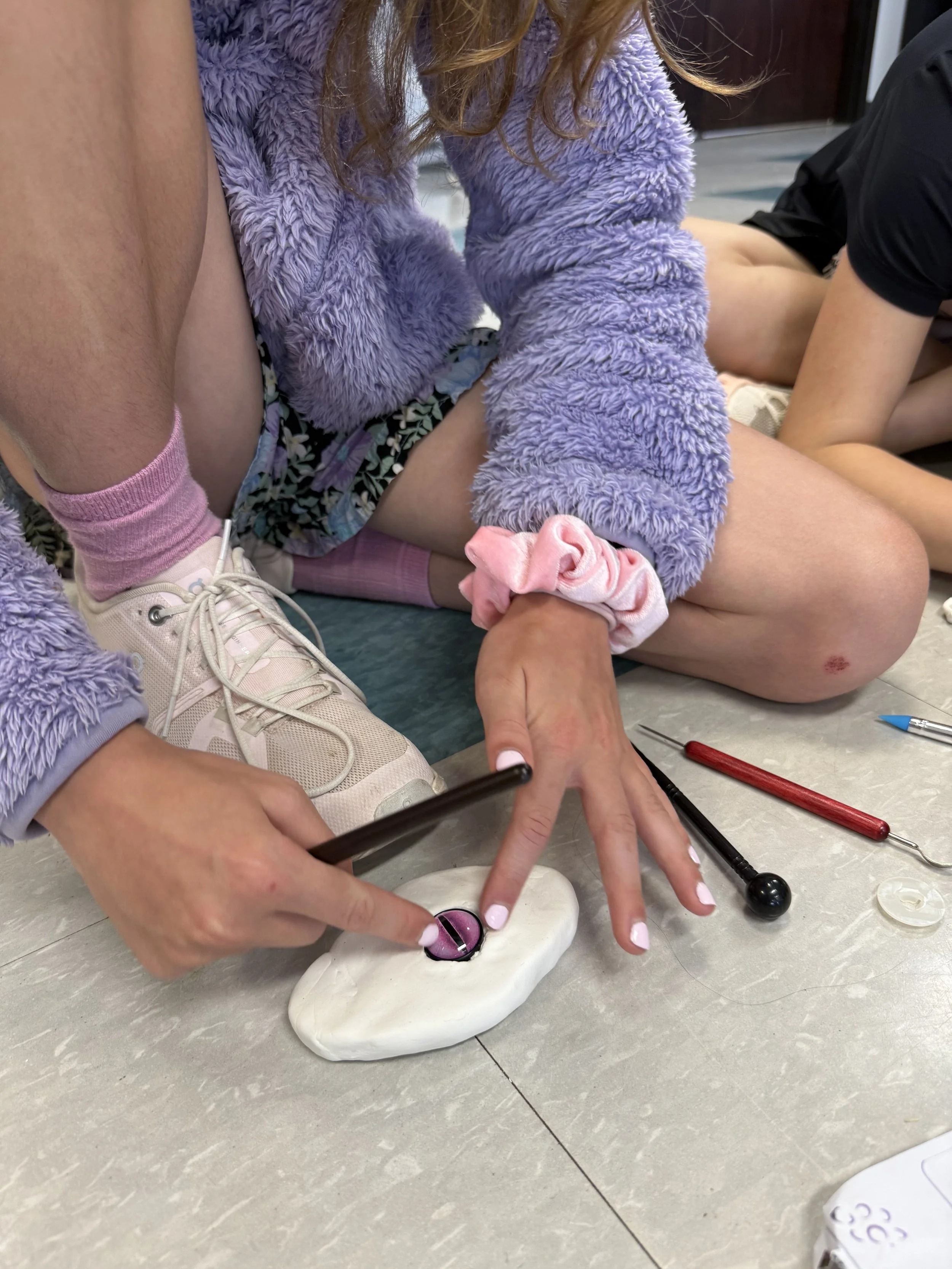
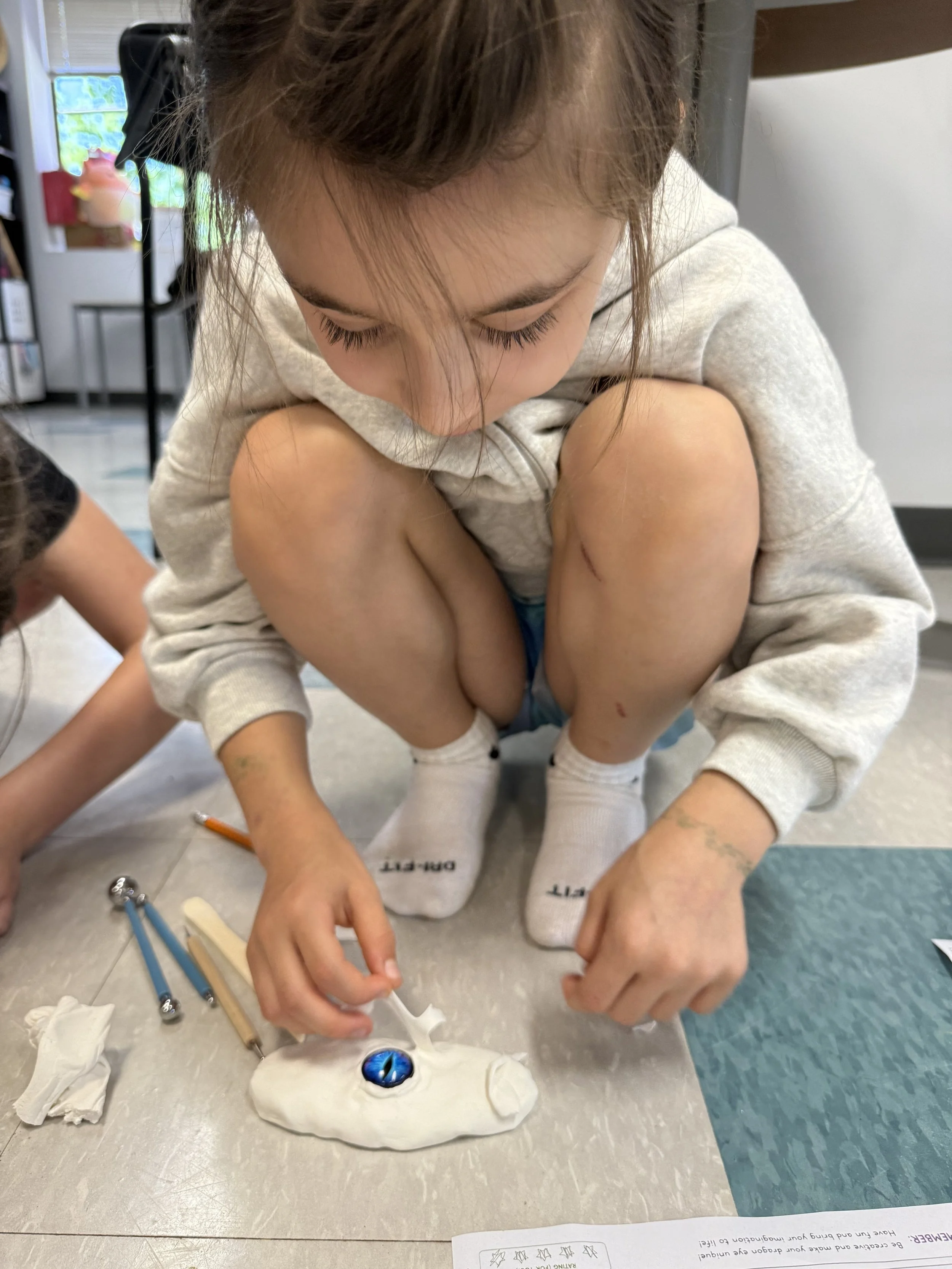
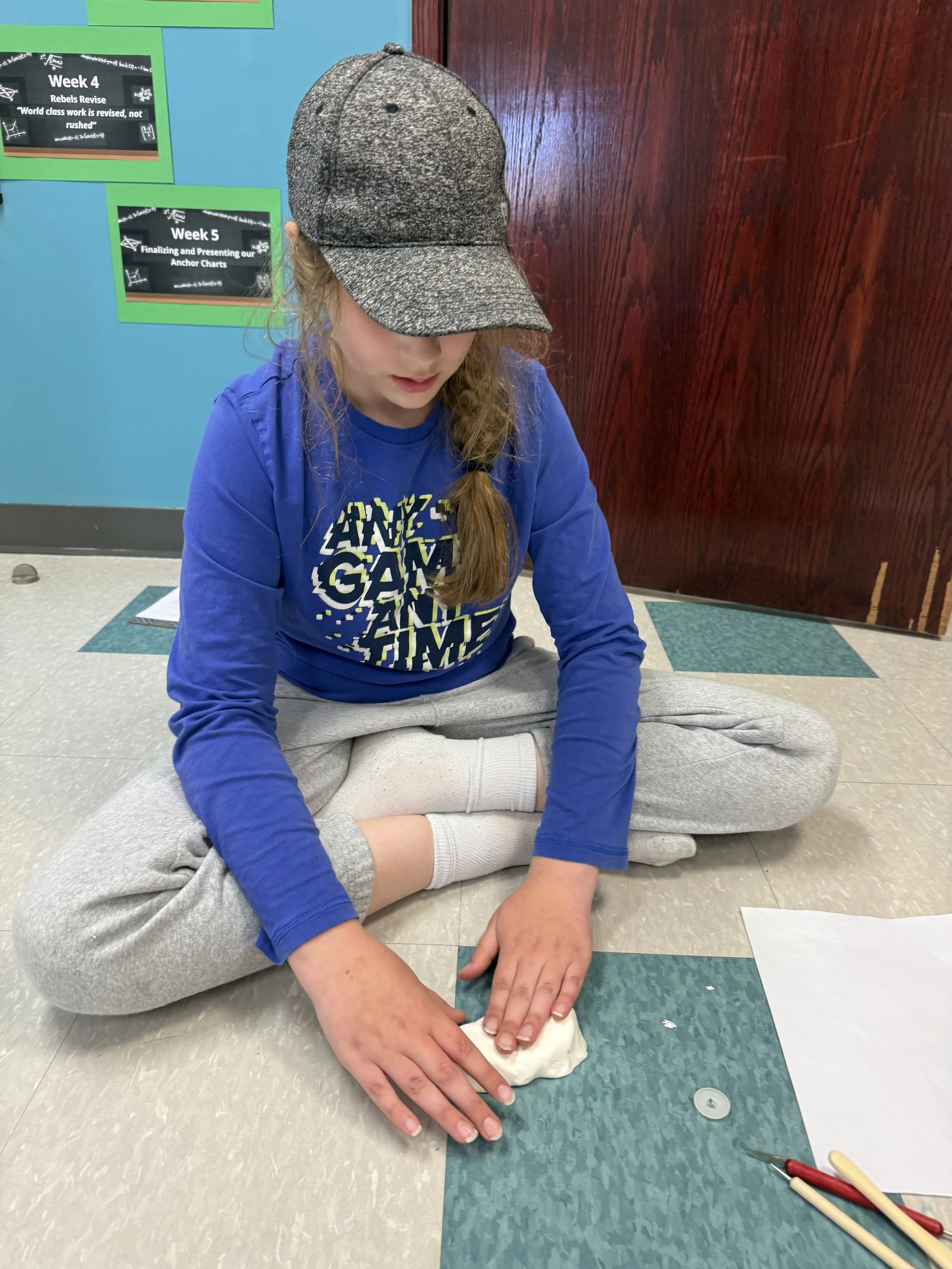
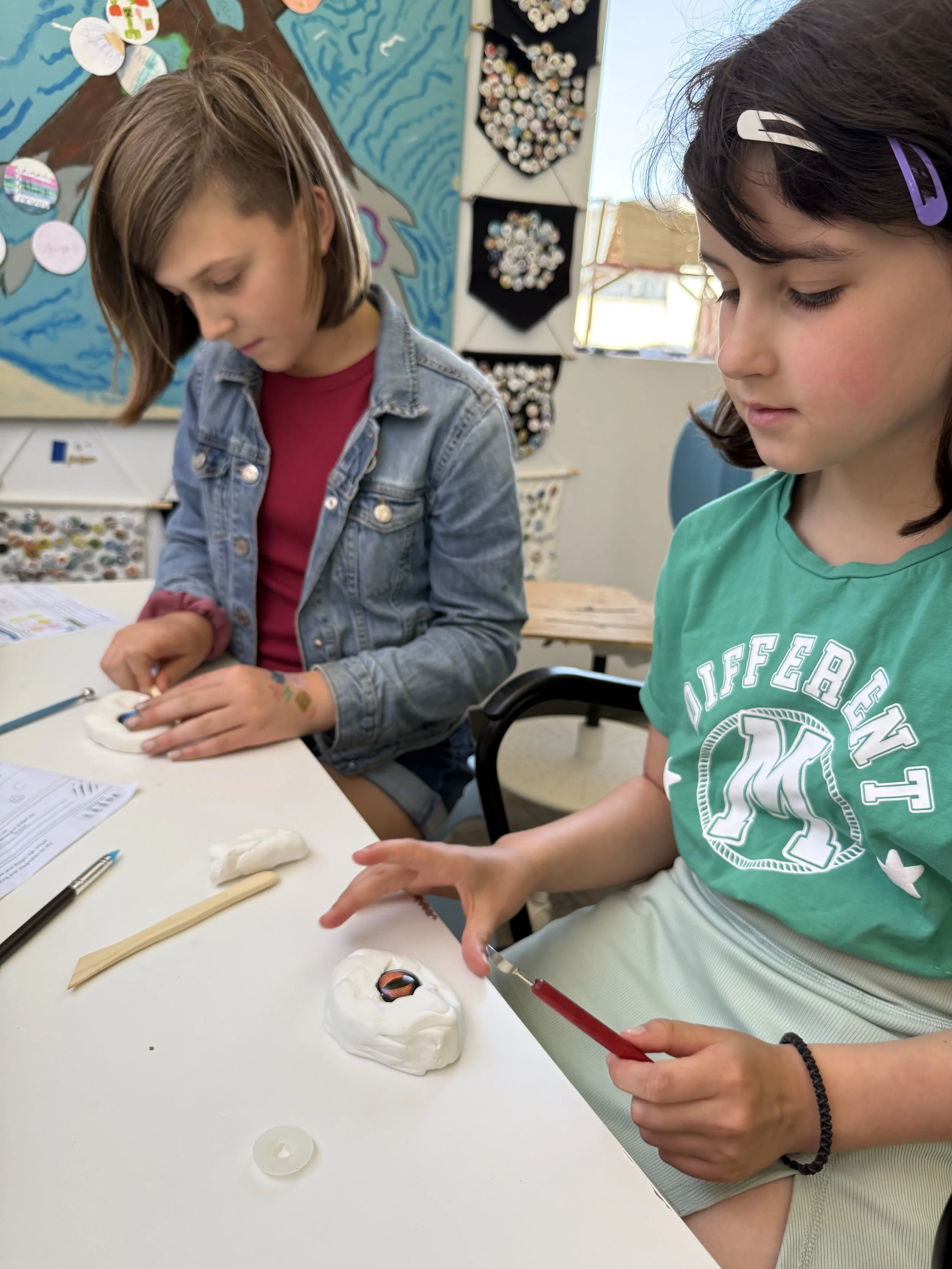
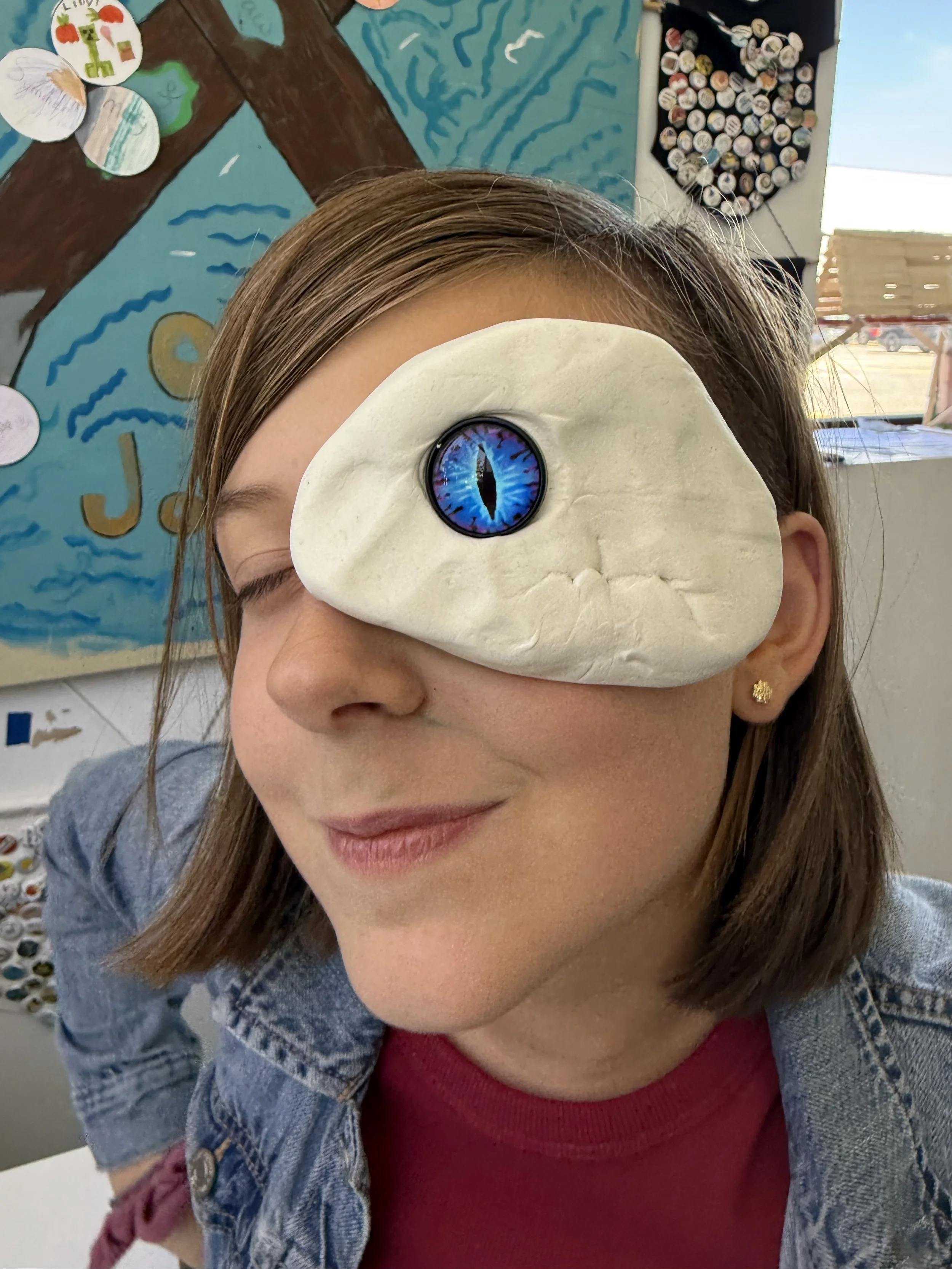
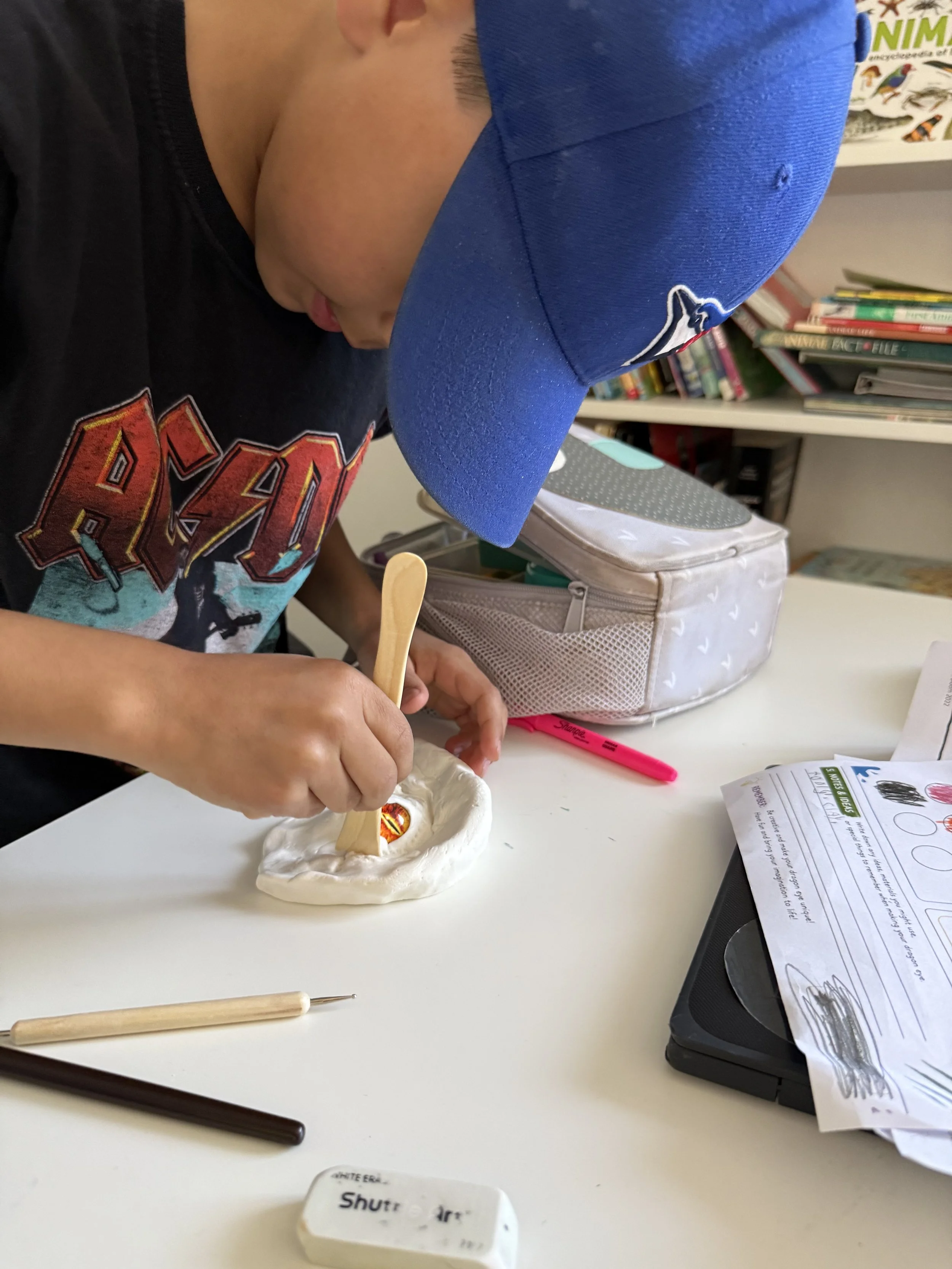
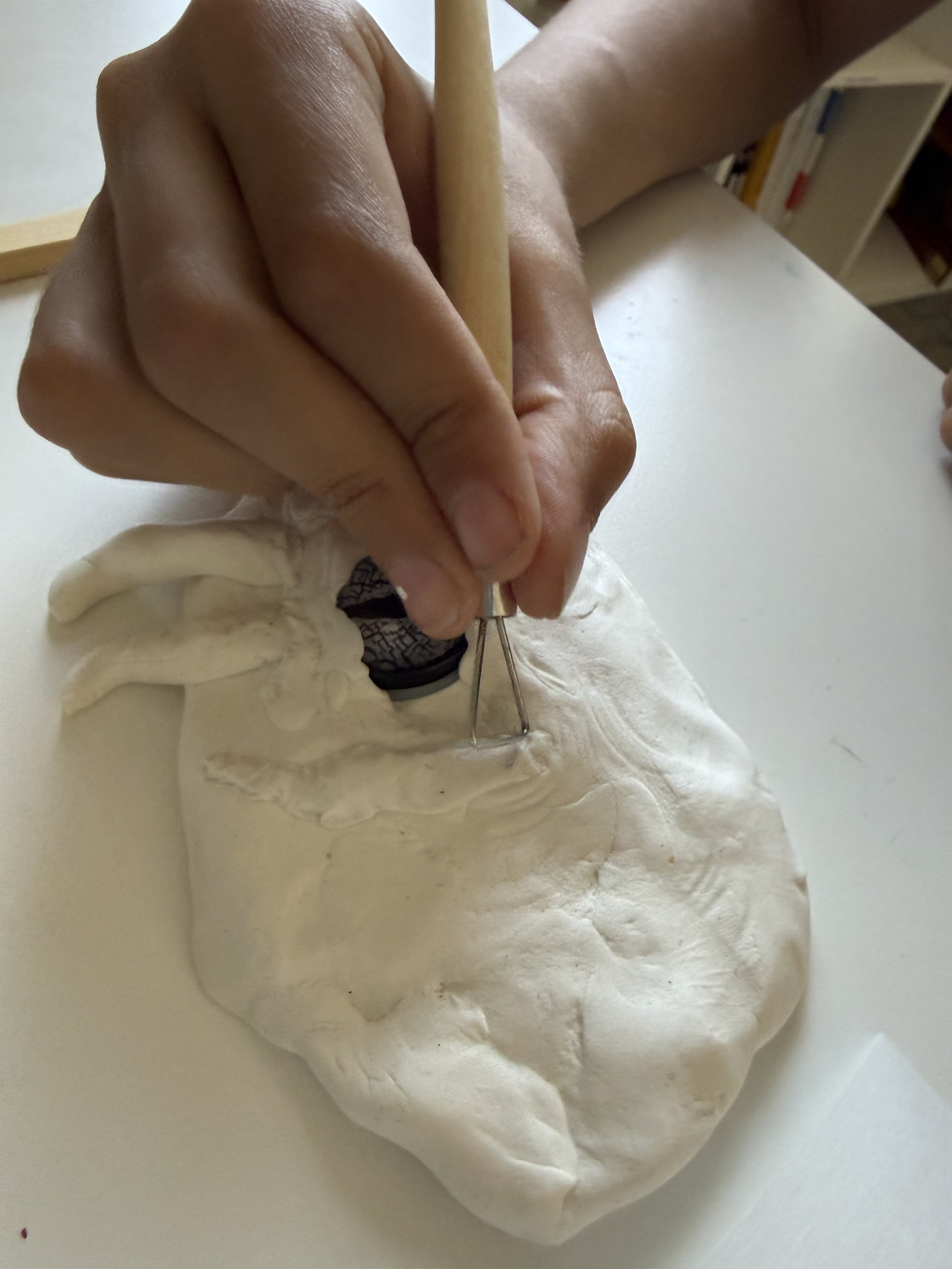
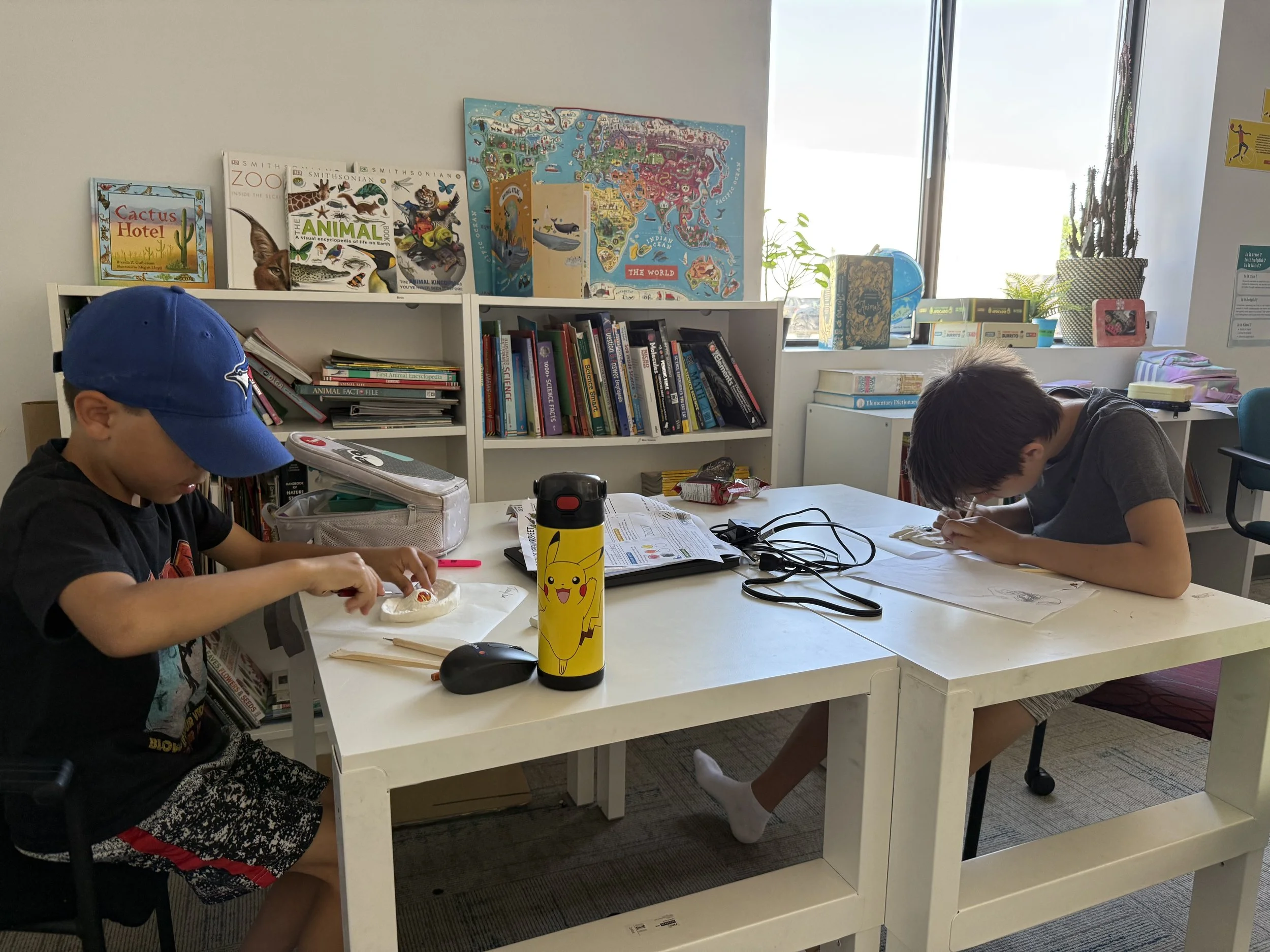
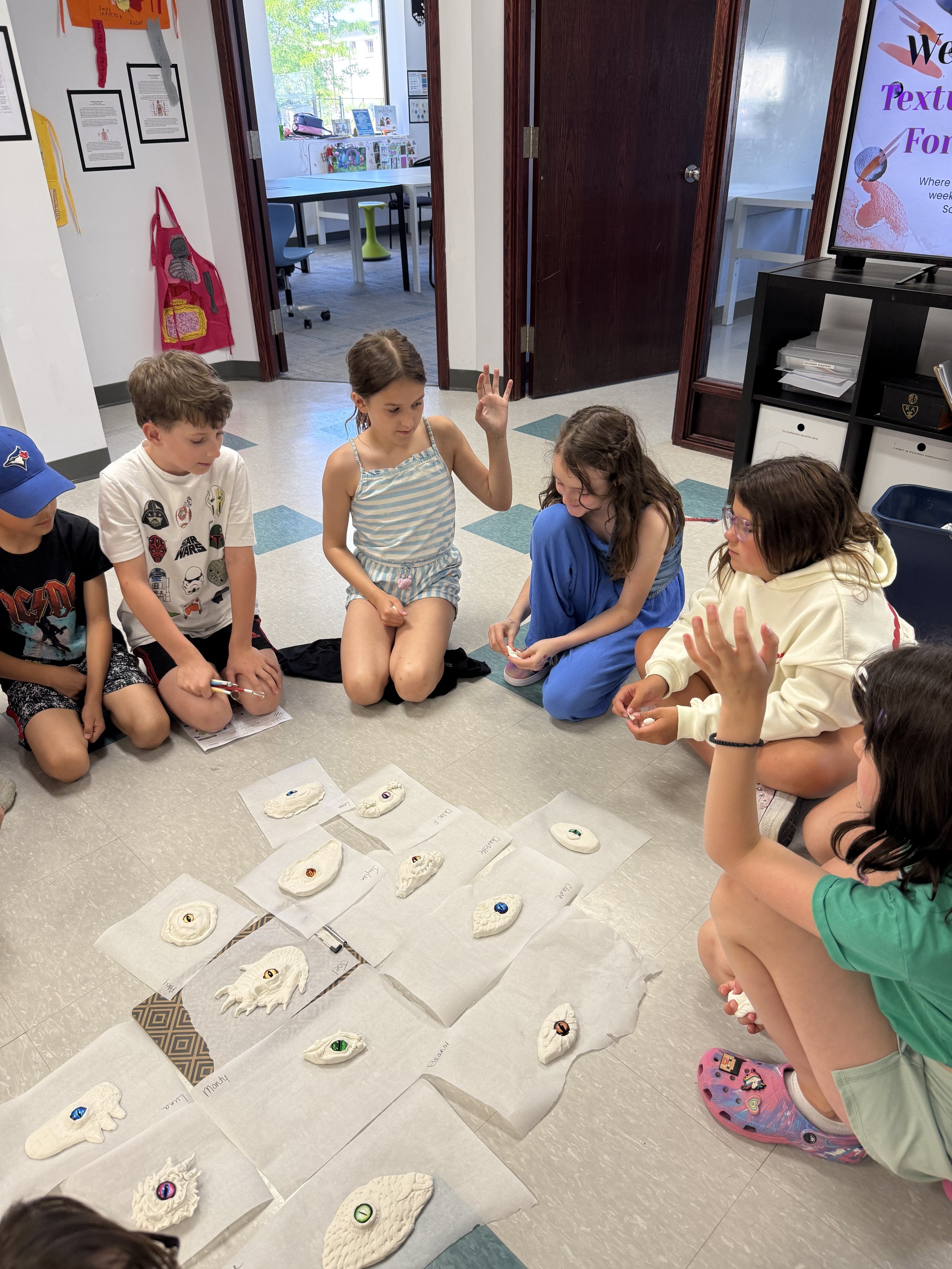
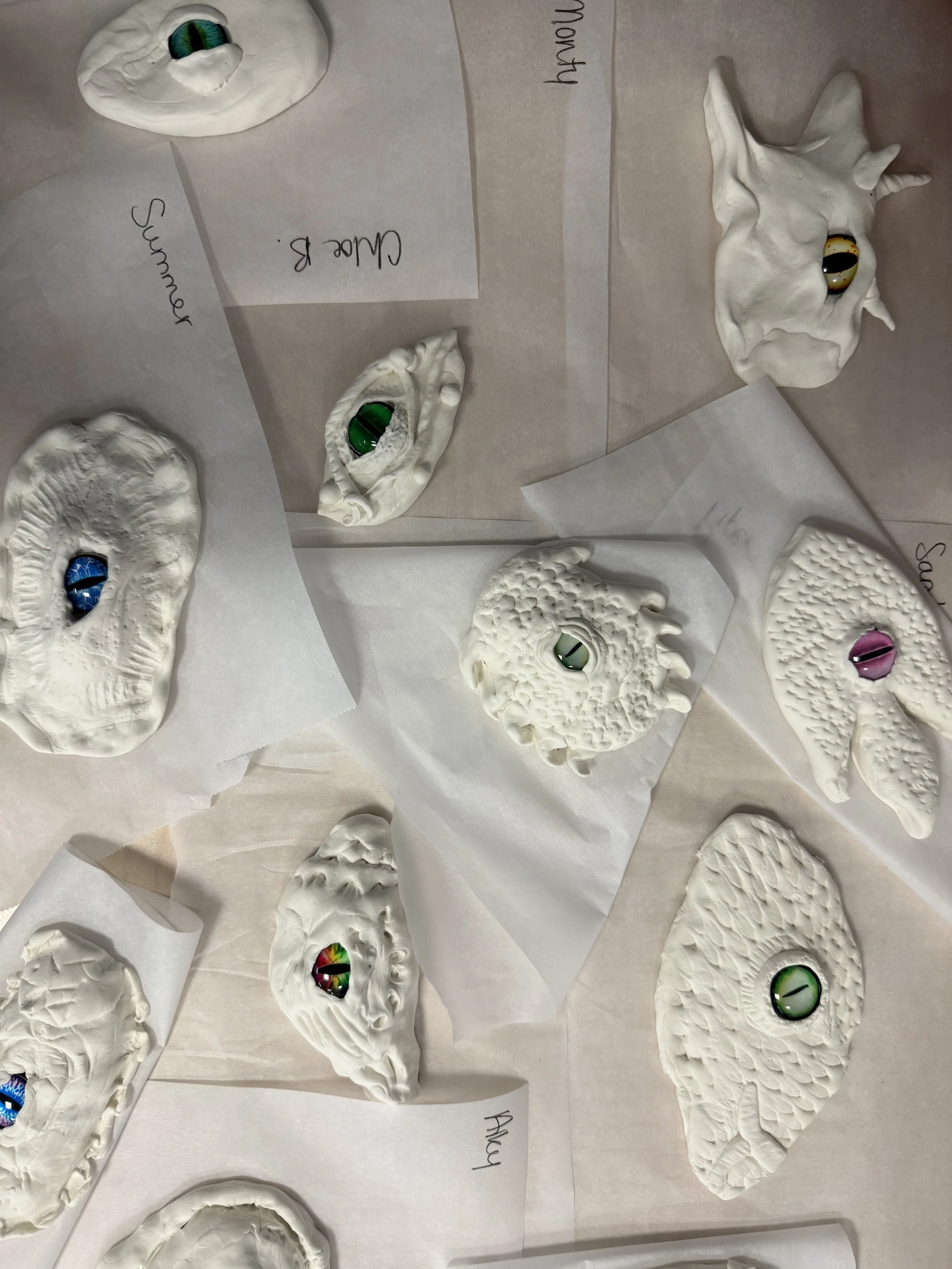
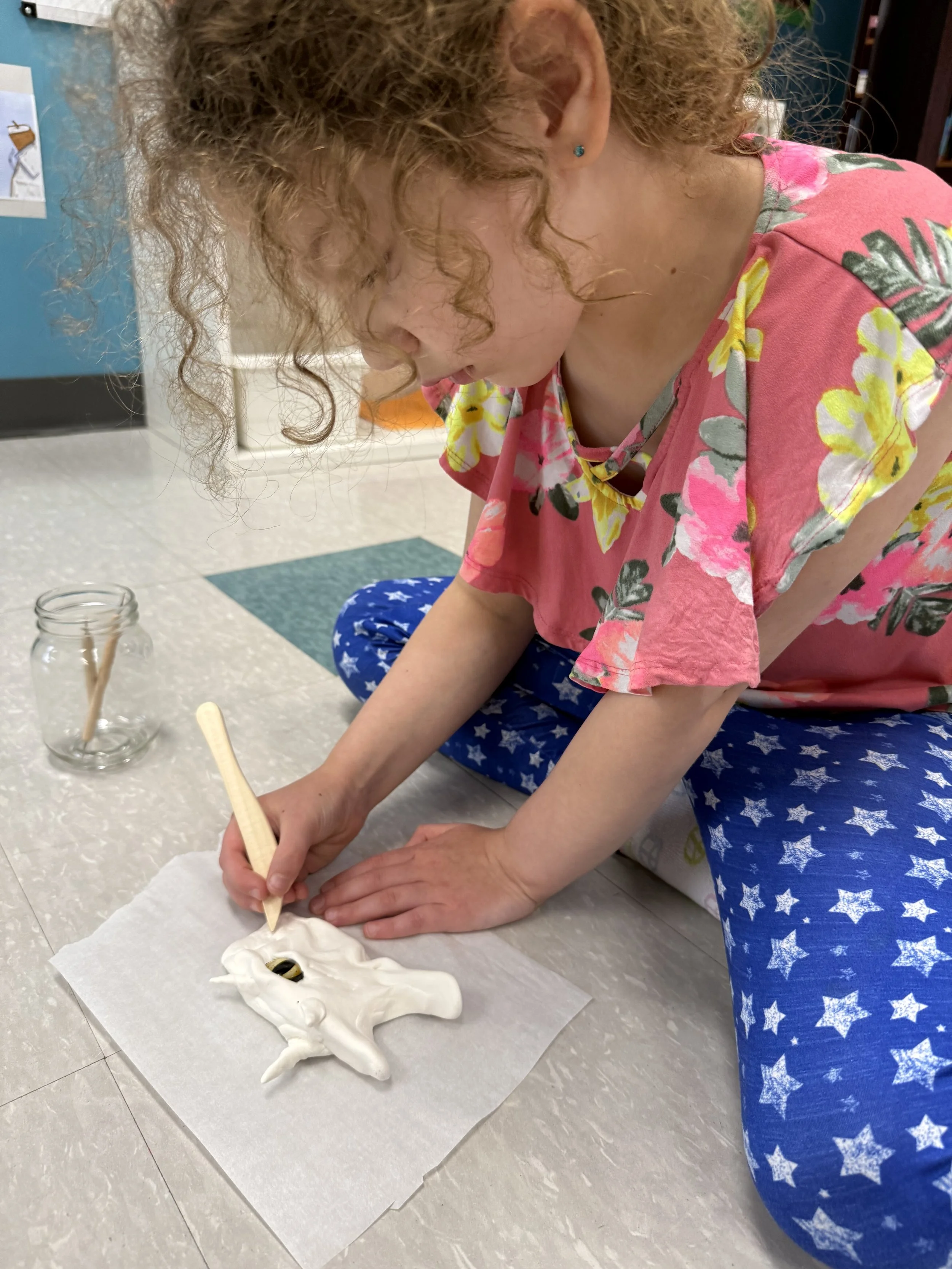
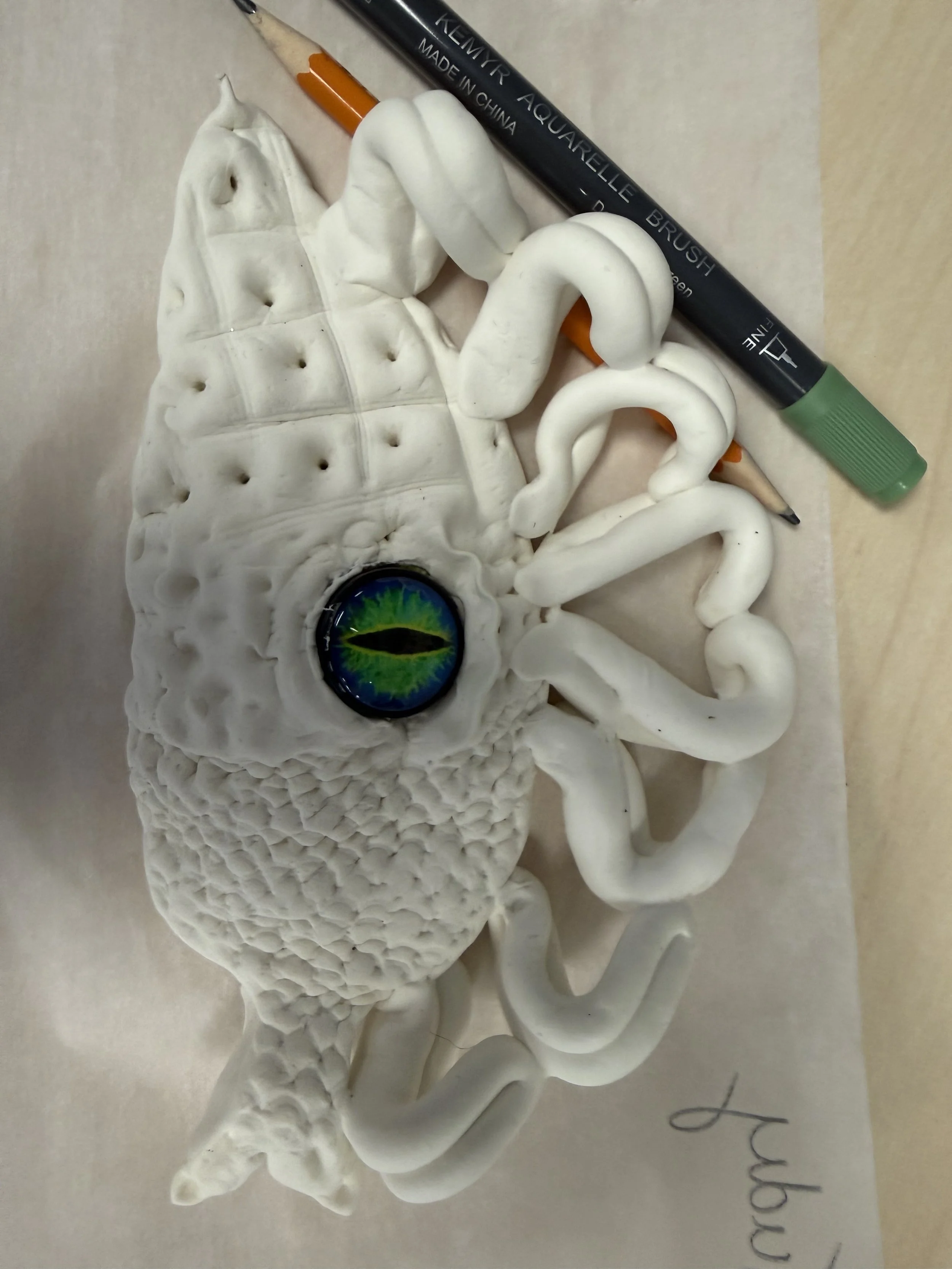
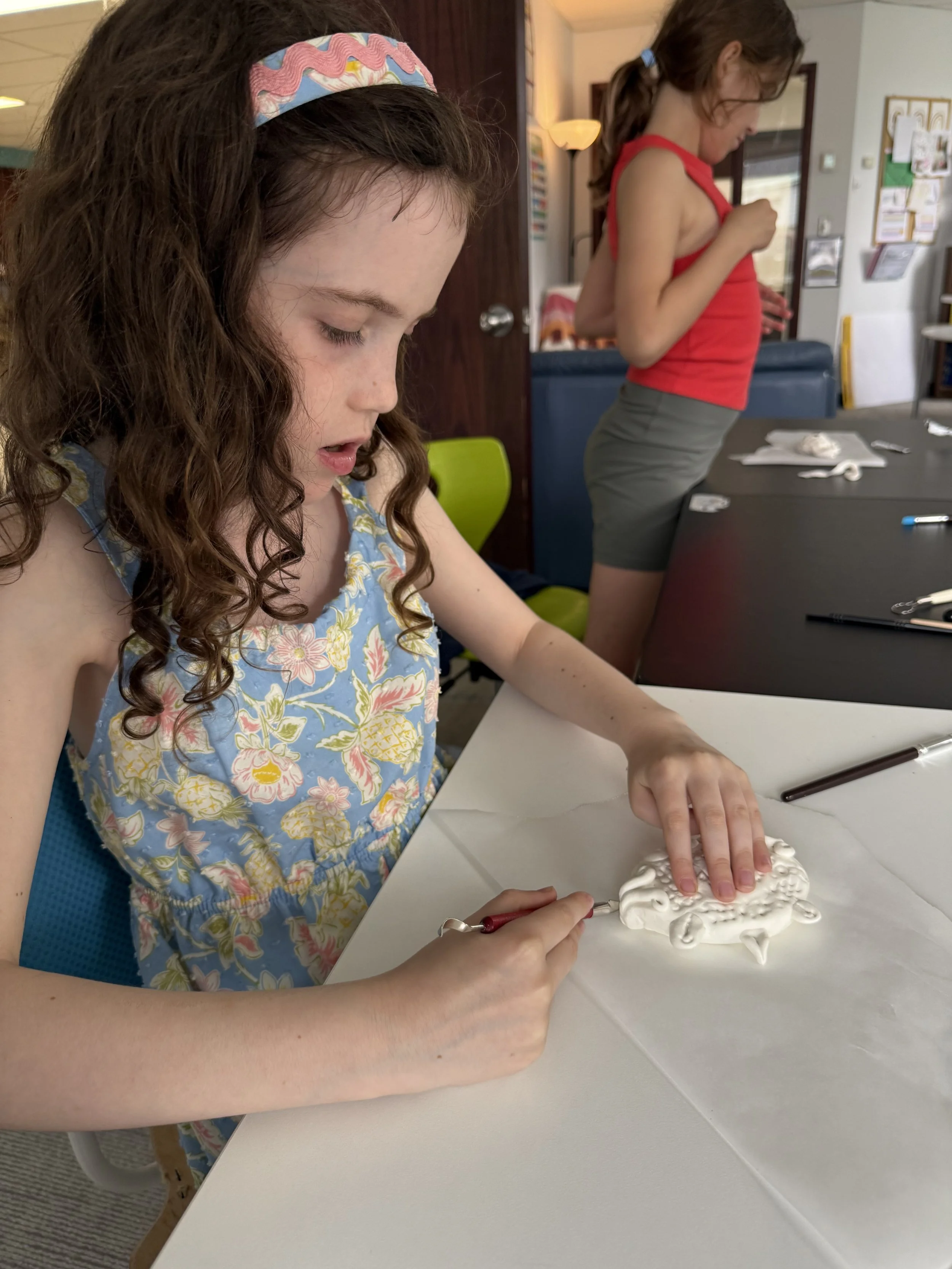
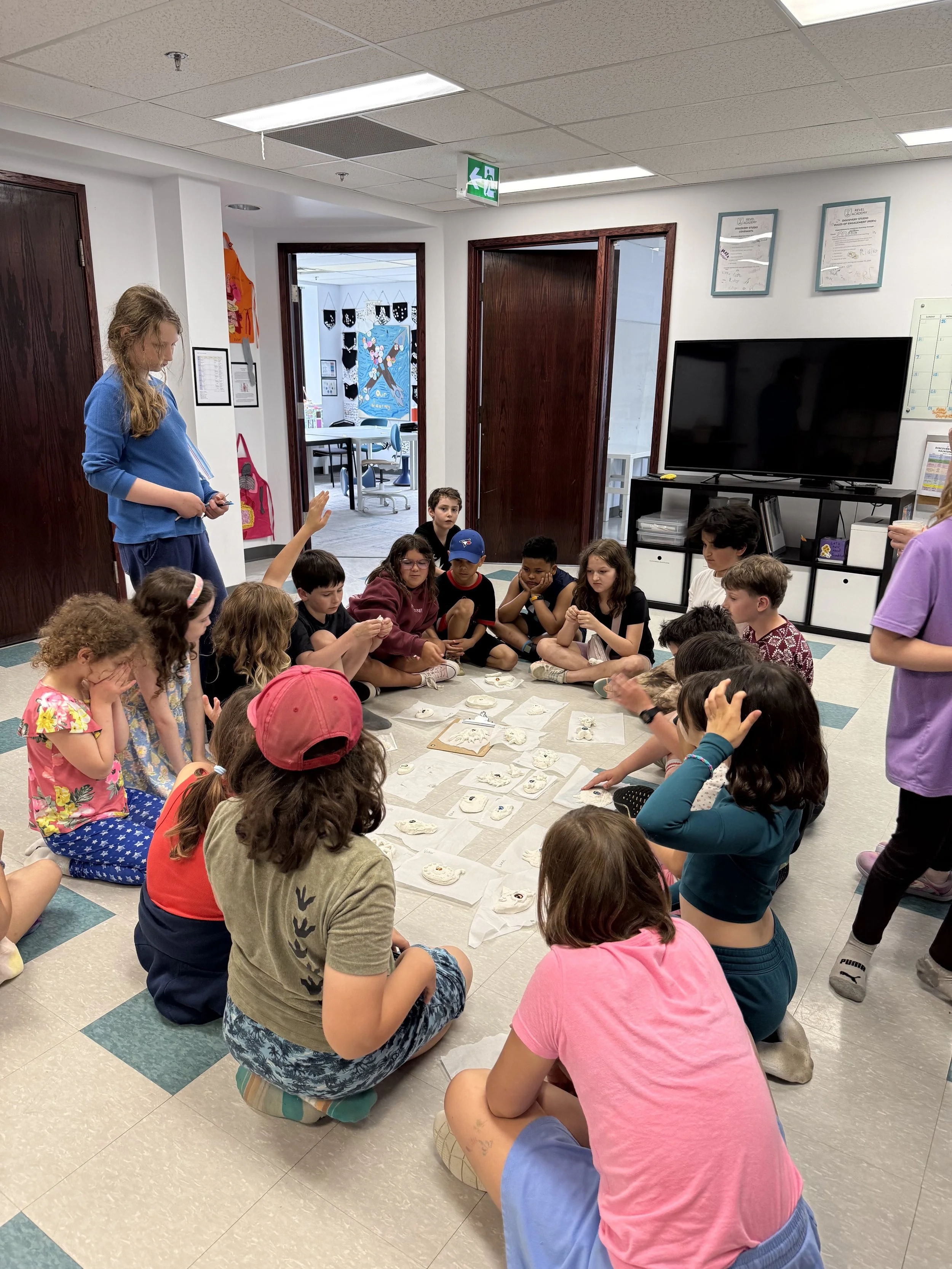
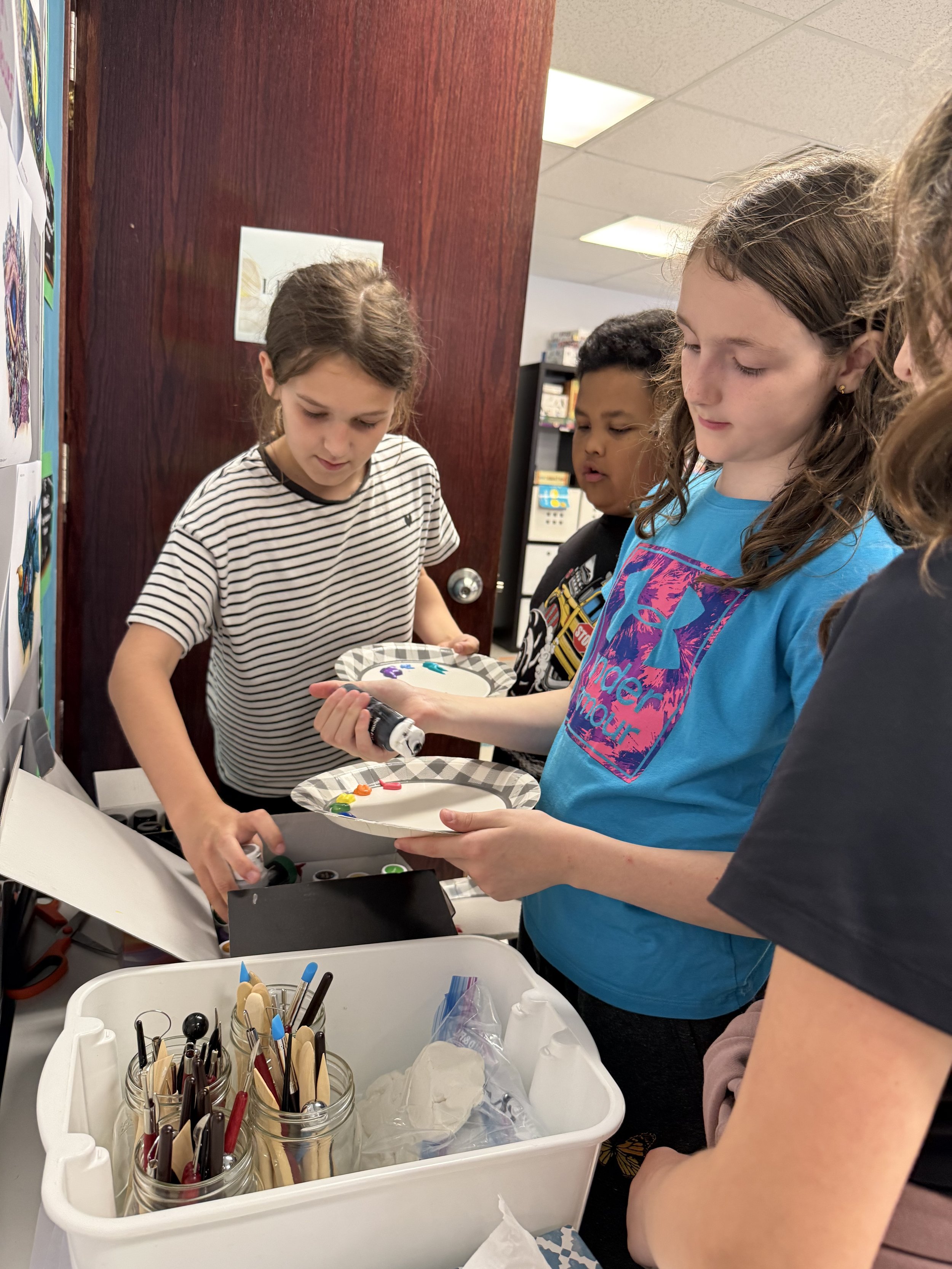
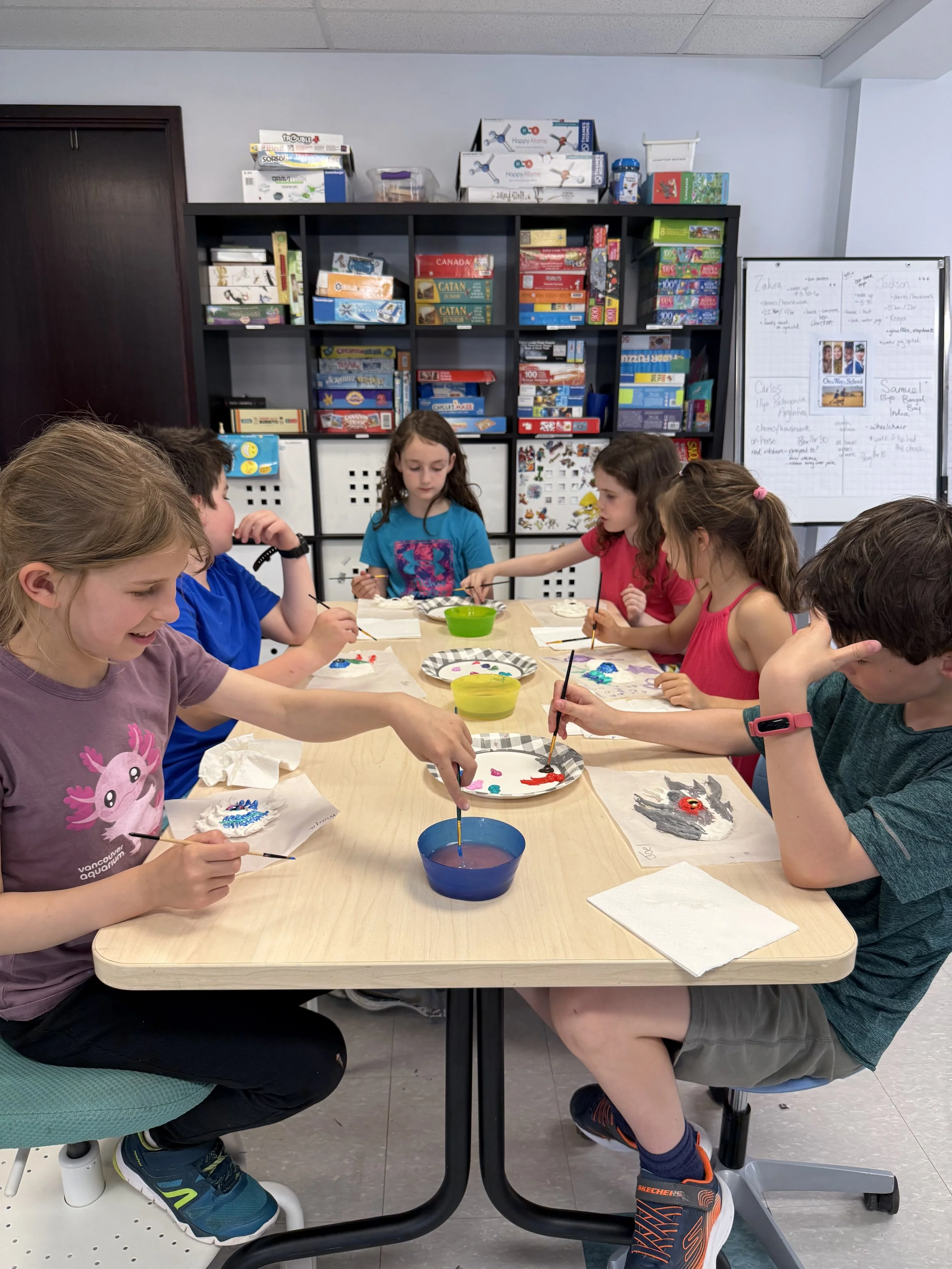
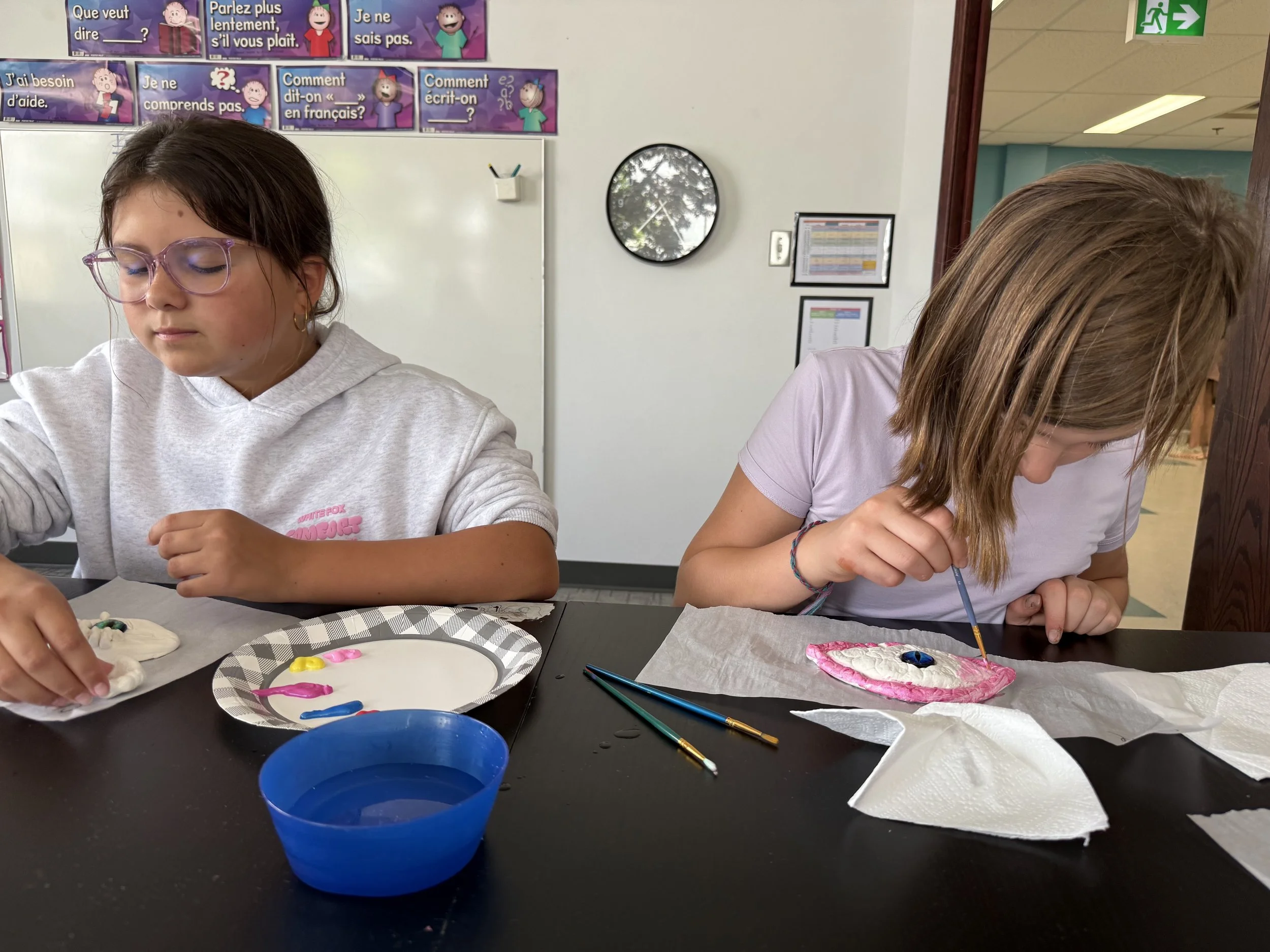
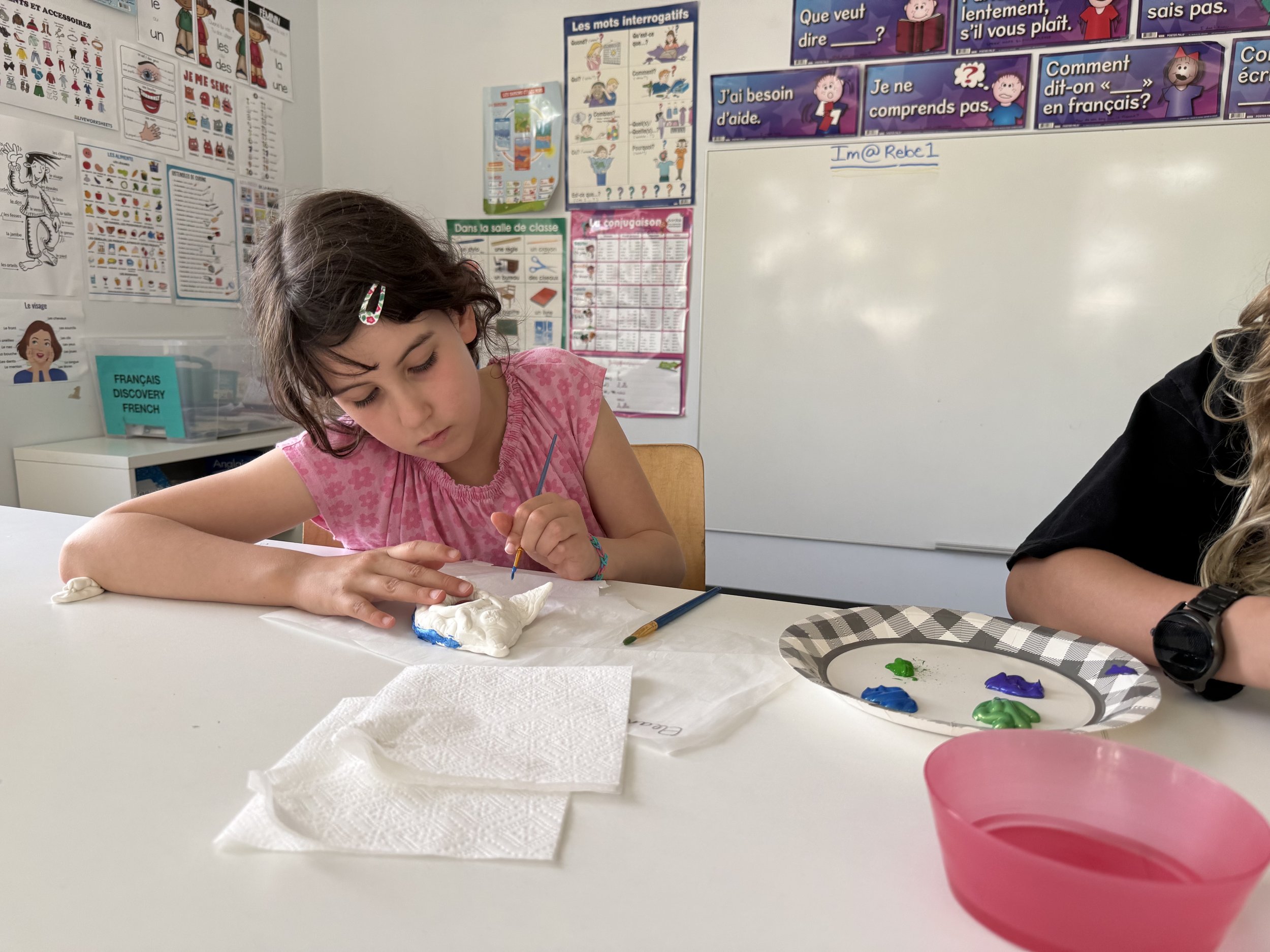
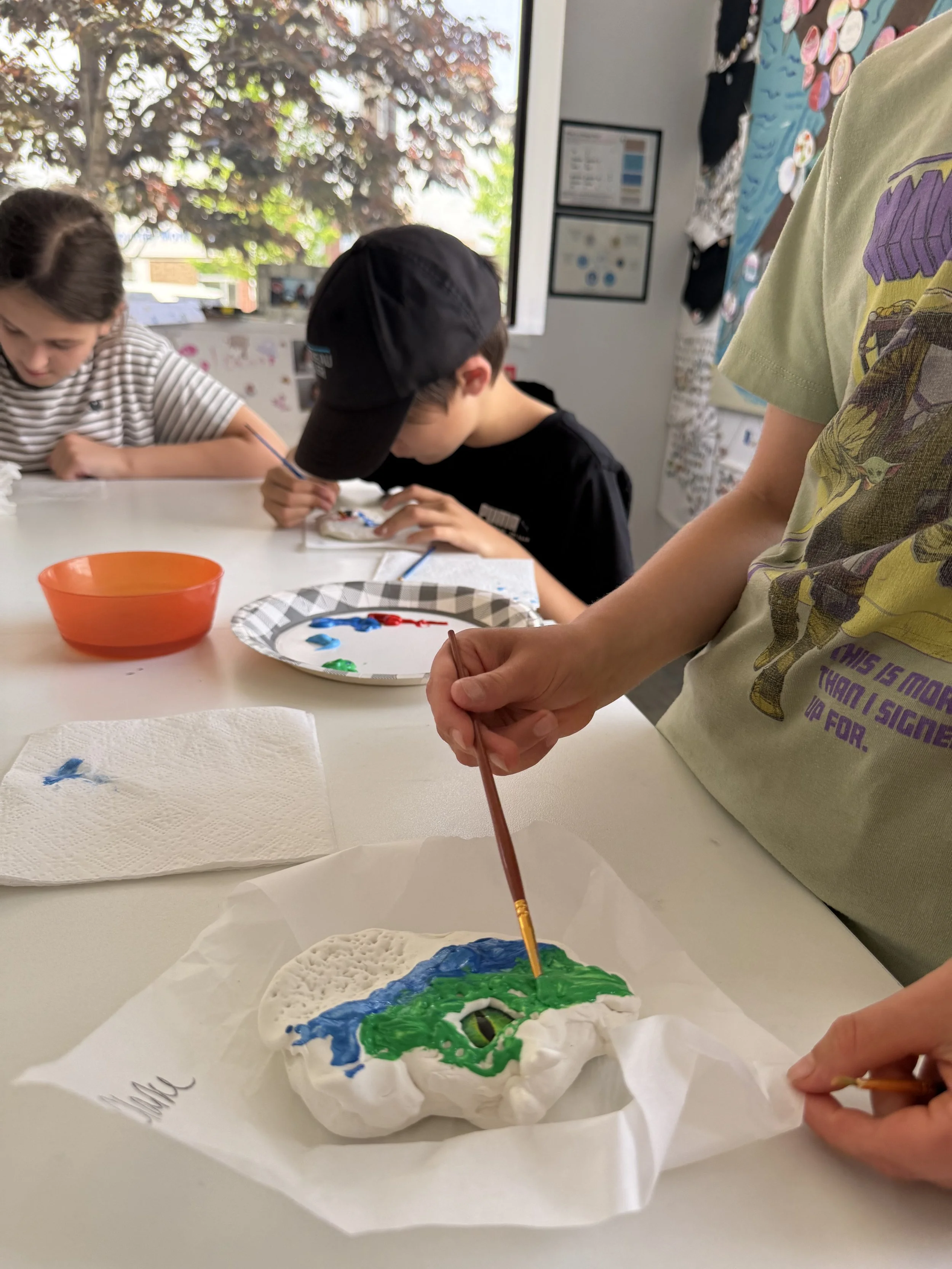
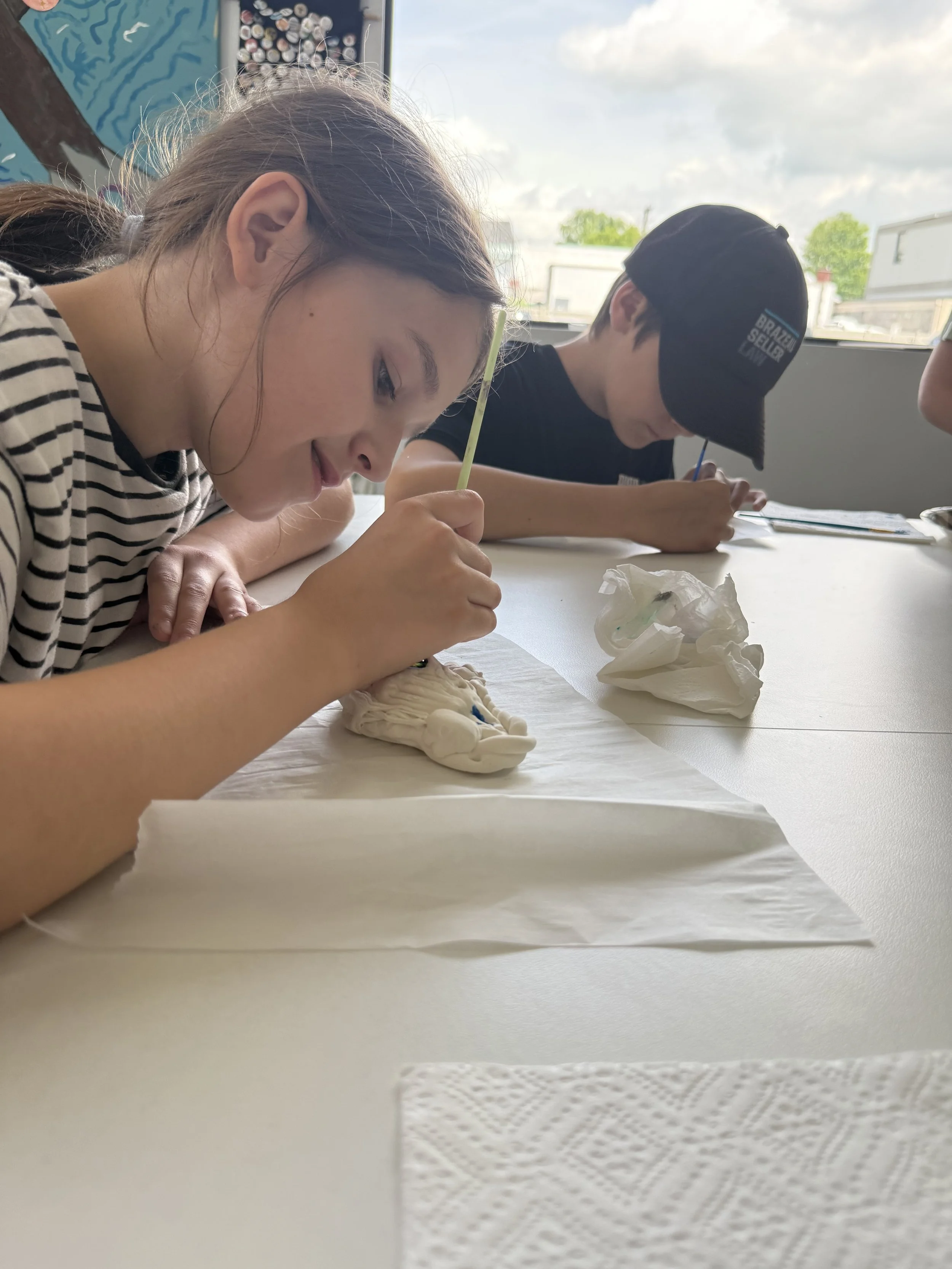
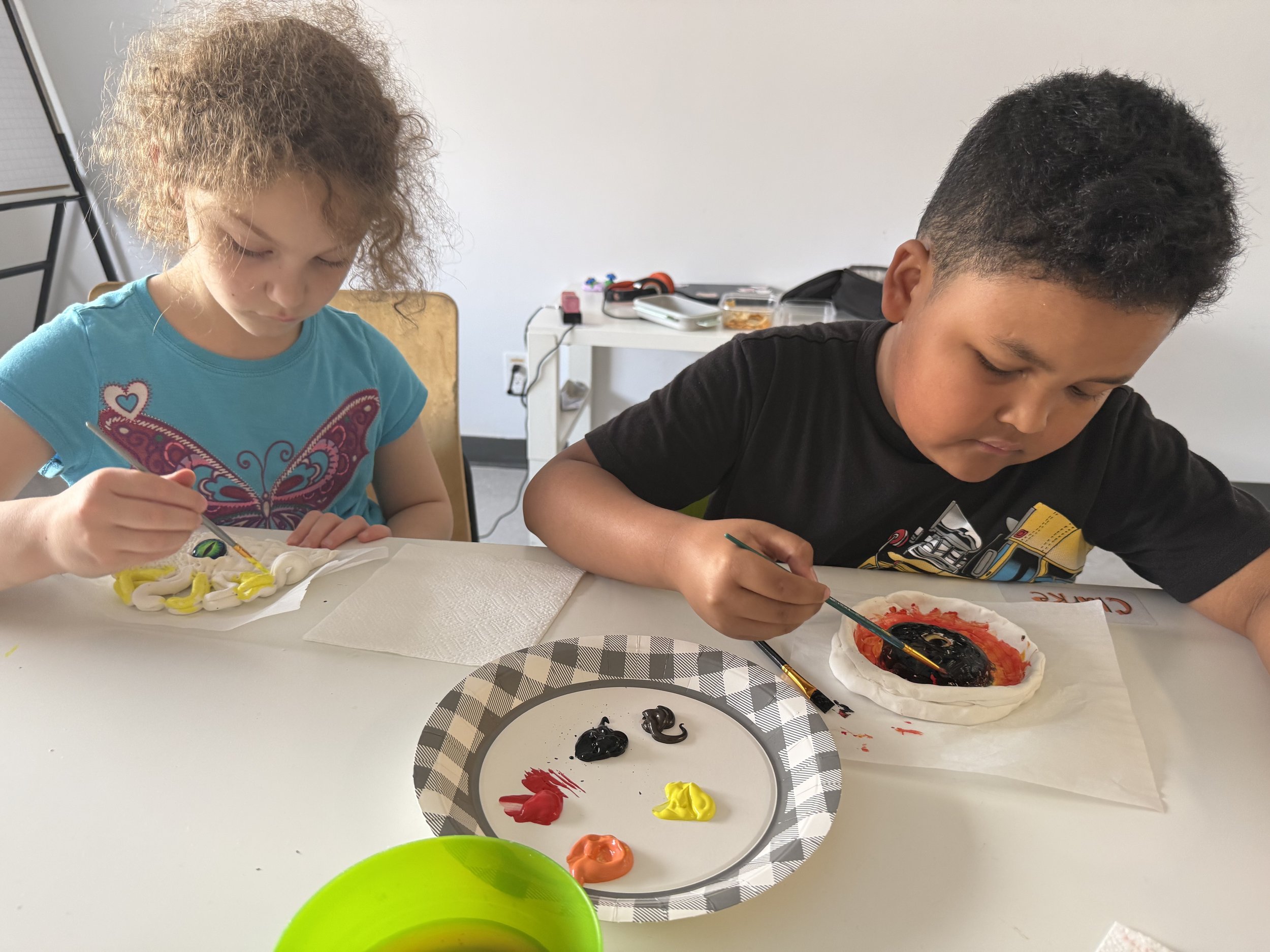
On Tuesday, it was time to bring those designs to life. Rebels were introduced to Model Magic clay and learned techniques for shaping, sculpting, and adding depth to their creations. We explored a variety of clay modelling tools and discussed how different tool tips could be used to create unique textures such as scales, ridges, cracks, and patterns. Learners also practiced creating realistic forms by sculpting the eye itself so it appeared recessed within the surrounding clay, adding dimension and visual impact to their work.
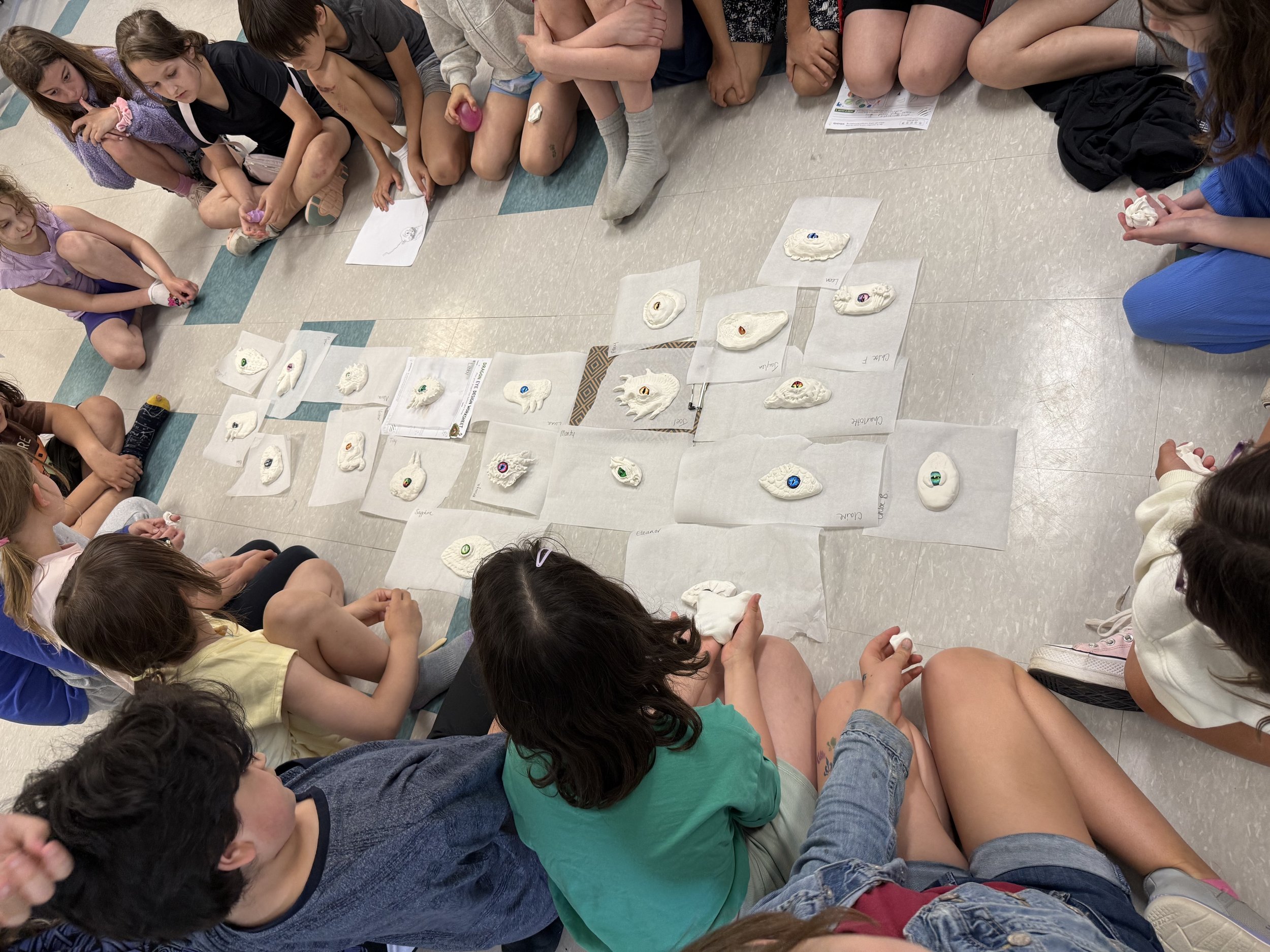
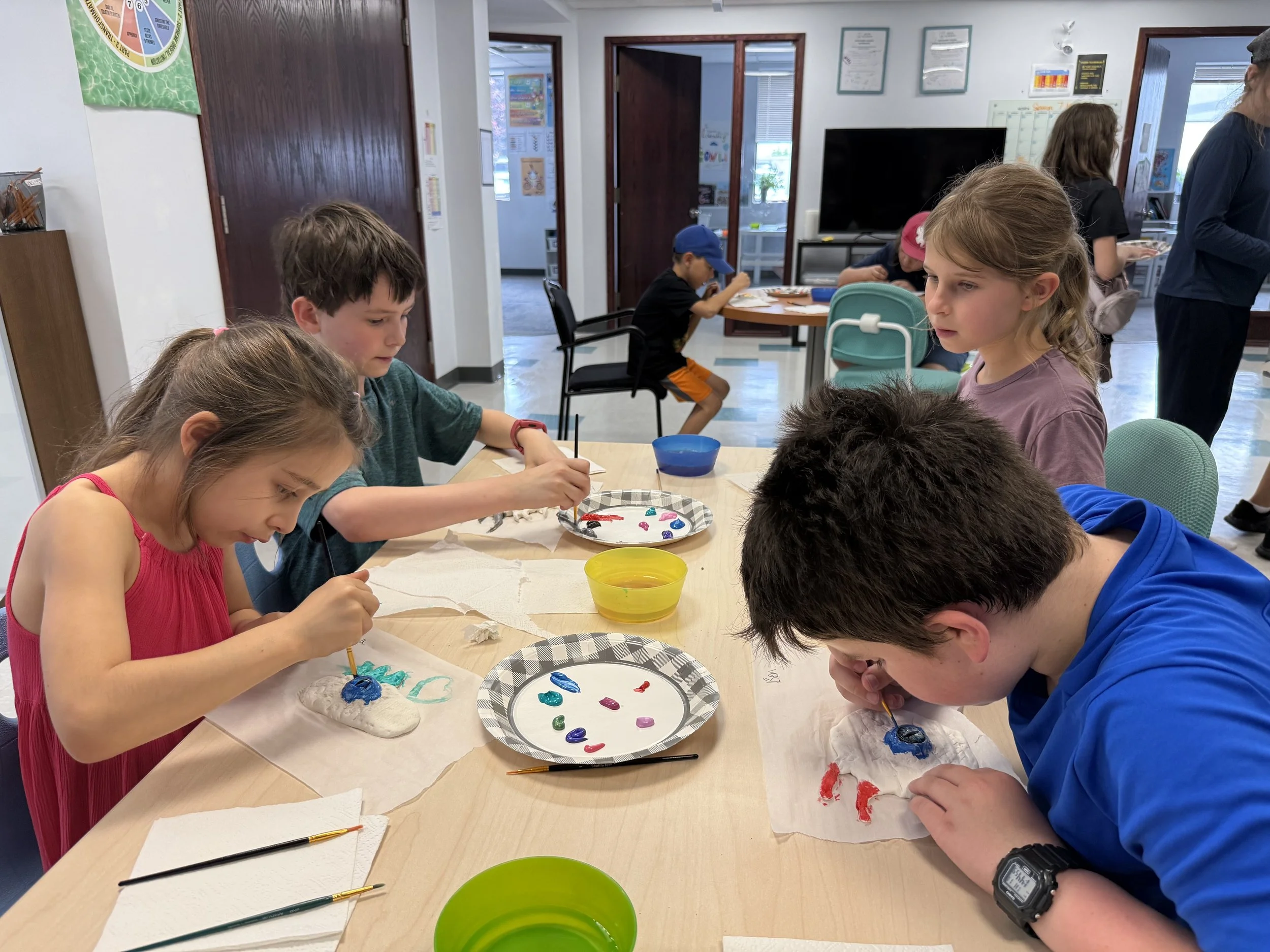
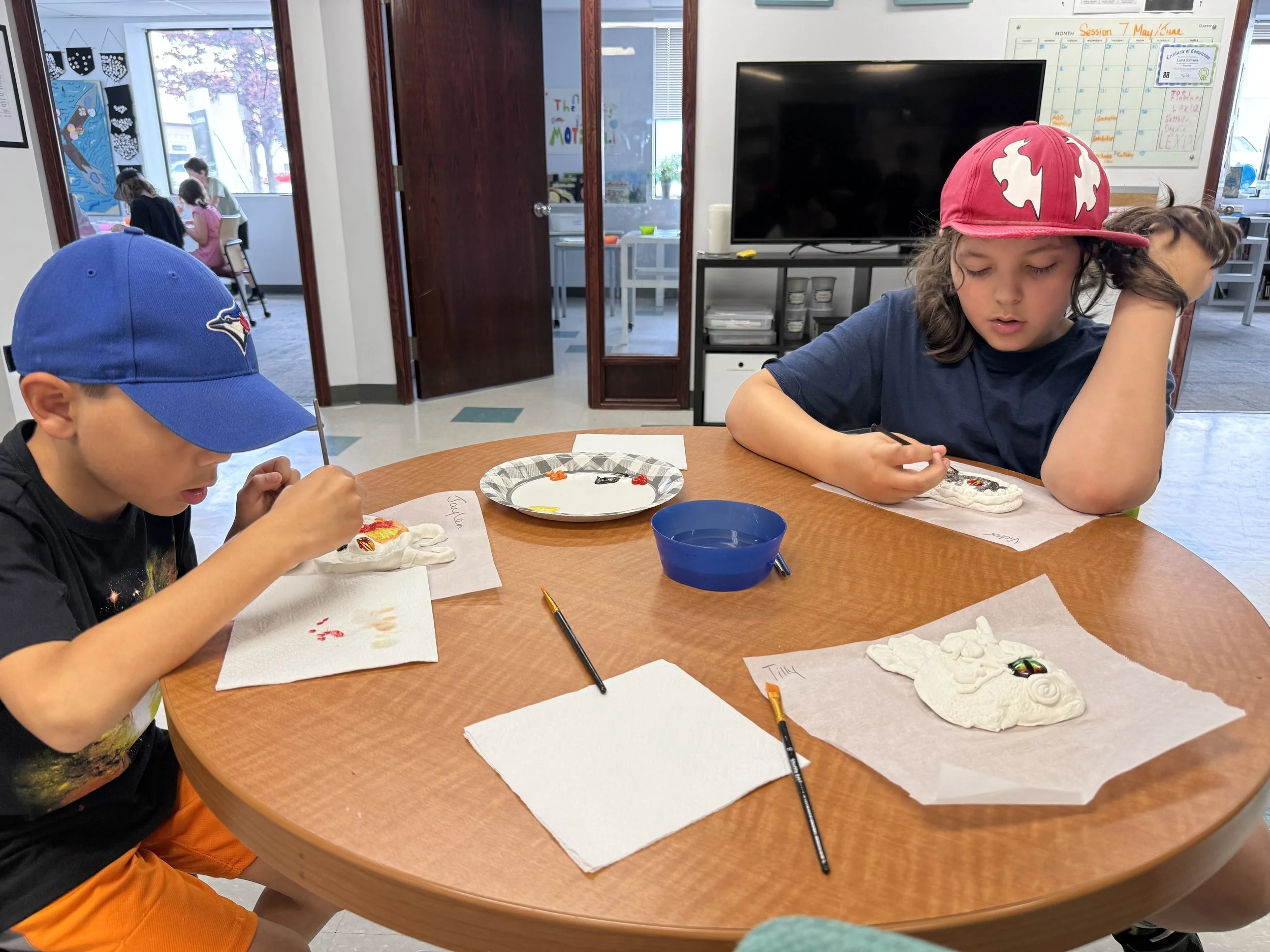
Wednesday and Thursday were dedicated to refining sculptures and adding colour. Rebels used metallic acrylic paints to give their dragon eyes an authentic and dramatic appearance. Throughout the creative process, learners participated in daily feedback circles where they shared their works in progress, celebrated one another's ideas, and offered constructive observations about the textures, forms, and artistic choices they noticed in each piece. It was an incredible week of creativity, problem-solving, and artistic growth. The final dragon eye sculptures were absolutely stunning, showcasing a remarkable understanding of texture, form, and attention to detail.
Outside of our dragon eyes project of the week, Rebels also worked incredibly hard on their sketchbooks which have focused on giving learners the opportunity to focus on and practice the artistic skills of each element of art. This week, Rebels experimented with charcoal to create 3D forms using shadows. We were so impressed by the imagination, craftsmanship, and perseverance our Rebels demonstrated throughout this week of workshops. Way to go, Rebels!
Civilizations
Before the learners heard this week's chapter, they completed their mapping which helped them learn about the route Abraham took when he left Haran and went to live in Canaan as God instructed him to do. They also had a visual of where Jerusalem was on the map. Followed by this, they reviewed their buzz words, Jerusalem, imperator, anxious and jealous.
Chapter 38 of the Story of the World; The end of the Ancient Jewish Nation tells the story about Cyrus, the Persian king who let the Jews go back to their home, the Romans ruled the Jews and that the Jews attacked the Romans because they didn’t want to pay taxes and obey the Romans. Later in the chapter it explores the story about Romans destroying Jerusalem and they burned the temple and pulled the stones apart to get gold and silver inside. To end the lesson, they worked on their wonderful mosaic art and their end of the session Blooket questions!
Additional Highlights
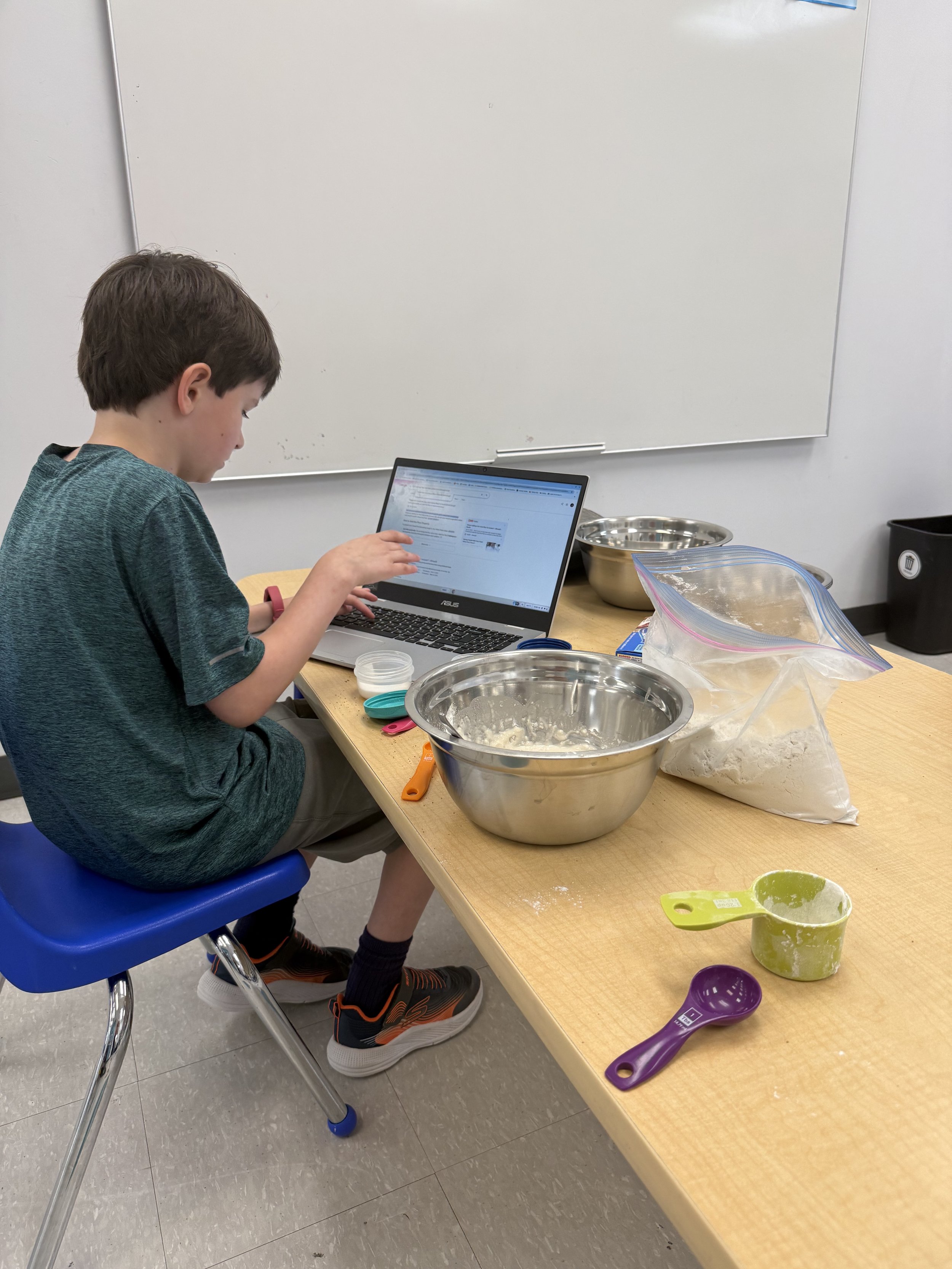
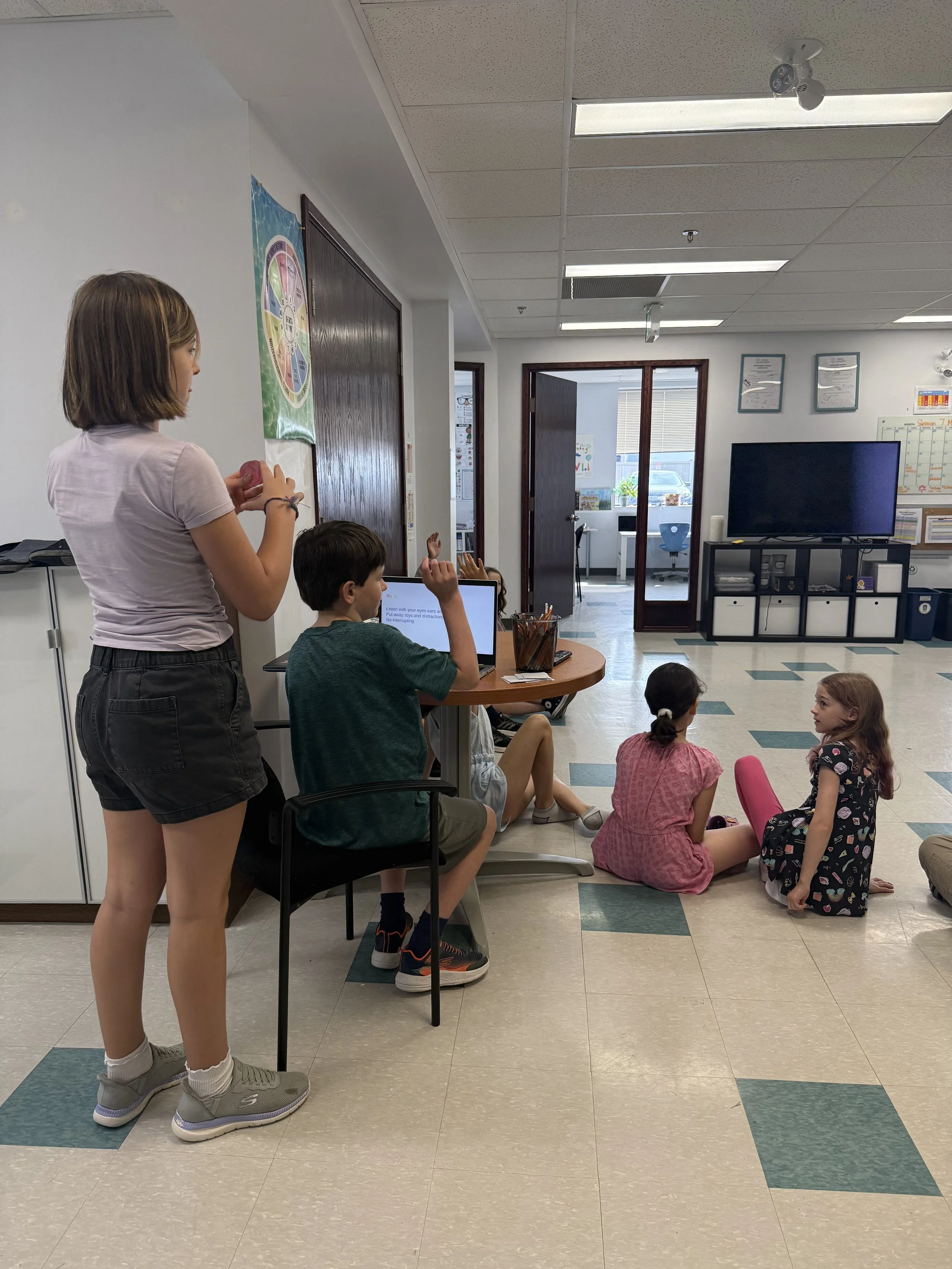
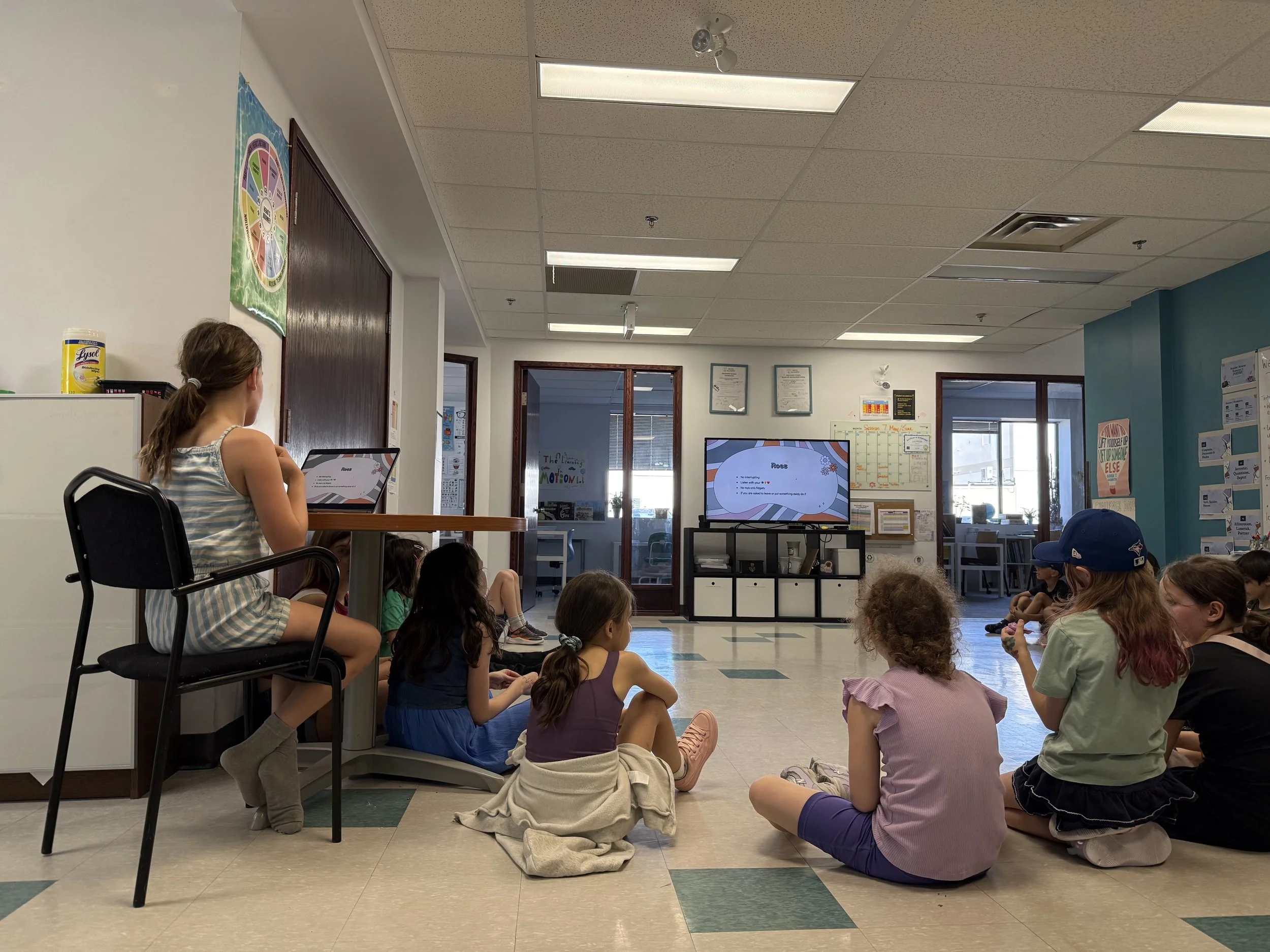
Rebels had an incredible week with some special additional team-building activities and opportunities to connect with each other. From multiple birthday celebrations, Rebel-led launches and closings to Rebels baking and sharing their bread for Rebels to give feedback on for those working on their independent learner badges, and a very special Pizza Picnic Lunch with a “candy salad” appetizer! The studio has been humming with so much excitement and joy as we head into the final weeks of the school year, and we have no doubt that the weeks to come will be some of the most special memories yet!
Exploration Studio
Mindfulness & Launch
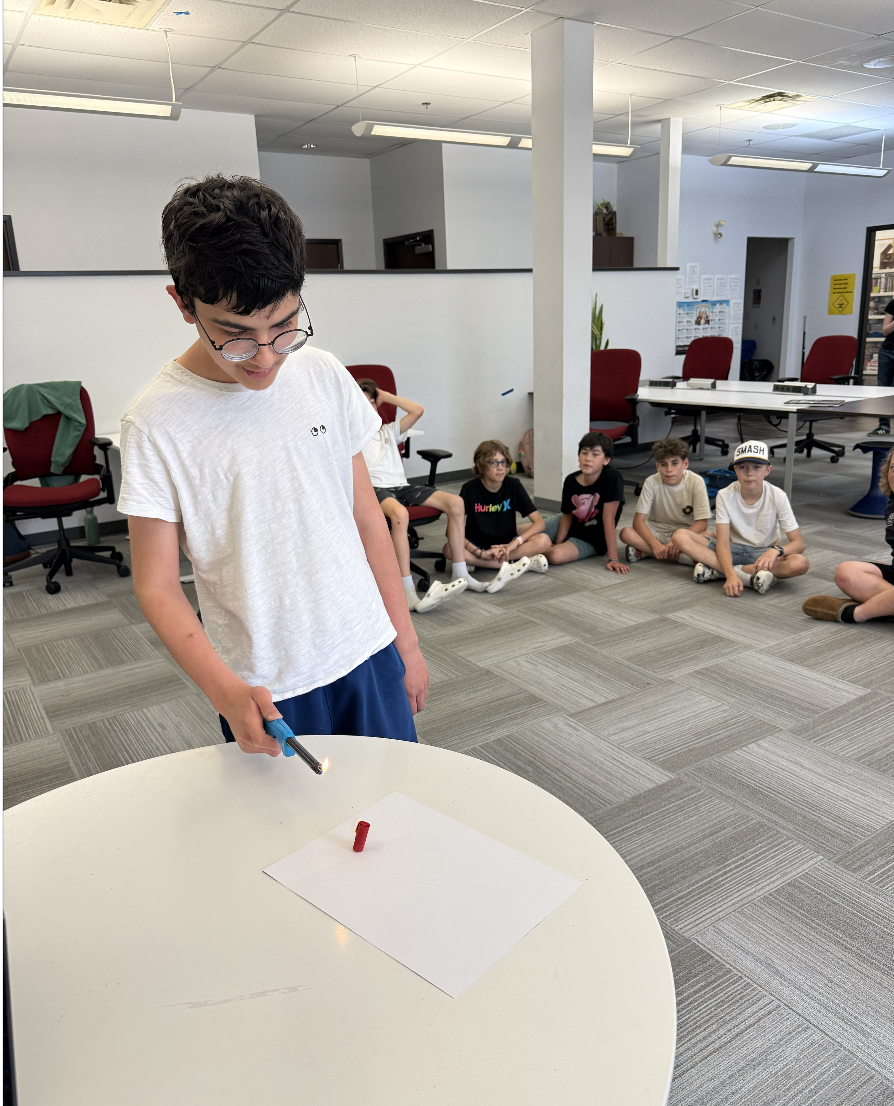
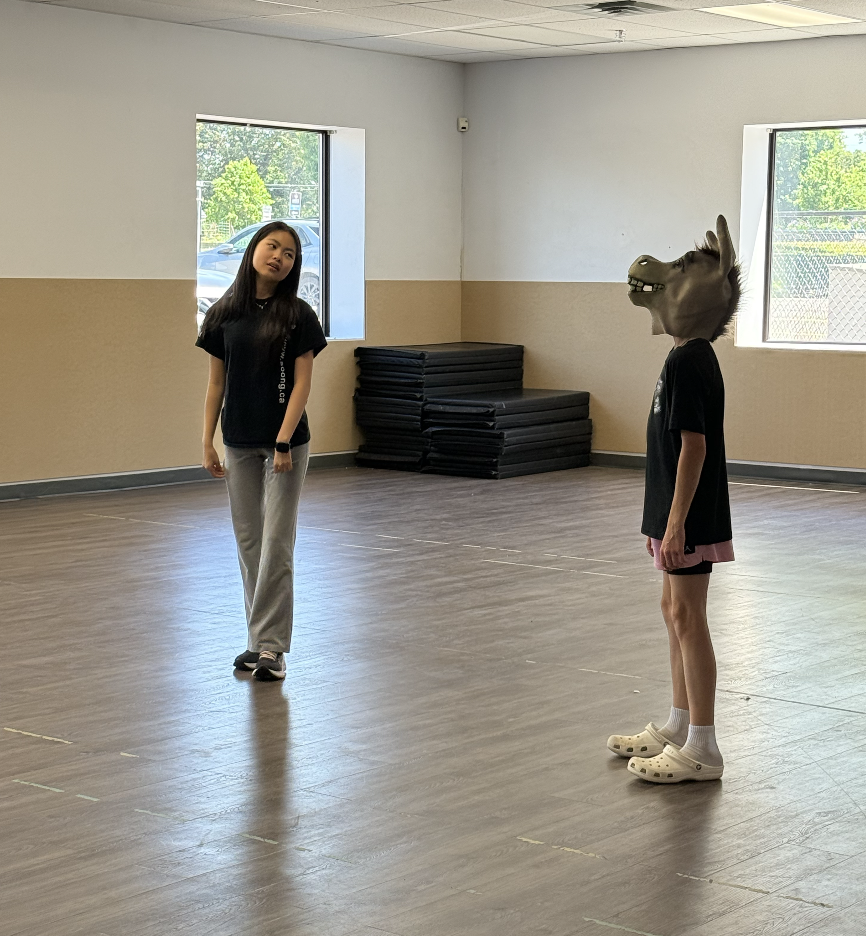
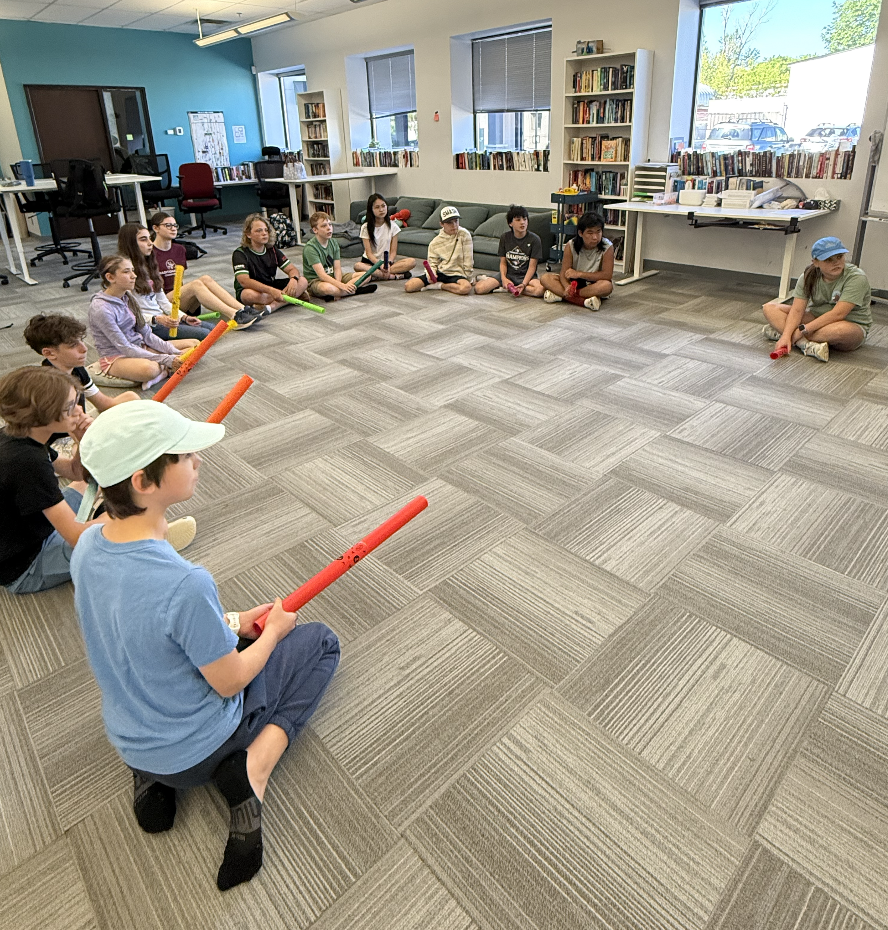
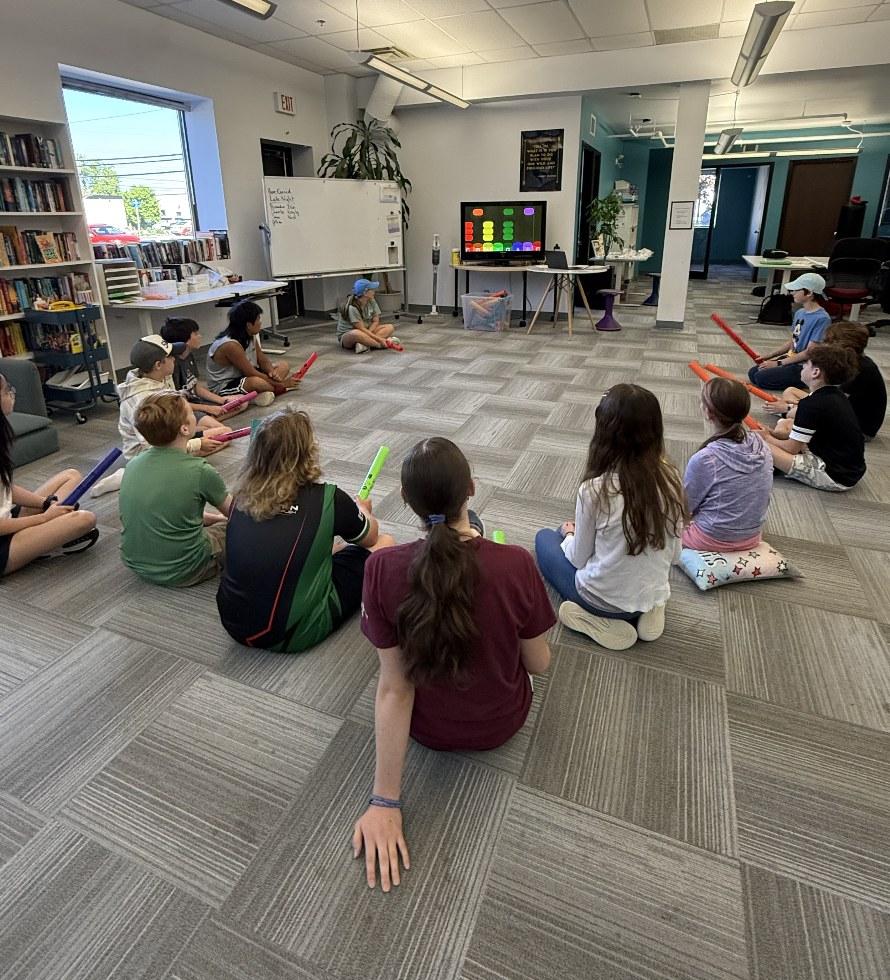
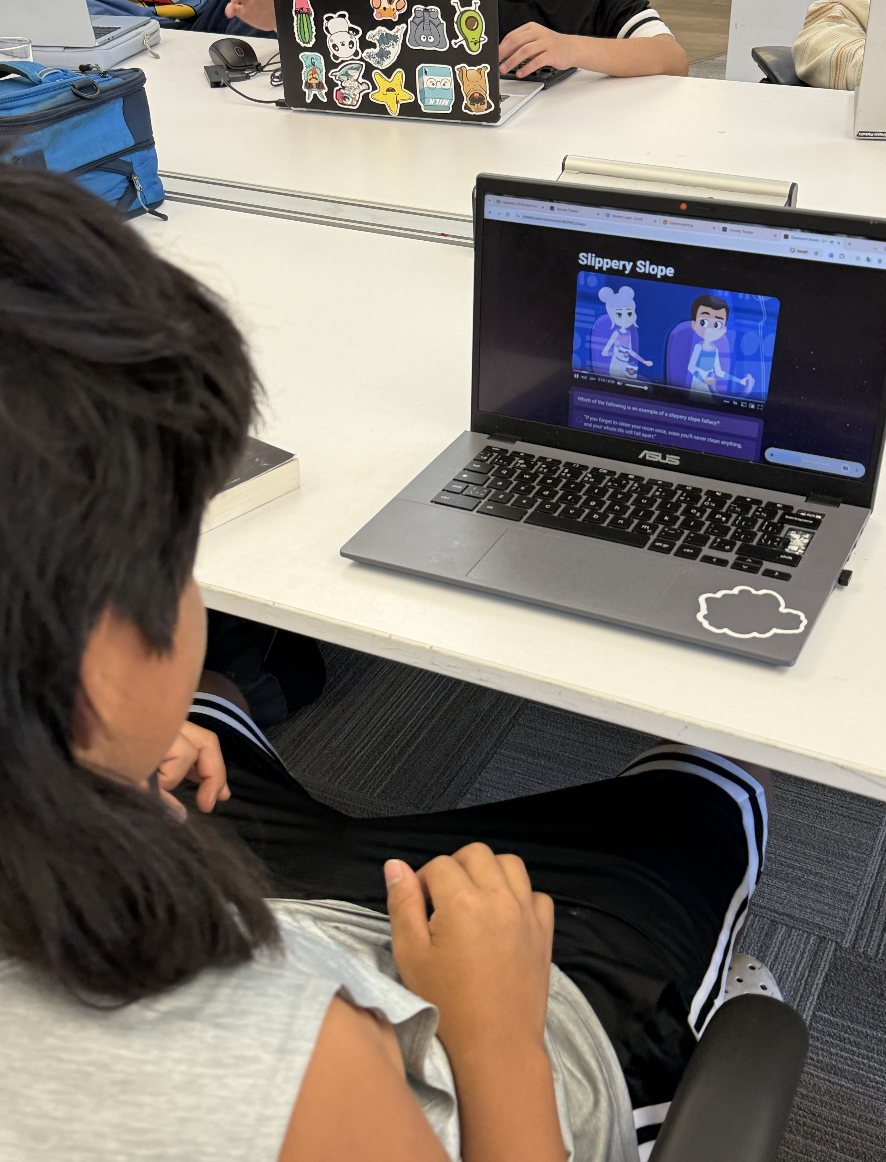
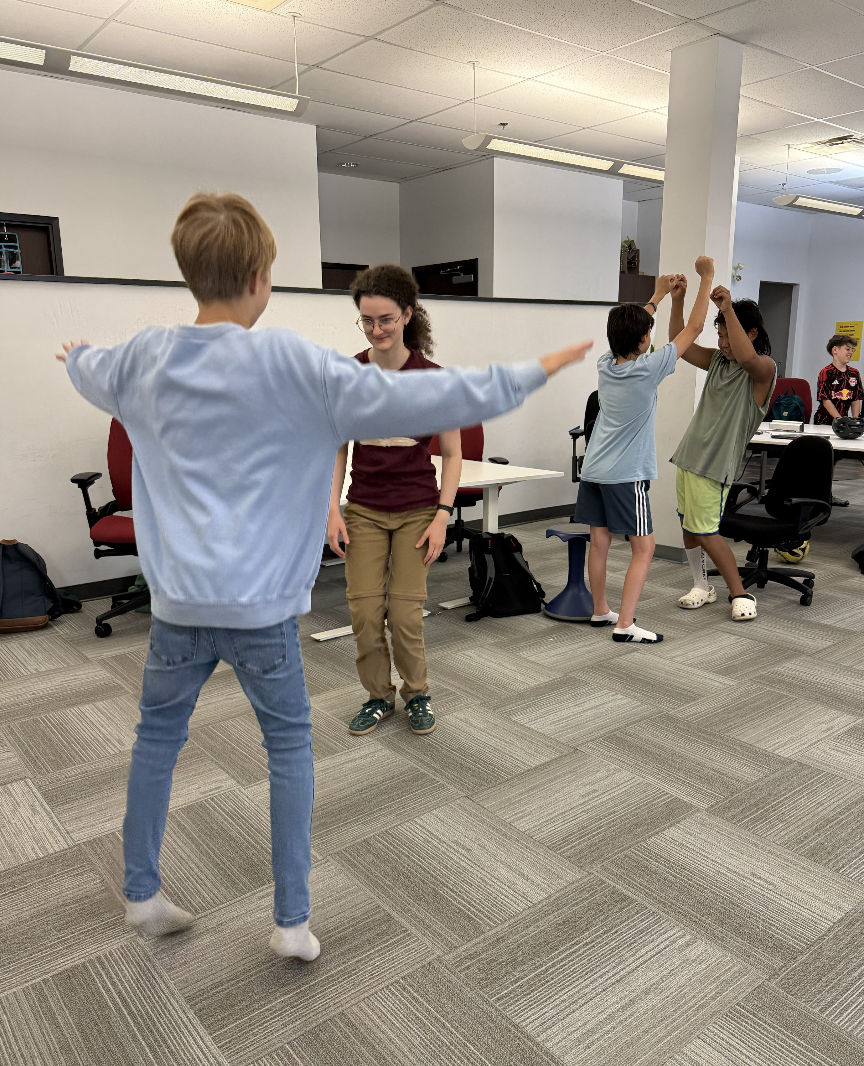
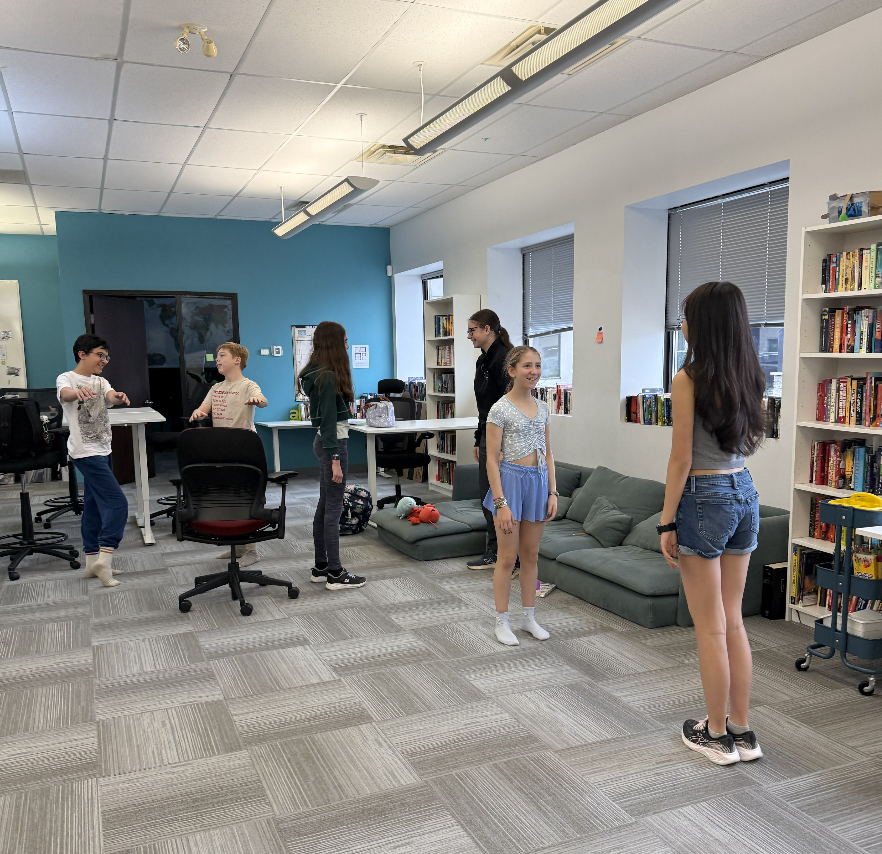
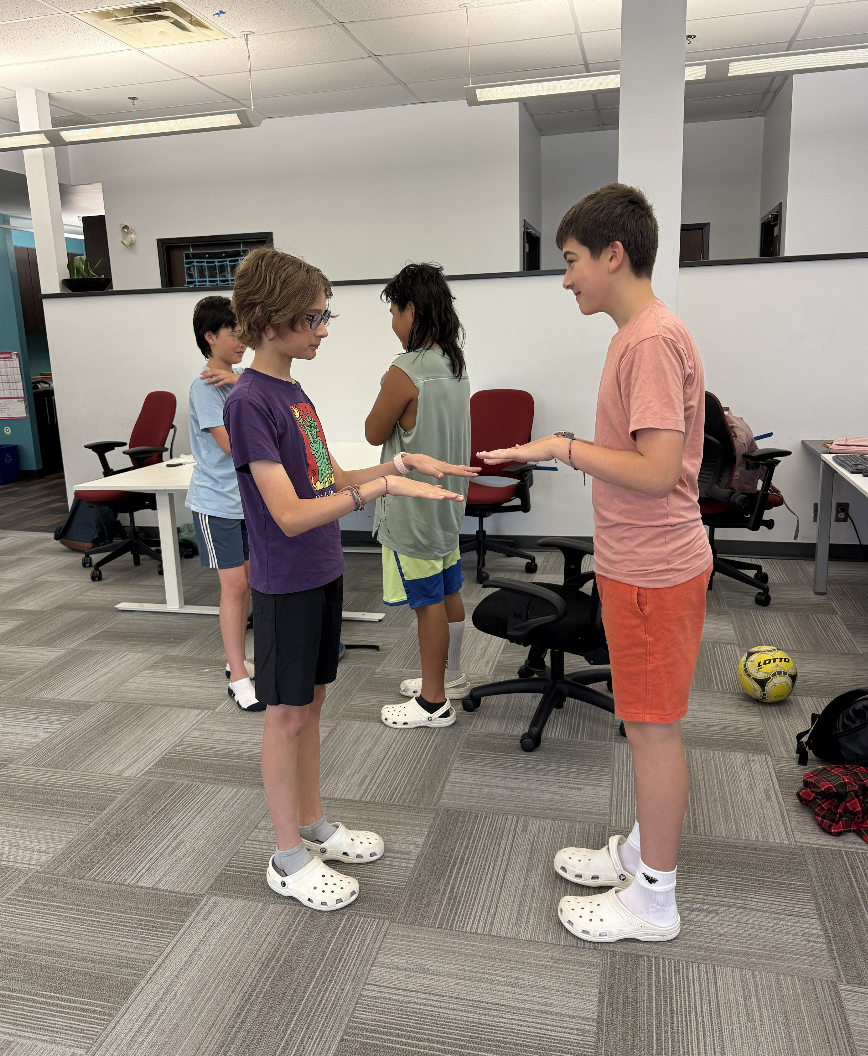
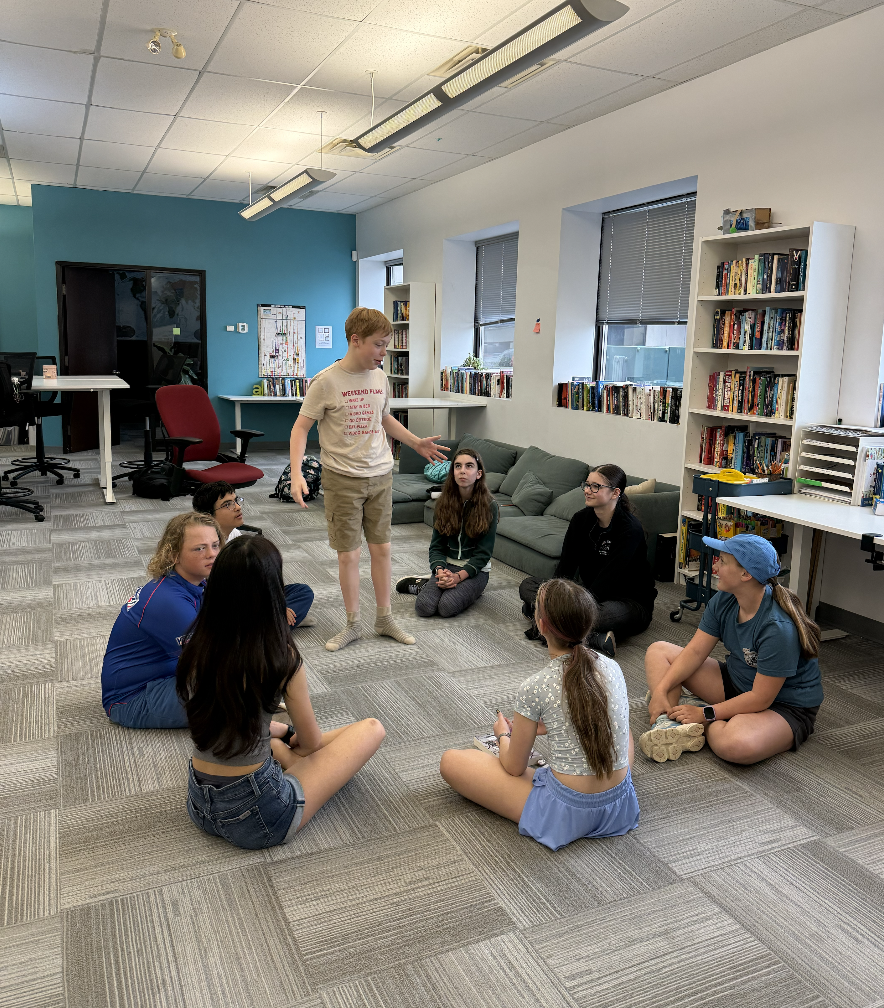
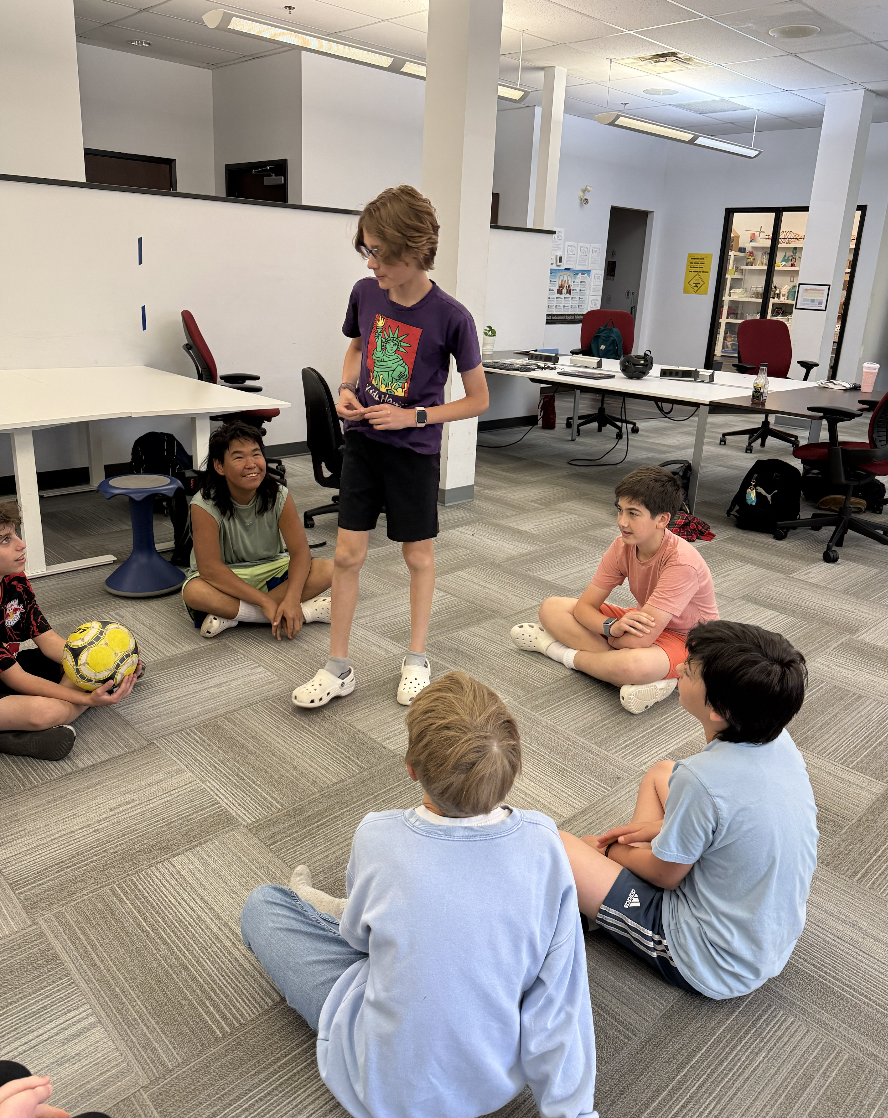
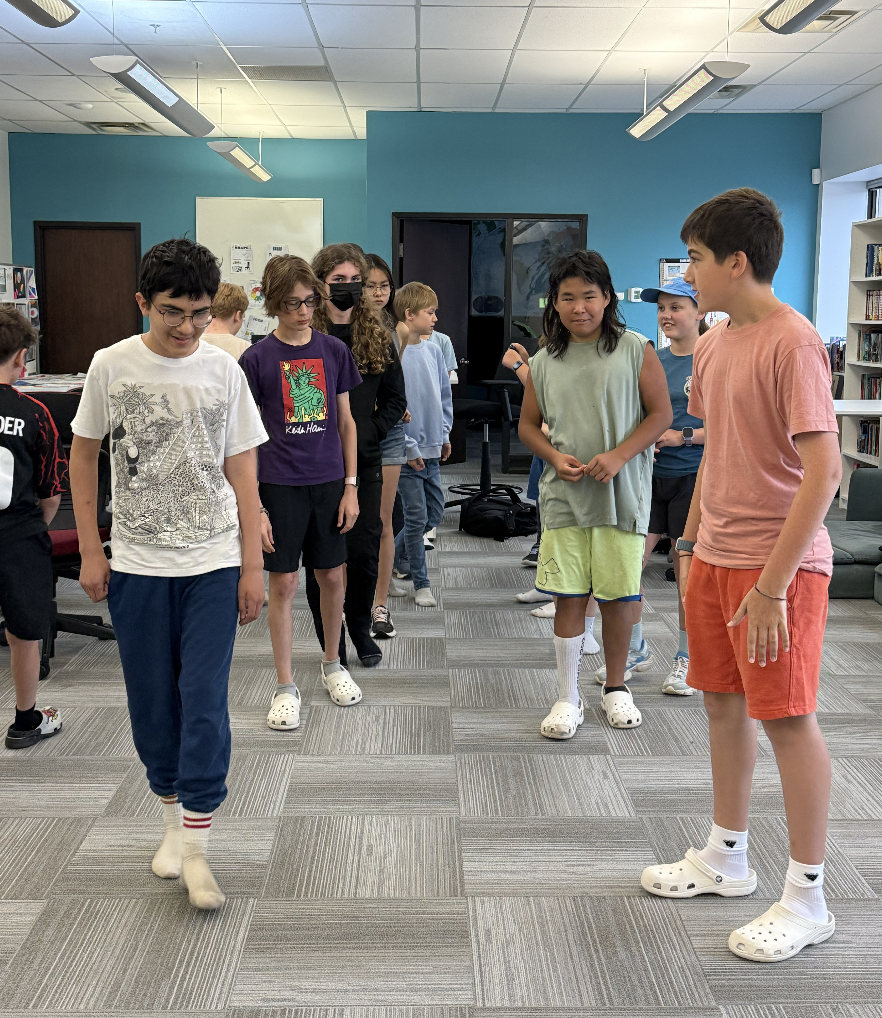
We began our week with the chapter "The Courage to Change Your Mind: Being Brave About What You Believe" in our Becoming a Critical Thinker workbook. We discussed the bravery it takes to admit when you were wrong or changed your mind after stating your opinion. At Closing, we continued our public speaking skill development with the Distraction Game. Each learner was given a distraction card with various behaviours that, as speakers, we need to become comfortable dealing with, and as audience members, we should try to avoid, such as making faces at someone across the room, playing with your nails, whispering to the person next to you, and giggling periodically throughout a talk. Tuesday morning, we began with Boomwhackers, with the learners completing a chord warm-up, followed by "Never Gonna Give You Up," "Beautiful Things," and "Smooth Criminal." This week's Critkid lesson was on the Slippery Slope Fallacy, which is when someone says that a small first step will lead to a terrible chain of events, even though it's very unlikely. For example, "If we get a hamster, next you'll want a dog, then a horse, and soon we'll be living on a farm!" Rebels spoke about slippery slopes and completed their online lesson. During our Dramatic Wednesday morning, we played Mirrors, the Alphabet Game, Fruit Salad, and "Yes, And?" The Rebels did a great job getting out of their comfort zones throughout each improv game. While humid, Thursday's walk was a welcome start to the day, and Friday's Current Event presentation covered the World Cup, photos from space, and a giant pencil!
Reader/Writer Workshop - poetry
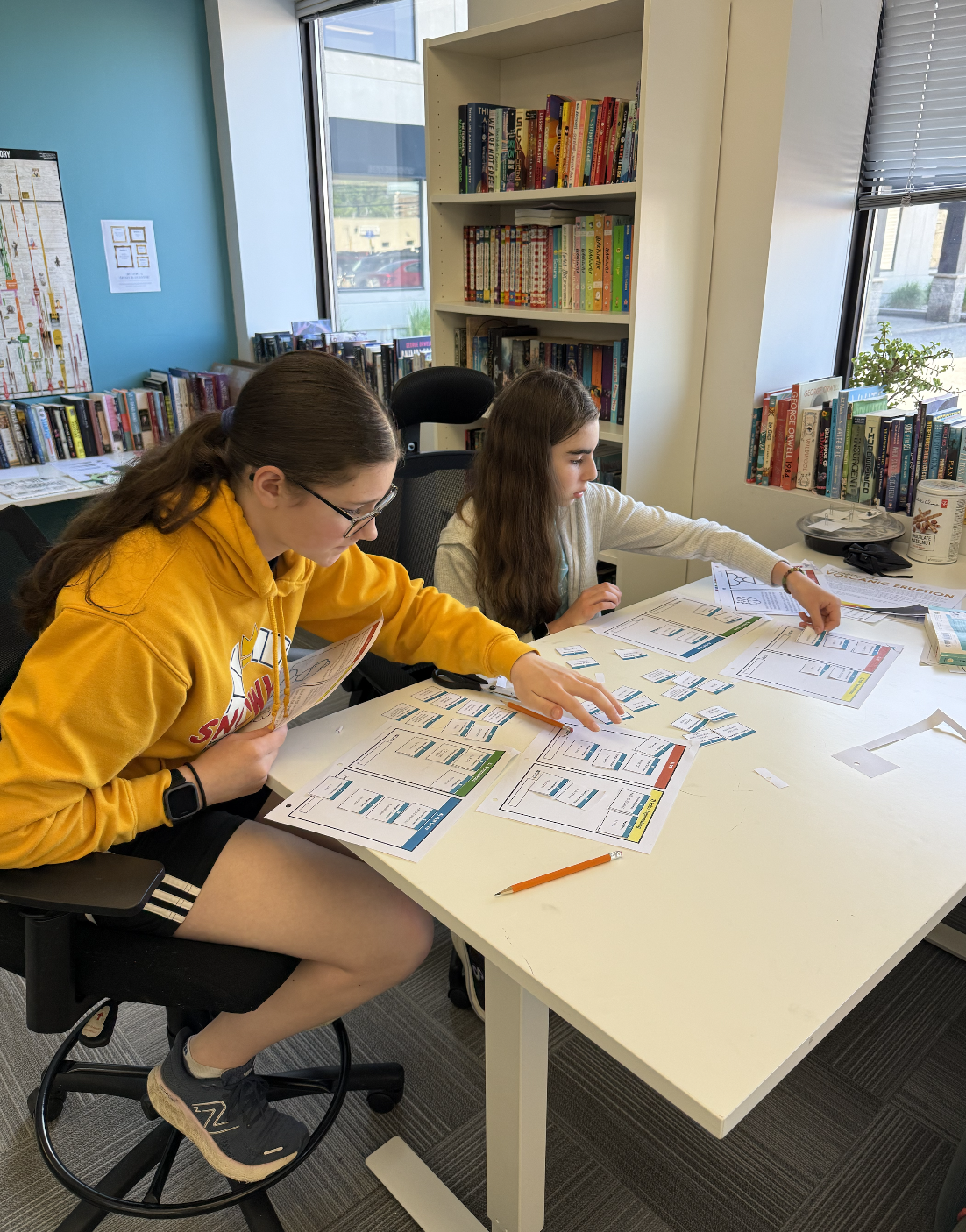
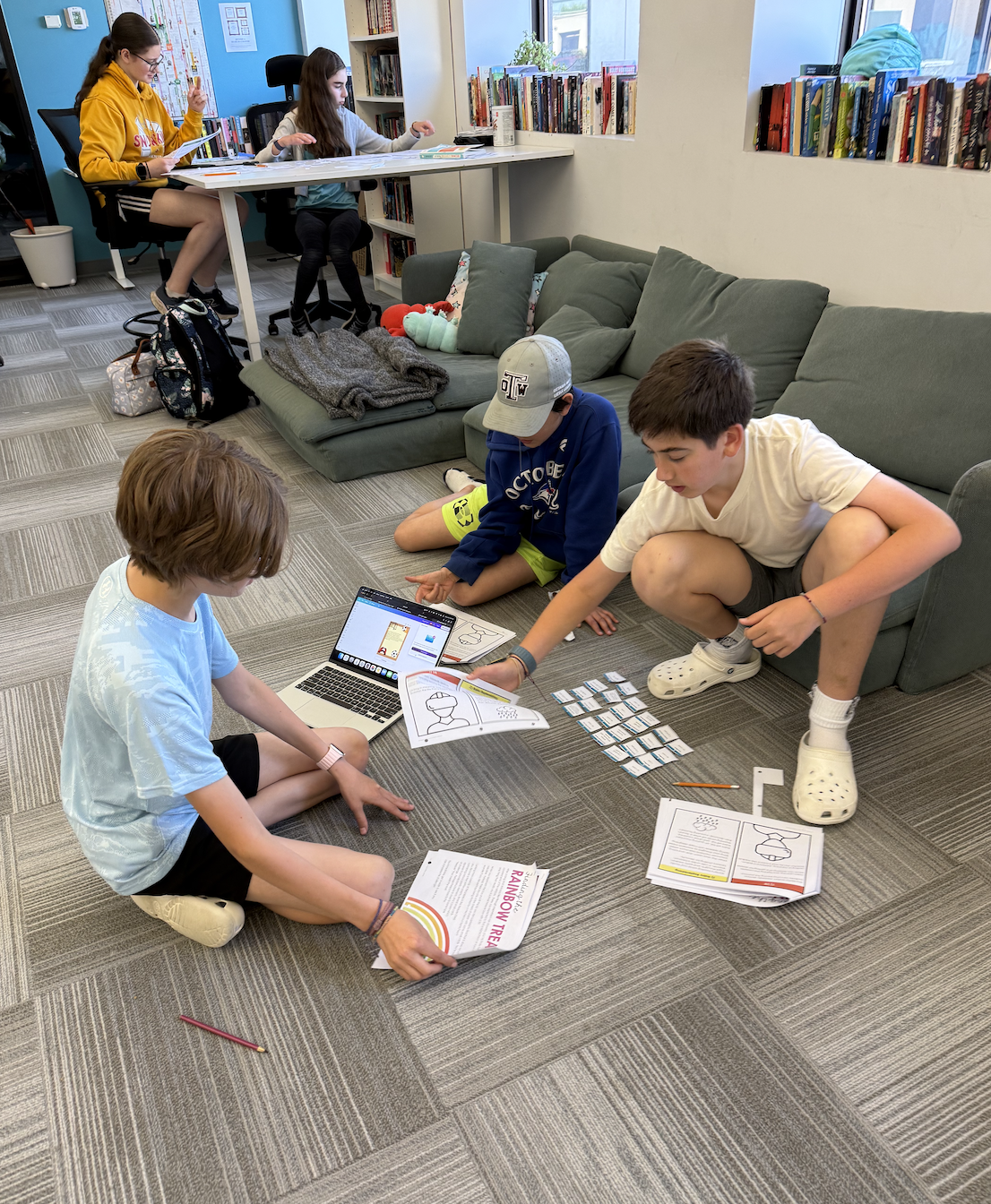
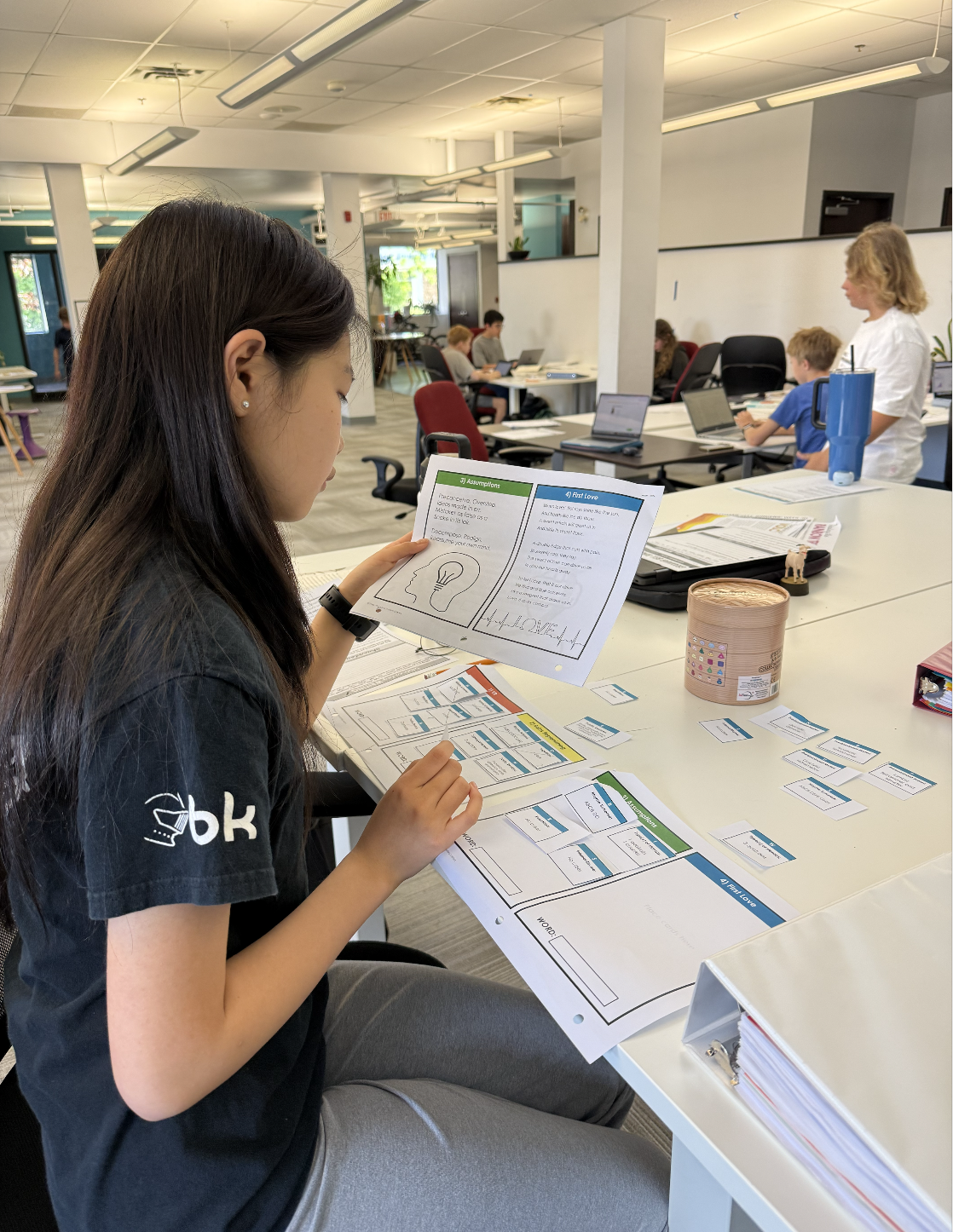
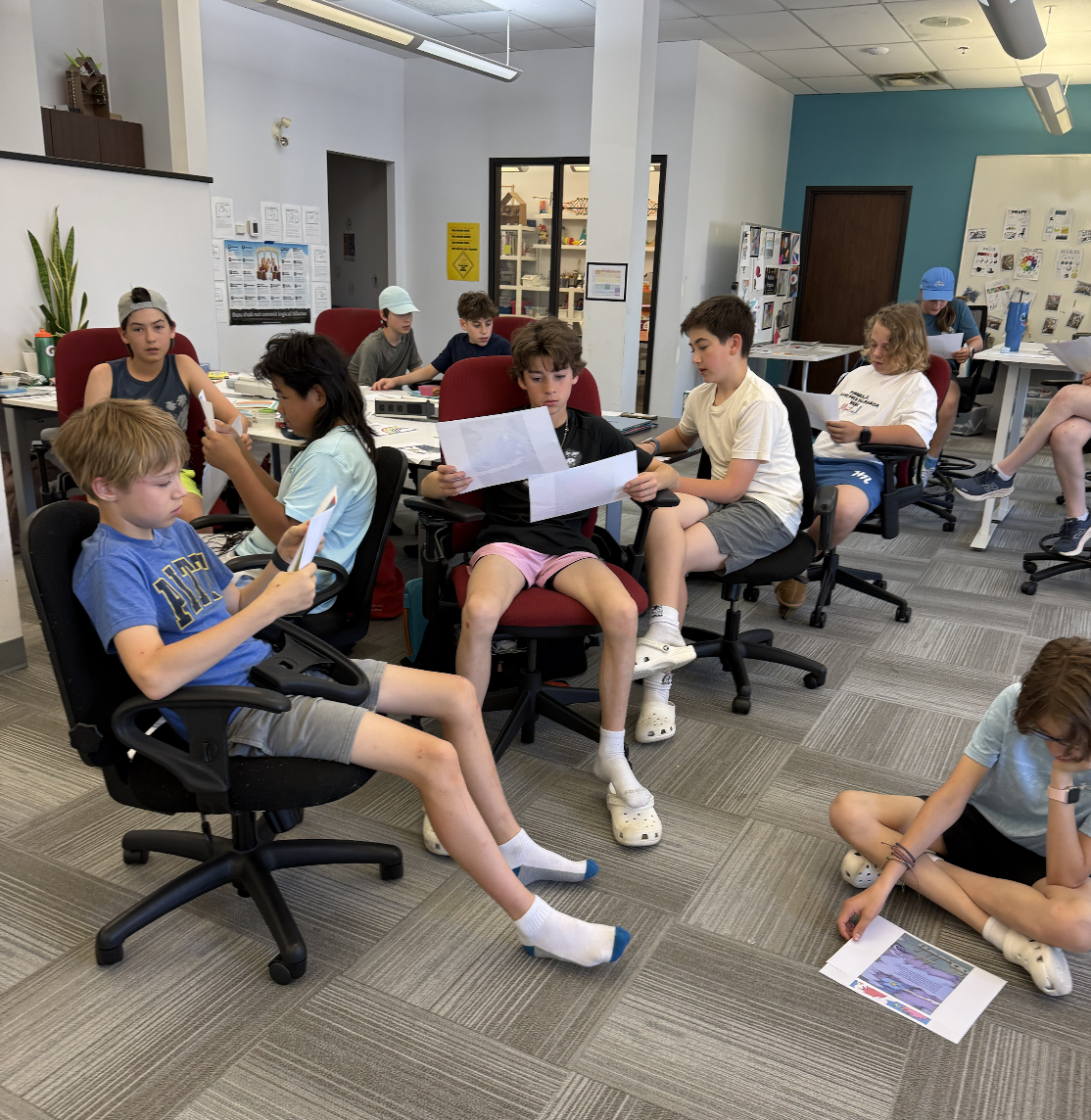
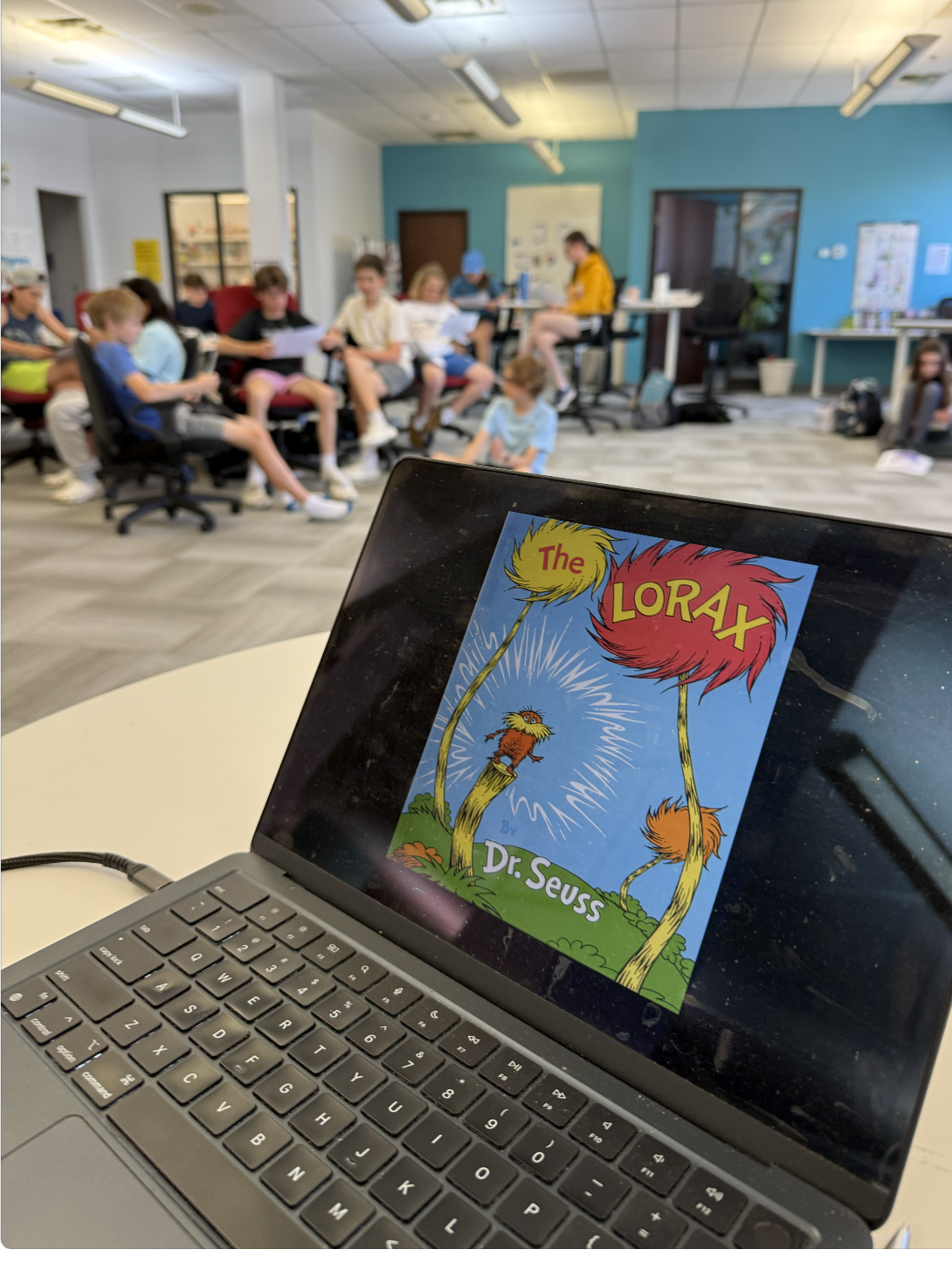
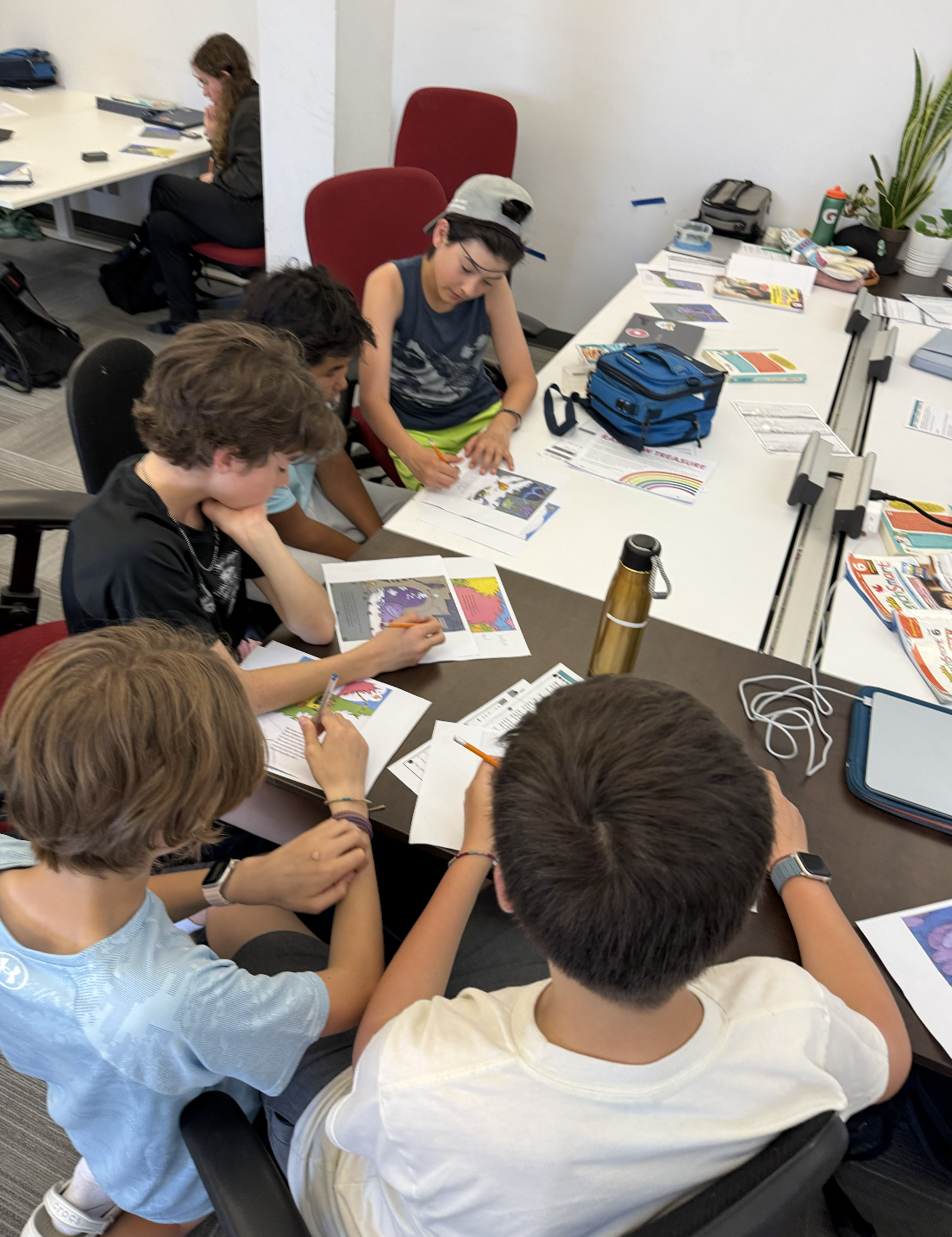
This week, we used our Reader/Writer workshop to develop our understanding of rhythm further and review what we've learned thus far. As a full studio, we completed a choral reading of Dr. Seuss' The Lorax. Each learner read a page or two out loud with rhythm, making sure to read the story in order. Upon finishing the reading, learners labelled their rhyme scheme and looked for alliteration, assonance, onomatopoeia, double and triple rhymes, and more. They then had the rest of their workshop time to work on writing their Poem of the Week, an English Sonnet (14 lines broken into three quatrains followed by a rhyming couplet. Each line is 10 syllables long and follows an abab, cdcd, efef, gg rhyme scheme).
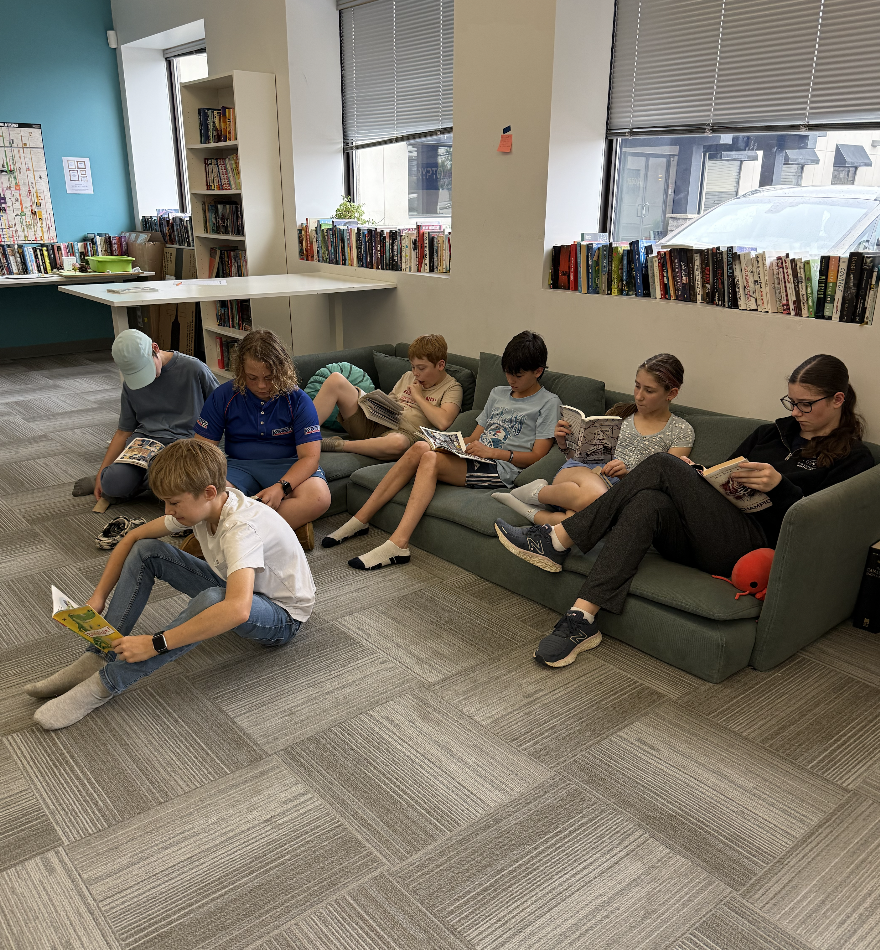
Our Reading Challenge focused on poetic devices and forms. Rebels were already familiar with several forms from our Reader/Writer sessions, including stanzas, rhyme scheme, internal rhyme, meter, and repetition, and after the last session's Short Story Boot Camp, they were also familiar with devices such as metaphor, simile, onomatopoeia, alliteration, assonance, personification, hyperbole, and oxymoron. This challenge helped them put all their knowledge together and prove all they have learned this year!
Adjectives describe a noun or pronoun. They tell us what kind, how many, or which one. In this week's grammar lesson, we learned that when using more than one adjective, you need to follow this order: Opinion - Size - Age - Shape - Colour - Origin - Material - Purpose - Amount. Rebels reviewed that there needed to be a comma between coordinating adjectives if the order didn't matter, and that you could put an 'and' between them, and it would still make sense.
Math Lab
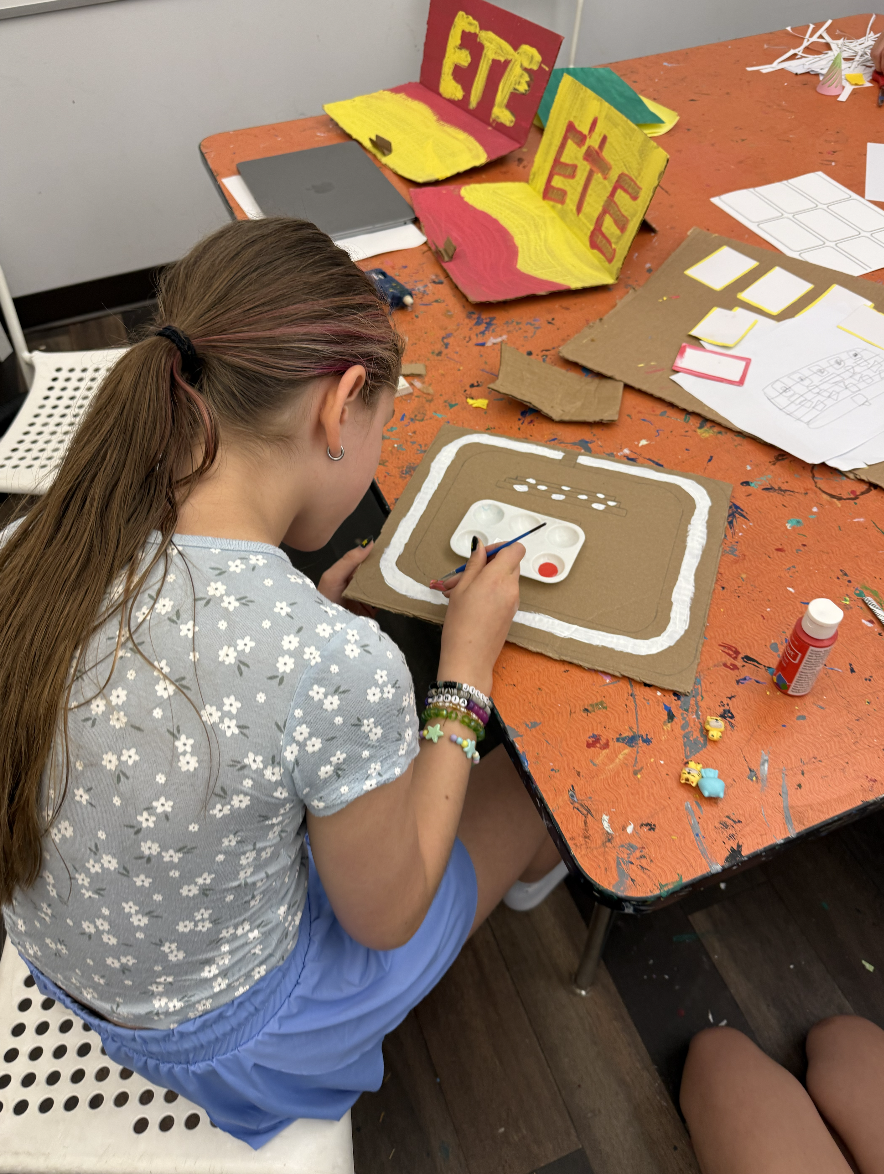
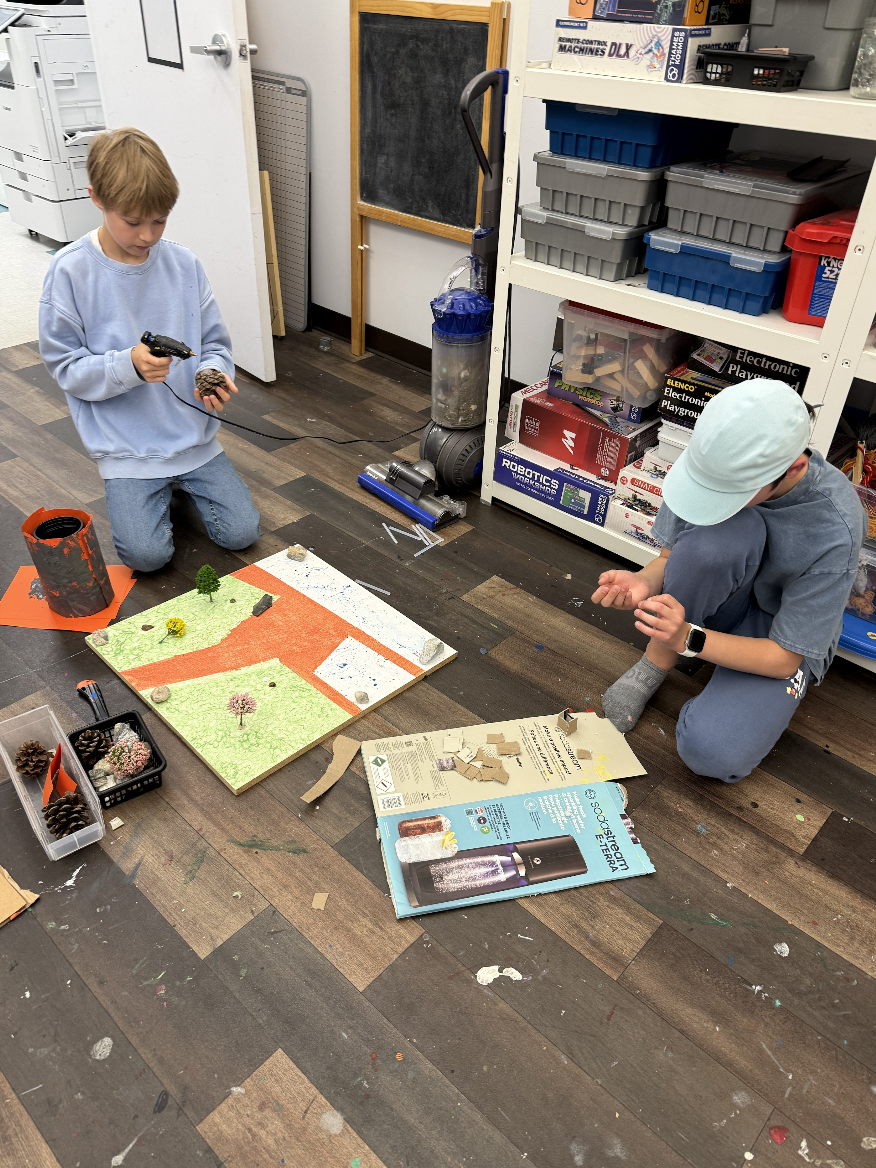
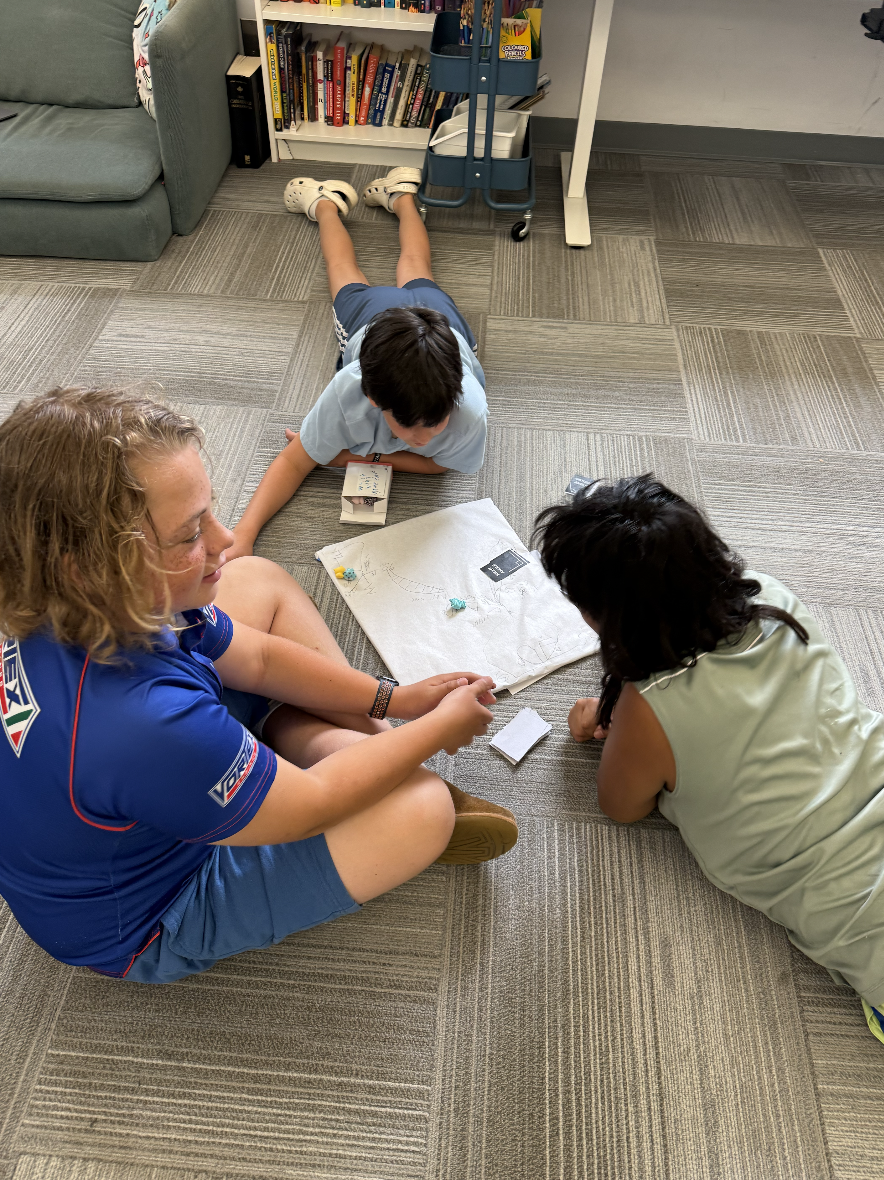
Now that the learners have a plan for their Math Game, they got right to work on Wednesday, building the board, writing the questions, and creating game pieces. We can't wait to play the games once they are finished in a couple of weeks!
French
This week in French, the Exploration group translated and interpreted the final scenes of L'Avare by Molière in groups. Learners worked together to better understand the language, meaning, and humour found in the play's final moments. The class also learned about the alexandrin, a traditional twelve-syllable poetic line commonly used in classical French theatre, and searched for examples directly in Molière's text.
Quest - Art & Creativity
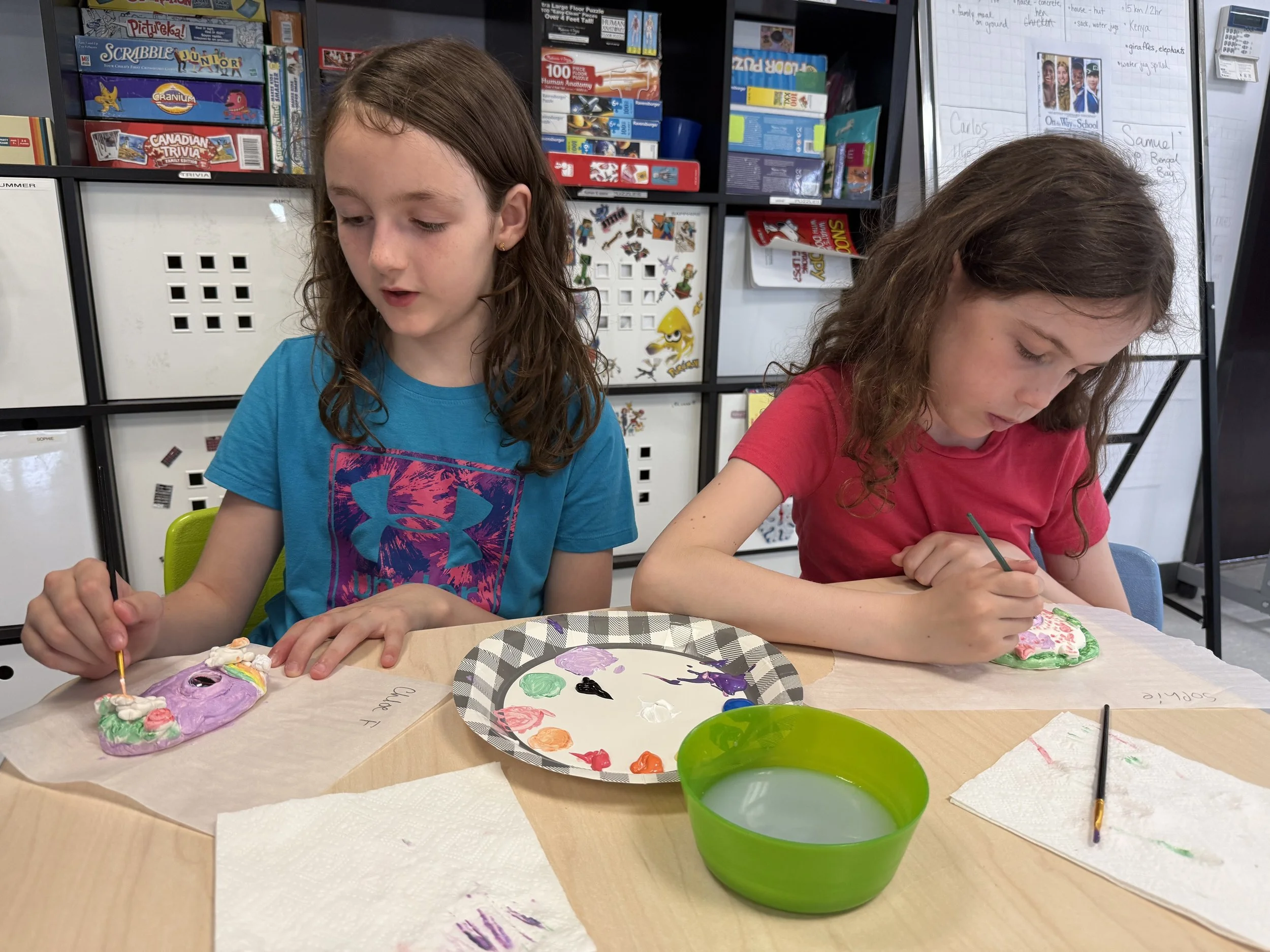
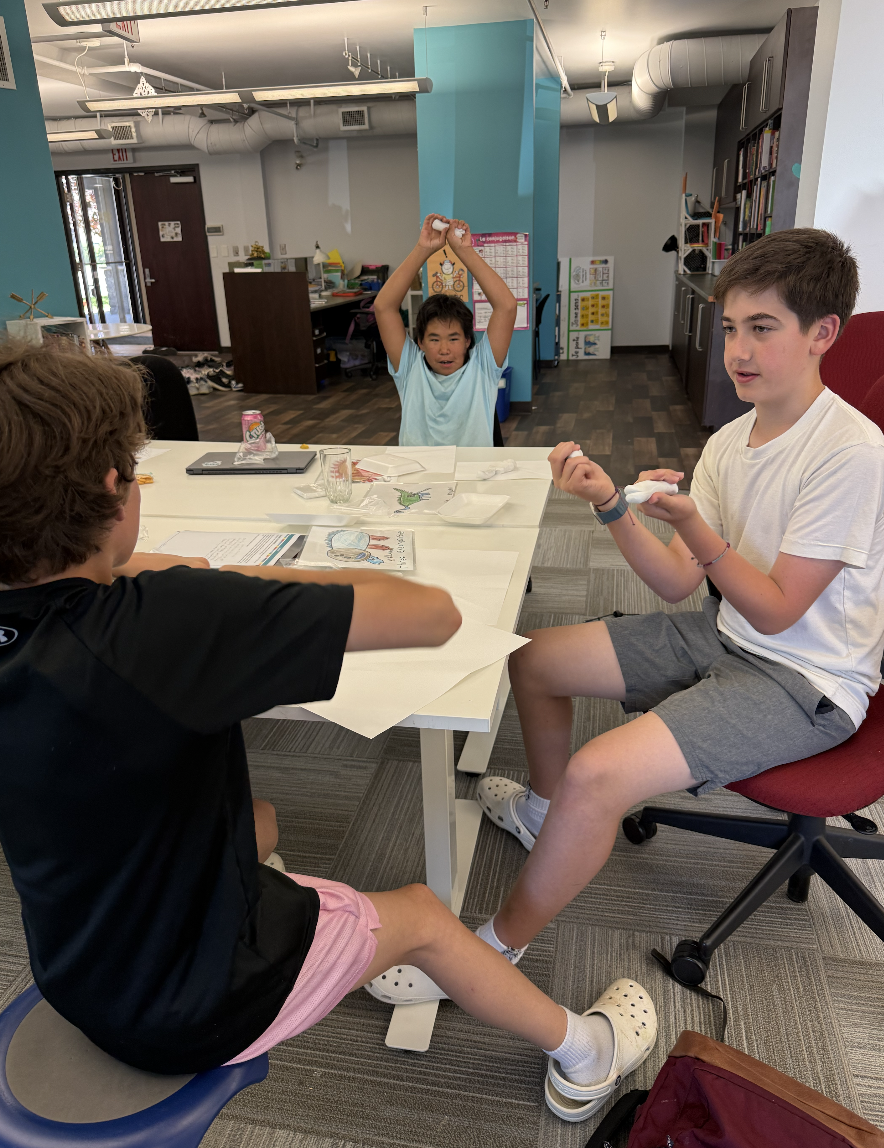
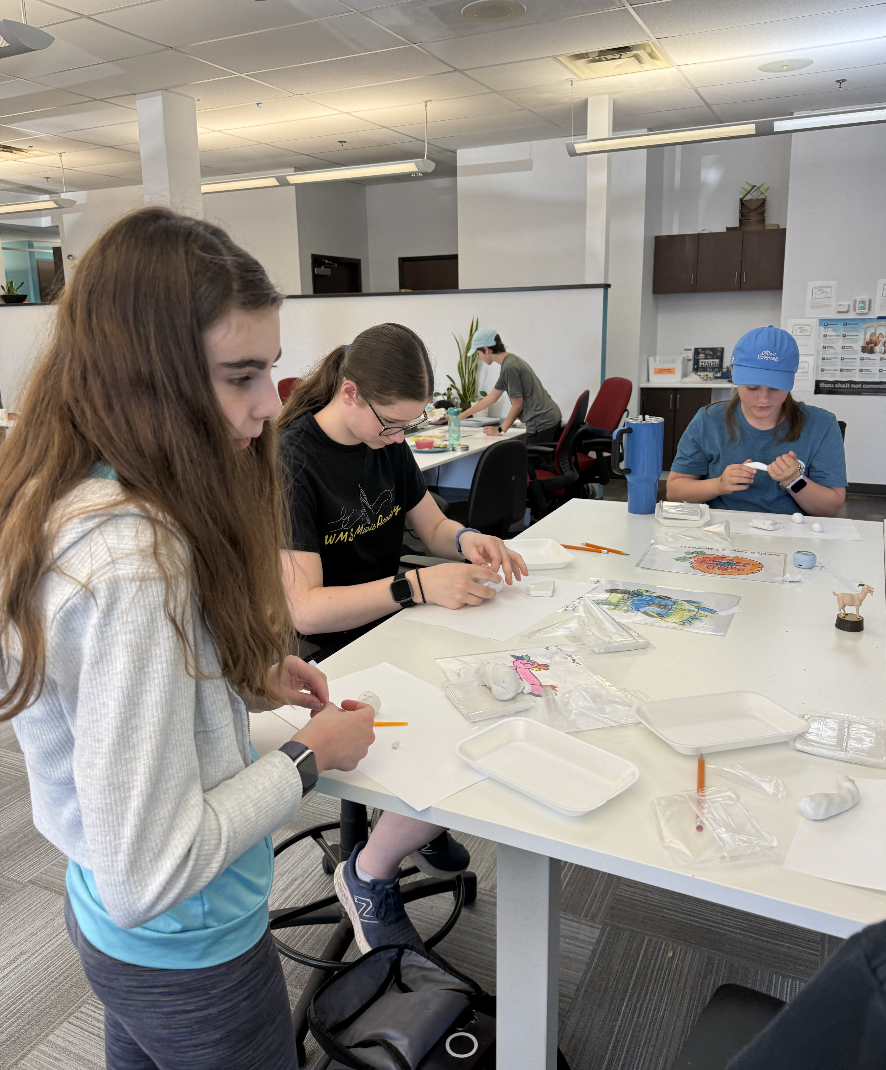
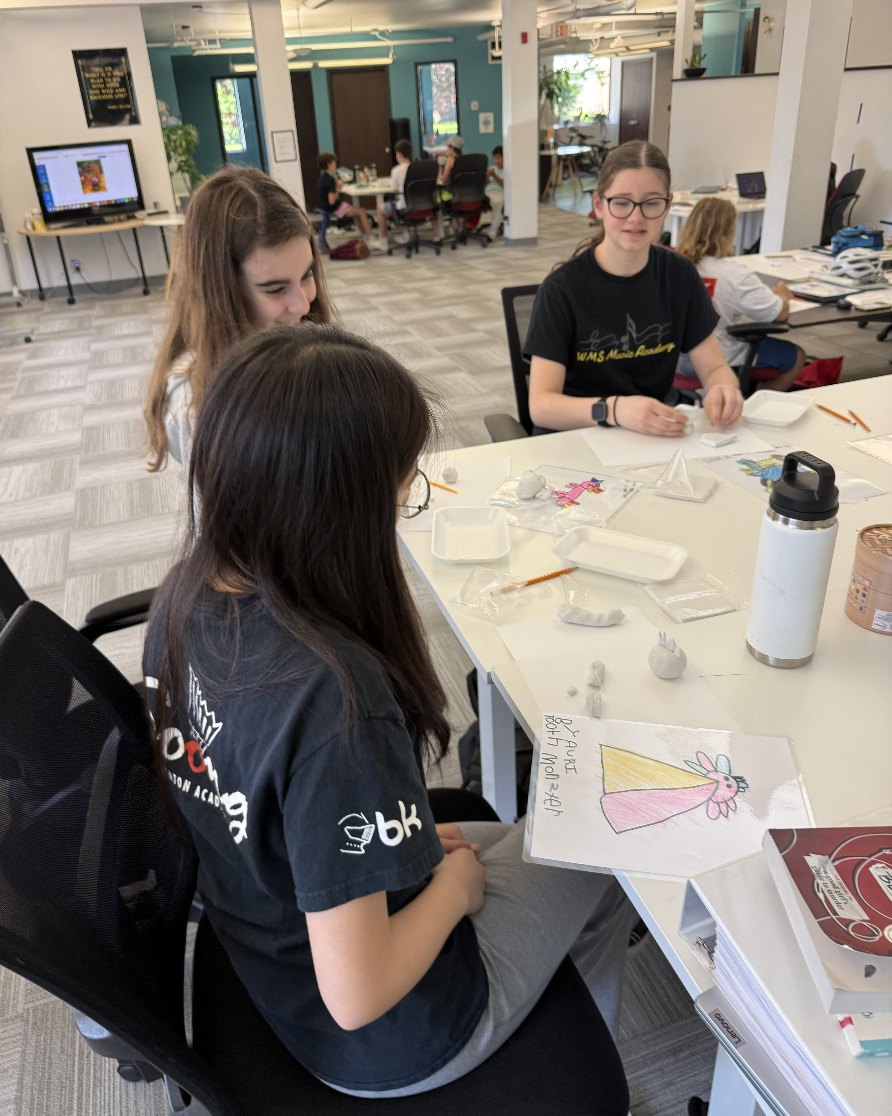
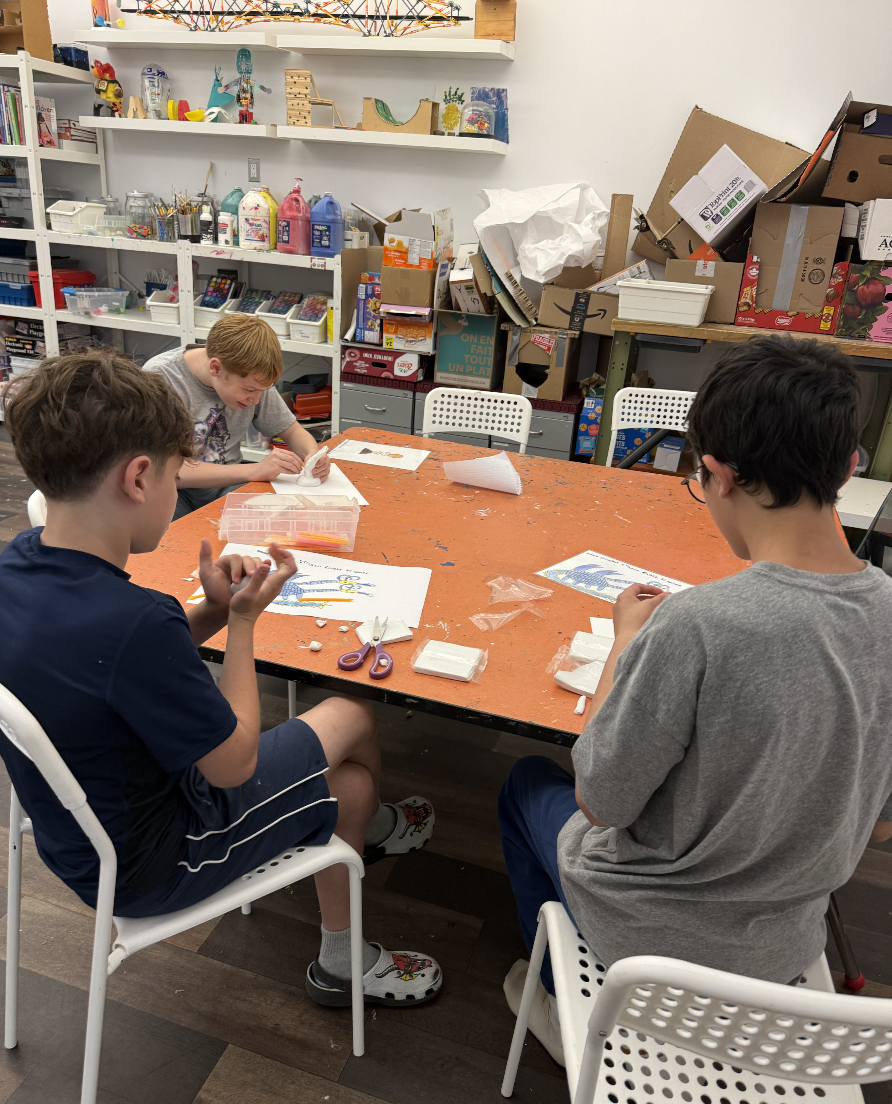
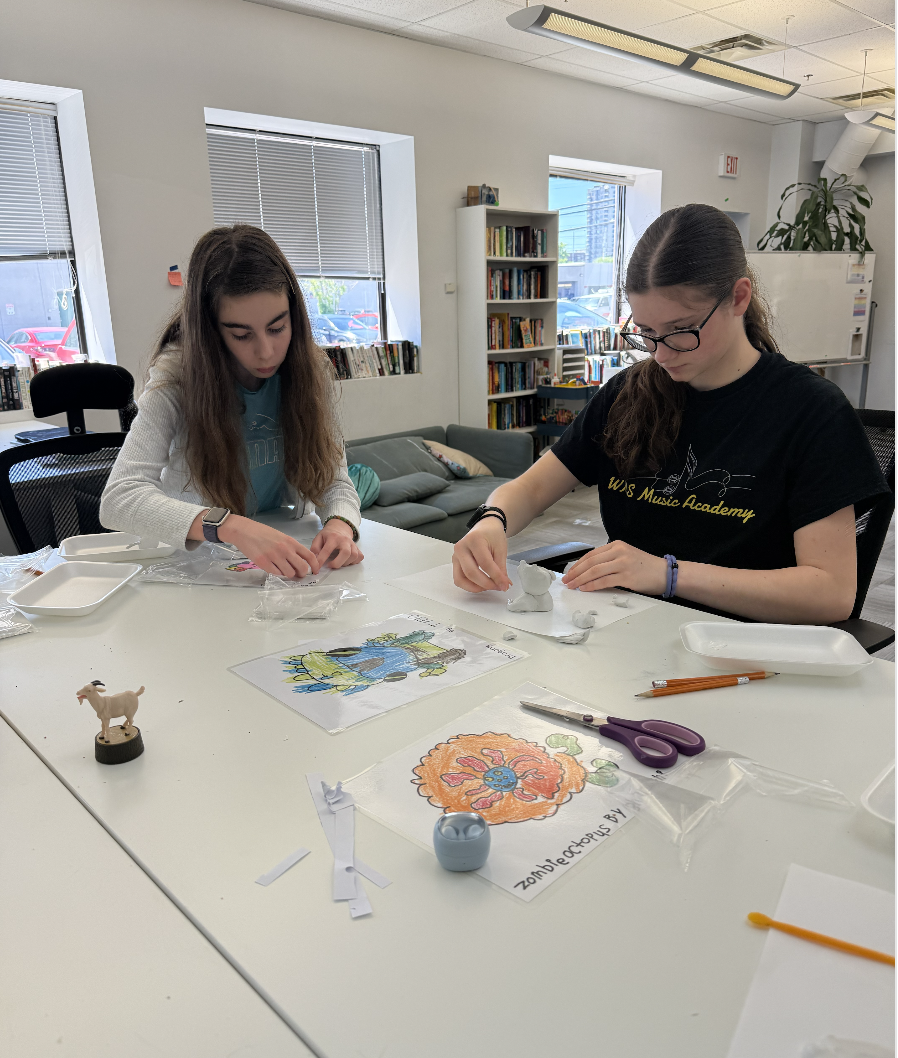
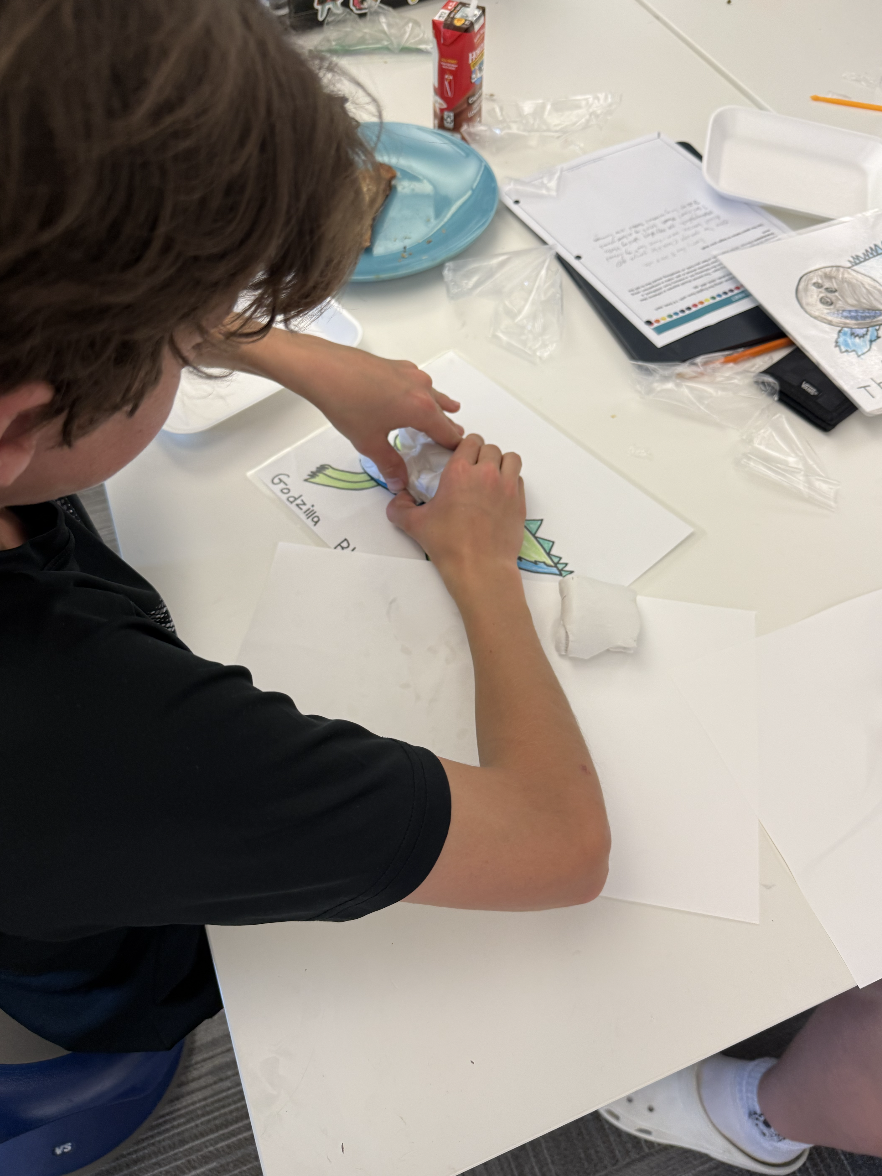
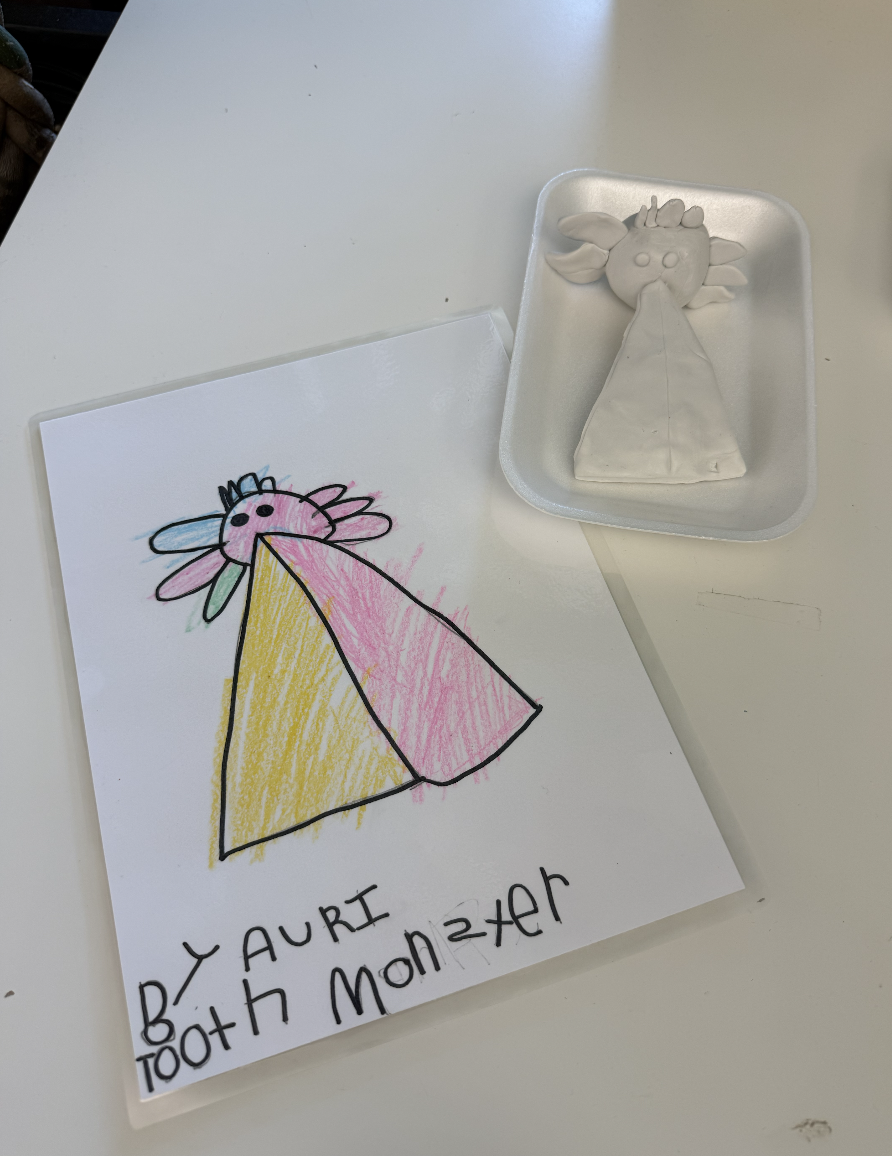
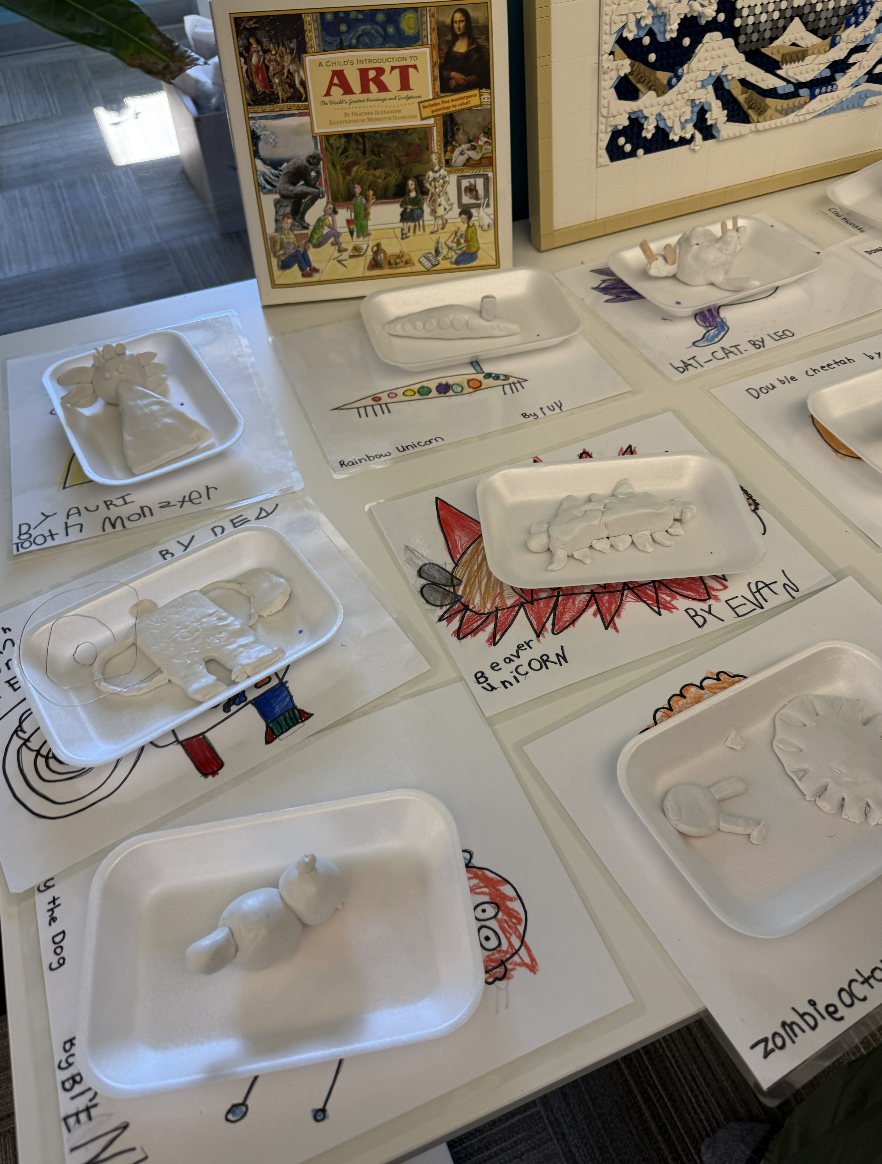
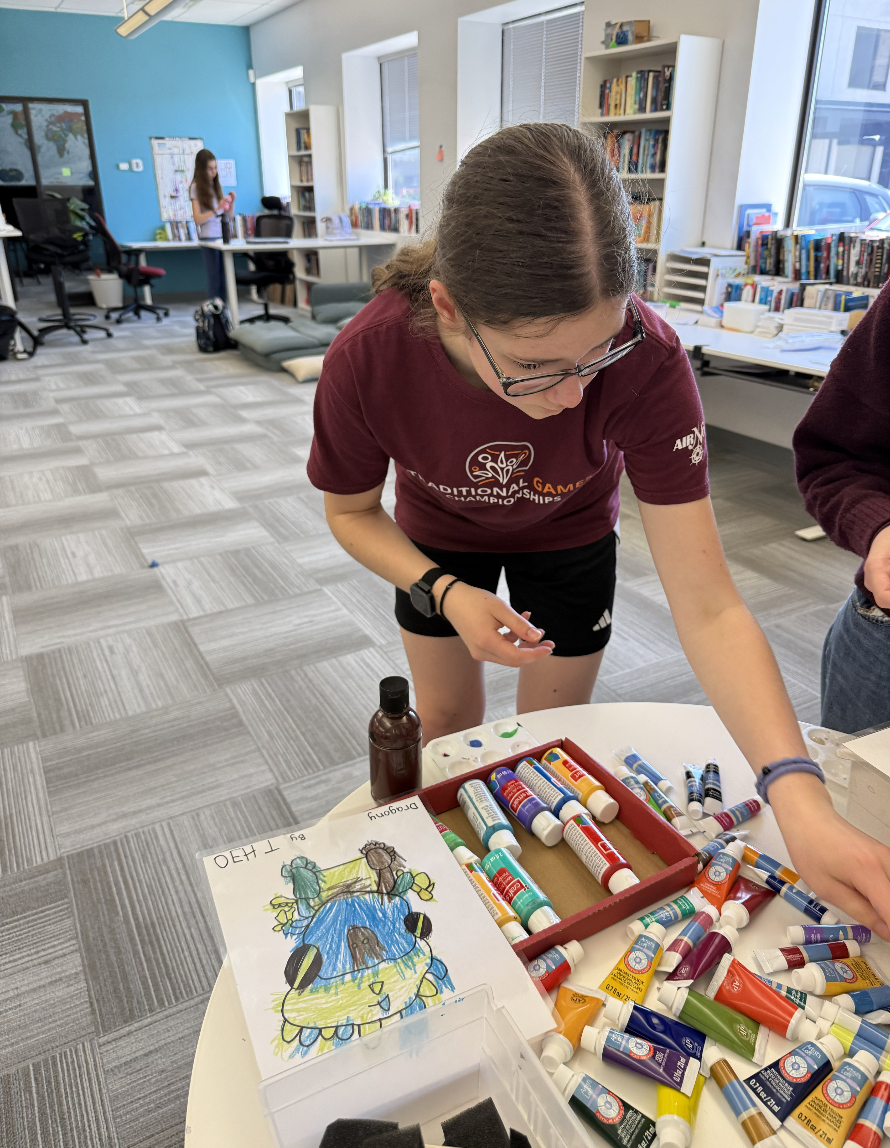
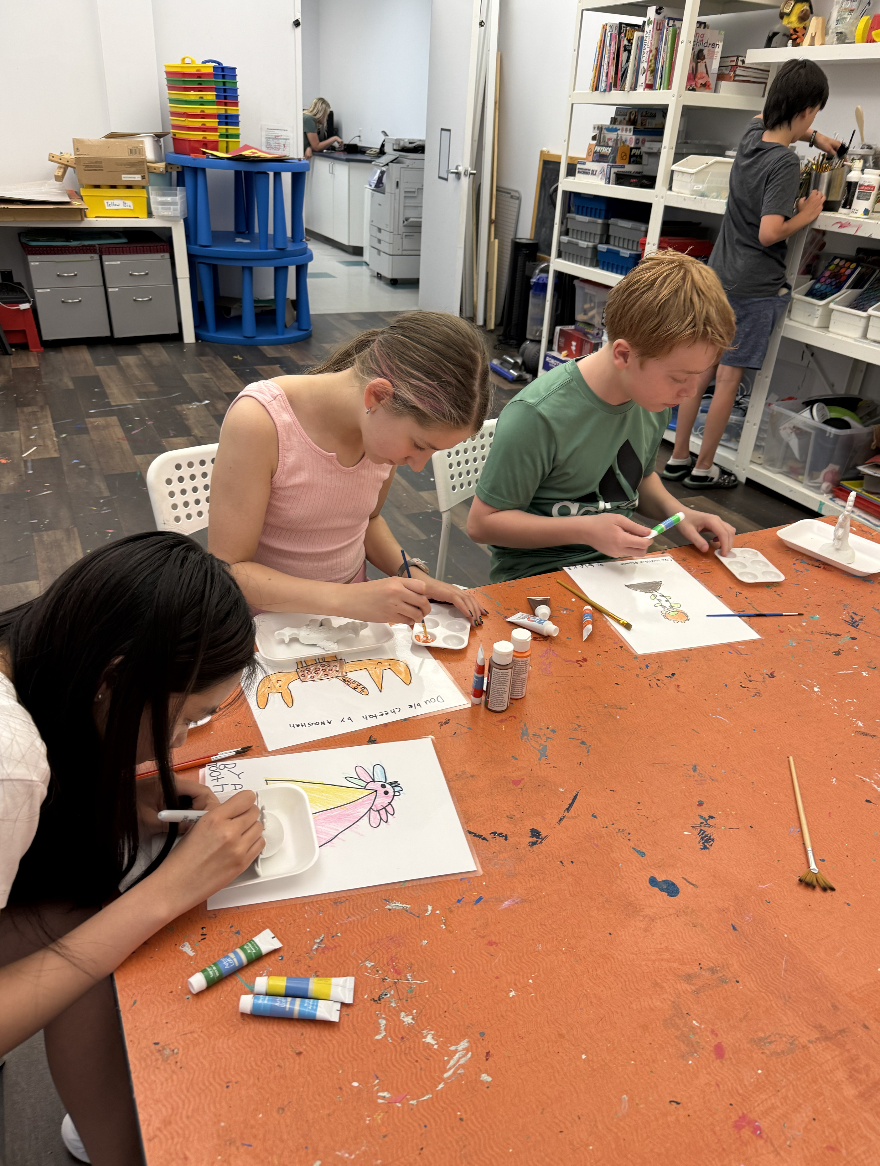
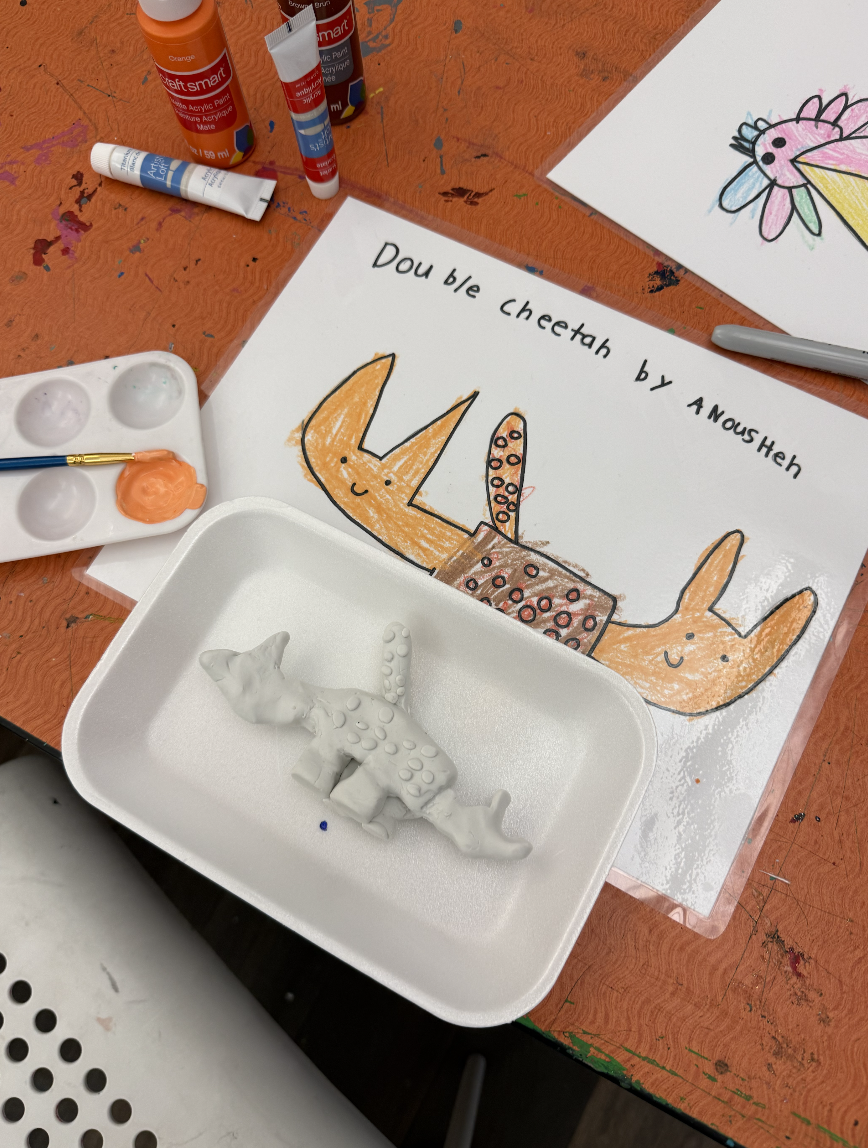
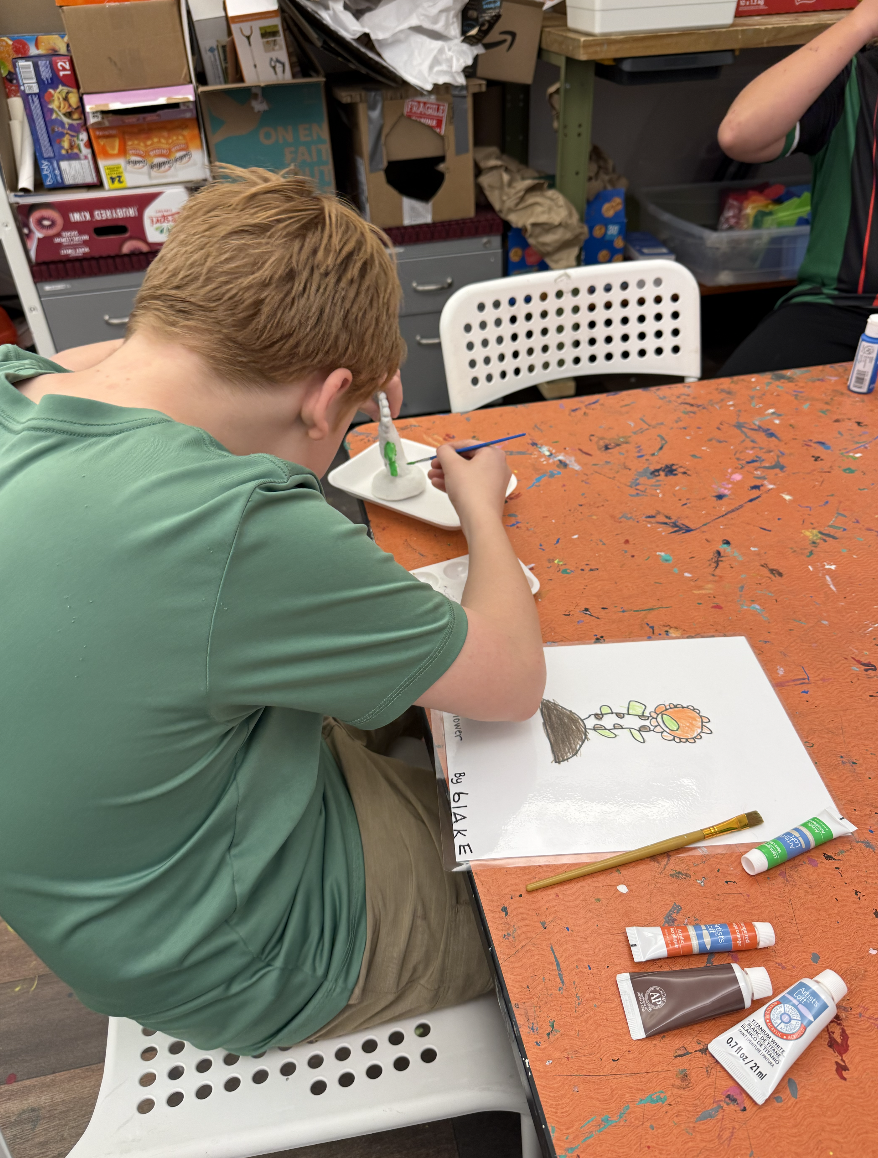
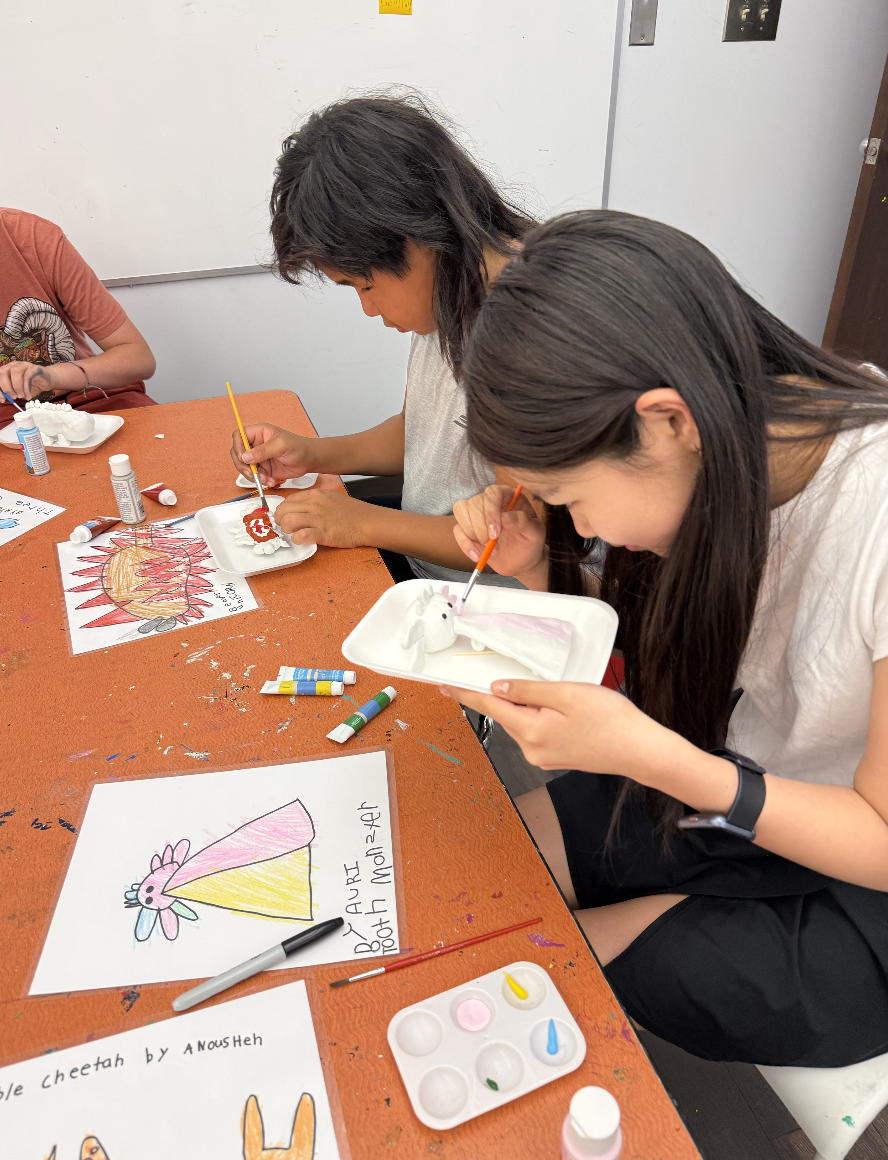
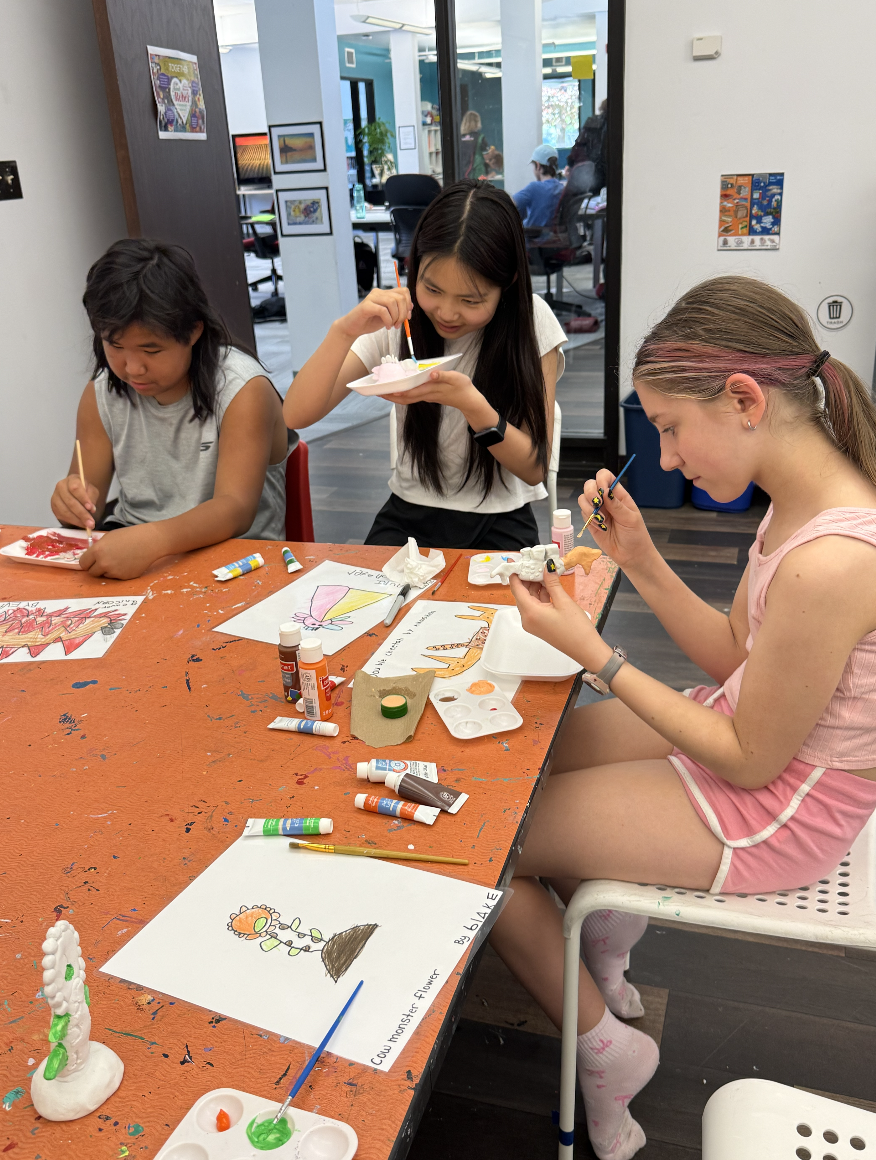
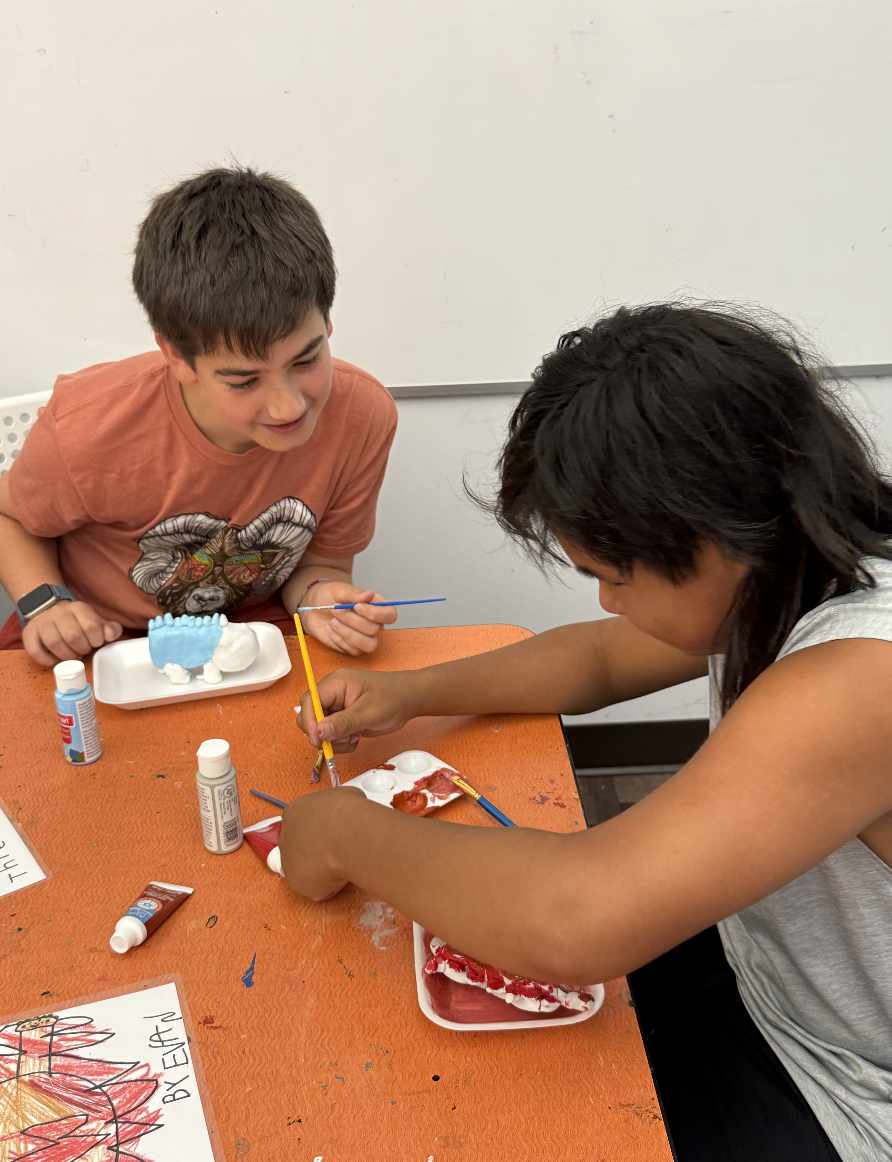
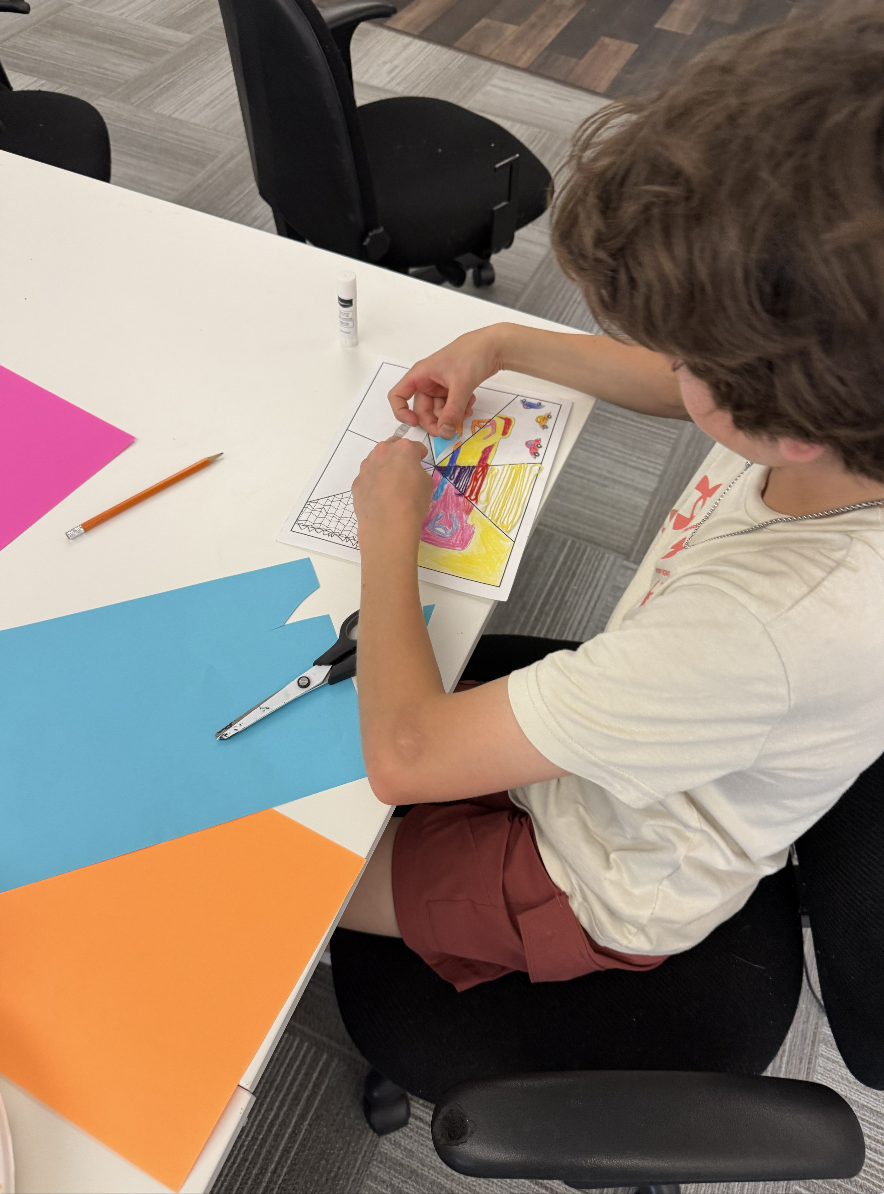
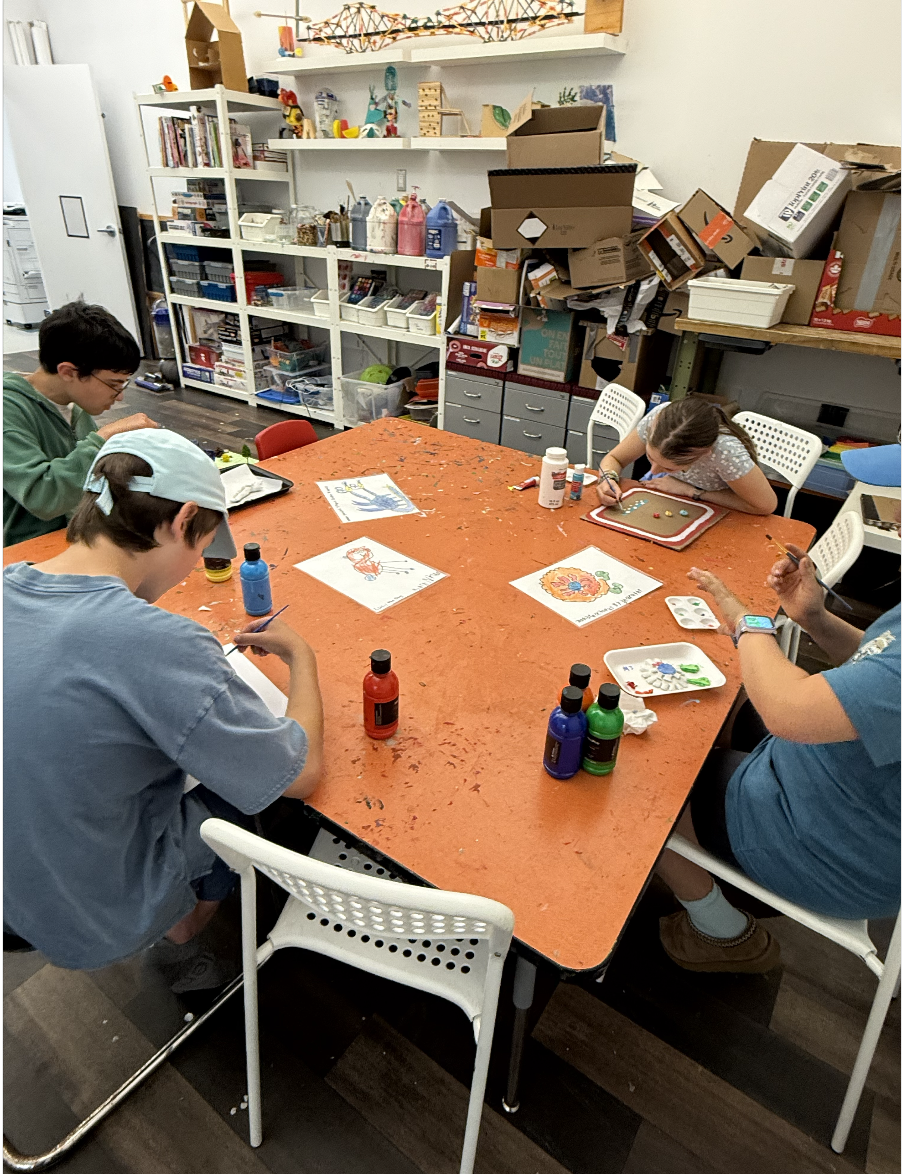
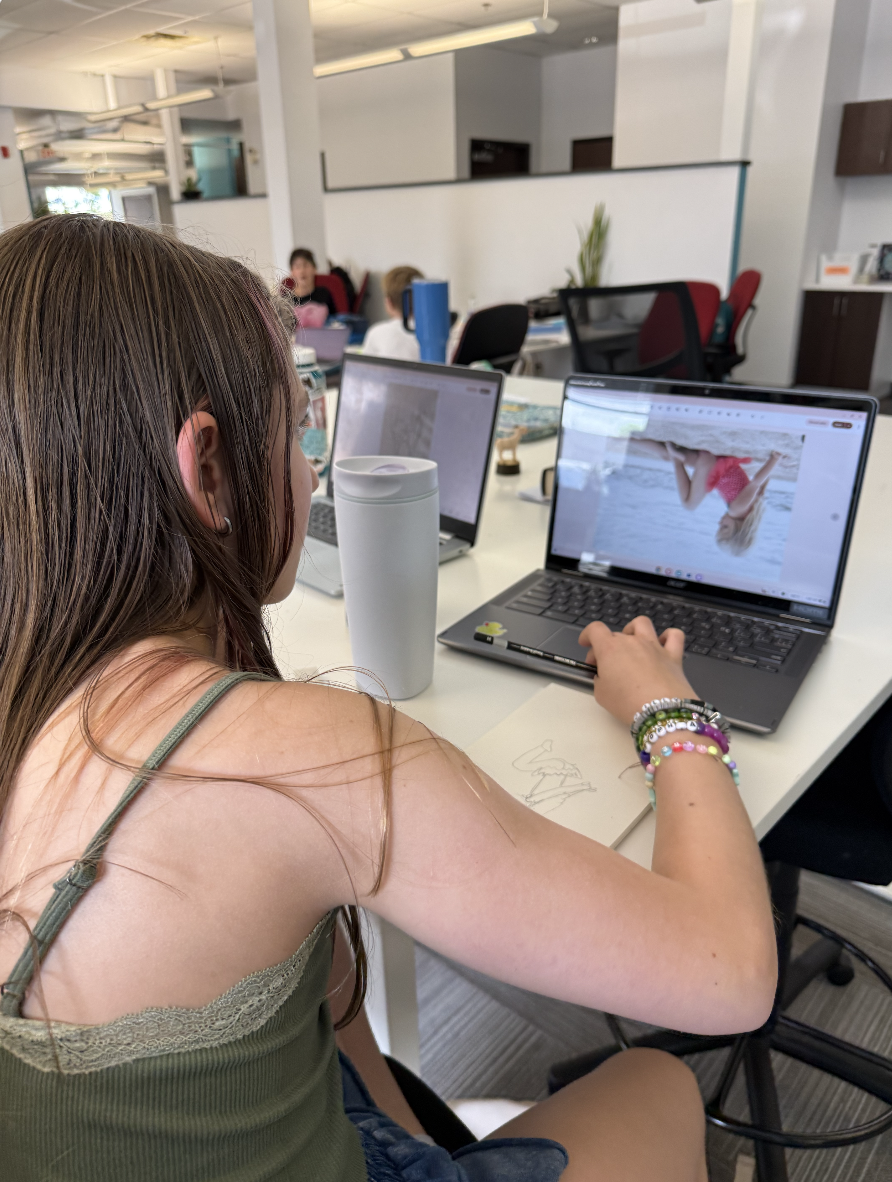
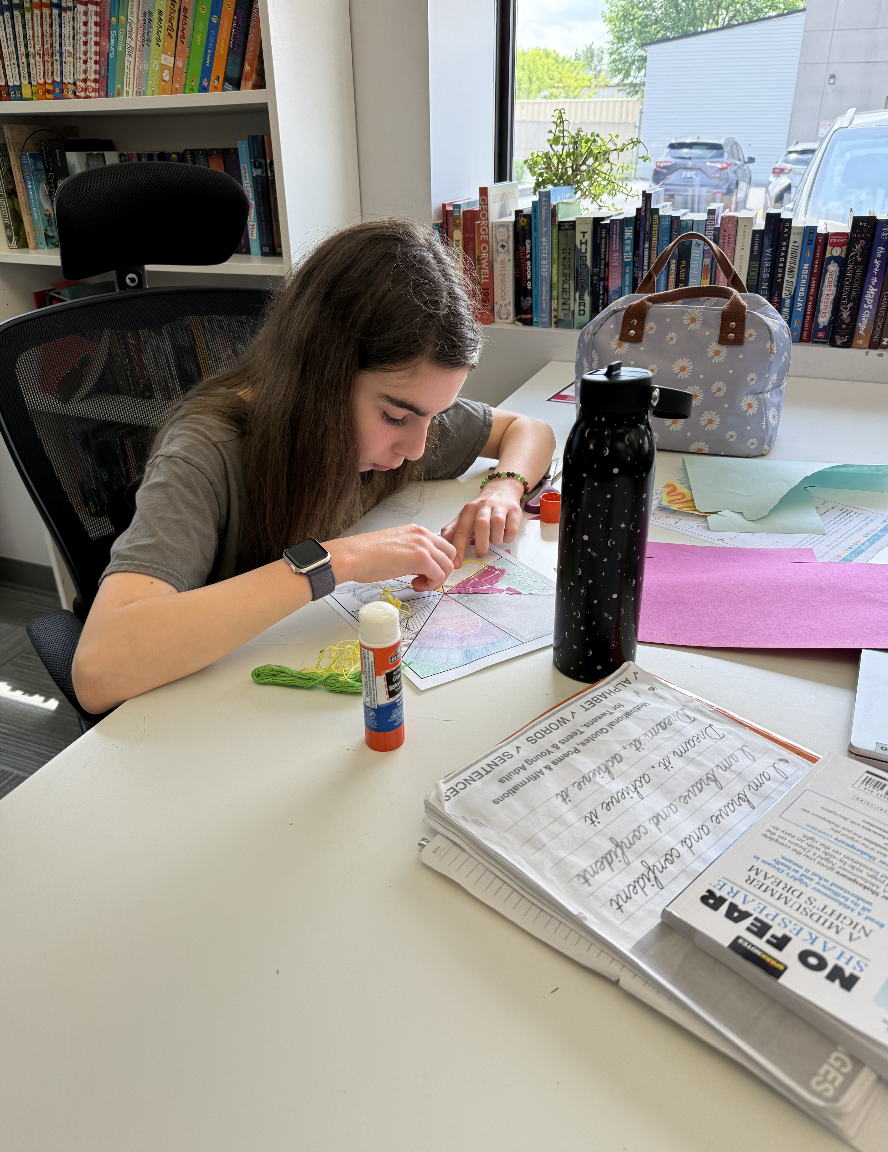
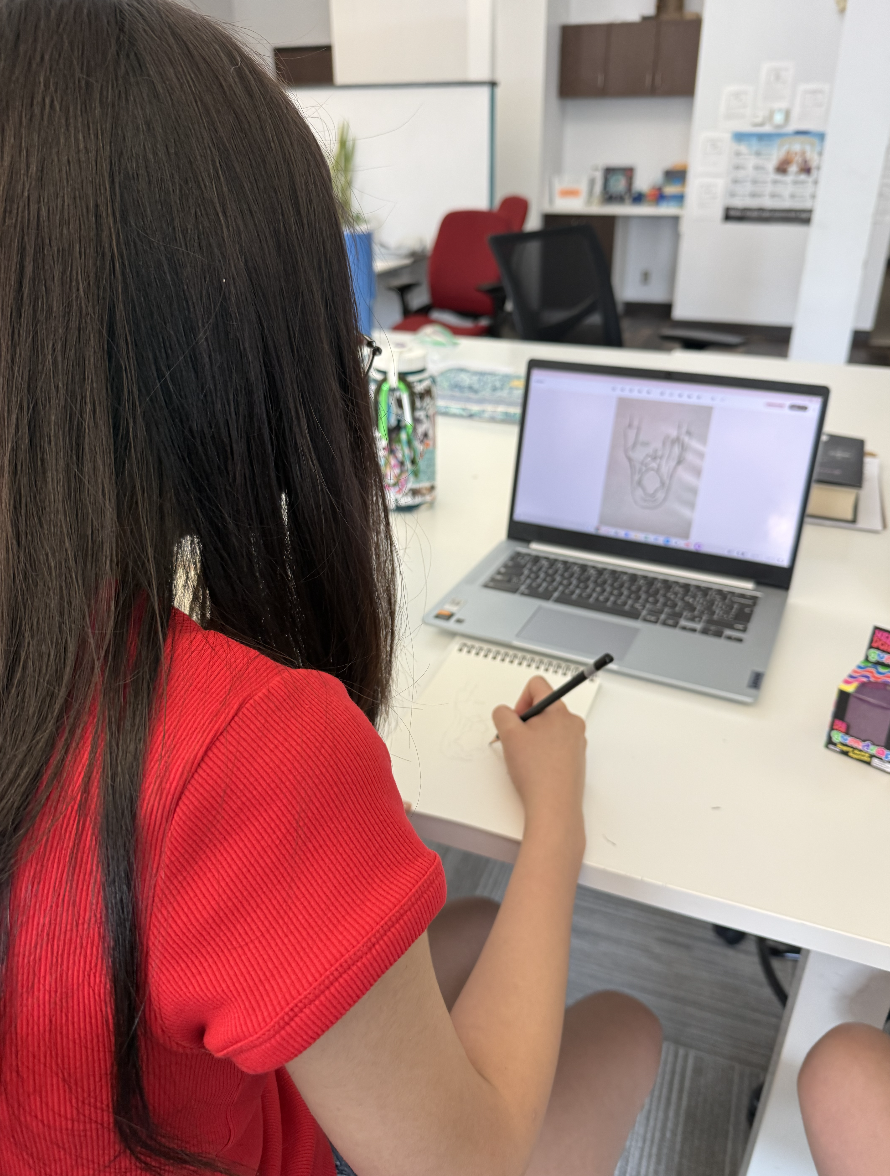
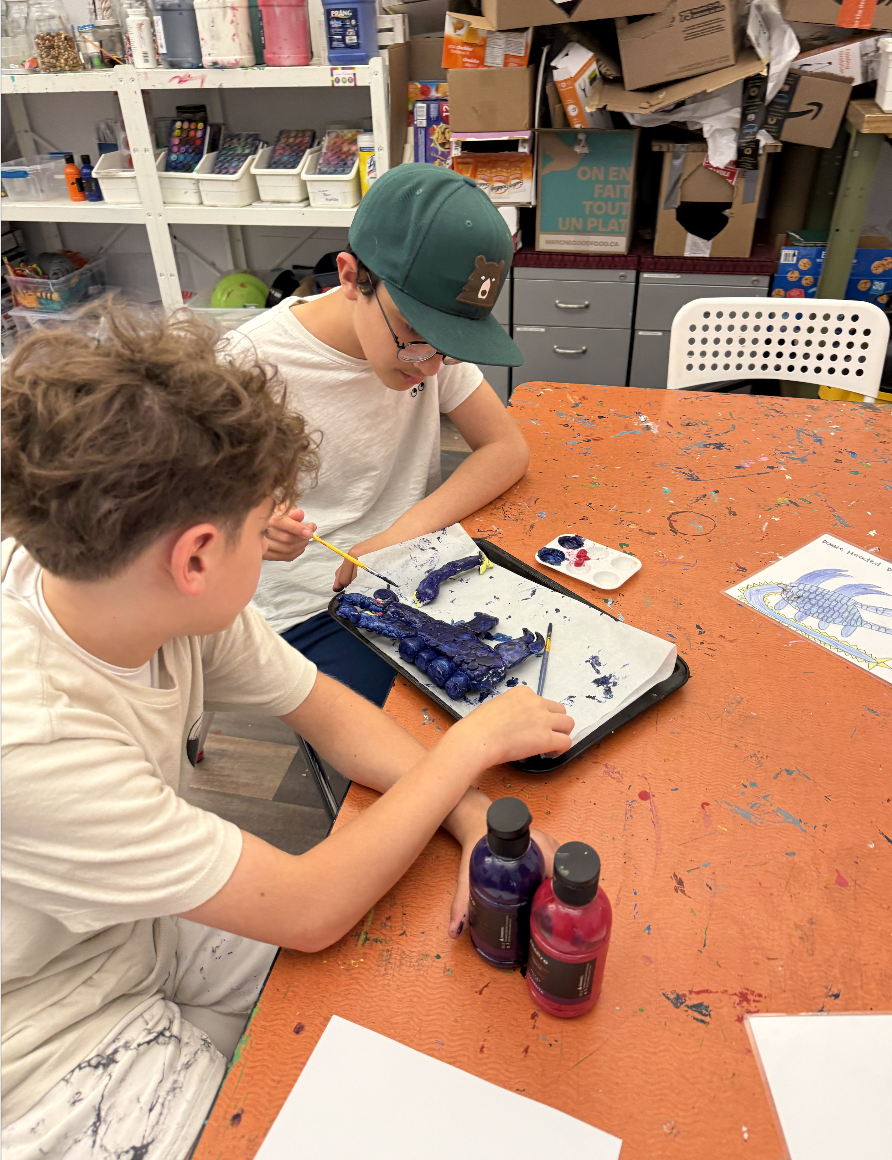
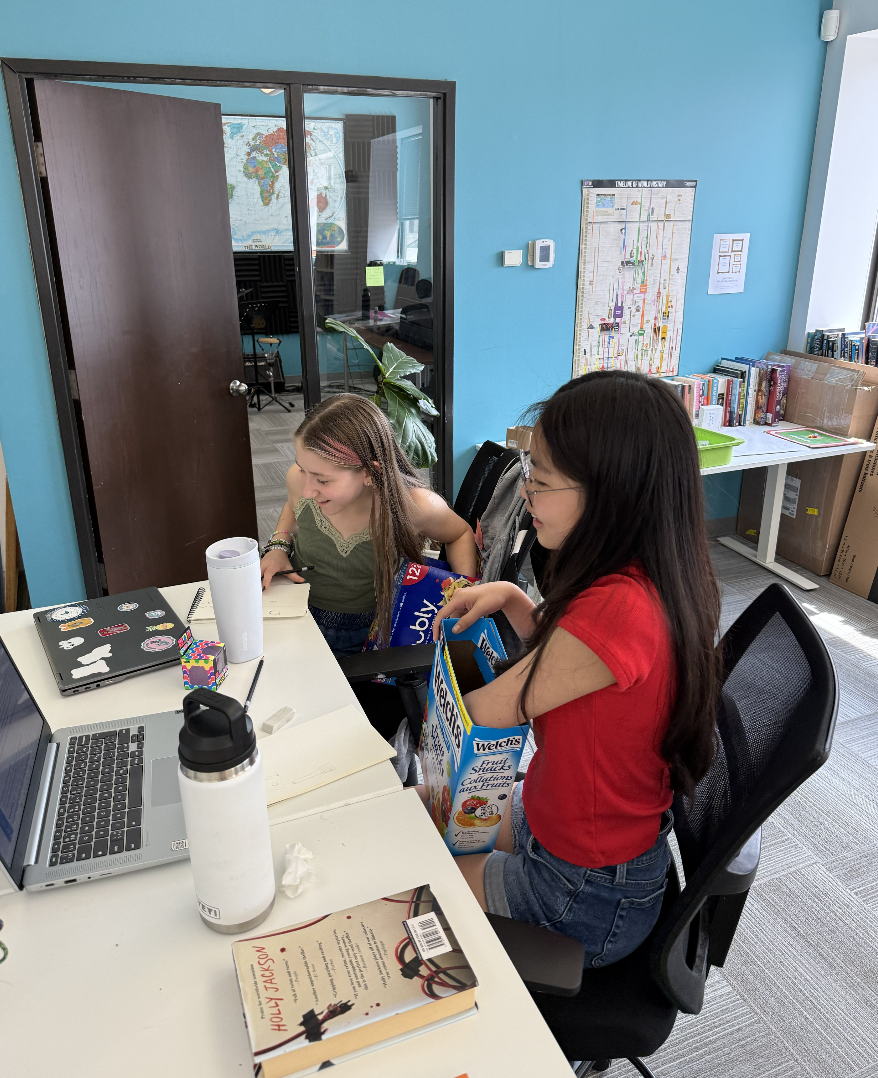
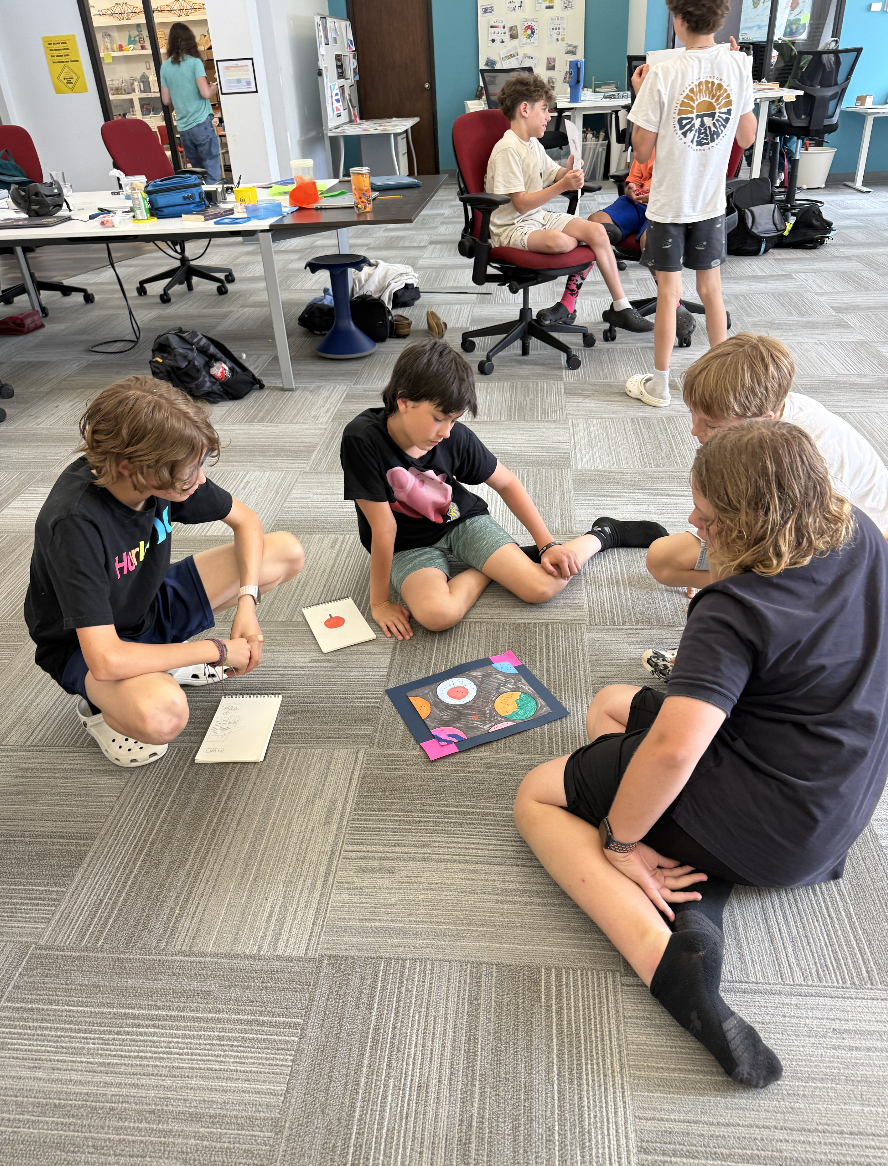
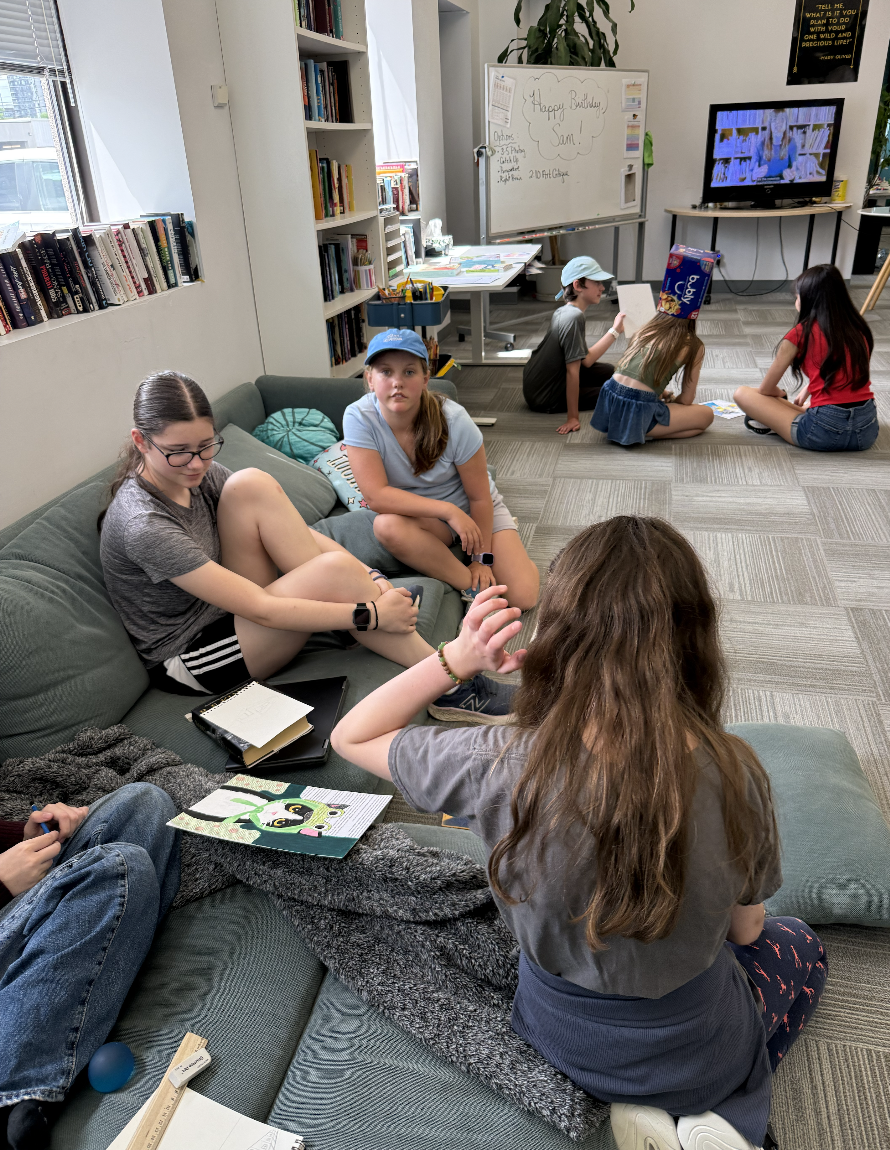
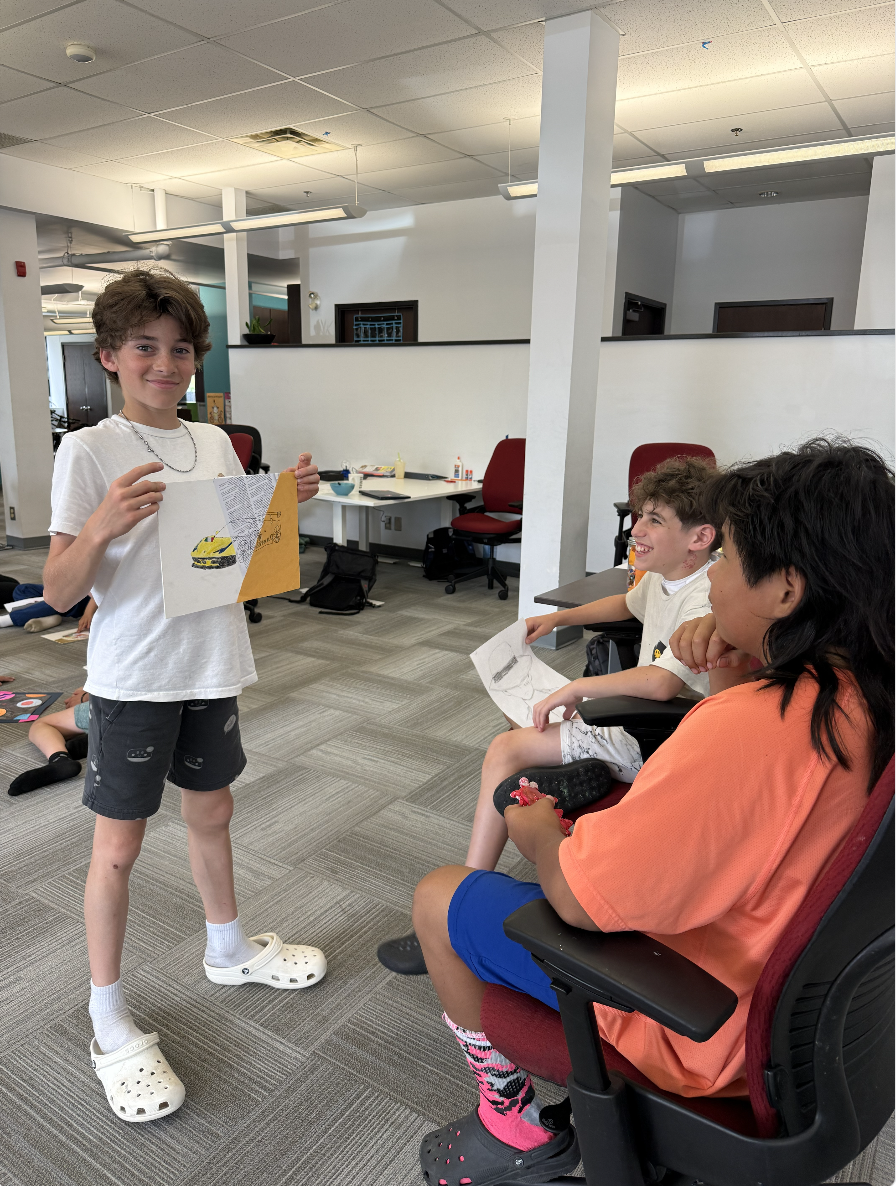
We began this week's Quest with a Socratic discussion on whether art is central to a thriving civilization or an unnecessary luxury. After our discussion, Rebels were introduced to our Spark Art Collaboration! The Spark Rebels all completed drawings of creatures, and the Exploration Rebels were tasked with bringing their creative drawings to life with clay! Their observation skills were put to the test as they attempted to make the sculptures as close as possible to the Sparks' imaginative drawings. After baking the clay sculptures, Rebels painted them, again, staying as close as possible to the inspiration. We were impressed with the time the older learners took as they worked hard to ensure the Sparks were happy with the final product. If the learners finished before the end of their Quest periods, they had additional challenges to tackle, including perspective drawings and a series of activities to let their right brain take over, such as drawing by touch and face/vase, upside-down, and blind contour drawings. At the end of Thursday's Quest period, Rebels met to learn how to give a proper art critique, then met with three other learners to practice.
Civilizations - Museum Exhibit
Using their research, Rebels identified an artifact to find or create for their display. The artifact needed to give insight into the life of the person, the event that occurred, or the civilization they were exploring. With any remaining time, they looked for additional pieces of information to add to their display to engage their audience further while remaining cohesive. Lastly, Rebels planned out their trifold board, which they will begin assembling next week.
Additional Highlights
This week, we welcomed the middle school learners from Ignite Academy for a tour and some games during their visit to Ottawa! We also caught World Cup fever and were excited to watch Canada’s first game!
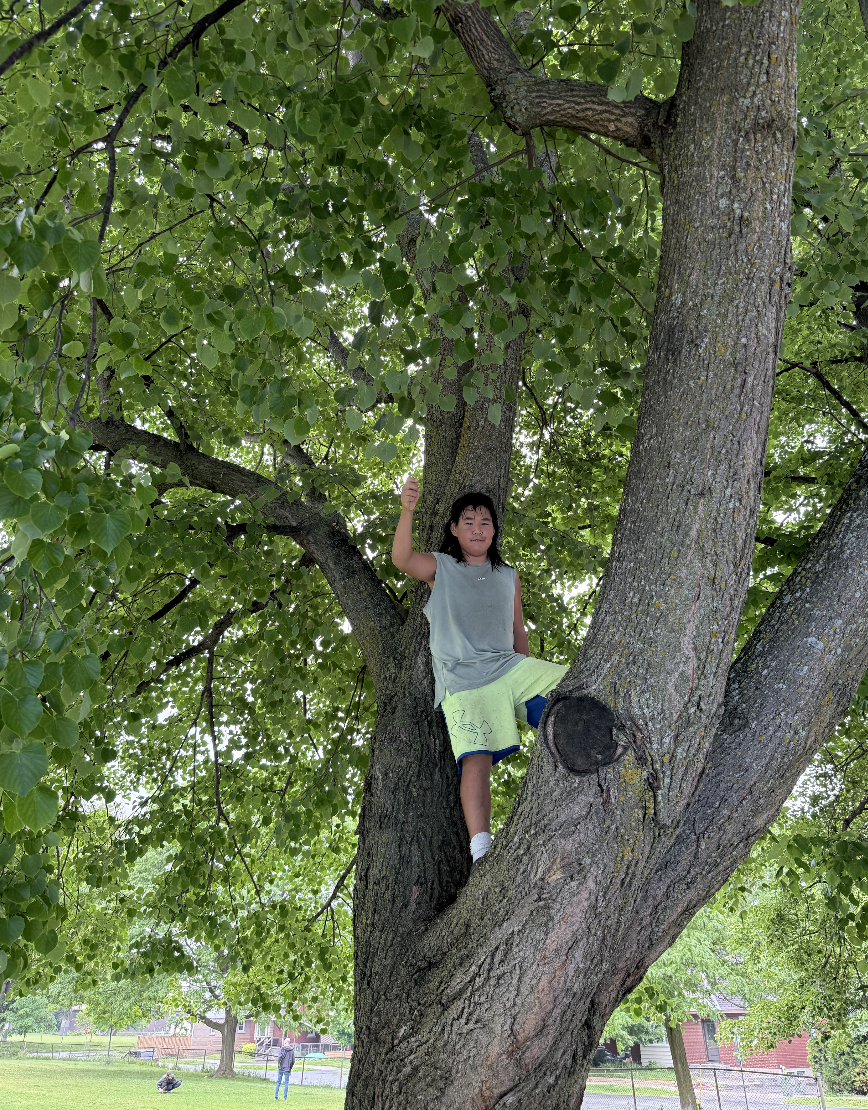
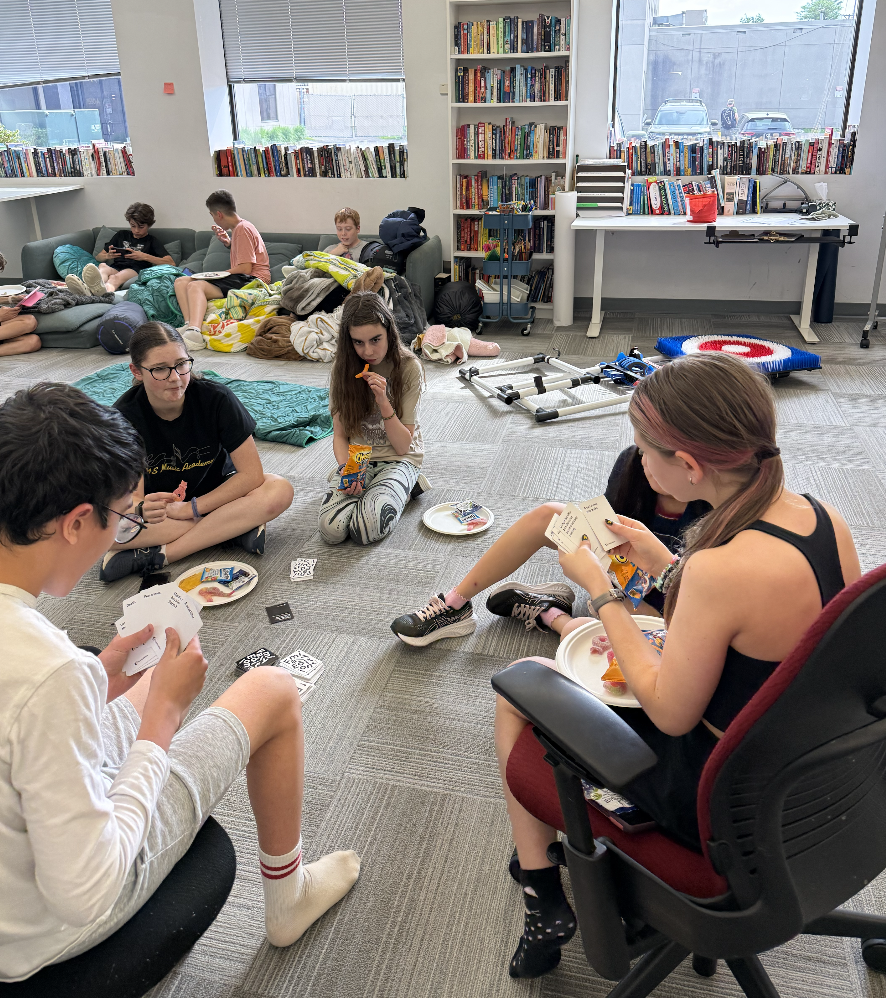
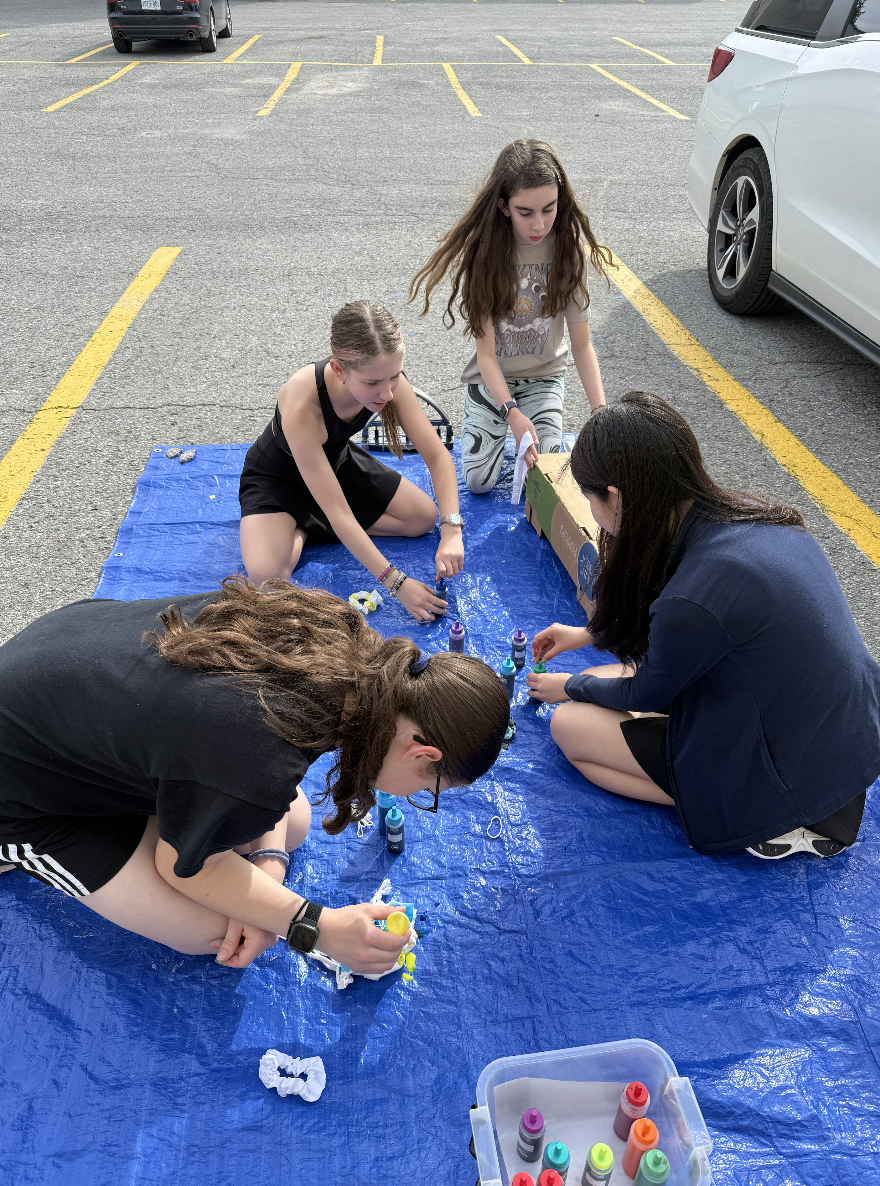
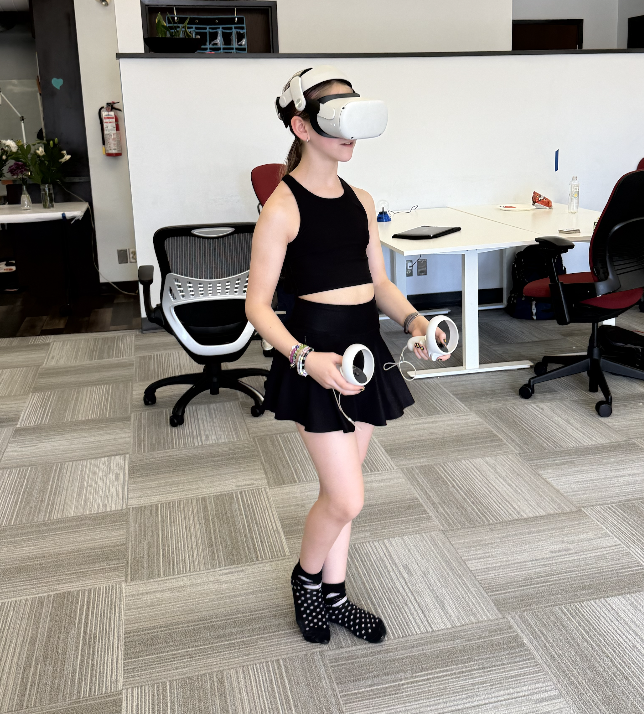
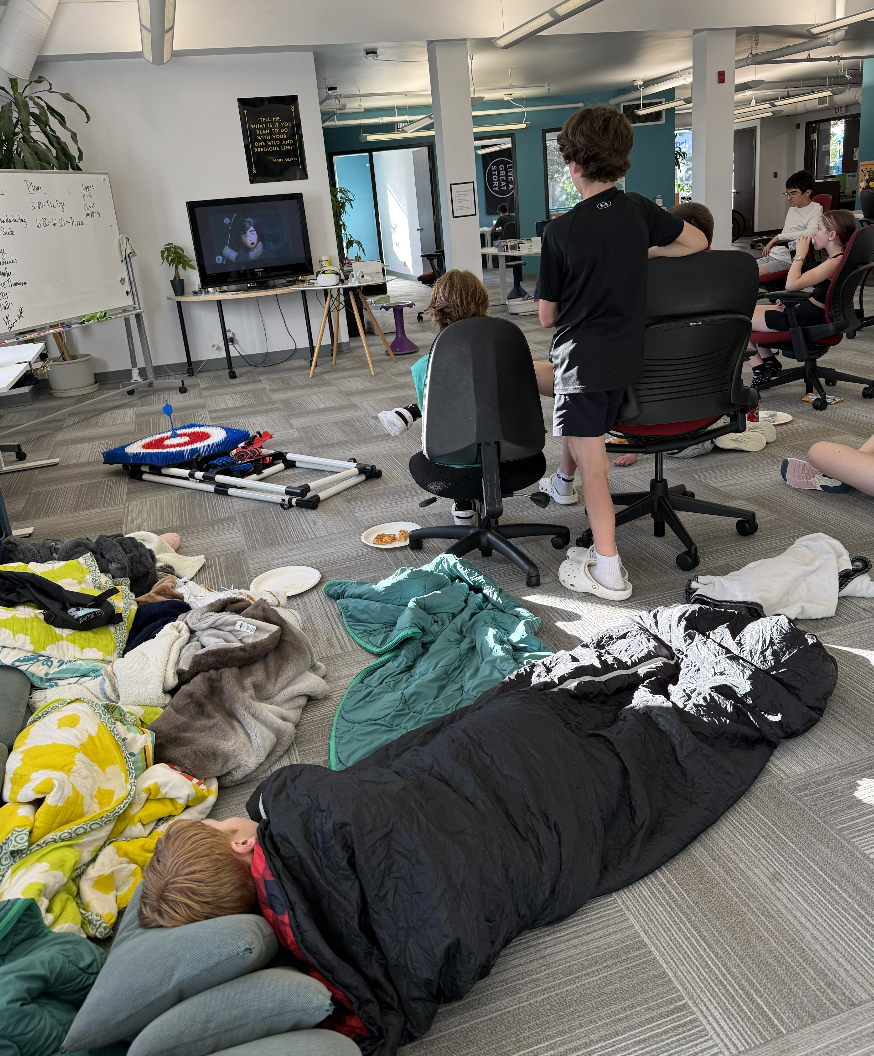
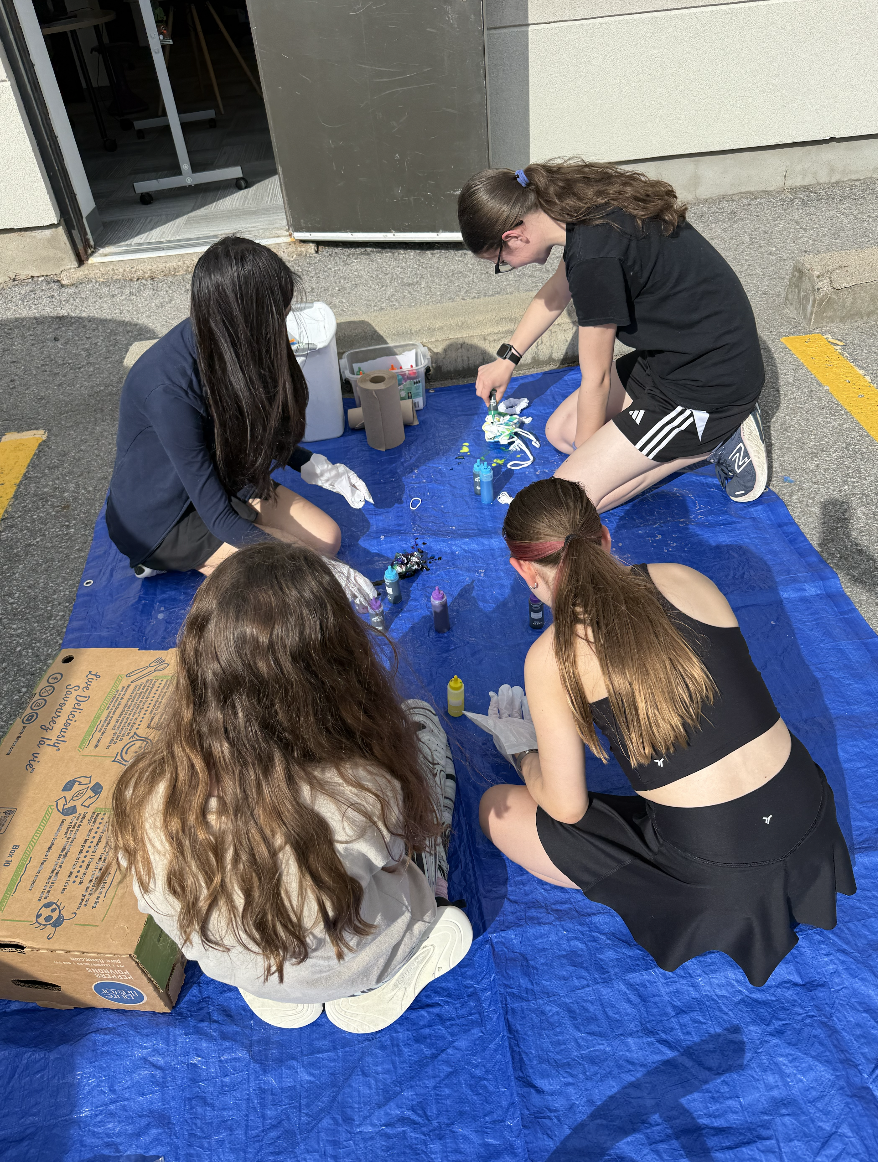
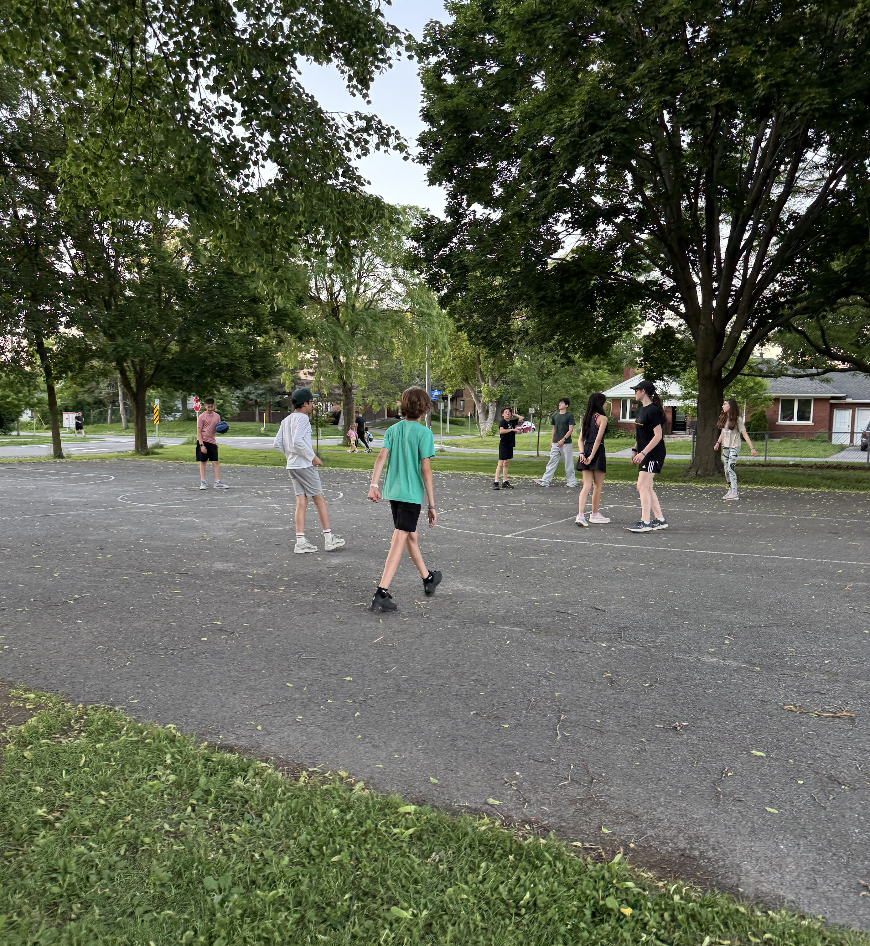
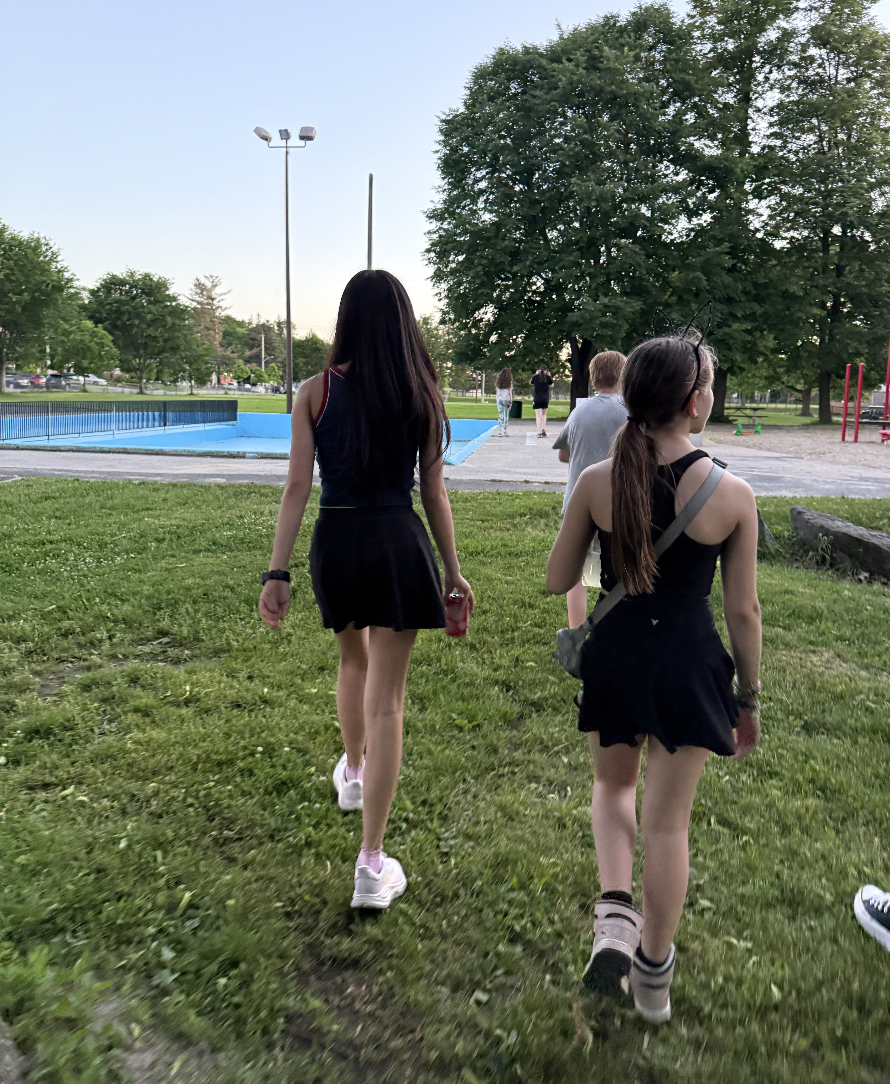
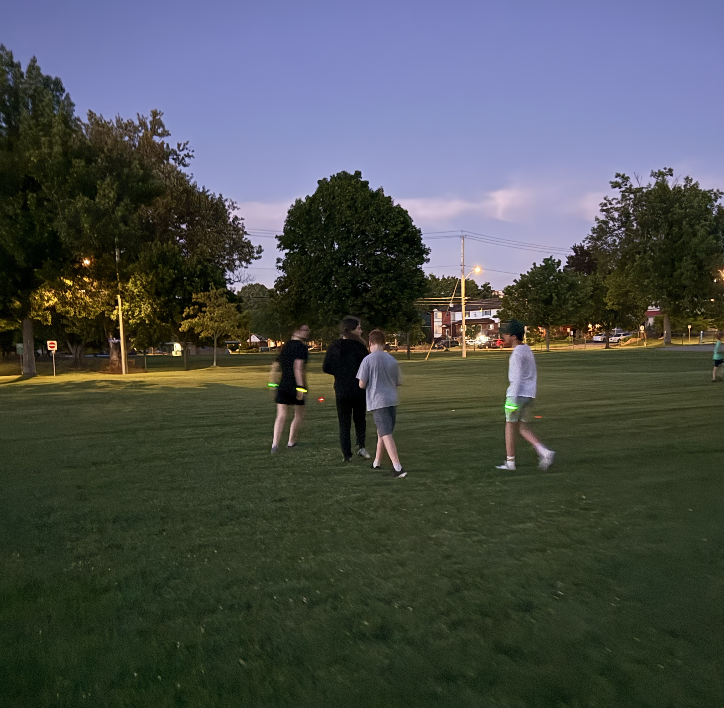
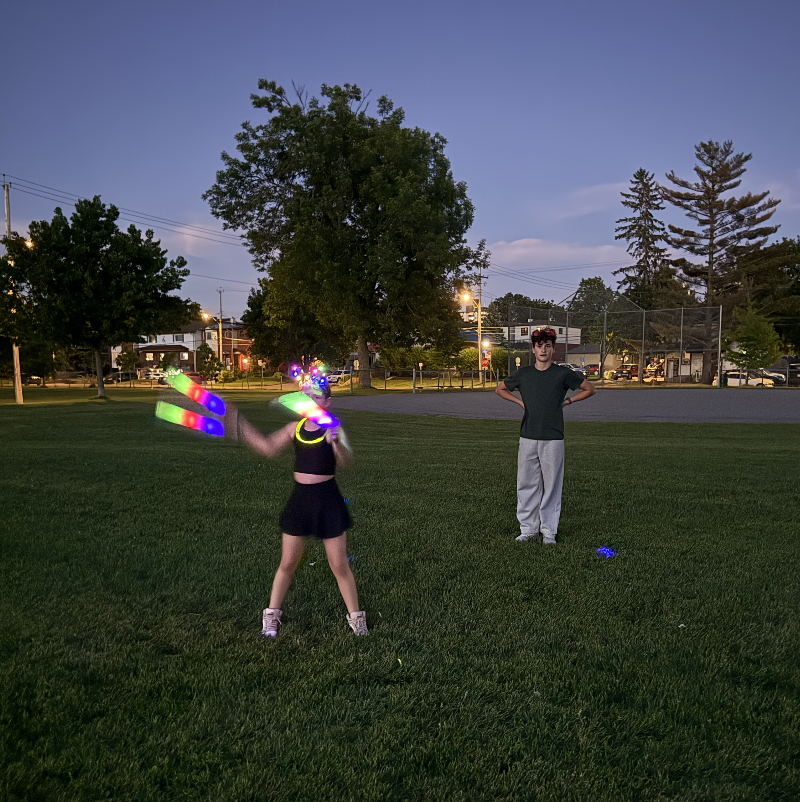
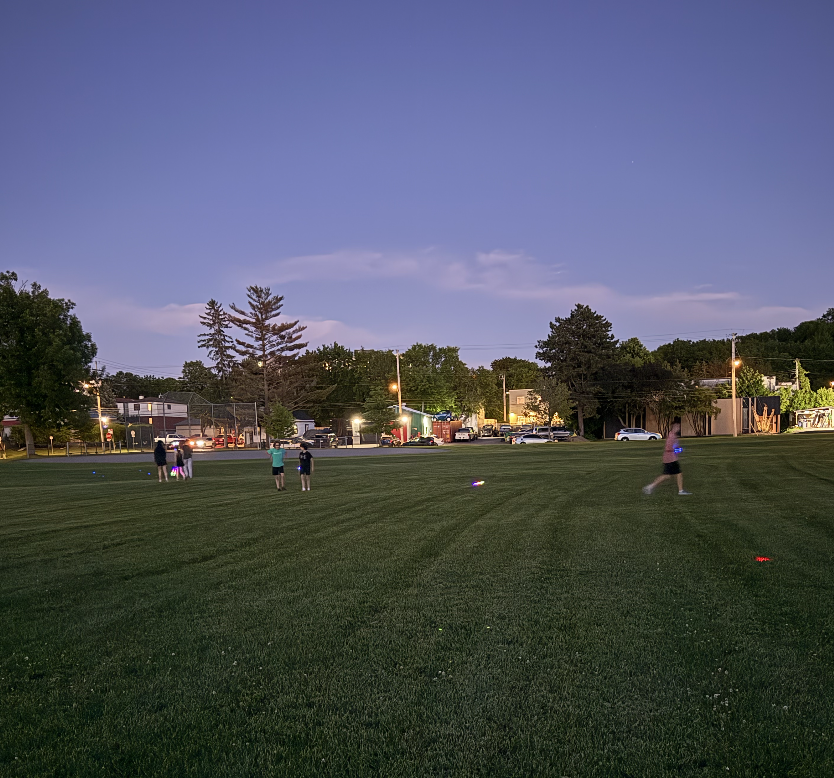
On Friday, Exploration learners earned their right to attend this year's Late Night Hang! From 4:00 pm until 11:00 pm, Rebels played card games, ate pizza, tied-dyed bags, headbands, and scrunchies, played basketball, had their annual grass fight, and of course, ended with an epic glow-in-the-dark capture the flag competition! It was a fun night celebrating their hard work and service to our community!
Potential Discussion Ideas or Questions to Ask Your Rebel:
Spark Studio:
Which was your favourite art to recreate this week? Can you tell me a fact about one of the famous artists you learned about?
Can you sing O’Canada for me? What parts of the song do you remember?
What did you add to your summer bucket list?
Can you tell me what happens in the beginning, middle, and end of the story The Good Egg?
French: How do you say “I am happy” or “I feel sad” in French? (je suis content.e - je me sens triste)
Discovery Studio:
What is the difference between implied texture and actual texture?
Can you describe your dragon eye to me? What kind of texture or shapes/forms did you use?
In poetry, many of the poems you’re studying focus on the number of syllables specific lines contain. How could you describe ice cream in a line that uses exactly eight syllables?
What are 3 -ing verbs you would use to describe summer vacation?
How are your anchor charts coming along for Math Lab? Which concept has been the most challenging to create a poster for? Why?
French: What changes or improvements did you make to your game this week?
Exploration Studio:
Which challenge in Quest have you enjoyed the most so far? Why?
What is the structure of a typical English Sonnet? What did you write your poem about?
Should the government today pay for works of art to be commissioned and museums to be built?
French: What is an alexandrin?
What are you most proud to show us at Exhibition?