
Revel Recap: Jan 19-23
Important Upcoming Dates
Session 4 Exhibitions
Discovery Studio Exhibition - Tuesday, February 10th
Spark Studio Exhibition - Wednesday, February 11th
Exploration Studio Exhibition - Thursday, February 12th
Spark Studio
Mindfulness and Launch
We are excited to share that our studio has officially started participating in the Forest of Reading program! This is a Canada-wide reading program that encourages a love of reading by exposing learners to a variety of engaging, high-quality books. Our class will be focusing on the Blue Spruce selection, which is designed especially for young readers. On Monday, we introduced the program by looking at the star rating sheet for each Blue Spruce story. We learned that after reading each book, we will each rate it out of five stars based on how much they enjoyed the story, the characters, or what they learned from it. Our first book was The Girl Who Loved Poutine. Before, during, and after reading, we discussed questions such as: Do you have any birthday traditions? Have you ever eaten poutine? What kind of poutine do you think would be the tastiest? After reading, learners had a chance to get creative by inventing their own poutine. They drew a picture of their dish and listed the ingredients they would include. Rebels added pickles, chicken nuggets, mustard, hummus, lobster, sushi, and even spicy heart candy! On Tuesday, we read The Great Dinosaur Sleepover, which the Sparks absolutely loved. We talked about the different emotions the characters experienced throughout the story and shared times when we have also felt surprised. The learners also enjoyed discussing their favourite dinosaurs. To finish the activity, they completed a fun maze to help the dinosaurs find their way to Jake’s house.
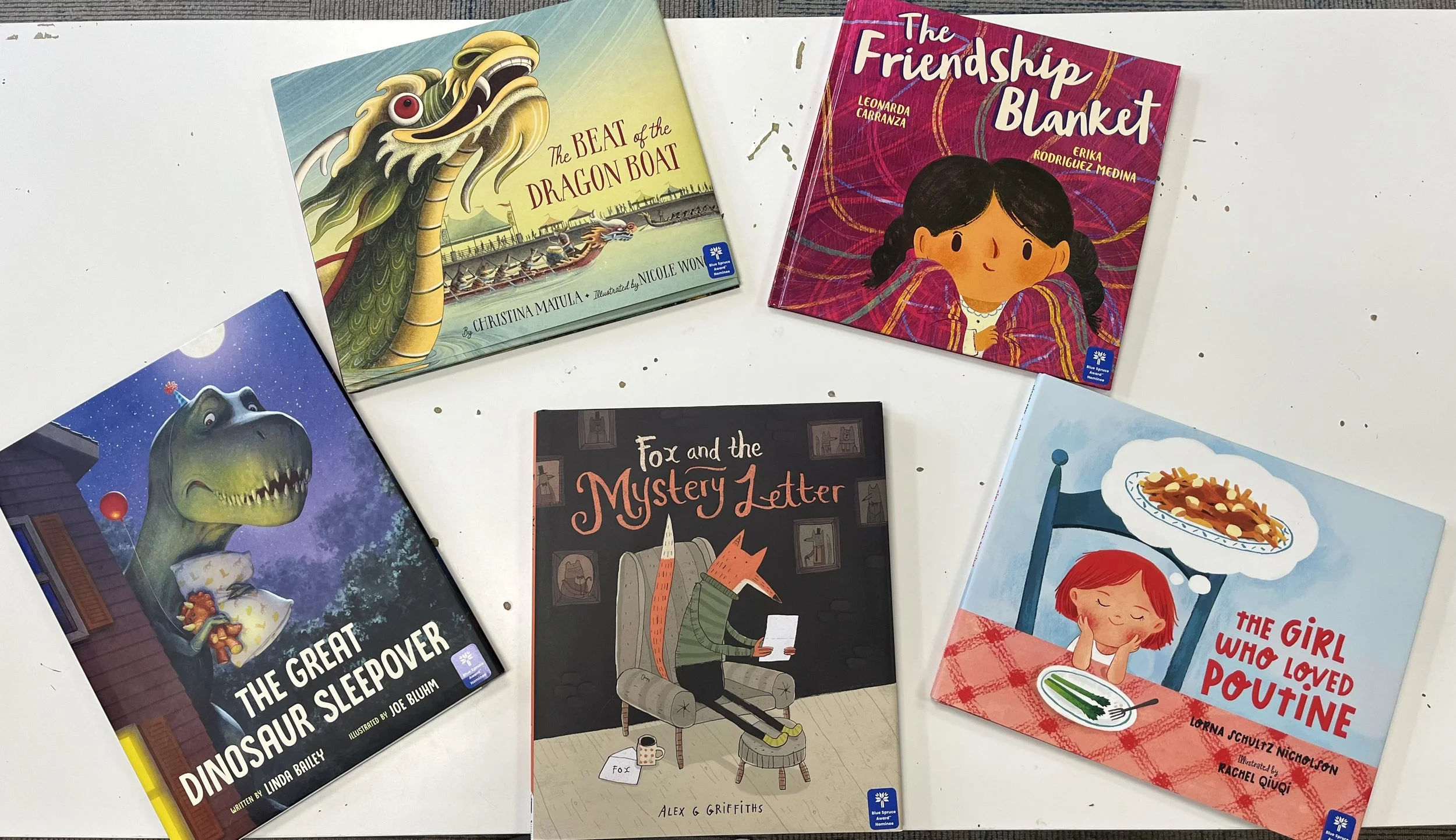
Wednesday’s book was definitely a crowd favorite! We read Fox and the Mystery Letter, a story where the main character, Fox navigates a misunderstanding in a friendship. The learners absolutely loved the story, mainly the book’s beautiful illustrations. It sparked some thoughtful social-emotional discussions about friendship, what can happen when friends disagree or have a fight, and most importantly, how we can repair a friendship. After our discussion, learners chose between a colouring page of Fox or a spot-the-difference activity. On Thursday, we read The Beat of the Dragon, a story inspired by the tradition of dragon boat racing. The book highlights teamwork, determination, and the power of working together toward a shared goal. Following the story, learners used their imaginations to design and create their very own dragon boats. Our final story of the week was The Friendship Blanket, a book about friendship. To end our mindfulness time, learners illustrated their own friendship blankets. We loved seeing the learners engage so deeply with the stories and activities this week. We have five more titles to read before we can see which book is the favourite!
Quest
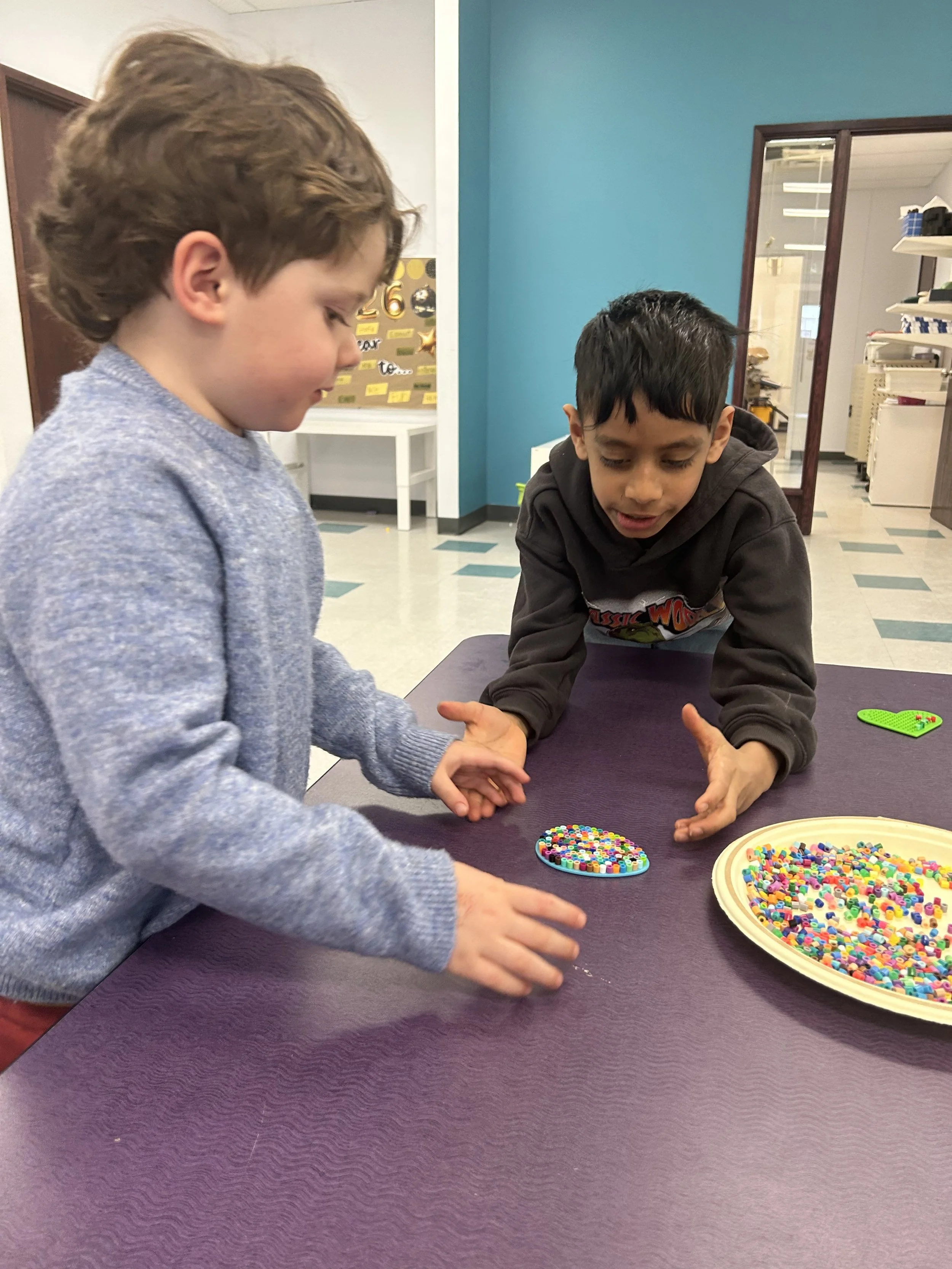
This week, our entrepreneurs were busy creating products to sell at the upcoming Exhibition! Throughout the week, students worked hard making Perler bead magnets and keychains, designing and coloring wooden bookmarks, and creating necklaces and bracelets. They showed creativity, focus, and pride in their work as they prepared items to share and sell. We’re so excited for you to see what they’ve made! On Tuesday, we read Lily Learns About Wants and Needs, a story that helps learners understand the difference between things we need to live (like food and shelter) and things we want but can live without (like toys and treats). We talked together about examples from the book and from our own lives. After reading, learners completed a worksheet to show their understanding. Some Sparks used a colour code to identify wants and needs, while others wrote the words beside the pictures. On Wednesday, we reviewed what we have been learning about wants and needs. Each learner drew pictures of three things they need and three things they want, helping to deepen their understanding of the difference between the two. On Thursday, we connected this week’s discussions around wants and needs to finances. How does money help us attain some of our wants and needs? Can money really buy us everything we need and want? We also discussed different careers and illustrated a job we might like to have when we grow up. The Sparks are dreaming of becoming vets, engineers, hockey players, taxi drivers, singers, firefighters, and police officers!
French
This week in French, we continued learning food vocabulary, and the Sparks made great progress! We began our week listening to and singing the song La ronde des légumes. At our midweek workshops, we played a game where the Rebels rolled the dice, named the color in French, and then found and named a food item of that color. We colored table-related vocabulary (fork, knife, chair, table, etc.), and to practice repetition and comprehension, the Rebels had to ask for the color and say what they were going to color on their page in French. On Thursday, we played Seek-a-boo, where the Sparks ran to the correct image when Mme Marianne said the word in French. If you’d like your learner to practice more at home, the link for our song of the week is: La ronde des légumes - Les chansons de Pinpin et Lili
Art
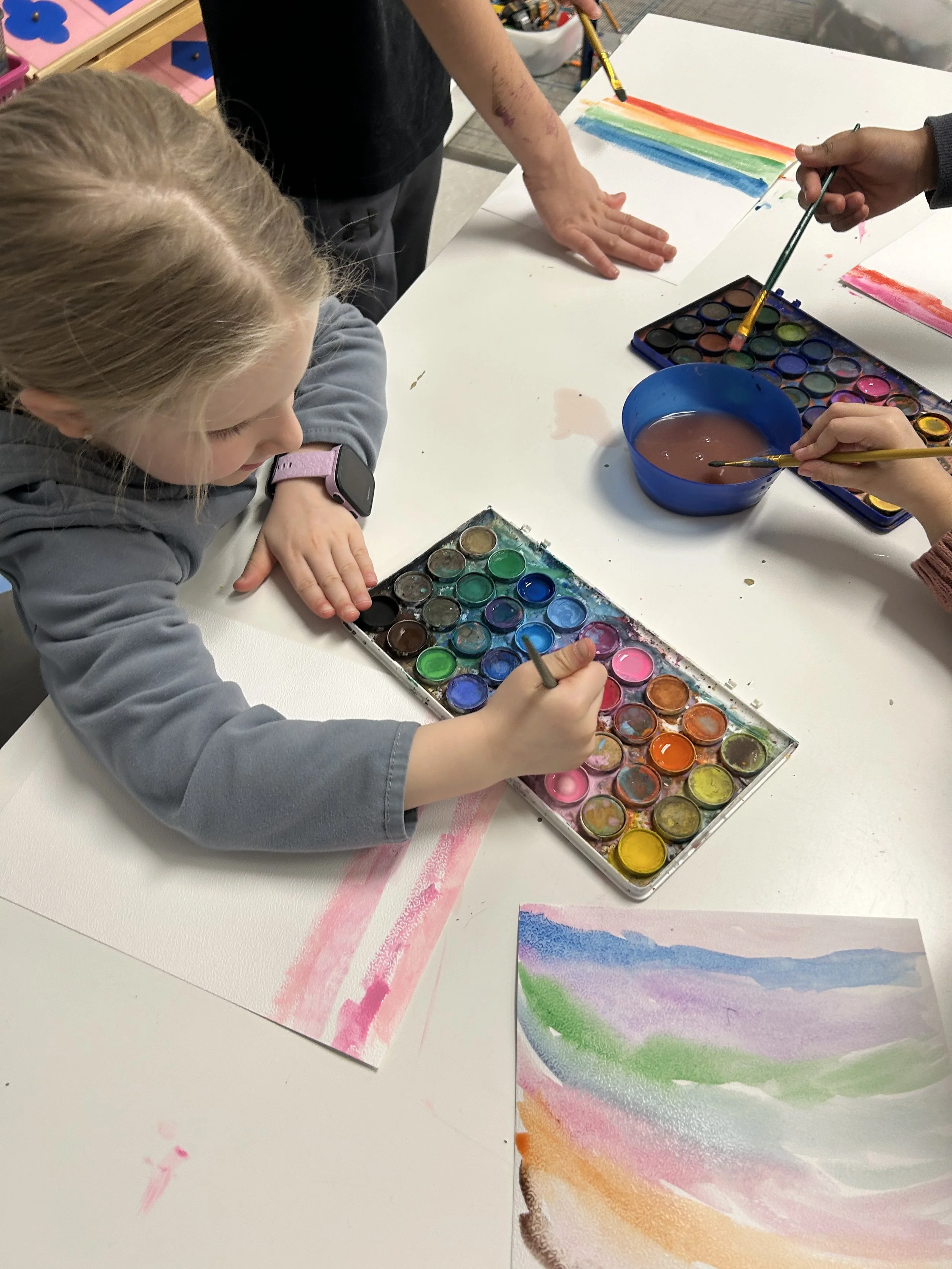
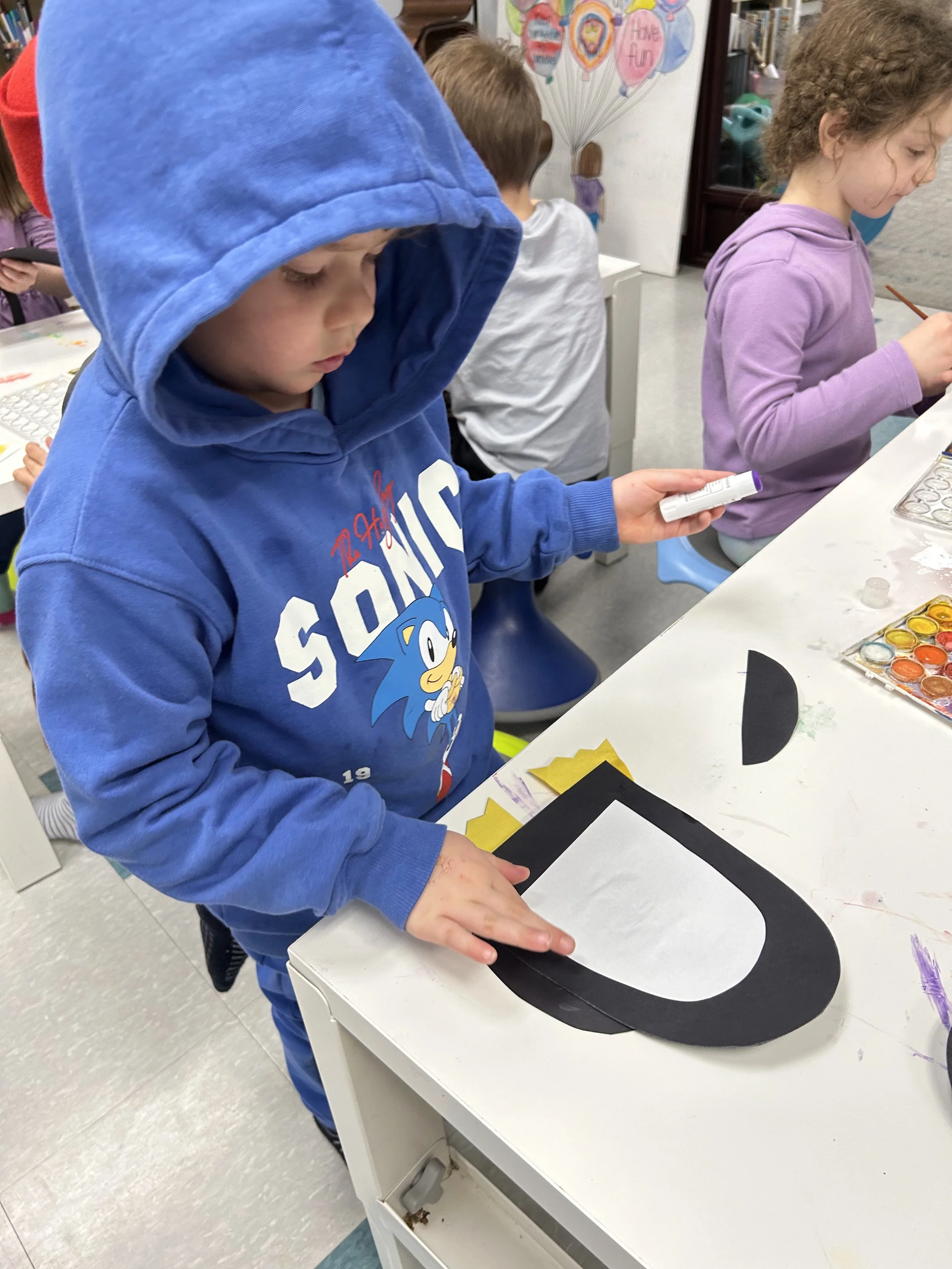
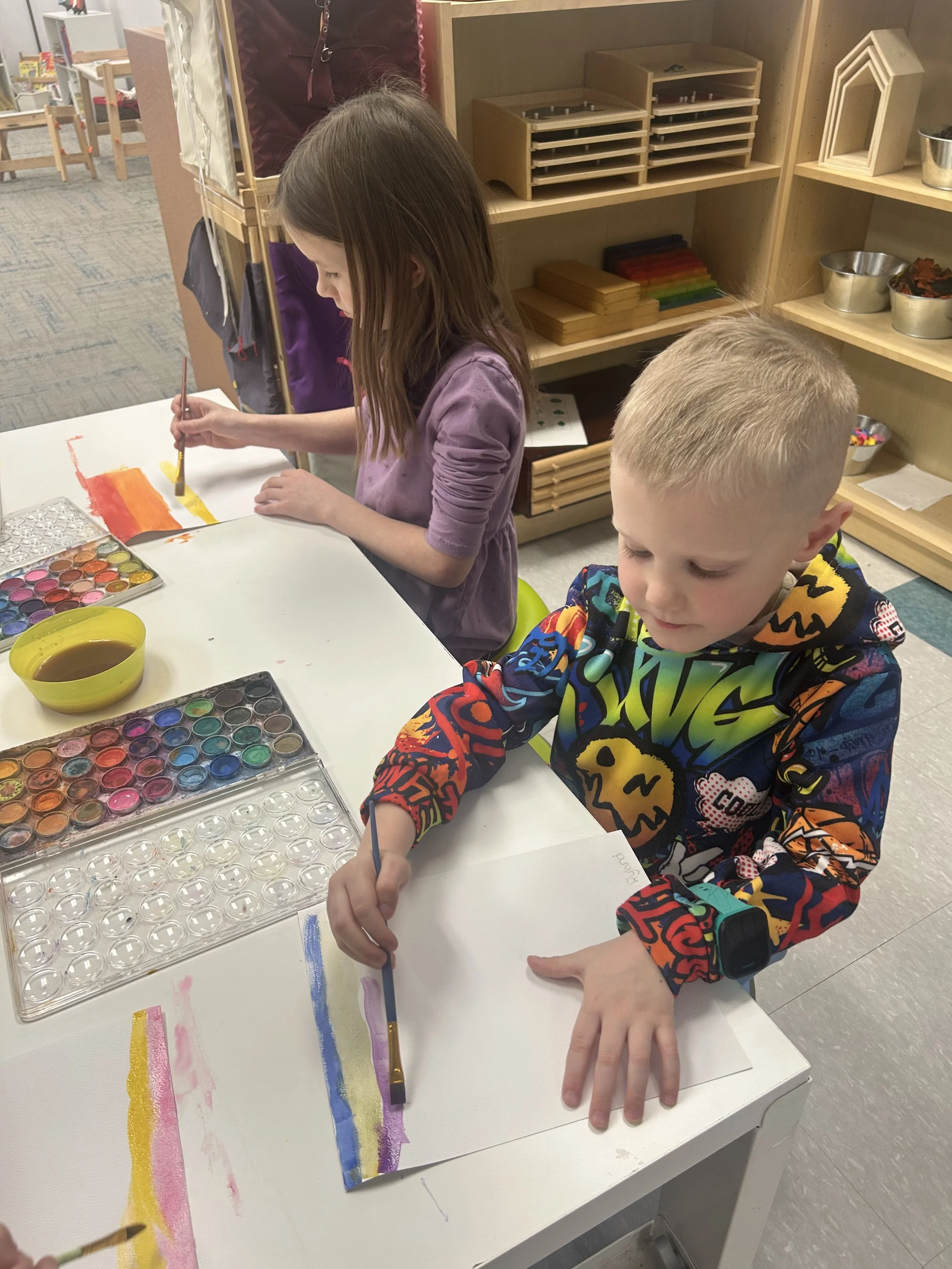
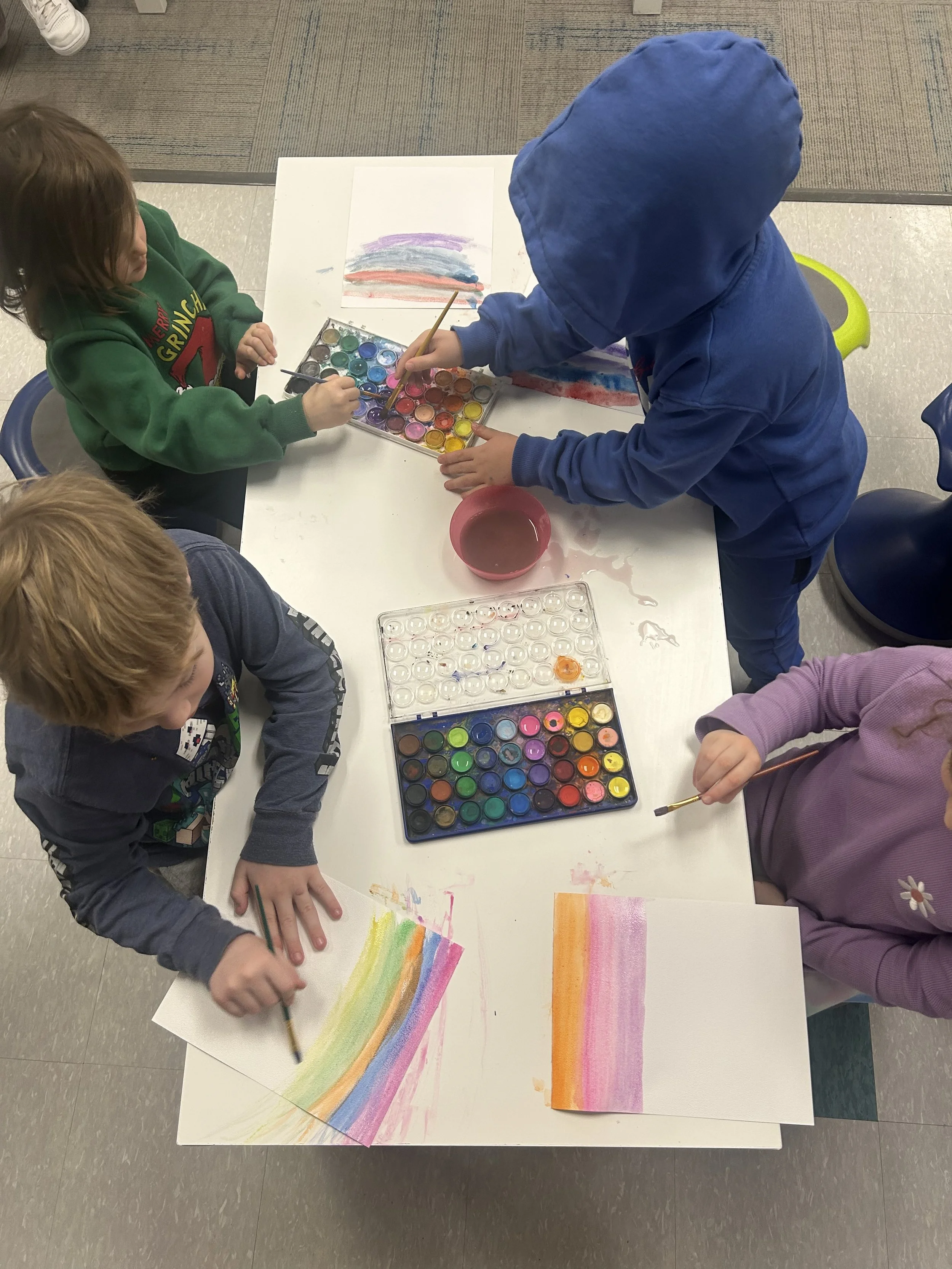
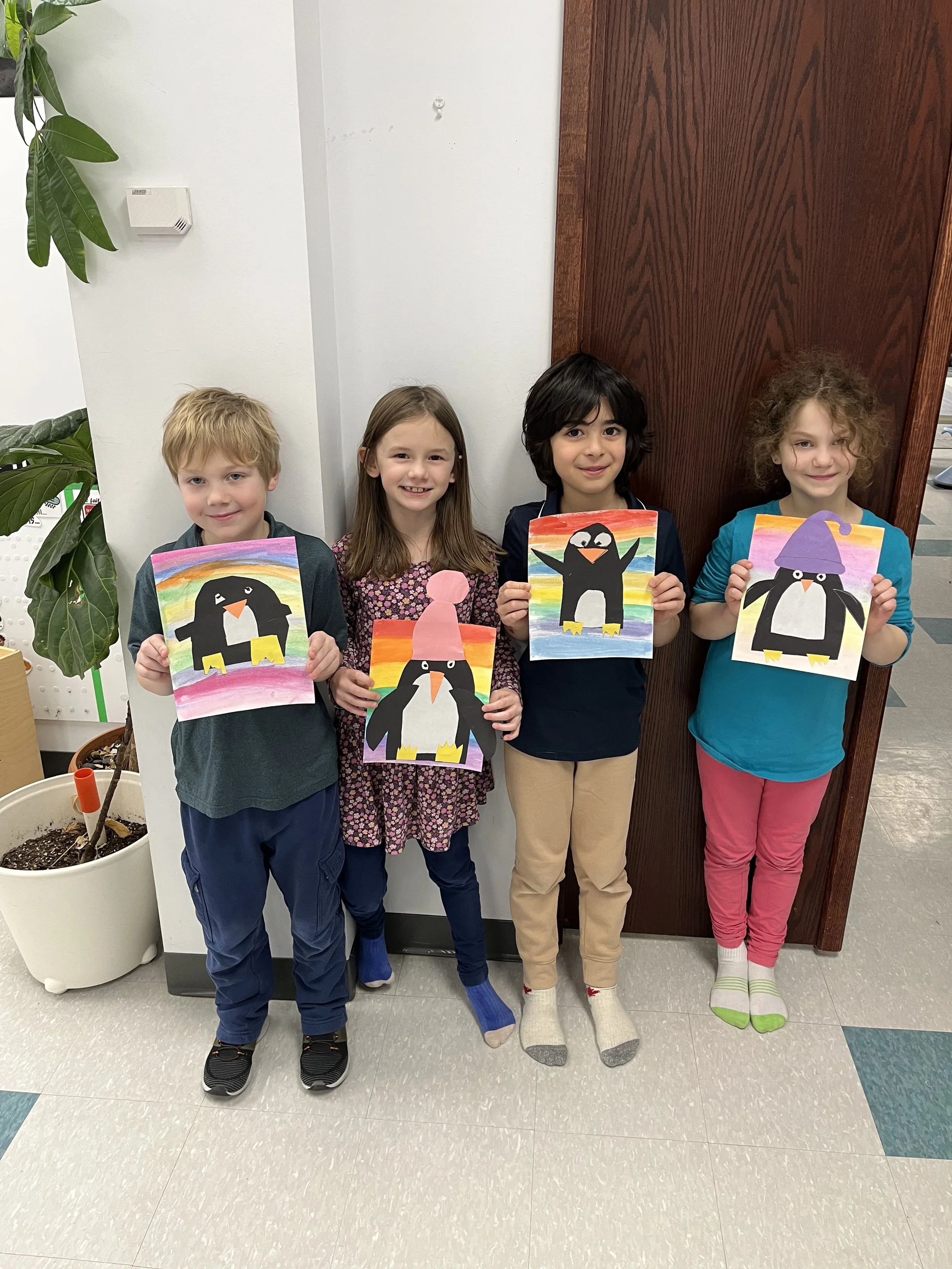
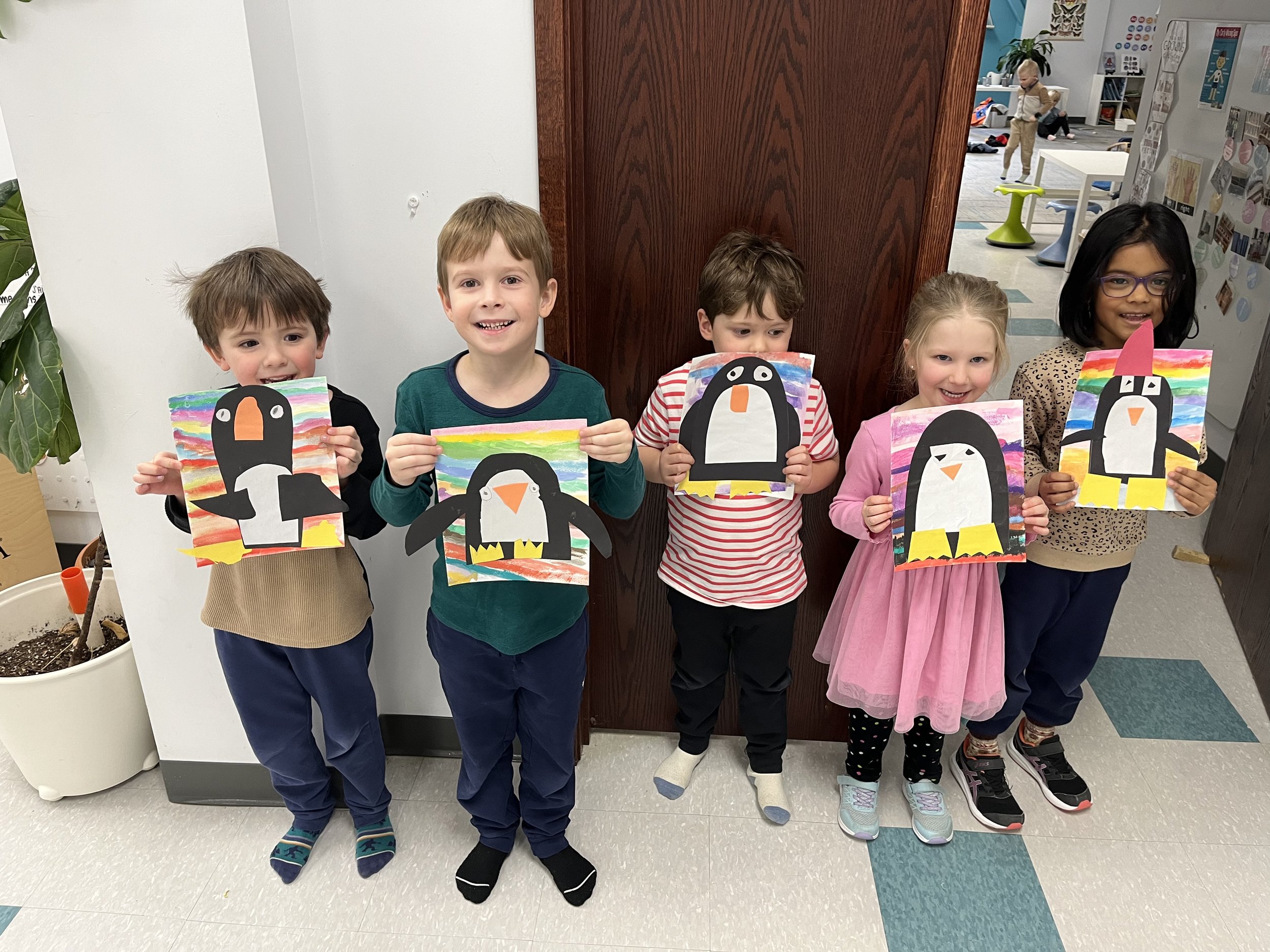
For our art workshop, we created adorable penguins! Students began by painting a bright, colourful watercolour background. Then they designed, cut out, and assembled their own unique penguins. They finished by adding fun details to give each penguin its own personality.
Reader/Writer Workshops
This week, Group One had a busy and exciting time building their early literacy skills! The learners worked together in small teams with a Guide to complete activities in their WASECA workbooks. They were engaged and curious, asking thoughtful questions during our moveable alphabet work. One great discussion focused on why some letters are blue while others are red. The learners discovered that the blue letters represent vowels, while the red letters are consonants. Throughout the week, many learners naturally gravitated toward the reading drawers, which is wonderful to see as they develop confidence and independence in literacy. The Sparks took their time working either independently or alongside a friend, matching pictures to words and checking their answers by looking behind the cards. Lastly, group one spent time reading Bob books with a Guide and worked on their Writing Without Tears workbooks.
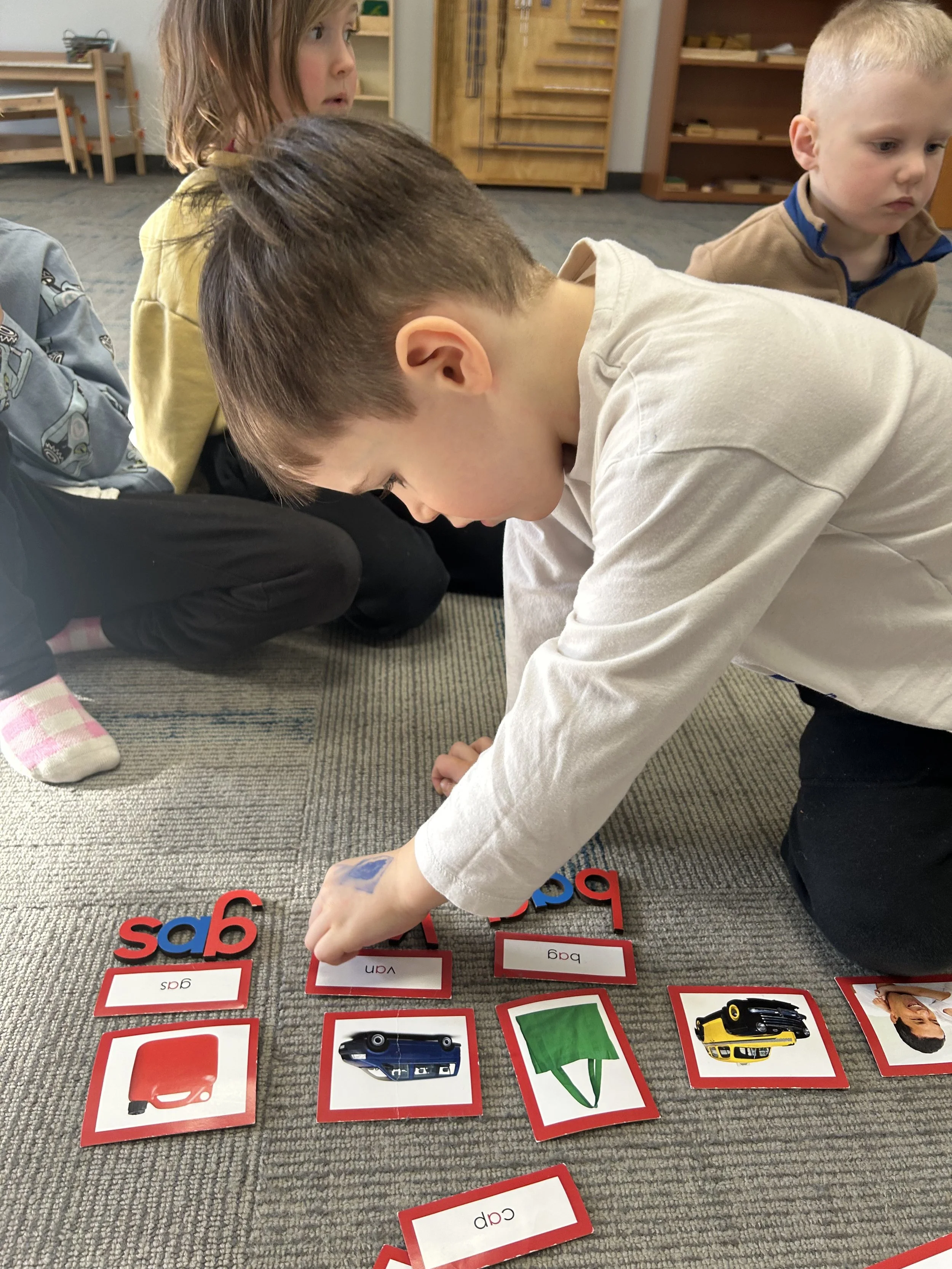
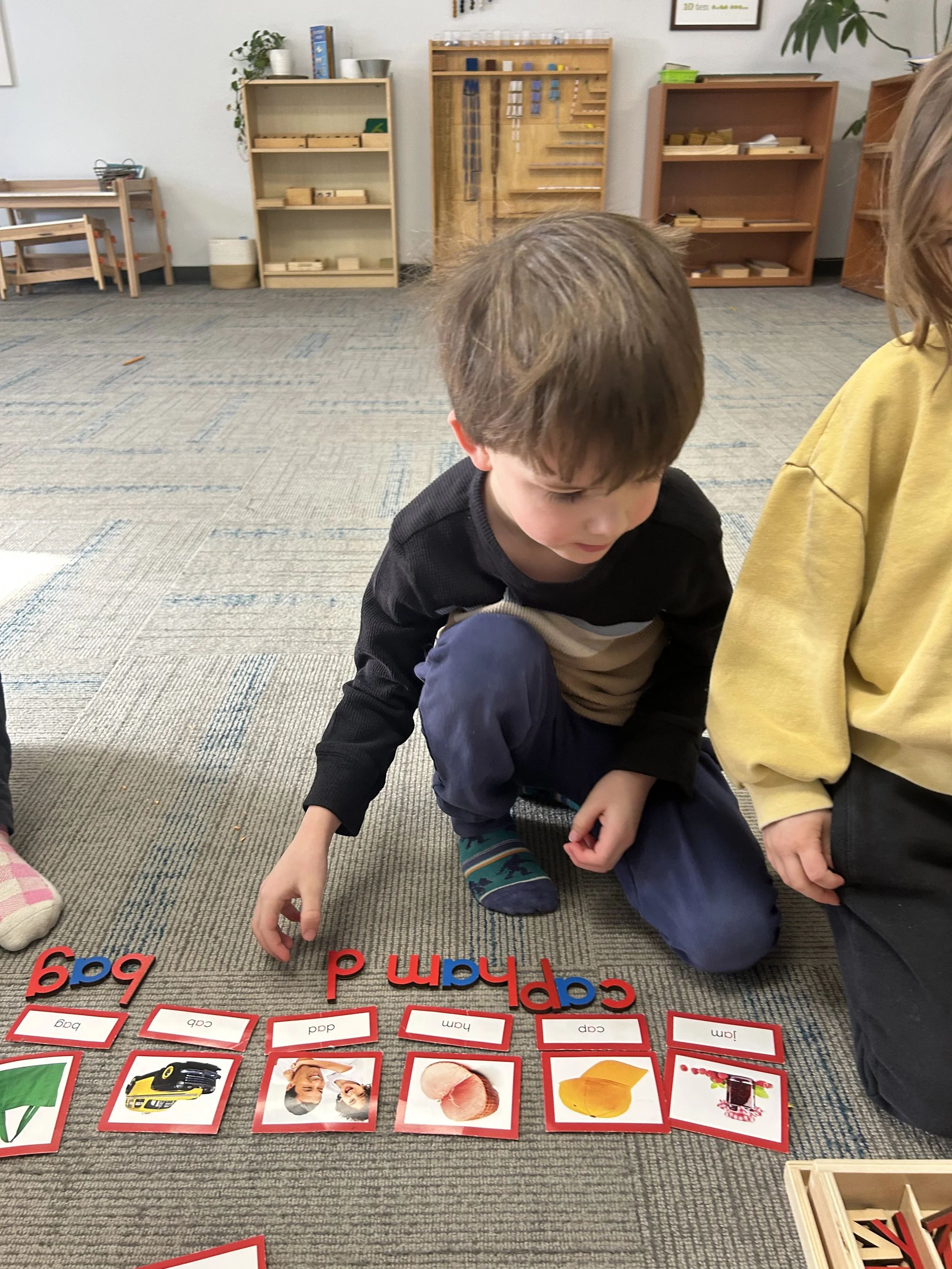
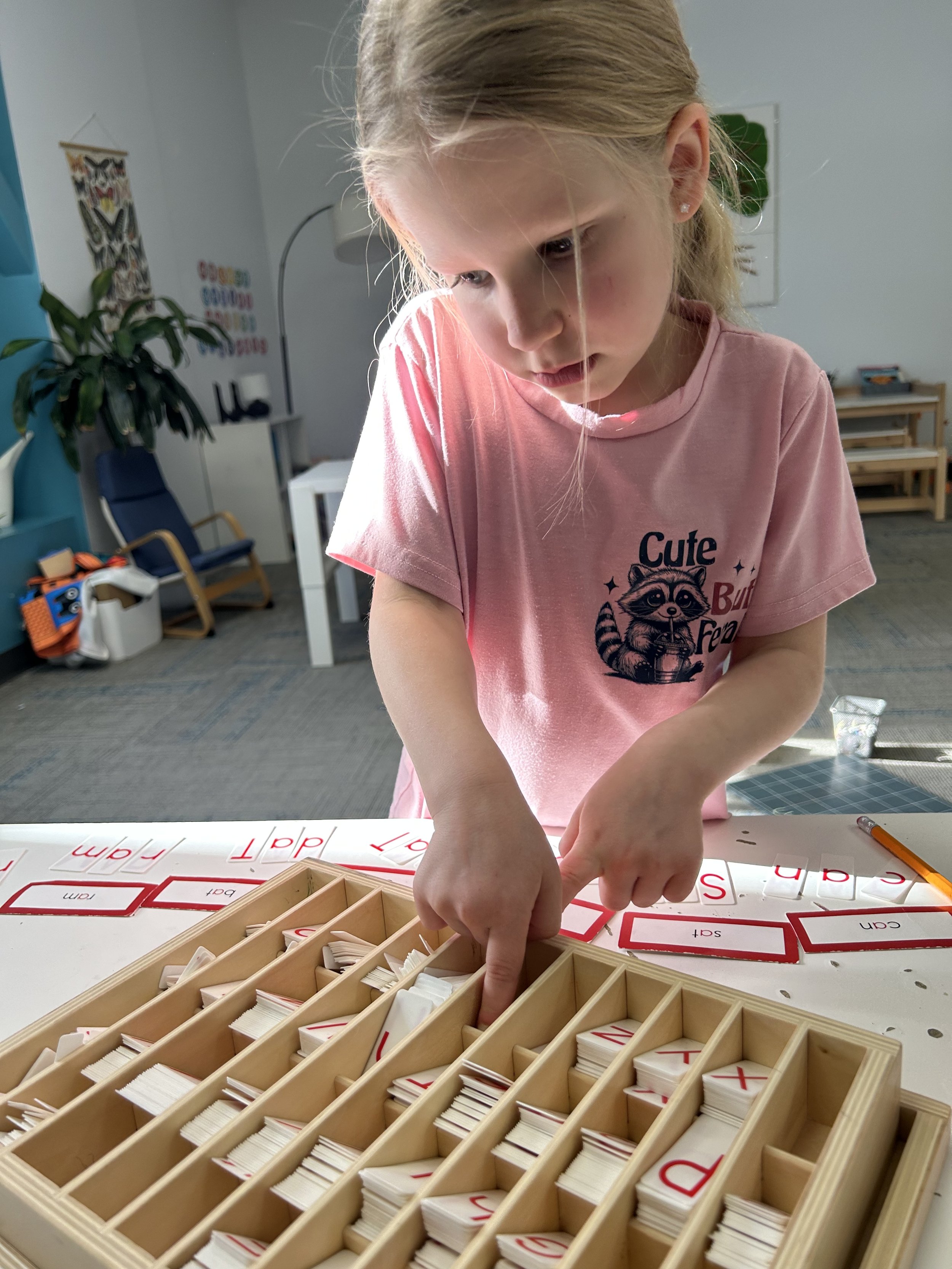
Group Two began with a sight word reading warm-up. We went around the table reading three and four-word phrases made up of sight words. As a group, we noticed some sight words that we see very often when we read: a, is, it, and, in, my, the, said, and you. You can support your reader at home by encouraging them to look for these sight words in books you read together! After our warm-up, we shifted our focus back to the Green Waseca Reading drawer, where we worked on the “ong” sound. Using a picture booklet, we identified which “ong” sound on each picture, then sounded out the words and wrote them down.
This week, we also revisited our book study Snowmen at Night. During our reread, we listened closely to learn about the snowmen’s character traits. We talked about how traits are words we use to describe what a character is like on the inside and how they act. After a lot of thoughtful discussion, the studio decided the snowmen were friendly, fun, adventurous, silly, and happy.
Math Workshops
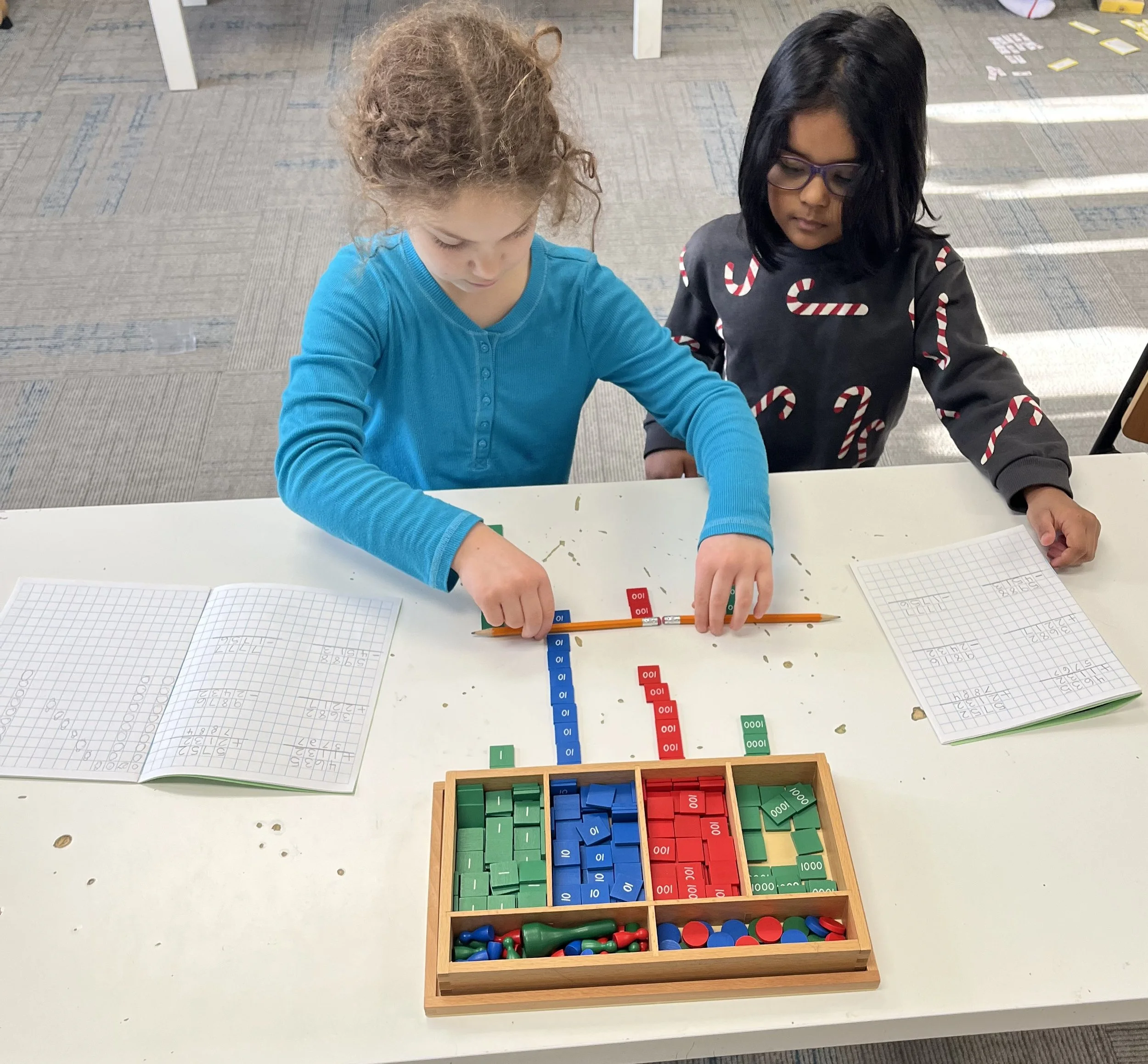
In our math workshops this week, we reviewed coin names and their values, then focused on counting money and skip counting by a variety of numbers. As a group, we practiced counting collections of nickels, dimes, quarters, loonies, and toonies, using our skip-counting fluency skills to help us along. Next, learners worked in small groups with mixed coins, counting the total amount and practicing writing the value on whiteboards. These money skills will be especially helpful when we’re counting money at the Exhibition!
Throughout the week, learners also had additional math practice as one of their weekly goals was to select a material to work on from the math shelf each day. We saw Sparks working with the Stamp Game, Spindle Boxes, Counting Chains, Addition and Subtraction Boards, Golden Beads, and more!
Additional Highlights
A big thank you to our mystery readers this week, who all shared lovely stories with the studio! The Sparks are really loving these visits!
Discovery Studio
Mindfulness and Launch
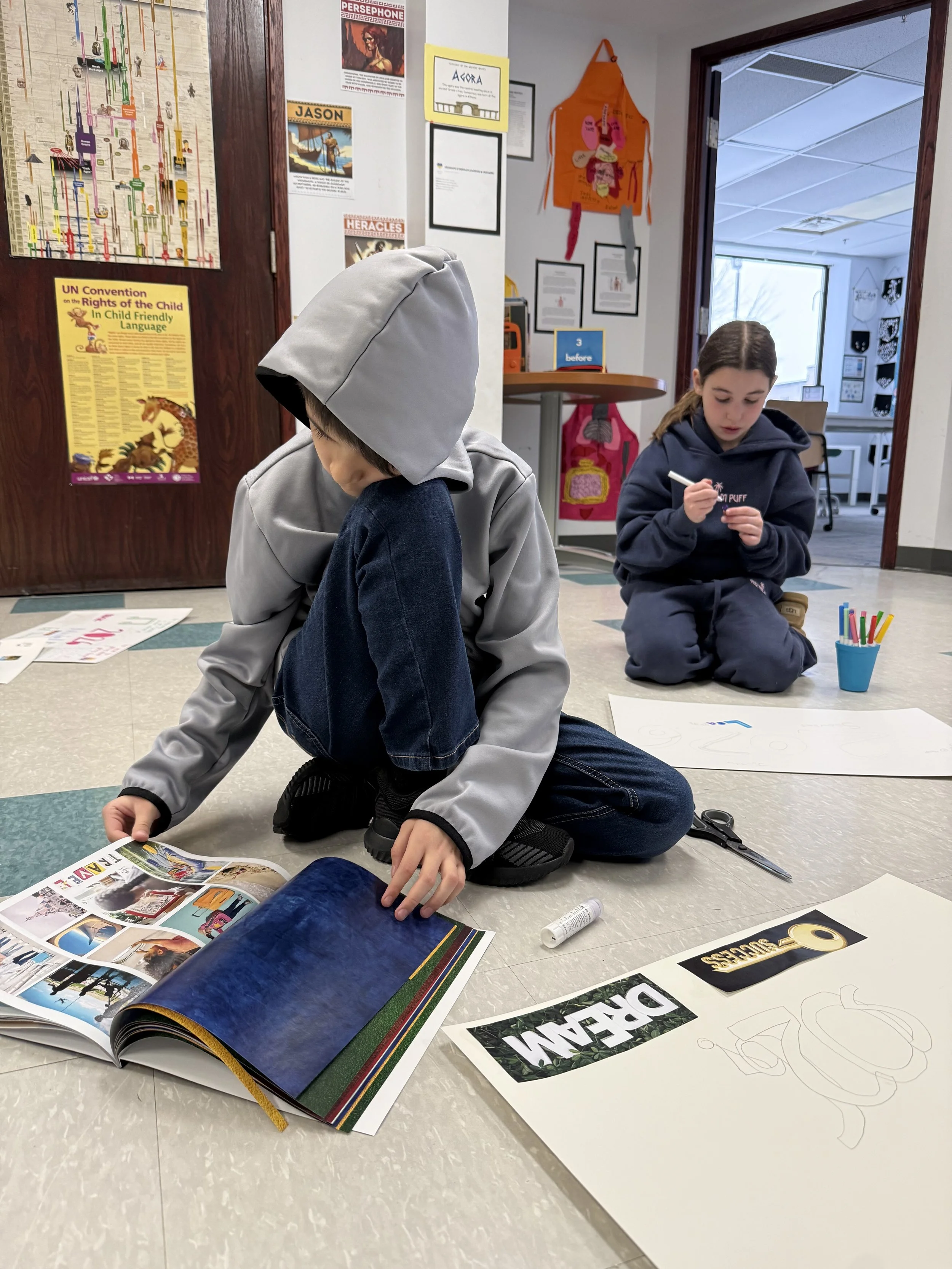
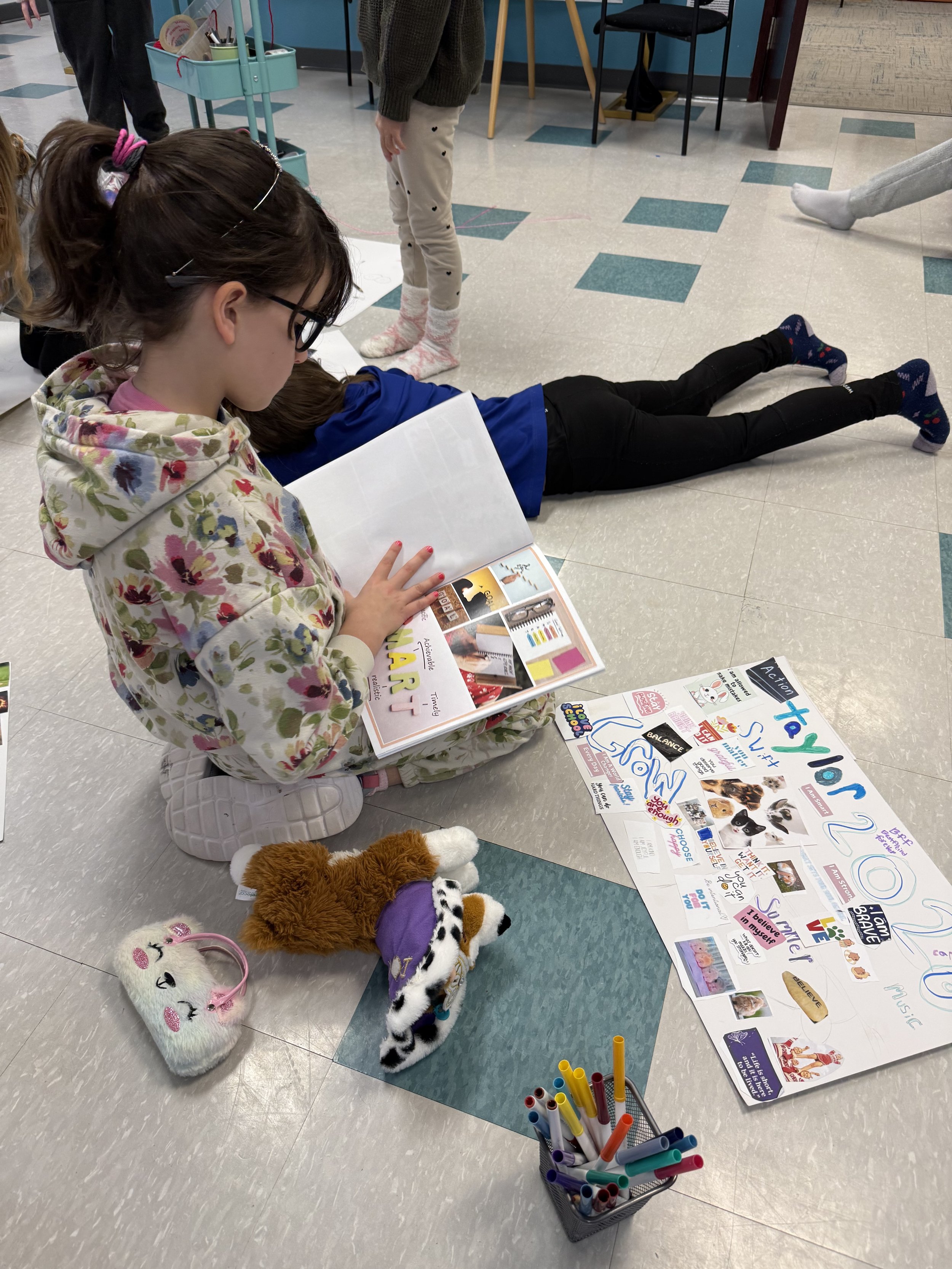
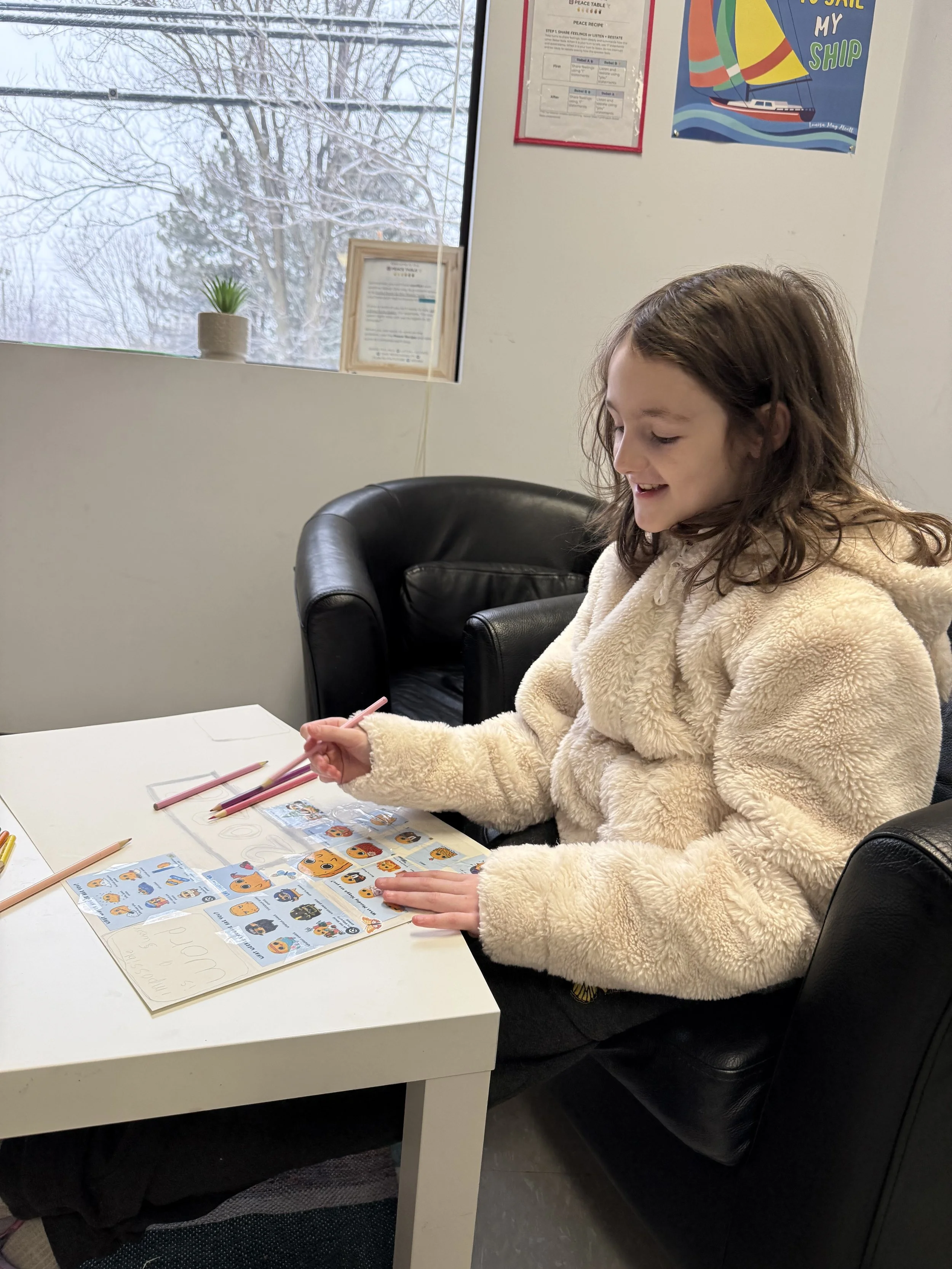
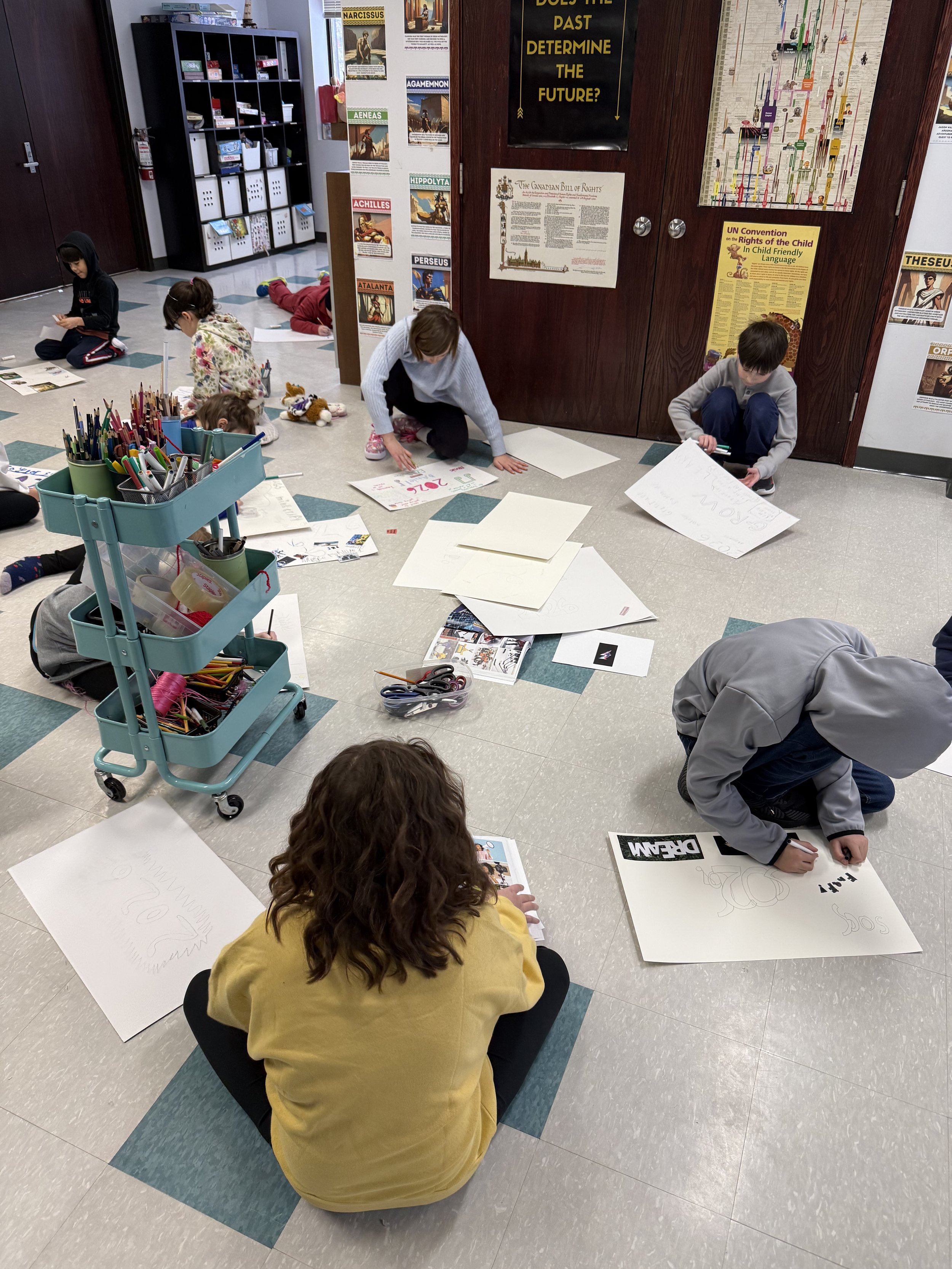
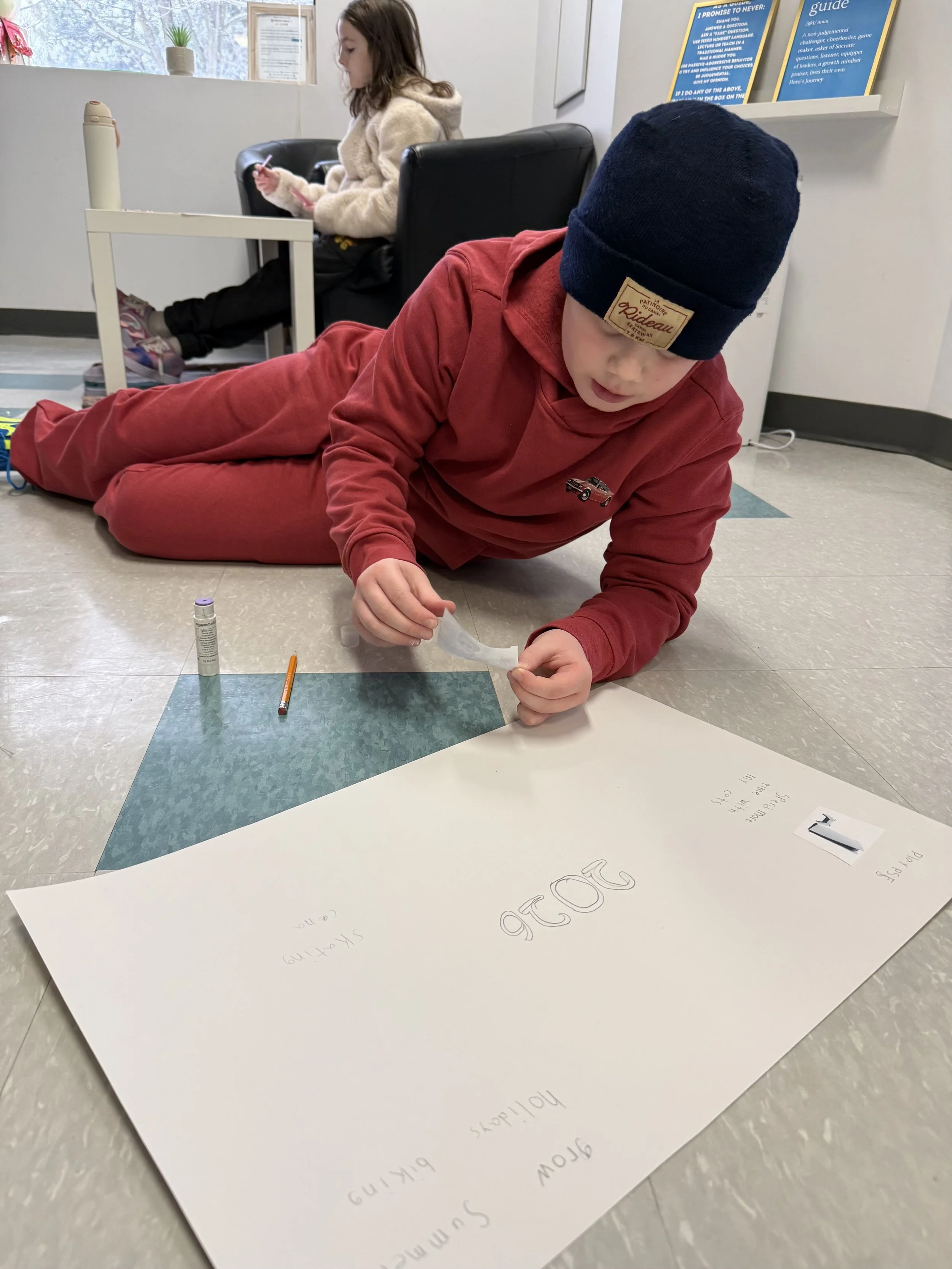
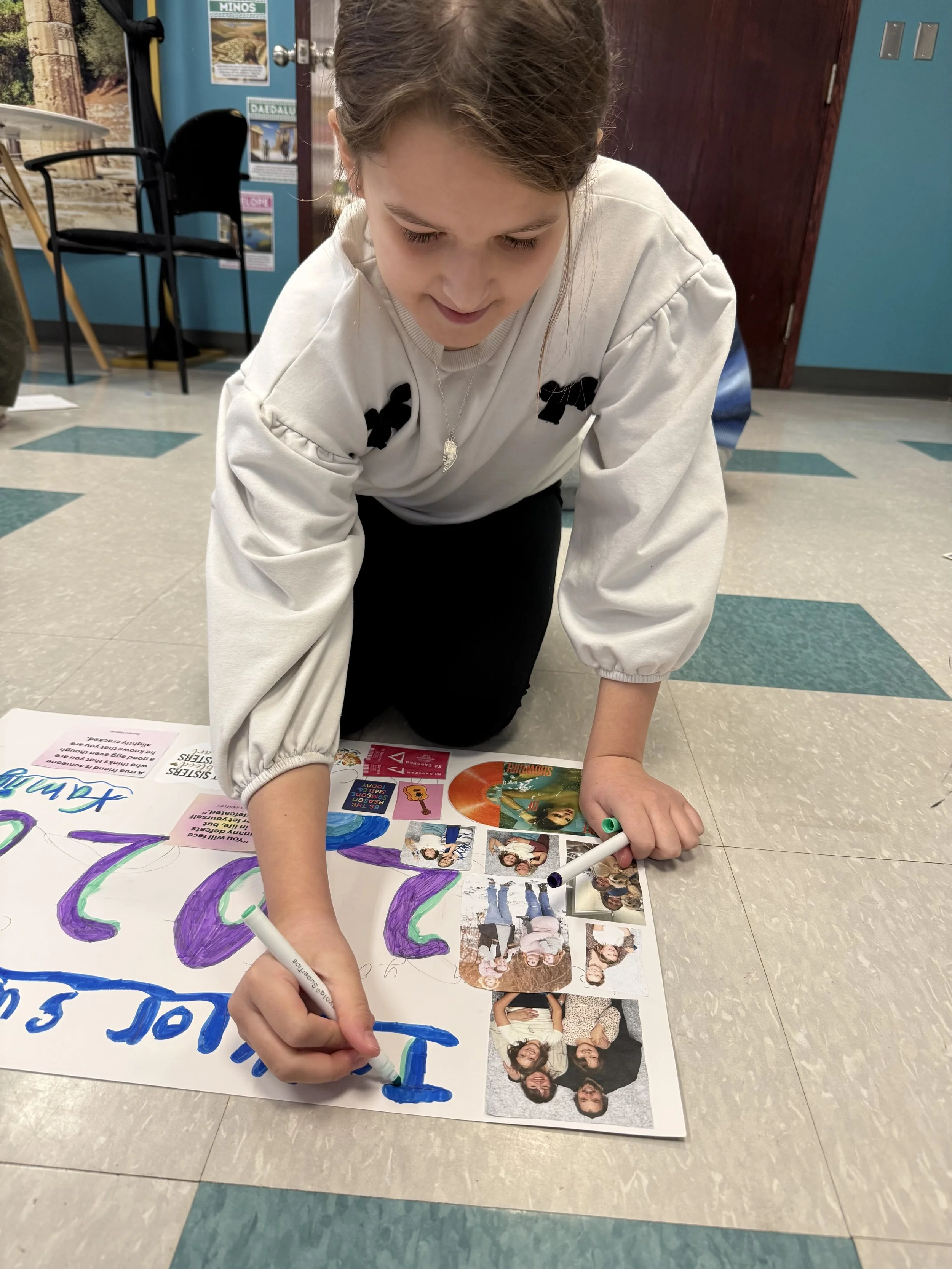
We started our week off by continuing to work on our vision boards. Rebels first spent a few minutes sharing what they’ve added to their boards so far, and what direction they were taking the overall design next. For Launch, we watched a podcast clip featuring Michelle Obama discussing the “ability to be self-sat”. Michelle discusses that a great gift in life is to be able to “be where you are and be content with the ‘nothing-in-the-middle’ moments,” which make up a lot of life! Rebels discussed what they do in the “nothing in the middle” moments and shared whether or not they actually enjoyed having nothing to do or being bored. Some Rebels shared they wished they had more time to do nothing, while others shared how difficult it can be to appreciate down-time and having nothing to do. We revisited the conversation on Wednesday for closing, with Rebels discussing why they think boredom can be important and how those moments of “nothing” can spark a lot of creativity and imagination. On Tuesday, Rebels had a zen-doodle colouring activity followed by a very interesting discussion about the Canadian Charter of Rights and Freedoms. We linked this to our discussion from last week exploring the concept of democracy, and continued to think about what rights we have now compared to the rights of ancient Greek citizens. Wednesday morning we tried a new New York Times game called Capture! At our squad check-ins, Rebels reviewed each other’s goal progress for this week, and asked each other questions such as “What goal are you most proud of finishing/working on this week?” “What is the most important goal for you to finish by Friday?” Thursday’s Thank You for Sharing included a tough “Would You Rather…” between skydiving and bungee jumping and Rebels reflected on a time when they felt exhilarated (Taylor Swift concerts, family vacations and trips to Disney World, first goals or scoring points in a big game were some of the highlights!) Launch included a meaningful discussion around the importance of being respectful, especially in light of activities or things that you don’t find personally intriguing or exciting. Friday’s Boomwhackers is always an upbeat way to start our day, Rebels really enjoyed performing “Sapphire” by Ed Sheeran. Our Current Events report included a much needed reminder that we have made it through the ten darkest weeks of the year in terms of daylight savings (Nov 16th to Jan 22nd), an update from Taryn Smith’s journey across the Atlantic Ocean, learning about a Marlin, and the launch of Mattel’s first autistic Barbie doll.
Reader/Writer workshops
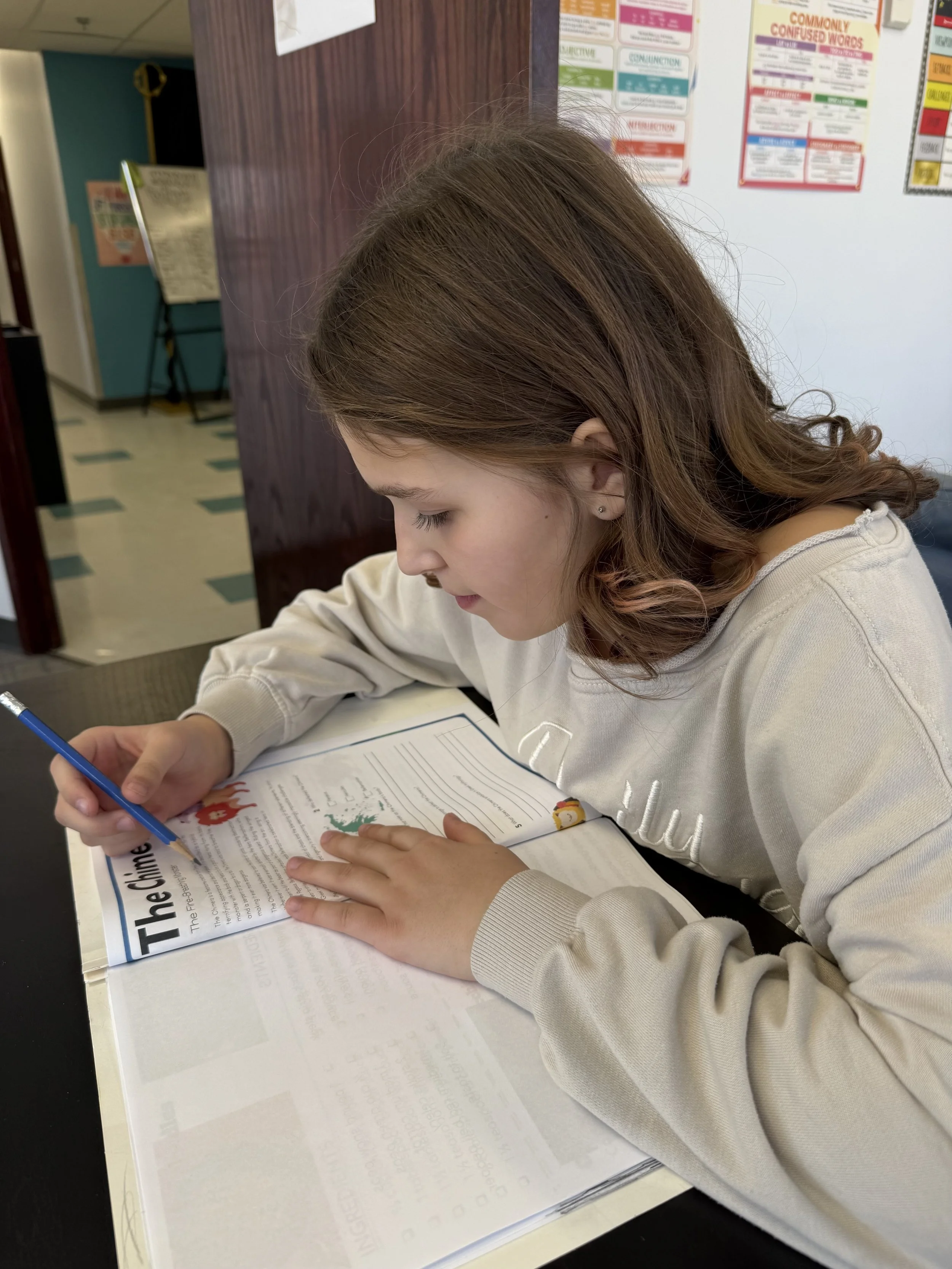
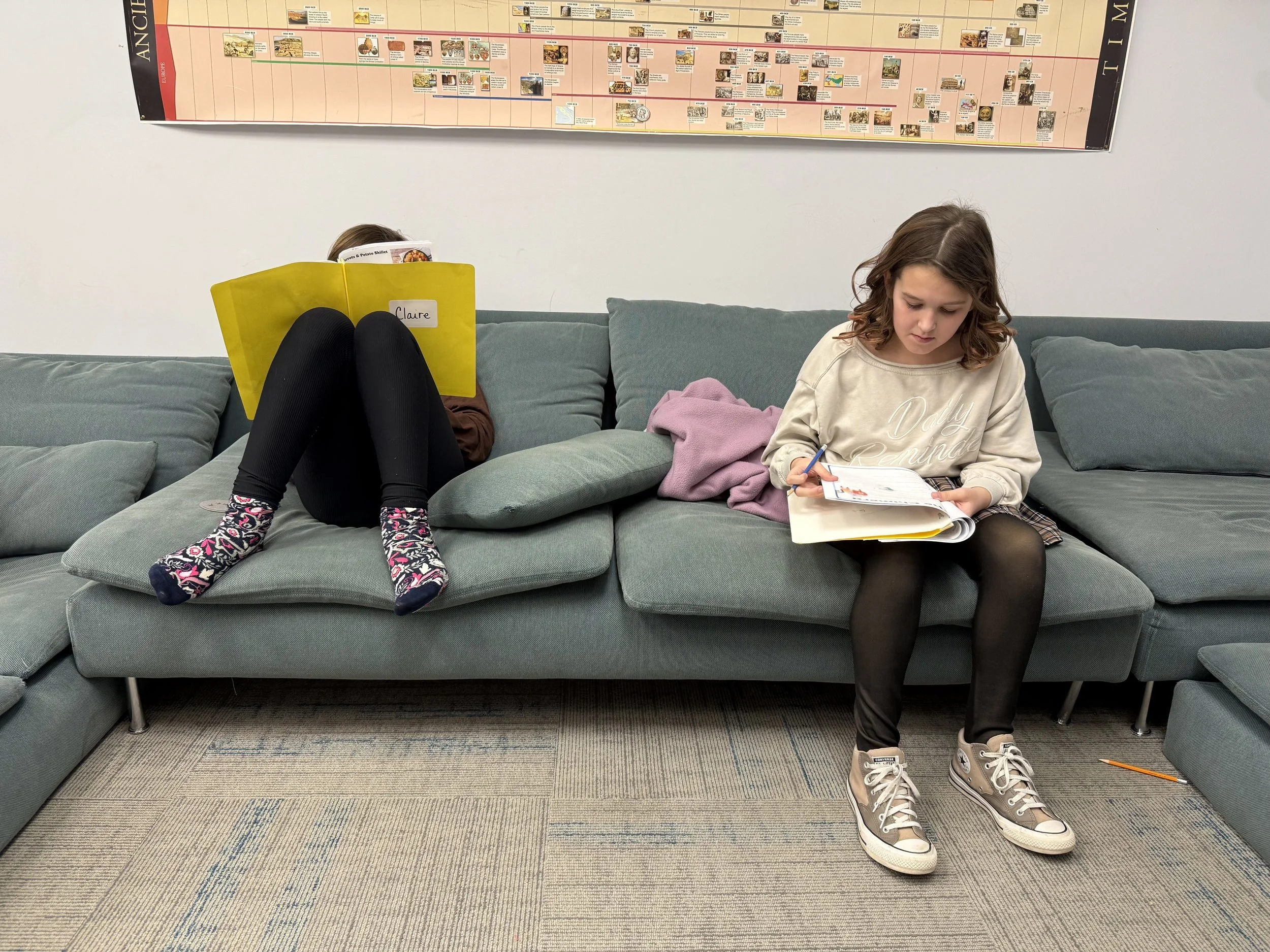
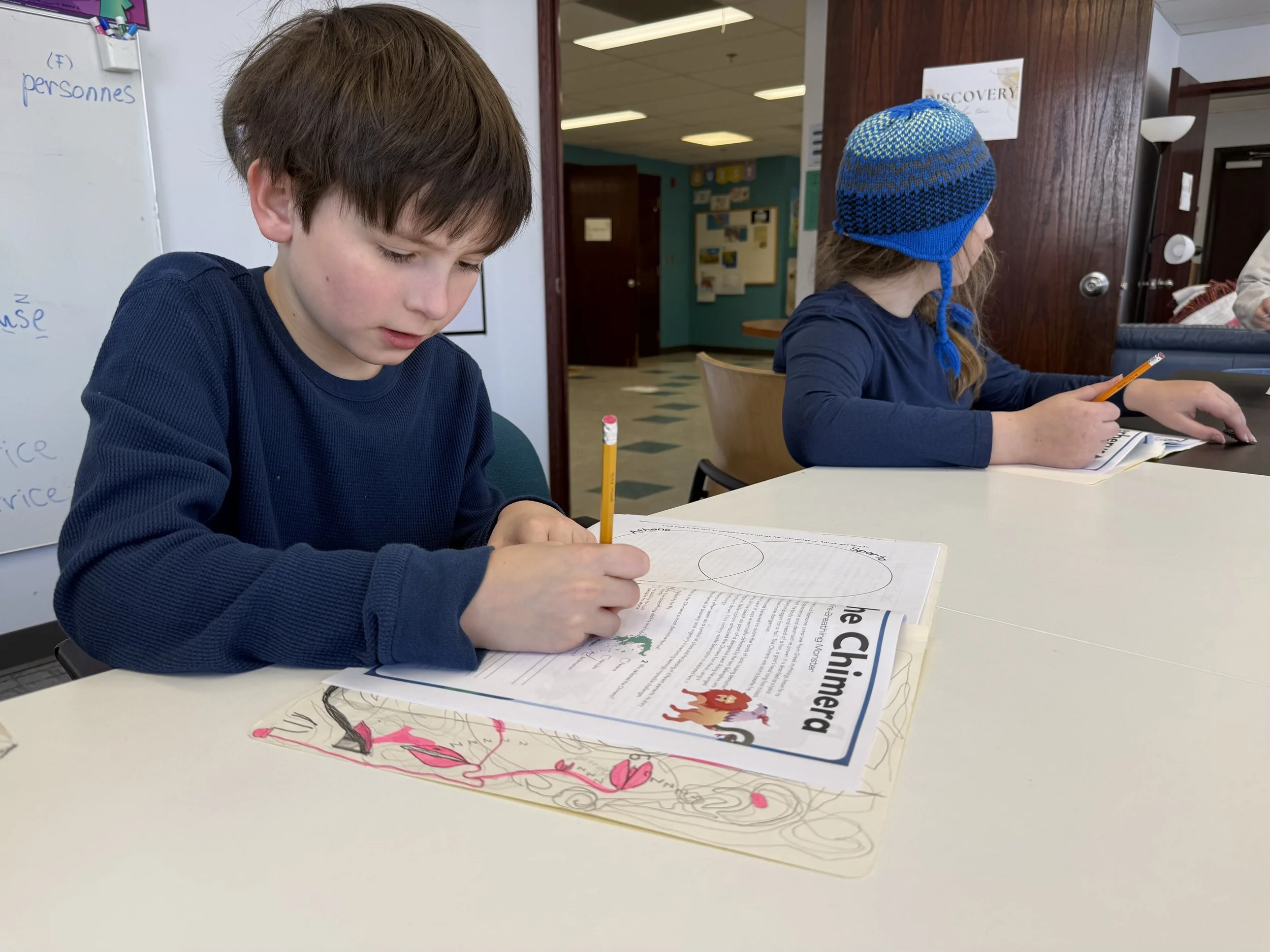
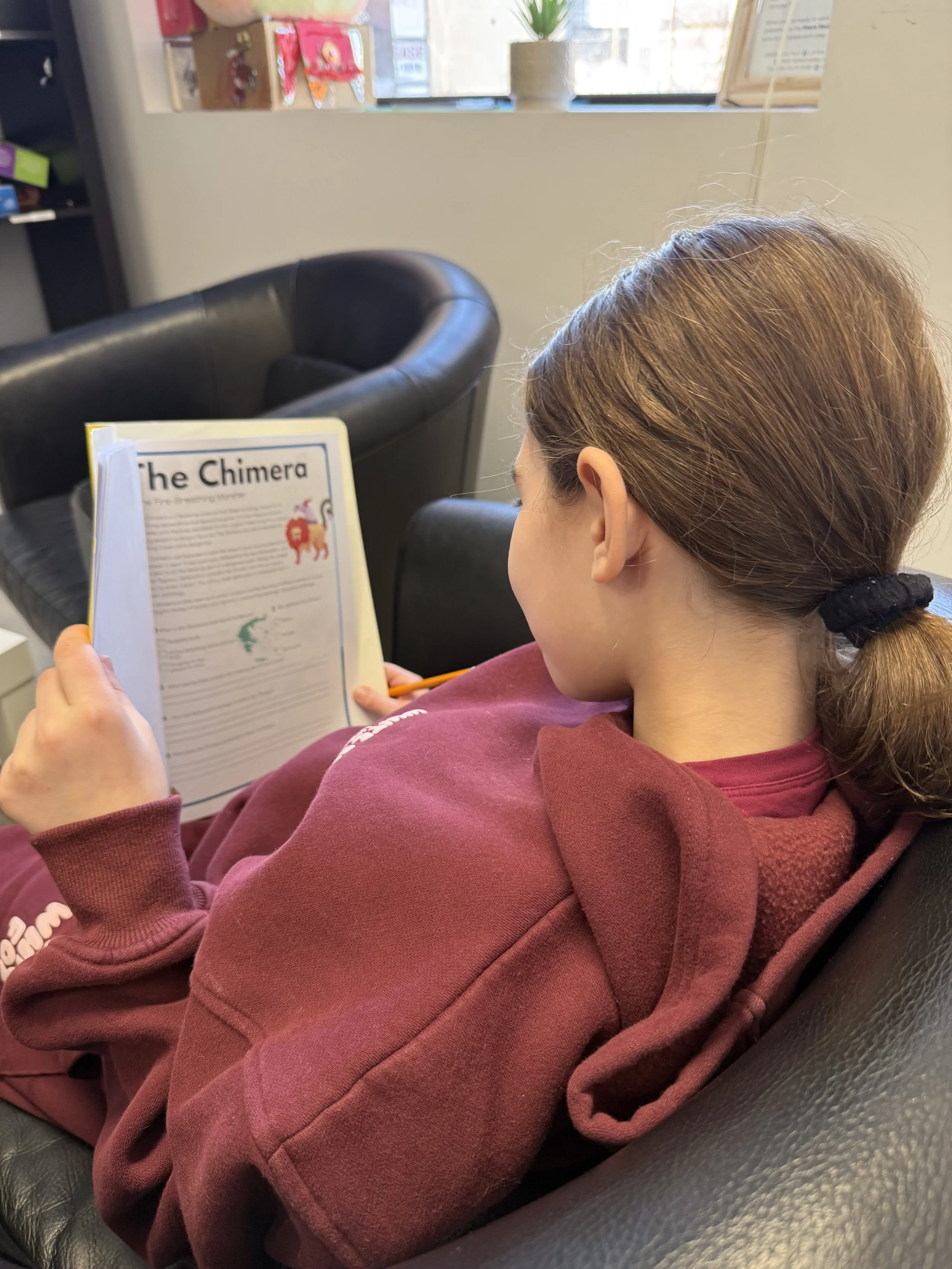
Rebels had an exciting week of Reader/Writer workshops as they began to research and brainstorm details about their own mythical creatures. Rebels in both groups began their workshop with a research and reading comprehension activity, reading 3-5 mythical creatures of their choice and responding to a series of questions about each creature. What does this creature symbolize? Where could this creature be found? Which myth was this creature associated with? Rebels moved on to a brainstorming activity that incorporated some design thinking principles in their writing. This challenged our learners to think deeply about their research on mythical creatures, define specific aspects of their own creature, and begin to ideate and brainstorm big ideas about what kind of creature they wanted to create. Rebels began blending different animals, coming up with storylines about how their creature came to be, which God/Goddesses were they related to or belonged to, names for their creatures, what kind of personality they would have, what lessons they could teach humans, and more! In Draw/Anchor, and Aim/Release, all Rebels came together at the end of each workshop to decide on the criteria for what they wanted to present at Exhibition. Rebels decided on a large poster featuring an image of their creature on one side, and a one-page narrative describing their creature on the other. We look forward to seeing what comes together on paper over the next few weeks!
Math Lab
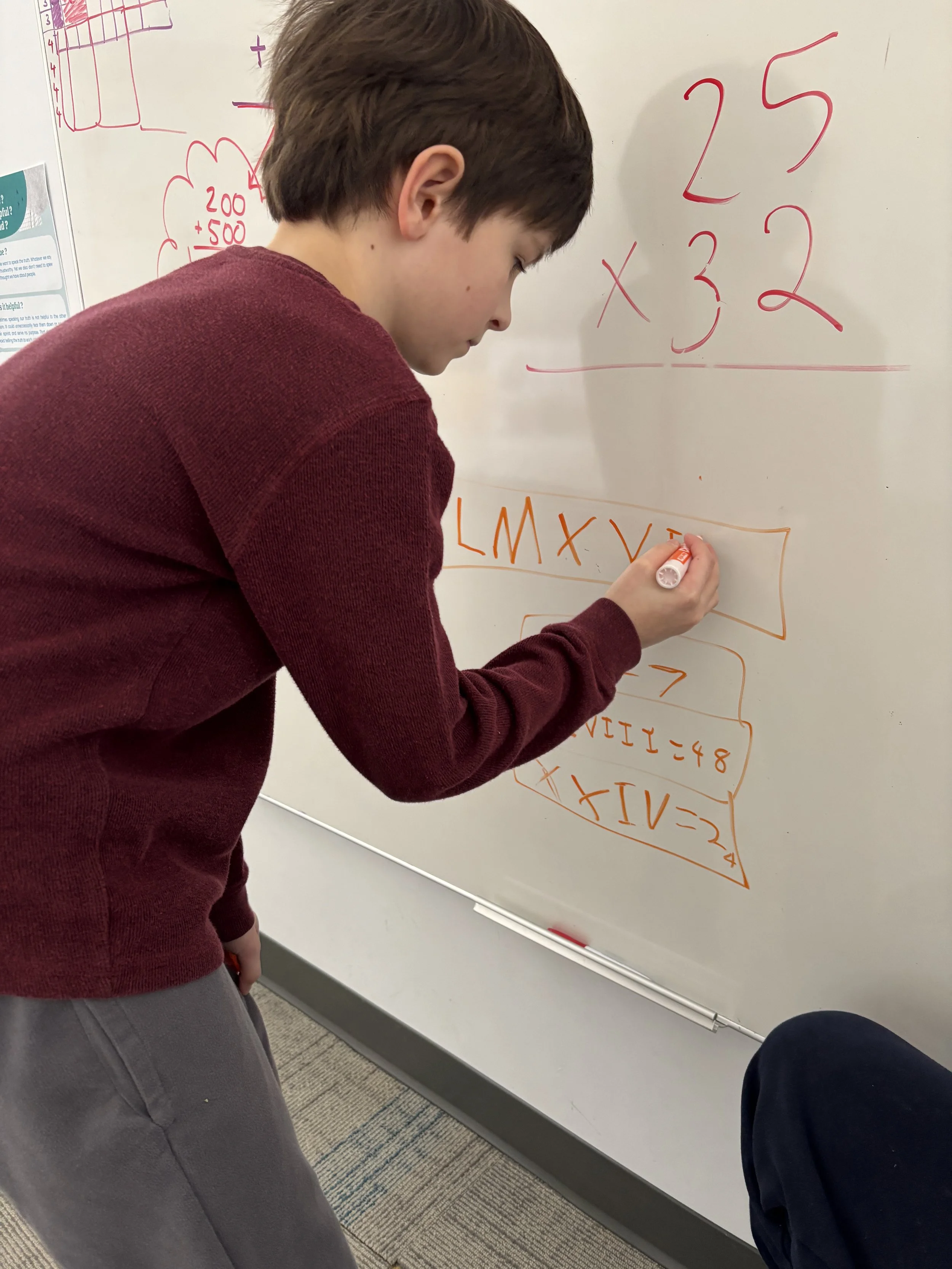
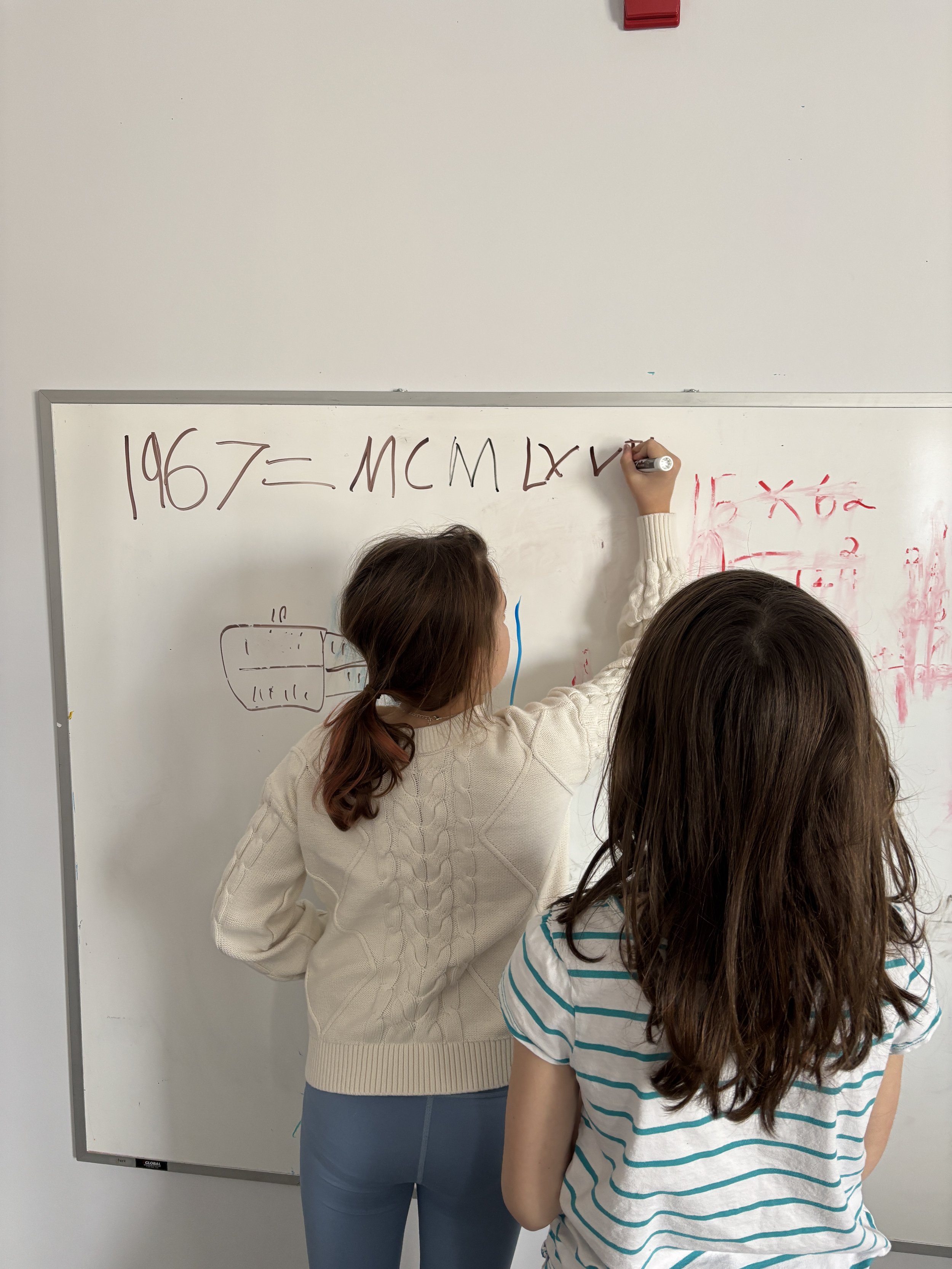
Rebels got to work with Roman Numerals this week! They had so much fun making connections to these symbols and places they have seen them before: clock faces, Superbowl ads, book chapters and more. We watched a video showing the seven main symbols and explaining some important rules for writing and reading numbers. We broke into pairs and practiced using the symbols and rules before working on a bunch of independent challenges. Rebels were very curious and engaged as they worked to compare their ideas about how to represent larger numbers with the correct representations, helping them to understand the rules about which symbols or parts can be used to subtract value and why.
French
This week in French, learners took part in a restaurant role-play activity designed to strengthen their verbal, listening, and reading comprehension skills. Both groups began by reading restaurant-based dialogues and answering comprehension questions to ensure they understood the context, vocabulary, and key expressions used when ordering food. Then, working in pairs, learners took turns asking and answering questions about the menu. Rebels practiced complete sentences and polite language in French, demonstrating essential restaurant etiquette. To reinforce vocabulary in a fun and active way, we finished the week with a food-themed Seek-a-boo game in the gym, where learners had to listen carefully and recall the correct food words. Overall, learners showed strong engagement and growing confidence using French in real-life situations.
Quest
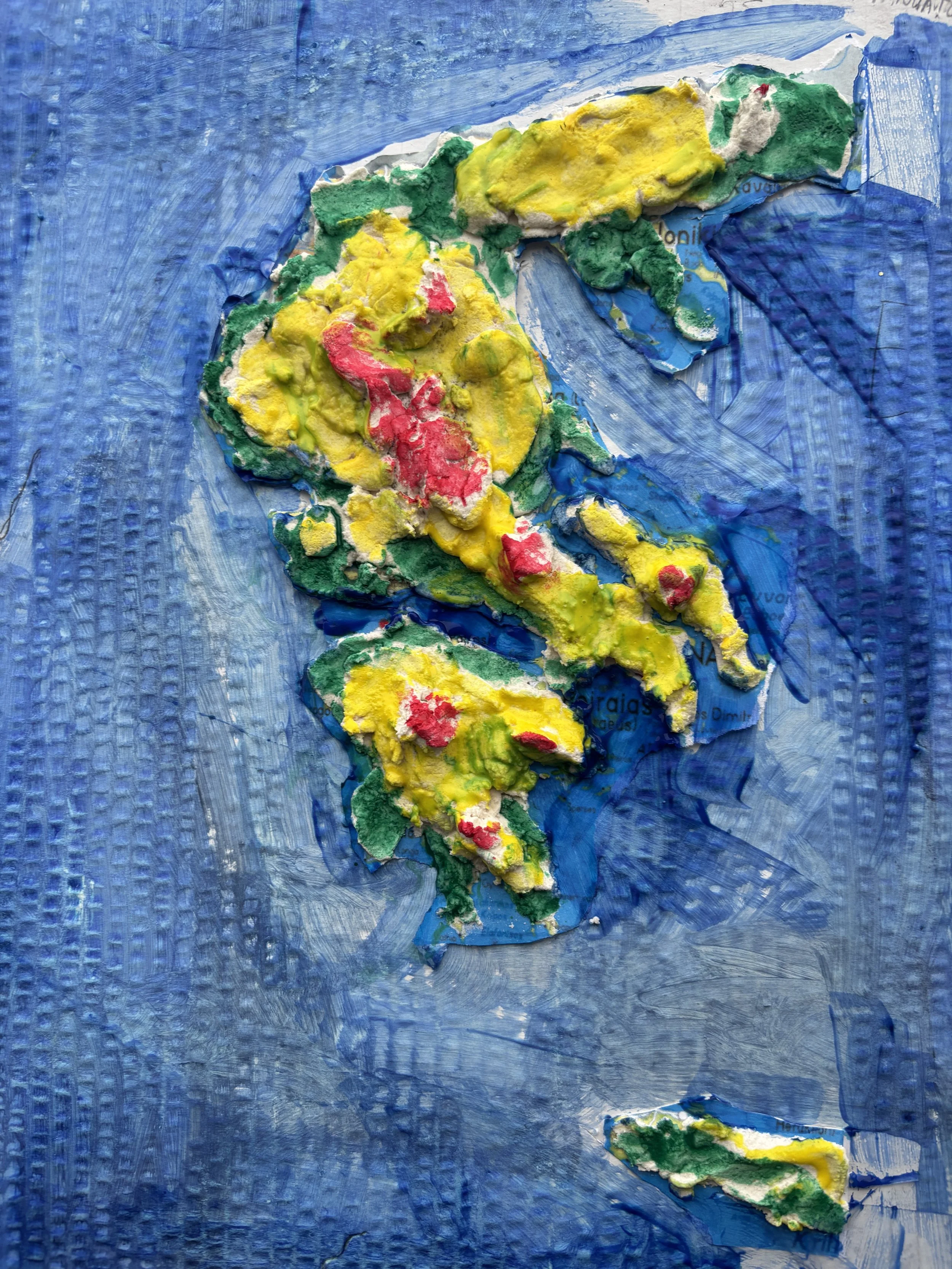
This week our Rebel Spies travelled from Sparta to Delphi! However, we began the week with a checkpoint task: Rebels got together to make a preliminary report for Darius the Great of Persia. Based on what they had learned about the geography, history and daily life in Athens and Sparta so far, which city-state would they recommend Persia attempt to conquer? At this point, most spies felt as though Athens would be a more strategic target. They reported it would be easier to access (less mountains to scale), and if conquered becomes a water or navy and trading stronghold. They also noted that, historically, Athens would lose to Sparta during the Peloponesian War, so Sparta must be harder to battle (this idea was furthered backed by Rebel spy knowledge of Sparta’s military strength). They also noted that Athenians built stunning architecture (Persians could gain buildings like the Parthenon) and preserved stories of gods and goddesses through grand sites, and so Rebels figured this would be a way for Persian culture to be similarly celebrated and stories would likely be told about Darius the Great. All to say - our spies have been engaged in exceptional reconnaissance work! Next, we explored the ancient Greek sanctuary of Delphi and started to have some fun with Greek culture! The story of why Delphi was selected to be such a sacred place, and the special role of the Phythia were two highlights.
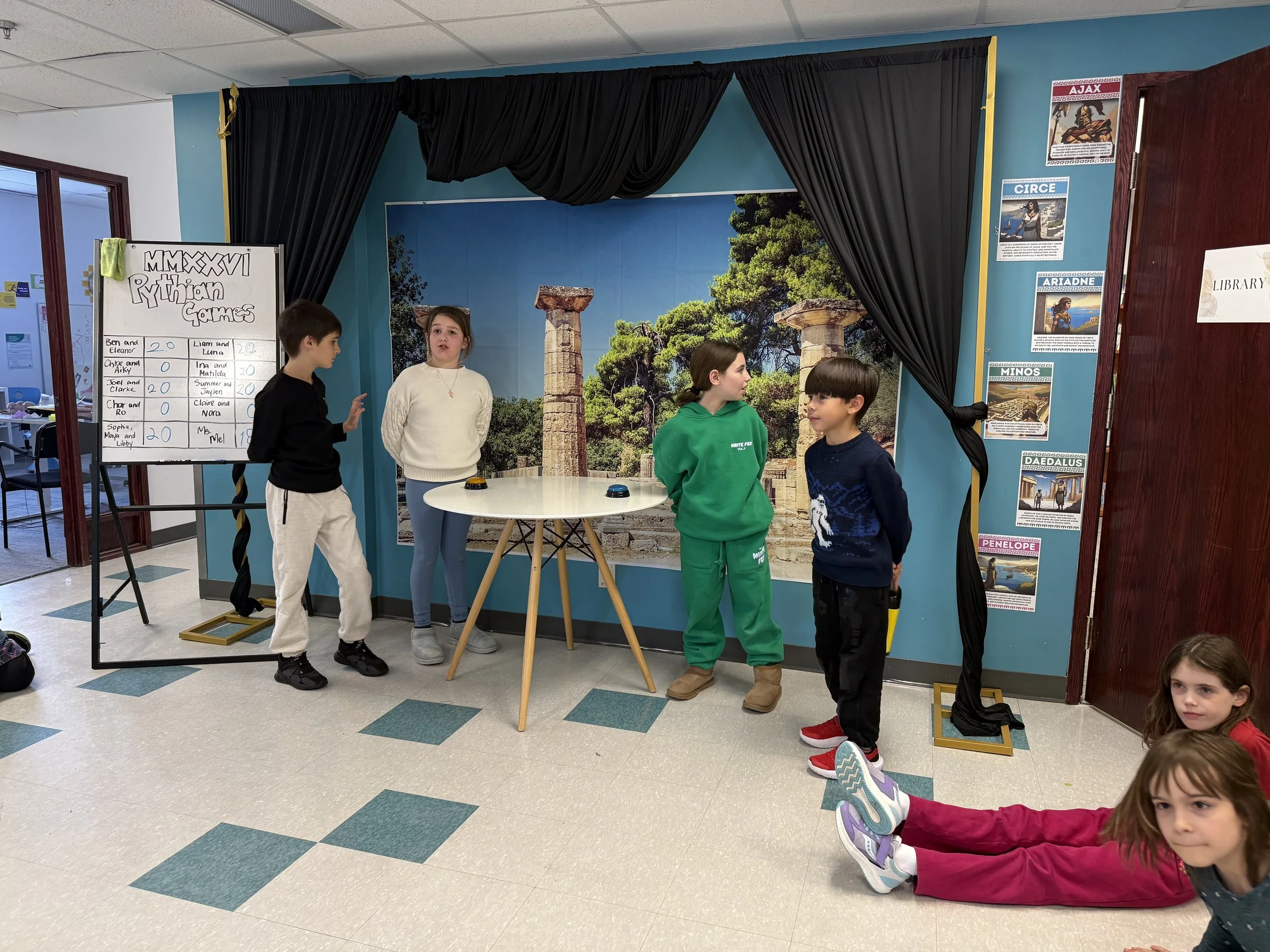
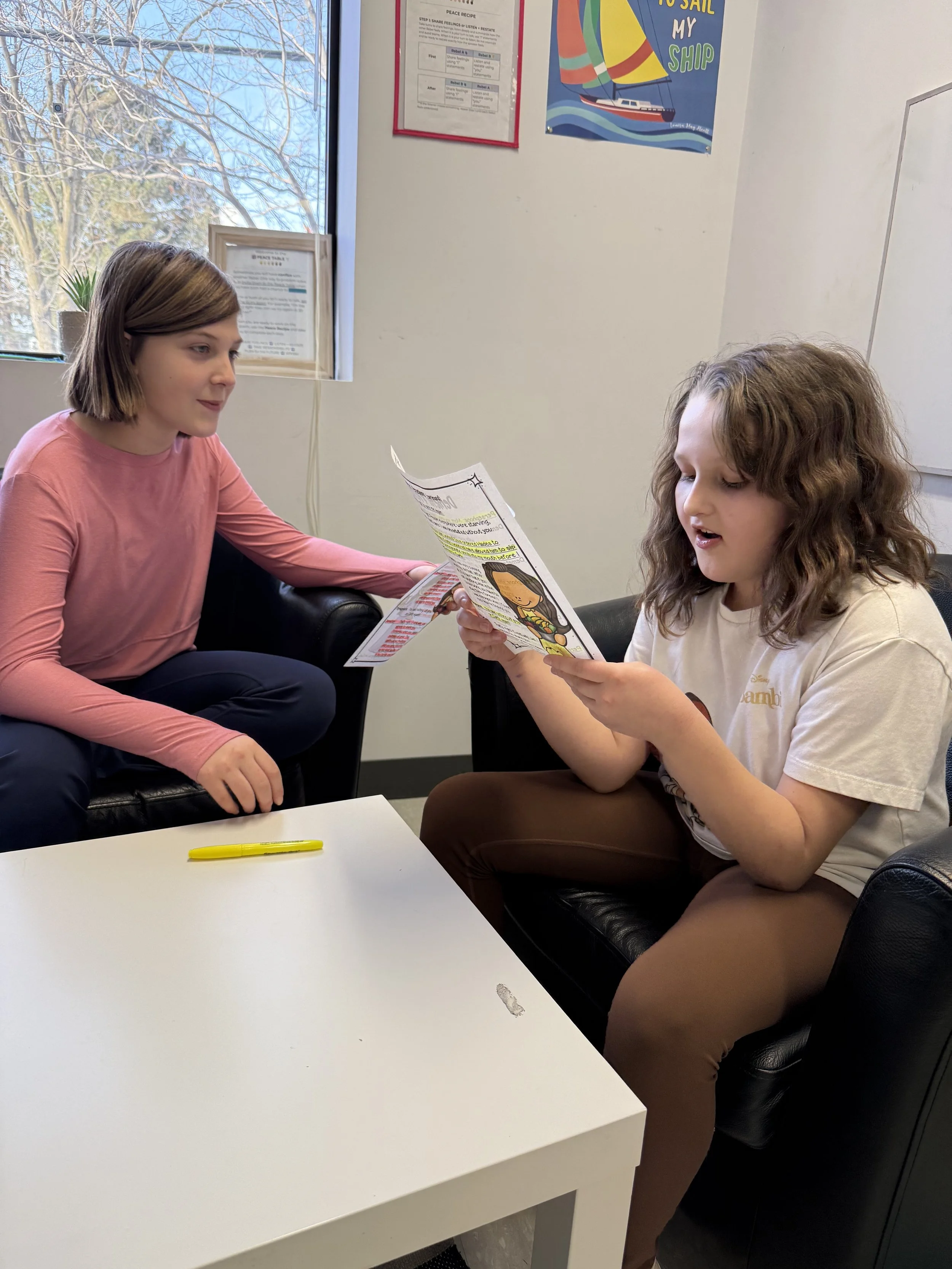
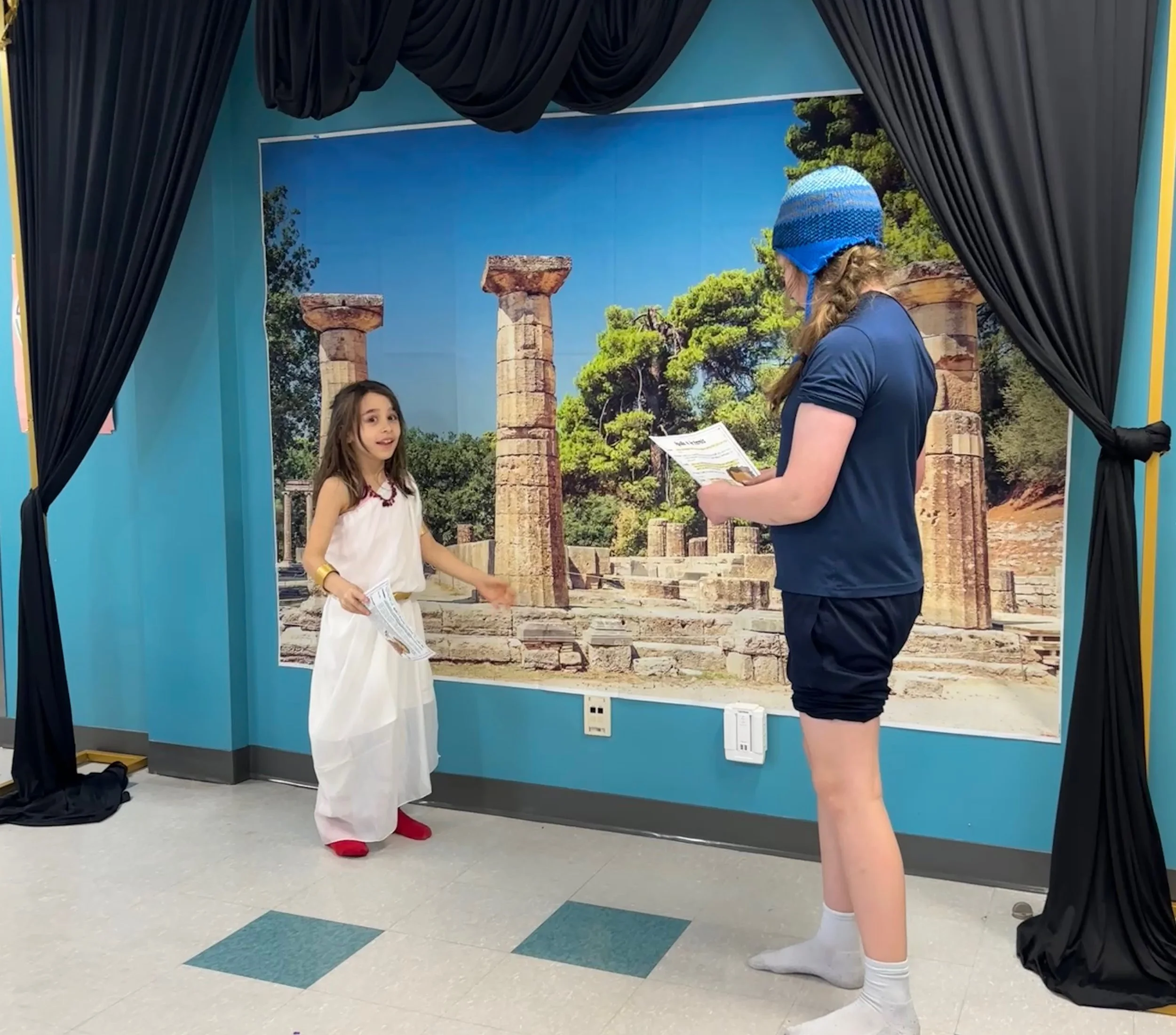
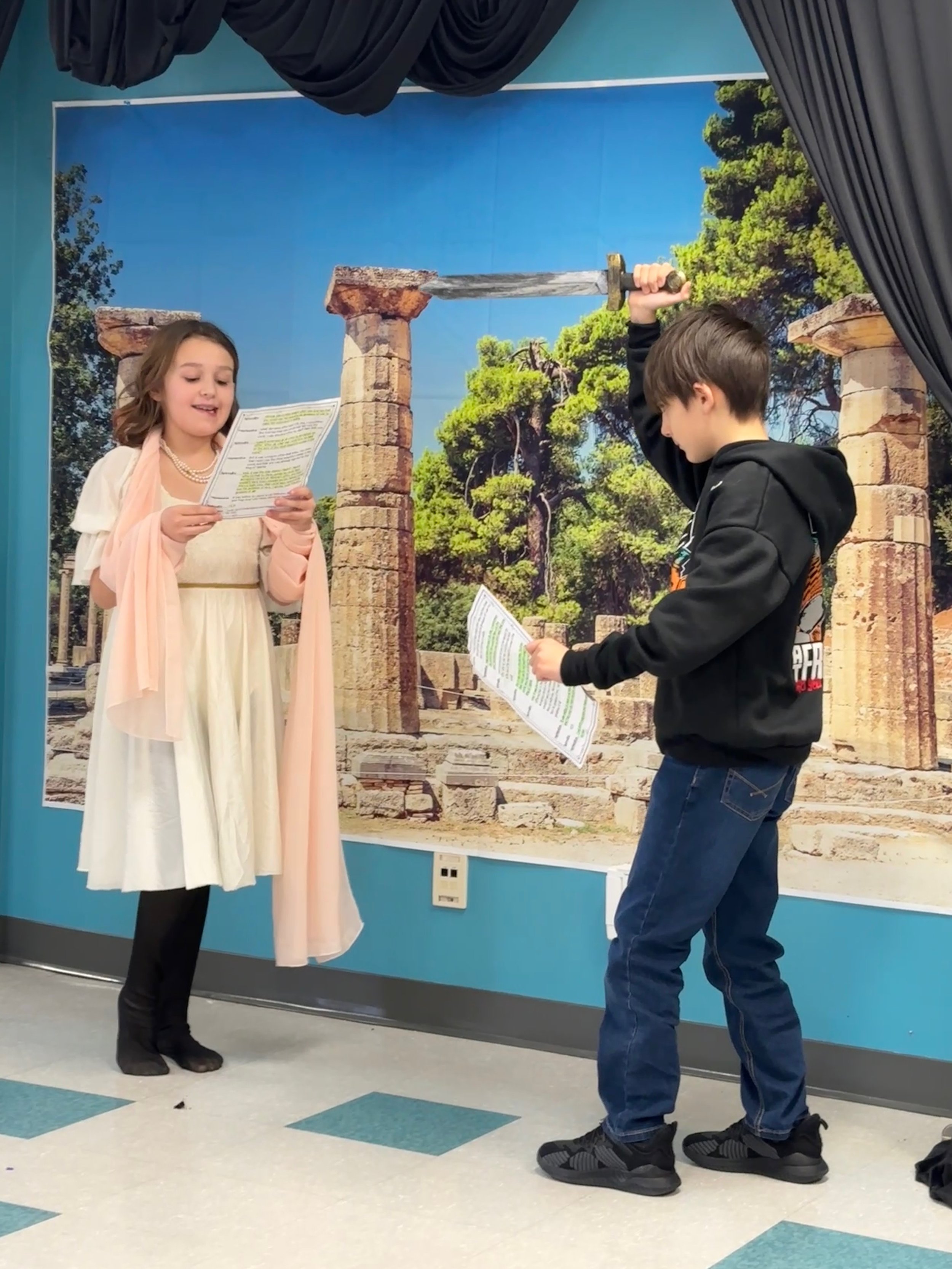
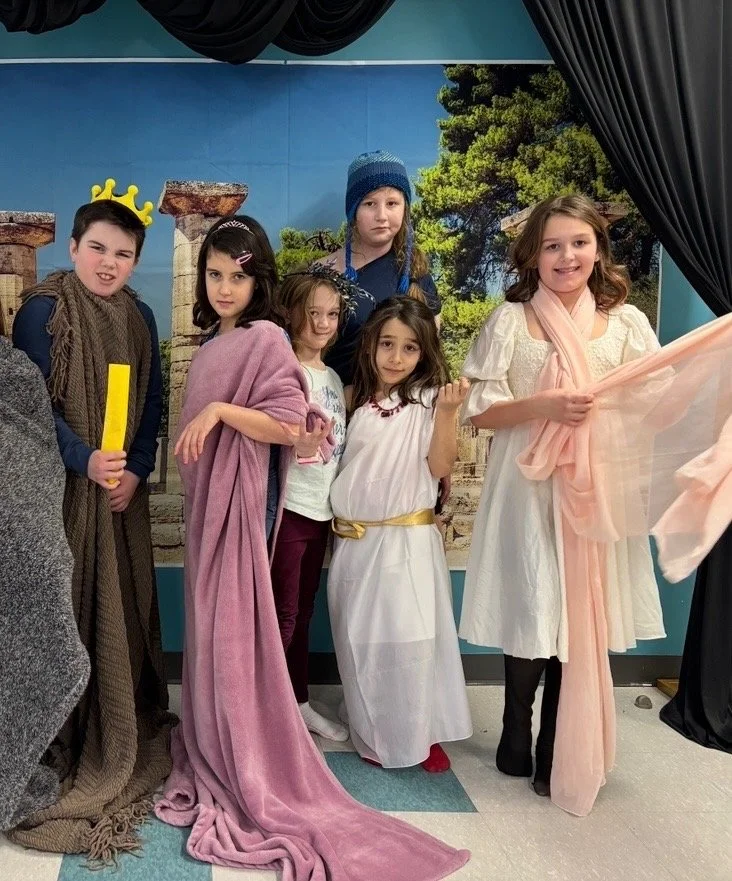
On Tuesday, Rebels played a jeopardy style trivia game about the lore of the Greek gods and goddesses and then picked short partner plays to rehearse. Wednesday we looked more closely at the amphitheatre at Delphi and used our time to add more entries to our historical timeline challenge from Week 1. On Thursday, we met in the amphitheatre to enjoy some stunning performances showcasing short stories of Hera and Zeus, Demeter and Persephone, Artemis and Apollo, Medusa and Arachne, Hades and Poseidon and Aphrodite and Hephaestus. The plays were absolutely incredible and we look forward to showcasing some of them at our Exhibition in a few weeks!
Civilizations
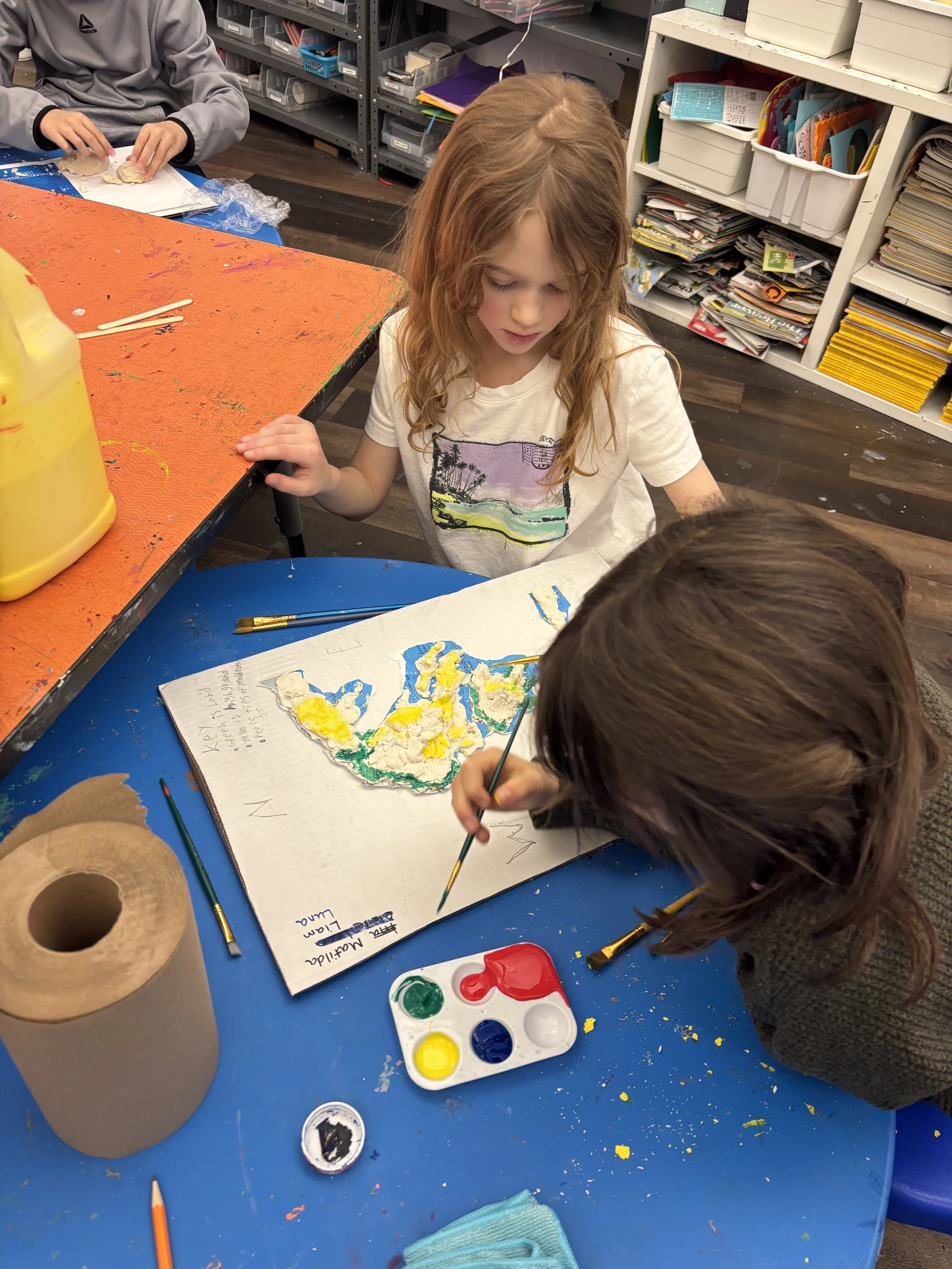
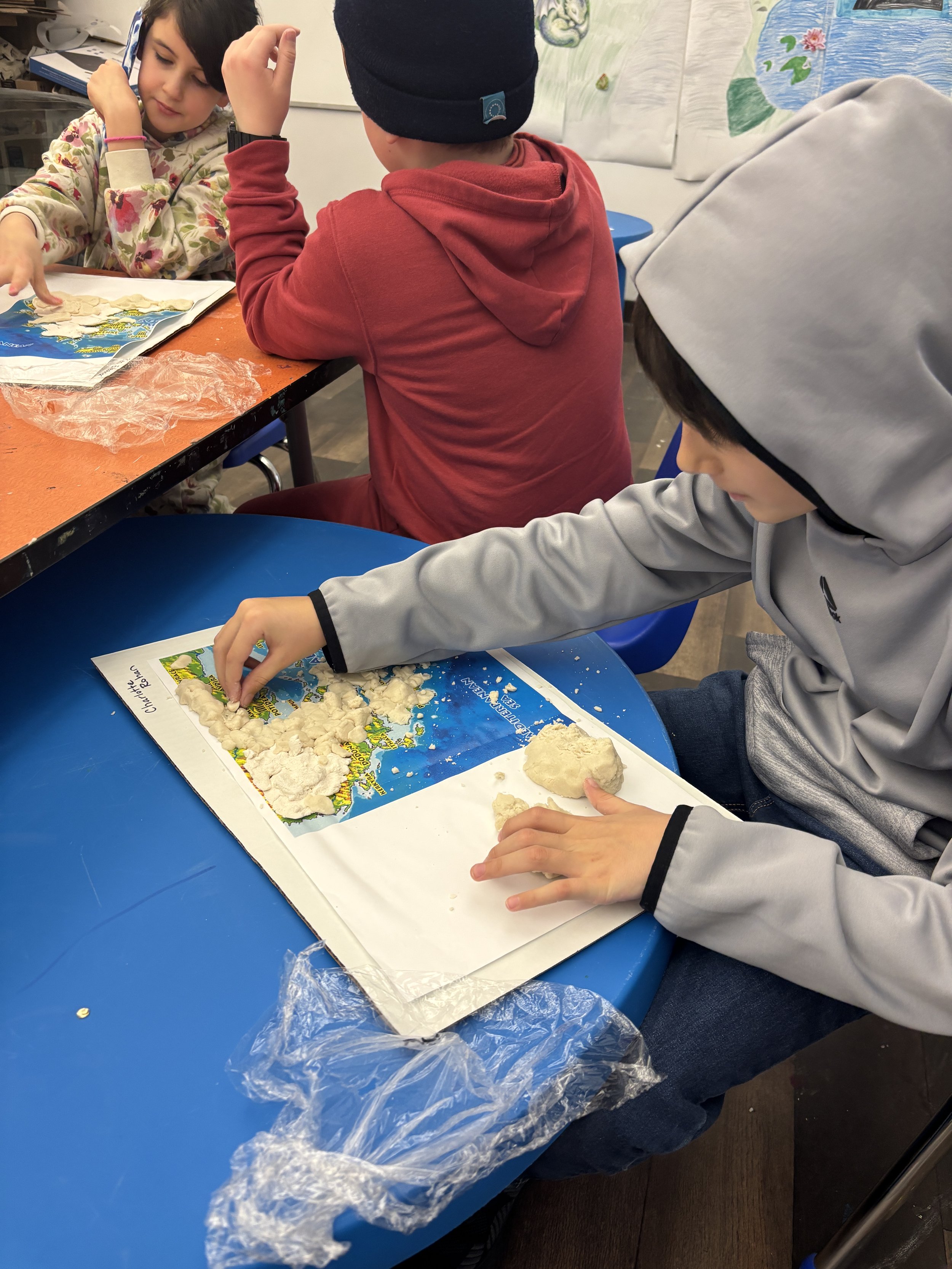
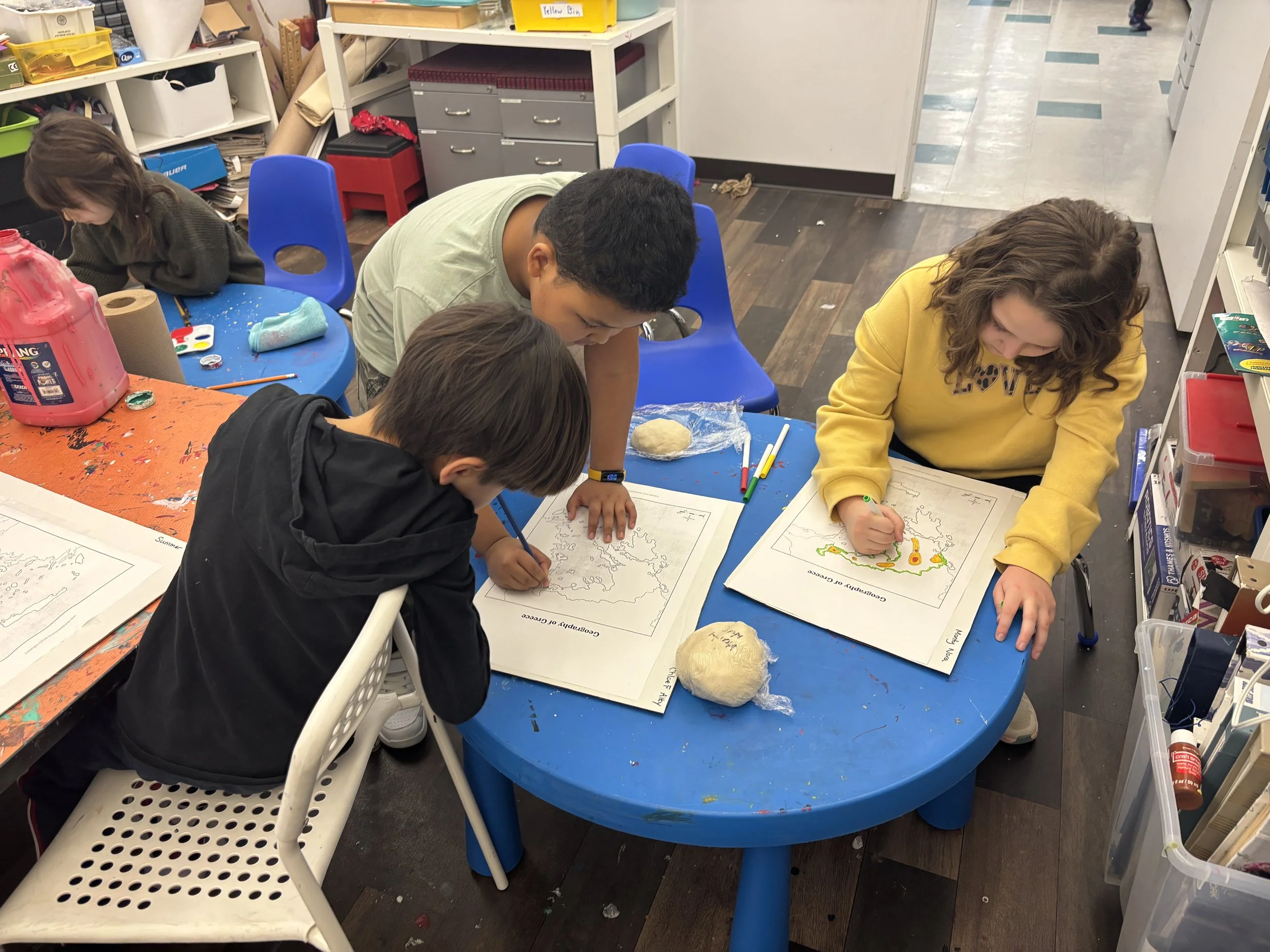
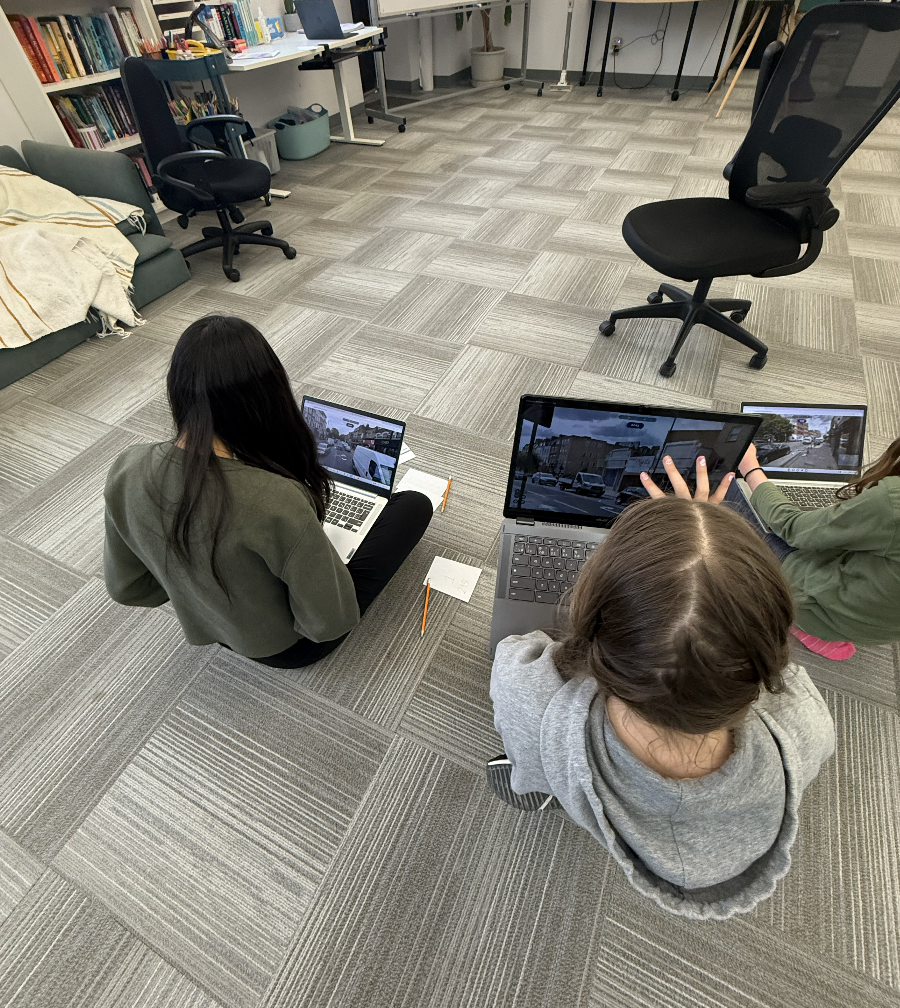
This week’s chapter of Story of the World focused on evolving powers in Assyria and Babylon, under two significant leaders of the time, Ashurbanipal and Nebuchadnezzar, respectively. We mapped the locations of Nineveh and Babylon and shaded the bodies of water. We took care to note the difference between how to highlight major rivers (like the Euphrates, Tigris and Nile) and seas (such as the Red, Black and Mediterranean). We also used Google Maps to try and take a peek at what remains of one of the Seven Wonders of the Ancient World today: the Hanging Gardens of Babylon! Our discussion focused mainly on a debate about the first library developed under the Assyrian Empire, in particular whether Ashurbanipal, the library’s founder, did more harm or good in his lifetime?
Additional Highlights
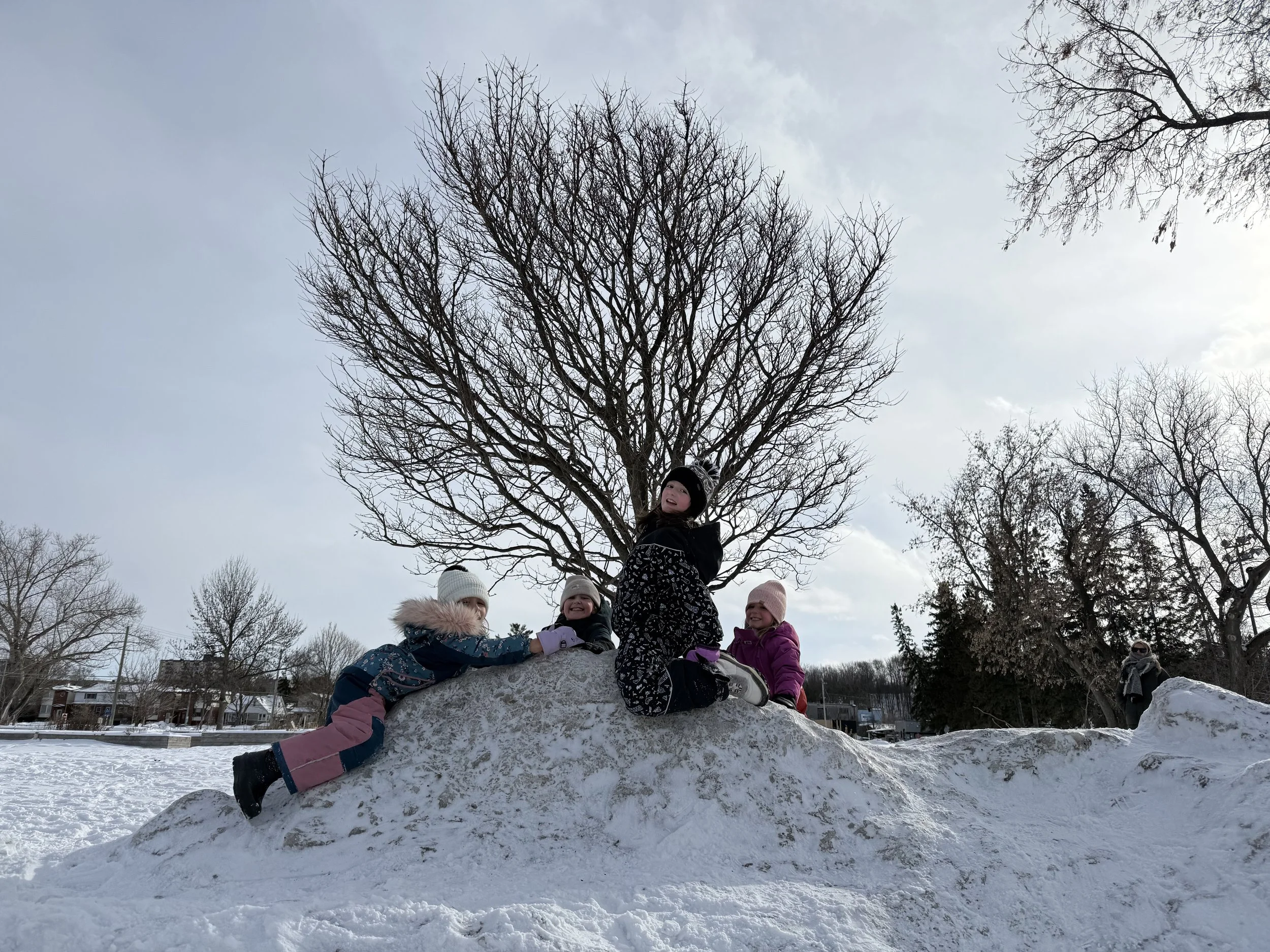
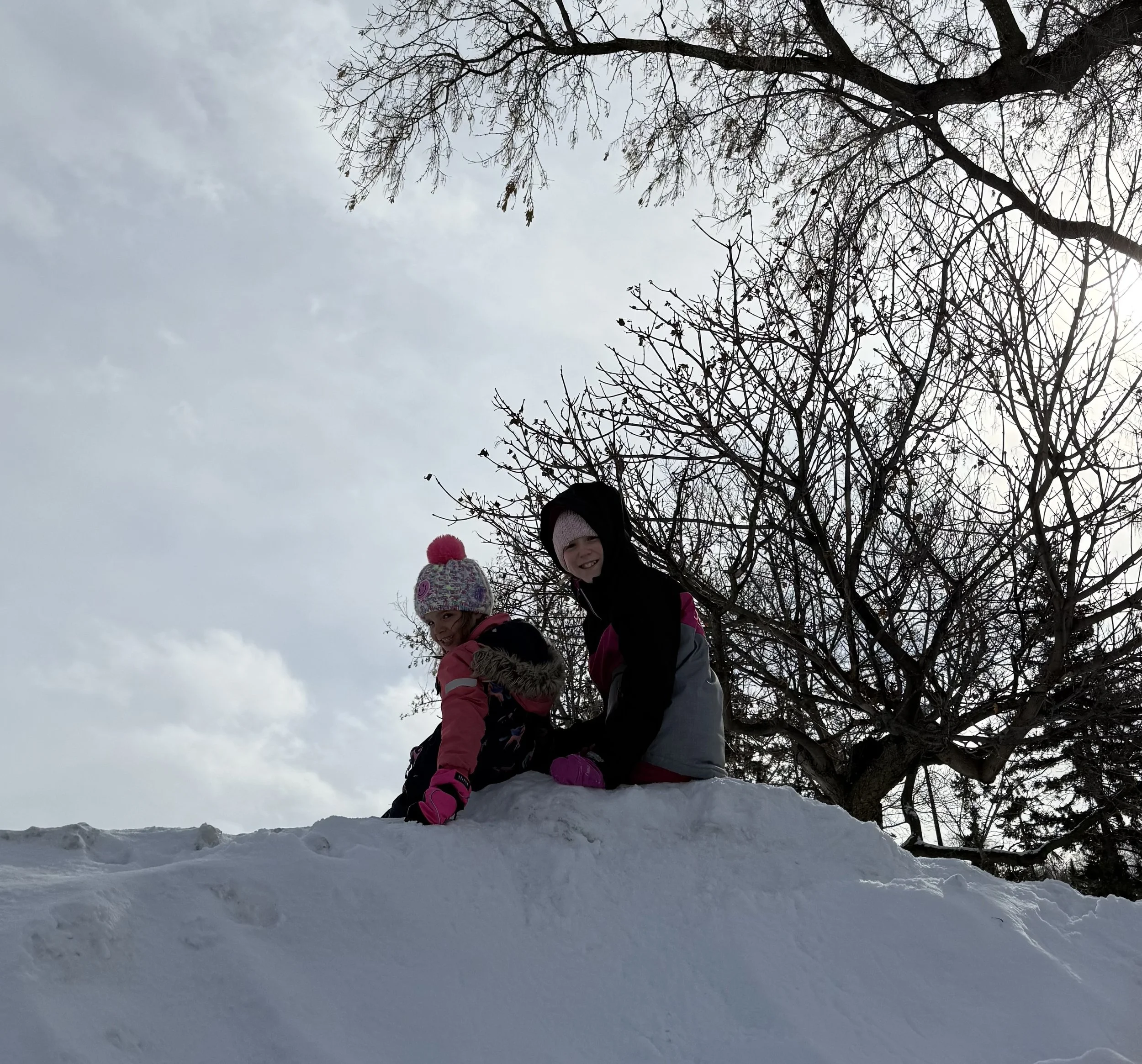
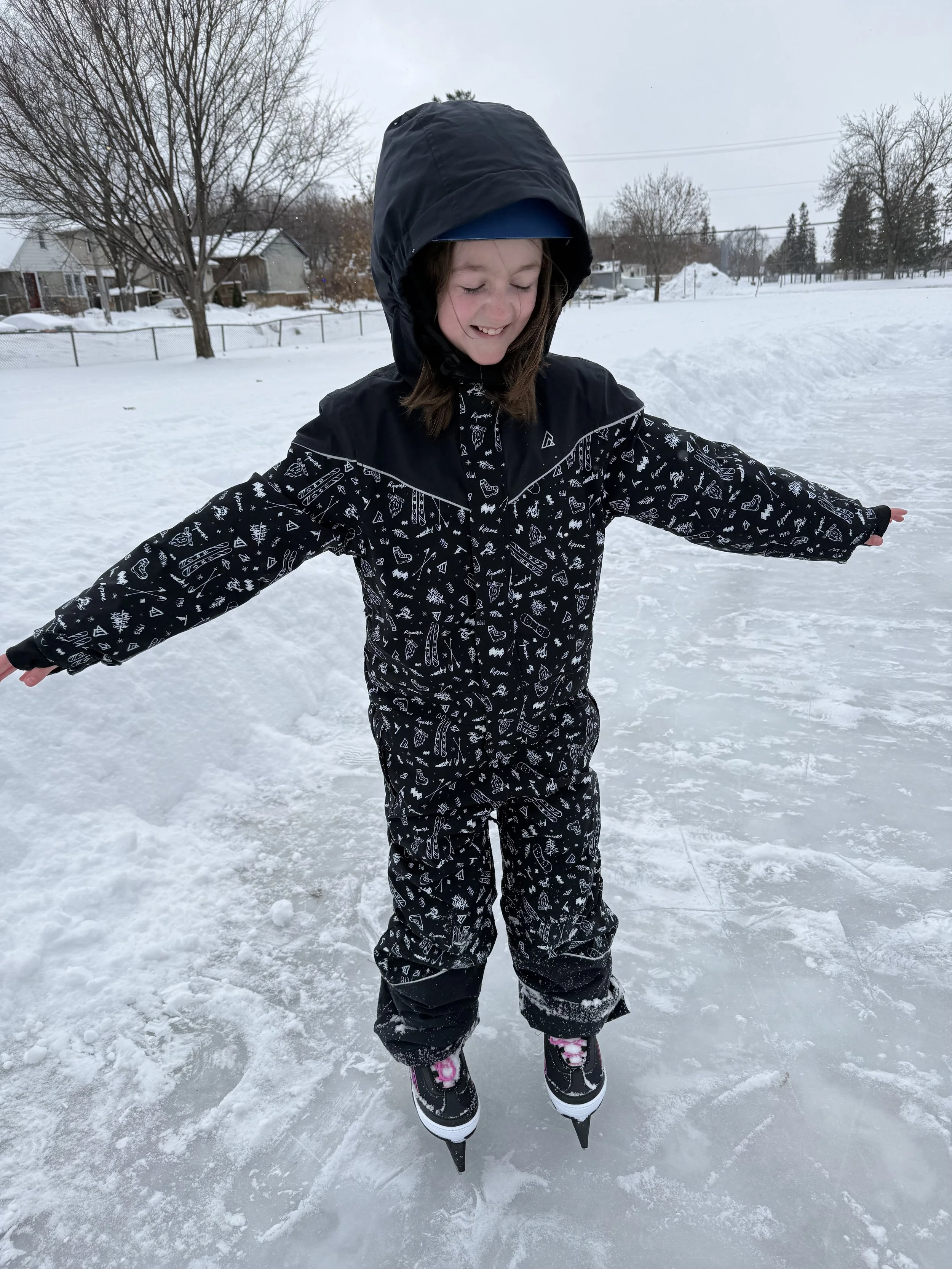
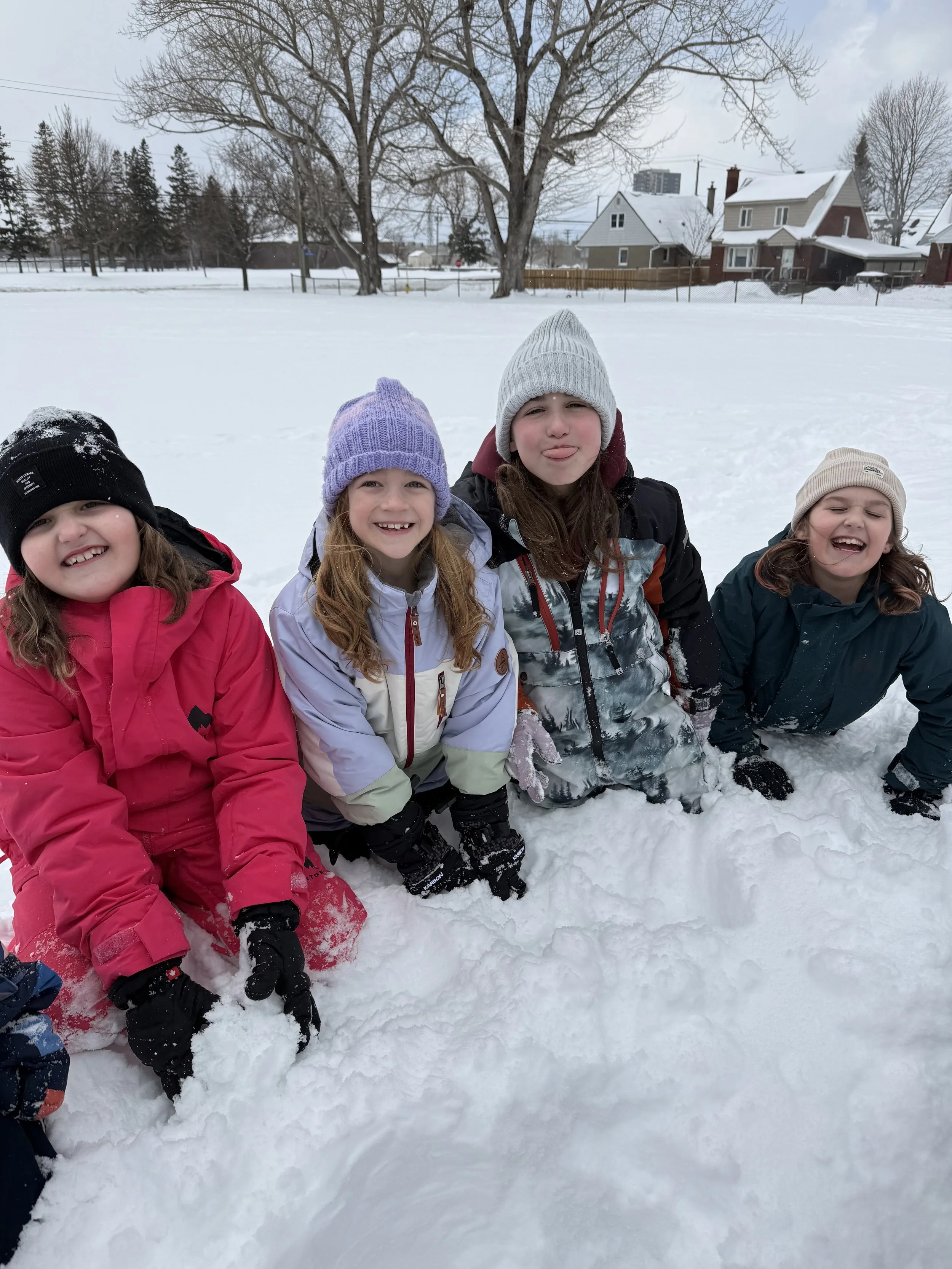
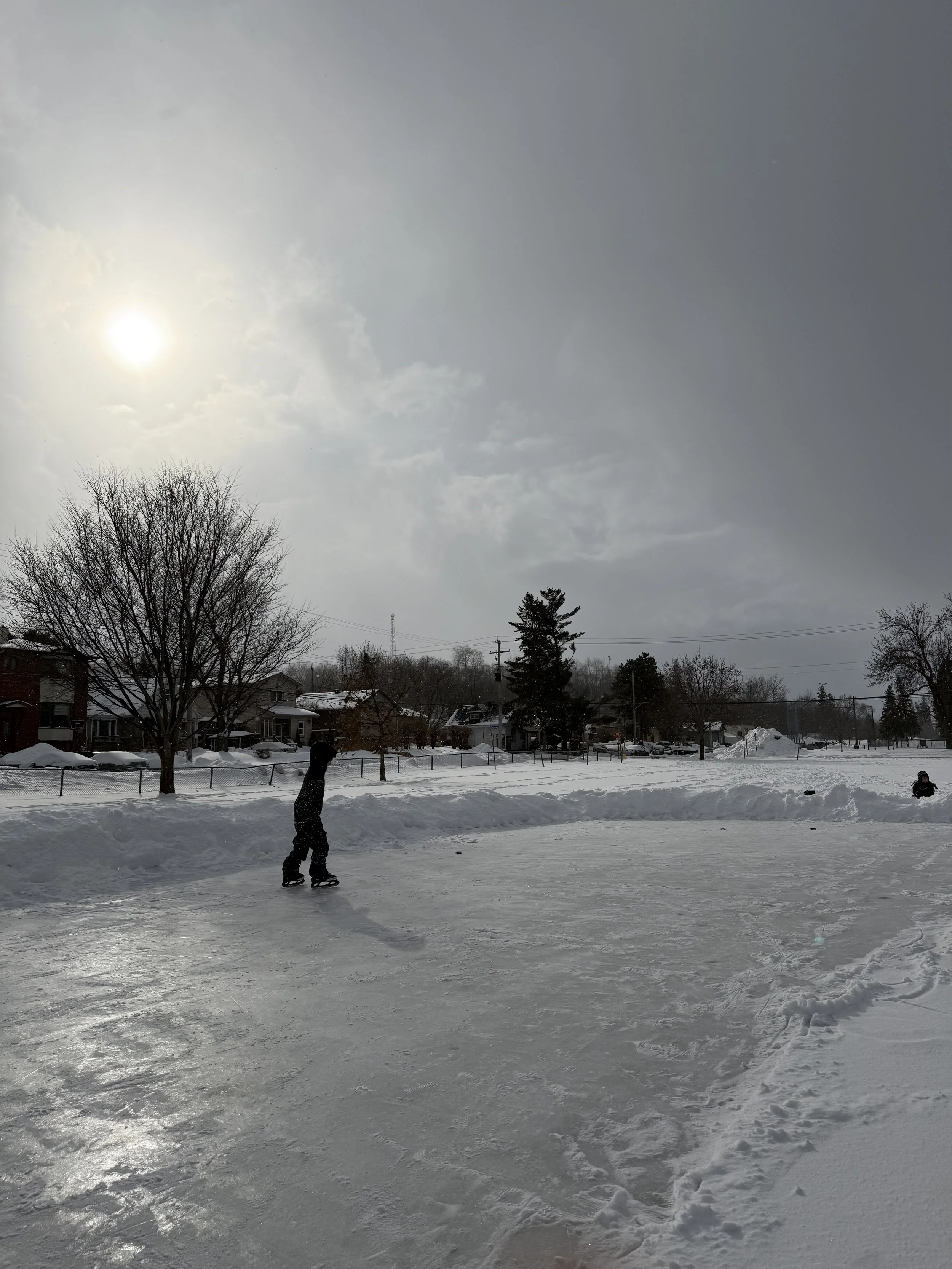
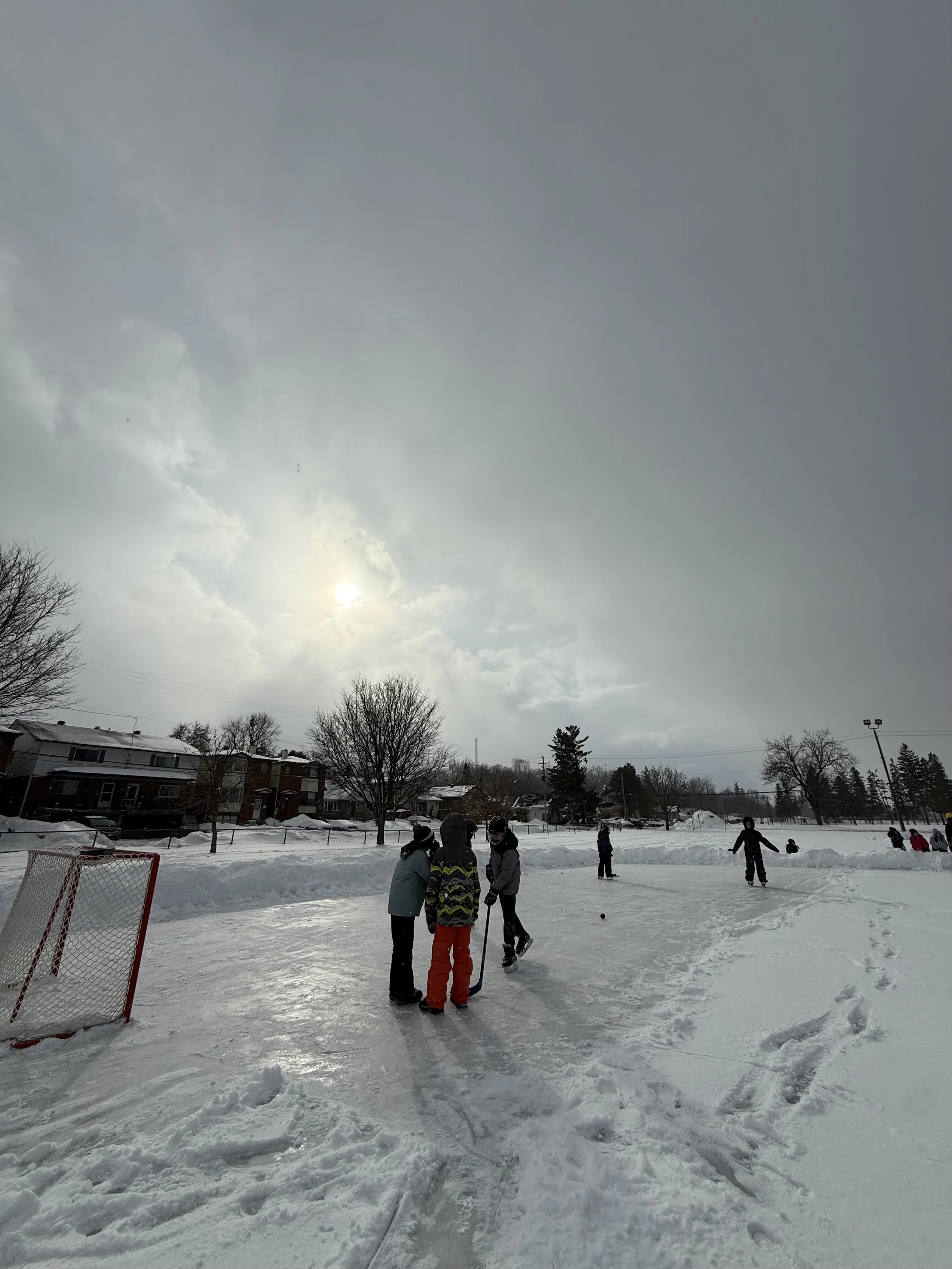
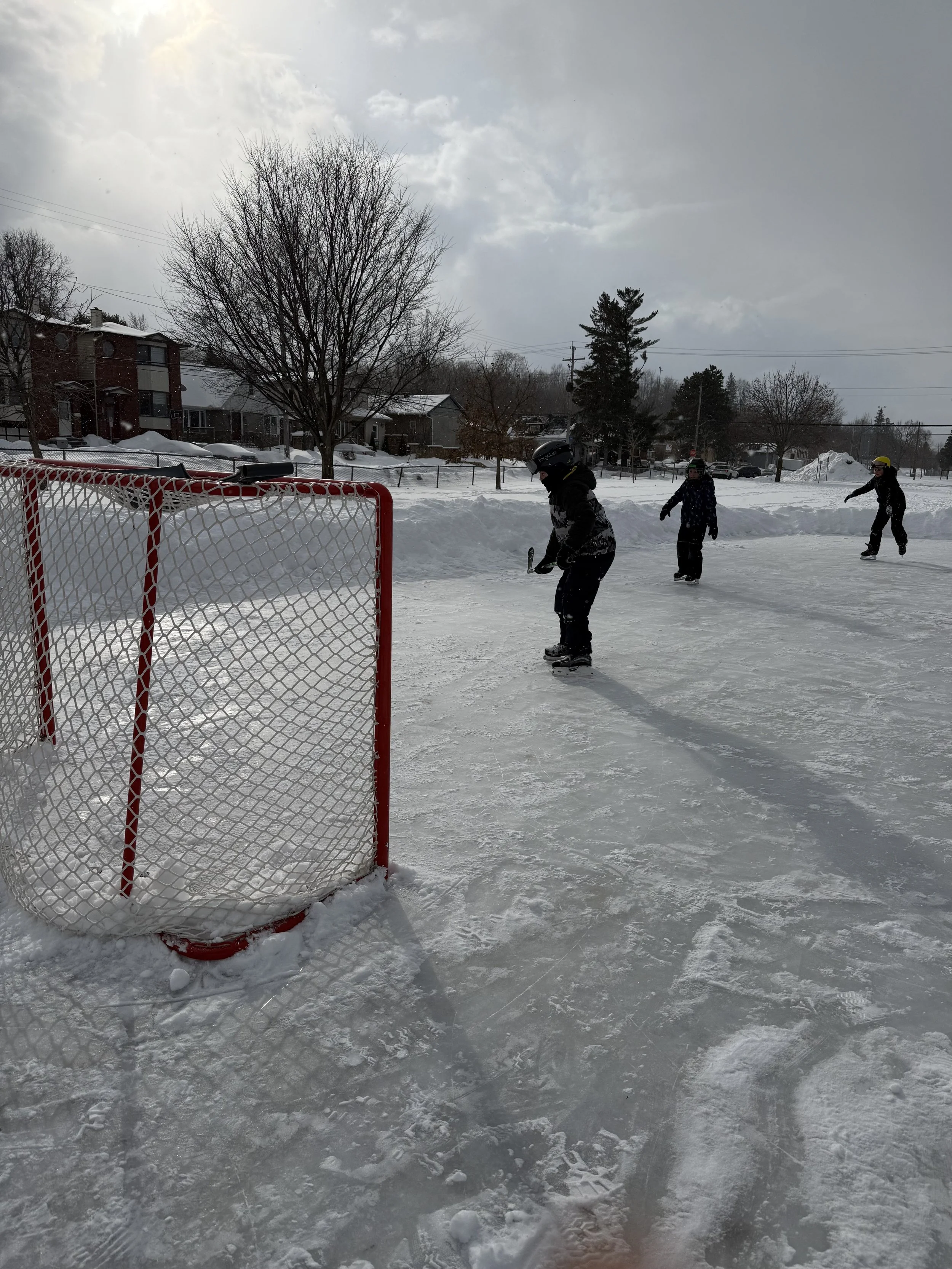
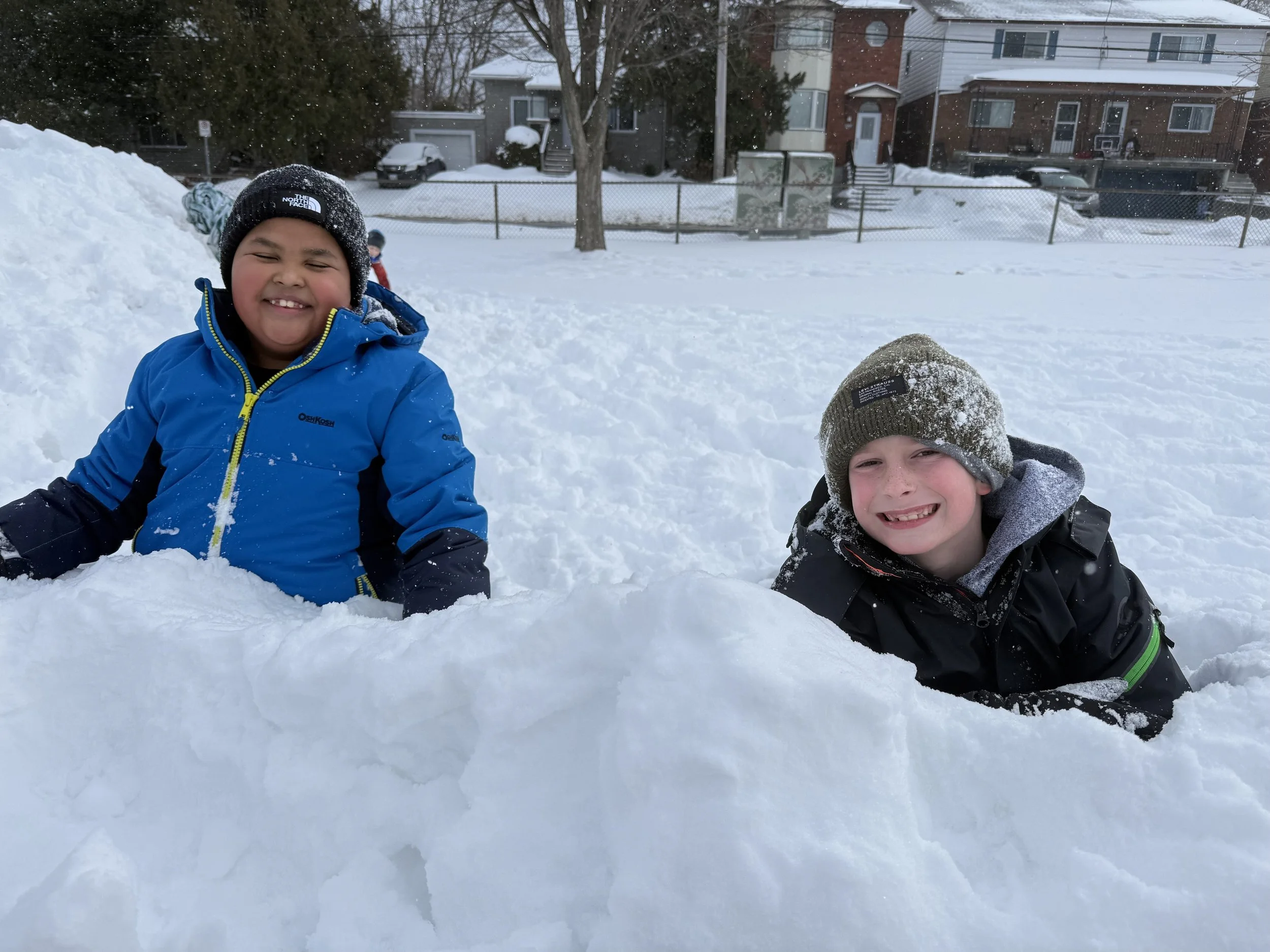
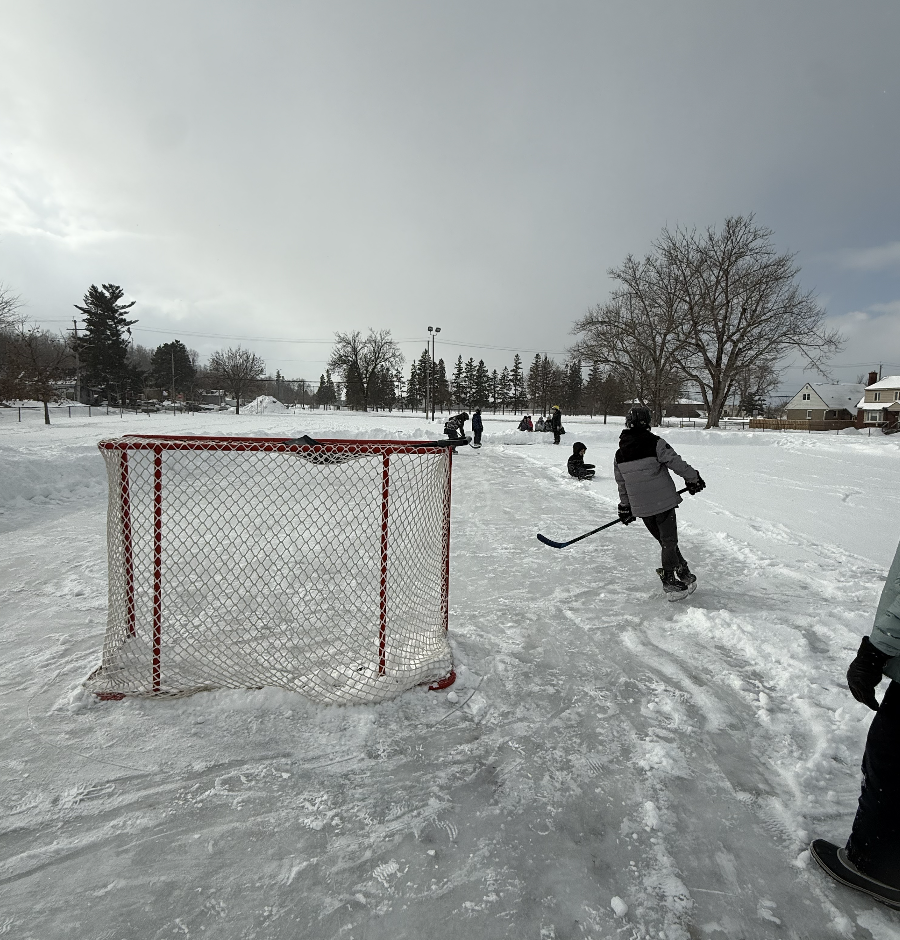
Ahead of the polar vortex this weekend, we maximized our outdoor time as much as we could! Rebels had a blast outdoors this week and took advantage of our outdoor rink at Raven Park. Rebels who brought their skates enjoyed skating, playing hockey, racing down the ice, while others built forts and dug tunnels from all the snow we got! We’ll continue to utilize our incredible outdoor space as weather permits. Just a reminder to check Band for any updates or schedule changes to our Carlington Hill Tobogganing or ODR skating days.
Exploration Studio
Mindfulness & Launch
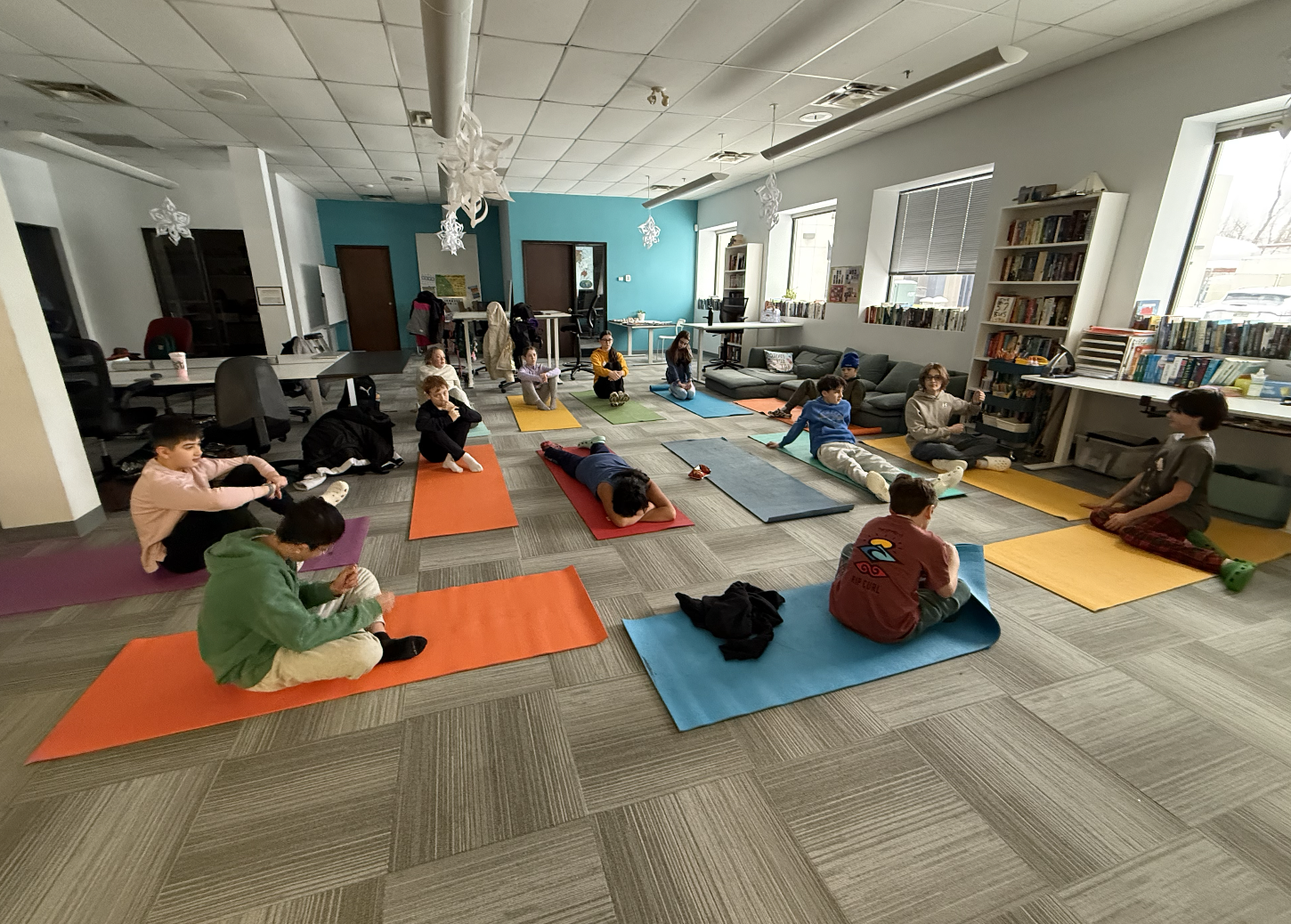
We began our week reading the poem “The Guest House” by Rumi and contemplated how to treat our emotions as they come and go. Learners were asked how emotions show up (or manifest) in our bodies, and then we began a body scan. After moving from our head to our feet, paying attention to each part and observing any sensations, Rebels were asked to silently consider which part of the body was the easiest to feel, which was the hardest, and whether they could relax parts that held tension. After taking a few minutes to stretch, Rebels returned their yoga mats and got ready for Launch. In our discussion, we learned that polymers, repeating chains of molecular groups, are everywhere in nature. Creating plastic is easy, cost-effective, and its use in daily life is extremely practical, but it appears that these tremendous benefits are increasingly coming at a cost. After watching a short video on Plastic Pollution: How Humans are Turning the World into Plastic, we discussed what we would do if we were the mayor of a city that had not banned plastic straws, thermoplastics, or plastic bags. We then questioned whether our answers would change, knowing that studies have shown that paper or reusable bags have a larger carbon footprint due to more energy used to produce and transport them than plastic bags. Rebels agreed the problem was complex but felt that if we worried more about the environment than convenience, our Earth would be in a much better position. On Tuesday, learners reflected on their home and school libraries and on whether they “read widely” in our Becoming a Critical Thinker lesson. Are they exposed to differing perspectives and cultures? Do they read different genres and writing styles? What books should they add to their next trip to the library? Wednesday morning, Rebels measured the mass of their cooked sculptures from last week’s art session before either painting their piece or starting a new one. Some Rebels chose to go for a walk on Thursday morning, while others completed a Peloton meditation on gratitude. On Friday, our Current Events group presented on Northern Lights sightings this week, the upcoming cold snap, and a story about a baby sea lion rescue.
Reader/Writer Workshop
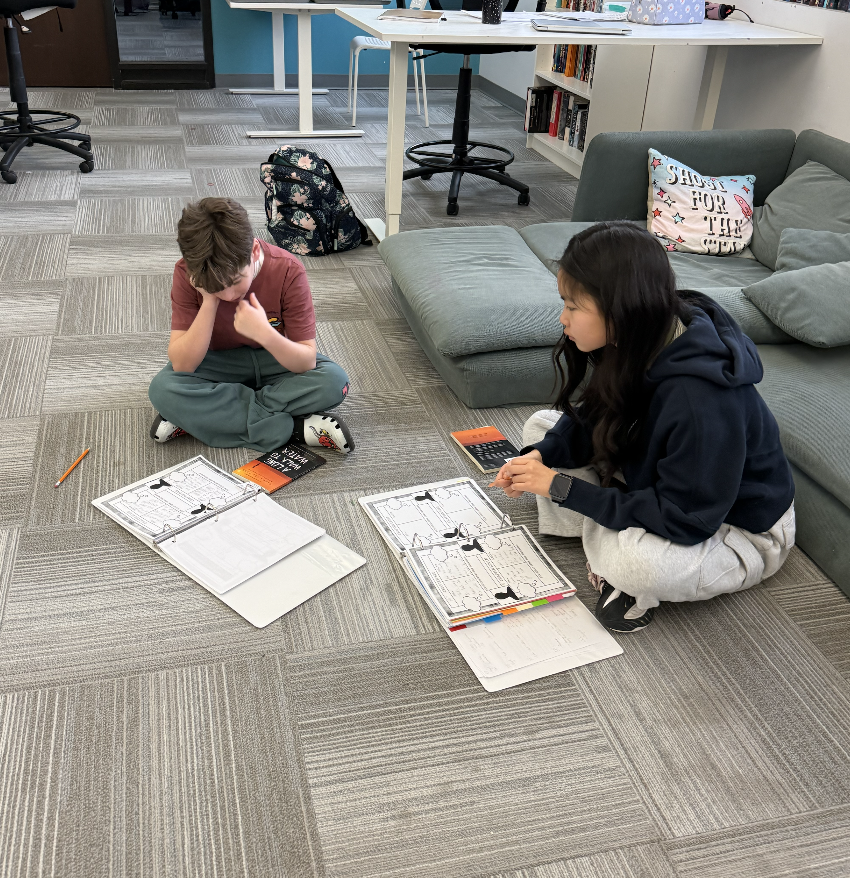
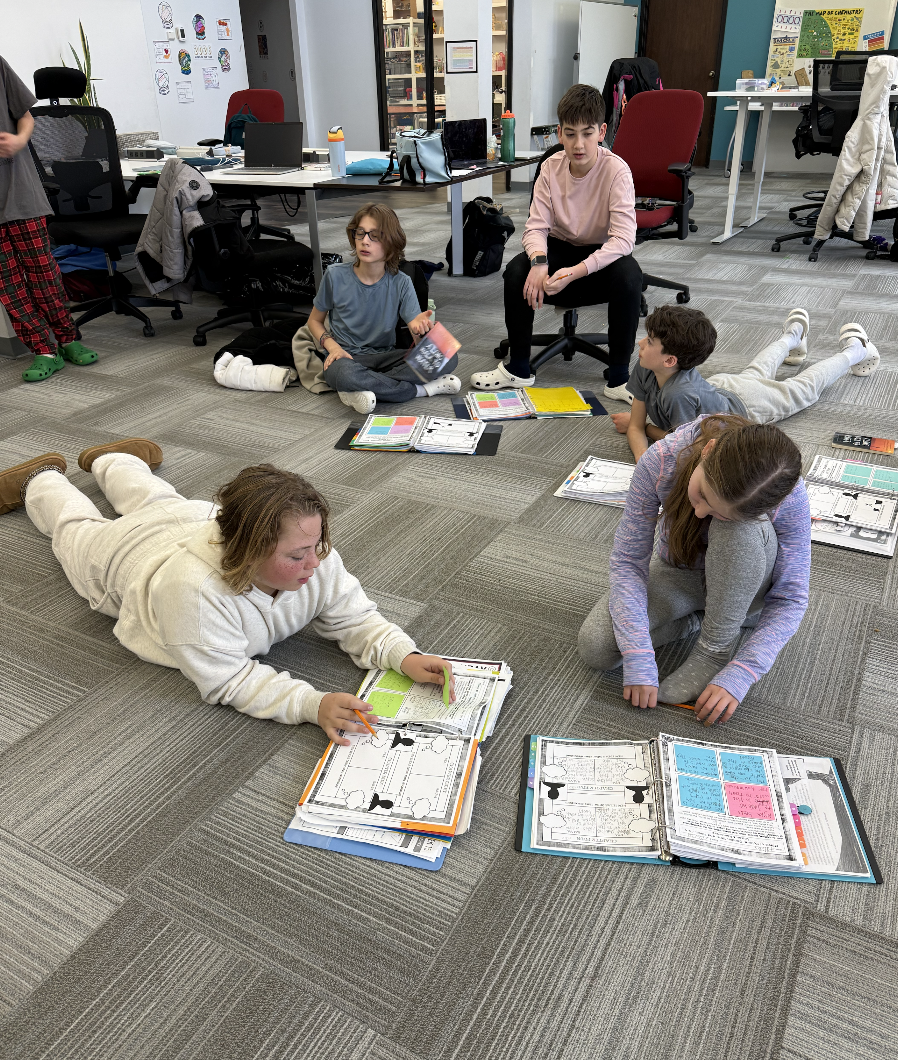
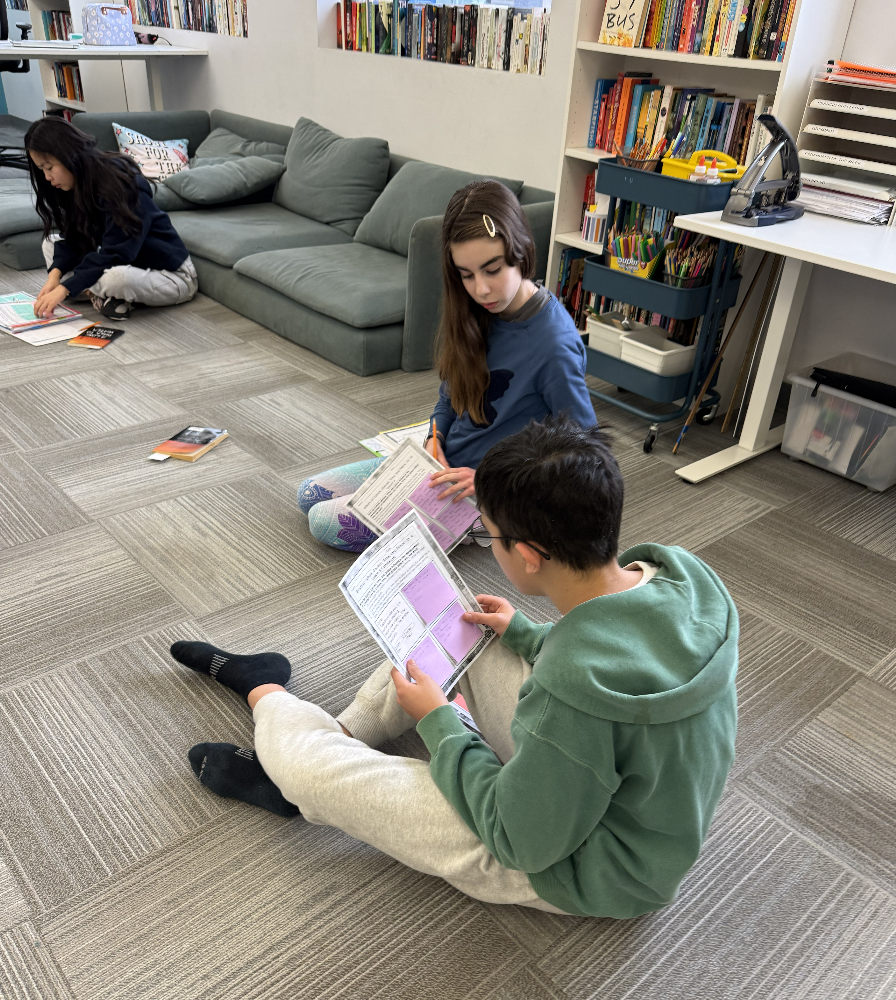
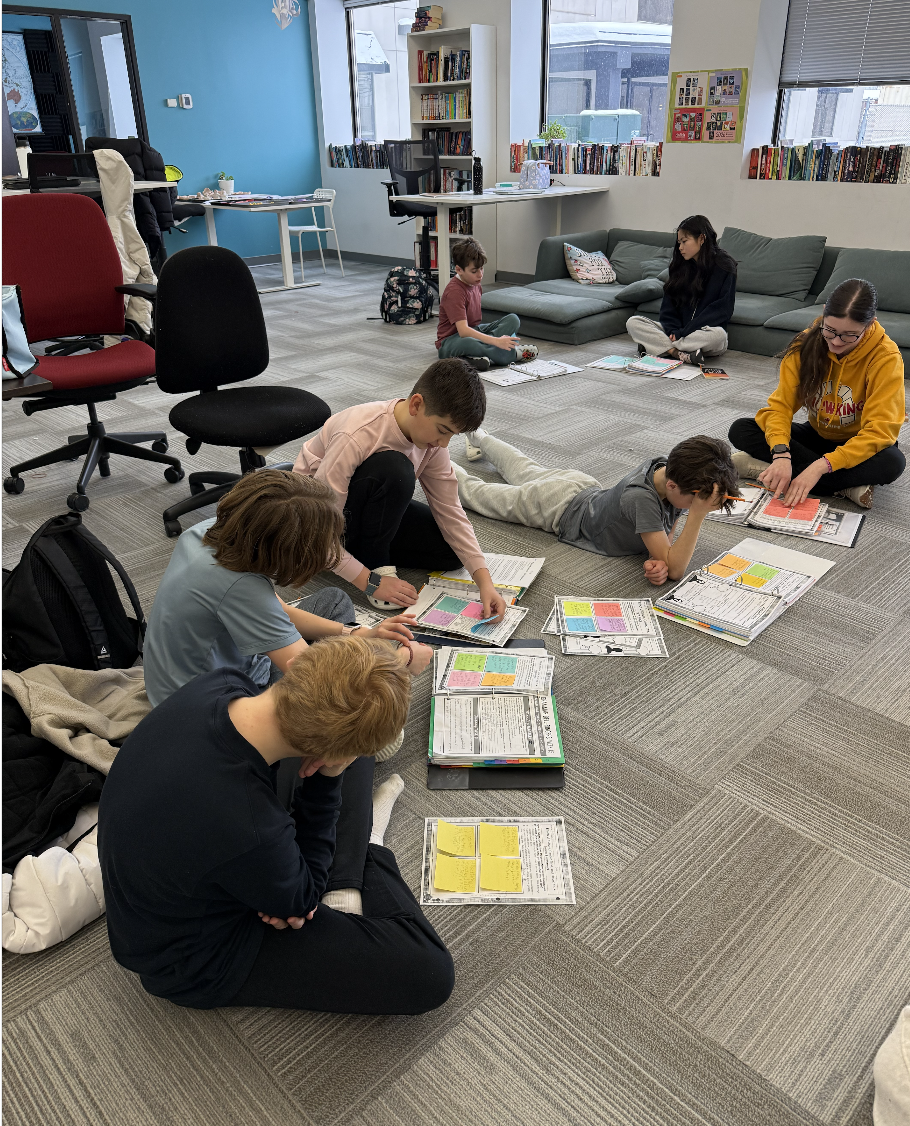
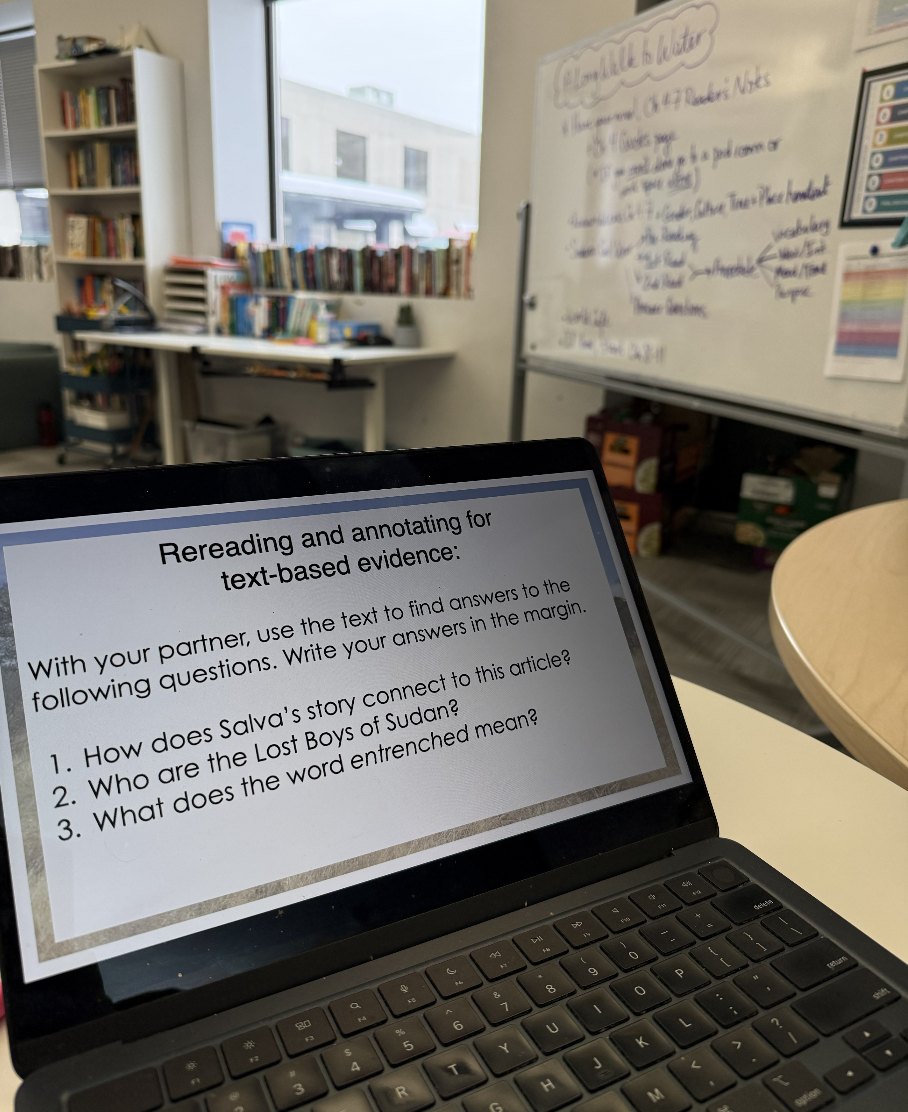
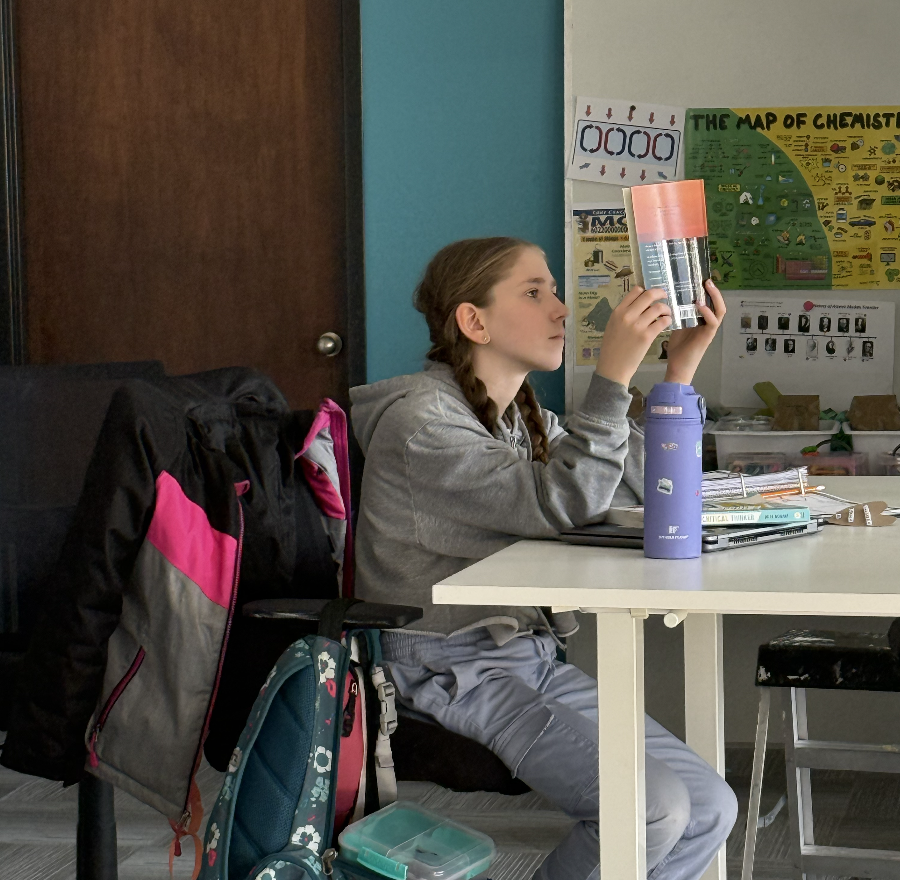
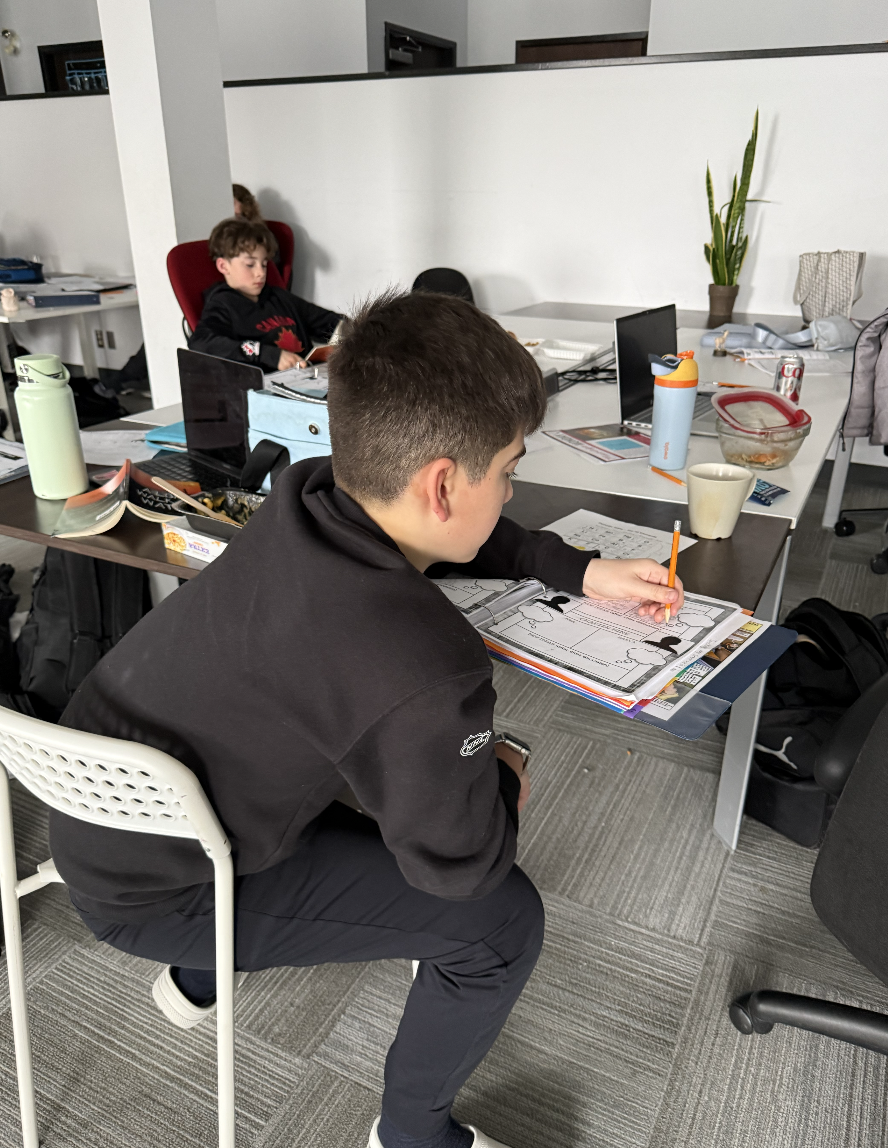
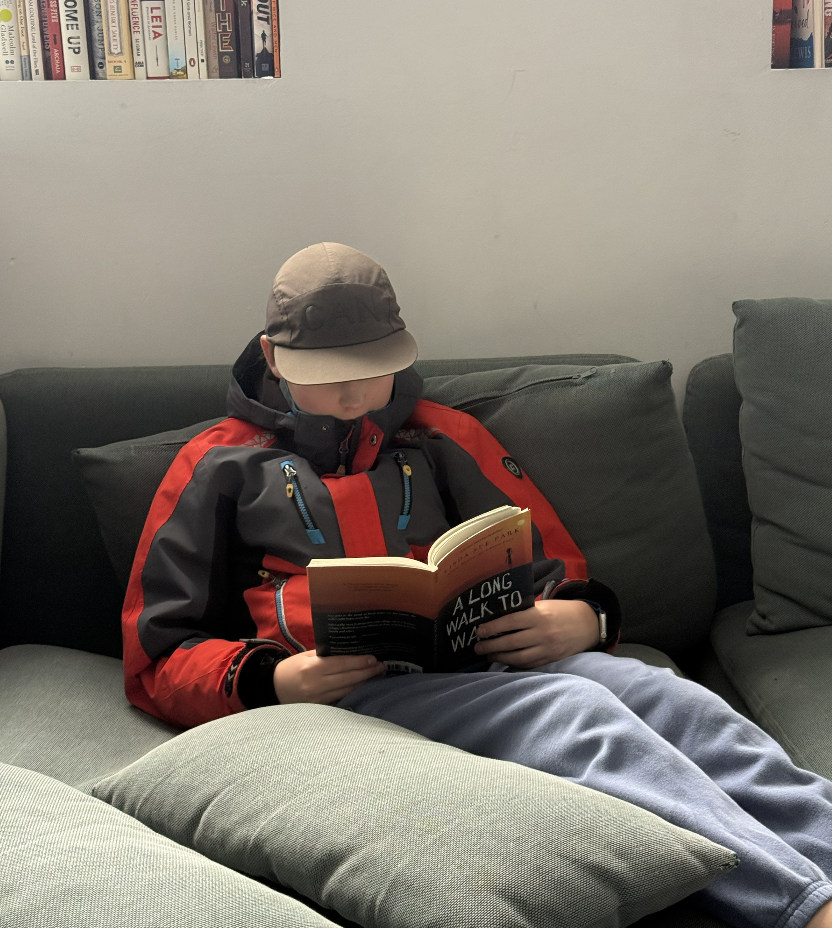
This week, Rebels met in pairs and then as a full studio to discuss their thoughts and impressions of Chapters 4 - 7 in Linda Sue Park's A Long Walk to Water. After ensuring that everyone was on the same page, pairs then discussed the quotes they chose that illustrated culture, gender, time, and place. Learners then received an article from April 7, 2006, entitled "Sudan's Civil War." After using our close pre-reading strategies to make predictions and scan the article, we read it aloud, pausing to ask questions and discuss surprising facts. For example, the article stated, "It (Sudan's Civil War) began in 1983 and was one of the longest-lasting and deadliest wars of the 20th century." Rebels questioned and brainstormed why they knew so much about World War I and World War II but hadn't heard of this conflict until our unit of study. Rebels then read the article one more time independently and used their annotation skills to identify new vocabulary, highlight interesting facts, and write down any questions they still had. Back in pairs, learners then answered a few questions before discussing their answers as a full studio. With their remaining workshop time, Rebels began reading "Sudanese Tribes Confront Modern War," an article published in the Washington Post on July 7, 1999. The pairs read the first three paragraphs aloud and discussed what the word "both" refers to and why the author uses it four times. They also wrote what they believed temporal meant and explained the last sentence in their own words. Rebels will need to read Chapters 8 through 11 and complete their Reader's Notes before next week's workshop.
Math Lab
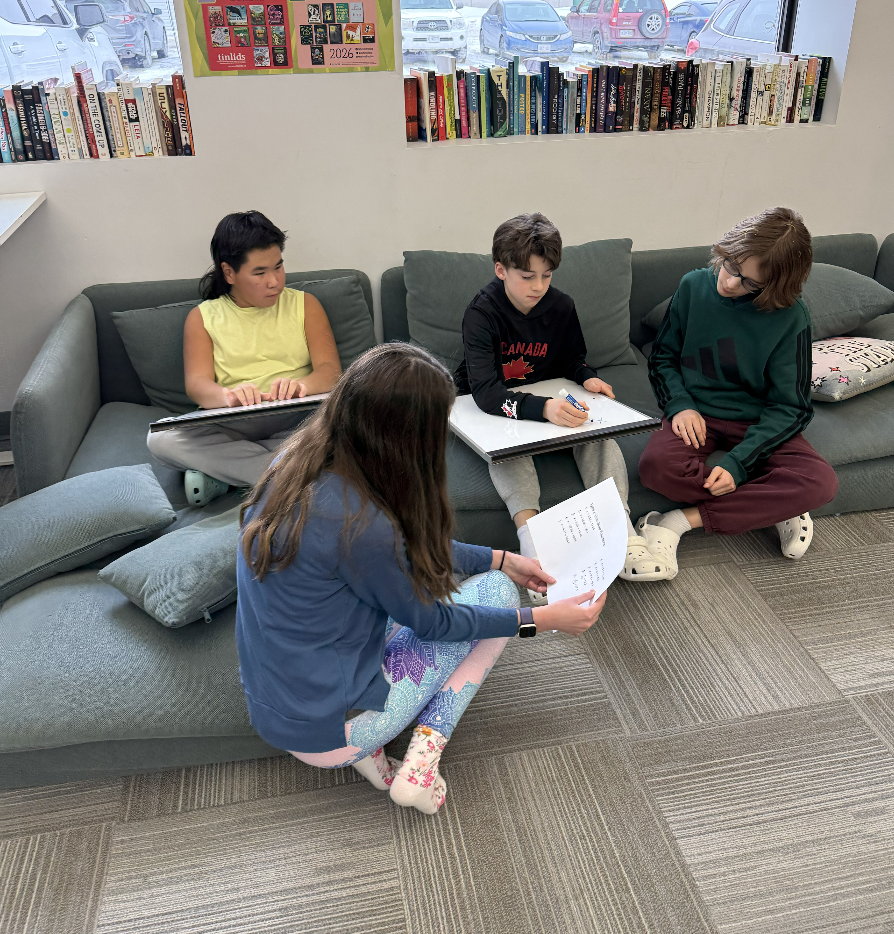
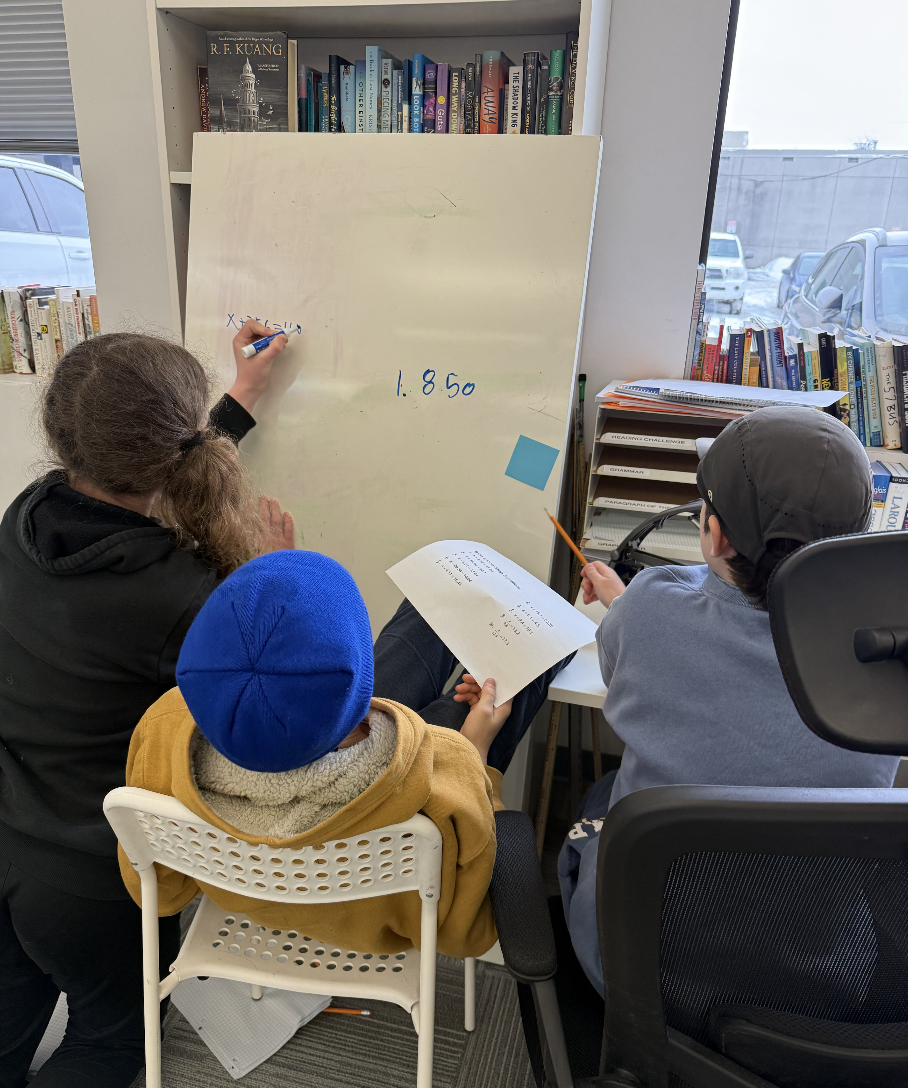
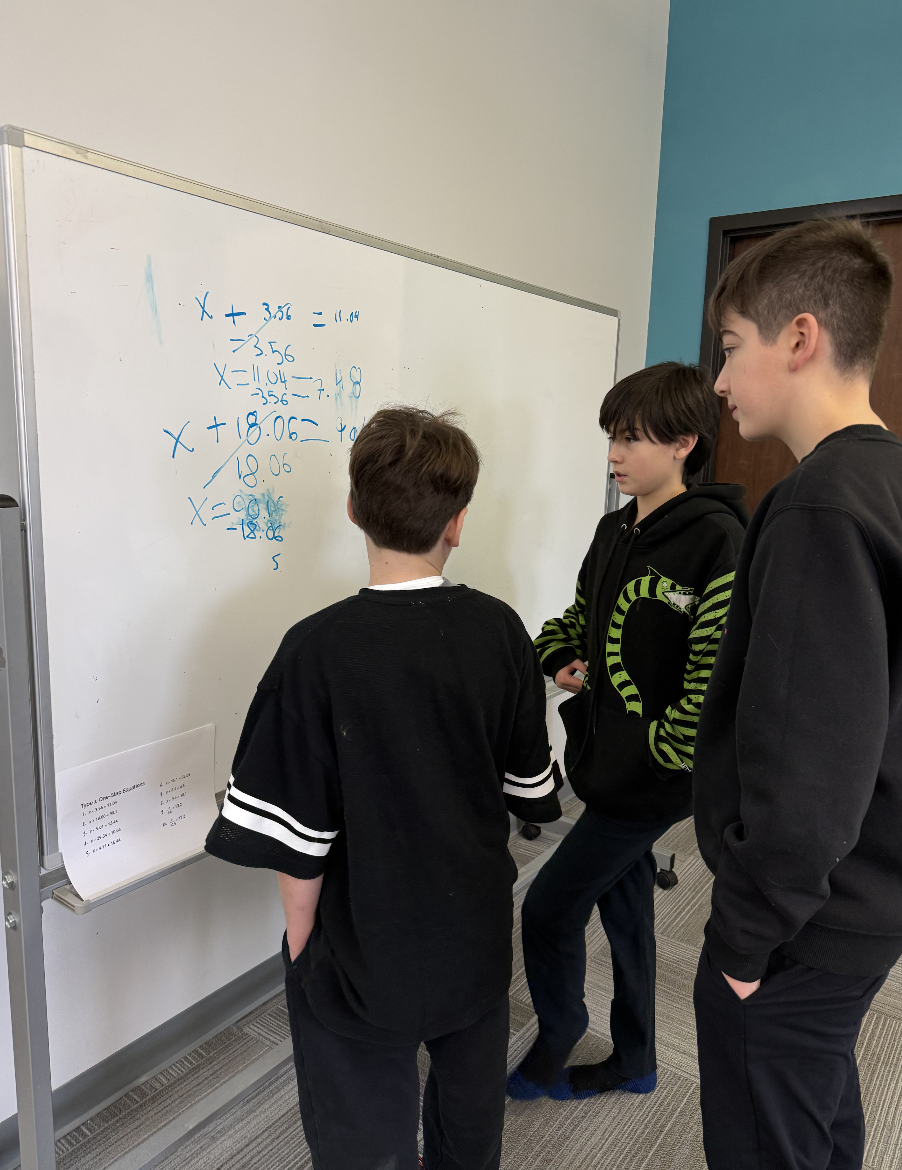
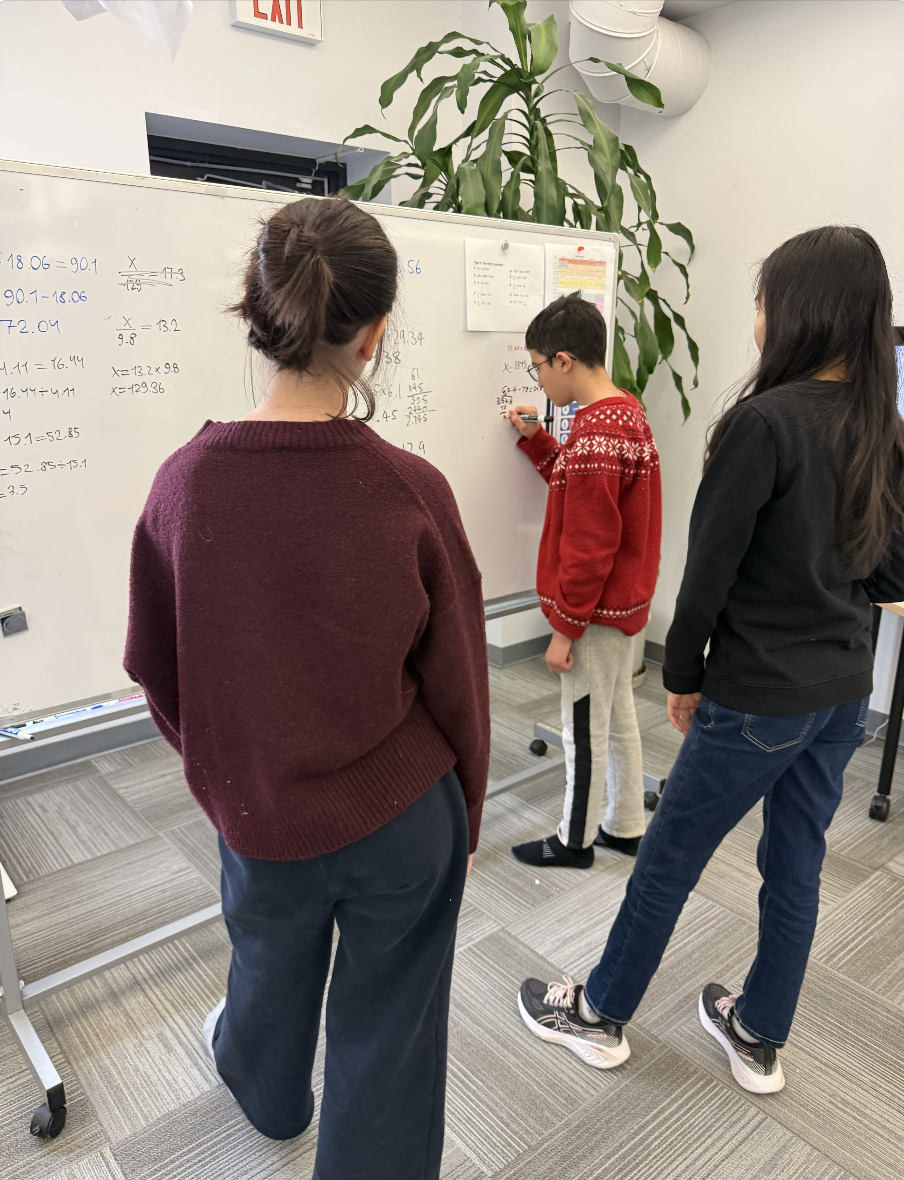
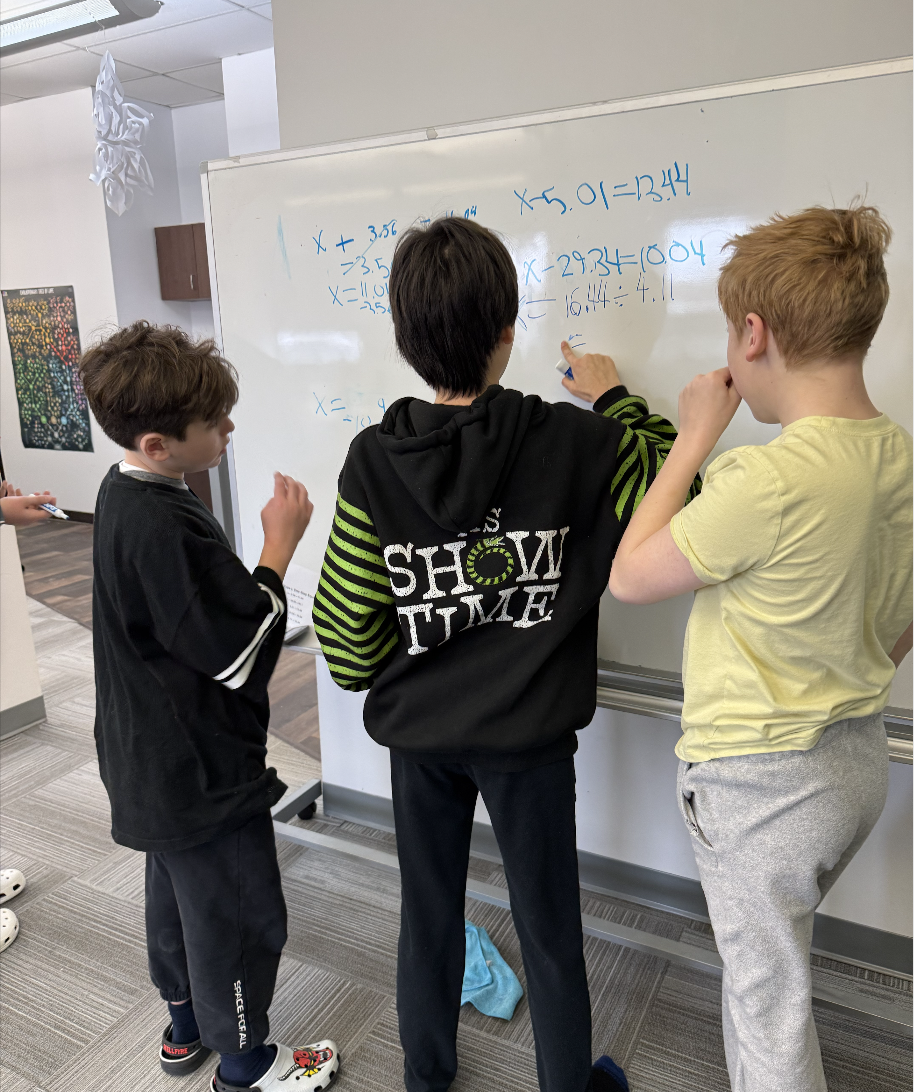
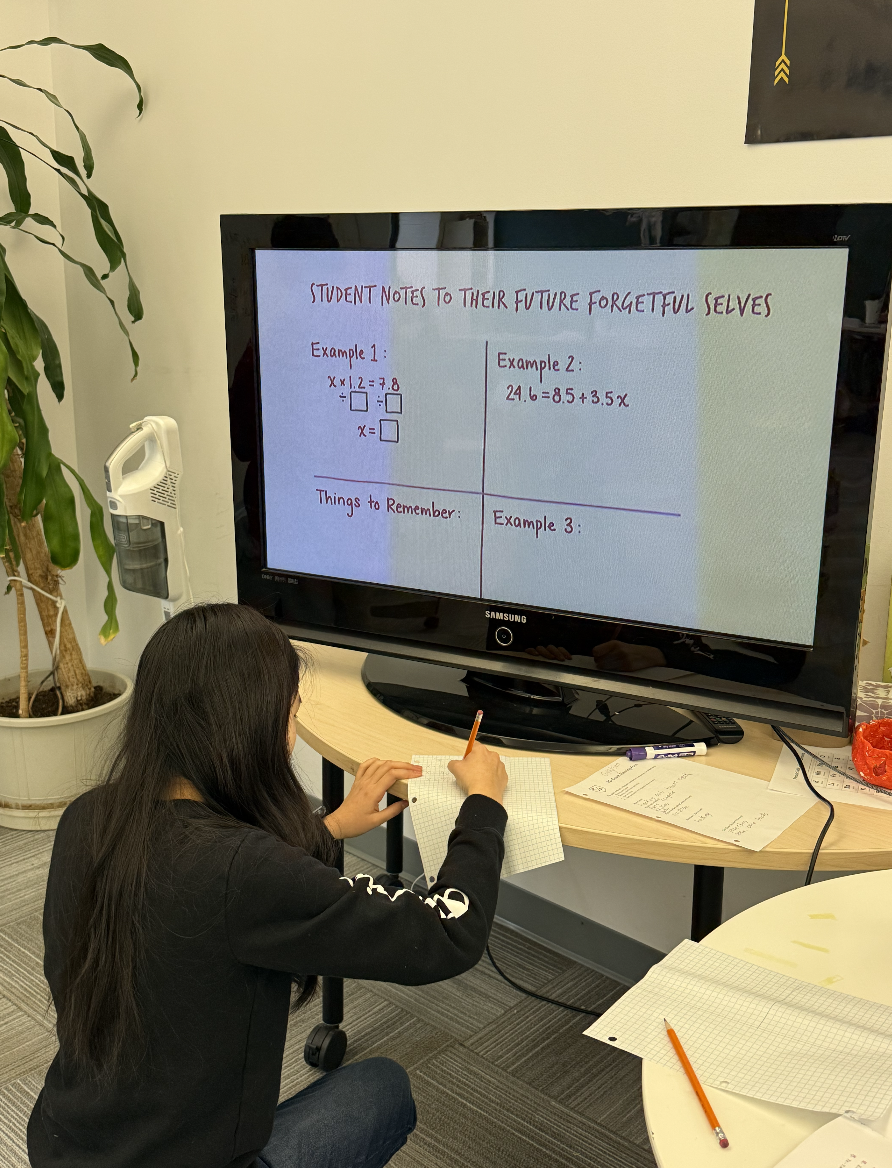
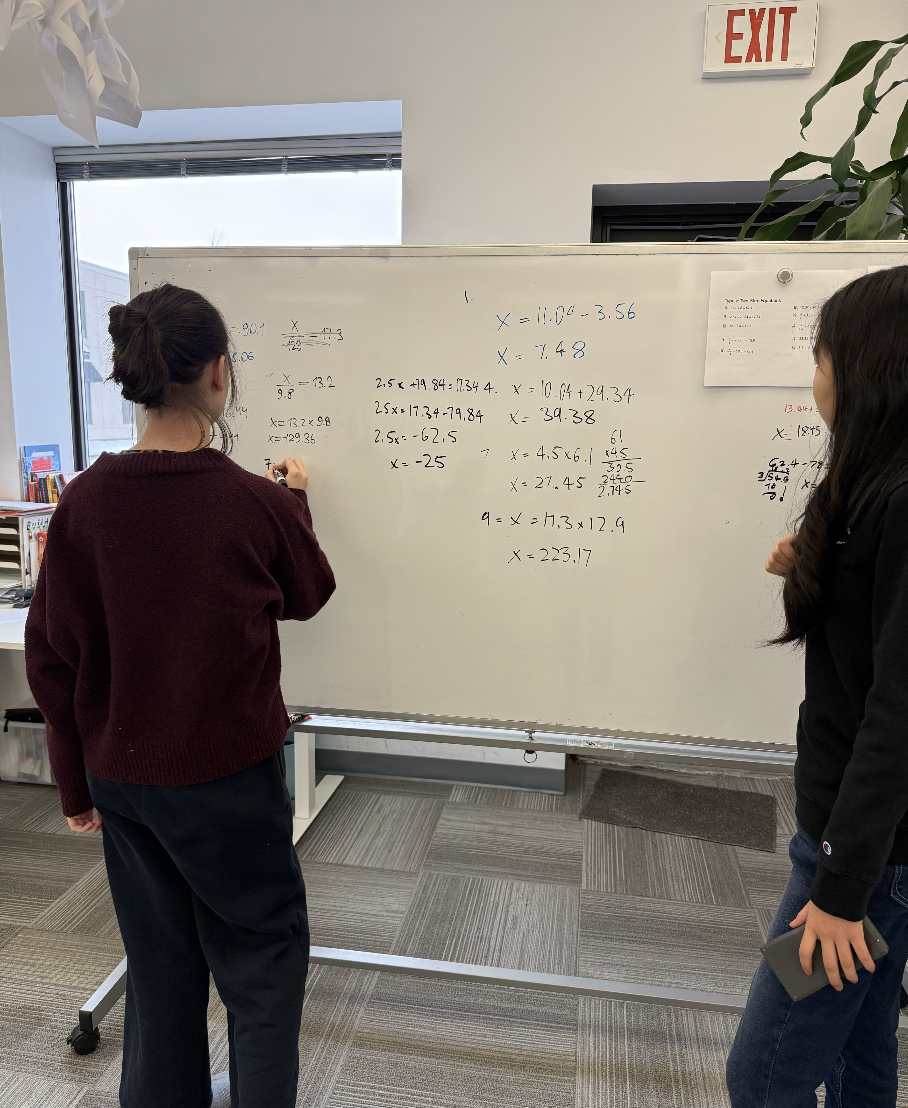
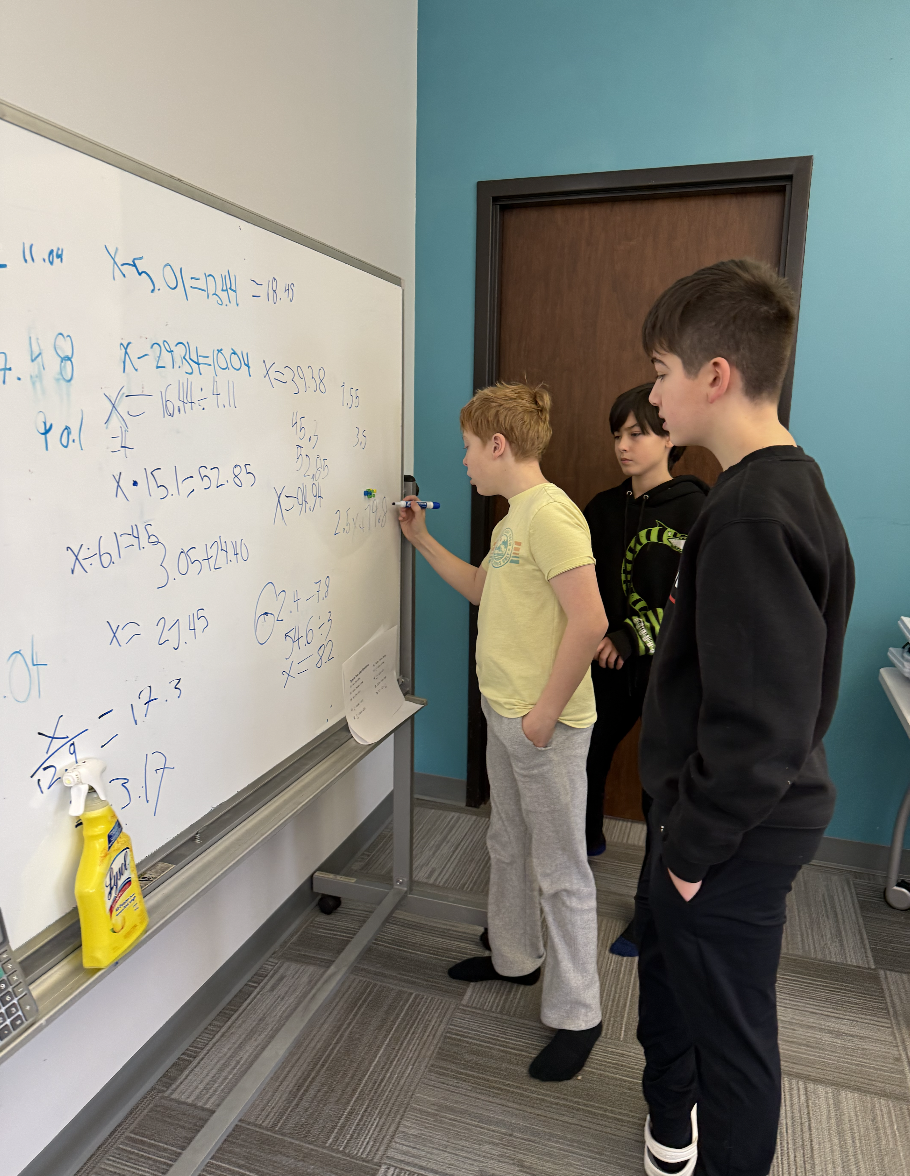
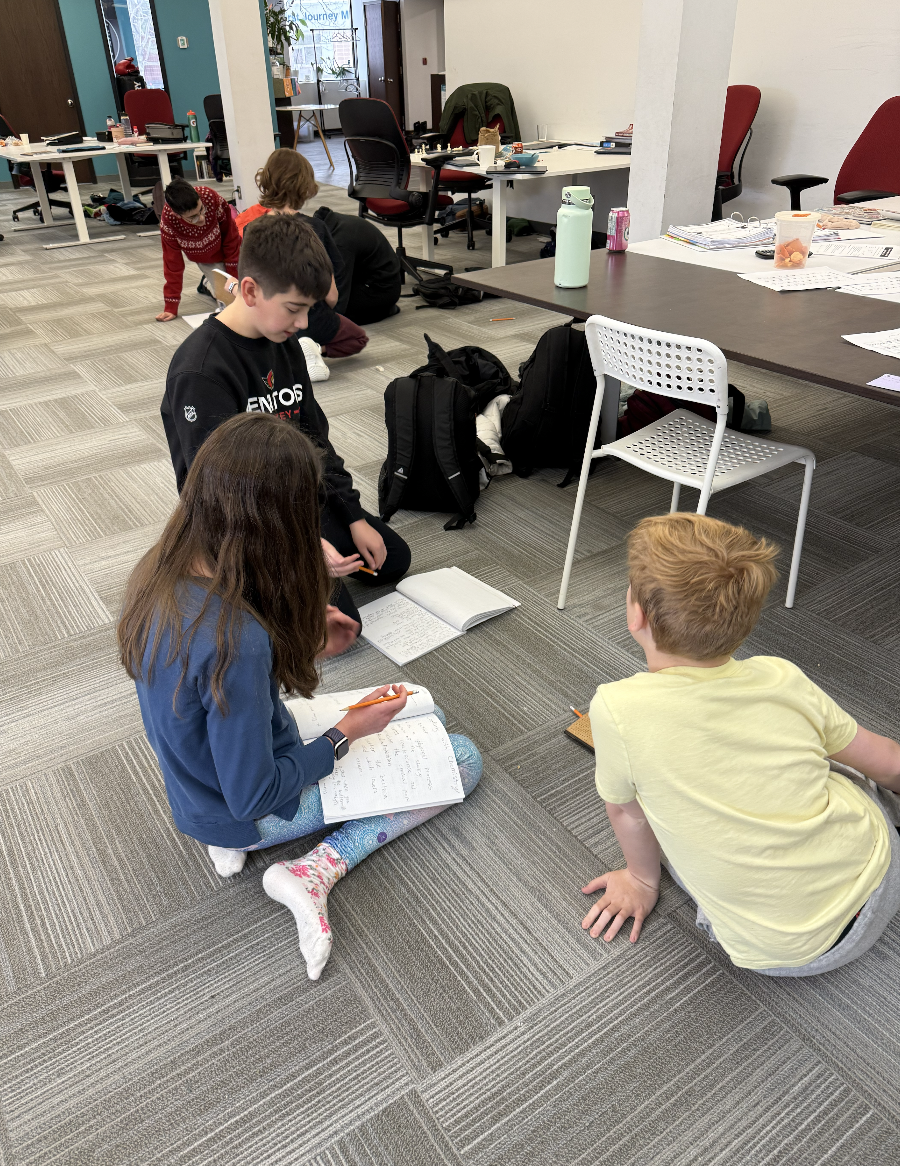
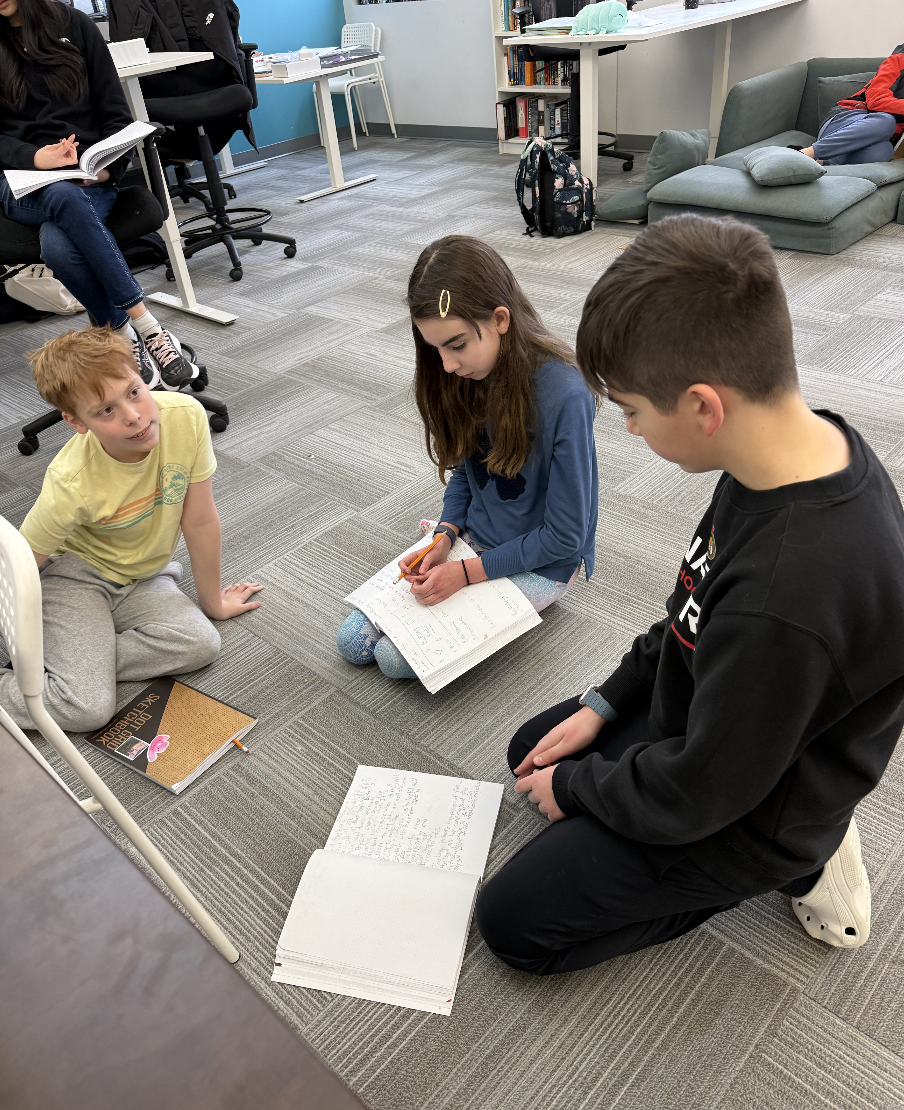
This week in Math Lab, we used our Building Thinking classroom strategies to solve multi-step equations! After meeting as a studio to review terms, practice a few problems, and assign our random groupings, Rebels got to work on Task 1: One-Step Equations. Sharing the marker and talking through each problem as a group of three, learners completed the set before moving on to the Two-Step equation task. If groups finished, they received Task 3: Multi-Step Equations. We then met as a studio to write our notes and complete three consolidation problems. Those working towards the Honours badge were given an additional set to solve before next week's lab.
French
This week in French, we played a movement game called Gauche-Droite (Left–Right) in the gym, where learners had to act out words as they were said to review new food vocabulary. We then watched a video about the history of food trucks in Montréal and learned why they were banned until fairly recently. After that, we looked at images of the many food trucks that have appeared in Montréal since the pandemic, discussing their designs, aesthetics, and menus. Then, the Rebels designed their own ideal food truck, began imagining a menu, and chose a name for their business, encouraging creativity while using French vocabulary.
Quest - Cooking with Chemistry
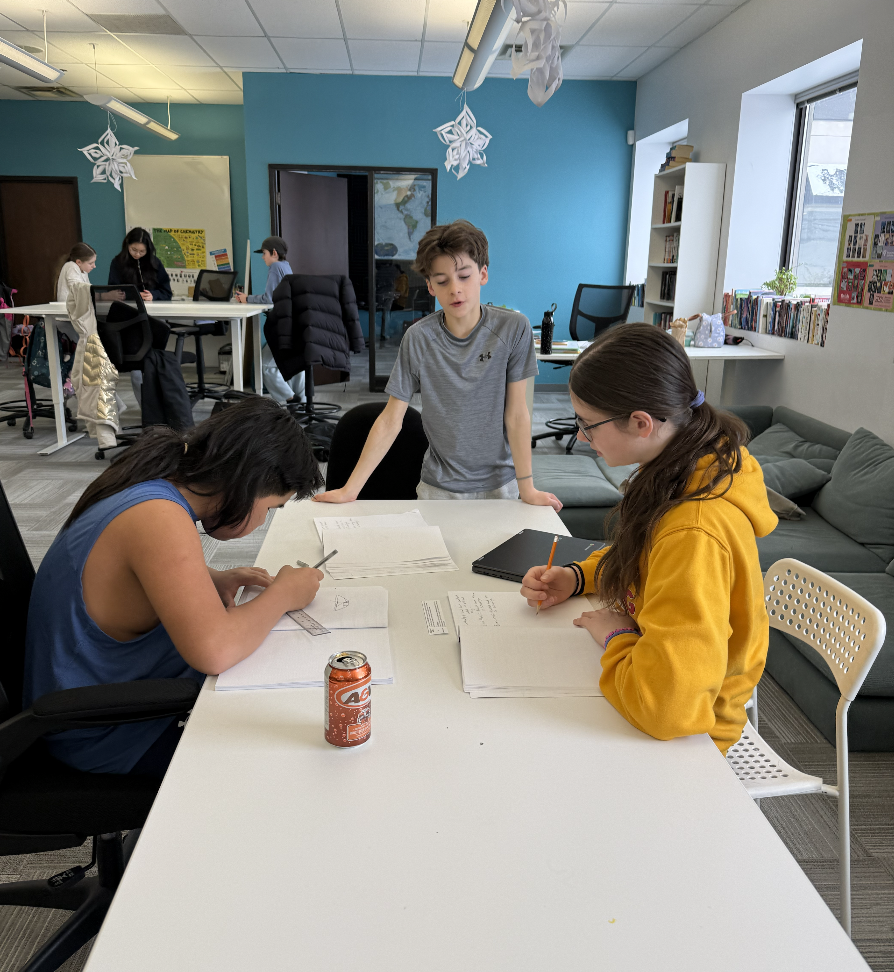
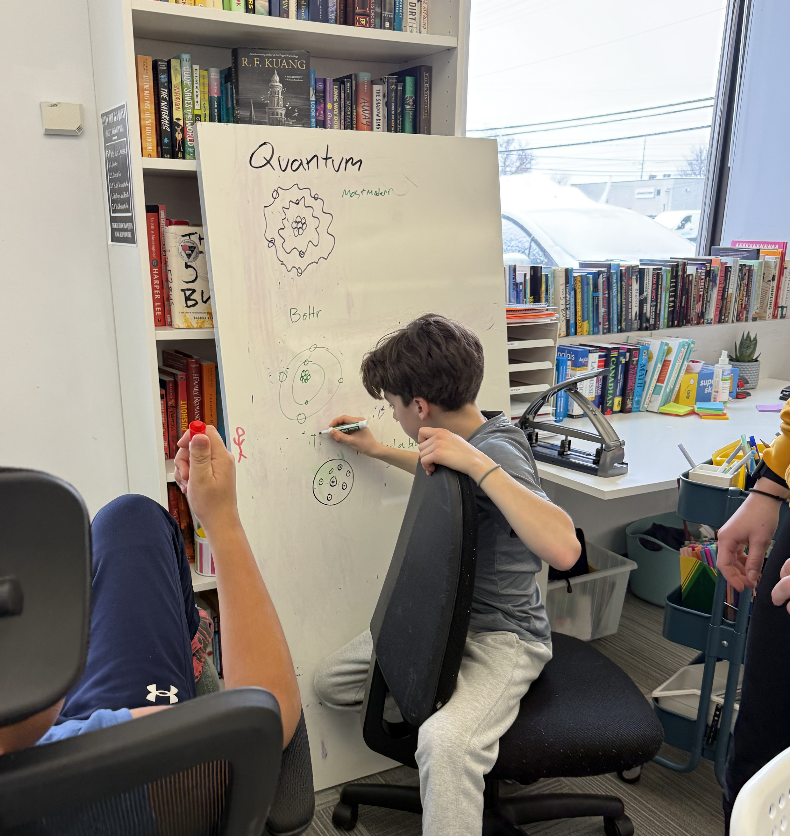
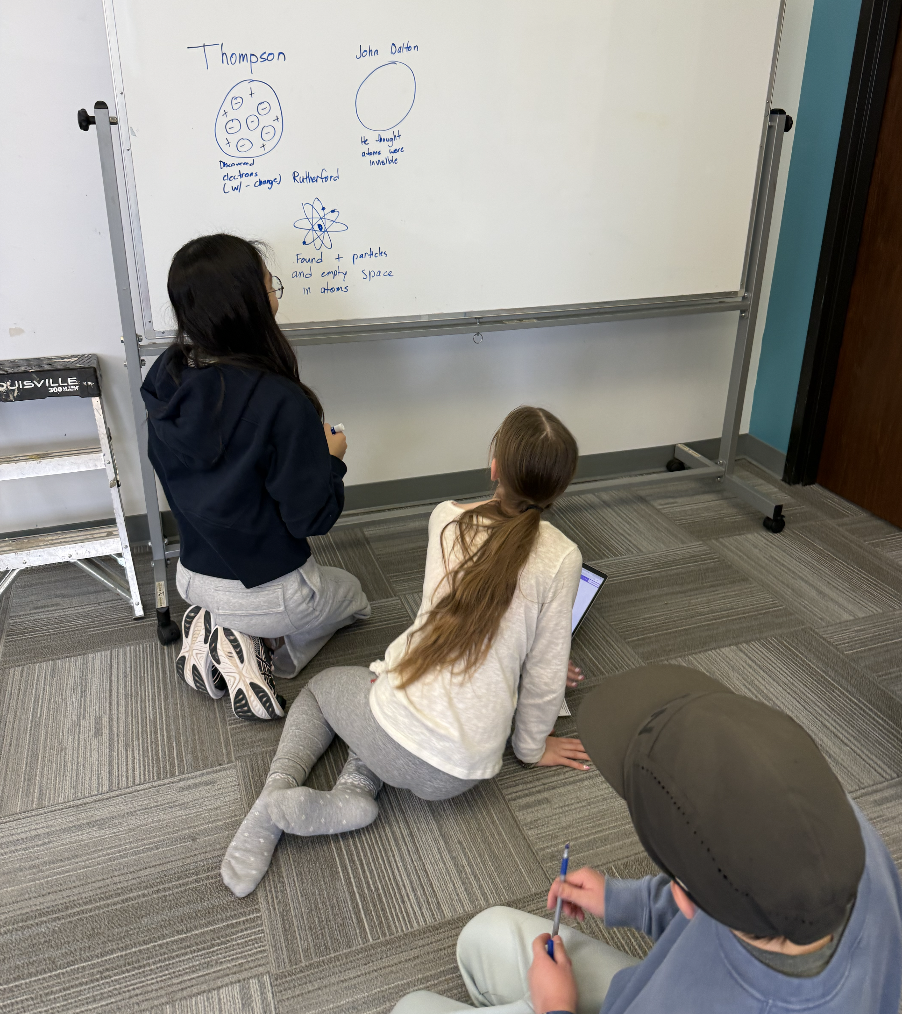
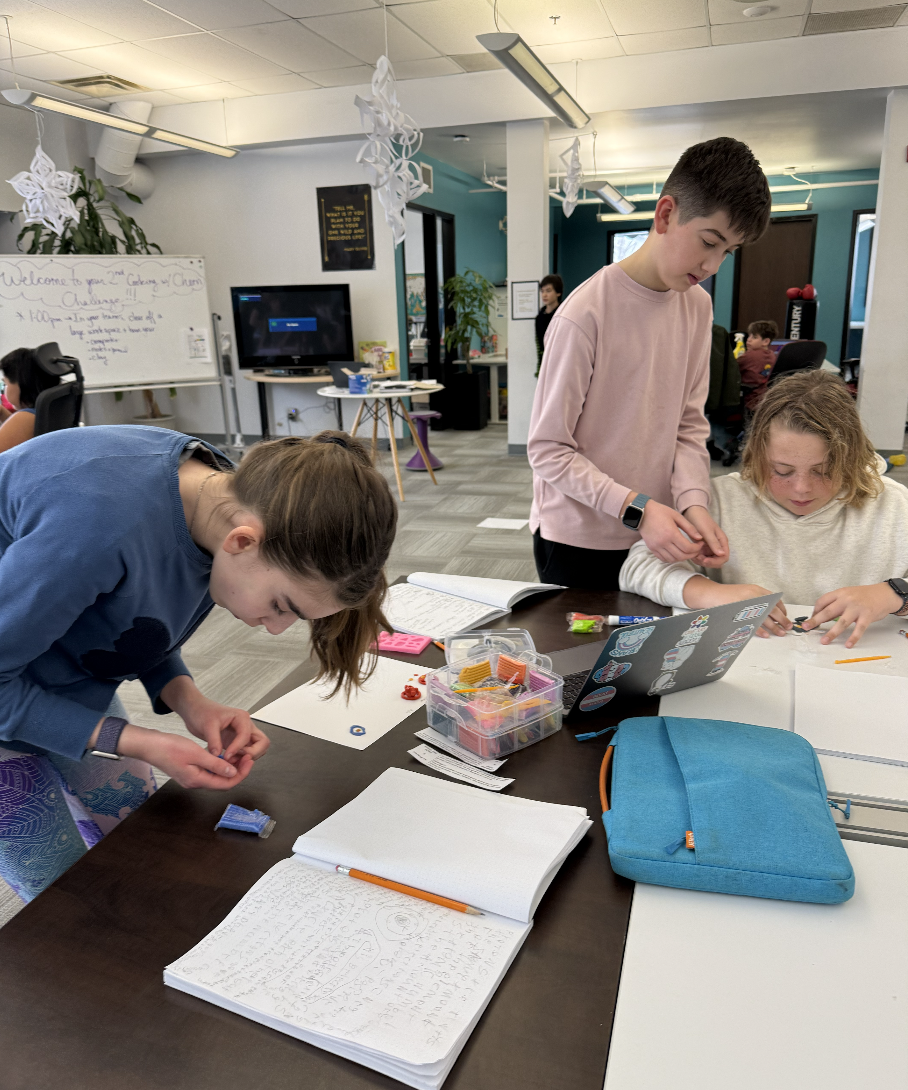
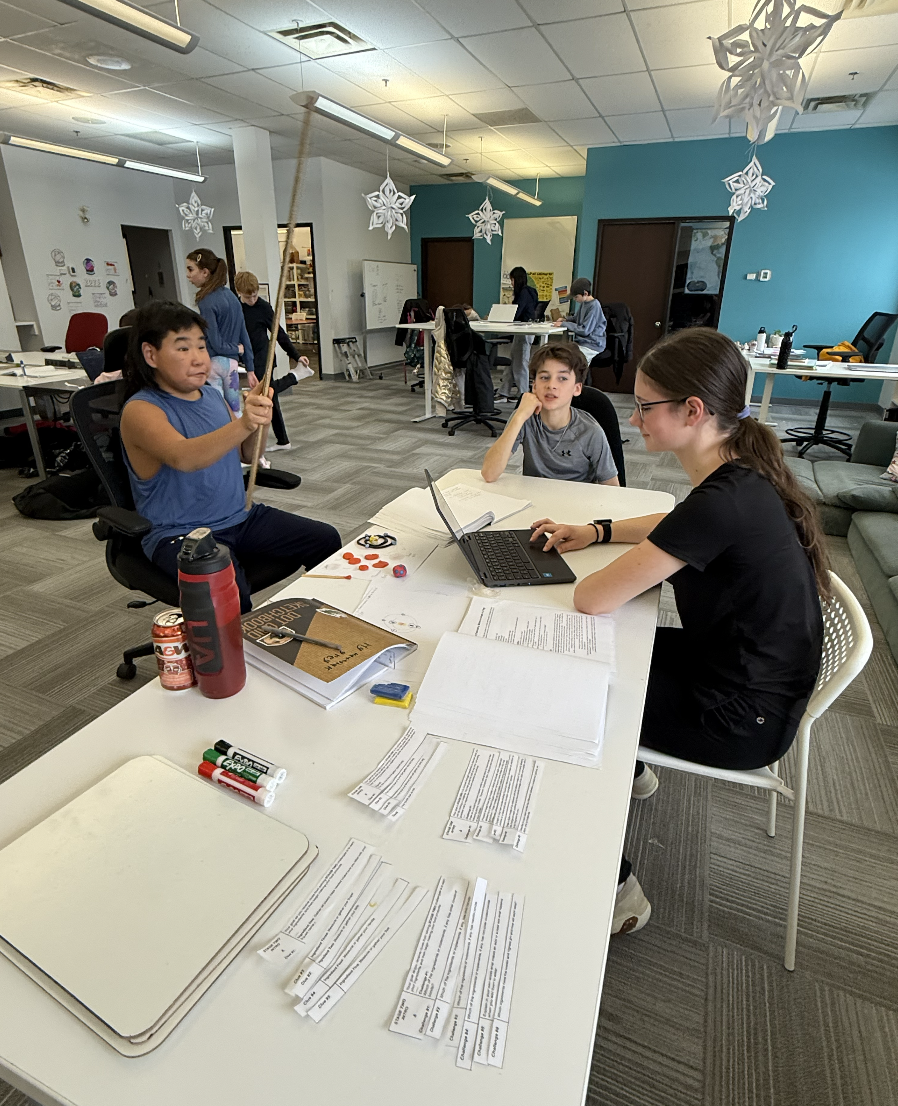
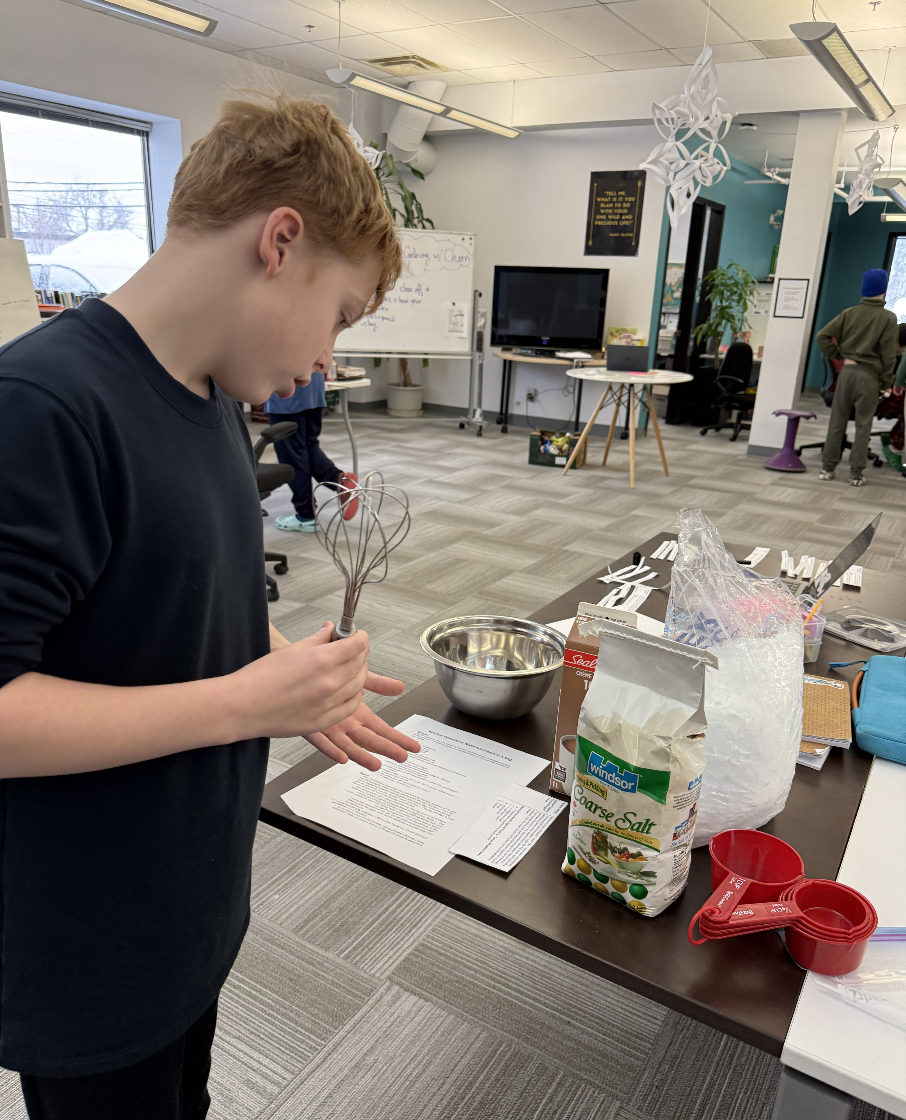
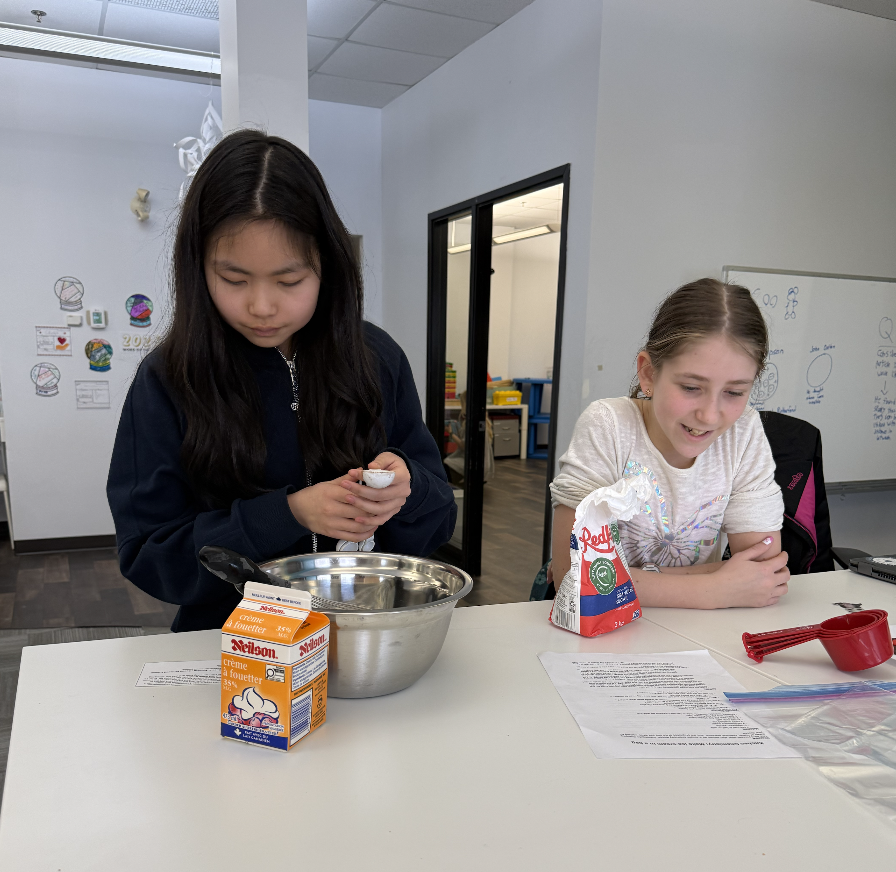
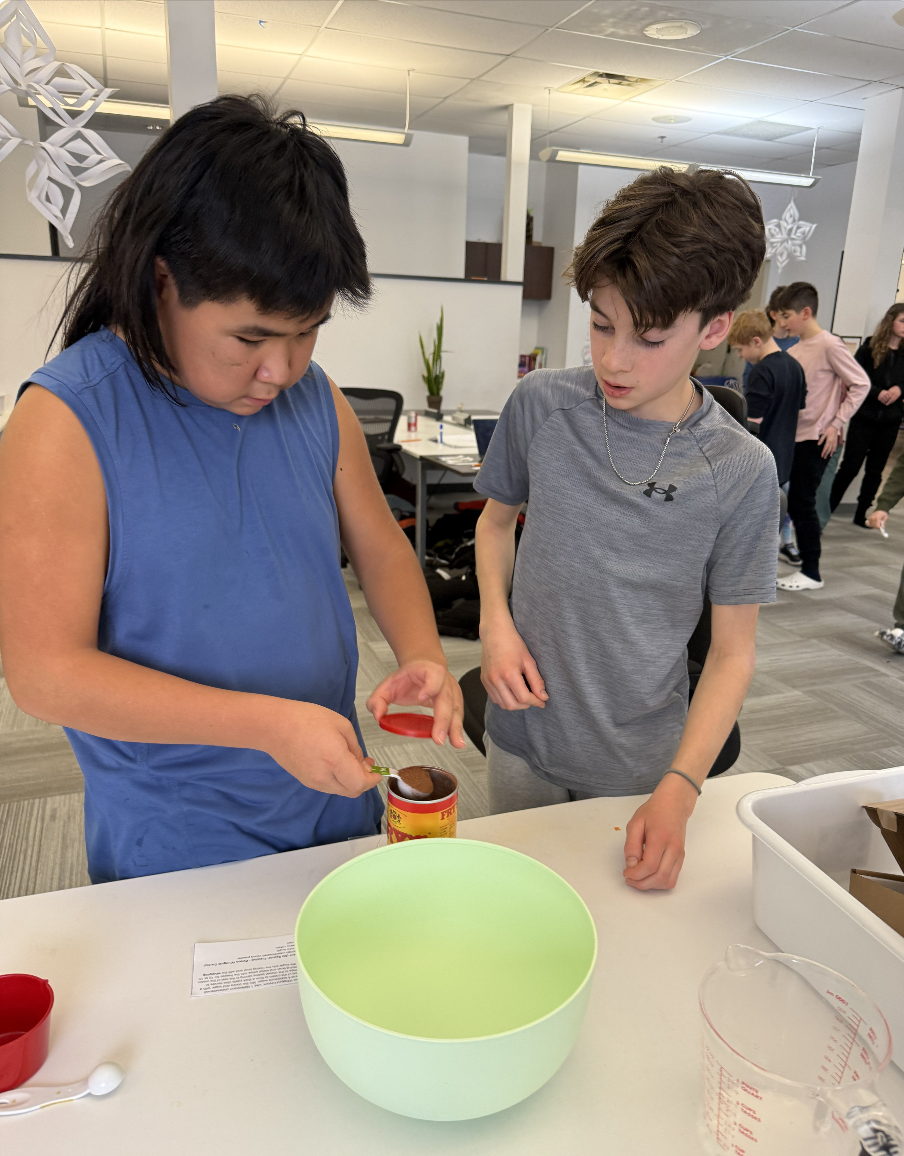
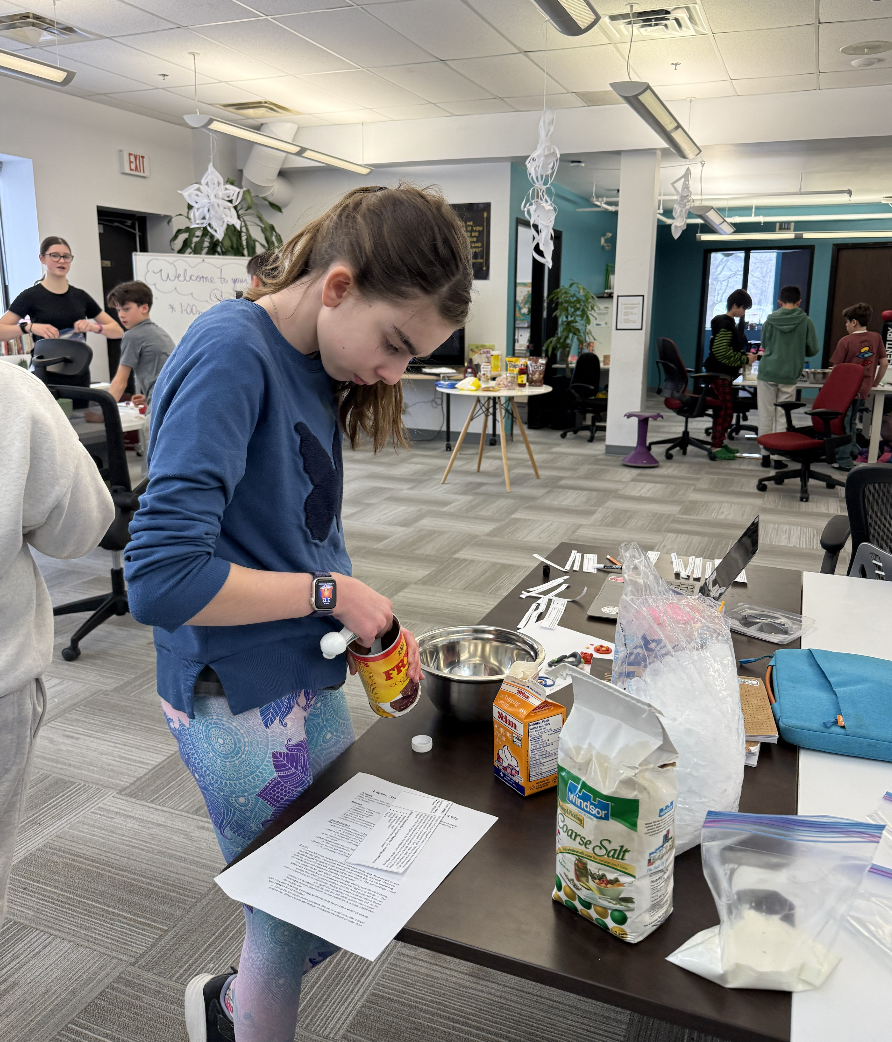
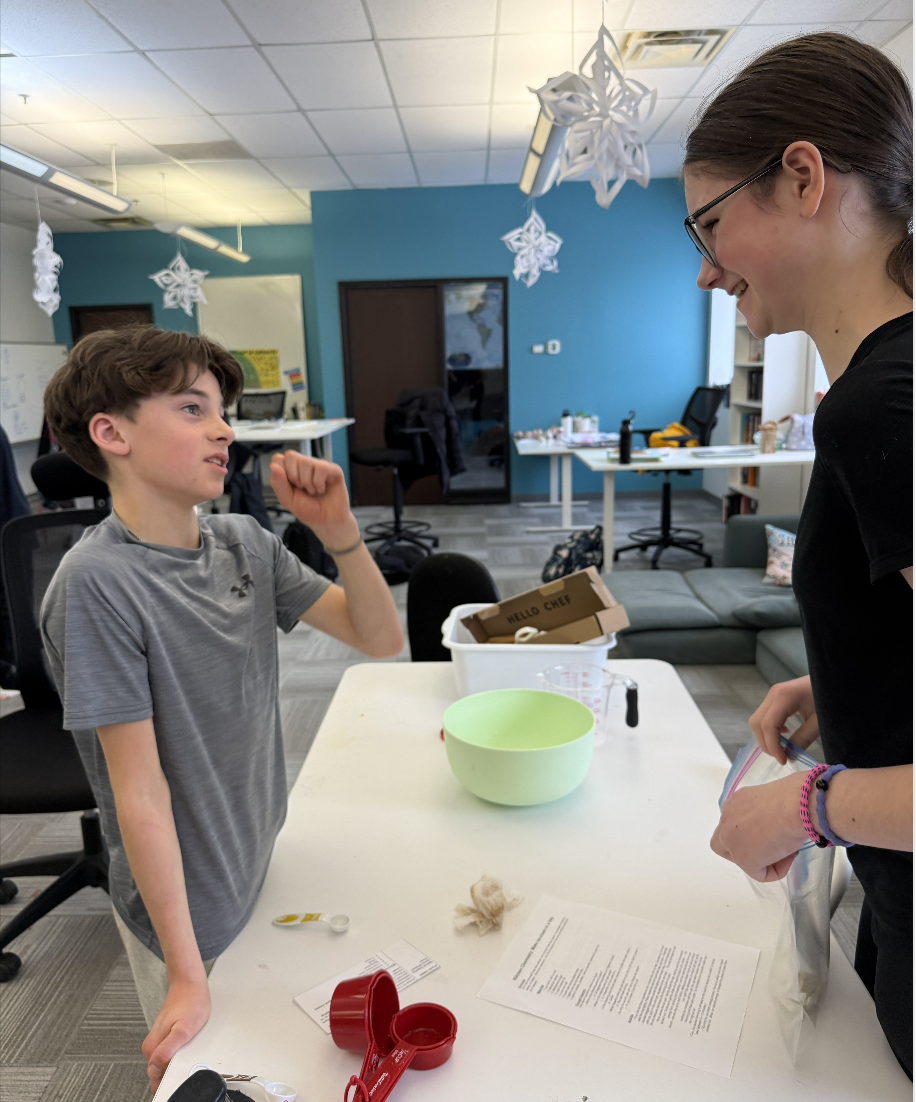
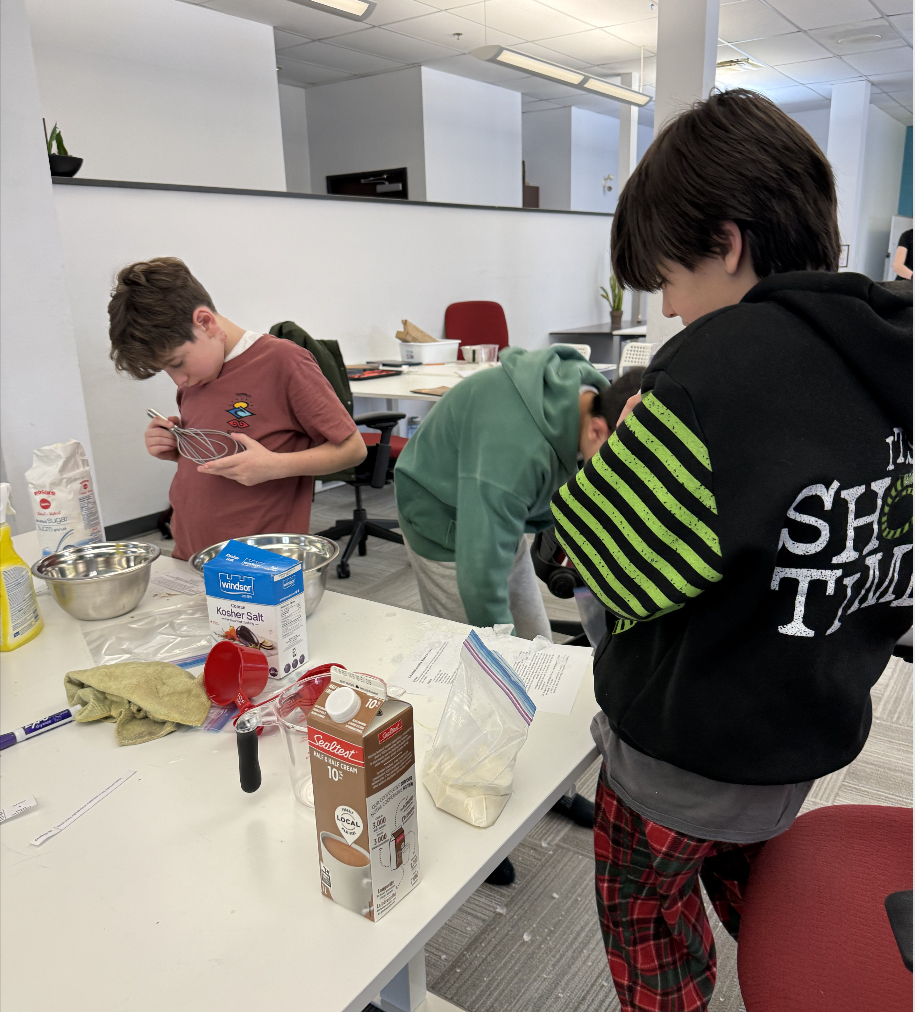
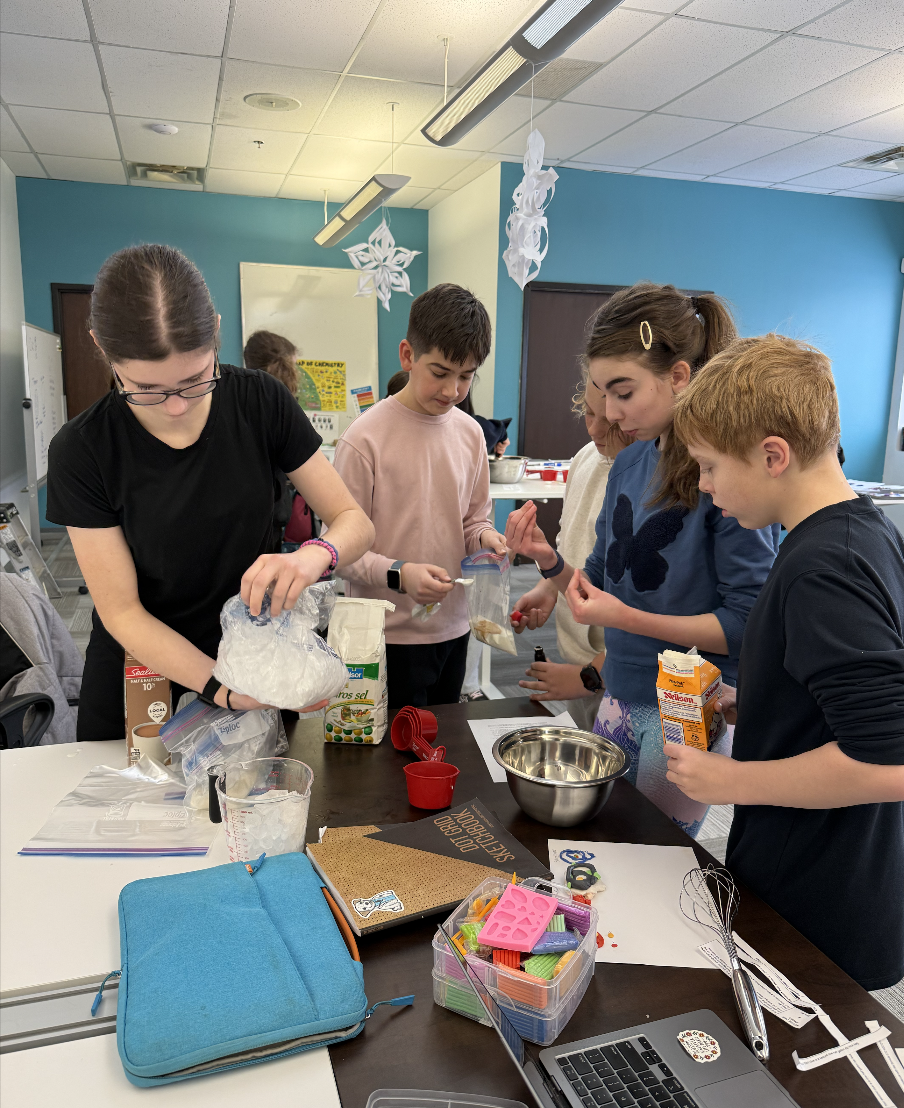
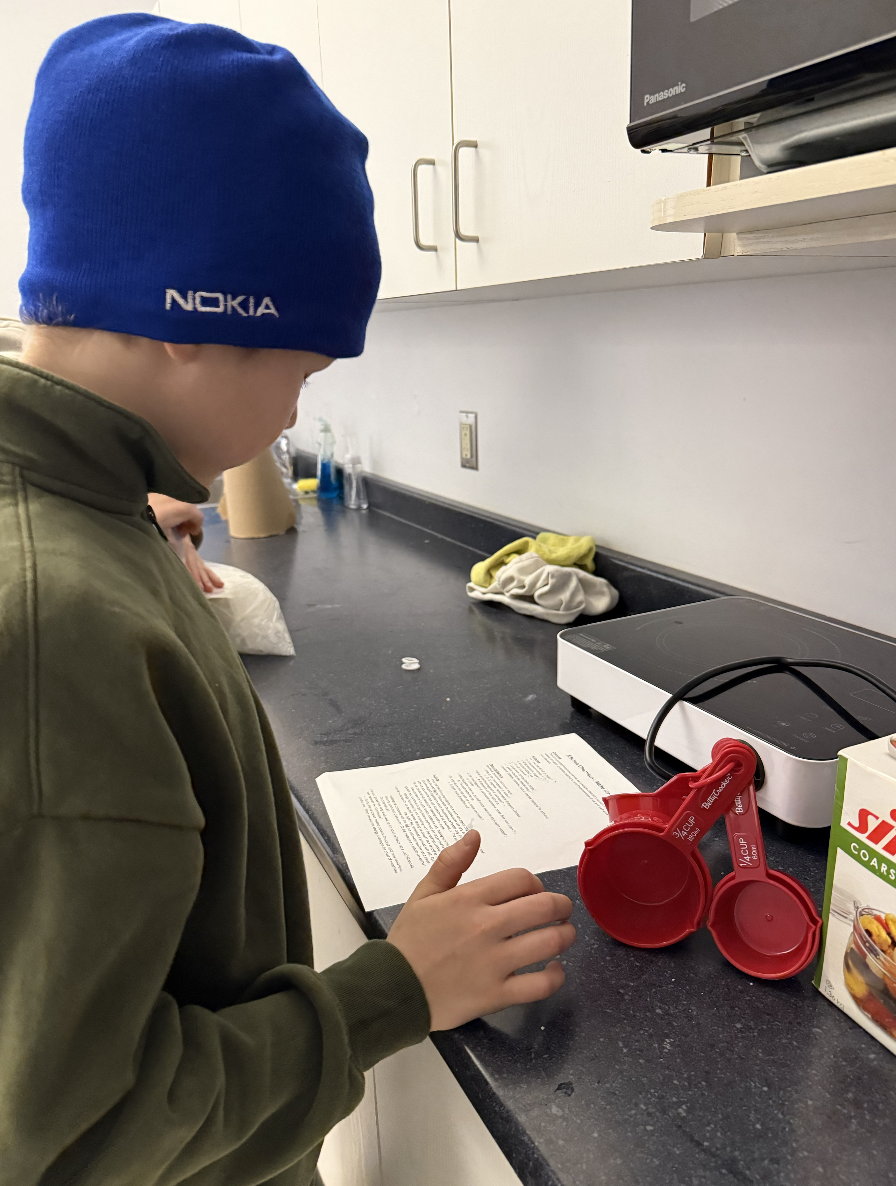
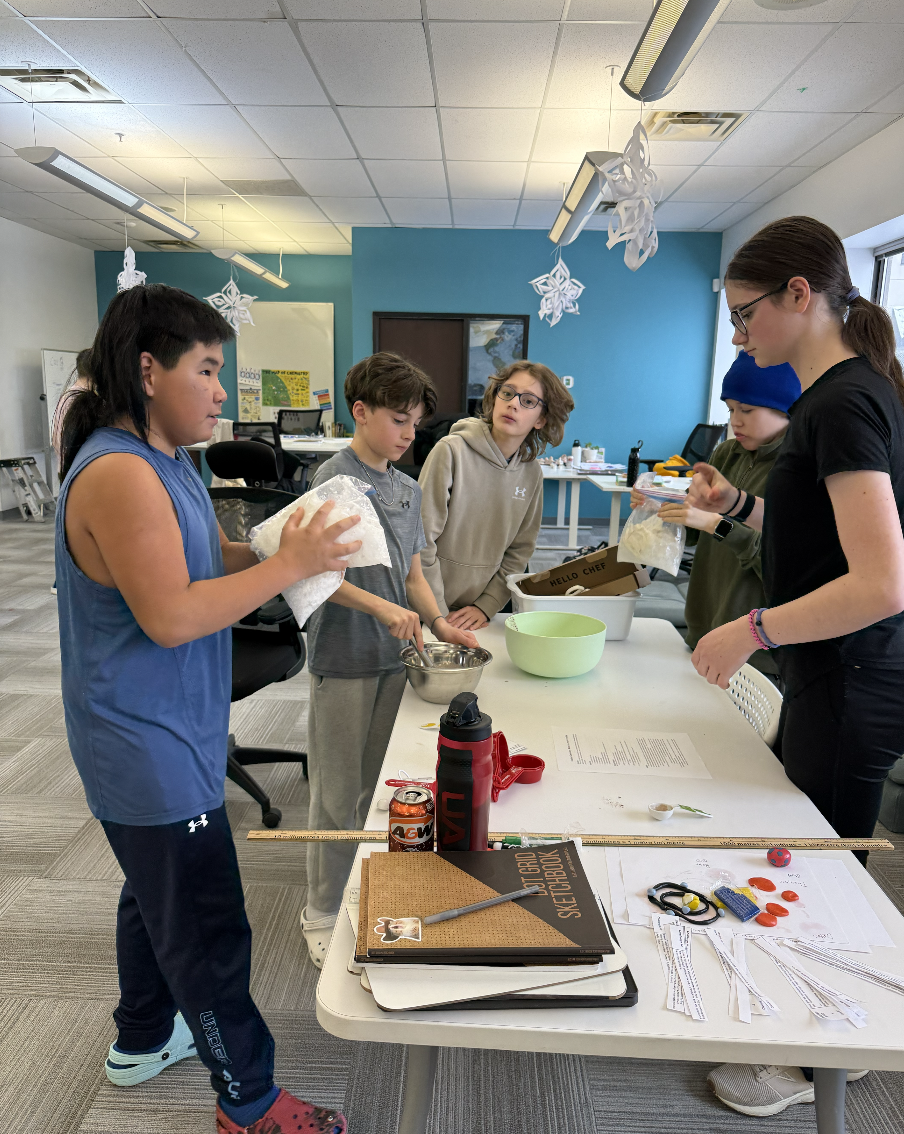
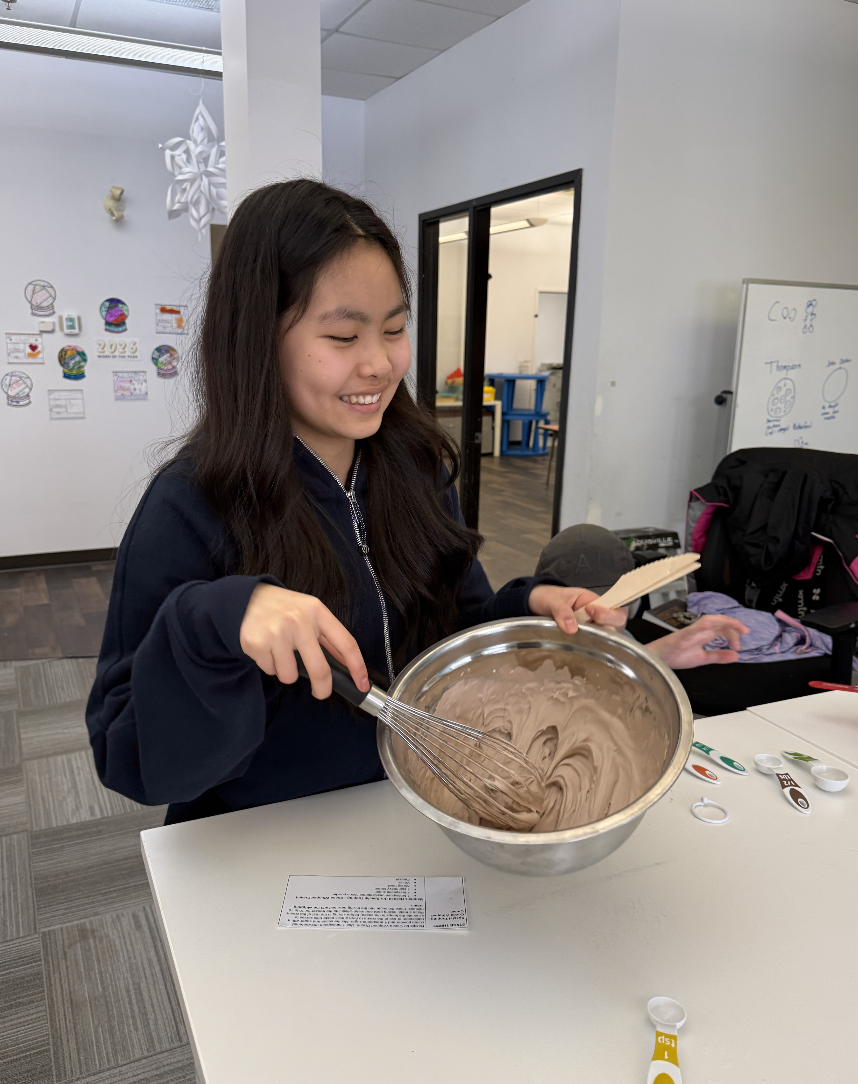
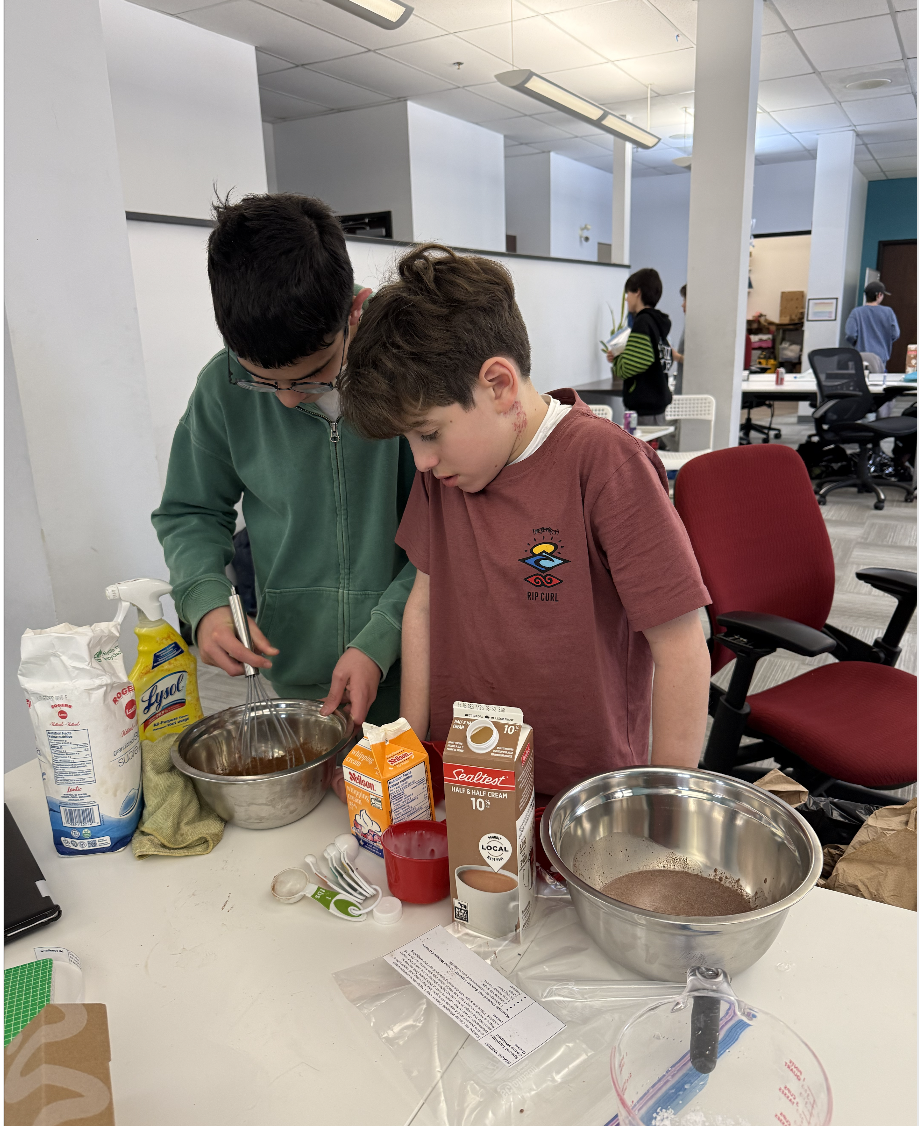
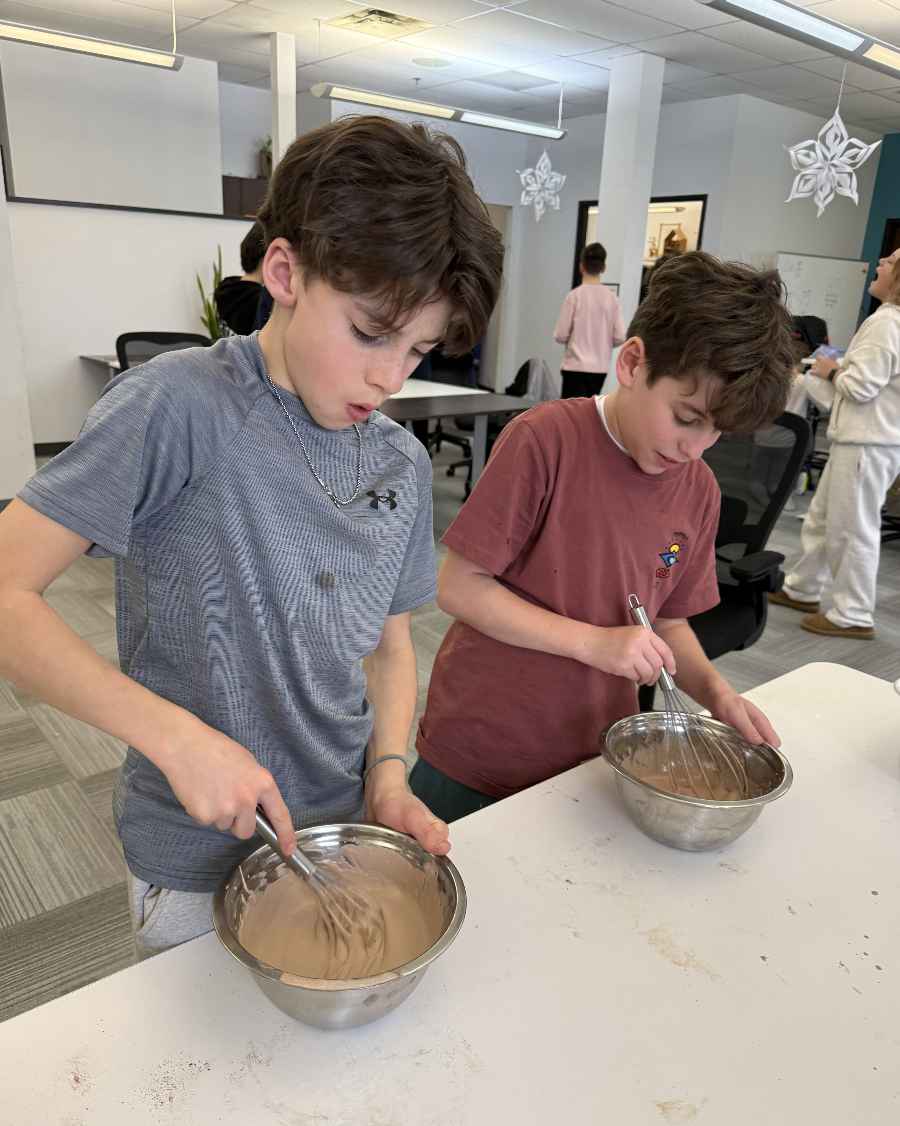
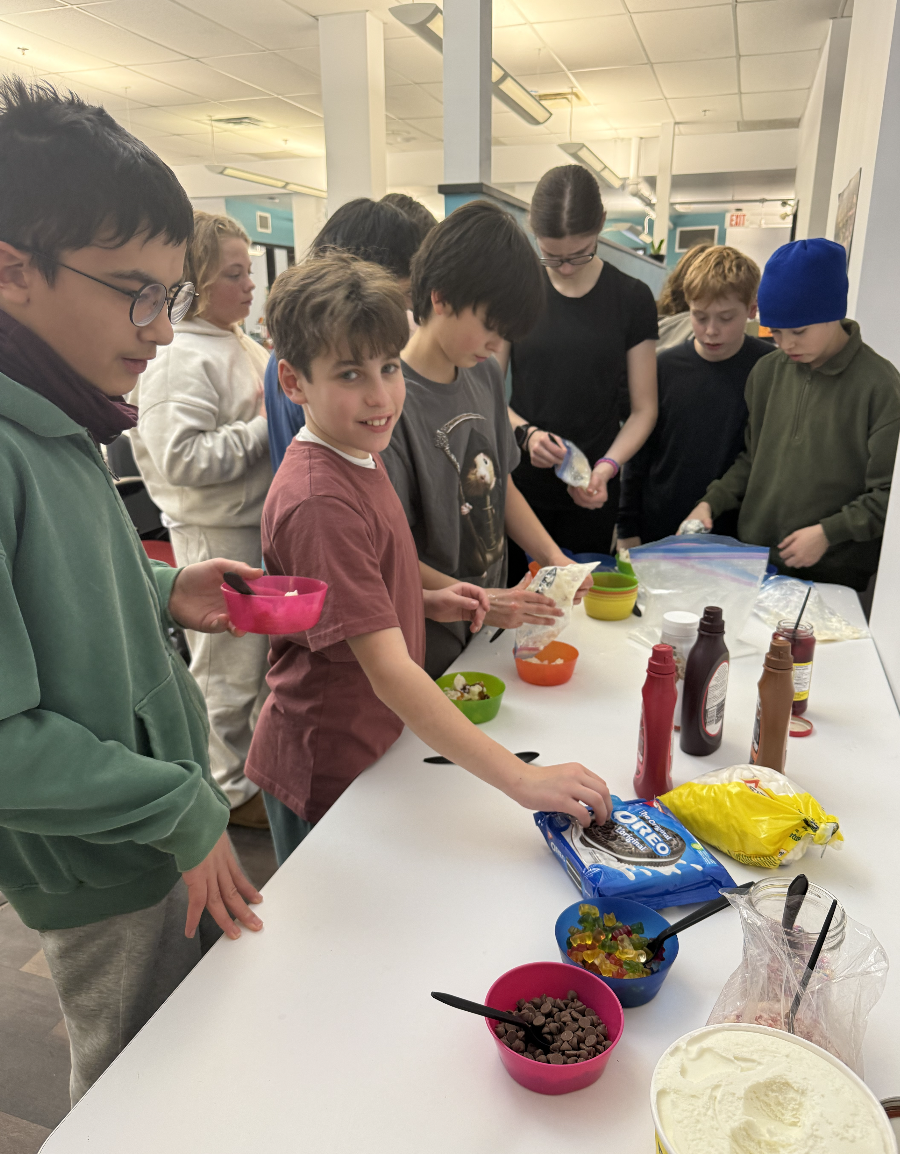
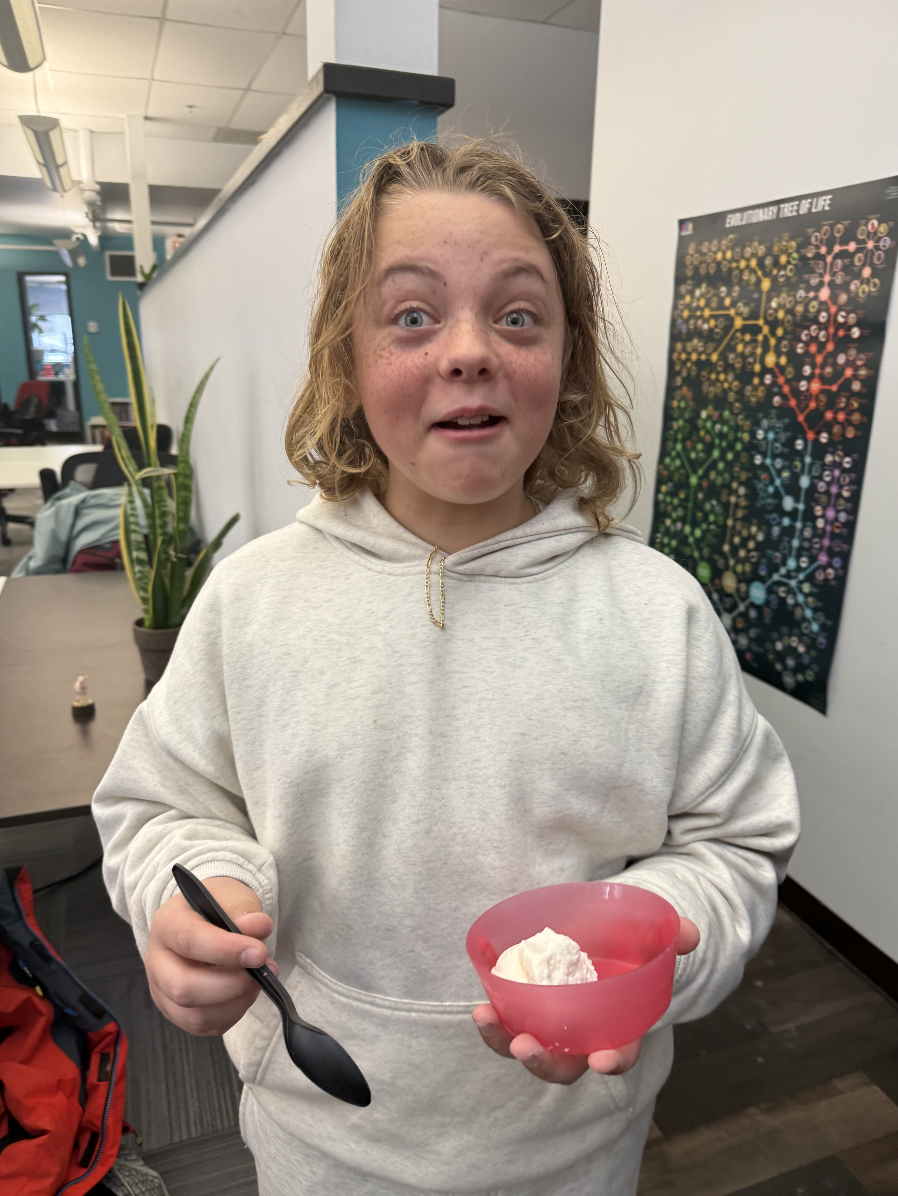
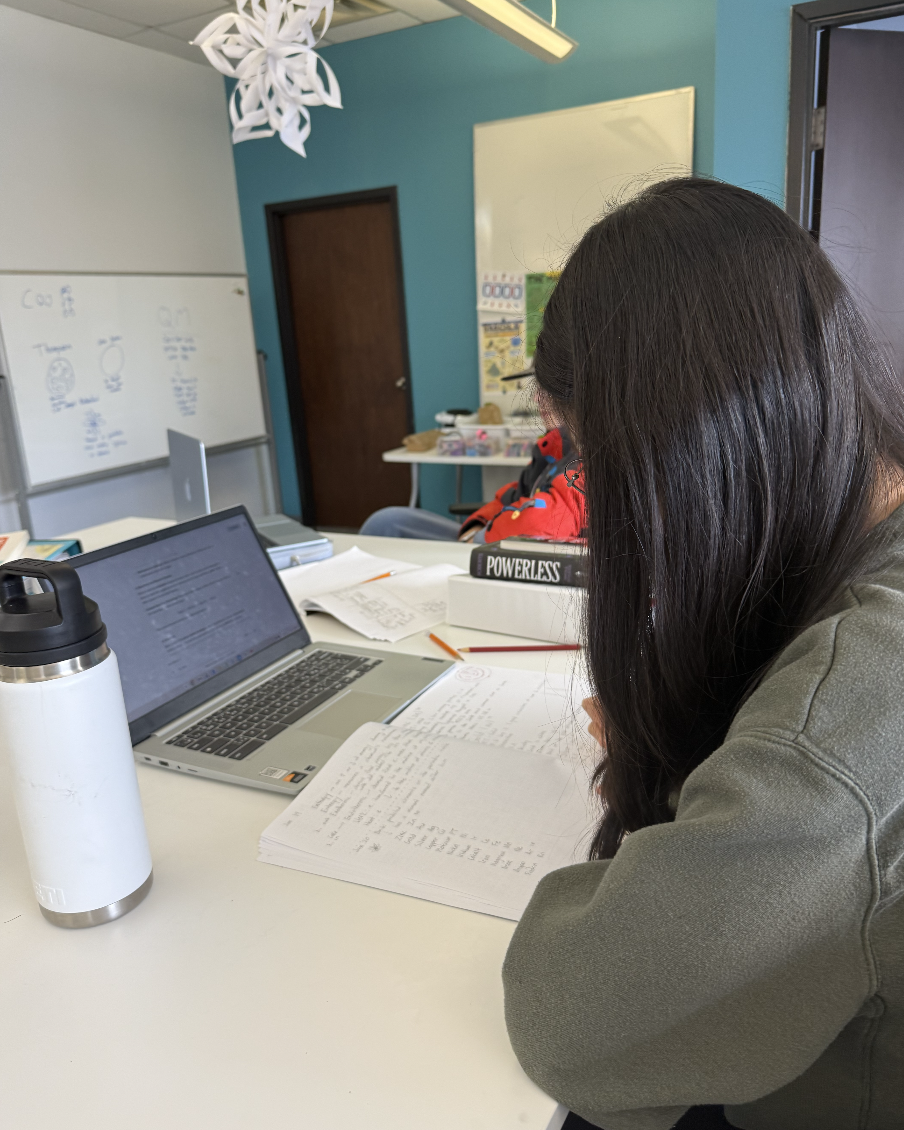
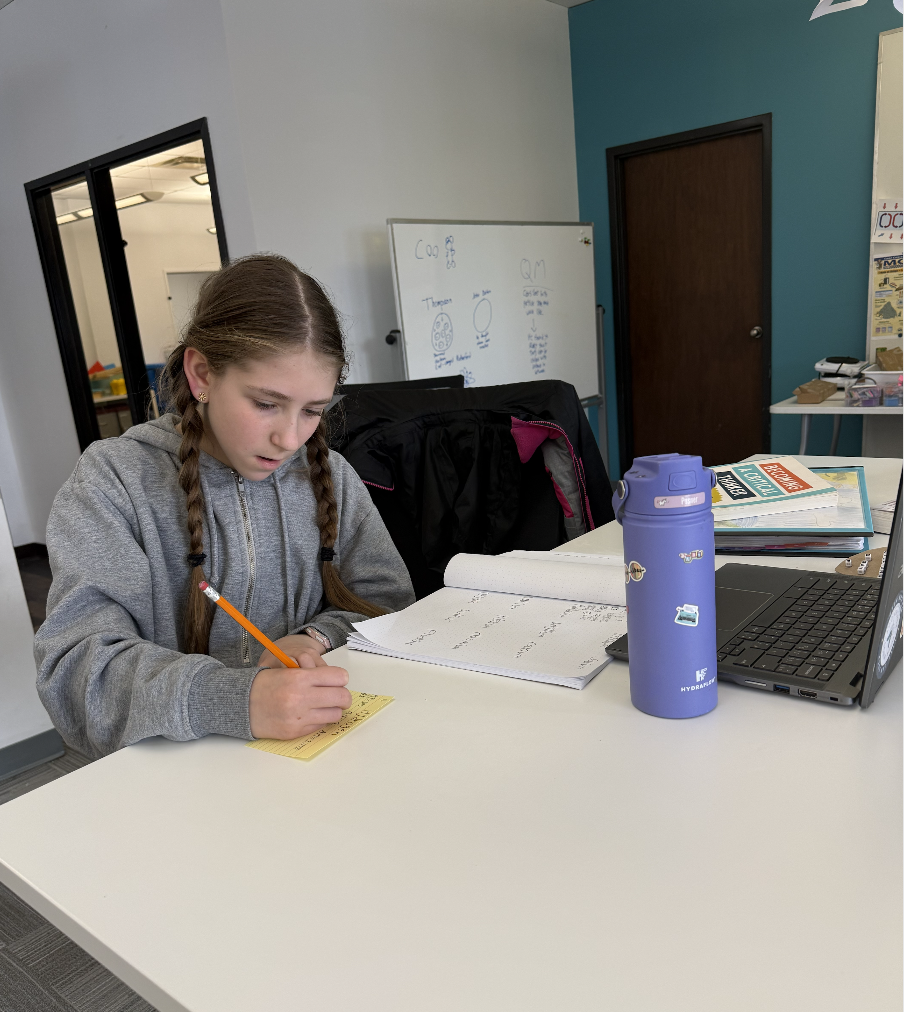
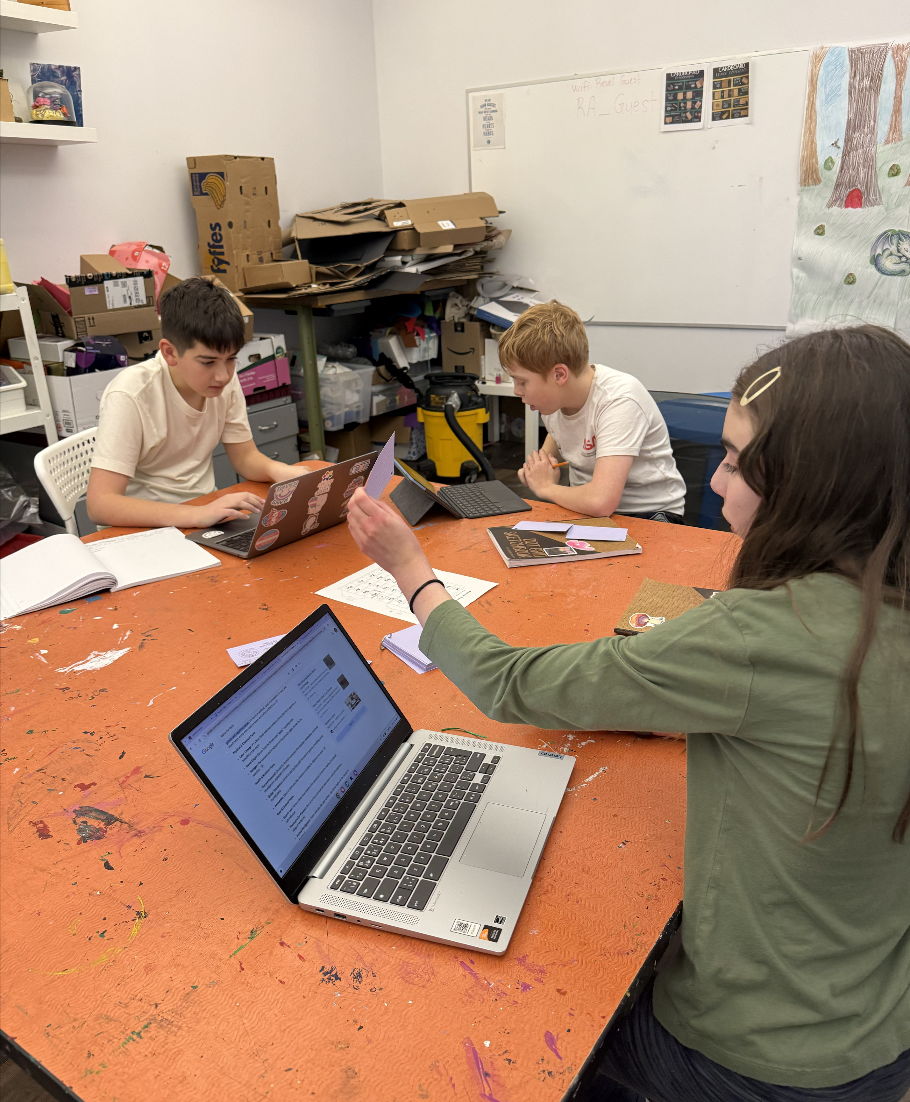
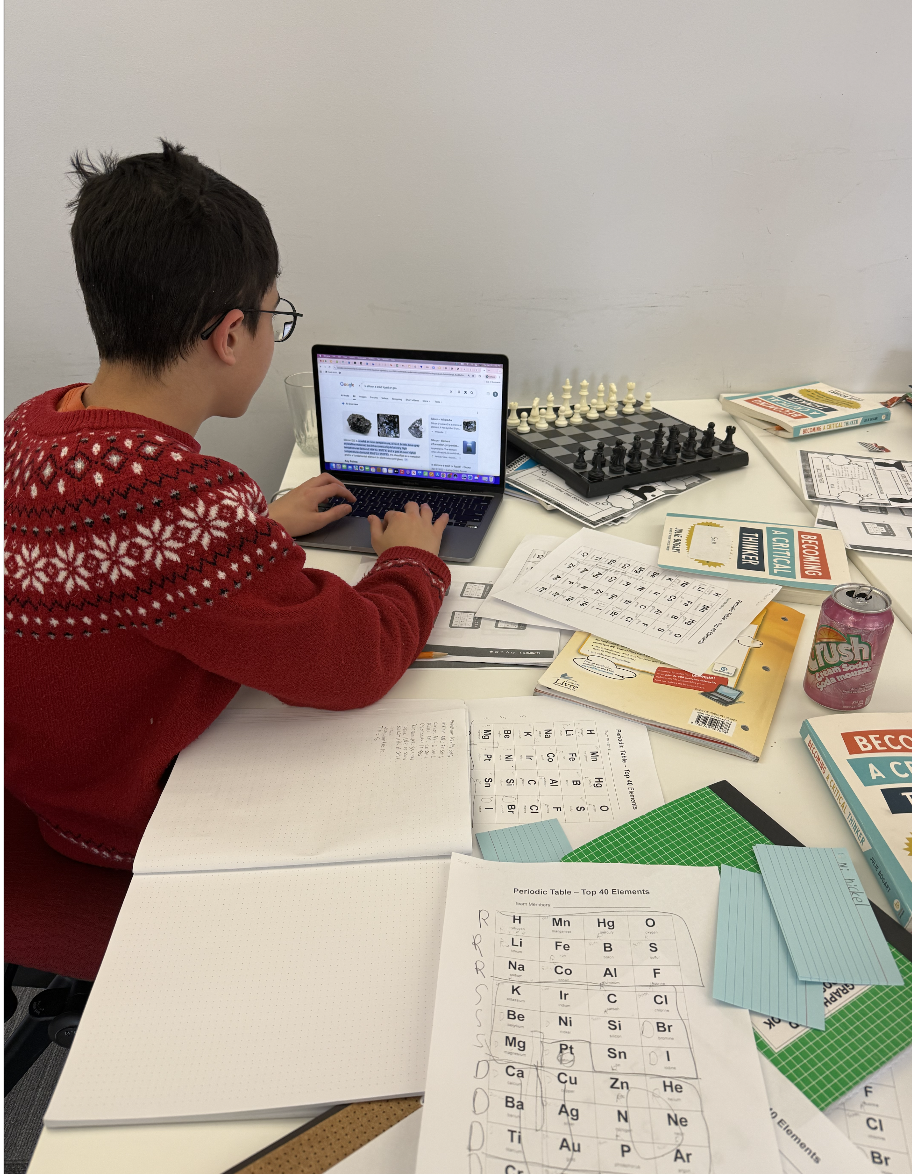
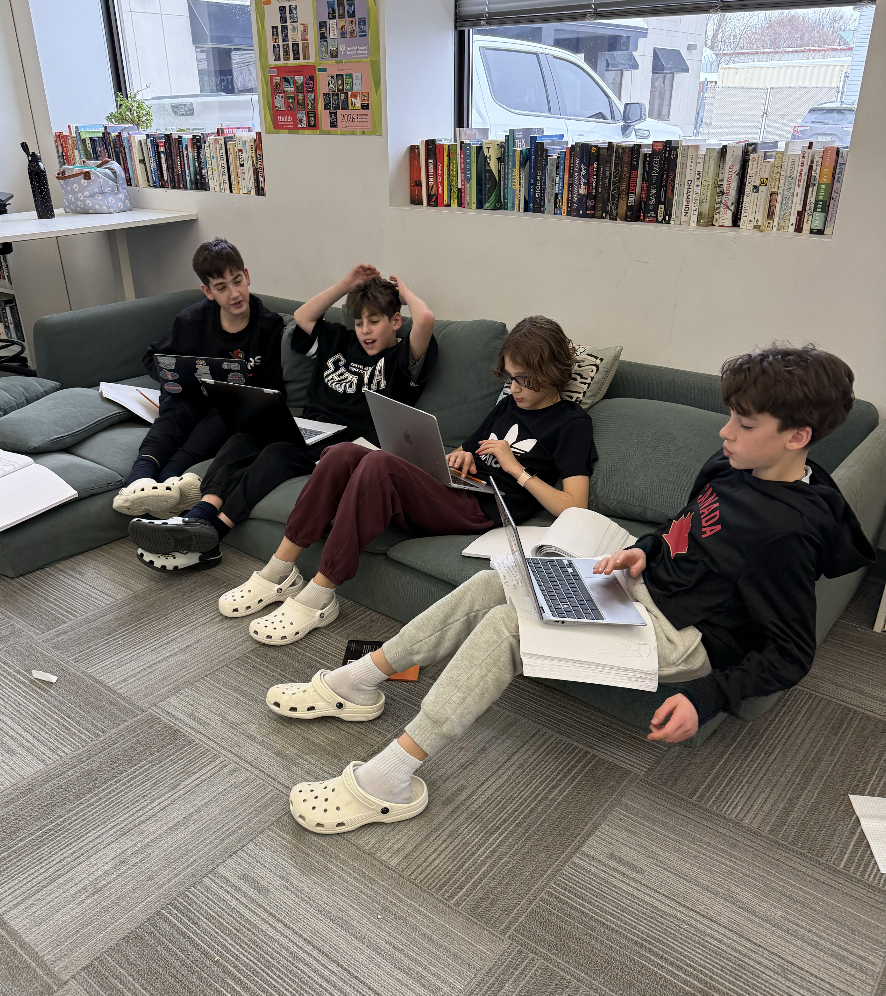
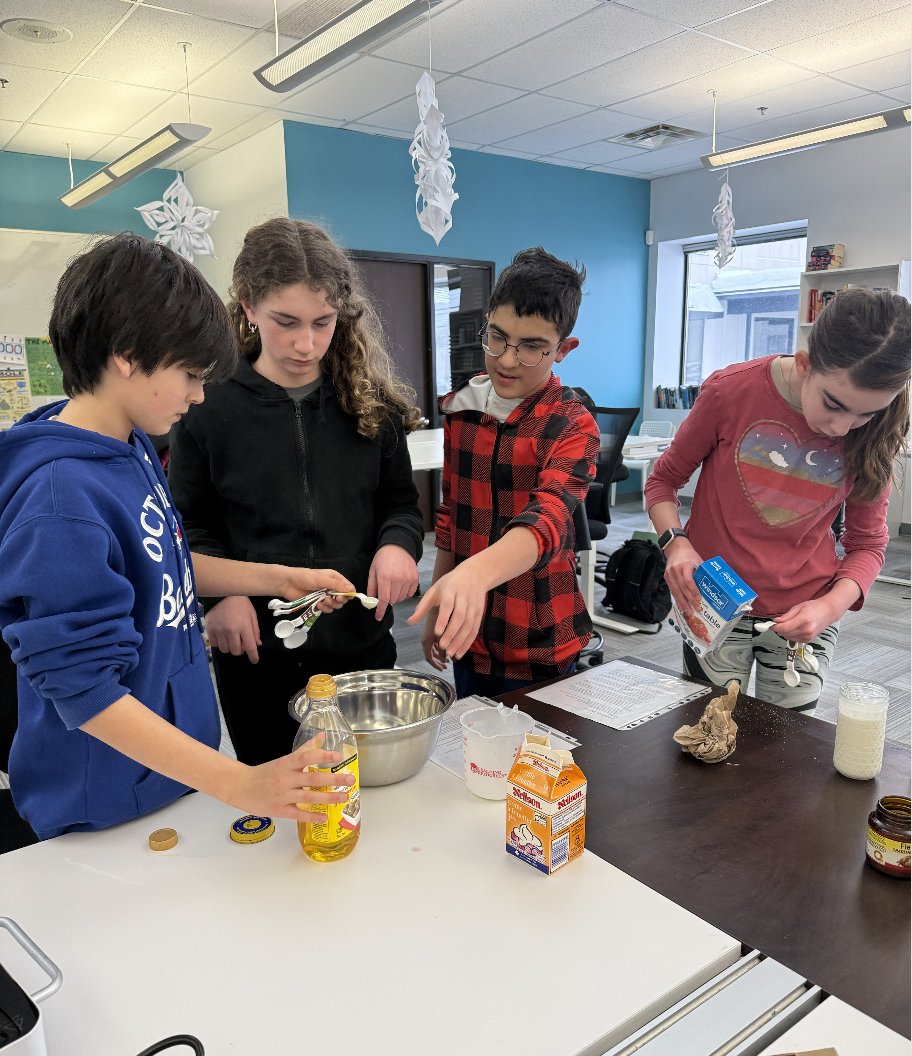
Rebels met in their teams on Monday morning to explore what happens during a chemical reaction. They learned about enthalpy, entropy, endothermic and exothermic chemical reactions before dividing the top 40 elements of the periodic table among their teammates in preparation for Tuesday's Quest. That afternoon, the Rebels took part in their second Cooking Competition! Teams participated in a chemistry knowledge scavenger hunt to uncover ingredients, prepare, and eat a delicious dish under time pressure. The better their notes were from last week's challenges, the quicker their hunt went. In Stage 1, learners completed challenges to earn clues to the secret ingredients. Questions ranged from different atomic models and facts about acids and bases to Bohr models of various elements. Once they figured out what the mystery dish was, they could move on to the Stage 2 questions, where, if answered correctly, they earned their ingredients and began making their Mystery Recipes: Ice Cream and Chocolate Whipped Cream. After making their delicious treats, the Rebels were able to buy extra toppings with the points they earned from the challenge. It was a fun and tasty afternoon!
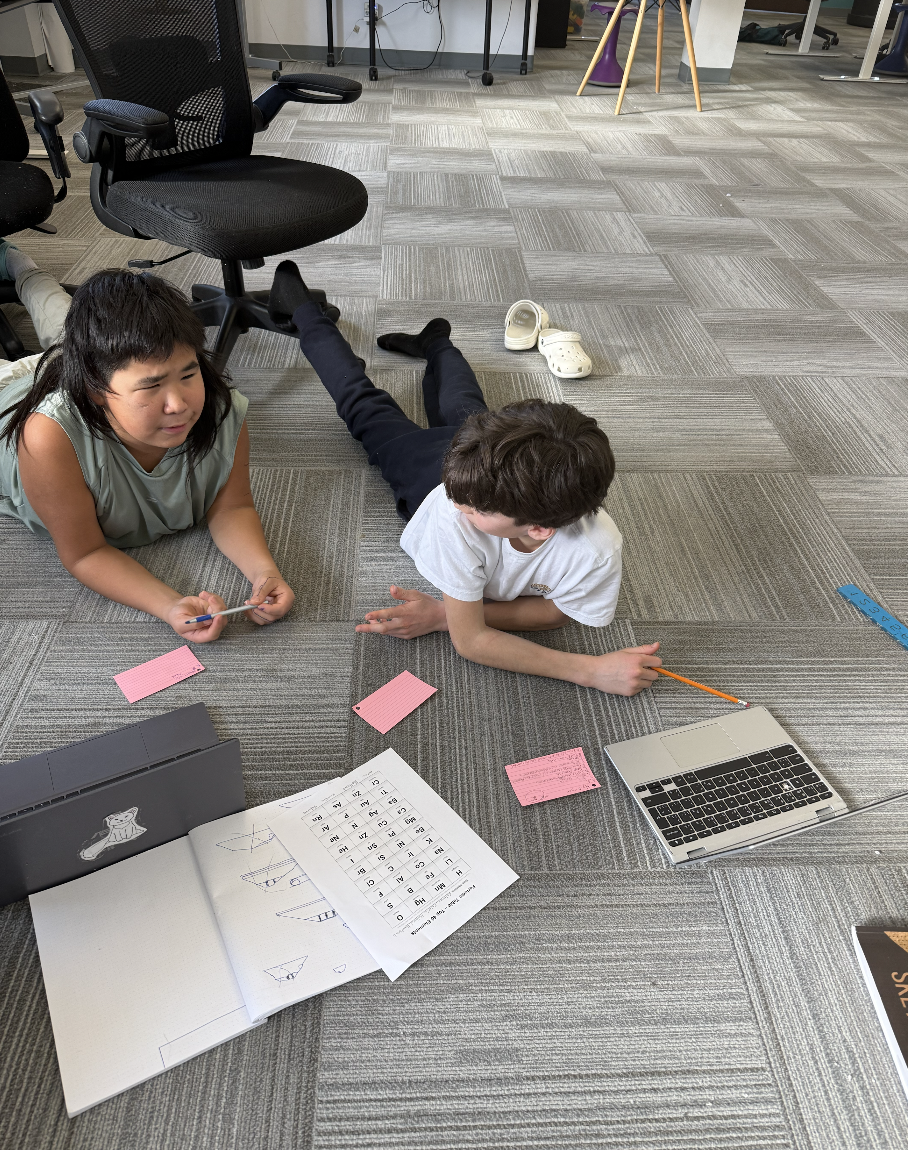
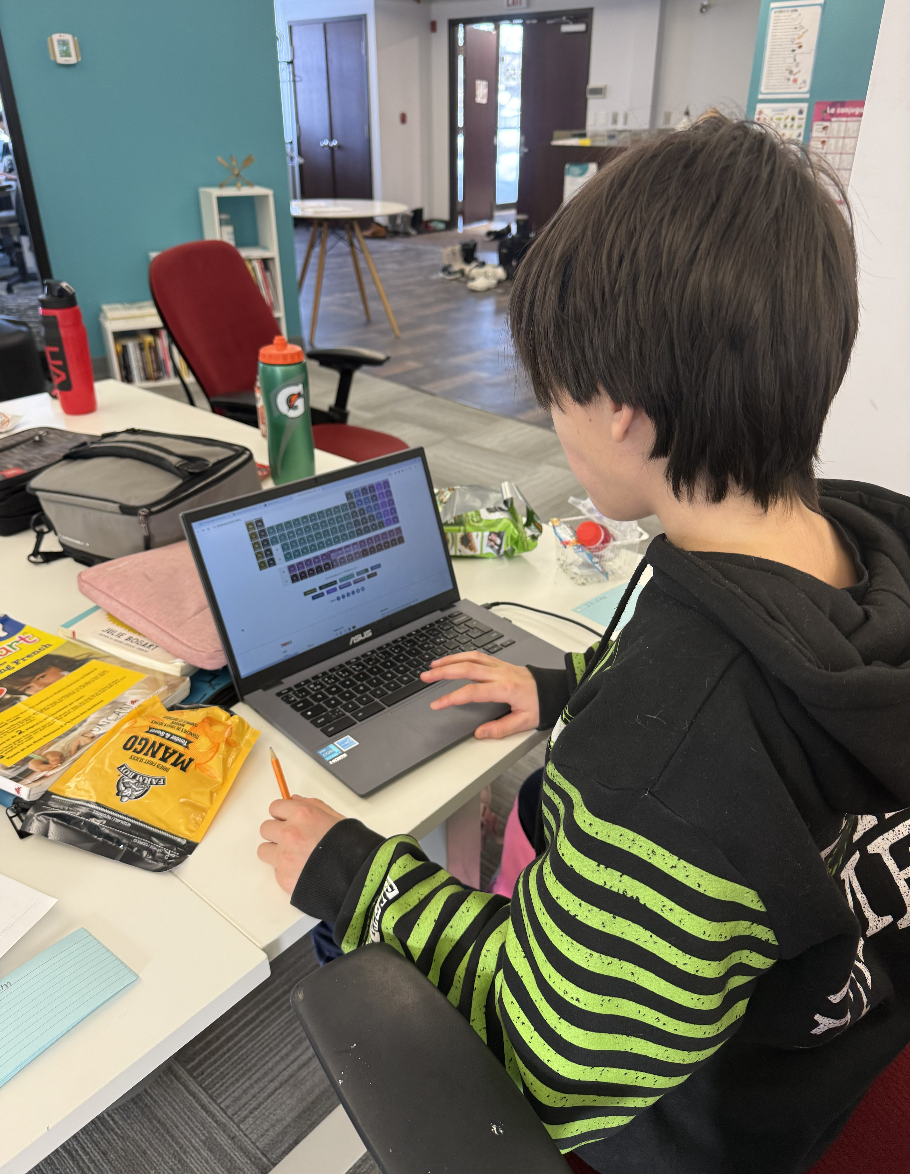
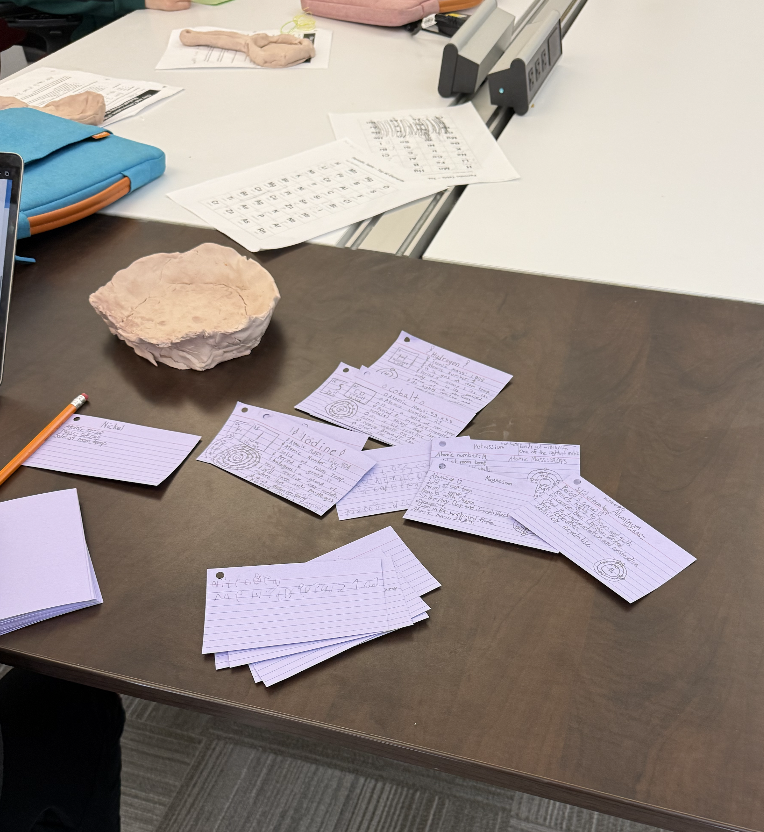
Mendeleev's periodic table ultimately became the standard because of what he didn't include, i.e. leaving blanks for elements to be discovered. What is more important for science: making new discoveries or defining unknowns? On Tuesday, we learned that Dmitri Mendeleev was a Russian chemist and teacher who organized the known elements of the time into the periodic table. He was not the only chemist at the time to create this sort of table; however, he was the only person to leave blanks in certain spaces and to predict the properties of eight elements that had not yet been discovered. When additional elements were discovered to fill the "blanks" of his predicted elements, the scientific community accepted his table. After learning about Mendeleev's Periodic Table, Rebels divided the 40 most common elements among their teammates and began researching in preparation for a series of head-to-head and team competitions. On flashcards or an online doc, Rebels were given a list of sources and asked to find the atomic number, atomic mass, state at room temperature, the period and group the element belongs to and what characteristics they share on the periodic table, how reactive the element is, who discovered it, real-world uses, interesting facts and lastly draw the electron shells and electrons. While most teams were not able to finish all of their note cards this week, we did play multiple games to practice using our notes and review what we've learned.
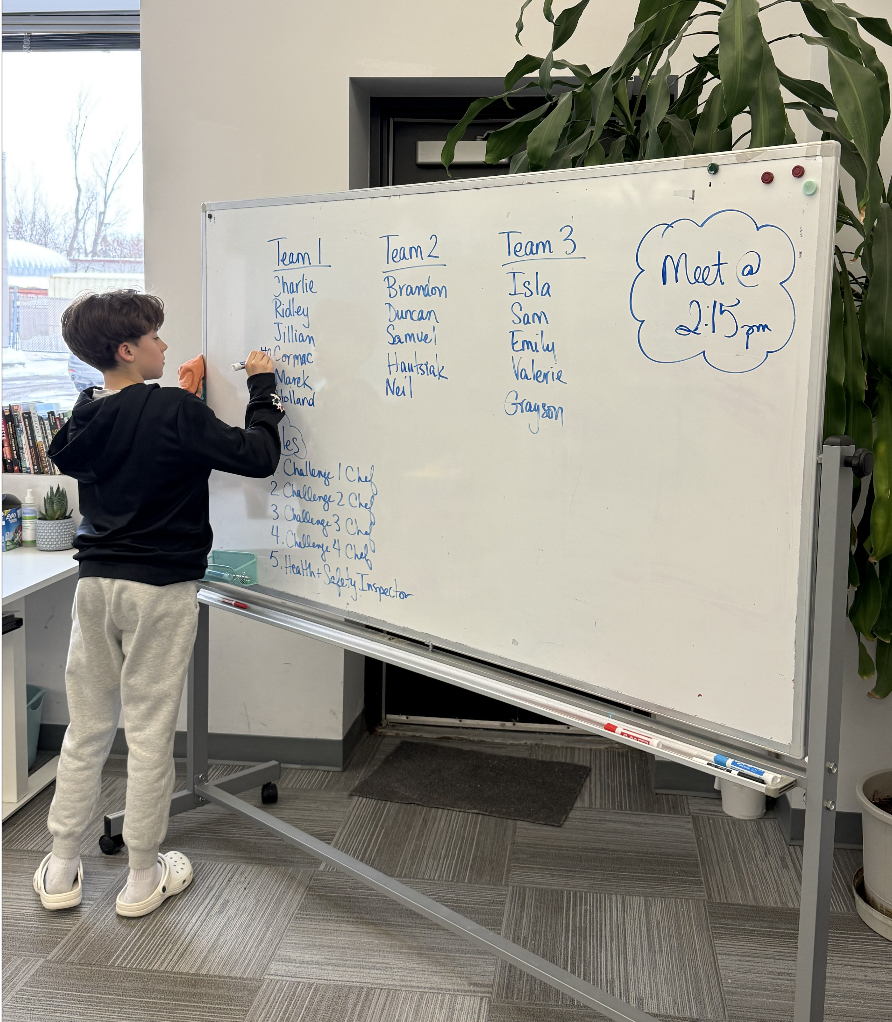
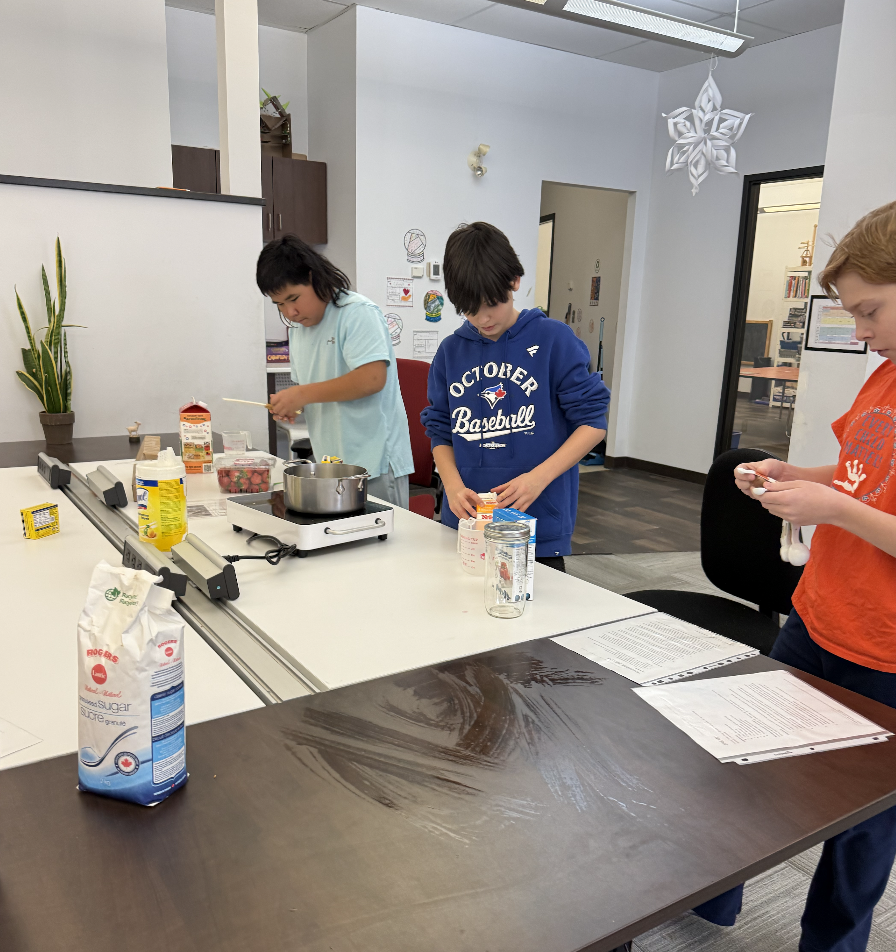
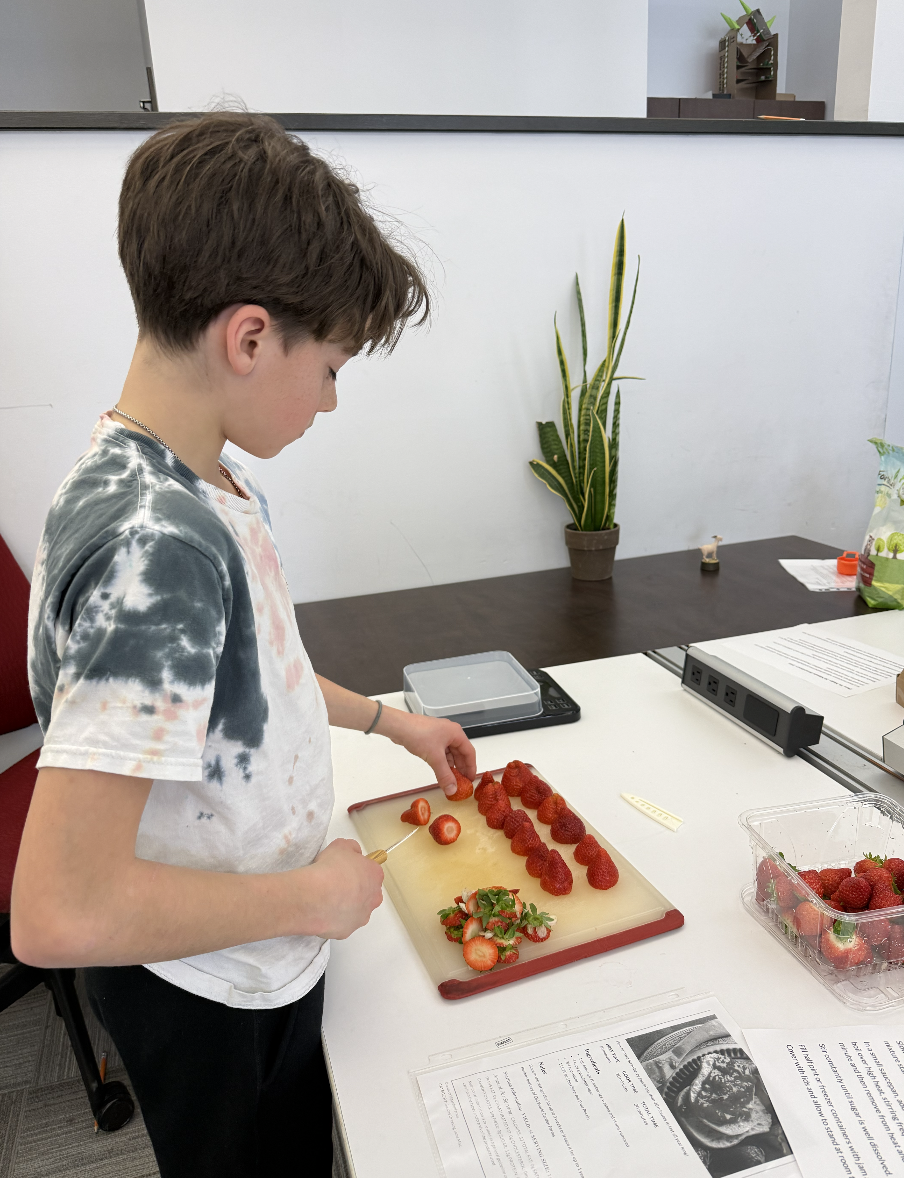
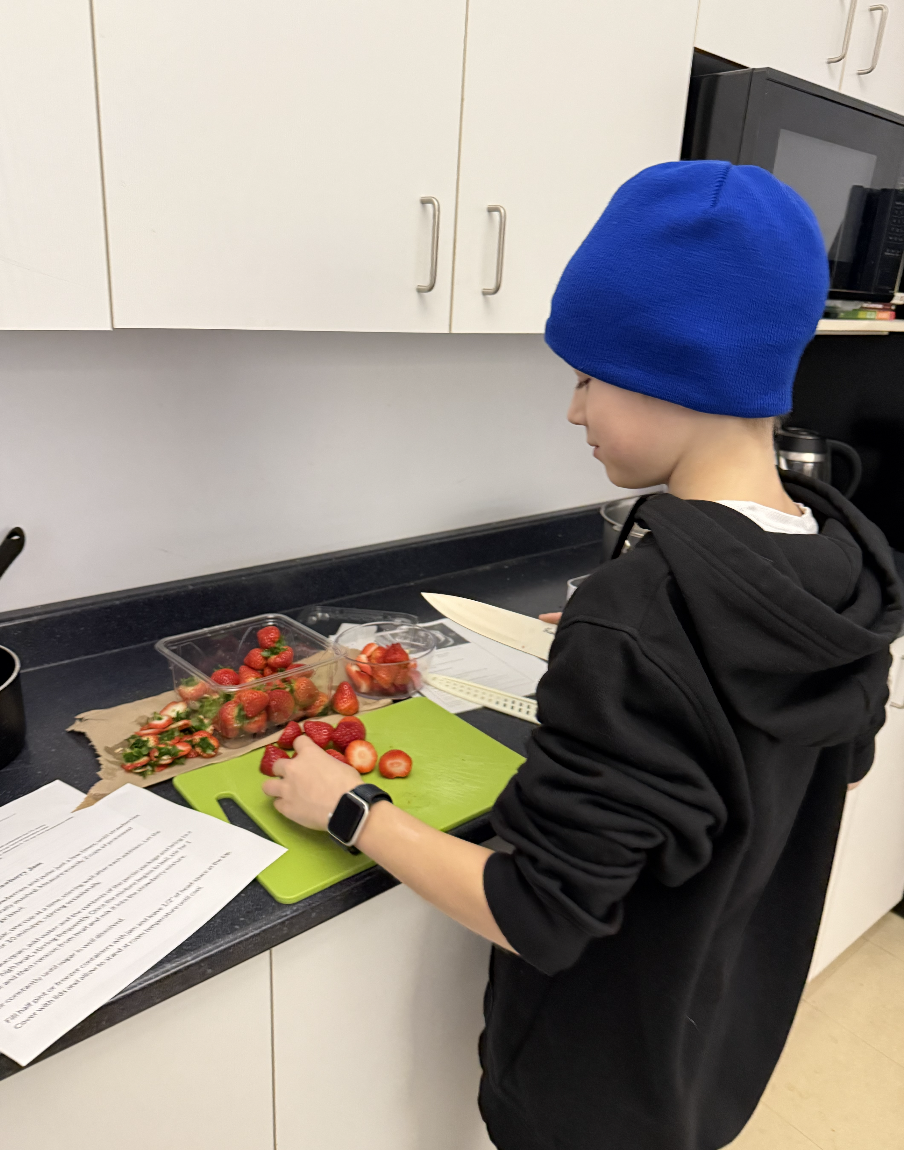
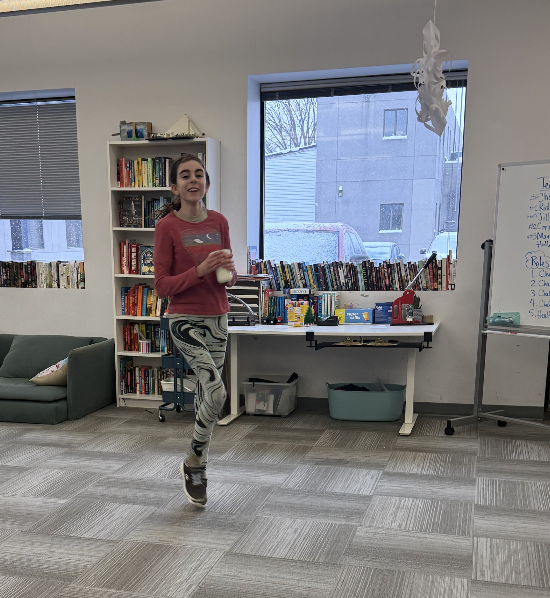
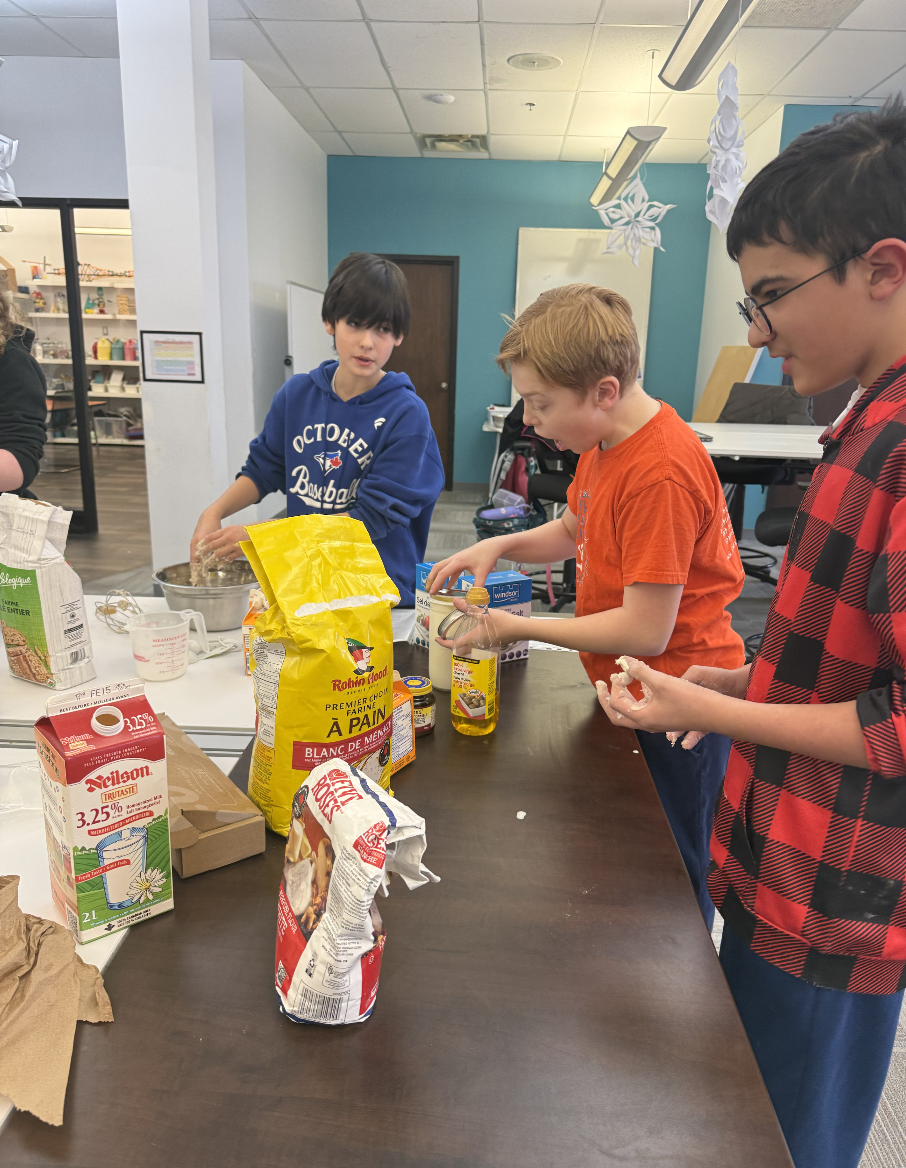
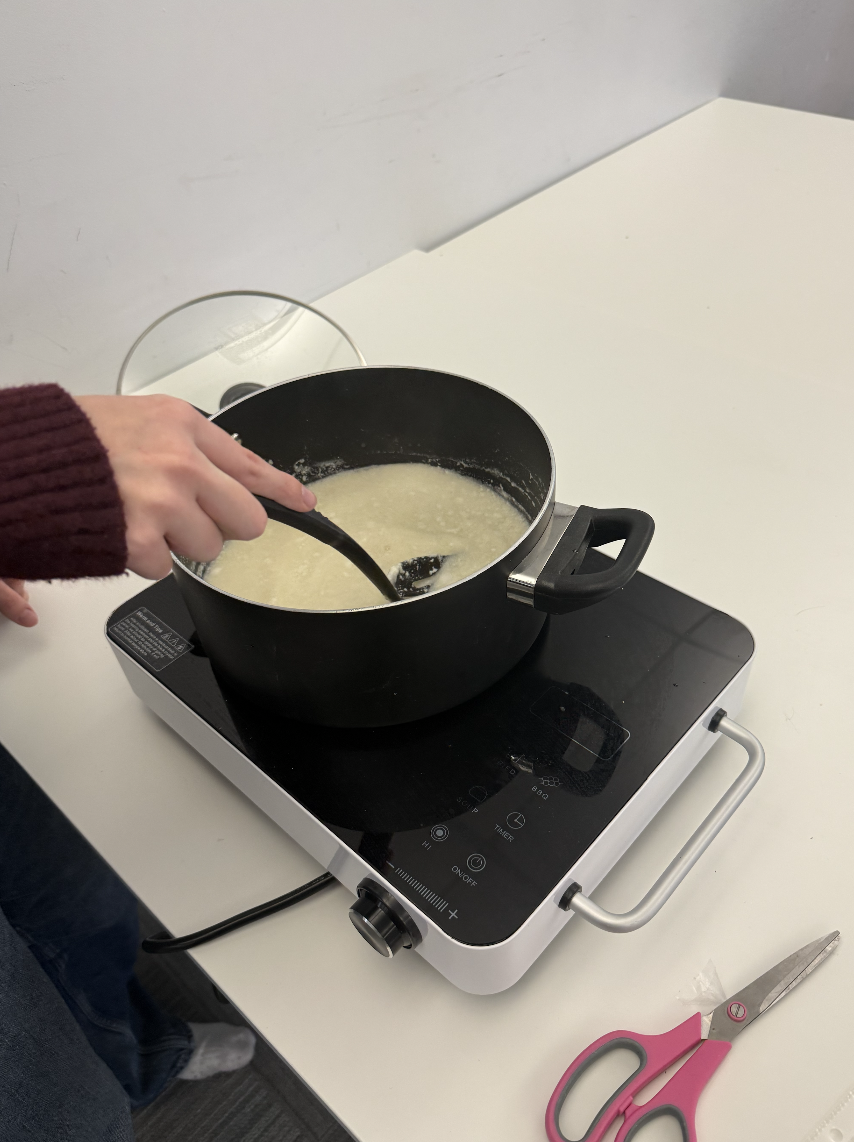
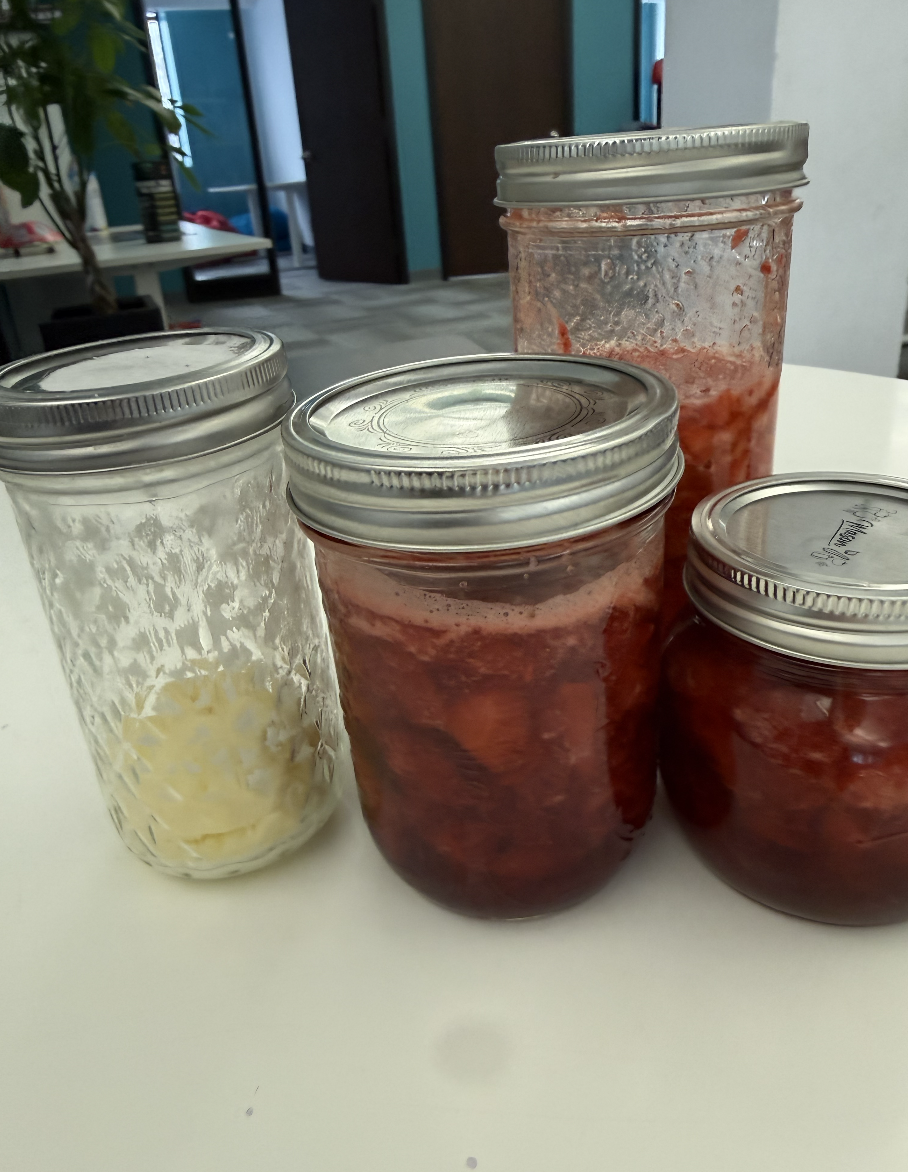
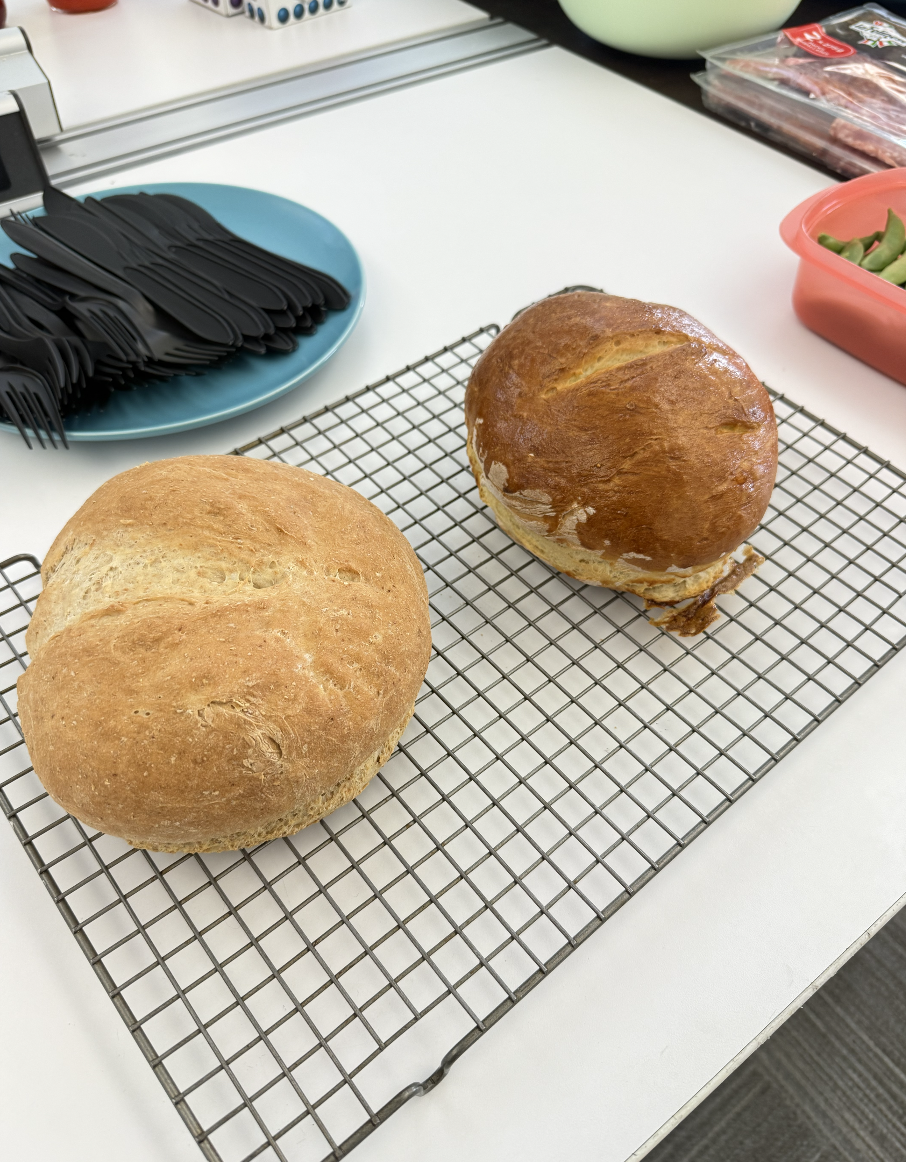
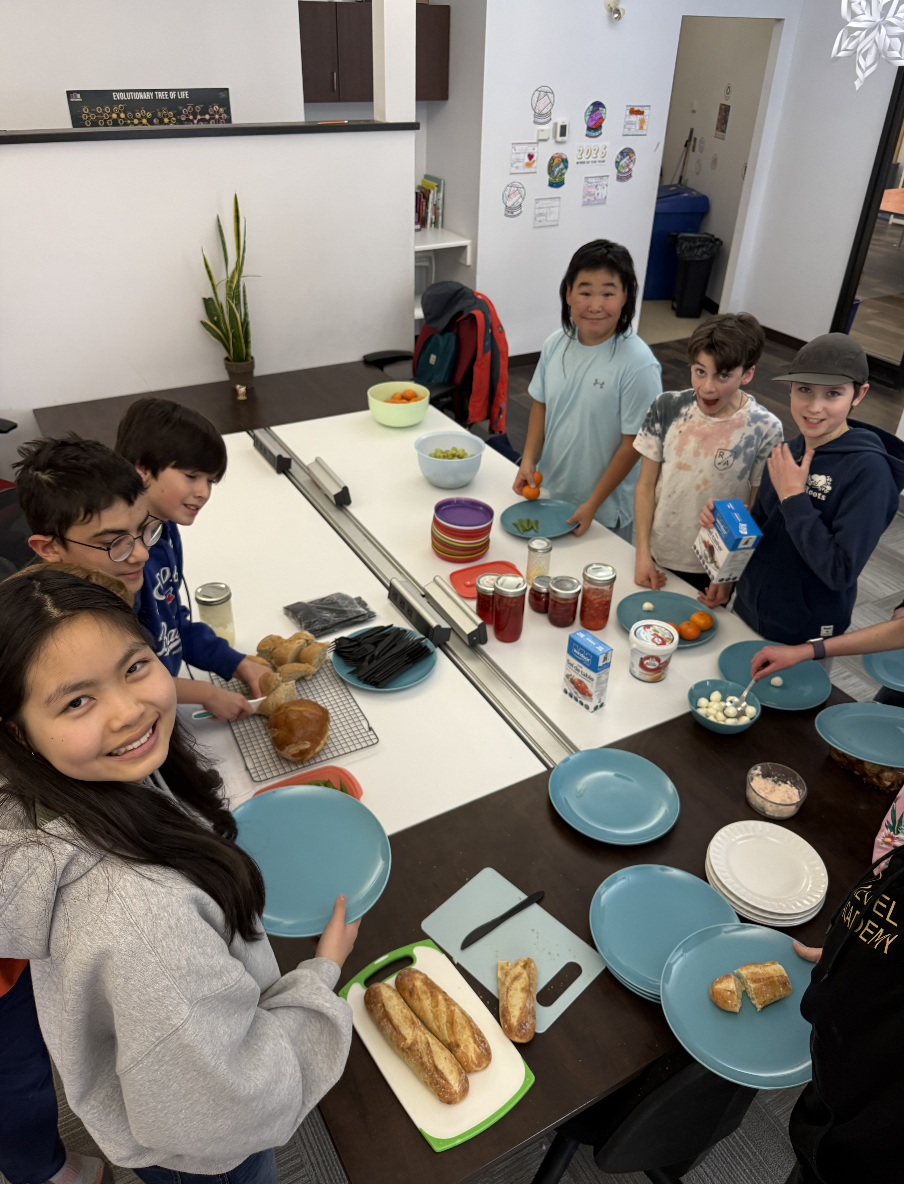
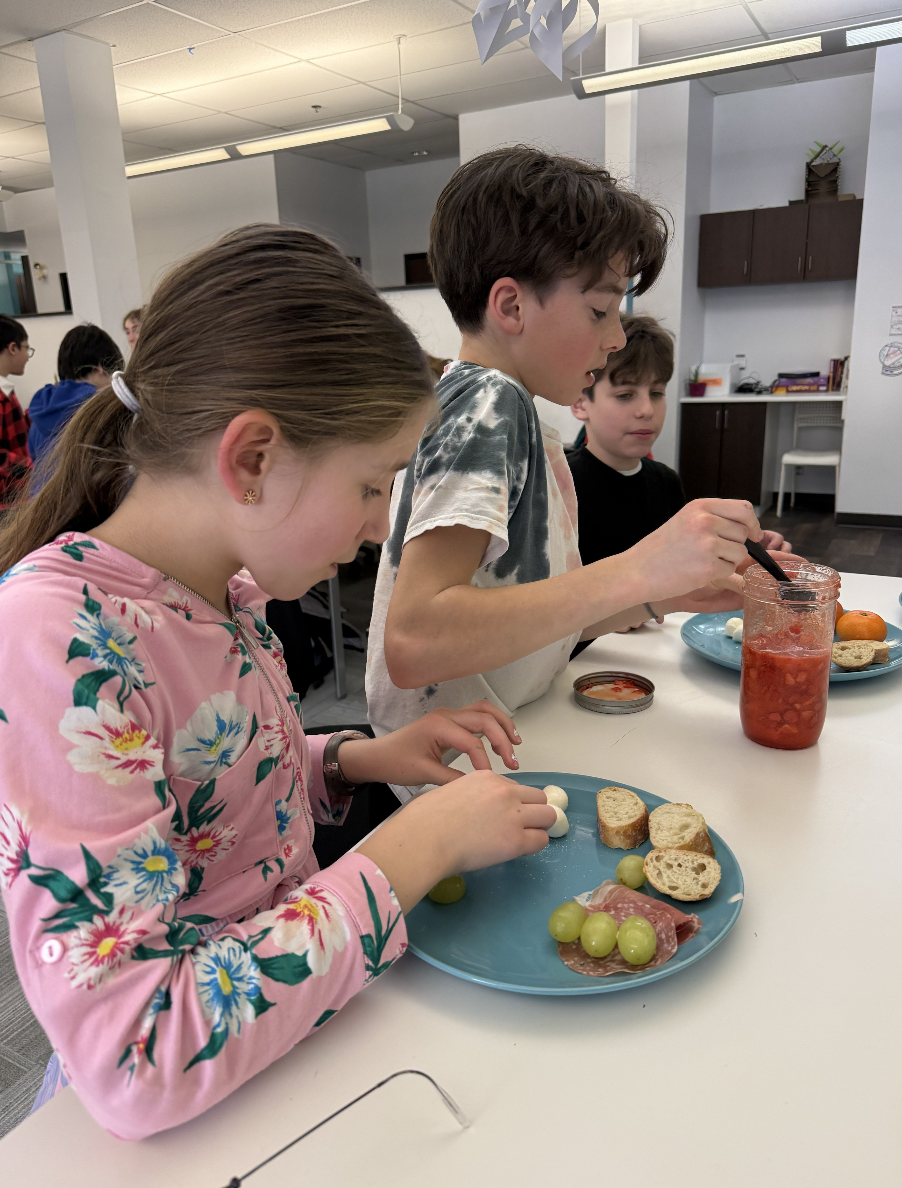
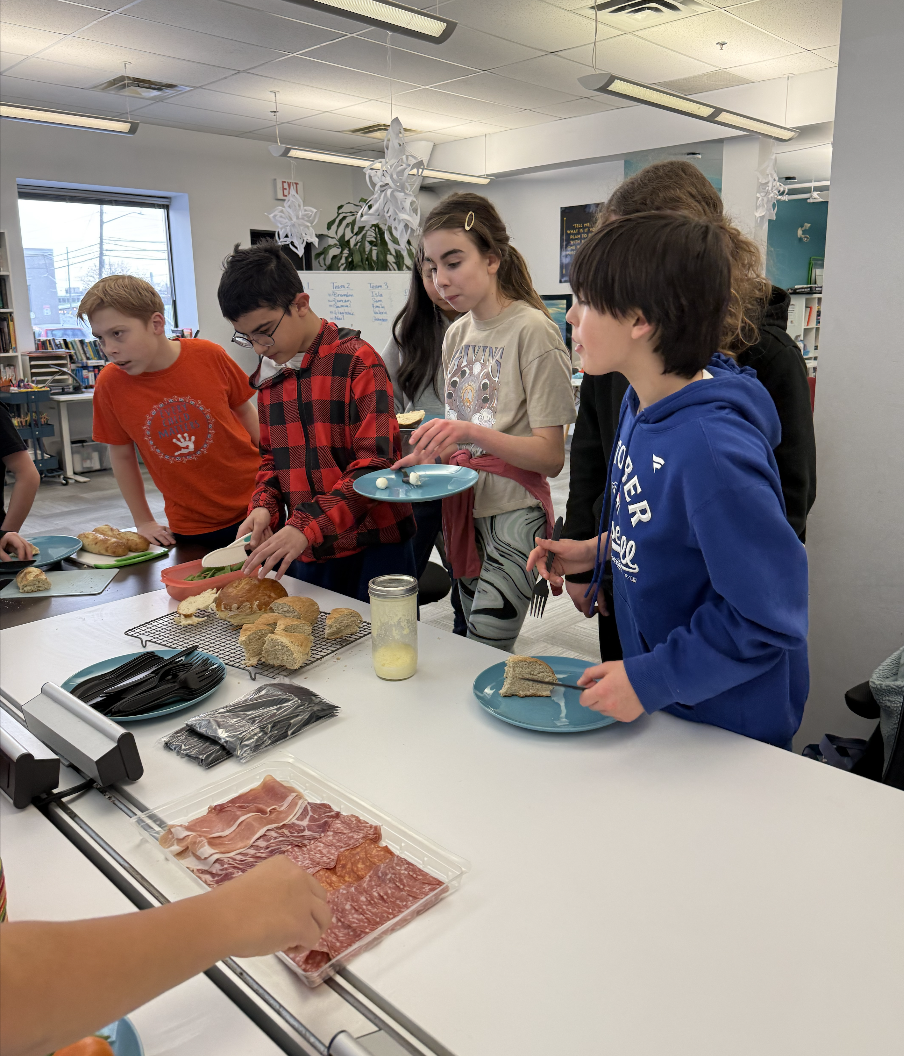
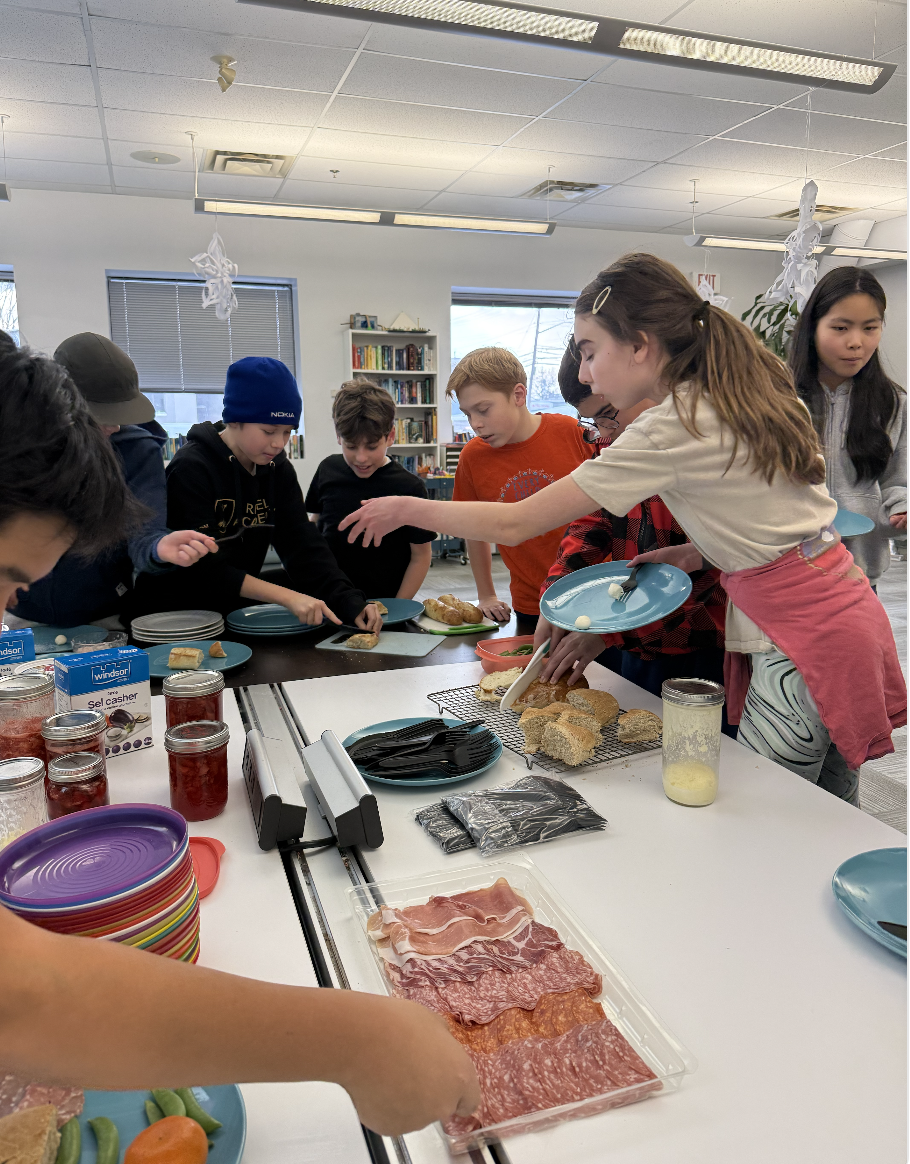
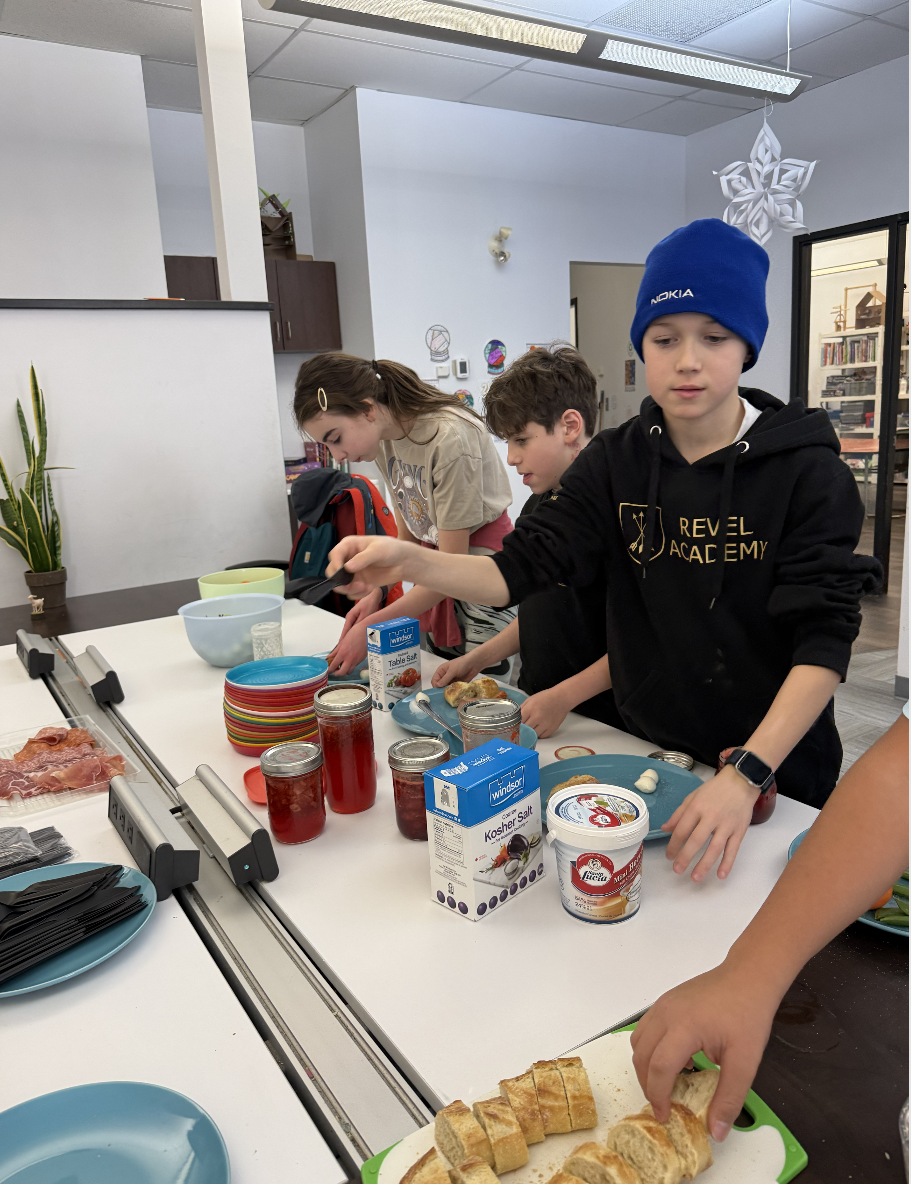
Science involves hard work in research, safety preparations, meticulous following of instructions, and improvisation in the lab. On Wednesday, we created three new teams to prepare for our Cooking Challenge #3. First, teams came together, and each chose one of the following roles: Health and Safety Inspector, and Challenge 1 Chef (Involves stove top heat and various steps in a microwave), Challenge 2 Chef (Requires a microwave and crushing strength), Challenge 3 Chef (Requires someone who has a "kneady" personality and careful control of time and temperatures), and Challenge 4 Chef (Requires a high-energy dancer who can dance for up to 20 minutes without stopping). Once roles were assigned, each member was given a series of research questions to earn their ingredients for Thursday's Cooking Challenge. Health and Safety inspectors researched what is critical for food safety. In contrast, chefs researched the answer to several questions including: what chemical food reaction involves using rennet, what is pectin and how can it get you in or out of a "jam," what is the chemical process involving yeast that will help you "rise to the occasion," what is a mixture of triglycerides and several different fatty acids that you can spread on toast, and what parts of making your product are a physical process and what parts are a chemical reaction? With their research complete and their plans made, Rebels got to work right away, making mozzarella cheese, strawberry jam, bread, and butter on Thursday. Once learners had completed their products and cleaned up their cooking spaces, we enjoyed the spread with some added charcuterie, fruit, and veggies! Fantastic work, Rebel Chefs!
Civilizations - Big History
How did early humans evolve on Earth? Hundreds of thousands of years ago, multiple human species lived on Earth simultaneously. Did all these species die out, leaving Homo sapiens to roam the Earth alone? Or do we carry some of these species with us? After making predictions about an image set of our ancestors from most distant to most recent, Rebels viewed a slideshow and completed an activity on how, and maybe why, our ancestors evolved the way they did.
Personal Finance
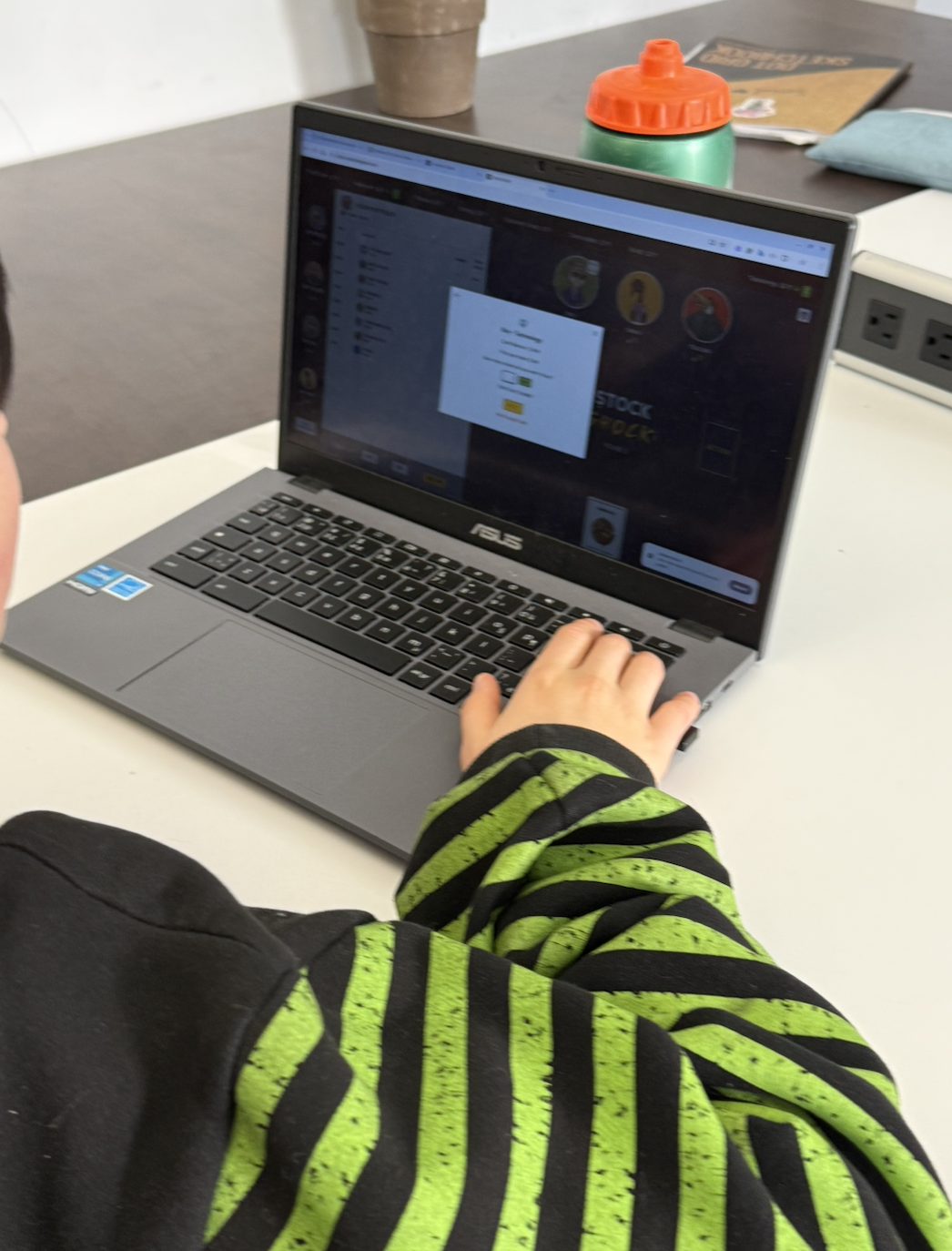
This week, we focused on researching stocks. First, we reviewed how to read a stock quote and the difference between a bid and an ask price. Before choosing our first stocks, we were reminded to identify the goals for our portfolio, consider risk and reward, and think about diversification. We then read about five strategies to help find stocks, including: "Invest in What You Know," Earnings Reports, Passive, Stock Screeners, and Market Followers. Rebels used their remaining time to build their portfolio in their Stock Game or play Stock Shock.
Additional Highlights
We used every minute to the fullest this week! During our Closings, we tested the pH of various ingredients, participated in a learner-led GeoGuesser competition, completed Periodic Table quizzes, and played games as a full studio!
On Tuesday and Thursday, learners took the MAP test to practice their test-taking skills and identify areas for improvement and additional challenge. We were greatly impressed with their focus, respect toward one another, and positive attitudes! We will celebrate next week with a Pizza Party!
Potential Ideas/Questions to Ask Your Learner
Spark Studio
What are some character traits you used to describe the snowmen from Snowmen After Dark?
Which was your favourite book that you read this week for mindfulness? (Book Titles: The Girl Who Loved Poutine, The Great Dinosaur Sleepover, Fox and the Mystery Letter, The Beat of the Dragon, and The Friendship Blanket). What star rating did you give it? Why?
What are wants and needs? Can you give me an example of each?
What products did you make for your business this week in Quest?
Weekend Reading Challenge: Can you find an “ong” word in a book at home?
French: How do you say blueberry in French? (bleuet)
Discovery Studio
Can you show me how to write the numbers 1-10 using Roman numerals?
How is the Roman numeral system the same as the Hindu-Arabic numerals that we use, and how are they systems different? Which one do you prefer and why?
How is the democracy in ancient Athens different from the democracy here in Canada?
What rights and freedoms do Canadians have under the Charter that you explored at launch this week? Are there any rights that you think are missing?
Would it be ethical for our elected representatives today to design a bill or law based on the gods and goddesses they believe in?
Reader Writer: Which Mythical Creatures did you select to learn more about? Which one was your favourite?
Reader Writer: Tell me about your own Mythical Creature - did you start to brainstorm one this week? What does it look like? Does it have any powers? What are its weaknesses?
French: What did you order in French during the restaurant role-play?
Exploration Studio
Quest: Tell me about this week's Cooking Challenges! Did you enjoy Monday's Ice Cream Scavenger Hunt or Thursday's cheese, jam, bread, and butter afternoon?
Personal Finance: What stocks have you purchased for your online portfolio? How did you choose them? Is your portfolio diversified?
Math Lab: How do you isolate and solve for x in this equation? 2x - 5 = 37
Reader/Writer: Who are the Lost Boys of Sudan? How are Salva and Nya's stories similar and how are they different?
French: What is the name of your food truck?
How did you feel about the MAPS testing? What strategies did you use when you were stuck on a question?