
Revel Recap: Mar 2-6
Important Upcoming Dates
Full School Leprechaun Traps and Pi Day Celebration - Friday, March 13th
Spark Visit to Fire Station 23- Monday, March 16th: 1:00-2:00 pm
Spark, Discovery and Exploration visit to the Museum of Science and Technology - Wednesday, March 25th
Session 5 Exhibitions
Discovery Exhibition - Tuesday, March 31st
Spark Exhibition - Wednesday, April 1st
Exploration Exhibition - Thursday, April 2nd - Doors Open at 4:00 pm
Good Friday - No School - Friday, April 3rd
Easter Monday - No School - Monday, April 6th
Sessional Break - Tuesday, April 7th - April 10th
Guardian Book Club: The Gardener and the Carpenter by Alison Gopnik - Thursday, April 16th
Spark Studio
Mindfulness and Launch
This week during Morning Mindfulness, the Sparks started each day with creativity and imagination connected to our Quest theme of Transportation and Cars. On Monday, learners designed three unique cars, each with different features, purposes, and imaginative details. Some created futuristic vehicles, while others designed cars with special tools or creative upgrades. It was wonderful to see how differently each learner approached the challenge!
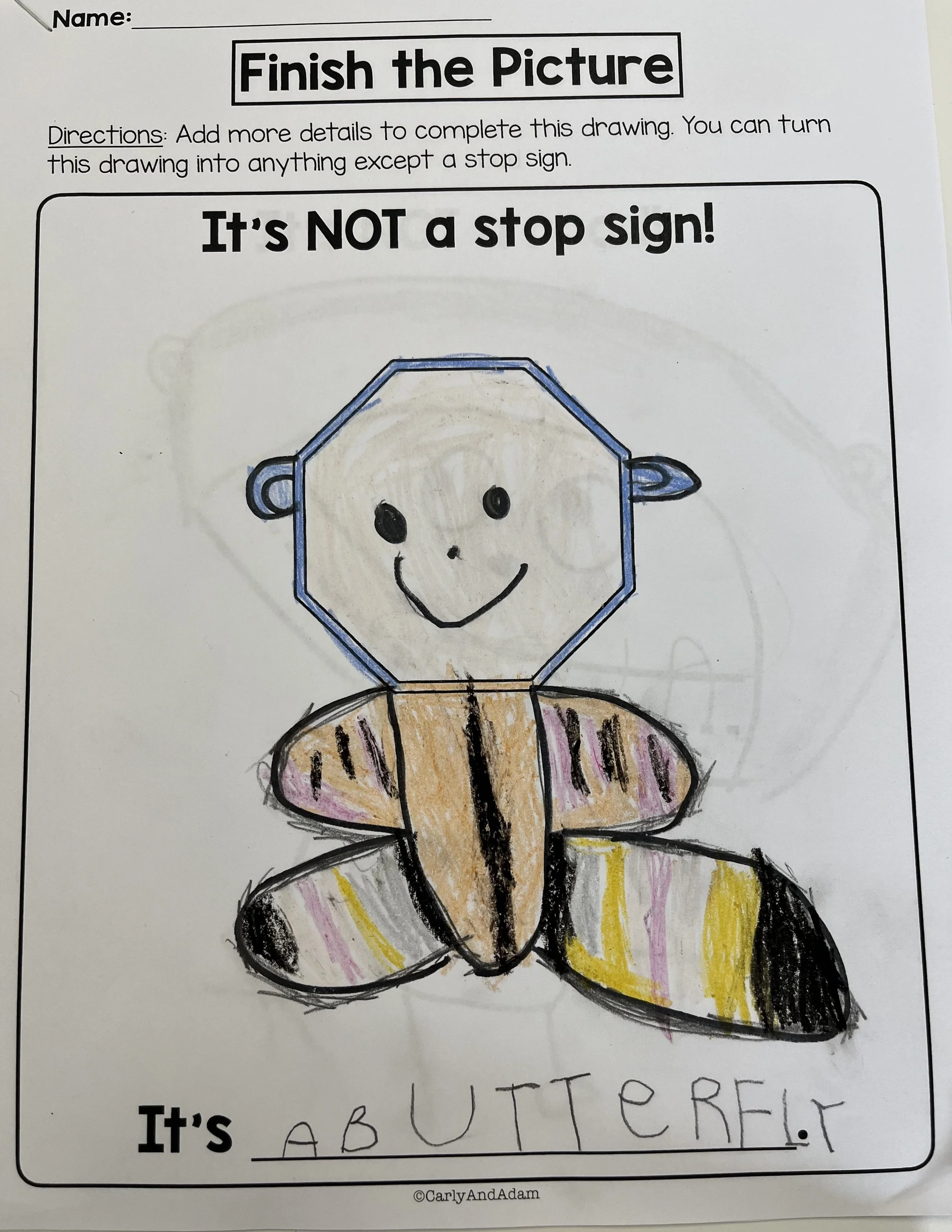
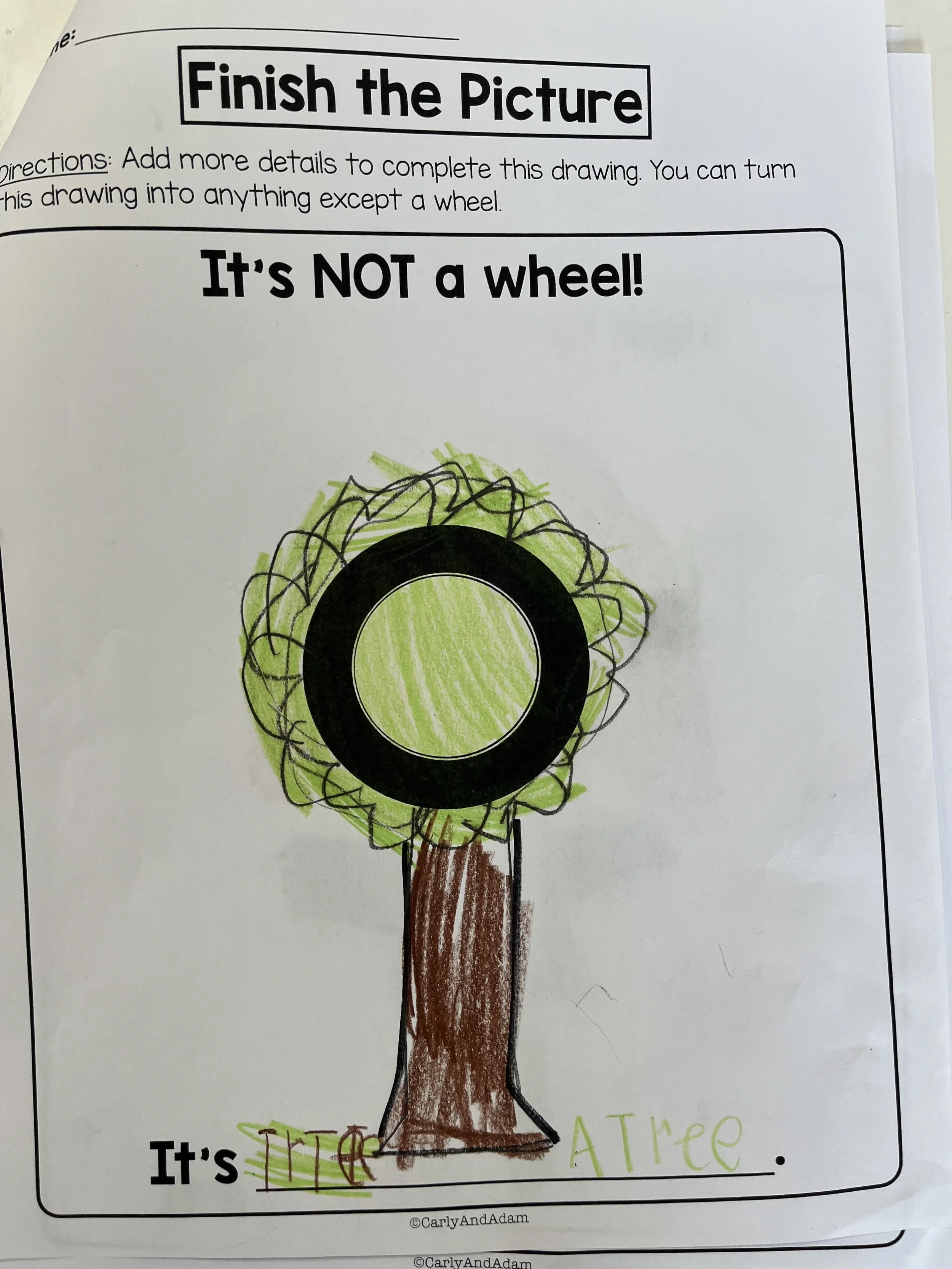
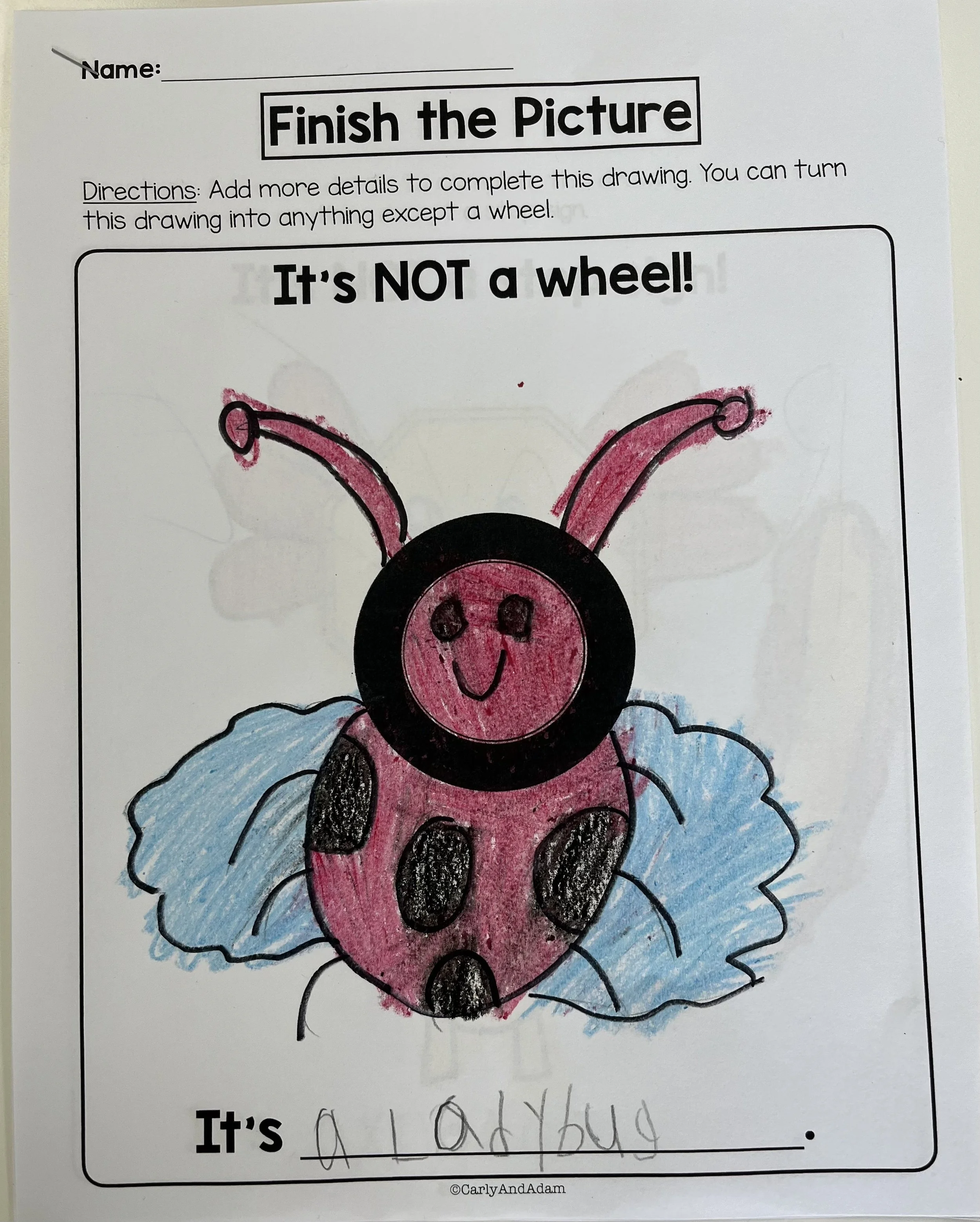
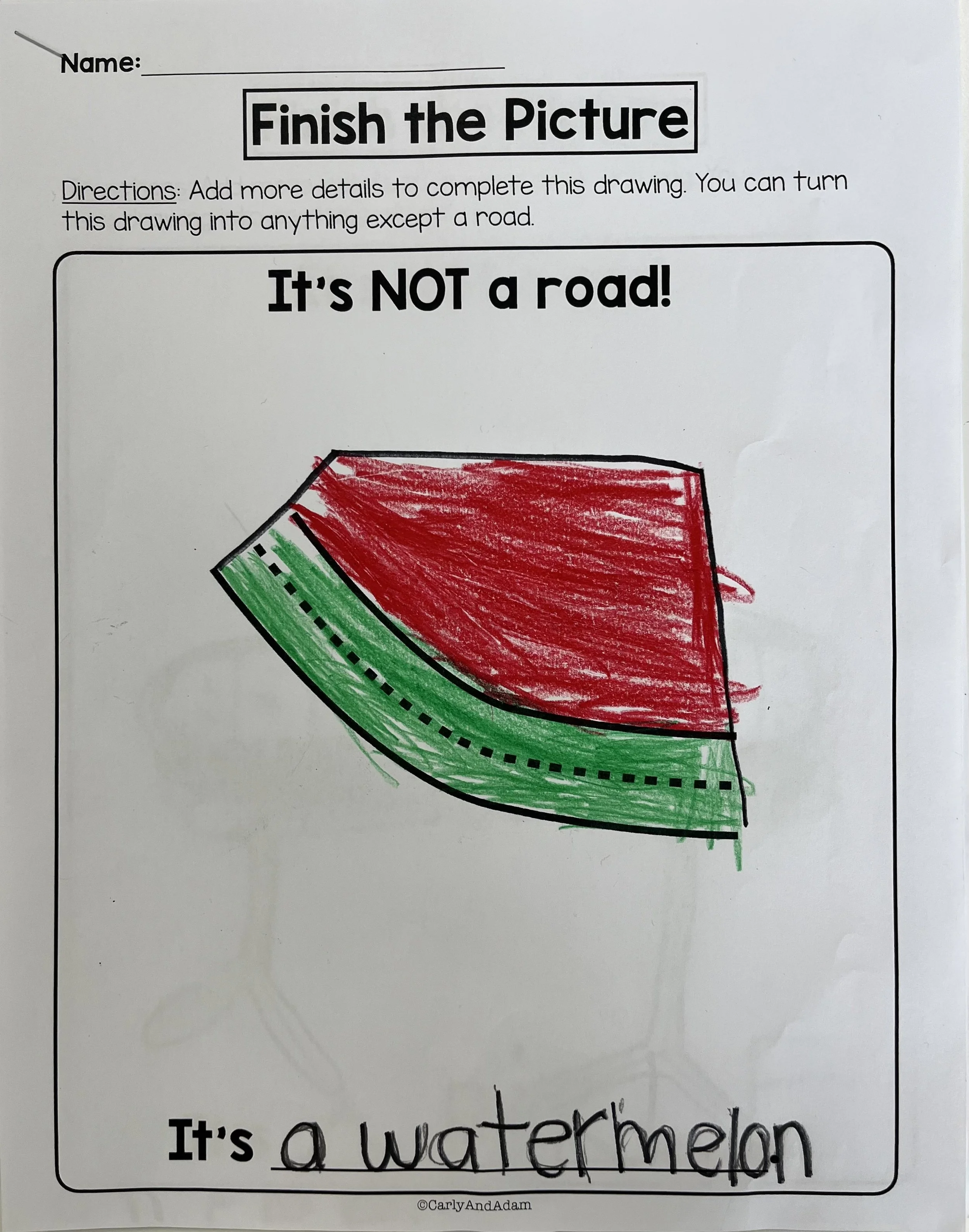
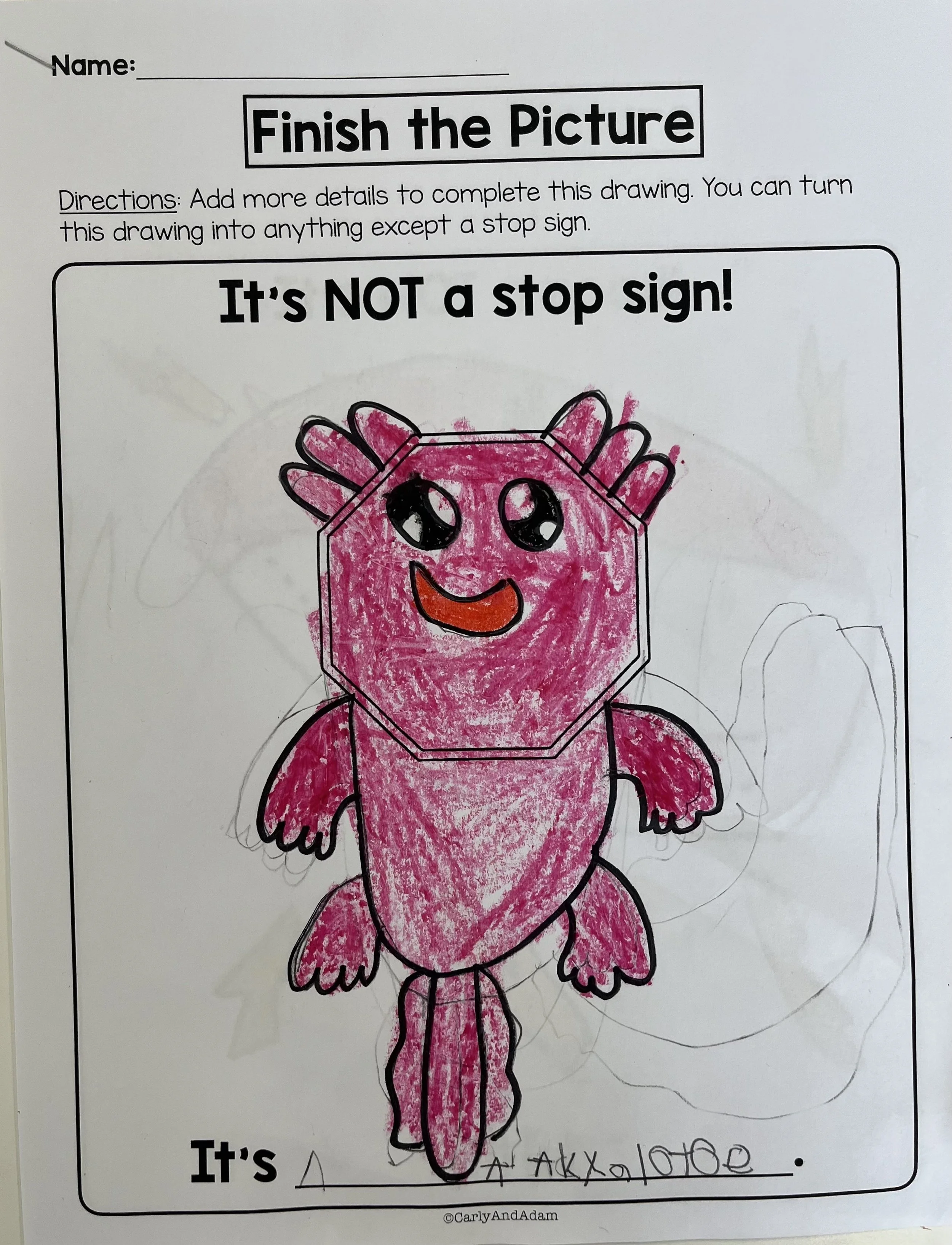
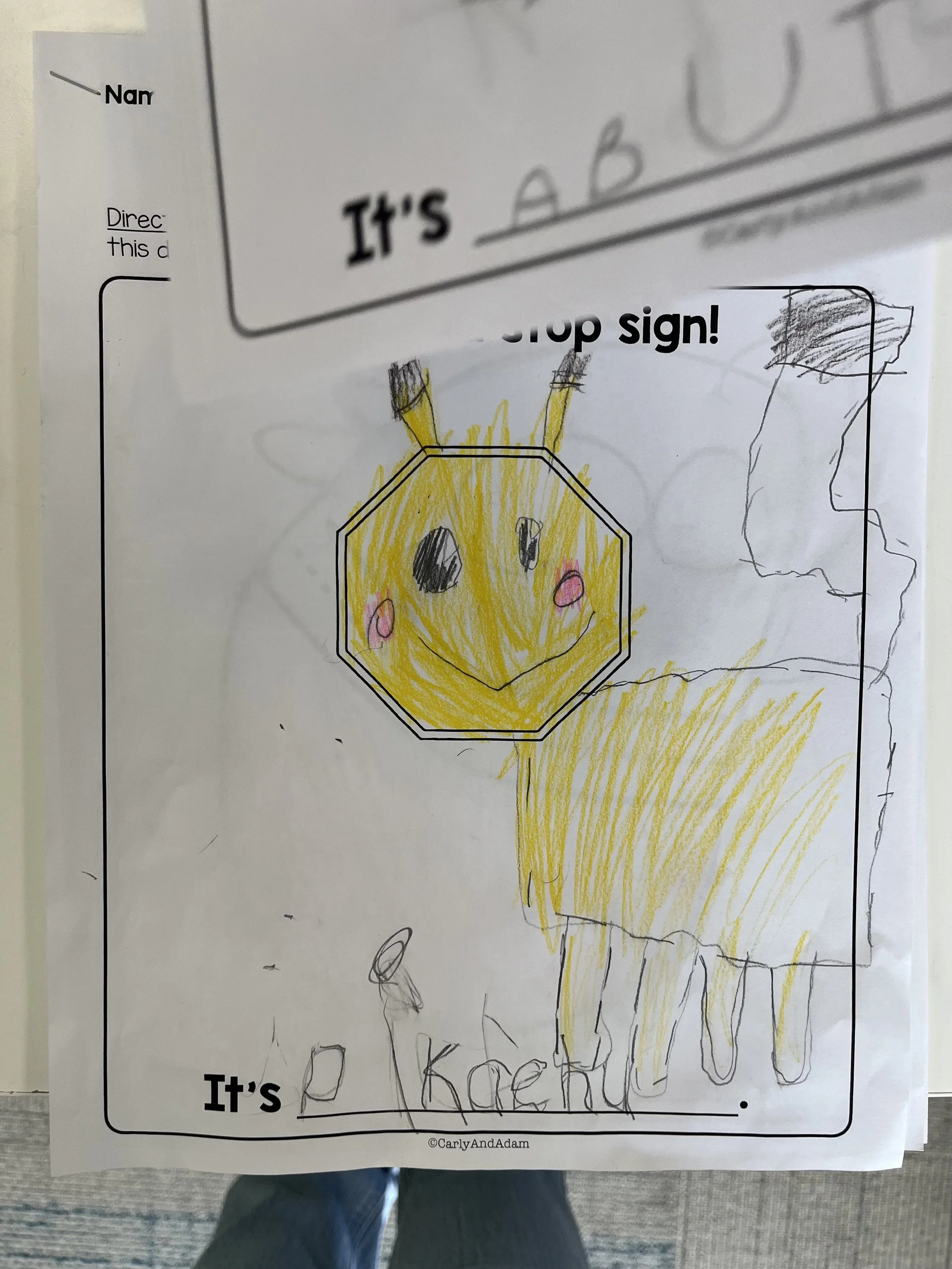
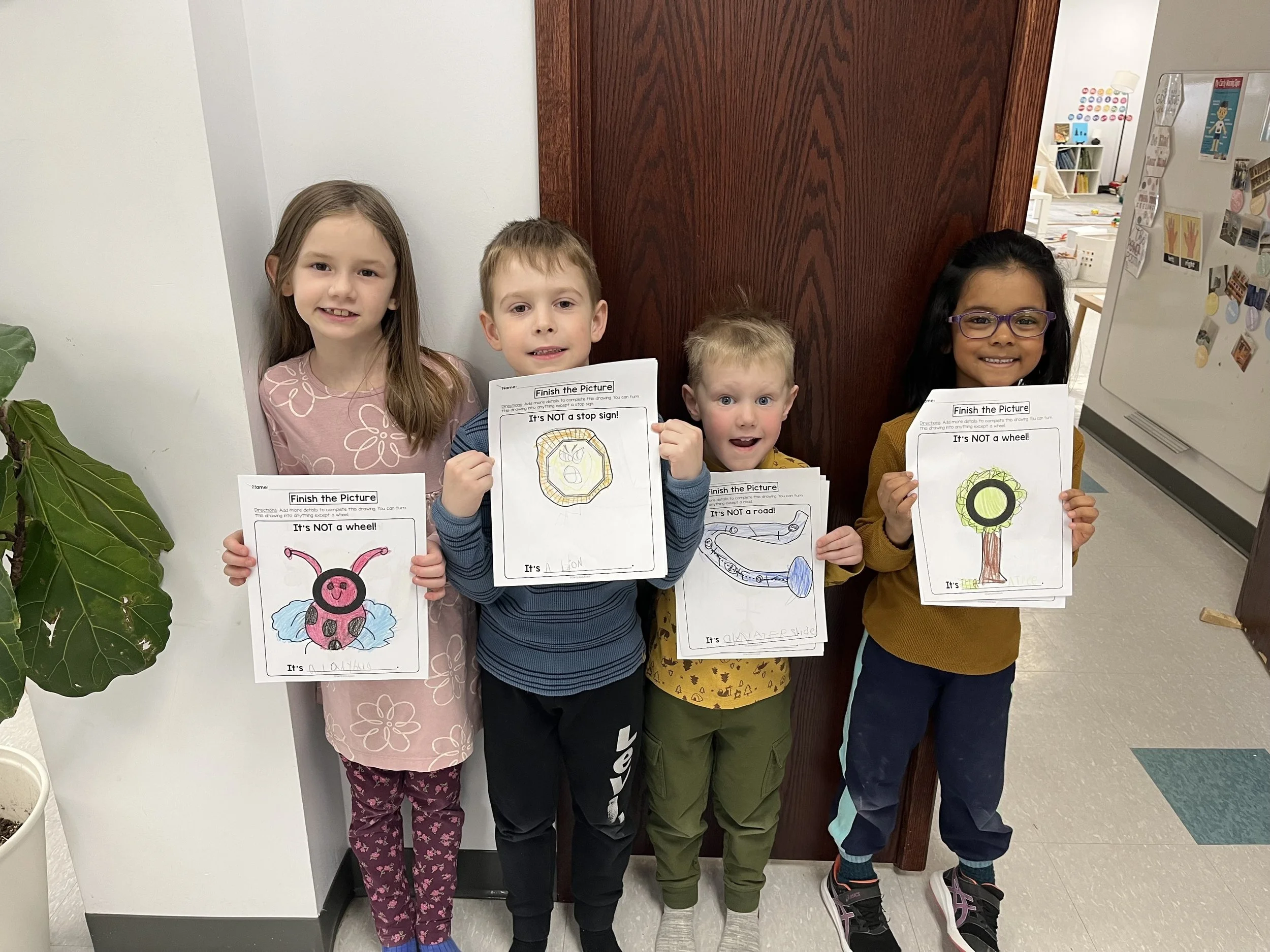
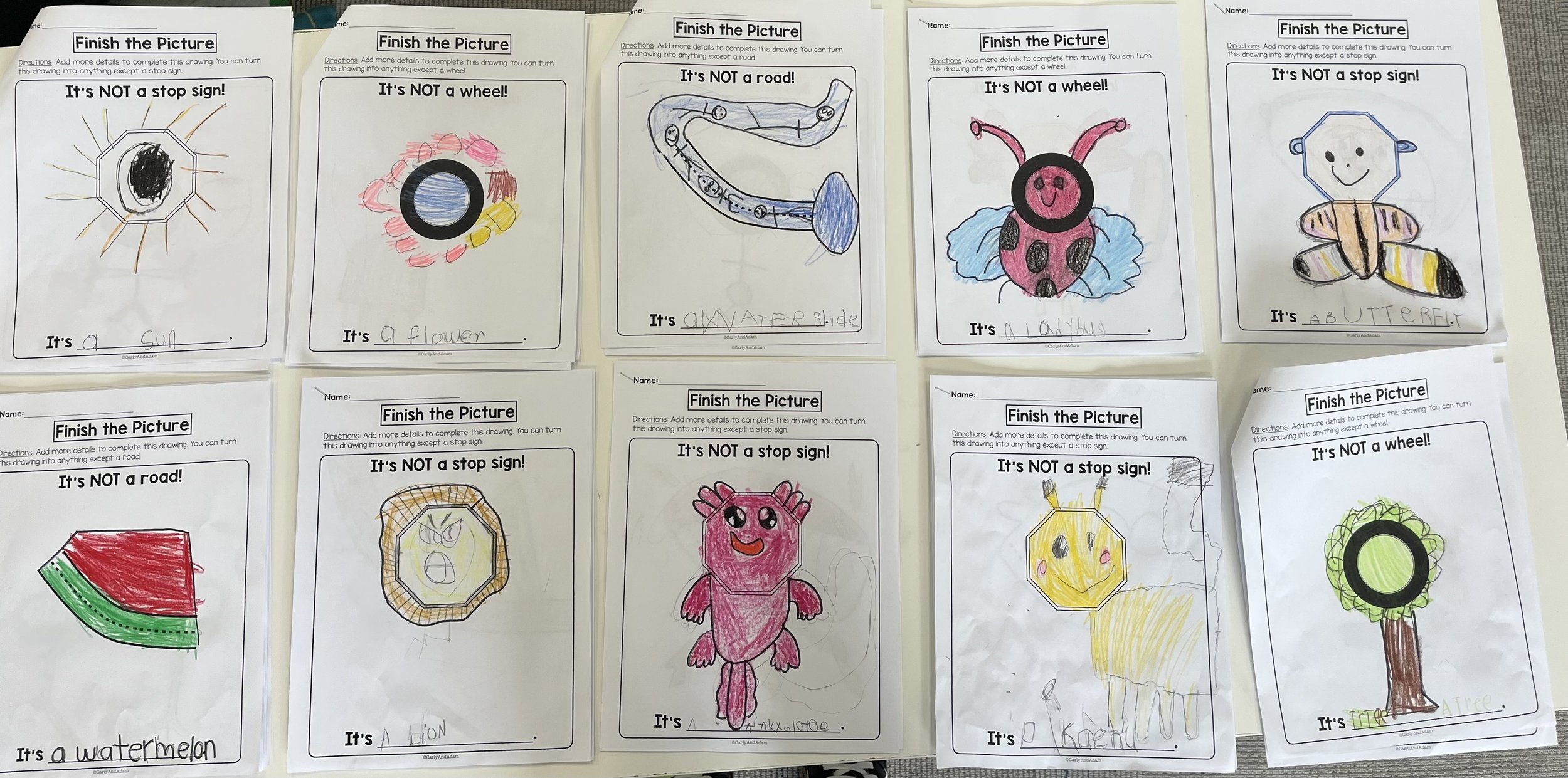
Throughout the rest of the week, the Sparks worked on “finish the picture” challenges. They were given simple or partially completed drawings and asked to transform them into something entirely new. The purpose was to think creatively and develop flexible problem-solving skills. For example, if a drawing looked like it could become a car, a stop sign, a wheel, or a road, learners were encouraged to turn it into something completely different. This pushed them to look at shapes in new ways and move beyond the most obvious ideas. We loved seeing their transportation-inspired ideas come to life!
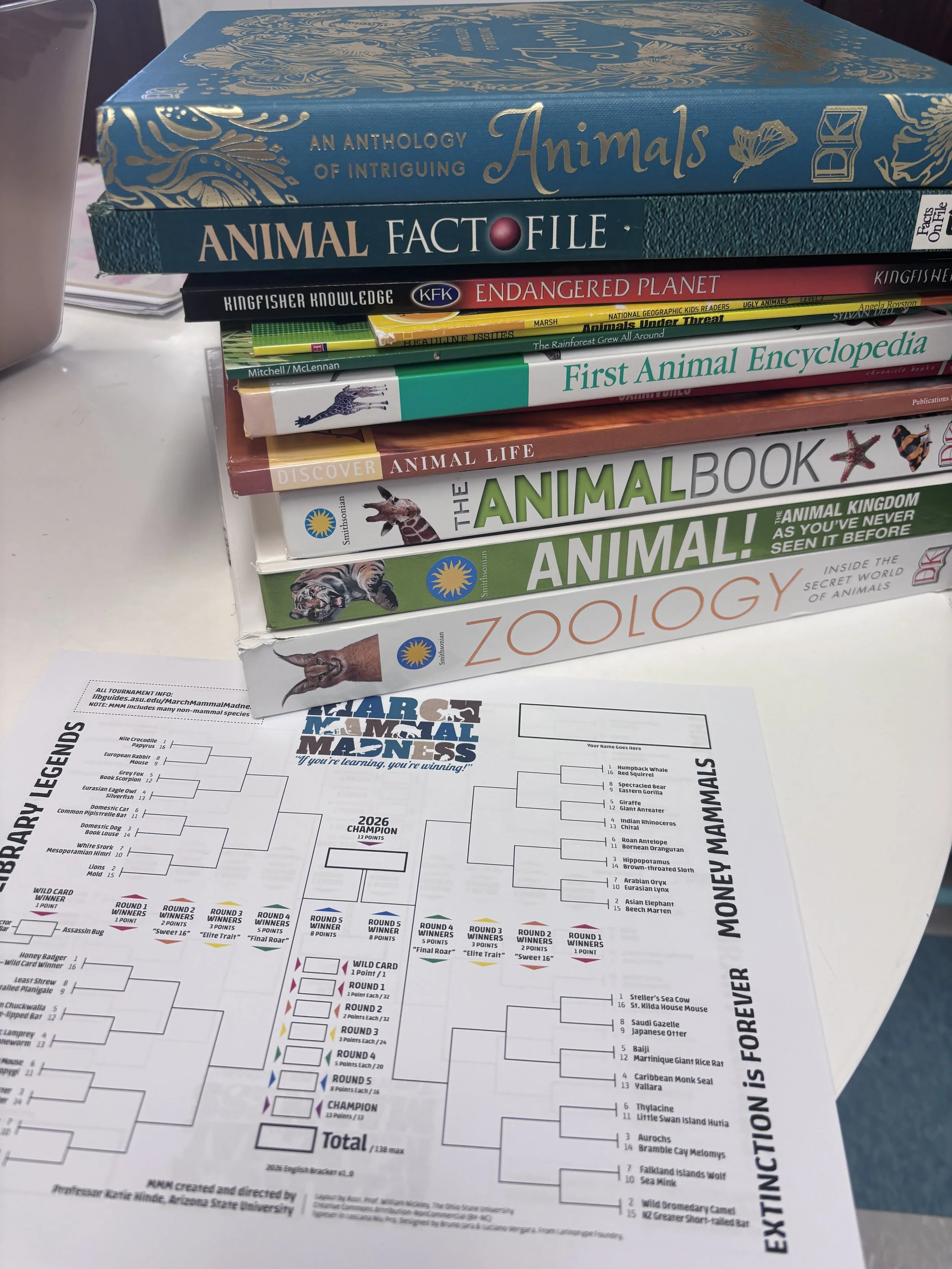
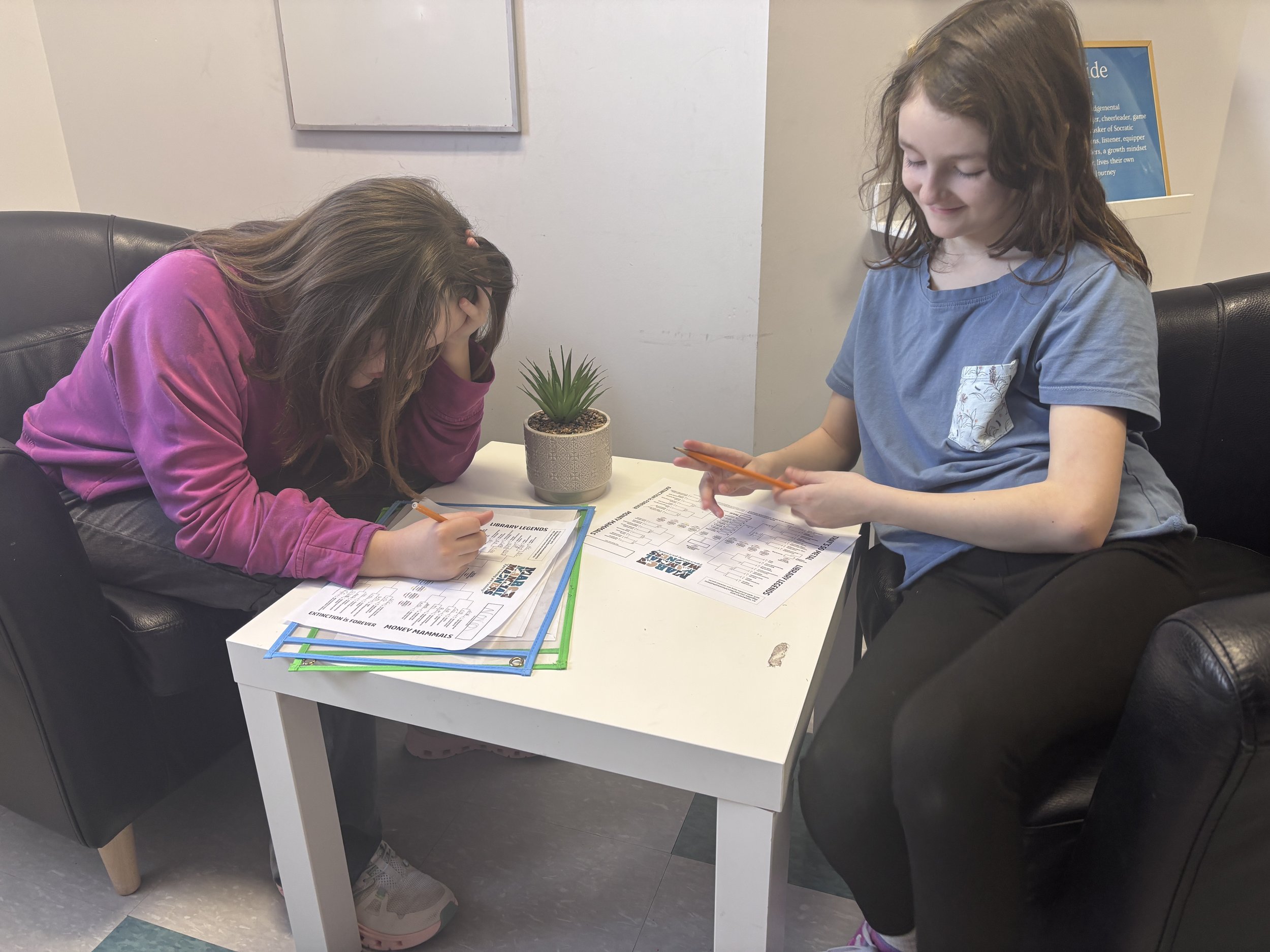
For the remainder of our Mindfulness mornings, we completed our studio bracket for March Mammal Madness! Together, we worked through each matchup, carefully discussing and voting on which animal we believed would win each battle. There were thoughtful debates, plenty of research, and lots of excitement as we made our predictions. After much discussion and decision-making, the Sparks selected the Thylacine to be the 2026 champion! We are excited to join the rest of the Rebels in watching this year’s tournament unfold and to see how our predictions compare to the official results.
Quest
This week in Quest, our learners zoomed into the exciting world of cars! On Monday, we began by sharing about our own cars and the special features they have. Learners were eager to talk about sunroofs, backup cameras, TVs, buttons to make the car faster, and more. We also explored the history of cars and discussed how vehicles have changed over time, from early models to the high-tech cars we see today.
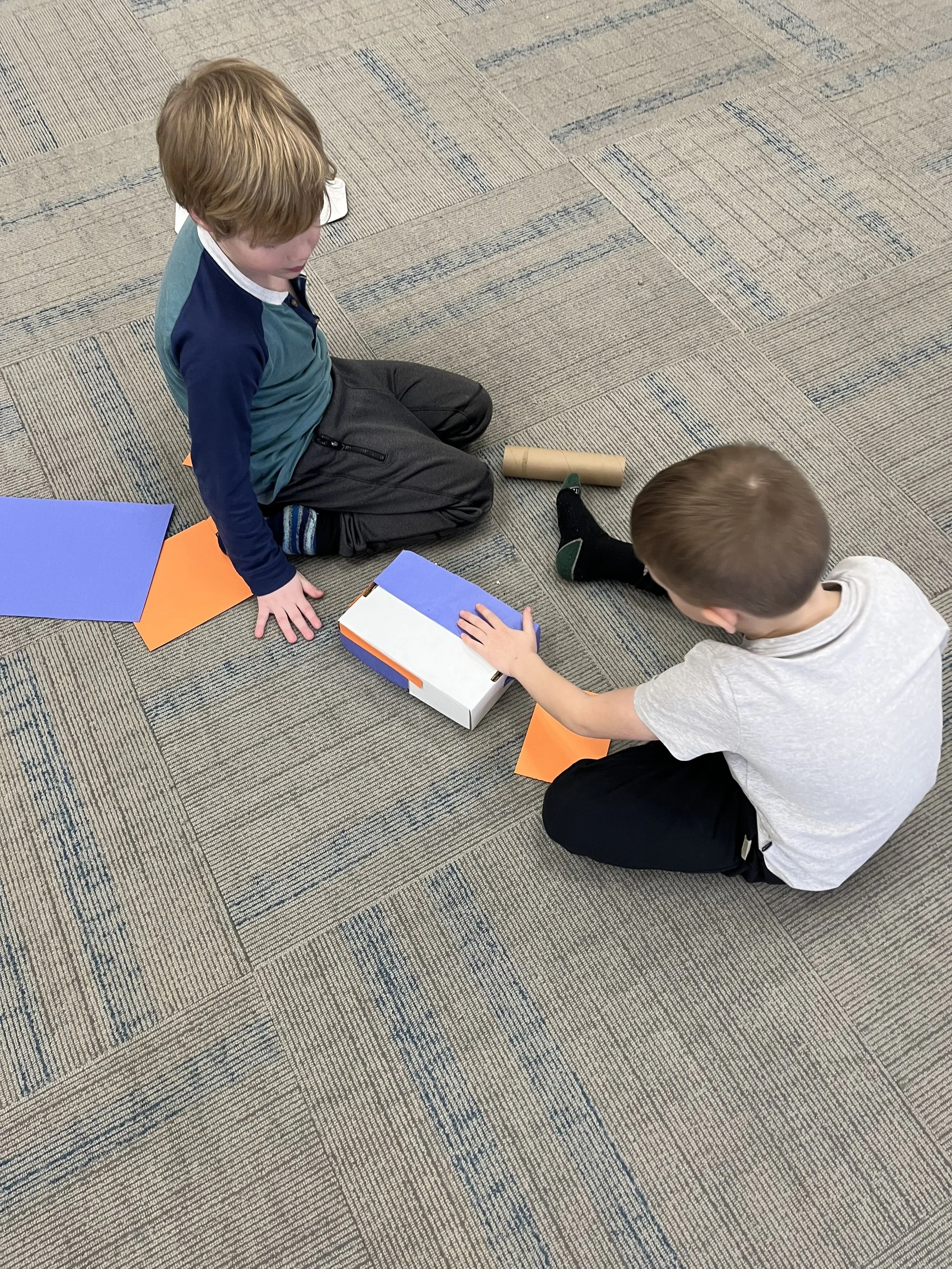
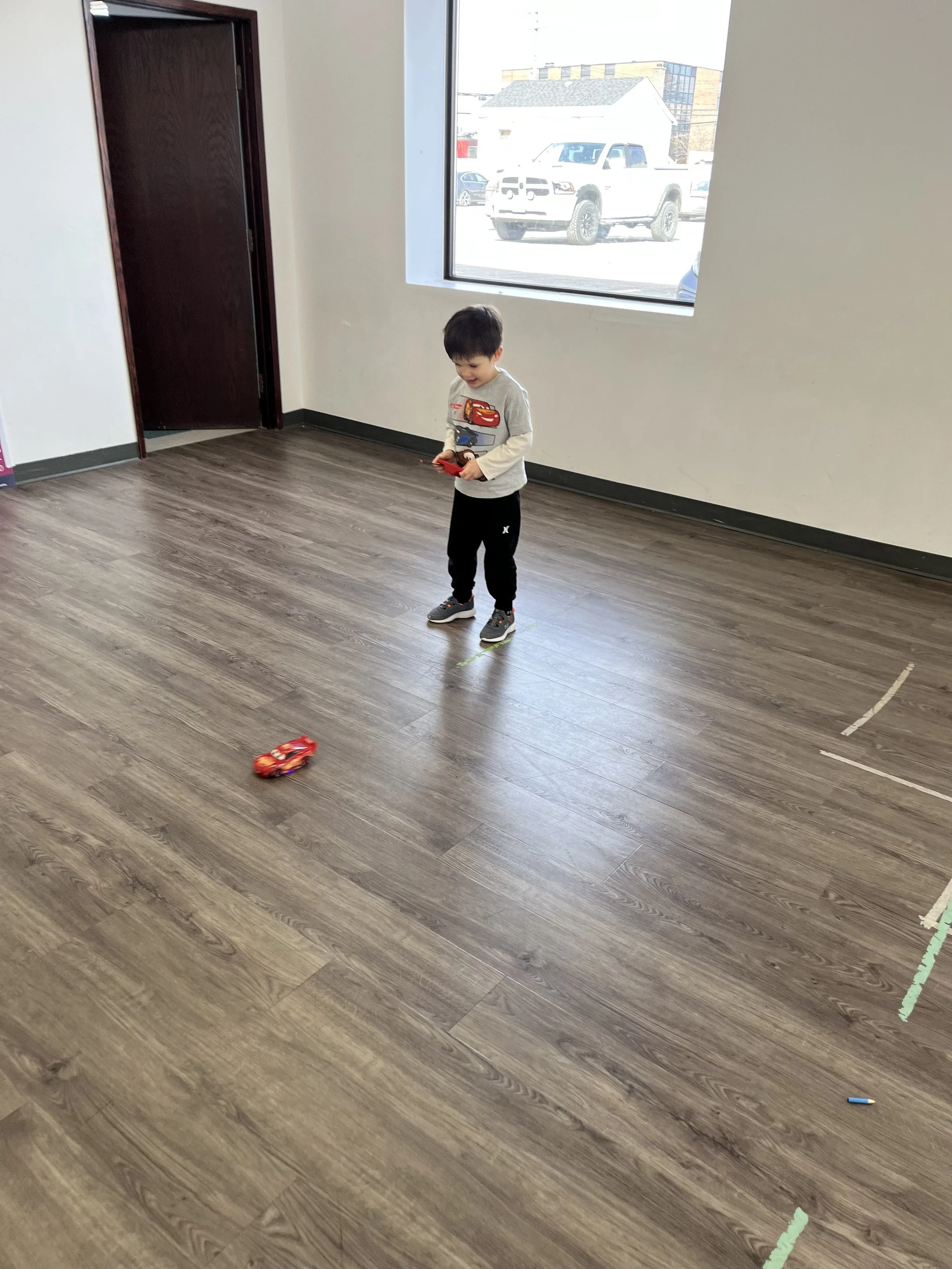
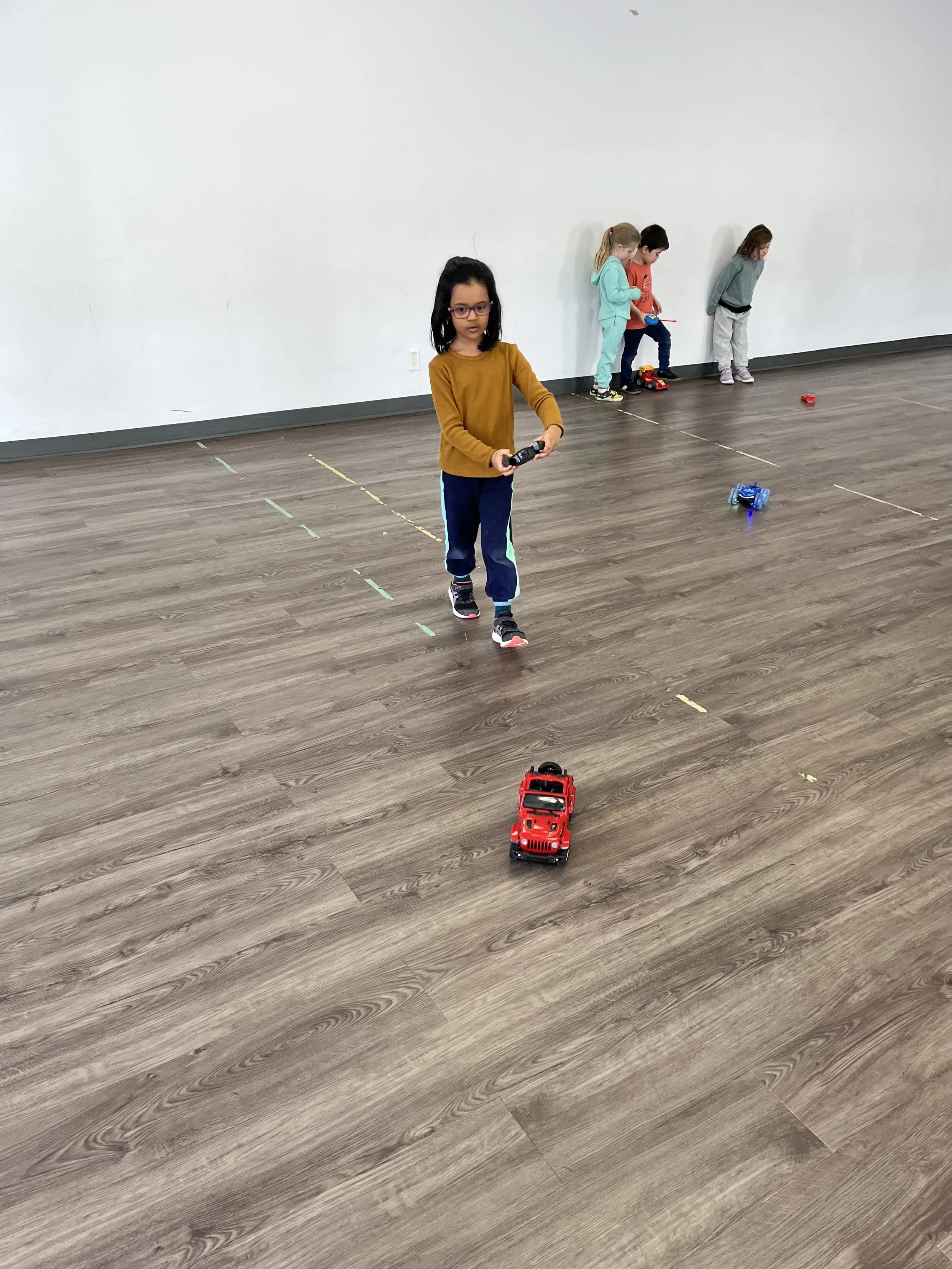
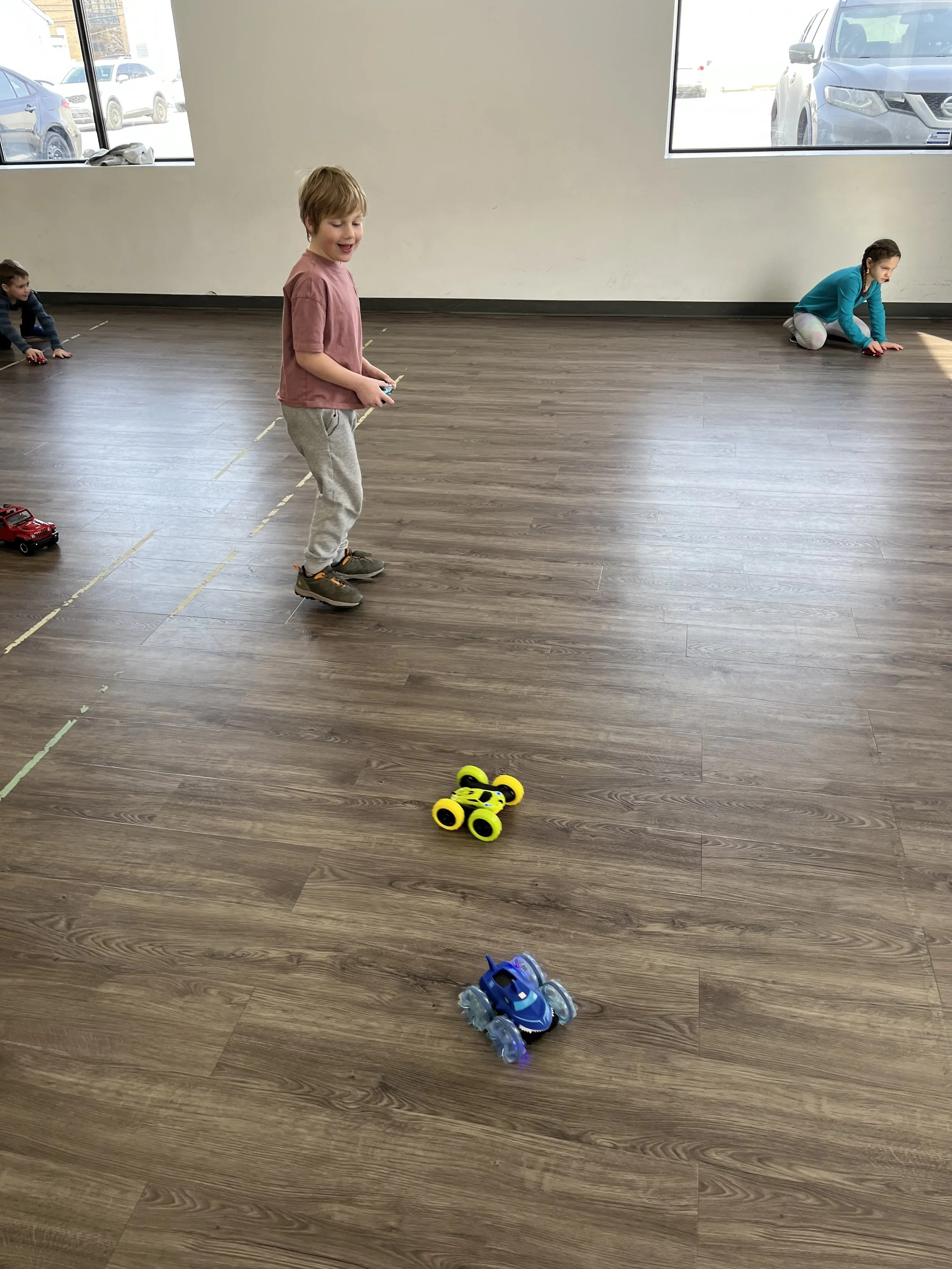
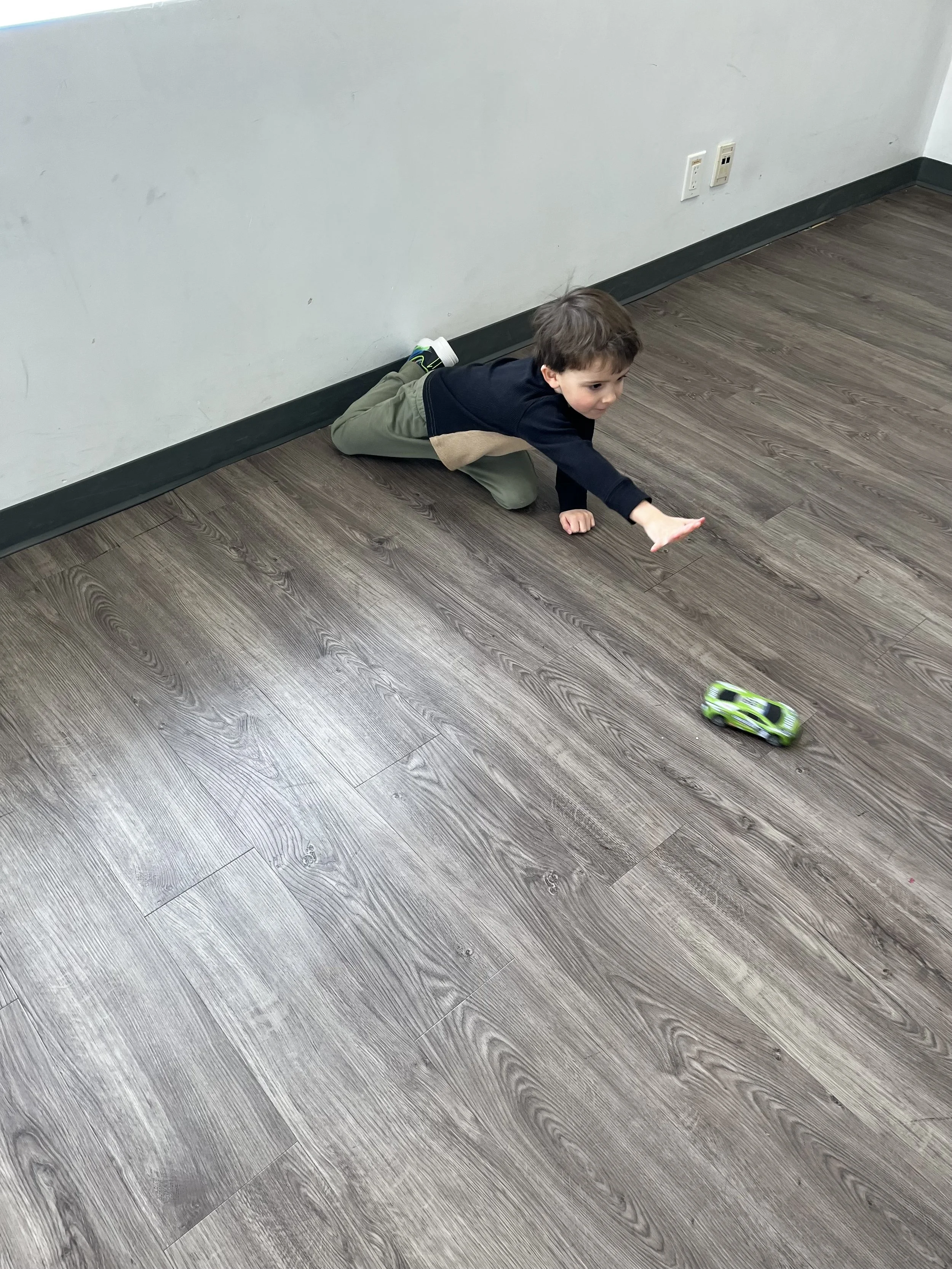
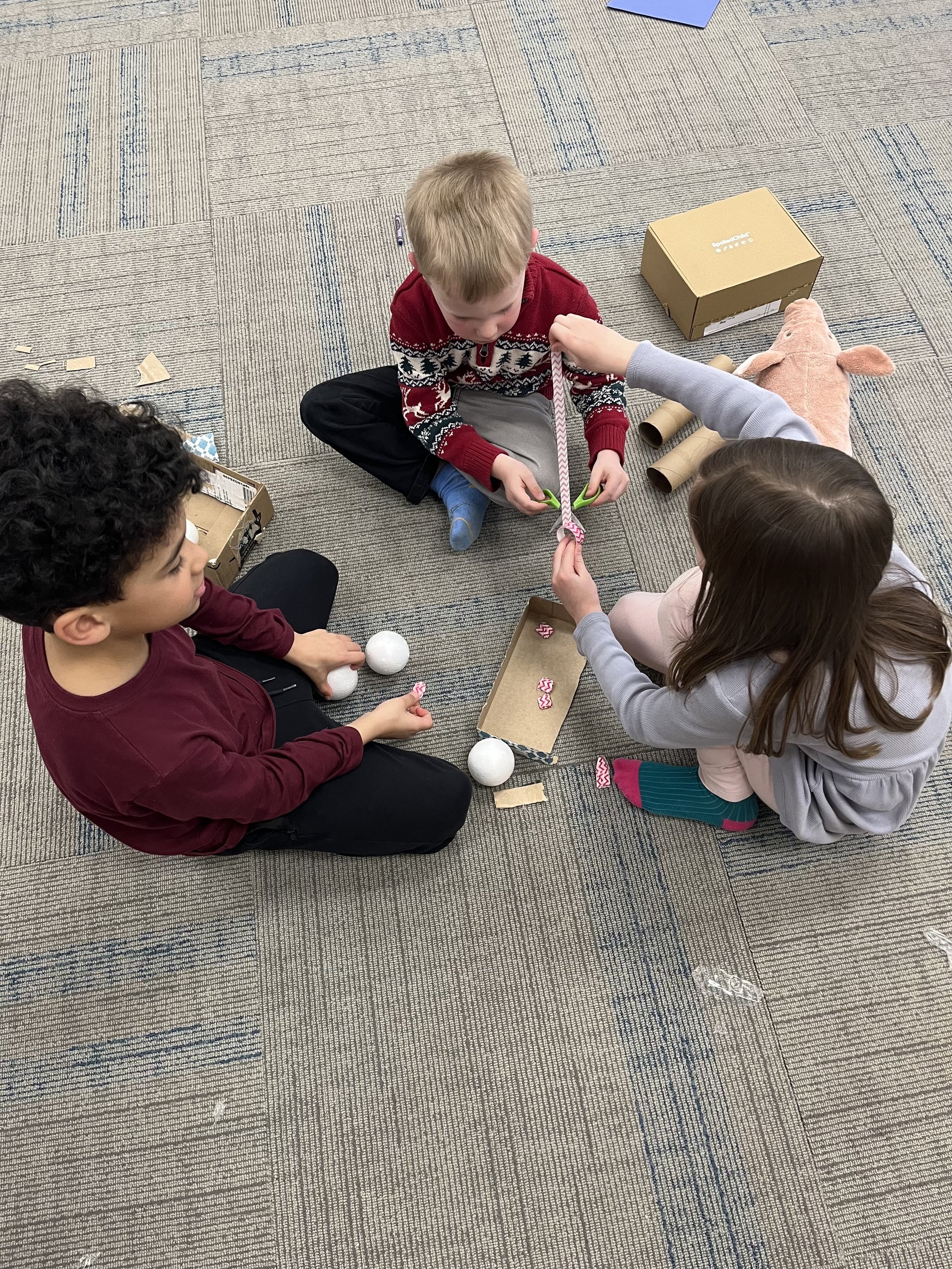
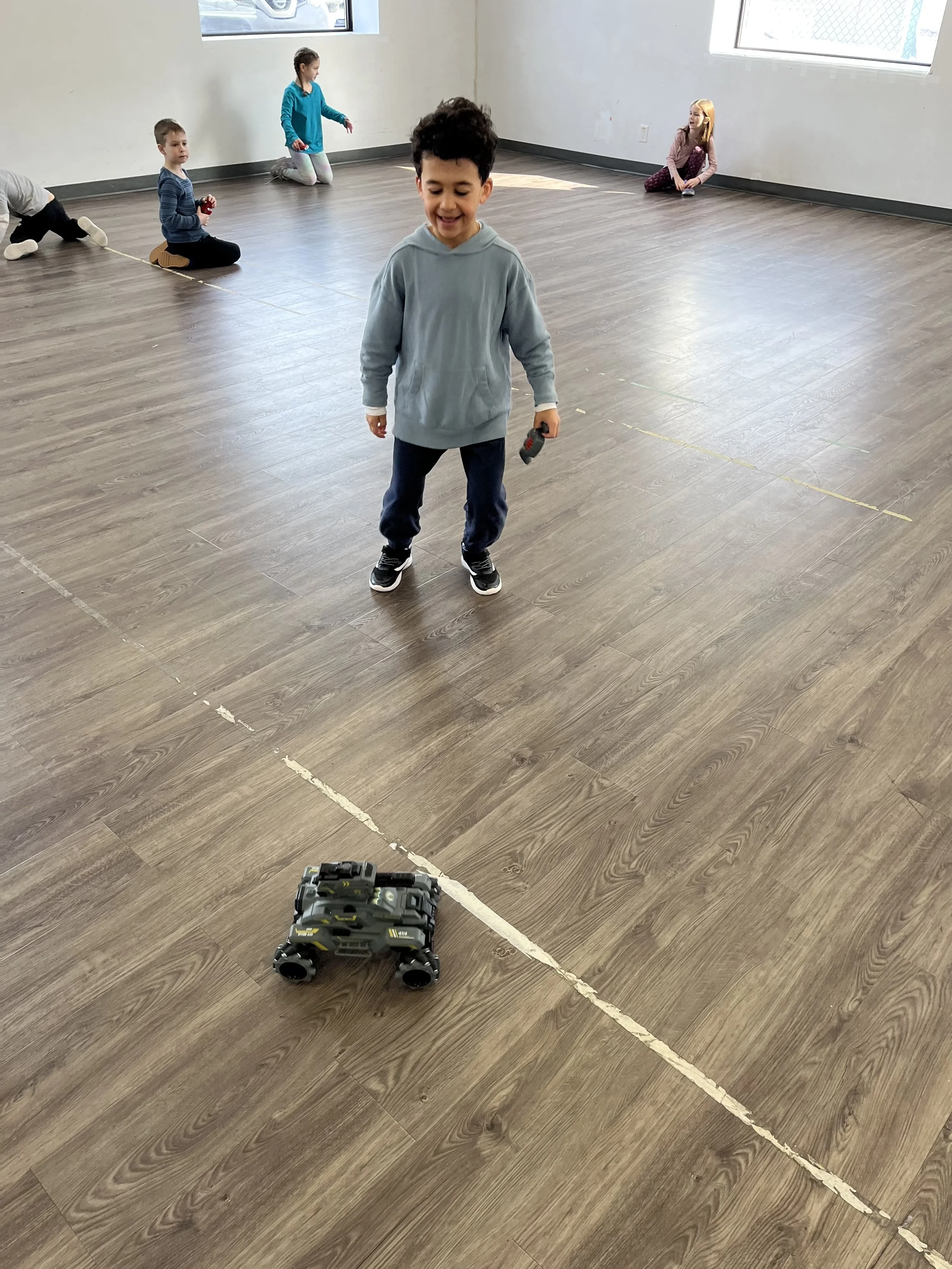
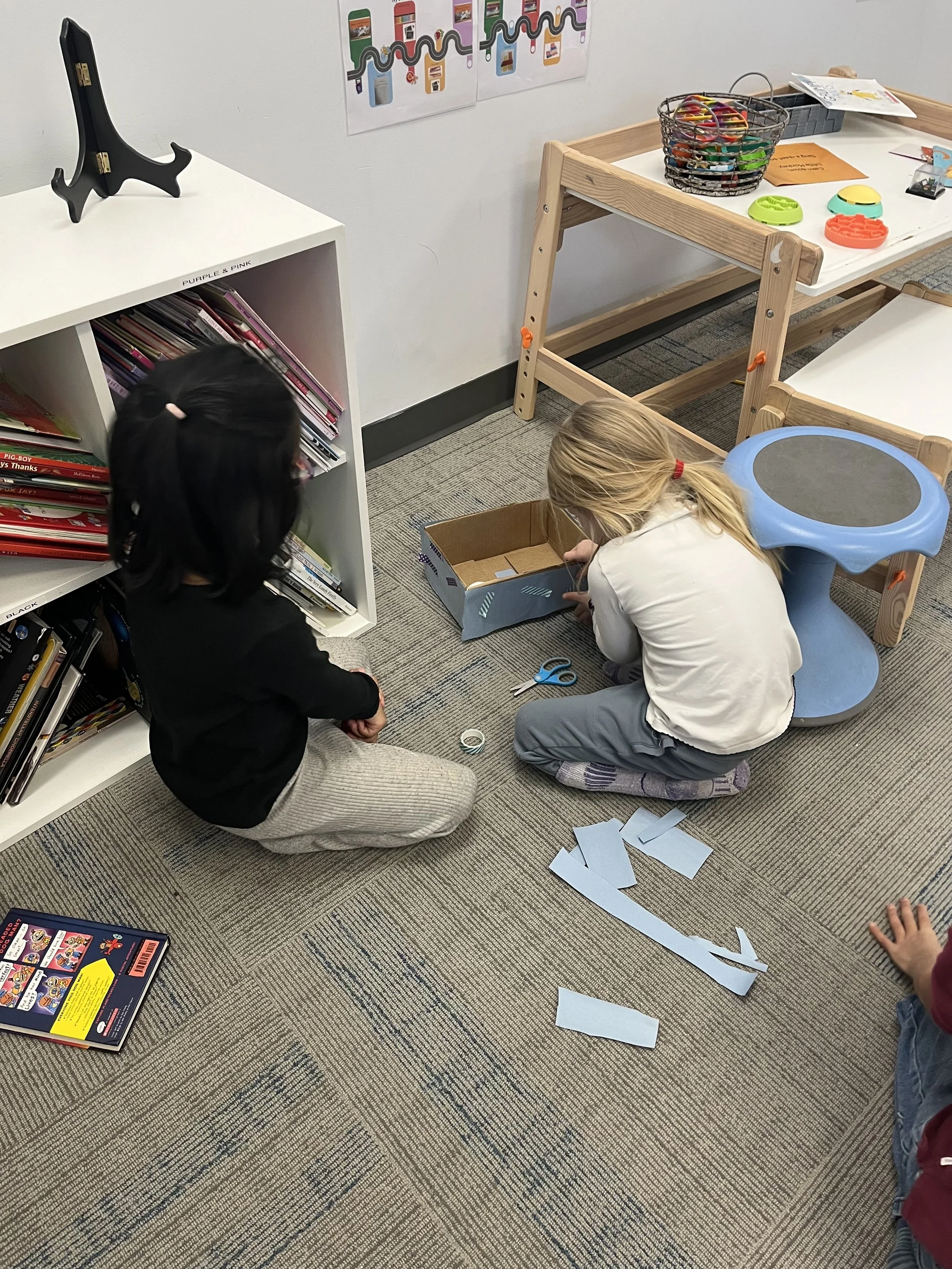
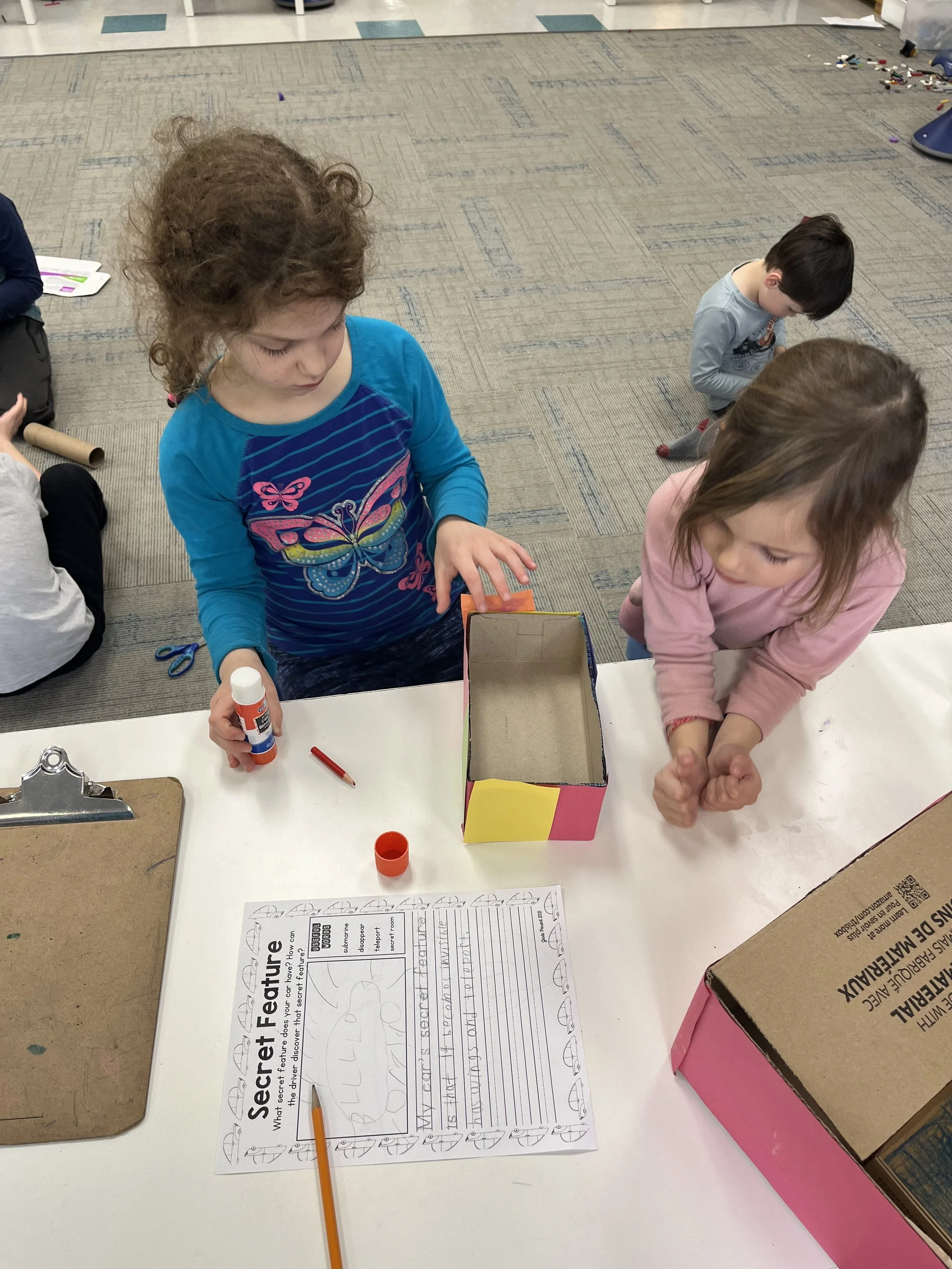
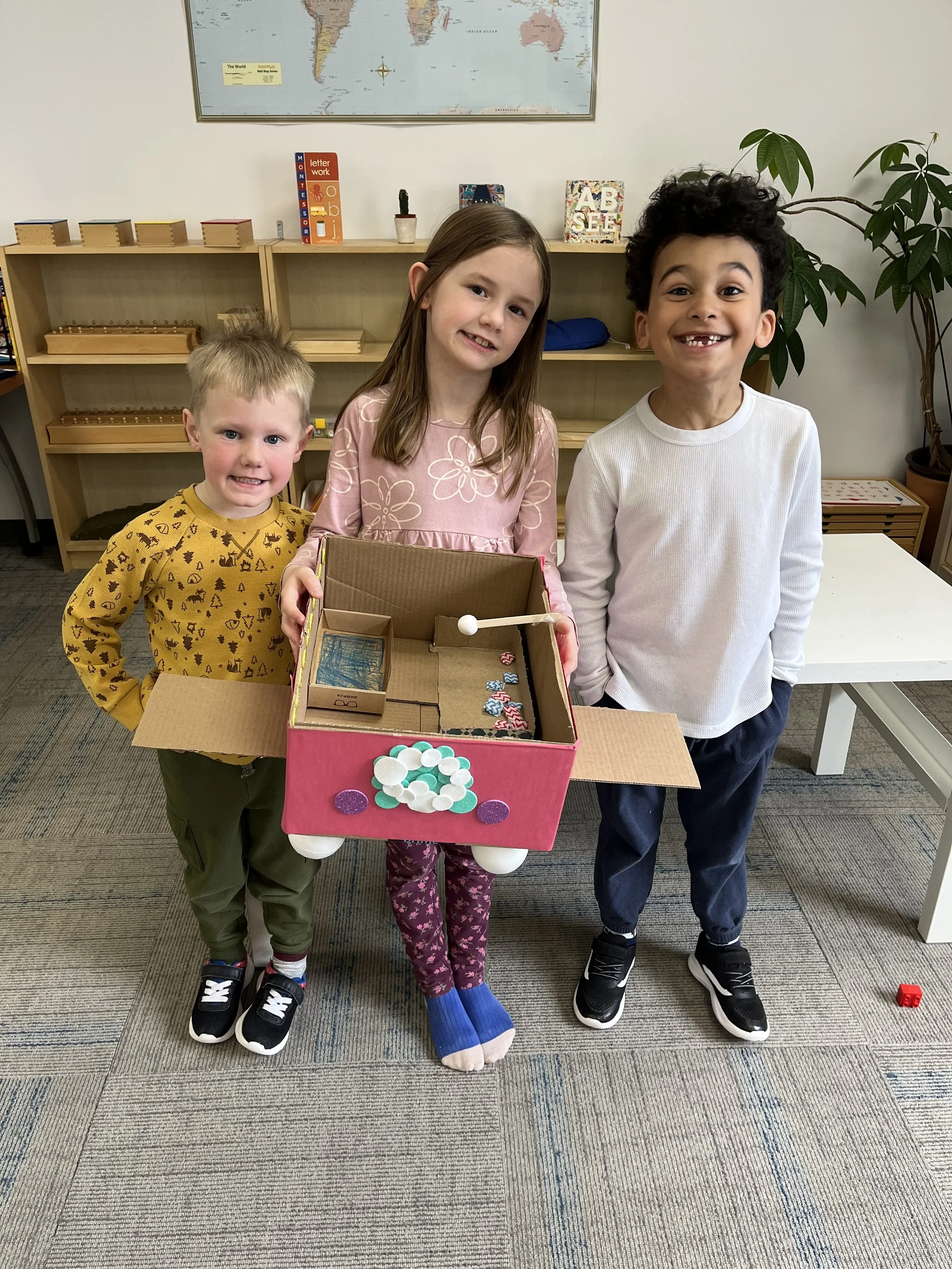
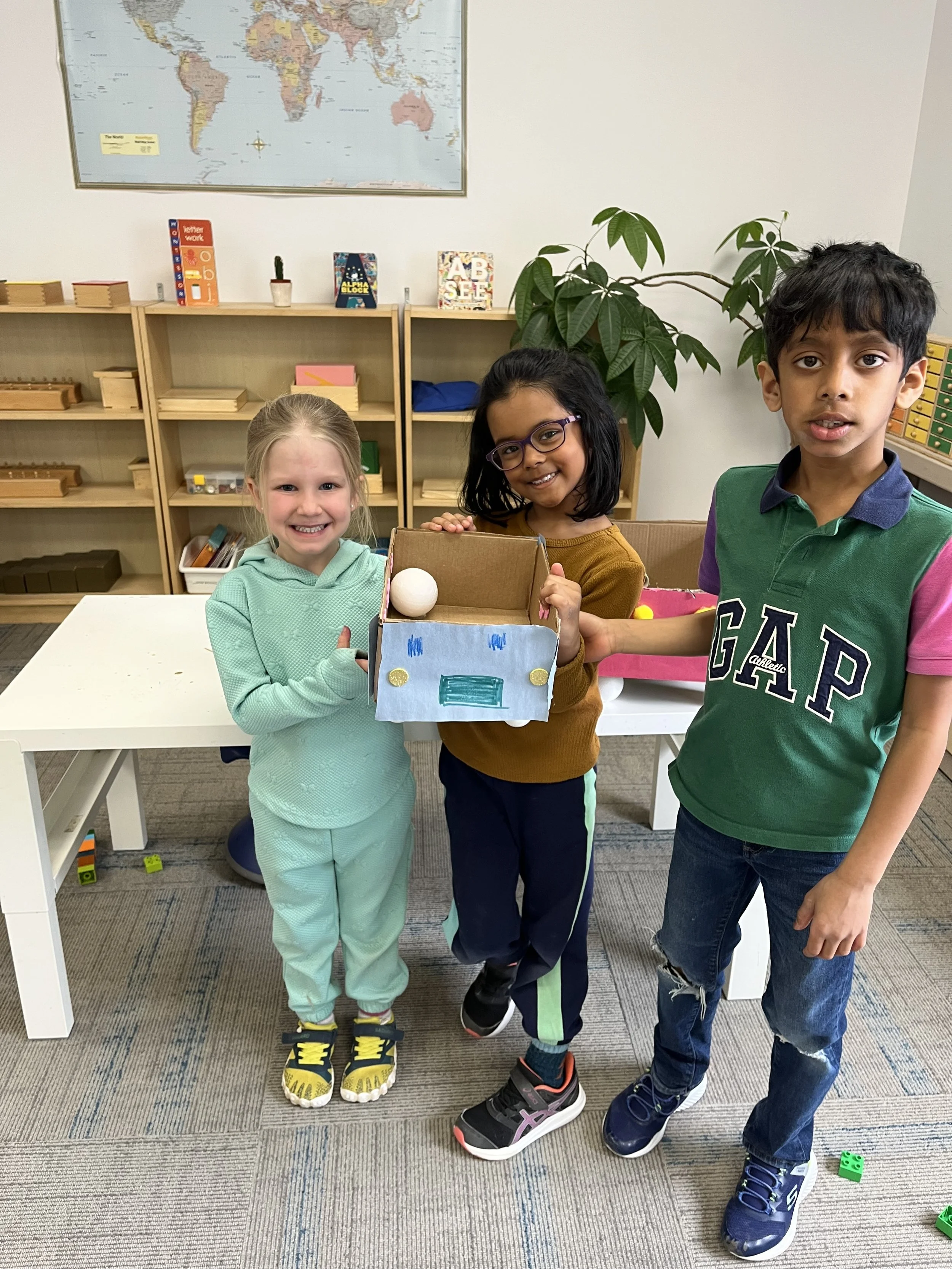
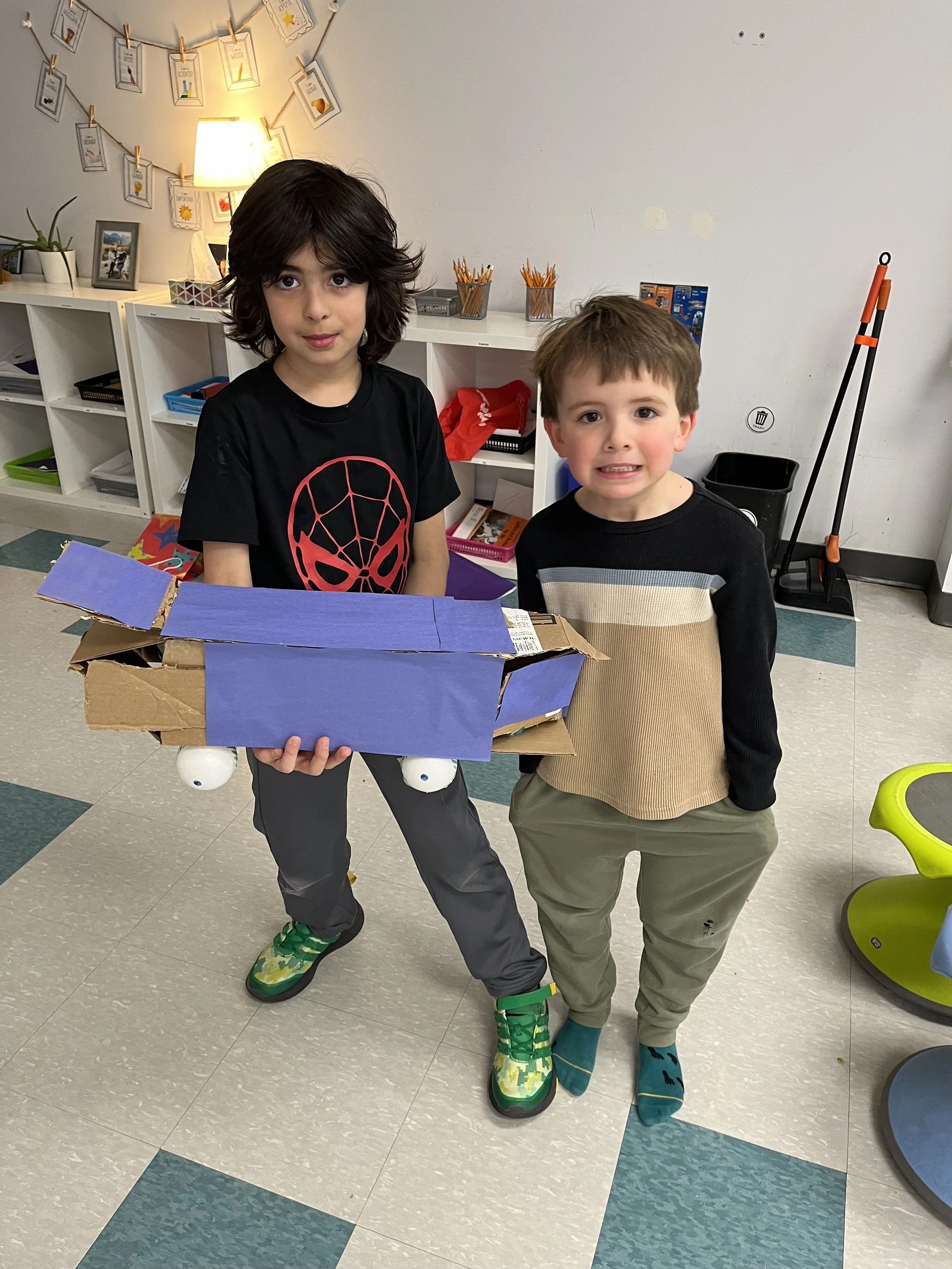
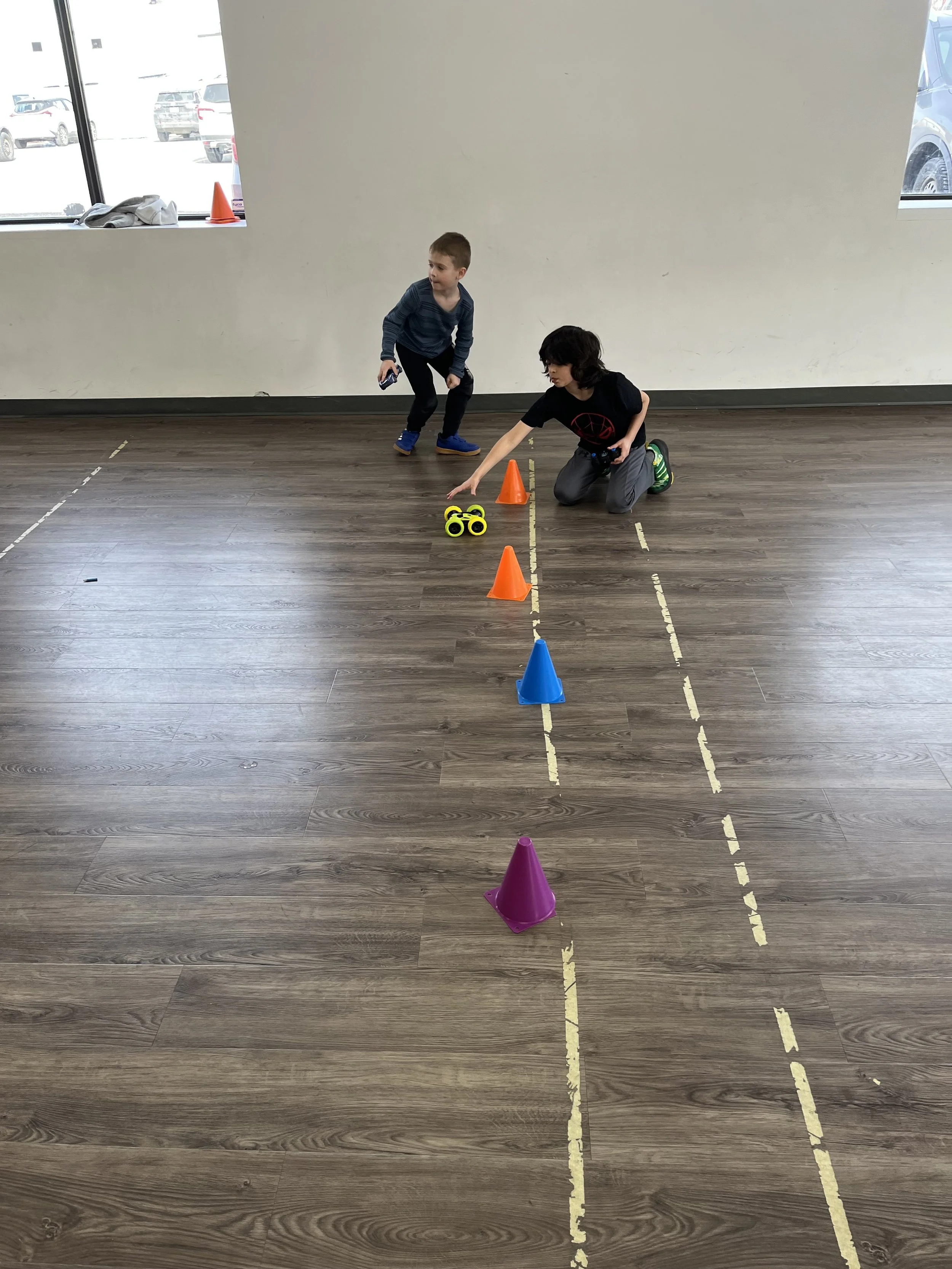
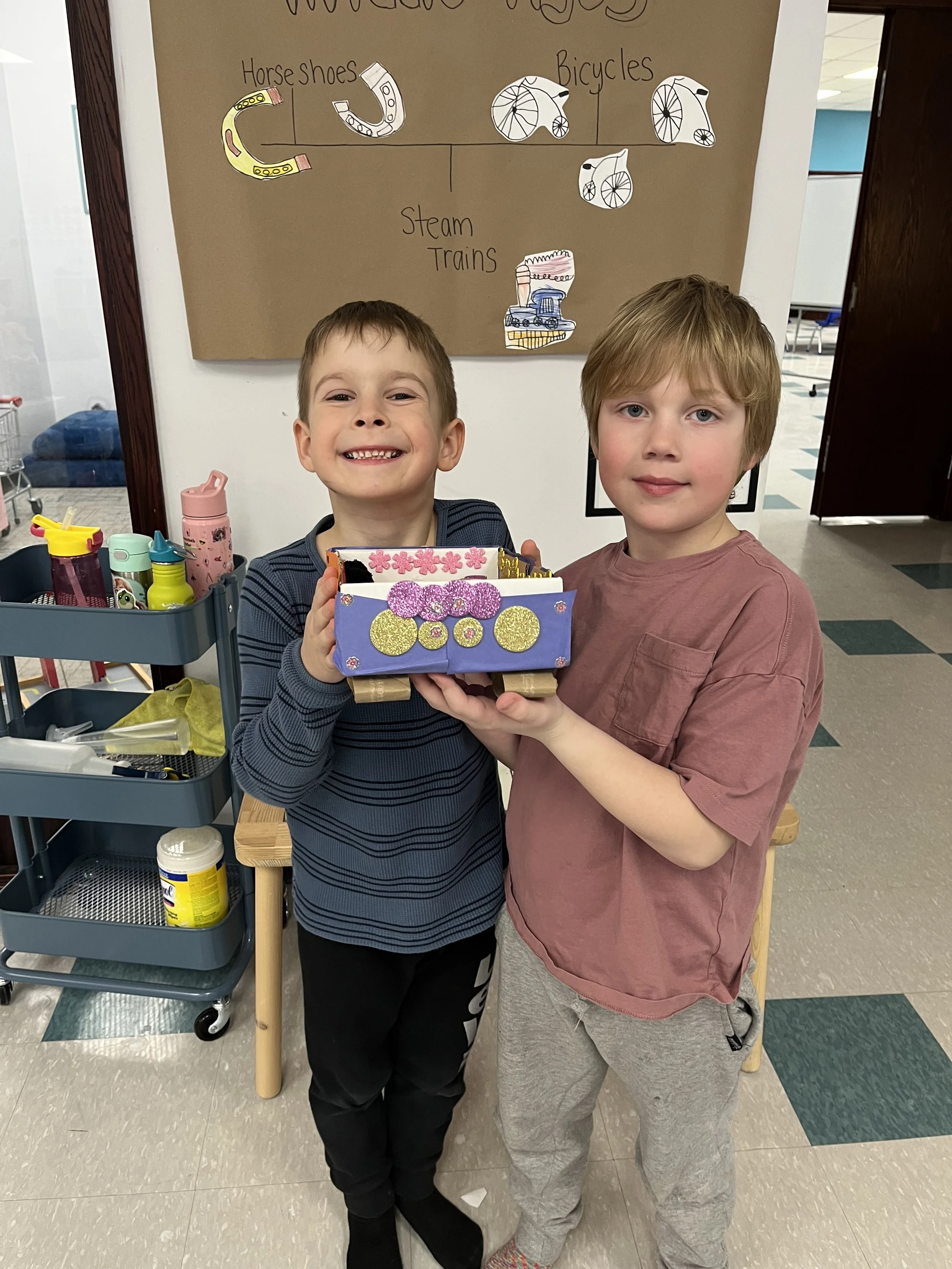
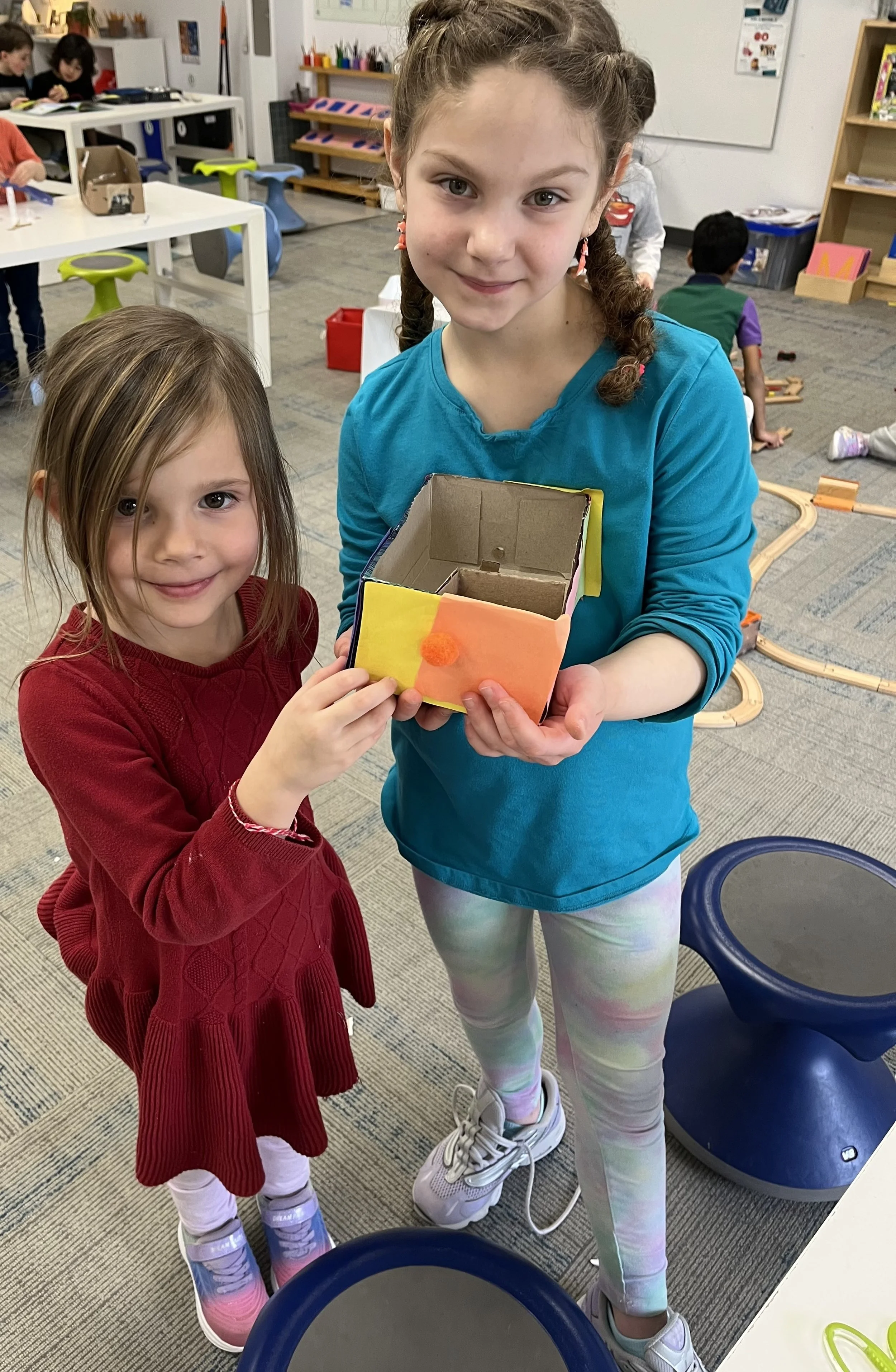
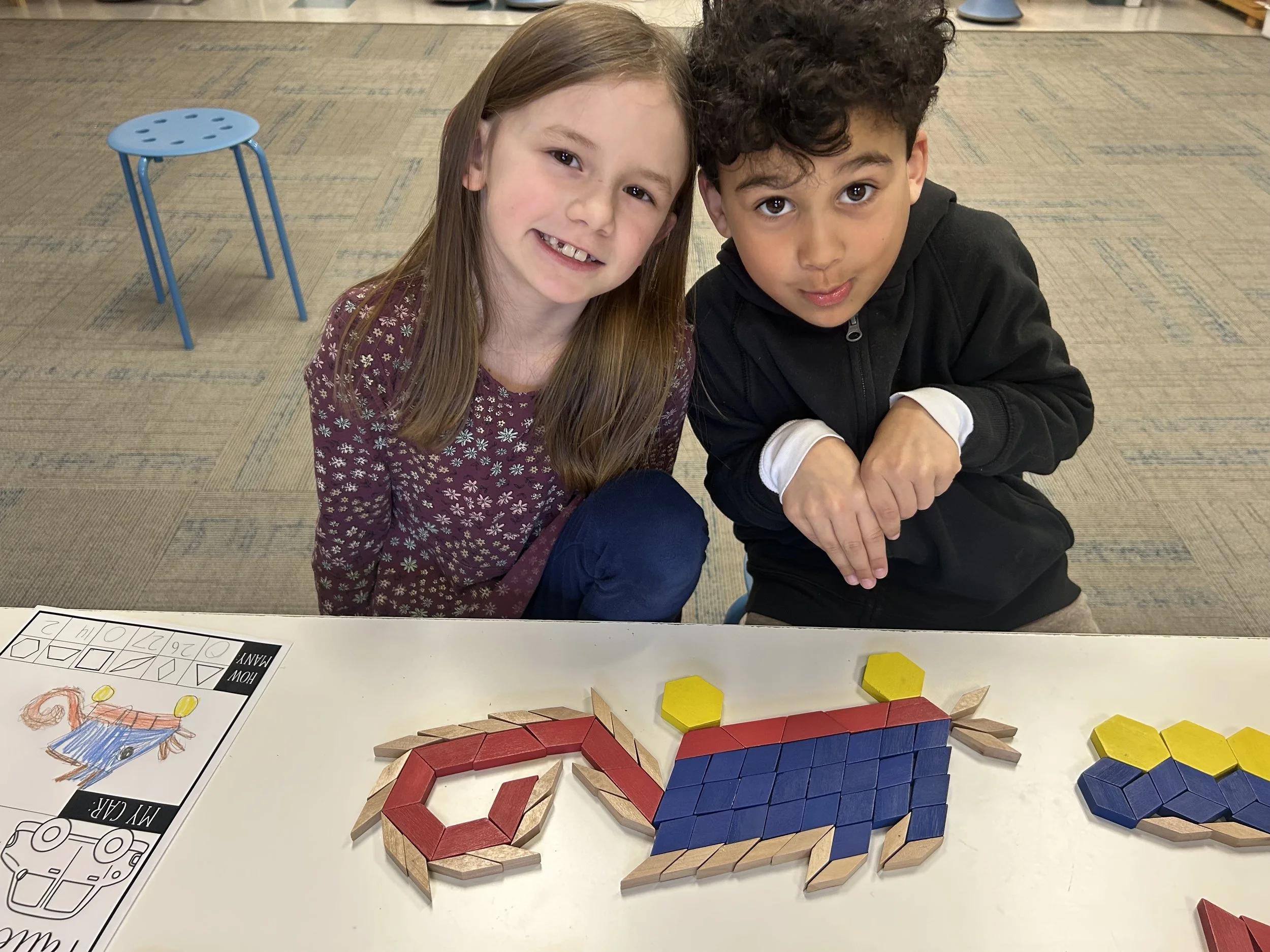
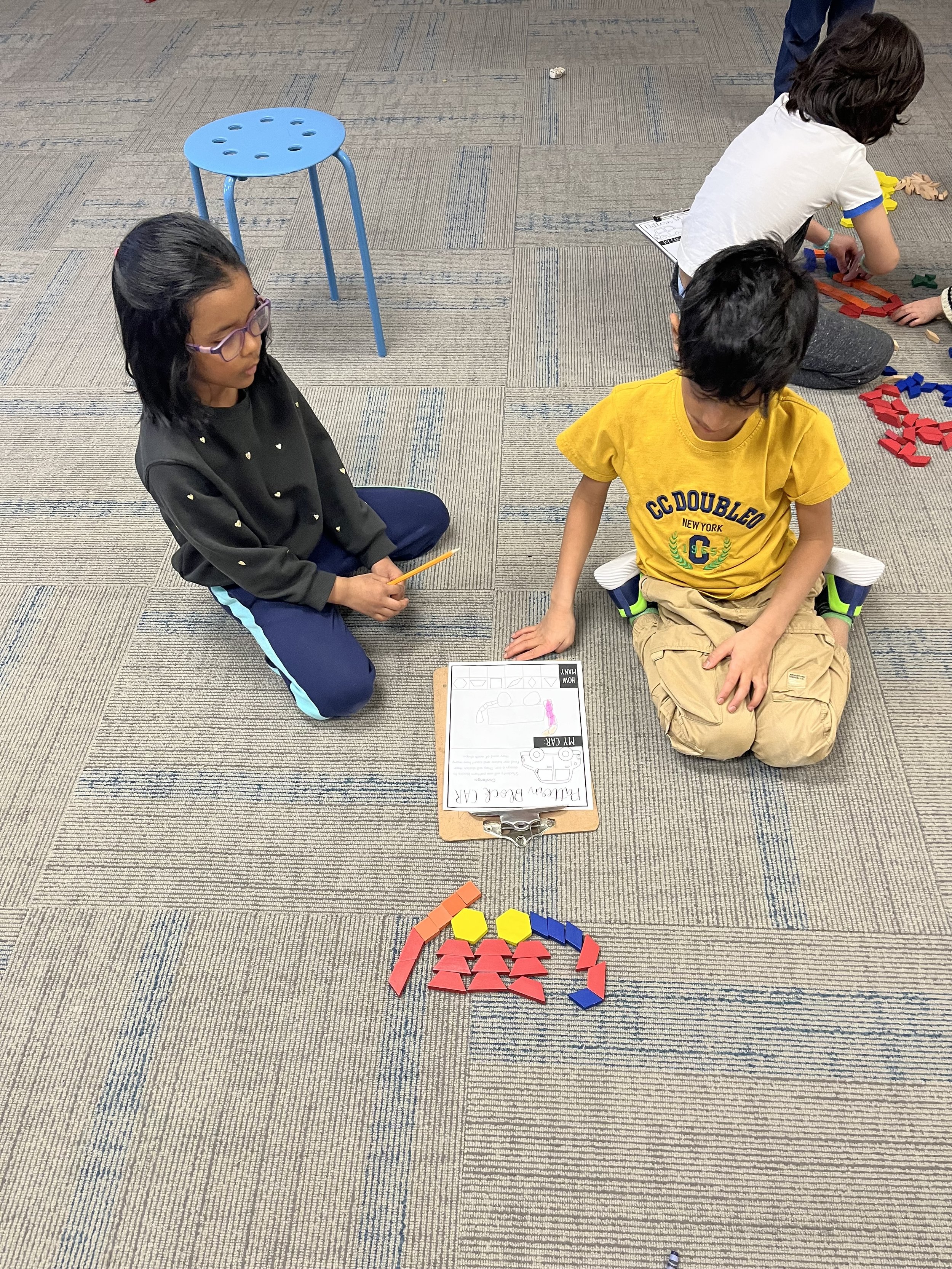
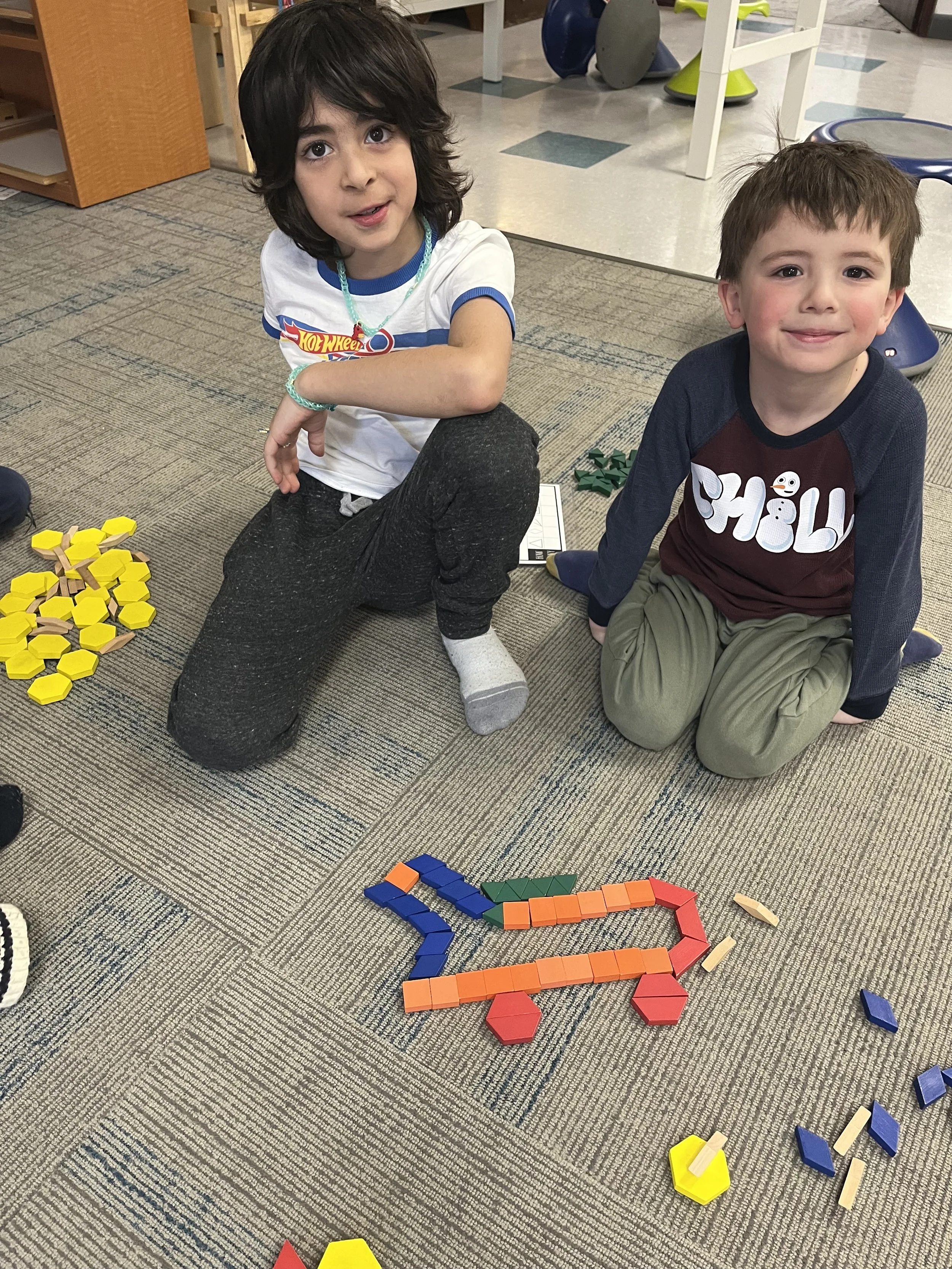
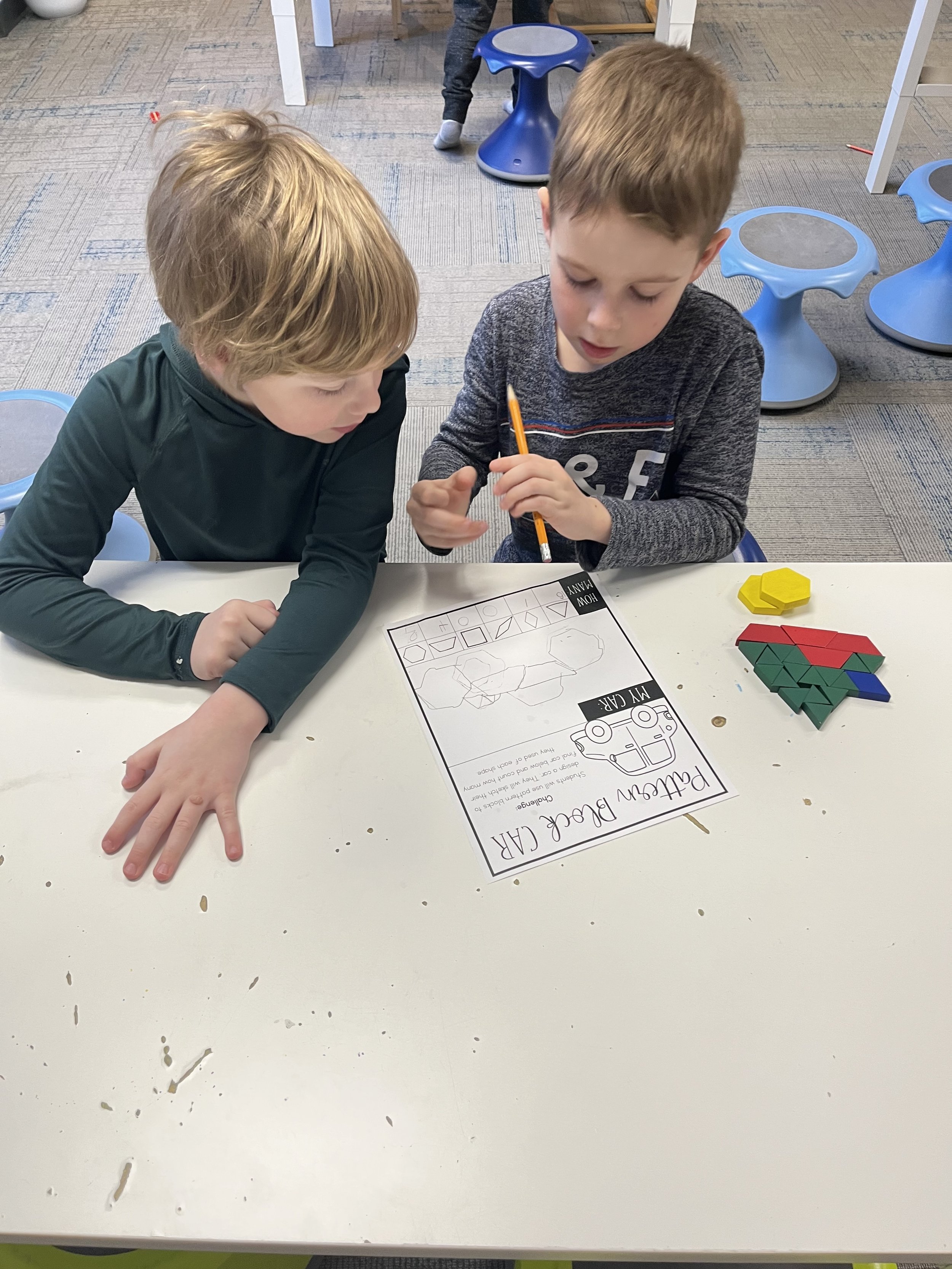
To spark our creativity, we read If I Built a Car by Chris Van Dusen. This imaginative story follows a young boy named Jack who designs his dream car filled with incredible features, like a swimming pool, wings to fly, and even a robot driver! This book inspired our learners to think big and let their imaginations run wild. After reading, learners formed their engineer groups and used pattern blocks to design their very own cars. They carefully planned their designs, sketched them, and counted how many of each shape they used. Throughout the rest of the week, groups collaborated to imagine a brand-new car from the ground up. They worked together to draw and write about the outside design, the inside features, secret and special features, safety features, and other unique details that make their car one of a kind. As the week came to a close, learners brought their ideas to life! Using cardboard, foam, wooden dowels, stickers, and other craft materials, they worked diligently to build 3D models of their cars. They took their time adding the details they wrote about earlier in the week to make their models realistic to their plans. We can’t wait to show you their amazing creations at Exhibition! To wrap up our week, the learners had an exciting Fun Friday! They brought cars from home and had a blast racing them around the gym with their friends. There was lots of laughter, cheering, and friendly competition as everyone tested how fast their cars could go.
French
This week in French, the Sparks learned the names of wild animals such as hippopotamus, monkey, and giraffe, while also reviewing the farm animals we learned last week. On Monday, the learners watched an episode of Mini Soleil about wild animals to help them hear and recognize the new vocabulary. On Thursday, the Rebels went to the gym and played an animal charades game, where they acted out different animals to review and practice their new words in a fun and active way.
Art
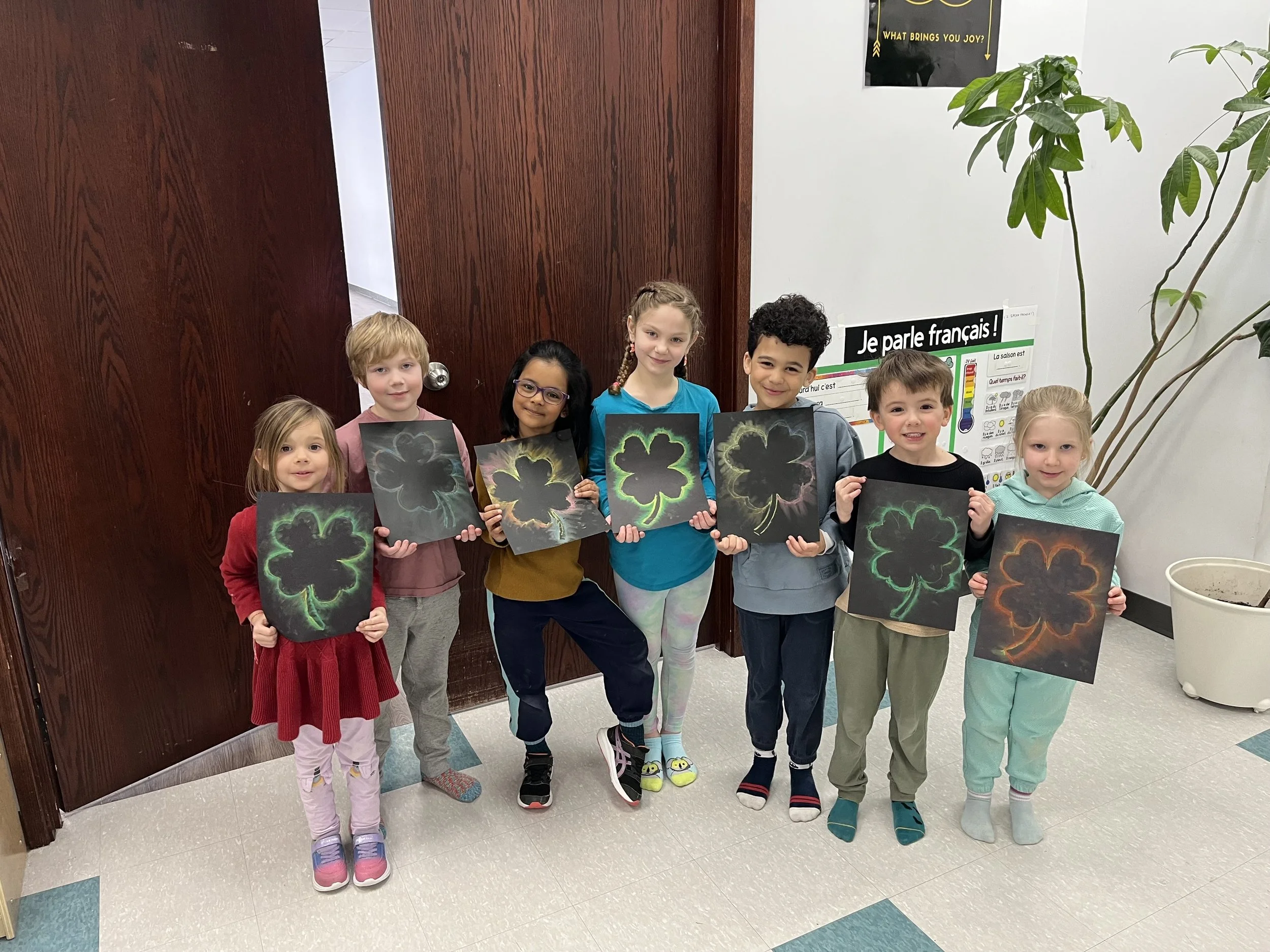
This week in our Art Workshop, we focused on the upcoming celebration of Saint Patrick’s Day. We began by reading There Was an Old Lady Who Swallowed a Clover, which sparked a fun discussion about the tradition of four-leaf clovers being a symbol of good luck.
After our story time, learners got creative! They traced a clover onto black paper using vibrant chalk pastels. Then, using a Q-tip, they carefully smudged the pastel outward to create a bright, glowing effect around their clover. The results were beautiful and full of festive colour!
Book Study
This week, we enjoyed reading Miss Nelson Is Missing! by Harry Allard and James Marshall. After completing the book, we revisited our predictions from last week to see if they were correct. It was exciting to discover which predictions matched the story and to talk about the surprises along the way!
To deepen our comprehension of the story, we worked together to draw and label three important events from the book. This activity helped us practice identifying key details, retelling events in order, and explaining our thinking through both pictures and words.
Reader/Writer Workshop
Group One used the sandpaper letters to work on the short vowel a. Together we spelled words like mat, bat, pat, and rat. Once the guide reviewed these CVC words with the Sparks, they challenged one another and made words themselves. Following this, we sang a song about the short vowel a. To end the lesson, they took out their Explode the Code booklets and completed one page as a group.
Group Two continued our study of the “magic e” (also known as silent e) sound. Our focus was on the a_e pattern, where the silent e at the end of a word makes the vowel a say its long name sound.
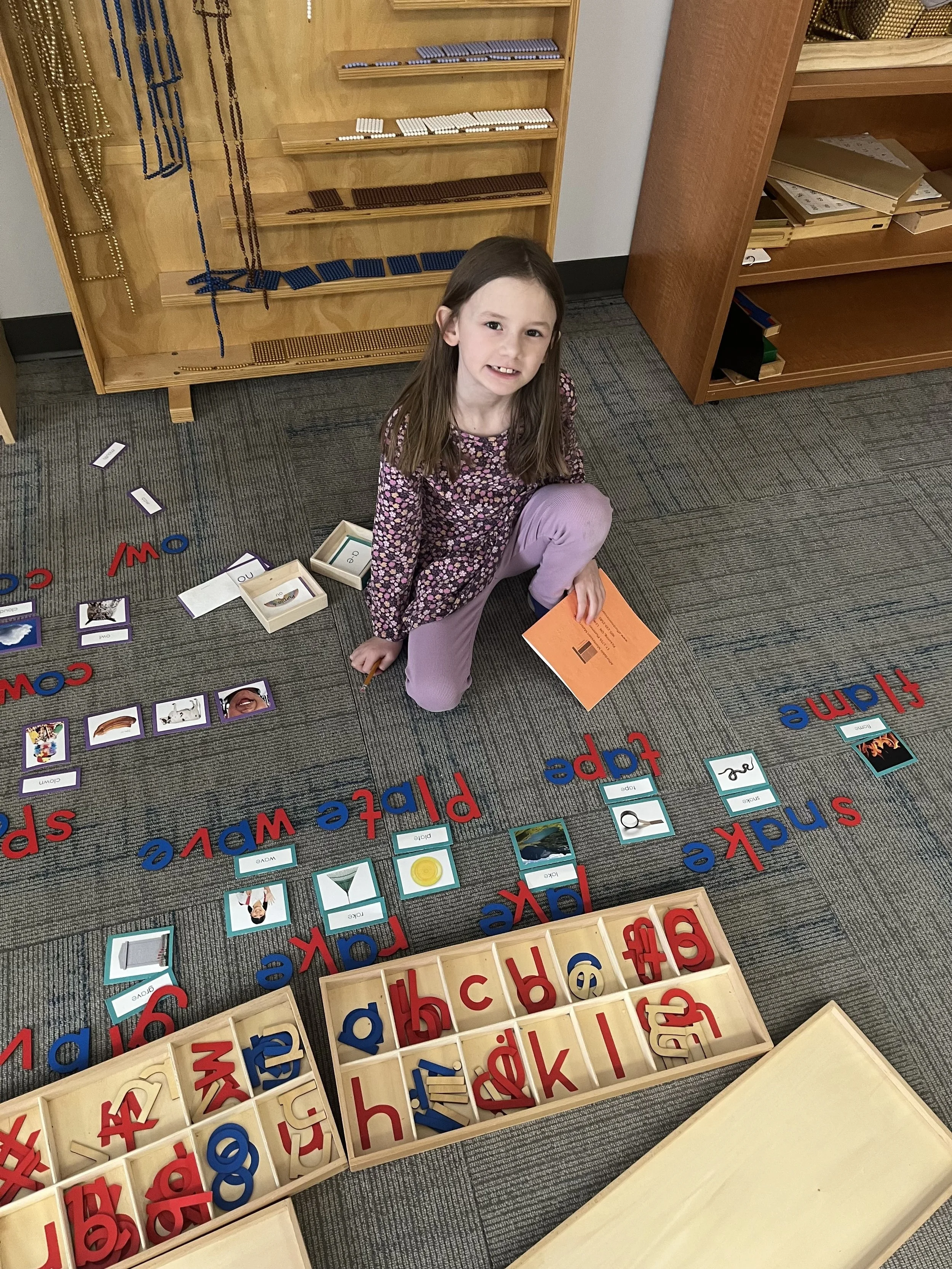
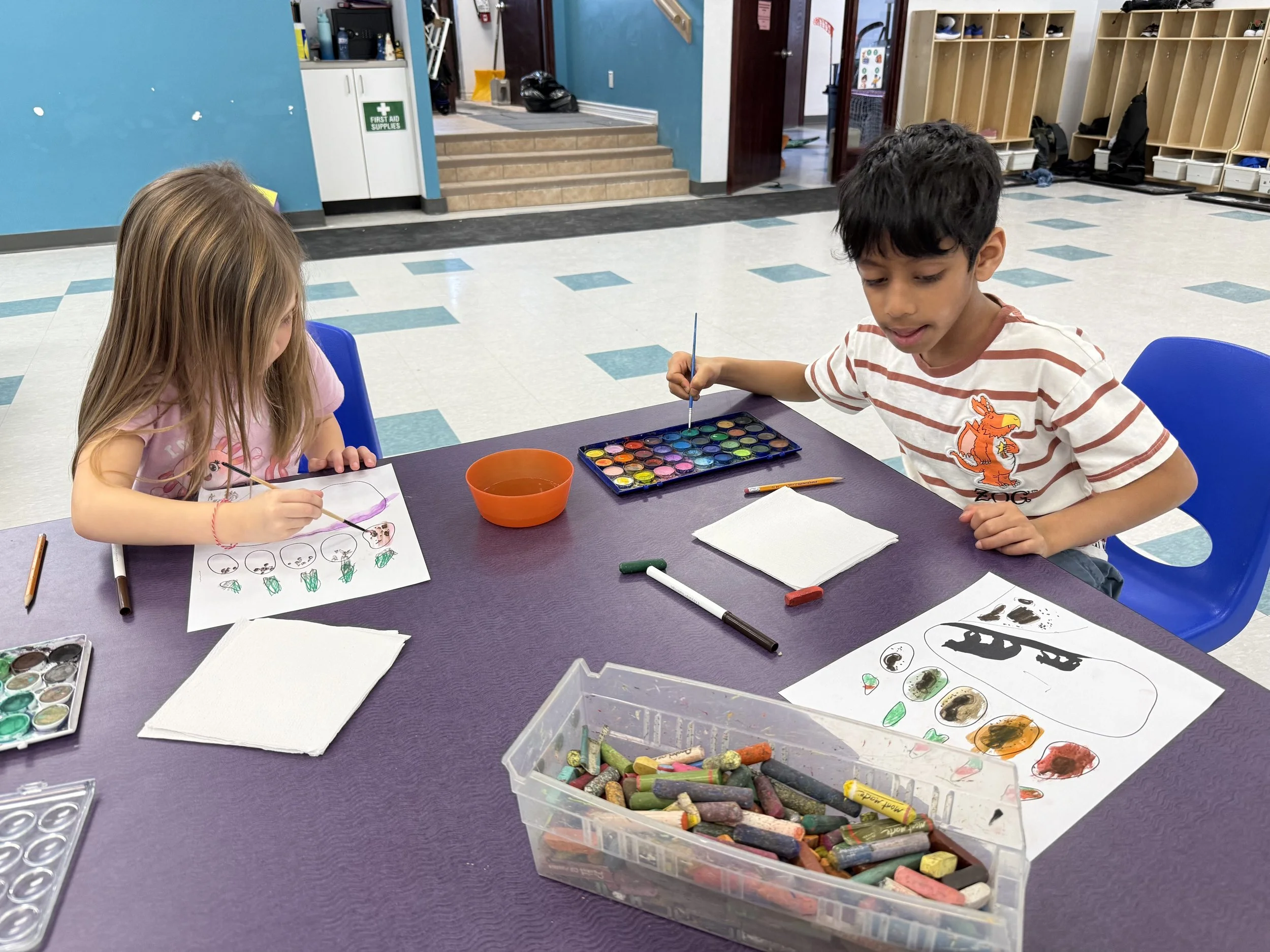
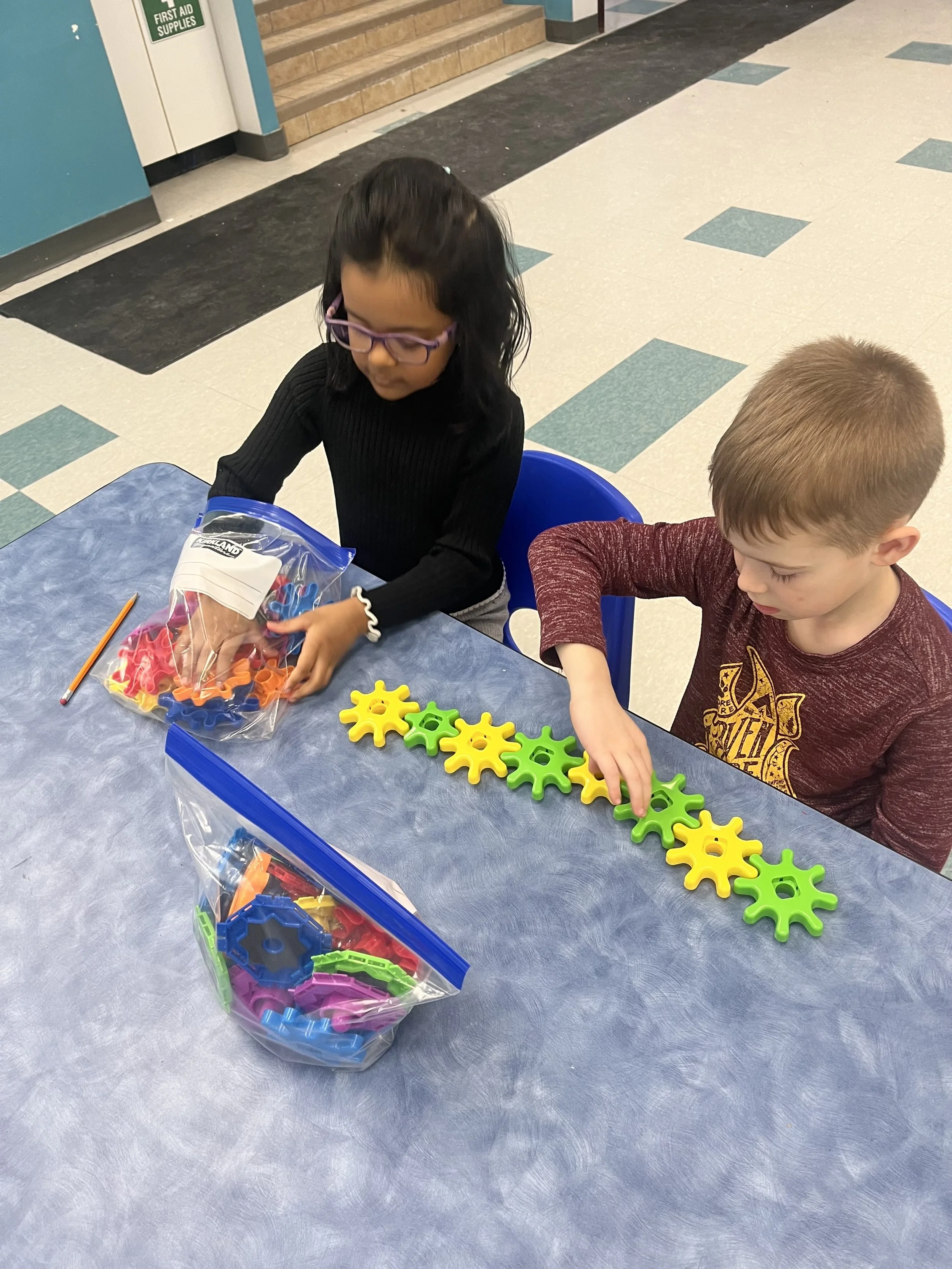
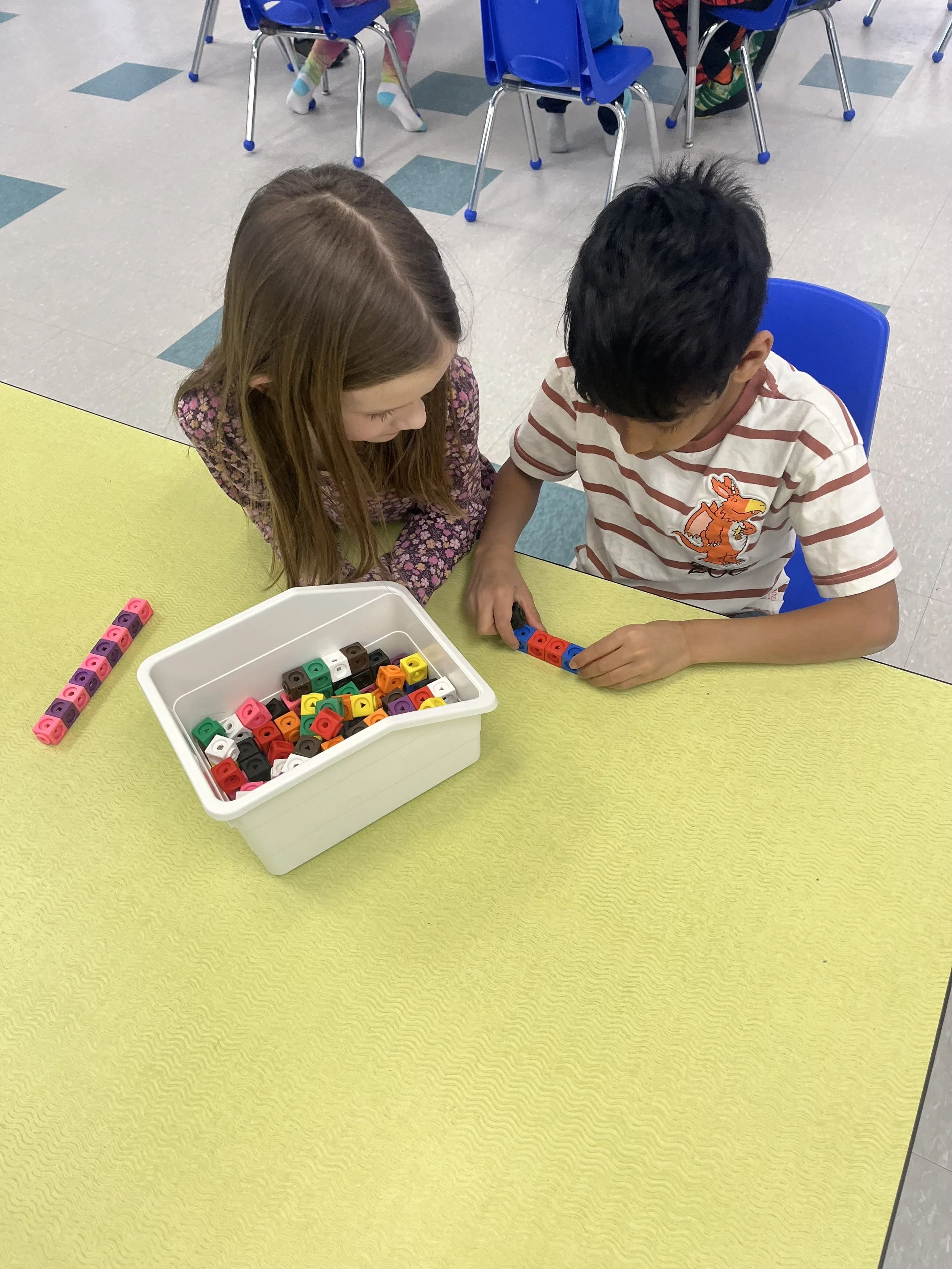
During one-on-one reading time, each learner read a passage to the guide that included several a_e words. This allowed us to practice recognizing the pattern in context and build fluency and confidence. As a group, we worked on blending words with the a_e sound and practiced reading and writing words such as shake, bake, vase, take, date, lake, gate, and shade. Learners are becoming more confident identifying how the silent e changes the vowel sound.
Math Workshops
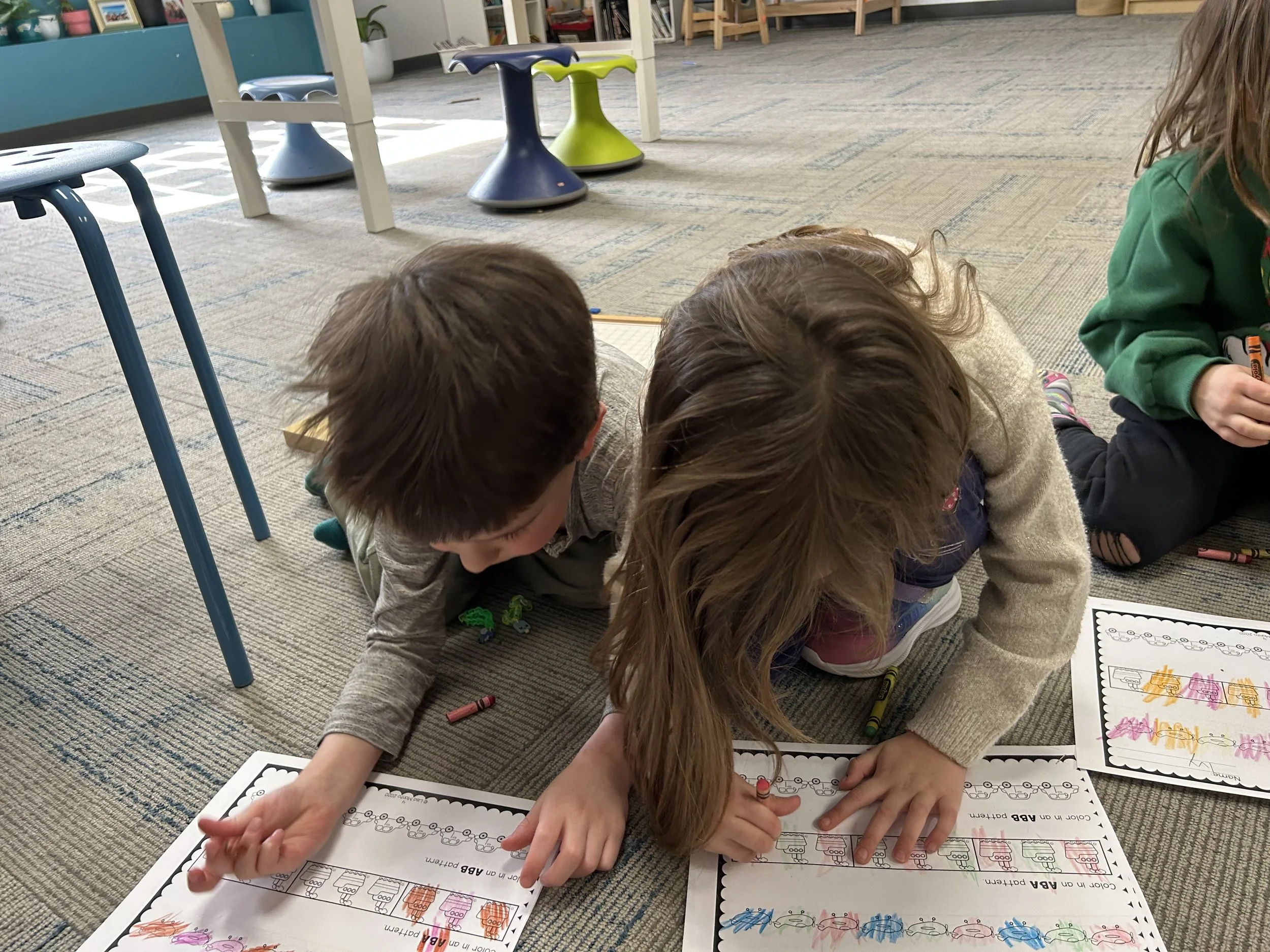
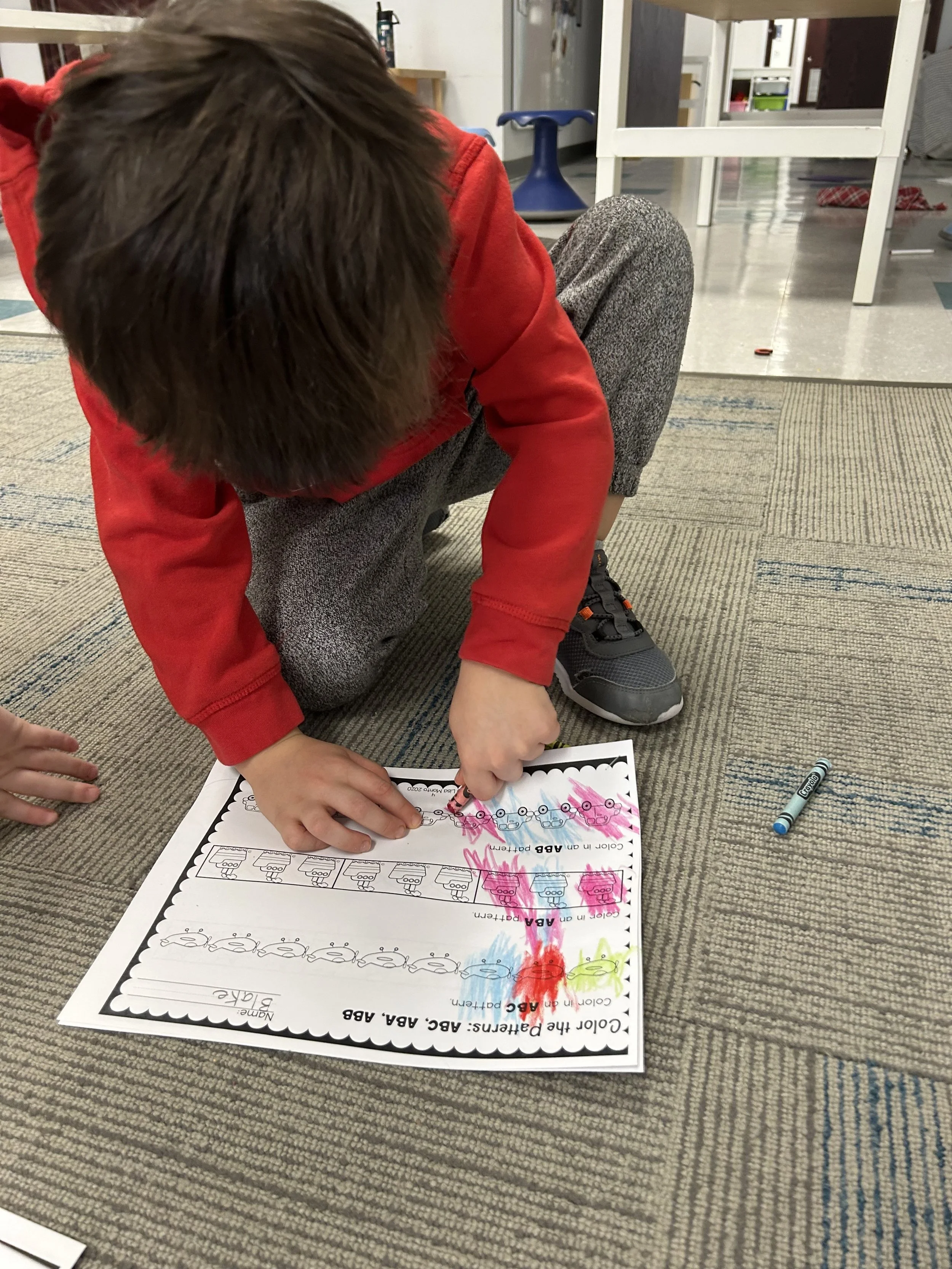
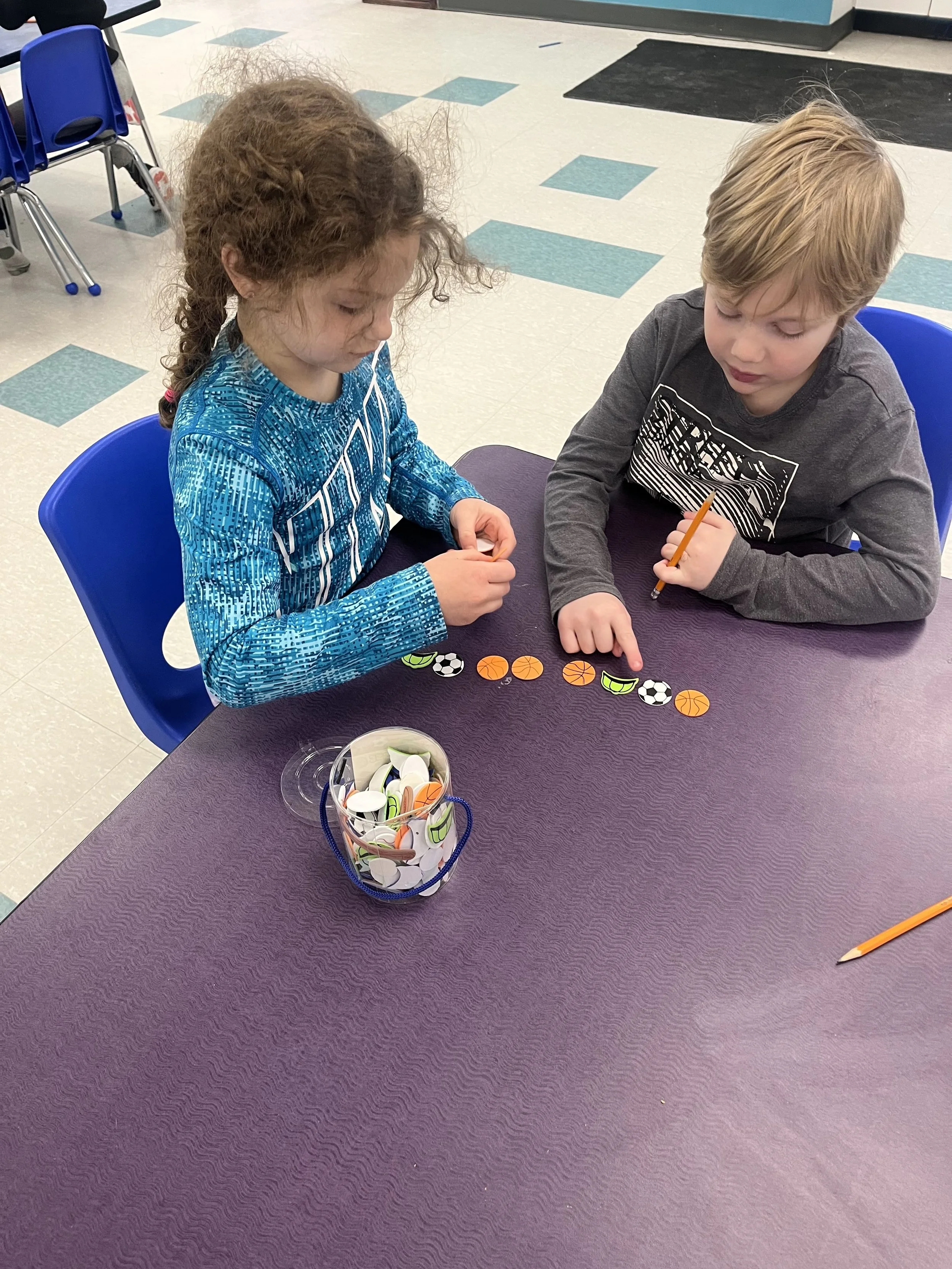
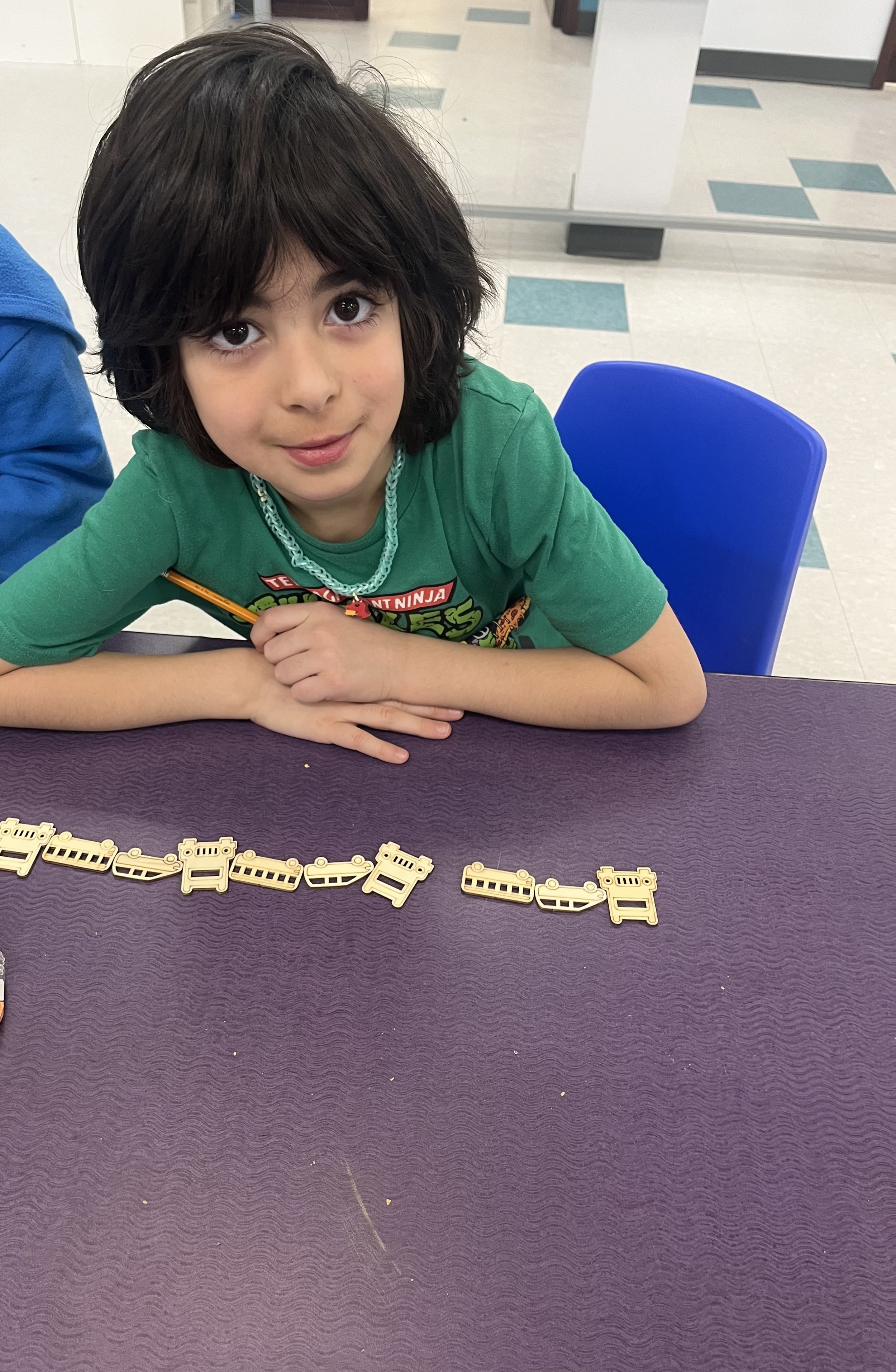
Group One practiced making patterns using wooden geometric shapes to get a visual idea of patterns they would be completing on their worksheets. Learners shared what a pattern is, and we continuously repeated that patterns repeat themselves. They worked really hard to master ABC, ABA, and ABB patterns. Each learner picked three colors to use for their next exercise. They had to create three different patterns using airplanes, boats, and cars. Everyone worked really well together and helped one another when a learner got stuck on a question! Group One has also been working on their Singapore Math booklets, where they are doing their best to master number bonds. Group Two continued their exploration of patterns. We began by reviewing different types of patterns, including AB, AAB, ABC, and other repeating sequences. We discussed how each pattern follows a specific rule and how recognizing that rule helps us predict what comes next. Learners then worked with partners to create their own patterns. After creating a pattern, they challenged their partner to identify the rule and correctly finish the sequence. Next, they challenged themselves even further by creating patterns that followed two different rules. They predicted the next three steps in their pattern and explained how they knew their answers were correct. To wrap up our lesson, the Sparks completed a worksheet where they identified and finished various patterns independently to demonstrate their learning.
Discovery Studio
Mindfulness and Launch
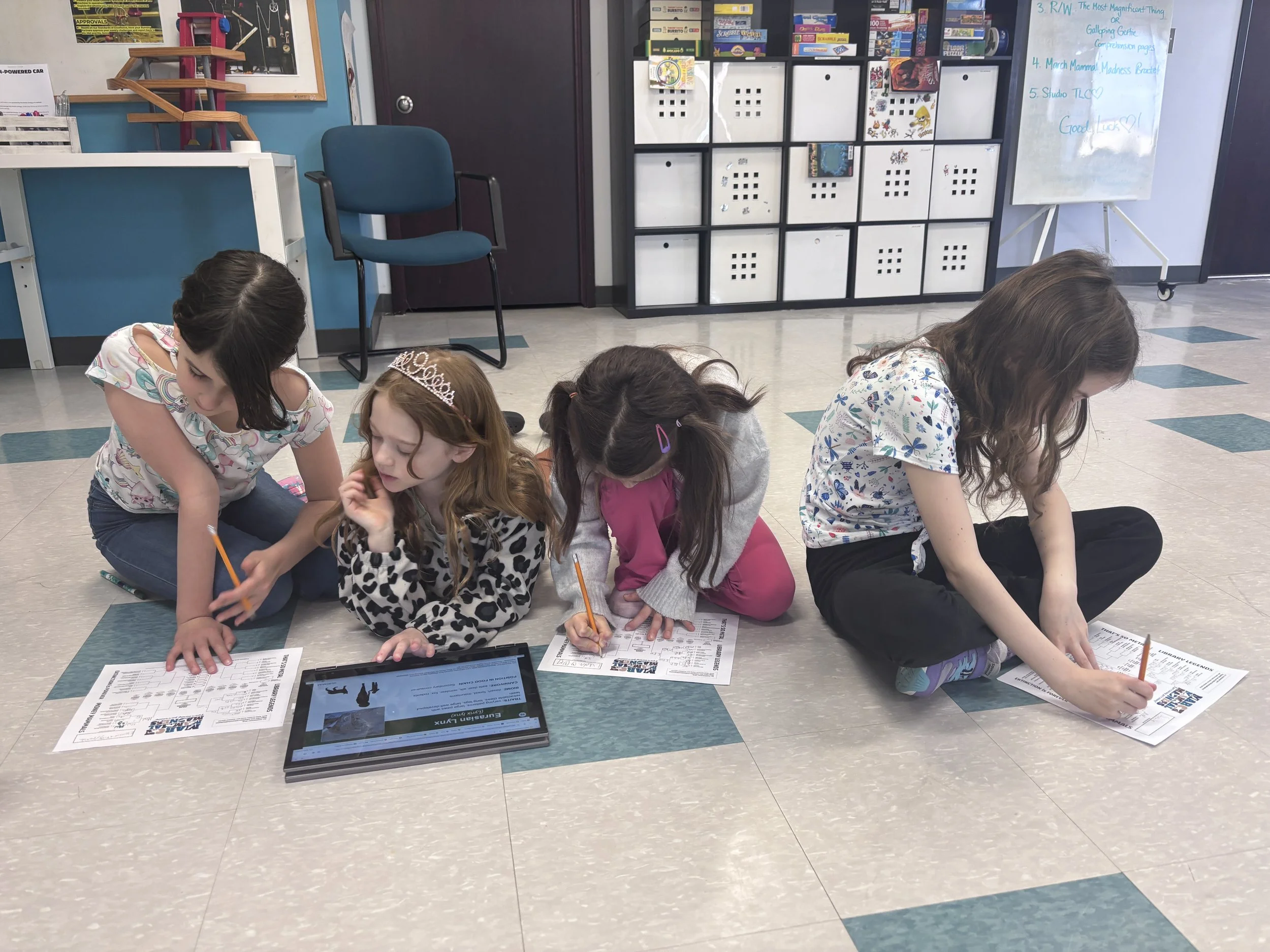
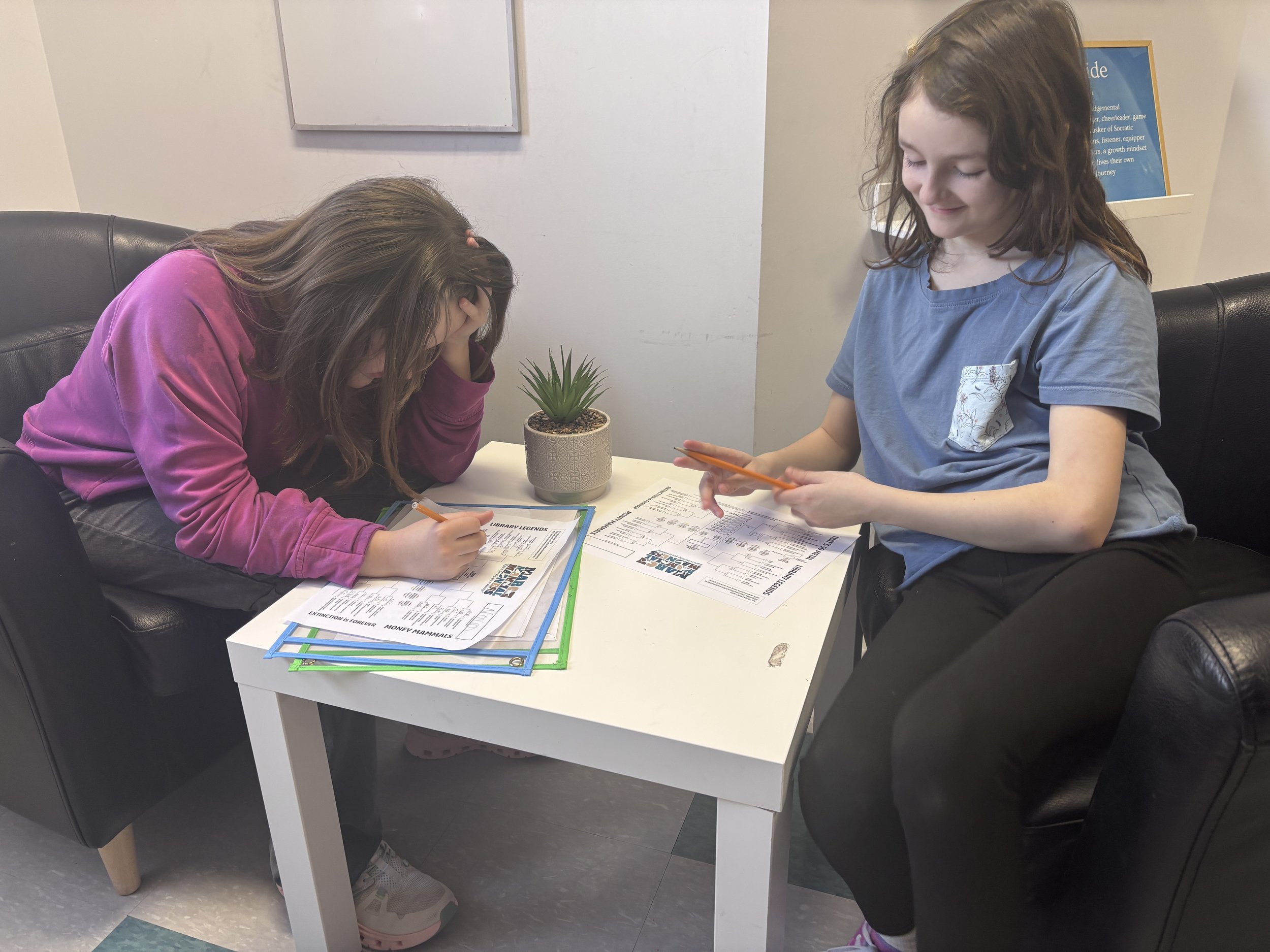
On Monday morning, Rebels met to work on their March Mammal Madness brackets and discussed Women’s History Month! They watched this video and then took time to unpack some of the ideas such as pay gaps, unequal opportunities in the workforce and in education, and other issues in connection with this theme. On Tuesday, we got into the nitty gritty of March Mammal Madness! Rebels learned more about the design of the tournament, how seeding works, home habitat advantage and how scientists use random number generators to simulate battles and create the fun rundown narratives to go along with each round.
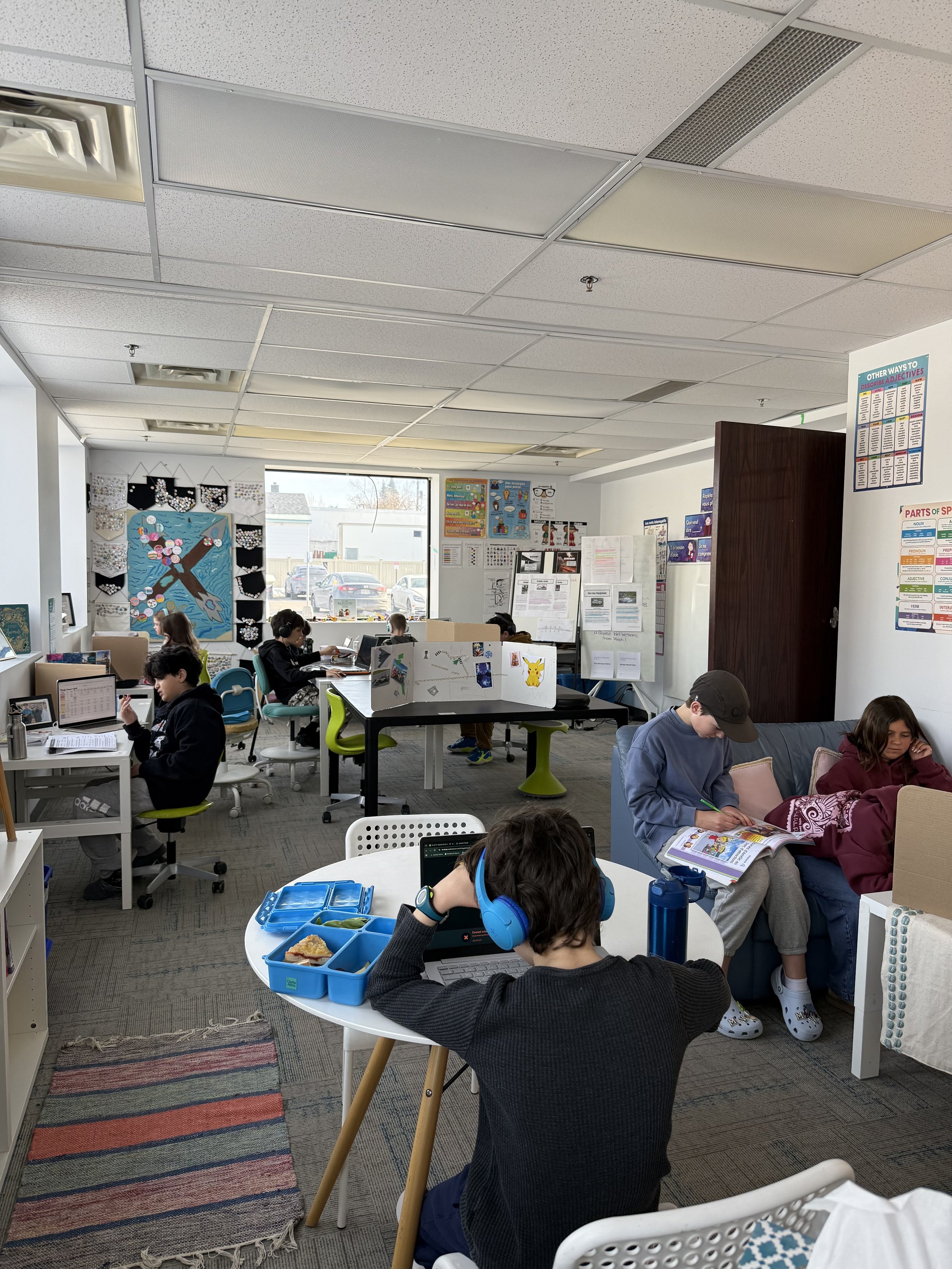
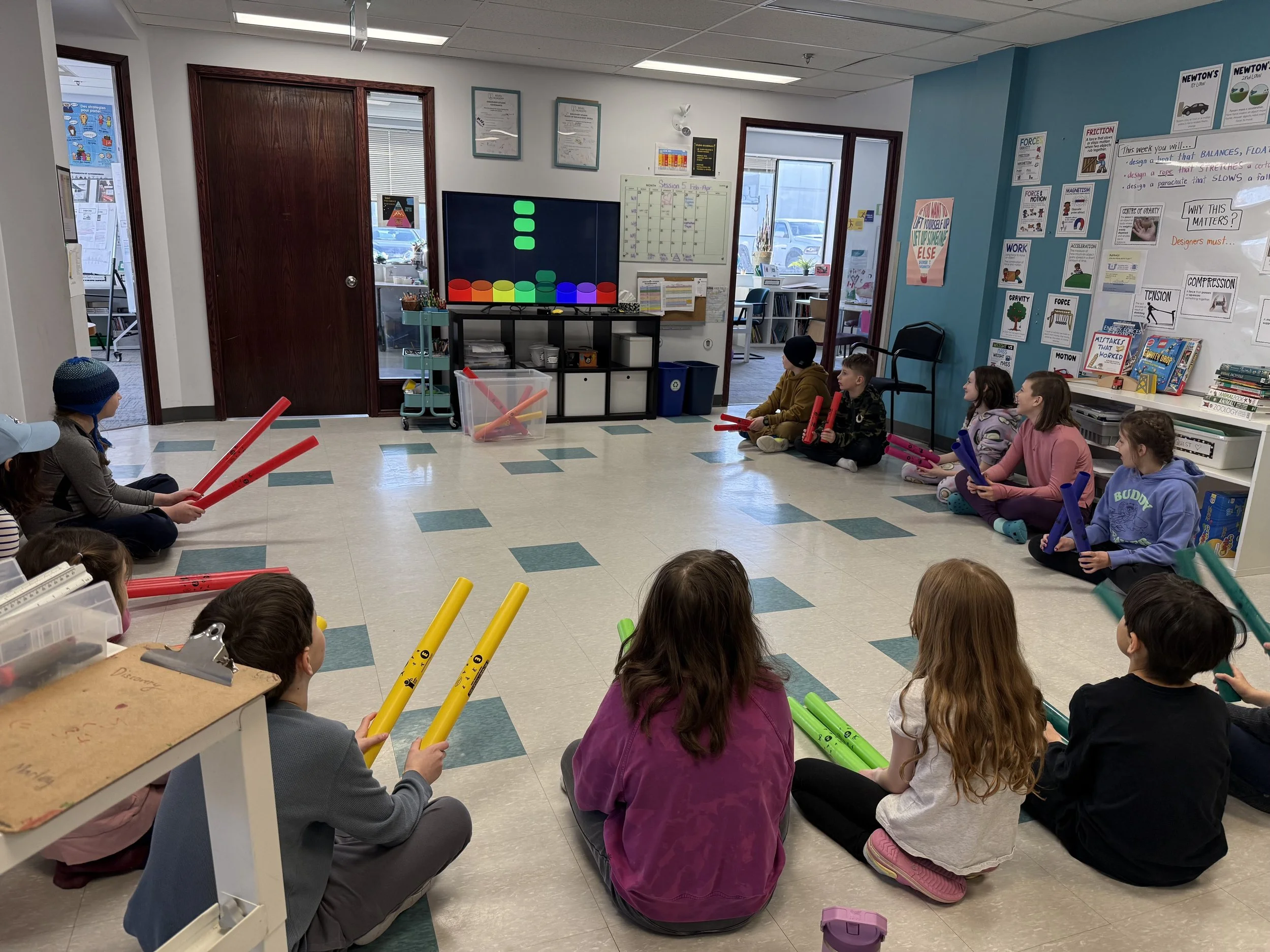
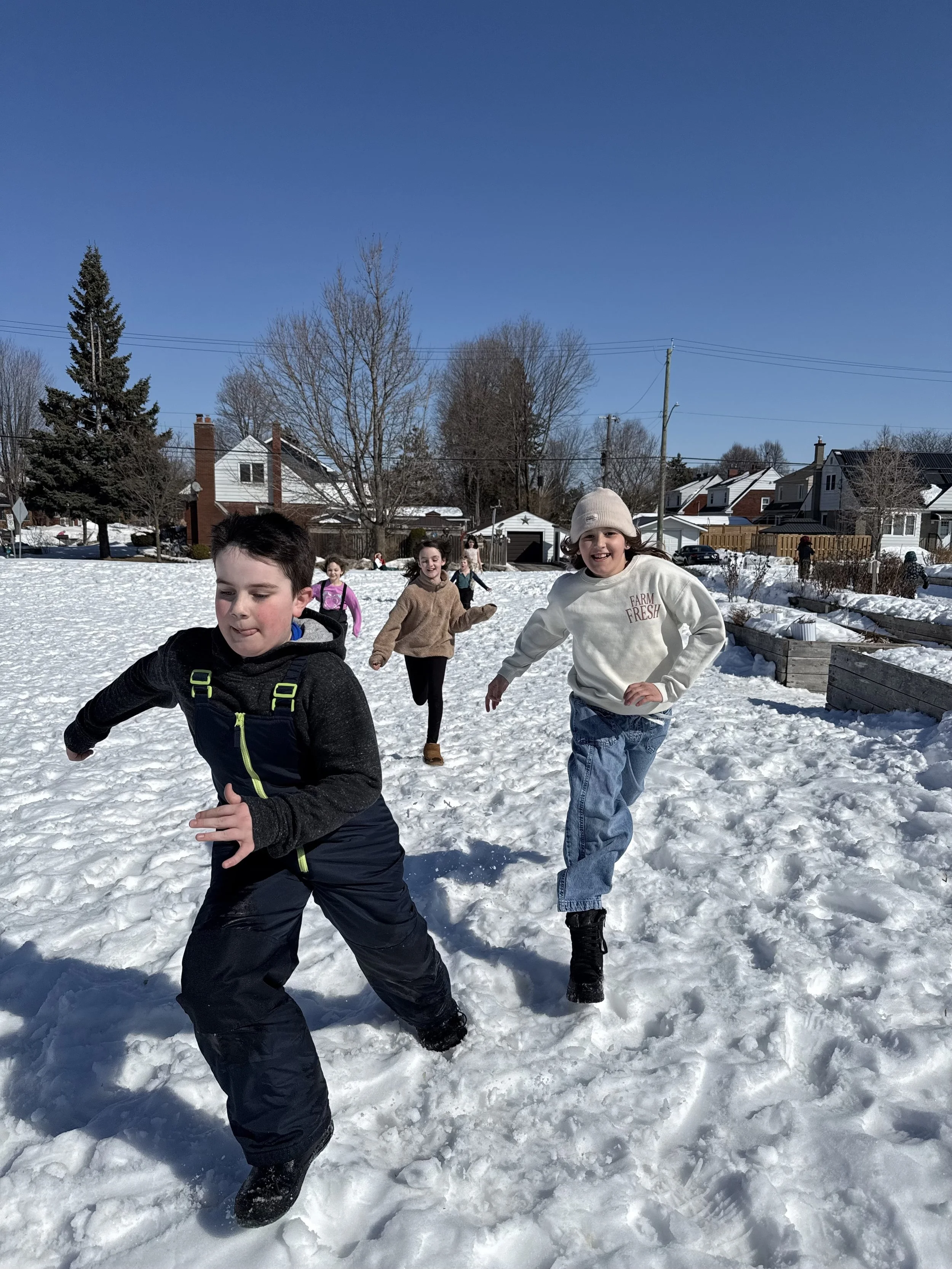
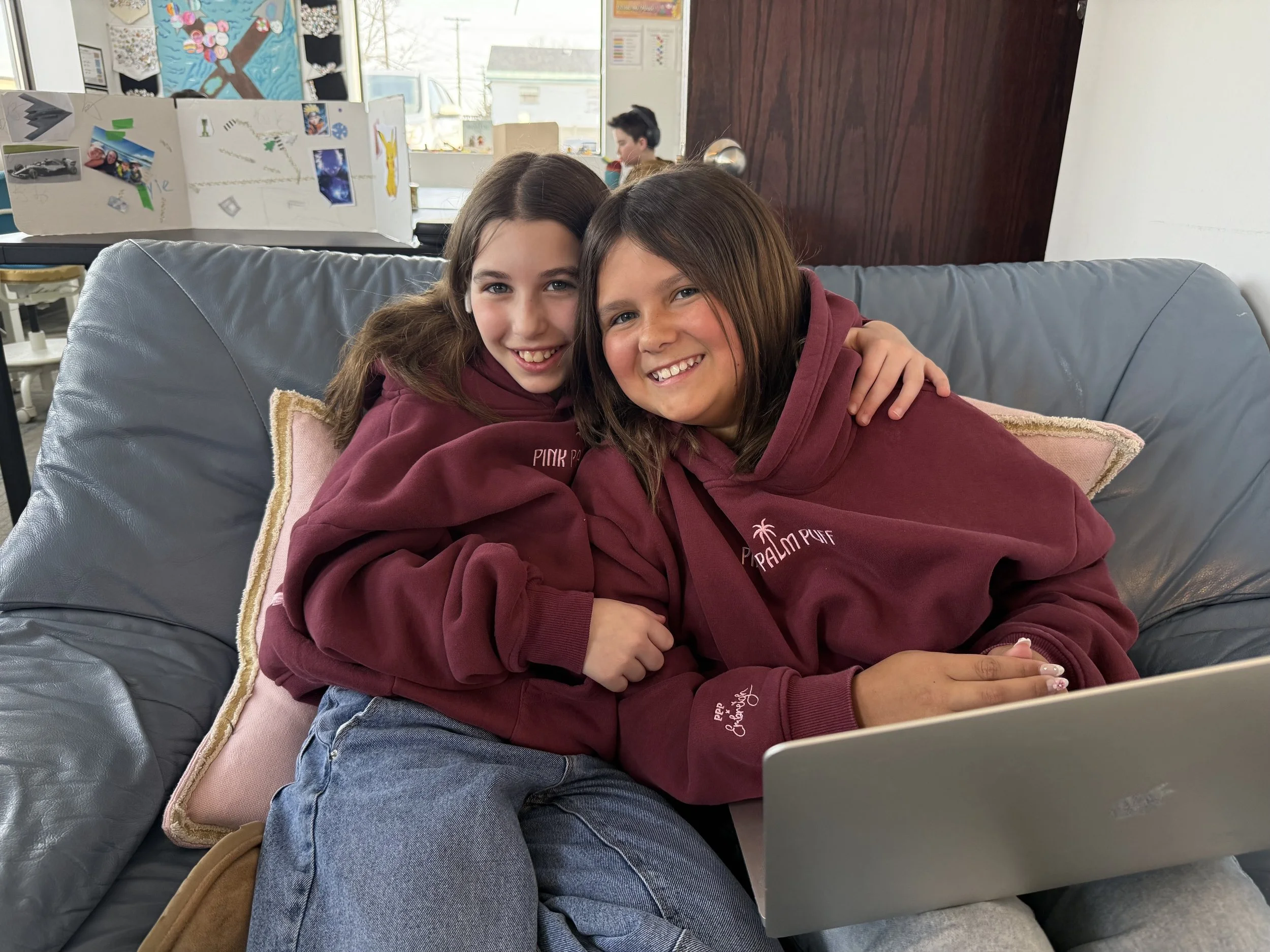
On Wednesday, we played Connections and Wordle, with the Rebels being able to solve both puzzles without running out of lives or guesses! Then, at our weekly Squad meetings, Rebels met to discuss their goals and connect with each other about how they were feeling about the Pyramid of Fantastic Fun Fridays challenge. Are they on their way to another consecutive week of earning Fun Friday? If not, how come? How do their goals feel now that they’ve tweaked and adjusted them to reflect Rebels’ true challenge zones? Thursday morning we met for Thank You For Sharing and Rebels had some intense “would you rather” conversations: axolotl vs. capybara and would you rather lose your sense of smell or taste? Friday morning we kicked off Boomwhackers with an ascending and descending warm up, moving into the always-popular “Corn!!!” and wrapping up with another Rebel favourite, “Ordinary”. For Launch, we welcomed back a very special Rebel guest back to our Studio for a visit! As we wrapped up our week with a few changes to our Friday schedule, Rebels collaboratively created a to-do list with all of the loops that need closing before Fun Friday. Rebels prioritized Core Skills, Quest Reflections, workshop challenges and completing their March Mammal Madness brackets.
Math Lab
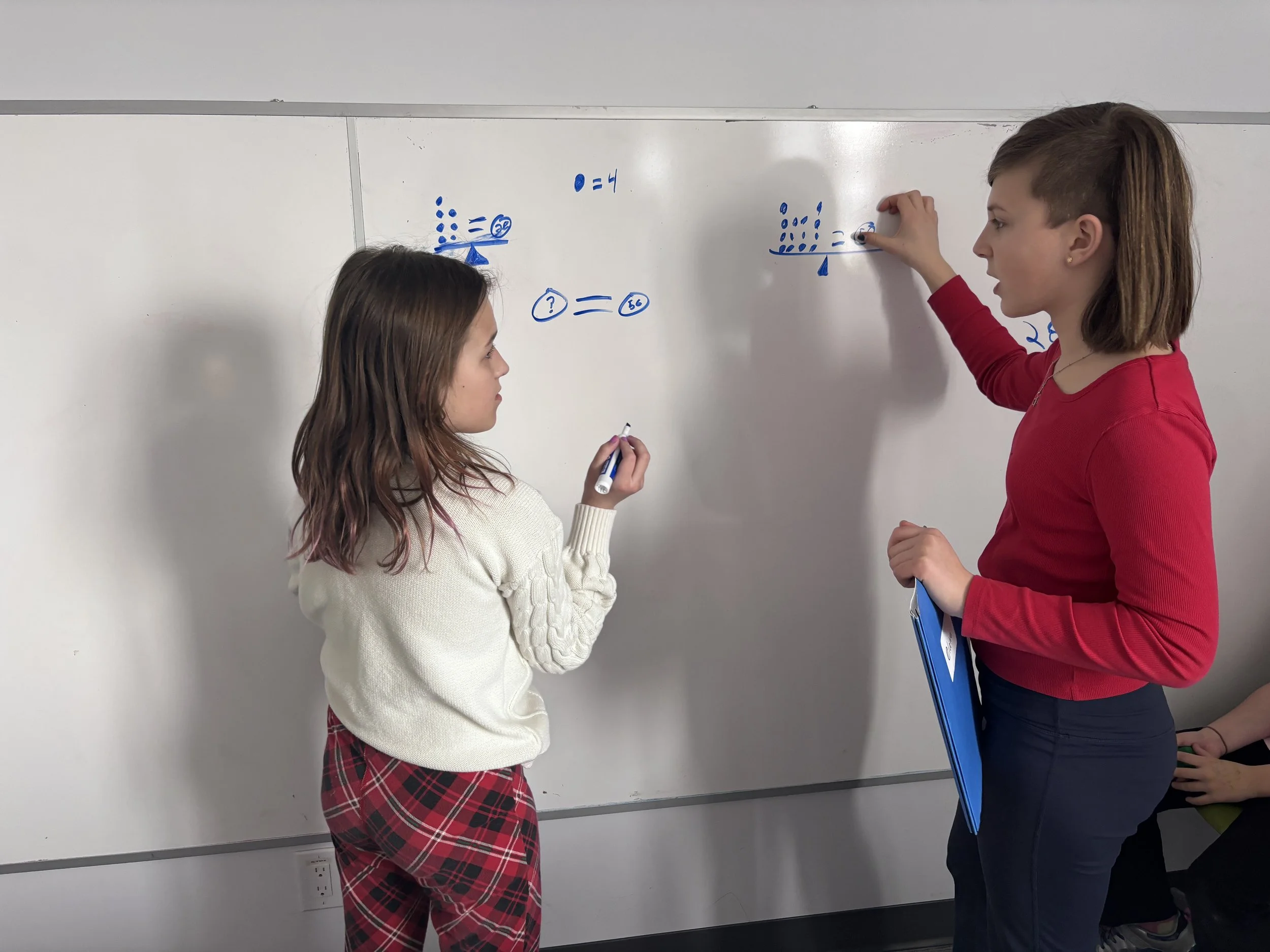
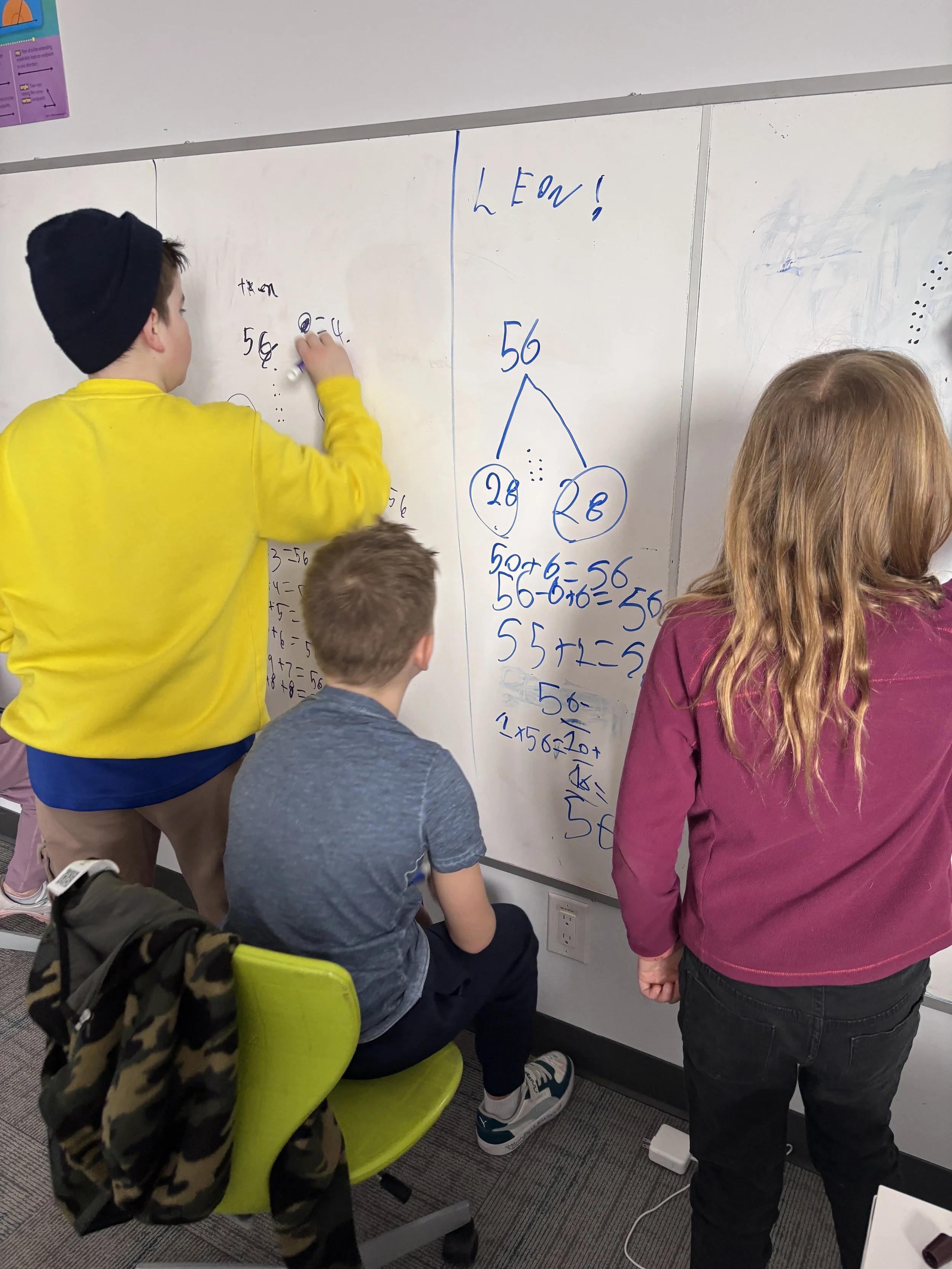
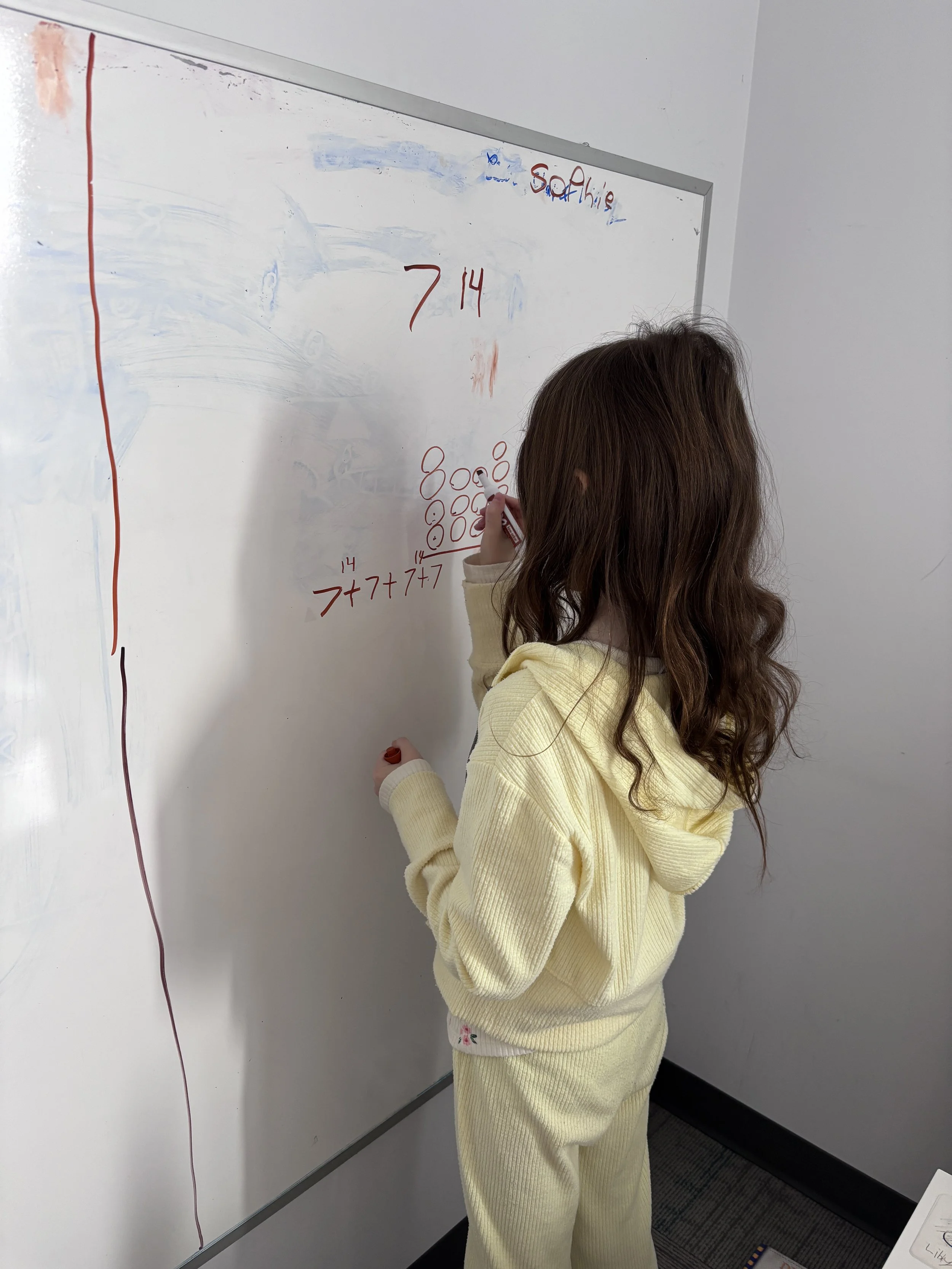
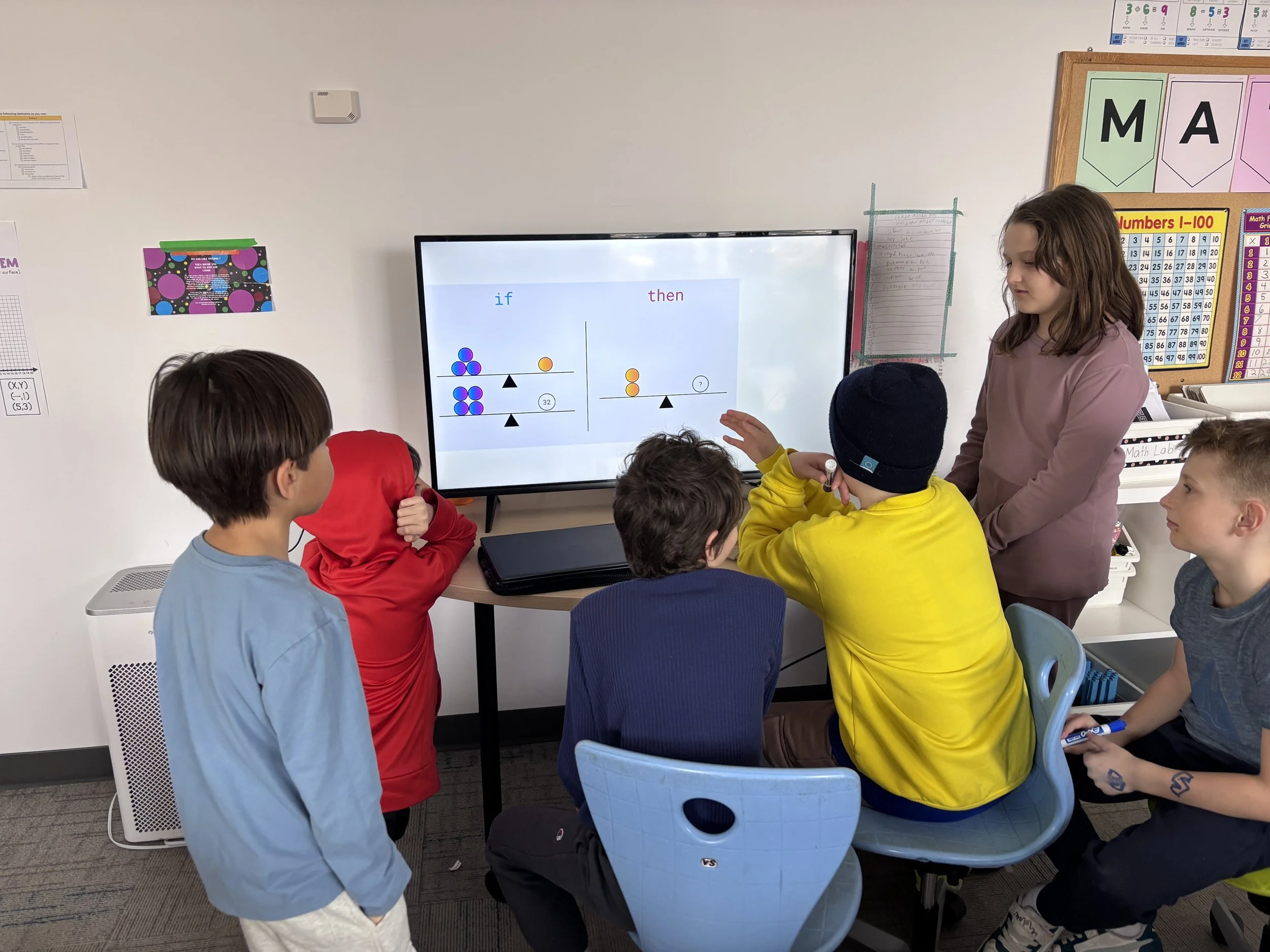
This week we tried if/then puzzles! An if-then puzzle uses visual information to activate logical reasoning, deductive thinking, and problem-solving skills. These puzzles required Rebels to see connections between variables, and draw conclusions. On Tuesday with Group 2, Rebels focused on using algebraic notation to represent their thinking (i.e. numbers, symbols and variables to write equations). On Thursday with Group 1, Rebels showed a lot of resourcefulness, using the multiplication chart to help them make connections between products and factors in order to isolate and solve for variables shown on sets of balance scales. It has been cool to see and highlight different ways of seeing them same puzzle and highlight the inverse relationships between addition and subtraction or multiplication and division!
French
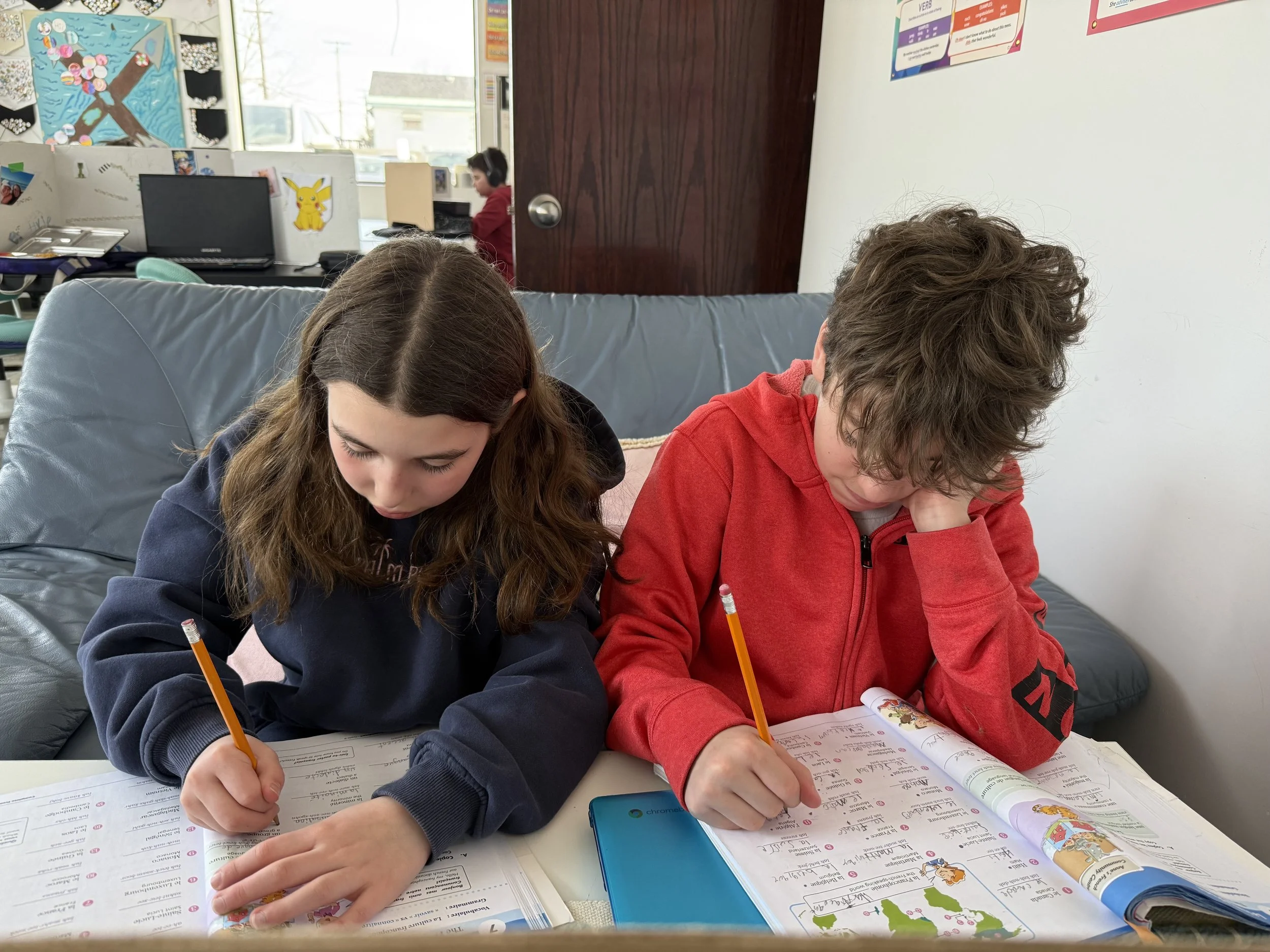
This week in French, the Discovery Rebels learned about the history of La Nouvelle-France and how the French first arrived in Canada. They read a short bilingual text explaining why the French came to North America and how they formed alliances with Indigenous peoples such as the Algonquin. The learners also learned about important historical figures such as Samuel de Champlain and Jean Talon, as well as what daily life was like for settlers, including farming, religion, and the fur trade. To deepen their understanding, the learners completed a comprehension page with true-or-false questions, vocabulary activities, and short reflection questions. The Rebels also imagined what it might have been like to be an explorer in New France and drew what they might see during that time.
Reader/Writer
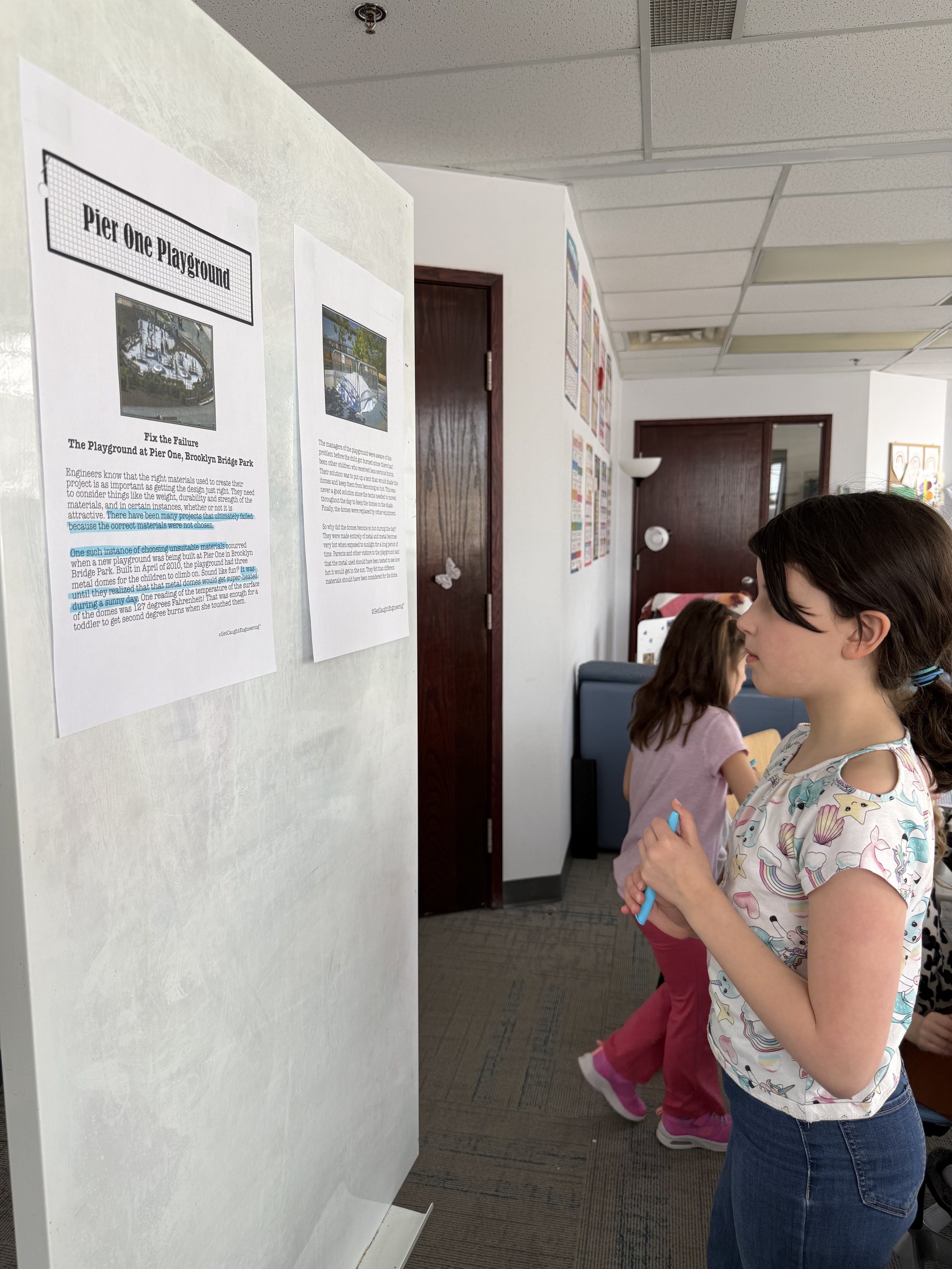
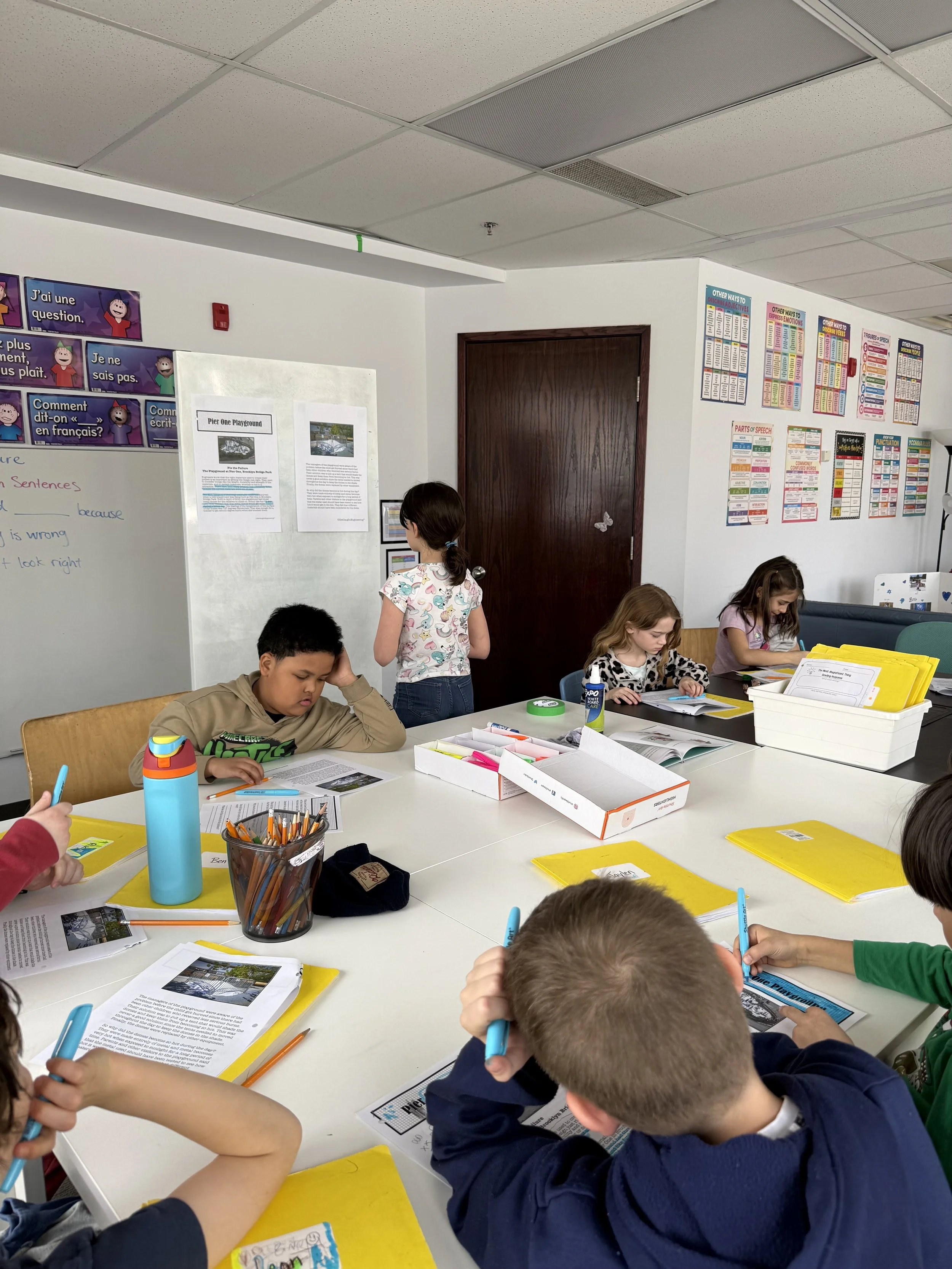
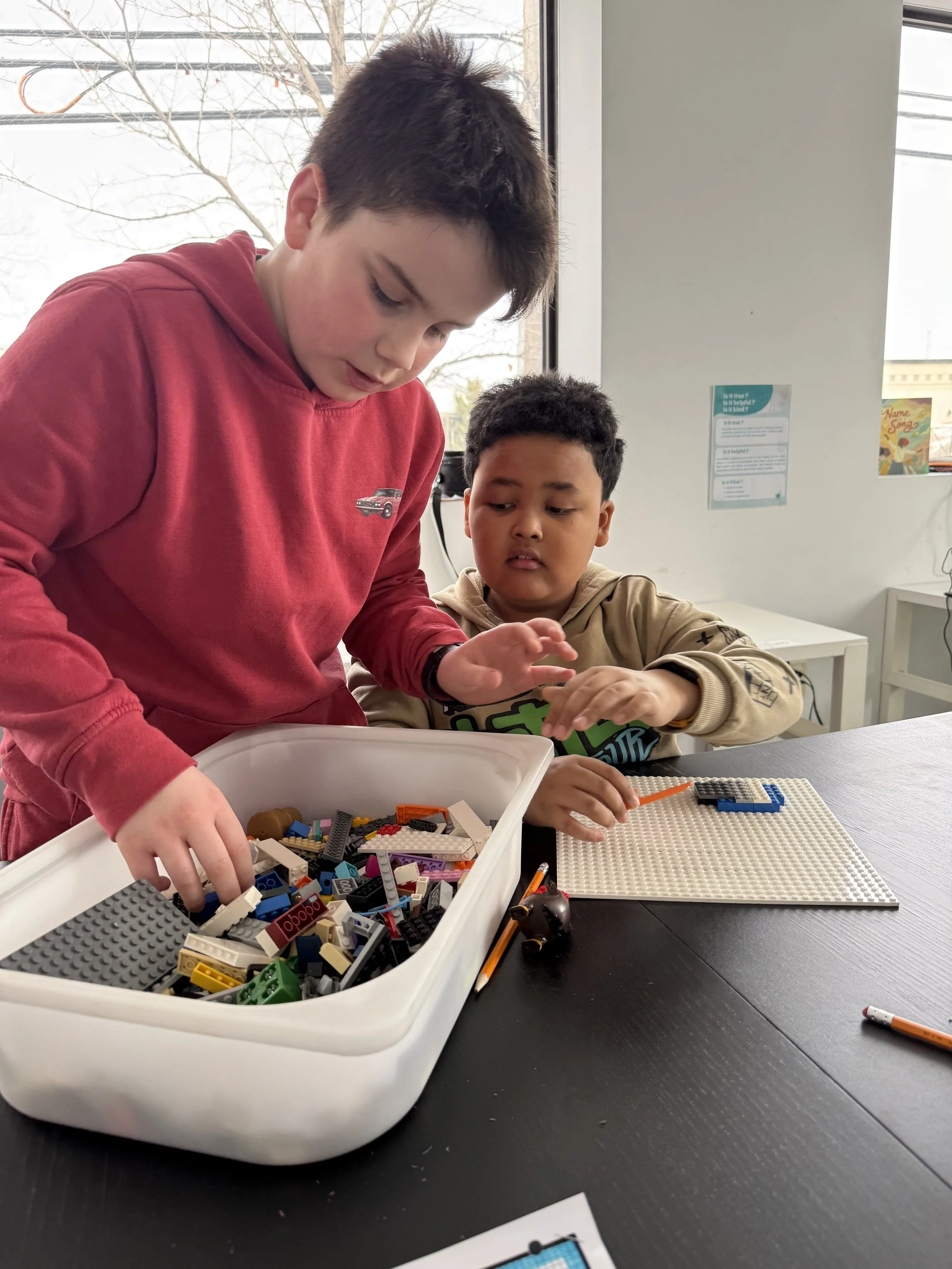
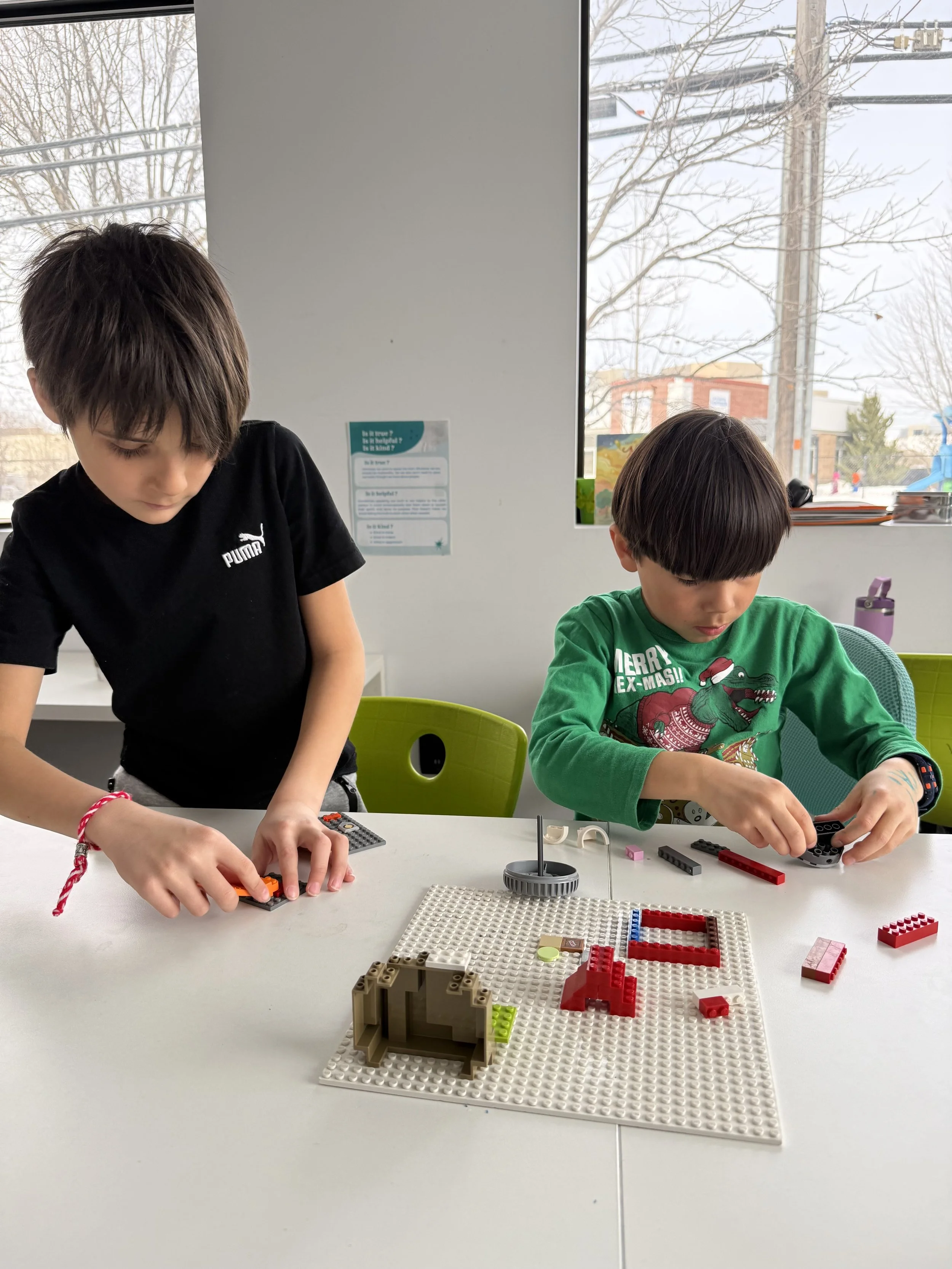
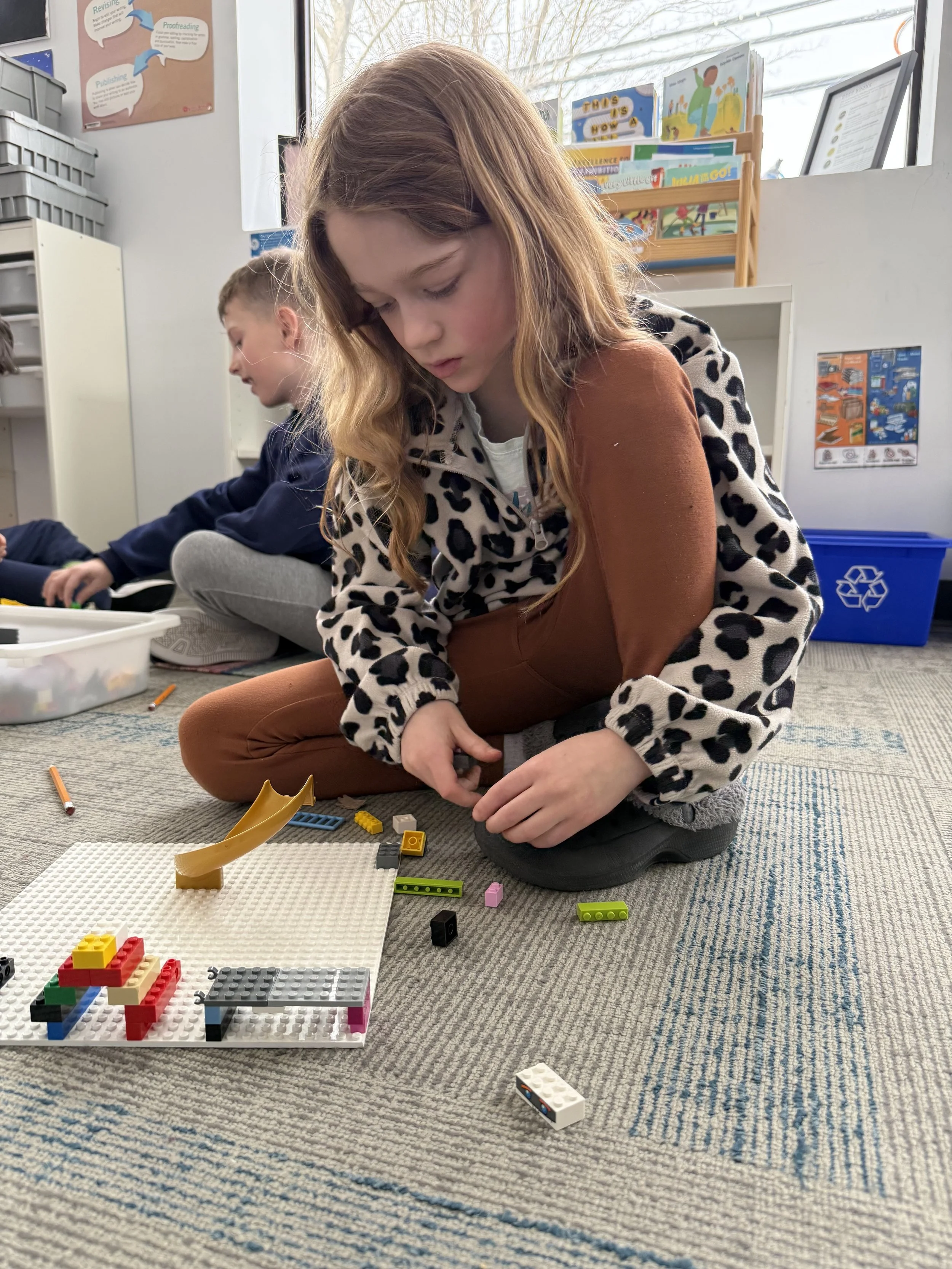
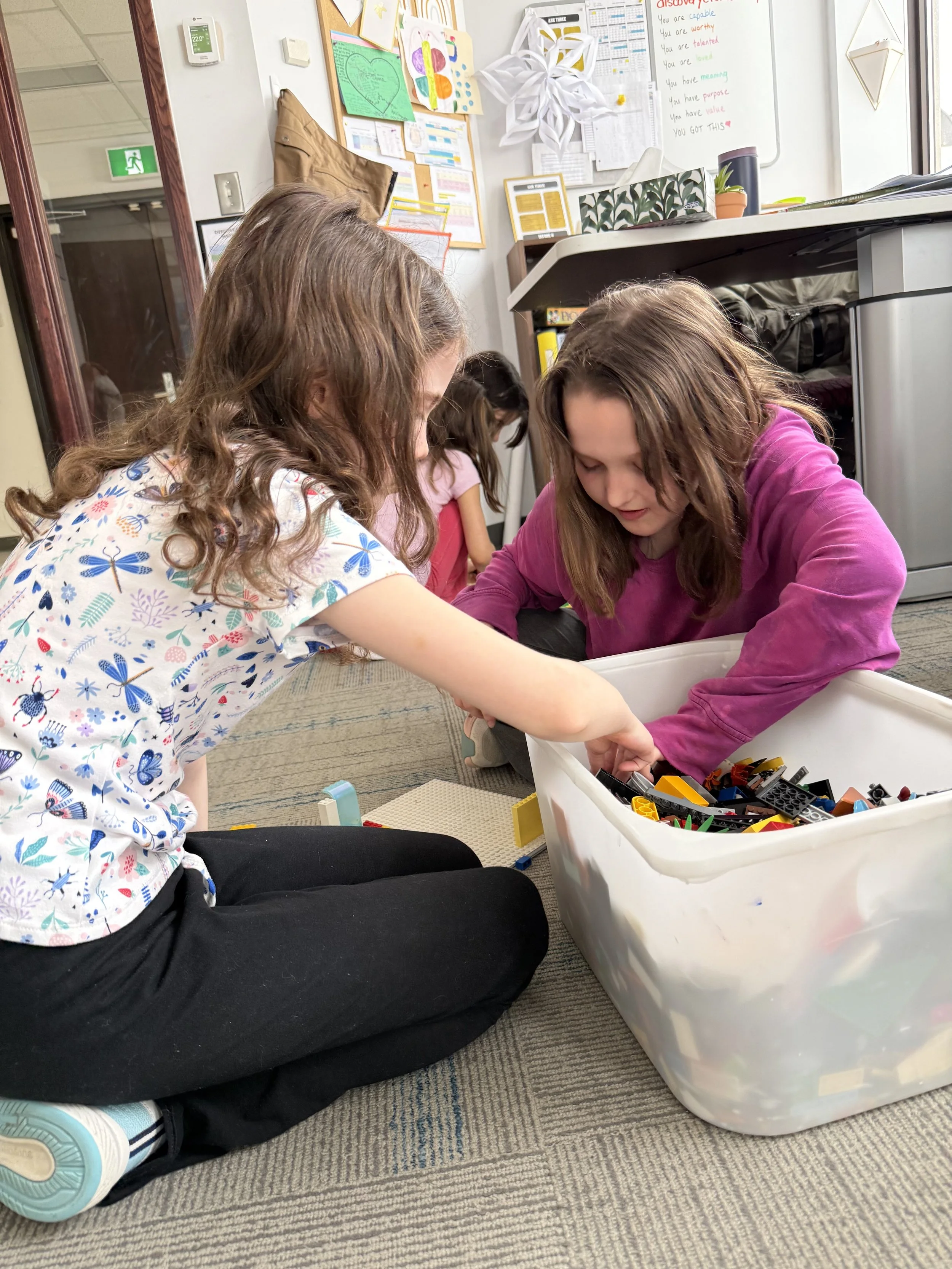
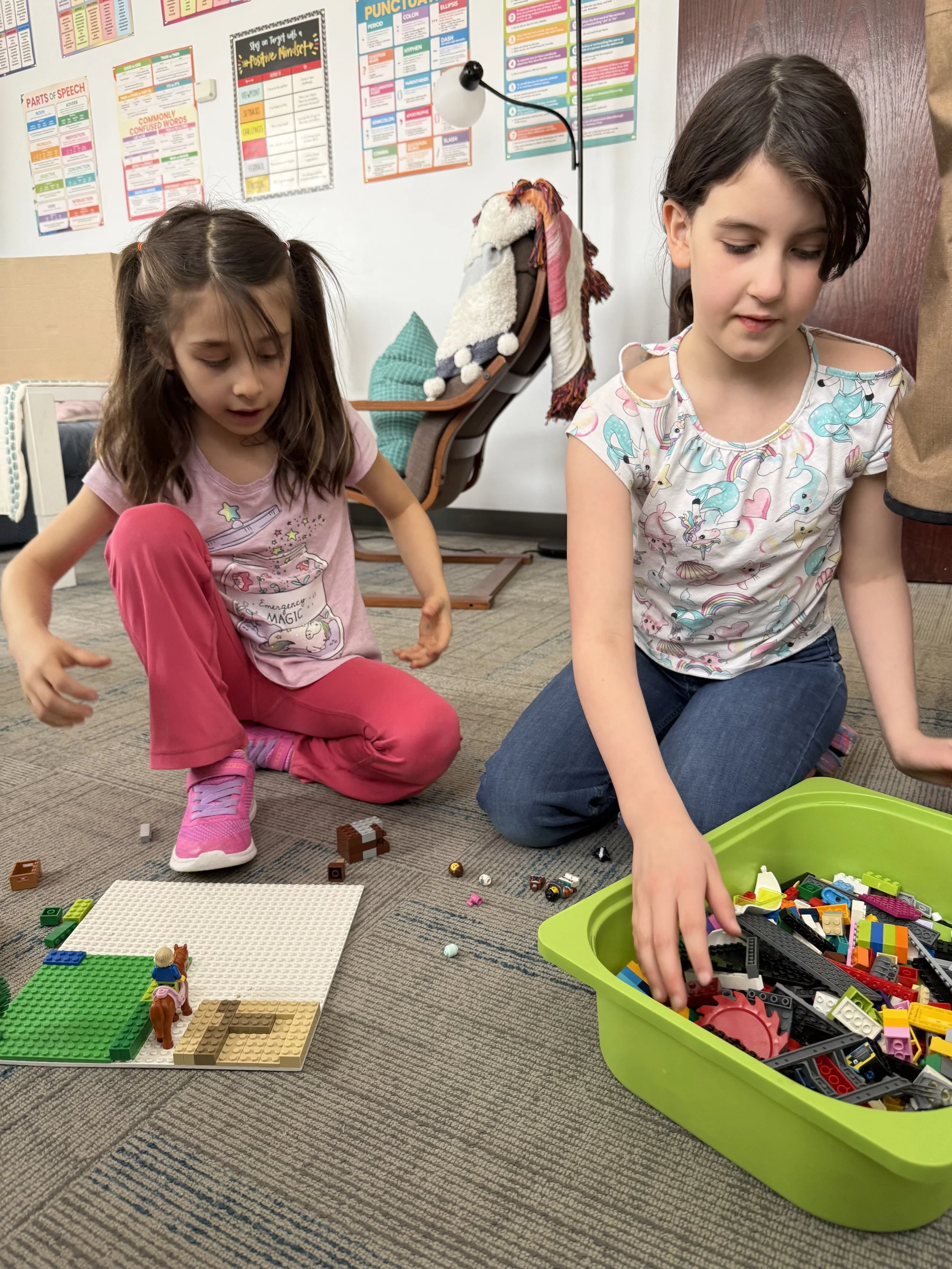
Draw/Anchor Rebels: Week 2 saw this group thinking more critically about problem sentences and descriptive vocabulary that describes problems and failures. Our mentor text for this week was a real-world case study about another engineering design fail, the 2010 Pier One play structure in Brooklyn Bridge Park. Rebels read the article aloud as a team, and analyzed the paragraphs for problem sentences and problem/failure vocabulary. How do we identify a clear problem in a system? How do we describe what actually happened? Rebels agreed that the failure point was not solely the choice of material for the play structure, but perhaps the fact that it was approved for installation before testing it in different elements, weather or temperatures. Rebels completed a series of comprehension questions about the article, and everyone was able to begin the next set of challenges in our workshop series: designing a playground out of Lego. Rebels will design and build a small model of a play structure, and will spend the next few weeks drafting an engineering proposal that includes a design overview, materials and engineering choices, identify failure points, and proposed improvements and solutions.
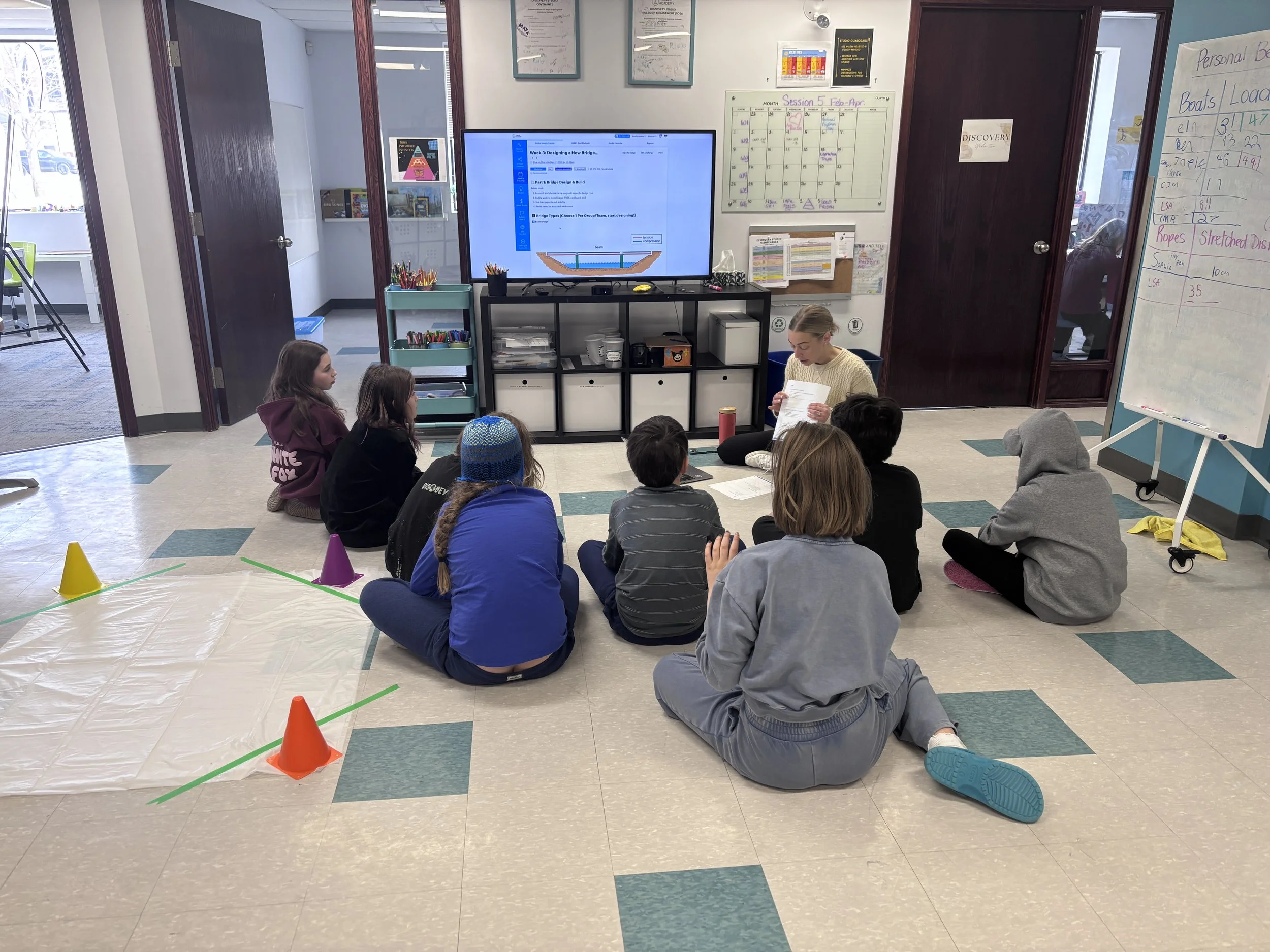
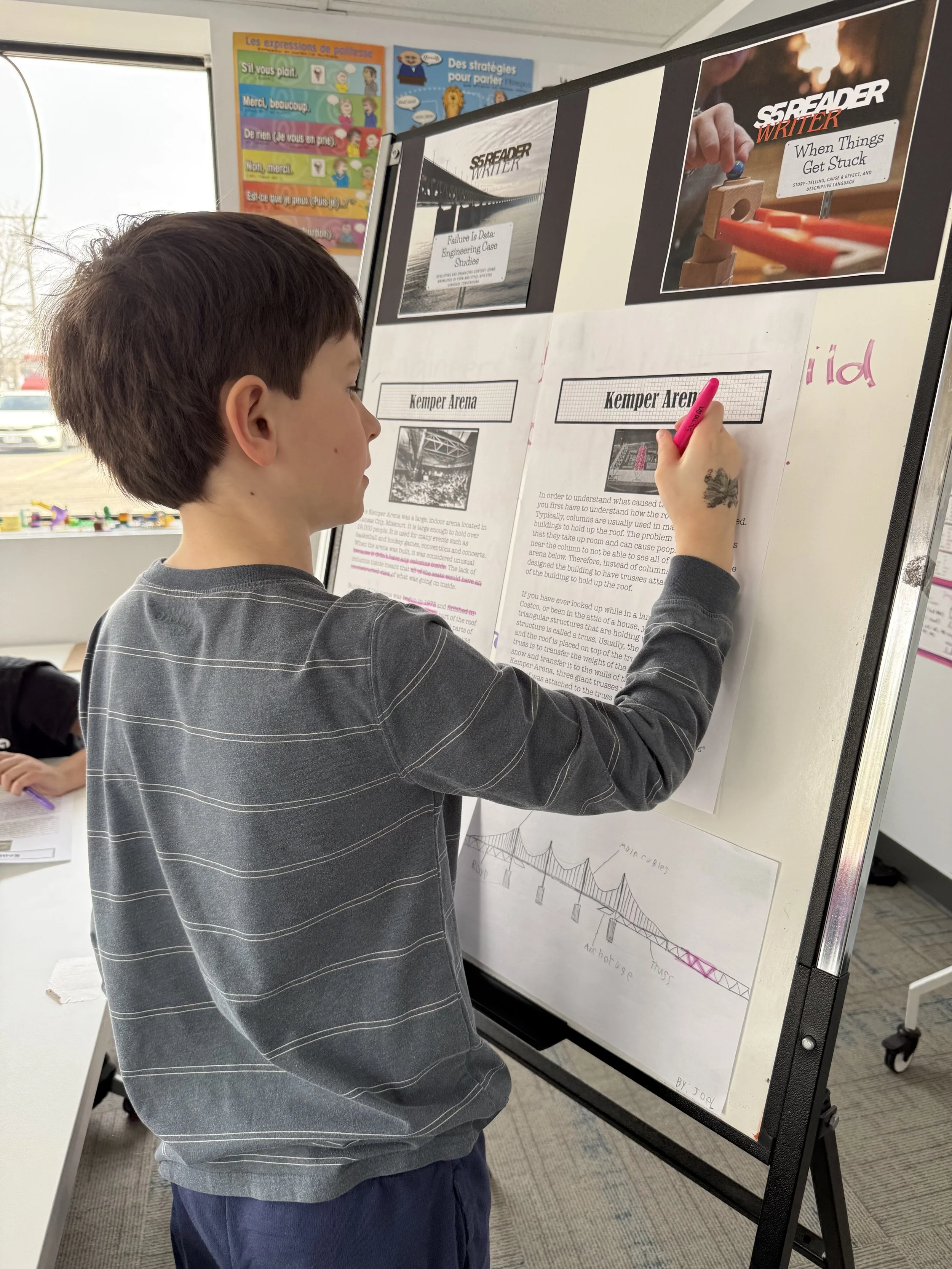
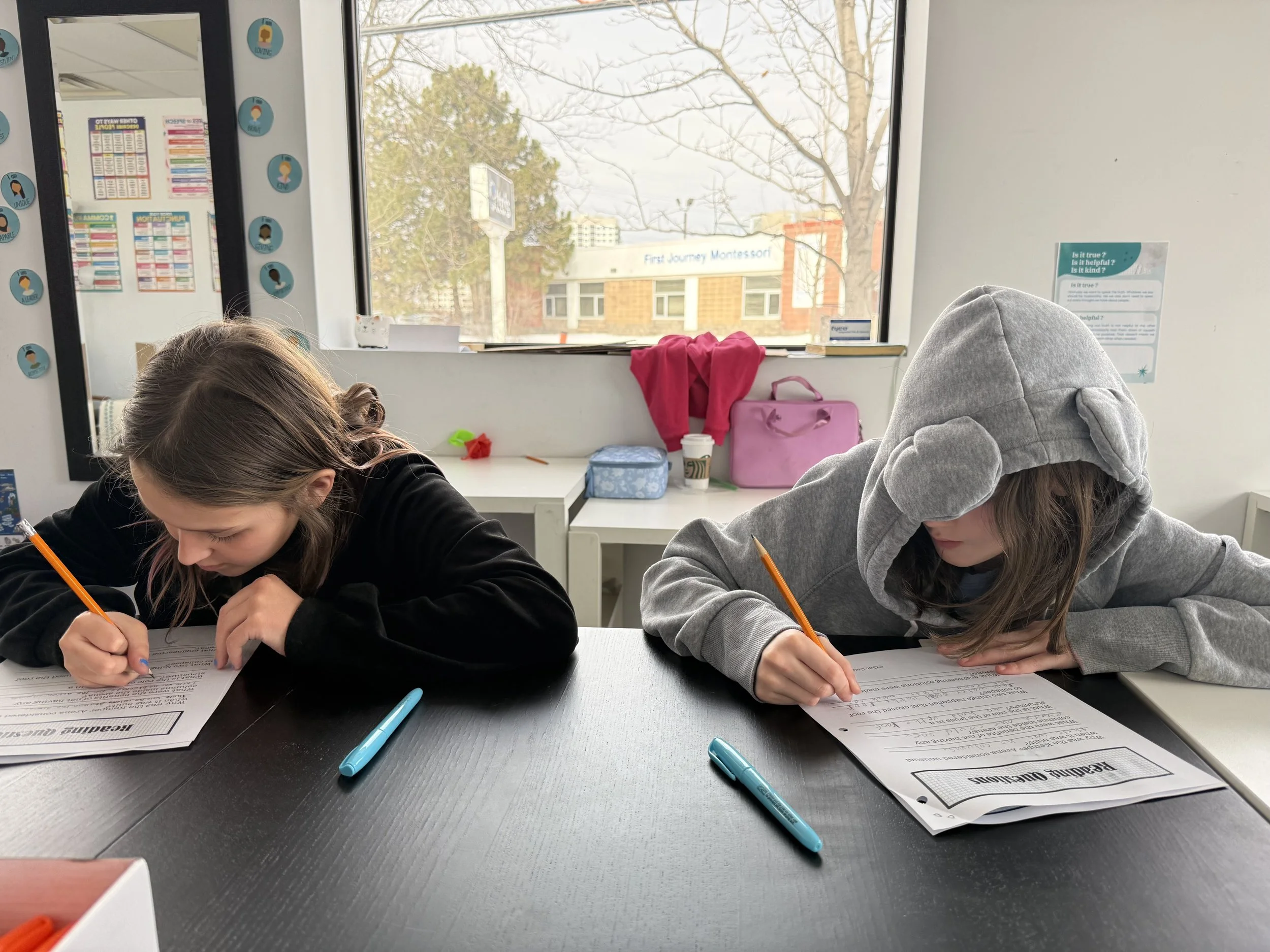
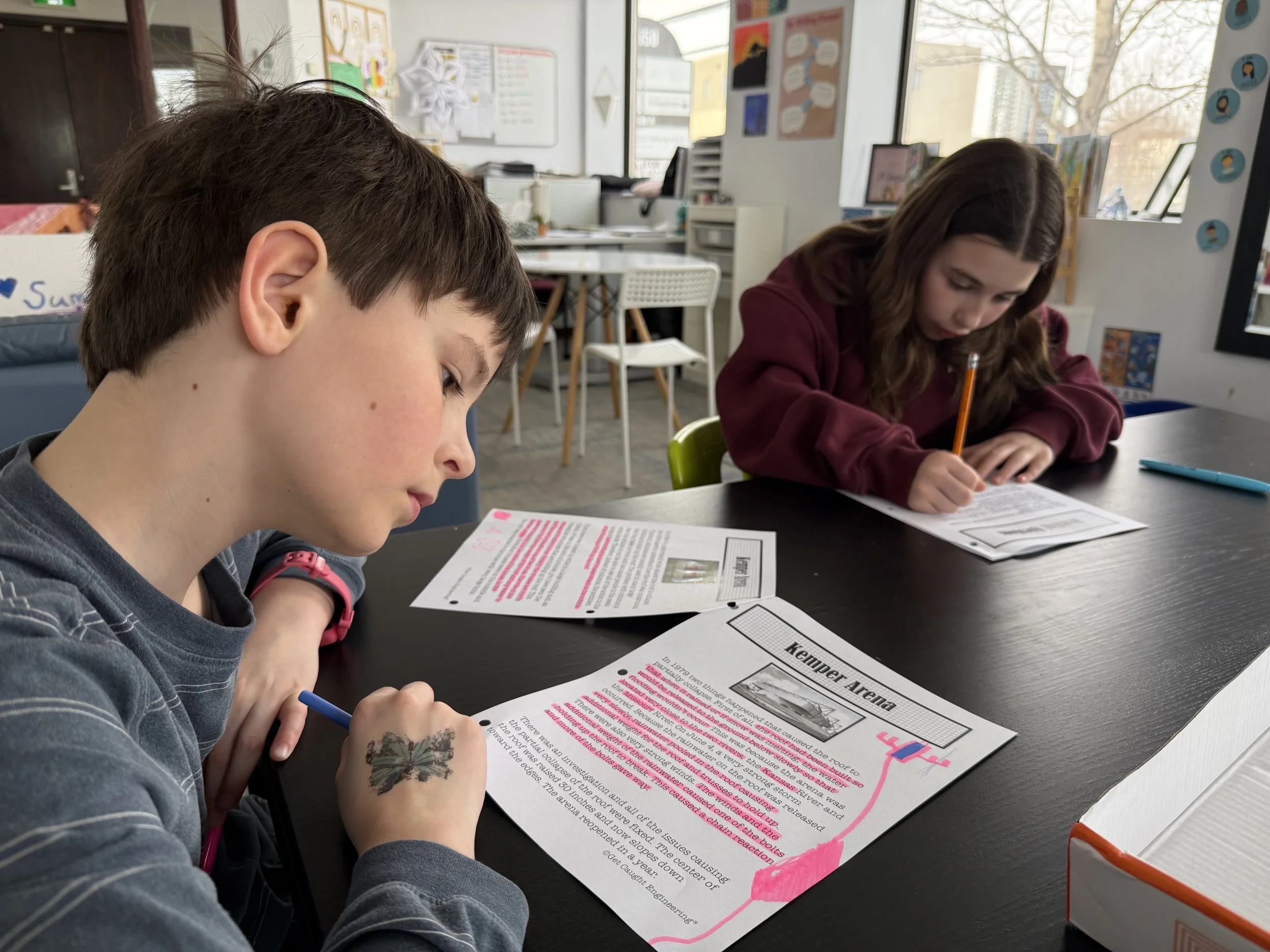
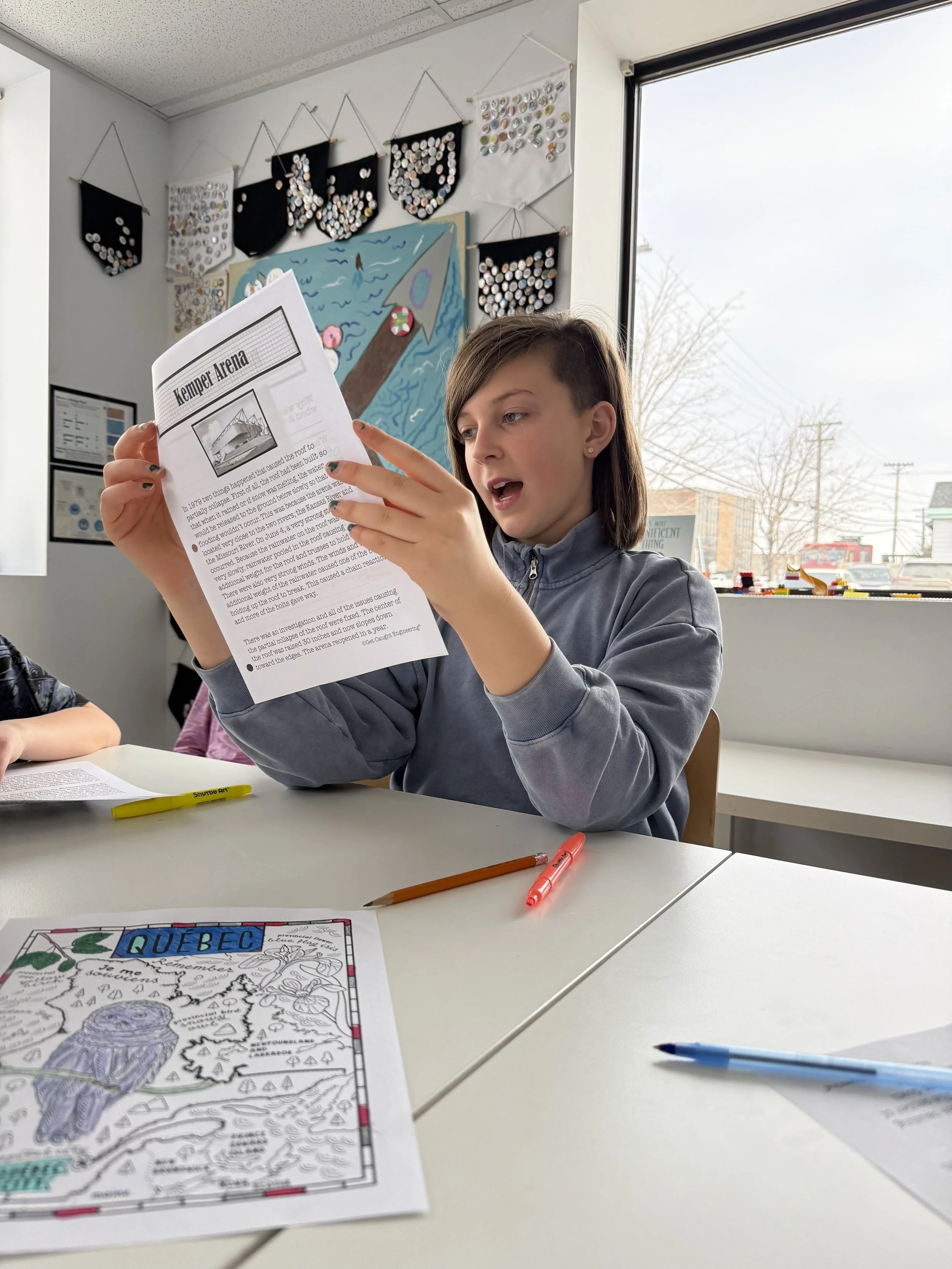
Aim/Release Rebels: Rebels in this group explored another real-world failure story, the Kemper Arena case study. The Kemper Arena is a large indoor arena that was built from 1973-1974 in Kansas City that held over 19,000 people. The design of the arena was built without any columns, so that all the seats inside would have an unobstructed view of any and all events. However, a few years after the building was completed the ceiling collapsed and forced parts of the walls to collapse, too. Rebels were tasked with identifying the failure point: what caused the roof of the Kemper Arena to collapse? Rebels analyzed drawings and wrote about a number of factors they thought caused the collapse: the trusses being built on the outside of the building, how the lack of columns left large areas of the roof unsupported, and how environmental factors such as rain or snowfall caused “pooling” on flat parts of the arena’s roof. For the next few weeks, Rebels will take what they’ve learned from real world case studies to create their own engineering proposals for a new bridge in Ottawa. Their proposal will include a model bridge, a written design overview, materials and structural choices, identify failure points and proposed improvements and solutions.
Civilizations
This week’s chapter of Story of the World took us west across the Atlantic Ocean to the Americas! Rebels used three different colours to map North America, Central America and South America. Before getting into the chapter, we got stuck on the idea of continents and looked at the different ways we organize and name land masses and groups of countries on maps. We discussed how maps can distort the overall size of land and compared the size and shape of North America to Africa on a 2D world map to a 3D globe. Rebels were curious about the concept of tectonic plates and wondered if there is a projection of what Earth would look like without water? We took a little time to watch a NASA visualization of this and then compared our initial metaphor of an apple core to an apple with the skin peeled off - with one Rebel noting the the range of highest mountain to deepest ocean is nothing compared to the depth of Earth’s layers. Finally, we heard stories about two early civilizations: the Nazca and the Olmecs. Similarly, we learned about the artifacts left behind by these groups: the enormous Nazca line drawings on the ground in modern day Peru and the giant Olmec heads in Mexico. We took time to use Google Maps to see what these look like today and Rebels were very impressed with the relative size of the line drawings!
Quest
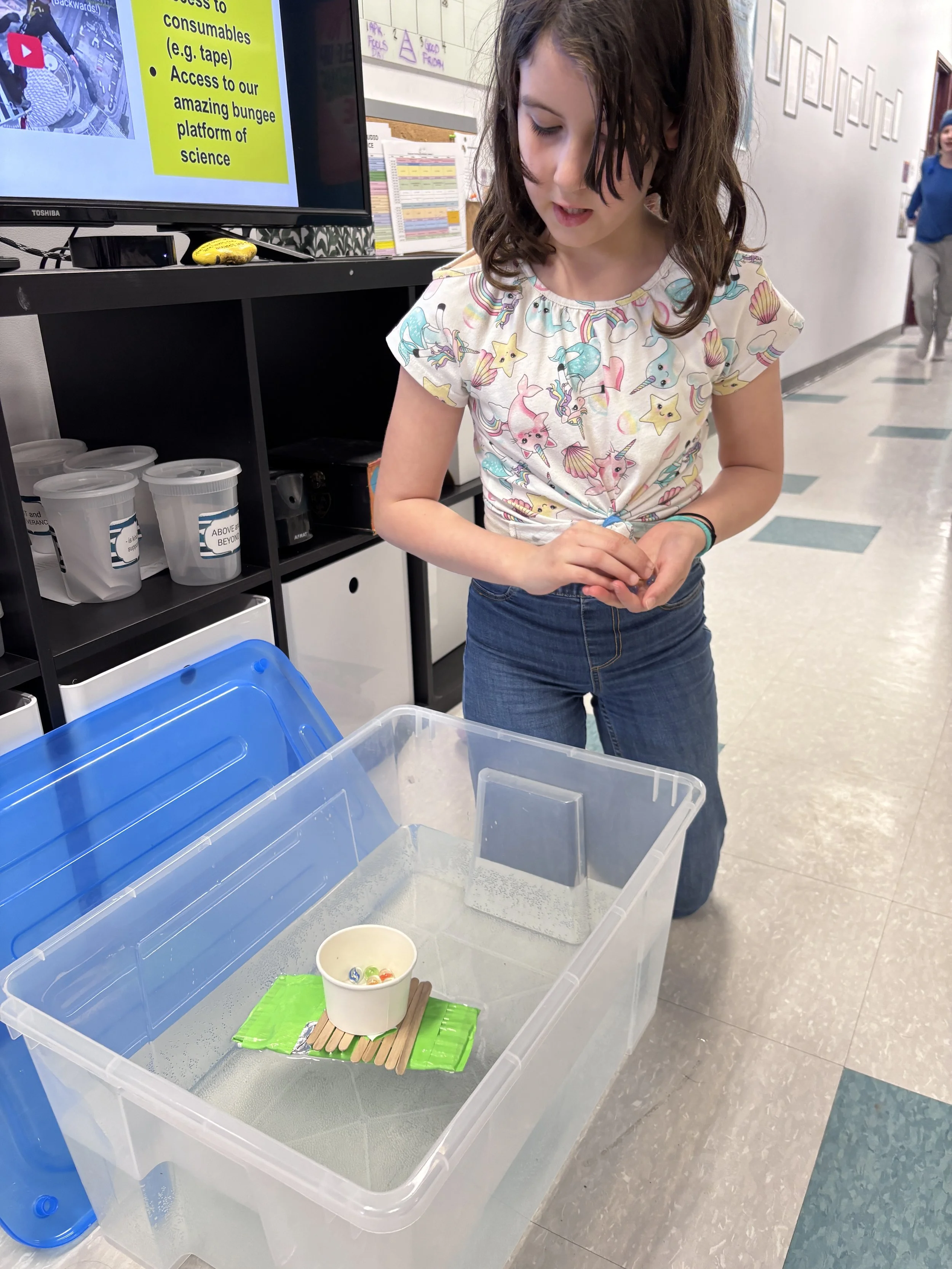
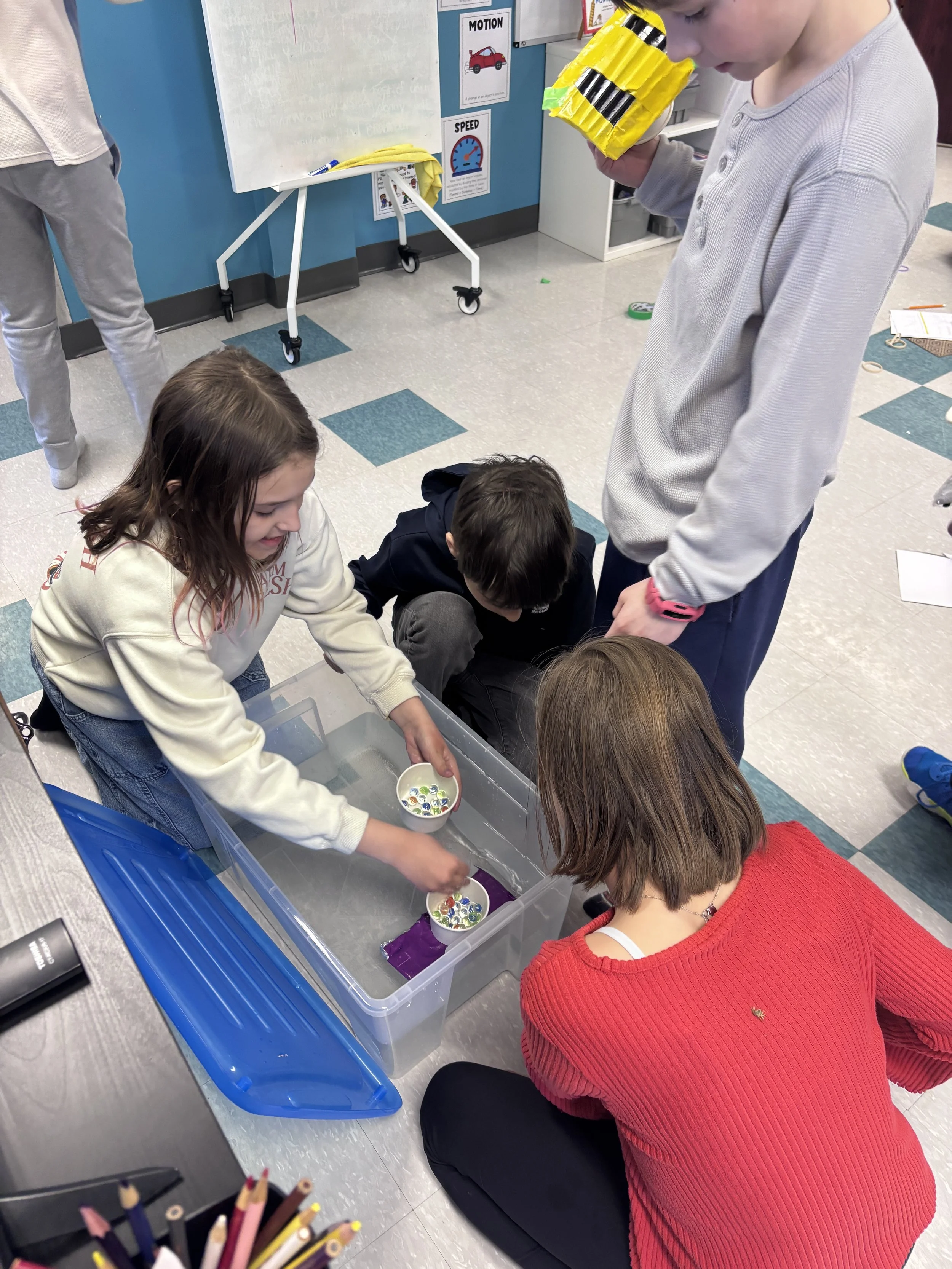
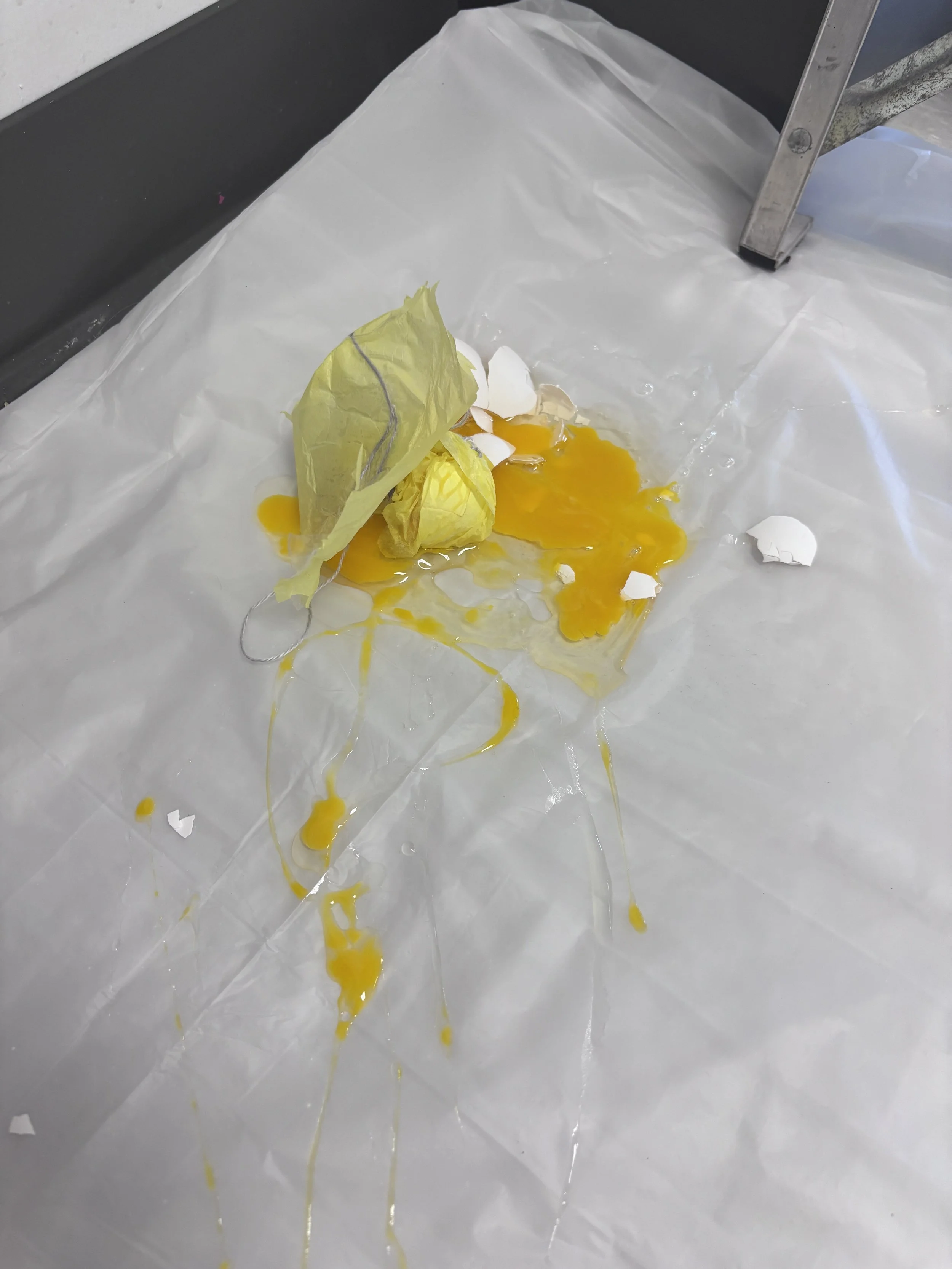
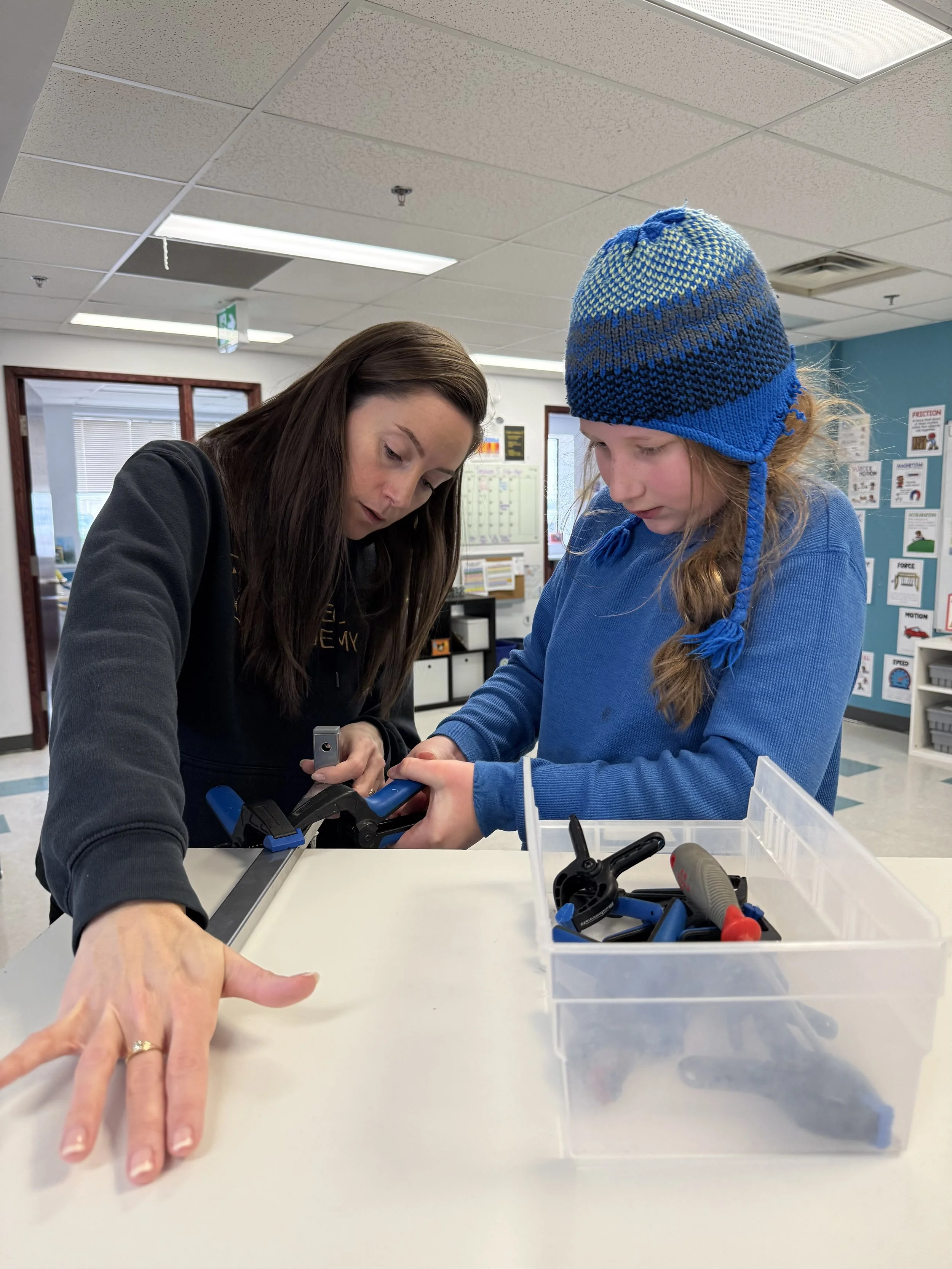
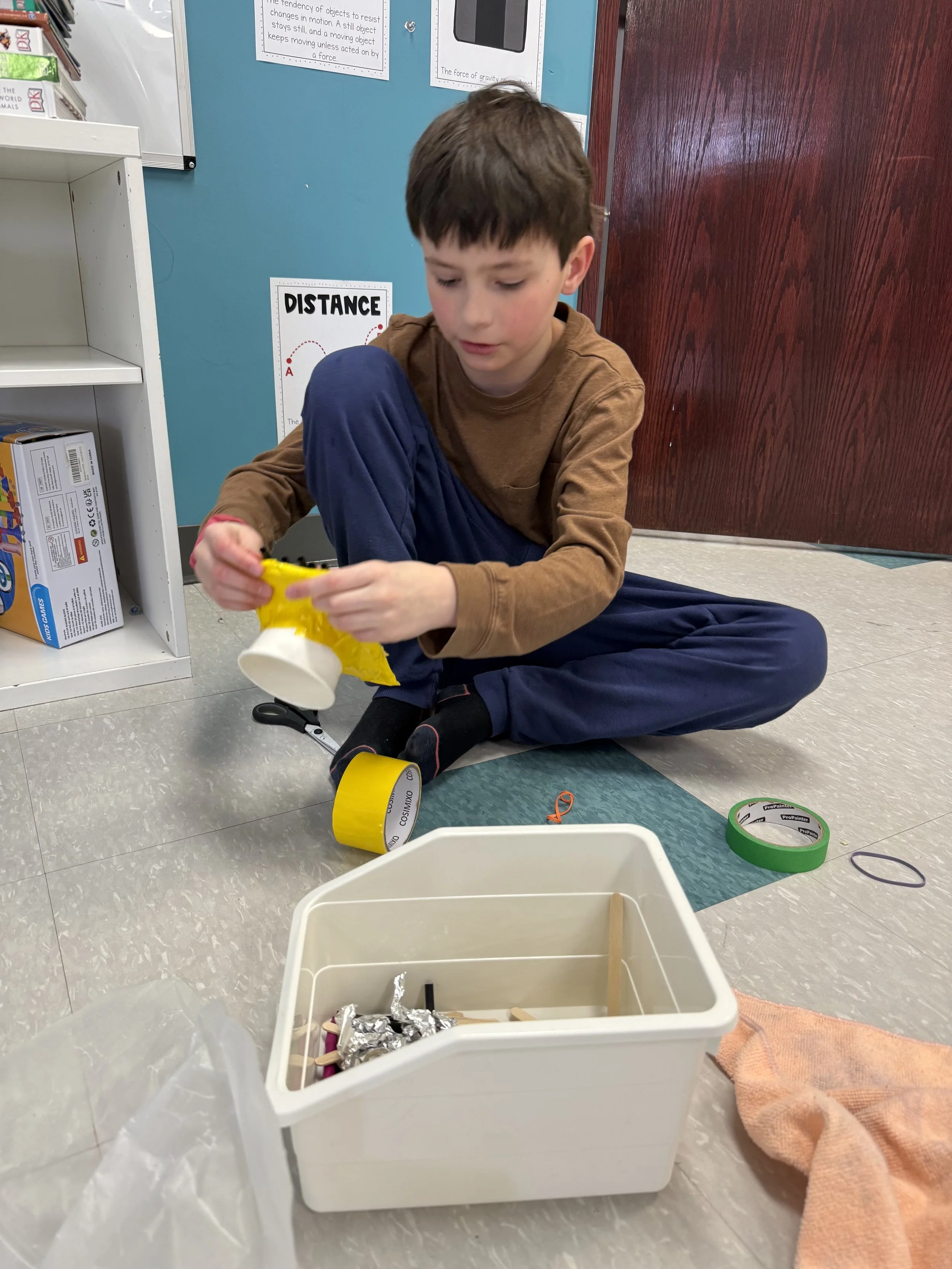
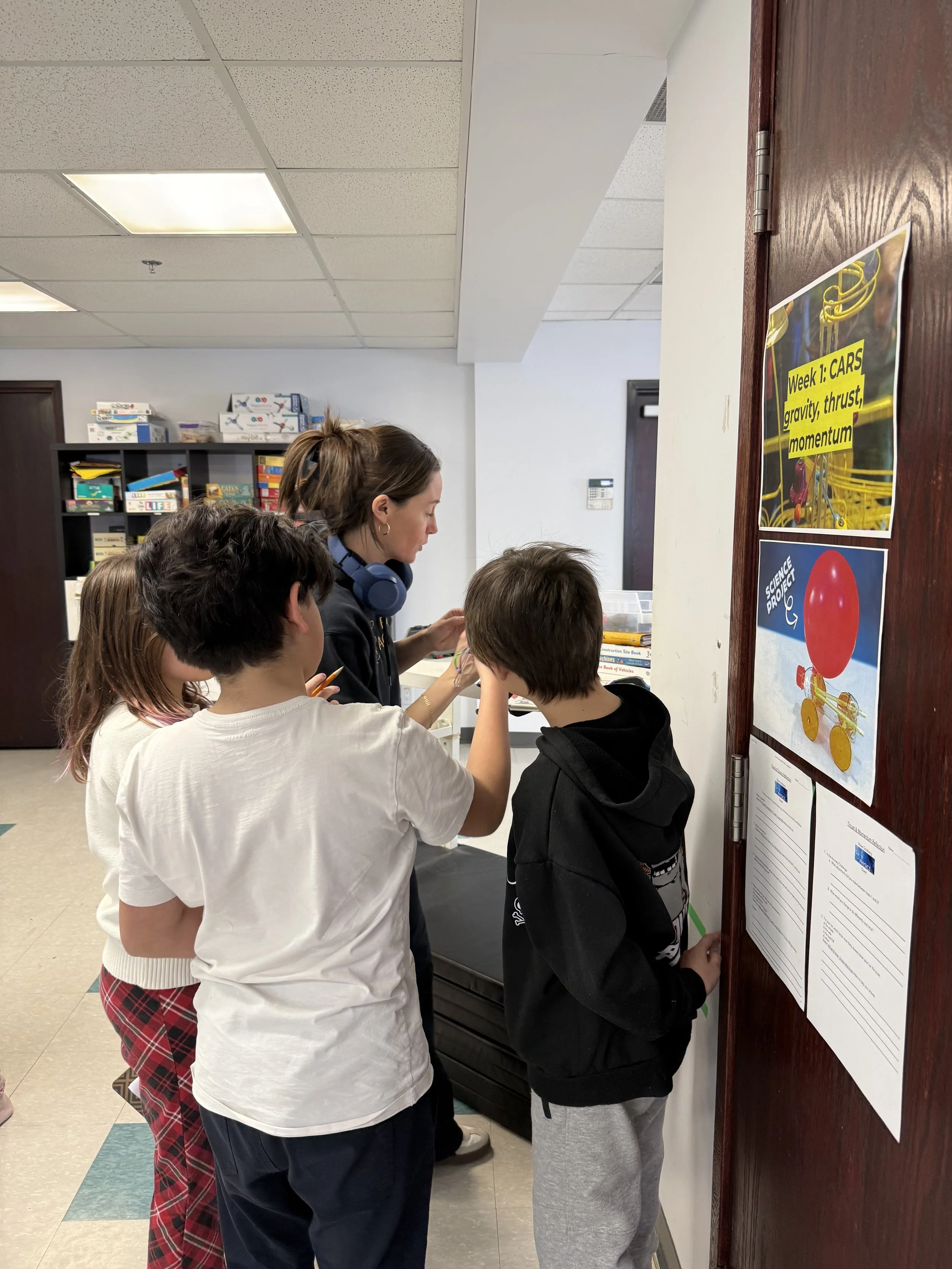
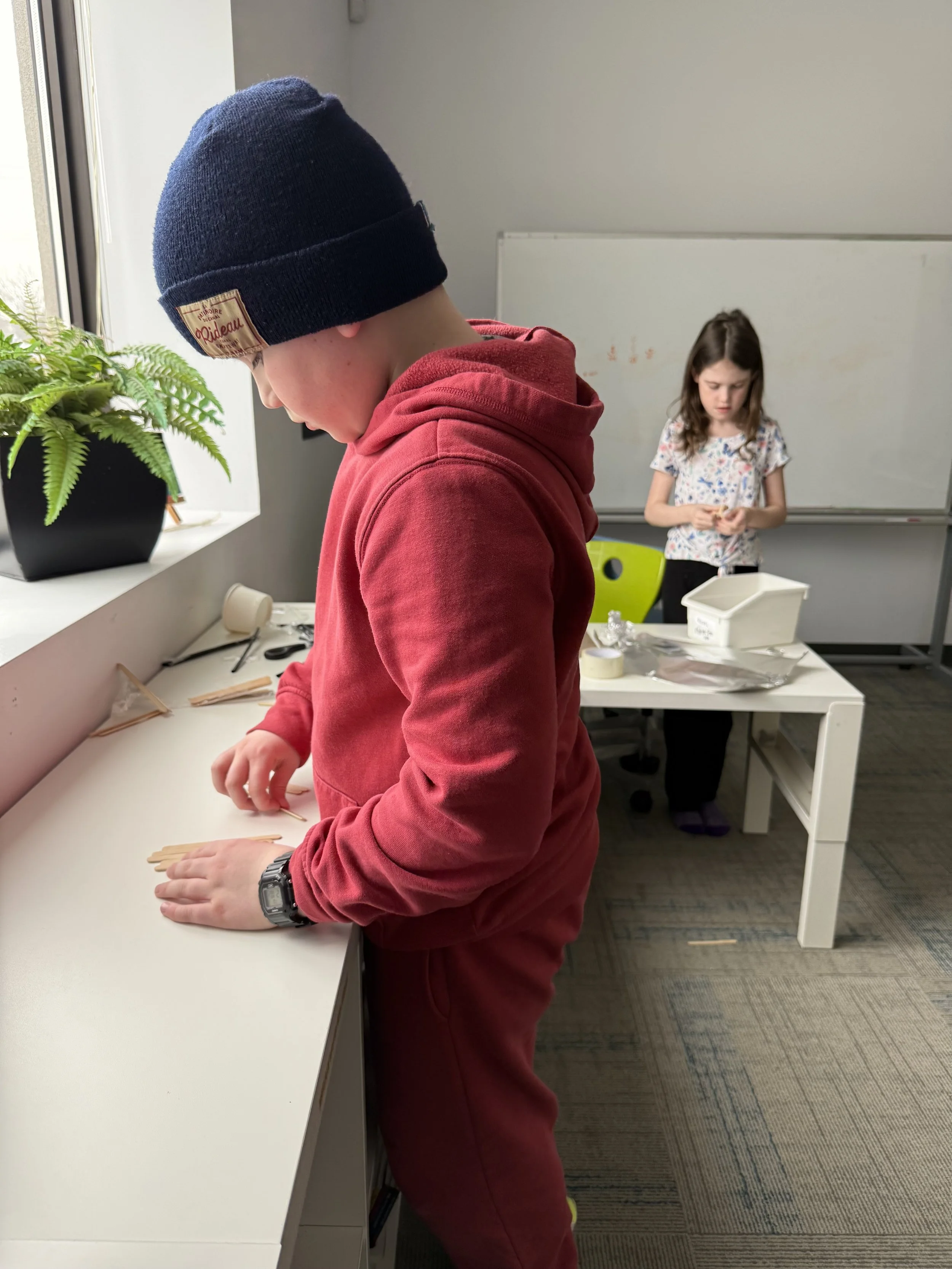
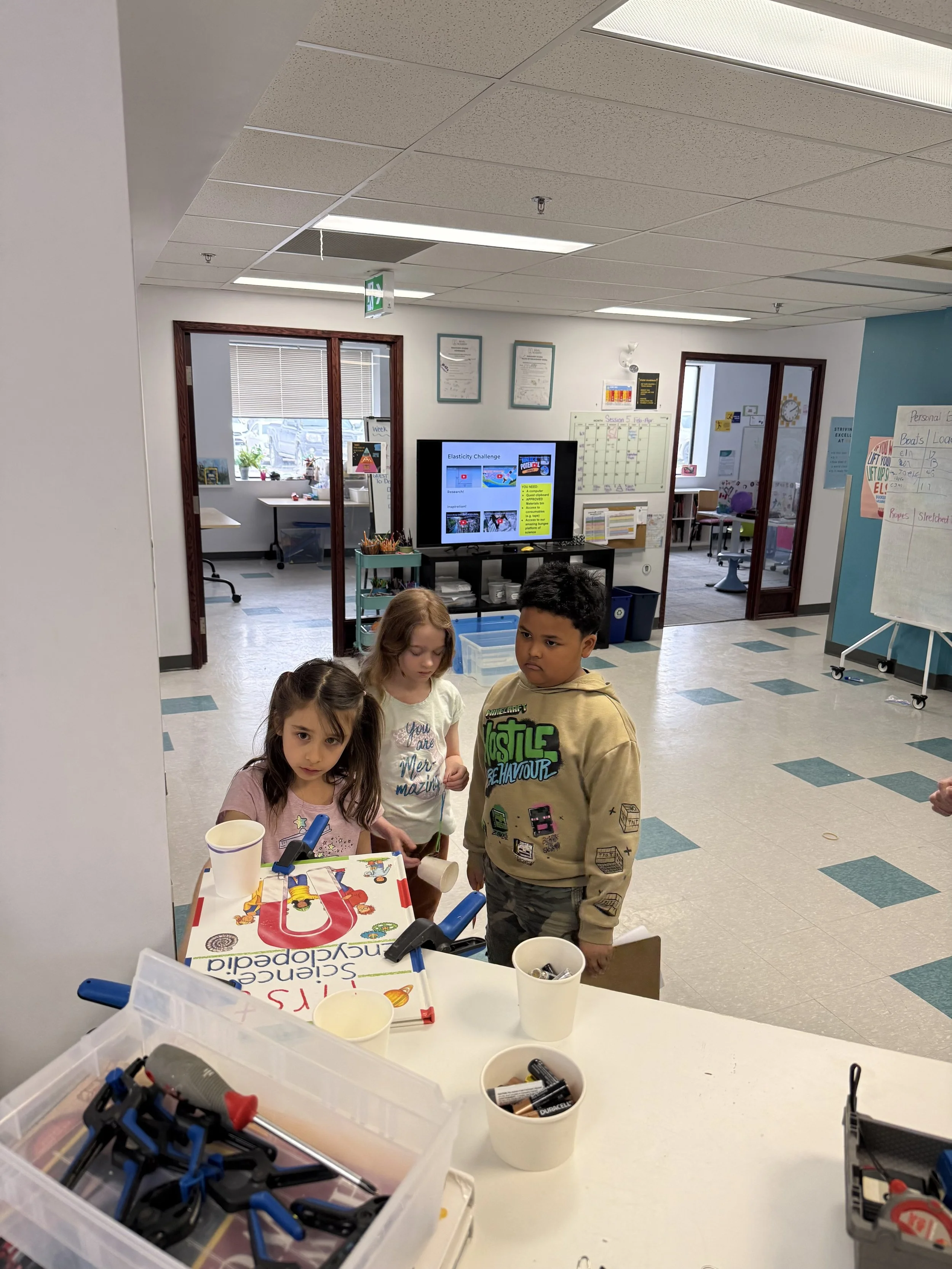
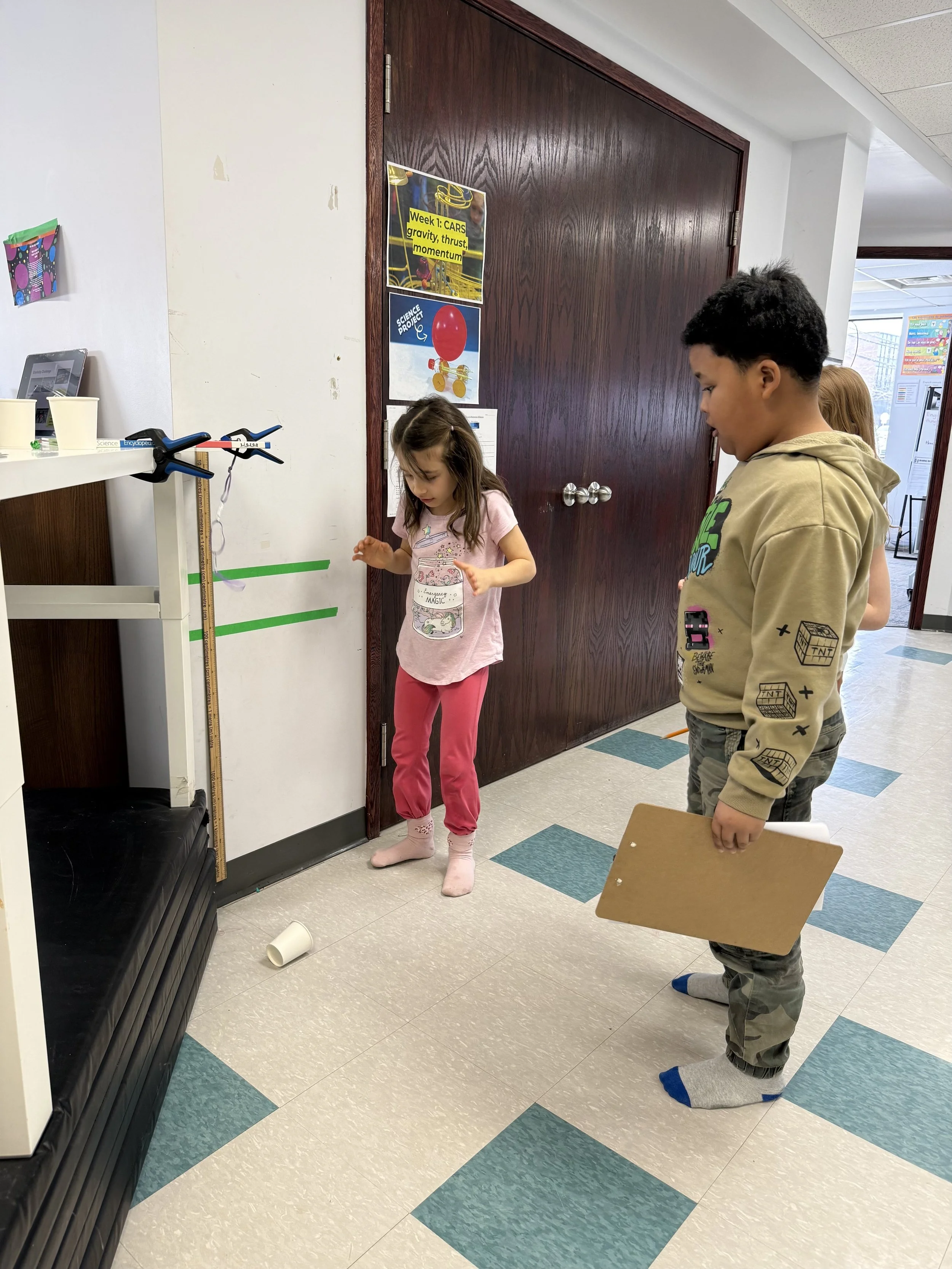
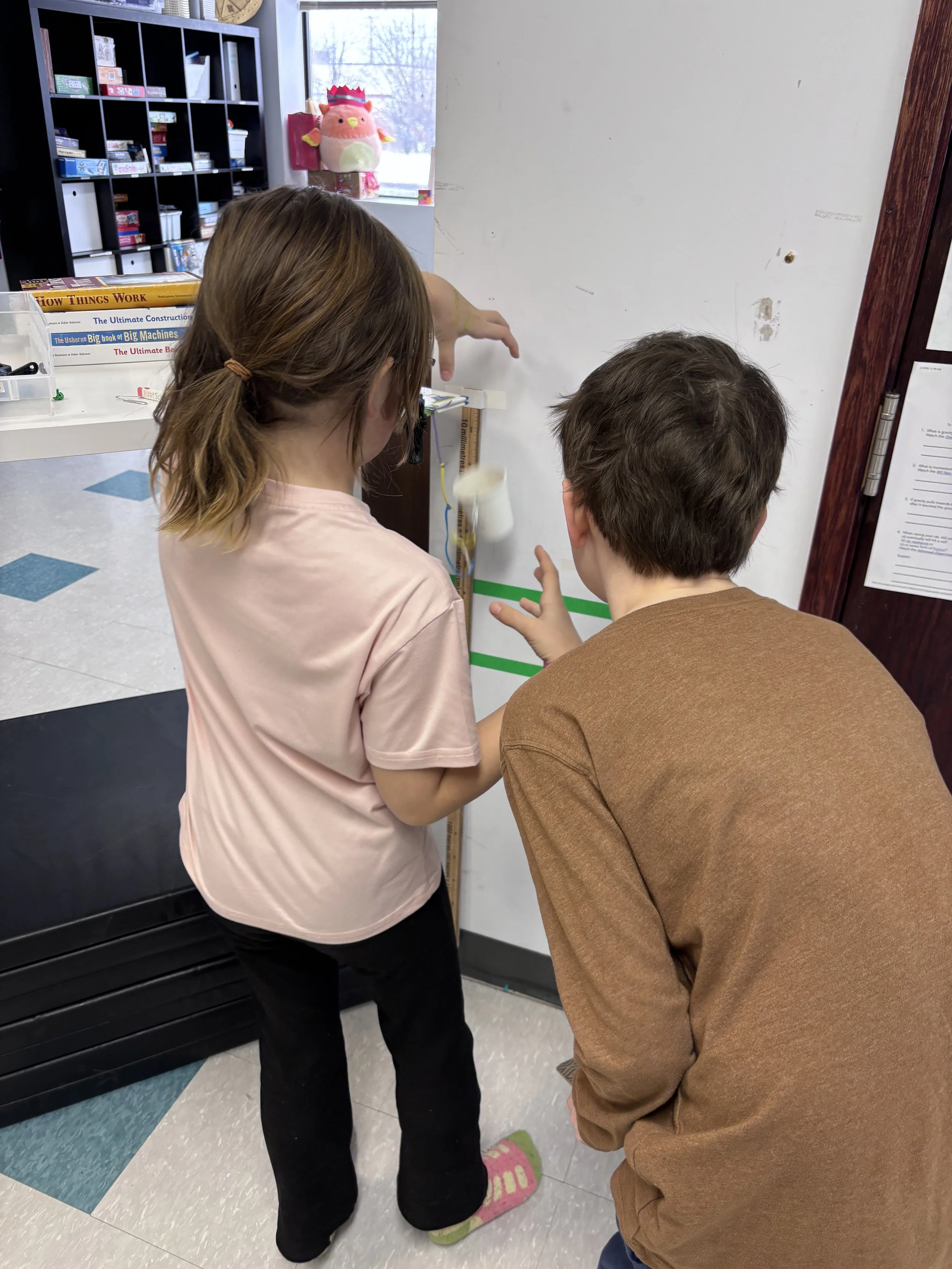
After exploring movement and momentum in Week One of our Physics Quest, and working with forces like gravity and thrust to make cars move as far, and in as specific a direction as possible, this week we began to RESIST gravity! On Monday, Rebels were tasked with designing a boat that would float, balance and carry a load. On Tuesday, they had to design an elastic rope that would stretch a certain distance when used to simulate a bungee jump with a load. On Wednesday, we introduced the egg drop challenge! Rebels had to design a parachute system with a canopy, lines and a harness for their egg that would help slow the fall of the egg and protect it. Each day, Rebels spent time researching key concepts like buoyancy and displacement, potential vs. kinetic energy and air resistance. They reflected each day after preliminary tests of their designs which variables they wanted to adjust before competing in Thursday’s ultimate contest. For example, they noticed that WHERE load on a boat is placed affects its centre of gravity and some teams moved the container in their design. Similarly, HOW MUCH load should be used to stretch an elastic rope to a specific length and if you miss, should you change the length of the rope or toggle the load? Perhaps the most difficult variable Rebels worked with this week is human emotion. When your design fails (i.e. takes on water, sinks, snaps, or lets the egg break) what is the best way to process frustration? When another team of designers is more successful than you, what helps process disappointment? Up next week, Rebels get to explore the wonderful world of simple machines!
Additional Highlights
Rebels began our Session 5 read aloud, The Invention of Hugo Cabret! Rebels were very pleased to discover how unique this book was, especially as a read-aloud option, when we introduced it on Tuesday. The author, Brian Selznick, “breaks open the novel form to create an entirely new reading experience” as he blends picture book, graphic novel, chapter book, and original sketches into his story. Rebels will spend the next several weeks listening, watching and discussing all the elements of the story to see if they can uncover the mystery before the book’s final chapter.
Exploration Studio
Mindfulness & Launch
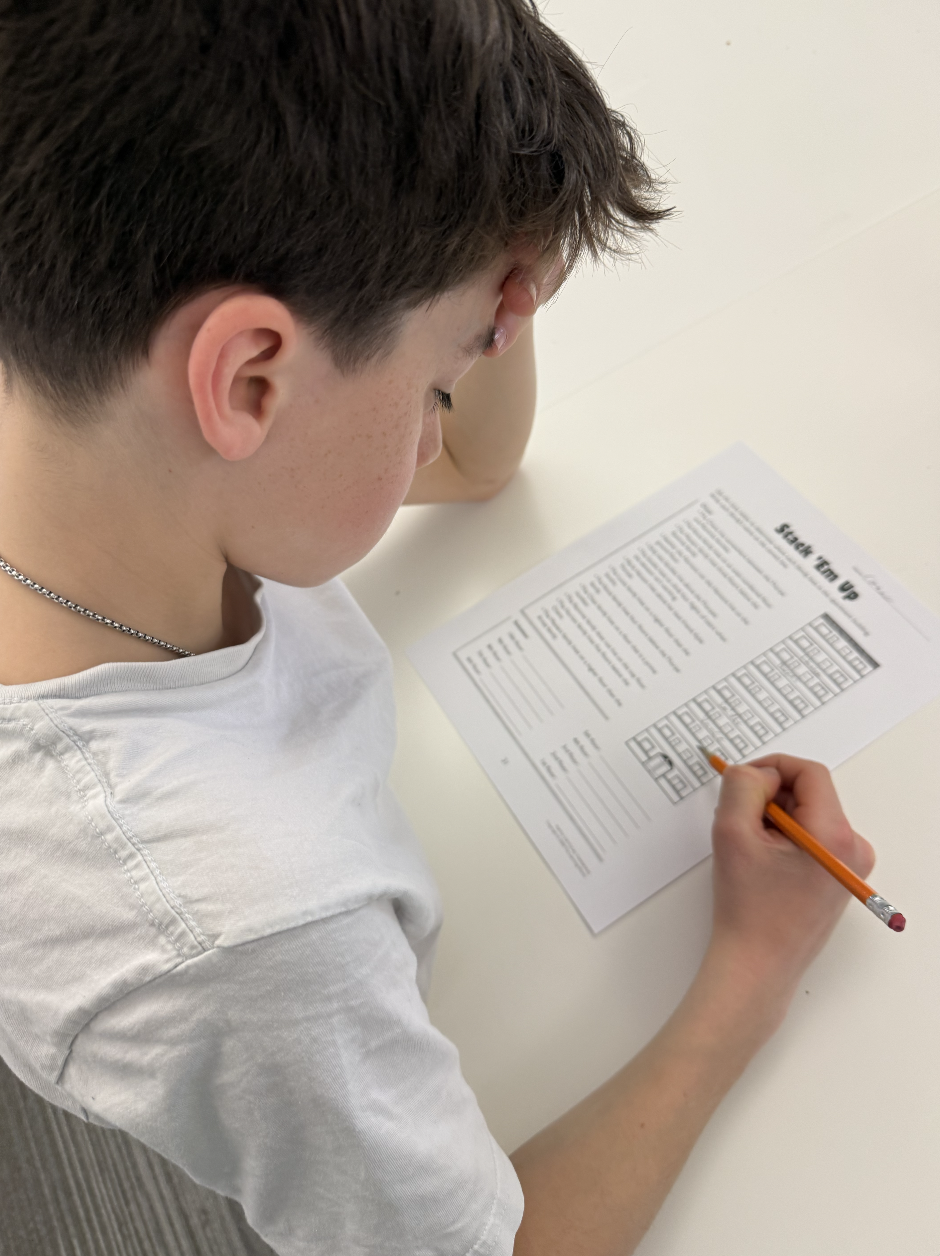
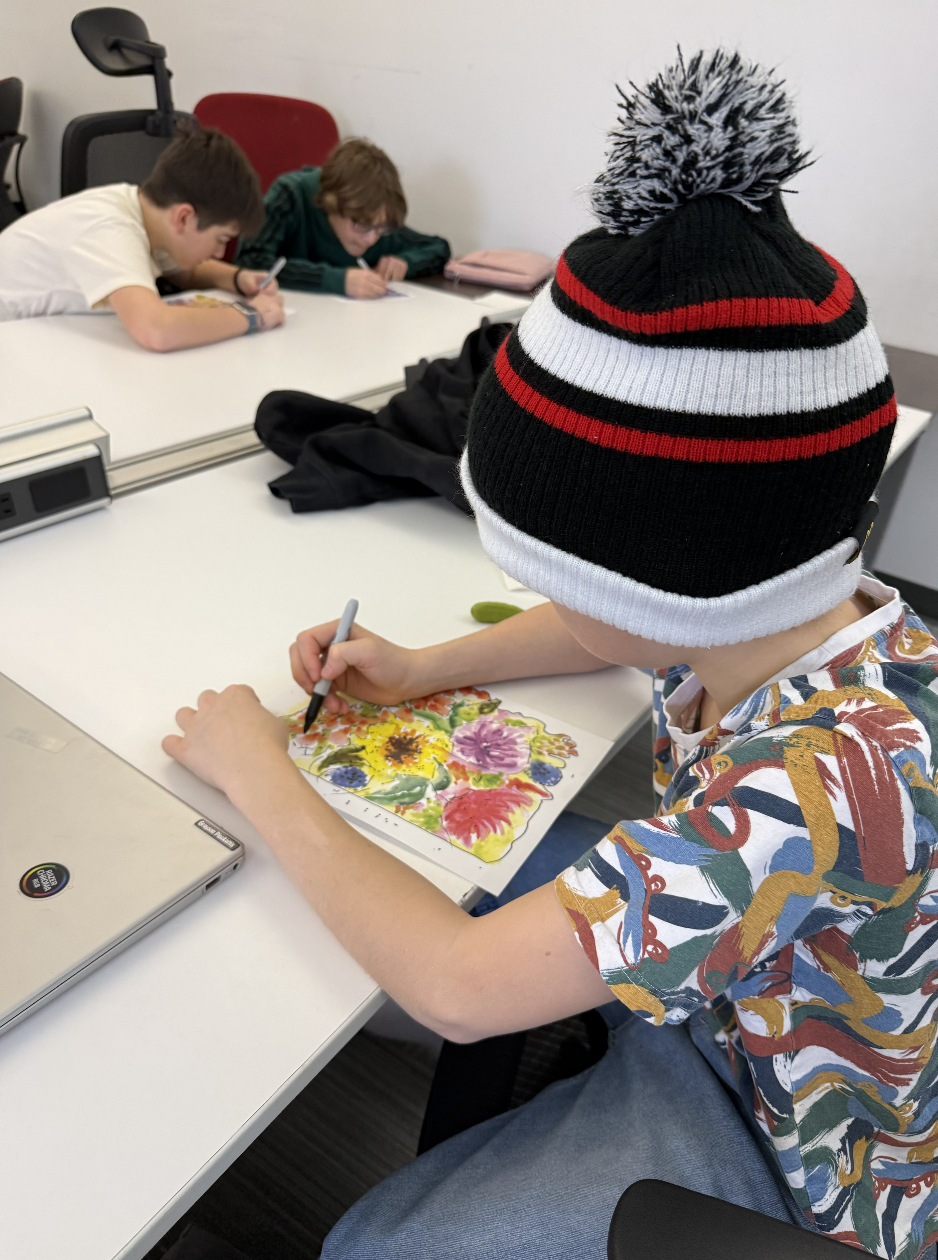
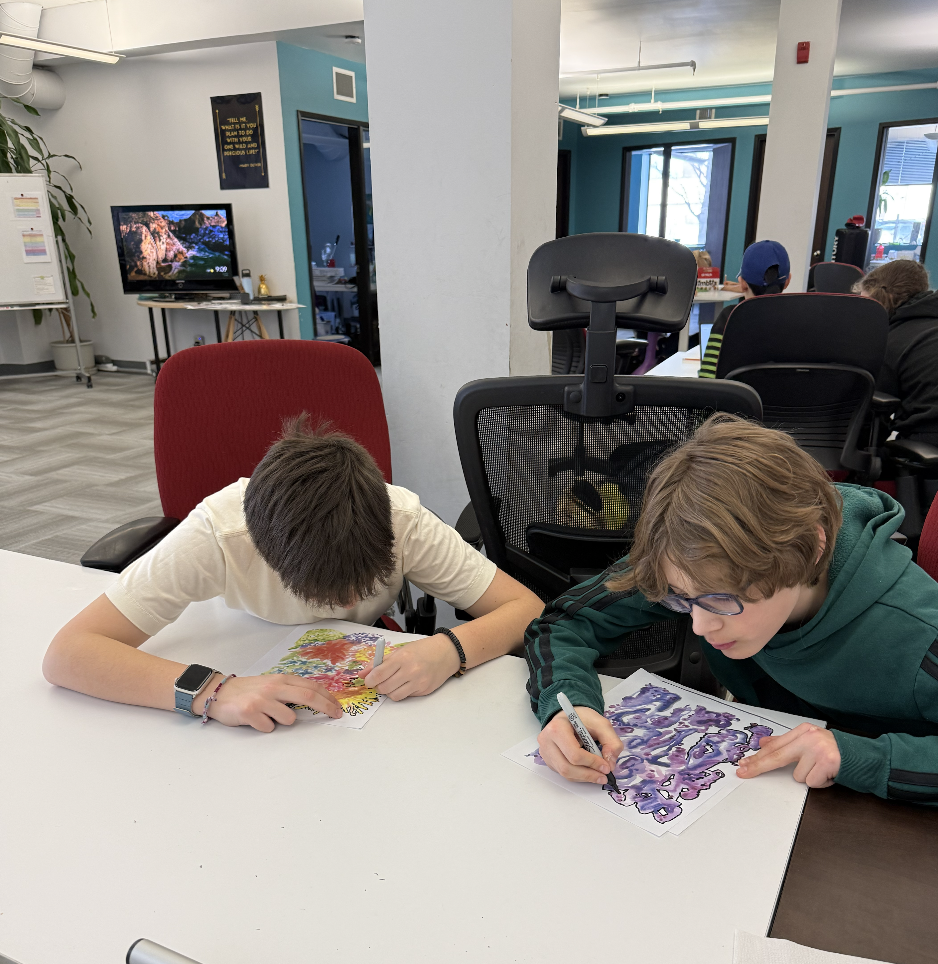
After free-choice mindfulness, during which most learners chose to reverse colour or solve the Problem of the Week, we discussed protests. Rebels initiated the conversation by brainstorming everything that comes to mind when we hear the word protest: what is the purpose, what does it look and sound like, and what are the potential outcomes? Rebels then learned about some famous forms of protest throughout history and discussed why peaceful marches and actions sometimes turn violent. On Tuesday, in our Becoming a Critical Thinker lesson, Rebels were tasked with eavesdropping on a conversation over the next few weeks in a location they don't typically frequent, listening and noticing without inserting themselves into the discussion. We then began the "One Memory, Two Stories" lesson, in which Rebels thought of three experiences and wrote as much as they could remember about each. Once finished, they will ask someone else who was also present at each memory and write down what they remember, noting differences and similarities between the two stories. Were there contradictions? Did the differences make the other feel resistant or inclined to "correct" their tale? Were they able to merge the memories to create a new, more complete story? We read the "From Graffiti to Galleries: Street vs. Public Art" CNN article on Wednesday morning, then looked at a series of examples from around the world and debated the message of some of Banksy's work. We then discussed graffiti and the legal issues surrounding the controversial art form. After their morning walk on Thursday, we discussed monuments and whether or not they benefit society. We discussed examples from America's South and compared them with those of Canada's first Prime Minister and other historical figures. Rebels debated whether controversial statues should remain in positions of honour or be removed, and largely favoured keeping them, with information outlining their value and listing the negative consequences of their actions. After our morning puzzle session, we had a great presentation from our learner-led Current Events team.
Reader/Writer Workshop
As we write our "I Have a Dream for My Community" speeches, we also need to consider how to speak in a way that engages our audience. We may have a stellar message, but if no one can hear it, the impact will be greatly diminished. We therefore began Reader/Writer this week, learning about the six voice tools: register, pace, timbre, pitch, prosody and volume. Learners then reviewed the components of their speech, including a hook, tagline, three takeaways, and a call to action. With a provided template, learners chose their topic and began crafting a launch that emotionally connects with their audience, tells a hard truth and is vulnerable. Those with time completed some research to write a strong statement and provide evidence for why they feel their proposal is important.
A Midsummer Night's Dream (Optional)
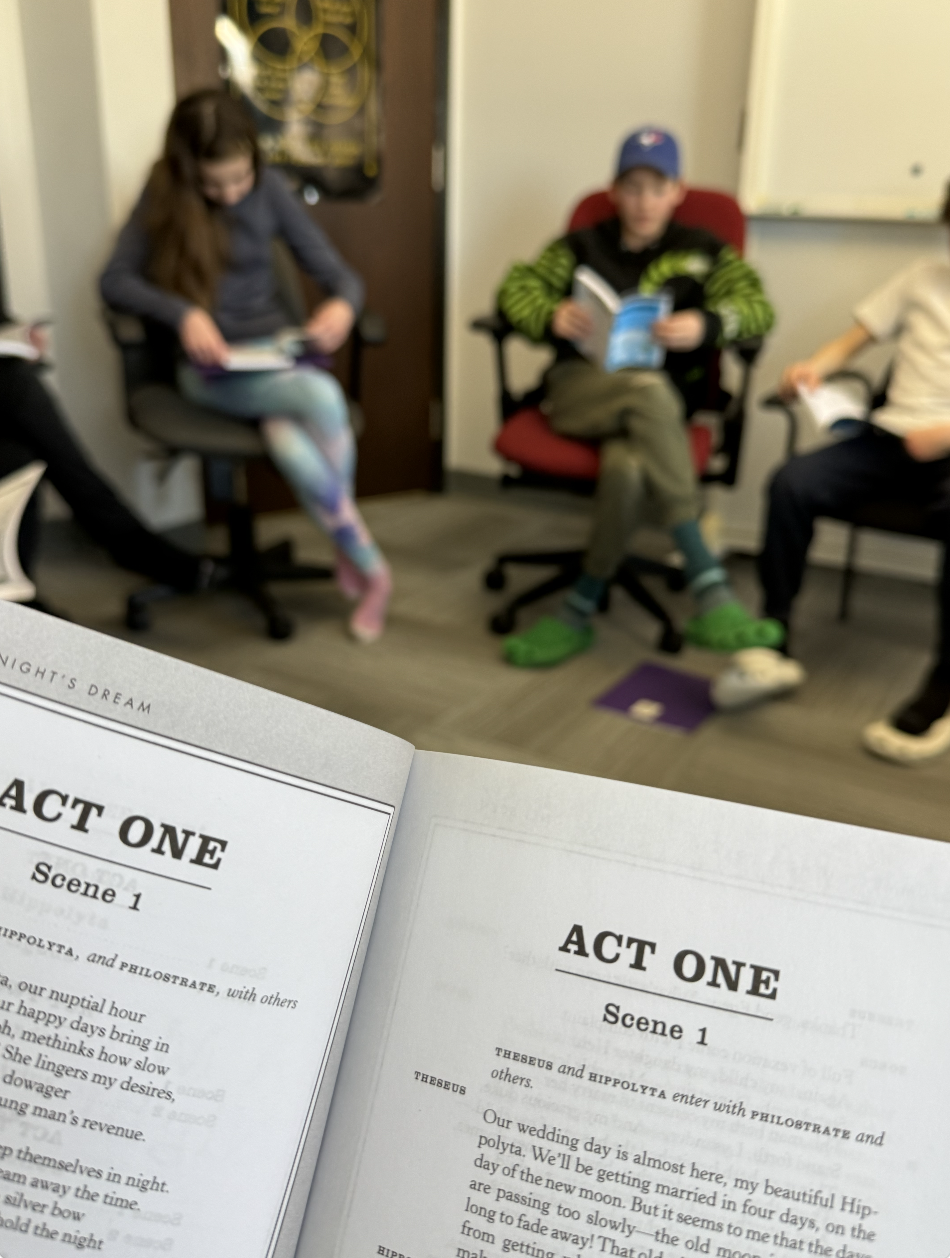
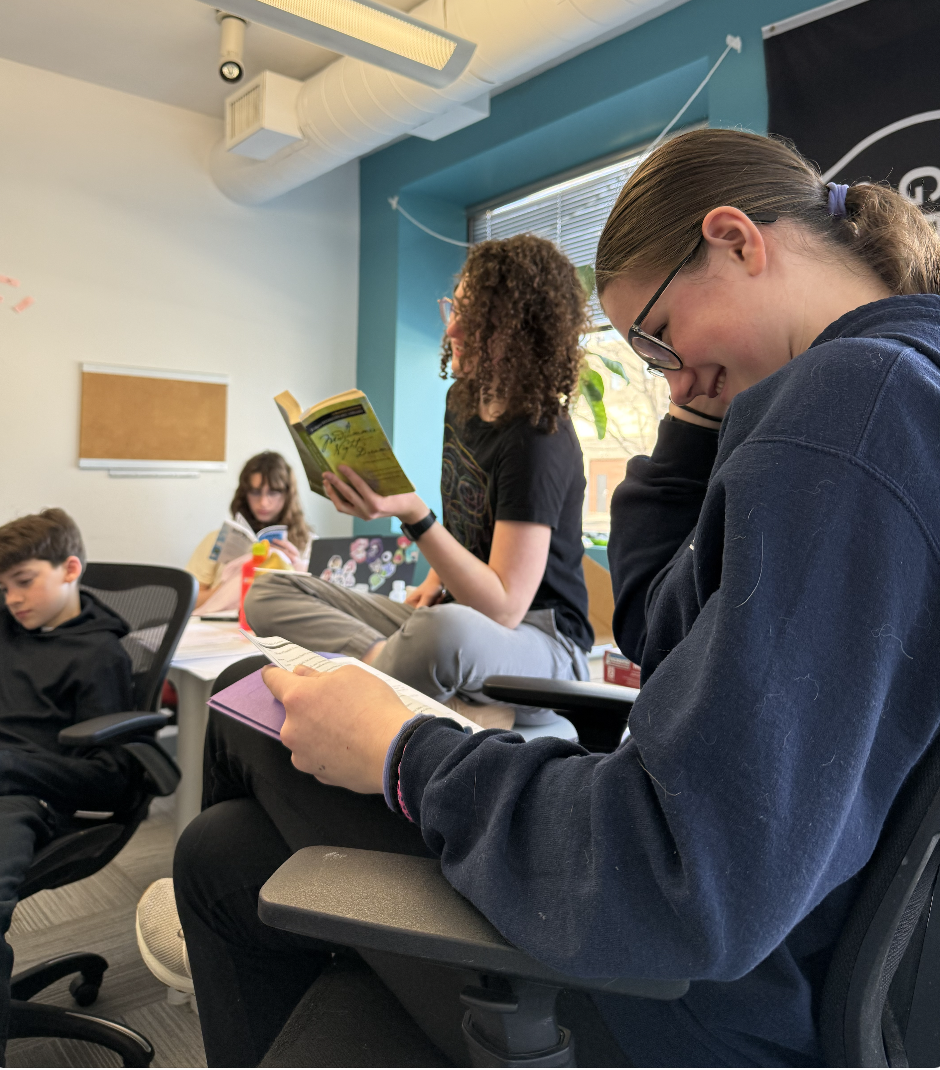
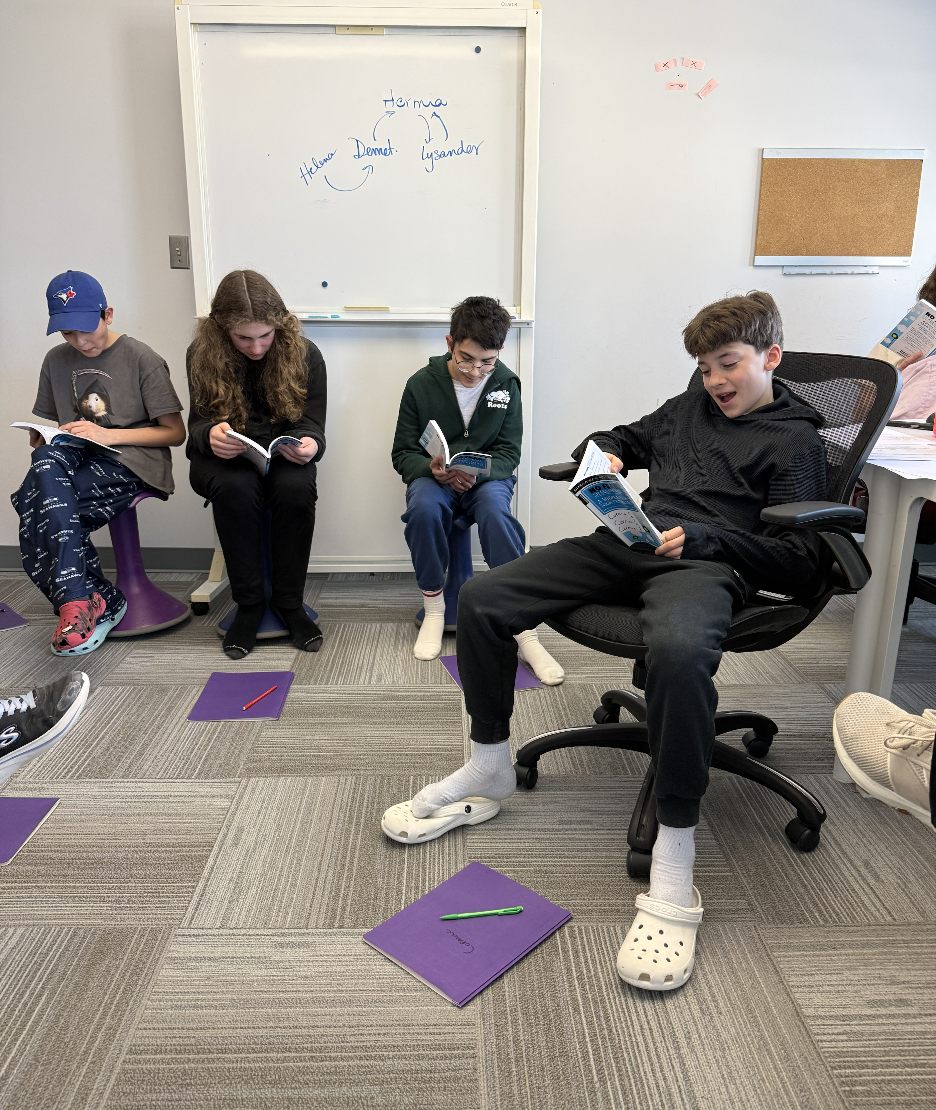
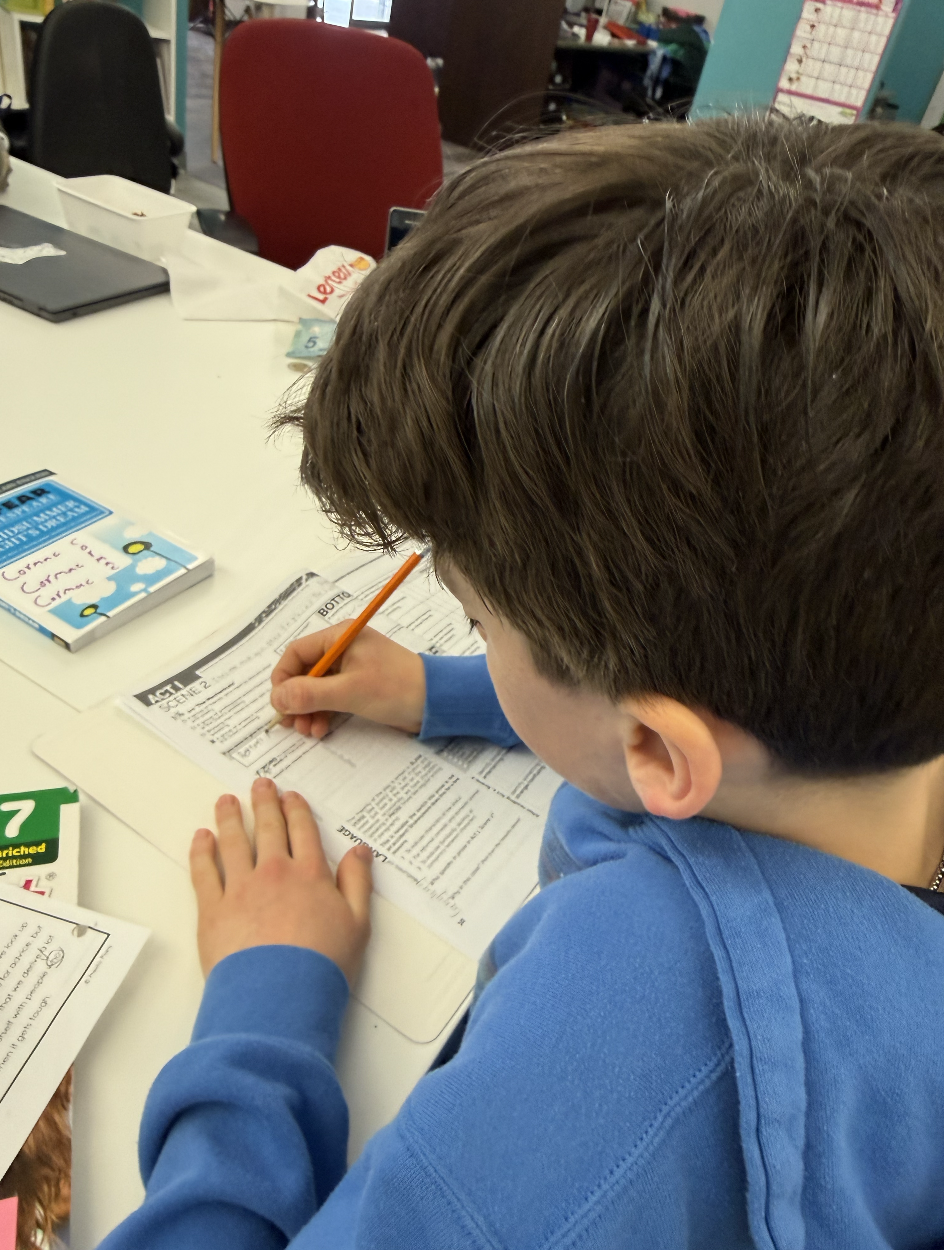
This week, learners participated in a choral reading of Act I, Scenes 1 and 2, of Shakespeare's comedy A Midsummer Night's Dream. After each scene, the Rebels took time to answer questions about the theme, characters, language, and plot. They marvelled at what would have been considered culturally appropriate, which we now struggle to reconcile, such as Egeus' belief that his daughter, Hermia, must marry his choice of suitor, Demetrius, become a nun, or be killed. We are looking forward to reading Act II next week!
Reading Challenge and Grammar
This week's Reading Challenge introduced flashbacks and flashforwards. Typically, plots follow a linear or chronological order of events, but that isn't always the case. Sometimes the author allows us to glimpse the past or see future events. After reviewing the purpose and examples of each, Rebels worked in teams of four to identify both flashbacks and flashforwards to "open the secret locker."
Who or whom? This week's grammar lesson focused on when to use the pronoun 'who' vs. 'whom'. We learned that we use who when it's the subject of a sentence (the person doing the action), and we use whom when it's the object (the person receiving the action). Another tip the Rebels found helpful was to try to answer or rephrase the sentences using 'they' or 'them'. If using 'they' makes sense, use 'who'; if 'them' fits better, then use 'whom'.
Math Lab
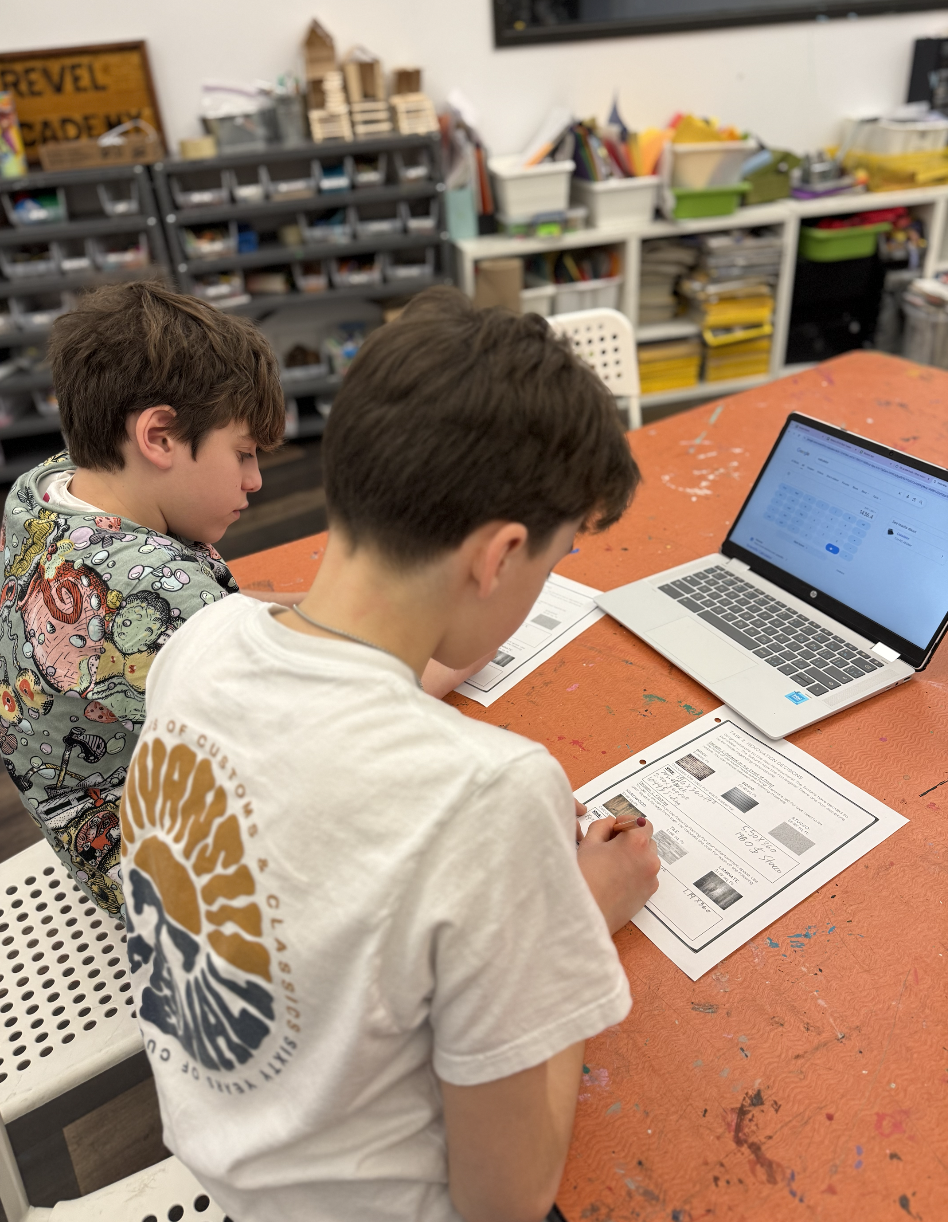
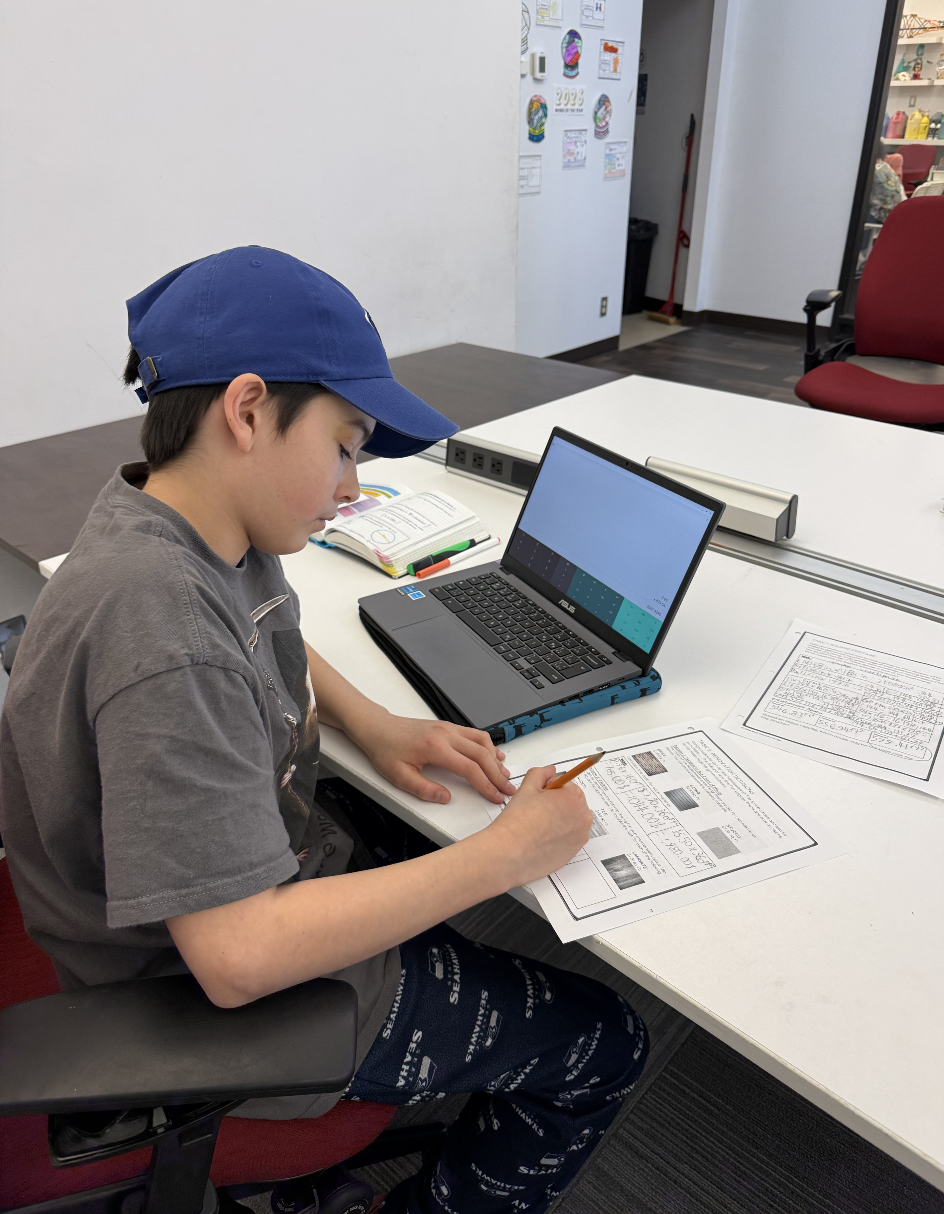
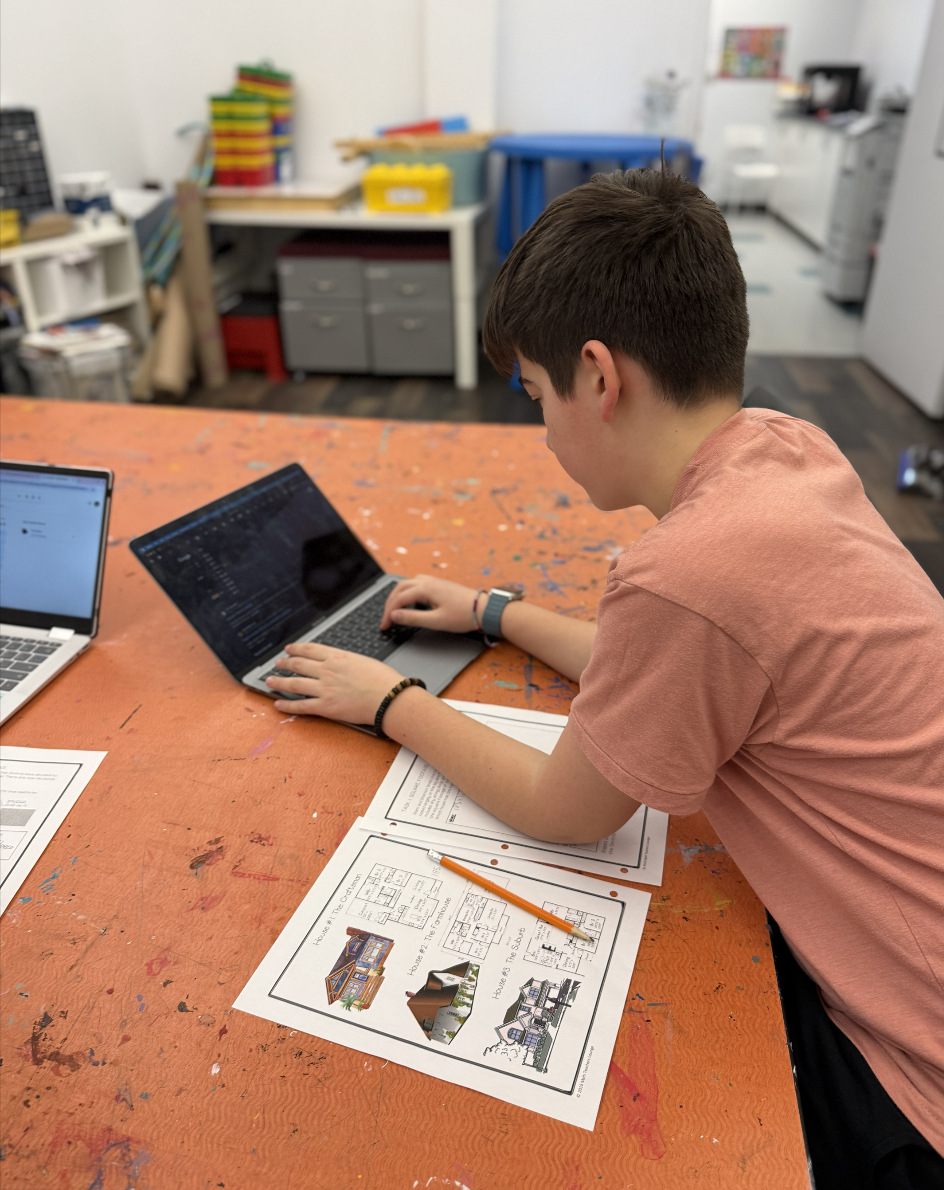
Now that the learners know which house the Smith family should buy based on their hopes for entertaining spaces and bedroom sizes, they must decide on renovations. Rebels used the measurements provided to determine the material for the front of the house, the flooring, and whether the family should add a half bath, a patio, or turf, based on their budget. Once completed, the Rebels then worked to spruce up the Smith family's backyard. Learners were told that the family wants to redo their lawn (either artificial grass or sod) and that it should cover exactly 60% of the entire backyard. The rest of the space will be poured concrete and decorative rocks. Based on the dimensions below, how many square feet will the lawn be? Learners drew the plans, creating their own dimensions and labelling them. Next week, we'll move on to calculating the volume of various 3D shapes!
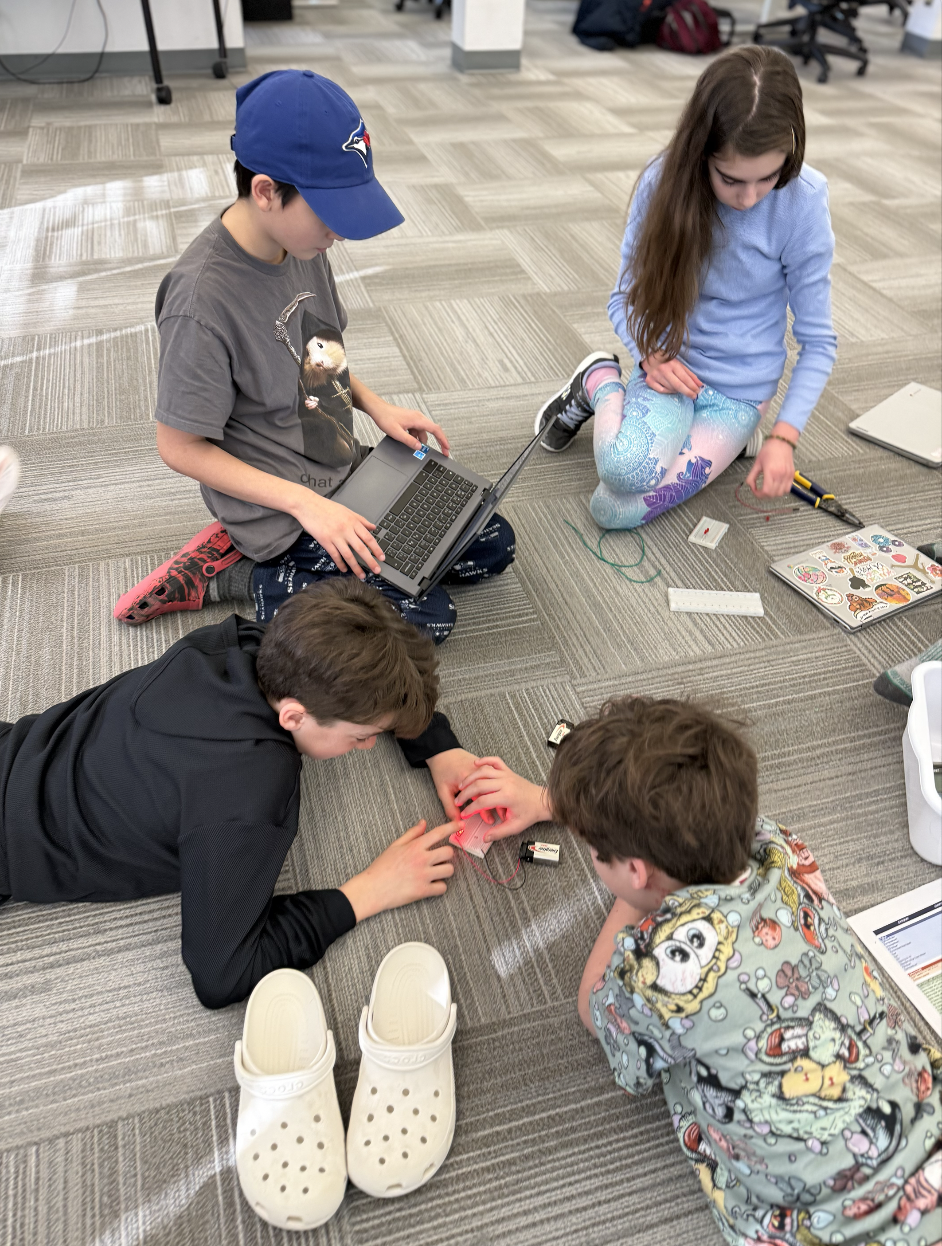
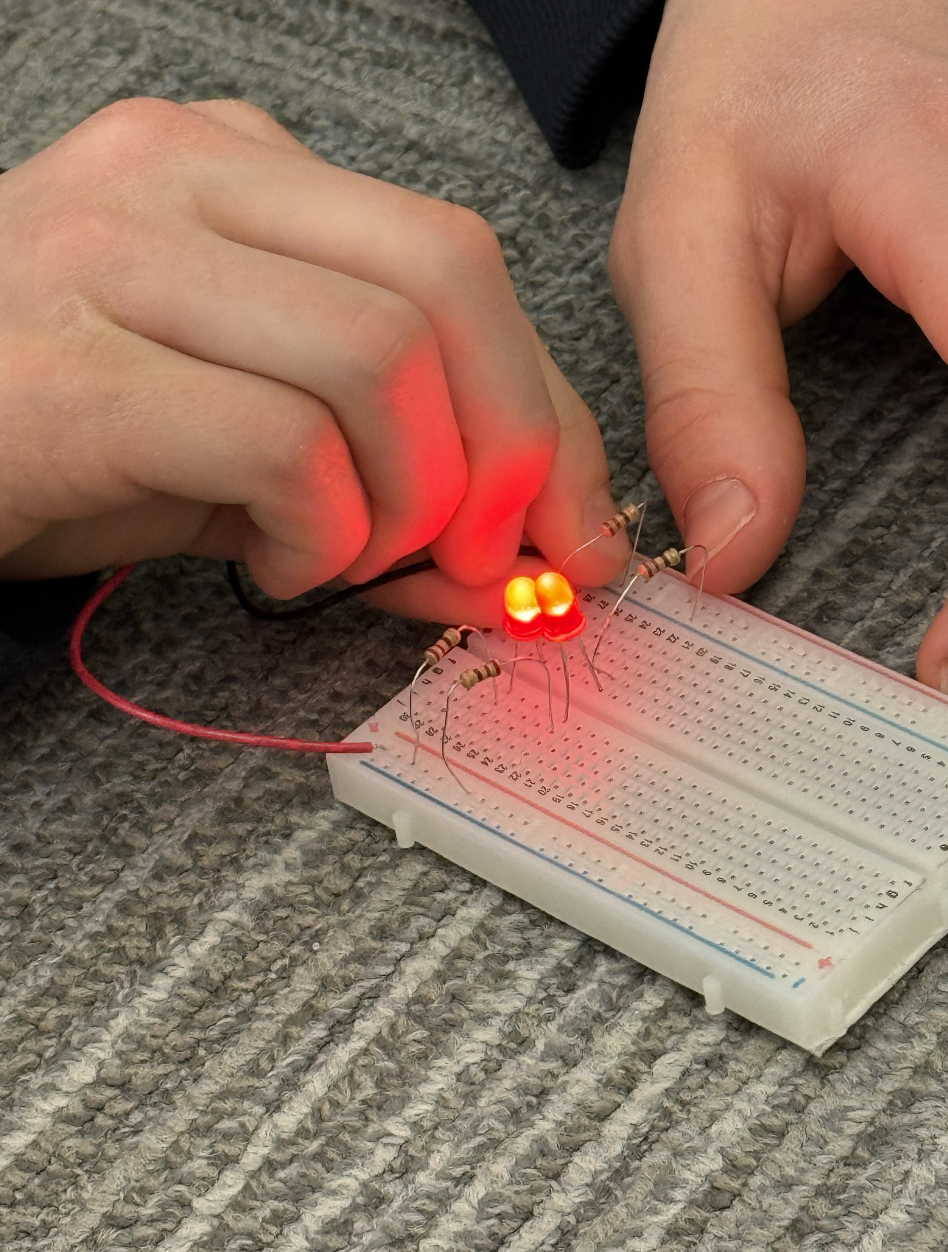
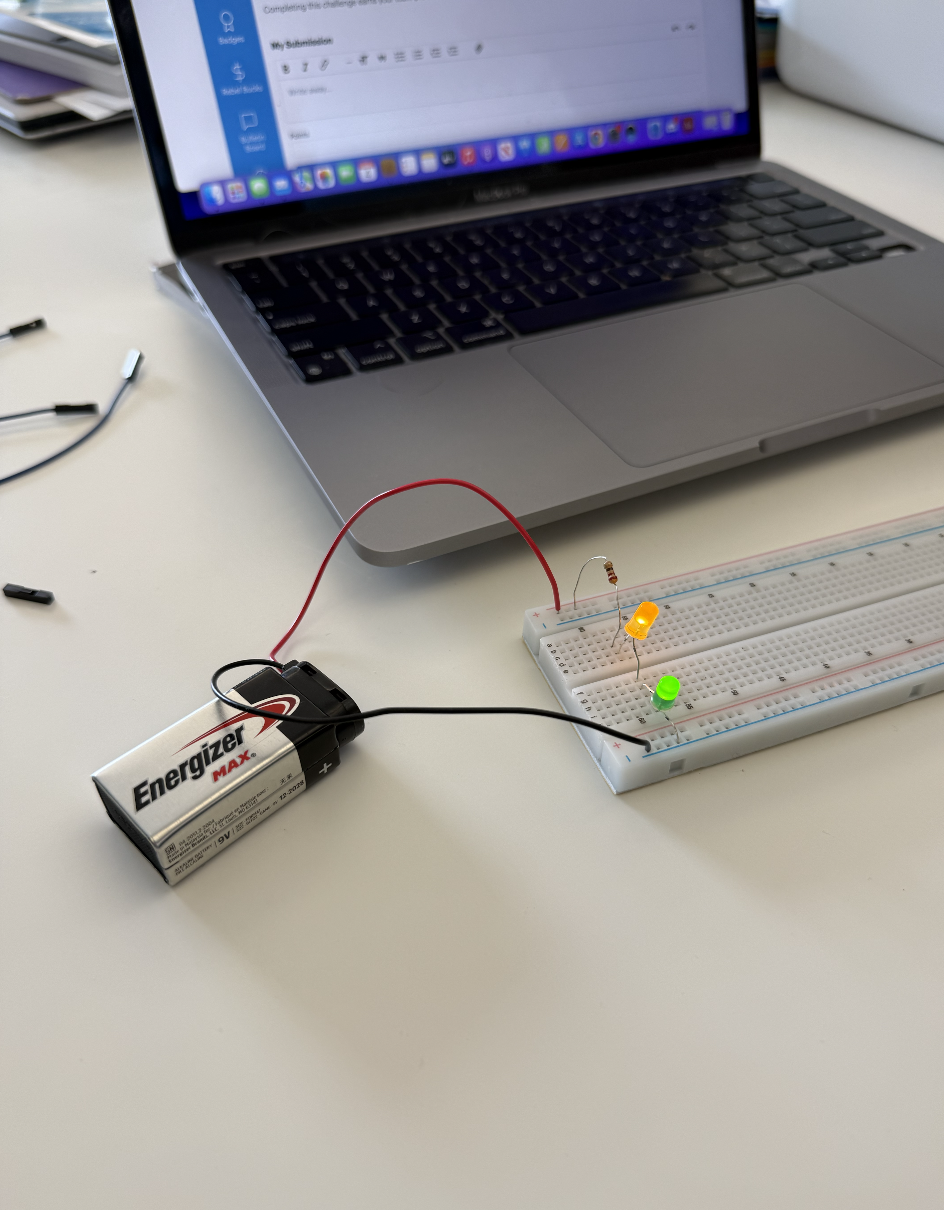
Quest - Light it Up!
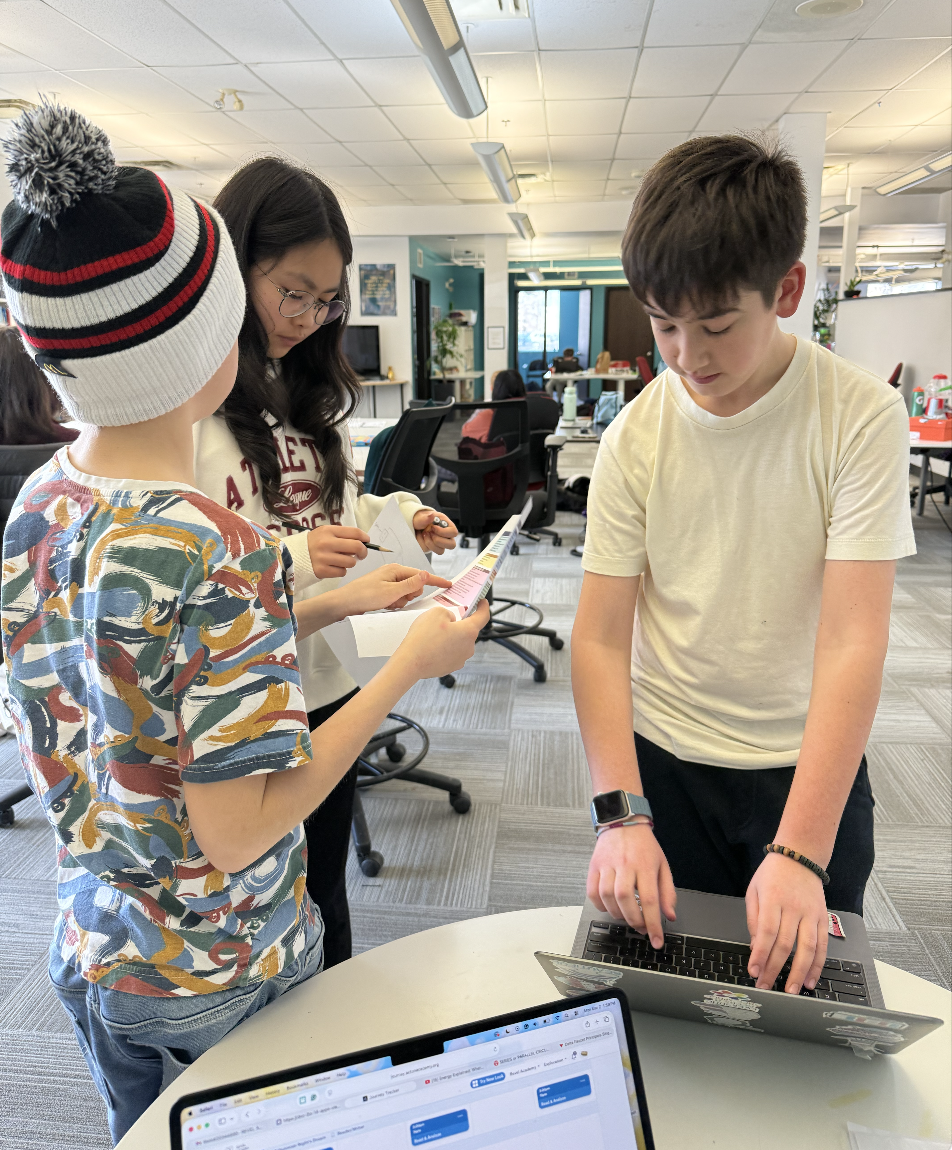
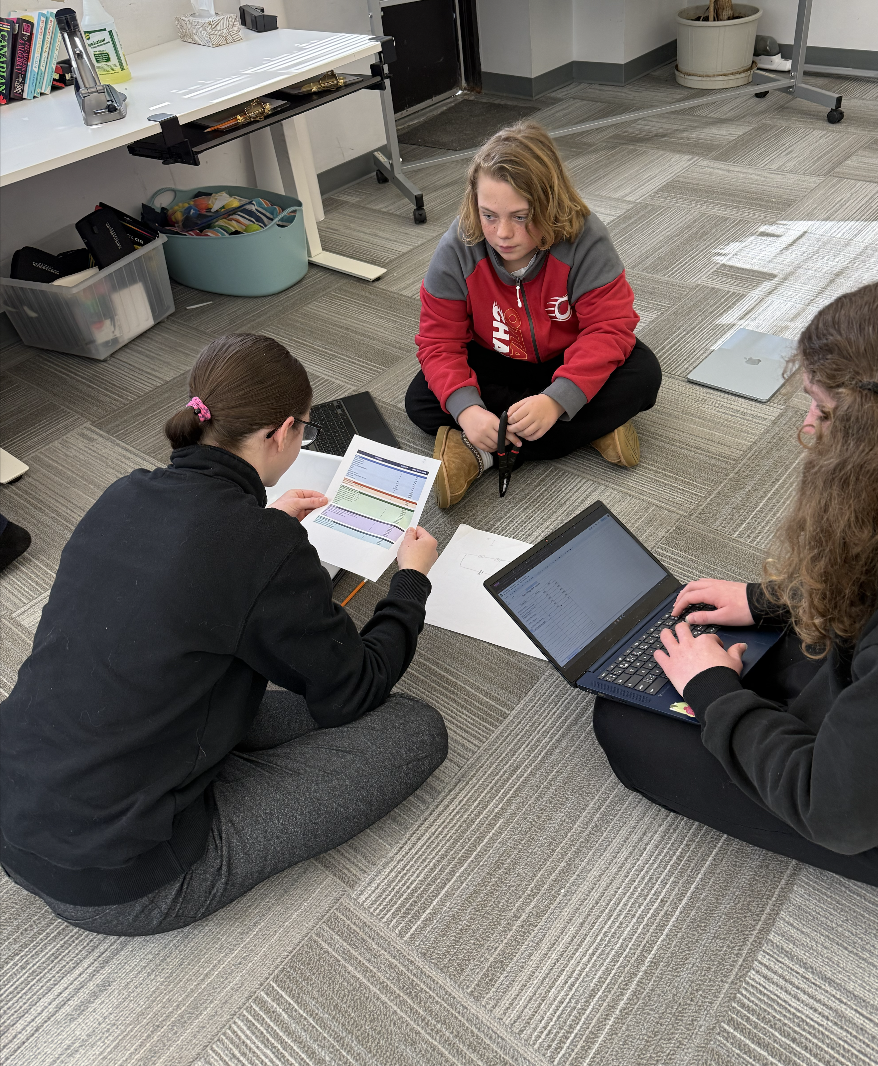
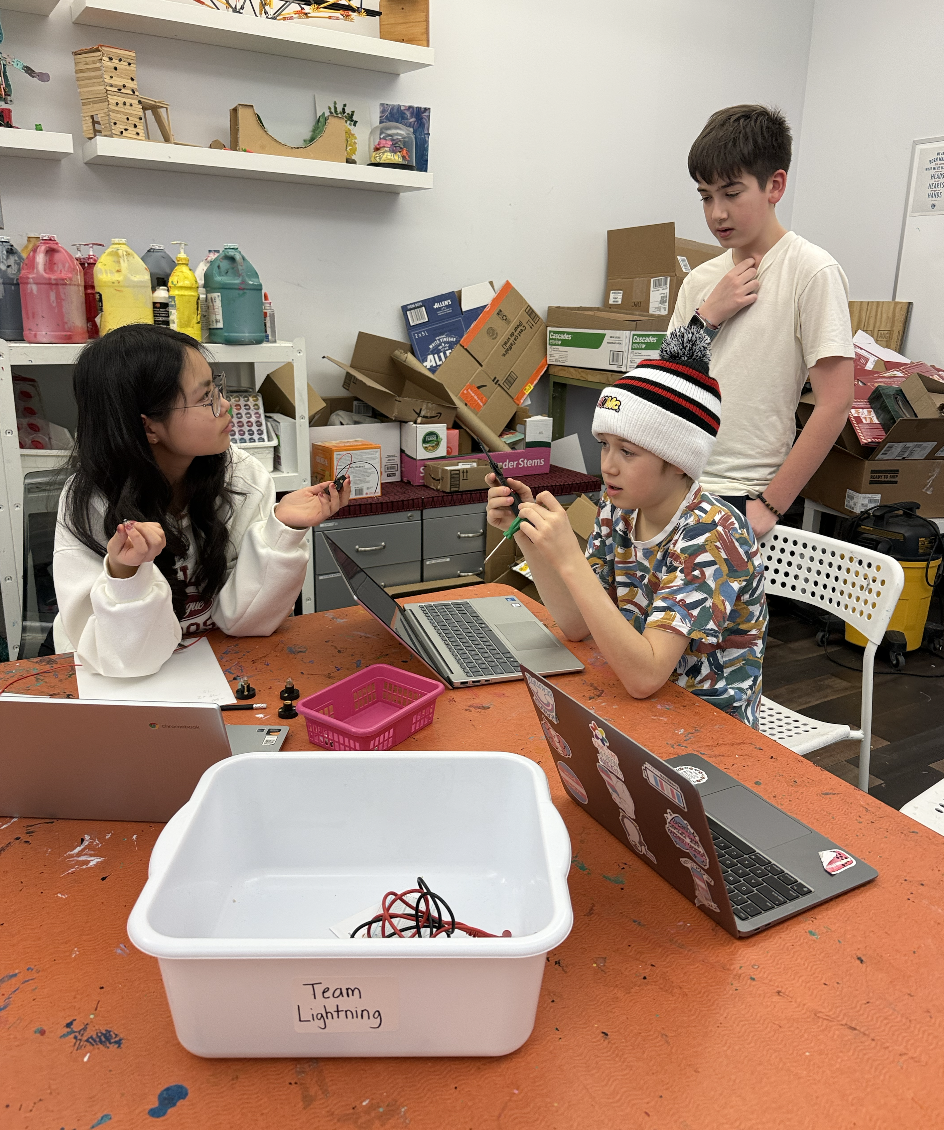
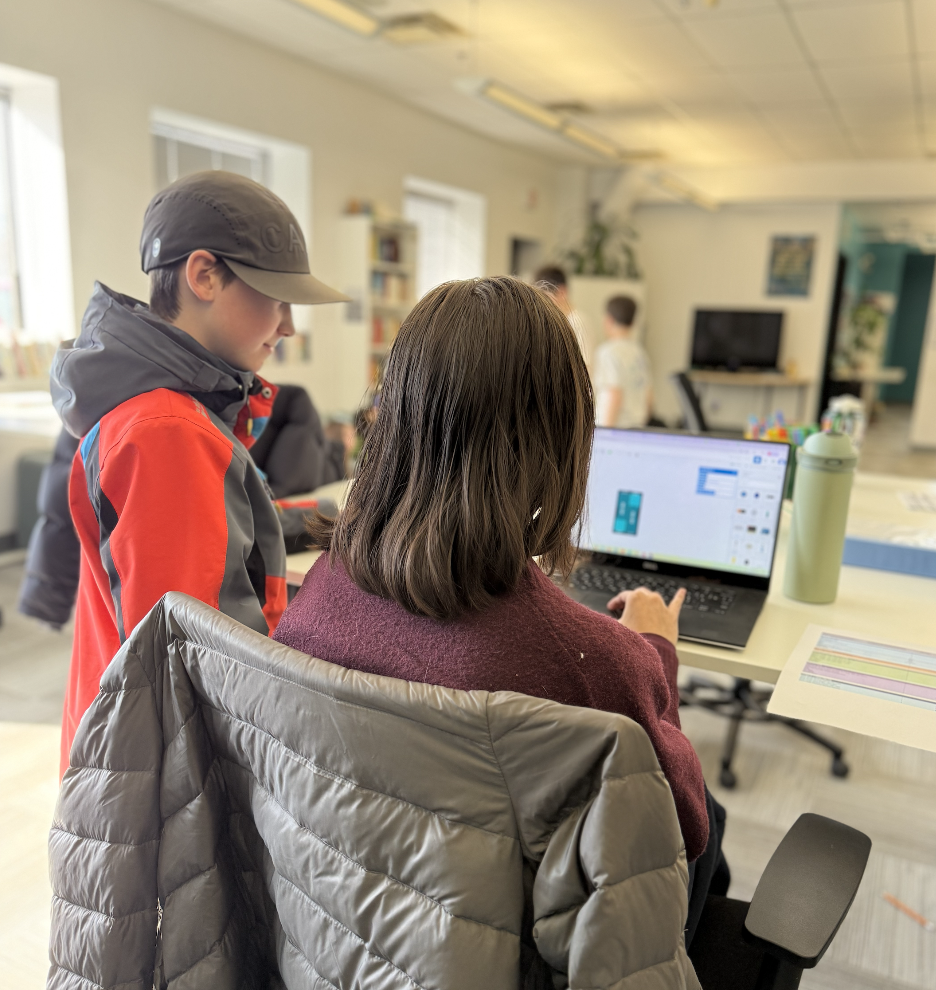
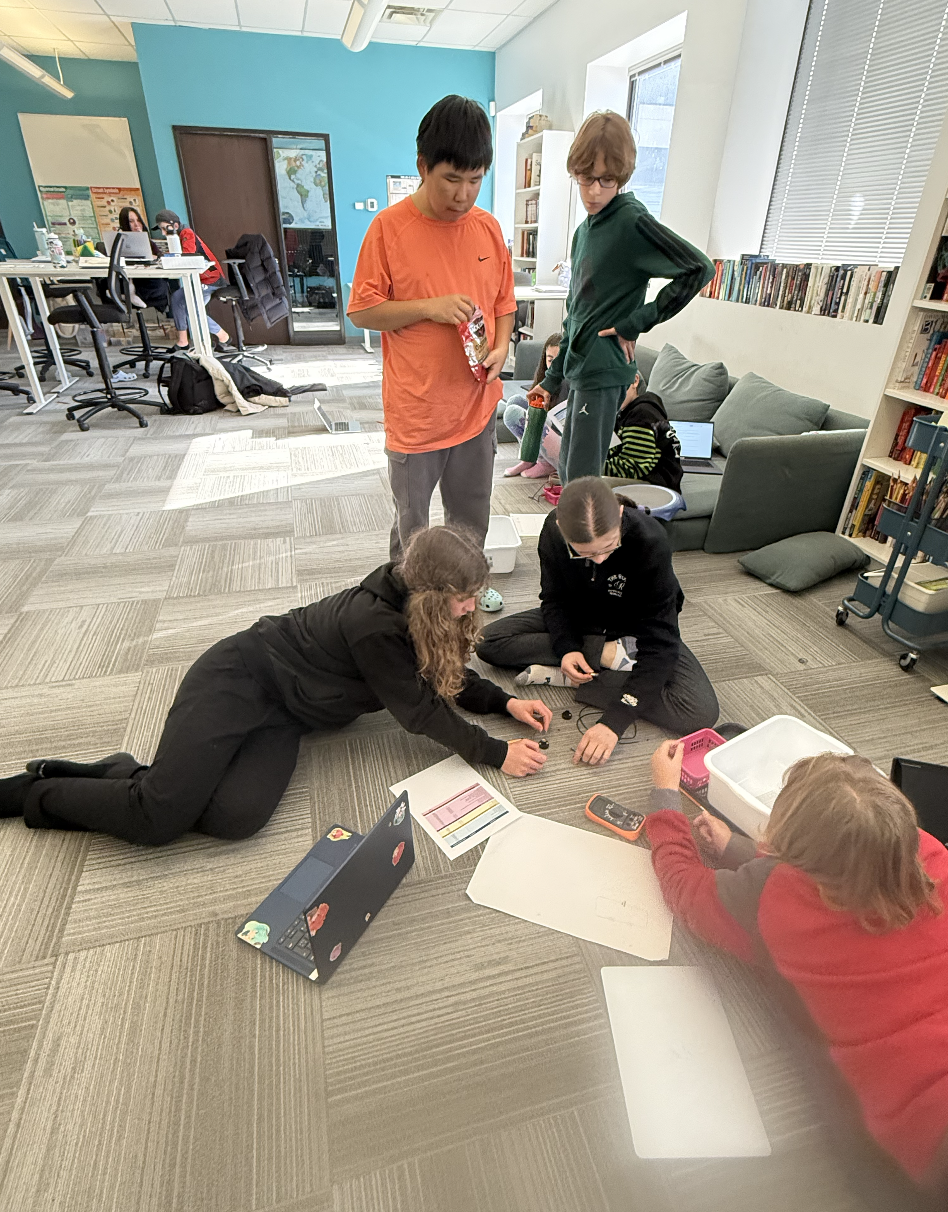
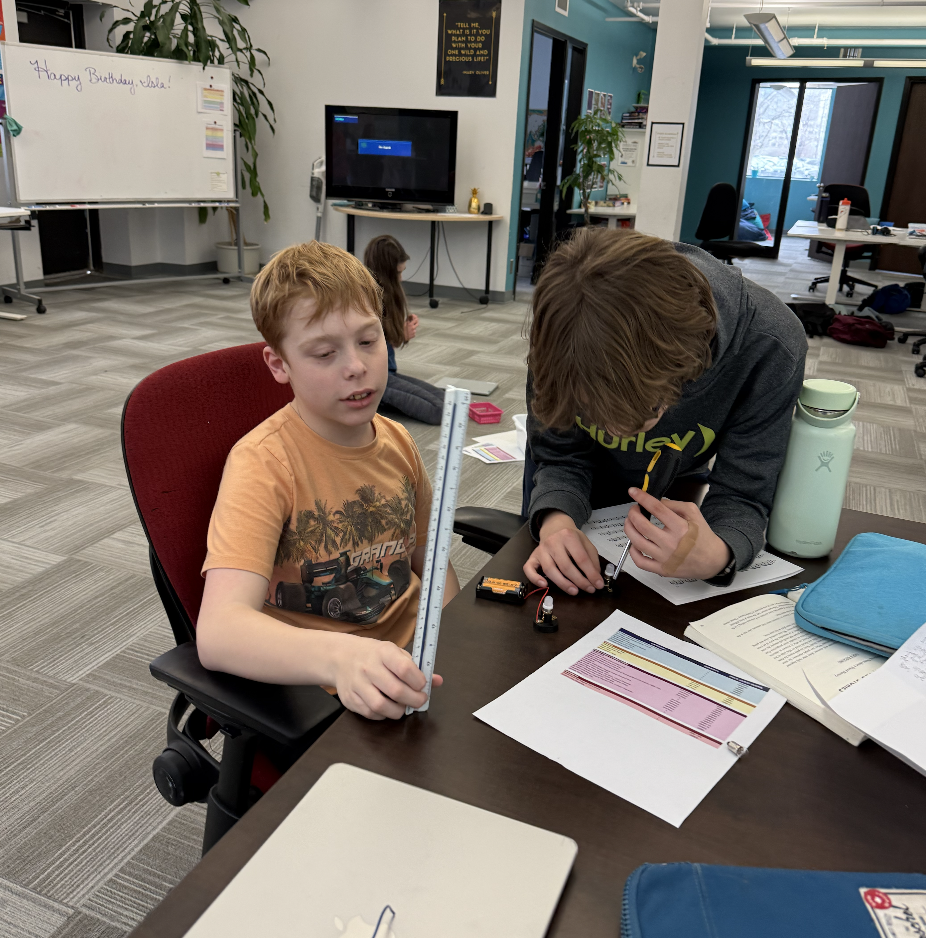
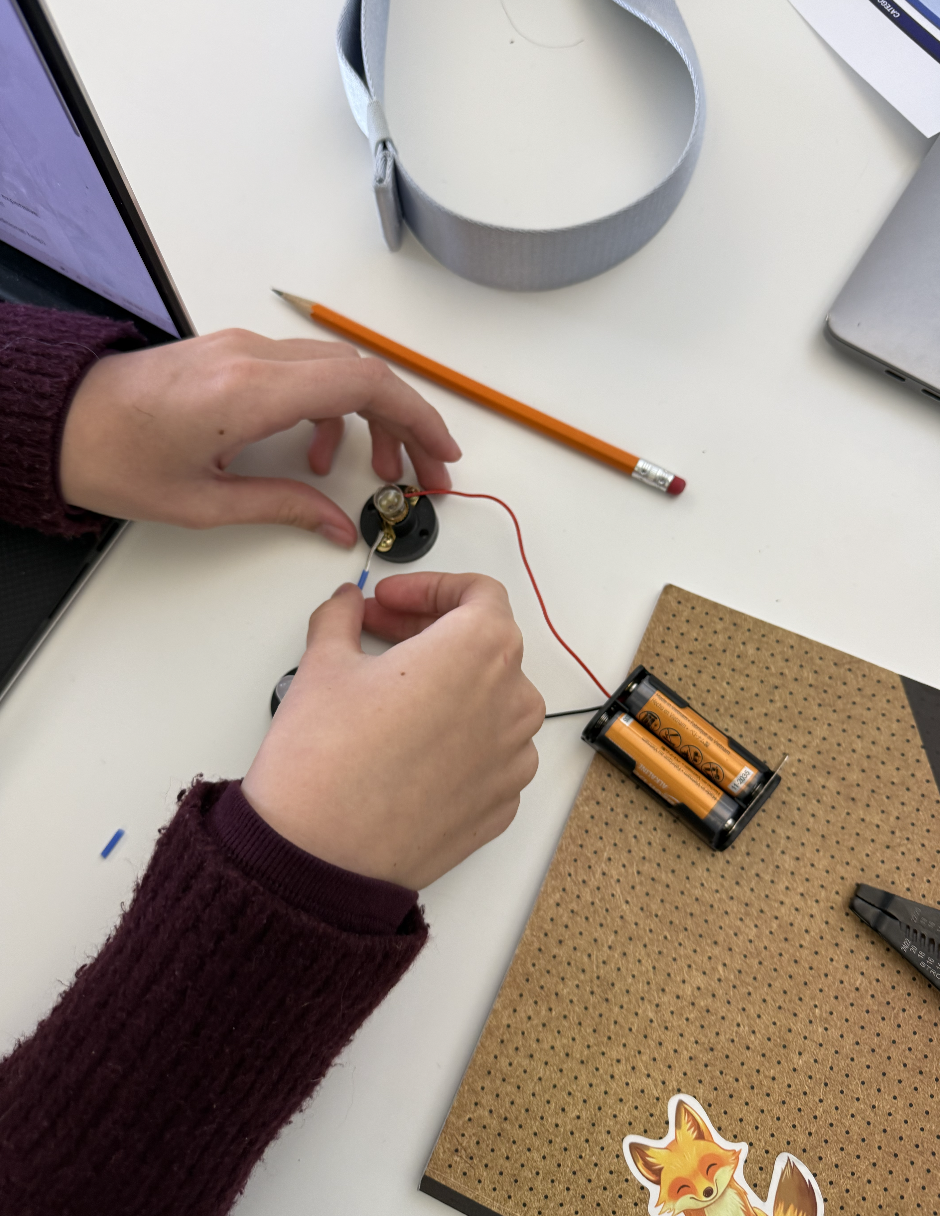
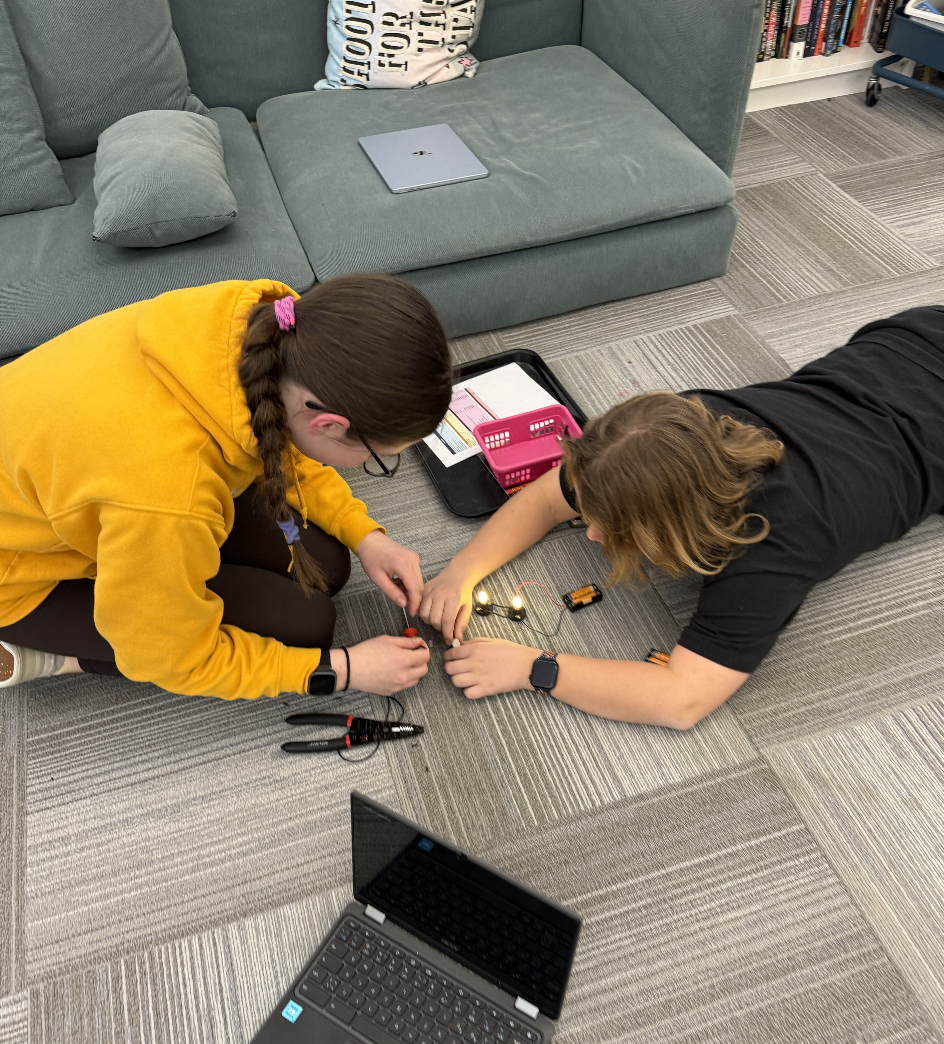
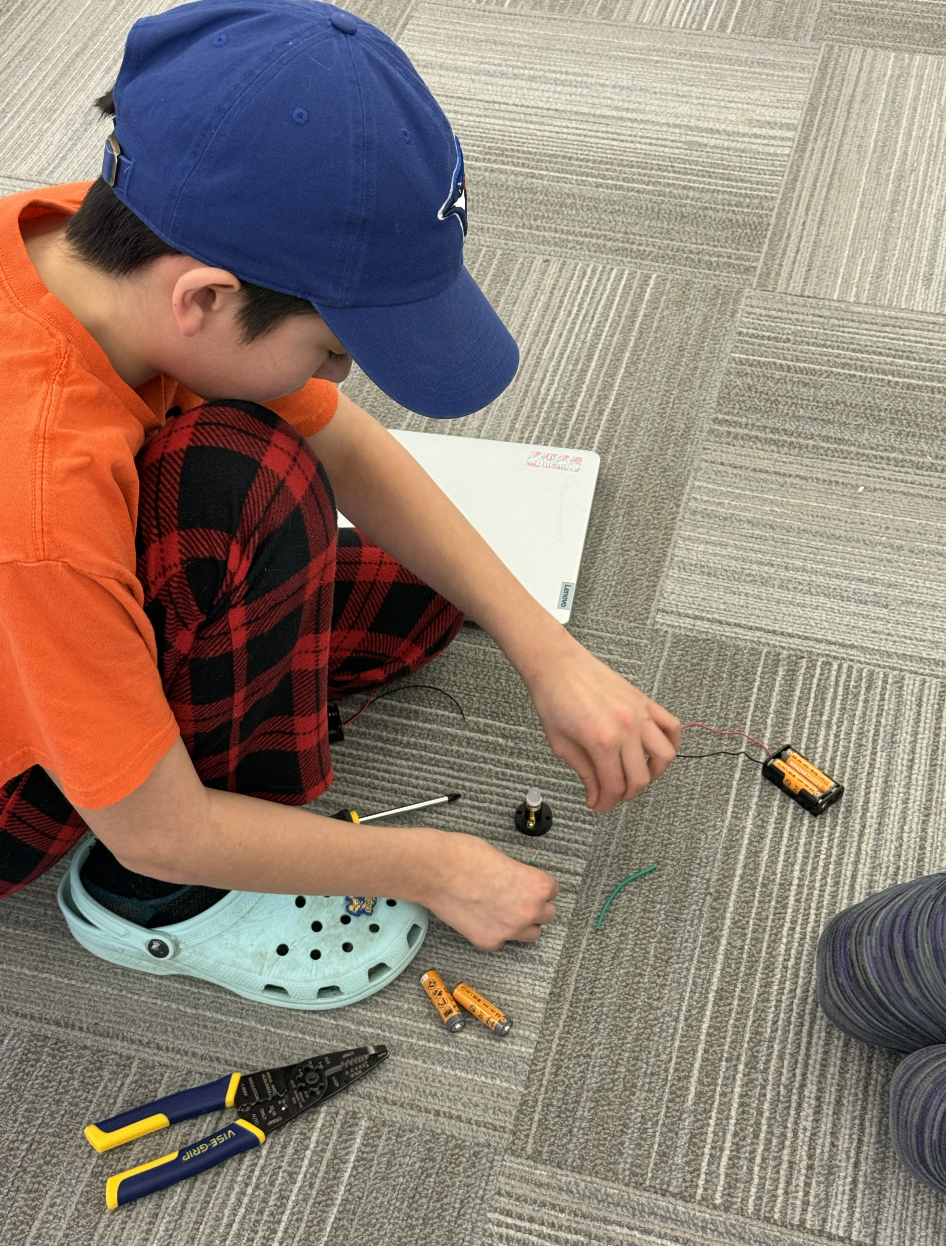
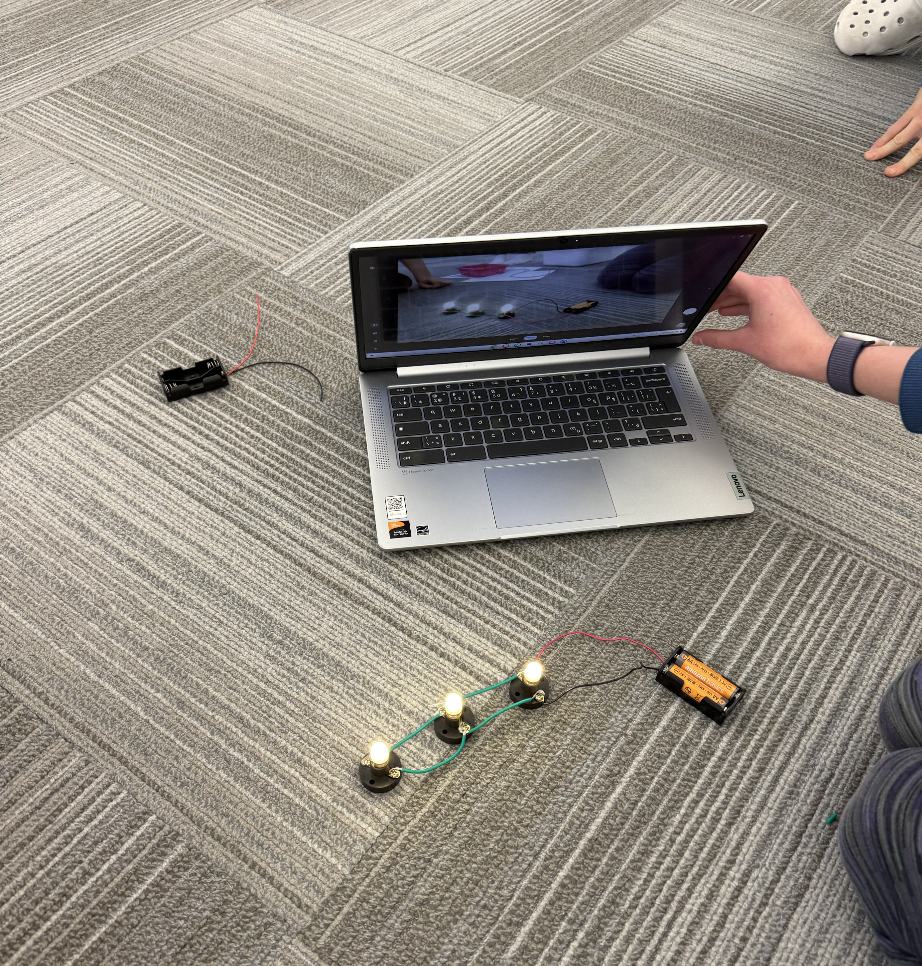
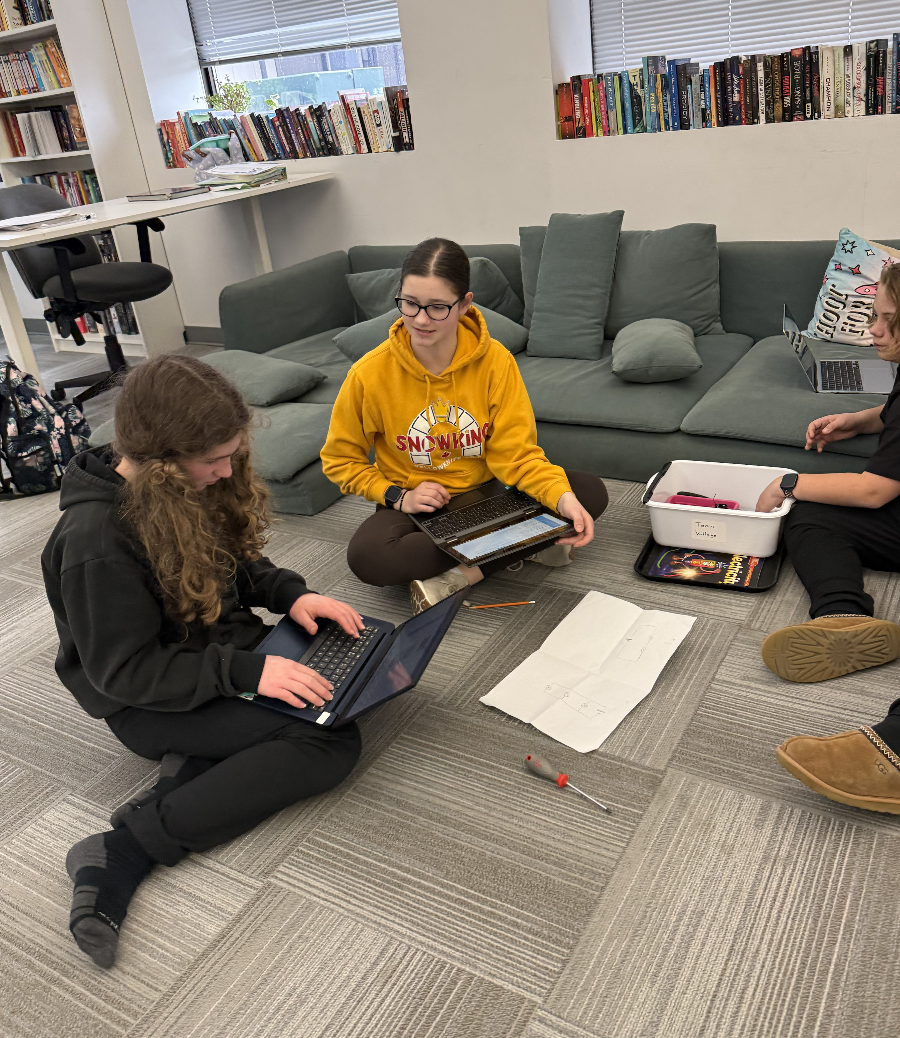
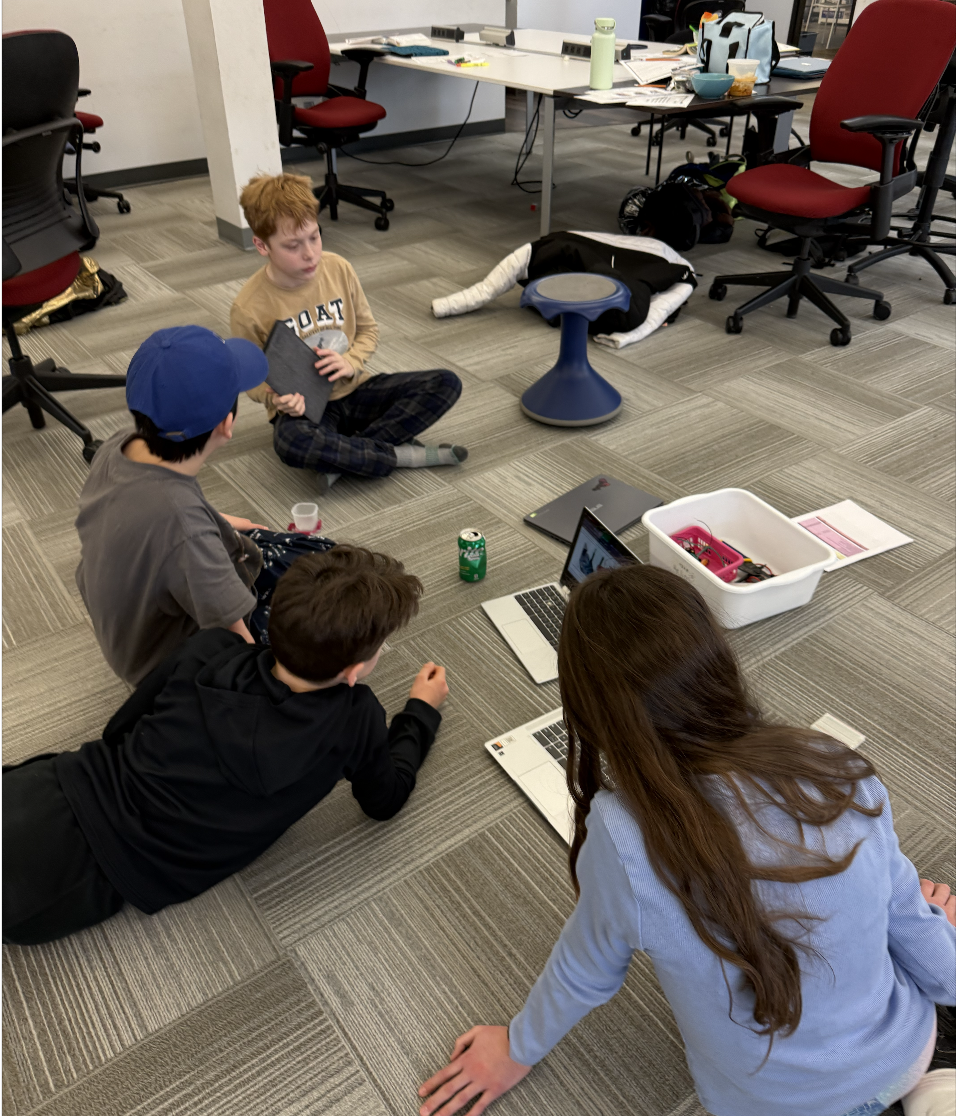
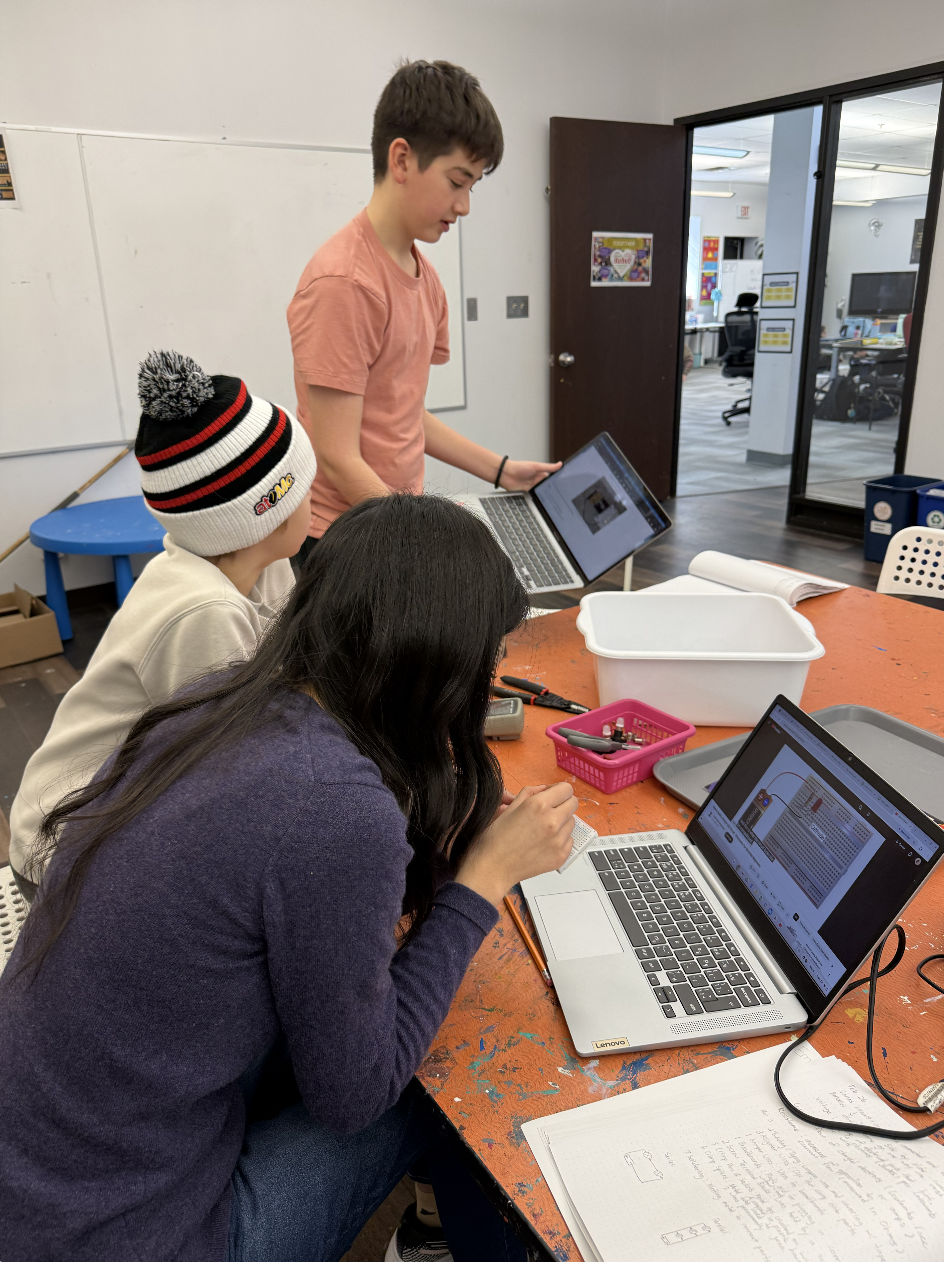
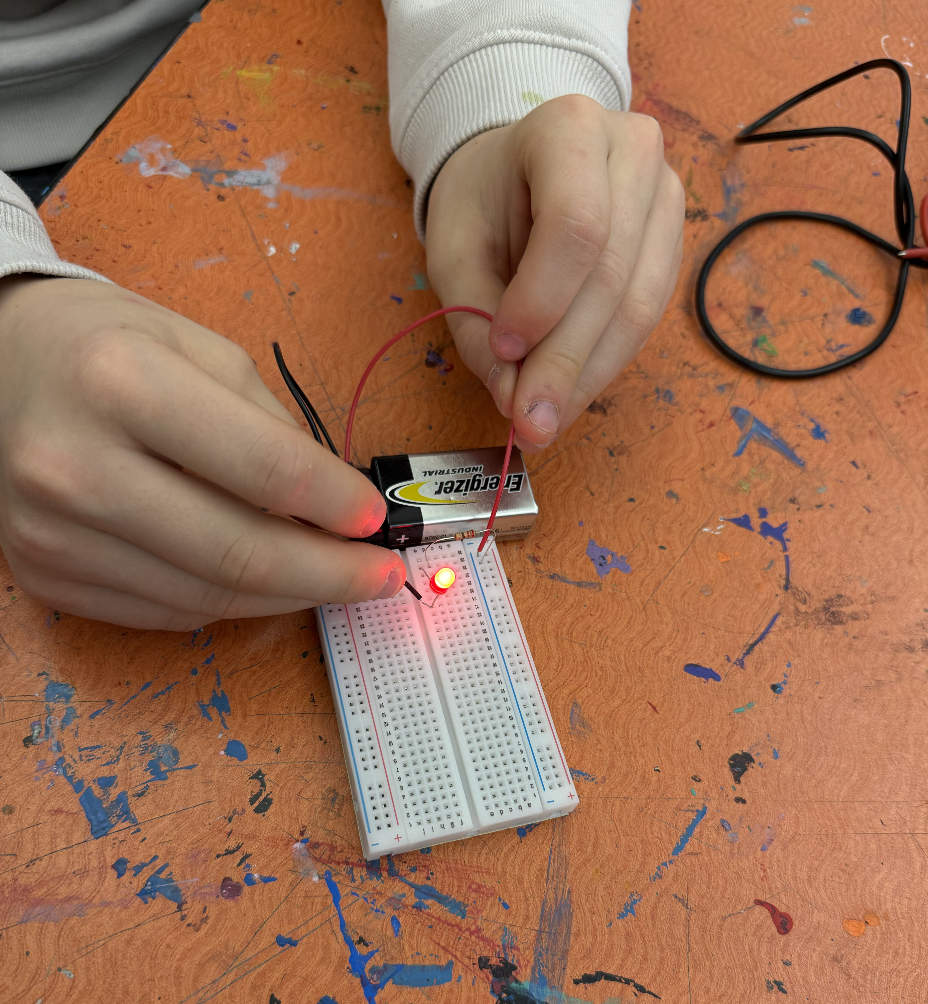
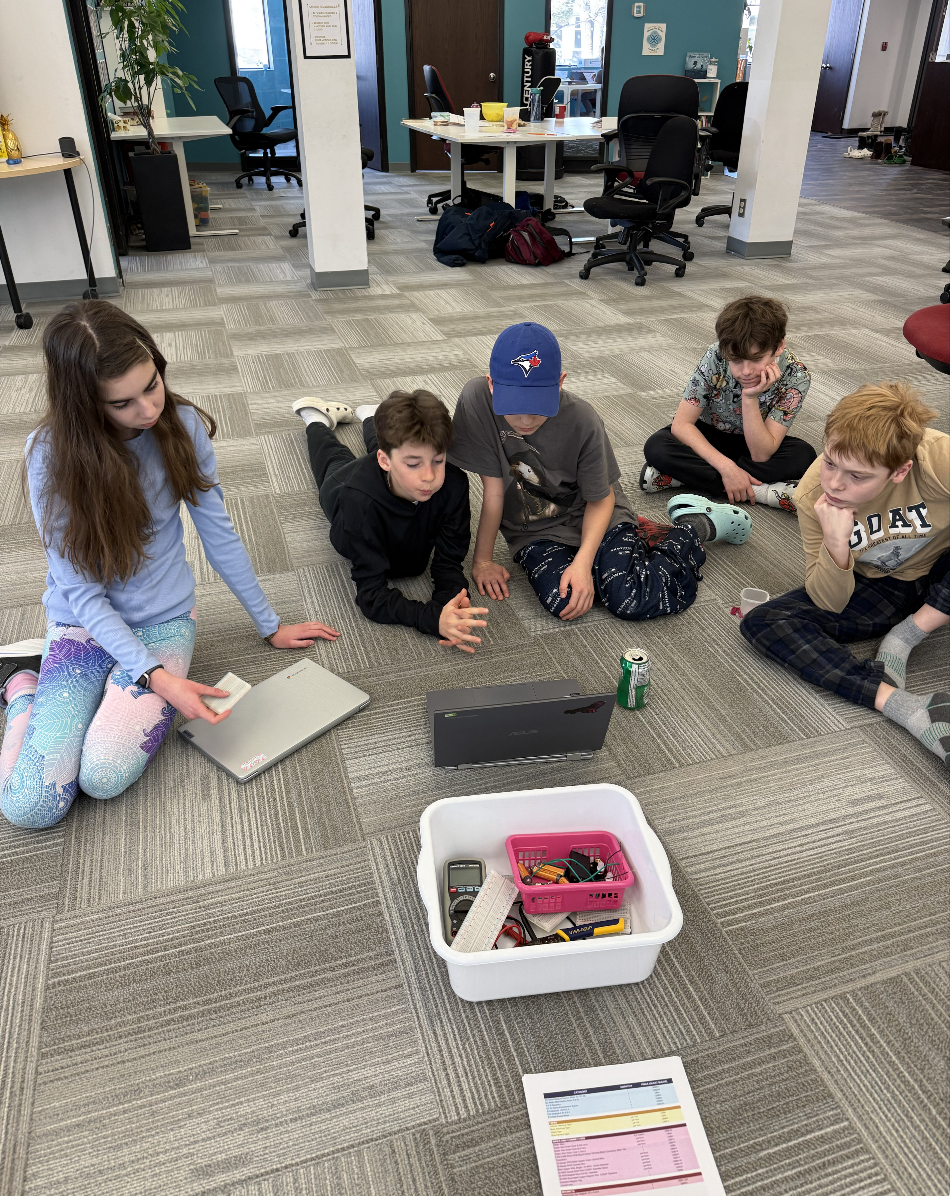
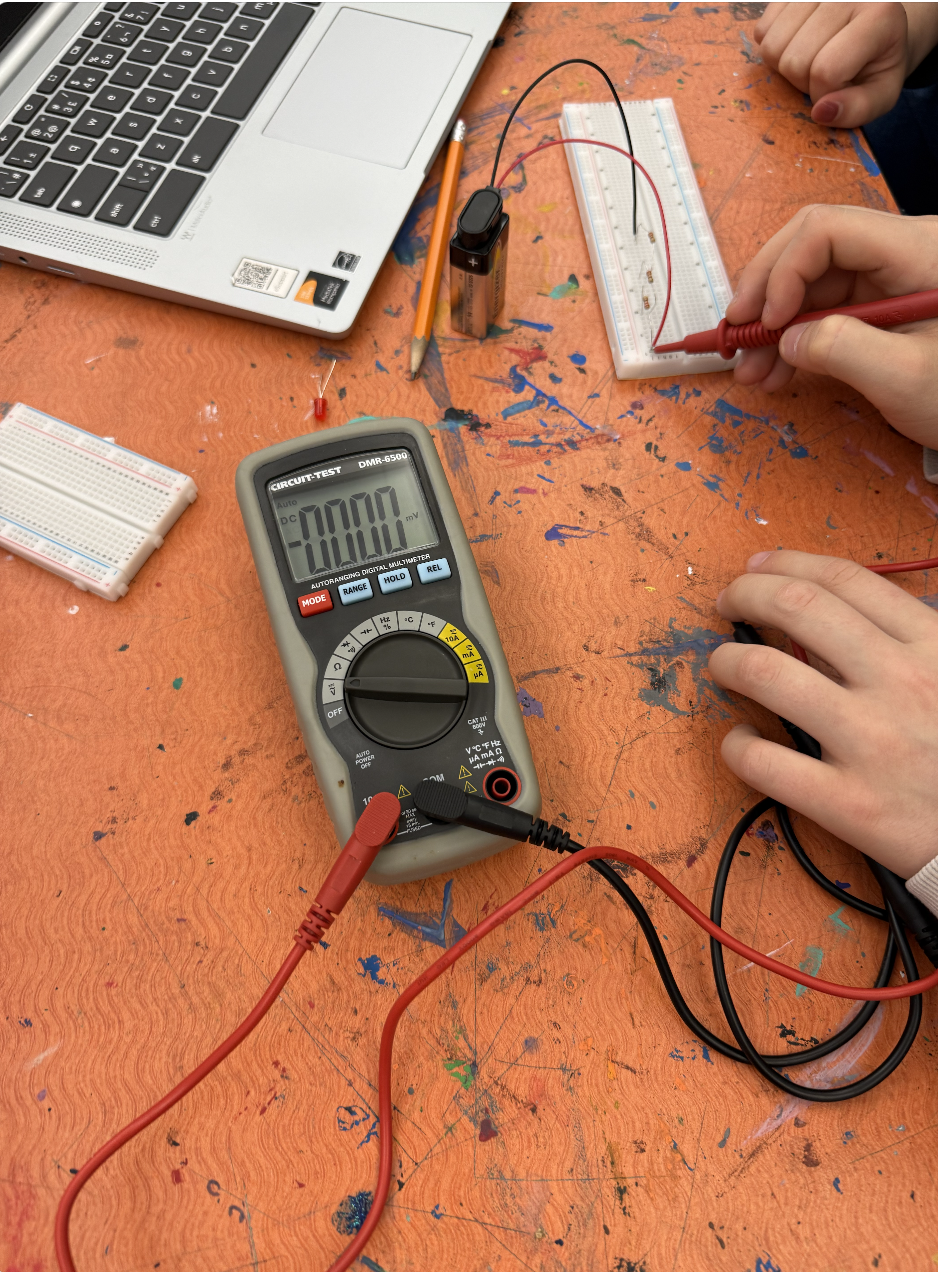
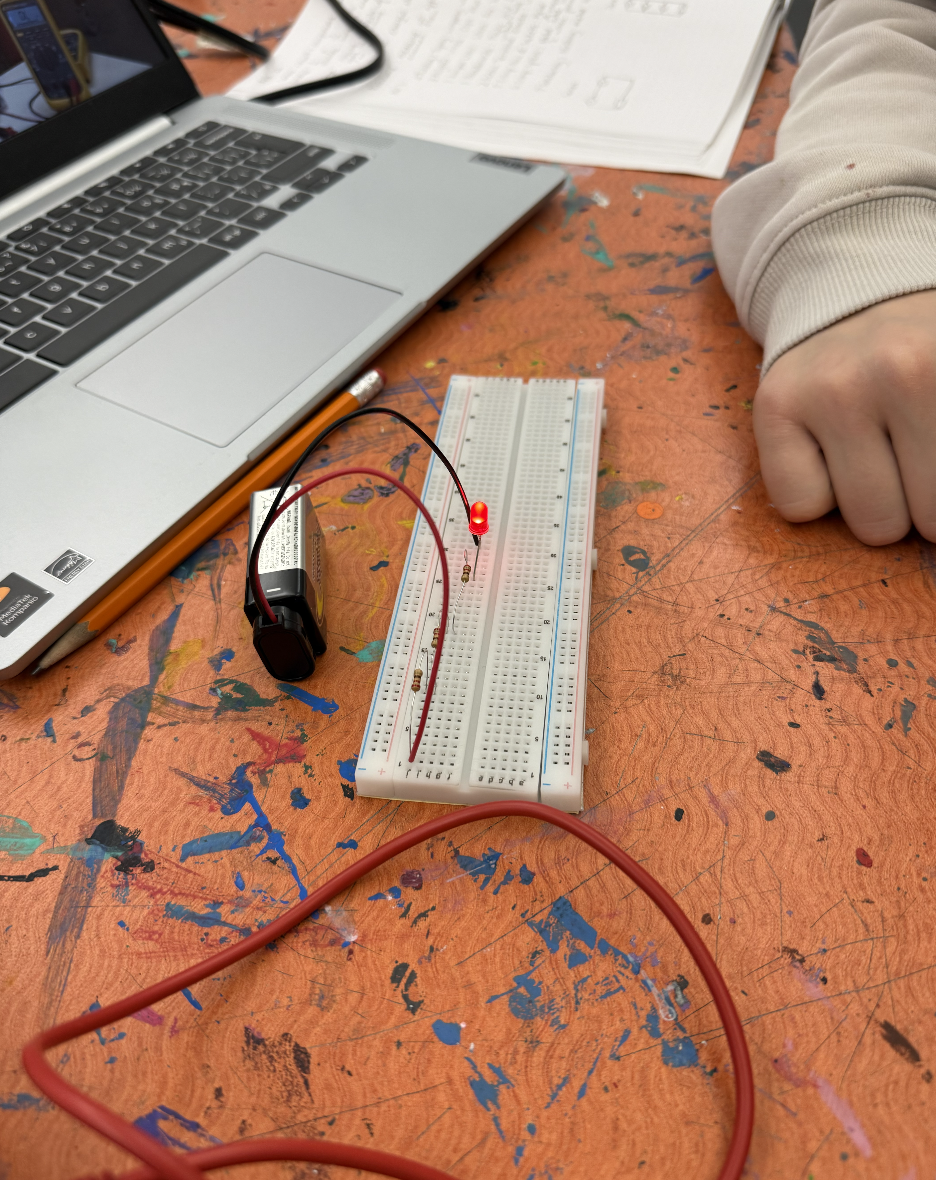
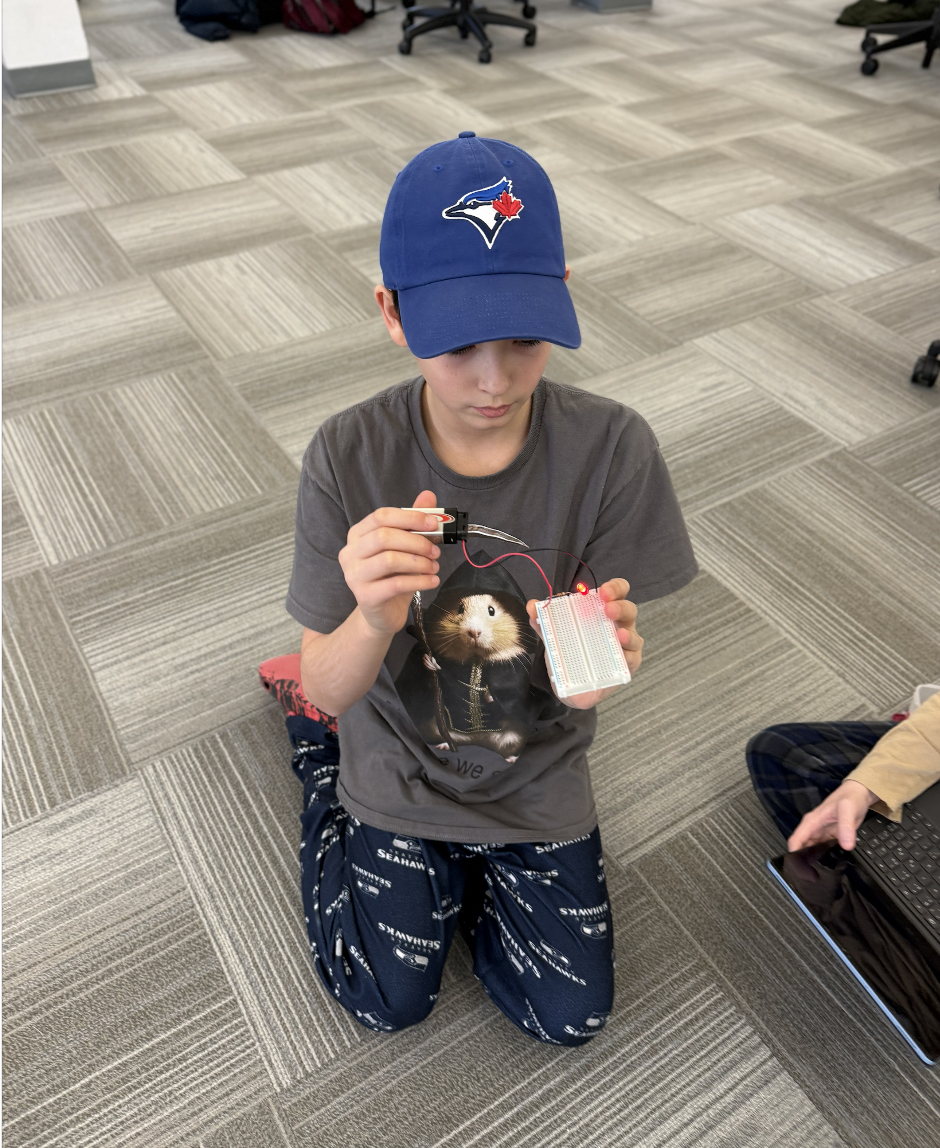
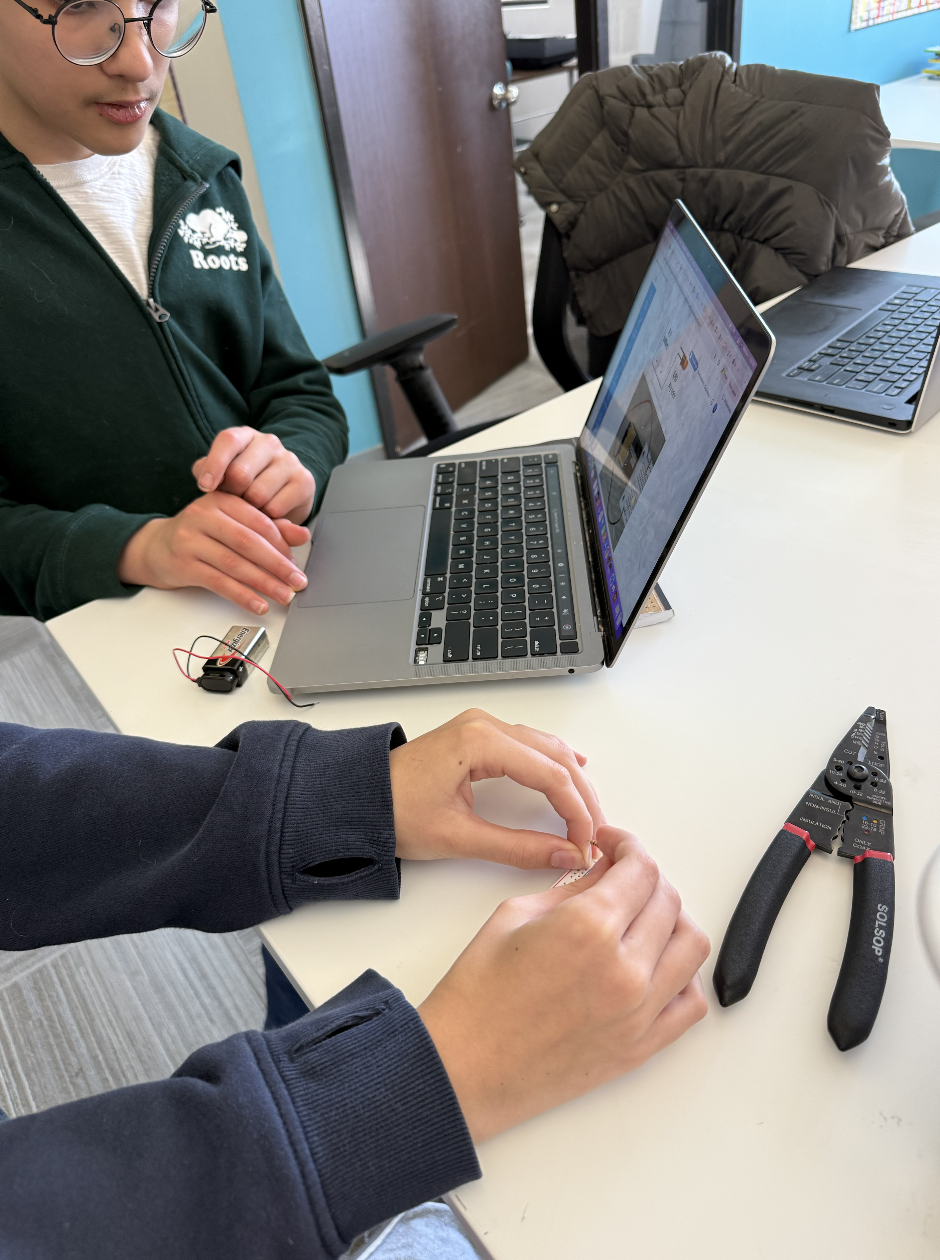
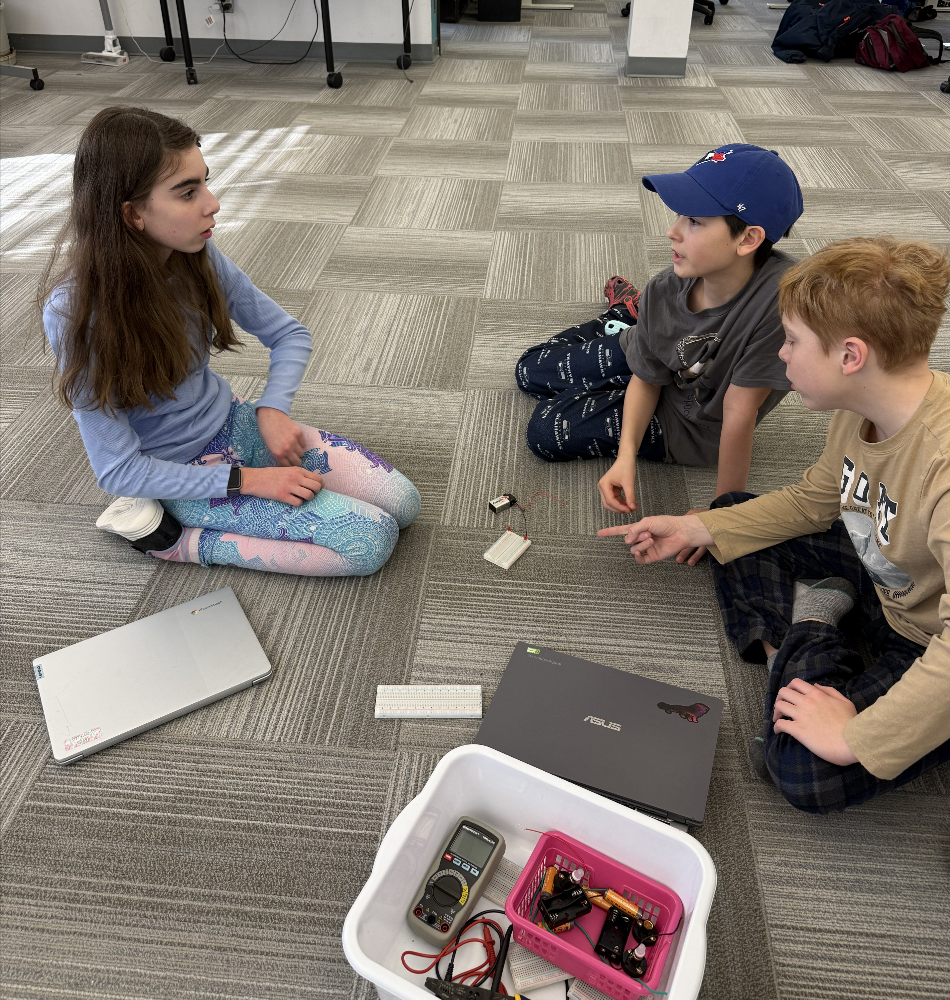
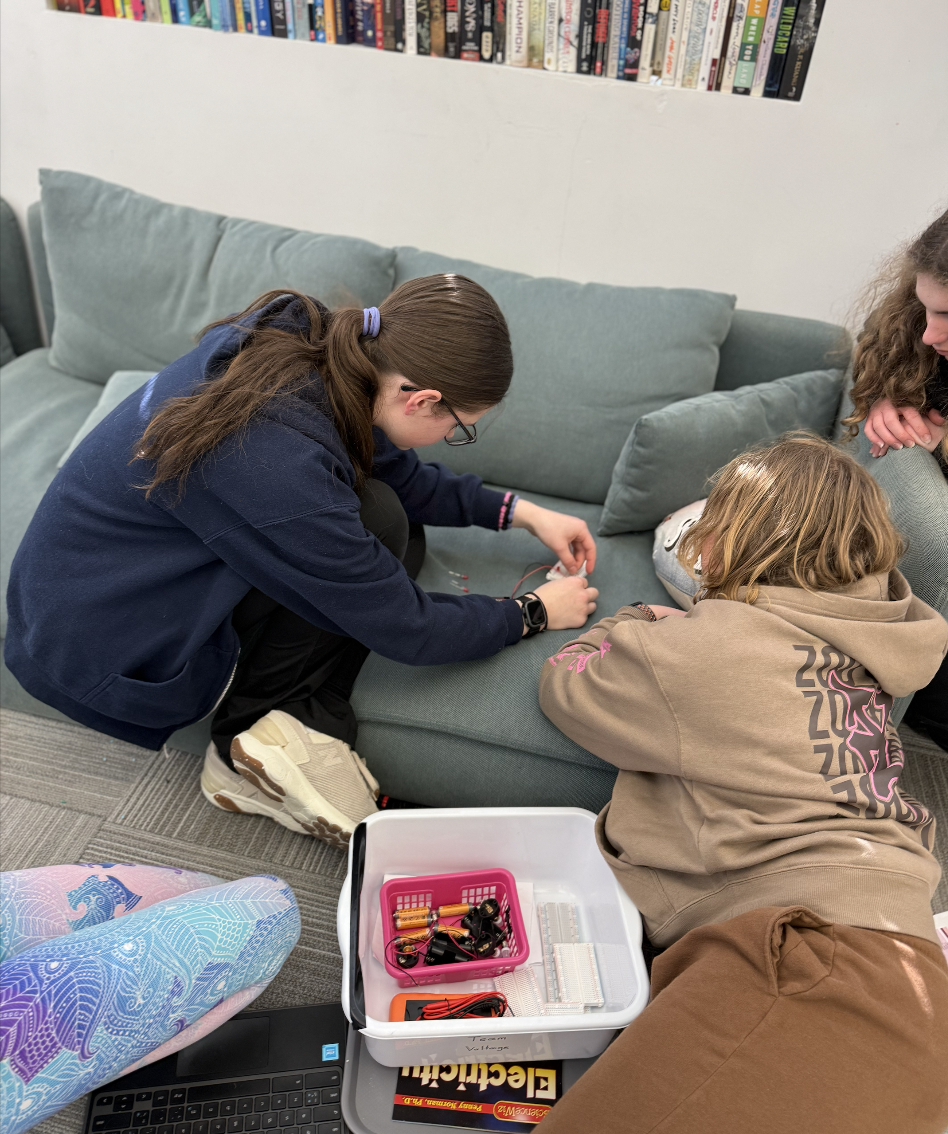
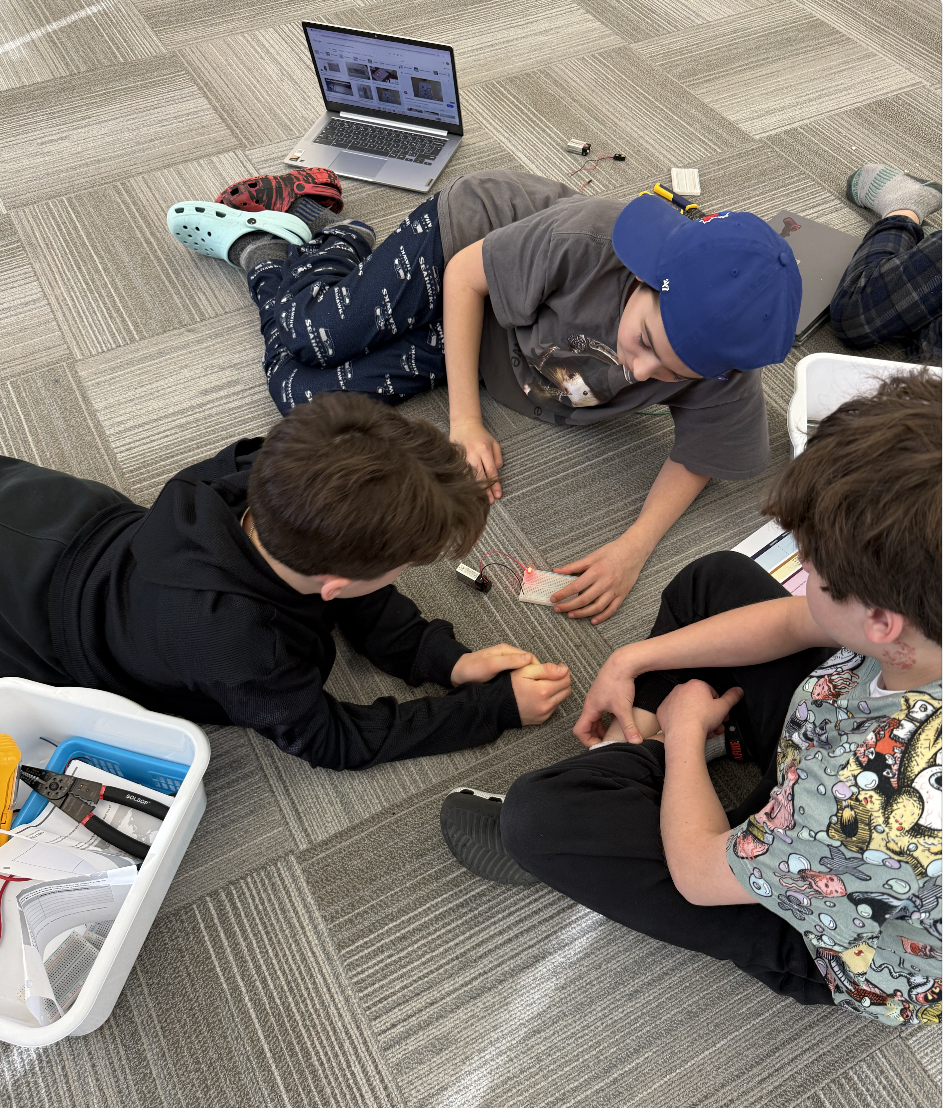
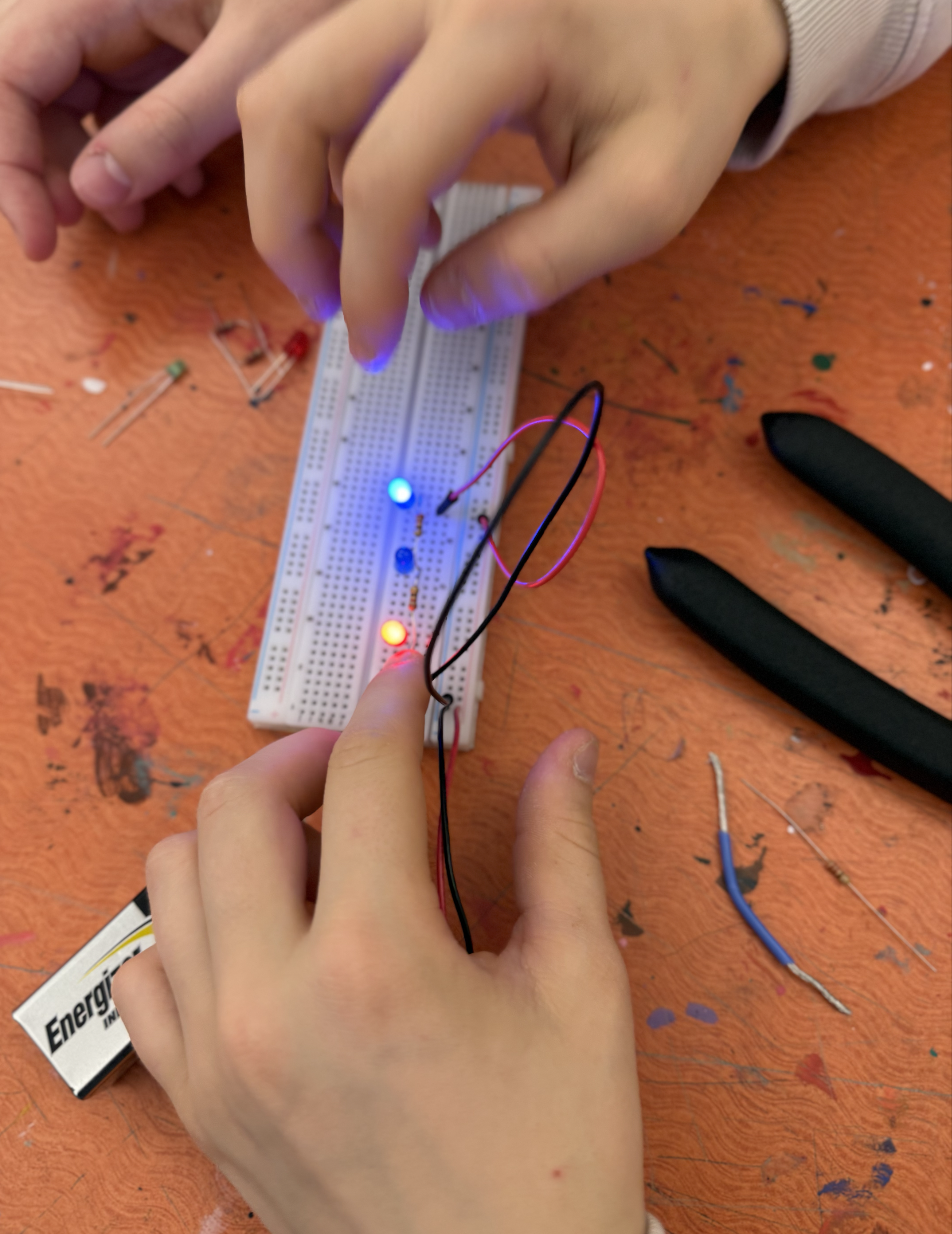
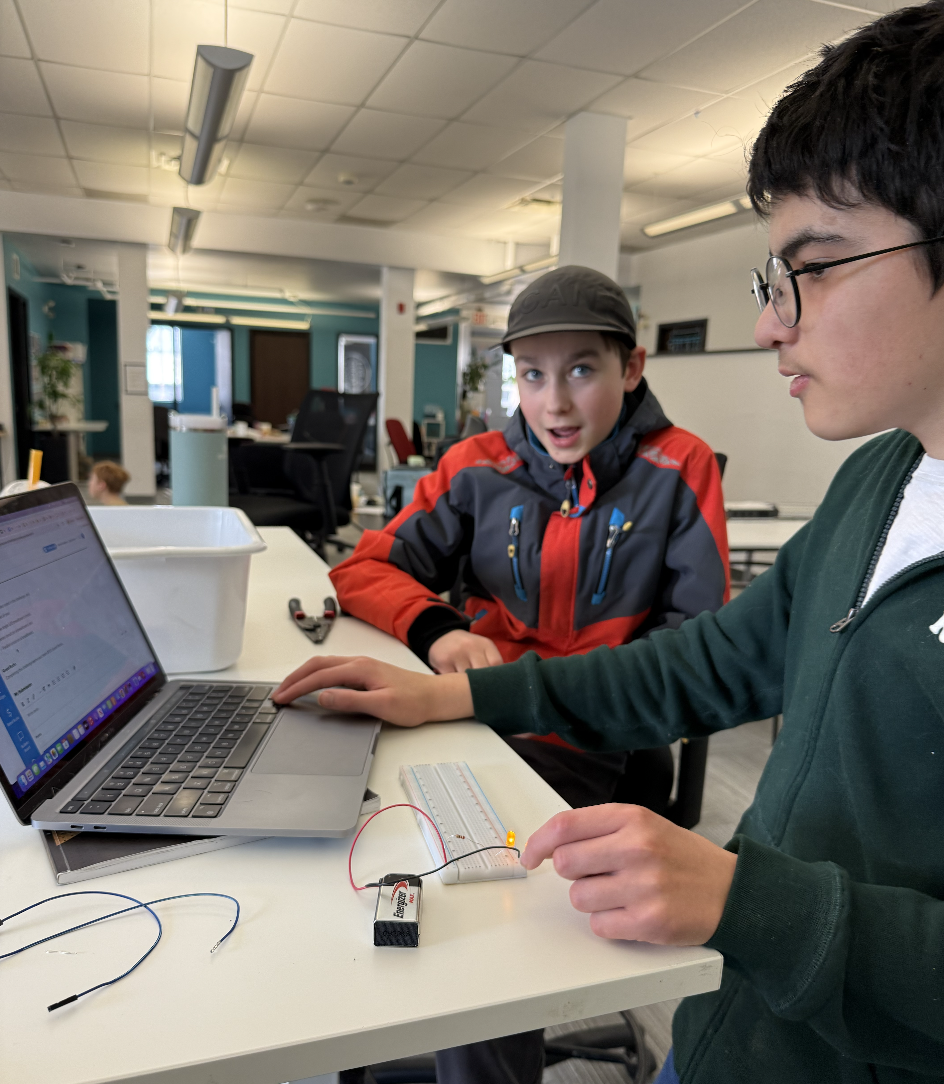
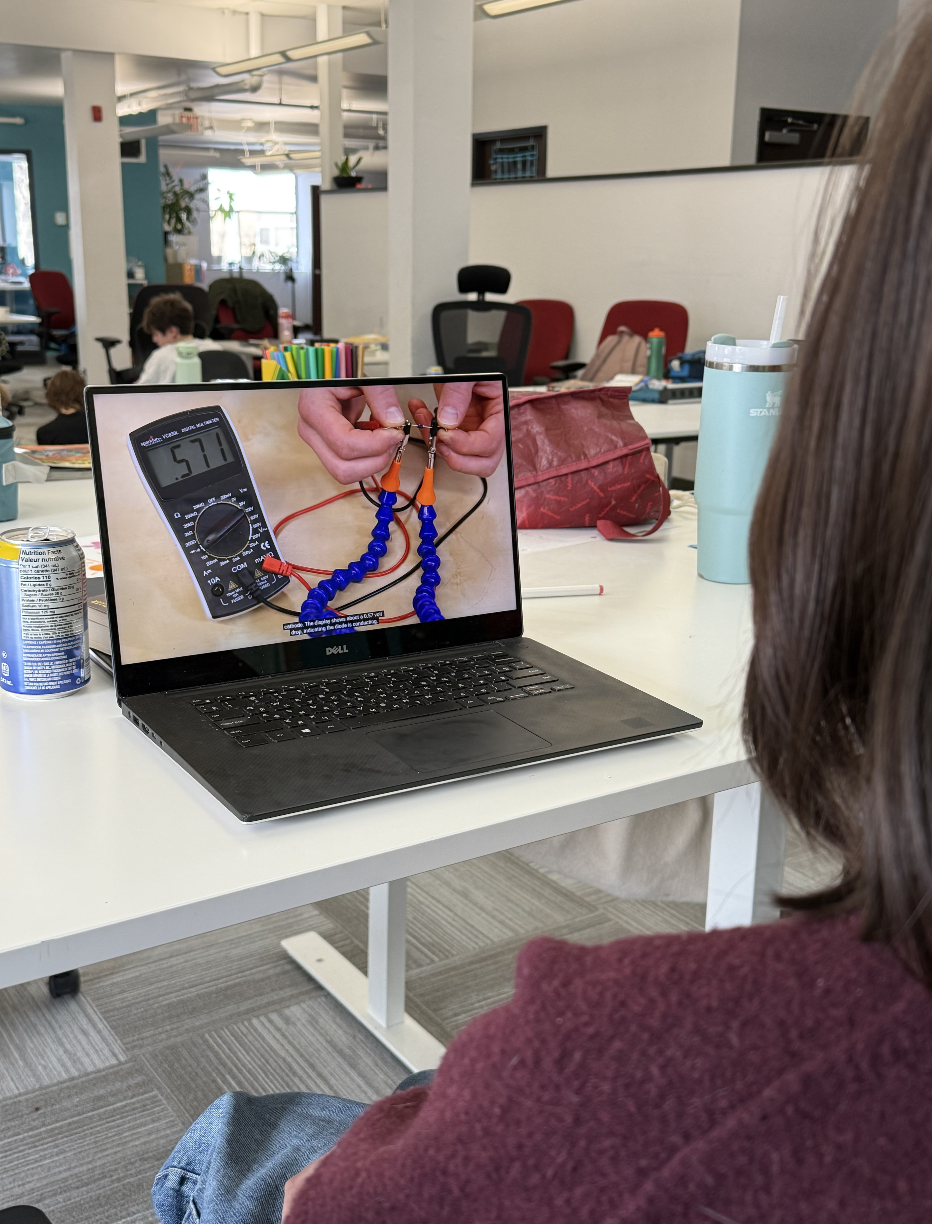
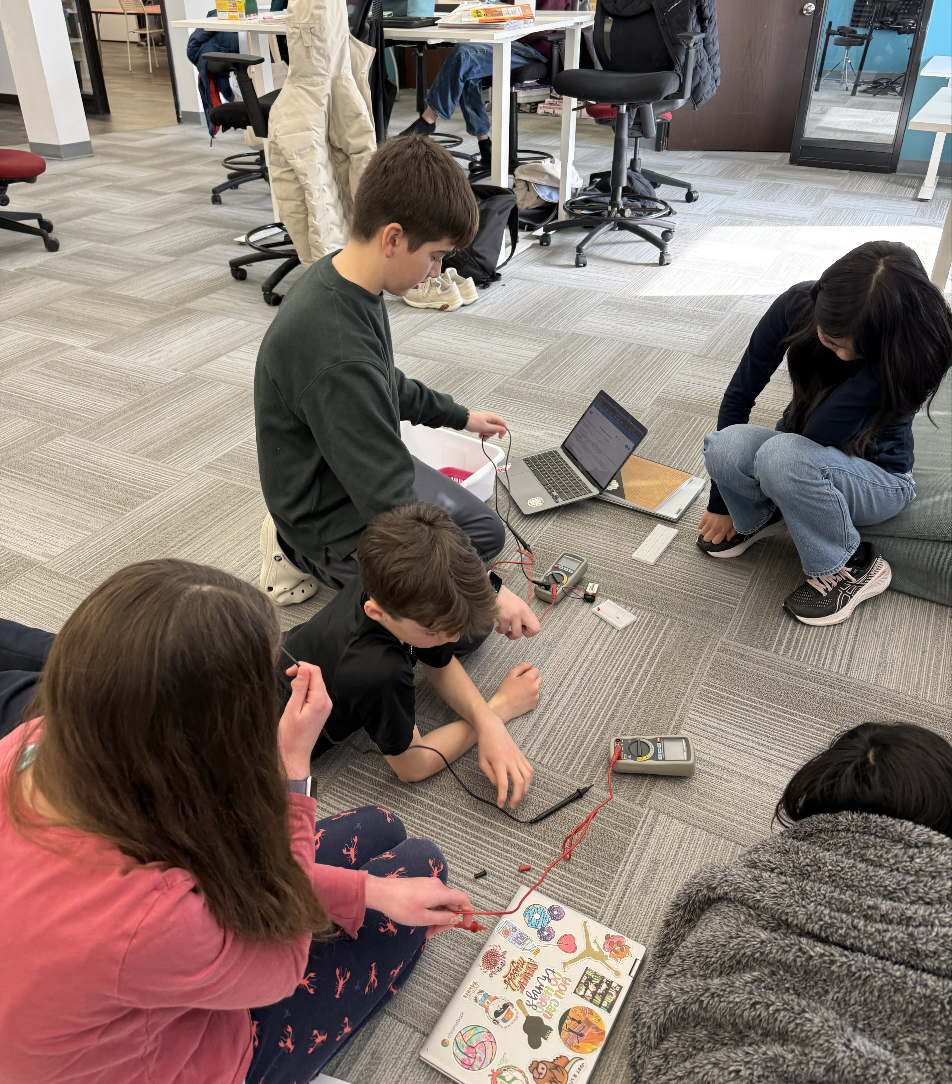
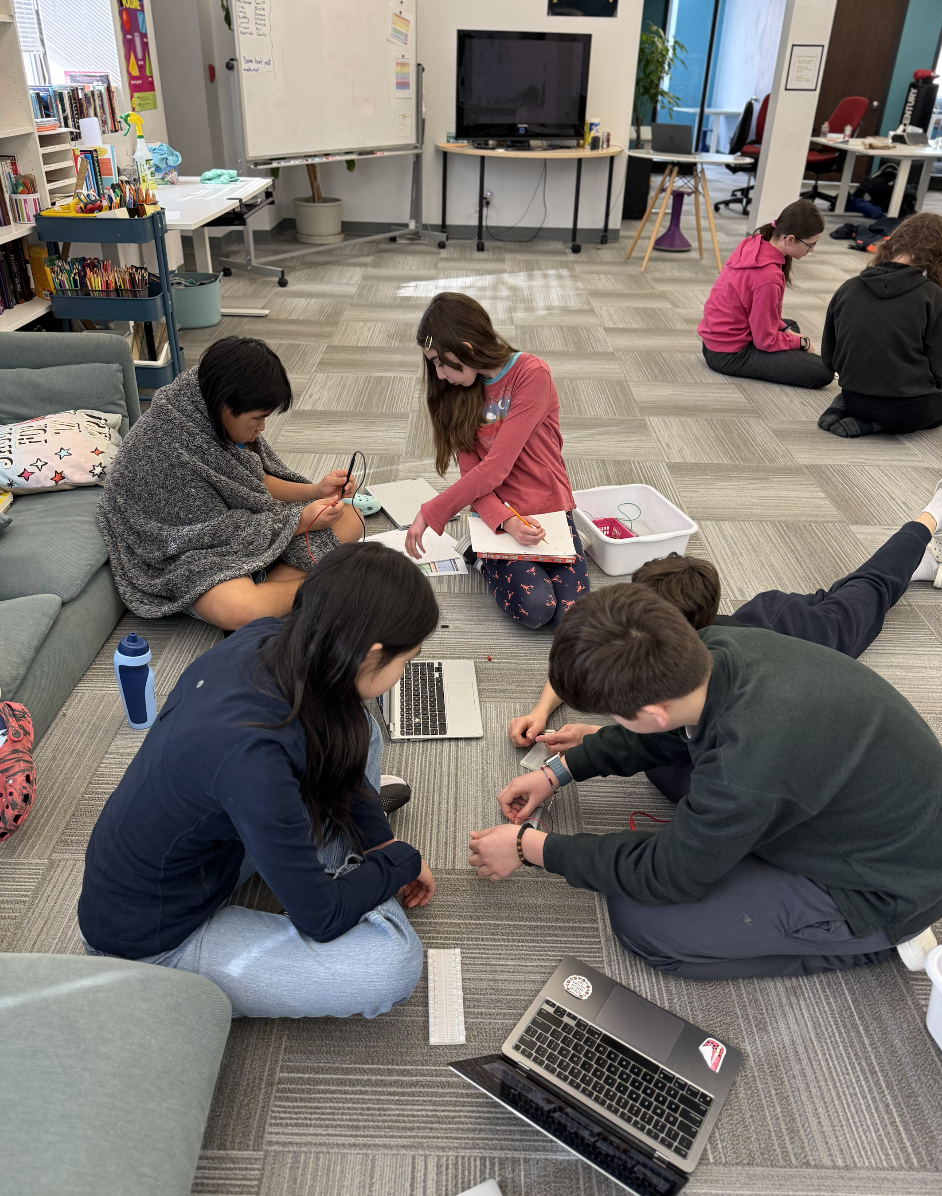
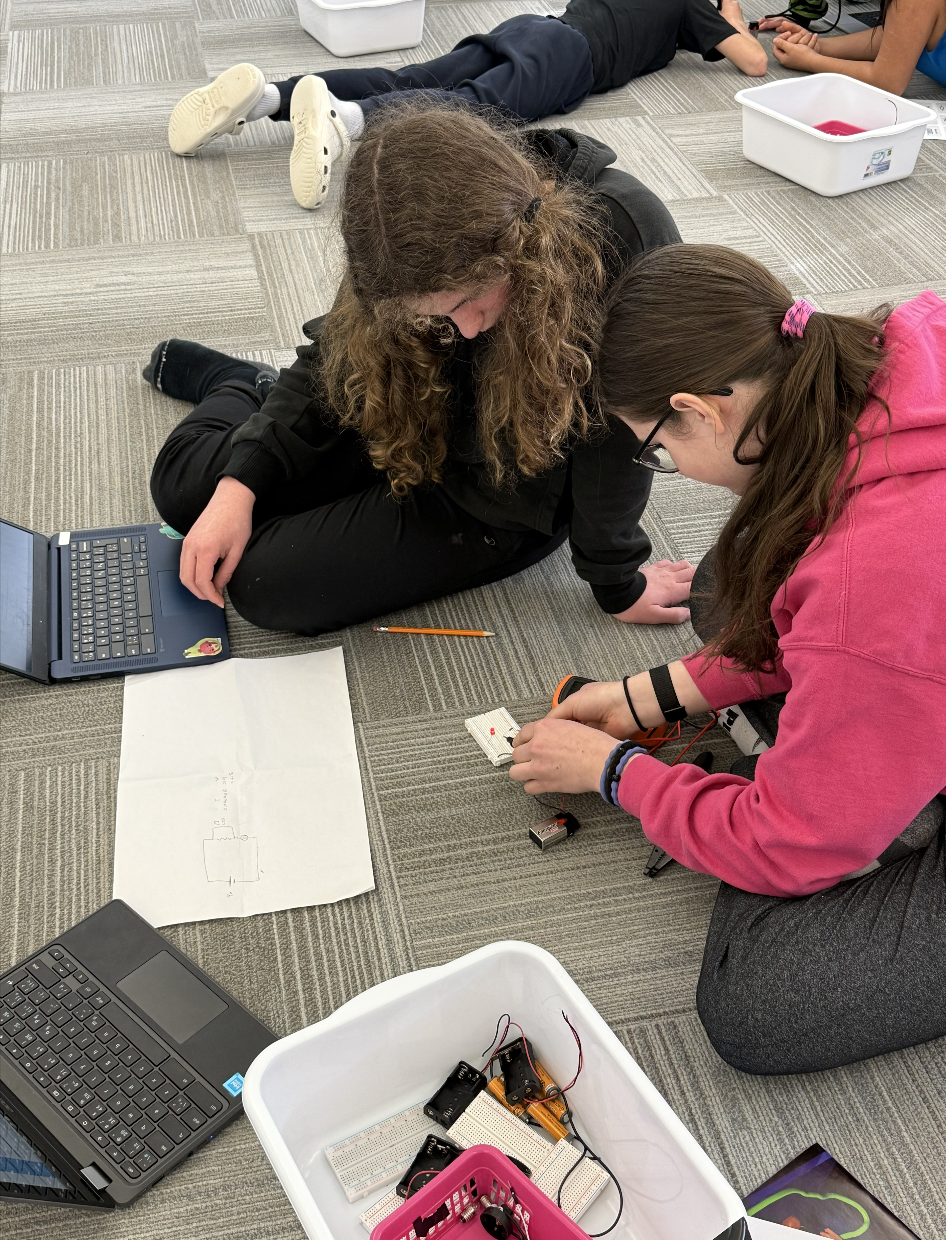
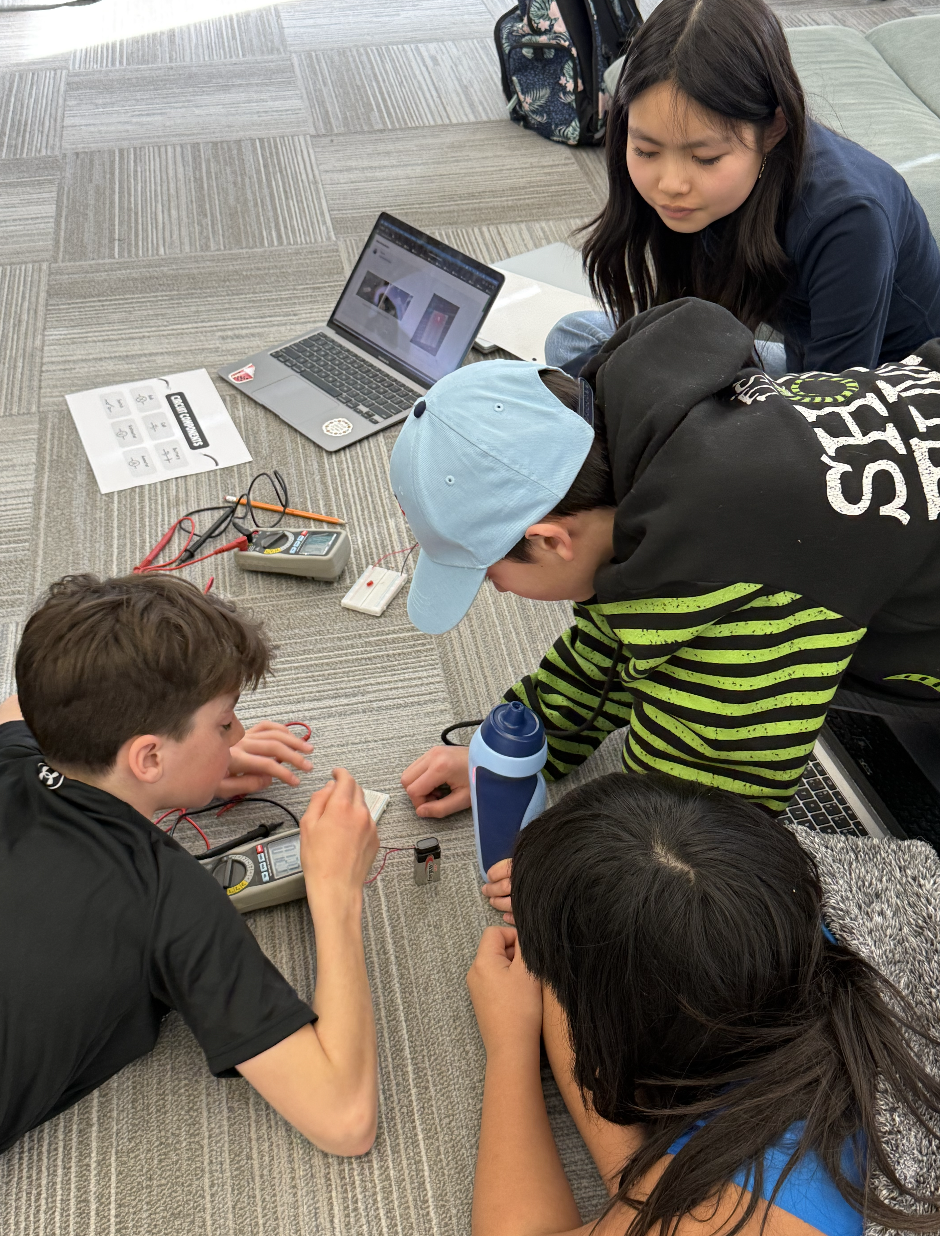
Energy consumption is a hot topic in the polarized realm of climate and energy politics, and everyone is looking for the sweet spot between energy consumption and production. On Monday, we began Quest with a discussion of whether we should procure more or consume less energy. After our debate, teams came together to continue exploring the fundamentals of electricity in preparation for building and electrifying their cities! Knowledge in this Quest "scaffolds," meaning it's challenging to move forward into future challenges without a clear understanding of previous ones. With this in mind, Rebels who hadn't completed last week's challenges were encouraged to clear up any misunderstandings before beginning this week's tasks. Last week, we learned to power a single bulb, so on Monday, Rebels put their skills to the test by attempting to power multiple bulbs. After drawing a diagram for a circuit with at least two 3V bulbs in series, teams purchased the supplies to actually build the circuit. Once that was complete, they repeated the process; however, they had to power at least three light bulbs in parallel after drawing the circuit. Rebels were strongly advised to experiment with some of the simulators first, as mistakes and short circuits could get very expensive now that their Quest Bucks were on the line. Once teams successfully powered both circuits, they explored several popular alternatives for connecting their solutions. They researched twisting/taping wires, breadboards, screw terminal blocks, crimp pins & sockets, pre-made jumper wires, crimp splices, alligator wires, and soldering. If they had time on Tuesday, they attempted to pick one or more connection techniques they had not tried and to create a simple circuit. Now that learners have explored simulators and circuit diagrams as tools for faster, cheaper and/or easier experimentation, on Wednesday, we turned our attention to breadboards. Breadboards are powerful, reusable tools for rapid prototyping and testing circuits at a small scale. While we have plenty of other options available for connecting components, none are likely to offer the speed and flexibility of a plain old breadboard. As with any tool, there is a big difference between simply hacking around on a breadboard and really using one effectively. Rebels read an article to learn more about getting the most out of this new tool before researching, diagramming, and building circuits for a simple single LED circuit, a series circuit, and a parallel circuit on a breadboard. Thursday, Rebels practiced using multimeters. After watching a tutorial on measuring volts, amps, and ohms, learners used their previous drawings from the breadboards challenge. They selected at least 2 locations and predicted the voltage, current, and resistance at each location. Finally, using their multimeter, they took the actual measurements. Next week, we'll finish our study of electrical components (resistors, capacitors, and switches) and begin building our cities!
Civilizations - Big History
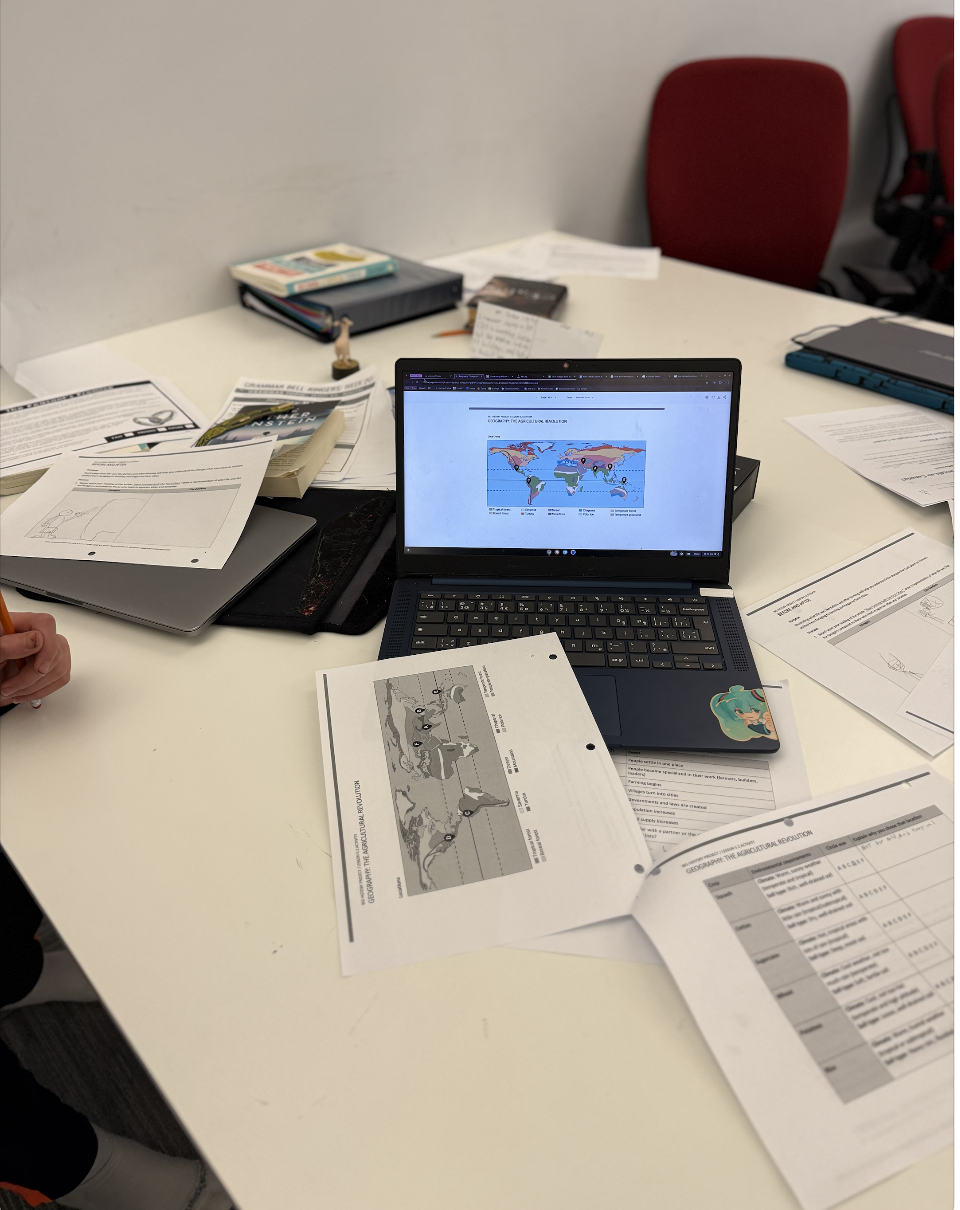
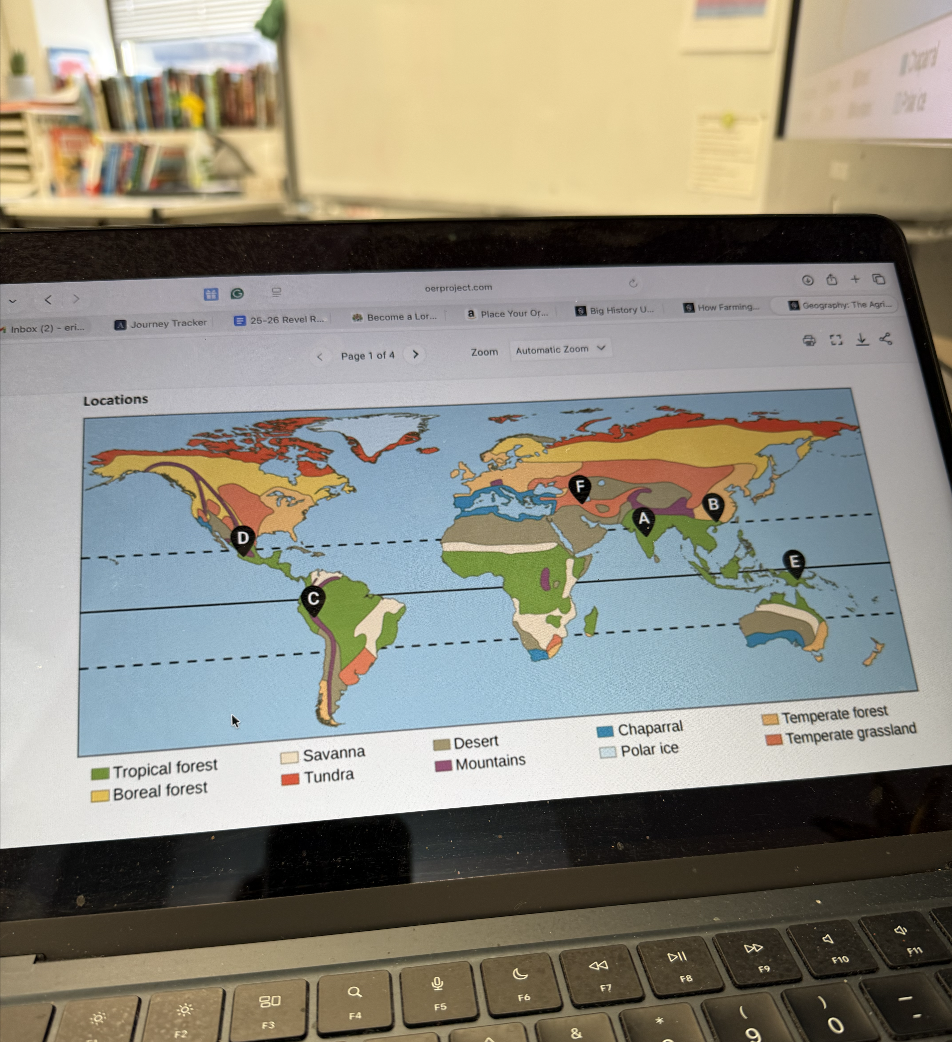
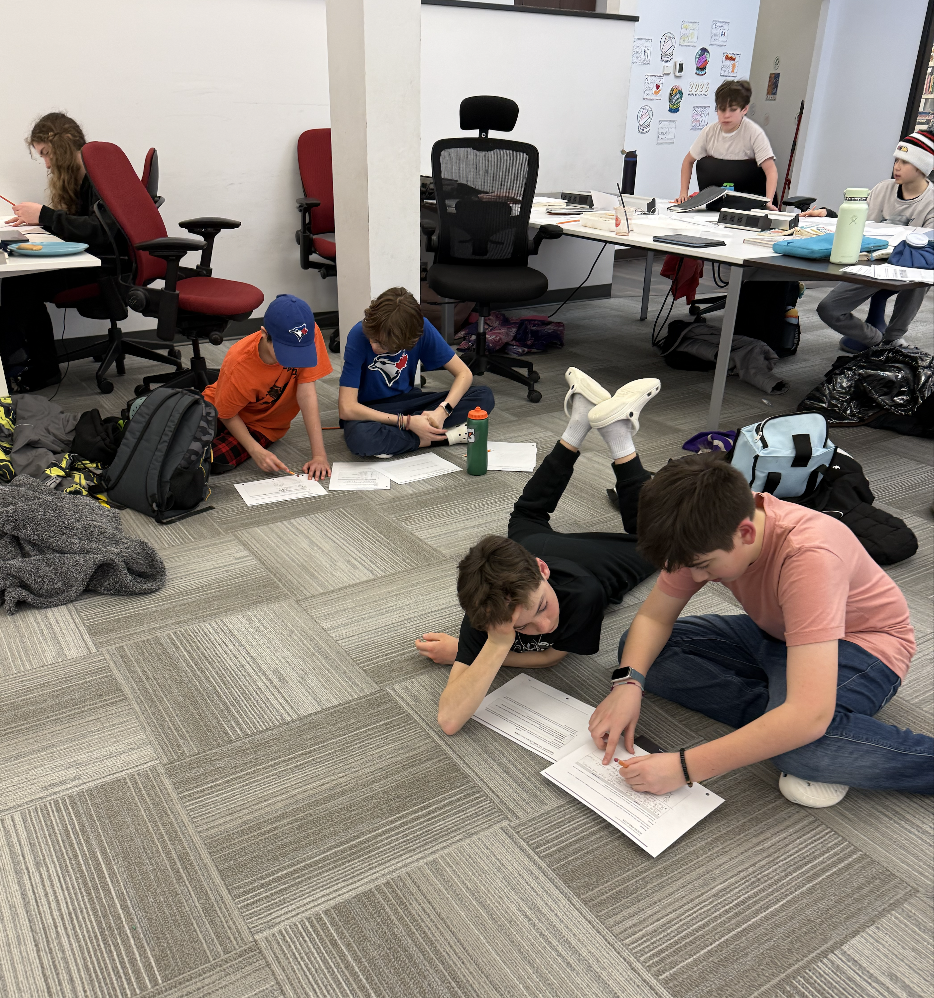
About 12,000 years ago, farming led to a revolution in how people ate, lived, and worked. People began to settle down and create cities, large societies, and eventually empires. But were all of these changes positive? Rebels began this week's Big History lesson with a warm-up in which they tried to order the steps of what happened between leaving the foraging life behind and the rise of empires. After discussing our lists, we watched the video "Why Was Agriculture So Important?" on harnessing energy, then read the article "How Farming Built the First Cities." Rebels learned why we call the transition from foraging to farming a revolution, where the first cities were located, and some of the advantages and disadvantages of farming and cities. We ended Tuesday's lesson with a geography activity in which learners predicted where some of the first crops were grown using a climate map and explored how geography provided both opportunities and challenges for early farming societies.
Considering the gains and costs, did advances in farming lead to stronger, healthier civilizations, or have they unleashed potentially dangerous forces? On Thursday, Rebels met to learn more about the Agricultural Revolution, and after an informative Crash Course video, learners participated in a Socratic discussion centred on genetically modified organisms.
French
This week in French workshop, learners explored the question “Why is French spoken in Canada?” through reading, reflection, and discussion. The week began with learners sharing their ideas about how French first arrived in Canada. They read a historical text explaining how French explorers such as Jacques Cartier and Samuel de Champlain contributed to the development of the French colony known as La Nouvelle-France. The Exploration Rebels also discussed how, after the Seven Years' War, the territory became British, but French-speaking communities remained and continued using their language at home and within their communities. To demonstrate understanding, learners completed comprehension questions, true-or-false activities, and partner discussions about an interesting historical fact: many people in Canada were speaking French even before most people in France did. Around the year 1700, only about one third of people in France used French in everyday life.
Additional Highlights
We spent Monday's closing discussing the following quote, "Watch your thoughts, they become words; watch your words, they become actions; watch your actions, they become habits; watch your habits, they become character; watch your character, for it becomes your destiny." - Frank Outlaw The studio spoke about some of the unkind things that can be said, and the danger of "jokes" at the expense of others. At Revel, we are working hard to forge strong character, so we reviewed our learner-written studio covenants to see if we were still living up to what we promised at the beginning of the year. The remaining closings were spent completing our March Mammal Madness research and playing fun, team-building games.
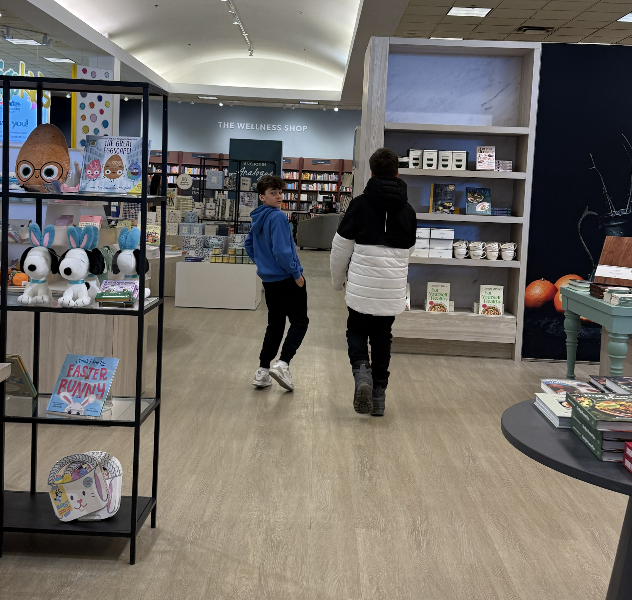
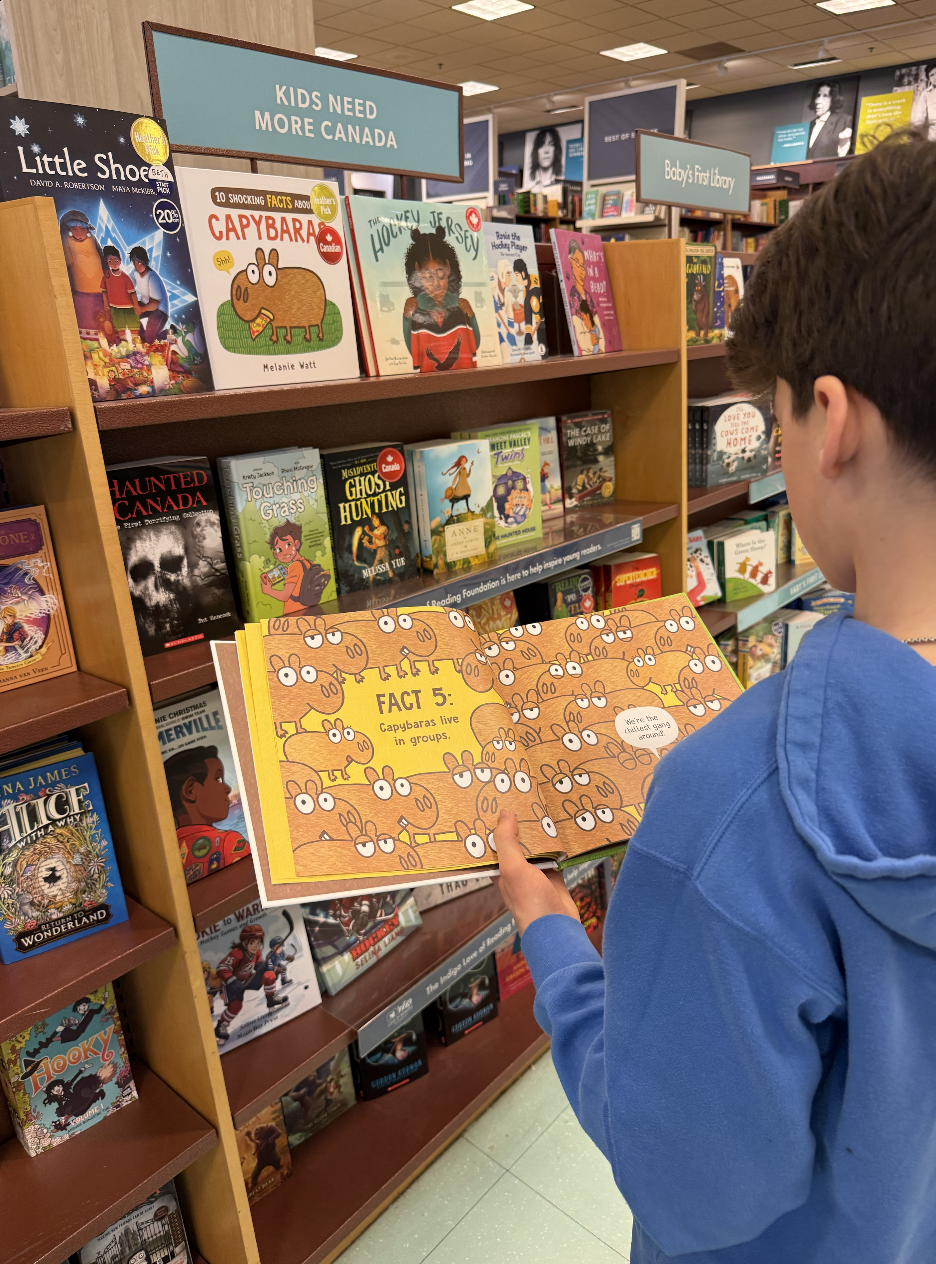
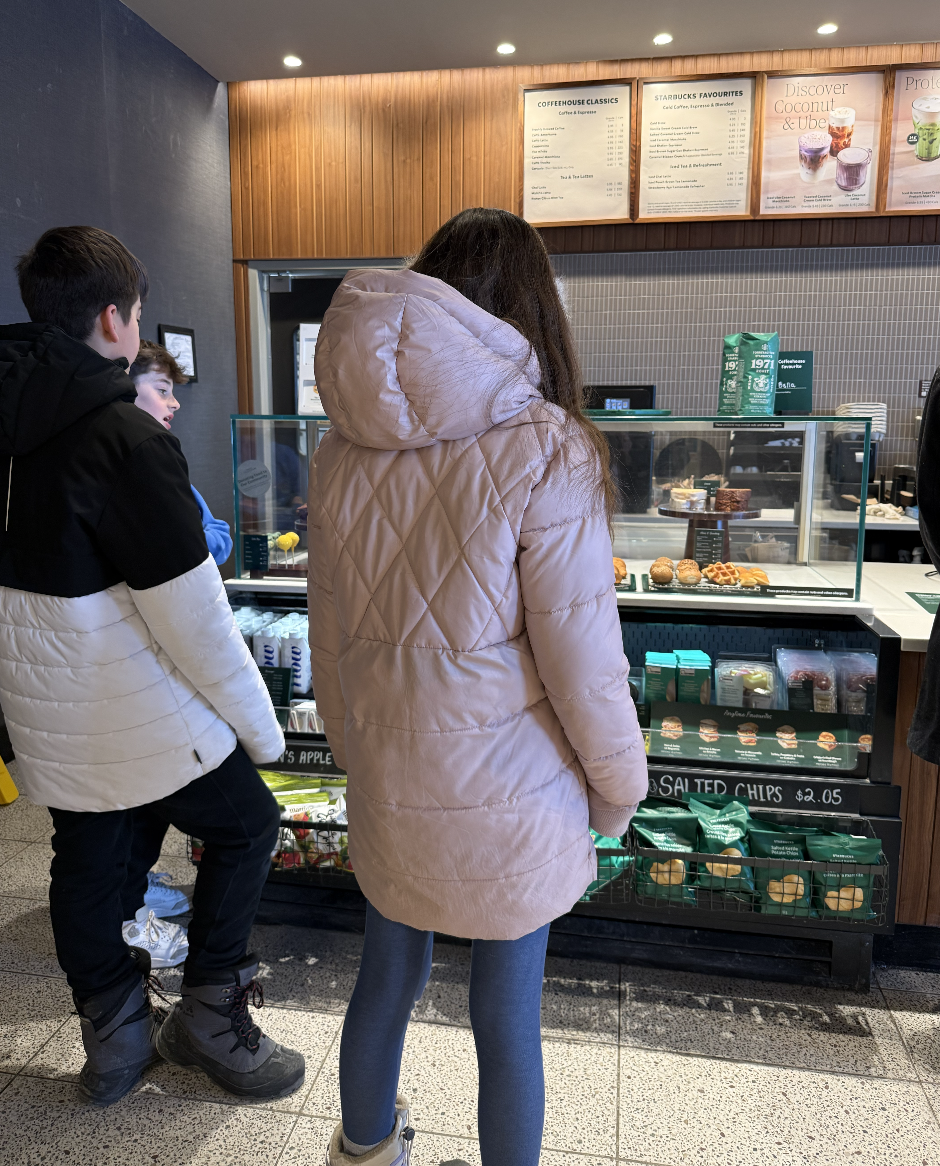
On Friday, three learners were rewarded with a trip to Indigo and Starbucks for books and treats. It is always a pleasure to go into the community with these awesome humans!
Potential Ideas/Questions to Ask Your Learner
Spark Studio:
Did you enjoy reading Miss Nelson is Missing? Was your prediction about what would happen in the story correct?
Ask your learner about their car design by using some of these questions:
What does your car look like on the outside?
What does the inside of your car look like? What features did you add?
Does your car have any special or unique features?
What materials did you use to build your 3D model?
What was the most challenging part of building your car?
If you could add one more feature to your car, what would it be and why?
French: How do you say “hippopotamus” in French? (Hippopotame)
Discovery Studio:
If we could travel to Peru or Mexico, which would you rather go see: the Nazca line drawings in Peru or the Olmec heads in Mexico?
Aim/Release Rebels: Can you tell me about the Kemper Arena engineering failure? What do you think was the main cause of the roof collapsing?
Draw/Anchor Rebels: Can you tell me about the Pier One Playground story? How will that influence how you design your own playground structure?
How do you solve an “if/then” puzzle?
What changes did you make:
to your boat so it would balance, float and carry weight?
to your rope so it would stretch only the desired amount?
to your parachute so that it would safely land your egg?
When someone is standing on a bungee platform, what kind of energy do they have? What happens to the energy when they jump?
French: Why did the French come to North America?
Exploration Studio
What do you think is most often responsible for the turn from march to riot? Anger, revenge, justice, mob mentality, carelessness, or something else?
Silence can be a powerful factor when used appropriately in a speech. How do you know silence's sweet spot?
You realize you could improve your company by better managing your energy consumption. However, a change like this will provoke pushback from both your superiors and your workers. What argument do you make to convince them?
Some cities offer legal graffiti walls. Should artists limit themselves to working on these? Why or why not?
What is a monument's greatest benefit to society? Preservation of the past, representation of a community's values, or something else?
Would you be willing to pay twice as much for your food and eat half as much every day to eat natural, non-GMO food? Why?